

A hand embroidered silk organza saree takes a single artisan up to eight weeks to complete. Here is an inside look at the craft behind Peeli Dori embroidered organza collection.
What makes a hand embroidered organza saree worth its price — and why no machine can replicate it.
What Hand Embroidery on Organza Actually Means
Hand embroidery on organza is not a shortcut to decoration — it is a slow, exacting craft. A single artisan works a saree for three to eight weeks, pulling silk or zari thread through a taut organza base one stitch at a time. The fabric is stretched on a wooden frame called an adda, the pattern is transferred by hand, and the needle does not touch a machine at any stage.
At Peeli Dori, all embroidery is done by artisans trained in the craft since childhood. Most carry techniques passed down through three or four generations — specific stitch vocabularies not available in any school or factory.
The Embroidery Techniques Used at Peeli Dori
Zari Threadwork
Zari is a metallic thread — traditionally silver or gold — that catches and reflects light. Zari embroidery on organza creates a three-dimensional shimmer that no machine-printed metallic ink can replicate. The PARO GOLD ORGANZA and RESHMA IVORY use dense zari embroidery that changes appearance as you move through different light.
Aari Embroidery (Hook-work)
Aari embroidery uses a fine hooked needle to create fluid chain-stitch patterns on the organza surface. It produces fine lines and complex floral or geometric motifs that sit flush with the fabric — visible from any distance but touchably smooth up close. The CHIDIYA and GENDA use aari-influenced techniques.
Hand Painting Combined with Embroidery
Some Peeli Dori pieces combine hand painting with embroidery — organic dye is applied directly to the organza before stitching begins. This means the colour itself is part of the craft, not just a background. No two pieces will have identical colour distribution.
Our Hand Embroidered Organza Collection
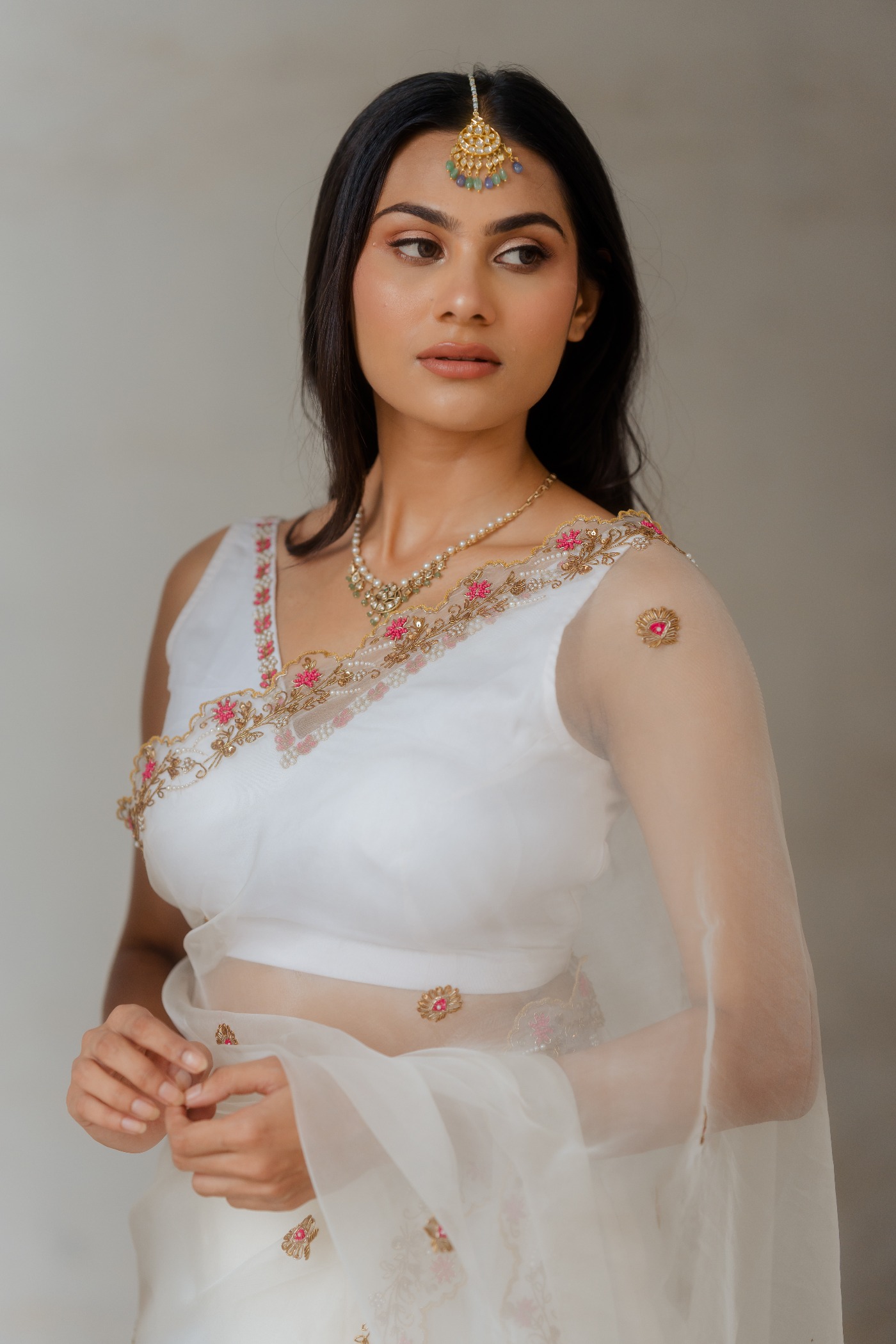
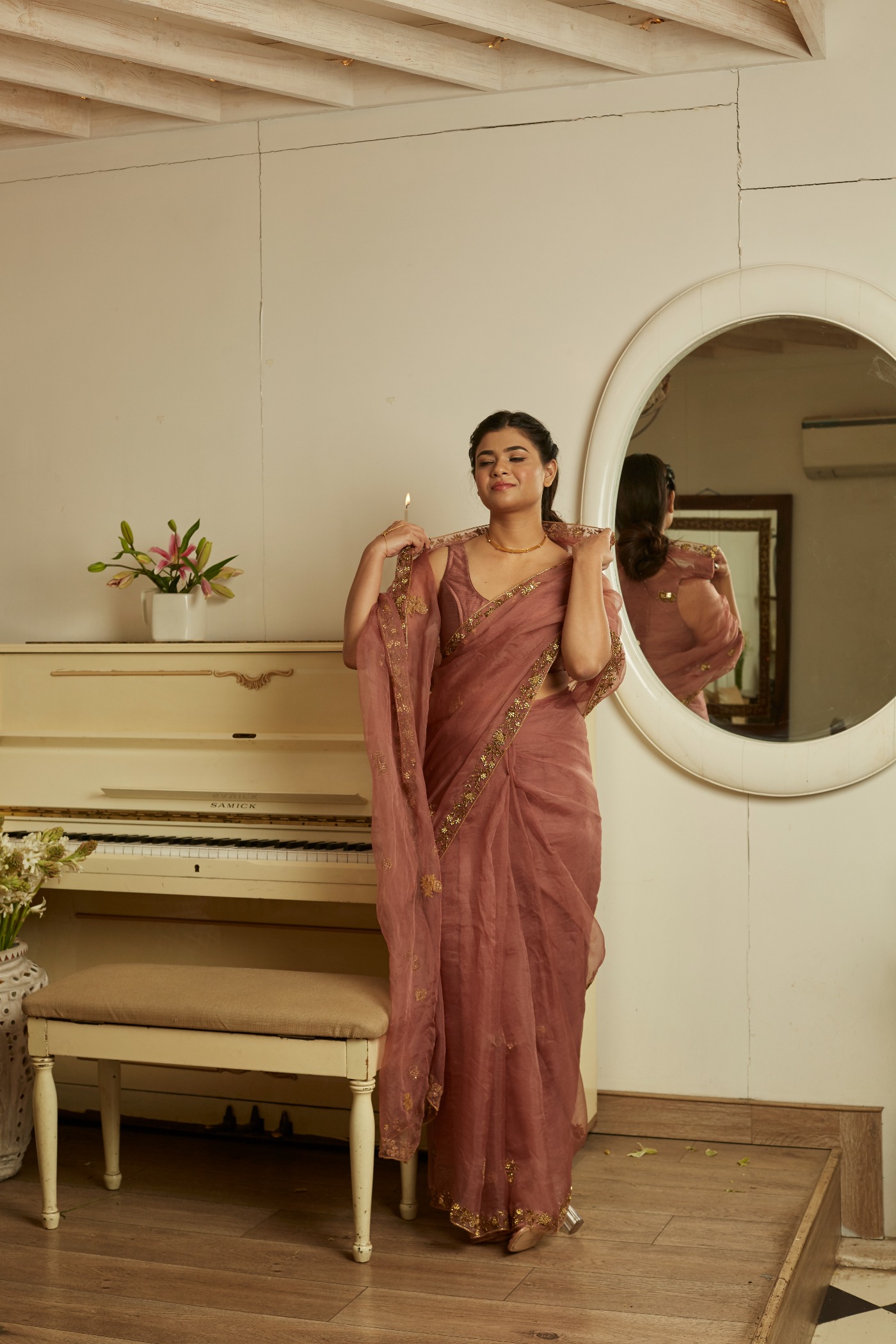
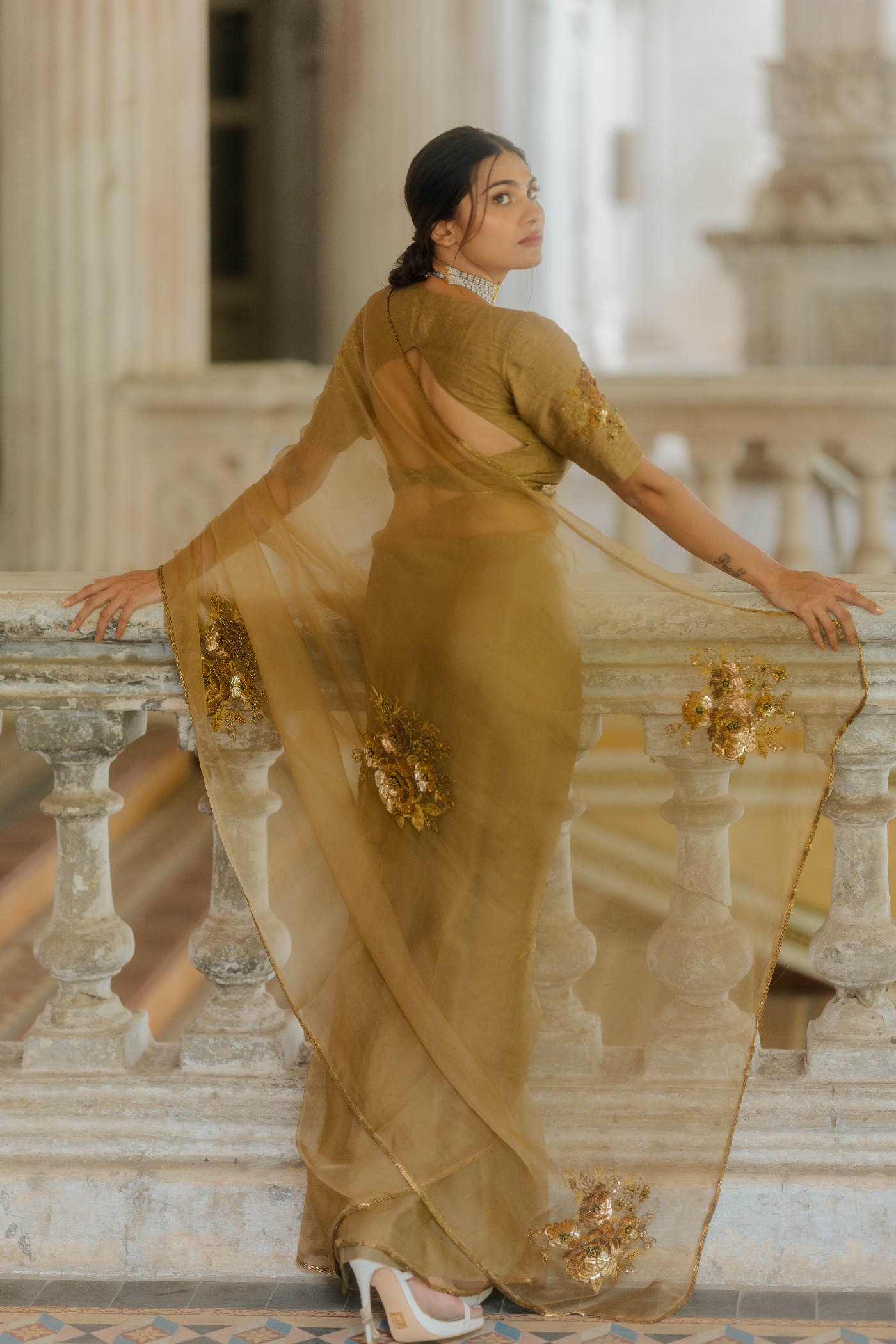
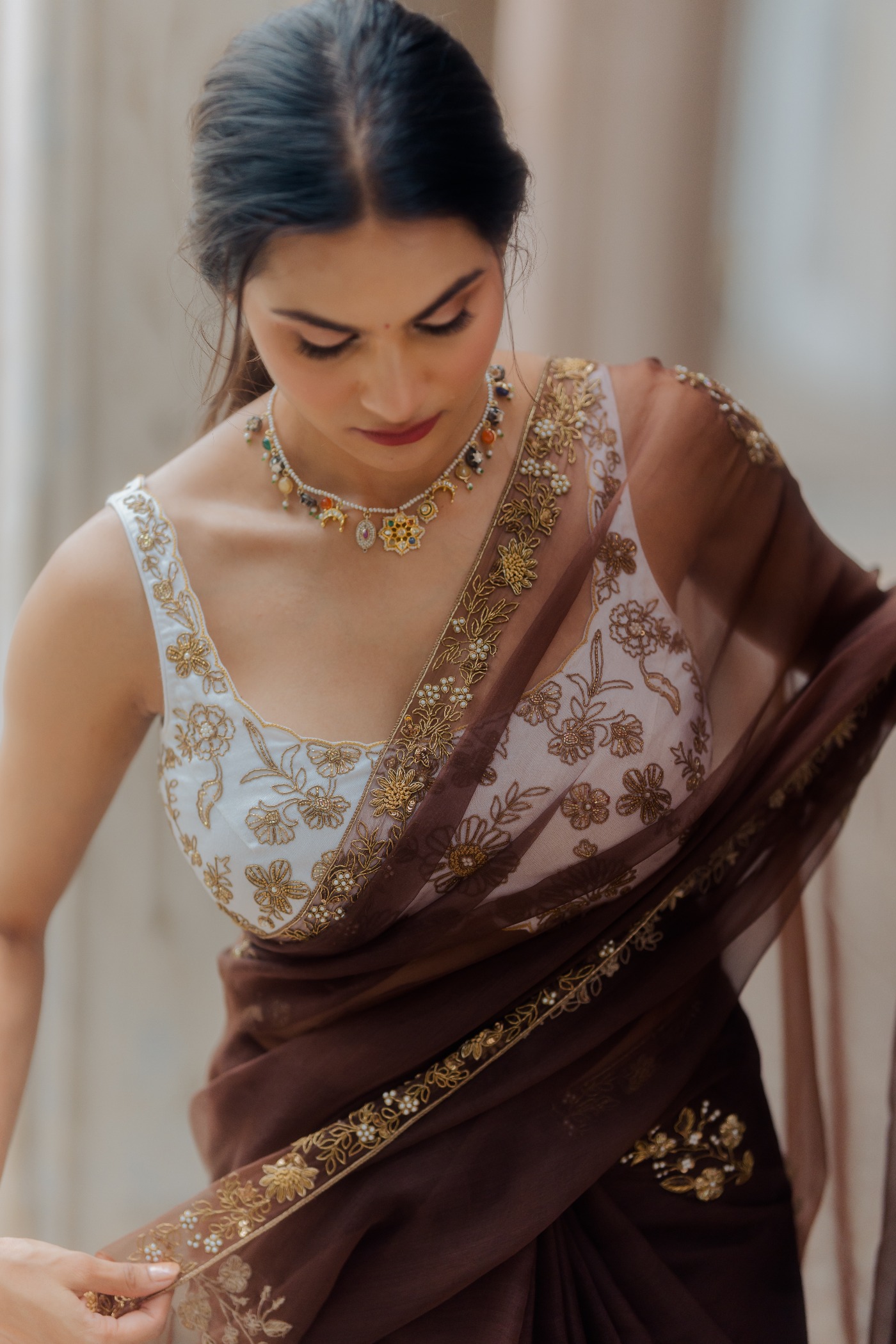
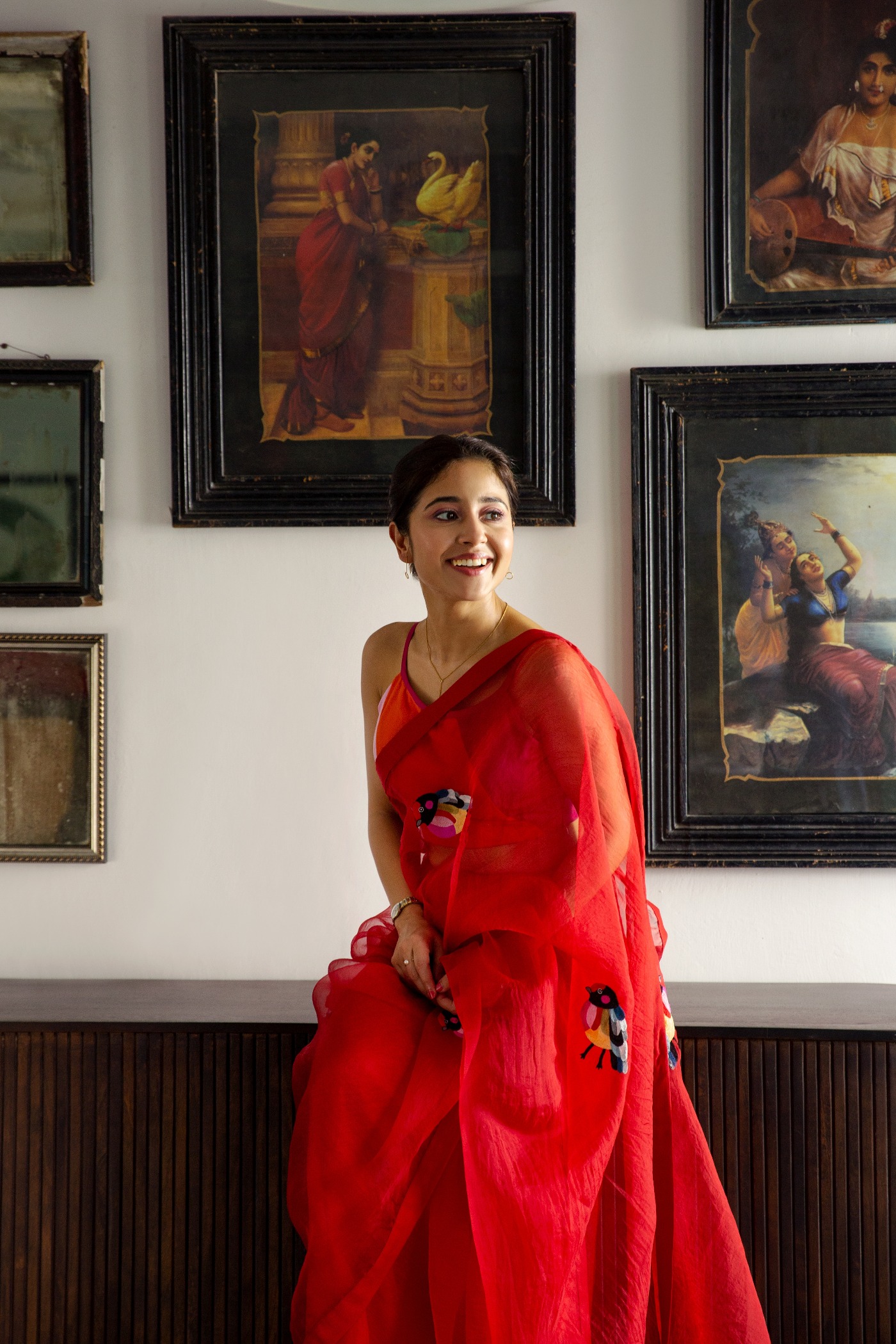
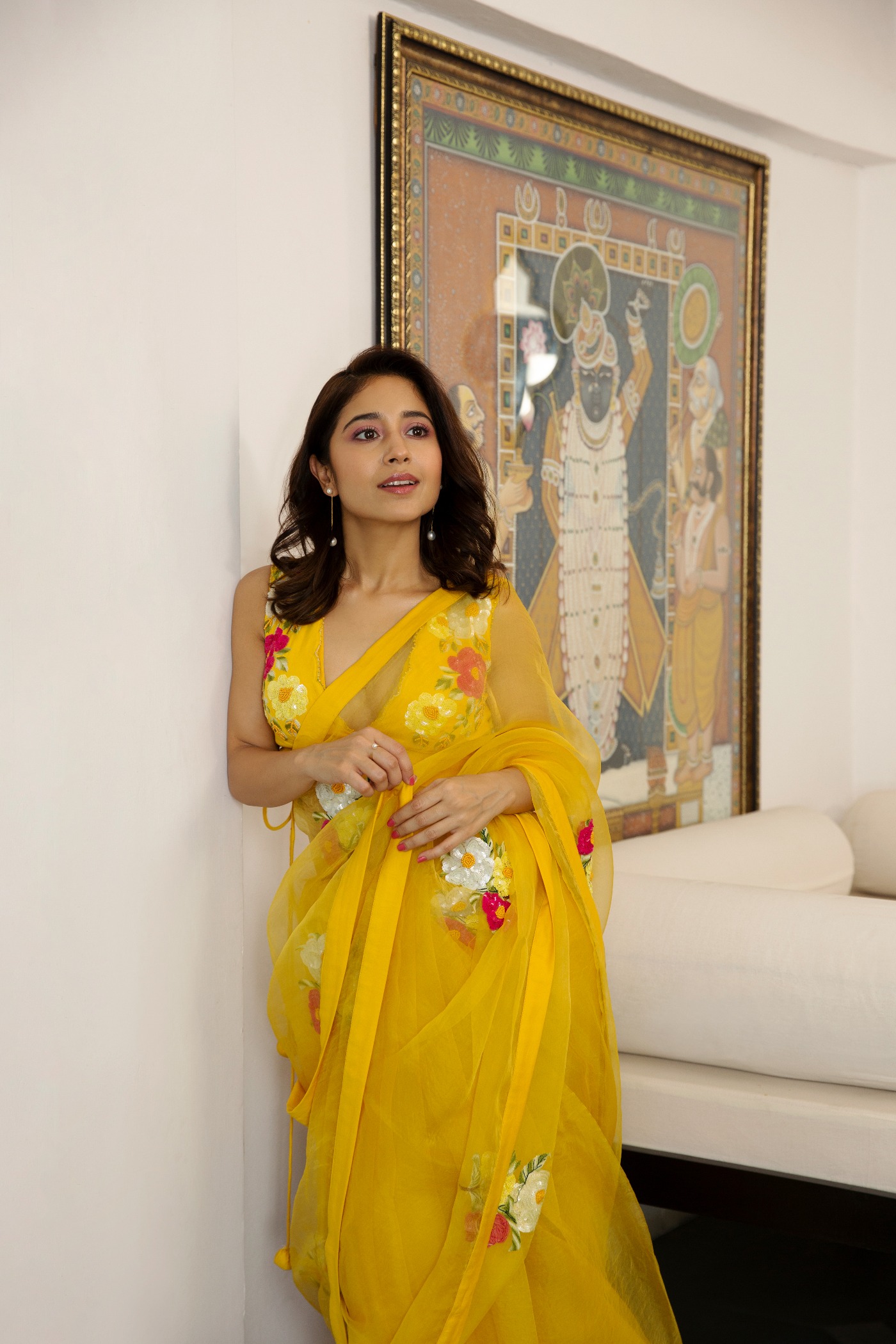
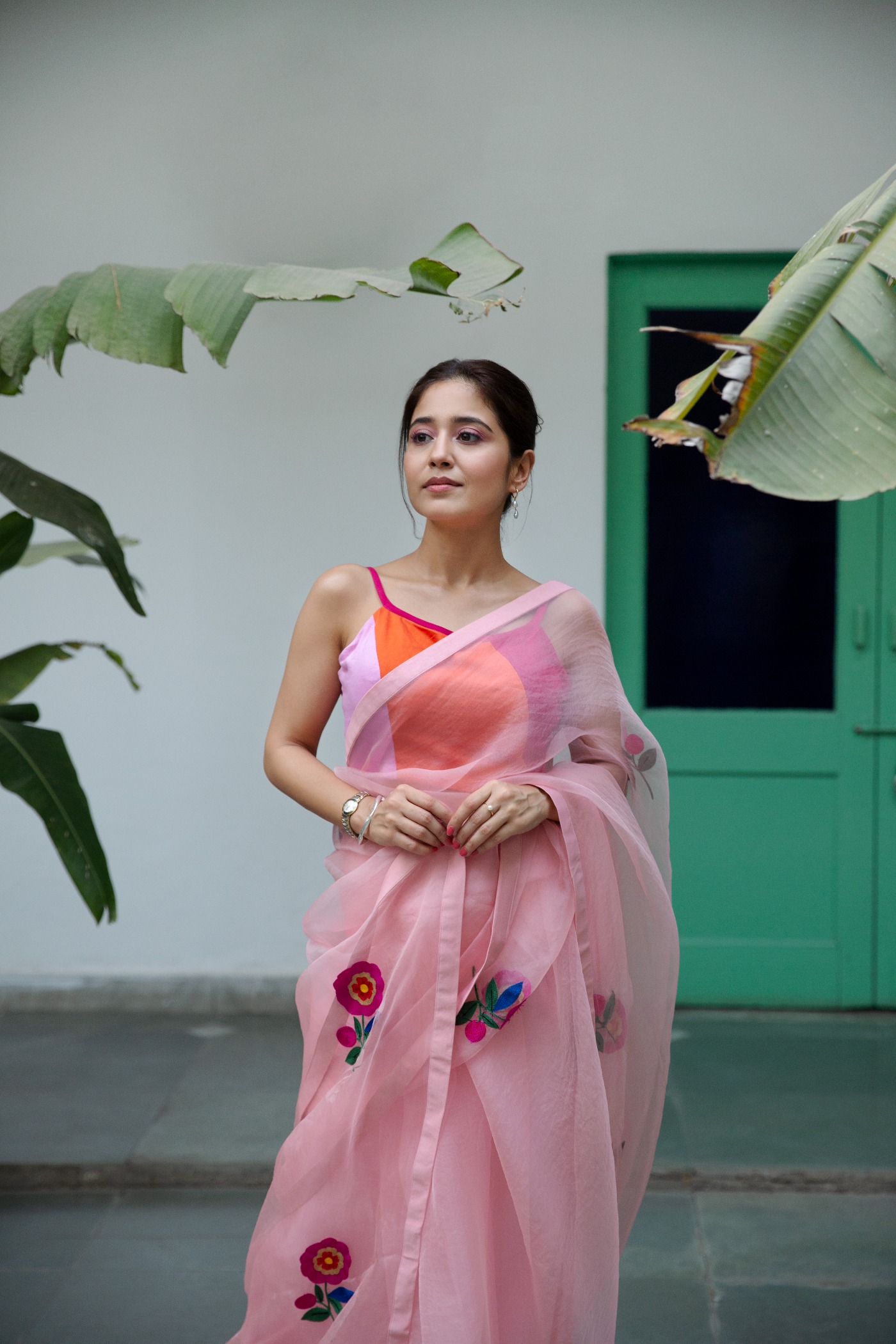
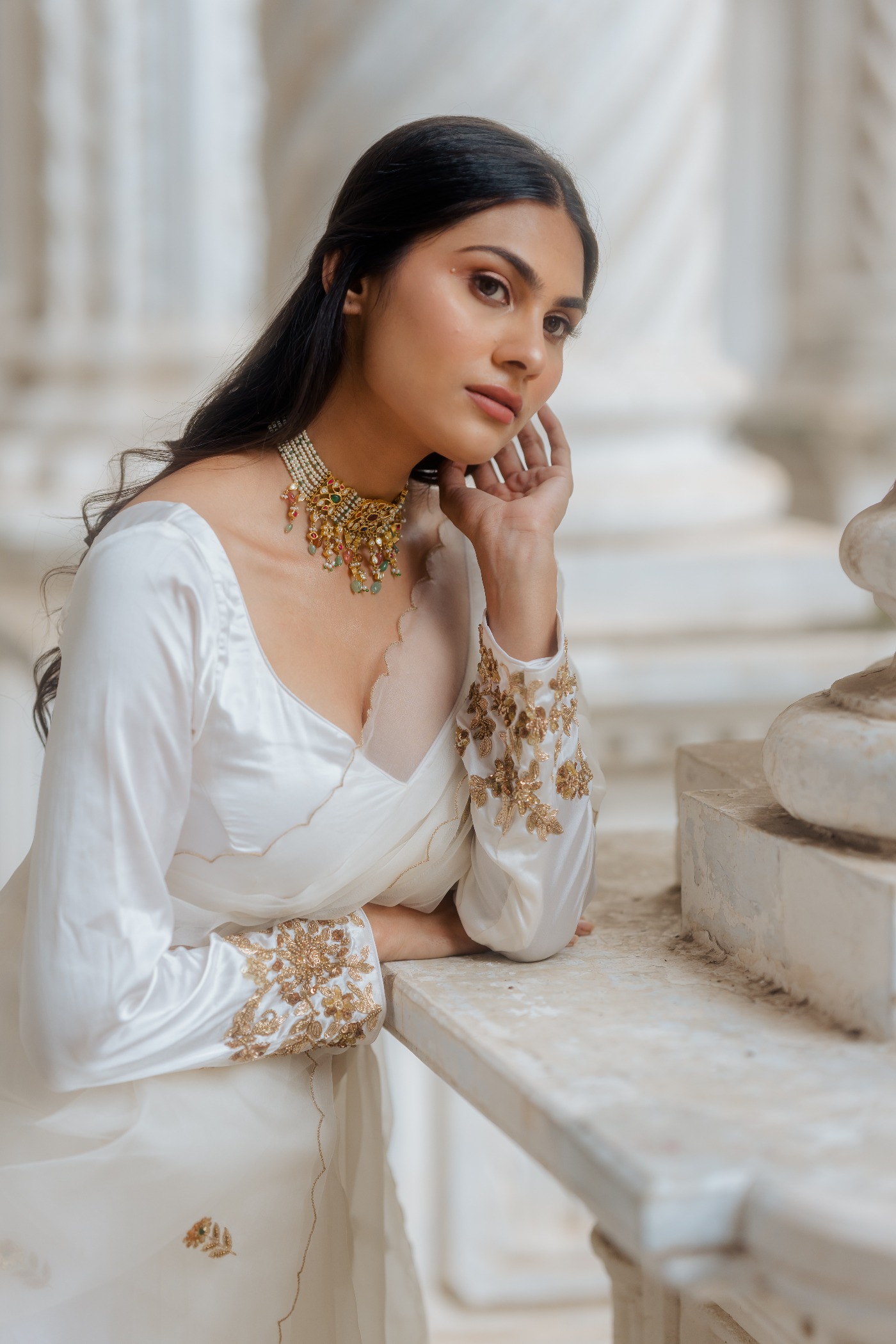
Why Hand Embroidered Organza Sarees Are Worth the Investment
- No two are identical — hand work means natural variation. Your saree is unique in the world.
- They last decades — properly cared for, a hand embroidered silk organza saree outlasts fast fashion by 20–30 years.
- The value is in the hours — a saree that took six weeks to embroider carries over 200 hours of human skill. That is honest pricing, not luxury markup.
- The craft is endangered — many traditional embroidery techniques are in decline. Buying a hand embroidered saree is also a small act of cultural preservation.
- It photographs unlike anything else — for those who care about how they appear in photographs, the texture and luminosity of hand-embroidered organza is unmatched by any printed or machine-made alternative.
Frequently Asked Questions
How can I tell if embroidery is hand-done or machine-made?
Look at the reverse side of the saree. Hand embroidery shows visible thread tails and slight natural irregularities in stitch length — a sign of human hands at work. Machine embroidery is perfectly uniform on both sides. Also feel the texture: hand embroidery has a raised, tactile quality; machine embroidery lies very flat and even.
Are hand embroidered organza sarees only for formal occasions?
Not at all. The DAISY and GENDA are hand embroidered pieces designed for day wear — lighter embellishment, brighter palette, relaxed occasions. Embroidery does not automatically mean formal.
Does hand embroidery add to the care requirements?
Dry clean only — which applies to any silk organza saree. For the embroidery specifically, avoid snagging on jewellery clasps or rough surfaces, and store flat to prevent embroidery threads from catching against themselves.
Shop Hand Embroidered Organza Sarees
Each piece created by a single artisan — no two are alike.
Explore Collection →
The information below is required for social login
Sign In
Create New Account