

Nestled in the sacred hills of Tirumala, Tirupati Balaji Temple receives over 50,000 devotees daily. Choosing the right saree for darshan is a meaningful act of devotion. Discover the temple dress code, auspicious colours, and eight opaque sarees in silk satin, chiffon, and silk tissue from Peeli Dori.
A guide to dressing beautifully and respectfully for your Tirumala darshan.
The Sacred Abode of Lord Venkateswara
Nestled in the sacred hills of Tirumala, the Sri Venkateswara Temple — Tirupati Balaji is among the most revered pilgrimage destinations on earth. Rising 853 metres above sea level across the Seshachalam range in Andhra Pradesh, Tirumala receives between 50,000 and 1,00,000 devotees every single day — making it the most visited religious shrine in the world.
Lord Venkateswara — known also as Balaji, Srinivasa, and Govinda — is a form of Lord Vishnu. Ancient scriptures including the Brahma Purana, the Skanda Purana, and the Varaha Purana speak of this divine abode. The temple has stood for over a thousand years, shaped by the devotion of the Pallava, Chola, and Vijayanagara empires, each of whom added their artistry and reverence to the sacred complex.
The seven hills of Tirumala are said to represent the seven hoods of Adishesha — the divine serpent on whom Lord Vishnu rests in eternal meditation. The journey upward, whether on the ancient foot path of 3,500 steps through the forest or by road through the winding ghats, is itself an act of devotion. The fragrance of incense, the Suprabhatam at dawn, the brilliant gold of the gopuram at dusk — every moment here carries the weight of centuries of unbroken faith.
The sacred Sri Venkateswara Temple, Tirumala — Tirupati Balaji
Temple Dress Code — What Women Should Wear for Darshan
The Tirumala Tirupati Devasthanams (TTD) enforces a clear dress code to preserve the sanctity of the shrine. Respecting the dress code is not merely a formality — it is an offering of reverence to Lord Venkateswara.
Permitted Attire for Women
- Saree — the most traditional and preferred attire. Silk, chiffon, silk tissue, and cotton sarees are all appropriate and welcomed.
- Salwar Kameez with dupatta — fully covered, with the dupatta placed over the head during darshan.
- Half saree (langa davani) — accepted for young women and girls.
- Not permitted: sleeveless blouses, western wear, mini skirts, transparent or sheer fabrics without lining, or leggings worn alone without a covering kurta.
- Note on fabric: Plain unlined organza is transparent and may not pass the entry check. Always choose fully opaque fabrics — silk satin, chiffon, silk tissue, or cotton silk — to ensure smooth, hassle-free entry.
Colours traditionally associated with Lord Venkateswara's worship include yellow (His most beloved hue, offered during Thursday abhishekam), green, red, pink, and gold. Choosing one of these auspicious colours is itself a quiet act of devotion.
Our Curated Selection — Opaque Sarees for Tirupati Darshan
Every saree below is crafted in fully opaque fabric — silk satin, chiffon, or silk tissue. No transparency concerns, no lining needed. Graceful, appropriate, and crafted with care.
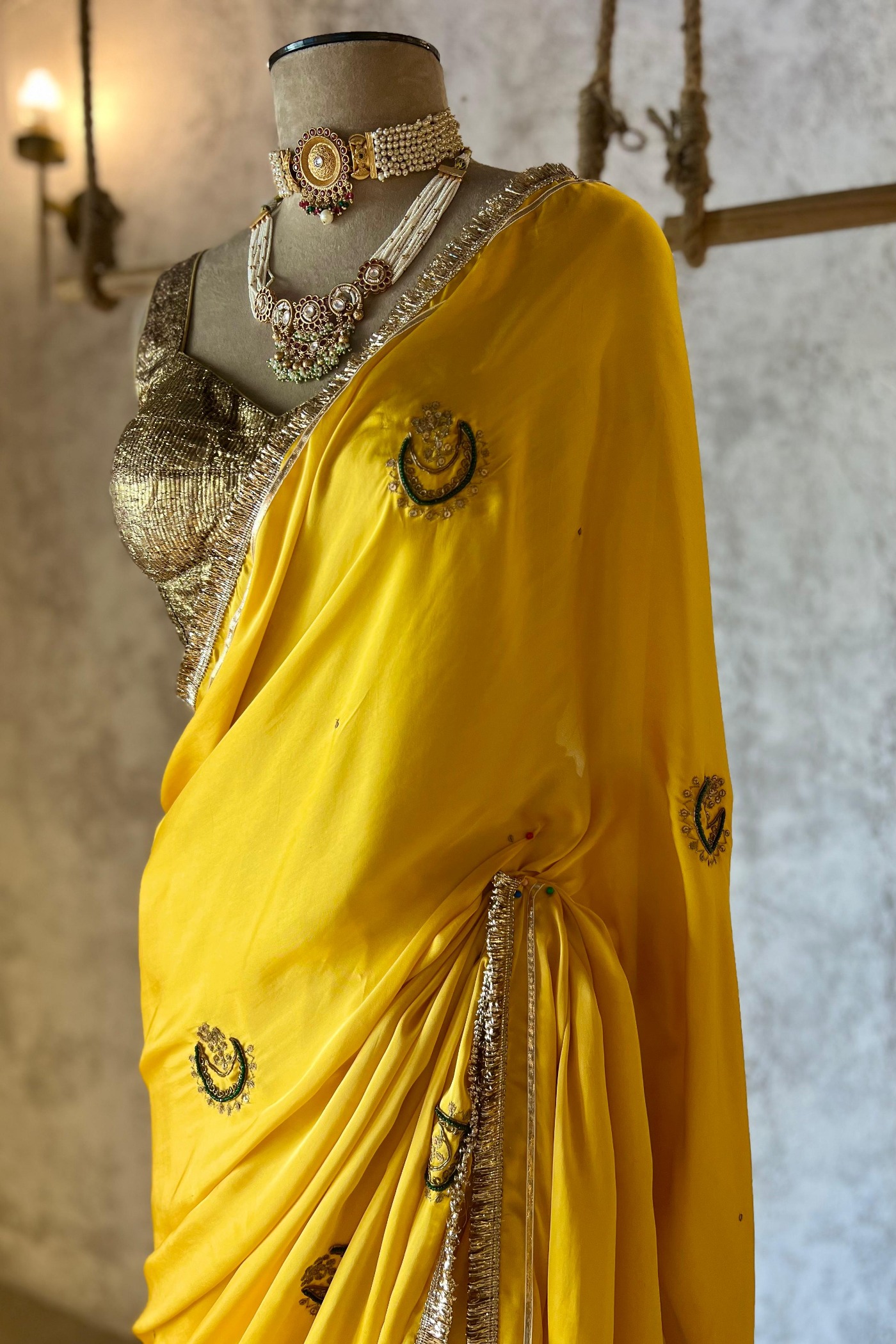
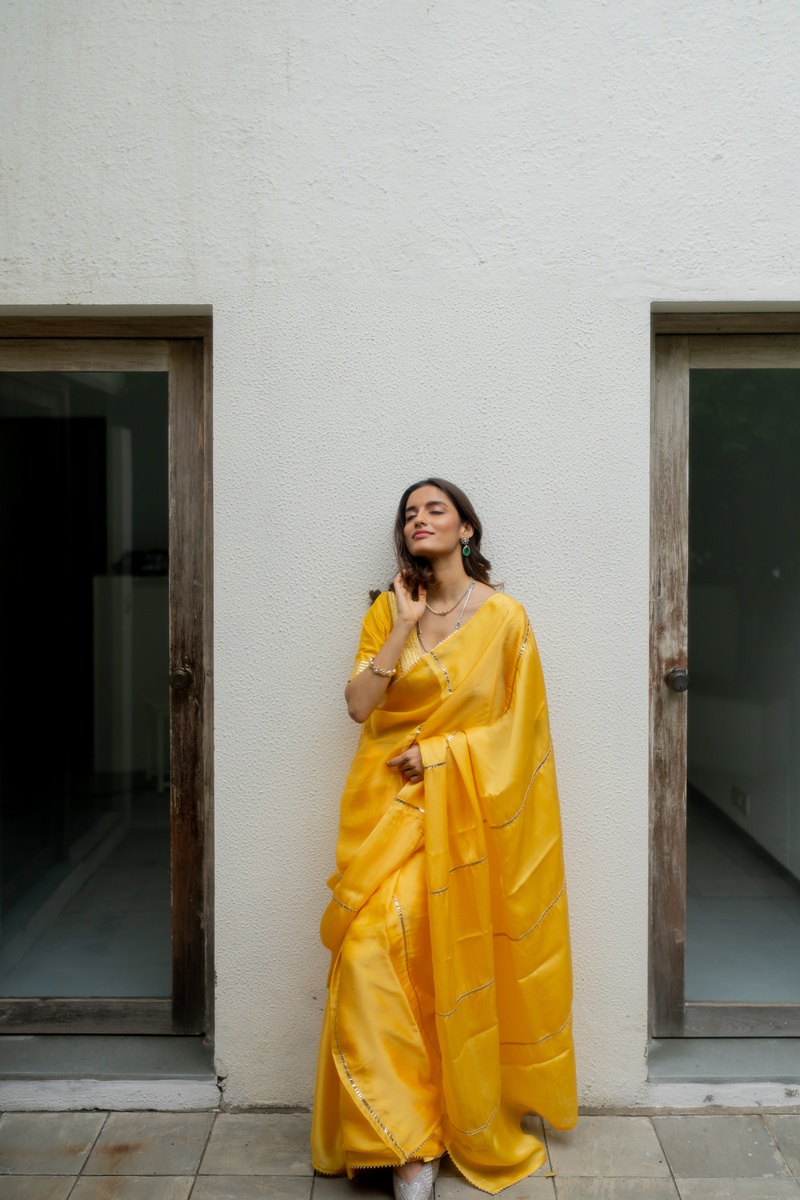
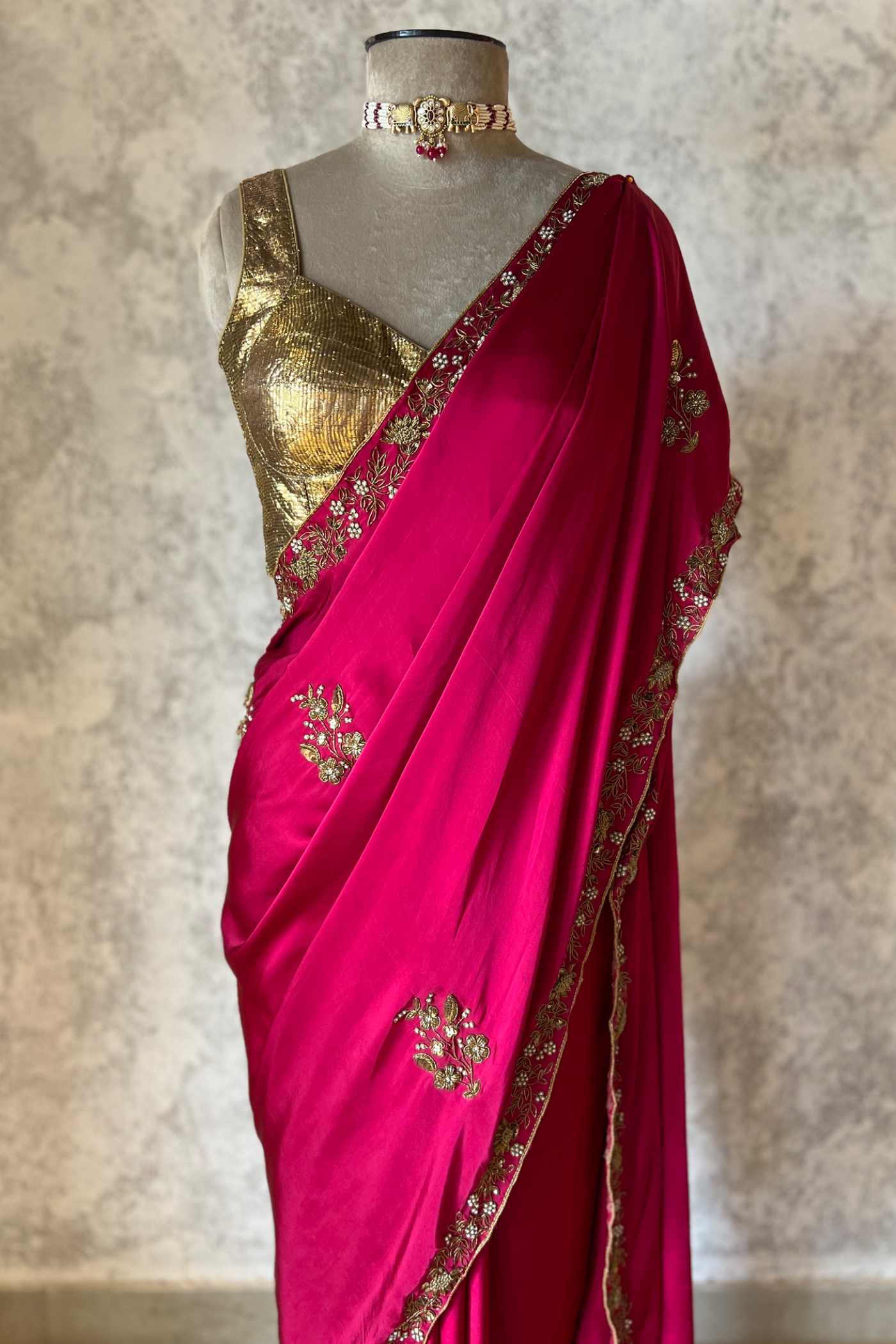
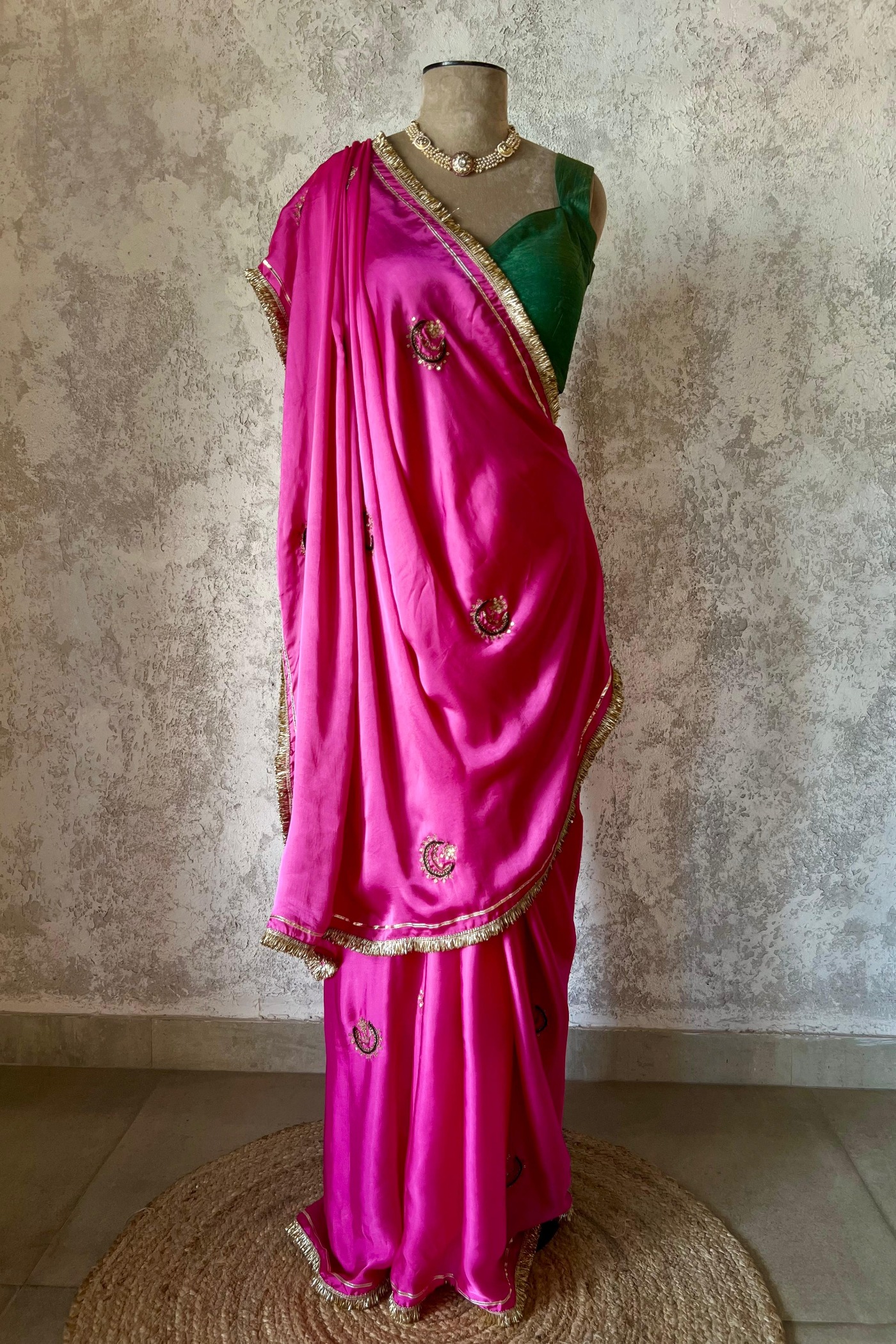
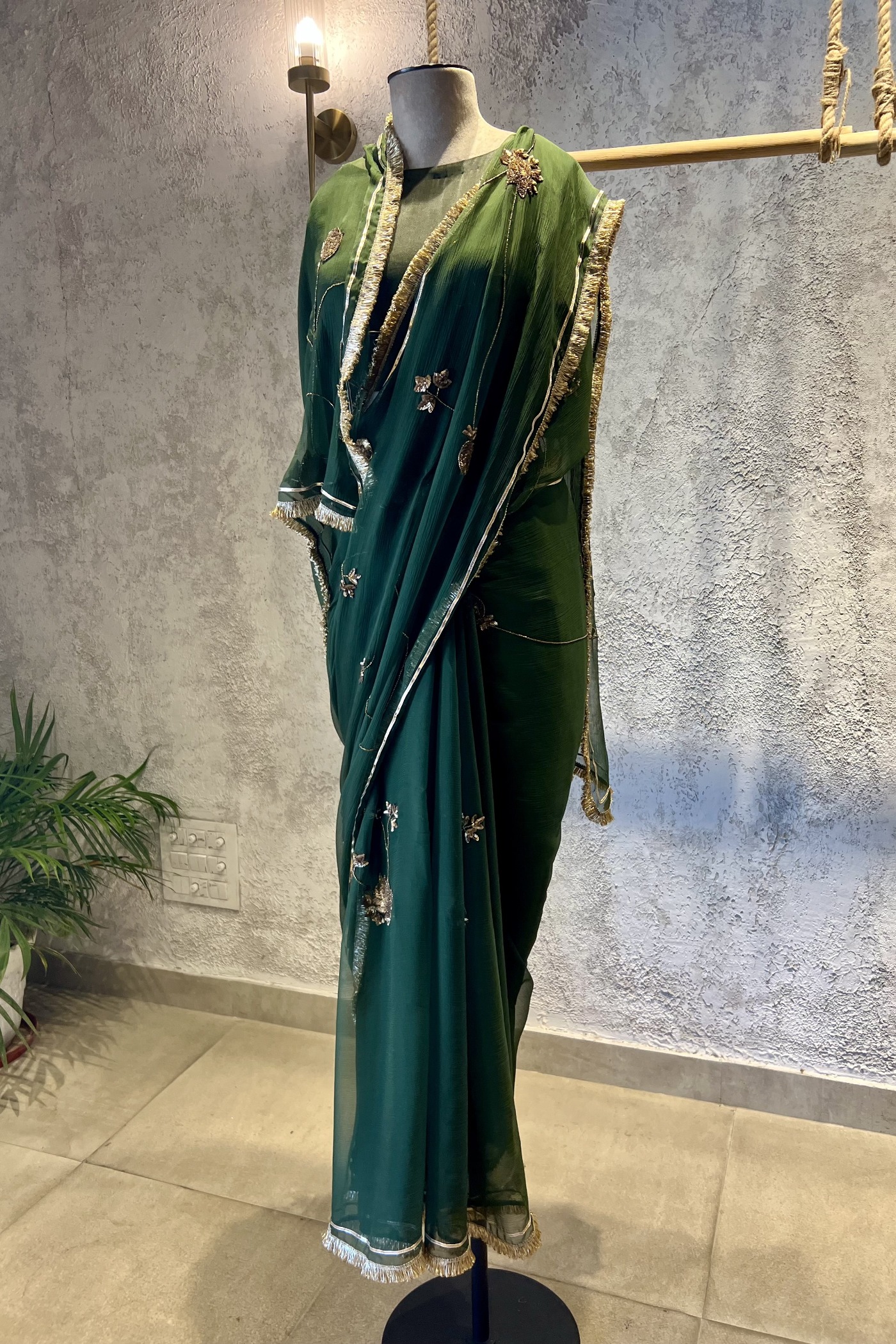
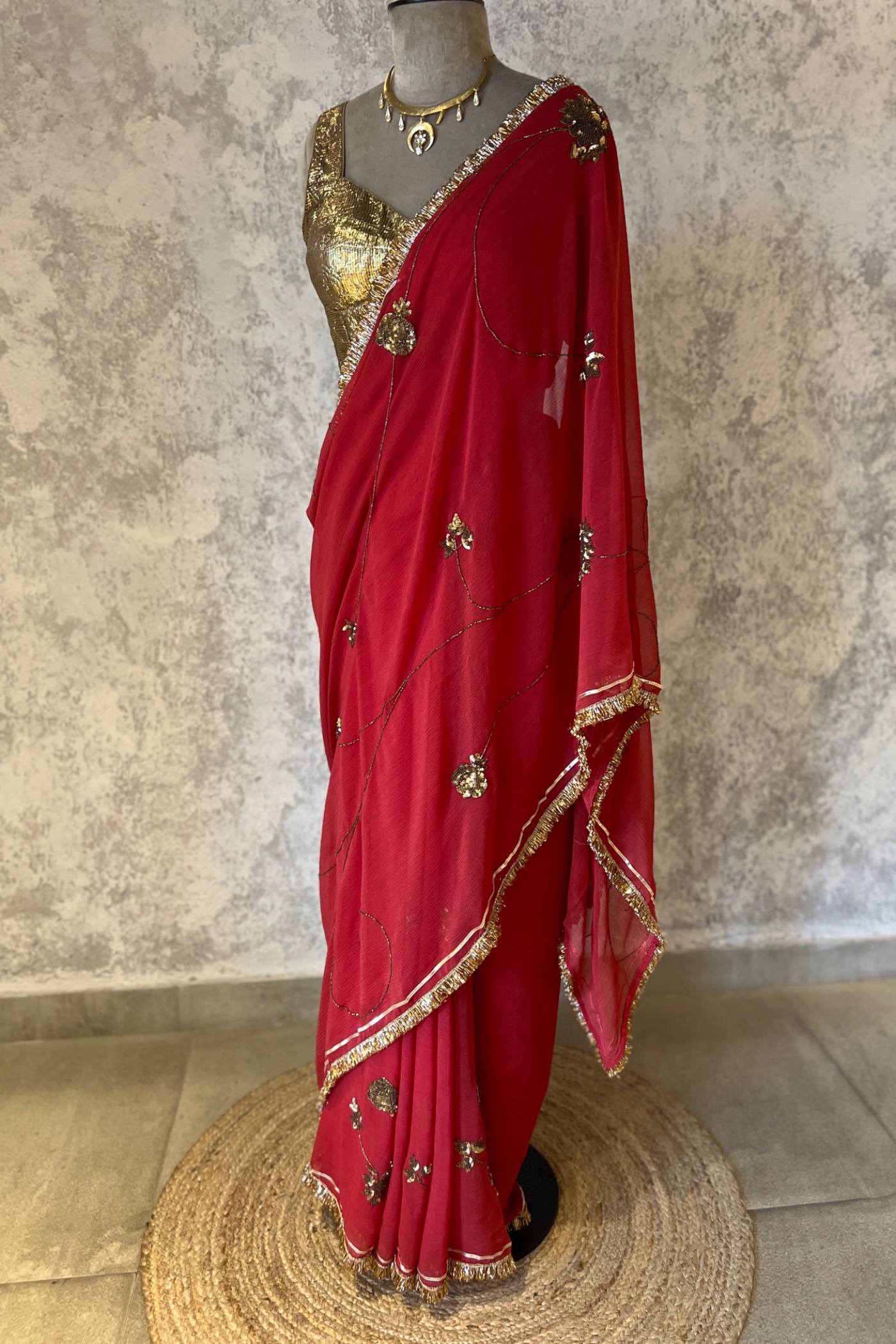
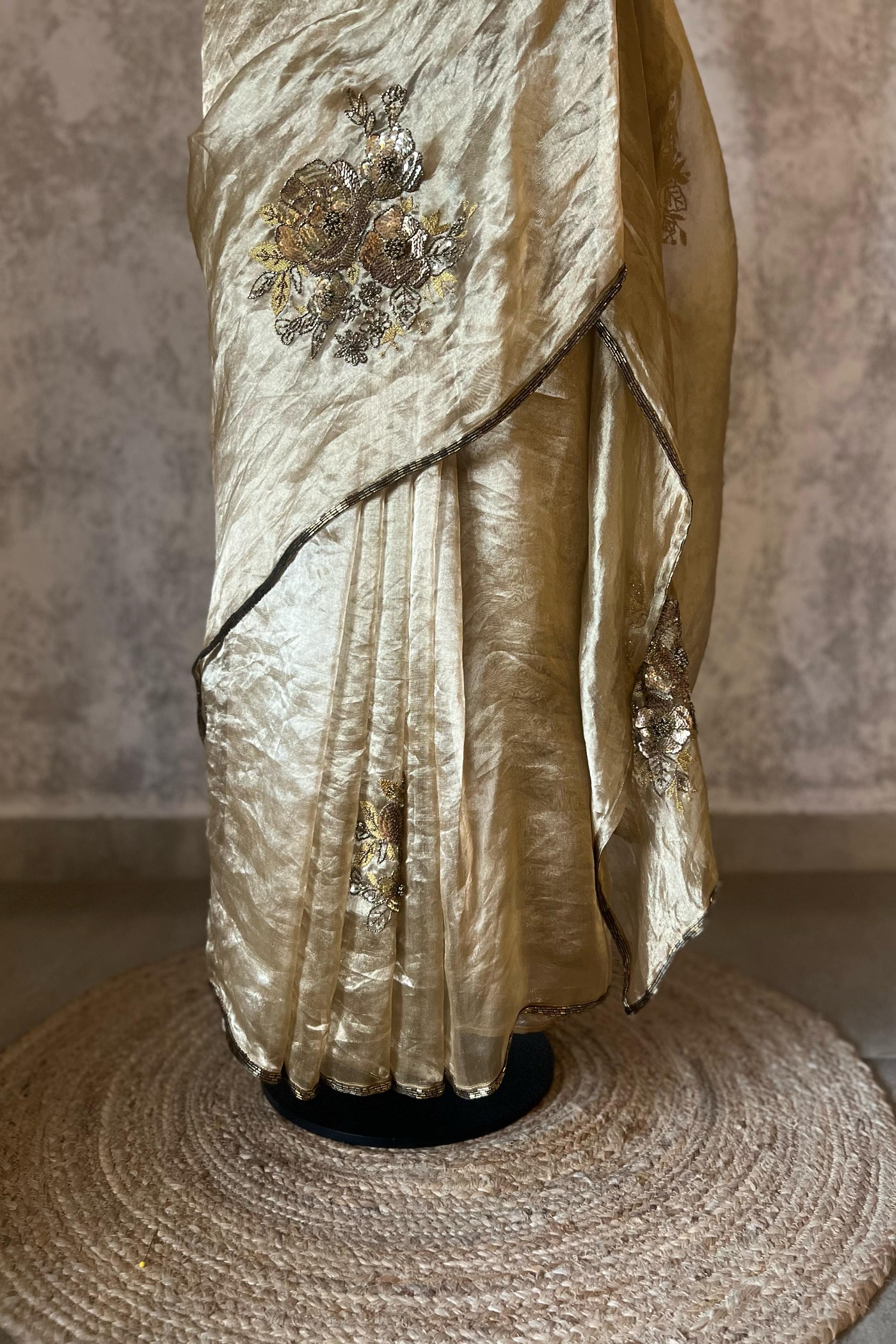
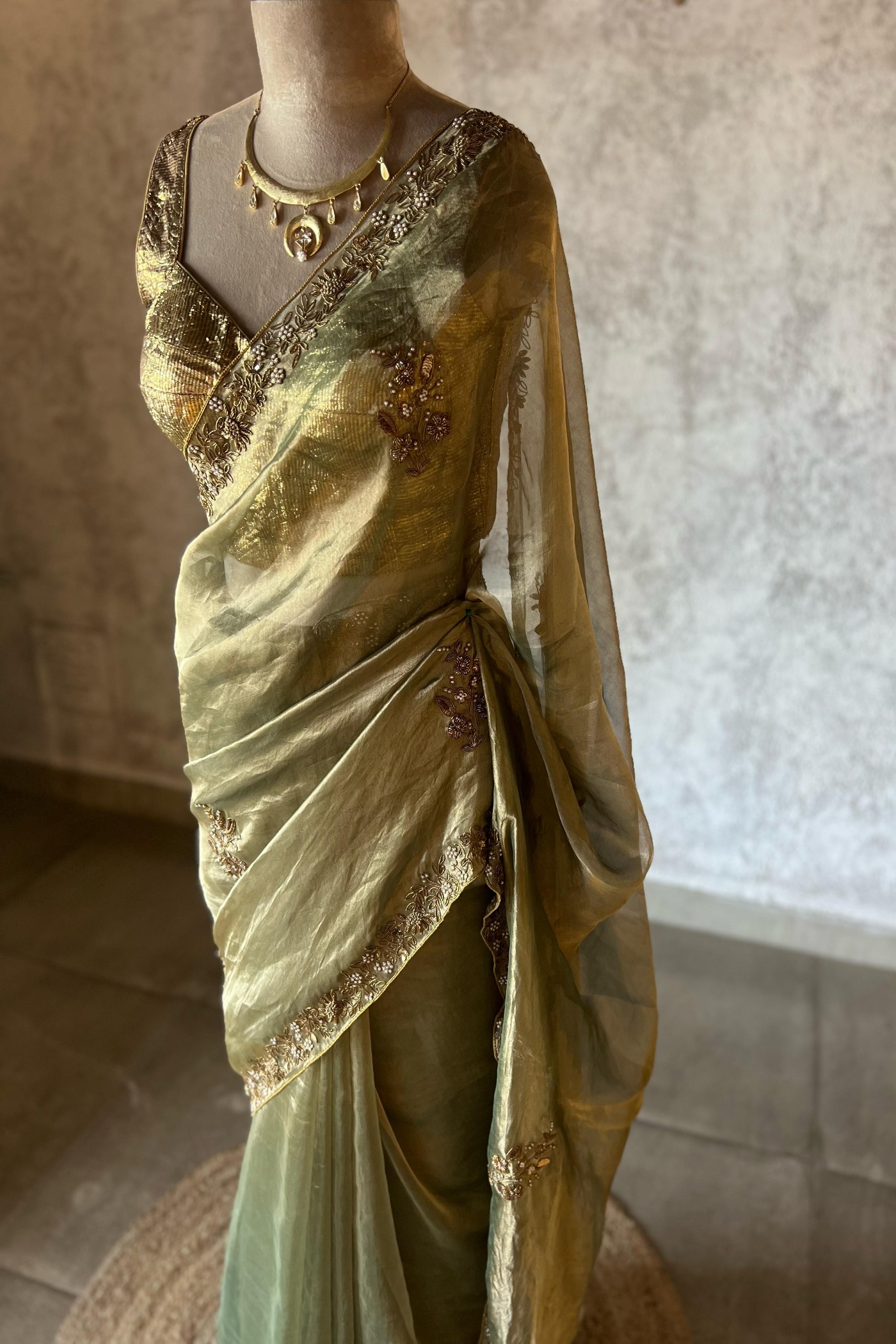
1. ELOISE YELLOW SILK SATIN SAREE — The Divine Colour of Lord Venkateswara
Yellow is Lord Venkateswara's most auspicious colour — offered to Him during the Thursday abhishekam, the colour of turmeric, of the dawn light that breaks first over the Seshachalam hills, of blessings given and received. The Eloise Yellow Silk Satin Saree captures this divine hue in opaque silk satin — a fabric with a beautiful weight and a gentle luminescence that is never sheer. When you stand before the Lord in this colour, you carry His own most beloved tone. A deeply considered choice for Tirupati darshan.
Shop Eloise Yellow — ₹ 26,500 →
2. MADHUBALA SATIN SILK SAREE — Graceful Elegance at an Honest Price
Named after one of Indian cinema's most timeless beauties, the Madhubala Satin Silk Saree brings quiet grace to your pilgrimage wardrobe. Satin silk is fully opaque, smooth against the skin, and breathable enough for the warm Tirumala afternoons. At ₹ 10,500 it is the most accessible saree in this guide — a reminder that reverence does not require extravagance, only sincerity.
3. RANI SILK MEENAKSHI SAREE — Named for the Divine Feminine
The Rani Silk Meenakshi Saree draws its name from Goddess Meenakshi of Madurai — herself a form of the divine feminine revered across South India. Woven in rich silk with detailing inspired by South Indian temple tradition, this saree carries a feeling of devotion built into its very design. The deep pink tone and solid silk base are fully opaque and appropriate for darshan — and the name itself feels like a sincere offering.
Shop Rani Meenakshi — ₹ 26,500 →
4. ELOISE PINK SILK SATIN SAREE — Warmth in Auspicious Rose
Pink is one of the most beloved temple colours across South India — warm, feminine, and deeply auspicious. The Eloise Pink Silk Satin Saree in rose-blush tones is crafted from the same opaque silk satin as its yellow counterpart, offering the same refined drape and dignified presence. In the warm lamp-light of Tirumala's inner sanctum, a soft pink silk satin saree glows with a particular quiet beauty.
5. SIANA OLIVE GREEN SAREE — The Colour of the Sacred Hills
The seven hills of Tirumala are a deep, ancient green — forested, cool, alive with birdsong and mountain streams that devotees have walked beside for centuries. The Siana Olive Green Saree honours this sacred landscape. Substantial and fully opaque, it drapes with quiet authority — a saree for the woman who chooses to arrive before the Lord not in spectacle but in stillness. The olive tone is composed rather than loud, befitting the contemplative spirit of pilgrimage.
6. RED SIANA CHIFFON SAREE — The Colour of Devotion
Red is among the most universally auspicious colours in Hindu tradition — the colour of Shakti, of Goddess Lakshmi, of the flowers offered daily at the feet of the Lord. The Red Siana Chiffon Saree is cut from layered chiffon — a fabric that is light and breathable for the warm Tirumala climate while being completely opaque when draped in the traditional manner. This is the saree for the devotee who arrives before Lord Venkateswara in the full fervour of her devotion.
7. PARO GOLD SILK TISSUE SAREE — The Temple's Own Colour
Gold is the colour of Tirumala itself. The great gopuram is sheathed in gold. The presiding deity is adorned in gold ornaments. The lamps that burn through the night burn gold. The Paro Gold Silk Tissue Saree honours this sacred connection deeply. Silk tissue has a characteristic shimmer and body; it is heavier than organza, fully opaque, and drapes with a ceremonial weight entirely fitting for a sacred occasion. If you choose one saree for your Tirupati darshan, let it be this one.
8. MEENAKSHI SILK TISSUE SAREE — Woven with Intention
The Meenakshi Silk Tissue Saree is created with care — silk tissue that catches light the way the gopuram gold does at the hour of the evening aarti, without ever being excessive or out of place. Its considered design and rich fabric make it fitting for the most sacred moments of your pilgrimage. Wear it for the main darshan and carry the memory of it with you always.
Shop Meenakshi Silk Tissue — ₹ 26,500 →
Devotees at the sacred Tirumala hills — a journey of millions undertaken in faith
Practical Tips for Your Tirupati Visit
- Book darshan in advance — visit the official TTD website to book an SSD (Special Seva Darshan) or Divya Darshan token. Without a booking, general queues can take 12–20 hours.
- Wear opaque fabric — sheer or transparent sarees may not pass the dress check at entry. All sarees in this guide are fully opaque.
- Cover your head with the pallu during darshan — a traditional mark of deep respect before the deity.
- Remove footwear at entry — wear simple footwear easy to slip off; cloakrooms are available near the main entrance.
- Keep jewellery simple — gold or silver is appropriate; avoid heavy costume pieces that feel out of place in the sanctum.
- Walk the sacred steps (Alipiri Mettu) if able — all 3,500 steps through the forested hill path are themselves considered a profound act of devotion.
- Sri Vari Laddu Prasadam — receive the famous Tirupati laddu after darshan. Prepared fresh daily by the TTD in pure ghee, it holds a GI tag and is considered a direct blessing of Lord Venkateswara. Carry it home with reverence.
Frequently Asked Questions
What colour saree is most auspicious for Tirupati darshan?
Yellow is Lord Venkateswara's most beloved colour and the most traditionally auspicious choice. Red, green, pink, and gold are equally sacred. For a first visit, avoid plain white, which is associated with mourning in many traditions.
Can I wear organza to Tirupati temple?
Plain unlined organza is transparent and may not pass the modesty check at entry. To avoid any difficulty, always opt for fully opaque fabrics — silk satin, chiffon, silk tissue, or cotton silk.
How long does darshan take at Tirupati?
With a pre-booked SSD token, darshan typically takes 2–5 hours from arrival. General queue Divya Darshan without a booking can take 6–20 hours depending on the day. Book well in advance on the TTD website.
Is it hot at Tirumala?
Tirumala sits at 853 metres and is cooler than the Tirupati plains — pleasant in the morning and evening, with mild warmth in the afternoon. Chiffon and silk satin are both breathable and ideal for the climate.
What is the significance of the Tirupati Laddu?
The Sri Vari Laddu is one of the most celebrated prasadam offerings in India, prepared fresh daily by the TTD using pure ghee, cashews, sugar, and cardamom. It holds a Geographical Indication (GI) tag. Receiving it after darshan is considered a direct blessing of Lord Venkateswara — carry it home with reverence.
Shop Sarees for Tirupati Temple Visit
Opaque, graceful, and crafted with care — ready for your darshan.
Explore All Sarees →
The information below is required for social login
Sign In
Create New Account