

Wedding season in North India peaks October through February when Delhi and Punjab see temperatures drop to 8-12 degrees by evening. Here is how to dress for the winter baraat without compromising the look.
Wedding season in North India peaks in the winter months — October through February — when Delhi and Punjab see temperatures drop to 8–12°C by evening. A baraat in January in Delhi is a very different dressing challenge from a summer wedding. You need to look festive and dressed-up while managing real cold, and you often cannot layer with coats or shawls in ways that disrupt the outfit. Here is how to approach the winter baraat correctly.
The Winter Baraat Dressing Challenge
The core problem: most Indian festive fabrics — Silk Organza, light Satin — are designed for warmth-neutral or warm conditions. They look extraordinary but do nothing to keep you warm. At the same time, draping a heavy shawl over a silk saree or lehenga undermines the entire look. The solution is a combination of smart fabric choice, strategic layering, and practical cold-weather planning.
Best Fabrics for Winter Baraat
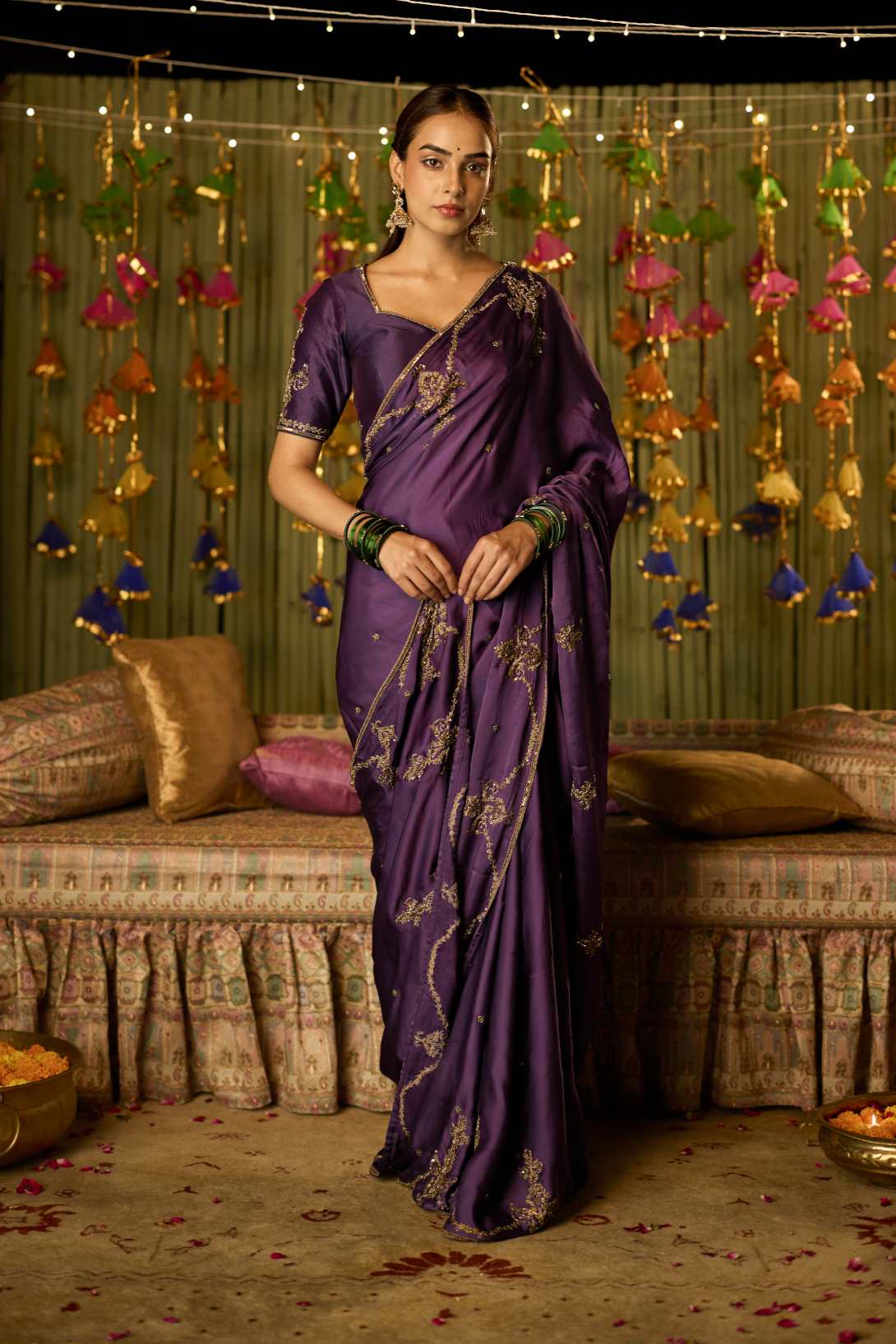
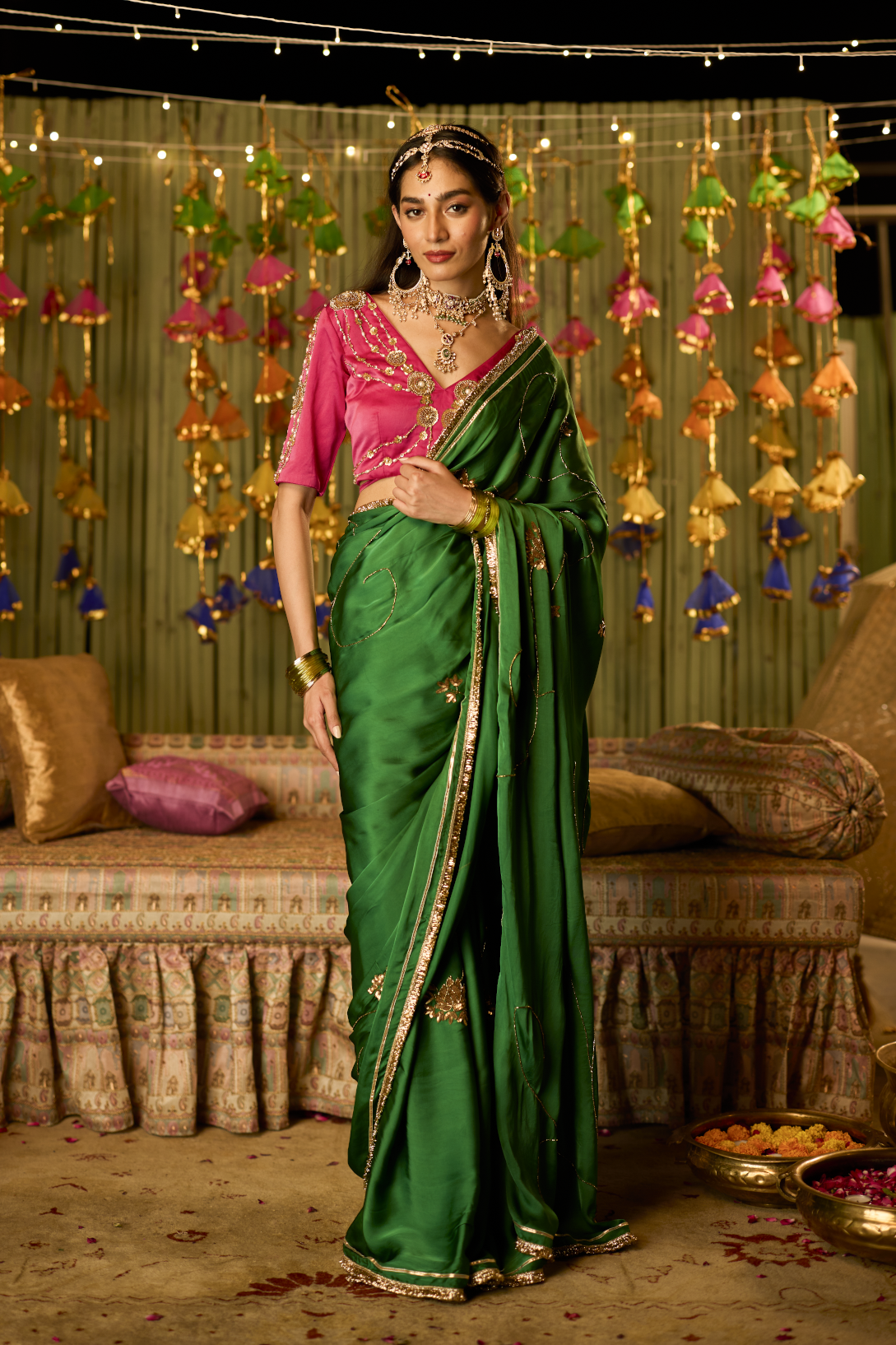
Silk Satin: Heavier than organza, Silk Satin retains some body warmth and feels less cold against skin in outdoor conditions. The Madhurima Eggplant Purple Saree and Siana Silk Satin Saree in Satin Georgette both work well for winter baraats.
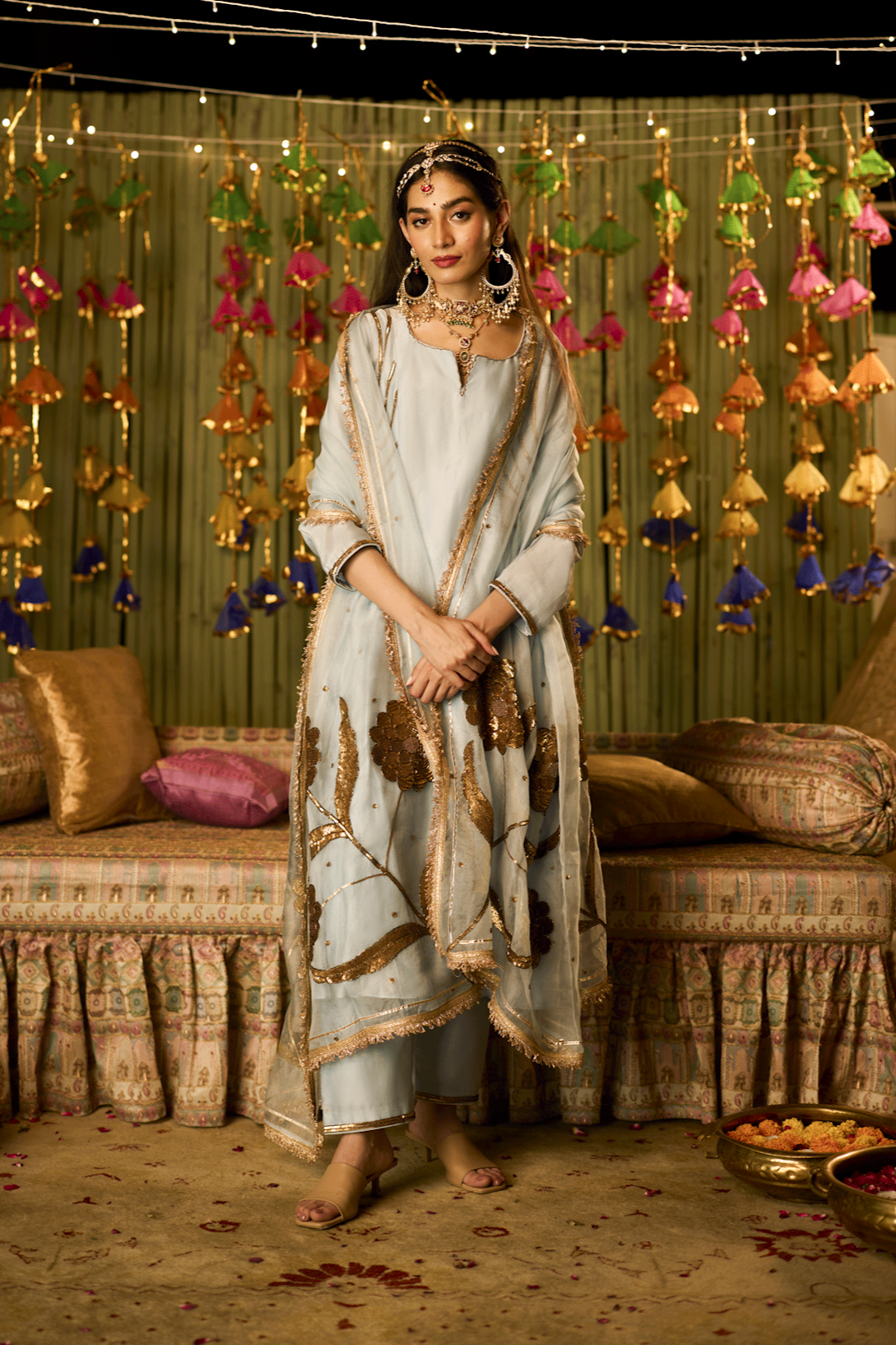
Silk Chanderi: Traditional winter wedding fabric in North India. Warm enough for December evenings, structured, and photographically elegant. The Lauret Anarkali Set in Silk Chanderi is specifically suited for winter baraat settings.
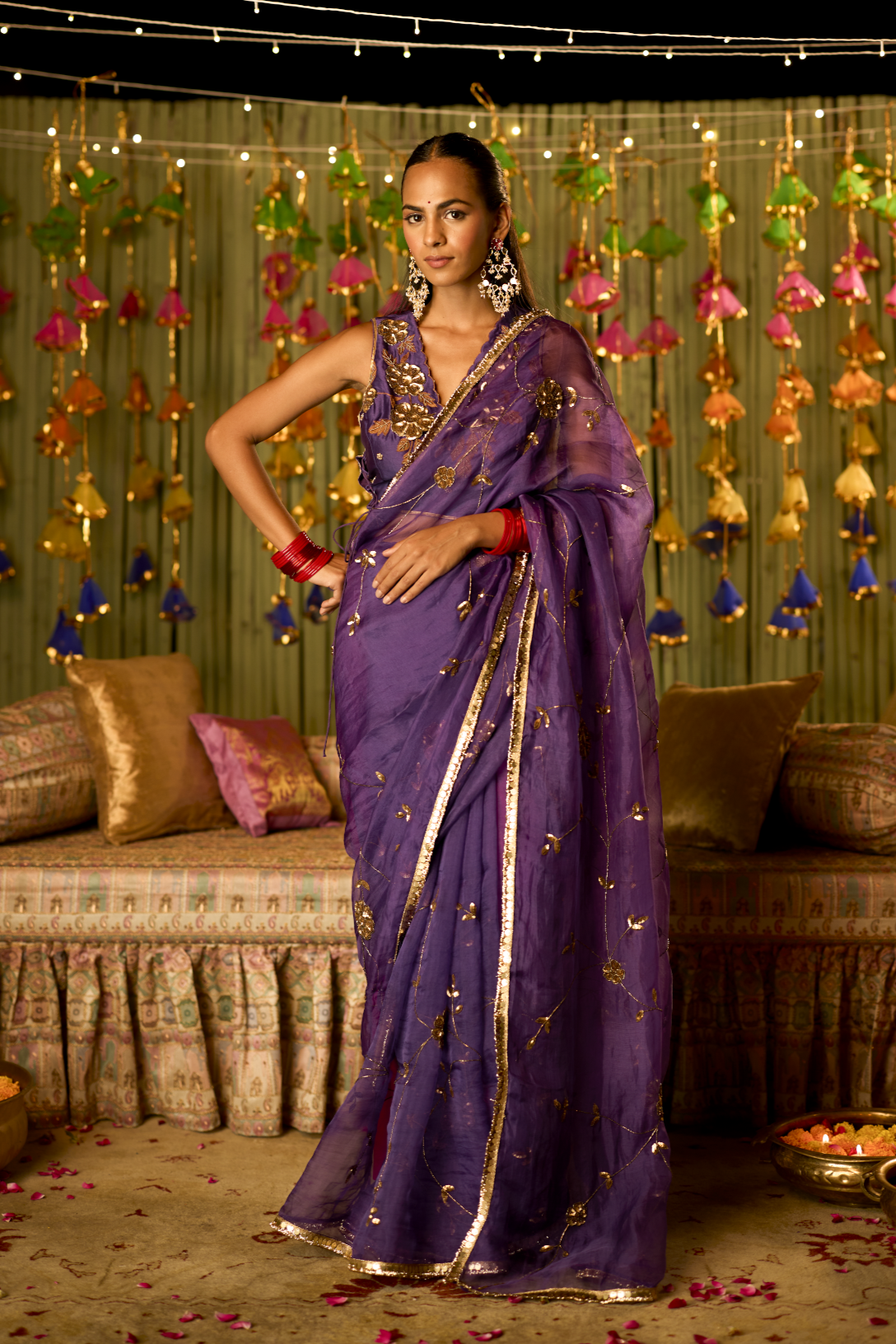
Silk Organza with layering: If you prefer an Organza saree, wear a full-sleeved, warm blouse in matching fabric. The blouse does significant warmth work without disrupting the saree's look.
Layering Without Ruining the Look
- Full-sleeved blouse: The single most effective warmth addition without any visual disruption. Match blouse fabric and color to the saree. Heavy embroidery on full sleeves looks intentional and festive.
- Silk shawl / dupatta: A dupatta worn as a shawl reads as part of the outfit, not as cold-weather management. Choose a dupatta in a complementary color or matching embroidery.
- Anarkali over slim leggings: The anarkali silhouette naturally allows slim thermal leggings underneath without any visible disruption. This is the most practical winter baraat approach.
- Pashmina shawl: A fine Pashmina in a coordinated color can be draped between dancing without looking out of place.
Colors for Winter Baraats in North India
Winter wedding palettes in Delhi and Punjab tend toward deeper, richer tones:
- Eggplant / Deep Purple: The premier winter baraat color. Rich, warm in visual weight, and stunning under evening lighting. The Madhurima Eggplant Purple Saree was designed for exactly this setting.
- Deep Jewel Tones: Teal, forest green, deep burgundy adjacent colors read beautifully in winter procession photography.
- Purple: The Nayanthara Purple Organza Saree works for winter with a full-sleeved blouse and a matching dupatta for warmth.
Practical Tips for Delhi / Punjab Winter Baraats
- Carry warmth in a small clutch bag — hand warmers, a compact pashmina — rather than wearing a coat you'll have to discard mid-procession
- Choose closed or covered footwear over open sandals for outdoor winter baraats
- Pre-drape your saree tightly before leaving home — cold hands make draping adjustments difficult mid-procession
- For Punjab baraats that move through open courtyards and streets, the anarkali silhouette with full sleeves is the most practical festive choice
The Peeli Dori BARAATI Edit includes pieces that work beautifully for North Indian winter weddings — particularly the Silk Satin sarees, the Silk Chanderi Anarkali Set, and the Silk Organza sarees styled with full-sleeved blouses.

The information below is required for social login
Sign In
Create New Account