

A haldi begins at eleven in the morning on somebody's terrace. A mehendi begins in the afternoon and runs until the henna dries. Neither is a sangeet, and the anarkali that works for one will not automatically work for the other. This is how we would choose fo
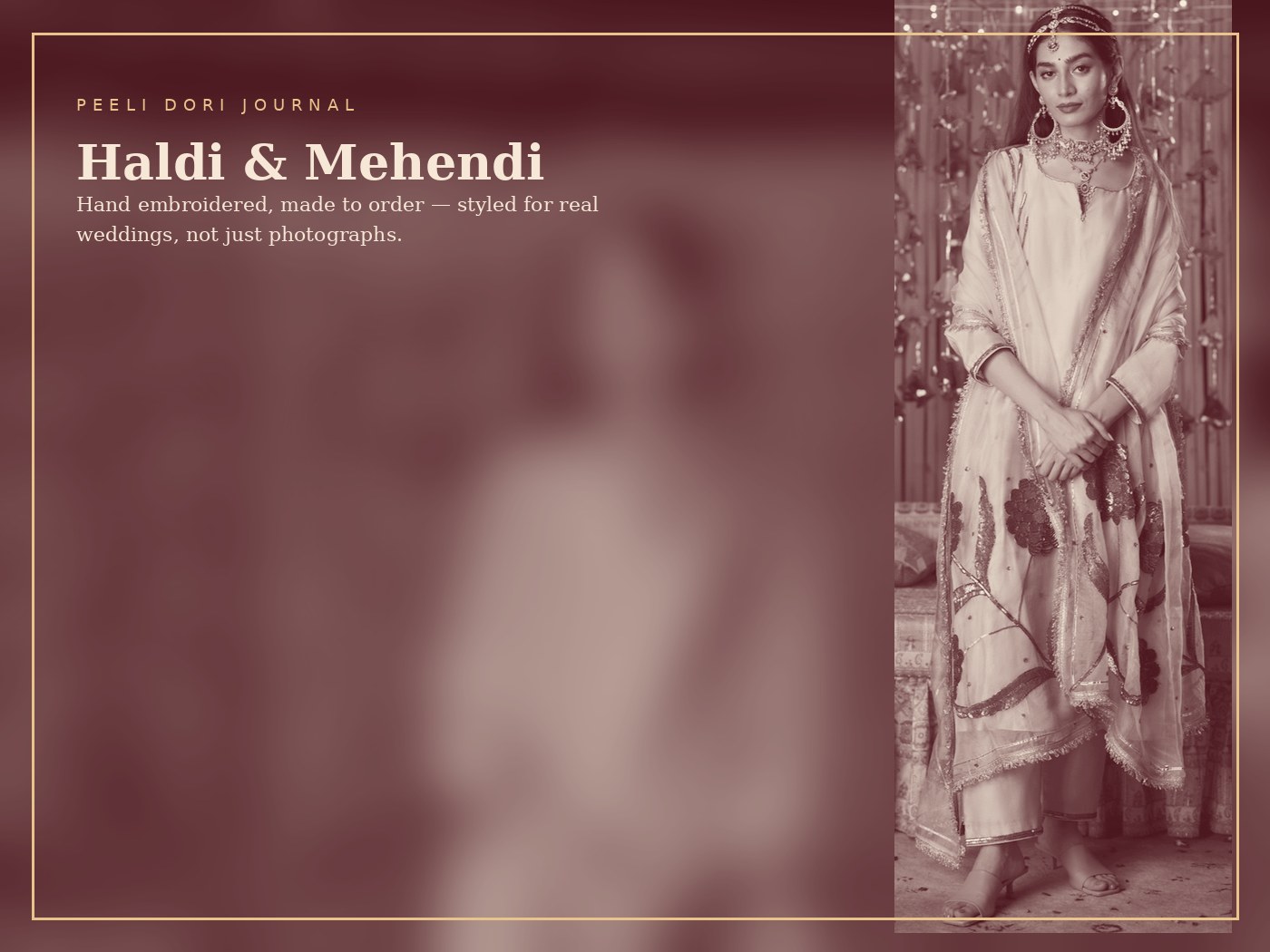
A haldi begins at eleven in the morning on somebody's terrace. A mehendi begins in the afternoon and runs until the henna dries. Neither is a sangeet, and the anarkali that works for one will not automatically work for the other. This is how we would choose for the two daytime functions, what we would avoid, and why.
Why the daytime functions ask for a different anarkali
Daylight is honest. At eleven in the morning the sun is overhead and there is no spotlight doing favours: no shadow to slim a silhouette, no warm light to make metal thread sparkle. A piece that looks rich at a sangeet can look flat, or simply heavy, in the middle of the day. That single fact decides most of what follows.
The second fact is duration. A haldi is standing, greeting, eating off a small plate, bending to touch feet. A mehendi is four hours on a lawn, much of it seated on the floor with one hand held out. An anarkali is a good shape for both because it is forgiving through the waist and it moves, but the weight and the hem have to be right or you will spend the afternoon managing your clothes instead of the function.
And then there are the photographs. Daytime pictures are taken at eye level, close, in groups, usually from the waist up. What shows is the neckline, the yoke, the front panel, the sleeves. A border that took three weeks and sits six inches above the floor will barely appear in a single frame. When people tell us afterwards that the outfit photographed badly, it is usually because the work was in the wrong place rather than because there was not enough of it.
Everything we make is made to order, so the length, the sleeve and the fit are decided before the piece is cut. That is worth using. Tell us the heel you will actually wear and the hem can be cut for it, which matters more on grass than it sounds.
Haldi: light grounds, real embroidery, and the marigold problem
The first instinct at a haldi is yellow, and we usually talk clients out of it. A yellow anarkali has to compete with marigold garlands, yellow flowers, a yellow backdrop and often a yellow dress code around you. The piece disappears into the room. Light grounds do the opposite: coconut, ivory, blush, soft pink, powder blue. In flat sunlight they stay crisp, and the embroidery reads clearly against them.
Turmeric is the other consideration, and it is worth being blunt about it. Haldi paste is a pigment, not a spill. It will find hems, dupattas and the edge of a sleeve. Do not rub it, do not put water on it at the venue, and do not let anyone hand you a tissue and tell you it will be fine. Let it dry, fold the piece loosely, and take it to a dry cleaner within a few days, pointing out the stain when you hand it over. That advice has saved more pieces than any fabric choice.
Where the work sits matters more here than anywhere else. Dense hand embroidery on the yoke and the front panel will be in every photograph taken that morning. A heavily worked floor-length border is beautiful and mostly invisible, and it is also the part that drags across a terrace. If you are choosing between the two, choose the panel.
For the haldi itself we would keep the dupatta light and pinned at one shoulder, so both hands stay free for the plate, the photographs and the turmeric. A silk organza or fine silk dupatta holds a pin better than a soft one and does not add weight.
Mehendi: a lawn, a low seat, four hours of photographs
A mehendi is a longer, more casual function, and it has its own practical logic. The colours that look best are the deeper ones: rust, purple, powder blue, deep pink, forest green. They hold up as the light goes from afternoon to evening, which is exactly what this function does, and they sit well next to henna on the hands.
Think about how you will be sitting. Most mehendi setups mean the floor, a low stool or a cushion, with one arm extended for an hour at a time. A very wide, stiff anarkali flare is difficult to arrange gracefully in that position, and a long dupatta ends up over wet henna. Softer flares, a slightly shorter hem, and a dupatta pinned high on one shoulder are the three small decisions that make the difference.
Sleeves deserve a thought. The henna artist will want your forearm bare to the elbow. A sleeve you can push up cleanly, or a short sleeve, is practical. If you have set your heart on full sleeves, plan to have the henna done in the first hour before you change, or accept that the cuff will be in the way.
The photographs at a mehendi are almost all about hands and faces, framed close. That means the front panel, the neckline and the sleeve edge are what people will actually see in the album, which is another argument for putting the embroidery where the camera is rather than at the hem.
Fabric and craft, up close
Chanderi silk, silk and organza behave differently in daylight. Chanderi has a quiet, almost matte sheen and stays cool through a long afternoon. Silk has weight and drape, which suits a fuller flare. Organza holds its shape and catches light at the edges, so it shows a silhouette clearly, but it also shows every crease, which is why we would not choose it for a function where you will be sitting on the floor for hours.
When you look at a hand-embroidered piece, turn it over. Hand work is not perfectly uniform, and it should not be. Look at the tension of the stitches, whether the ground fabric puckers around the motif, whether the pattern follows the shape of the panel or has been stamped on regardless. A slightly irregular back is usually the signature of a person working rather than a machine repeating.
This is also where the price comes from. Every piece is hand embroidered by artisans, made to order, one at a time, with organic dyes. There is no second identical piece waiting in a warehouse if the fit is wrong, which is why we ask for measurements rather than sizes, and why custom sizing is part of how we work rather than an extra.
Six pieces from the studio
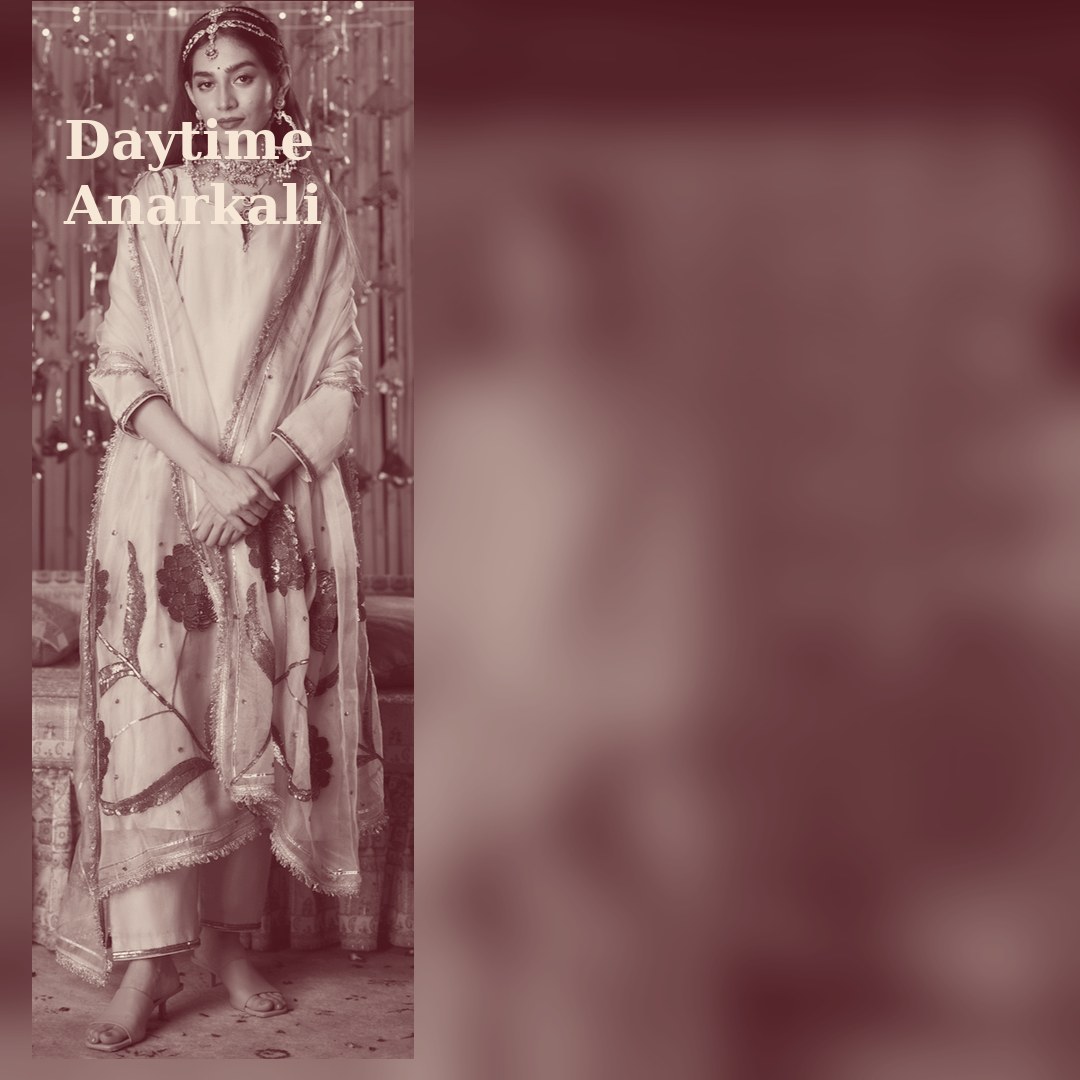
These are all made to order and cut to your measurements. The Gulmohar sets are the light-ground option and the ones we would put on a haldi; the Madu pieces and the Nayanthara run darker and suit a mehendi that goes into the evening. Prices are as listed, and every piece can be discussed on WhatsApp if you are deciding between two.
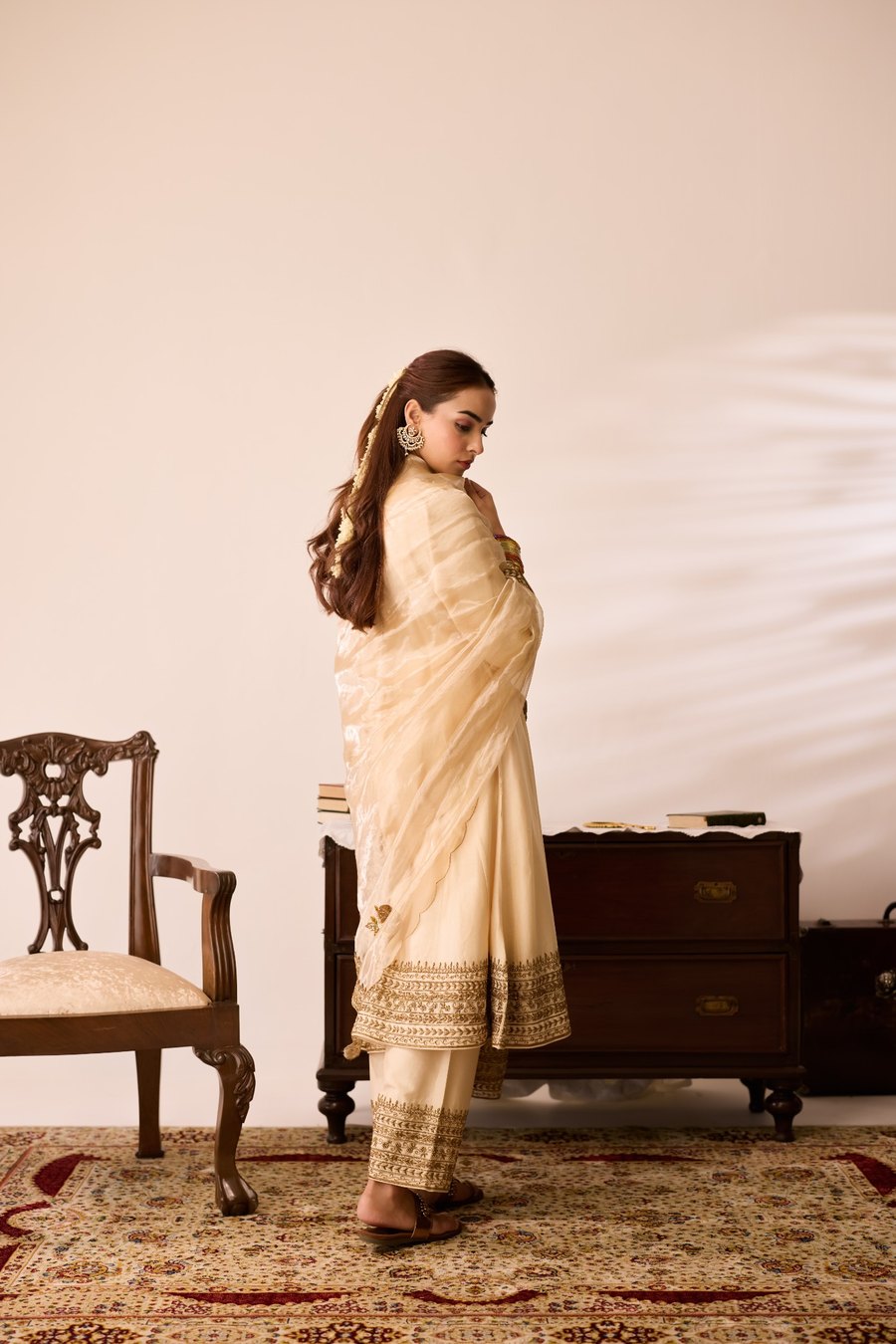
₹44,500
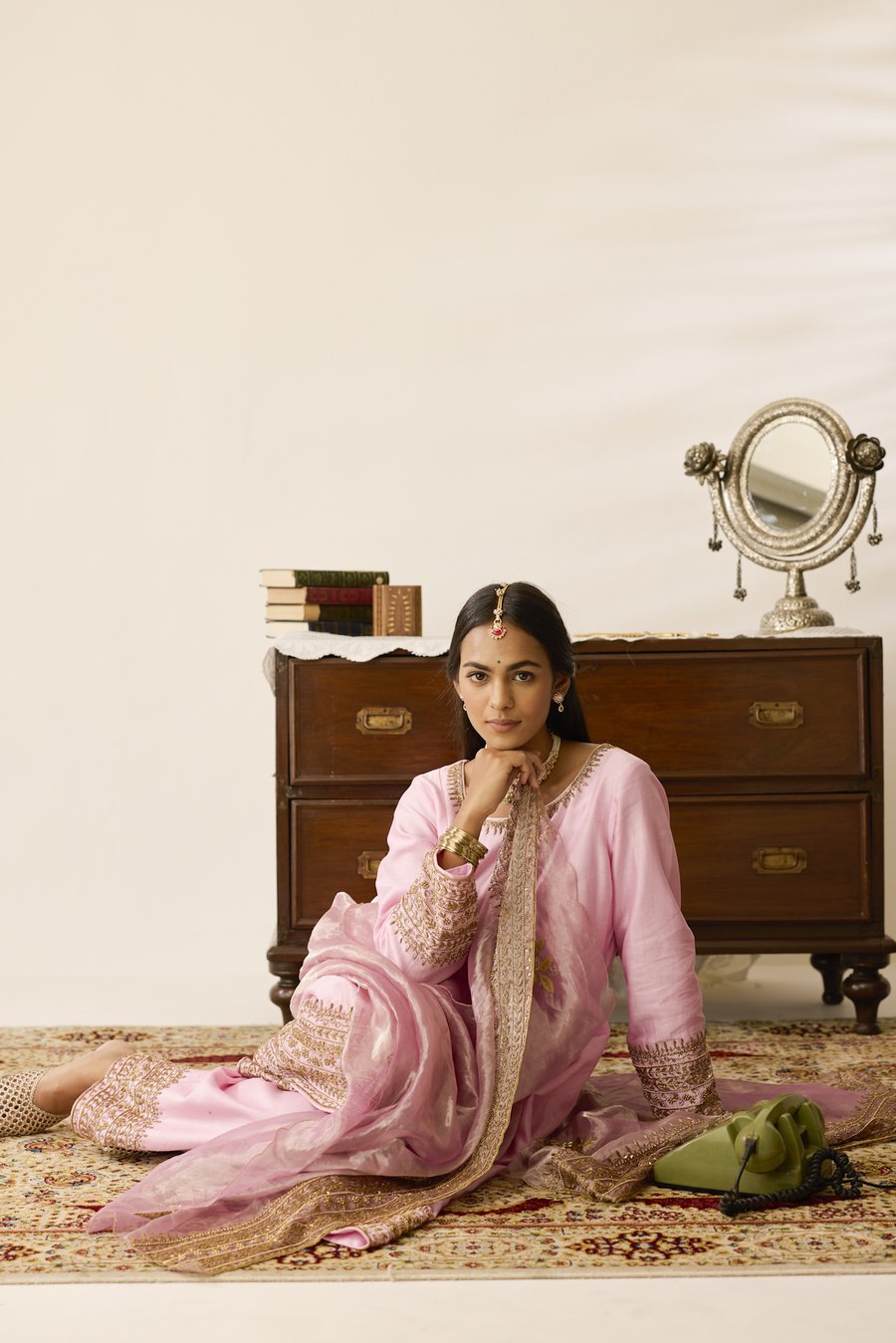
₹44,500
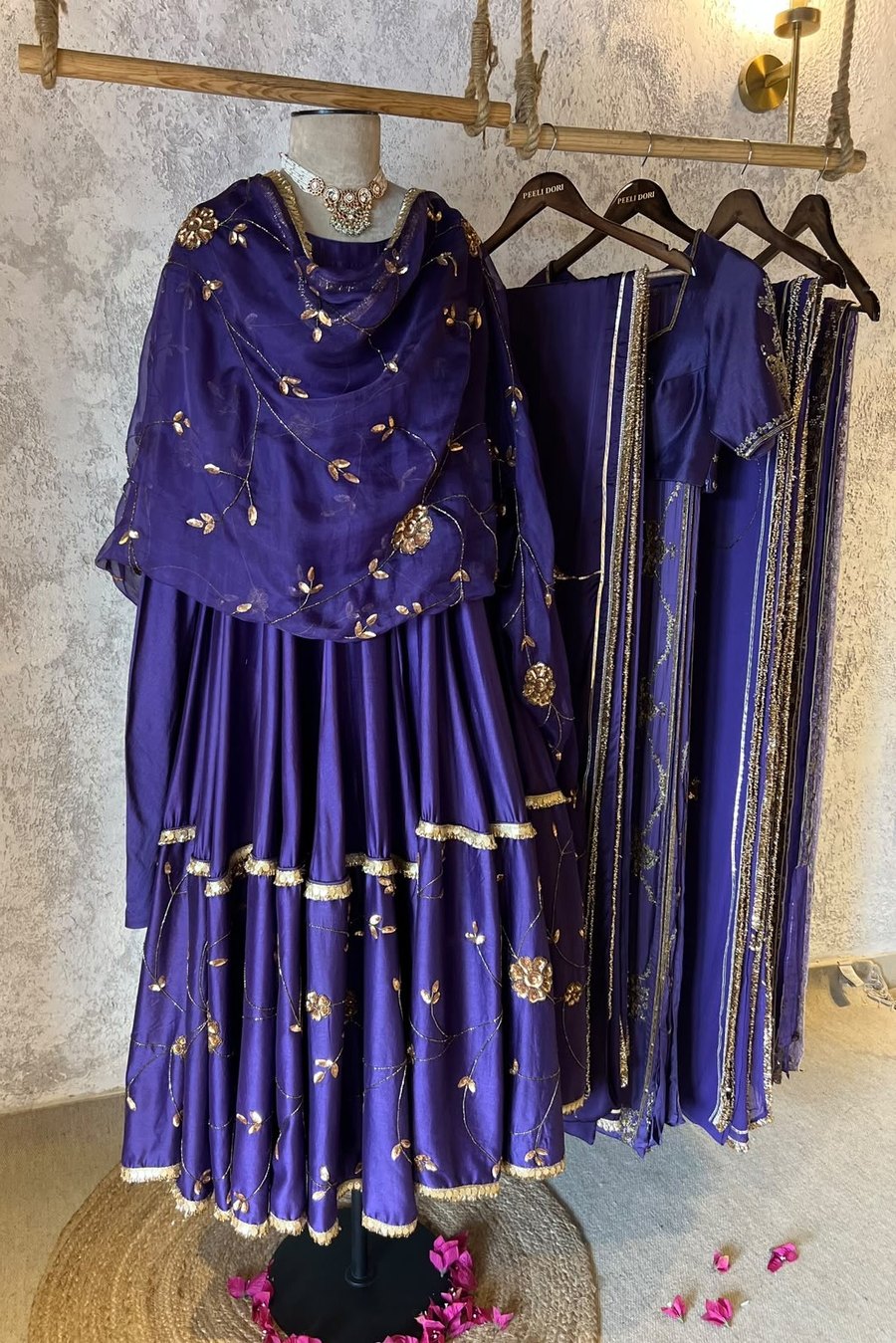
₹36,500
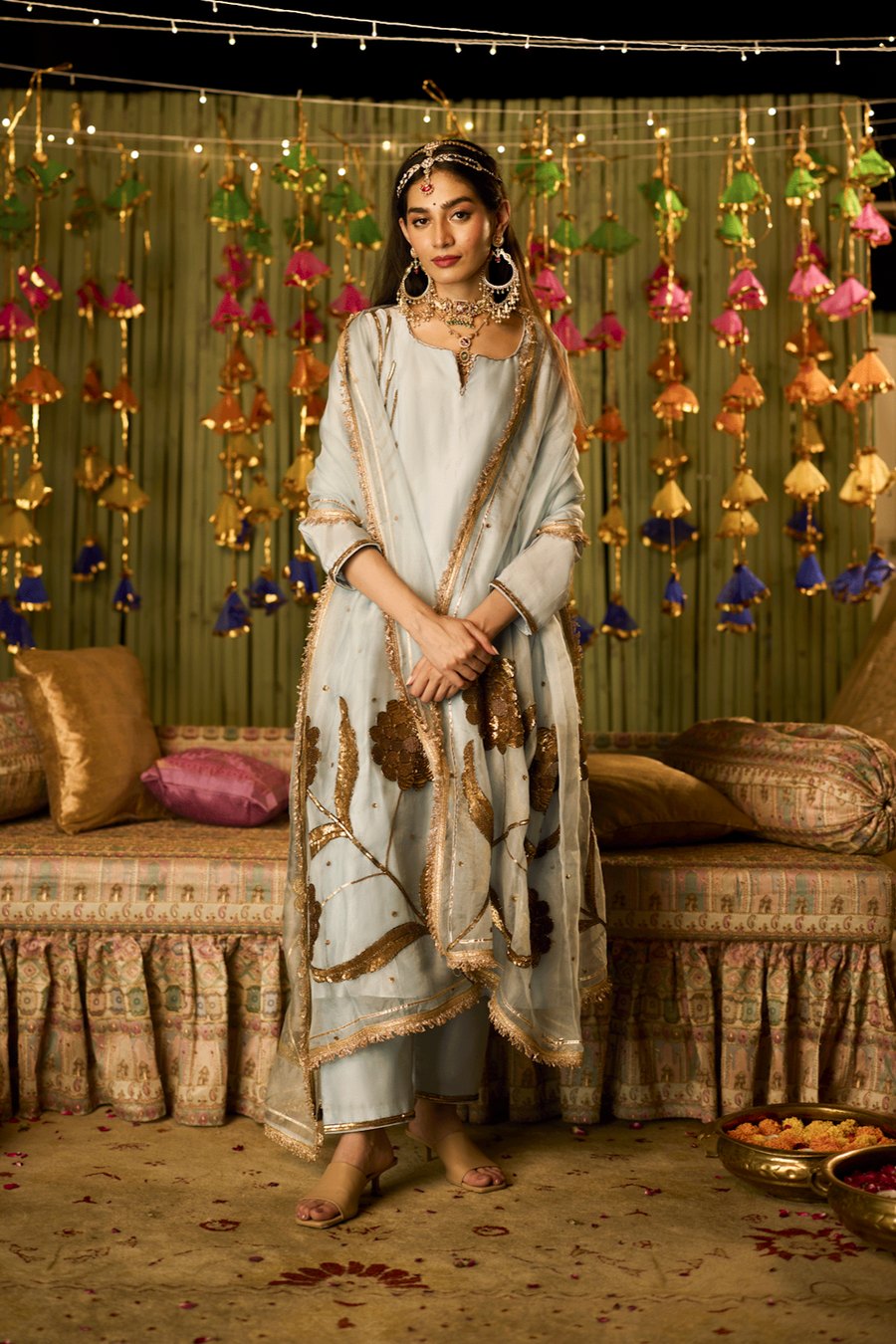
₹36,500
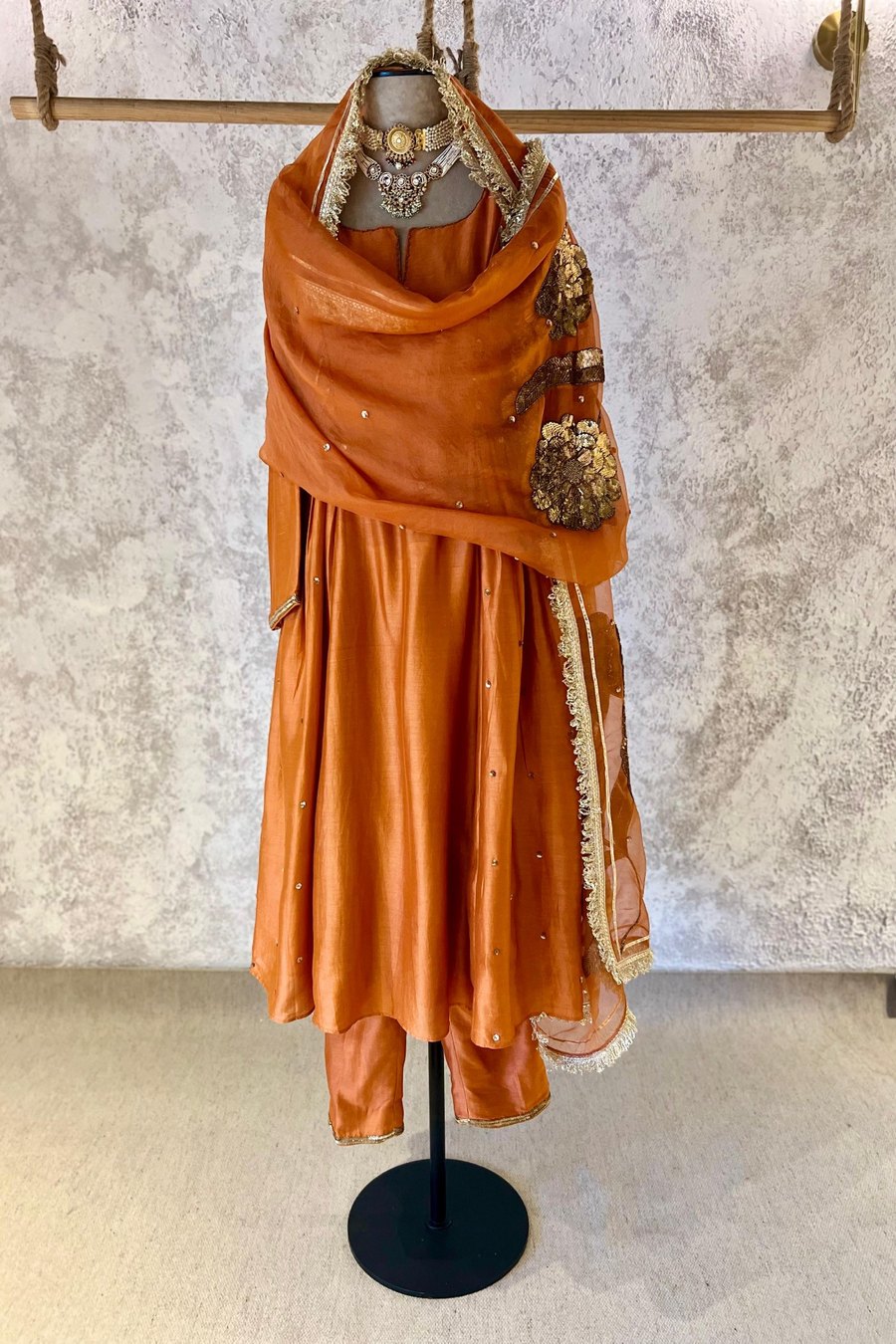
₹36,500
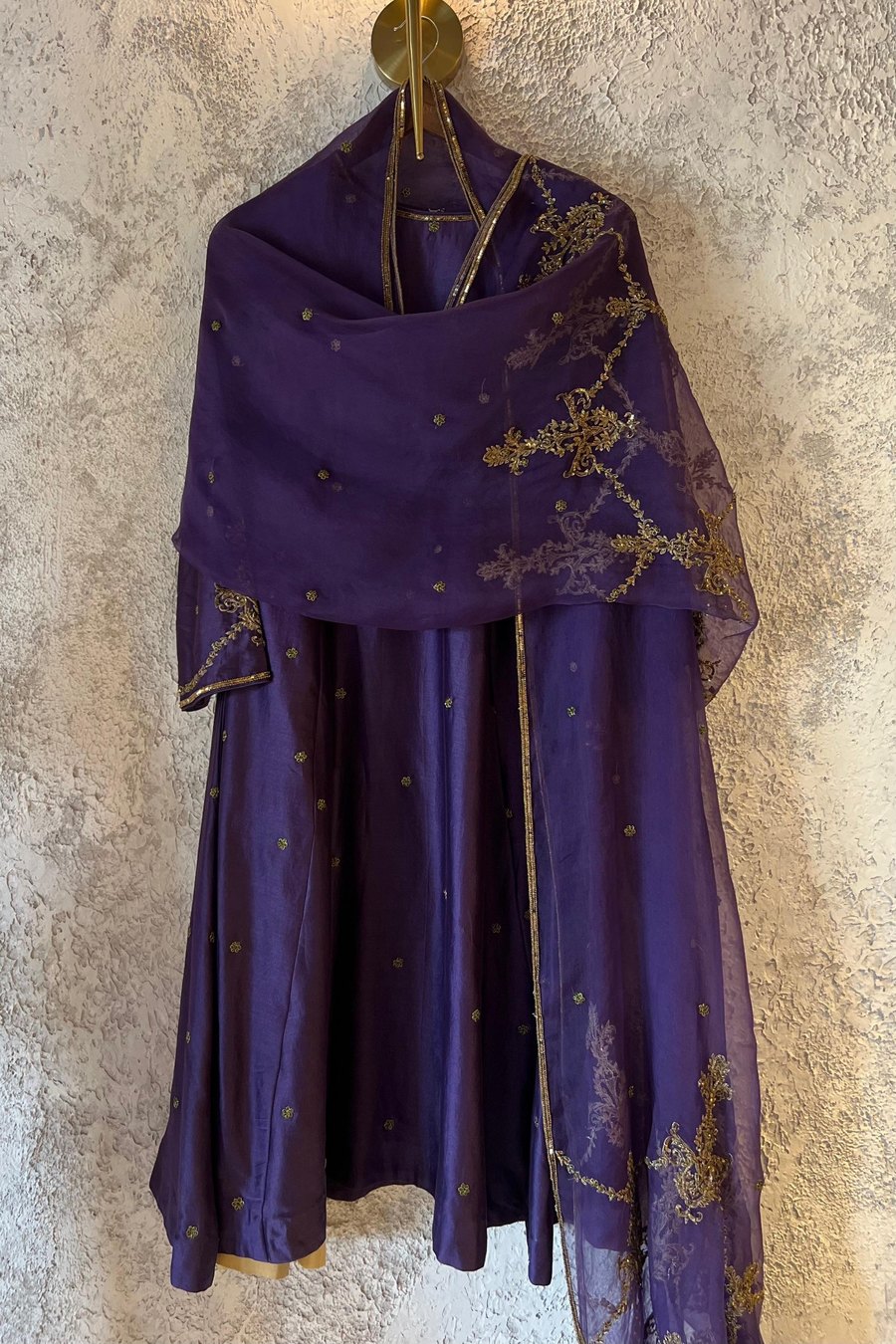
₹34,500
Blouse, dupatta and the details that decide the day
For a daytime function the blouse should be comfortable before it is dramatic. Deep backs and elaborate ties are lovely at a reception and a nuisance when you are being photographed from the front for four hours and eating standing up. Check that you can raise both arms, sit cross-legged and turn at the waist without anything pulling. If you plan to wear the same anarkali again with a different dupatta, a plainer blouse gives you more room to change the look.
Pin the dupatta in two places, one at the shoulder and one at the waist on the side you are least likely to photograph. Carry two spare pins. At a mehendi, keep the pallu away from the henna; at a haldi, keep it off the ground. A silk organza dupatta holds a pin firmly without marking the fabric beneath.
Jewellery should follow the embroidery rather than compete with it. If the neckline is densely worked, earrings and a maang tikka are enough. If the neckline is plain, a necklace earns its place in the photographs. On a lawn, choose a flat or block heel, and tell us the heel height so the hem is cut for it rather than for a measurement taken in bare feet.
Care, stains and storage
After the function, air the piece for a day before you fold it away. Do not put it back in a bag while it is still holding the heat of the afternoon. If someone has spilled something on it, dry clean within a few days and describe exactly what it was, especially at a haldi where the answer is usually turmeric or oil.
Store hand embroidery in muslin rather than plastic, which traps moisture and can yellow the ground fabric over time. Refold along slightly different lines every few months so the creases do not set into the work. Keep the piece out of direct sun, and in Delhi or Dehradun, where the humidity swings between seasons, check it once a year rather than once a decade.
If you are travelling to a function in another city, fold the piece with tissue at the embroidered panel and carry it in a cloth bag rather than a hard case. Steam it on arrival instead of pressing it directly, particularly over metal thread.
Frequently asked
Can I wear an anarkali to a haldi?
Yes, and it is one of the most practical dressy options for the function. Choose a light ground so the piece does not disappear against marigold, keep the hem clear of the floor, and put the embroidery where the daylight photographs will actually catch it.
Which colour anarkali should I wear to a mehendi?
Rust, purple, powder blue, deep pink and forest green are the colours we suggest most often. Deeper grounds hold up as a mehendi moves from afternoon into evening, and they sit well beside henna on the hands.
Will hand embroidery survive a haldi?
The embroidery itself is not the risk; staining is. Turmeric is a pigment, so do not rub or wet it at the venue. Let the piece dry, then take it to a dry cleaner within a few days and point the stain out when you hand it over.
Can you make the anarkali to my measurements?
Every piece is made to order, with custom sizing included. Send us your measurements and the date of the function on WhatsApp and we will confirm what is possible in time.
Do you deliver outside India?
Yes. Shipping within India is free above ₹10,000, and international shipping is available above ₹89,000 with the code INTSHIP. Message us on WhatsApp and we will work out the details for your city.
Explore more: wedding 2026 · designer hand embroidered blouse — or message us on WhatsApp for styling help.

The information below is required for social login
Sign In
Create New Account