

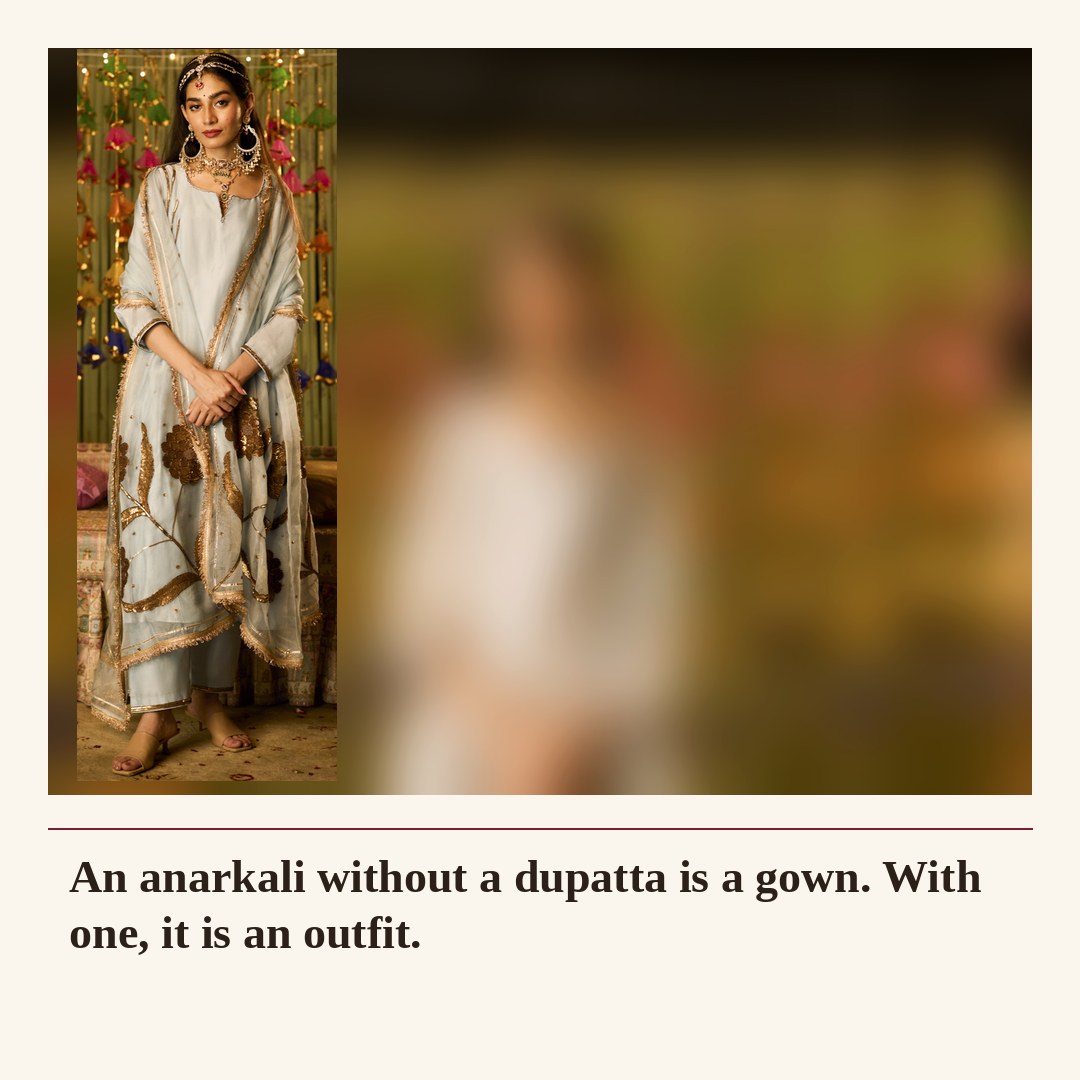
Does Half The Work — Peeli Dori" loading="eager" style="width:100%;height:auto;border-radius:4px;display:block;" /> Most of the anarkalis we sell leave the studio with a dupatta, and most of the styling questions we get on WhatsApp are about that dupatta
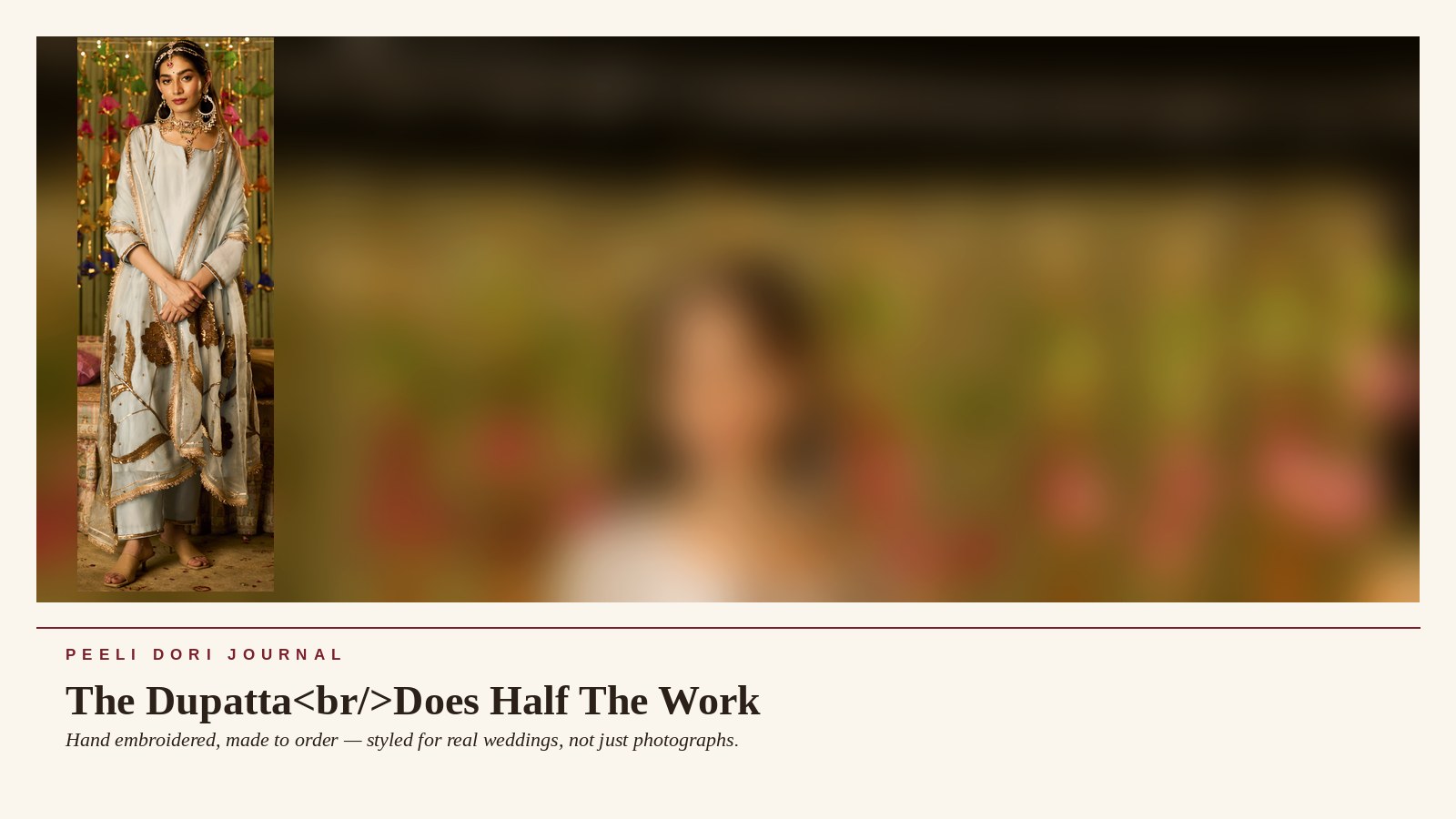
Most of the anarkalis we sell leave the studio with a dupatta, and most of the styling questions we get on WhatsApp are about that dupatta — how to pin it, how wide it should be, whether it should match. So here is how we actually think about it, from the cutting table.
Why the dupatta decides the outfit
An anarkali is a lot of fabric. The flare starts at the bust and keeps going, and once you are standing in one, the silhouette is already decided for you. What you add on top of it is what changes the read.
We see this most clearly at fittings. Take the same hand embroidered anarkali, pin a narrow organza dupatta on one shoulder, and it looks like a sangeet outfit — light, easy to dance in, a little informal. Take the same piece, open the dupatta across both shoulders so the front falls in two straight panels, and suddenly it is a reception outfit. Same kurta, same churidar, same handwork. Different function.
The dupatta also does a practical job. It covers the shoulder seam, which is where an anarkali usually shows its construction, and it breaks the width of the flare across the body. On a floor length anarkali with heavy work, a sheer dupatta is the difference between festive and weighed down.
And it is the piece you will remove first. Guests sit down, plates come around, someone's phone rings. A dupatta that is pinned properly survives that evening. One that is only draped over the shoulder goes home on somebody's chair.
Four drapes we keep coming back to
One shoulder, pinned at the seam. The Anand-style drape: bring the dupatta over the left shoulder, let the length fall behind the right arm, pleat the front edge in three or four folds and pin at the shoulder seam rather than the collarbone. Pinning at the seam means the pin takes the weight of the fabric and your skin takes none of it. This is our default for mehendi and sangeet. Both shoulders, open front. Centre the dupatta behind your back, bring both ends forward over the shoulders and let them fall straight, like two narrow panels. Pin once at each shoulder. It reads formal and photographs beautifully because the front of the anarkali stays visible. For a reception or an engagement, this is usually the answer. The veil, for ceremony. If there is a puja, a baraat welcome or an elder in the family who expects the head covered, a light dupatta taken over the head and pinned flat at the crown works without looking costumey. Keep it sheer, keep the border narrow, and keep the pleats small. Two dupattas, one sheer and one heavier. The old way, and still the best way to make a plain anarkali look bridal. A fine organza or net on the shoulders, a heavier embroidered one folded over the arm. Two is the limit, though — a third layer stops being an outfit and starts being upholstery.
Proportion: the part nobody explains
Dupatta width matters more than dupatta length, and almost nobody talks about it. A ninety-centimetre width swallows a small frame; the same fabric at seventy-five centimetres sits correctly. If you are under five foot three, ask for the narrower cut and keep the dupatta in the same colour family as the anarkali so the eye reads one long line instead of two horizontal bands.
If you are tall, or you are wearing a floor length anarkali, go wider. A wide dupatta with a contrasting border gives the flare something to sit against, and it stops a long anarkali from looking like a column. Tall frames can carry a heavy border that shorter frames cannot.
The third variable is where the dupatta ends. Our rule: it should finish somewhere deliberate — at the elbow, or just below the knee. If it stops mid-forearm or mid-thigh, it looks like it ran out of fabric. When we make a set to order, we cut the dupatta to end where you want it, which is the sort of thing worth deciding at the measurement stage rather than at the tailor's later.
And the blouse matters here too. A deep back or a sleeveless blouse under a pinned dupatta is a waste — you cannot see it. If the blouse is the piece you want seen, wear the dupatta low on the arms or skip it.
Six anarkalis from the studio, with their dupattas
Everything below is hand embroidered and made to order, priced between ₹34,500 and ₹44,500. Each one comes with its own dupatta; if you want a different width or length than the standard, tell us your measurements on WhatsApp and we will cut it that way. Sizes are made to your body, not pulled off a rack, which is also why we ask for two weeks of your patience and a proper measurement conversation.
The Gulmohar sets are the ones we get asked about most — the same handwork in coconut, powder blue and a warmer gulabi pink. If you are deciding between two functions, one Gulmohar in a soft tone covers the mehendi and the NAYANTHARA in purple carries the evening.
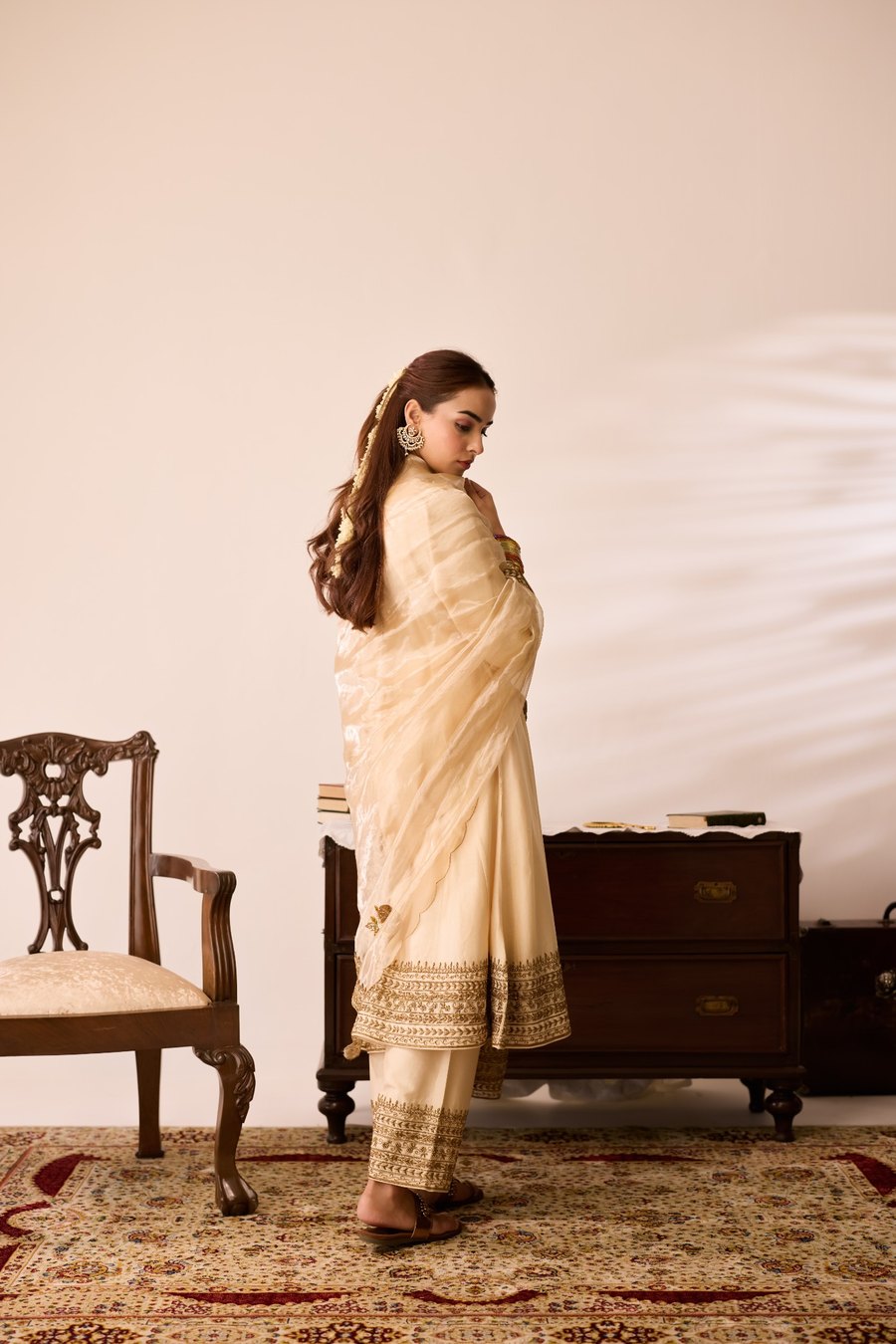
₹44,500
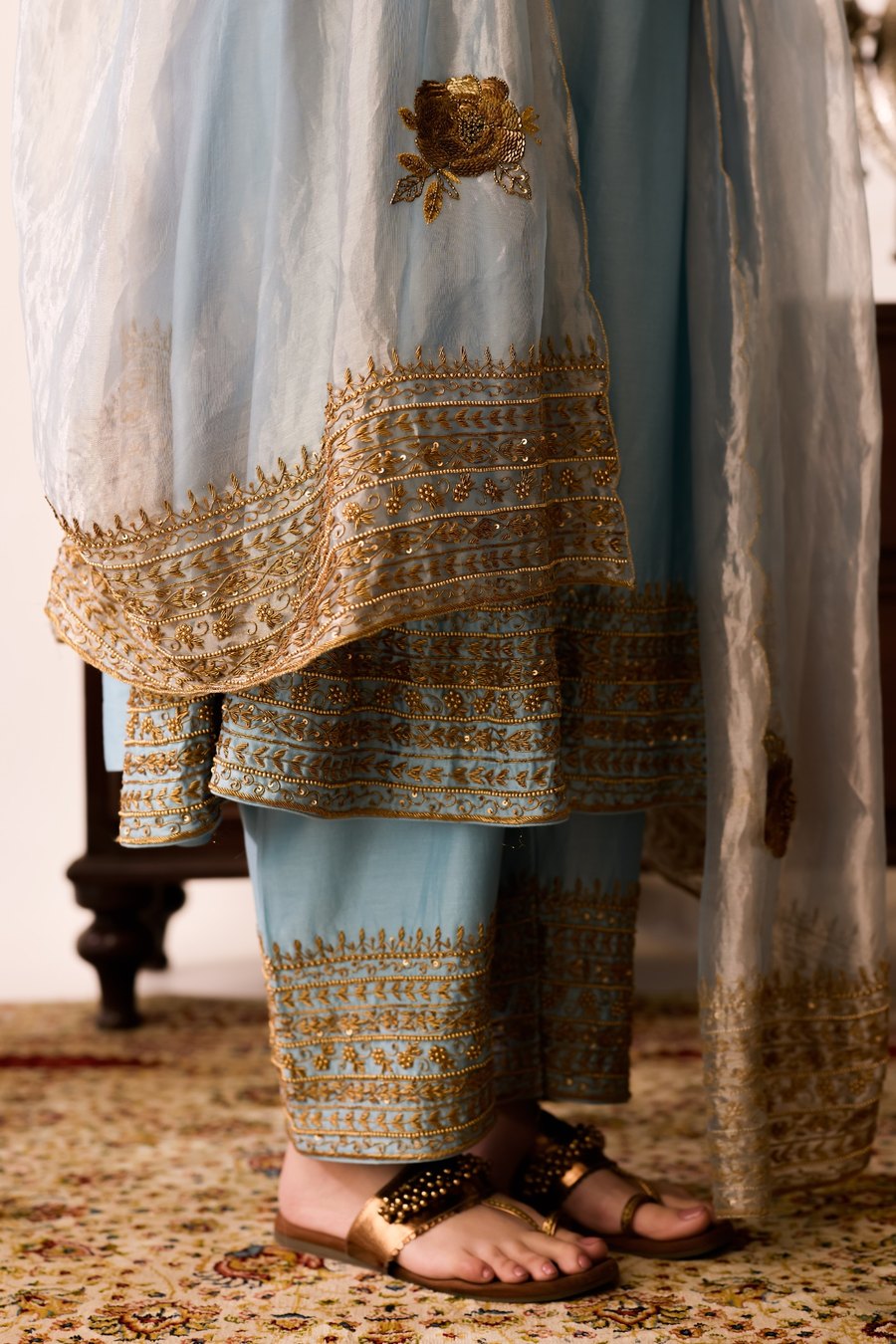
₹44,500
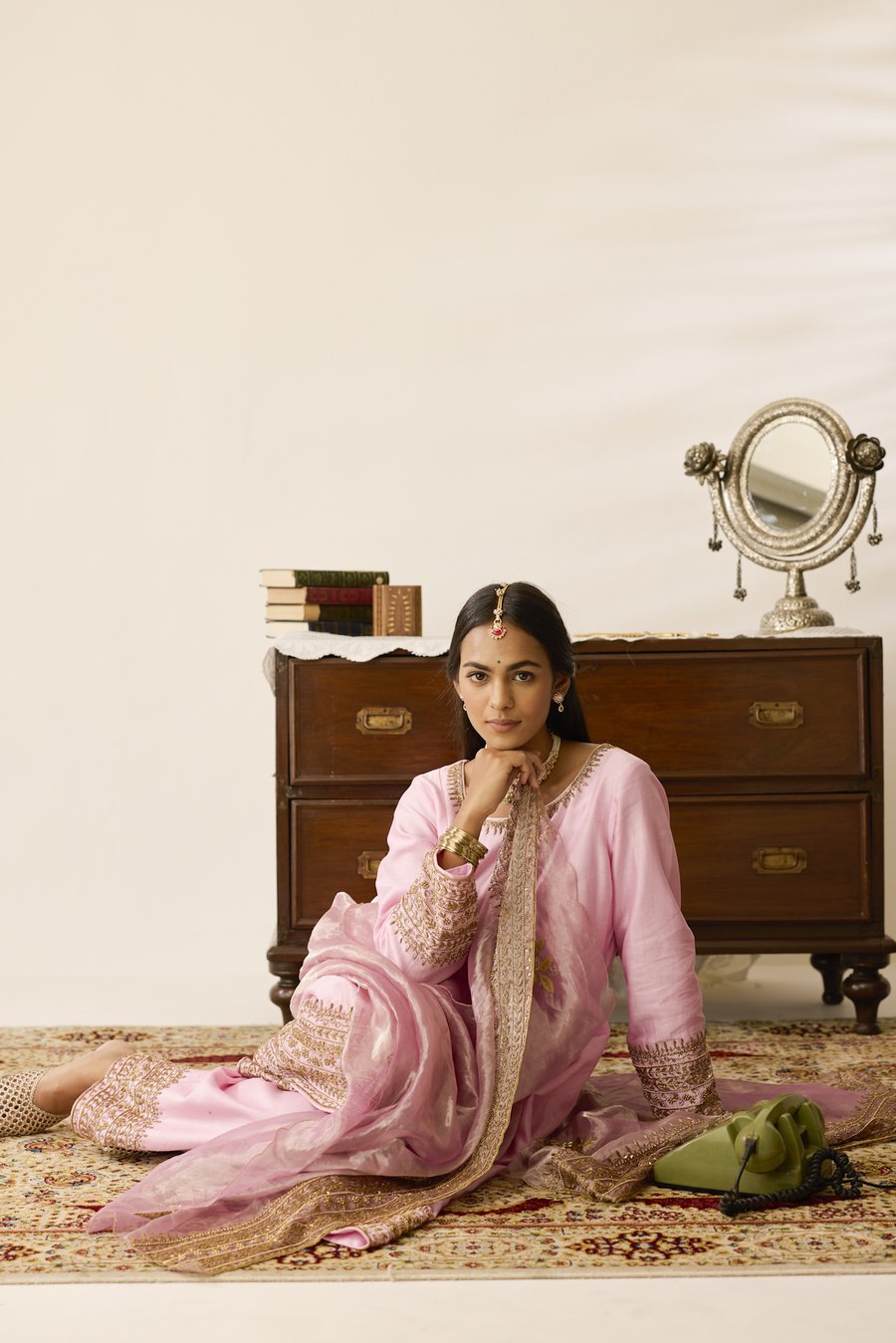
₹44,500
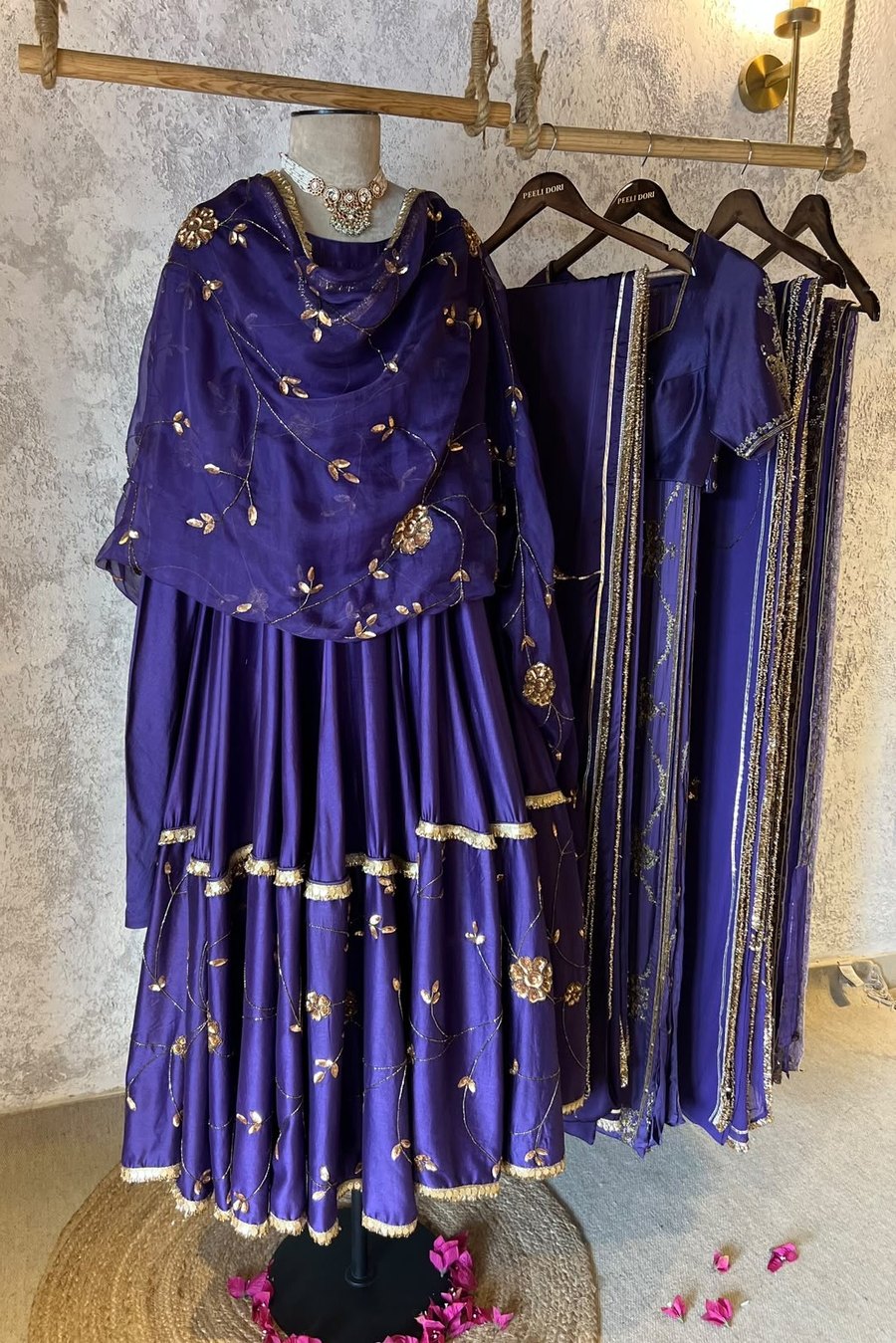
₹36,500
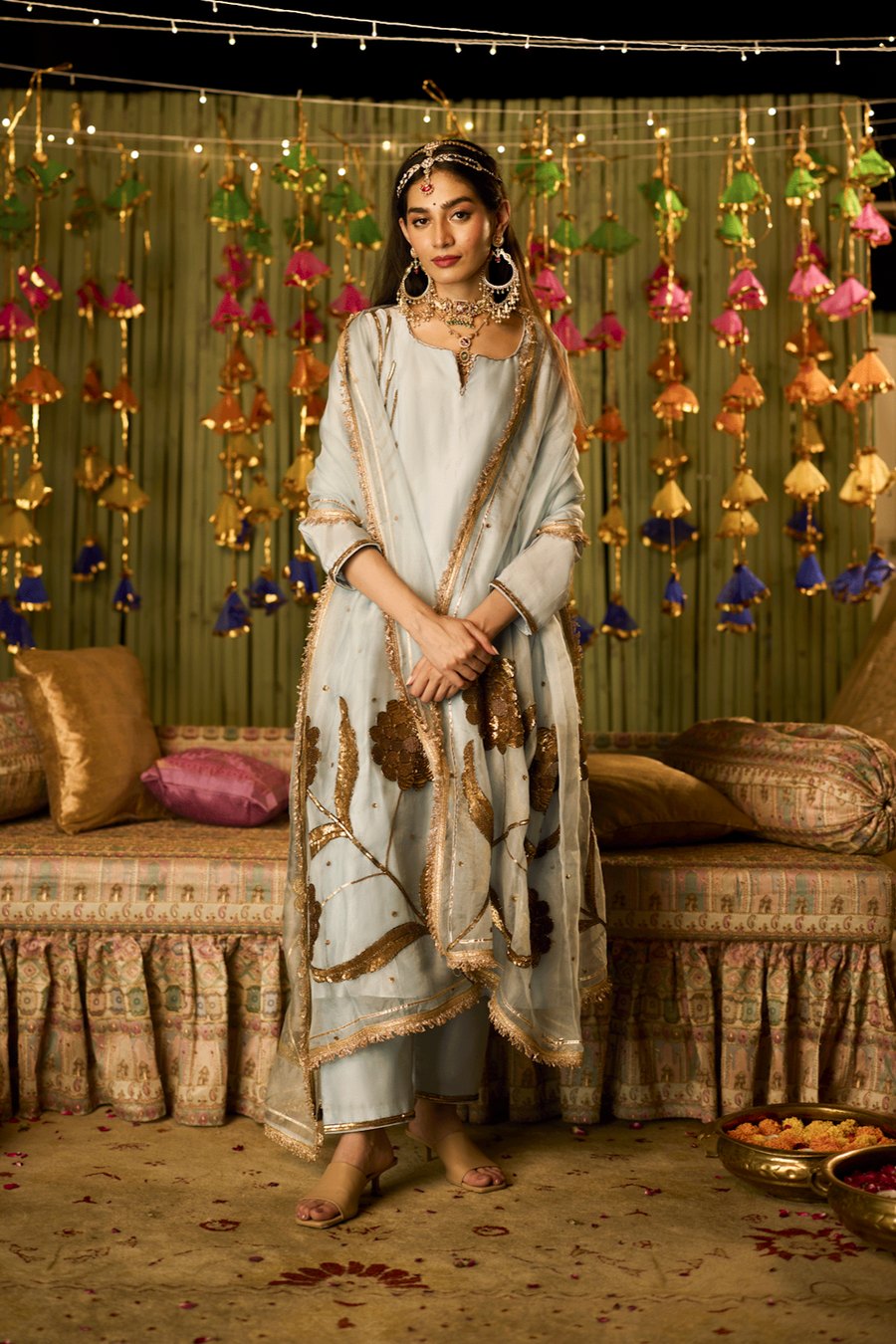
₹36,500
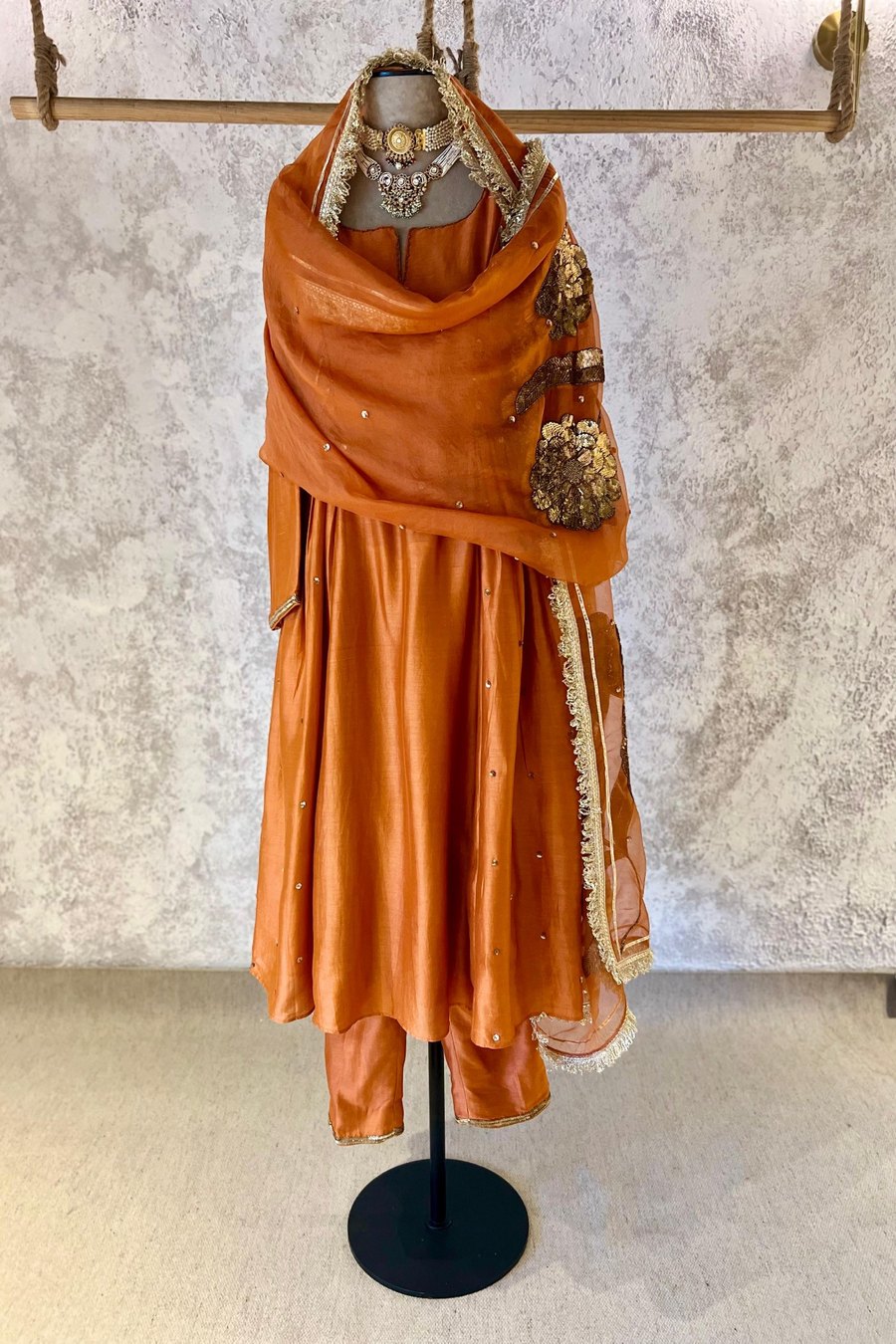
₹36,500
Choosing the dupatta fabric
Organza is what we use most, and it is the easiest to live with. It holds a pleat, it stays where you pin it, and it is sheer enough that the embroidery underneath still shows. It does crease if you fold it hard, so roll it rather than folding it when you travel. Chanderi falls softly and looks richer in photographs than its weight suggests. It is a better choice if you want the dupatta to sit close to the body instead of standing away from it, and it is much harder to damage than organza. Net belongs to bridal. It takes heavy borders and sequins without drooping, but it is unforgiving against jewellery and it catches on everything. If there is zari work on the dupatta, check it against your necklace before the function, not on the morning of.A word on colour: matching the dupatta exactly to the anarkali is safe and slightly flat. One shade lighter, or the same tone with a gold border, photographs better and is easier to re-wear with something else.
Pinning, pleating and the walk test
Pin before you put on your jewellery, and use two pins minimum — one at the shoulder, one hidden inside the pleat. Safety pins are fine; the fine steel ones leave a smaller hole in organza than the thick ones.
Pleat the front edge in three or four folds of equal width and pin through all of them. Uneven pleats are the reason a dupatta looks untidy in photographs even when the rest of the outfit is correct.
Then walk across the room, sit down, and stand up again. If it has moved, pin it again. Ten minutes of this at home saves the whole evening, and it is the one piece of styling advice we give everyone who comes to the Shahpur Jat or Dehradun store.
Care between functions
Store the dupatta separately from the anarkali, folded along its own crease rather than the kurta's, so the pleats reset in the same place each time. Keep both away from direct sun — our dyes are organic and they will fade unevenly if one panel sits in a window for a season.
Do not iron over handwork. Press on the reverse with a cloth between the iron and the fabric, and keep the iron off the border entirely. If the piece has been in a suitcase, hang it in a bathroom after a hot shower for twenty minutes and let the steam do the work.
Dry cleaning is the safe route for anything with zari or gota. For organza with lighter embroidery, a clean dry brush and airing is usually enough.
Frequently asked
Does the dupatta come with the anarkali set?
Yes. Every anarkali on this page is a set — kurta, churidar and dupatta. The dupatta you see in the photograph is the one that ships with it.
Can the dupatta be made wider or longer?
Yes. Our sets are made to order, so we can cut the dupatta to a width and length that suits your height. Send your measurements on WhatsApp and we will confirm before the piece goes to the karigars.
Which dupatta should I wear for a sangeet?
A sheer organza, pinned on one shoulder, in a tone slightly lighter than the anarkali. It stays out of the way when you dance and it keeps the handwork visible.
How many pins does a dupatta actually need?
Two at minimum, three if the fabric is slippery. One at the shoulder seam, one inside the pleat, and one at the back if the dupatta is wide.
Do you ship outside India?
Yes. Shipping within India is free above ₹10,000. For international orders the code is INTSHIP and free shipping applies above ₹89,000.
Explore more: wedding 2026 · designer hand embroidered blouse — or message us on WhatsApp for styling help.

The information below is required for social login
Sign In
Create New Account