

Velvet is the one cloth that behaves better at a December reception than it does in a shop's trial room. That is also why it asks a different set of questions from an organza or a chanderi — and why most velvet sarees are bought badly. Why velvet belongs to
Velvet is the one cloth that behaves better at a December reception than it does in a shop's trial room. That is also why it asks a different set of questions from an organza or a chanderi — and why most velvet sarees are bought badly.
Why velvet belongs to the winter wedding, not to the photograph
Most of the weddings we dress people for between late November and February happen after sunset. A lawn in Delhi at 8pm is around 12 degrees; the banquet hall an hour later is 22. Velvet is the rare fabric that is comfortable in both, because it holds warmth without looking like you dressed for the weather.
There is a second reason, and it is the one that matters in photographs. Velvet absorbs light instead of throwing it back. Organza and tissue catch a flash and go white; velvet goes deeper, so the embroidery on it reads clearly from across a room rather than only from two feet away. At a reception where the only light is a warm chandelier and a photographer's flash, that difference is the whole picture.
The same quality is a warning. Velvet is wrong for a daytime mehendi on a terrace, and wrong for an April wedding, however beautiful it looks on a hanger. Decide by venue and hour first, then by colour. If the function is outdoors before sunset, put velvet away and take a silk organza instead.
What you are actually buying when the label says silk velvet
Velvet has a pile, which means it has a direction. Run your palm down the panel one way and the cloth looks darker; run it the other way and it lifts and looks lighter. A saree cut with its panels facing different directions will show faint bands under a strong light, and no amount of ironing will take them out. Hold the end of the saree up to a window before you buy and look along its length.
The second test takes five seconds. Press the flat of your hand into the cloth for a moment and let go. Good silk velvet lifts back up. A cheaper viscose-heavy velvet stays flattened and, worse, develops a shine where it has been sat on or folded.
Then weight. A wedding-weight silk velvet saree is genuinely heavy — you will feel it on your shoulder within the first hour, and that is the cloth, not the embroidery. If a velvet saree feels almost weightless, it is usually a blend, and it will photograph with a hard sheen rather than a soft one.
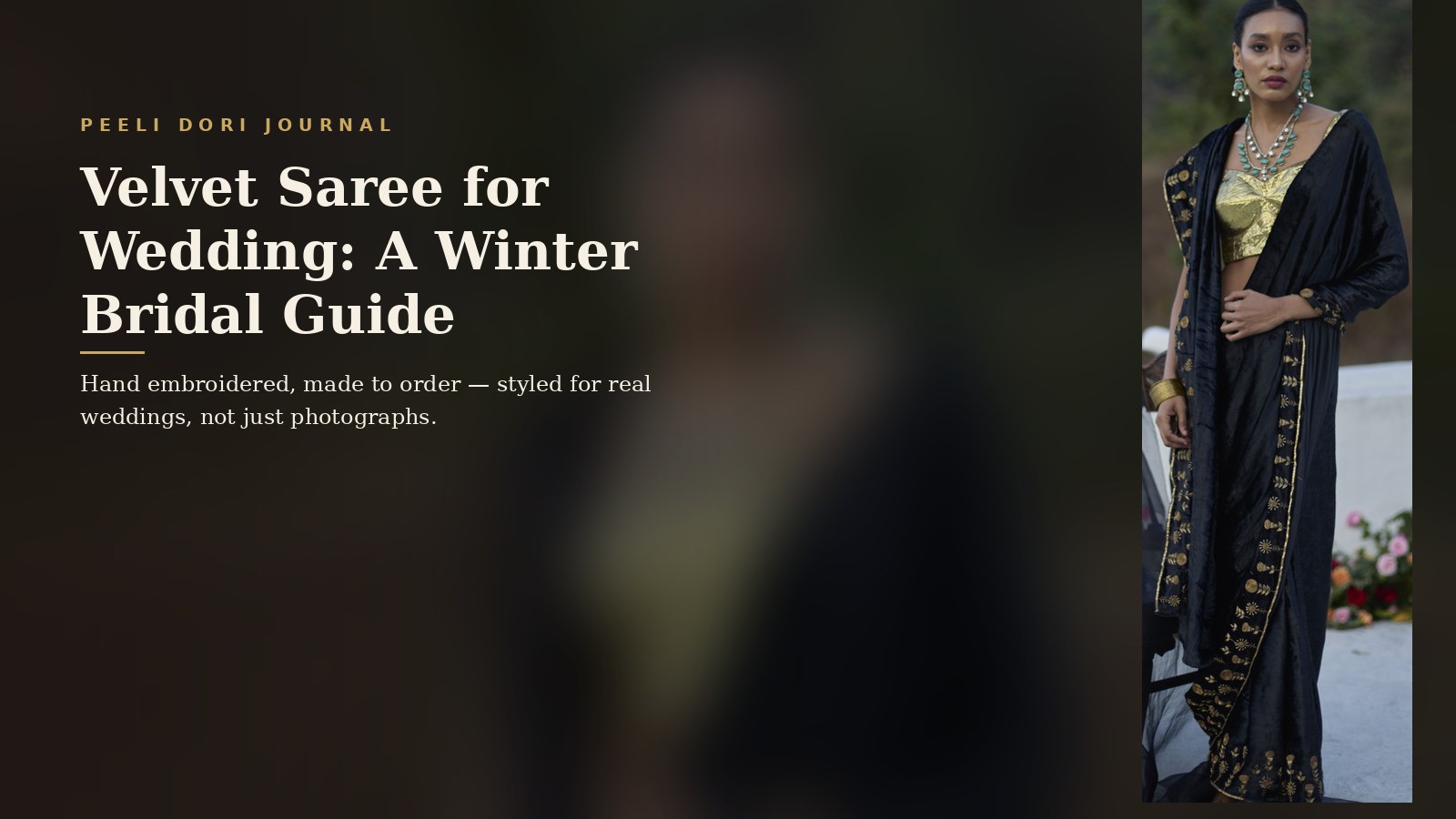
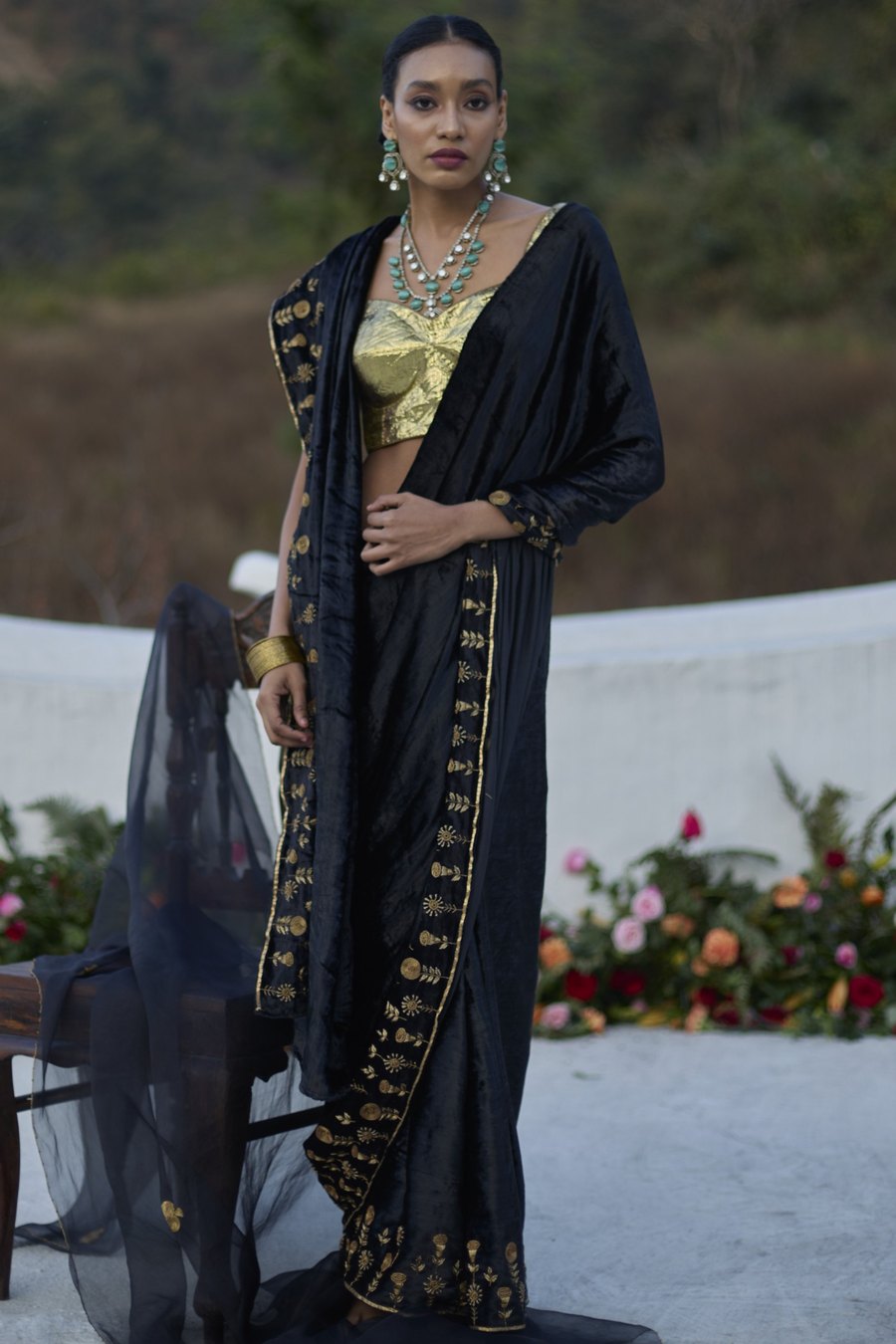
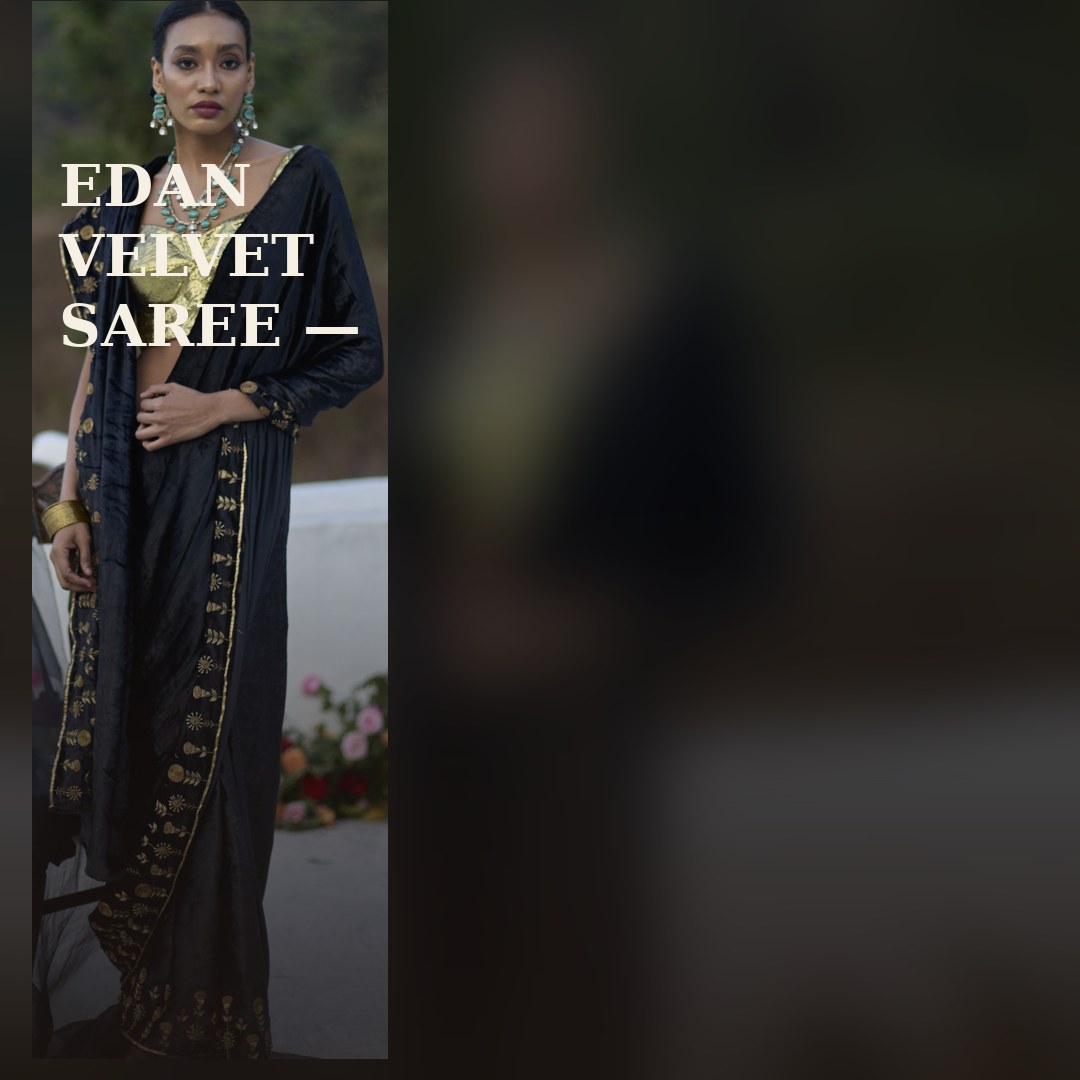
Embroidery behaves differently on velvet too. Zari and resham sit on top of the pile rather than sinking into it, so the work stays crisp and does not need the backing and stiffening that a gauze-like organza needs. On our EDAN saree the hand embroidery is worked directly on silk velvet for exactly this reason, and the cloth is dyed with organic methods so the black stays black instead of turning grey-green with age.
Choosing by ceremony, hour and body
A reception is the one function where black velvet is not a compromise. It reads formal in a hall, it does not compete with the bride, and it is the easiest colour to wear again for a different family's wedding two months later.
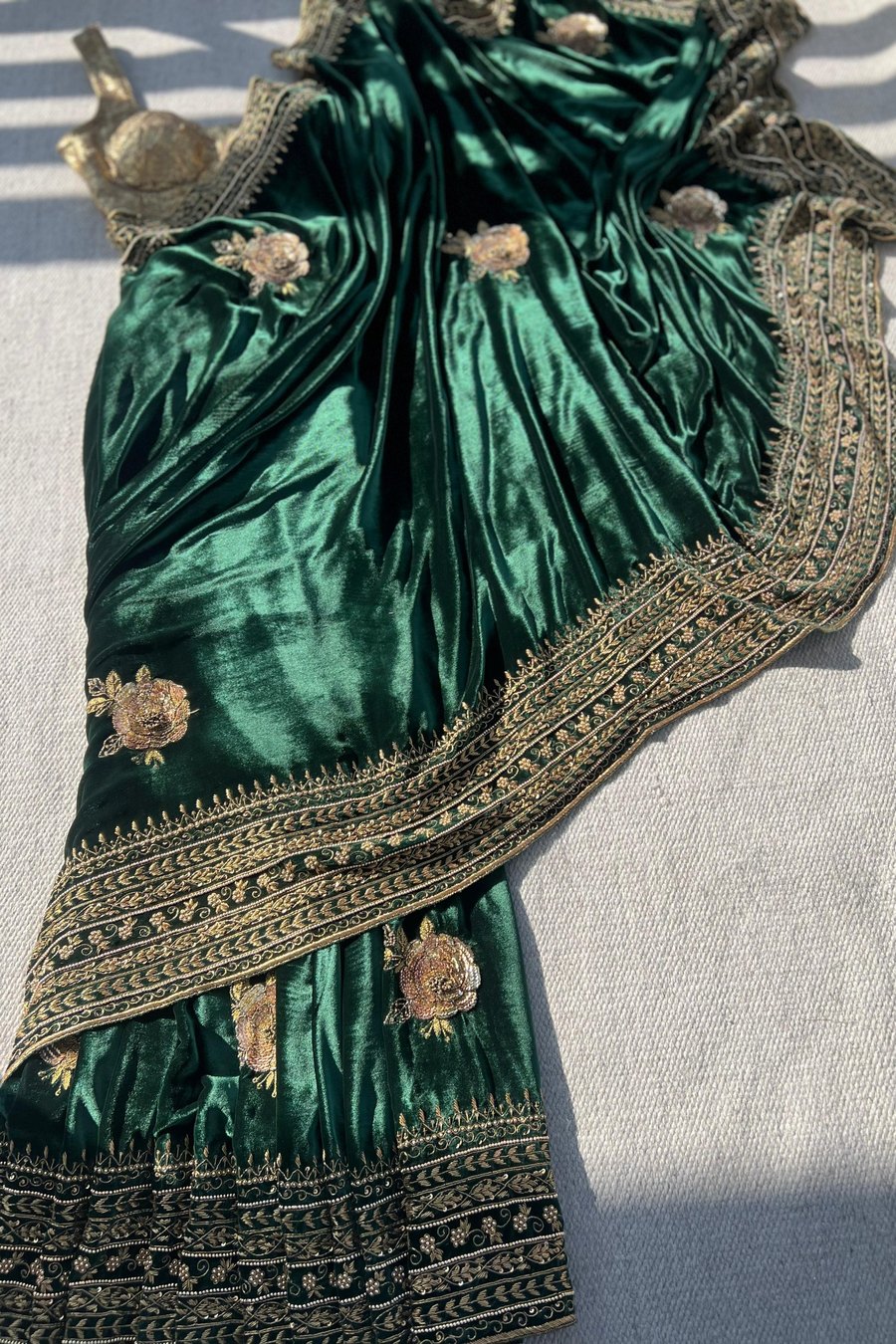
A cocktail or sangeet is where a warm velvet earns its keep — the Gulmohar saree carries golden zari borders and floral motifs, which is the right amount of work for a function with music and dancing rather than a long sit-down ceremony. Velvet with heavy stone work is harder to dance in than velvet with a woven border.
If you are the bride's sister or the mother of the bride, think about hours rather than look. Velvet is the heaviest thing on this list, and four hours of standing in it is a different experience from four hours in organza. A velvet dupatta over a lighter saree gives you the same richness at a fraction of the weight, which is the most practical way into the fabric if you only want it for one evening.
Pleats are where velvet changes the silhouette. Because the cloth is thick, each pleat adds real volume at the waist. If you are short, ask for fewer, deeper pleats and a narrower border; if you are tall, a wider border sits in proportion. And keep the hem half an inch off the floor — velvet drags, picks up dust from a banquet carpet and holds the mark.
Two sarees and a dupatta we make now
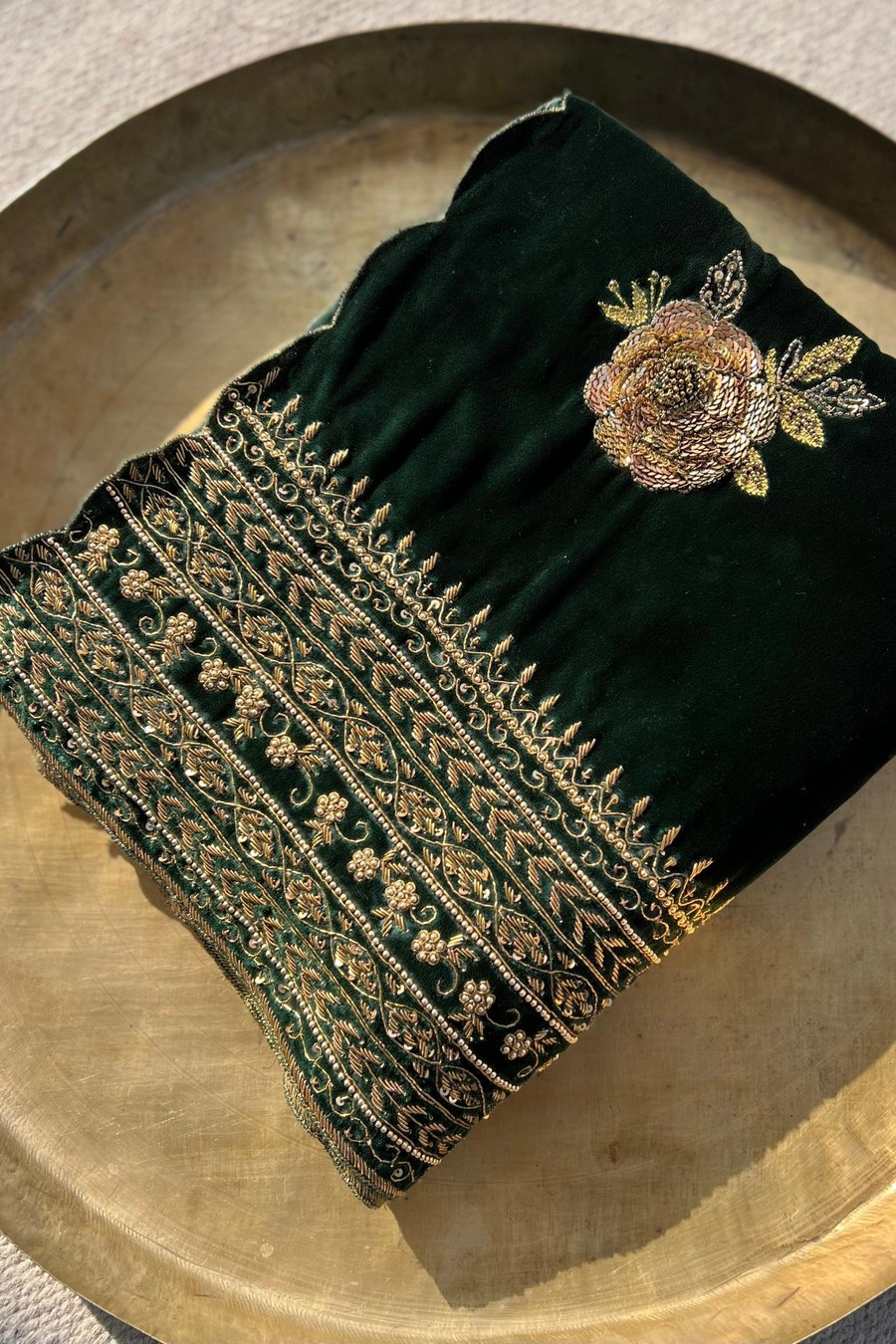
All three pieces below are made to order, and we do custom sizing on the blouse, so the measurements are taken for you rather than adjusted later. If you are between two sizes or between two colours, message us on WhatsApp and we will send a video of the actual piece in daylight before you decide.
The EDAN is the darker, quieter of the two: black silk velvet, hand embroidered, from our Mehafil collection, at ₹48,500. The Gulmohar at ₹45,600 is the warmer piece, with golden zari borders and floral motifs worked across it. The Gulmohar velvet dupatta, ₹22,400, is the one to buy if you already have a saree you love and want velvet in the room without buying a second drape.
Blouse, drape and pinning notes
Velvet on velvet is a lot of fabric. A silk or organza blouse in a contrasting tone keeps the line of the shoulder, and a blouse cut from the saree's own ground colour lets the pallu do all the talking. Either works; what does not work is a velvet blouse with a high neck and heavy sleeves under a velvet pallu, because the whole upper body becomes one weight.
Construction matters more than usual because velvet has almost no give. Ask for a little more ease at the armhole than you would in a chiffon blouse, and insist on a fit check before the blouse is finished — a velvet blouse that is tight at the armhole cannot be rescued by letting out a seam, because the pin marks and stitch holes stay in the pile.
Drape it with five to seven pleats rather than nine. Press them through a cotton cloth, or better, steam them and set them by hand; a hard iron crease pressed into velvet leaves a permanent line. And pin only into the blouse's seam allowance and the saree's own edge. Pins leave dents in the pile that steam will lift but not always remove, so on velvet we use the blouse hooks and a firm petticoat cord first and treat pins as a last resort.
For jewellery, antique gold sits best with both pieces, and with a green or gold-bordered velvet an emerald or a pearl line is safer than diamonds, which disappear against the pile in low light.
What the ₹2,900 step between the two sarees buys
At this level, price is not about metres of cloth. Both sarees are silk velvet of a similar weight; the difference is in the border and in how far the hand work travels across the field. The EDAN, at ₹48,500, carries its embroidery as the main event on a black ground. The Gulmohar, at ₹45,600, puts its work into the zari border and the motifs around it.
Which one is right depends on how the saree will be worn. If the pallu will be the photographed end — a reception, a cocktail, a portrait — the EDAN's density is worth the difference. If you want a saree you can wear to three weddings in two winters without it announcing itself twice, the Gulmohar is the easier piece to repeat.
One honest note on velvet and re-wear: it is the most re-wearable of the heavy fabrics precisely because it is seasonal. A black or deep-toned velvet saree gets pulled out every November. A trend colour gets pulled out once. If you are spending ₹45,000 or more, buy the colour you will still want in three winters.
Care, and the two mistakes that ruin velvet
The first mistake is ironing it. Velvet is steamed, never pressed, and the iron should stay a good 15cm away. Hold the steamer above the cloth, let the steam pass through, and smooth the pile with your hand in one direction.
The second is folding it. A fold pressed into velvet for a season leaves a crease in the pile that no steam fully removes, so roll the saree around a padded tube or fold it loosely with acid-free tissue at the fold, and change the fold line every few months. Hang it on a wide padded hanger rather than a wire one, because a thin hanger marks the shoulder within weeks.
Store it in a muslin bag, never plastic, and air it once in the season in shade rather than direct sun. Dry clean only, and tell the cleaner it is silk velvet with hand embroidery so they do not press the pallu. Between functions, brush the hem gently in the direction of the pile and hang the saree for a day before you wear it again, so the pile lifts where it was sat on.
Frequently asked
Is a velvet saree suitable for a wedding?
Yes, for evening and winter functions — a reception, a cocktail, a December sangeet. It is the wrong cloth for a daytime summer wedding, because velvet holds heat and the pile shows every crease from sitting.
How heavy is a velvet saree?
A wedding-weight silk velvet saree is heavy enough that you will notice it on your shoulder in the first hour. That weight is the cloth itself, not the embroidery. If a velvet saree feels light, it is usually a blend and it will shine rather than glow in photographs.
Can I wear a velvet saree in Delhi summer?
No. Velvet is a cold-weather cloth. For April to September, a silk organza or a chanderi will be far more comfortable and will photograph better in daylight.
What should I wear under a velvet saree?
A smooth satin petticoat, not cotton. Velvet grips a cotton petticoat and the saree starts to ride up as you walk. A satin petticoat lets the pleats fall and keeps the hem where you set it.
How do I get pin marks out of velvet?
Steam the spot and brush the pile gently in one direction with a soft clothes brush. Do not rub it — rubbing flattens the pile further. If the dent has been there for days, it may fade rather than disappear, which is why we pin into the seam allowance and not through the field.
Explore more: saree · designer dupatta scarf stoles · designer hand embroidered blouse — or message us on WhatsApp for styling help.

The information below is required for social login
Sign In
Create New Account