

An anarkali is not really chosen in the mirror. It is chosen at the order — the half hour when someone writes down a hem length, a flare width, a bodice depth and a dupatta, and then the panels are cut. Everything after that is adjustment. This is the brief we
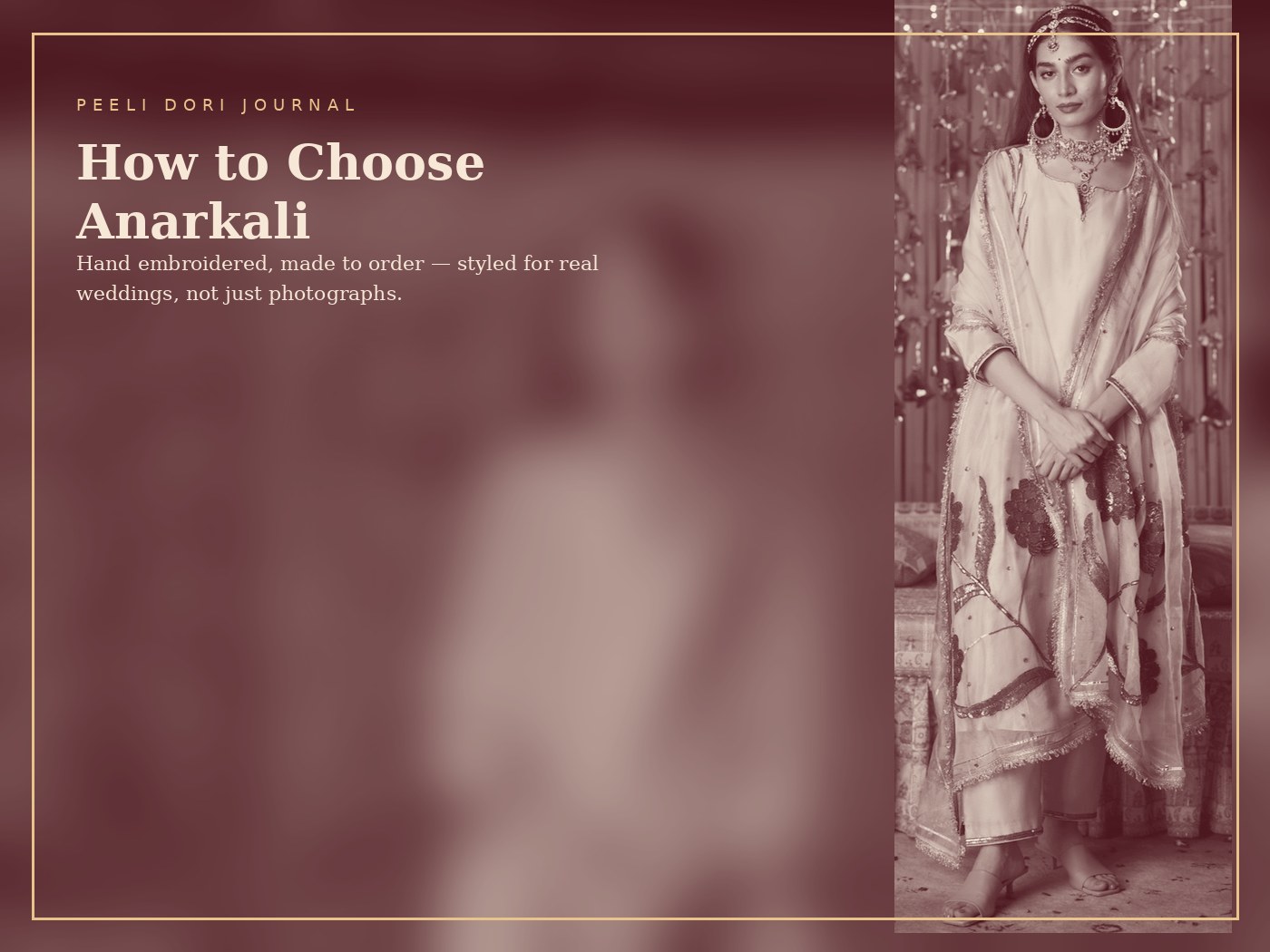
An anarkali is not really chosen in the mirror. It is chosen at the order — the half hour when someone writes down a hem length, a flare width, a bodice depth and a dupatta, and then the panels are cut. Everything after that is adjustment. This is the brief we take down in the shop, in the order we ask for it.
The calendar decides before you do
Between late November and early February, most of the customers we fit are dressing for four or five functions rather than one. A mehendi in the afternoon. A sangeet at night. A wedding where you are a guest, and a reception where you are family. Each has a different floor, a different shoe and a different amount of standing.
The mistake we see most often is buying the anarkali for the biggest evening and then finding it wrong for the other three. A full-length piece with dense work is right for a reception and tiring at a daytime mehendi where you will be sitting on the floor for an hour. A lighter calf-length piece photographs beautifully at two in the afternoon and disappears under banquet lighting at nine.
So the first question is not which anarkali. It is which of those evenings this one piece has to carry, and whether you are buying one or two. If it is two, buy them as a pair: one quiet, one not. Two pieces that sit next to each other in the wardrobe get worn in ways that two unrelated pieces do not.
And because every piece here is made to order, the order is where those decisions actually get locked. A trial can take in a seam. It cannot add flare, change where the bodice ends, or put back a metre of dupatta.
Fabric first, because the cloth decides what the work can do
Anarkalis here are cut in three cloths, and the choice is about behaviour rather than status. Organza holds a shape — the flare stands away from the leg, the hem moves when you walk, and the silhouette stays where it was cut. Chanderi is softer and lighter, falls closer to the body, and is the easier cloth to sit in and travel with. Silk has weight: it hangs instead of flaring, and it carries heavier metal work without pulling out of line.
The embroidery has to suit the cloth. Gota patti is appliqué — ribbon cut into shapes and stitched flat to the surface — so on organza it sits lightly and reads as a pattern from across a room, while on heavy silk it can sink into the ground. Zardozi is metal thread worked densely into the fabric, which adds weight exactly where it is placed: lovely on a bodice, punishing across a full hem if the cloth is light. Dabka is coiled wire, giving a raised line rather than a flat one, and a little of it goes a long way.
The practical version: the more work on the piece, the more simply the cloth should behave. Look at the embroidery from two feet away and then from across the room. The first is what you see in the mirror. The second is what ends up in the photographs.
All of it is hand embroidered by artisans we work with directly, and the dyes are organic, which shows up mostly in how colour ages — it settles into the fibre rather than sitting on top of it, so a deep red still reads as a deep red in five years.
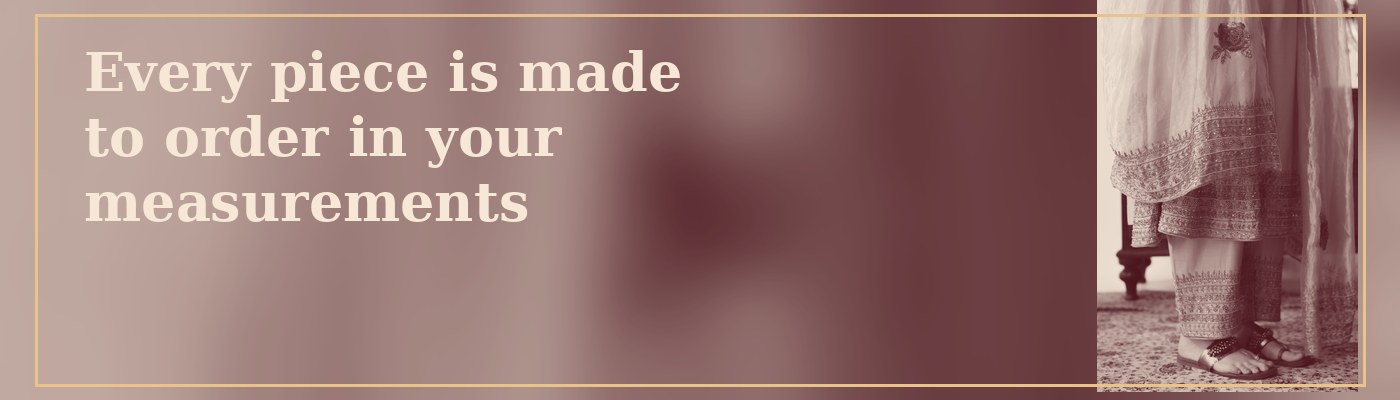
Four numbers to settle before the cut
These are the four we cannot fix once the panels are cut and the work is on them. Give us numbers, not words — not "medium heel", not "floor length", not "enough flare".
1. Hem, measured with the shoe on. A floor-length anarkali is cut to one specific shoe. Tell us the heel height in inches and come for the trial in the pair you will actually wear, not a substitute of the same height. If you will change shoes between functions, cut to the higher one; a hem that is a centimetre long is invisible, a hem that is short is not. 2. Flare, counted in panels. Flare is added by cutting more panels into the skirt, and it is most visible from the side. A narrow flare of roughly three to three and a half metres at the hem reads as a column — good for a small function, and kind if you do not want width at the hip. Five metres and upwards is the classic anarkali, and it wants height or a heel so it does not read short. If you are unsure, the middle is the safer order. 3. Bodice depth and armhole. Where the bodice ends — under the bust or at the natural waist — sets the proportion of the whole piece: a higher waist lengthens the leg, a deeper one is easier to sit in for hours. The armhole is where most fittings fail, and it has to be cut for the sleeve you want, so decide the sleeve before the armhole is drafted. A fitted cap sleeve and a loose three-quarter sleeve need different armholes on the same body. 4. Dupatta, in metres and in weight. A light organza dupatta of about two and a half metres drapes over one shoulder without bulk. A heavier one needs three pins or it will pull the shoulder seam out of shape by the end of the evening. If you mean to wear it in the traditional double drape, say so at the order — the length changes, and a dupatta cut for one shoulder is short for two.On body type, the honest answer is that where the flare begins matters more than how wide it is. Flare starting high, just under the bust, puts the width close to the widest part of most bodies: flattering on a straight figure, harder if you carry weight at the hip. Starting at the natural waist is the most forgiving cut we make. And a heavy dupatta adds width across the shoulders that nothing in the skirt can balance, so if the dupatta is heavy, keep the flare moderate.
Six pieces, and the brief each one already is
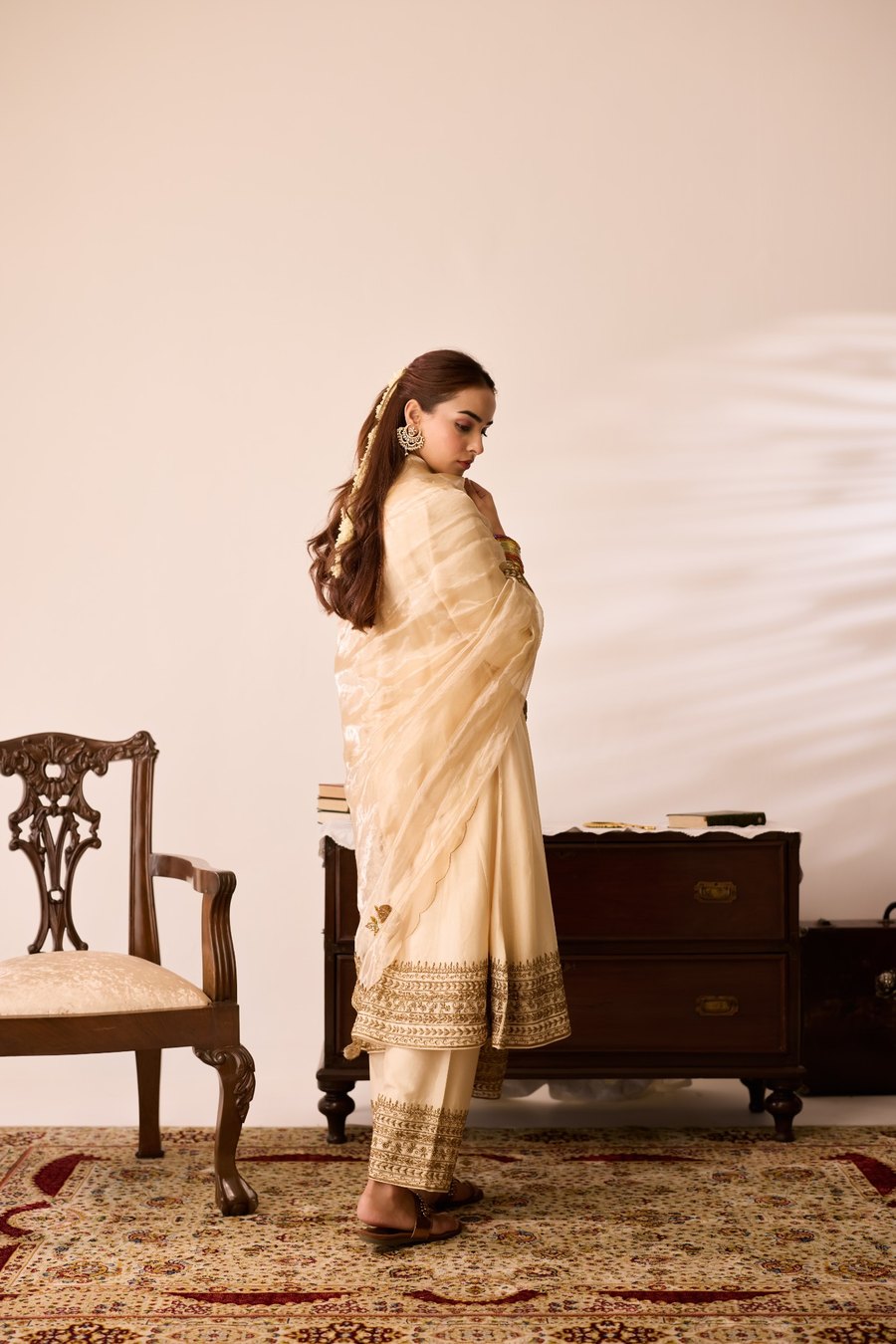
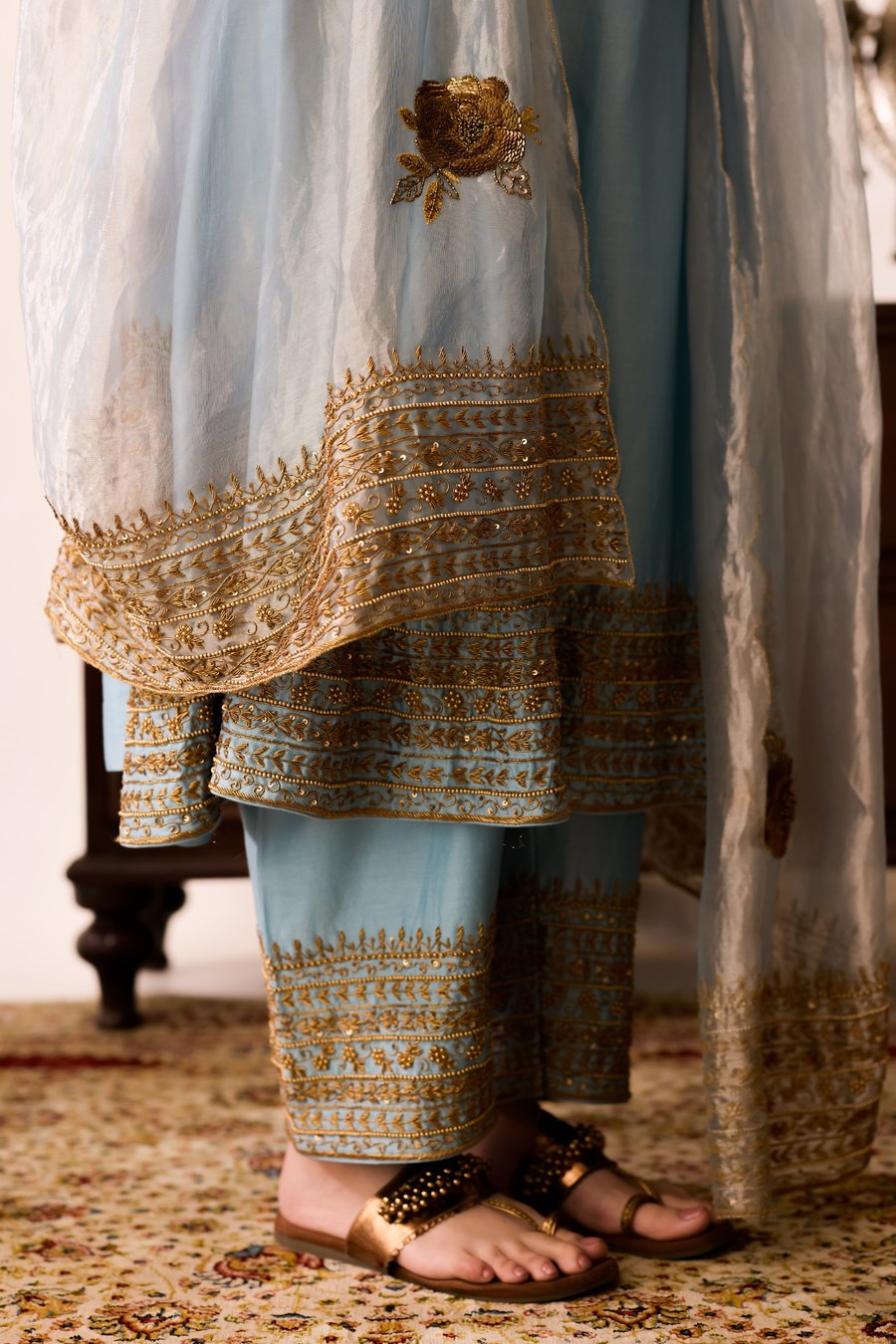
The six below are all hand embroidered and made to order, and each one is a different answer to those four numbers. The COCONUT GULMOHAR ANARKALI SET (₹44,500) is cut full with a substantial dupatta — the reception piece. The POWDER BLUE GULMOHAR ANARKALI SET (₹44,500) is the same order in a paler palette, which reads lighter in daylight and is the one for a daytime wedding or a mehendi where you still want presence.
The GULABI GULMOHAR ANARKALI SET (₹44,500) sits between the two: a warmer ground, work that is dense at the bodice and quieter at the hem, so it carries an evening without becoming the loudest thing in the room. The NAYANTHARA ANARKALI (₹36,500) in purple is the one to take when the colour is already the statement — gold at the ears, nothing at the neck.
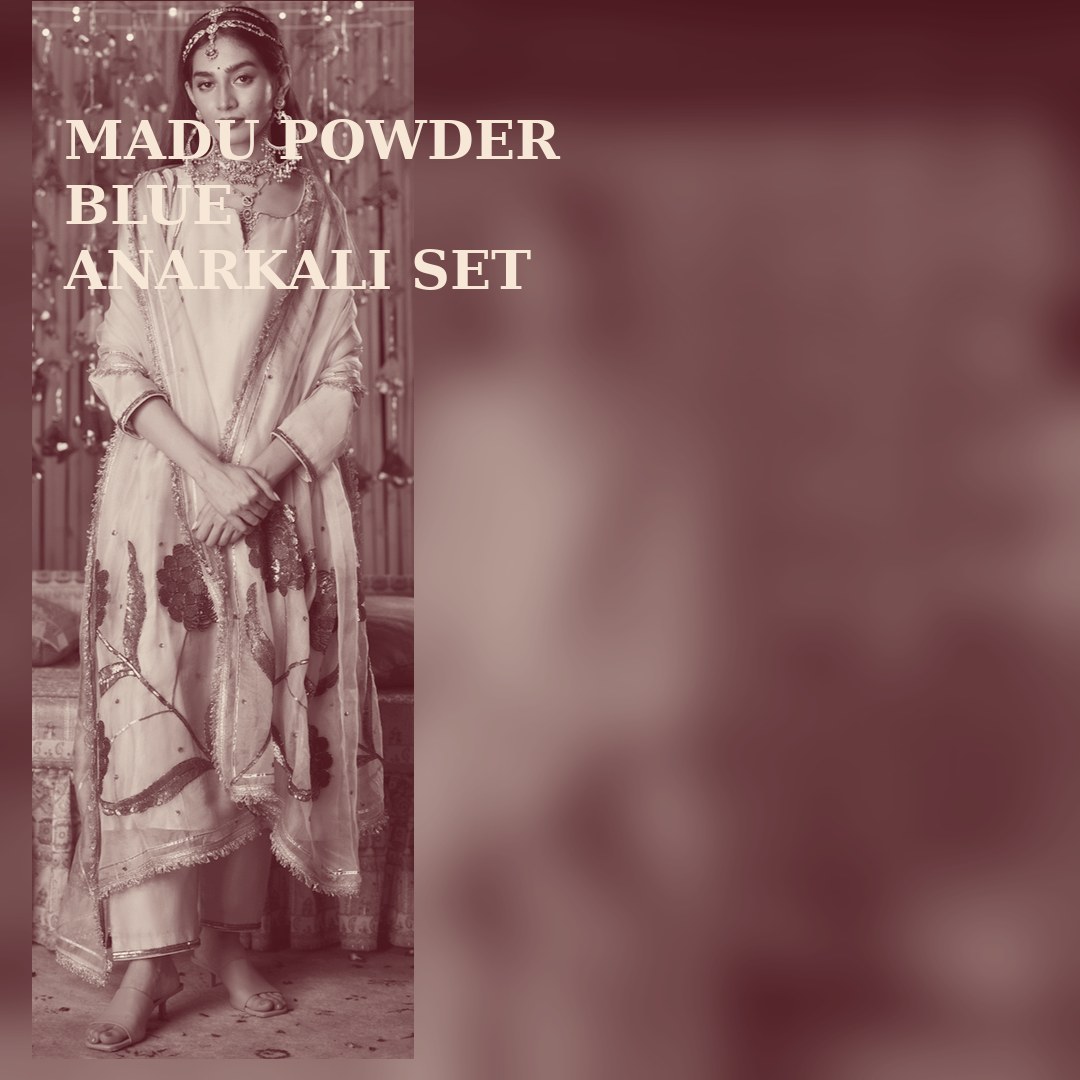
The MADU POWDER BLUE ANARKALI SET (₹36,500) is chanderi silk, so it is the lightest of the six to sit in for four hours and the safest choice for a long function with a lot of standing. The MADU RUST ORGANE ANARKALI SET (₹36,500) is the winter one: rust, an organza that keeps its flare, and a colour that holds under warm evening light.
If you are caught between two, send us a photograph of the jewellery you plan to wear, the shoe, and tell us the venue and the time of day. That conversation happens on WhatsApp and it takes a few minutes — much less time than a piece that arrives right and gets worn once.
₹44,500
₹44,500
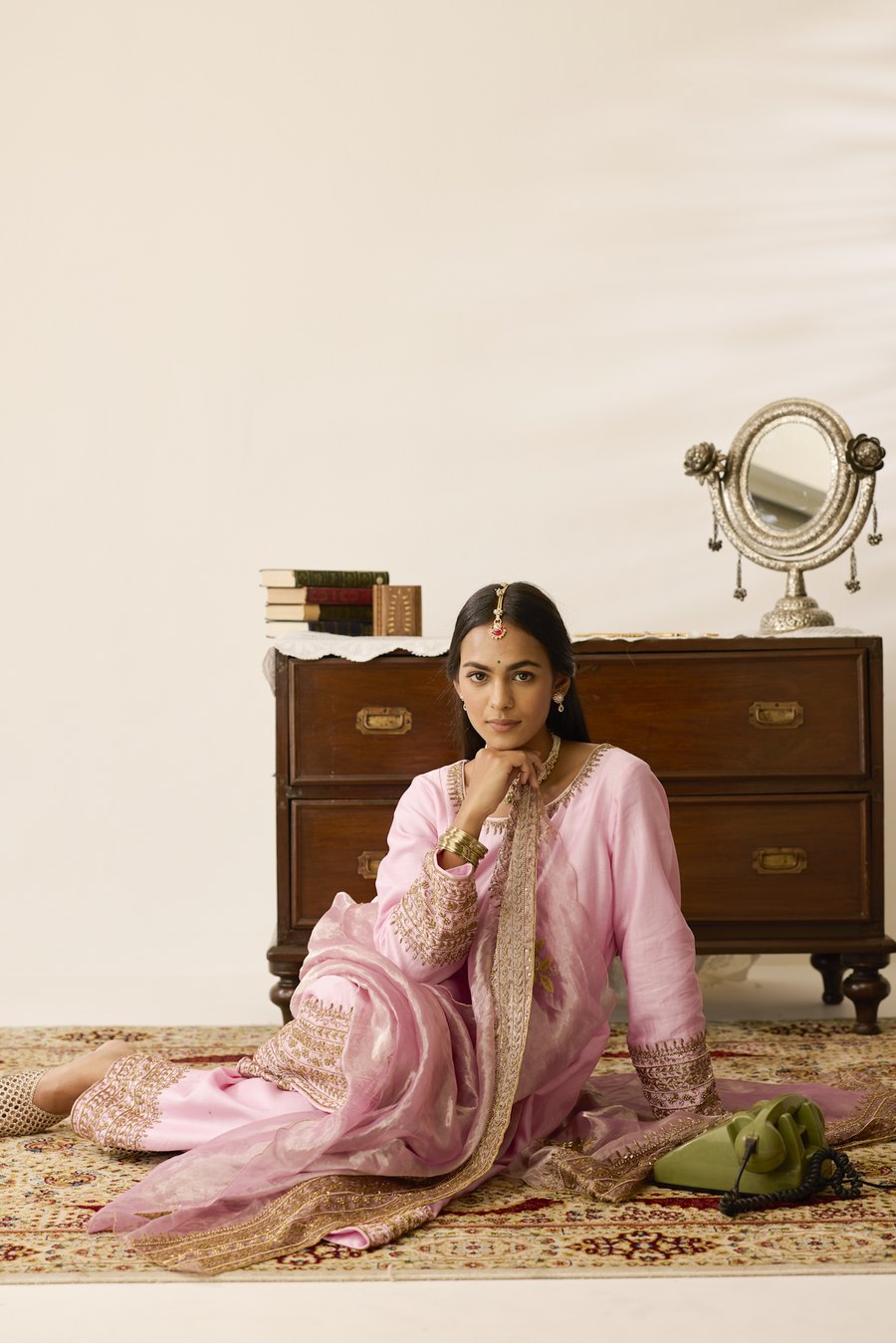
₹44,500
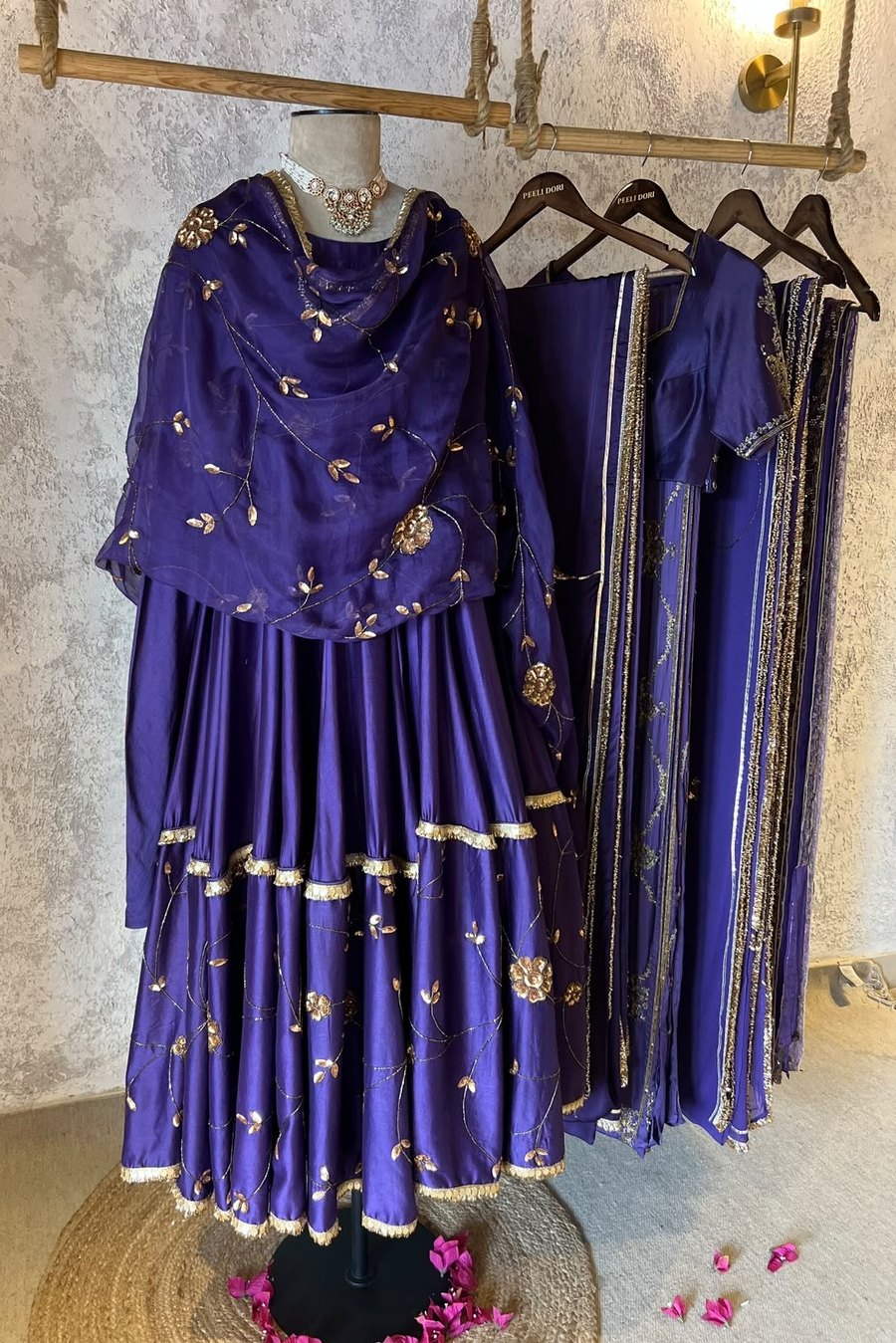
₹36,500
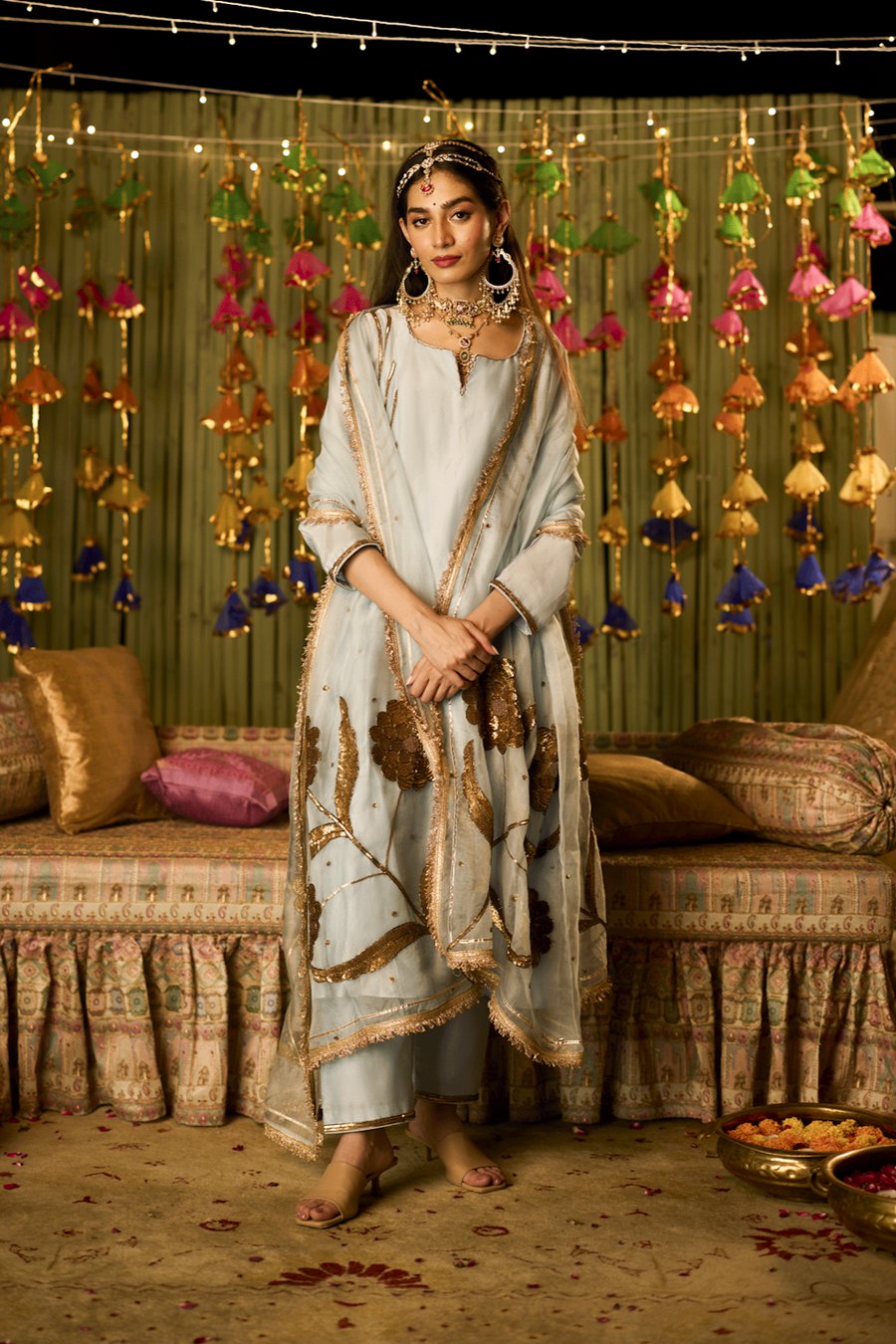
₹36,500
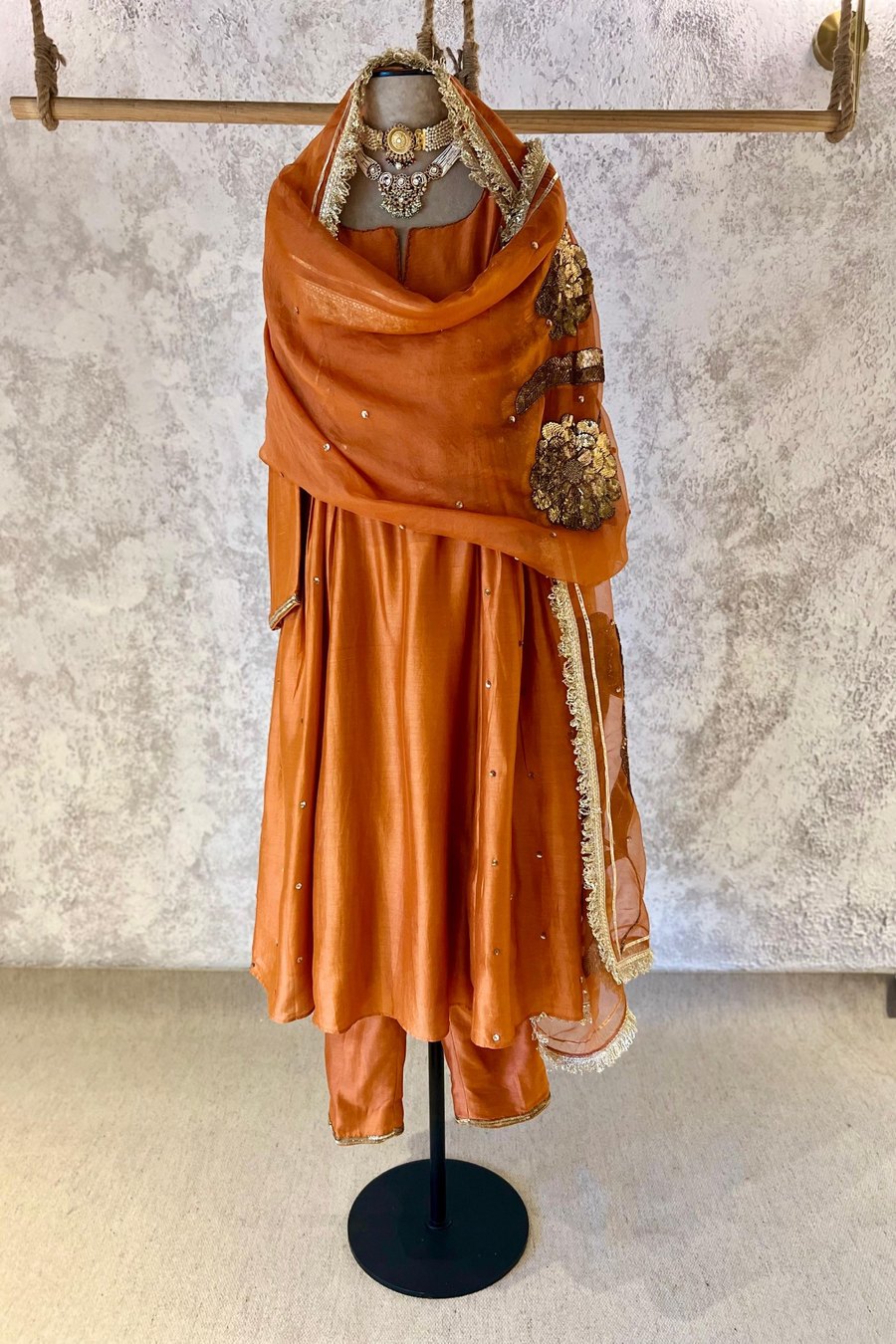
₹36,500
The blouse, the pins, and the metre that matters
The blouse is where an anarkali order is saved or lost. Fitted at the bust and underbust, hooks at the back rather than a zip if the piece is close, and the sleeve set so you can lift your arm to greet someone without the whole bodice travelling up with it. If the bodice is embroidered, keep the blouse plain — the work is already doing the decorating. If you want a deeper back or a different sleeve, that is an order-time decision too, because the bodice is cut to the blouse.
Pinning is not a detail. The dupatta needs a pin at the shoulder and one at the waist, and a third at the front pleat if it is heavier than two metres. Unpinned, it drifts left through the evening and ends up on the floor in every photograph after eight o'clock.
Keep the front pleats narrow and flat. A wide pleat over the chest hides the bodice work and adds bulk exactly where the cut is meant to be clean. Over the shoulder, one fold, pinned from the inside so no pin shows in a photograph.
And settle the neckline with the order, not with the jewellery box. A high or closed neck leaves a necklace nowhere to sit, so plan on long earrings and nothing else. An open neckline takes one short necklace and studs. This is a measurement decision dressed up as a styling one, and it is far easier to make now than the week of the wedding.
Between two functions
Hand work does not like being folded along the embroidery. Store the piece on a padded hanger with the skirt loosely gathered, or rolled in a cotton muslin cover. Not in a plastic bag: metal thread tarnishes when moisture has nowhere to go, and a covered piece with a mark on it is a much bigger job than a dusty one.
In a week with several functions, a light steam from a distance is enough to lift creases out of organza. Do not press the work directly. If something marks, send it to us rather than spot-cleaning it — organic dyes and metal thread both react badly to the wrong solvent, and a mark is far easier to deal with than the ring left by someone who tried.
One last thing worth doing: write down the four numbers you gave us. Next season, when you order a second anarkali, you start from a piece that already fits you instead of measuring from scratch.
Frequently asked
How long does a made-to-order anarkali take?
It depends on the piece and how much hand work is on it, so we confirm the date on WhatsApp before you pay. Tell us your function date first — if it cannot be done properly in the time, we will say so rather than promise it.
Can the length be changed after the anarkali is made?
Taking a hem up is possible, but the piece was cut to a heel and shortening it also changes the proportion of the flare. Adding length is much harder because the flare and the hem work are already finished. That is why heel height is the first thing we ask for.
What measurements do you need for custom sizing?
Bust, underbust, waist, hip, shoulder, armhole, sleeve length, and your heel height, plus your height and whether you will wear a padded blouse. If you are ordering from another city, we can take them over a video call on WhatsApp with a tape in your hand.
Is a full-flare anarkali too much for a wedding guest?
Not for an evening function. Keep the work quieter and the dupatta light, and it reads as generous rather than competing with the bride. For a daytime mehendi, a narrower flare in chanderi is the more comfortable choice.
Do you ship outside India?
Yes. Shipping within India is free above ₹10,000, and international shipping is free above ₹89,000 with the code INTSHIP.
Explore more: wedding 2026 · designer hand embroidered blouse — or message us on WhatsApp for styling help.

The information below is required for social login
Sign In
Create New Account