

An anarkali rarely fails on the anarkali. It fails in the twenty minutes after it is on: earrings that fight the neckline, shoes that catch the hem, a shawl that covers the one panel of hand work the piece was bought for. Here is how we finish one in the shop,
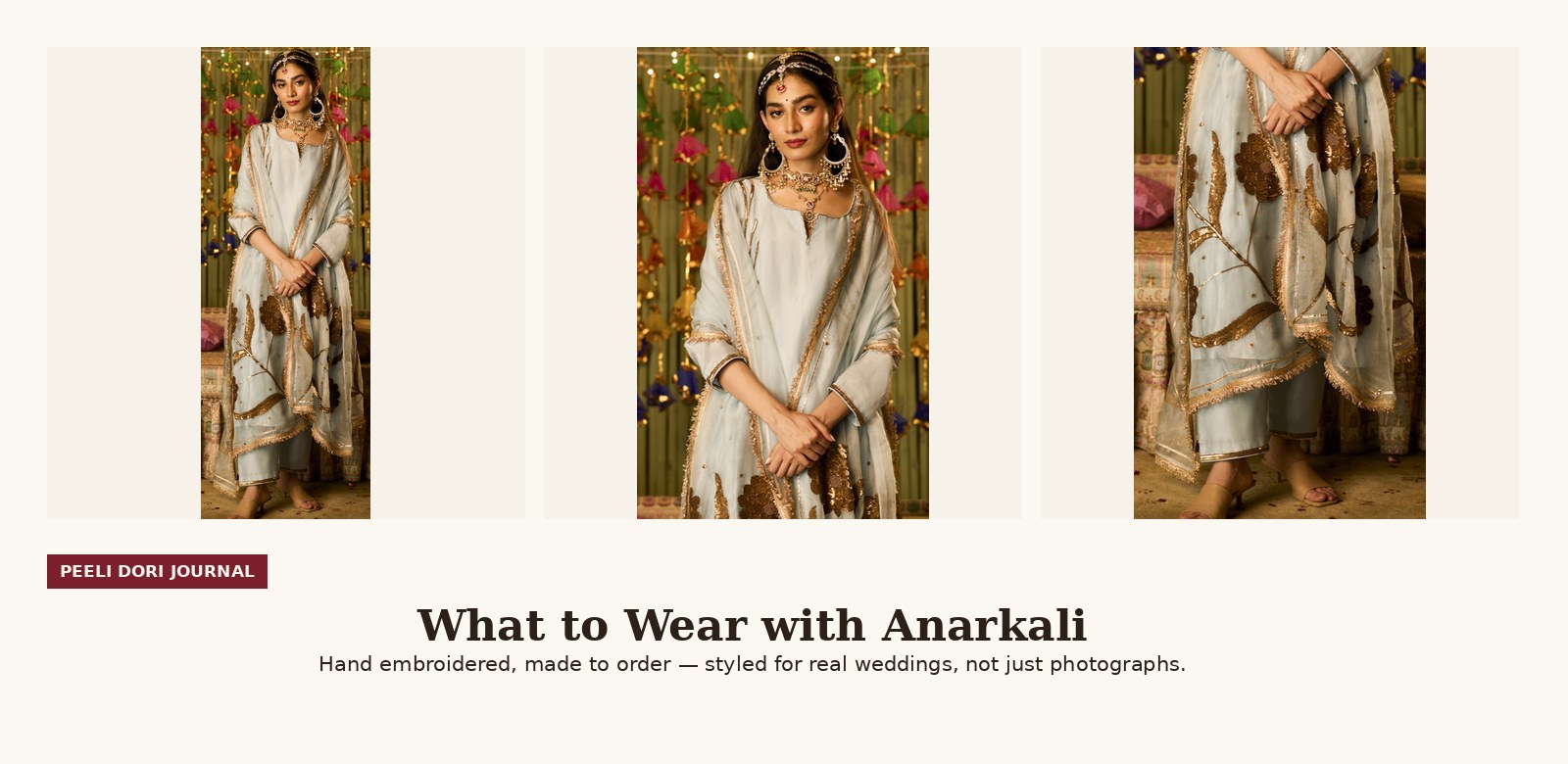
An anarkali rarely fails on the anarkali. It fails in the twenty minutes after it is on: earrings that fight the neckline, shoes that catch the hem, a shawl that covers the one panel of hand work the piece was bought for. Here is how we finish one in the shop, and how to get three evenings out of a single piece.
The anarkali is done; the outfit is not
A customer came in last month for a rust anarkali. She had the fit right, the hem right, the dupatta pinned the way she likes it. Then she put on the gold set she wears to every function and the whole thing went heavy. Nothing about the anarkali had changed. The finishing had.
This happens more often than a bad fitting does, and it is easier to fix. Hand embroidery already puts the decoration on the garment. The bodice has work on it, the sleeves have work on it, the hem has work on it. When we style a piece, the job is to leave that work visible and give the eye one place to rest. That is the whole method, and the rest of this page is just the detail.
Start at the neckline, then open the jewellery box
Look at the neckline before you look at your jewellery. If the bodice comes up high, with a closed neck or a collar, a necklace has nowhere to sit and will either disappear into the embroidery or sit on top of it like a second design. Wear long earrings instead, and nothing else.
If the neckline is open, a sweetheart or a wide square, one short necklace is enough, with studs. Two pieces at the neck and ears both is where most outfits tip over. If the bodice is heavily worked across the chest, skip the necklace entirely and let the earrings do the work. Nobody has ever looked under-dressed in an anarkali with good earrings.
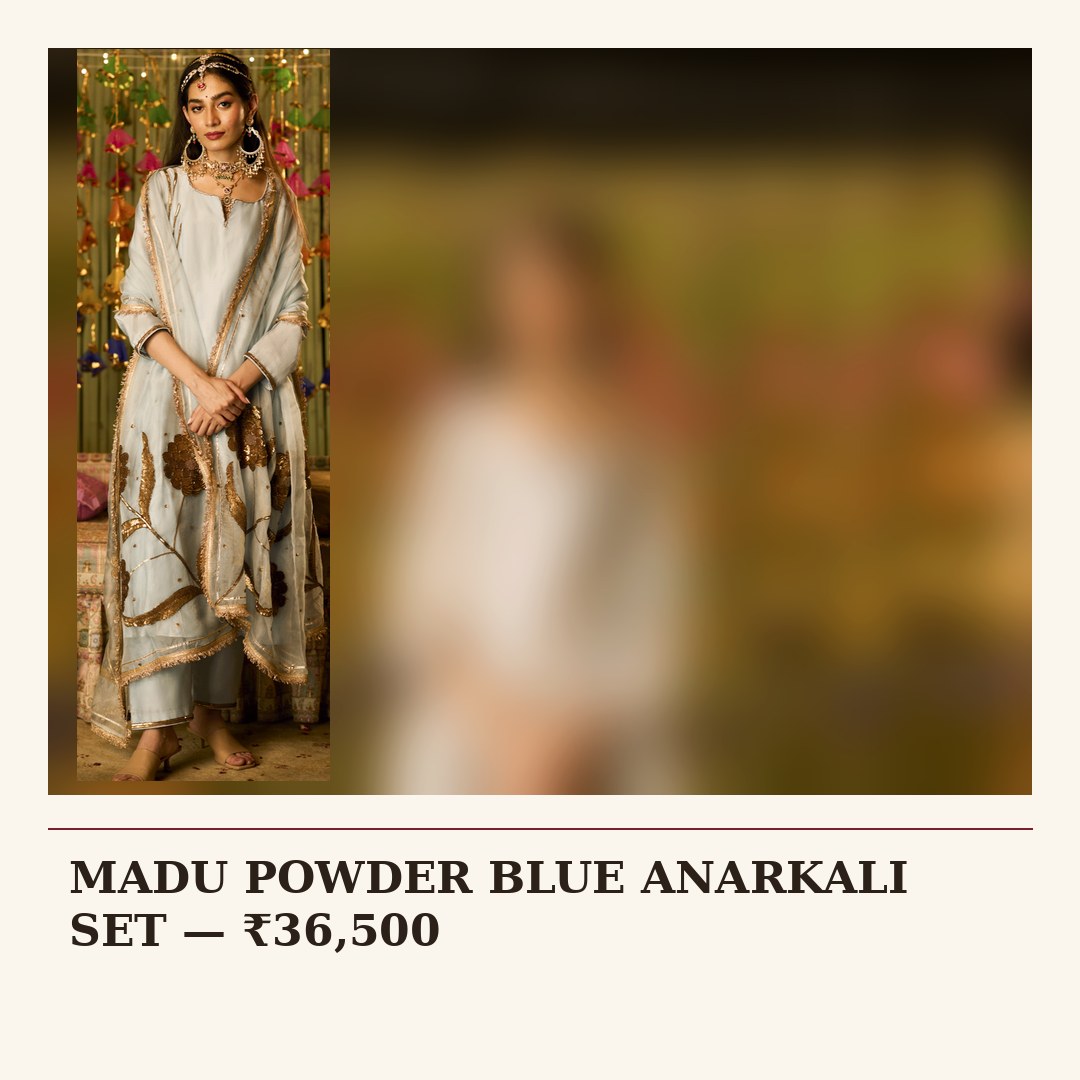
Metal tone is a separate decision and it should follow the dye, not your usual preference. Deep reds, rusts and maroons take gold. Powder blue, ivory, sage and the paler pinks read cleaner with pearl, silver or oxidised metal. Our dyes are organic and the colour sits in the fibre rather than on it, which is why a piece can look one shade in the shop and another in a photograph. Match the metal in daylight, near a window, not under the shop lights.
Footwear follows the hem, not the outfit
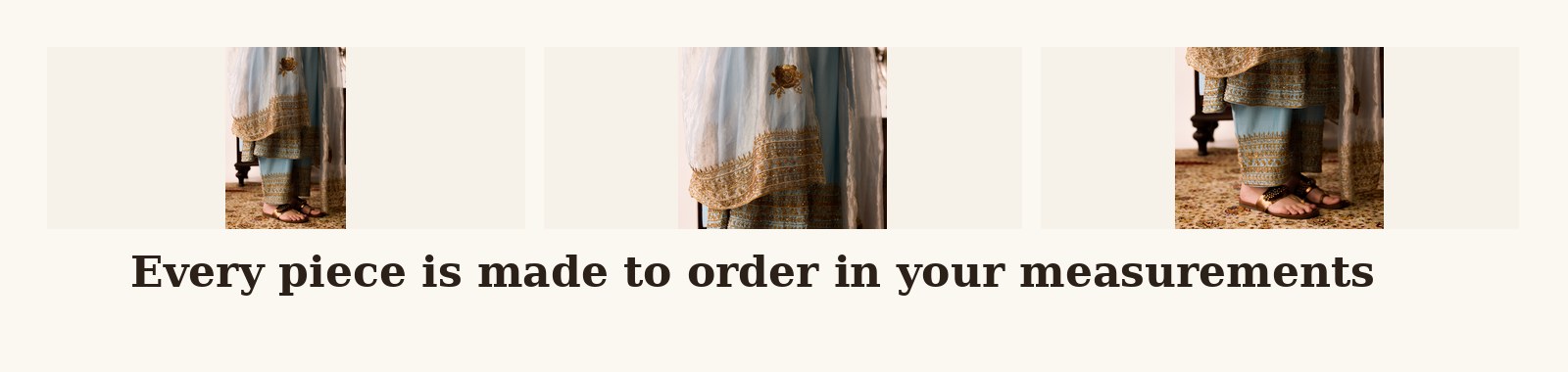
A floor-length anarkali is cut to a shoe. If the hem is right in flats, it is short in a two-inch heel. If it is right in a heel, it will be under your feet in flats, and you will spend the evening holding the skirt up with one hand.
So decide the shoe early. Everything we make is made to order with custom sizing, which means we can cut the hem to your heel height if you tell us what it is. Give us the number, not the word "medium".
For a mehendi where you will be sitting on the floor for an hour, a calf-length anarkali with flats or juttis is the practical answer, and it lets you get up without checking the hem. For a lawn or an outdoor sangeet, a block heel is kinder than a stiletto. And do not wear a brand new pair to a function you care about. Wear them around the house for two evenings first.
What goes over it in a northern winter
November and December weddings in Delhi and Dehradun are cold in the way that catches people out: warm in the mandap at four, cold by the time dinner is served at nine. The anarkali handles this better than a saree, because a layer does not disturb the drape.
A second dupatta in silk velvet or wool, worn over one shoulder and pinned at the waist, reads as part of the outfit rather than an afterthought. Keep it plain if the anarkali is embroidered. A long coat works if it ends above the flare or below the hem; a mid-thigh coat cuts the anarkali in half and the line never recovers.
What we would avoid is a cardigan or a shawl pulled over the bodice. It hides the embroidery you paid for and adds bulk exactly where the armhole is tightest. If you are going to be outdoors for a long stretch, take the second dupatta and leave the knitwear at home.
Five pieces, and what each one asks for
The five below are all hand embroidered and all made to order, and each one is a different styling problem. The COCONUT GULMOHAR ANARKALI SET (₹44,500) is the quietest of the five and wants oxidised or pearl earrings, juttis and very little else. The POWDER BLUE GULMOHAR ANARKALI SET (₹44,500) is the one to wear to a daytime function with a plain shawl over one shoulder.
The NAYANTHARA ANARKALI (₹36,500) in purple takes gold, and it takes a statement earring, because the colour is already the statement. The MADU RUST ORGANE ANARKALI SET (₹36,500) is the piece for a winter evening, with a heavier dupatta and a block heel. The MADHURIMA ANARKALI SET (₹34,500) is the easiest to re-wear, which makes it the one we suggest if you are building a wardrobe rather than buying a single outfit.
Every piece is hand embroidered by our artisans and shipped free anywhere in India above ₹10,000. If you are choosing between two of them, send us a photo of the jewellery you plan to wear and we will tell you which one it suits. That conversation happens on WhatsApp and it takes a few minutes.
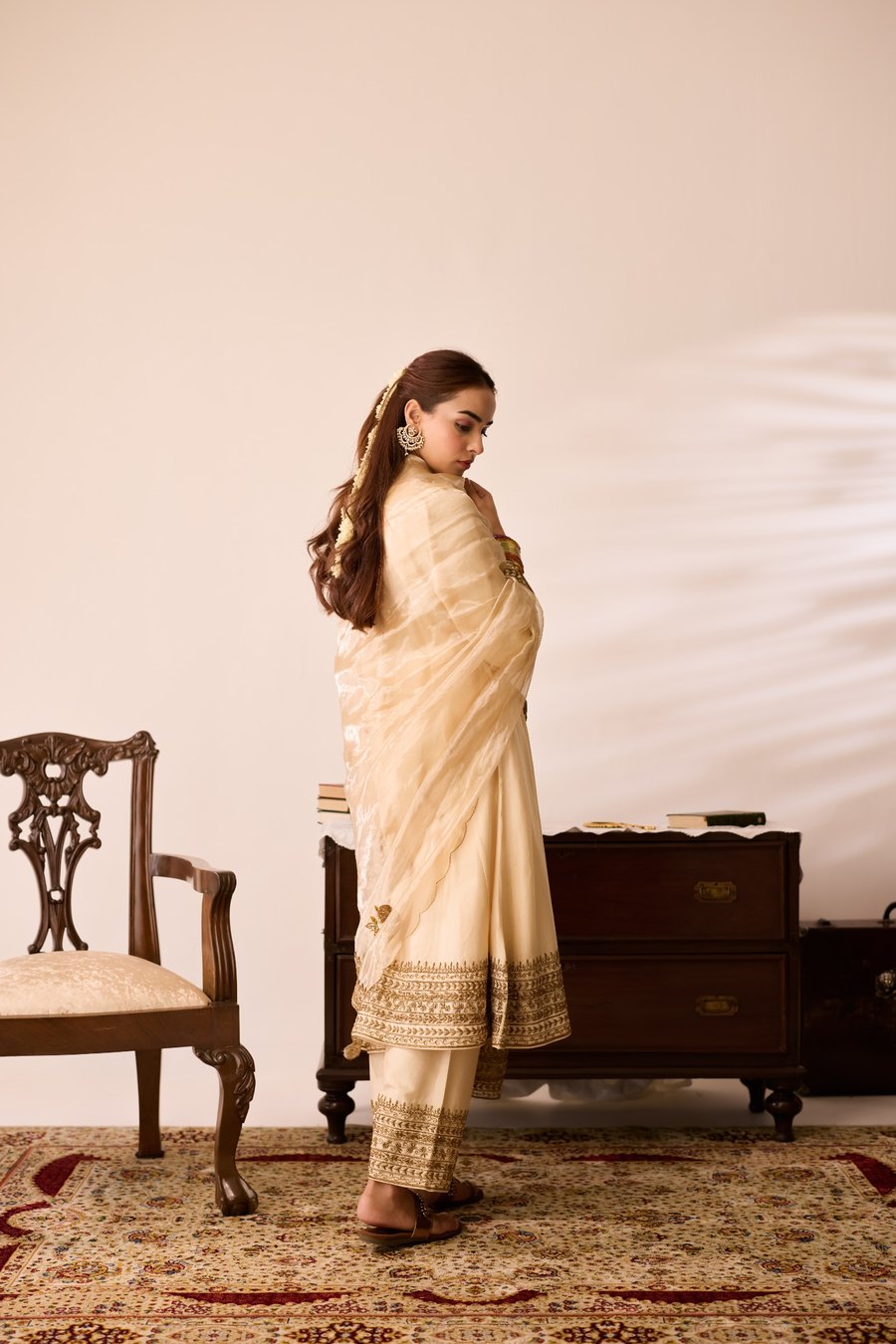
₹44,500
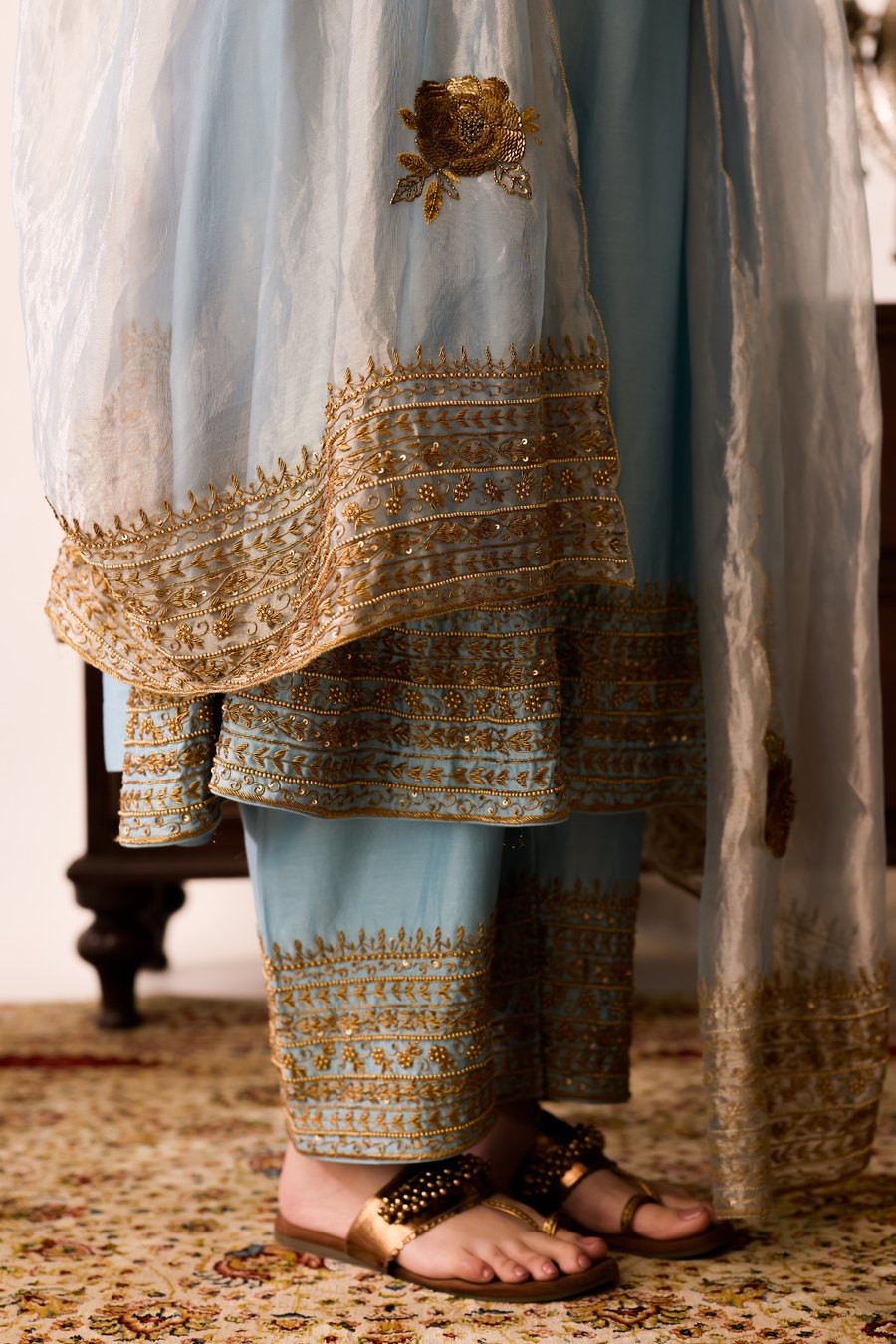
₹44,500
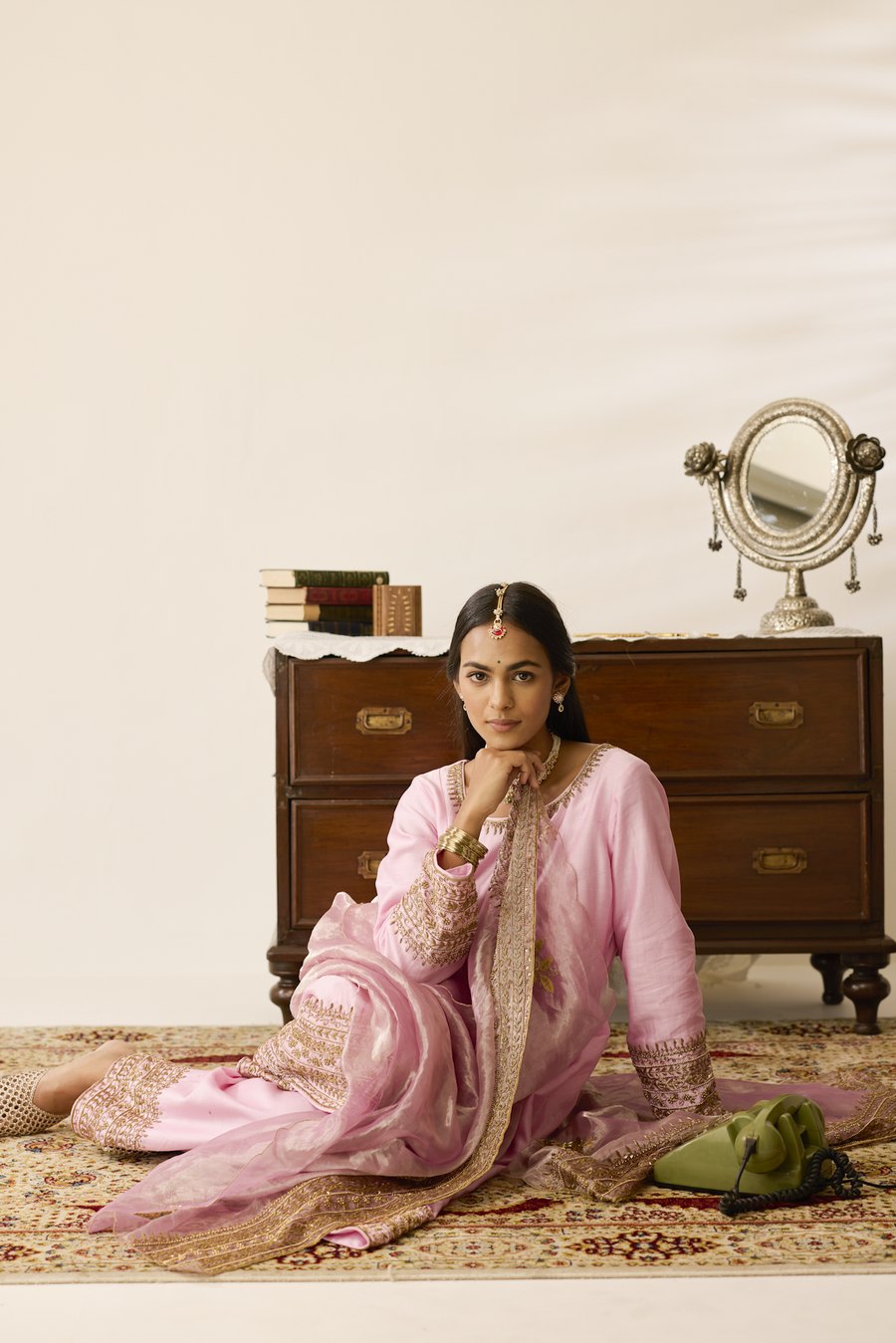
₹44,500
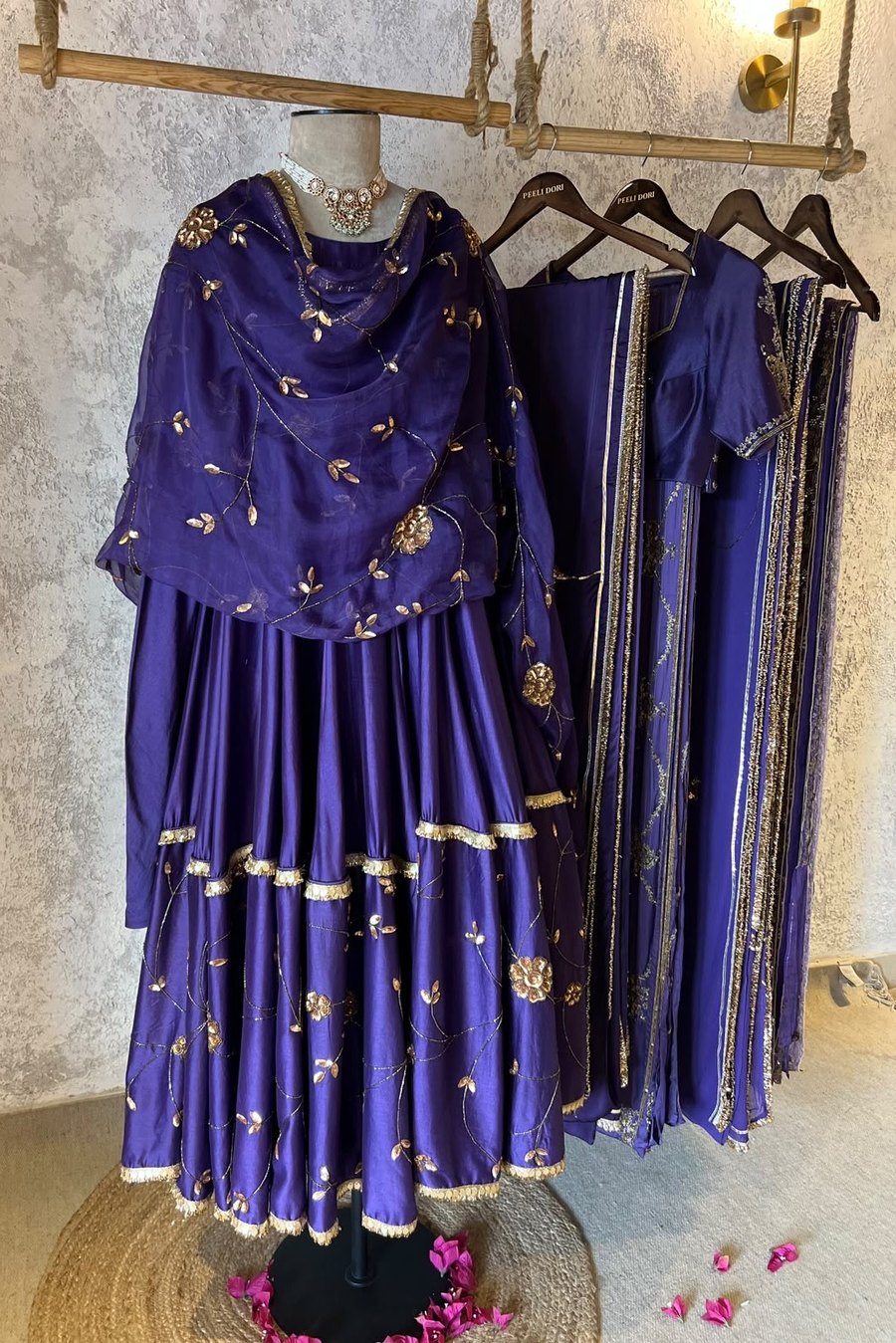
₹36,500
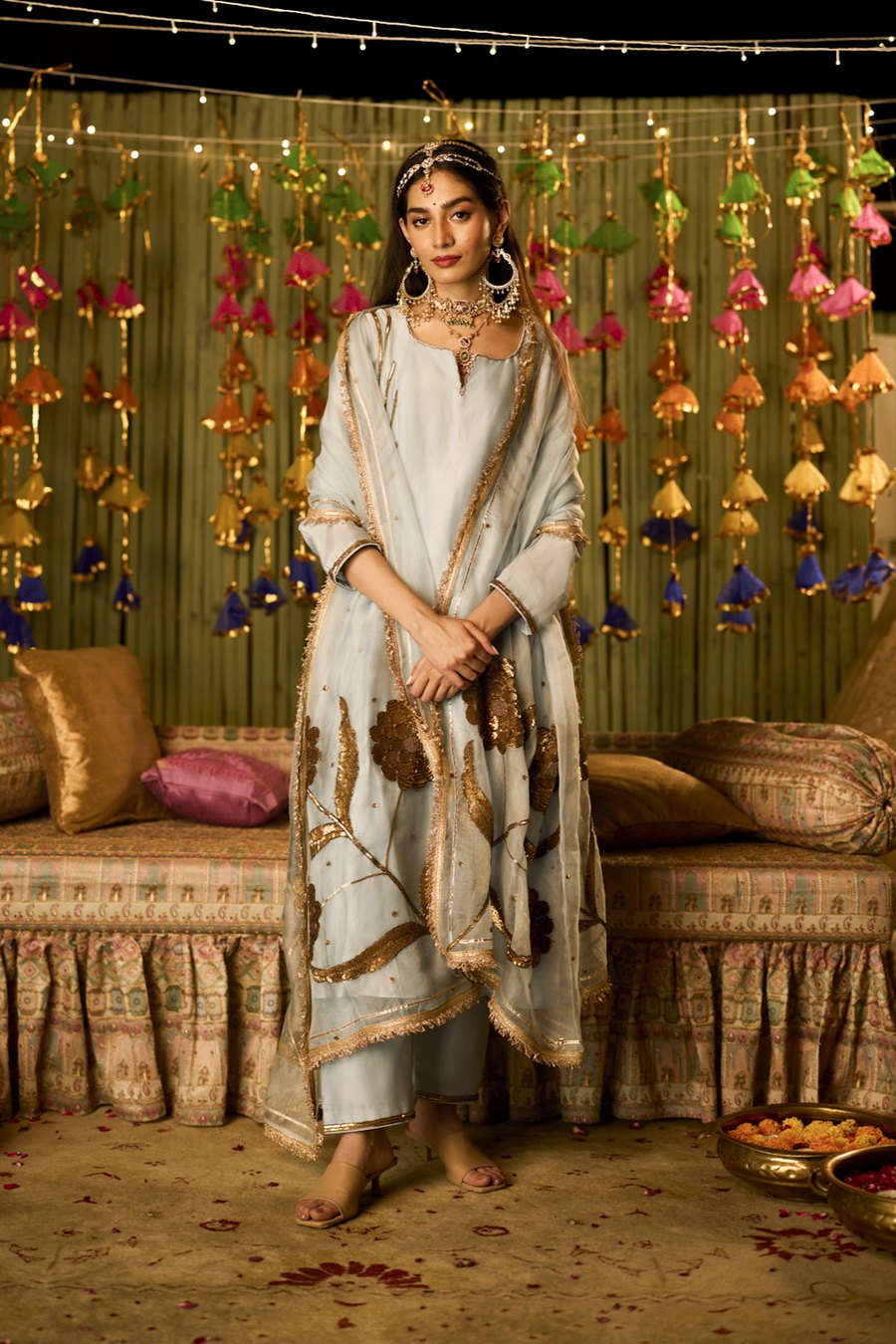
₹36,500
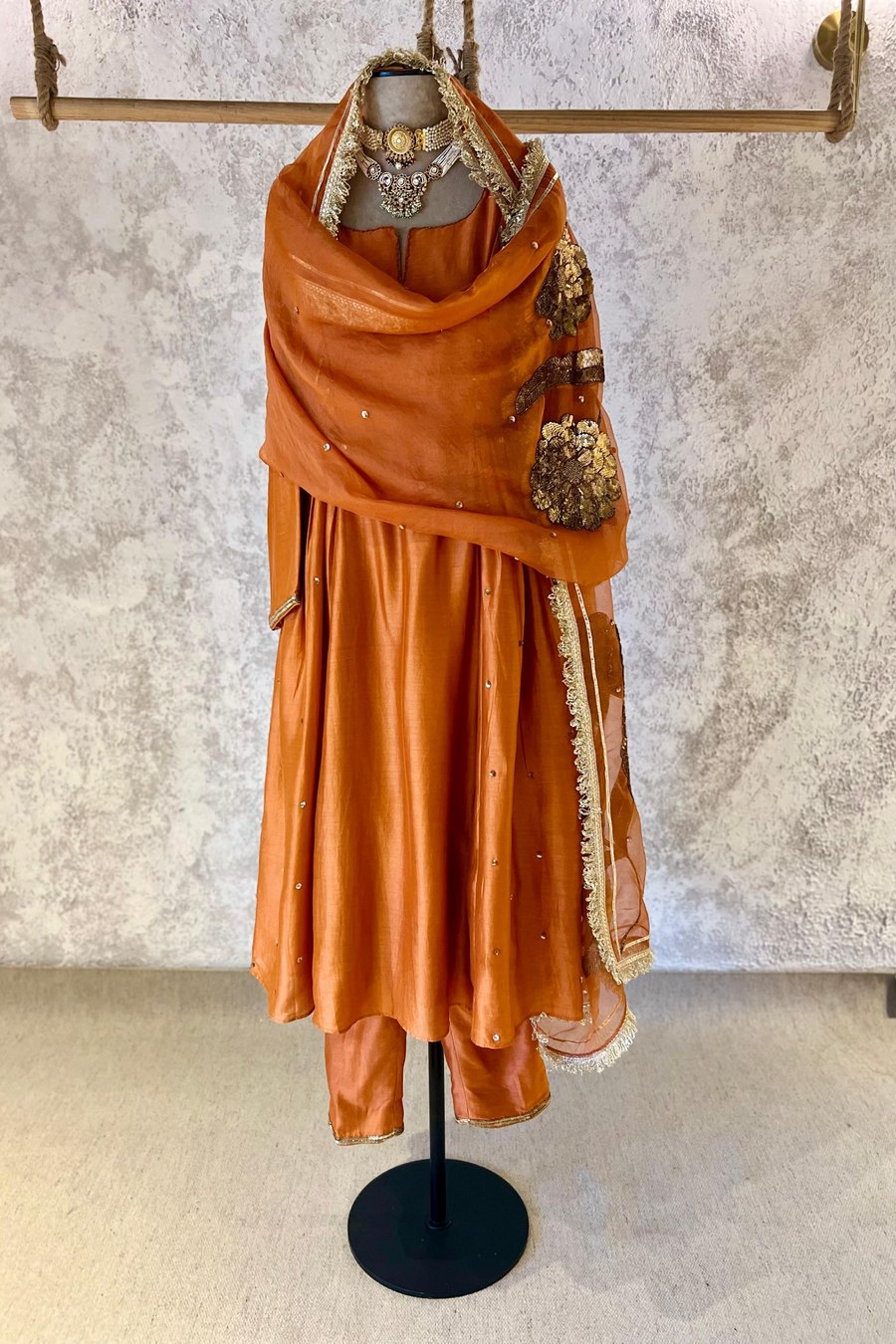
₹36,500
Three evenings, one anarkali
The same piece can carry a mehendi, a sangeet and a reception if you change three things: jewellery, shoes and hair. Nothing else has to move.
For the mehendi, wear it with a bare neck, oxidised silver earrings, juttis and your hair tied low. The look is deliberately unfinished, which is what a daytime function asks for. For the sangeet, take the hair half-up, add a statement earring, and put on the block heel. Same piece, entirely different register. For the reception, wear your hair open, choose one piece of jewellery and stop there, and go back to the heel you can stand in.
This is also the honest answer to whether an anarkali is worth the money. One that gets worn three times in a season, and again a year later with different earrings, is cheaper per wear than three pieces that each get worn once.
The two-minute check before you leave
Sit down on a low stool. If the hem touches the floor, it will be under your feet when you walk. Stand, take ten steps, turn. Raise both arms as if you were greeting someone at a phera. Check that the dupatta is pinned at the shoulder and at the waist, that the bag you are carrying does not sit where the embroidery is, and that you can hold a glass without thinking about your sleeve.
Frequently asked
Can I wear a necklace with a high-neck anarkali?
No. A closed or high neckline leaves no room for a necklace, and one placed there either hides in the embroidery or reads as a second design. Wear long earrings instead.
What shoes should I wear with a floor-length anarkali?
Whatever heel you will actually keep on for four hours, decided before the hem is cut. Tell us the heel height when you order and we will cut the length to it.
Do I need a dupatta with an anarkali?
Not always. For a daytime function or a sangeet, many of our customers wear the piece without one. For a temple visit or a function with elders, take it, and pin it at the shoulder and waist so it stays where you put it.
Can I wear the same anarkali to a mehendi and to a reception?
Yes. Change the jewellery, the shoes and the hair, and keep everything else. Oxidised silver and juttis for the day, gold and a heel for the evening.
Will the colour look the same in photographs?
Usually, and it depends on the light. Our dyes are organic and sit in the fibre, so the shade holds in daylight and under flash better than a surface-dyed cloth. Check it near a window before you commit to a metal tone.
Explore more: wedding 2026 · designer hand embroidered blouse — or message us on WhatsApp for styling help.

The information below is required for social login
Sign In
Create New Account