

Two blouses can look almost identical on a hanger and be priced four times apart, and both can be fair. What separates them is not the shop's mood that morning; it is cloth, the amount and kind of hand work, the construction you cannot see, and whether the pie

Two blouses can look almost identical on a hanger and be priced four times apart, and both can be fair. What separates them is not the shop's mood that morning; it is cloth, the amount and kind of hand work, the construction you cannot see, and whether the piece was cut for you or for a size chart. Here is how we price the blouses we make, and how to judge anyone else's number.
Four things decide a blouse price
When a customer asks why one blouse is ₹15,500 and another is ₹27,600, the honest answer is that four costs stack up in a fixed order: the cloth, the hand work, the construction, and the fit. Change any one of them and the number moves. Change all four and you have a different garment, even if the silhouette is the same.
This matters most in wedding season, when a blouse is usually the piece being decided last. The saree is chosen, the date is fixed, and the blouse becomes a scramble in the final three weeks. That is exactly when people buy badly, because the only question left is what is available. If you can move the blouse decision earlier than the saree, you will spend the same money on a much better piece.
First cost: the cloth
A blouse takes roughly a metre of fabric, sometimes a little more if the sleeves are long or the piece is panelled. That single metre carries a wide range of prices, and the difference is not decoration. Silk has a weight and a fall that polyester cannot copy, and it behaves differently on the body after an hour of wear. Organza is stiff and holds a shape away from the shoulder. Raw silk takes embroidery without puckering. A soft crepe moves with you but will not hold a structured neckline.
The ground also decides how the work will age. On a firm silk, hand embroidery sits on the surface and stays there. On a loose weave, the same work pulls the cloth into small waves over a few seasons, and no amount of pressing takes them out. When we dye with organic dyes, the colour sits in the fibre rather than on it, which is why a deep red or a bronze reads the same in a photograph as it does in daylight.
The lining is part of this cost, not an extra. An unlined hand-embroidered blouse is almost always a false economy: the embroidery scratches, the seam allowances show, and the piece needs a camisole underneath anyway, which is where the money you saved goes.
Second cost: the work, and how much of it
This is the line item people underestimate. Hand work is priced by the technique, by the density, and by how much of the blouse it covers. Gota patti is folded metal ribbon appliquéd and stitched down; it reads crisp and it is relatively quick per square inch. Zardozi uses metallic thread worked over a frame with a hook, builds height, and takes far longer. Resham is silk thread, softer and quieter, and it is the technique that rewards density most. Mirror work and pearl work add both material and time, because every element is set individually and has to sit flat.
Density is where quotes quietly diverge. A blouse with work across the front panel and plain sleeves is not the same garment as one with work on the front, the back, the sleeve caps and the hem, even if the photograph from the front is identical. Ask what is worked where. A shop that can answer that question in detail is a shop that knows its own product.
The last variable is who did the work. Hand embroidery is a person at a frame, paid for the hours the piece takes. Machine work can imitate a motif at a distance and cannot imitate the surface up close, which is where you will be photographed at a wedding. We are not neutral about this: our blouses are hand embroidered, made by artisans we work with directly, and that is the single largest reason our prices sit where they do.
Third cost: the construction nobody photographs
Two blouses can carry identical embroidery and be separated by ₹6,000 on the inside. The differences are unglamorous and they decide whether you can sit, eat and dance for six hours without adjusting yourself: a proper inner facing at the neckline, a hook-and-eye placket that does not gap, padding that shapes the bust instead of merely covering it, seam allowances wide enough to let the piece out after a fitting, and a lining attached so it neither twists nor bags.
The cheapest failure is the armhole. A blouse cut with too little ease at the armhole will cut into you the moment you raise your hands, and no alteration fixes it, because the fabric is already gone. The second is the back. A deep back with a single hook and no facing will open when you sit. Both are visible in the first ten minutes of wearing and invisible on a hanger, which is why trying a blouse on properly, with the saree pleated, matters more than looking at it in a mirror from the front.
Fourth cost: made to order
A blouse is the one piece of the outfit that cannot be one-size. Shoulder to bust, bust to underbust, armhole depth, sleeve length, the distance from your collarbone to where you want the neckline to sit: none of it correlates reliably with a size label. Ready-size blouses are cut to an average and then altered, and alteration can only take in, not add.
Every blouse we sell is made to order in your measurements. You send your numbers, or come to Shahpur Jat in New Delhi or our Dehradun store and we take them, and we confirm them on WhatsApp before anything is cut. Custom sizing is included in the price rather than billed as a service, because a blouse that does not fit is not a blouse at a discount, it is a return.
This is also the part of the price that buys patience. Made to order means the piece is cut after the order, not pulled from a shelf, so the fit conversation happens while there is still cloth to work with.
Six blouses, and what the bands are
Our own blouses run from ₹15,500 to ₹27,600. Six are shown below: the Gulnazaar at ₹15,500, the Majorda at ₹16,500, the Lana Pearl at ₹18,500, the black Rosy at ₹25,600, the Ashani in red silk at ₹26,500 and the gold Rosy at ₹27,600. Every one is hand embroidered, lined and made to order.
If you want to know what separates two pieces that look equally worked, ask us on WhatsApp and we will tell you what is worked where, which technique, and how much of the blouse it covers. That is a fair question to put to any shop, and the answer should come without hesitation.
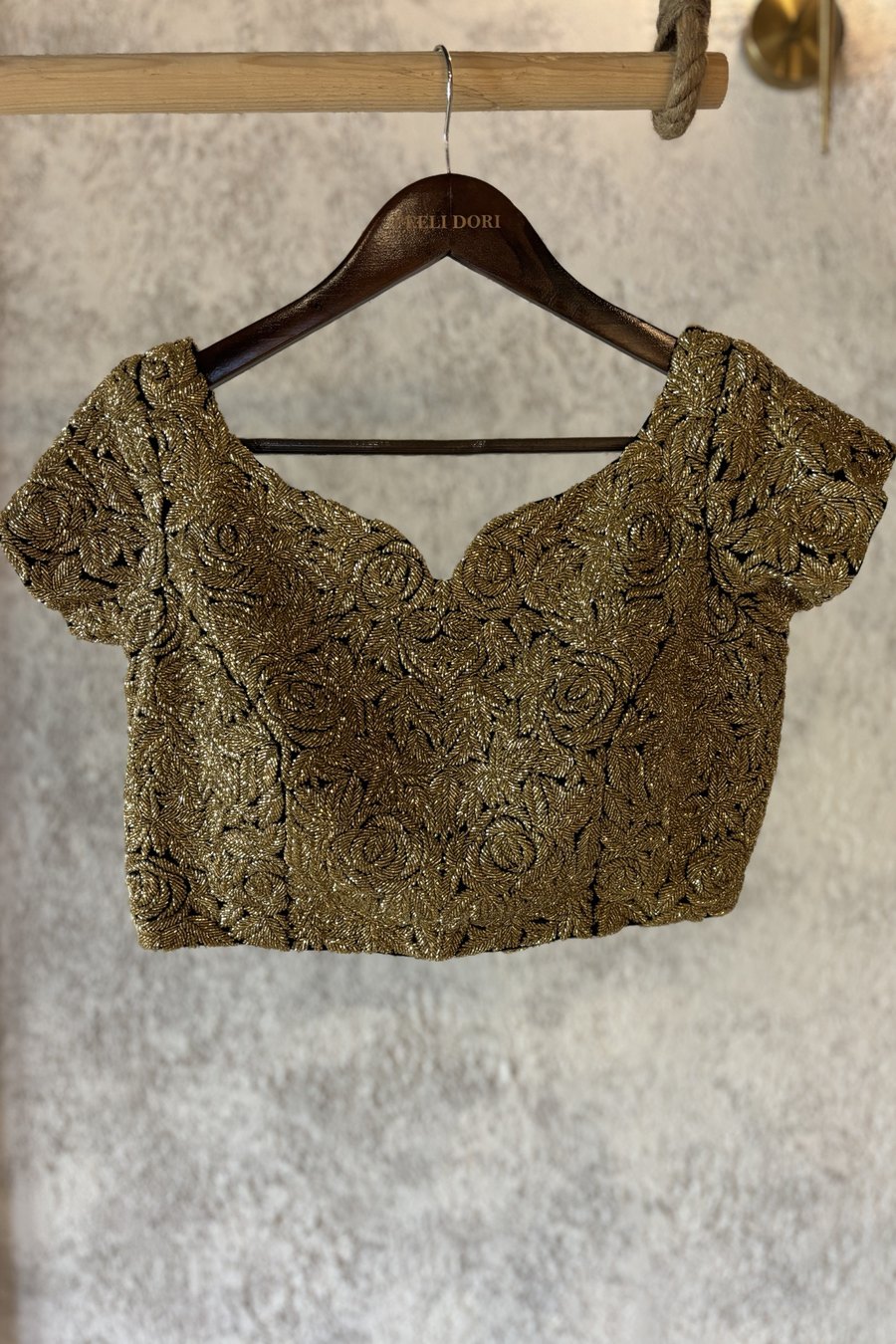
₹27,600
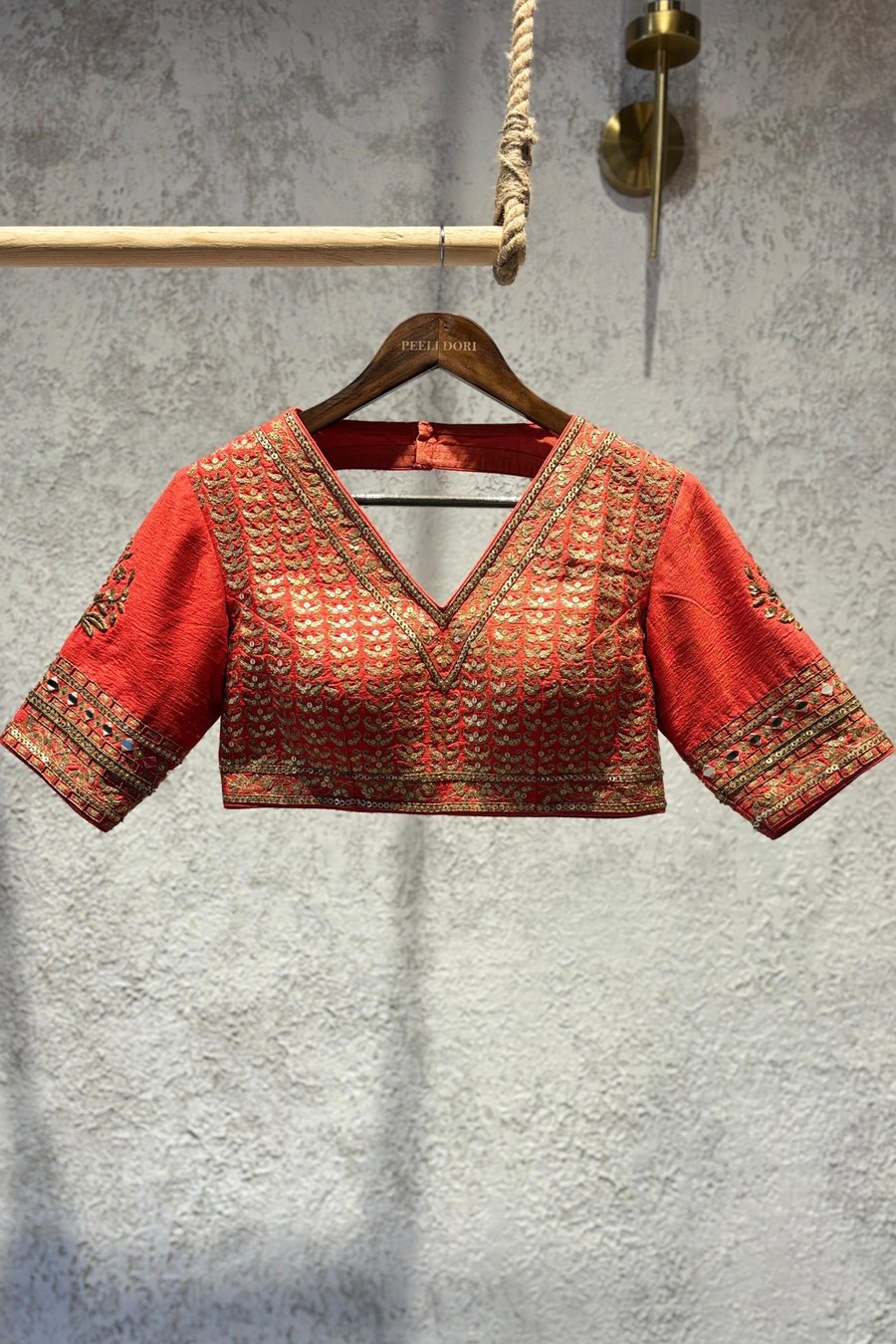
₹26,500
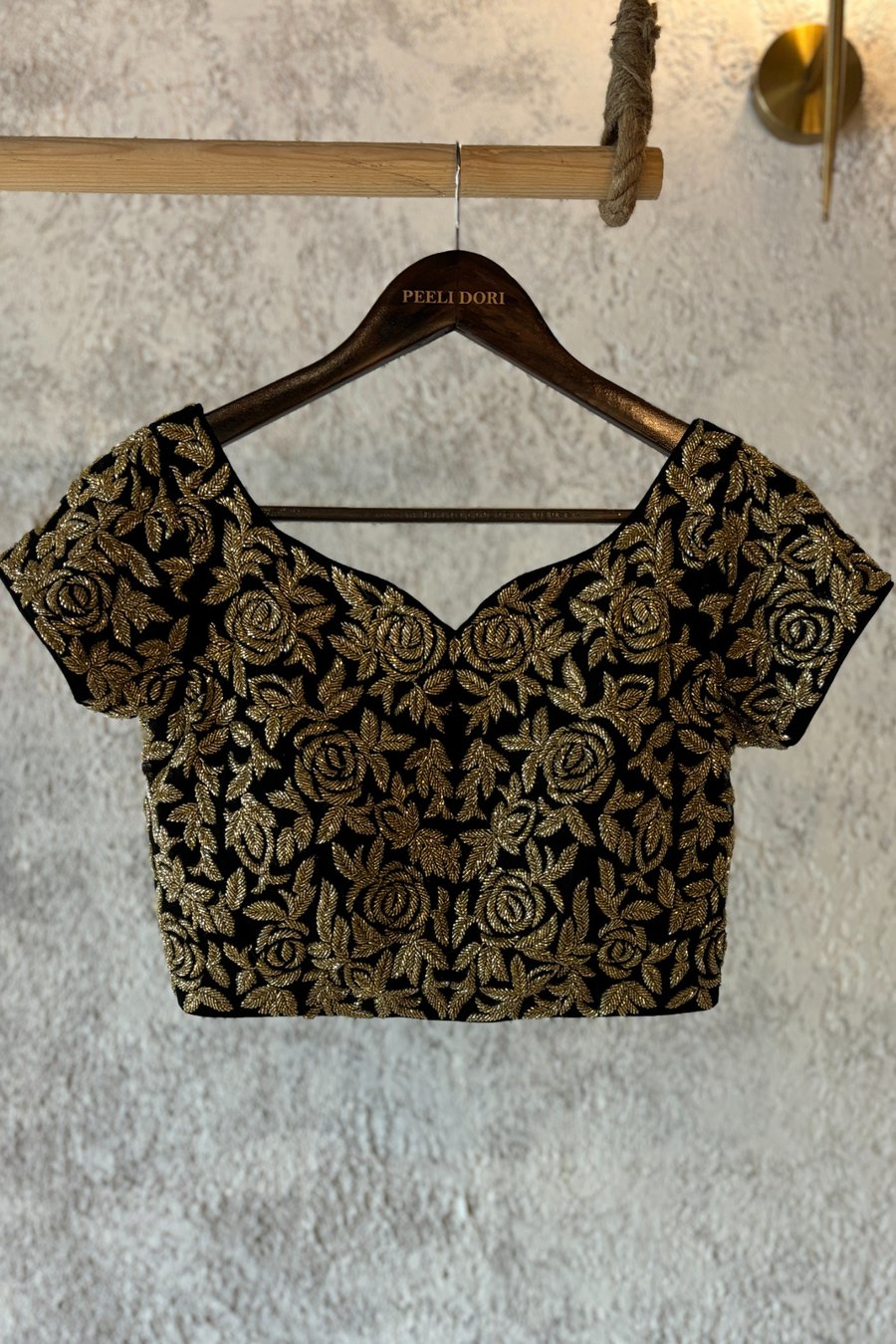
₹25,600
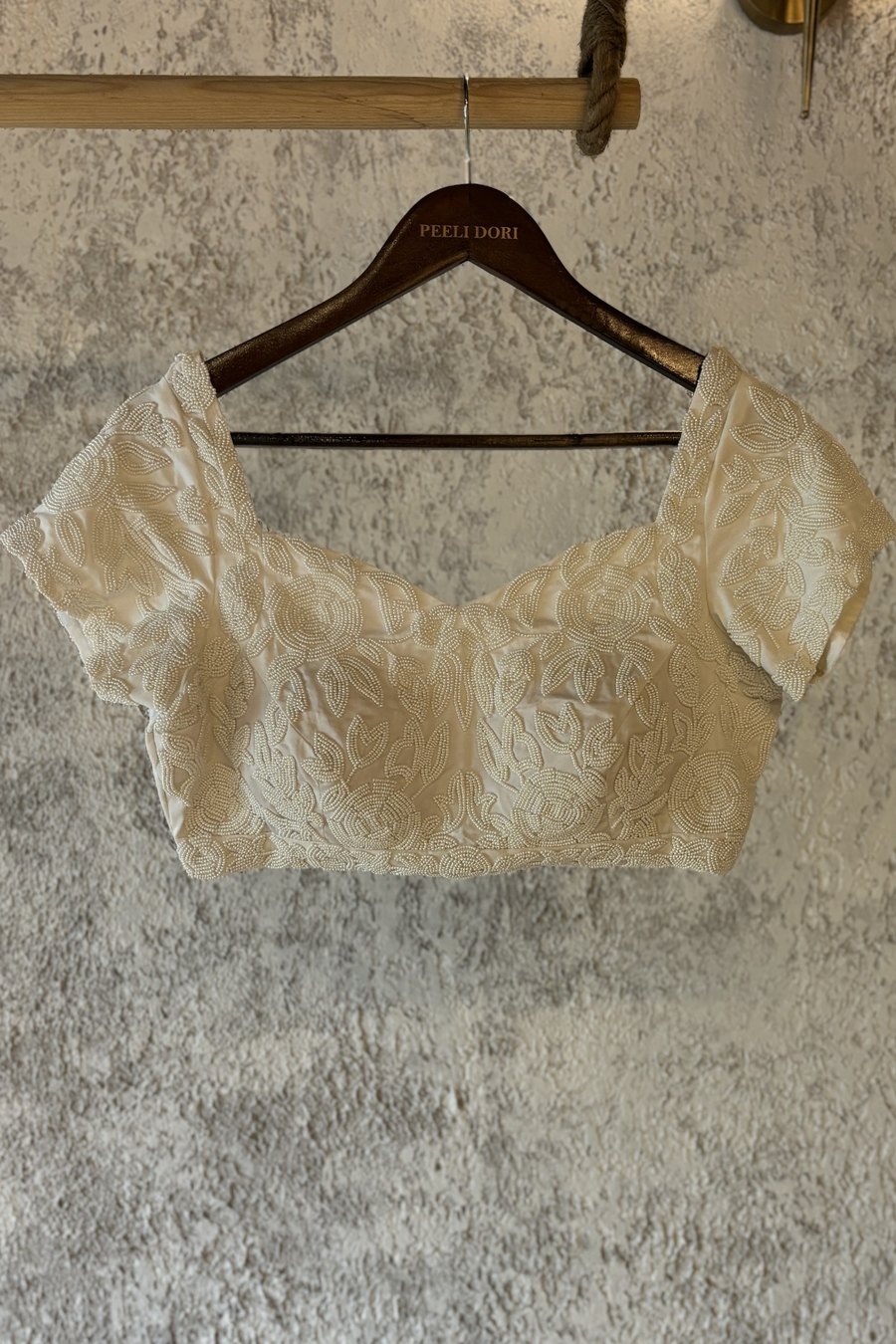
₹18,500
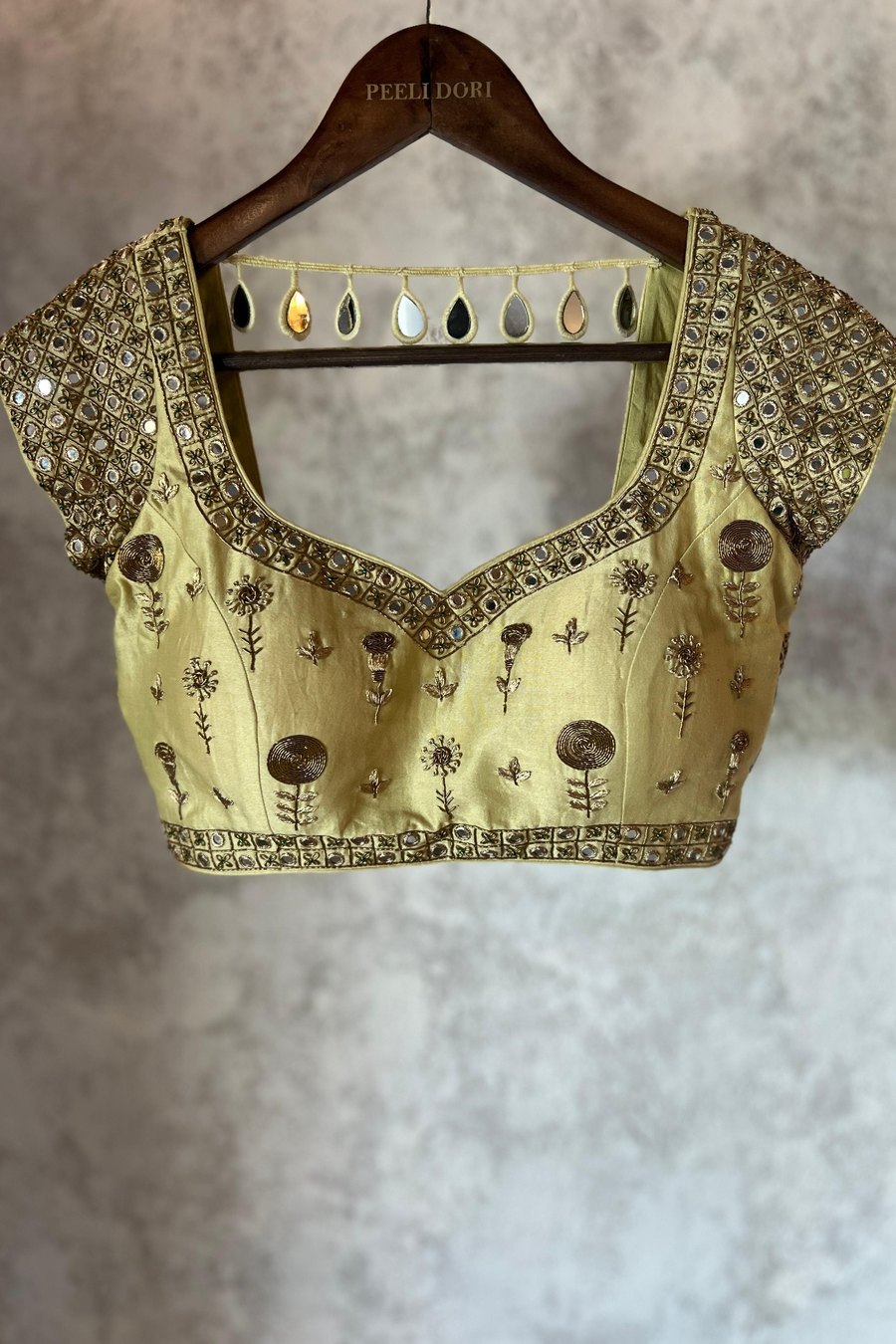
₹16,500
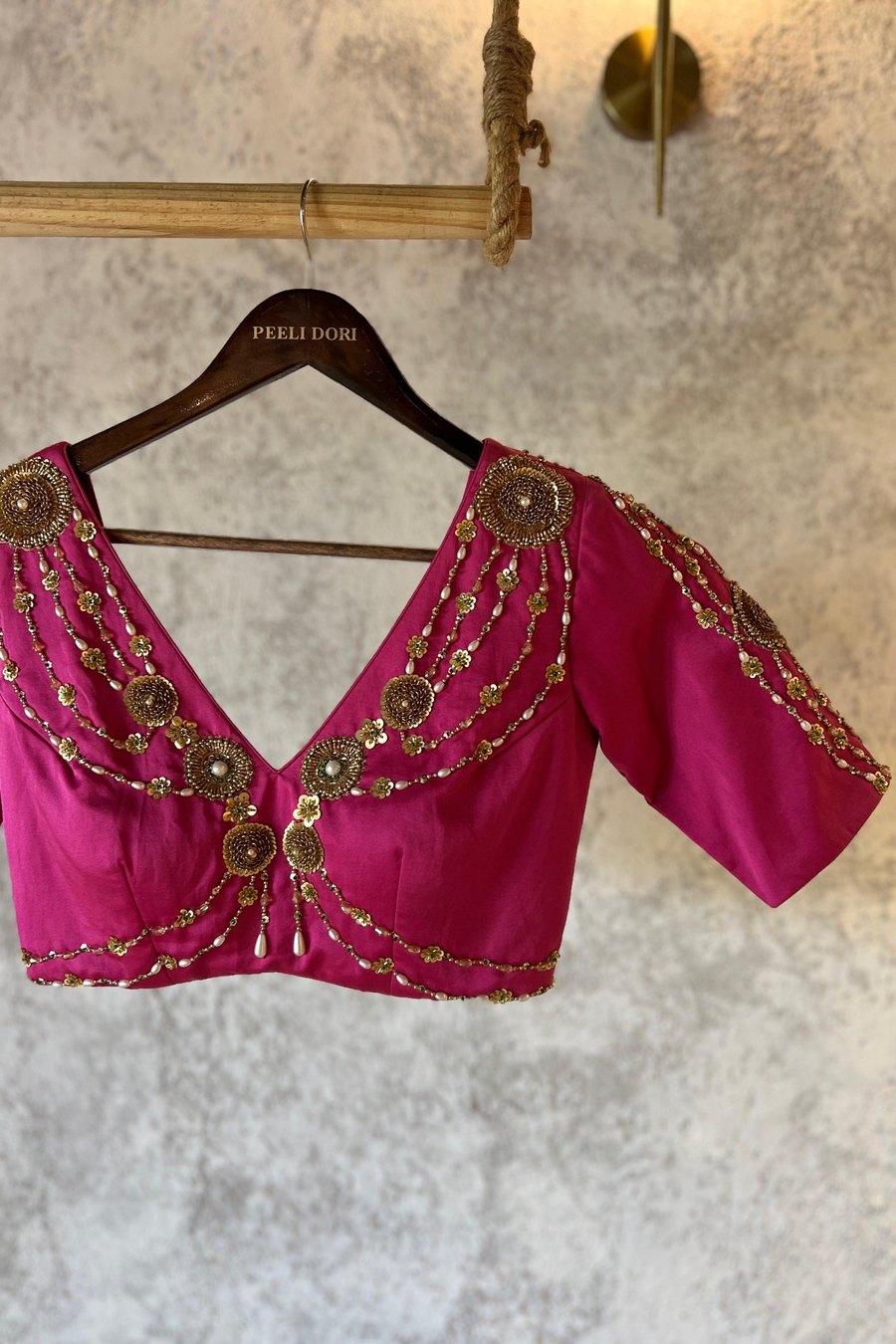
₹15,500
How to spend the money well
Buy the blouse that will be worn more than once. A blouse in a neutral ground, cream, ink, bronze or gold, will carry three or four sarees across a season and cost less per wearing than a heavily worked piece in a colour that only works with one saree. The reverse is also true: if you already own four plain blouses, the fifth plain one is not a saving.
Do not put a heavily embroidered blouse under an embroidered saree. The saree is already the pattern, and a second pattern at the shoulder makes both look cheaper than they are. This is the most common pairing mistake we see, and it is free to avoid.
Match the metal in the blouse to the jewellery you actually wear. Zari and gold gota want gold; pearl and mirror work want white metal. Buying the blouse first and the jewellery afterwards is how wardrobes end up with pieces that never get worn together.
Finally, decide the dupatta early. If you are adding one, the blouse can stay quieter, and the budget spreads across two pieces instead of being spent entirely above the waist.
Care that protects what you paid
Hand work does not need frequent cleaning; it needs to not be crushed. Air a blouse overnight after wearing, and dry clean only when the embroidery has actually dulled or the lining has taken on odour. Store it inside out in a cotton or muslin bag, never plastic, and do not hang a heavily worked blouse by thin straps for months, because the shoulder seam will stretch.
Keep the iron off the embroidery entirely. If the piece needs pressing, press the plain reverse through a cloth on low heat and work around the worked panels. If a thread or a mirror lifts, do not pull it and do not trim it, send us a photograph on WhatsApp first. Most lifted resham threads are a short repair while the loop is intact.
Frequently asked
Why is a hand-embroidered blouse so much more than a machine one?
Because a person sat at a frame and worked it. Machine embroidery can copy a motif from a distance but not the surface up close, and it cannot vary density across a panel the way a hand can. In our blouses the hand work is the largest single part of the price, ahead of the cloth.
What does a blouse at Peeli Dori cost?
Between ₹15,500 and ₹27,600. What moves the number is the cloth, the technique (gota patti, zardozi, resham, mirror, pearl), how much of the blouse is worked, and the construction detail inside. Every piece is hand embroidered, lined and made to order in your measurements.
Can I get a blouse made to my measurements?
Yes, that is the default. Every blouse is made to order with custom sizing included in the price. Send your measurements on WhatsApp or visit us in Shahpur Jat, New Delhi or in Dehradun, and we confirm the numbers with you before cutting.
How far ahead should I order a blouse for a wedding?
Earlier than you think, and earlier than the saree if you can. The blouse is the piece that has to be fitted, and fitting is where the last-minute compromise happens. Message us with your date and we will tell you honestly whether the timeline works.
How should I store a hand-embroidered blouse?
Inside out, in a cotton or muslin bag, away from plastic and direct light. Air it overnight after wearing, dry clean rarely, and never iron the embroidered panels. If a thread lifts, send us a photograph before touching it.
Explore more: saree · dupatta — or message us on WhatsApp for styling help.

The information below is required for social login
Sign In
Create New Account