

Most people choose a kurta set the way they choose a saree — by colour, in a photograph, on a phone. Then it arrives and something is off: the kurta ends at an awkward place on the leg, the armhole bites when they raise an arm, or a worked front that looked ri
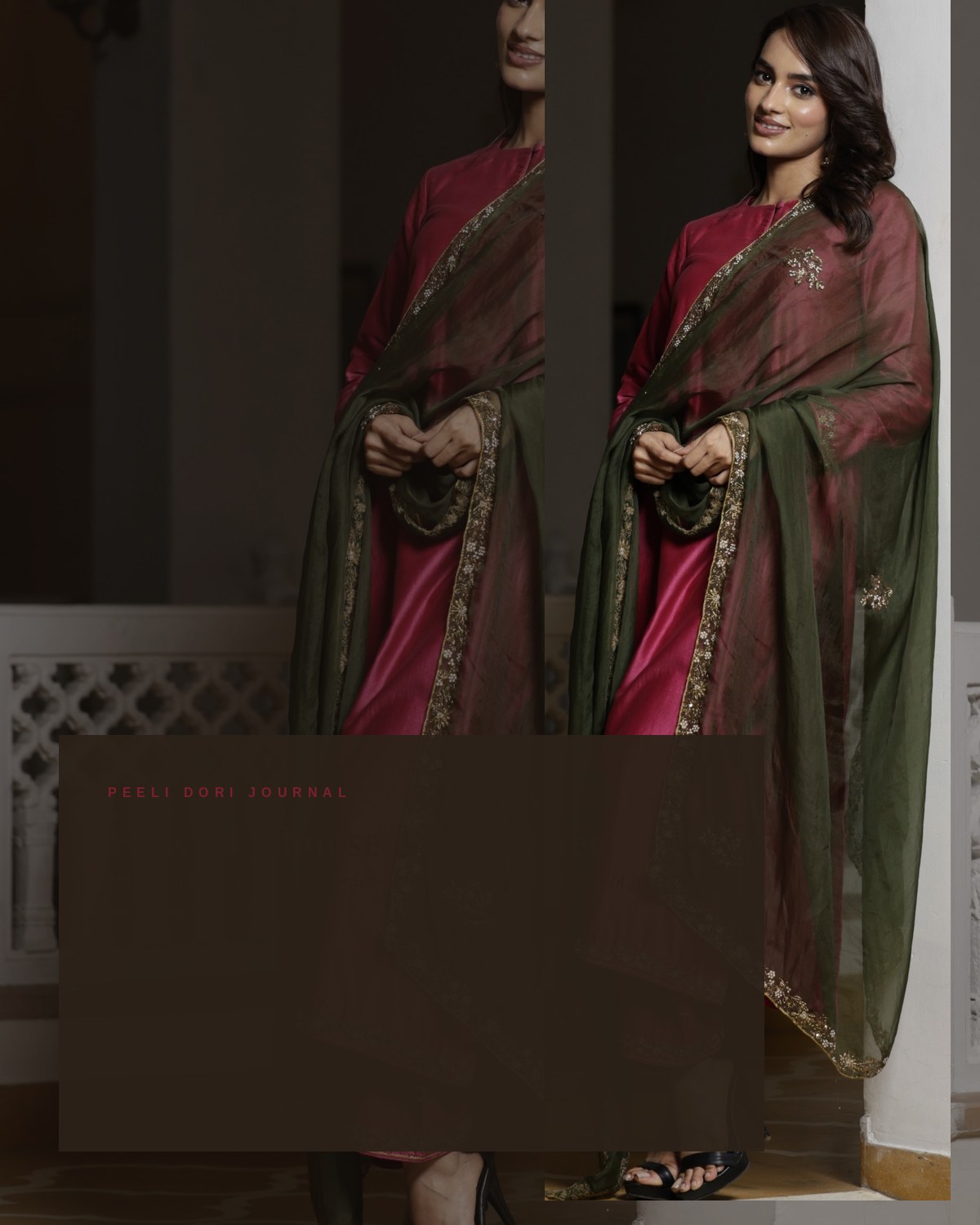
Most people choose a kurta set the way they choose a saree — by colour, in a photograph, on a phone. Then it arrives and something is off: the kurta ends at an awkward place on the leg, the armhole bites when they raise an arm, or a worked front that looked rich online sits heavy across the chest. None of that is a colour problem. It is a fitting problem, and since every set we make is cut to your measurements, it is also the part of the purchase you can actually control. Here is the order we would decide things in.
Start with two numbers, not a colour
The first is where the kurta ends. A hem just above the knee reads young and informal and works beautifully at a mehendi where you will be sitting on the floor. A hem at mid-calf, over straight pants, gives you length and a cleaner line in photographs. A long kurta that falls near the ankle is the most formal of the three and the one that needs the most accurate measurement, because there is no fixing a hem that lands in the wrong place once it is cut.
The second is the shoulder and the armhole. This is the number that decides whether the set feels like clothing or like something you are wearing for other people. A shoulder that is even two centimetres too wide slides, and the kurta starts pulling from the sleeve instead of falling from the collarbone. An armhole that is too tight makes every raised arm a small negotiation, which is a real problem at a wedding where you will be hugging people all evening.
Our advice, after years of fittings across the counter: get the shoulder and armhole right and almost everything else can be adjusted later at the waist. Get them wrong and no amount of tailoring rescues the set. That is why we ask for eight measurements before we cut anything, and why we run a fit check on WhatsApp before the final stitching rather than after.
Then the cloth, and how much of it is worked
The kurta sets we make sit in three fabric families. Silk chanderi is the lightest of them: it has a dry, quiet sheen and a drape that keeps a worked front from turning stiff, which is why most of our Gulmohar and Ruqsat sets are built on it. Silk organza is crisp and holds its shape, so it is what we use for dupattas that carry embroidery of their own — an organza dupatta stays where you put it instead of collapsing into your elbow. Silk satin is the heaviest of the three and falls in a straight line, which suits a longer kurta and an evening function.
Then there is the embroidery, and this is where a kurta set earns its price. Gota is flat ribbon work in gold or silver; it catches light rather than weight, so it reads best in daylight and photographs beautifully at a haldi or a lunch. Zardozi is metal thread stitched into the ground and dabka is the small coiled wire that gives it relief — both give depth and shadow, which is why they belong in the evening under a warm light, and why a heavily zardozi-worked set can feel like too much at eleven in the morning.
The price difference inside one family is almost never the cut. Two Gulmohar sets on this page are both ₹36,500 because the same amount of handwork goes across the kurta, the pant and the dupatta. A set at ₹28,500 carries less surface work, and a ₹22,500 one less again. Decide how much worked surface you want on the body before you decide anything else, because that is the decision the invoice is actually about.
Matching the shape to your frame and to the function
If you are petite, take the shorter kurta with a straight or slightly tapered pant and keep the dupatta light. A long kurta with wide culottes cuts height in half in photographs. If you are tall, the reverse: a longer kurta with culottes is one of the few shapes that looks deliberate rather than simply long.
If your bust or waist is the area you would rather not draw attention to, put the work below the neckline rather than across it, and choose a straighter kurta that skims instead of a fitted one that outlines. A worked yoke across the bust is beautiful on a hanger and unforgiving on a body, and it is the single most common thing women ask us to change after a first fitting.
Sleeves are their own decision. A three-quarter sleeve is the safest and the most useful across functions; a sleeveless kurta needs a well-cut armhole, which is exactly the measurement people guess at when they order online. If you want sleeveless, be measured for it — do not assume your blouse size will do.
Then let the calendar narrow it. Mehendi and haldi happen in daylight, in colour, often on the floor: lighter cloth, less work, movement. A sangeet or a reception is the opposite — deeper ground, more handwork, the dupatta worn full and pinned once at the shoulder, because you will be standing still in almost every frame. And if you are the mother of the bride or groom, we would go plainer than you think: chanderi, considered embroidery, a colour that lets the bride stay the brightest person in the picture.
Six sets, and what each one is for
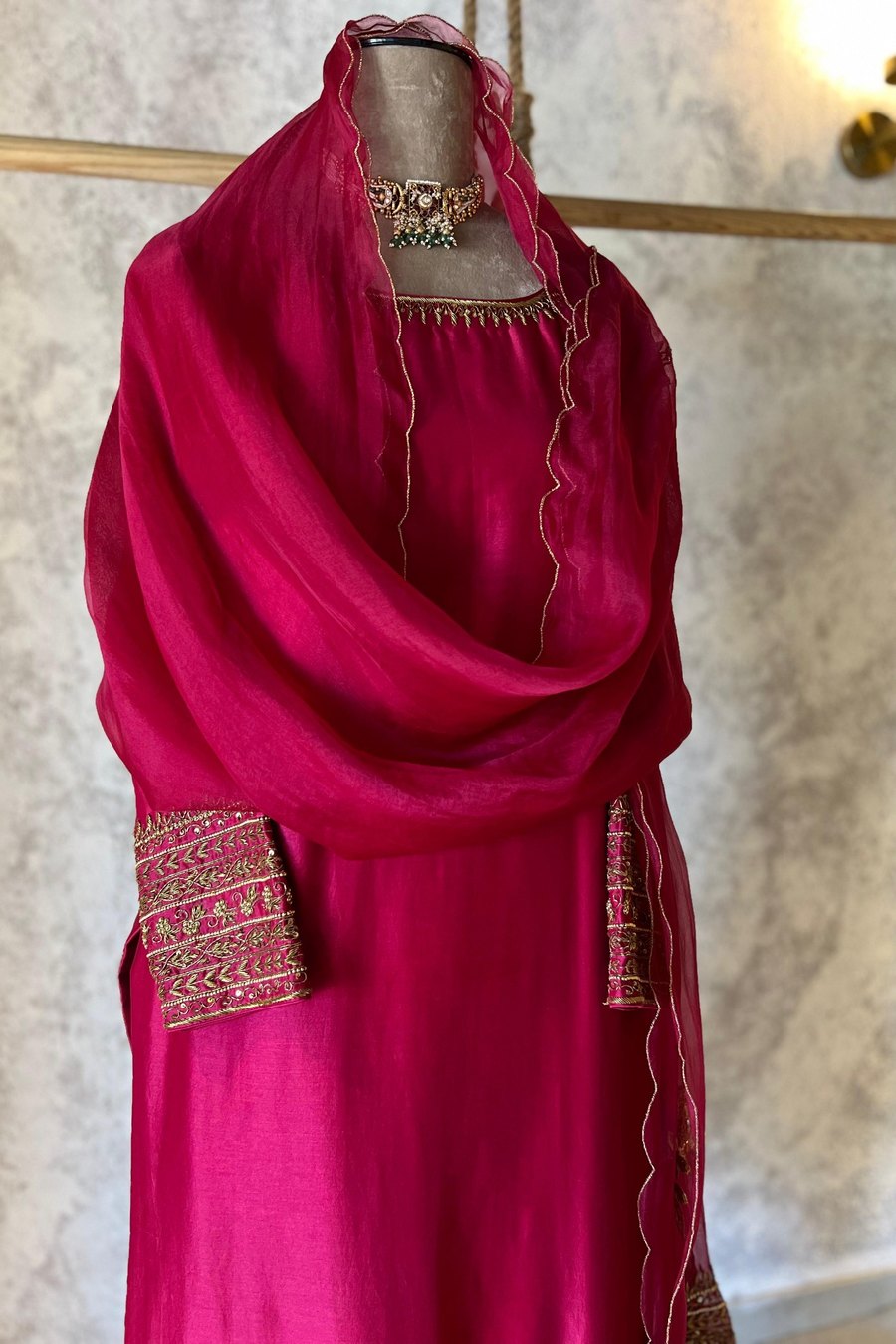
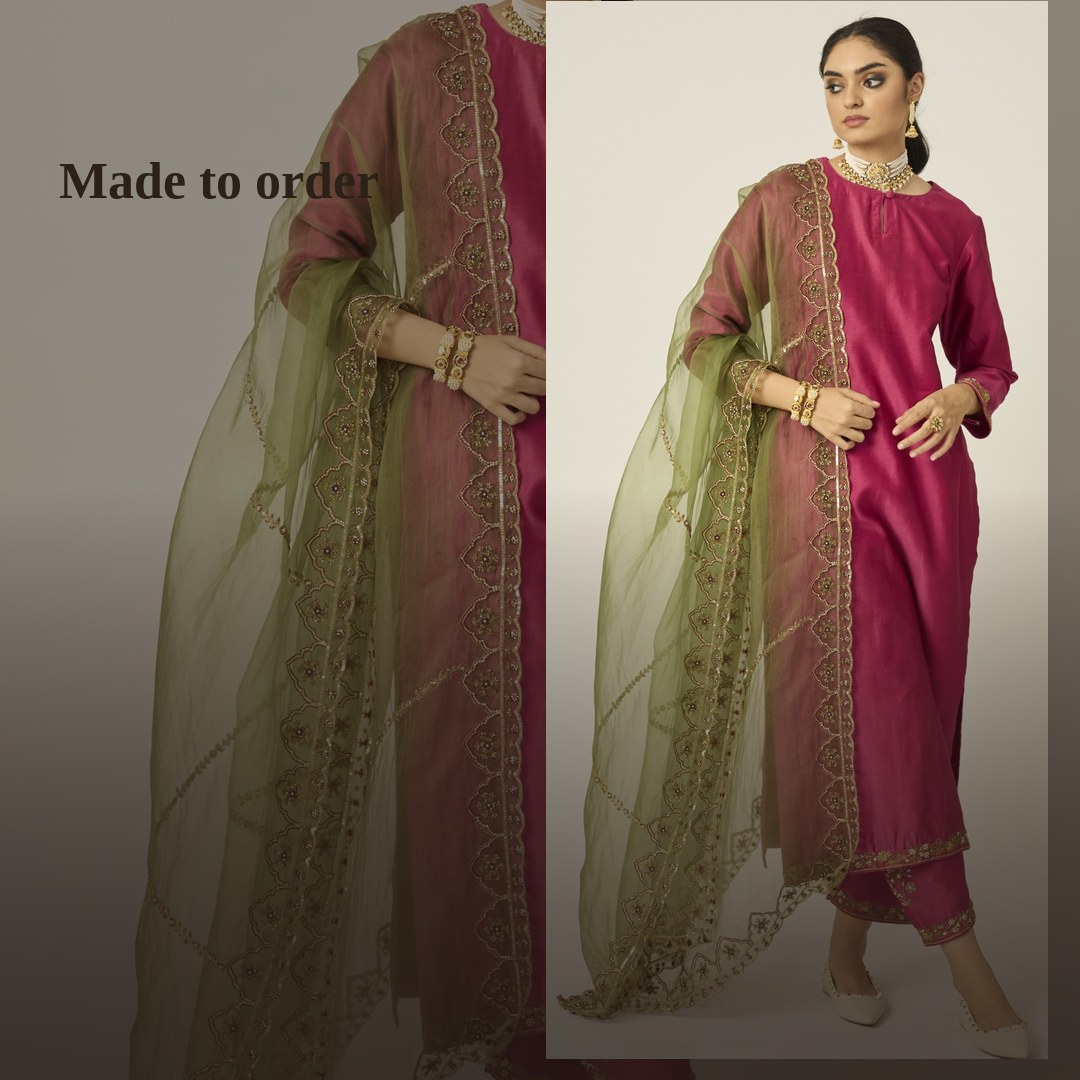
GULMOHAR RED KURTA SET, ₹36,500 — the most worked set of the family, and the one for an evening where the photographs will be taken under warm light. Chanderi kurta and pant with an organza dupatta, worked across all three.
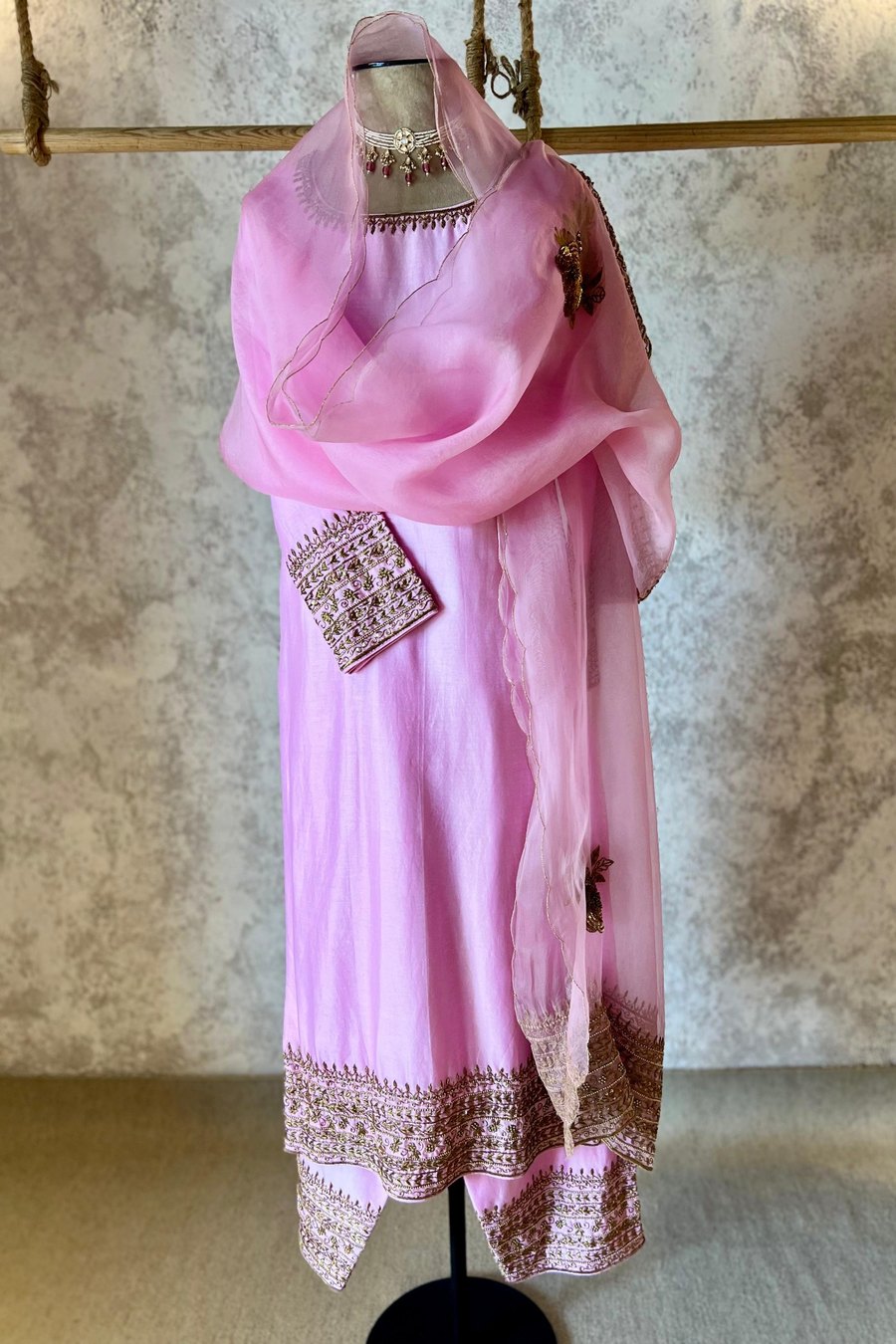
GULMOHAR RANI PINK KURTA SET, ₹36,500 — the same construction in a deeper pink. This is the version we suggest when the bride is in red and you want to sit beside her without competing.
GULABI GULMOHAR KURTA SET, ₹36,500 — the same handwork in a softer rose, which is what most women pick for a daytime mehendi where the room is already warm with marigolds.
GULMOHAR FUCHSIA PINK KURTA SET, ₹36,500 — the brightest of the four Gulmohar sets, and the one that carries a sangeet without any jewellery at all.
IVORY FARSI KURTA SET, ₹29,500 — ivory chanderi with a sleeveless kurta and antique gold embroidery along the neckline and front. The quiet, expensive-looking option, and the one that survives being worn to a second wedding.
RANI PINK RUQSAT KURTA SET, ₹28,500 — the set on this page whose kurta length you can set yourself, which is why we suggest it first to anyone who has spent years between sizes in ready-made kurtas.
₹36,500
₹36,500
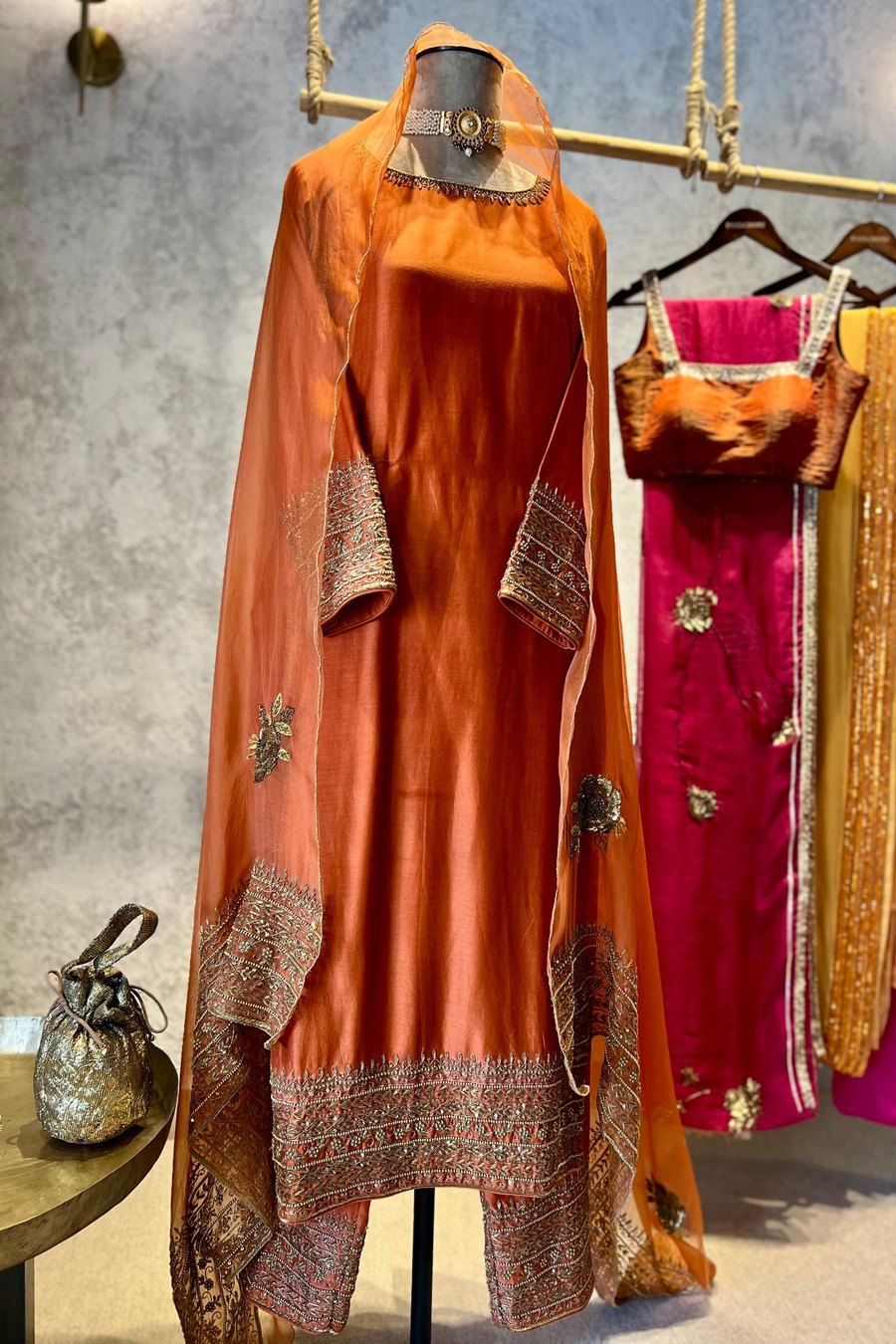
₹36,500
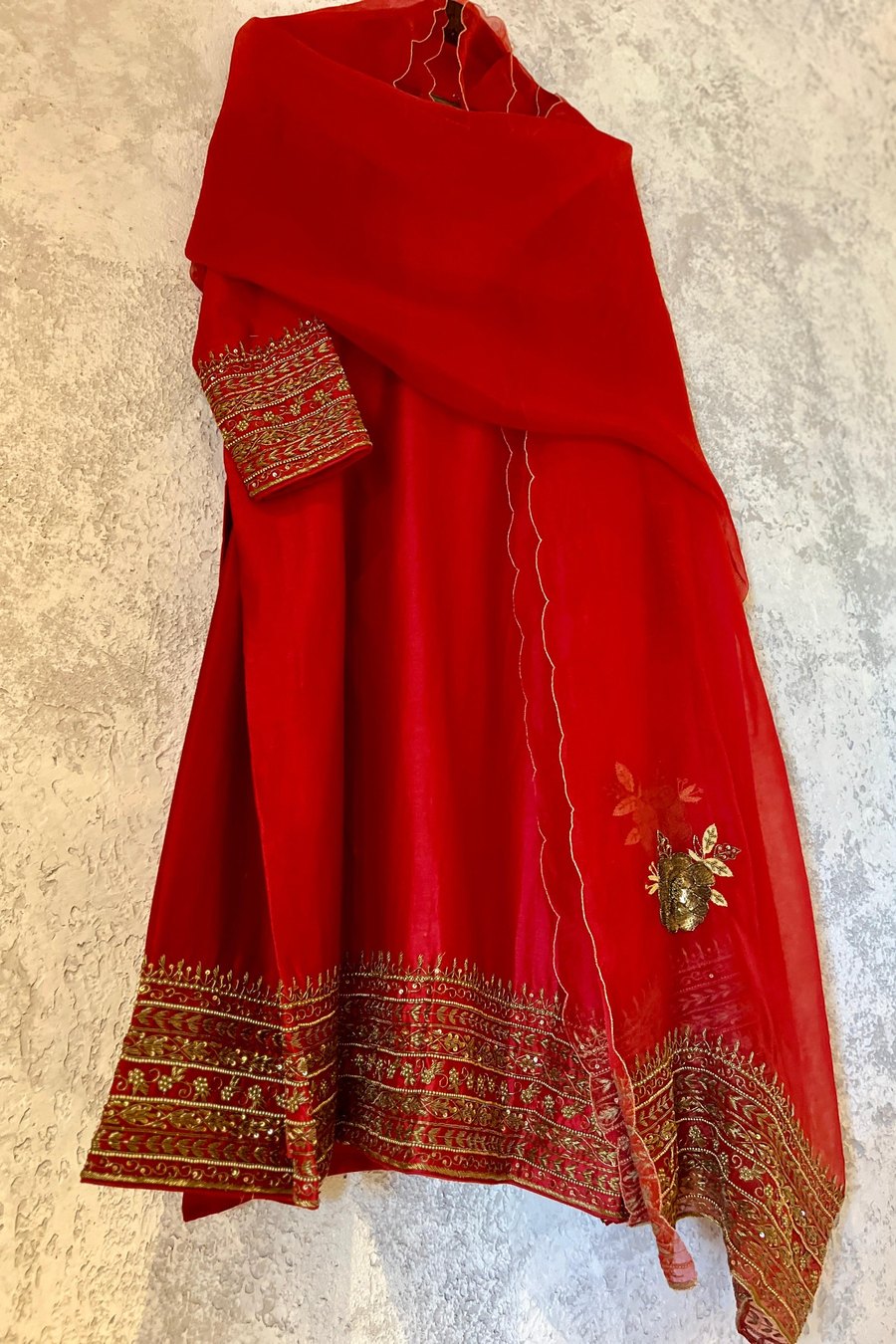
₹36,500
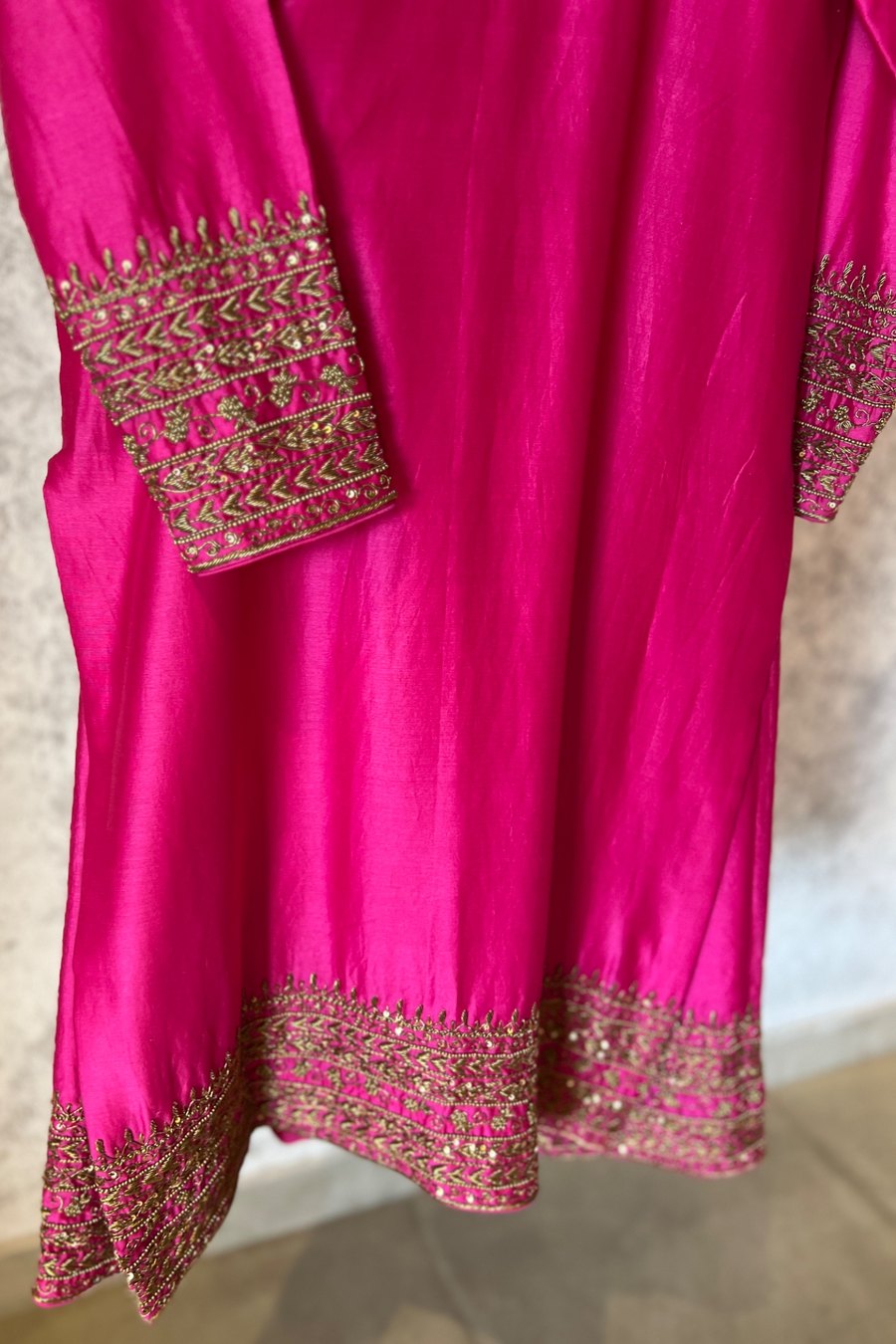
₹36,500
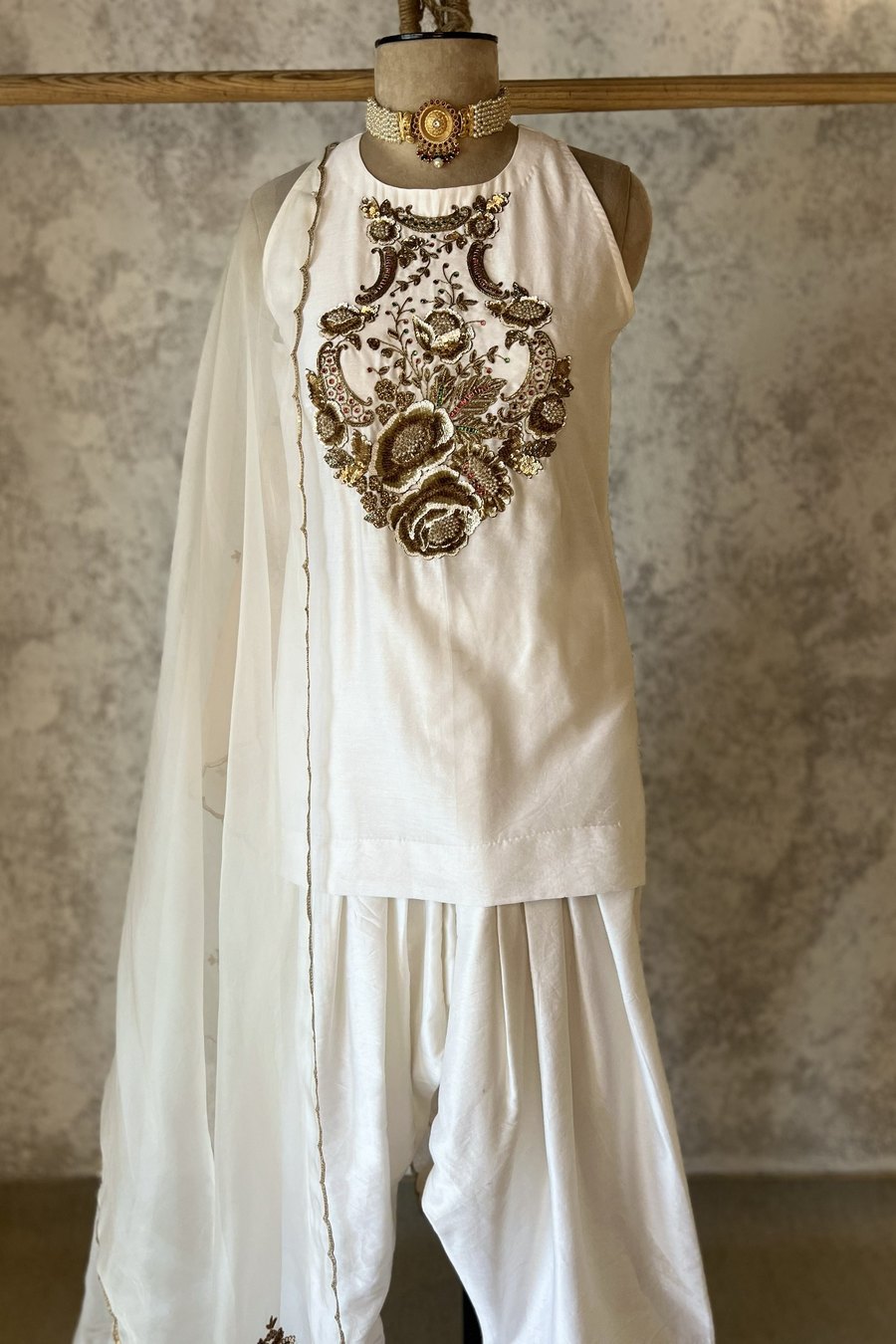
₹29,500
The dupatta, the jewellery, the shoes
The dupatta changes the outfit more than any other single decision. Worn once over one shoulder like a stole, it makes a worked set wearable at a lunch. Draped full and pinned at the shoulder, the same set becomes formal enough for a reception. Left off entirely, with the kurta and the pant doing the work, it is what you want for the dinner after the wedding.
If the neckline is worked, do less with jewellery. A heavy kurta front and a heavy necklace become a single bright blur in photographs; one good earring and bare wrists read better every time. If the front is plain, that is your licence to wear the necklace.
On the feet, a flat or a low heel is enough. We cut these kurtas to lengths that work with a flat, and a mojari or a simple sandal will look more considered than a heel you take off after an hour.
What we need before we cut, and what to check when it arrives
Eight numbers: bust, waist, shoulder, armhole, kurta length, sleeve length, pant length and the rise you prefer. Send them on WhatsApp and we will check them against the style you have chosen before the final stitching, so a correction happens while the set is still on the table. If you would rather be measured, both of our stores — Shahpur Jat in New Delhi and Dehradun — will do it in person.
Two things are worth settling at that stage because neither is easy to change later: whether the dupatta is part of the set, and whether the pant is culottes or straight. A worked dupatta is what makes the set formal; a straight pant is what makes it look longer.
When it arrives, check three things before you put it away. That the armhole is not pulling when you raise an arm. That the hem falls where you asked. That the worked panel sits flat across the front when you stand straight. Then fold it flat rather than hanging it — embroidery takes the weight of a wire hanger badly over a season — and keep it in a cotton or muslin cover rather than plastic. Dry clean at the end of a season, not after every function: the cloth survives cleaning far better than it survives being cleaned often.
Shipping across India is free above ₹10,000. There is an international shipping offer on the site with the code INTSHIP above ₹89,000, and styling or fit questions are answered on WhatsApp.
Frequently asked
What length should a kurta set be?
It depends on the function and on your height, not on a rule. Above the knee is informal and easy for a mehendi; mid-calf over straight pants gives length and a clean line; a long kurta near the ankle is the most formal and needs the most accurate hem measurement. On the Ruqsat set the kurta length is set to your preference, so tell us where you want the hem to fall rather than choosing from three options.
How do I measure myself for a kurta set?
Eight numbers: bust, waist, shoulder, armhole, kurta length, sleeve length, pant length and rise. Measure over the undergarments you will wear with the set, keep the tape level at the waist, and take the shoulder from one shoulder bone to the other across the back. Send the numbers on WhatsApp and we check them before the final stitching — or come to Shahpur Jat or Dehradun and we will measure you.
Which kurta set suits a petite frame?
The shorter kurta with a straight or slightly tapered pant, a light dupatta and no culottes. Long kurtas over wide pants cut height in half in photographs. On the other side, if you are tall, the longer kurta with culottes is one of the few shapes that reads as deliberate rather than just long.
What does a hand-embroidered kurta set cost?
Our kurta sets start at ₹11,500 and go to ₹36,500, and the difference is the amount of handwork and whether that work travels onto the dupatta as well as the kurta. Each set is three pieces — kurta, pant and usually a dupatta — made to order in your measurements, which is why the price is closer to a saree with a blouse than to a ready-made suit.
How should I store a hand-embroidered kurta set?
Folded flat, never on a wire hanger, in a cotton or muslin cover rather than plastic. Zardozi and dabka take the weight of a hanger badly over a season, and plastic traps moisture against the metal thread. Dry clean at the end of the season rather than after every wear.
Explore more: kurya · dupatta — or message us on WhatsApp for styling help.

The information below is required for social login
Sign In
Create New Account