

Here is the thing we hear most often at a fitting: "I have worn it once." A hand-embroidered kurta set is the piece in the wardrobe with the most repeat potential and the least repeat use, because most women treat it as one outfit for one evening instead of th
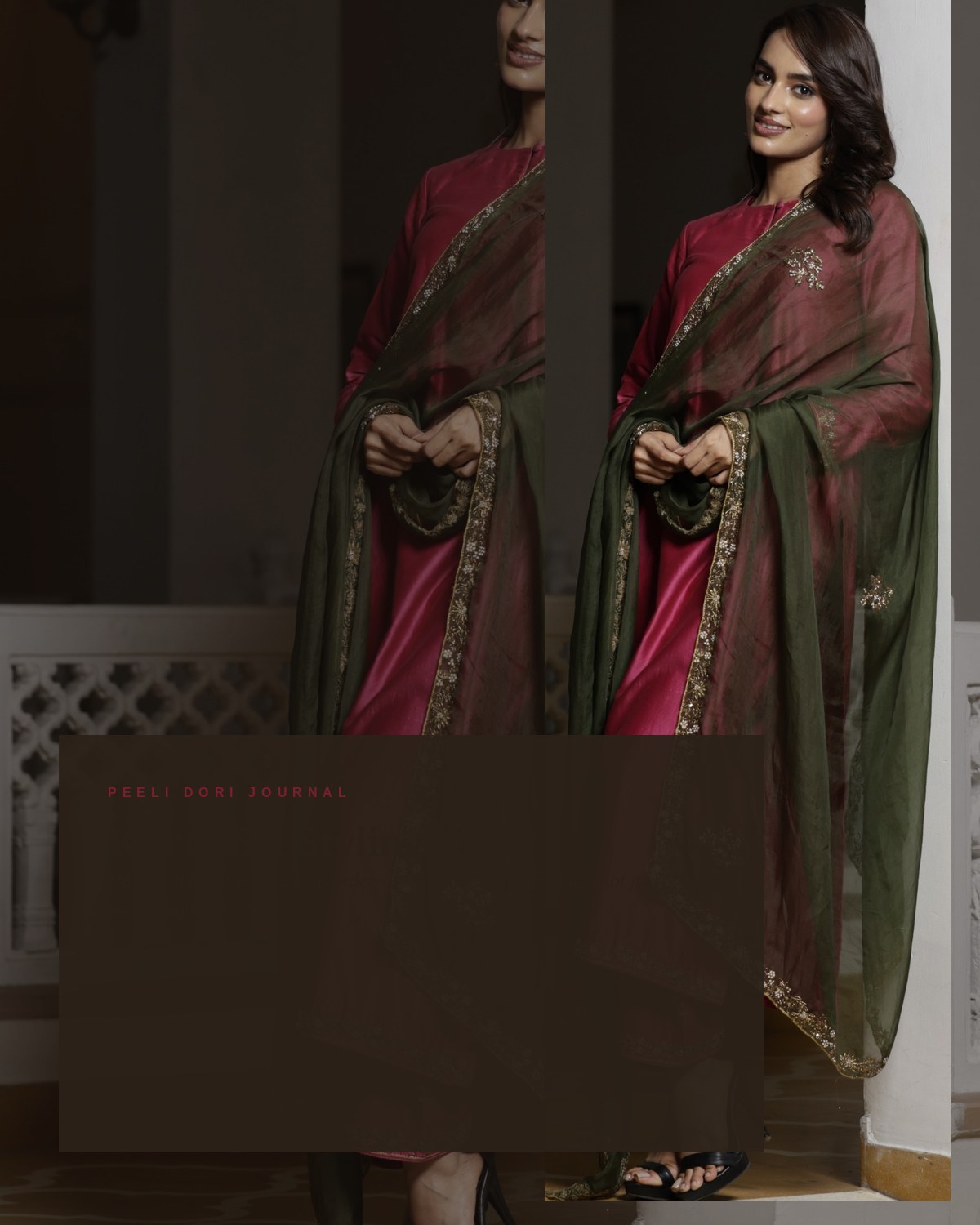
Here is the thing we hear most often at a fitting: "I have worn it once." A hand-embroidered kurta set is the piece in the wardrobe with the most repeat potential and the least repeat use, because most women treat it as one outfit for one evening instead of three pieces they can re-cut with what is around them. This is not a buying guide — we have written that separately. This is the other half: the same set, worn five different ways across one wedding, without buying a second one.
The set is fixed. Four things are not.
A kurta set is three pieces — kurta, pant, dupatta — and only the kurta really has an identity. Everything that makes it read as daywear or eveningwear is outside the set: how the dupatta is worn, how much jewellery you put on, what goes over or under it, and what is on your feet. Change those four and the same set will pass at a haldi lunch and again at a reception three days later, with nobody in either room feeling they have seen it before.
The trick is to change them one at a time, not all at once. If the dupatta comes off and the jewellery goes up and the shoes get taller in the same outfit, the result looks like eveningwear that lost its top layer. Change one, keep two, and the set still looks like it was designed to be worn that way.
The other thing worth saying plainly: a worked set is heavy. Not heavy to carry — heavy to look at. If the front of the kurta is covered in hand embroidery, that is already the loudest thing in the frame. Your job for the rest of the outfit is to stay quiet around it.
The dupatta does most of the work
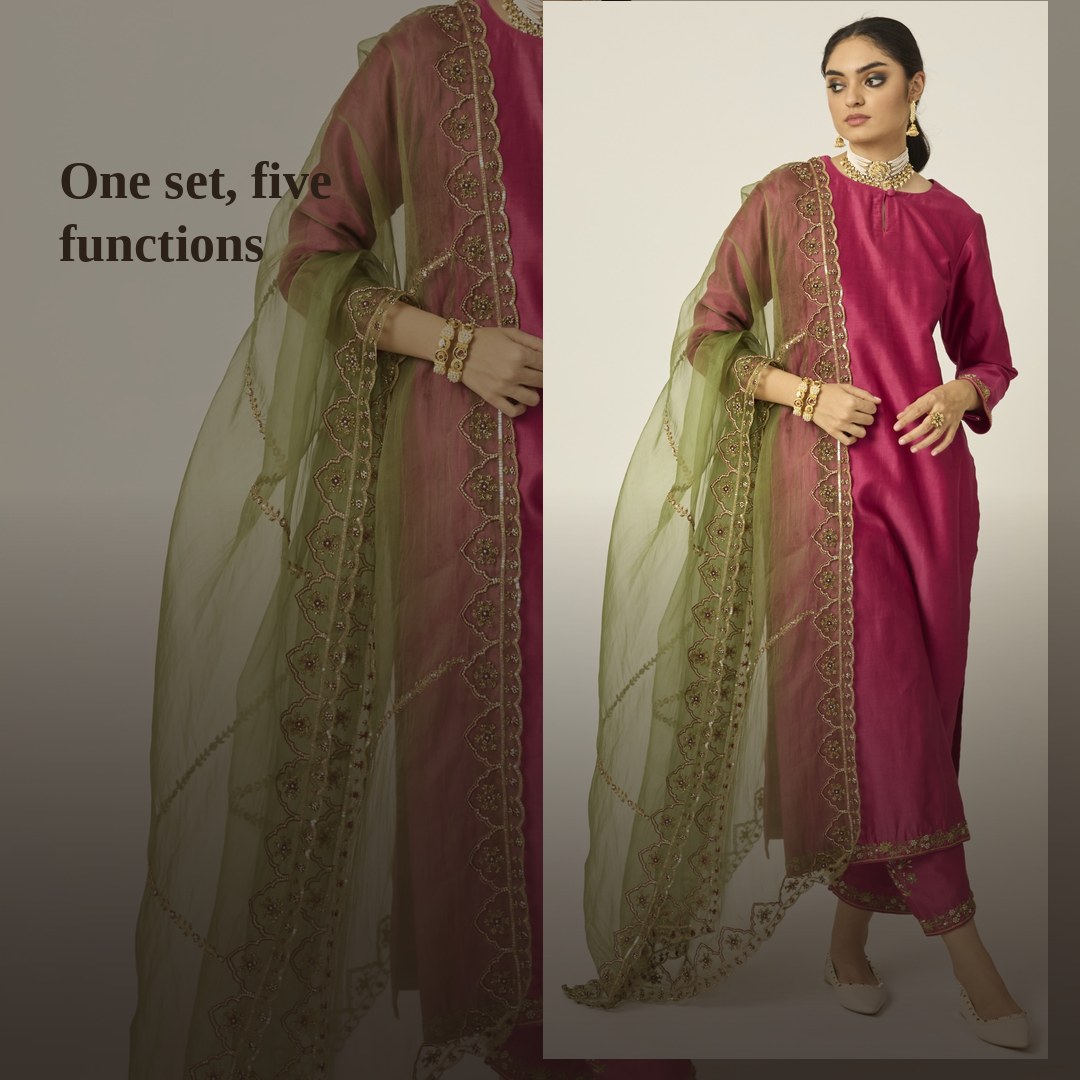
Worn as a stole over one shoulder, with the two ends falling behind the arm, the set reads as a daytime outfit. This is the mehendi and haldi version, and it is also the version that survives a room where you are sitting on the floor, eating with your hands and being photographed from above.
Pleated and pinned once at the shoulder so it falls full across the front, the same dupatta turns the set formal. Pin at the shoulder seam, not at the bust — a pin at the bust pulls the fabric into a point and it will sit crooked in every photograph after the first hour. Two pleats, one pin, and let the rest hang.
Held across both shoulders like a shawl, it is warm enough for a December evening in Delhi and reads as considered rather than cold. Folded into a narrow band and worn like a scarf around the neck, it is what you wear to the dinner after the wedding, when the set should look like clothing and not costume.
And then there is the version most people forget: left off. A worked kurta over a straight pant, no dupatta, one pair of earrings — that is the outfit for a small function, a family lunch, or the day you want to wear the set to work. If you own a plain organza or silk dupatta in a colour pulled from the embroidery, keep it with the set; a lighter second dupatta doubles the set's life more cheaply than anything else you can buy.
What to put over it, and what to put under it
A sleeveless or short-sleeve kurta takes a layer beautifully. A long coat, a waistcoat, even a plain fine-knit cardigan in a neutral, worn open, turns a summer set into a winter one and changes the silhouette from straight to long. We would keep the layer plain and slightly darker than the set, so the embroidery still reads as the point.
Under is where separates start. A kurta cut straight and simple enough can be worn as a tunic over a wide pant from another set, or over a pair of straight trousers you already own. The moment you do this, the set stops being one outfit and becomes a top and a bottom you can each use elsewhere. This works best with the shorter lengths; a long kurta wants its own pant.
A belt at the waist is the fastest way to make a straight kurta look shaped, and it is the one accessory we would suggest to someone who feels a set is swamping them. A narrow leather belt over the kurta, under the dupatta, in a colour from the embroidery — nothing wider than two fingers.
Three changes a tailor can make in a week
Shorten the kurta by two or three inches and a formal set becomes a day one. This is the single most useful alteration on a kurta set, because the difference between mid-calf and just below the knee is the difference between a reception and a lunch. Ask the tailor to keep the cut-off fabric; it is the same cloth and the same embroidery if a repair is ever needed.
Change the sleeve. A three-quarter sleeve that ends mid-forearm is the most useful length across functions, and it is also the easiest to change — to full length for a winter wedding, or to a short sleeve if you want the set to feel younger. A sleeveless kurta cannot be lengthened, so think before you take a sleeve off.
Take in the waist after the first wear. Hand-embroidered cloth relaxes with body heat and a full evening, and a set that felt exact in the mirror can feel loose by the end of the second function. One fitting after the first wear is normal, not a fault, and it is much cheaper than replacing the set.
Jewellery, hair, feet: scale, do not swap
One loud element per outfit. If the kurta front is worked, the jewellery should be one pair of earrings and nothing at the wrist. If the front is plain, that is your licence for the necklace — and if the neckline is a deep V or a square, a shorter necklace that sits inside it rather than across it.
Hair down and open reads daytime; hair up, with the neck and the back of the kurta showing, reads evening and photographs better against a worked yoke. A braid is the middle answer and the most practical one for a function where you will be moving between rooms all day.
On the feet, remember that the hem was cut for a heel height. If the set was measured for a flat, a heel will make the kurta sit short; if it was measured for a heel, a flat will put the hem on the floor. Decide the shoe before the hem, every time. A mojari or a flat sandal is what most of our clients actually end up wearing, because a wedding is a long evening.
Six sets, and what each one restyles best
GULABI GULMOHAR KURTA SET, ₹36,500 — the softest of the Gulmohar colours, and the one we would send to a daytime mehendi worn as a stole with the dupatta light.
GULMOHAR RANI PINK KURTA SET, ₹36,500 — deeper, and the set that takes a full pleated drape and one pin without looking overdressed. This is the one for a sangeet where the family colour is pink.
GULMOHAR RED KURTA SET, ₹36,500 — the most worked of the family and the least forgiving of clutter. Wear it with the dupatta plain-draped, earrings only, hair up, and let the set be the whole outfit.
GULMOHAR FUCHSIA PINK KURTA SET, ₹36,500 — the brightest, and the one that carries an evening with no jewellery at all. Good for the function where you are hosting rather than being photographed.
IVORY FARSI KURTA SET, ₹29,500 — ivory with a sleeveless kurta and antique gold work along the neckline. This is the set that layers, so it is the one to wear with a coat in December and again on its own in April.
RANI PINK RUQSAT KURTA SET, ₹28,500 — the quietest of the six. Worn without the dupatta, over its straight pant, it is the set that goes to a lunch and then to work, which is exactly why it gets worn most.
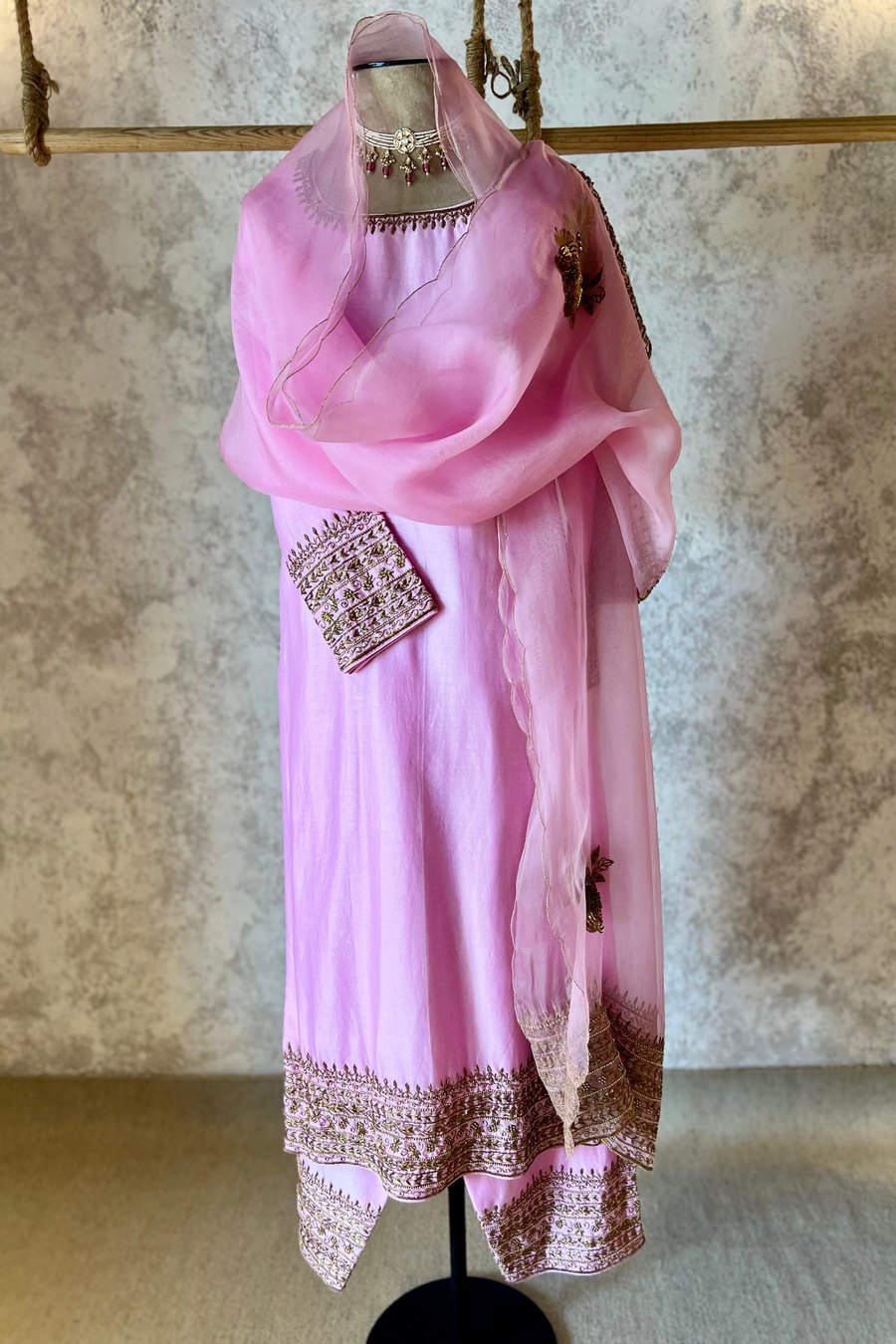
₹36,500
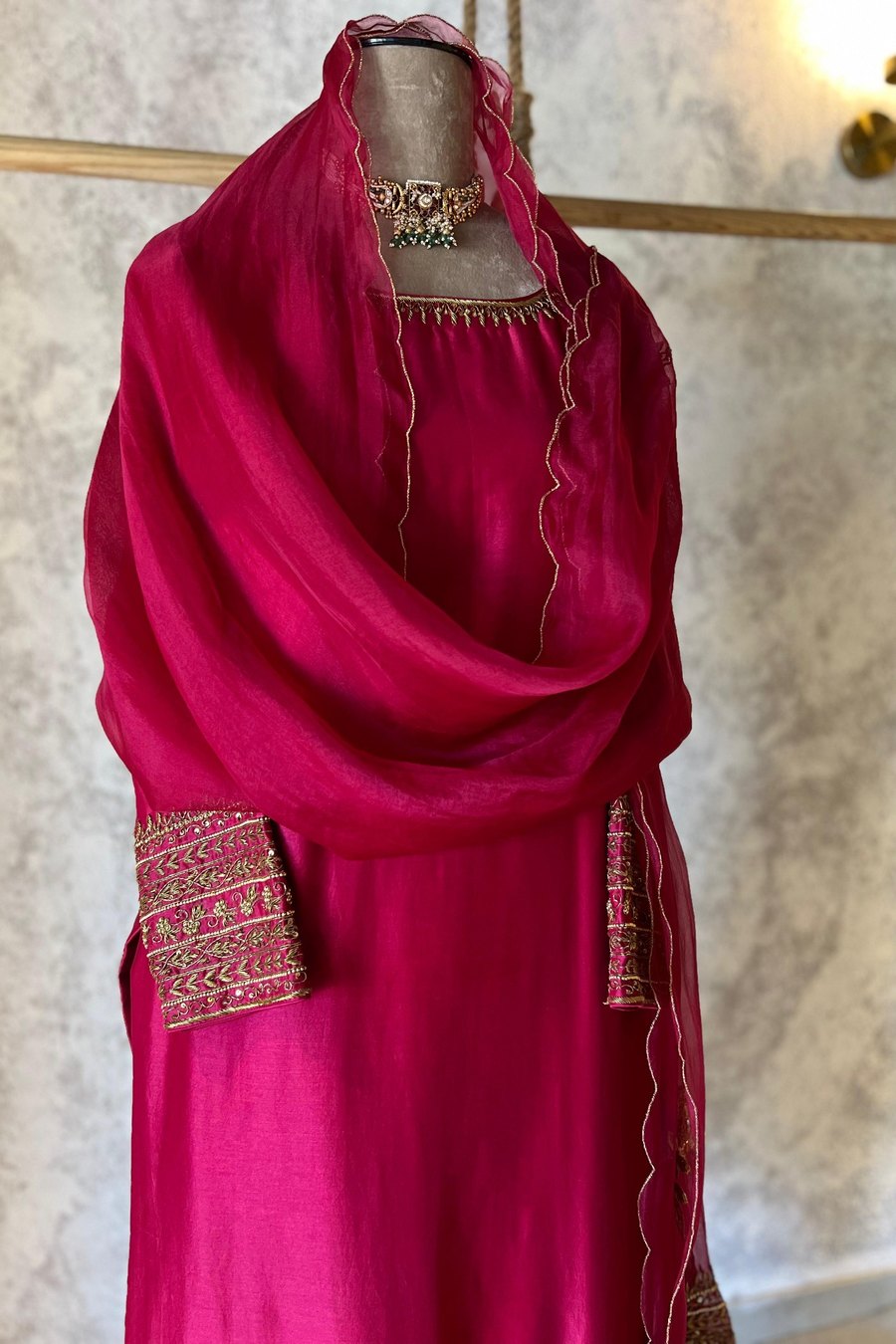
₹36,500
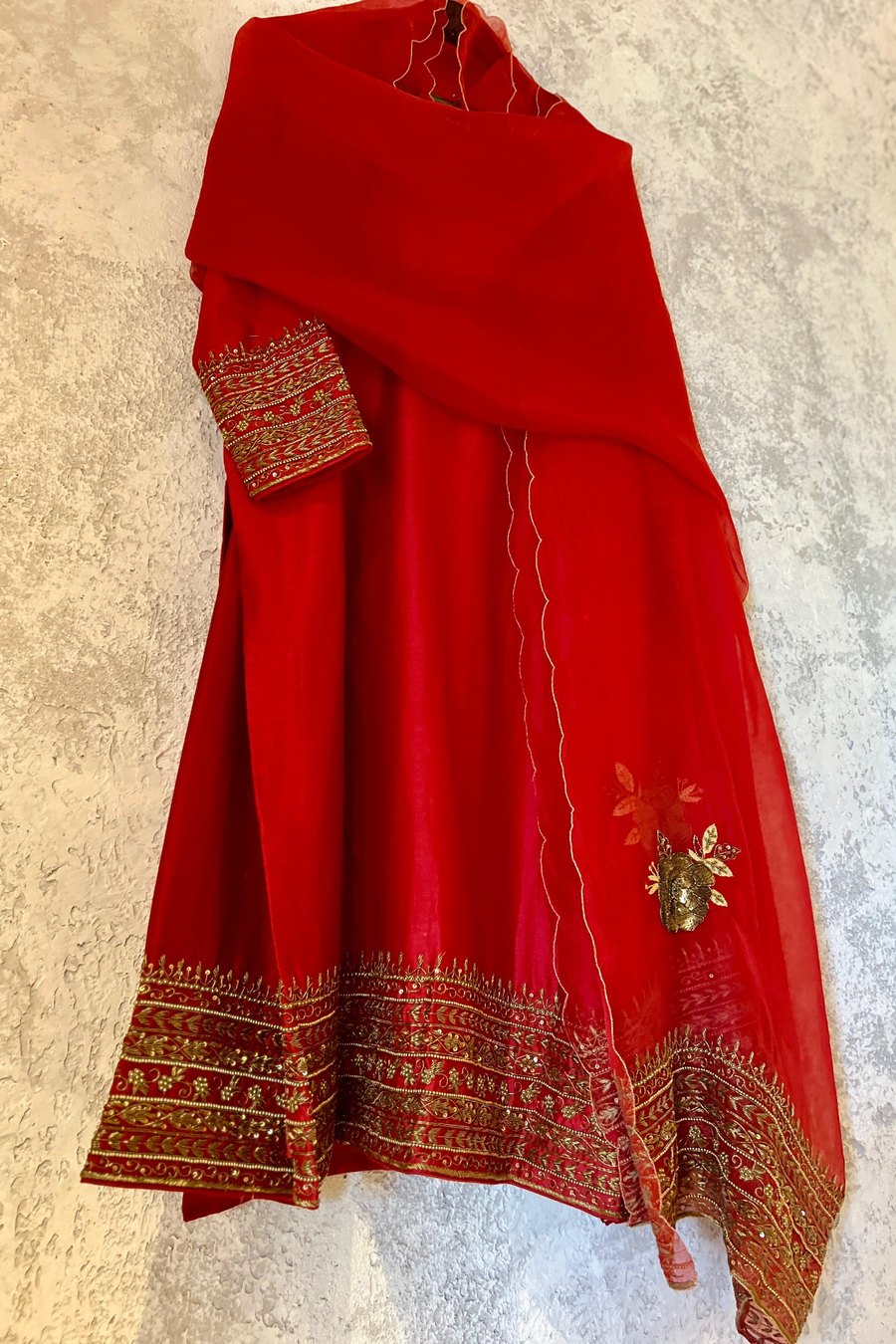
₹36,500
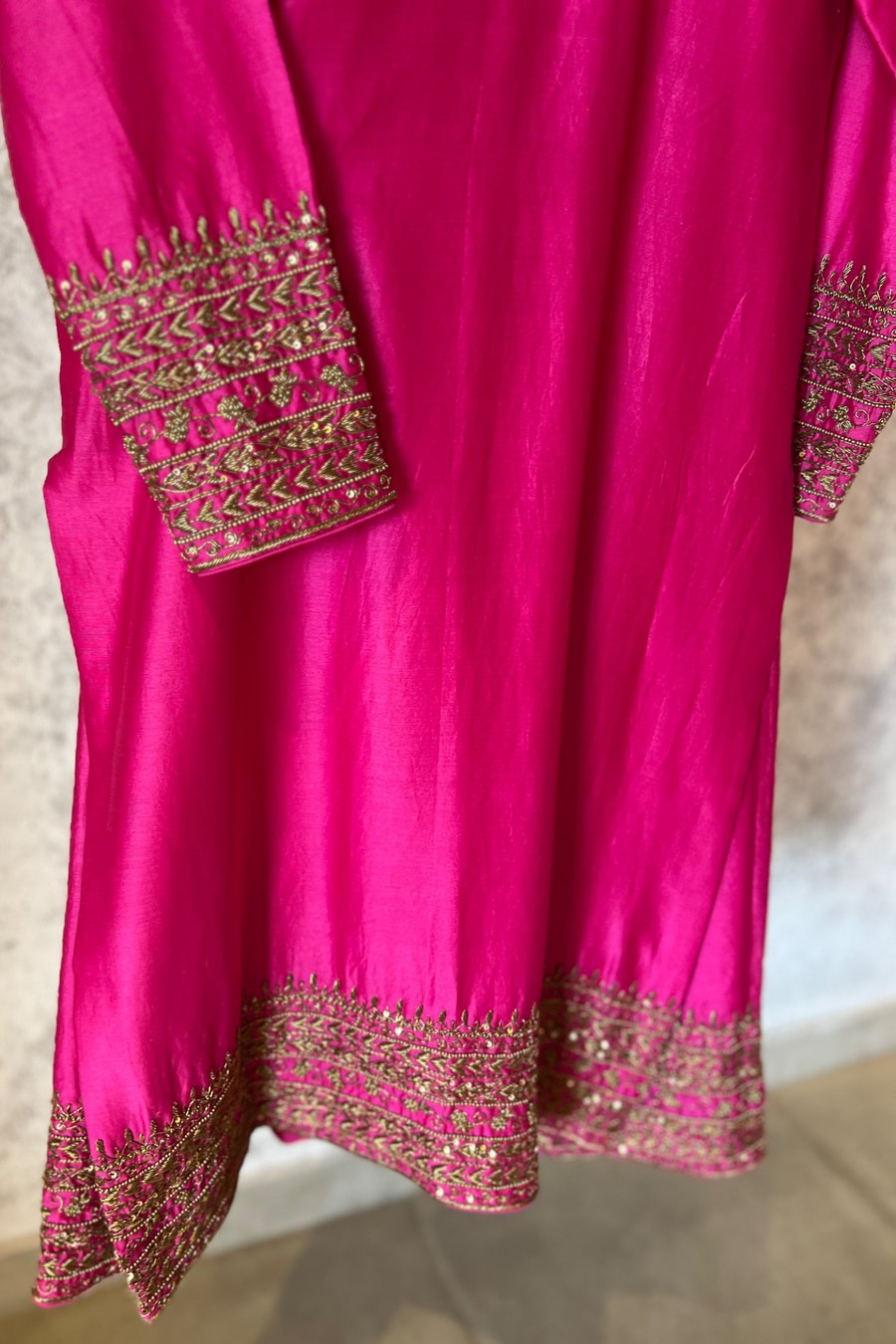
₹36,500
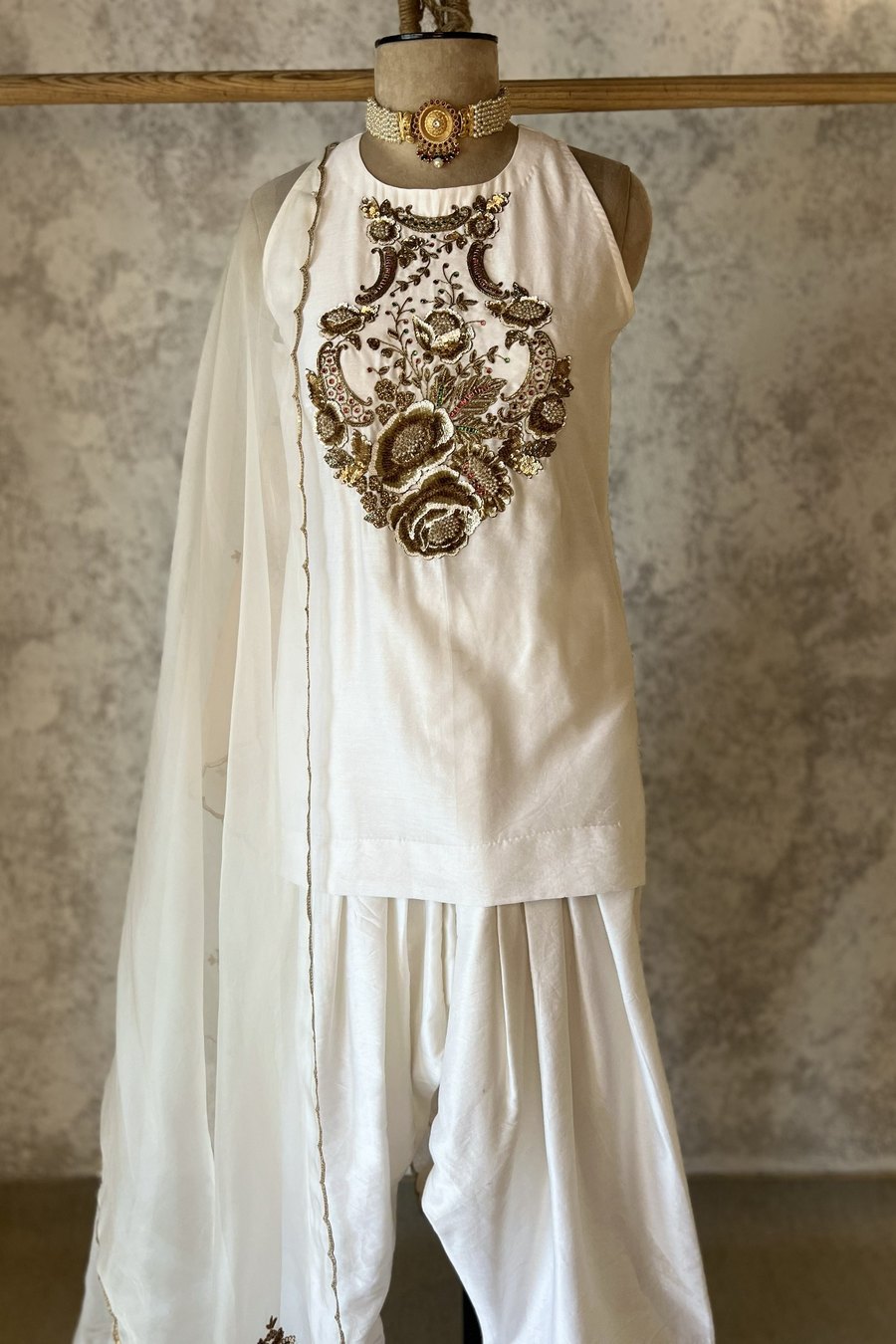
₹29,500
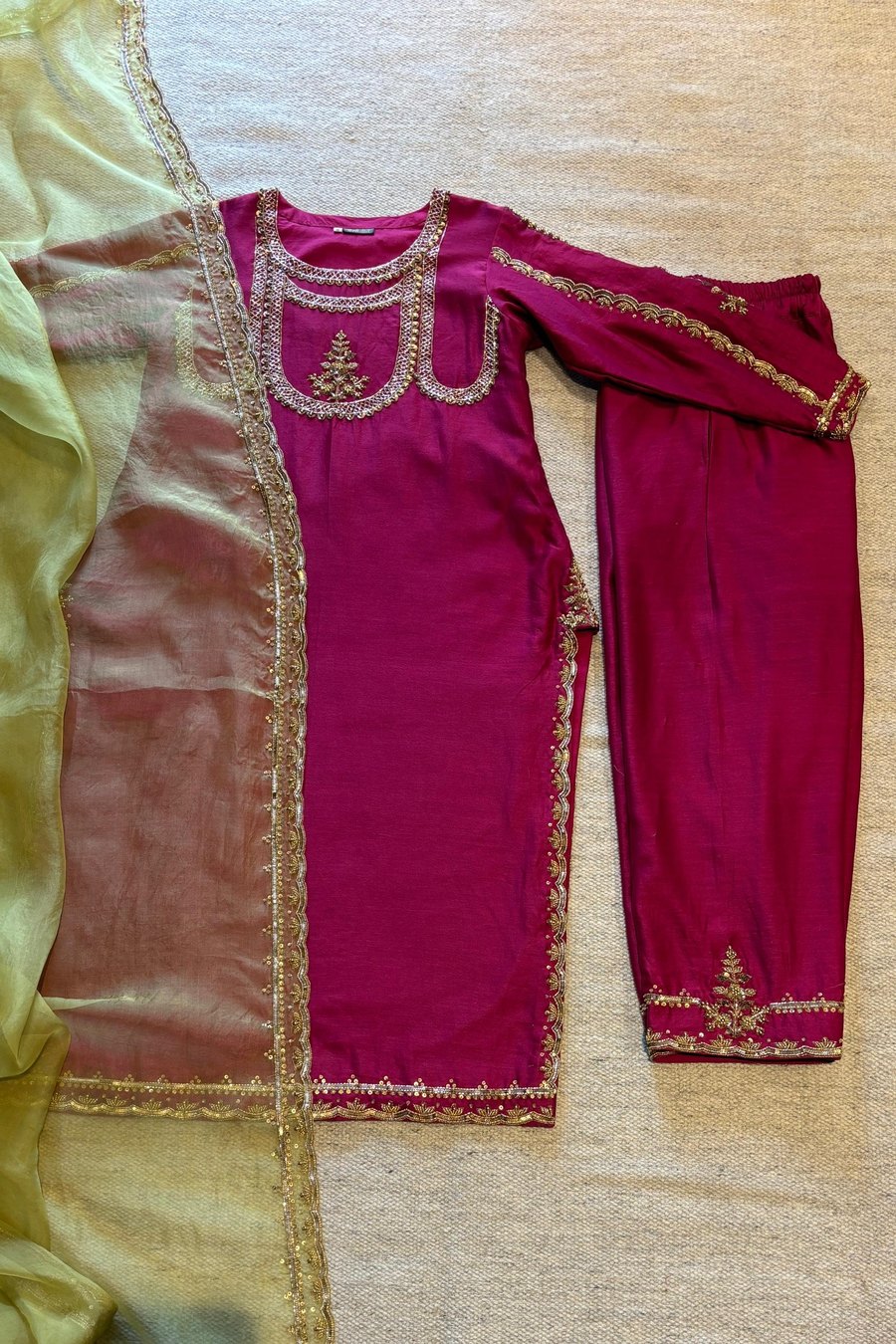
₹28,500
Packing it, and keeping it between functions
For a wedding week, roll the kurta rather than folding it into a crease, work facing inward, and put it in a cotton or muslin bag — the same bag it came in. Zardozi and dabka are metal thread; they do not want to be pressed flat against a zip for four days, and they do not want a wire hanger taking their weight either.
Carry a spare plain dupatta. It weighs nothing, it changes the set, and it is the thing that saves an outfit when a pin gives way an hour before a function.
If the set creases in the suitcase, hang it in the bathroom while you shower rather than reaching for an iron. If you must press it, do it from the inside with a cloth between the iron and the embroidery, never directly on the metal work. And dry clean at the end of the season rather than after every function — hand-embroidered cloth survives cleaning far better than it survives being cleaned often.
Every set we make is hand embroidered, made to order and cut to your measurements, so the fit conversation happens before the stitching, not after. If you are unsure how a particular set will restyle — whether the dupatta is heavy enough to drape full, whether the kurta length suits a flat — send us a message on WhatsApp and we will tell you honestly. Shipping within India is free above ₹10,000, and both stores, Shahpur Jat in New Delhi and Dehradun, will show you the pieces in person.
Frequently asked
Can I wear the same kurta set to more than one wedding function?
Yes, and most of our clients do. Change the dupatta drape, the scale of the jewellery and the shoes between functions, and keep the rest the same. A stole over one shoulder with a flat is daywear; a full pleated drape pinned at the shoulder with hair up is eveningwear. Nobody reads it as the same outfit twice.
How do I make a kurta set look formal?
Pleat the dupatta and pin it once at the shoulder so it falls full across the front, put your hair up, and wear the taller shoe. If the kurta front is heavily worked, stop there — a worked front plus a necklace plus a heavy dupatta is what makes a set look like too much rather than formal.
Should I wear a necklace with a hand-embroidered kurta?
Only if the neckline is plain. If the front or the yoke is worked, one pair of earrings is enough and a necklace will blur into the embroidery in photographs. If the neckline is plain, a shorter necklace that sits inside the neckline rather than across it is the better choice.
Can I wear a kurta set without the dupatta?
Yes — that is how most people get a second and third wear out of a set. A worked kurta over its straight pant with earrings only works for a lunch, a small function or a working day. Keep a plain organza or silk dupatta in a colour pulled from the embroidery so you still have the option.
How do I travel with a hand-embroidered kurta set?
Roll it rather than folding it flat, embroidery facing inward, and carry it in a cotton or muslin bag. Do not hang zardozi or dabka on a wire hanger and do not let a zip press against the work. Carry a spare plain dupatta, and dry clean at the end of the season rather than after every function.
Explore more: kurya · dupatta — or message us on WhatsApp for styling help.

The information below is required for social login
Sign In
Create New Account