

The question that arrives before almost every kurta set order is not which colour. It is why this one costs what it costs. It is a fair question, and most shops answer it with a word like premium and a smile. So here is the plain version: what the sets on this
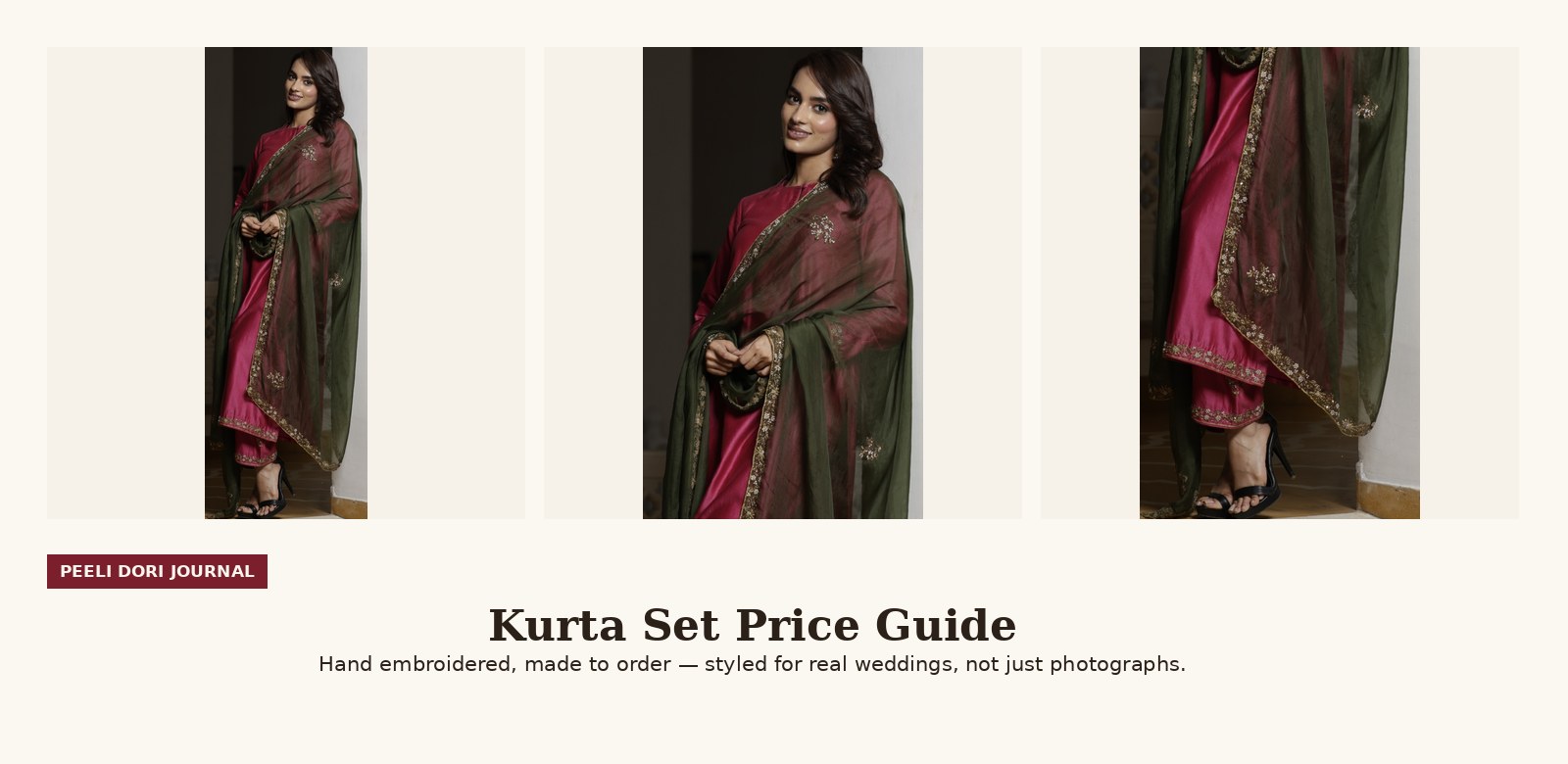
The question that arrives before almost every kurta set order is not which colour. It is why this one costs what it costs. It is a fair question, and most shops answer it with a word like premium and a smile. So here is the plain version: what the sets on this page are made of, what the handwork actually is, and where the difference between ₹28,500 and ₹36,500 really sits.
What the price is actually made of
A kurta set is three pieces, not one: kurta, pant and usually a dupatta, cut to your measurements because we make every set to order. That means the invoice is really four lines. The cloth. The handwork. The dupatta, which carries work of its own or does not. And the making — cutting, stitching, the first fitting and any correction after it.
Two of those four lines are almost the same on every set we produce. The making is the same because the process is the same whether the set is ivory or fuchsia: measurements taken, a fit check before the final stitching, a set adjusted to one body rather than a size chart. The cloth is rarely the largest line either, at least not in this family.
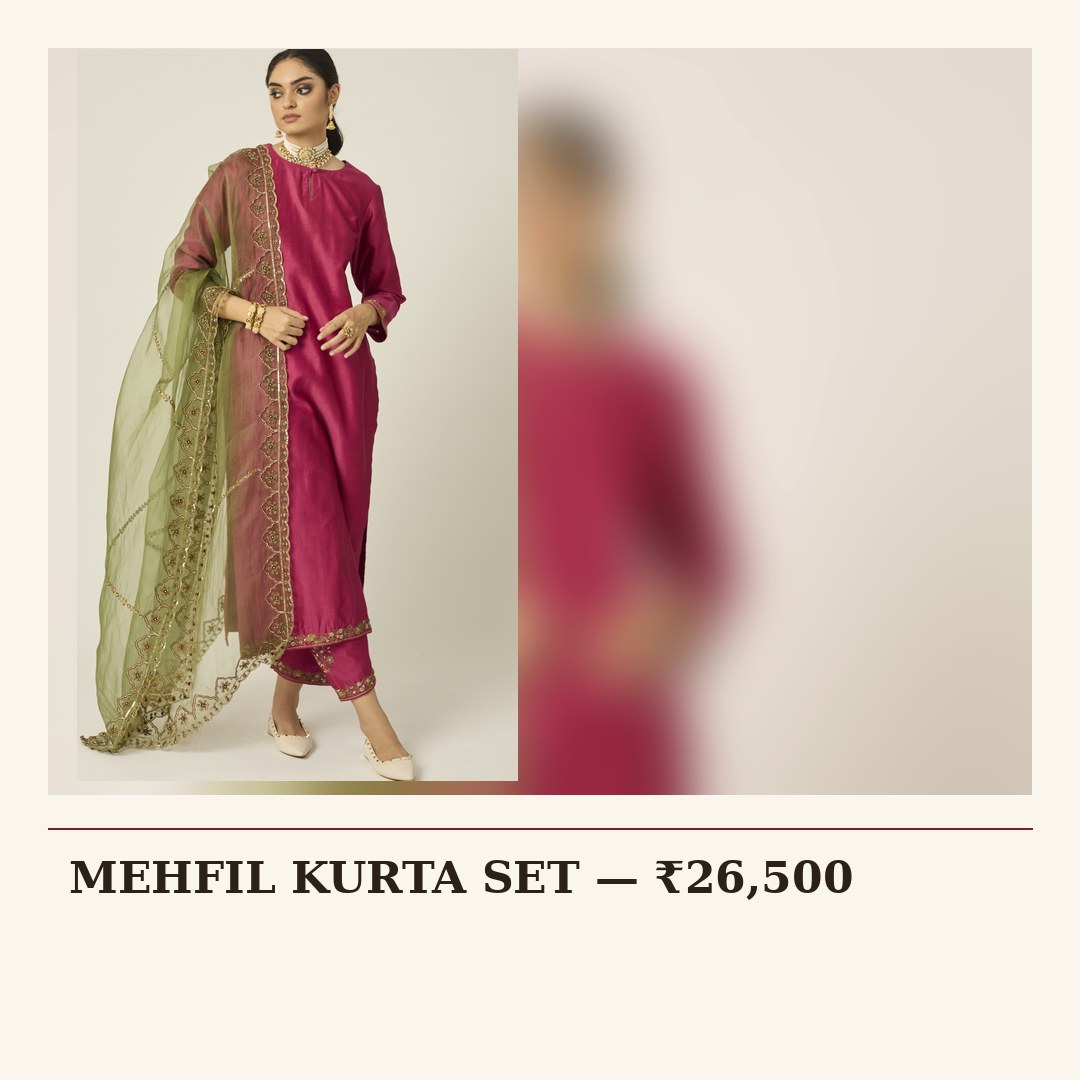
That leaves the handwork, and that is where nearly every price conversation actually happens. Not because embroidery is a vague luxury word, but because it is measurable: how much of the surface is covered, which technique covers it, and whether the same work appears on the dupatta as well as the kurta. Once you can see those three things, a price stops being a number and becomes a description.
The cloth decides how the work sits
Silk chanderi is the lightest cloth we build on. It has a dry, quiet sheen and enough drape that a worked front stays soft instead of standing away from the body, which is why most of our Gulmohar and Ruqsat sets are made on it. If you want handwork across the chest and you still want the kurta to move, this is the cloth that allows both.
Silk organza is the opposite temperament. It is crisp and holds a shape, so it is what we use for a dupatta that carries embroidery of its own — an organza dupatta stays where you pin it rather than collapsing into your elbow halfway through the evening. Silk satin is the heaviest of the three and falls in a straight line, which is why a longer kurta and an evening function suit it best.
The useful thing to understand is that none of these cloths is the expensive part. What they change is the result: how much work the surface can take, how the set photographs, and how long it will last. A cheap cloth and heavy handwork is money in the wrong order.
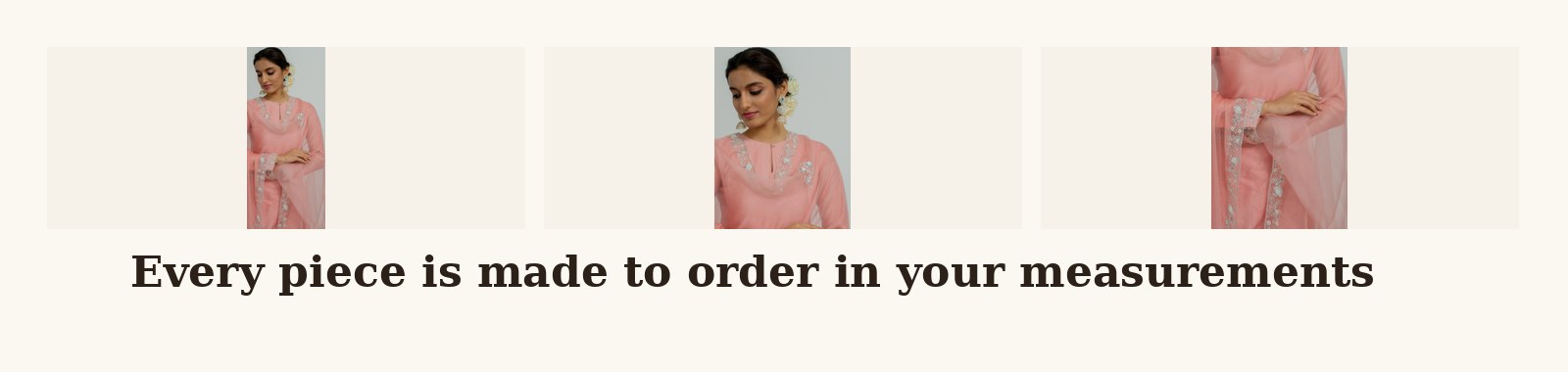
Gota, zardozi, dabka: three techniques, three prices
Gota is flat ribbon work in gold or silver. It is stitched down rather than built up, so it catches light without adding weight, and it reads beautifully in daylight. It is also the most forgiving of the three on a kurta that has to be worn in the afternoon, at a haldi, in a photograph taken from above.
Zardozi is metal thread worked into the ground, and dabka is the small coiled wire that gives it relief. Both sit proud of the cloth, which is why they hold shadow and read as depth under warm evening light — and why a heavily zardozi-worked set can feel like too much at eleven in the morning. They take longer to work than gota, and that time is on the invoice.
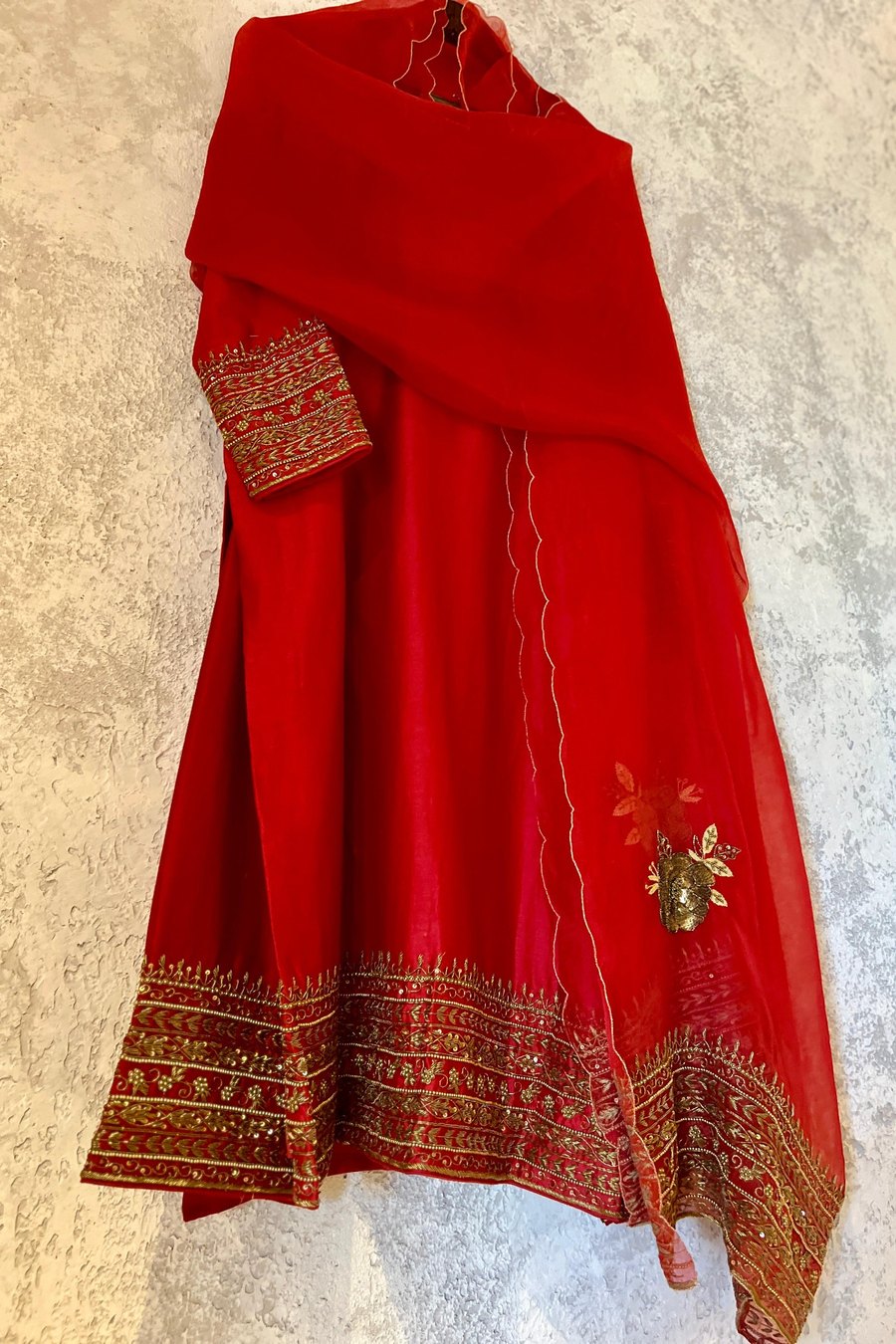
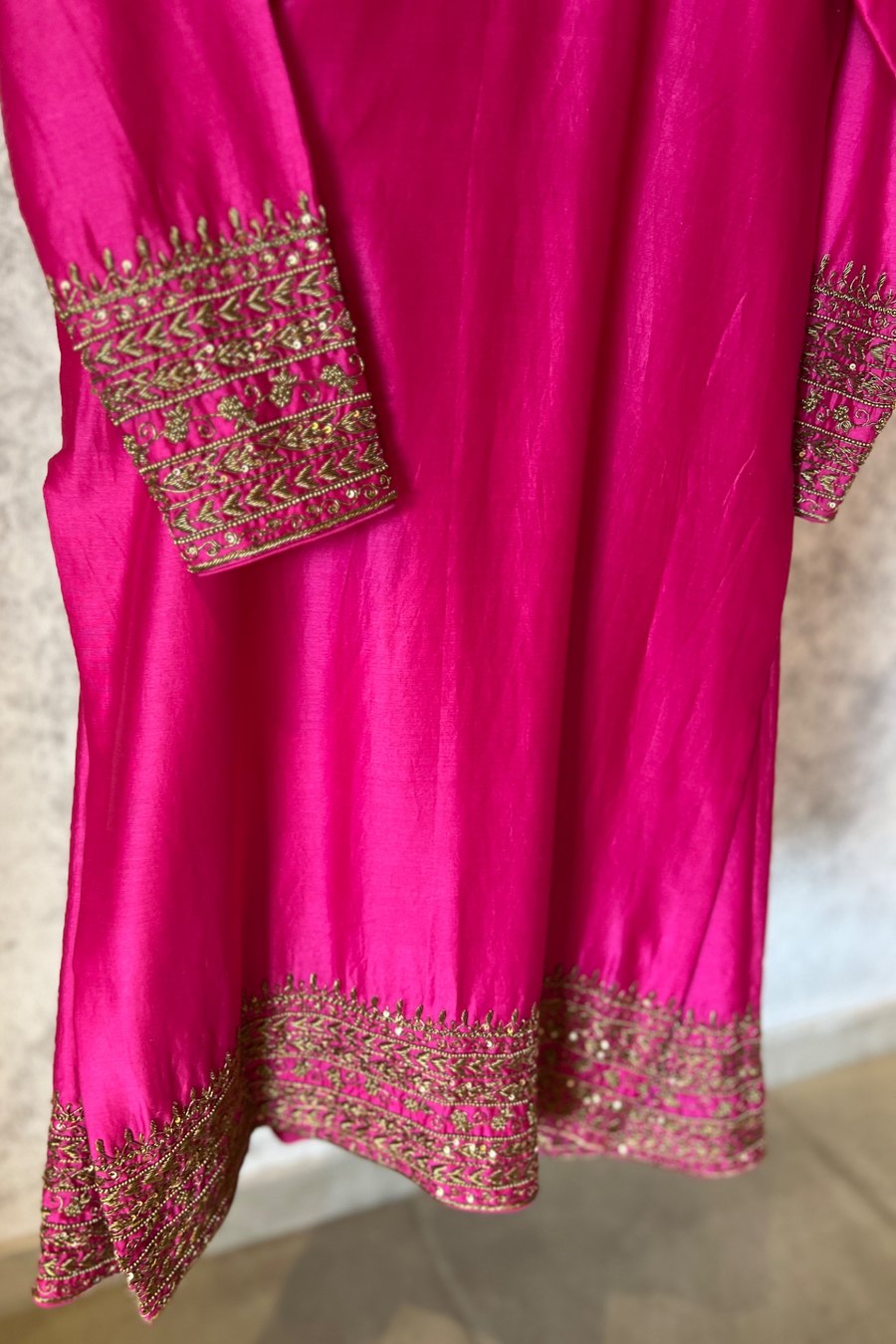
Density matters as much as technique. A worked yoke, a worked placket and a worked hem use very different amounts of the same skill. And a dupatta that repeats the kurta's work effectively doubles the handwork in the box, which is exactly why the four Gulmohar sets on this page sit together at ₹36,500: same cloth, same density, same work across all three pieces.
Six sets, and what you are paying for in each
GULMOHAR RED KURTA SET, ₹36,500 — the top of the worked range: chanderi kurta and pant, organza dupatta, handwork carried across all three pieces. This is the set for the evening the photographs will be taken under warm light.
GULMOHAR RANI PINK KURTA SET, ₹36,500 — the same construction in a deeper pink. Same price for the same reason: the work does not change with the colour.
GULABI GULMOHAR KURTA SET, ₹36,500 — the same handwork in a softer rose, which is the version most women choose for a daytime mehendi.
GULMOHAR FUCHSIA PINK KURTA SET, ₹36,500 — the brightest of the four, and the one that needs the least jewellery because the set is already doing the work.
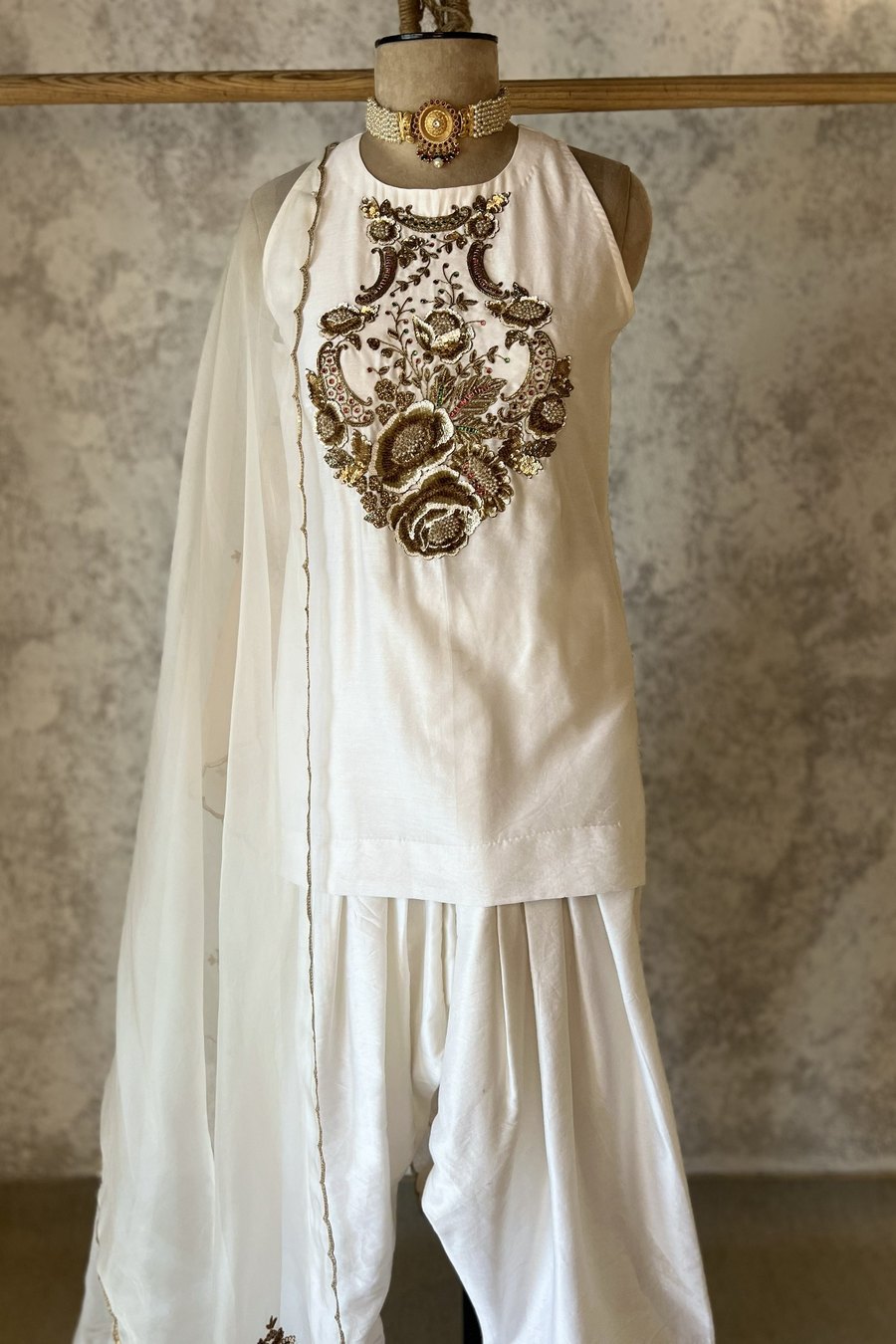
IVORY FARSI KURTA SET, ₹29,500 — ivory chanderi, sleeveless kurta, antique gold work along the neckline and front. Less surface area worked than the Gulmohar sets, which is the whole reason it sits a band lower, and the reason it is so easy to wear twice.
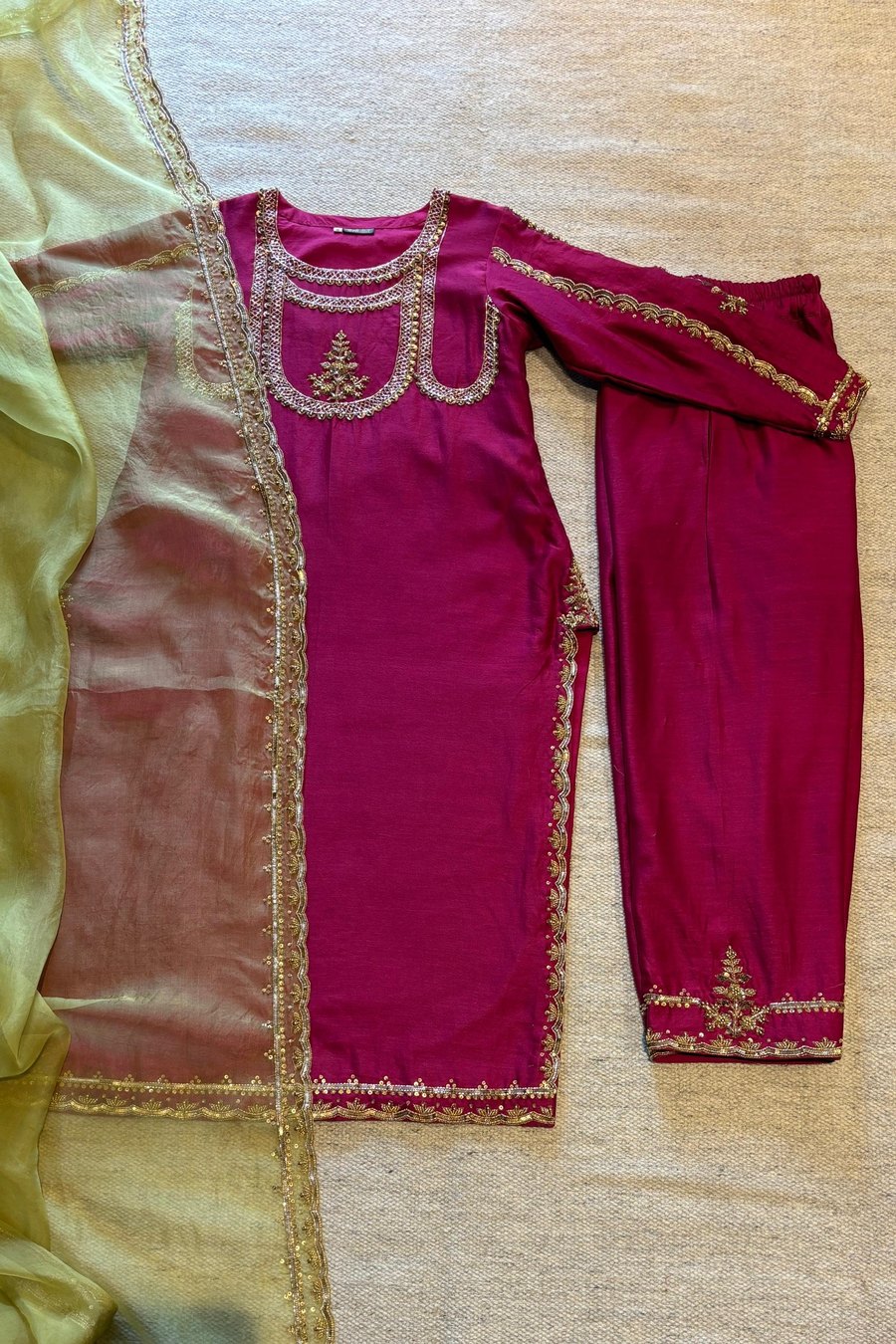
RANI PINK RUQSAT KURTA SET, ₹28,500 — the entry point to our worked sets, and the one where the kurta length is set to your preference. If you have spent years between sizes in ready-made kurtas, start here: the price is lower because the work is lighter, not because the making is cheaper.
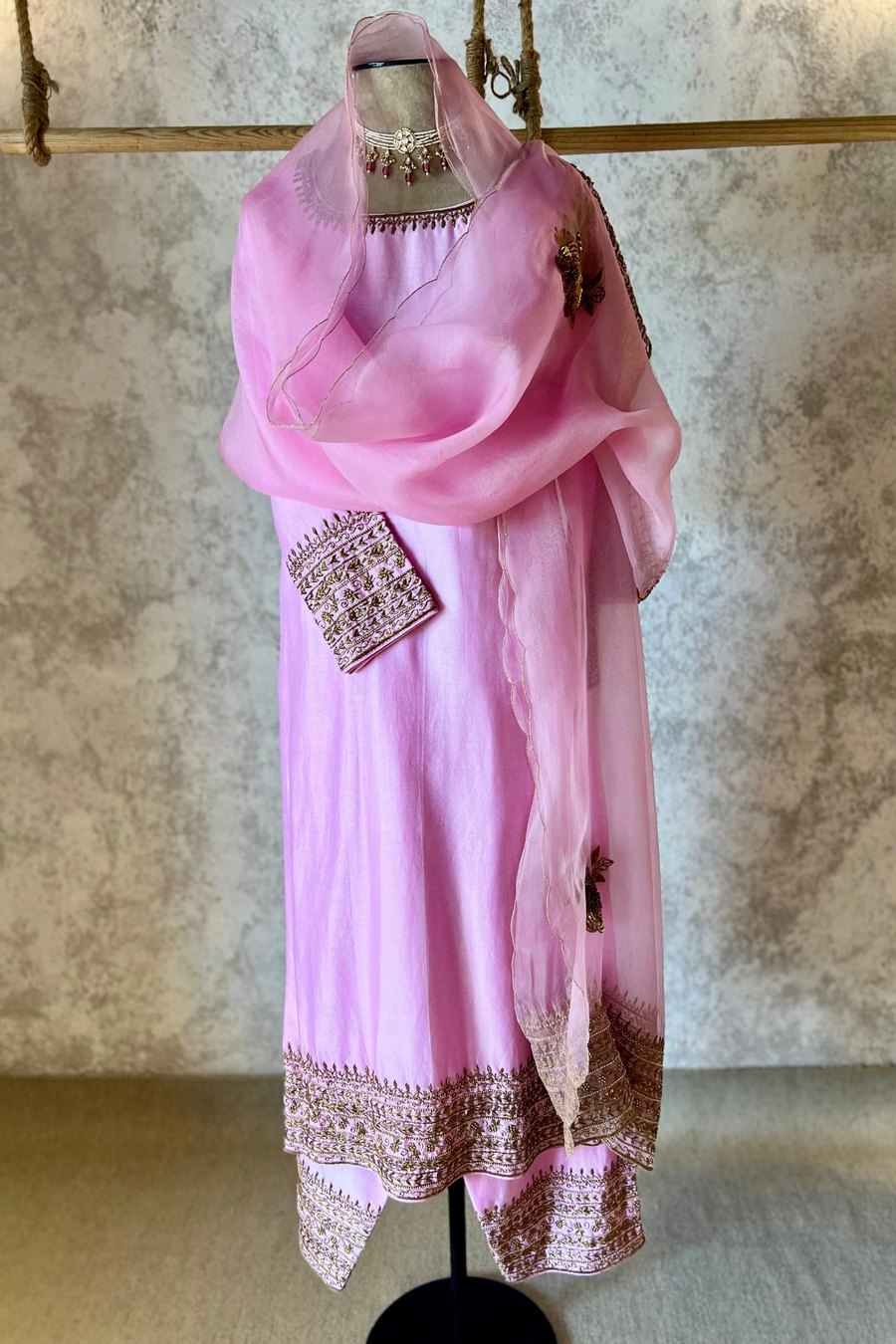
₹36,500
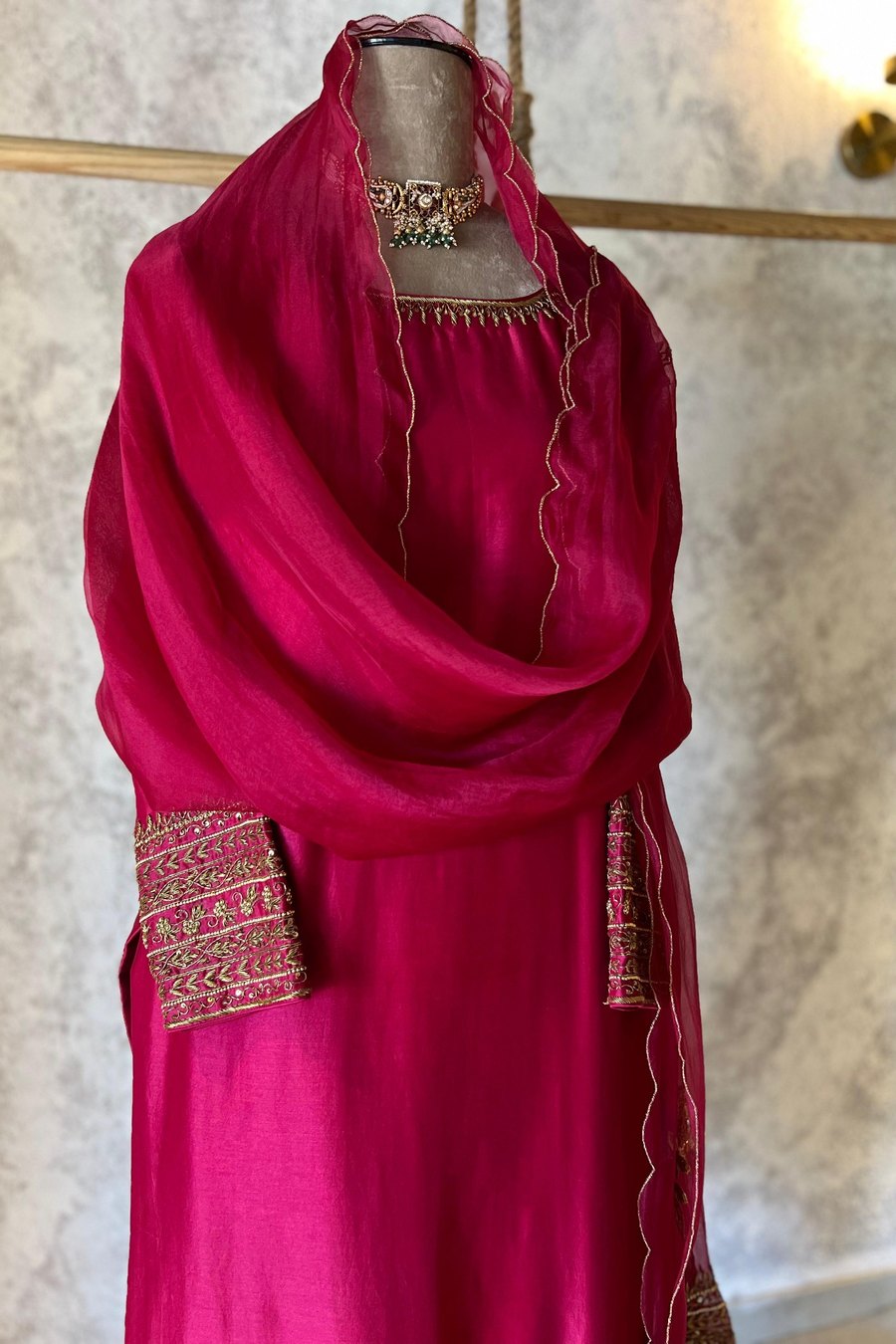
₹36,500
₹36,500
₹36,500
₹29,500
₹28,500
Budgeting across a wedding week, not one evening
The mistake we see most often is spending the whole budget on one set and then having nothing for the three functions around it. A worked set at the top of the range is not automatically the right first purchase. Think about the calendar before you think about the price: how many functions, which ones you will be photographed at, and which ones you will be sitting on the floor for.
Our suggestion is one set with serious work — a Gulmohar, if the wedding is in the evening — and then one set with lighter work that can be worn twice in the same week without anyone noticing. An ivory or a quiet colour does that better than a strong one. A plain dupatta in a colour pulled from the embroidery also doubles the life of both sets, because it changes the whole outfit for far less than a second kurta.
Then divide the price by the number of times you will genuinely wear it. A ₹36,500 set worn to a mehendi, a sangeet and a reception in the same season, and then again at a family wedding the next year, is not an expensive purchase. A ₹28,500 set worn once is. Cost per wear is the only price comparison that means anything.
What to ask before you pay
Ask whether the work is hand embroidery or machine. This is the single biggest difference between two quotes that look identical in a photograph, and it is the one question a shop cannot dodge for long.
Ask what is included. A kurta, a pant, a dupatta, a lining — each one changes the number, and a quote without the list is not a quote. Ask whether the price is for your measurements or for a standard size, because made to order and ready-made are not the same product and should not be the same price.
Ask what happens at the fitting. On our sets the measurements are checked against the style before the final stitching, so a correction happens while the set is still on the table rather than after it has been cut. That check is part of what the making line pays for, and it is worth asking about wherever you buy.
Care that protects what you paid for
Most of the money in a kurta set is in work that is easy to damage and impossible to replace. Fold it flat rather than hanging it: zardozi and dabka are metal thread, and a wire hanger takes their weight badly over a season. Keep it in a cotton or muslin cover rather than plastic, which traps moisture against the metal.
Dry clean at the end of the season, not after every function. Hand-embroidered cloth survives cleaning well; it does not survive being cleaned often. If the set creases, press it from the inside with a cloth between the iron and the work, never directly on the embroidery.
Every set we make is hand embroidered, made to order and cut to your measurements, on cloth coloured with organic dyes by artisans we work with directly. Shipping within India is free above ₹10,000, and there is an international shipping offer on the site with the code INTSHIP above ₹89,000. If you want a second opinion on which band suits your calendar, send us a message on WhatsApp — we would rather talk you down a price band than sell you a set that sits in a cupboard. Both stores, Shahpur Jat in New Delhi and Dehradun, will show you the pieces in person.
Frequently asked
How much does a hand-embroidered kurta set cost?
The worked sets on this page run from ₹28,500 to ₹36,500. The difference is not the stitching — every set is made to order in your measurements — it is how much of the surface is hand embroidered and whether that work travels onto the dupatta as well as the kurta. The Ruqsat at ₹28,500 carries the lightest work; the Gulmohar sets at ₹36,500 carry the most, across all three pieces.
Why is a hand-embroidered kurta set more expensive than a ready-made suit?
Because the work and the making are both different. Ready-made is cut to a size chart in a factory; ours is cut to eight measurements with a fit check before the final stitching. And the embroidery is done by hand — gota, zardozi or dabka — rather than printed or machined. You are paying for hours of skill, not just for cloth.
What is the difference between gota patti, zardozi and dabka?
Gota is flat ribbon work in gold or silver, stitched down so it catches light without adding weight — best in daylight. Zardozi is metal thread worked into the cloth, and dabka is the small coiled wire that gives it relief. Zardozi and dabka sit proud of the surface, hold shadow and read best under evening light, and they take longer to work than gota.
Is the dupatta included in the price of a kurta set?
Ask on the set you are considering, because it changes the number. Where the dupatta carries the same handwork as the kurta and pant, it is a real part of the cost — the Gulmohar sets at ₹36,500 are worked across all three pieces. Where it is plainer, the set sits lower. A quote should always list exactly what is in the box.
Can a kurta set be made to my measurements?
Yes — every set we make is made to order. We ask for bust, waist, shoulder, armhole, kurta length, sleeve length, pant length and the rise you prefer, check them against the style before the final stitching, and fit-check on WhatsApp if you are not visiting a store. Shahpur Jat in New Delhi and Dehradun will both measure you in person.
How do I store a hand-embroidered kurta set?
Folded flat, never on a wire hanger, in a cotton or muslin cover rather than plastic. Zardozi and dabka are metal thread and take the weight of a hanger badly over a season. Dry clean at the end of the season rather than after every wear, and press from the inside with a cloth between the iron and the embroidery.
Explore more: kurya · dupatta — or message us on WhatsApp for styling help.

The information below is required for social login
Sign In
Create New Account