

A wedding saree is usually the most photographed and the most expensive thing in the wardrobe, and it is bought under time pressure. Here is how we would choose one — which ceremony it is for, what the fabric and the handwork will do on the day, and the pieces
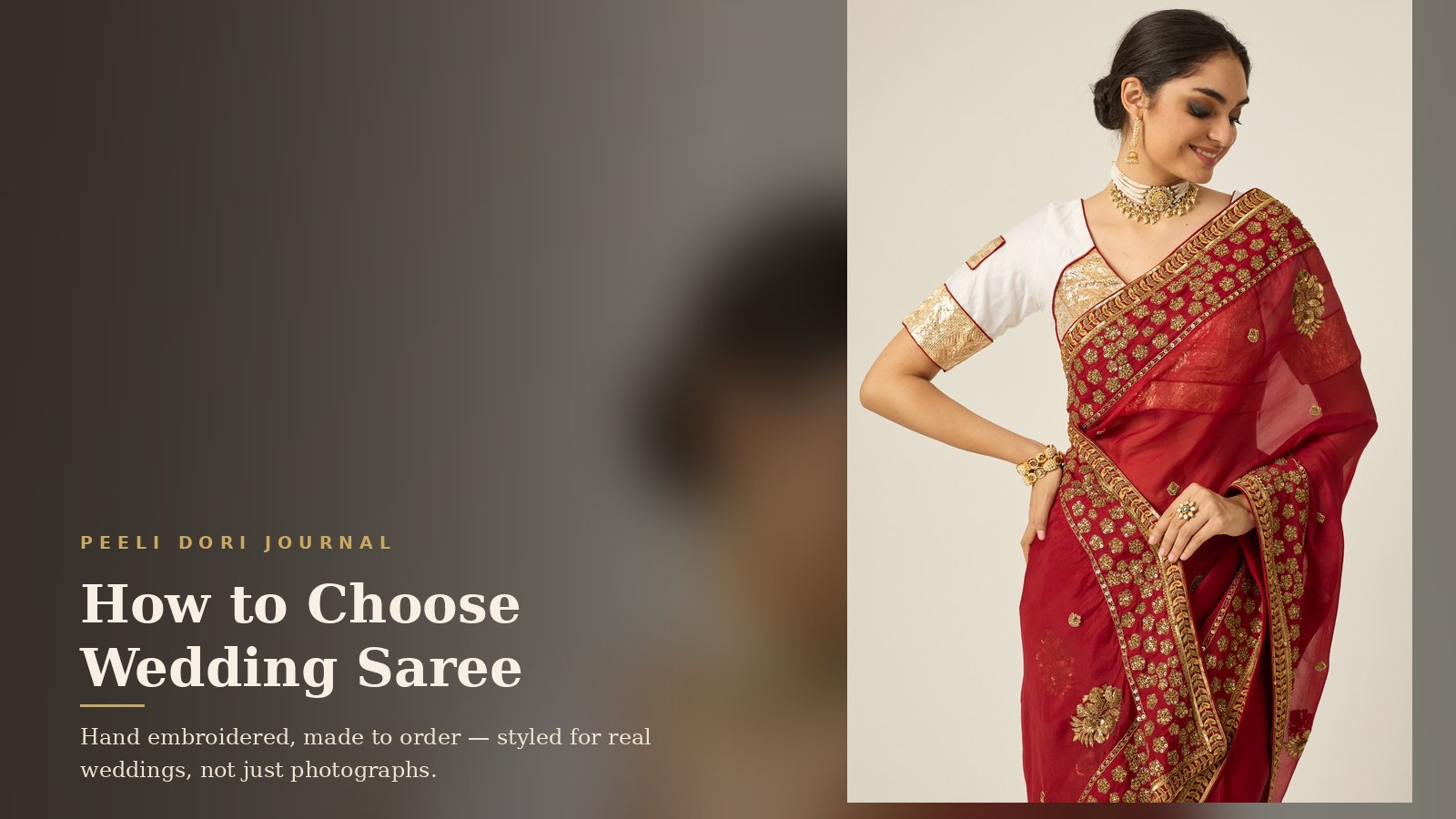
A wedding saree is usually the most photographed and the most expensive thing in the wardrobe, and it is bought under time pressure. Here is how we would choose one — which ceremony it is for, what the fabric and the handwork will do on the day, and the pieces we would put in front of you for this season.
Start with the ceremony, not the colour
Almost every wedding we dress now runs across four or five functions, and the saree that works for the mehendi is rarely the one that works on the wedding day itself. Decide the function first and the shopping becomes much shorter.
Three questions answer most of it. How many hours will you be sitting down in it — a two-hour haldi is a different purchase from a six-hour pheras? Will the photographs be taken in daylight on a lawn, or indoors under banquet lighting? And will you be dancing? Once you know those, the weight of the piece and where the work sits almost choose themselves.
Our own rule of thumb: lighter border and softer colour for the daytime functions, movement and pallu-heavy work for the sangeet, the densest embroidery you can comfortably carry for the wedding day and for the mother of the bride or groom. For the reception, most women we dress want the same craft with less volume and a cleaner fall.
One planning note. Every saree we sell is made to order, so the piece is cut and finished for you rather than picked off a shelf. Tell us your function dates when you write to us and we will tell you honestly whether a piece is comfortable to promise — that conversation is better had before you fall in love with something, not after.
The fabric under the work, and the work itself
Wedding embroidery is heavy, and the fabric underneath decides whether the saree still hangs straight in the second season. This is the part most shoppers skip.
Silk organza is the most forgiving base for dense handwork. It holds a motif crisply, stays light on the shoulder and drapes in clean pleats instead of collapsing into itself. It is why so many of our bridal pieces are organza. Chanderi is softer and slightly matte, better suited to lighter gota work, and it reads beautifully in daylight. Silk satin and georgette are the most fluid of the group and photograph with a sheen, but they need a firmer lining if the embroidery is dense.
Then there is the craft. Gota patti catches the light differently as you move. Zardozi sits slightly raised, so a side-on photograph still shows texture. Dabka and resham are subtler but soften with wear and settle into the drape. Ask any seller which craft the work is done in — someone who cannot name it is usually not selling handwork.
If you are checking in person, turn the saree over. Handwork shows loose thread ends, small irregularities in the direction of the stitch, and a soft backing where the artisan closed the motif. Machine embroidery is rigid, perfectly symmetrical, and often backed with a stiffening layer that makes the fabric crackle when you fold it.
How to choose for your body and your ceremony
Fuller frames and taller women carry a heavier border well; if you are petite, keep the density on the pallu and let the body of the saree stay light, otherwise the pleats go heavy and the drape shortens. The pallu is also what people photograph, so that is the best place to spend.
Sitting matters more than we admit. A wide, stiff border digs in over a long ceremony, and the same border that looks magnificent standing for a sangeet can be tiring through an hour of pheras. If the wedding day involves a lot of seated time, favour a narrower border with denser work above it.
Light decides colour. Daylight flatters soft, warm tones and shows texture clearly; banquet lighting flattens texture and rewards depth, so the deeper reds and aubergines hold their presence in a ballroom in a way that pastels do not. If your day runs from morning to night, you will be photographed in both — keep the strongest colour for the function that happens after dark.
Six wedding sarees we would show you first
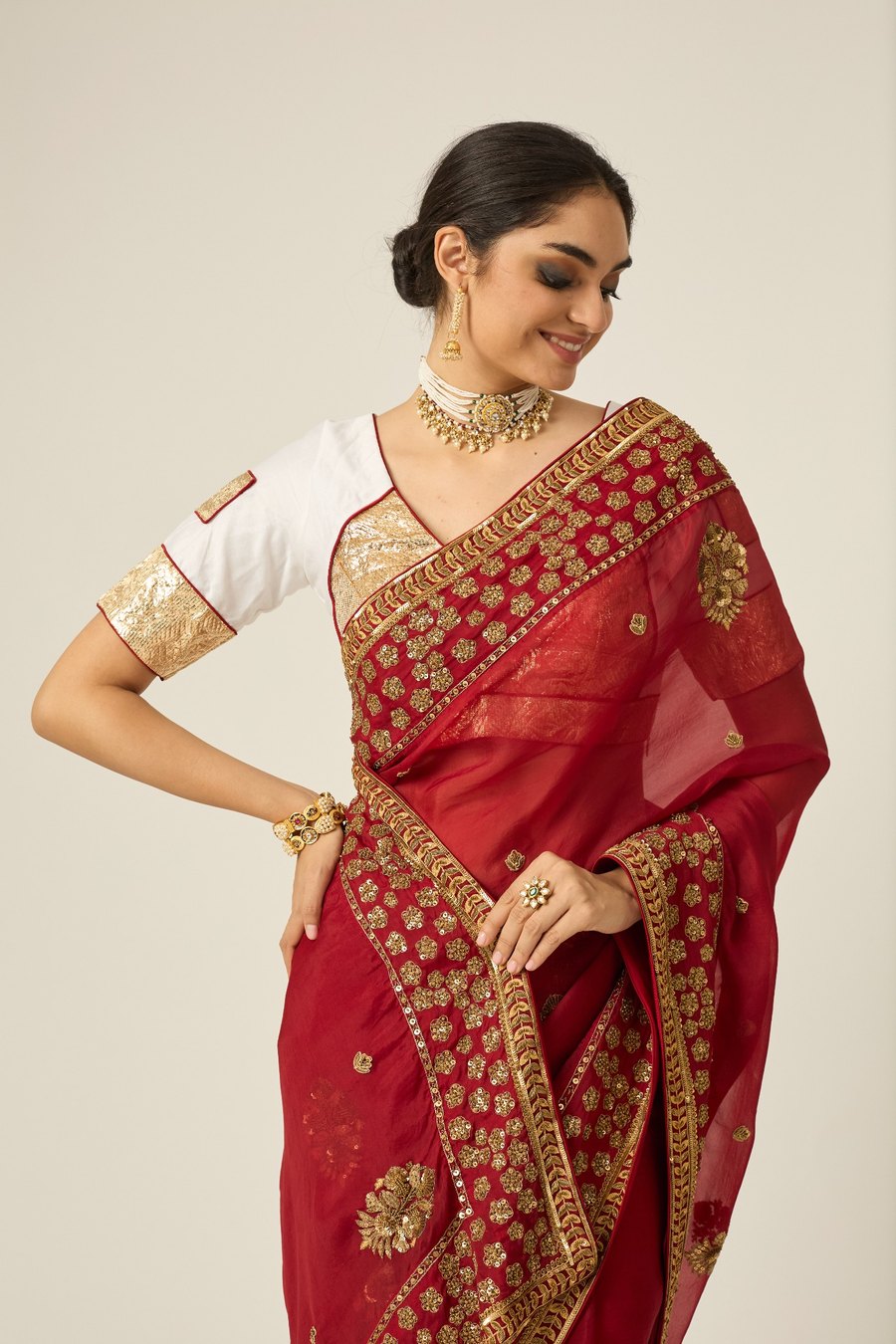
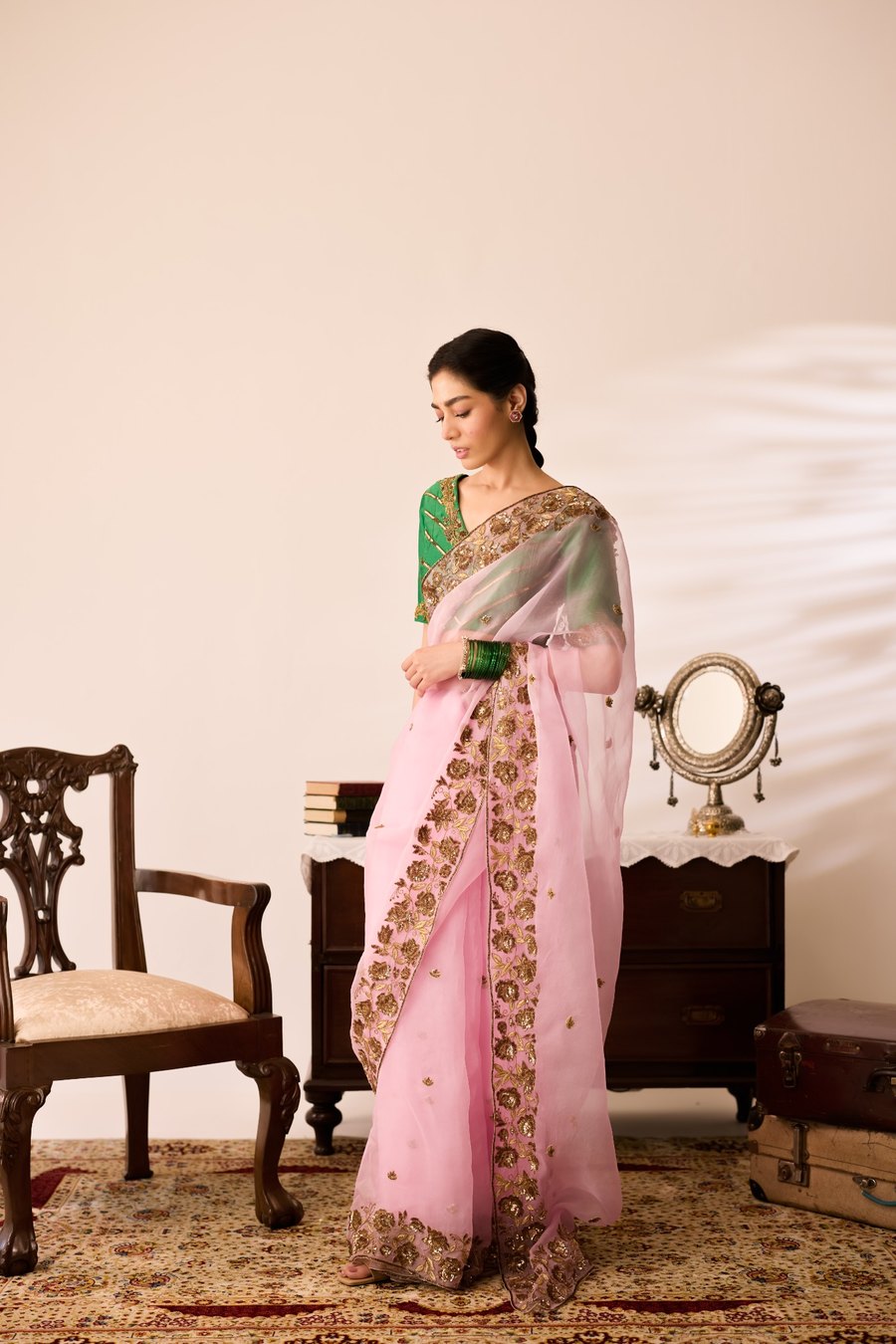
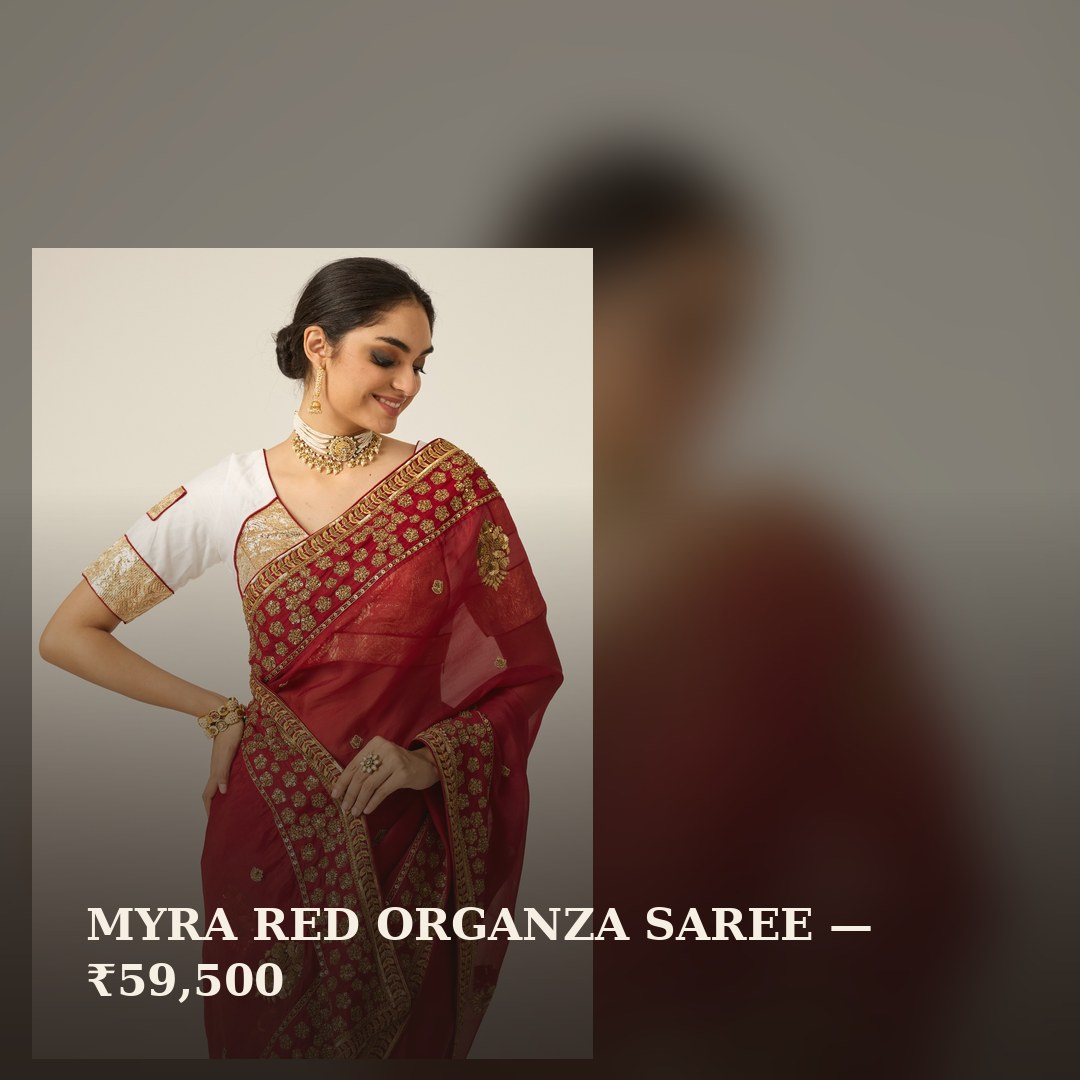
These six are our wedding-season pieces, all made to order and priced as listed below — nothing here is a "starting from" number. They run from ₹39,500 to ₹59,500, which is where bridal handwork sits in our catalogue.
₹59,500
₹46,500
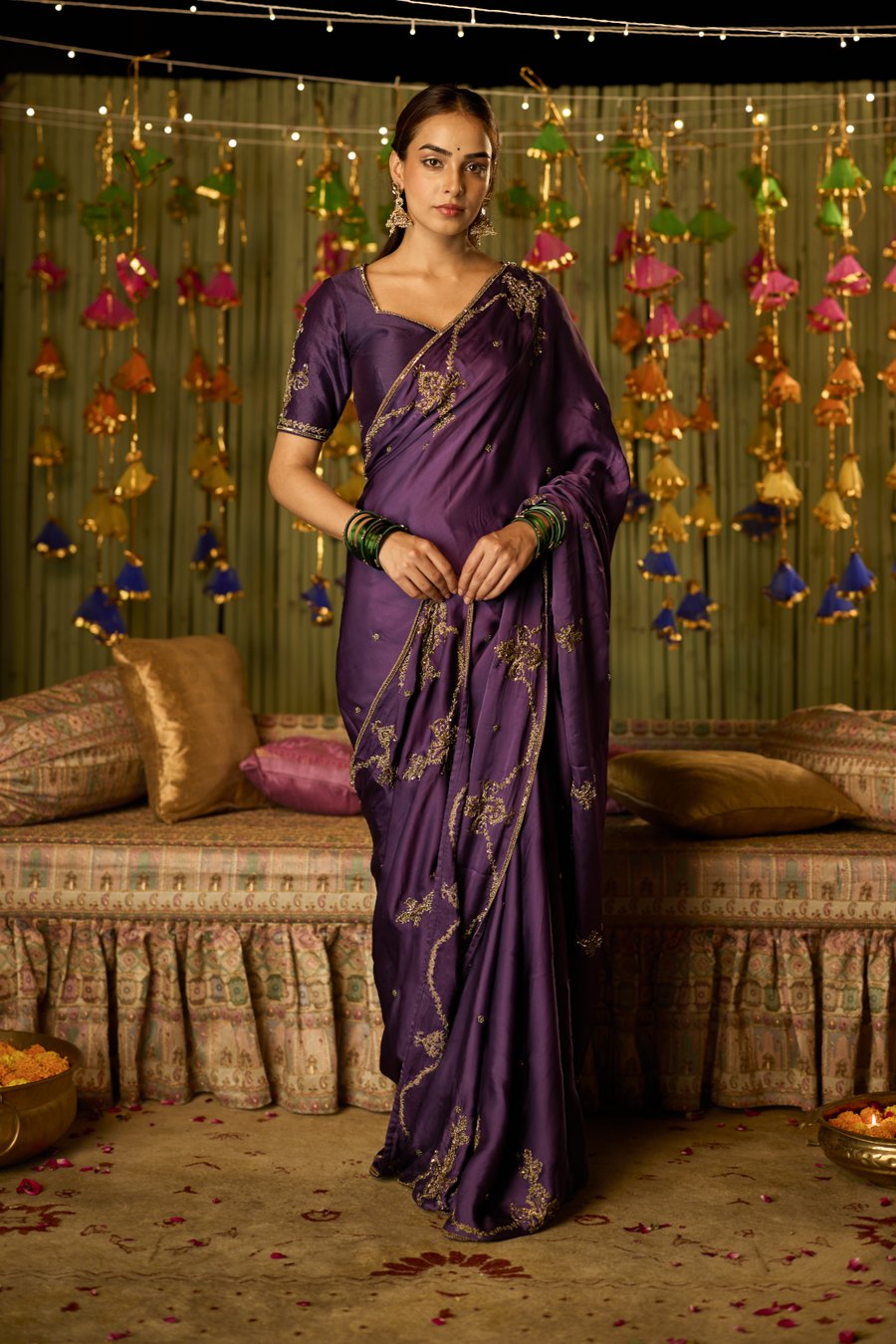
₹43,500
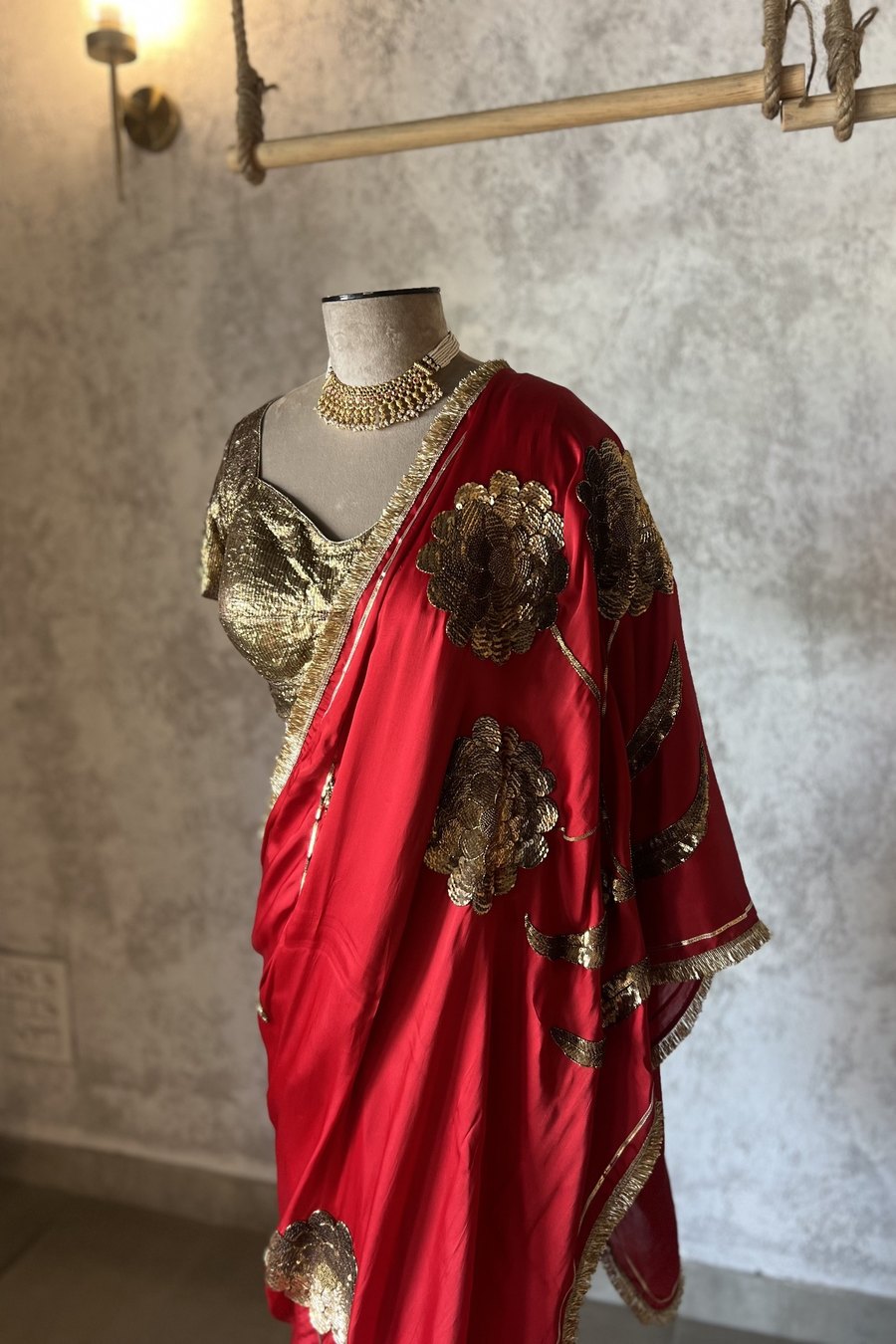
₹39,500
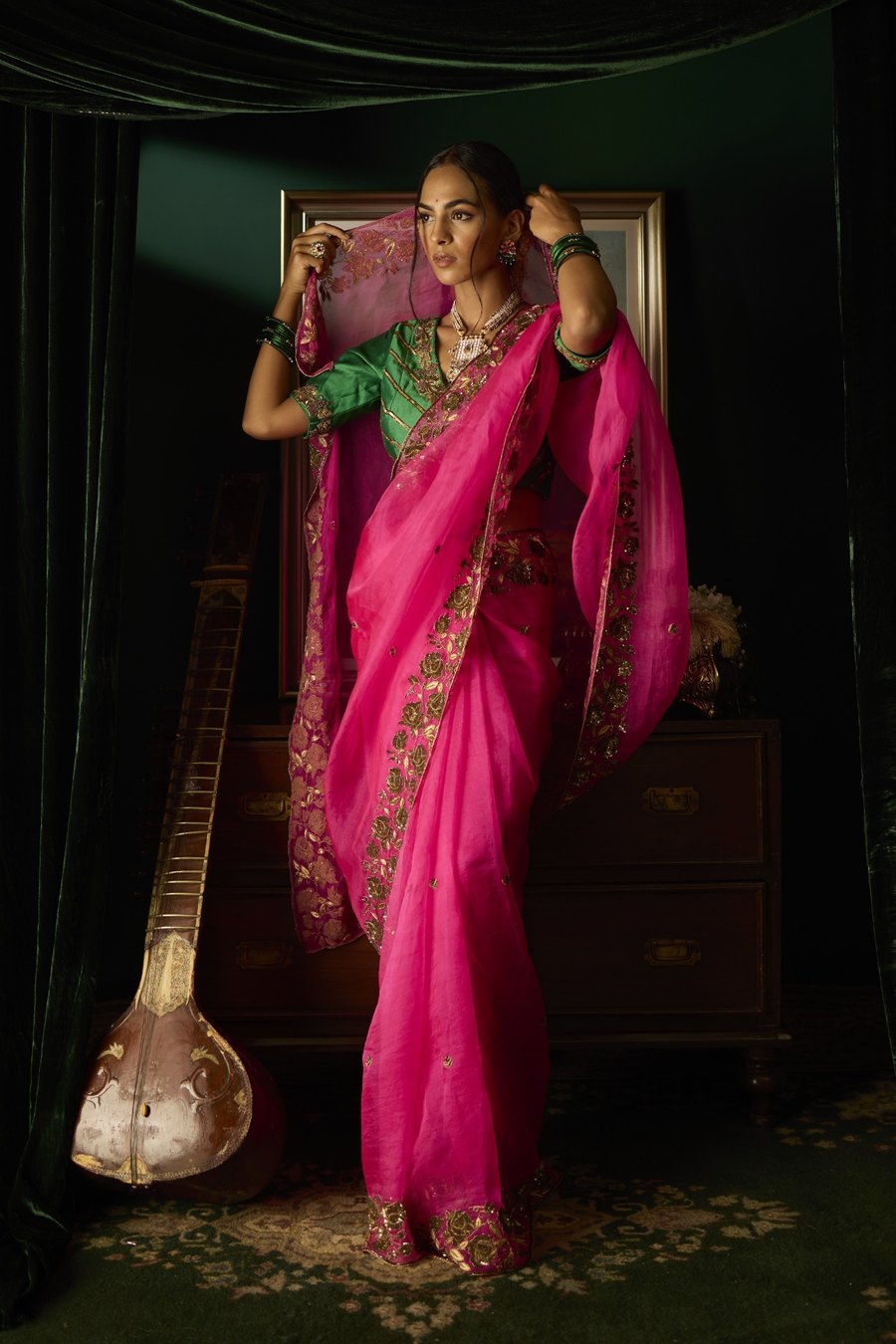
₹46,500
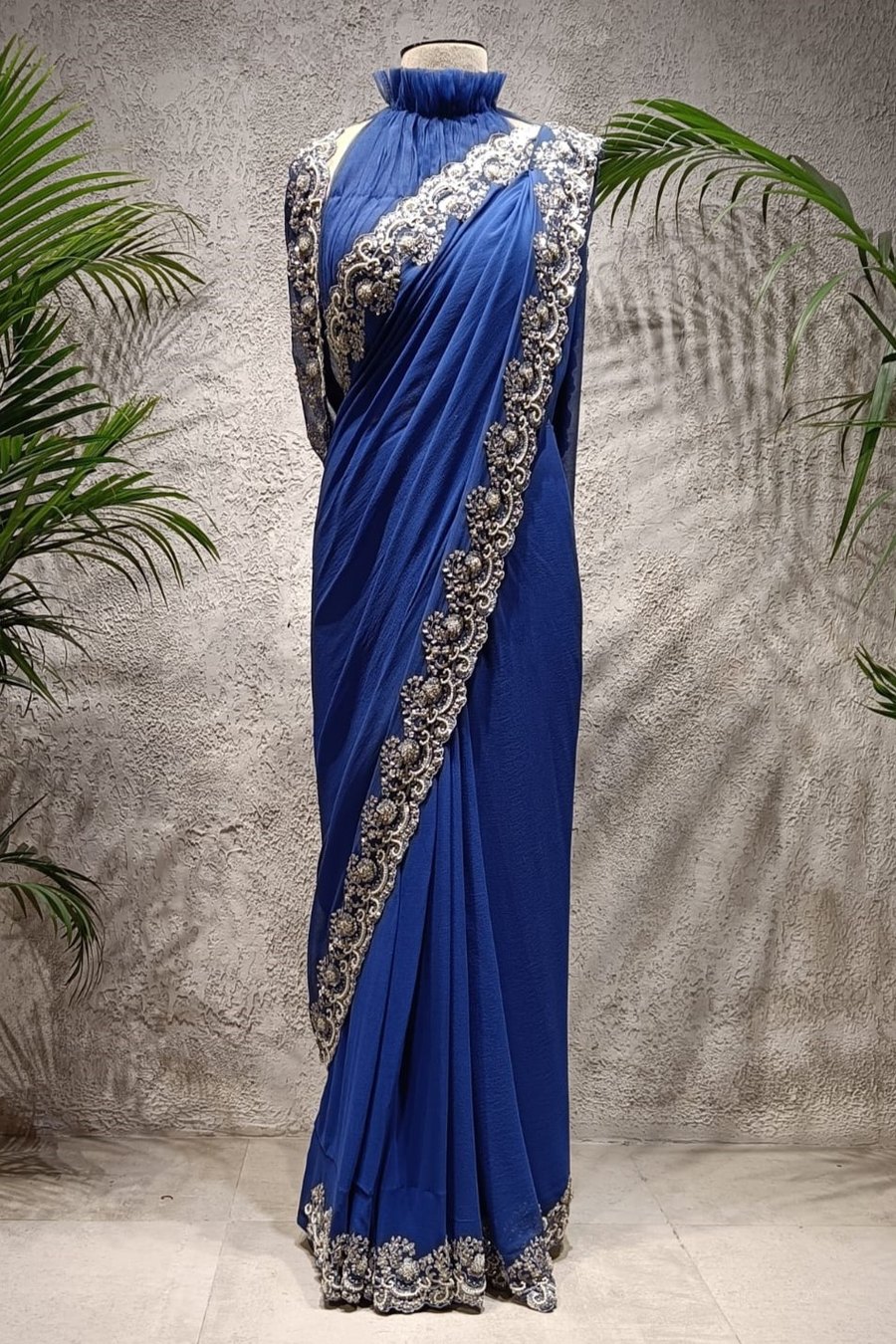
₹46,500
The blouse decides how the saree actually sits
Half an inch of shoulder fit is the difference between a saree that looks expensive and one that looks borrowed, so we would always take the custom-stitched blouse on a piece at this level.
Three measurements do most of the work: shoulder width, the armhole, and the distance from your shoulder to the top of the blouse. Send them to us on WhatsApp and we will check the fit before stitching. If you already own a blouse that fits perfectly, lay it flat next to a ruler, photograph it and send that instead — it is faster and more accurate than measuring yourself.
For the drape, pin the pleats before you travel. A pre-pinned saree survives a flight far better than a folded one, and it means you are not depending on a tailor at the venue on the morning of the function.
Care, before and after the wedding
Hand-embroidered pieces should not go to a regular dry cleaner without instructions. Ask for hand-finished cleaning and name the embroidery, because a machine press will flatten exactly the raised work you paid for.
Between wears, fold the saree in muslin rather than plastic, refold along different lines once a year, and keep it out of direct light. Zardozi discolours fastest in sunlight; organza yellows fastest sealed in plastic.
If a thread lifts, do not pull it. Bring the saree to our Shahpur Jat or Dehradun store, or send us a photograph on WhatsApp — most lifted threads can be repaired without redoing the motif.
Frequently asked
How do I choose a wedding saree?
Decide the function first, then the fabric, then the work. A saree for the wedding day needs denser handwork and a colour that survives banquet lighting; a mehendi or haldi saree should be lighter so you can sit comfortably for hours. Fit and drape matter more than the trend of the season.
How much does a wedding saree cost at Peeli Dori?
Most of our sarees sit between ₹10,000 and ₹50,000. The bridal pieces on this page run from ₹39,500 to ₹59,500, and the difference is the density of the handwork and the hours it takes, not the fabric alone.
Can the blouse be stitched to my measurements?
Yes. Every saree can be sent with a custom-stitched blouse. Send your shoulder, armhole and blouse-length measurements on WhatsApp and we will confirm the fit before stitching.
What is the difference between organza and silk satin for a wedding saree?
Organza holds a motif crisply and stays light, which suits dense handwork. Silk satin is more fluid and reflective and photographs with a sheen, but it needs a firmer lining once the embroidery is heavy. Both work for a wedding day — it comes down to whether you want structure or fluidity.
Do you ship outside India for a destination wedding?
Yes, we ship worldwide. The site carries our current international shipping offer, and if you message us your function dates we will advise on the piece that travels best.
Explore more: bridal collection — or message us on WhatsApp for styling help.

The information below is required for social login
Sign In
Create New Account