

A wedding saree is bought to a date, not to a mood. Every piece we sell is made to order rather than pulled off a shelf, so the buying calendar decides almost everything else. This is how the purchase itself runs — what moves the price, what we need from you,
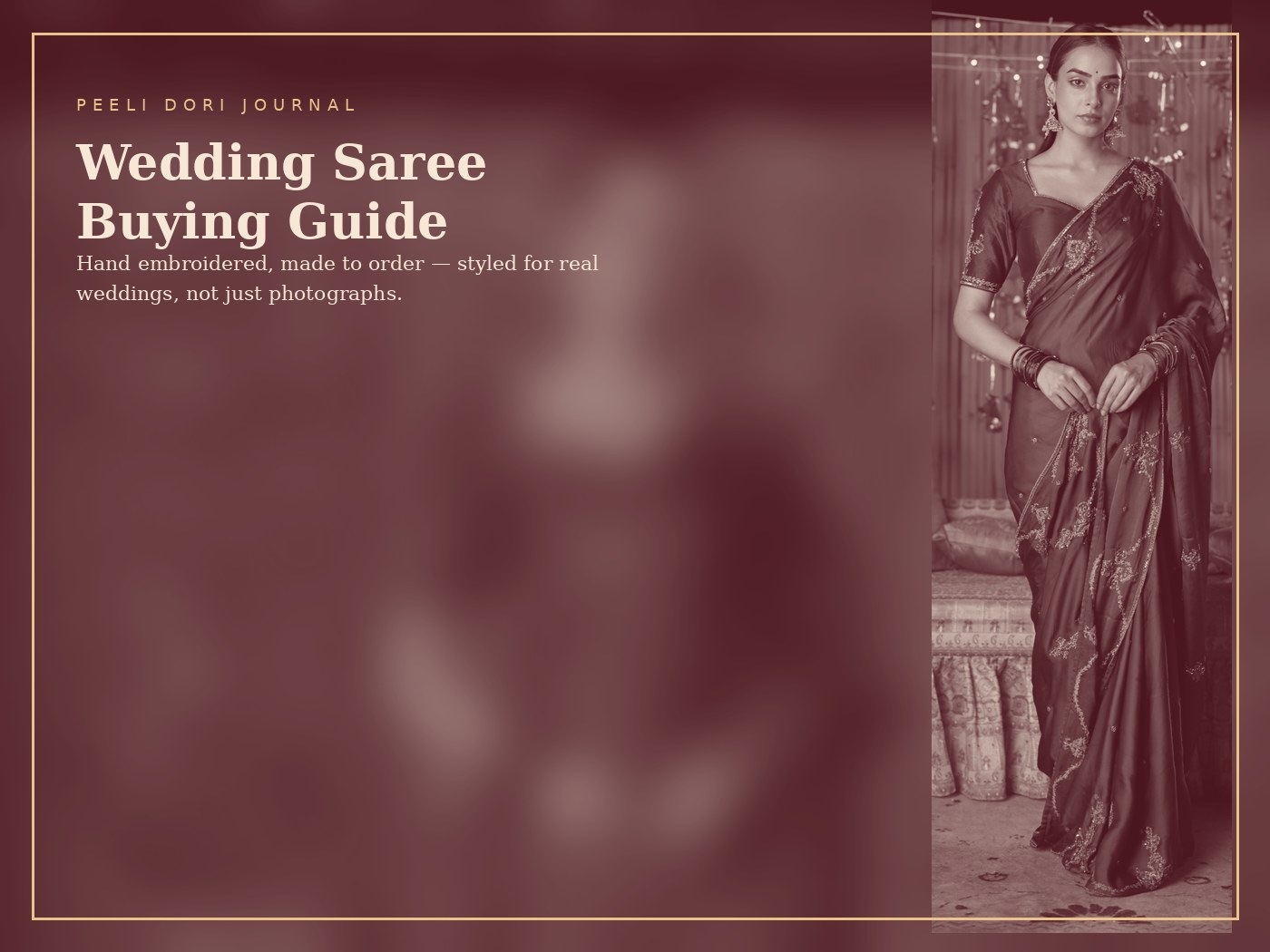
A wedding saree is bought to a date, not to a mood. Every piece we sell is made to order rather than pulled off a shelf, so the buying calendar decides almost everything else. This is how the purchase itself runs — what moves the price, what we need from you, what to settle before you pay, and what to check when the parcel opens.
Buy for the calendar you actually have
Most bridal shopping goes wrong at the calendar, not at the rack. A wedding season is five functions with five different jobs: haldi in the morning sun, mehendi on a lawn, sangeet for the hours you will spend standing and dancing, the wedding day itself, and a reception that runs late. The saree each one wants is a different piece of clothing.
So the first question we ask is not what colour. It is which dates, and which function this saree is for. Because each piece is cut, embroidered and finished for you after you order, your dates are what tell us whether a saree is realistic to promise. Bring them into the first conversation and the rest of the buying process becomes a choice rather than a negotiation.
If you are buying for your daughter, your sister or a bridesmaid, borrow her function calendar before you borrow her taste. Sarees travel, get re-pleated and get altered; a piece bought three weeks out for a function in another city is a different purchase from one bought early and worn at home.
One more thing we would say plainly: no single saree covers the whole wedding. The brides who look most settled across the week are the ones who bought a light piece early and the heavy one with time to spare.
What you are actually paying for: the base, then the hours
Two sarees can look equally red from three feet away and sit twenty thousand rupees apart. That gap is the base fabric plus the density of the handwork on top, and in that order. Fabric alone will not explain a bridal price, and craft alone will not either.
Silk organza is the base most of our bridal pieces are built on, because it holds a motif crisply, stays light through a long pheras and falls into clean pleats instead of collapsing into itself. Chanderi is softer and reads matte; it suits lighter work and daylight functions. Silk satin and georgette move the most and take a sheen, but once the embroidery gets dense they need a firmer lining to stay in shape.
At the craft end, ask what the work is rather than how much of it there is. Gota patti behaves differently with movement, zardozi sits slightly raised and holds texture in a side-on photograph, and dabka with resham is quieter up close. Our dyes are organic and the work is done by hand by artisans, so the embroidered areas will not be identical across two pieces of the same design — that is the signature of the process, not a fault.
When you are comparing two sarees, ask the seller three things: what the base is, whether the embroidery is hand-worked, and what the blouse that comes with it is made of. If the answers stay vague, the price is probably not being set by the work.
Measurements, fit and the custom blouse
The blouse is where a wedding saree is quietly won or lost. Half an inch at the shoulder changes how the pleats hang, and on a made-to-order piece there is no reason to accept a standard size — we cut to your measurements instead.
You do not need to be measured in the store to buy. Send your measurements on WhatsApp and we will check the fit before stitching, or, if you own a blouse that already fits you well, lay it flat, photograph it next to a tape and send that along. Fit checks are part of how we work, not a favour.
Two buying decisions sit here as well. First, whether you want the blouse matched to the saree or cut in a contrast. Second, whether you want the piece pre-draped at our end, which matters most when the function is in another city and you would rather not depend on a tailor at the venue. Both are easier to settle at the order stage than a week before the wedding.
Six wedding sarees, priced as listed
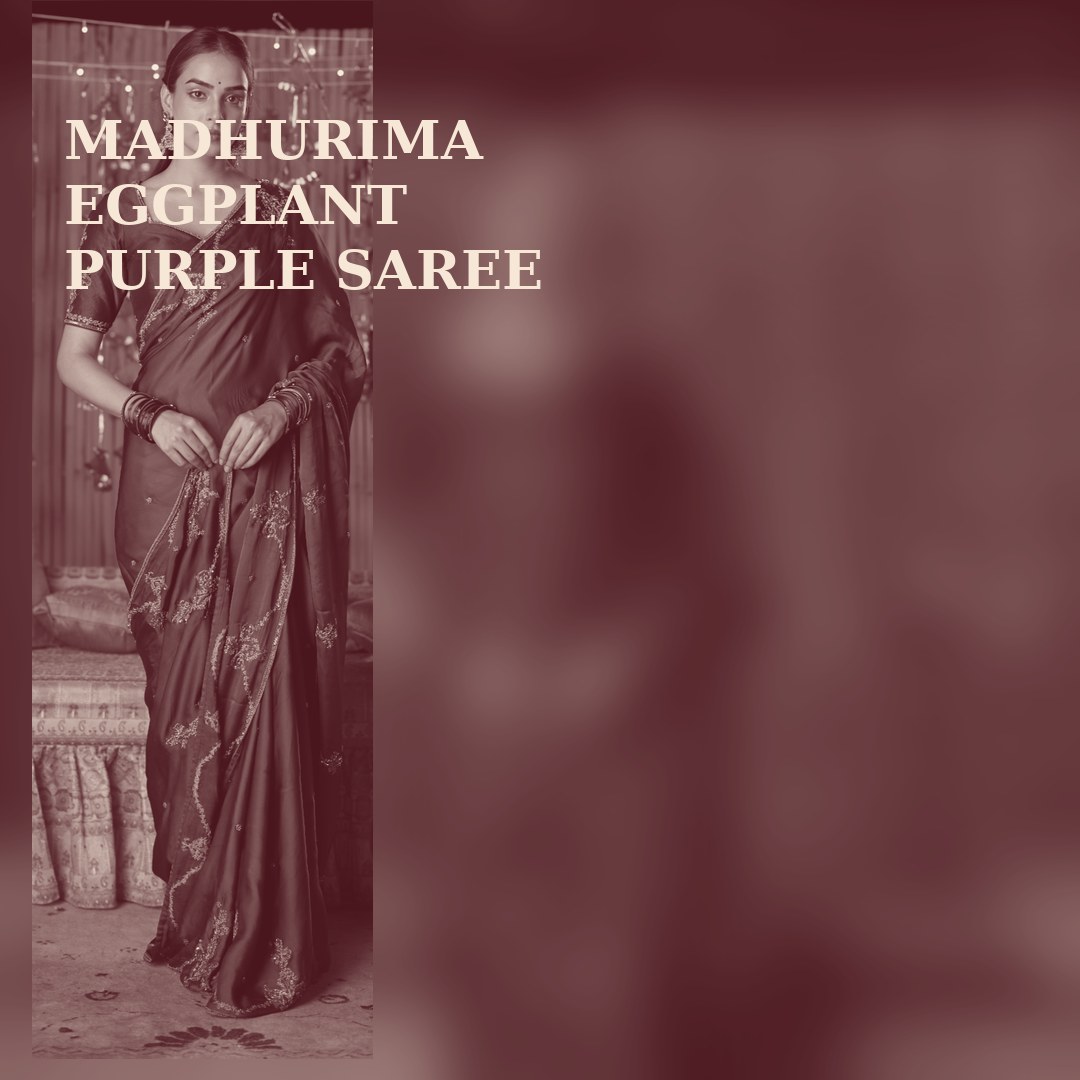
These six are from our current bridal set and they sit between ₹39,500 and ₹59,500. Every price below is the price of the piece — none of them is a starting figure — and every one is made to order in your measurements.
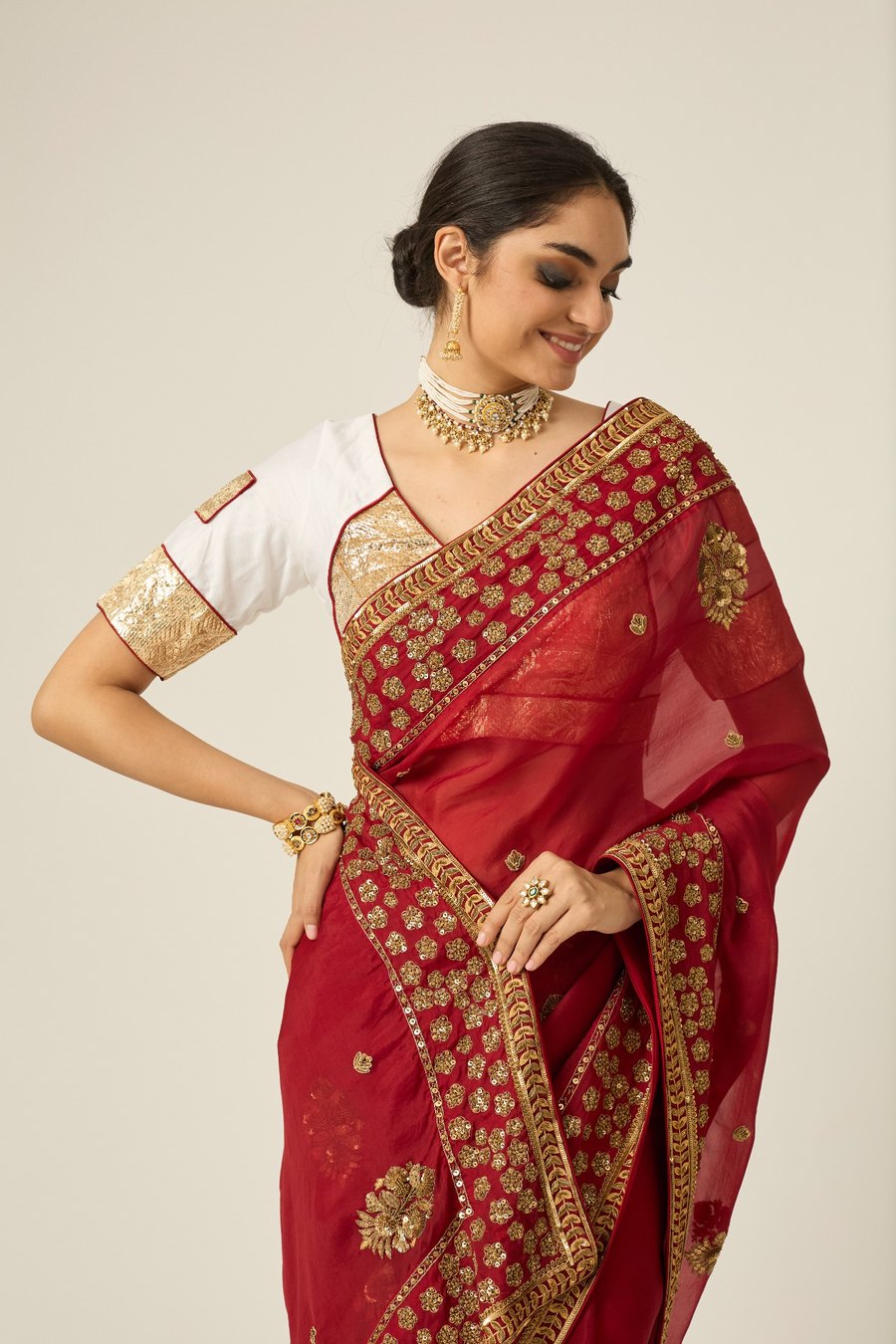
₹59,500
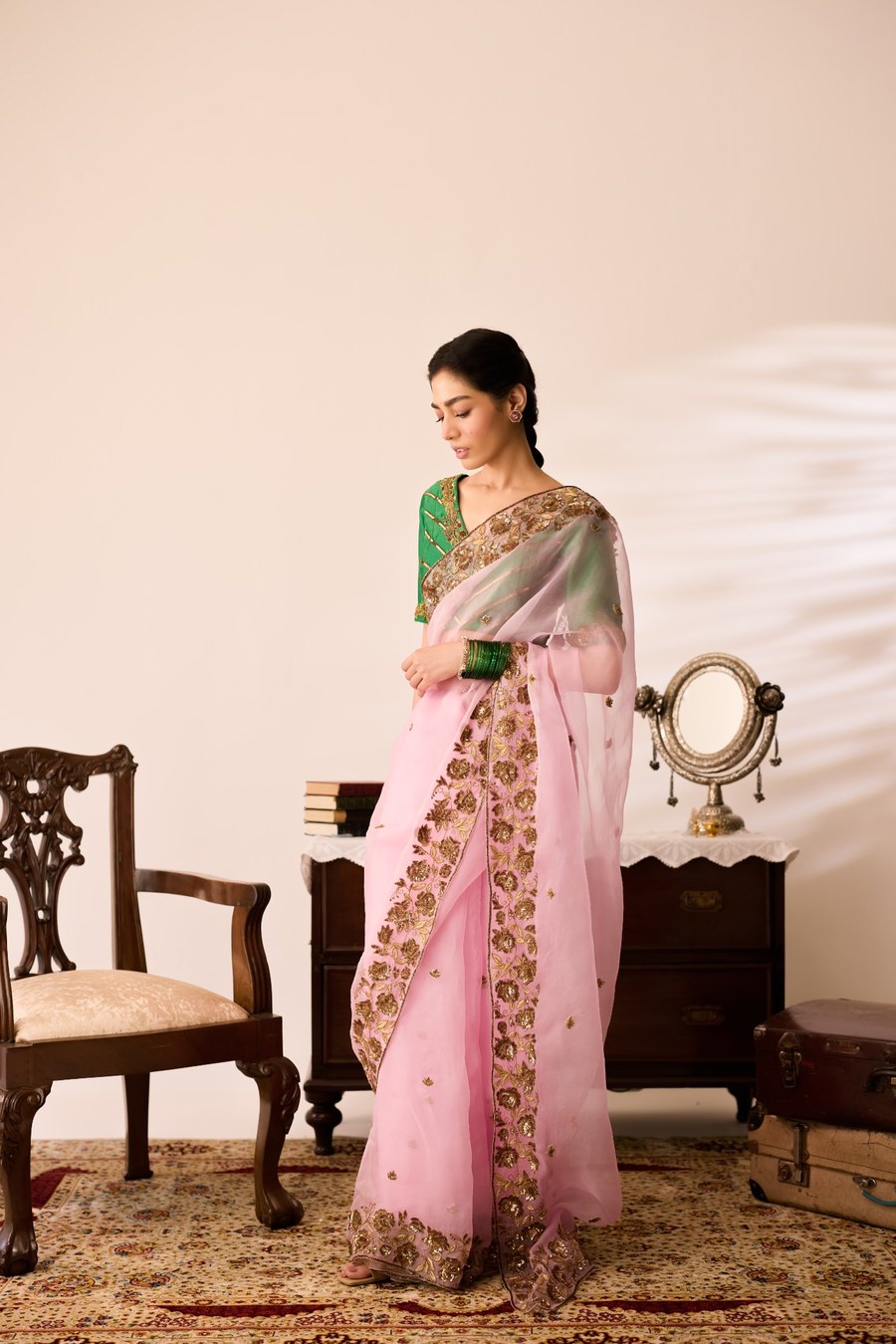
₹46,500
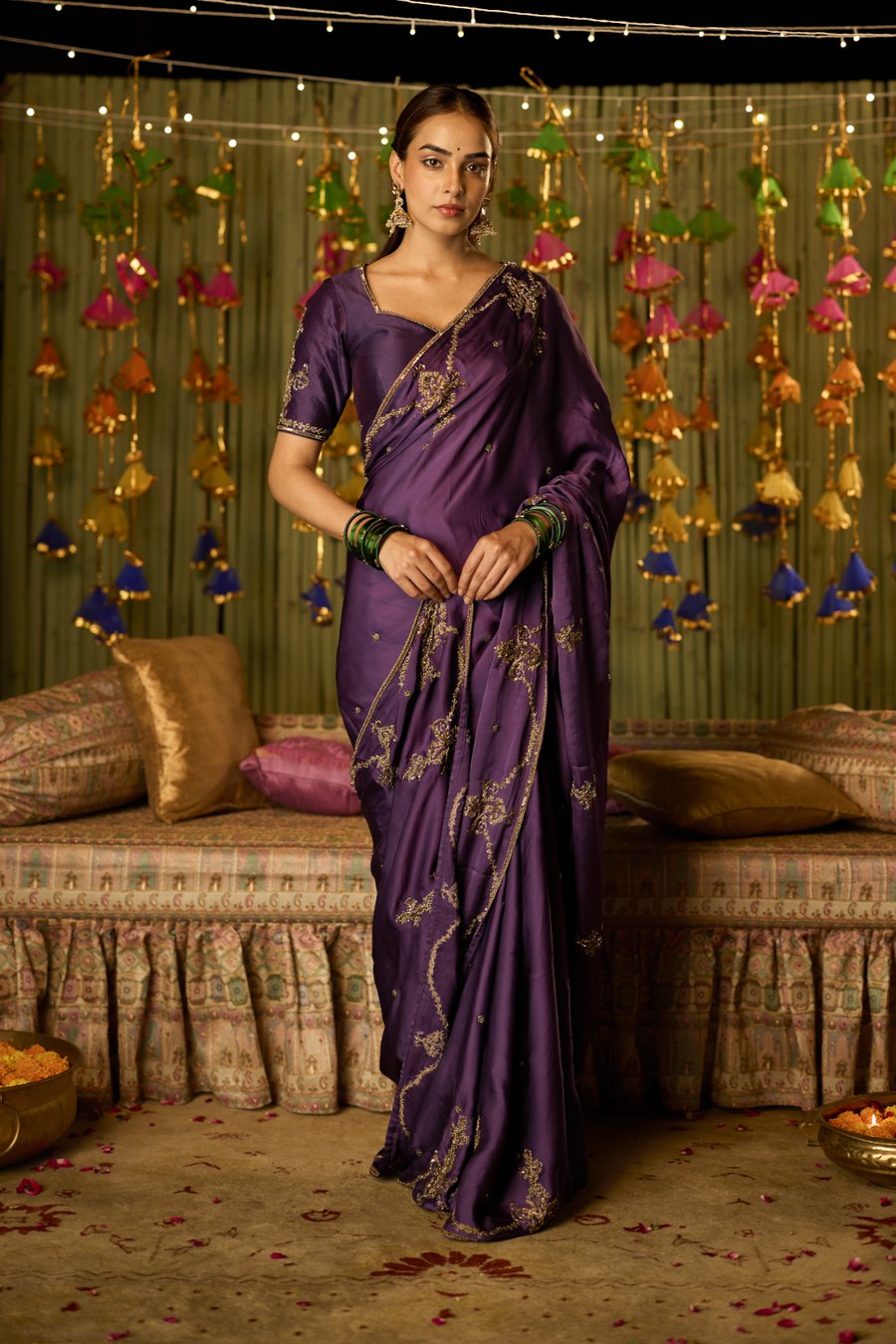
₹43,500
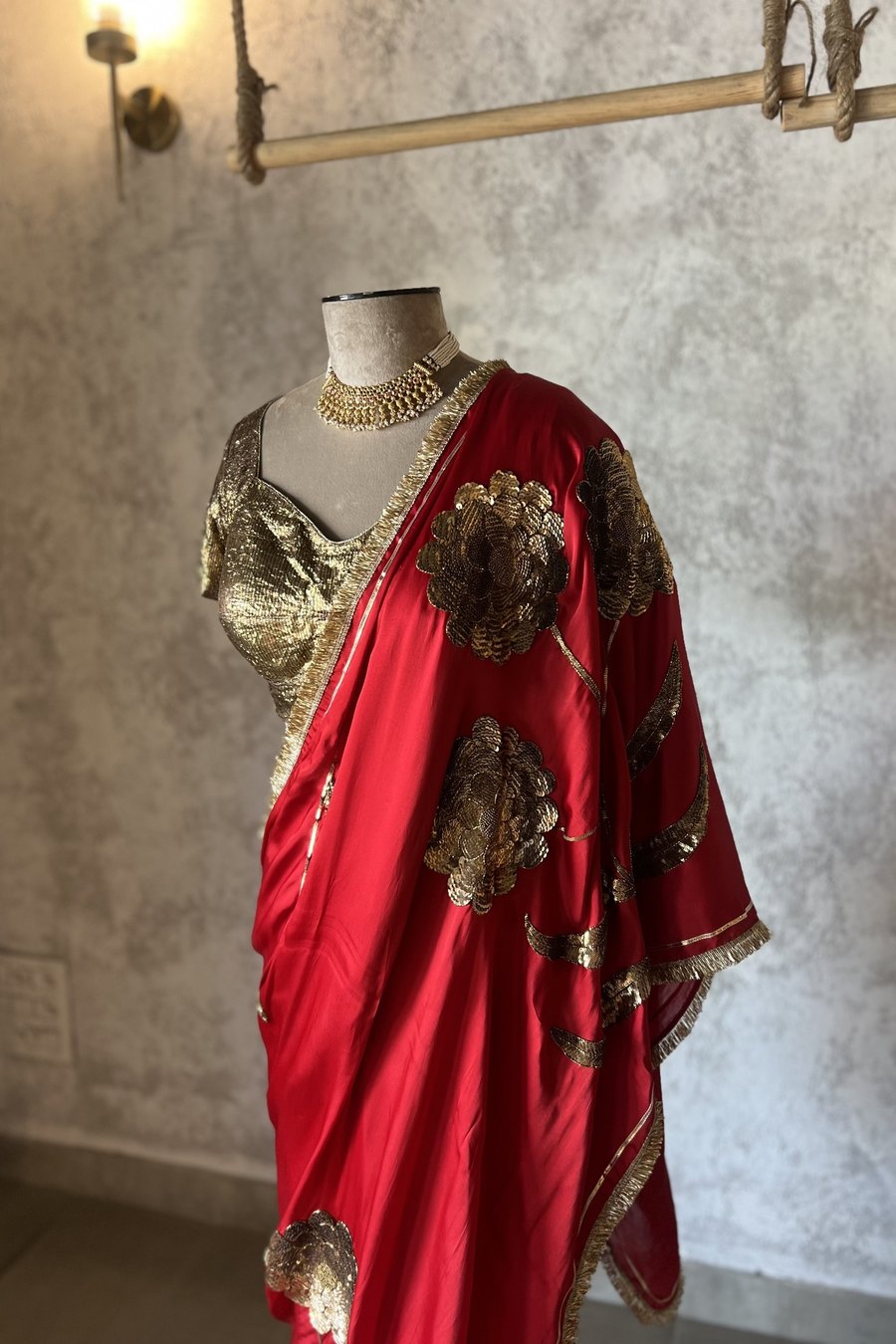
₹39,500
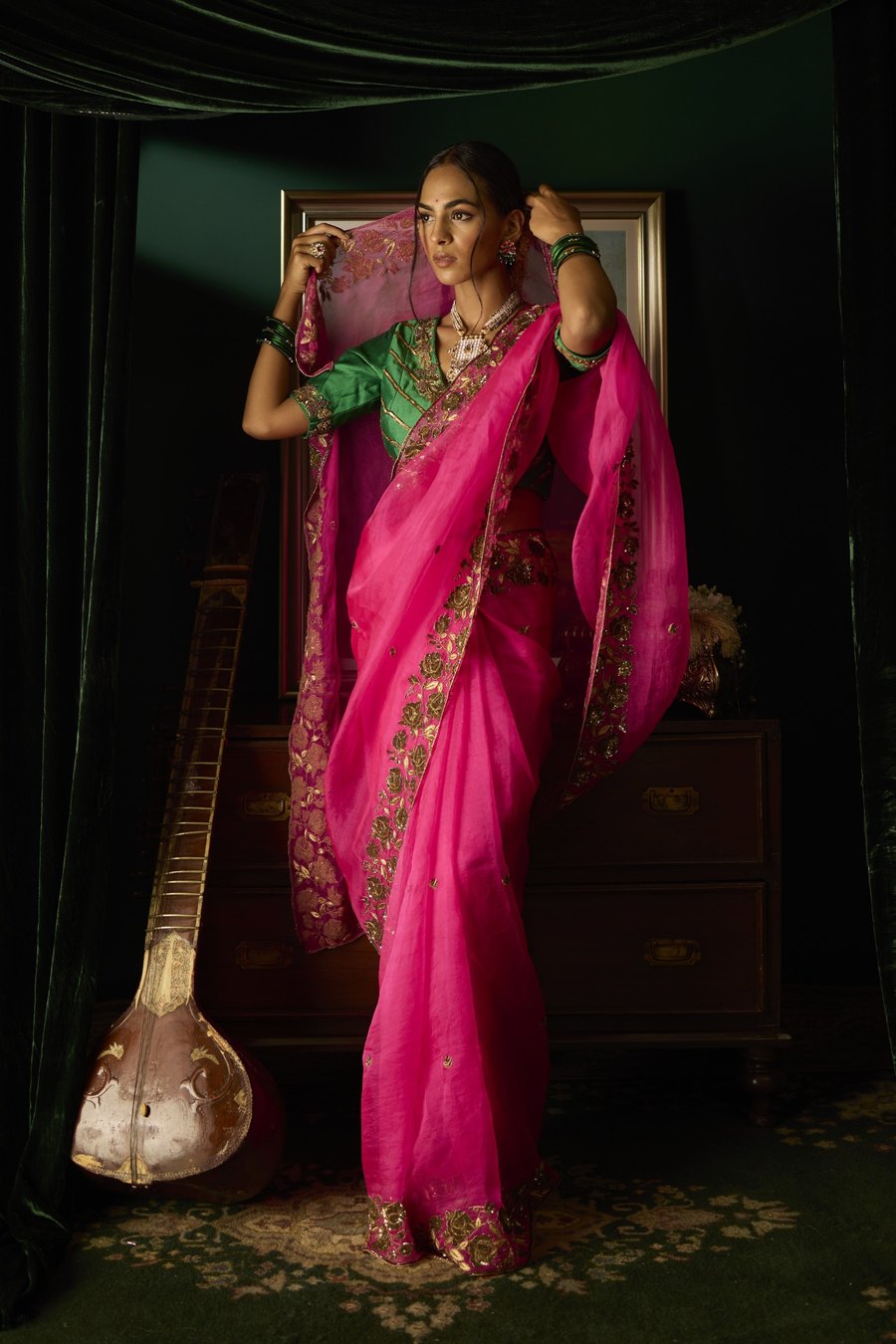
₹46,500
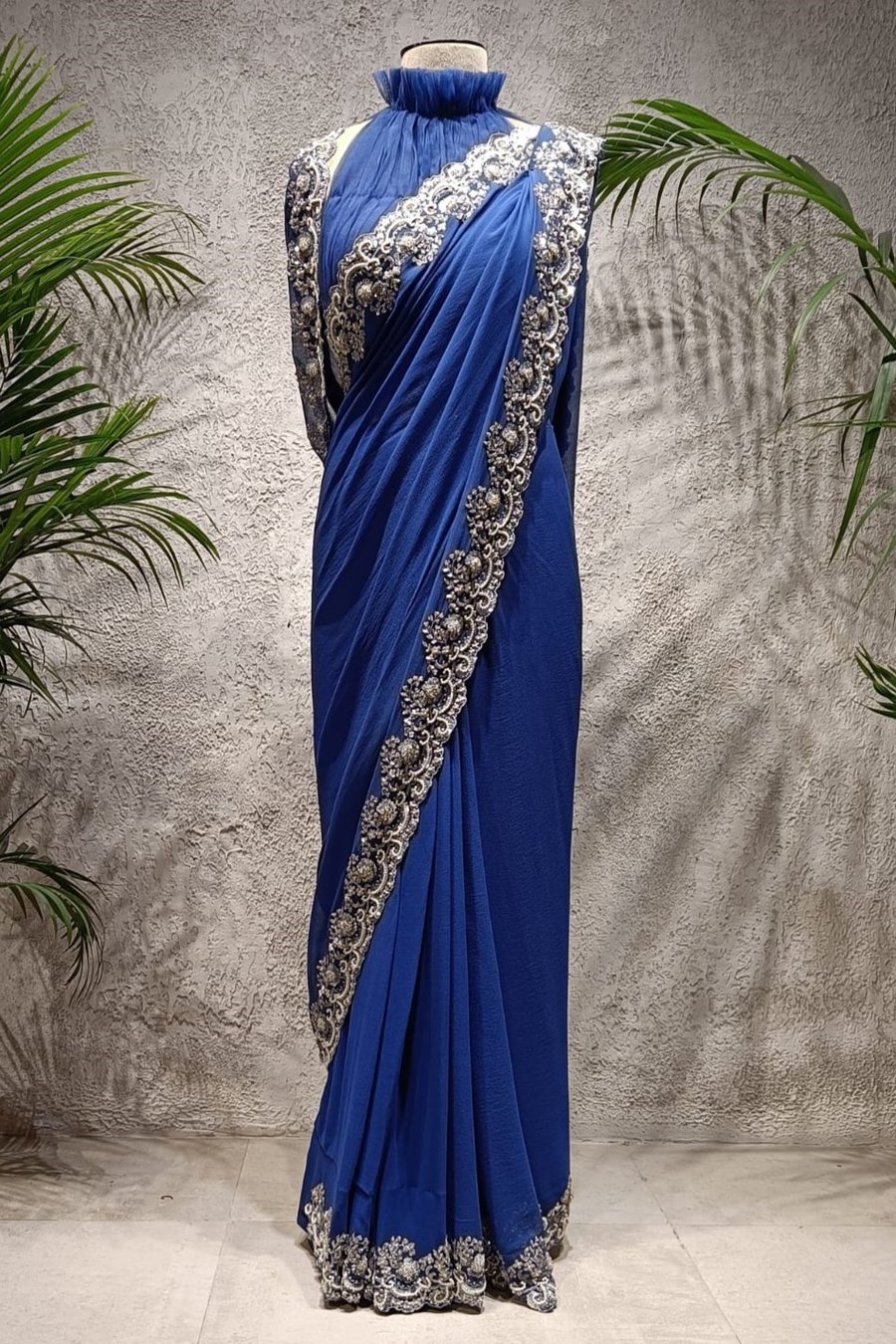
₹46,500
Styling the piece you have bought
Two weeks before the function is late for a decision about jewellery, so take the neckline of the blouse and work outwards from it. A narrower neckline carries heavier earrings and a statement neckpiece; a broader or higher neckline is better left uncrowded, with the weight shifted to the wrist and the hair.
For the sangeet, the drape wants freedom in the lower half and security at the shoulder — pleats that are set slightly lower than a day drape let you move without fighting the fabric. For the wedding day, keep the pallu where the photographs will find it: the embroidery you paid for should be the part that faces the camera during the pheras.
A matched blouse reads formal and extends the saree; a contrast blouse, cut in the same family of colour, reads as a deliberate choice and is often the reason a piece stops looking borrowed. If you would rather not decide alone, message us on WhatsApp with the saree and we will suggest the blouse shade we would cut for it.
When it arrives, and how to keep it
Open the parcel in daylight and in a room without a carpet underfoot. Unfold the saree fully, hold the pallu up against a window, and look along the border and the fall for anything that reads unevenly against the light. Try the blouse on before the saree, not after. If something looks wrong, photograph it and message us before the piece is worn or altered, so we can still act on it.
Shipping within India is free above ₹10,000, and for weddings abroad there is an international shipping offer on the site that applies above ₹49,000. If you are travelling, carry the saree folded rather than in a suitcase press.
For storage after the wedding: muslin, not plastic, and a fold that changes lines once a year so the embroidery never creases into the same groove twice. Keep it out of direct light. If a thread lifts, do not pull it — bring it to our Shahpur Jat or Dehradun store, or send a photograph, and most lifted threads can be repaired without redoing the motif.
Frequently asked
How do I buy a wedding saree from Peeli Dori?
You can order online, or start on WhatsApp and let us help you choose a piece for the function you are buying for. If you are in Delhi or Dehradun, come to the Shahpur Jat or Dehradun store and see the fabric and work in person. Every saree is made to order, so the blouse is cut to your measurements either way.
How far in advance should I buy a wedding saree?
As early as your function dates allow. Because each saree is made to order, tell us the dates first and we will tell you honestly whether a piece can be promised comfortably. Brides usually settle the wedding-day saree first and the lighter functions later, with the reception last.
What will a wedding saree cost at Peeli Dori?
Our sarees generally sit between ₹10,000 and ₹50,000, and bridal pieces with dense handwork run from about ₹39,500 to ₹59,500. The difference between two pieces is the base fabric and how many hours of hand embroidery they take, not the colour.
Can the blouse be stitched to my measurements?
Yes. Custom sizing is standard on our pieces. Send your measurements on WhatsApp, or a photograph of a blouse that fits you well, and we will check the fit before stitching. If you would like the blouse in a contrast shade, say so at the order stage.
Can I buy without visiting a store?
Yes. Most of the brides we dress order from another city. Message us on WhatsApp, we will send photographs and fabric details, help you decide the blouse and confirm the fit, and the piece ships to you — free within India above ₹10,000, with an international shipping offer for orders above ₹49,000.
Explore more: bridal collection — or message us on WhatsApp for styling help.

The information below is required for social login
Sign In
Create New Account