

A wedding saree is not styled once. The same piece has to work at a haldi in the morning sun, a sangeet where you will not sit down, and a wedding day where every photograph is taken from the front. What follows is how we style wedding sarees for the function
A wedding saree is not styled once. The same piece has to work at a haldi in the morning sun, a sangeet where you will not sit down, and a wedding day where every photograph is taken from the front. What follows is how we style wedding sarees for the function in front of us — the drape, the pleats, the blouse and the jewellery — and the small decisions that decide whether the piece behaves on the day.
Start from the function, not from the saree
The mistake we see most often is styling for the photograph rather than for the function. A wedding week is five different rooms: a haldi in daylight, a mehendi on grass or a terrace, a sangeet where you will stand and dance for three hours, the wedding itself, and a reception that goes late under warm lights. The same wedding saree can carry all five, but the drape cannot be the same five times.
For a day function, the styling question is how the piece reads in flat light. Keep the drape simple, let the border do the work, and shift the weight to the earrings and the bangles. For the sangeet, the question is movement: pleats set low, the pallu pinned so it stays where you put it, and nothing heavy at the wrist that you will hold above your head half the night.
On the wedding day, style for the camera and for sitting still. The pallu should sit forward enough that the embroidery you paid for is the part facing the photographer, and the pleats should be deep enough that they survive the pheras, the blessings and every time somebody reaches up to adjust your dupatta.
For a reception, you are styling for artificial light, which flatters sheen and eats detail. A wedding saree with a glossy base and denser work on the border holds up much better there than a pale, evenly worked piece that turns flat in the video.
Let the fabric decide how you drape it
Every fabric has an opinion about draping, and styling works best when you agree with it. Organza is crisp and holds a pleat edge, so it reads sculptural and stays where you set it — which is why most of our wedding sarees are built on it. Silk satin pours and takes a deep sheen but will show every pin, so it wants fewer, larger pleats. Georgette falls soft and moves with you, and chanderi reads matte and calm in daylight. Pick the drape that follows the fabric instead of fighting it and the saree almost styles itself.
The handwork matters just as much. Gota patti catches light as you move, so it looks different across a room than it does in a mirror. Zardozi sits slightly raised and holds texture when the photograph is taken side-on. Dabka worked with resham is quieter up close, which suits a piece you want to wear more than once. When you are styling, work out where the heaviest embroidery sits and then leave that part visible — do not pin a dupatta over the pallu you bought the saree for.
Our dyes are organic and the embroidery is done by hand by artisans, so two pieces of the same design are never identical to the stitch. Treat that as the reason to style the piece rather than to match a reference photograph exactly: the slight unevenness in the work is what gives the drape its own character.
One practical note before you plan anything: the pleats need a base that stays put. A matte petticoat in a shade close to the saree is worth more than it costs, because a dark or shiny petticoat shows through a light organza the moment you stand in daylight.
Pleats, pallu and pinning, for your body and your ceremony
Pleat count changes the whole silhouette. Five to seven pleats reads traditional and formal, which suits a wedding day; a slightly narrower fan makes a lighter piece look less bulky on a shorter or smaller frame. If you are tall, or the border is unusually heavy, fewer and deeper pleats keep the hem from dragging the drape out of shape.
Set the pleats a touch lower for a sangeet or a mehendi, so you can climb a stage, dance and sit on the floor without the drape lifting. For the wedding day, keep them at the natural waist. Either way, pin at the shoulder first and then the waist — do it the other way around and the whole drape shifts the moment you raise your arm.
The pallu is the styling decision people notice. Pinned over the shoulder, pleated and narrow, reads formal and keeps your hands free; left open and wide, it reads relaxed and photographs beautifully in motion. A useful compromise for a long function is to wear it narrow and pinned for the ceremony and open it for the photographs afterwards.
If the pallu carries the densest hand embroidery, style around it: keep the blouse neckline clean, choose earrings with space around them, and put any volume in the hair rather than in an extra layer of fabric. Heavy embroidery plus a heavy veil plus a heavy choker is the one combination that makes a wedding saree look borrowed rather than yours.
Six wedding sarees, priced as listed
These six are from our bridal set and sit between ₹39,500 and ₹59,500. Every price below is the price of the piece, not a starting figure, and every one is made to order. The blouse is cut to your measurements, and if you would rather talk through a drape before you decide, message us on WhatsApp with the function you are dressing for.
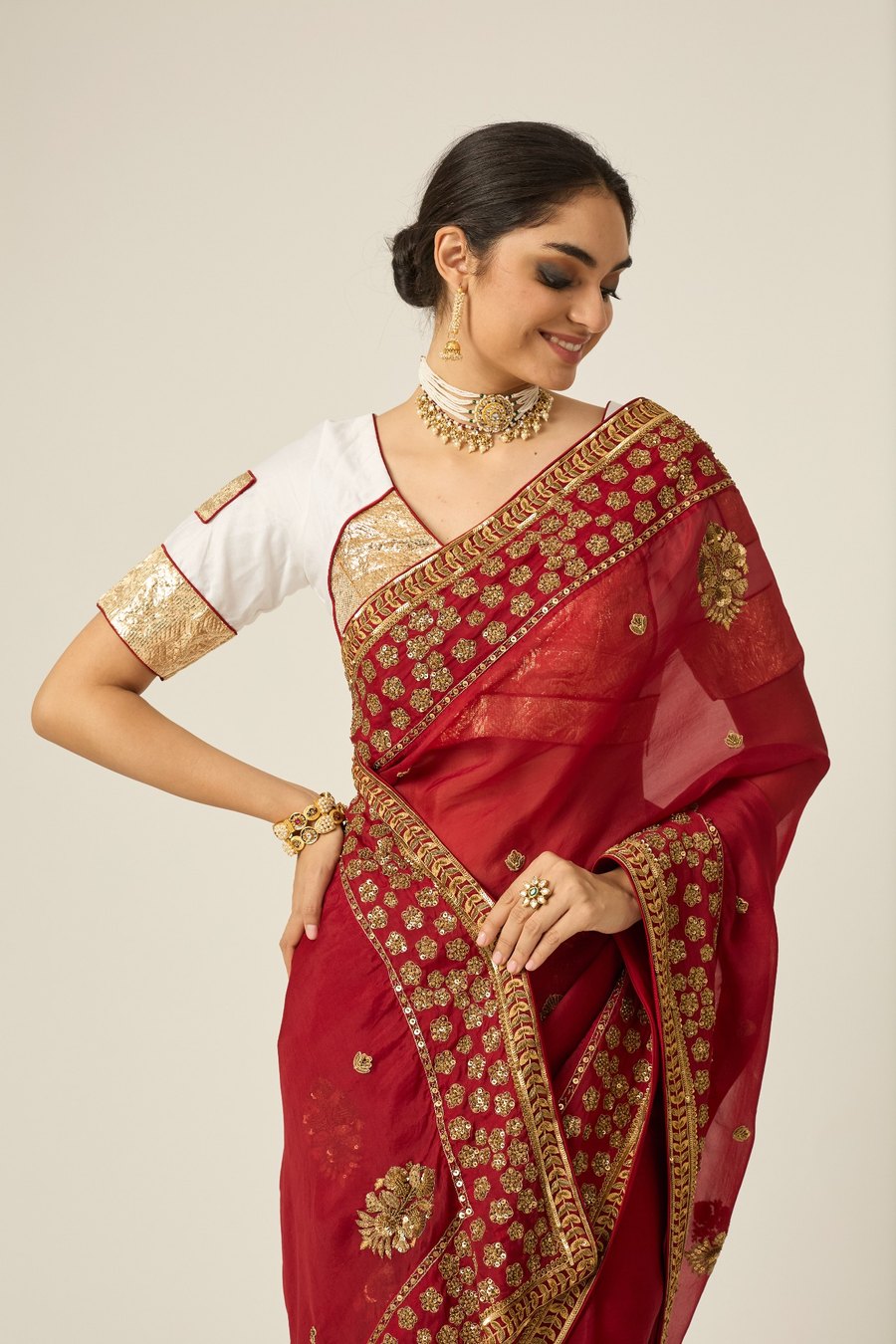
₹59,500
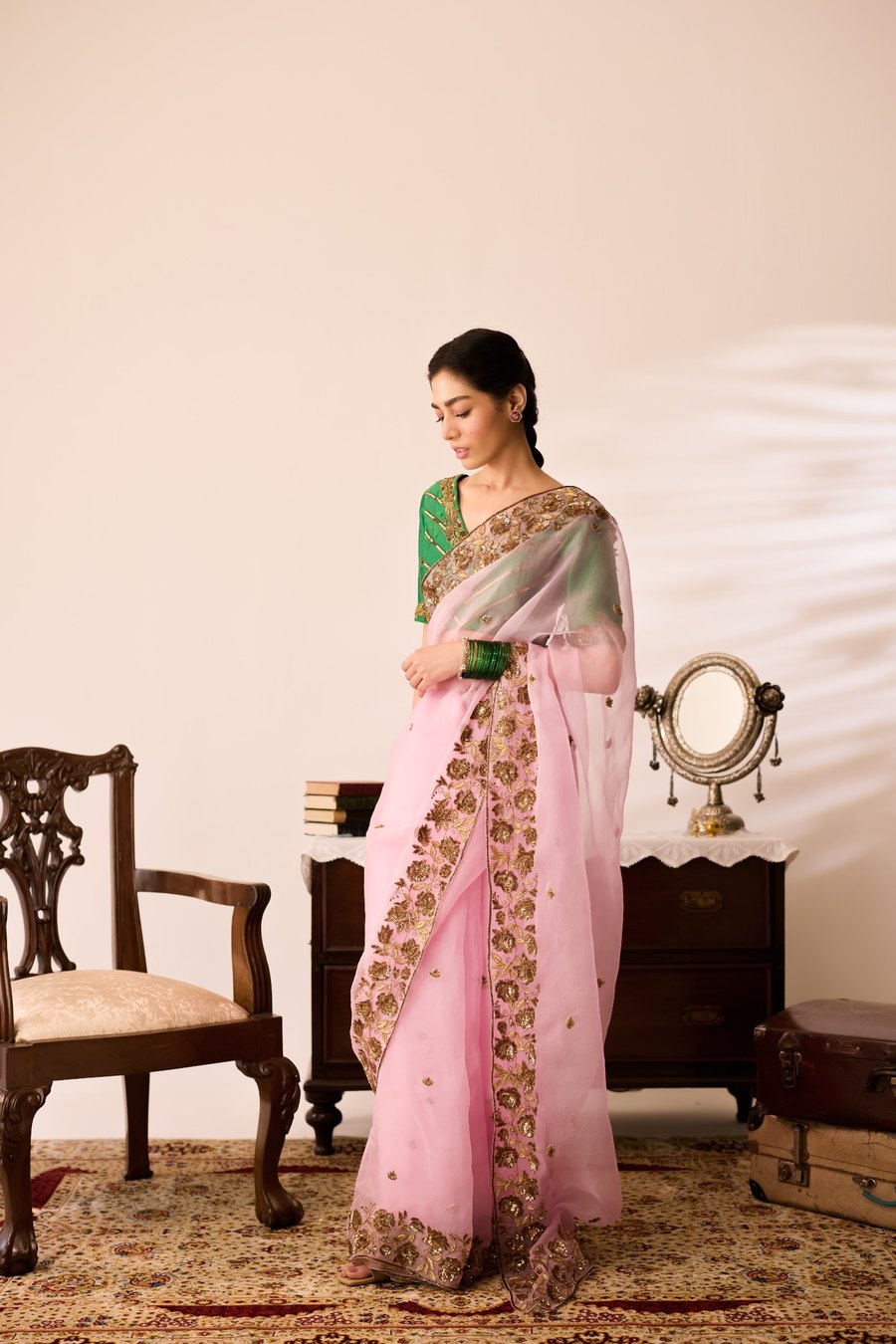
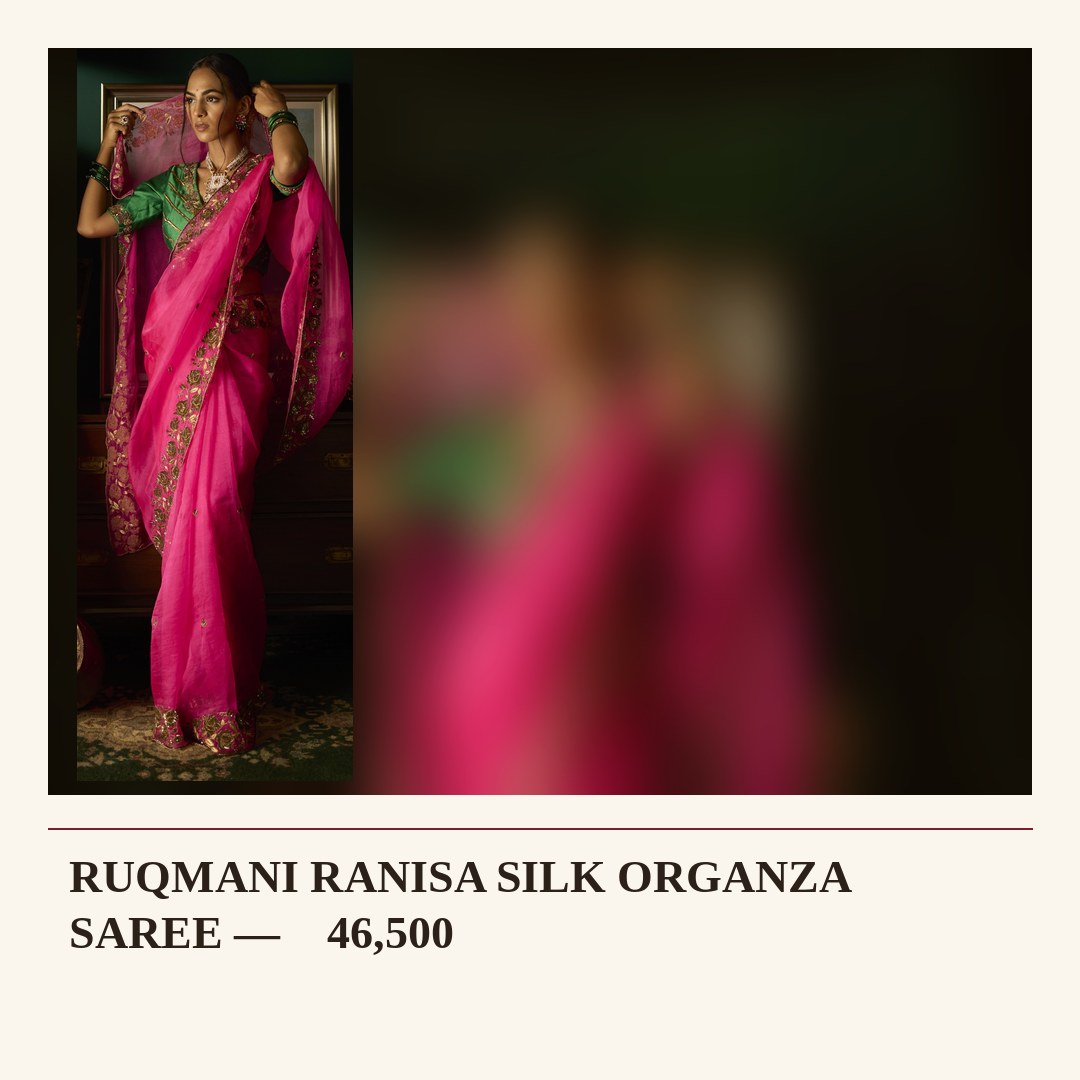
₹46,500
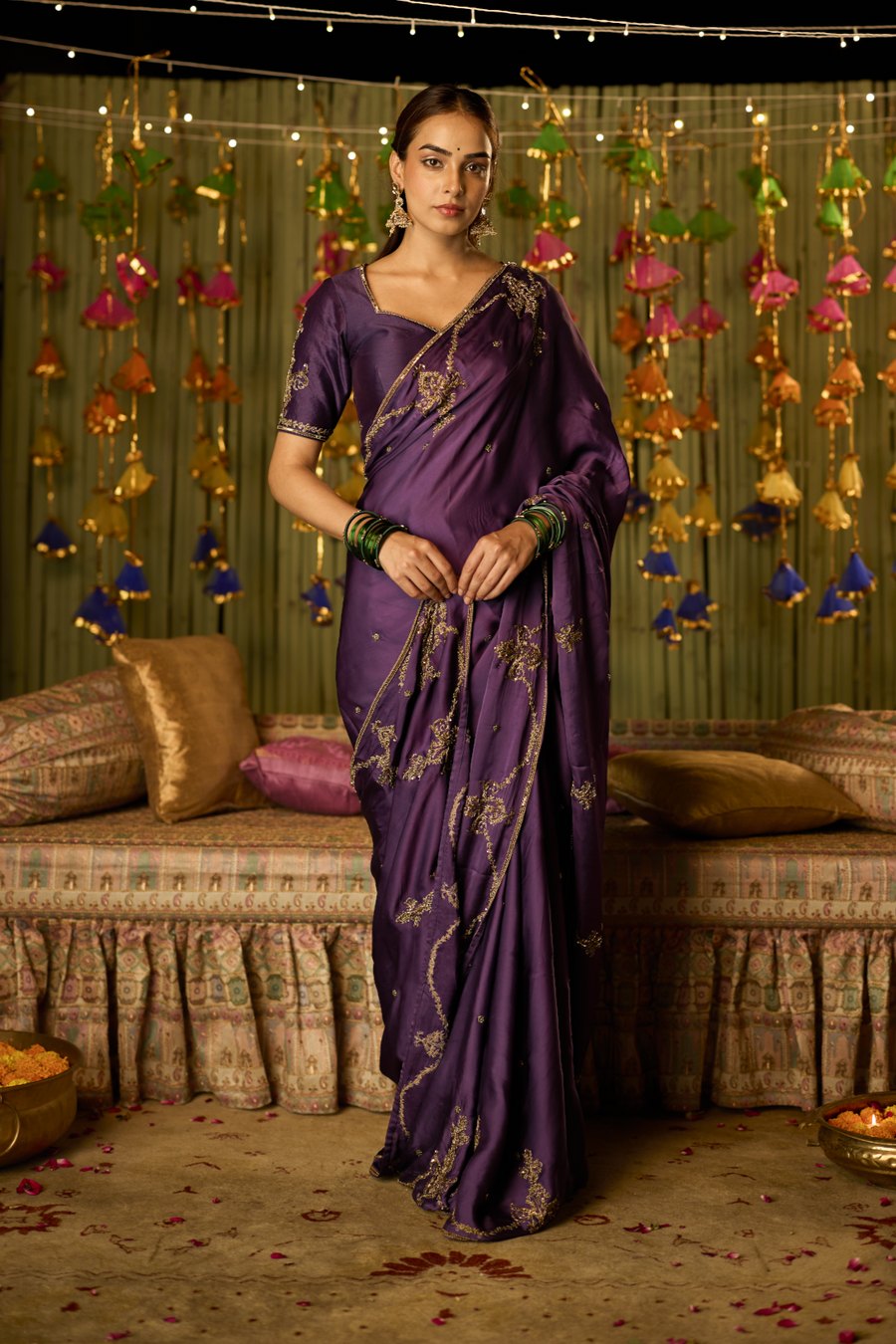
₹43,500
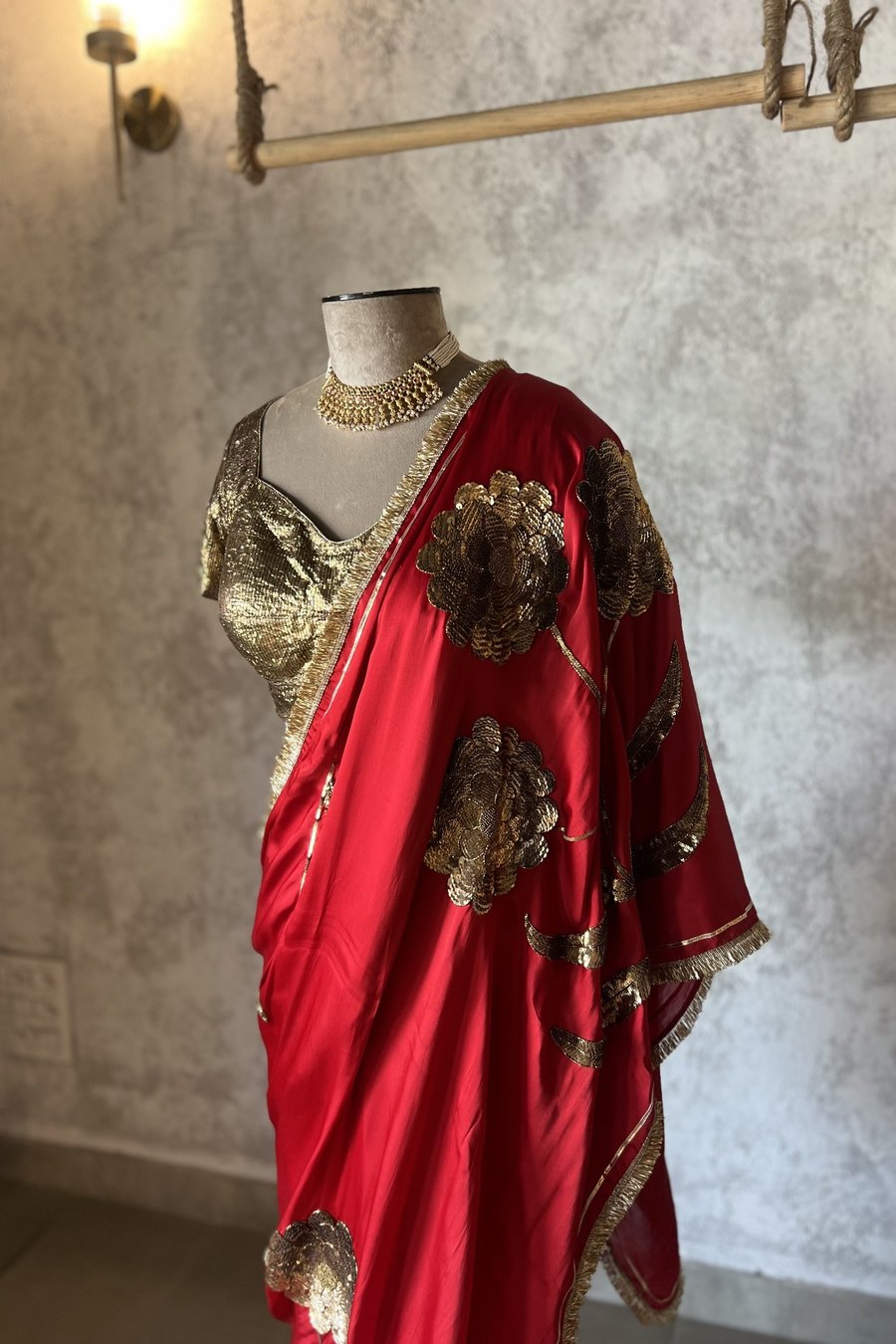
₹39,500
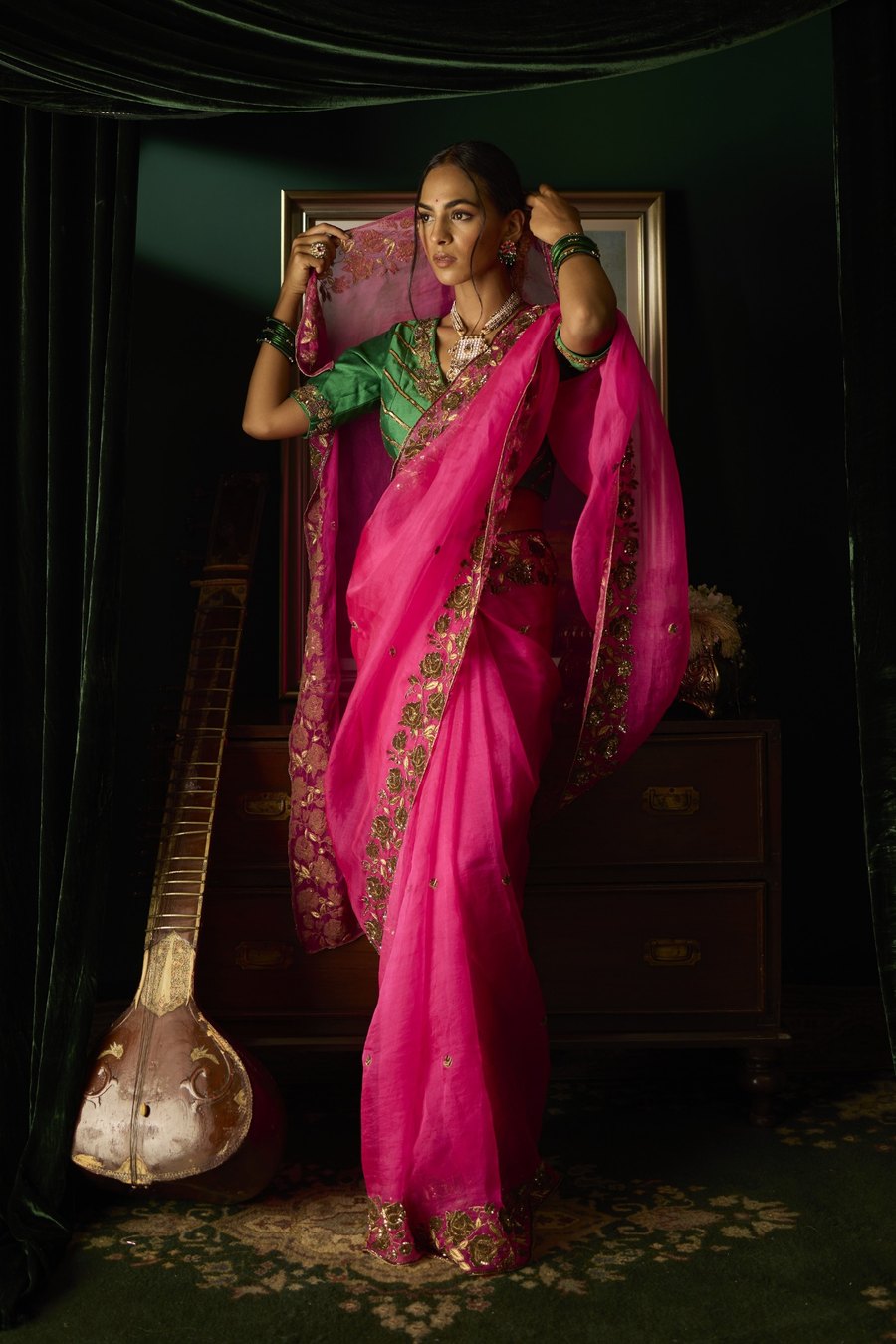
₹46,500
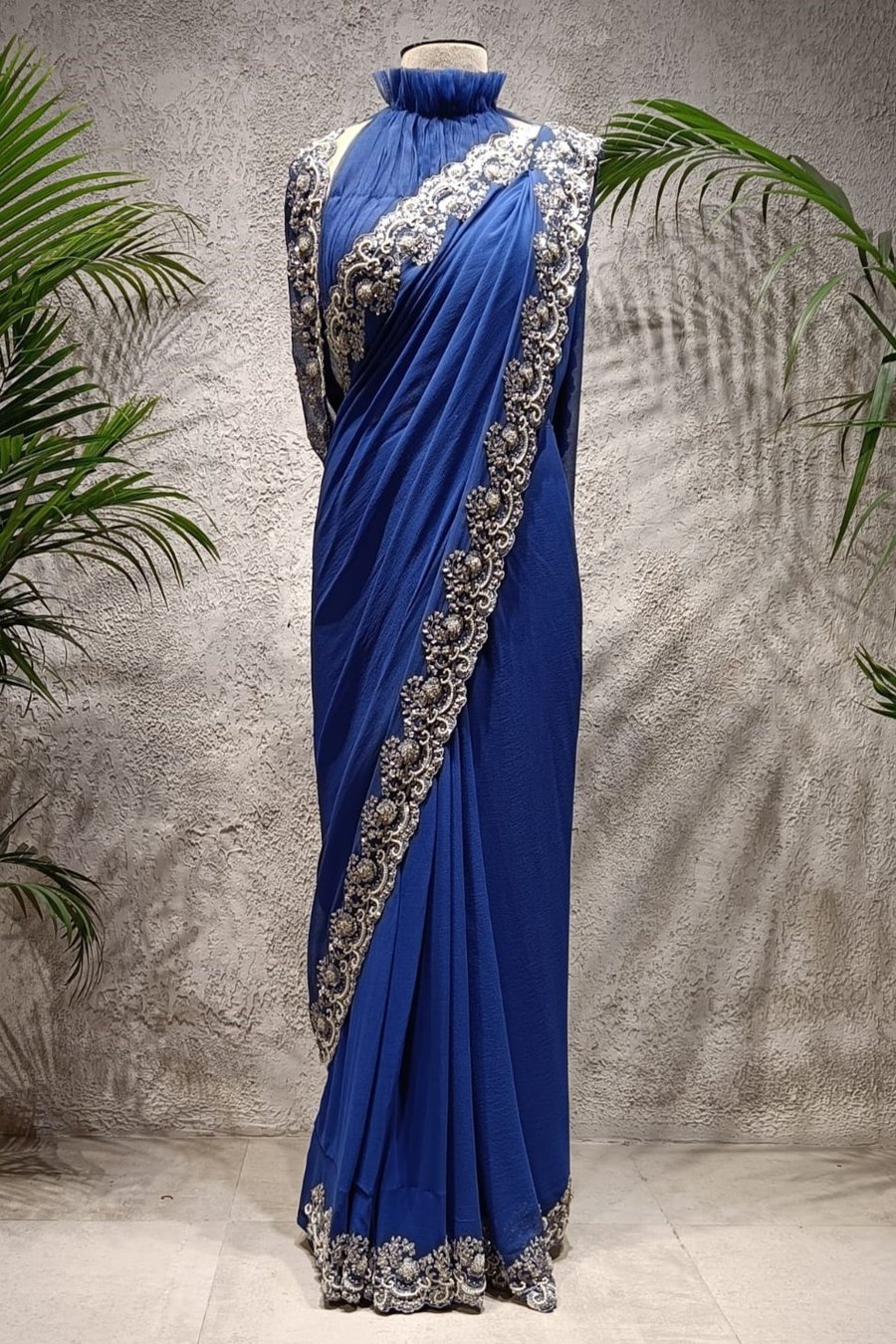
₹46,500
The blouse, the jewellery and the last ten minutes
The blouse is the only part of a wedding saree that can be changed later, so it is worth styling deliberately rather than by default. A narrow or deeper neckline carries a statement neckpiece and heavy earrings; a higher, broader neckline is better left uncrowded, with the weight moved to the wrist, the hair and the earrings. Since we cut the blouse to your measurements, tell us the jewellery you plan to wear and we will keep the neckline in proportion to it.
A matched blouse extends the saree and reads formal; a contrast blouse cut in a neighbouring shade reads deliberate and stops the piece looking like a set that came in a box. Elbow-length and fuller sleeves photograph well for a wedding day and give you somewhere to hide a safety pin. For a reception, sleeveless or cap sleeves with a heavier pallu is the cleaner silhouette.
Then the ten minutes before you leave the room. Check the pin at the shoulder under the pallu, not on top of it. Carry two safety pins and a hair pin you can reach without help. Keep your clutch small enough that it does not pull the drape at the waist, and choose footwear you already trust — a wedding saree is the wrong day to break in new heels.
If you are buying the piece with a few weeks to spare, style it once at home before the function, in the blouse, with the jewellery. Sarees drape differently the second time, and a rehearsal costs nothing.
Getting it to the venue, and keeping it afterwards
Carry a wedding saree folded in a cotton or muslin bag rather than a plastic one, and keep the folds loose. If the function is in another city, take the pleats out before you travel and re-pleat on arrival; a saree that has sat pressed in a suitcase for a day never quite falls back into place.
Organza and silk want a cool iron through a muslin cloth, never a hot iron straight onto the work. Press only the reverse of the embroidery where you can, and leave the raised work alone — a flattened zardozi motif does not come back. If a metal thread has lifted, do not pull it. Send us a photograph, or bring the piece to our Shahpur Jat or Dehradun store, and most lifted threads can be re-secured without redoing the motif.
For storage after the wedding: muslin, a cool dark shelf, and rotate the fold lines once a year so the embroidery never creases into the same groove twice. Shipping within India is free above ₹10,000, and if you are dressing for a wedding abroad there is an international shipping offer on the site above ₹49,000.
And if you would rather not decide the drape alone, that is what the WhatsApp conversation is for. Send us the function, the piece and a photograph of the blouse, and we will tell you how we would style it.
Frequently asked
How should I style a wedding saree for a sangeet?
Style it for movement. Set the pleats slightly lower than your natural waist, pin the pallu narrow at the shoulder so your hands are free, and keep the jewellery to one strong piece rather than several. A lighter wedding saree in a crisp fabric like organza carries a sangeet far better than a heavy drape you will be holding all evening.
Should the pallu be pinned or left open?
Pinned and pleated reads formal and stays exactly where you put it, which is what you want for a ceremony or photographs. Open and wide reads relaxed and moves well on camera. For a long function, many of our clients wear it narrow and pinned for the rituals and open it once the formal photographs are finished.
Can I wear a wedding saree with a contrast blouse?
Yes, and it often stops a heavily embroidered piece looking like a matched set. Pick a shade from within the saree's own embroidery rather than a contrast that competes with it, and keep the drape simple so the blouse reads as a choice. We cut the blouse to your measurements, so you can decide the shade at the order stage.
Which jewellery suits a wedding saree with heavy hand embroidery?
Work backwards from the blouse neckline. A deep or narrow neckline carries a neckpiece and heavier earrings; a high or broad neckline is better with earrings and a bracelet, leaving the space around the embroidery open. If the pallu is the most heavily worked part of the saree, keep the hair and the jewellery quieter so the work is what people see.
How do I store a wedding saree so the embroidery does not crease?
Fold it into muslin rather than plastic, keep it on a cool dark shelf, and change the fold lines once a year so the same crease never sets into the work. Press the reverse through a muslin cloth on a low setting and never press directly onto raised embroidery. If a thread lifts, don't pull it — message us and we will tell you how we would secure it.
Explore more: bridal collection — or message us on WhatsApp for styling help.

The information below is required for social login
Sign In
Create New Account