

Organza is the fabric most of our sarees are built on, and it is also the one clients ask us about before they buy. It is crisp, it is sheer, and it behaves differently in a shop mirror than it does at a function — so the choosing matters more than it does wit
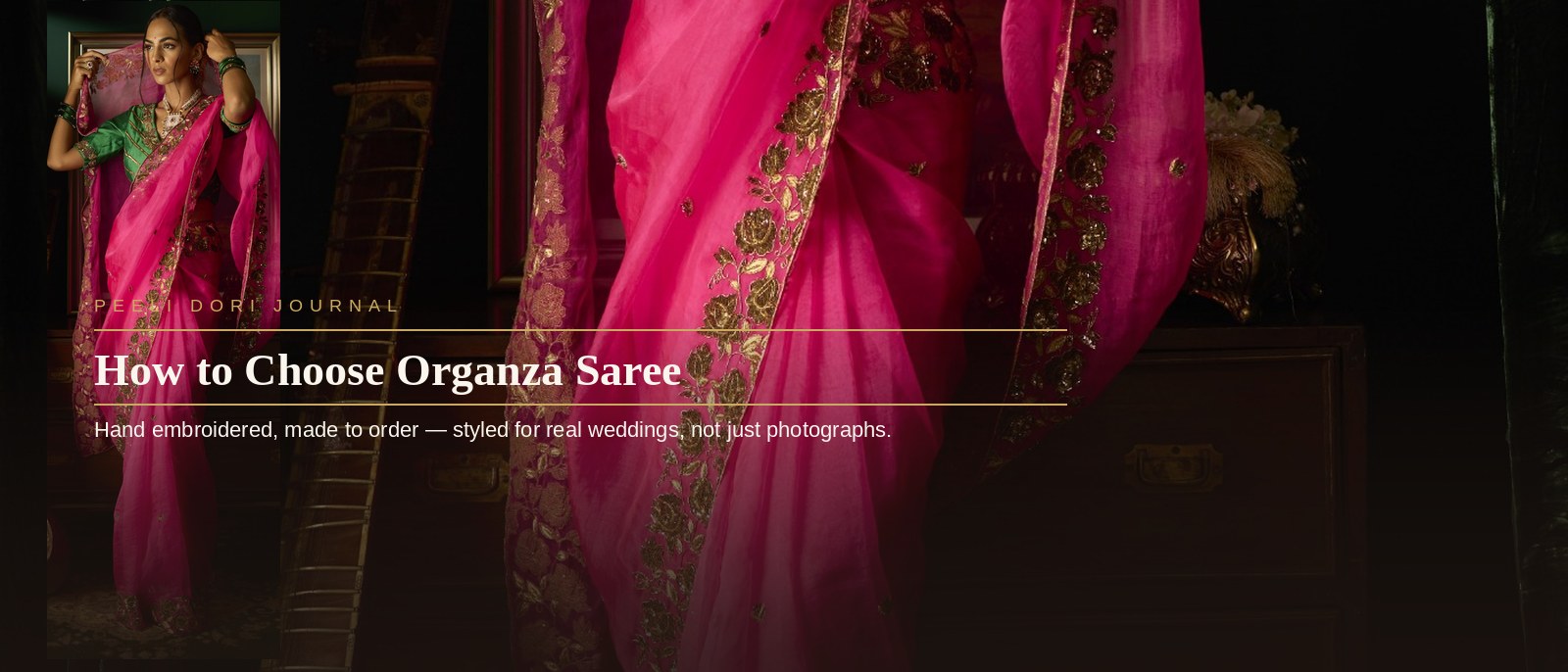
Organza is the fabric most of our sarees are built on, and it is also the one clients ask us about before they buy. It is crisp, it is sheer, and it behaves differently in a shop mirror than it does at a function — so the choosing matters more than it does with a soft fabric. This is how we would talk you through an organza saree if you were standing in front of the rack with us.
Choose the organza first, the colour second
Most people pick an saree/silk-organza-saree.html" style="color:#8a6a3a;text-decoration:underline;">organza saree by colour and only then handle it. Turn that around. Take the piece off the hanger and hold the end of the pallu in one hand. A good organza has a dry, papery crispness — it springs back when you crush it and it holds the crease you press into it. If it lies limp or feels slippery like satin, it will not hold a pleat through a long function, and no amount of pinning will fix that.
Then hold it up to the light. Organza is meant to be sheer, but not all of it is sheer in the same way. Some pieces are evenly transparent across the body, some have a denser base with the sheerness only at the pallu. Both are useful — an evenly sheer saree will need a lining for the blouse and a considered petticoat, while a denser base can be worn with less under it. Decide which one you want before you decide the shade, because the shade you fall in love with at the light of the shop window will read completely different over a lining.
The last thing to look at is the ground fabric. Ours are silk organza and tissue silk, hand embroidered by artisans, with organic dyes, so no two pieces from the same design are identical to the stitch. If you are weighing a silk organza against a tissue silk, go by the fall: silk organza is crisper and reads more sculptural, tissue silk is a touch softer and catches light differently when you move. Neither is better. They simply suit different functions.
Match the piece to the function, not to the photograph
Organza is a daylight and an evening fabric for the same reason — it holds shape under a camera and it does not sit heavy on you. That makes it the easiest fabric to wear for a wedding week where you are standing, sitting on the floor, climbing a stage and then standing again.
For a day function — a haldi, a mehendi, a temple visit — take a lighter piece with the embroidery concentrated on the border and the pallu. It will photograph clean in flat light and it will stay comfortable through a long morning. For a sangeet, where you will move, the same crisp organza is what keeps pleats from collapsing; this is the function where a heavier drape lets you down. For the wedding day itself, the piece should have the densest work where the photographer will be looking at it, which in practice means the pallu and the blouse rather than the pleats. For a reception under warm indoor light, a piece with a glossy base and dense border holds up better than a pale, evenly worked one that turns flat on video.
One thing worth saying plainly: an organza saree is the wrong choice if you want a piece that disappears into the background. It has a shine and a shape of its own. Chanderi or georgette will do the quiet, matte job better. If you are dressing for a function where you would rather not be looked at, tell us that and we will point you somewhere else in the store.
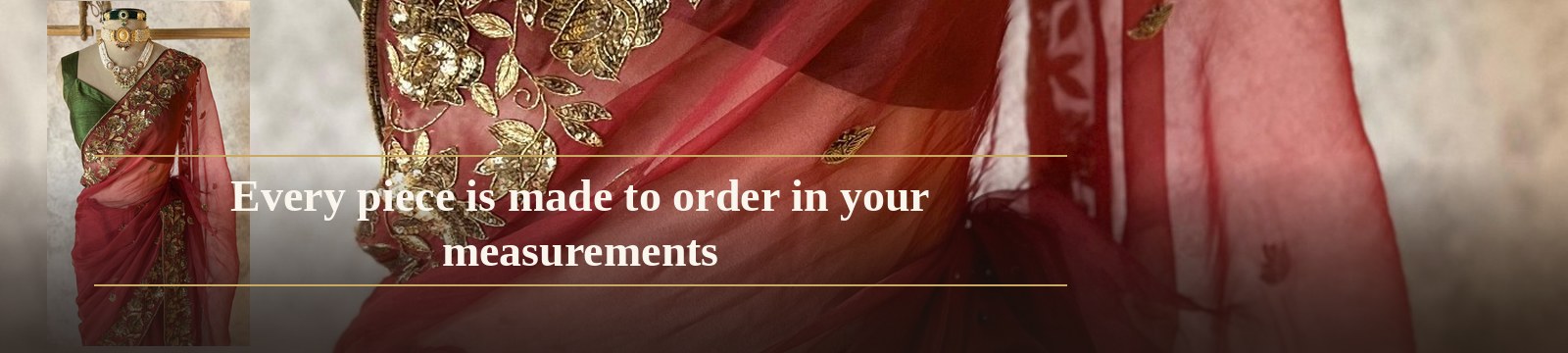
The lining and the blouse decide how the saree reads
With a sheer fabric, what you wear under the saree is part of the saree. A matte petticoat in a shade close to the ground colour is the single cheapest thing you can do to make an organza piece look expensive — a dark or shiny petticoat will show straight through the moment you stand in daylight. If the body is evenly transparent, a lighter shade underneath keeps the colour true; a contrast petticoat changes the colour of the saree entirely, which is a choice, but it should be a deliberate one.
The blouse matters more than usual here. Organza needs a lined blouse; unlined, it will show every seam and every closure through the pallu. Since we cut the blouse to your measurements with custom sizing, tell us the jewellery you plan to wear before the neckline is finalised — a deep neckline carries a neckpiece and heavier earrings, while a high or broader neckline reads cleaner left uncrowded, with the weight moved to the earrings and the wrist. For a wedding day, elbow-length or fuller sleeves photograph well and give the drape a little more weight at the top; for a reception, sleeveless or cap sleeves keep the silhouette clean under a heavy pallu.
A matched blouse makes the piece read formal, which is usually right for a wedding. A blouse in a neighbouring shade — picked from inside the embroidery rather than against it — reads as a decision and stops the saree looking like a set that came in a box. Either works; the mistake is a contrast blouse that competes with the handwork instead of supporting it.
Six organza sarees, priced as listed
These six are on the rack now, between ₹46,500 and ₹59,500. Every price is the price of the piece, not a starting figure, and every one is made to order in your measurements. If you would rather choose with someone looking at the same fabric, message us on WhatsApp and we will talk you through the weight, the sheerness and what the embroidery does in daylight before you commit.
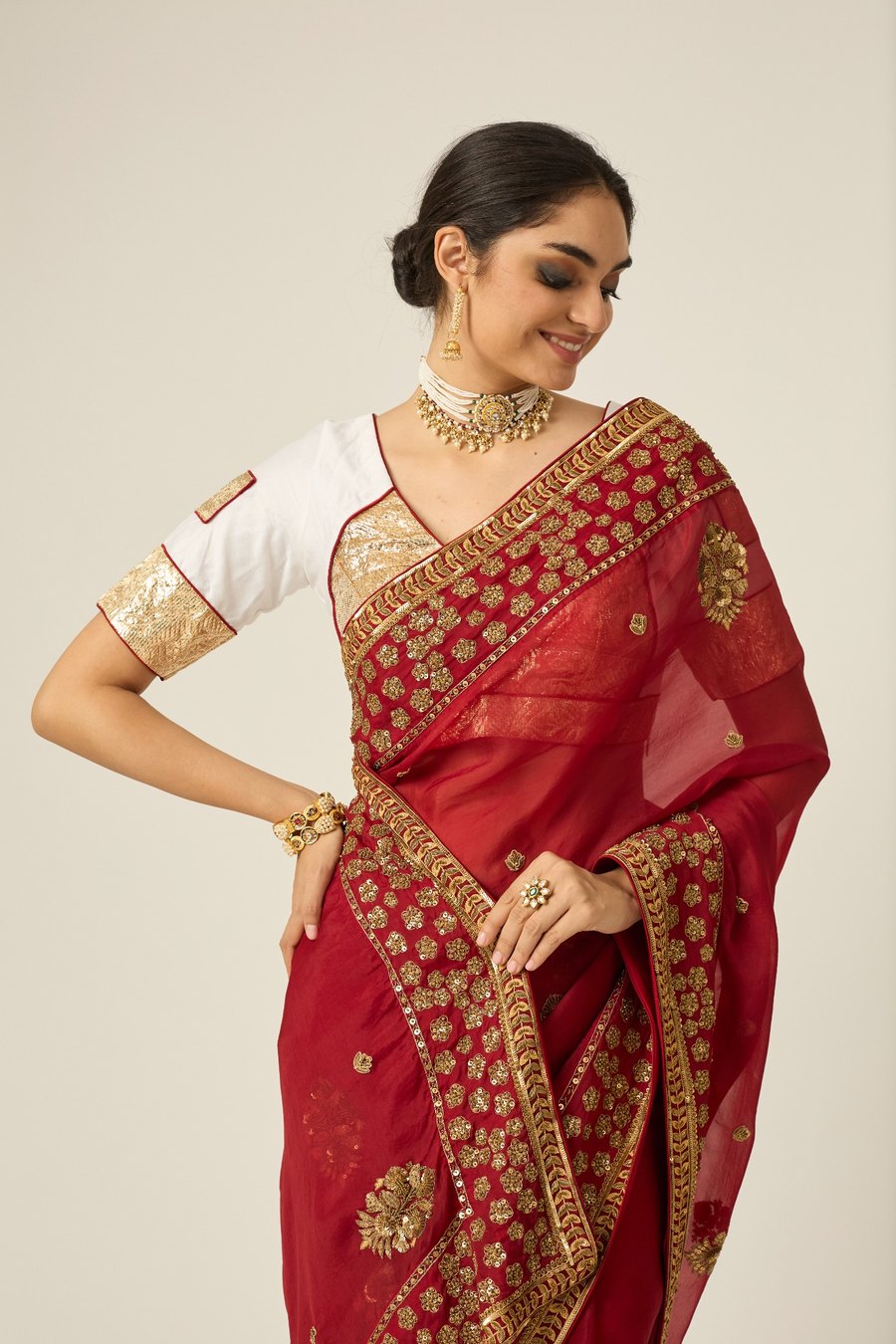
₹59,500
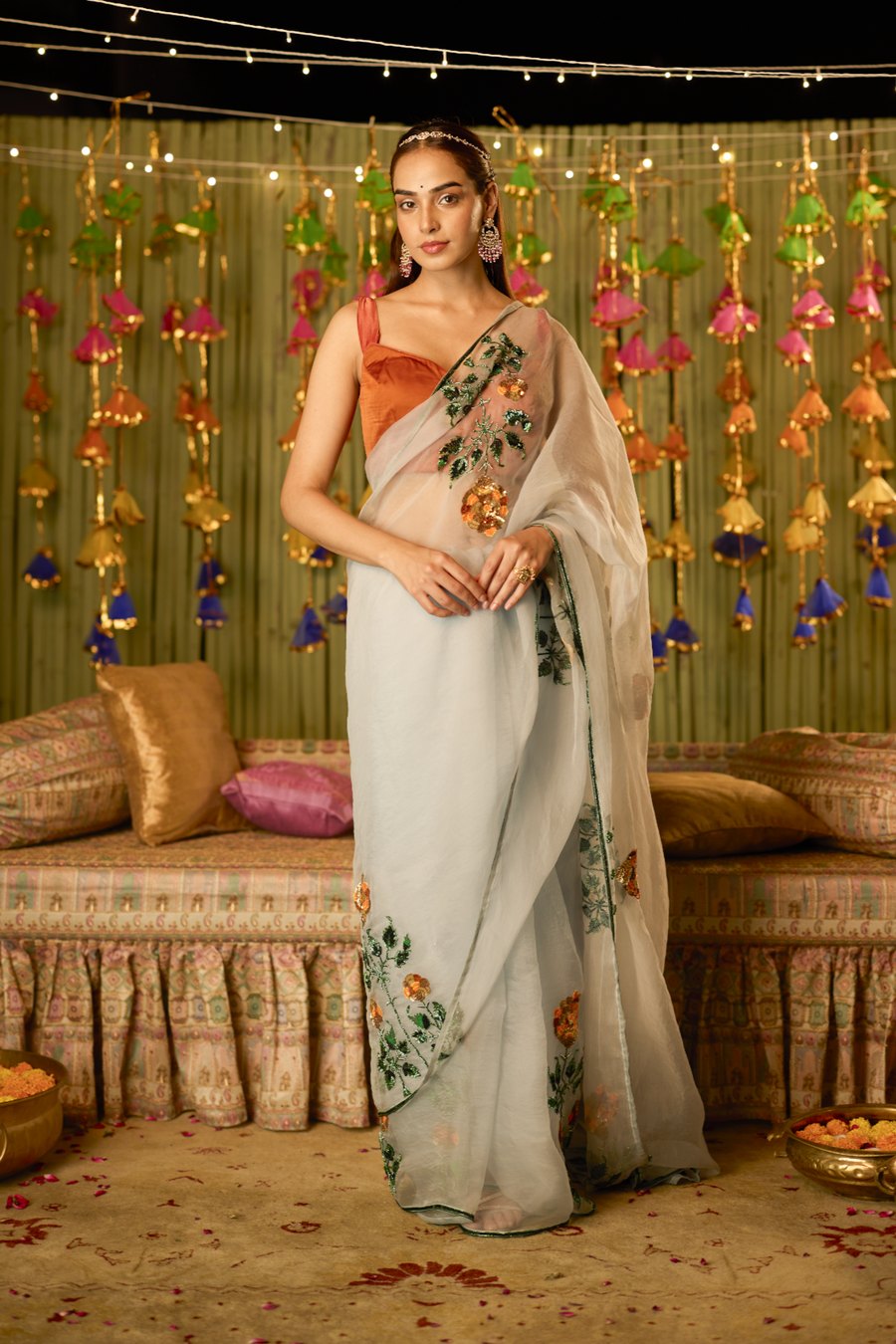
₹48,500
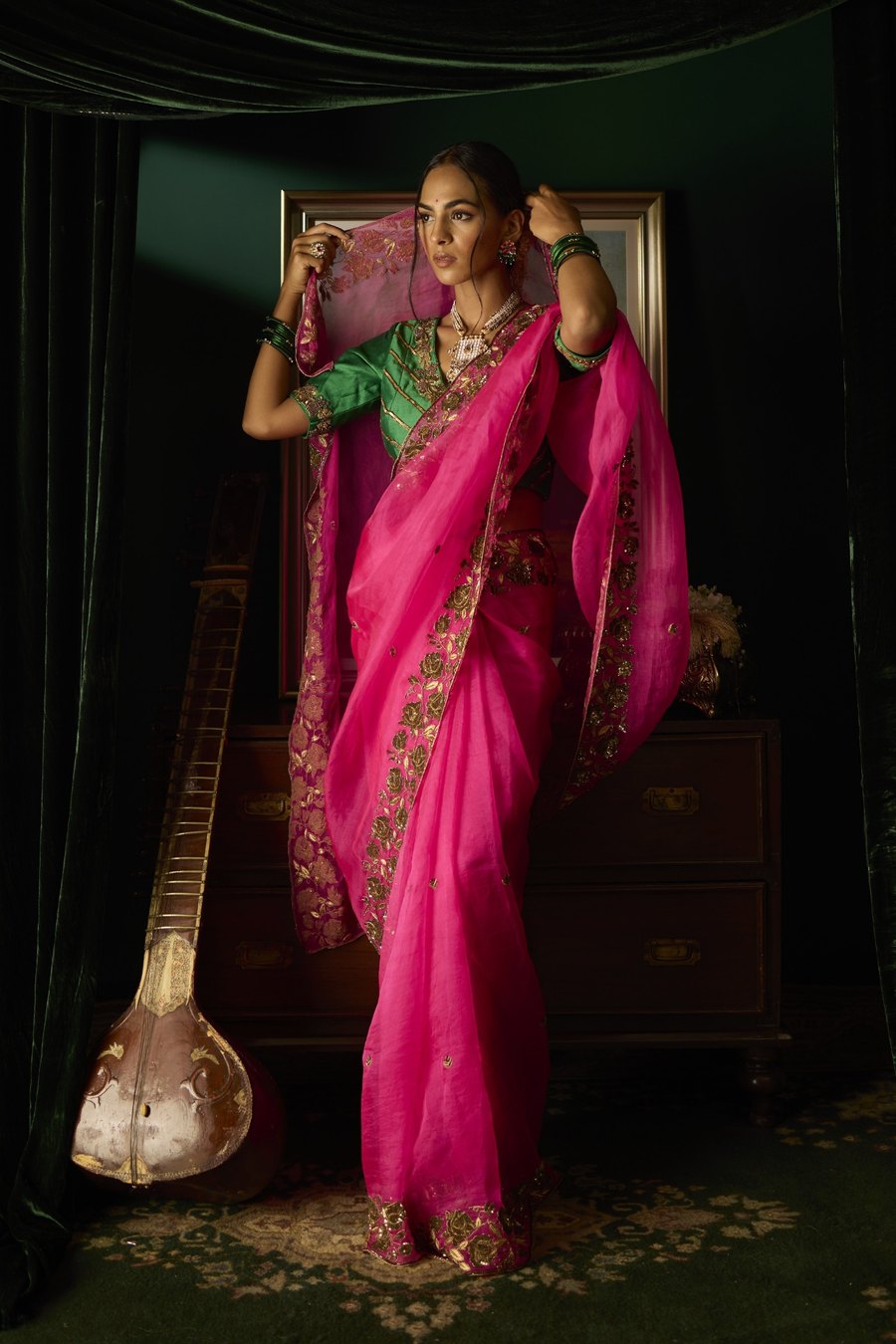
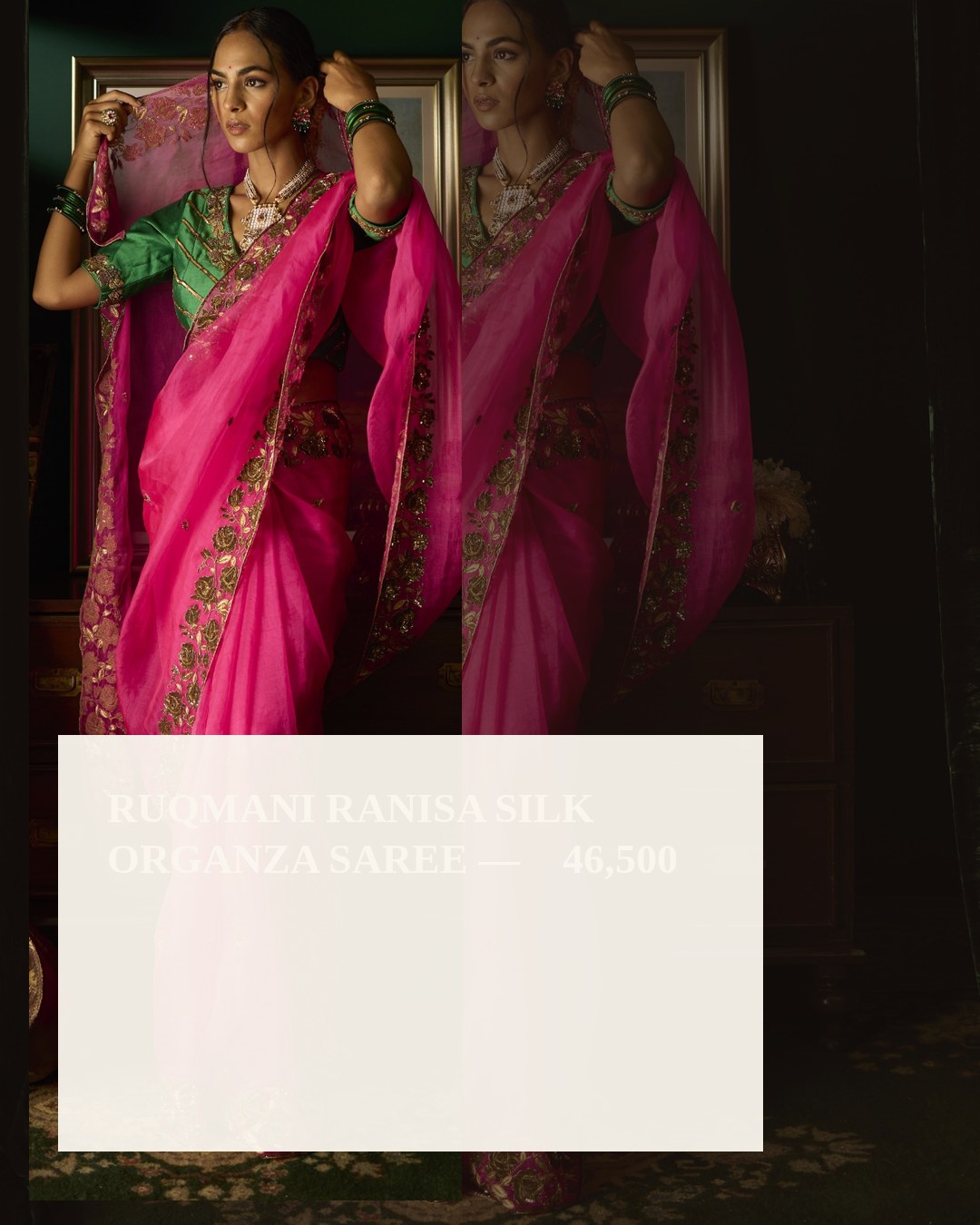
₹46,500
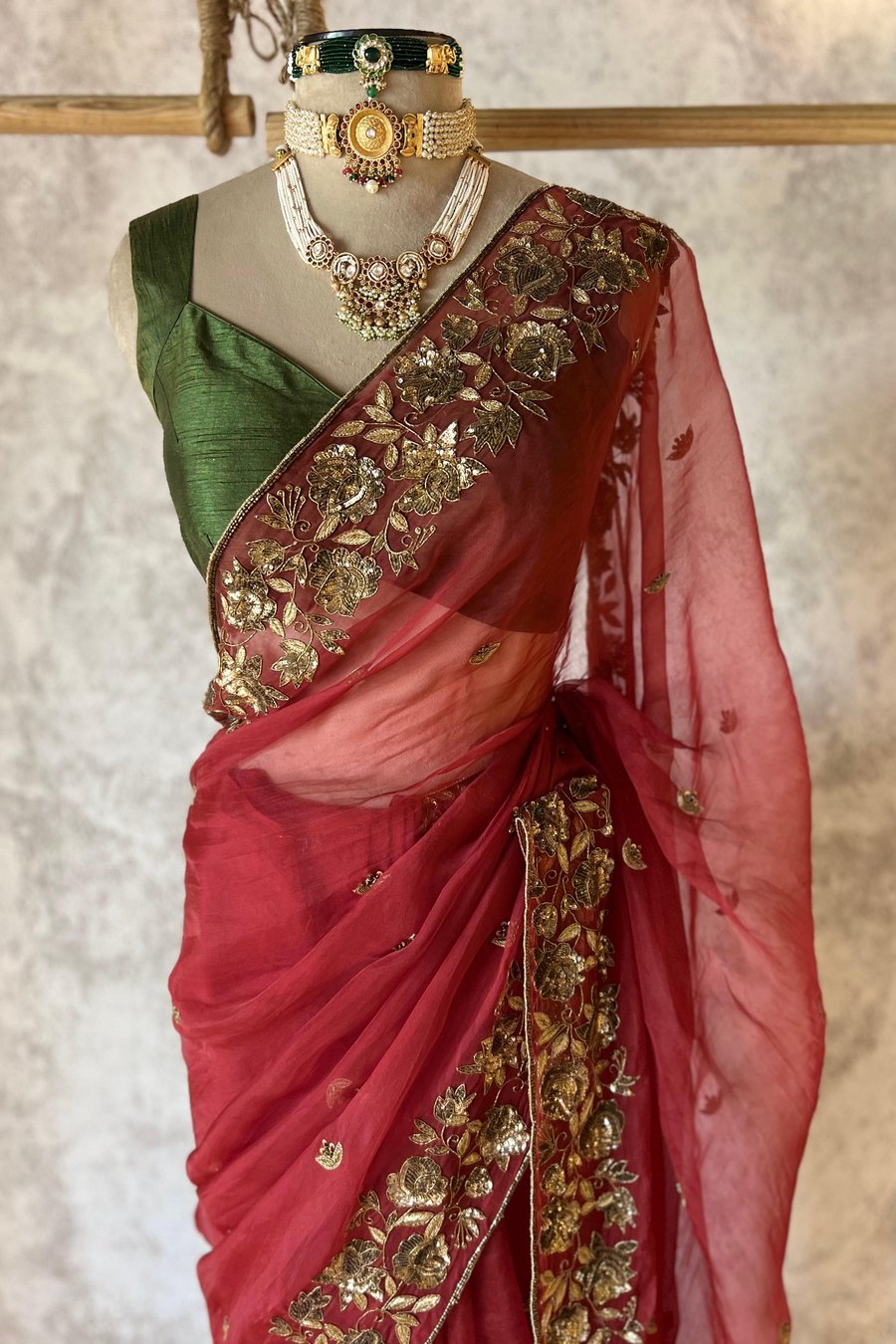
₹46,500
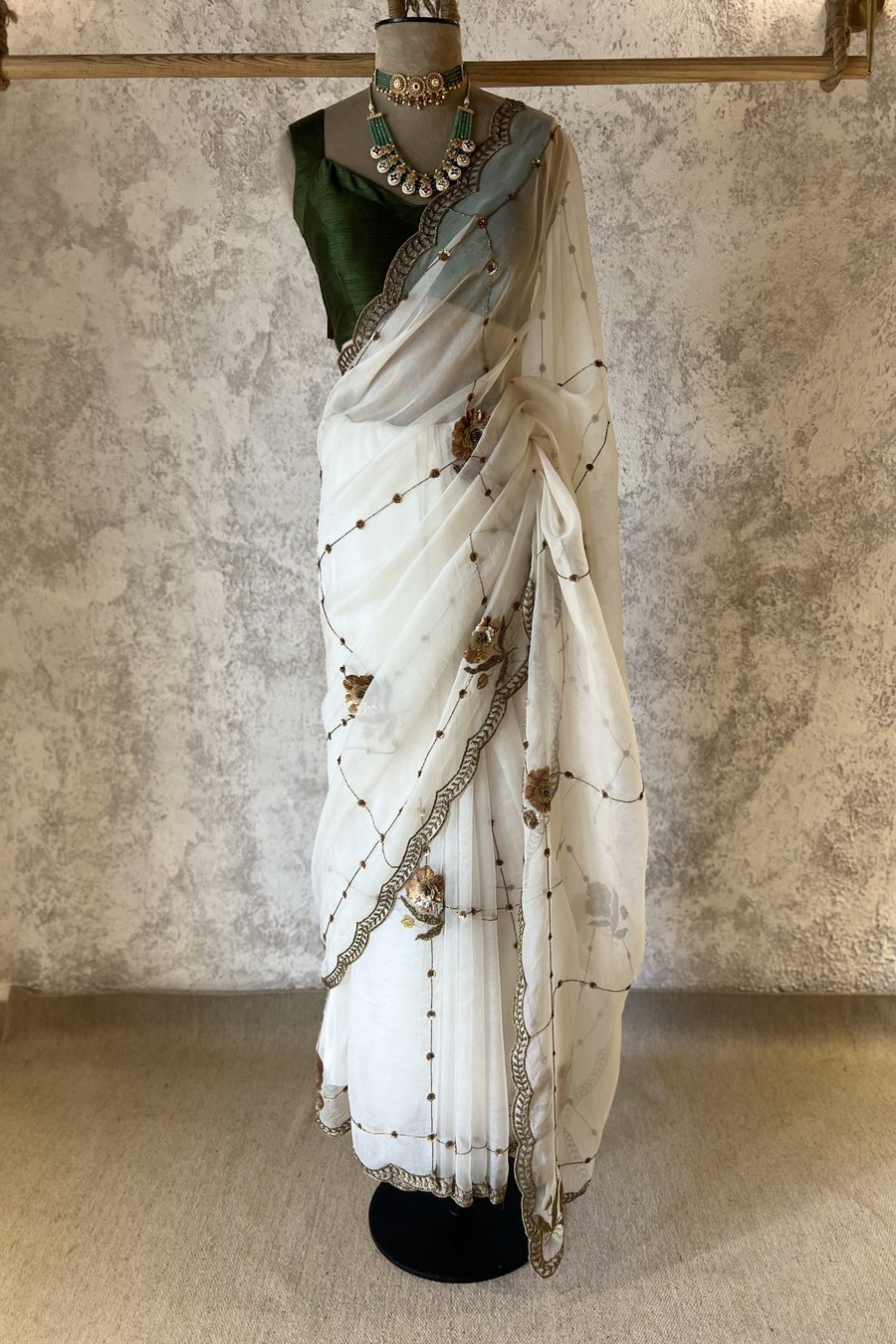
₹46,500
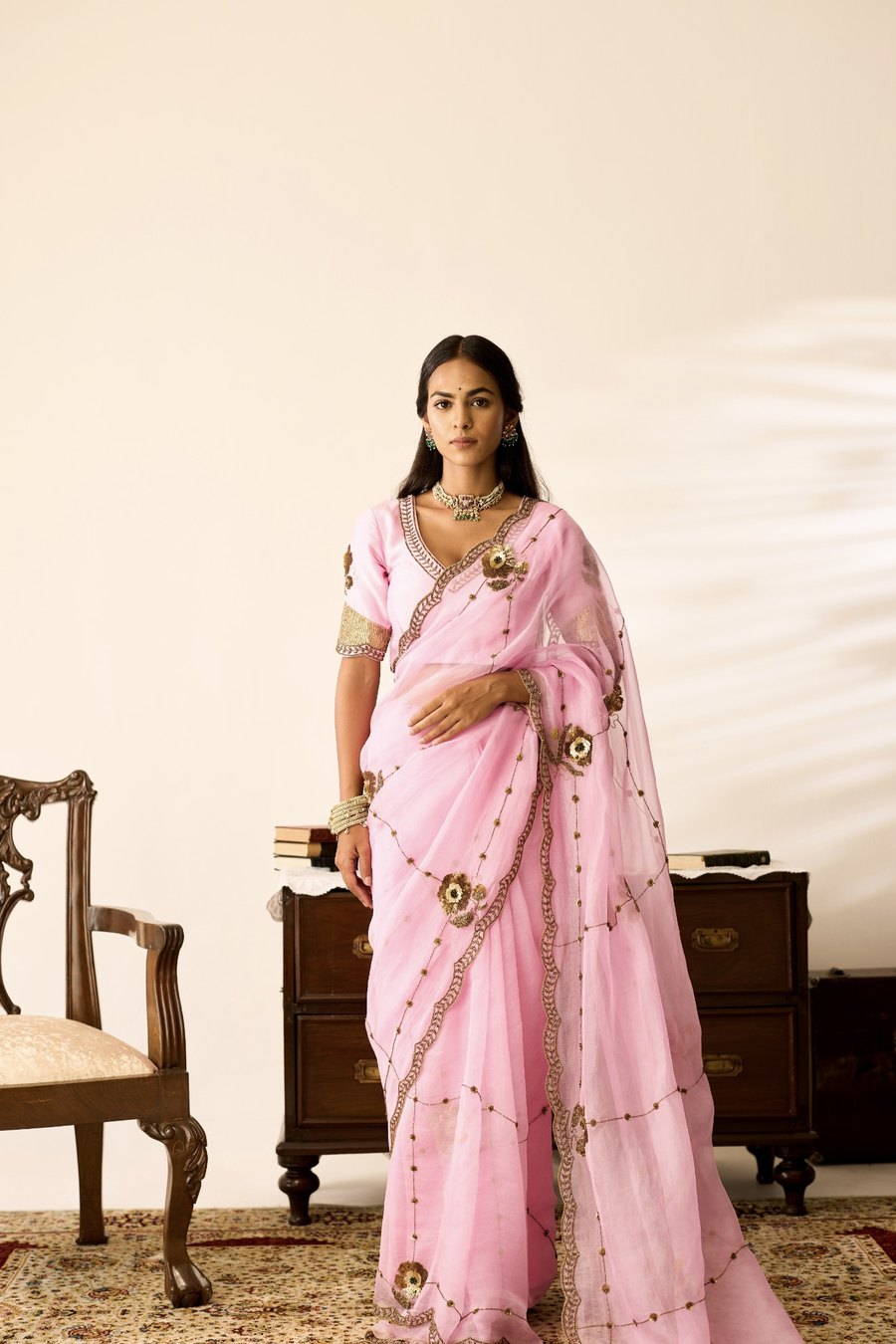
₹46,500
What to check when the saree arrives
Because every piece is made to order and hand embroidered, the one you receive is the one that was worked for you. Give it five minutes on arrival. Unfold it fully and check the hem — it should sit straight and open evenly when you hold it from the two ends. Look at the embroidery from the reverse as well as the front; handwork should be anchored evenly at the back, without long loose threads that can catch on a bangle.
Then drape it once, at home, with the blouse on. Organza falls differently on the second pleating, and a rehearsal costs nothing. If the piece is for a wedding in another city, take the pleats out before you travel and re-pleat on arrival rather than travelling with them pressed in — a crisp fabric that has been folded flat for a day takes longer to fall back into place. And if anything about the fit or the fall is not what you expected, a WhatsApp fit check with a photograph is usually enough for us to tell you what to adjust or to correct it for you.
Shipping within India is free above ₹10,000, and there is an international shipping offer on the site above ₹49,000 if you are dressing for a wedding abroad. Our stores in Shahpur Jat in New Delhi and in Dehradun both keep organza on the rack, so if you are nearby you are welcome to handle the fabric before ordering.
Care: what organza does not like
Organza is a fabric that keeps its shape if you let it hang. After a function, hang the saree on a padded hanger for a day before you fold it anywhere, and store it in muslin rather than plastic so air can move around the work. Rotate the fold lines once a year — the same crease setting into the same place is what eventually marks a hand-embroidered piece.
Iron it through a muslin cloth on a low setting, and press the reverse of the embroidery where you can. Never press directly onto raised work, and do not starch an organza saree to make it stiffer; it is crisp on its own and starch will leave a dull patch on a sheer fabric that shows. If a metal thread lifts, do not pull it — send us a photograph, or bring the piece to either store, and most lifted threads can be re-secured without redoing the motif.
If you would rather not decide any of this alone, that is exactly what the WhatsApp conversation is for. Send us the function you are dressing for and a photograph of the blouse, and we will tell you how we would choose, drape and pack it.
Frequently asked
What is the difference between silk organza and tissue silk?
Both are light, sheer and hand embroidered; the difference is in the fall. Silk organza is crisper and holds a pleat edge, so the drape reads sculptural and stays where you set it. Tissue silk has a softer hand and catches light as you move, which suits a reception or a function where you will be photographed in motion. If you cannot decide, tell us the function and we will point you to the one that behaves better for it.
Is an organza saree see-through? Will I need a lining?
Organza is sheer by nature, so plan the layer underneath. The blouse should be lined — ours are cut to your measurements, so tell us when you order. Under the saree itself, a matte petticoat in a shade close to the ground colour keeps the colour true; a darker or shiny petticoat will show through in daylight. Some of our pieces are evenly sheer and some have a denser base, so if you message us on WhatsApp we can tell you what a specific piece needs under it.
Can I wear an organza saree for a sangeet or a day wedding?
Yes, and it is one of the best fabrics for both. Crisp organza holds pleats through hours of standing and dancing, so the drape survives a sangeet better than a heavy fabric will, and it stays light in daylight for a haldi or mehendi. For a sangeet, set the pleats slightly lower than your natural waist and pin the pallu narrow so your hands are free.
How do I care for an organza saree with hand embroidery?
Hang it on a padded hanger for a day after wearing it, store it in muslin rather than plastic, and shift the fold lines once a year. Press it through a muslin cloth on a low setting, press the reverse of the embroidery where you can, and never iron directly over raised work. Do not starch it — organza is already crisp and starch dulls a sheer fabric. If a thread lifts, don't pull it; send us a photograph and we will tell you how to secure it.
Are these sarees made to order, and can I get custom sizing?
Every piece is made to order with custom sizing — the blouse is cut to your measurements, so the fall and the neckline are decided for you rather than adjusted after. That also means it is worth telling us your function and your jewellery before the neckline is finalised. Styling help and fit checks happen over WhatsApp with a photograph, and shipping within India is free above ₹10,000.
Explore more: saree · tissue silk sarees — or message us on WhatsApp for styling help.

The information below is required for social login
Sign In
Create New Account