

Ask us what a wedding saree costs and the honest answer is a range, not a figure. The number is set by two things and only two: what the piece is made of, and how many hours of handwork sit on it. Colour, season and shop lighting add nothing to the cost. This
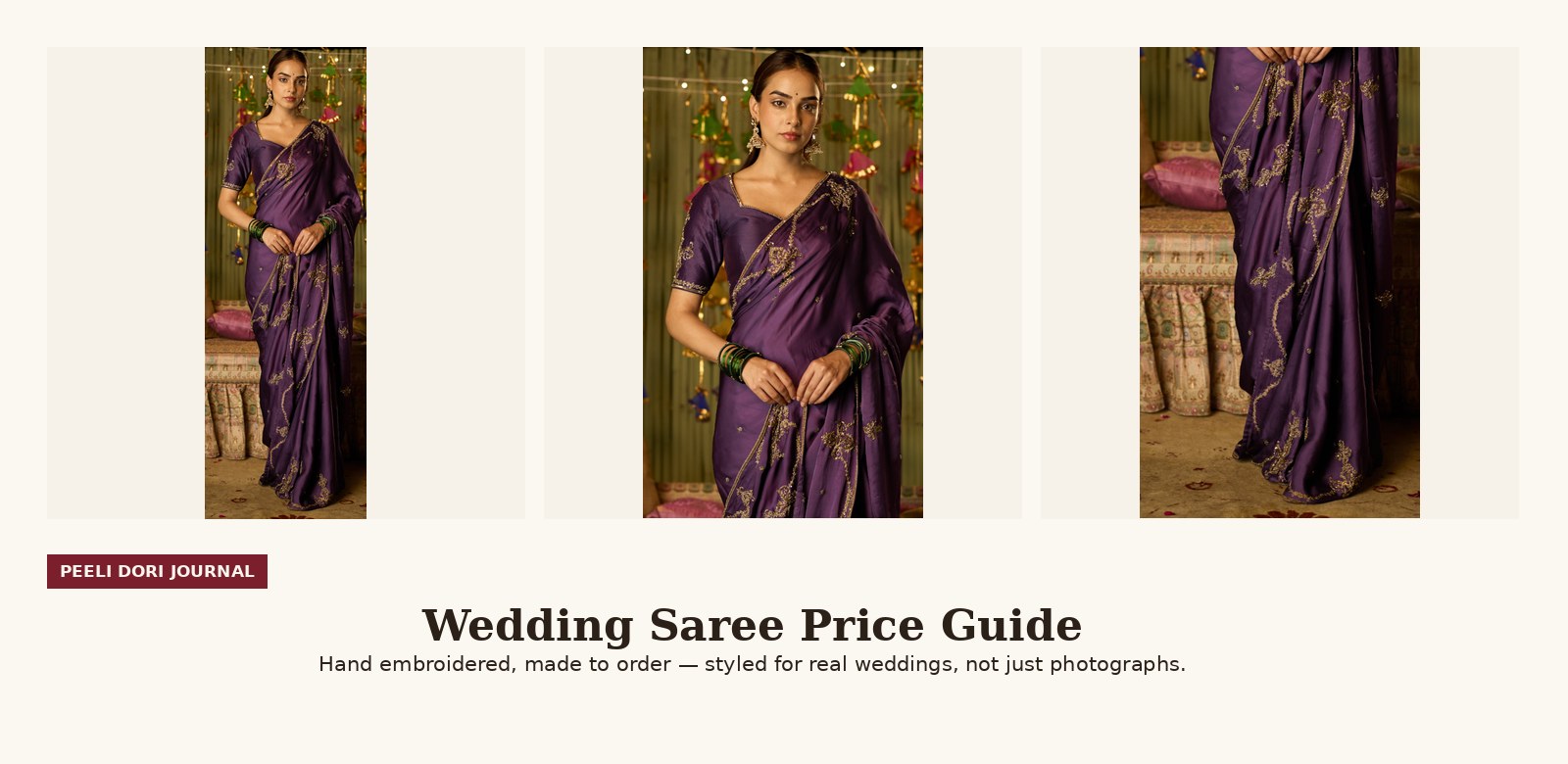
Ask us what a wedding saree costs and the honest answer is a range, not a figure. The number is set by two things and only two: what the piece is made of, and how many hours of handwork sit on it. Colour, season and shop lighting add nothing to the cost. This is the money side of the purchase — the bands we work in, what each one actually buys, what is already included in the price you are quoted, and how we would split a wedding wardrobe budget if it were ours.
Decide the total first, then buy the wedding-day piece around it
A wedding is five functions, not one: haldi in the morning light, mehendi on a lawn, a sangeet where you will stand and dance for hours, the wedding day itself, and a reception that runs late. Each of those needs a different piece of clothing, and most brides buy them function by function as the dates come closer. That is how the wedding-day saree — the one piece in every photograph, the one the family will look at for years — ends up underfunded while two lighter pieces quietly cost the same between them.
So we would say the same thing we say across the counter: fix the total you want to spend on clothes, then decide the wedding-day piece first. Roughly a third of the clothes budget on the wedding-day saree is a sensible line, and the two lightest functions together rarely need more than the price of one heavy piece. Nobody at a mehendi counts the price of the embroidery on your shoulder.
Practically, that means choosing the number first and the piece second. Because every saree here is made to order, we can also tell you plainly what is realistic on your dates before you commit anything — sometimes the answer is that a denser piece is not comfortable in the weeks you have left, and it is better to hear that on day one.
The bands we work in, and what each one buys
The store runs from about ₹10,000 to ₹59,500, and most of what we make sits under ₹50,000. The bands are set by the work on the piece, not by its colour, and the difference between them is visible the moment you hold two sarees side by side.
Around the entry of our range are the lighter pieces: embroidery concentrated on the border and the pallu rather than spread across the body, on lighter bases such as chanderi and soft silk. These are the right buy for a haldi, a mehendi, a temple visit, or as a second outfit for the sister of the bride. They photograph clean in flat daylight and stay light enough to sit through a long morning without adjusting anything.
The middle of the range buys coverage and density. The base is heavier, the border is deeper, and the work — dabka worked with resham, closer zardozi — is the kind that reads properly from three feet away and in a side-on photograph at a reception. Most sangeet and reception pieces land here, and this is where a piece that looks quiet in daylight turns out to be the one people comment on at night.
The bridal top of the range is all-over hand embroidery on the heaviest silk organza or silk satin we use, with the deepest work placed where the camera will be: the pallu, the border, the blouse. The six pieces at the end of this post are all from this band, between ₹39,500 and ₹59,500. At this level you are paying mostly for hours, and hours are the one thing in this trade that cannot be rushed.
What is already included — and what to ask about
Because everything is made to order, the price you are quoted is the price of the piece rather than a starting figure that grows once the extras are added. Custom sizing is standard here and not a service you pay for on top: the blouse is cut to your measurements, so the fit is decided before stitching instead of corrected afterwards.
What comes with the piece as we work: the blouse cut to your measurements, styling help and fit checks over WhatsApp, and shipping within India free above ₹10,000. If you are dressing for a wedding abroad, there is an international shipping offer above ₹49,000 — the code is on the site banner.
Questions worth asking any seller, us included, before the payment goes through: what is the base fabric; is the embroidery worked by hand; is the blouse stitched and lined, or only cut; who alters the piece if the fit is not right; and by which date can it actually be delivered. If the answers stay vague, the number in front of you is probably not being set by the work. A quote that comes in ₹15,000 lower is usually not a bargain — it is a different piece, with a thinner base, machine work, or a blouse you still have to get stitched elsewhere.
Six wedding sarees, priced as listed
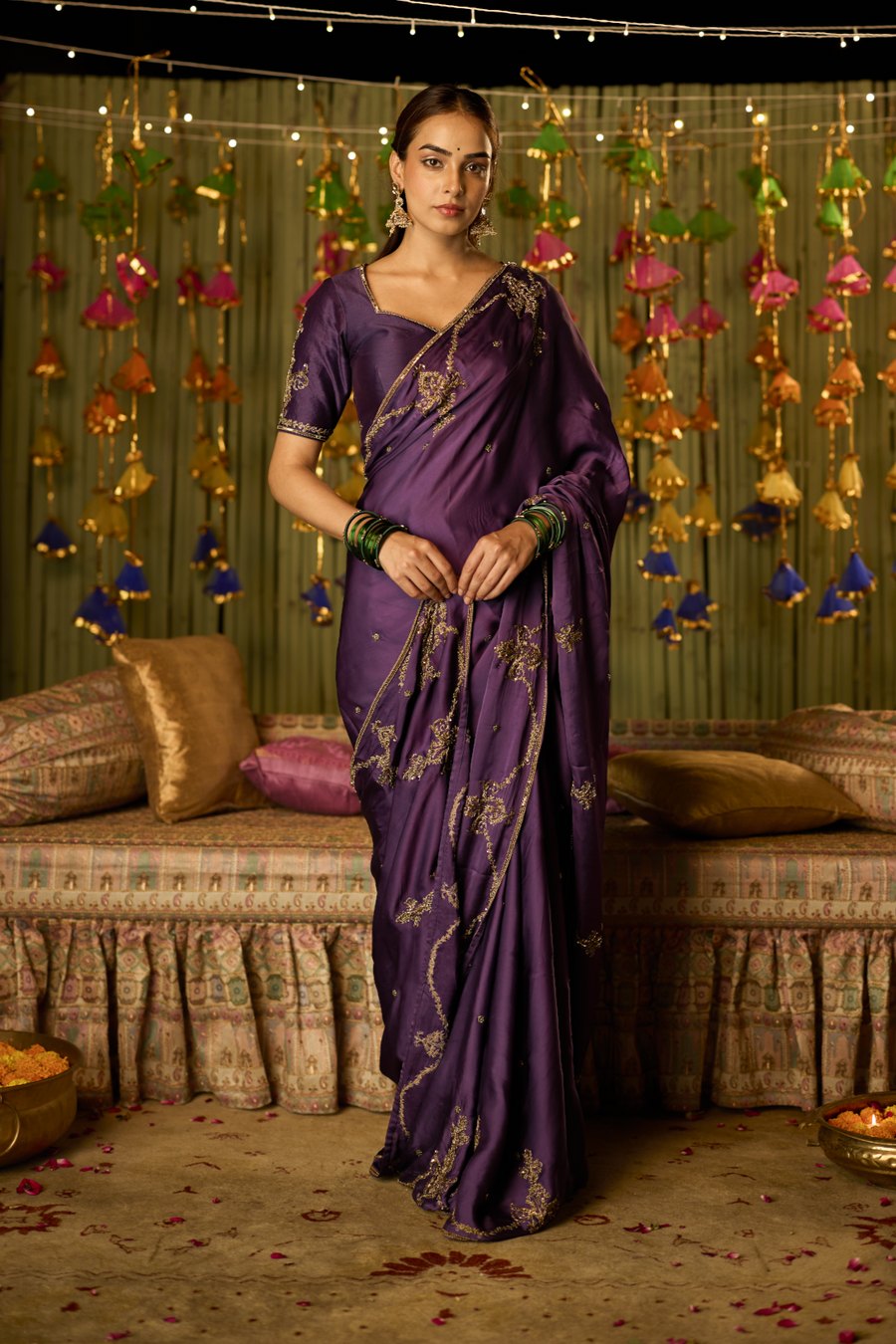
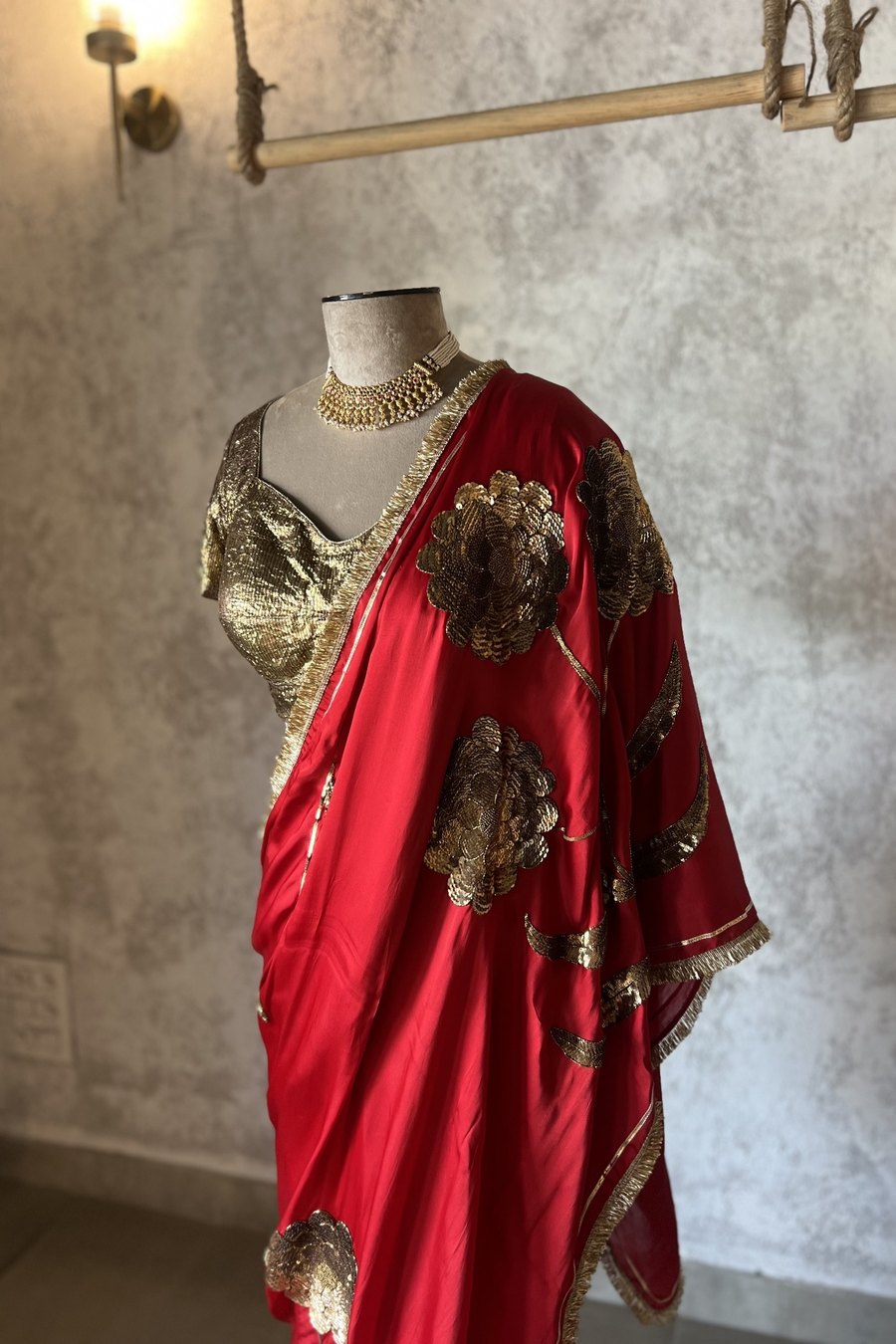
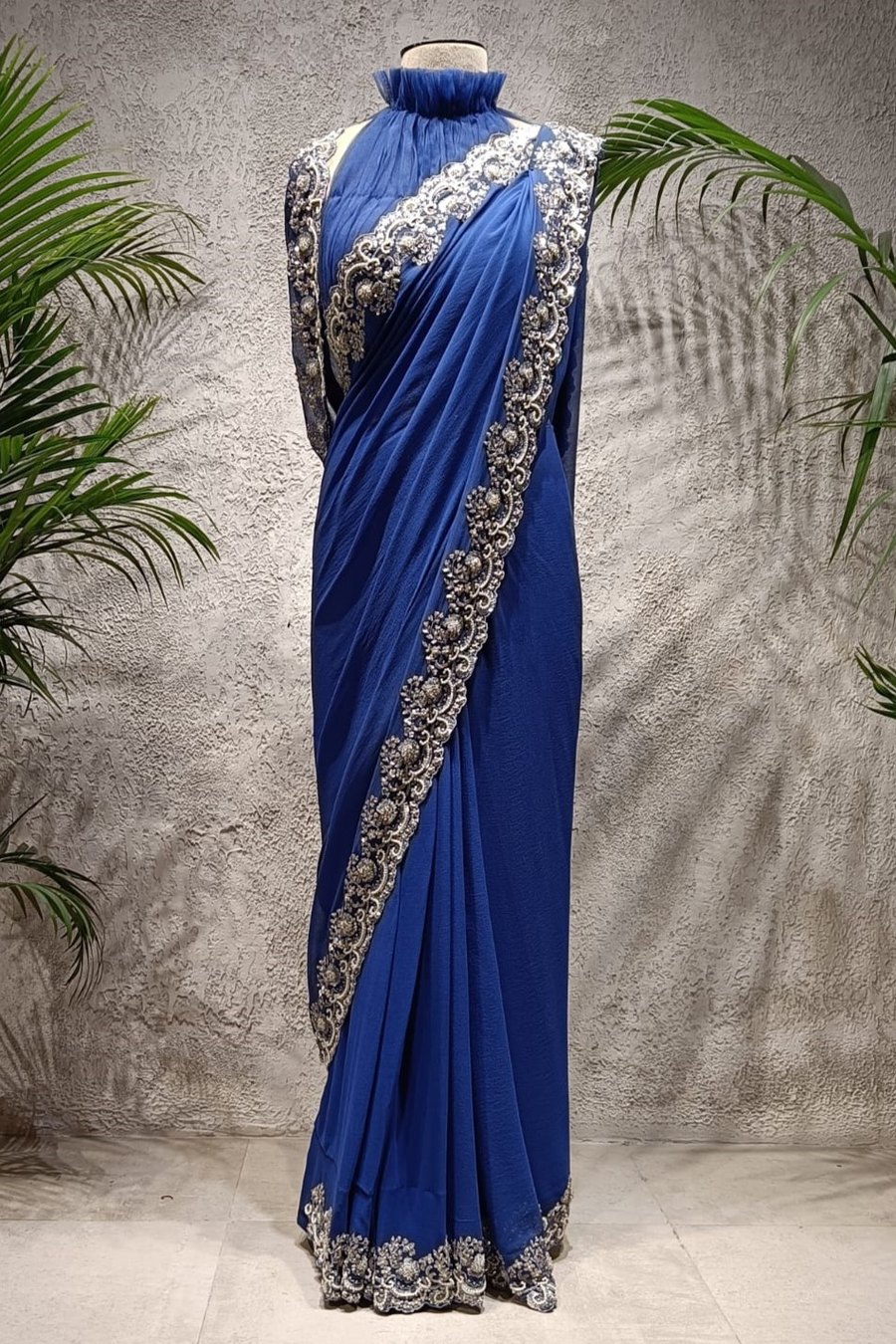
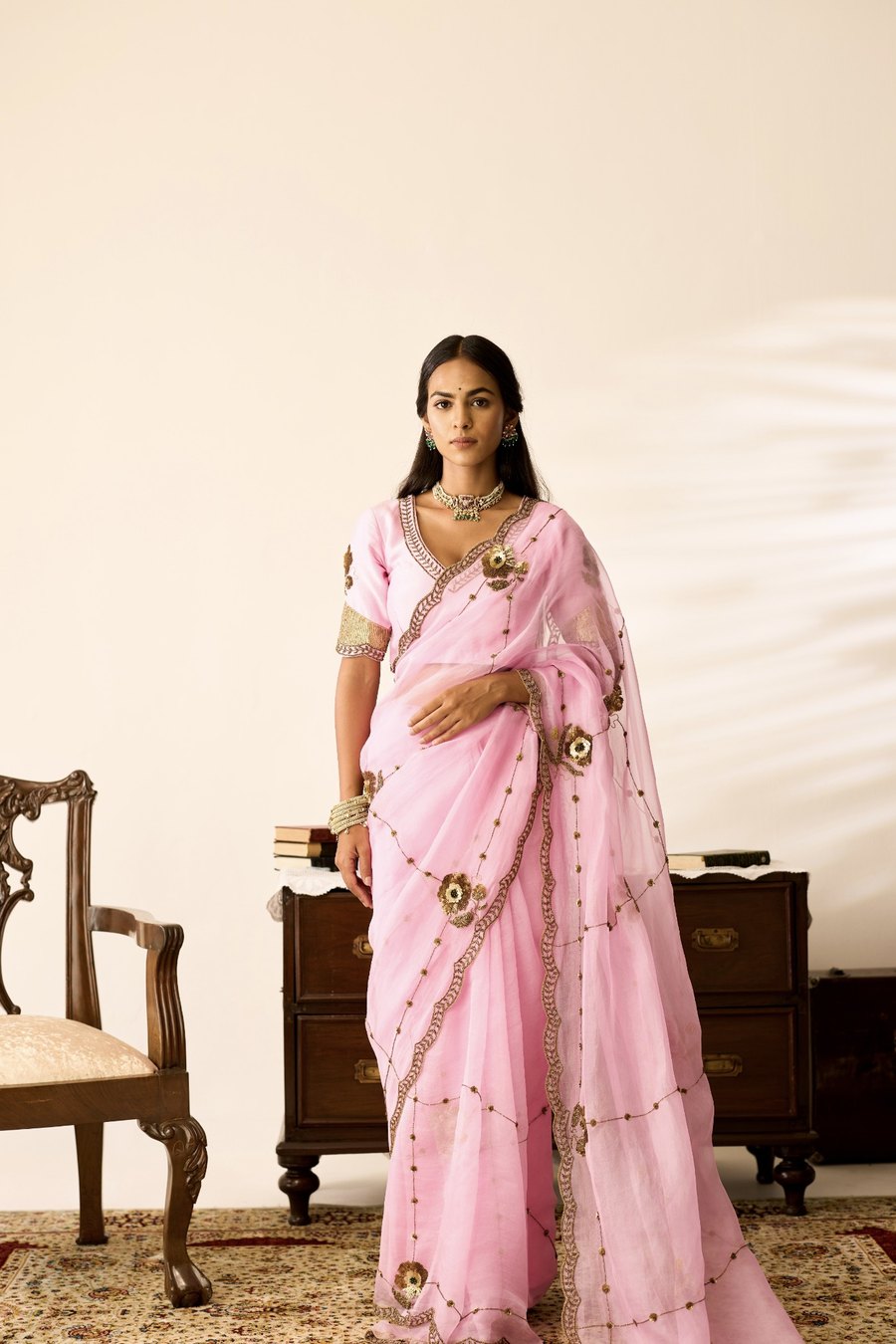
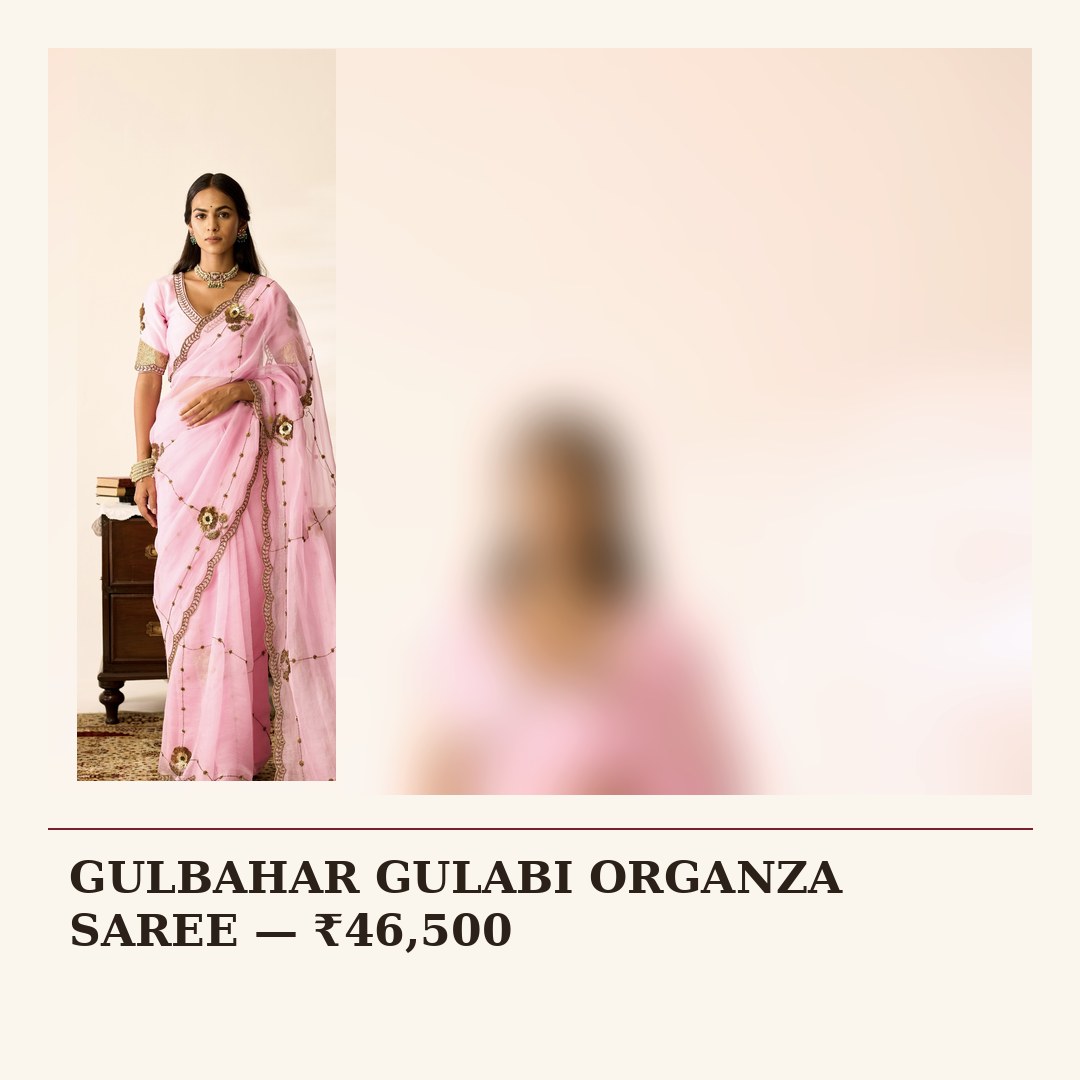
These six are from the bridal end of what we make, between ₹39,500 and ₹59,500 — dense handwork on silk organza, silk satin and georgette. Every price is the price of the piece, none of them is a starting figure, and every one is made to order in your measurements.
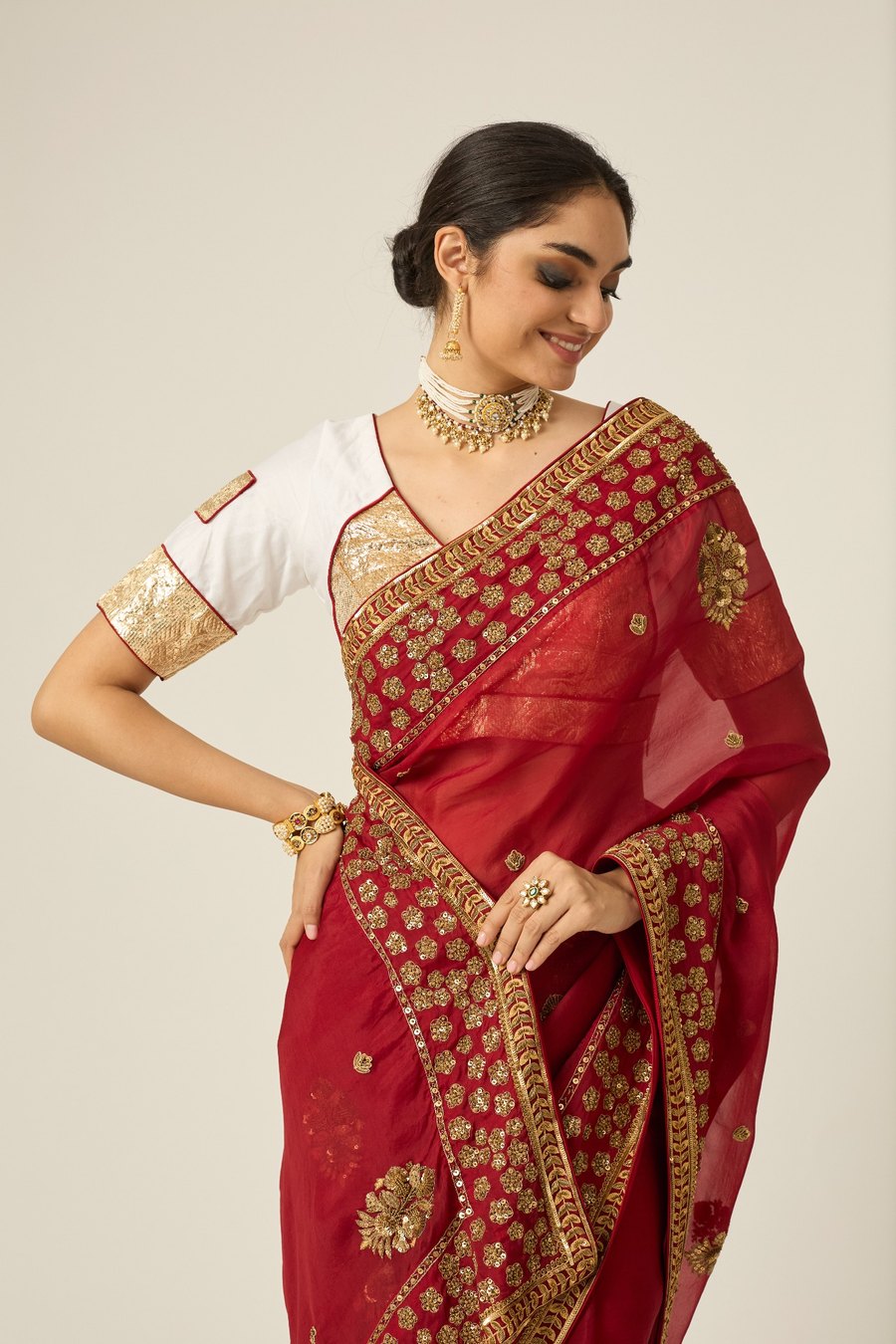
₹59,500
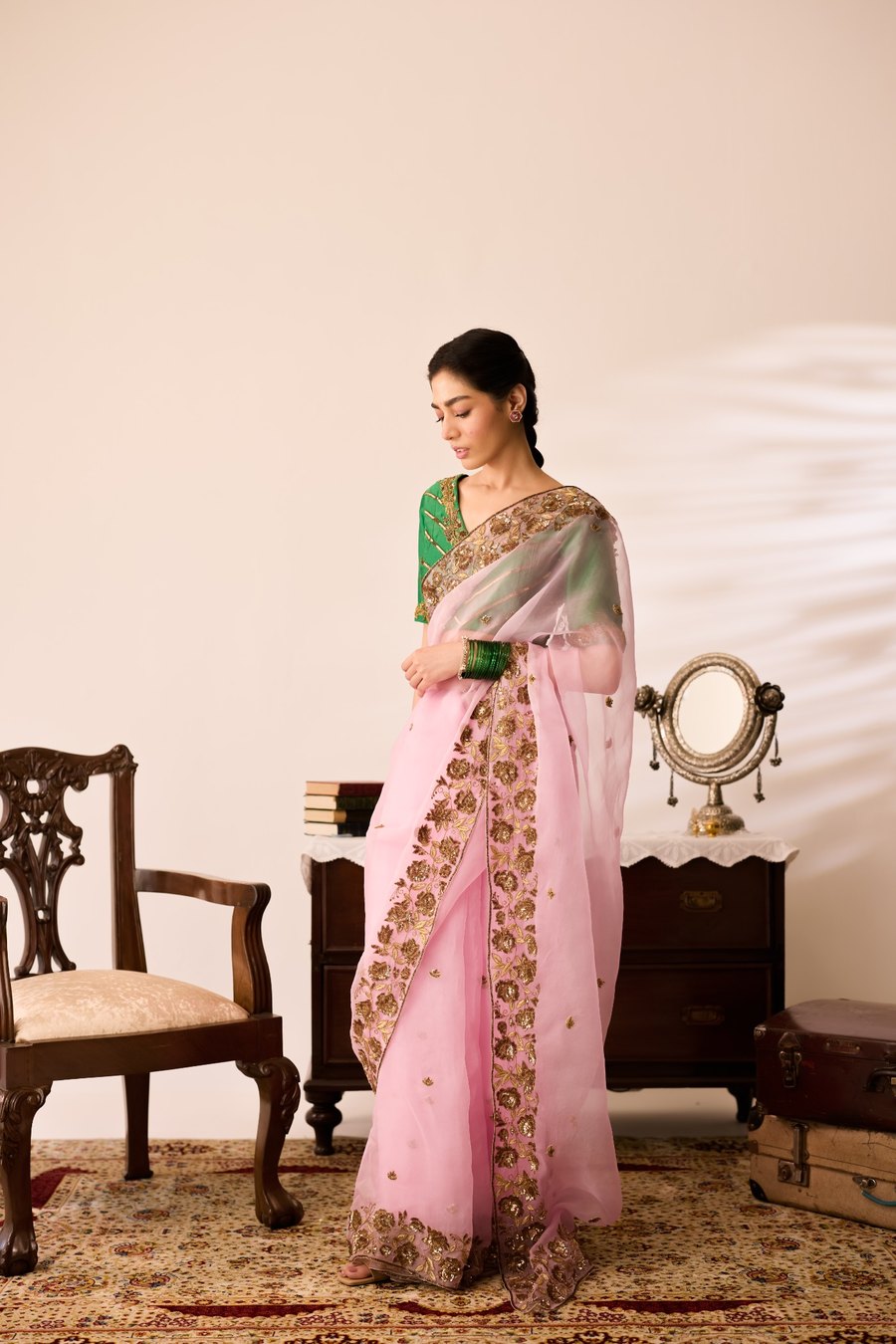
₹46,500
₹43,500
₹39,500
₹46,500
₹46,500
How we would split a wedding wardrobe budget
For the bride, put the money where the photographs are. A denser, heavier wedding-day saree with a simpler reception piece is a better use of the same budget than two mid-weight pieces that both look fine and neither of which holds a room. The wedding day is the one function where guests lean in to look at the work.
For the mother of the bride or groom, and for sisters, the value is in a piece that reads considered without competing with the bride. That lives in the middle of the range — a strong border, a good base, work that survives daylight — rather than at the bridal level. A bridal-priced piece in the same frame as the bride is an expensive way to look like you are trying.
Buy the wedding-day piece first and as early as your dates allow, then the lighter functions. Made-to-order work takes time that cannot be invented later, and the buyers who arrive last are usually paying for speed rather than for the work itself.
One comparison that comes up constantly: the same budget stretches differently across a saree and a bridal lehenga. A lehenga eats fabric in panels and a fitted skirt, so at the same price you generally get more handwork on a saree and more structure in a lehenga. Neither is better value — but it is worth knowing before you decide which one you are shopping for.
Protecting a piece you have paid for
A hand-embroidered wedding saree holds its value if it is stored the way the work deserves. Hang it on a padded hanger for a day after the function, then store it in muslin rather than plastic so air moves around the embroidery. Change the fold lines once a year so the same crease never sets in twice, and keep it away from direct sunlight.
Press it through a muslin cloth on a low setting and press the reverse of the work where you can — never iron directly over raised embroidery. If a metal thread lifts, do not pull it. Send us a photograph, or bring the piece to either store, in Shahpur Jat in New Delhi or in Dehradun, and most lifted threads can be secured again without redoing the motif.
If something about the fit is not right when the parcel opens, message us on WhatsApp before the piece has been worn or altered, and we can still act on it. That conversation costs nothing, which makes it the cheapest part of the whole purchase.
Frequently asked
How much does a wedding saree cost at Peeli Dori?
Our sarees run from about ₹10,000 to ₹59,500, and most pieces sit under ₹50,000. Bridal pieces with dense all-over handwork are between ₹39,500 and ₹59,500. What separates two pieces made for the same function is the base fabric and the hours of handwork on it, not the colour.
Why are two similar-looking sarees ₹23,000 apart?
The base fabric comes first — silk organza, silk satin and georgette behave differently and cost differently. Then the work: all-over embroidery against a border-and-pallu design, denser zardozi against lighter motifs, and how many hours it all takes. Then whether the blouse is cut and stitched to your measurements. Ask what the base is and whether the work is hand-done, and the price stops looking arbitrary.
Is the blouse included, and does it cost extra?
The blouse is included and cut to your measurements — custom sizing is standard on our pieces, not an add-on. Tell us at the order stage if you want it matched to the saree or cut in a contrast shade, and tell us the jewellery you plan to wear, because it decides the neckline. Our blouses are lined, which matters more on a sheer base like organza.
Can I buy without visiting a store, and when should I order?
Yes — most of the brides we dress are in another city. Message us on WhatsApp, we will send photographs and fabric details, check the fit from your measurements or a photograph of a blouse that already fits you, and the piece ships to you. Because everything is made to order, tell us your function dates in the first conversation and we will be straight with you about what is comfortable to promise. Shipping is free within India above ₹10,000, with an international shipping offer above ₹49,000 for weddings abroad.
Explore more: bridal collection — or message us on WhatsApp for styling help.

The information below is required for social login
Sign In
Create New Account