

Every wedding season we meet the same moment, usually around six in the evening: the saree is bought, it is beautiful, and it is lying on the bed while its owner stands in front of a mirror trying to work out how to make it look like the pictures she fell for.
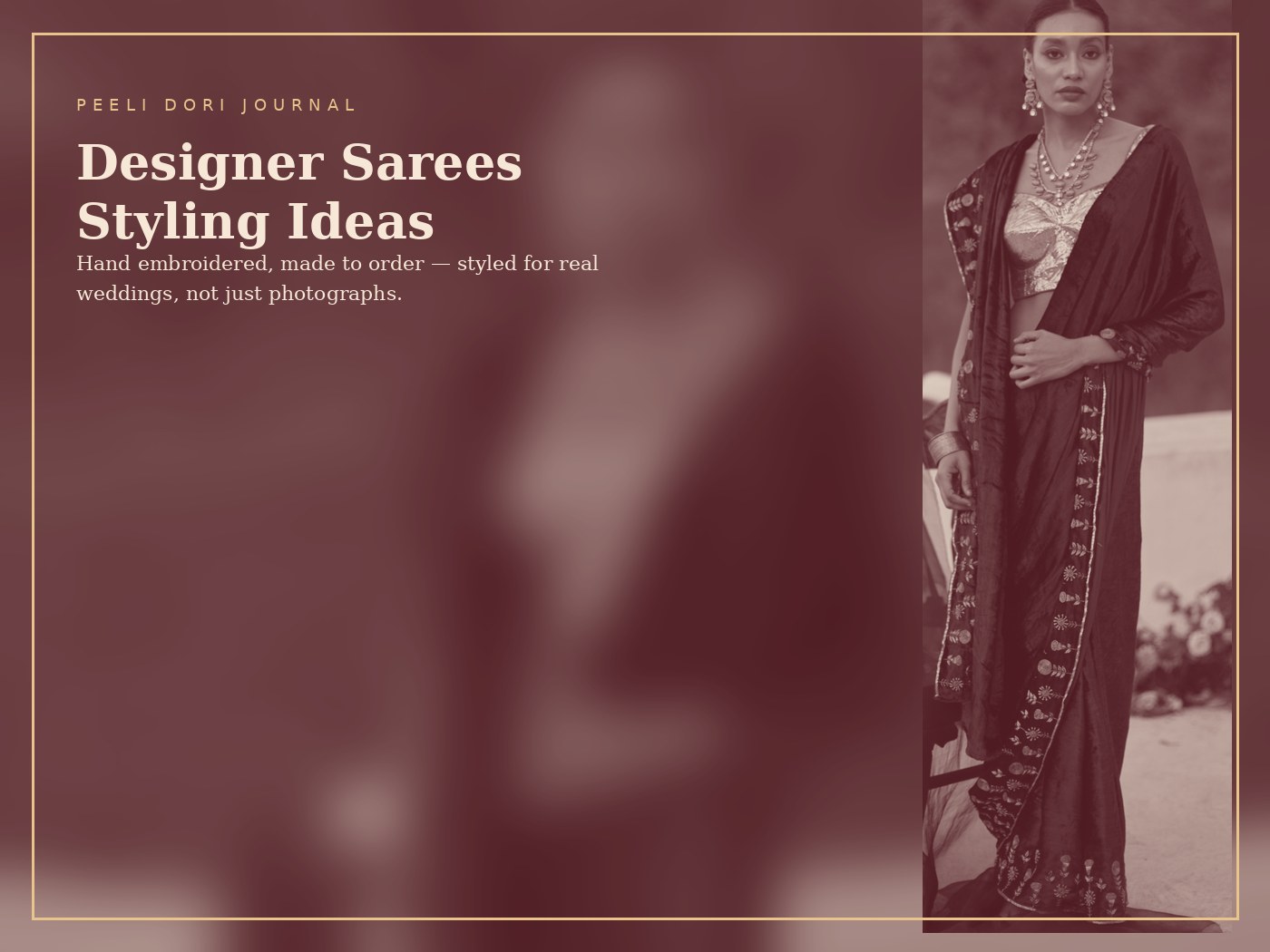
Every wedding season we meet the same moment, usually around six in the evening: the saree is bought, it is beautiful, and it is lying on the bed while its owner stands in front of a mirror trying to work out how to make it look like the pictures she fell for. A designer saree is not hard to wear. It is just unforgiving about three things — the drape, the blouse and the light. Get those right and nothing else needs doing. Here is how we would style one for the functions around a wedding, and what we would look for before buying in the first place.
Start with the function, not the saree
An Indian wedding is not one event, it is six or seven, and they happen in very different light. Mehendi and haldi are daylight occasions — bright sun, marigolds, a floor full of people. Sangeet and cocktail are evening, chandelier and camera flash. The wedding itself is the only one where you are photographed standing still for an hour. A reception is dark, formal and still.
That calendar is the styling brief, not the saree. A red organza with heavy hand-embroidery that has everyone turning around at a sangeet will look flat at an eleven o'clock haldi, because organza needs a light source to come alive. A deep velvet or a maroon silk that looks restrained in the morning carries an entire reception on its own. When a client tells us she wants one saree for the whole season, we say it is possible, but it will compromise somewhere — usually in the photographs.
We also ask one more question before anything else: what is your role? A bride's sister, a mother of the groom and a guest are wearing three different outfits to the same wedding, even in the same colour family. The person who leads the frame is the bride. Everyone else is there to make her look better, and the sarees that do that are the quieter ones.
Fabric and craft: what you are actually paying for
In the ₹46,500 to ₹59,500 band that our designer sarees sit in, you are buying two things at once: the cloth and the hours. The cloth is usually silk organza, silk, georgette or velvet. Silk organza has body and holds a shape, which is why it is the fabric our hand-embroidery is worked on most — a worked panel stands proud on organza instead of sinking into it. Georgette falls closer to the body and moves more. Velvet absorbs light in a way no other fabric does, which is why it is a reception cloth rather than a daytime one.
The craft is the other half. Gota patti is appliqué — small folded pieces of gold ribbon stitched into a motif, which is why it reads as texture and catches light at an angle. Zardozi is metal thread worked densely, heavier and more sculptural. Dabka is the coiled wire work that gives a raised dot. You do not need to know the names to buy well, but you do need to look at three things: whether the stitching is tight at the edges of a motif, whether the embroidery follows the design of the saree rather than sitting on top of it, and whether the reverse of the panel is finished. A saree made by hand, in a proper atelier, is as neat inside as it is outside — that is the clearest tell there is.
Made-to-order is the third part, and it is the one that changes the fit. Everything we make is stitched to your measurements with custom sizing, so the blouse is not a compromise and the drape falls where it should.
Choosing for the ceremony, and for the way you are built
For a sangeet, go for the piece with movement and the least visible weight — organza, a lighter ground, embroidery that reads at three metres. For a reception, go the other way: velvet or a deep silk, a clean border, work concentrated at the pallu so the eye travels up. For a haldi or a mehendi, we would steer you to a colour that lives with turmeric and marigold rather than fighting them, and a lighter saree you can sit on the floor in.
Then the body. The single most useful thing a designer saree can do for a shorter frame is keep the embroidery vertical and the border narrow; a wide, heavy border cuts height in half. If you are tall, you can carry the broad border and the larger motifs that would overwhelm someone five foot two. If you are fuller in the hip and want the pleats to skim rather than cling, organza and a crisp, lightly starched drape do more than any cut. And if your shoulders are broad, a blouse with a slightly deeper neckline and a narrower strap balances the silhouette far better than a high covered neck.
Colour, finally, is a decision about the room. Deep wine, maroon, ink blue and emerald hold up under evening lights and flash photography. Ivory, blush, powder blue and pale pistachio are the daylight colours — devastating in the morning, thin in a dark hall. If you are only buying one saree, buy for the function you care about most in photographs, because that is the one you will look at for years.
Six designer sarees on the rail
MYRA RED ORGANZA SAREE, ₹59,500 — the sangeet piece. A full red organza with the work carried across the body, and the saree of the six that holds a room in low light.
NOOR BAHAR ORGANZA SAREE, ₹48,500 — organza in a softer, bloomier palette; the one we would drape for a mehendi where the colours in the room are already warm.
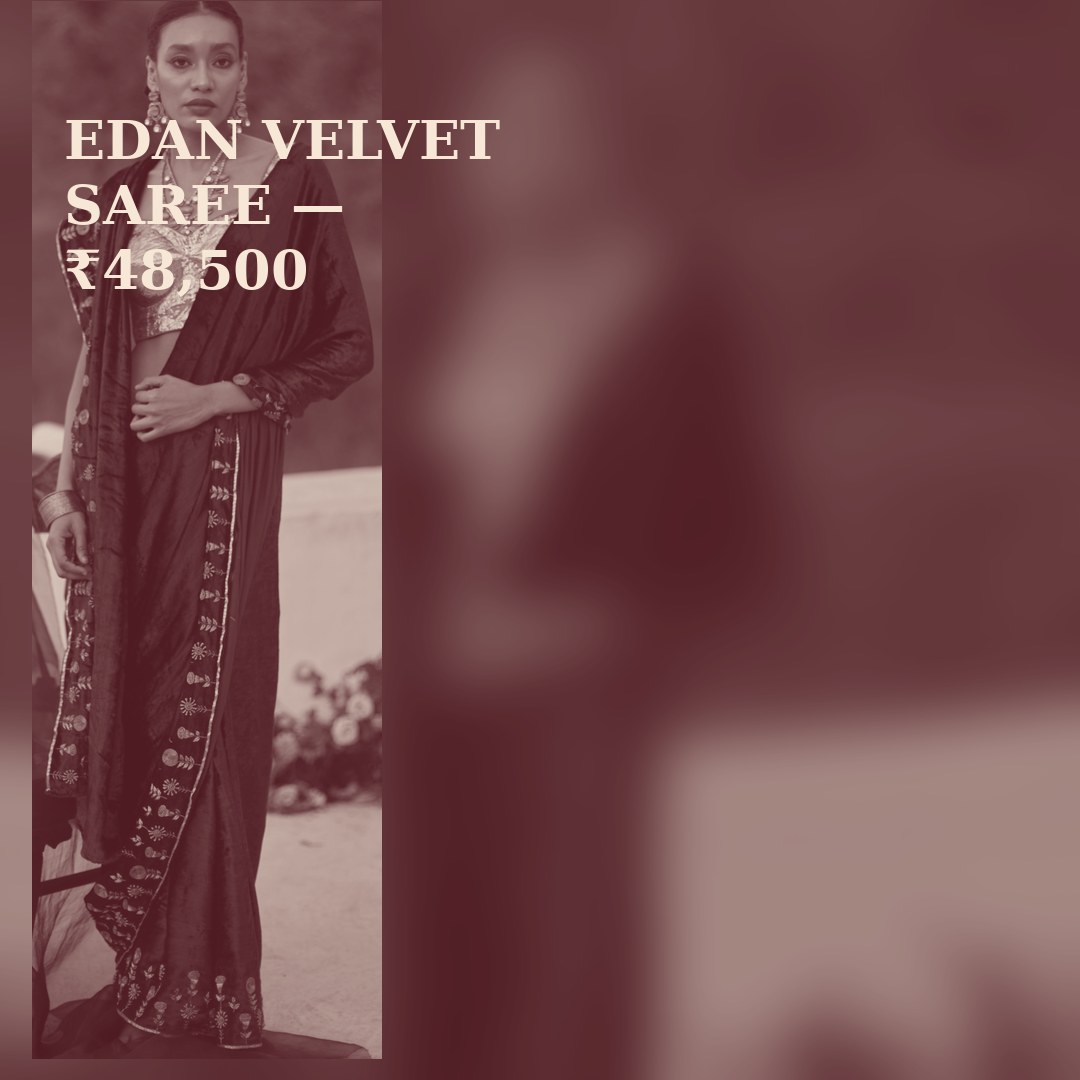
EDAN VELVET SAREE, ₹48,500 — velvet, and the reception answer. Deep ground, quiet work, no competition from the fabric because the fabric is doing all of it.
GULBAHAR IVORY ORGANZA SAREE, ₹46,500 — ivory organza, daylight only, and the most photographed of the six at a morning function.
RUQMANI MAROON ORGANZA SAREE, ₹46,500 — a deep maroon organza that sits between the two: formal enough for an evening, warm enough for a daytime wedding.
RUQMANI GULABI ORGANZA SAREE, ₹46,500 — the same drape in rose; the version we suggest for a sister of the bride who wants to be seen without entering the bride's territory.
Two more in the same family if none of these is your colour: GULBAHAR GULABI ORGANZA SAREE at ₹46,500 and NISHKA ROYAL BLUE GEORGETTE SAREE at ₹46,500, which falls closer to the body than any organza here. Every one is a real product page with its own photographs, fabric notes and measurements, so open the one you are drawn to rather than choosing from a paragraph.
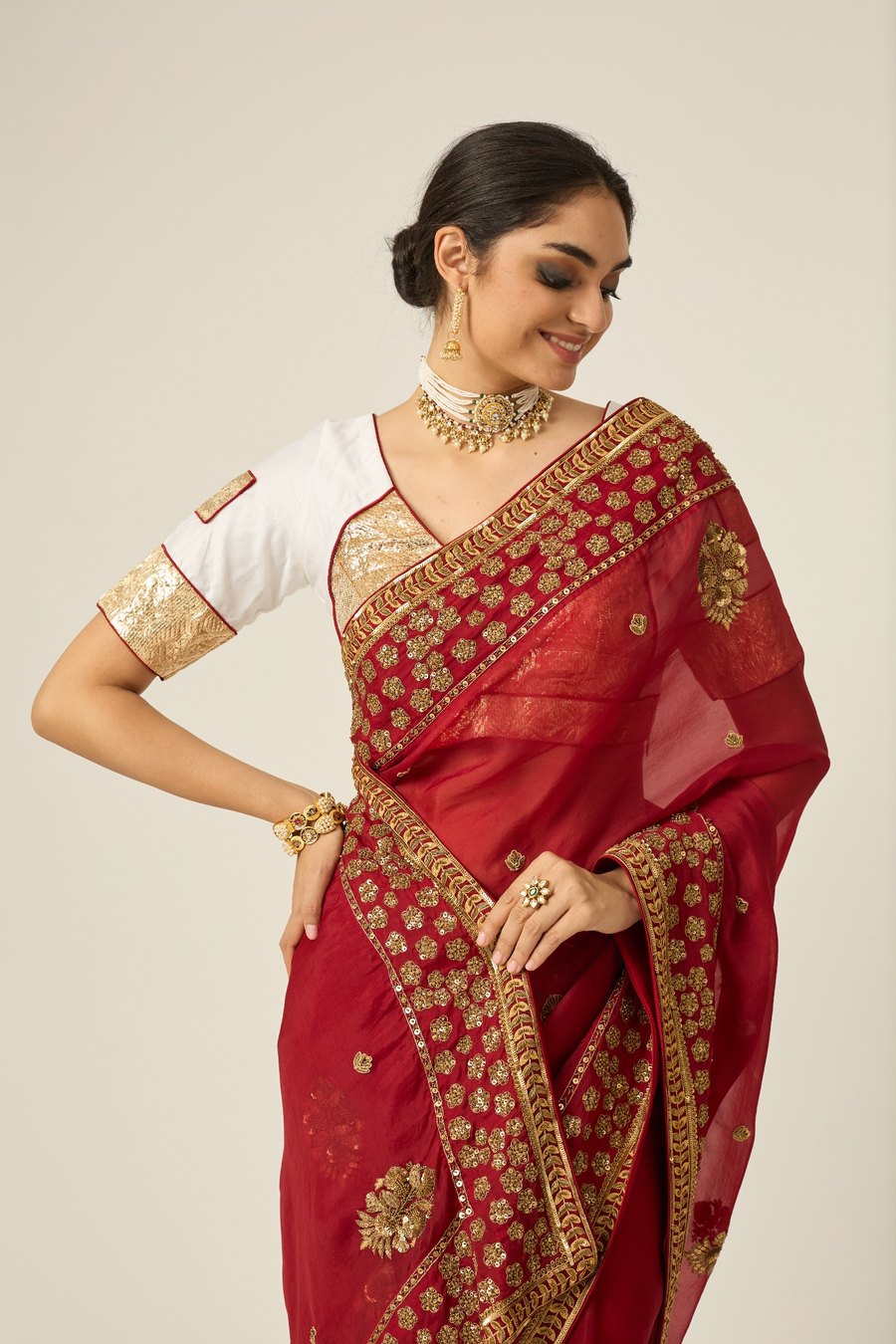
₹59,500
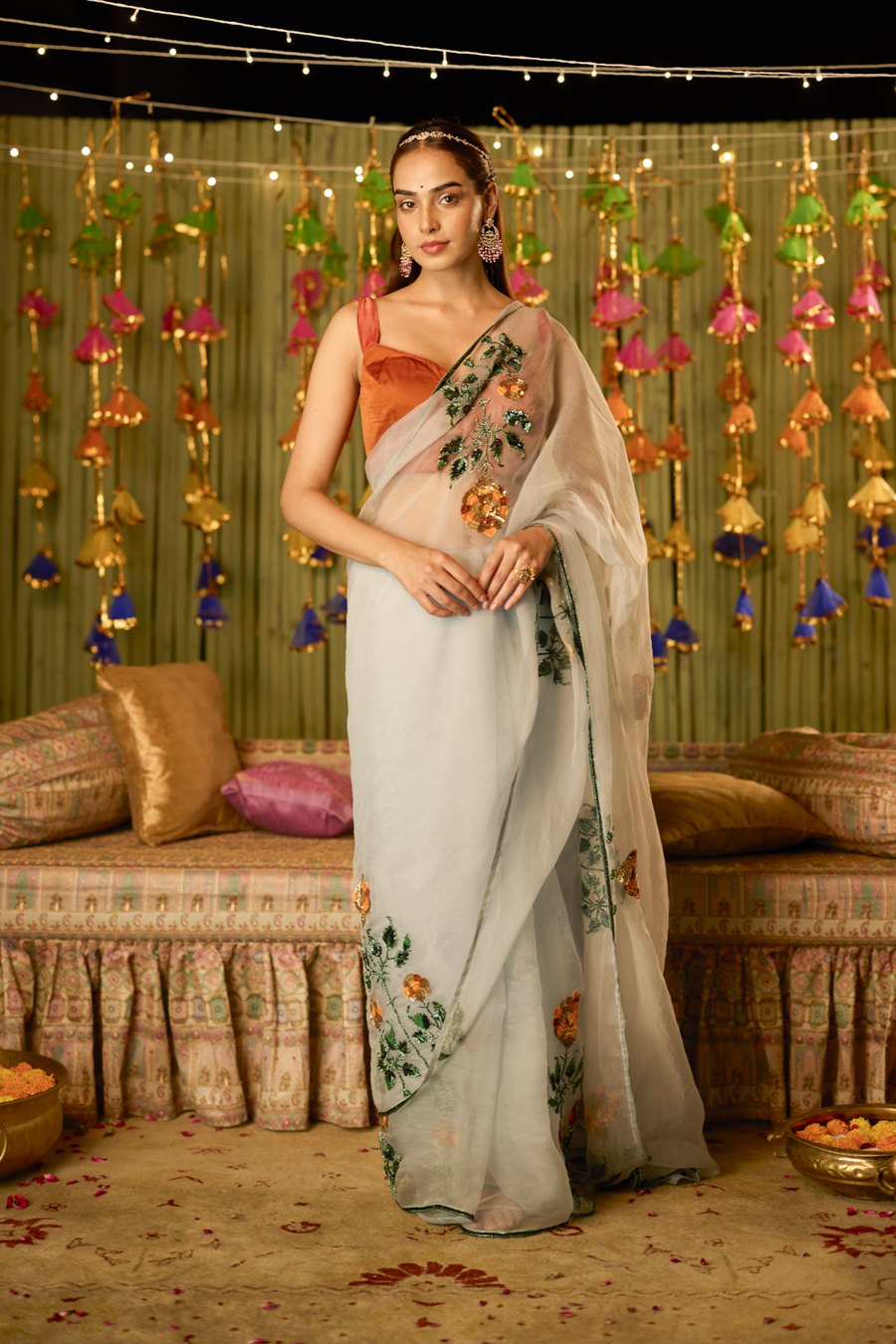
₹48,500
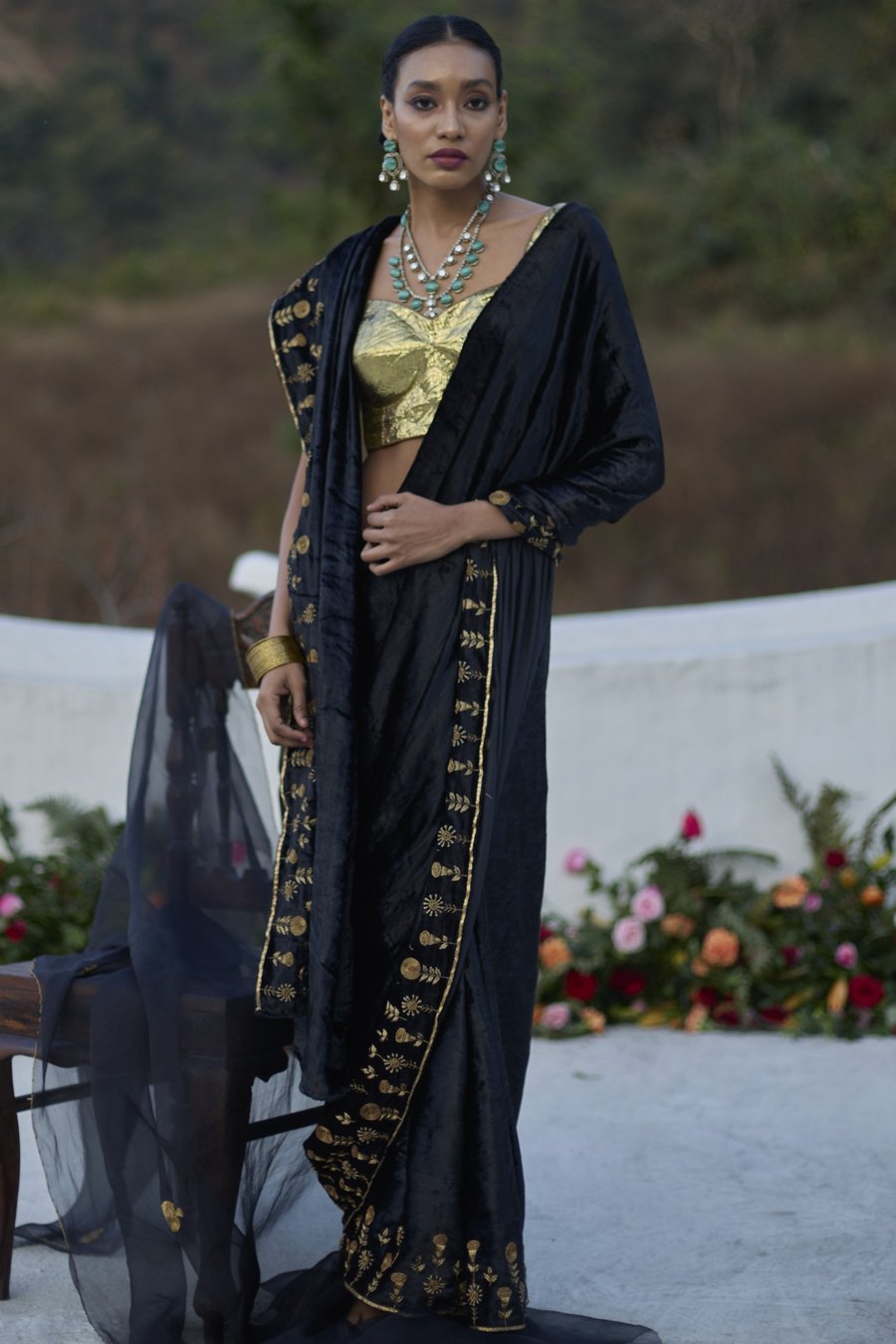
₹48,500
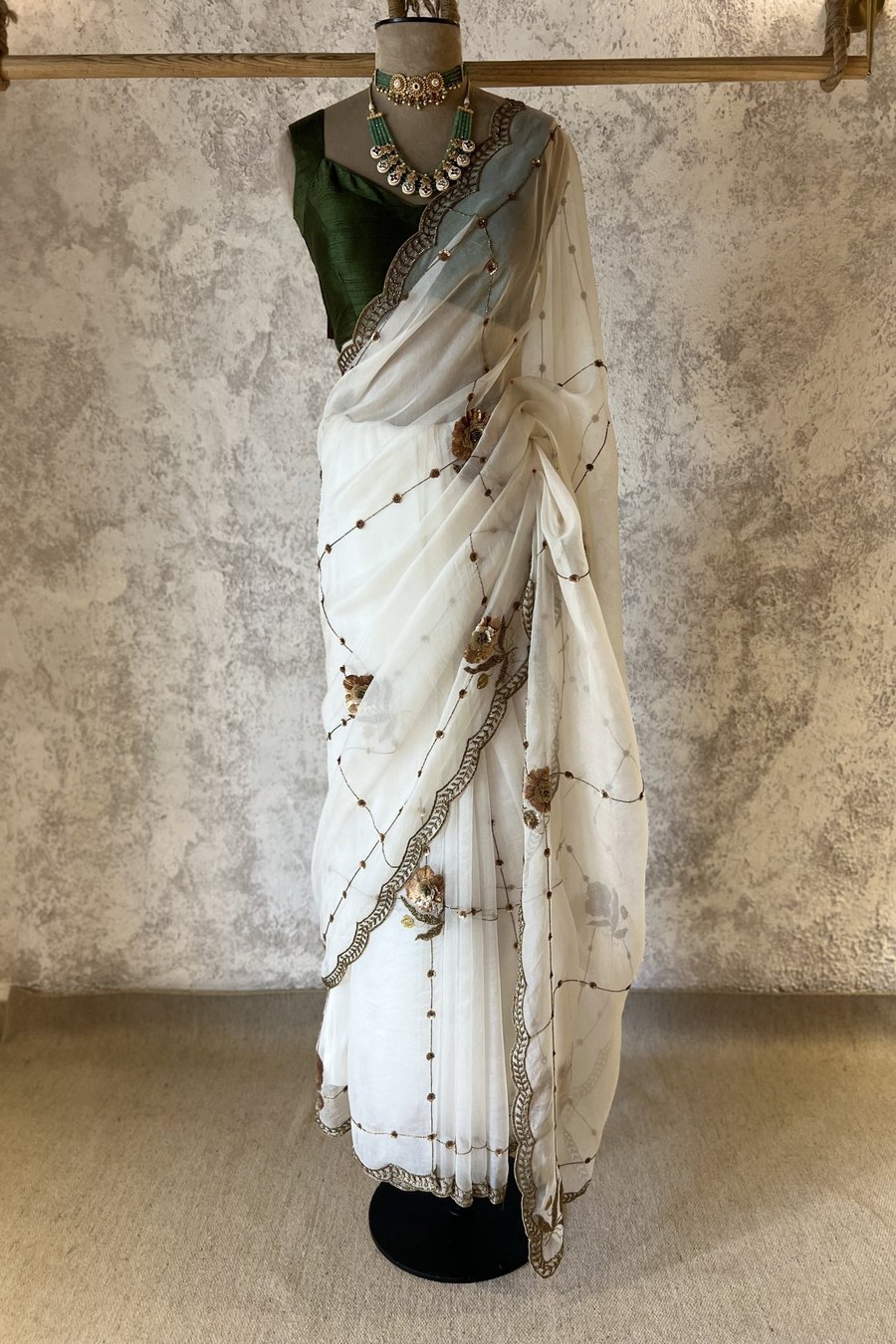
₹46,500
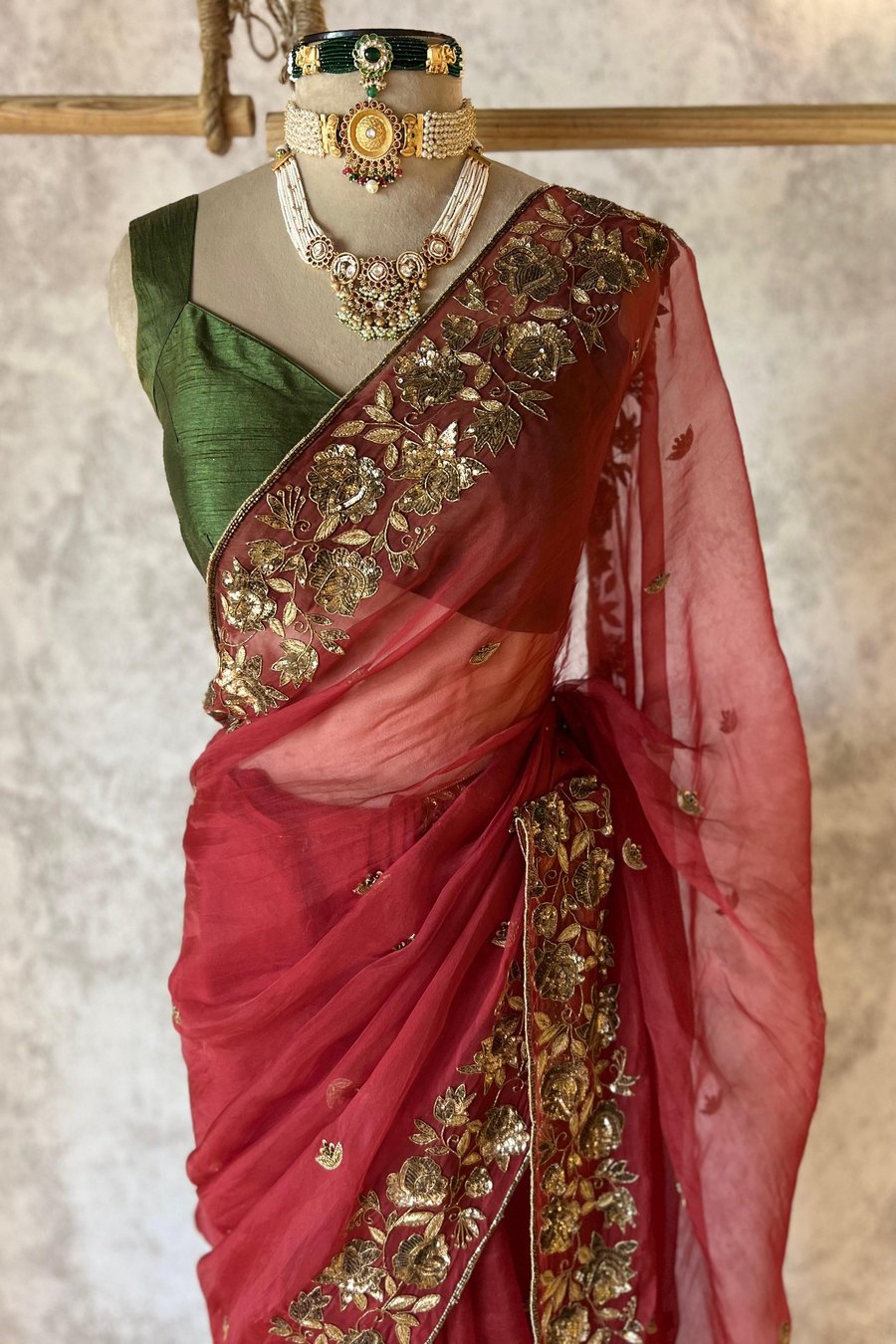
₹46,500
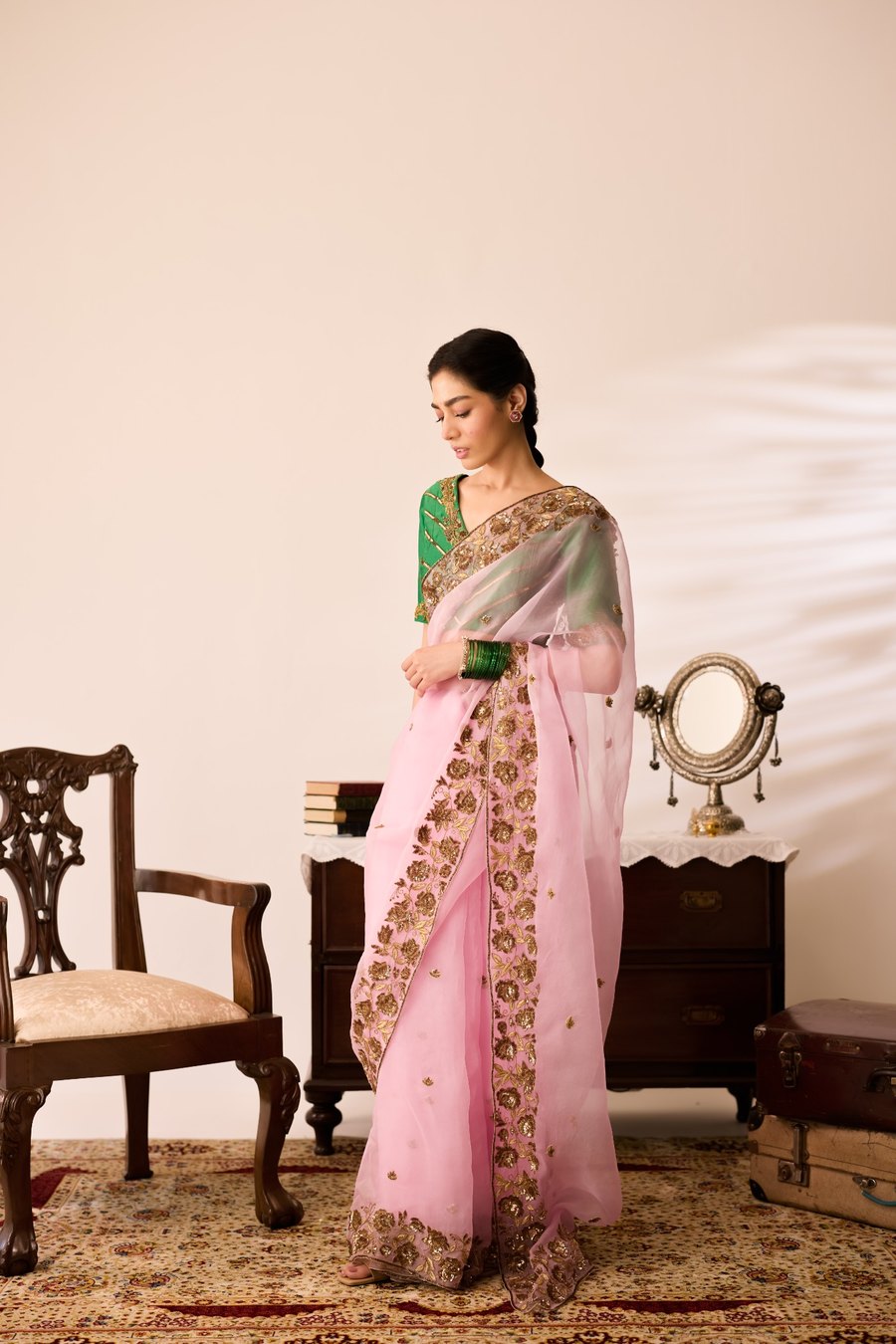
₹46,500
Blouse, drape and the styling notes that actually matter
The blouse decides more than the saree does. With a worked pallu, the blouse should be the calm part of the outfit — a clean neckline, sleeves that end where you want the eye to stop, and a colour drawn from the saree rather than a second colour fighting it. If the embroidery is heavy across the front, we would keep the blouse plain. If the work is concentrated at the pallu, the blouse can carry a little of its own. Because everything is made to order, the sleeve length, neckline depth and the back are yours to set — bring us a reference and we will cut to it.
The drape is a technique, not a shape, and it is worth ten minutes of practice at home before the function. Pin the pleats low and slightly to your left, so the fall of the pallu is a clean diagonal rather than a fan. Keep the pallu narrow over the shoulder — a wide pallu on a heavy saree makes the whole silhouette read horizontal. If you are not confident, come in: we will drape it on you, pin it the way we would wear it ourselves, and show you where to re-pin when you sit down.
Jewellery, then, should follow the work. A heavily embroidered neckline wants one strong earring and bare wrists. A plain bodice with a worked pallu can take a necklace. The mistake we see most is doing both, and turning into a bright blur in every photograph.
A word on footwear and the saree length: tell us your heel height when you order and we will set the hem to it. Nothing else about the drape changes as much, and nothing is harder to fix later.
Care, and keeping it looking new
Hand-embroidery takes the weight of a wire hanger badly over a season, so fold your saree flat rather than hanging it, and change the fold line each time you put it away so the same crease does not set. Keep it in a cotton or muslin cover, never plastic — organza and silk need to breathe, and a sealed bag is how mildew starts in a Delhi monsoon. Store the blouse flat with the saree so the two fade at the same rate.
Dry clean at the end of the season rather than after every function, and always tell the cleaner what the work is: gota and zardozi are metal on cloth and a careless press will flatten a motif permanently. If it travels with you, roll it around a muslin core instead of folding it in a suitcase.
Shipping across India is free above ₹10,000, and there is an international shipping offer on the site, code INTSHIP, above ₹49,000. Styling help, colour advice and fit checks are on WhatsApp and cost nothing — send us a photograph of the saree and the function, and we will tell you what to wear with it.
Frequently asked
What is a designer saree?
In our book, a designer saree is one made to a specific design rather than a repeat print — the cloth chosen for the piece, the hand-embroidery worked to that pattern, and the whole thing stitched to your measurements. Ours sit between ₹10,000 and ₹59,500 depending on how much of the surface is worked by hand, with the heavily embroidered organza and silk pieces at the top of that band.
How do I style a designer saree for a reception?
Go deep and go quiet. A velvet or a deep silk in wine, maroon or ink blue reads formal under evening light, and a reception is not the place for the saree you wore at the mehendi. Keep the work concentrated at the pallu, choose a plain blouse with a clean neckline, and wear one strong piece of jewellery rather than a full set — standing still in photographs, restraint is what looks expensive.
Can I wear the same designer saree to more than one function?
You can, and most of our clients do — but change the blouse, the drape and the jewellery, because the saree is only a third of the outfit. A worked organza worn with a plain blouse and a stitched-up pallu looks different from the same saree worn loose over a lighter blouse. What you cannot do is wear organza to an eleven o'clock haldi and expect it to read the way it did at the sangeet.
Do you stitch the blouse to my measurements?
Yes. Everything is made to order with custom sizing, so the blouse is cut to your numbers rather than adjusted from a standard size. We need your bust, waist, shoulder, armhole, sleeve length, blouse length and the neckline depth you want, and we run a fit check on WhatsApp before the final stitching. Tell us your heel height at the same time and we will set the saree hem to it.
How should I store a hand-embroidered saree?
Flat, folded on a changing line, in a cotton or muslin cover rather than plastic, with the blouse stored alongside it so both age together. Never hang it on a wire hanger — metal-on-cloth embroidery is heavy and the shoulder will stretch. Dry clean at the end of the season, not after every wear, and tell the cleaner the work is gota or zardozi so it is pressed with care.
Explore more: lotus collection · chidiya · rani sa collection — or message us on WhatsApp for styling help.

The information below is required for social login
Sign In
Create New Account