

Half the styling questions we get across the counter are really the same question: what do you wear to the function that is not the wedding? A saree asks for pleats, pins and a pallu you keep an eye on all evening, and a lehenga is too much cloth for a mehendi
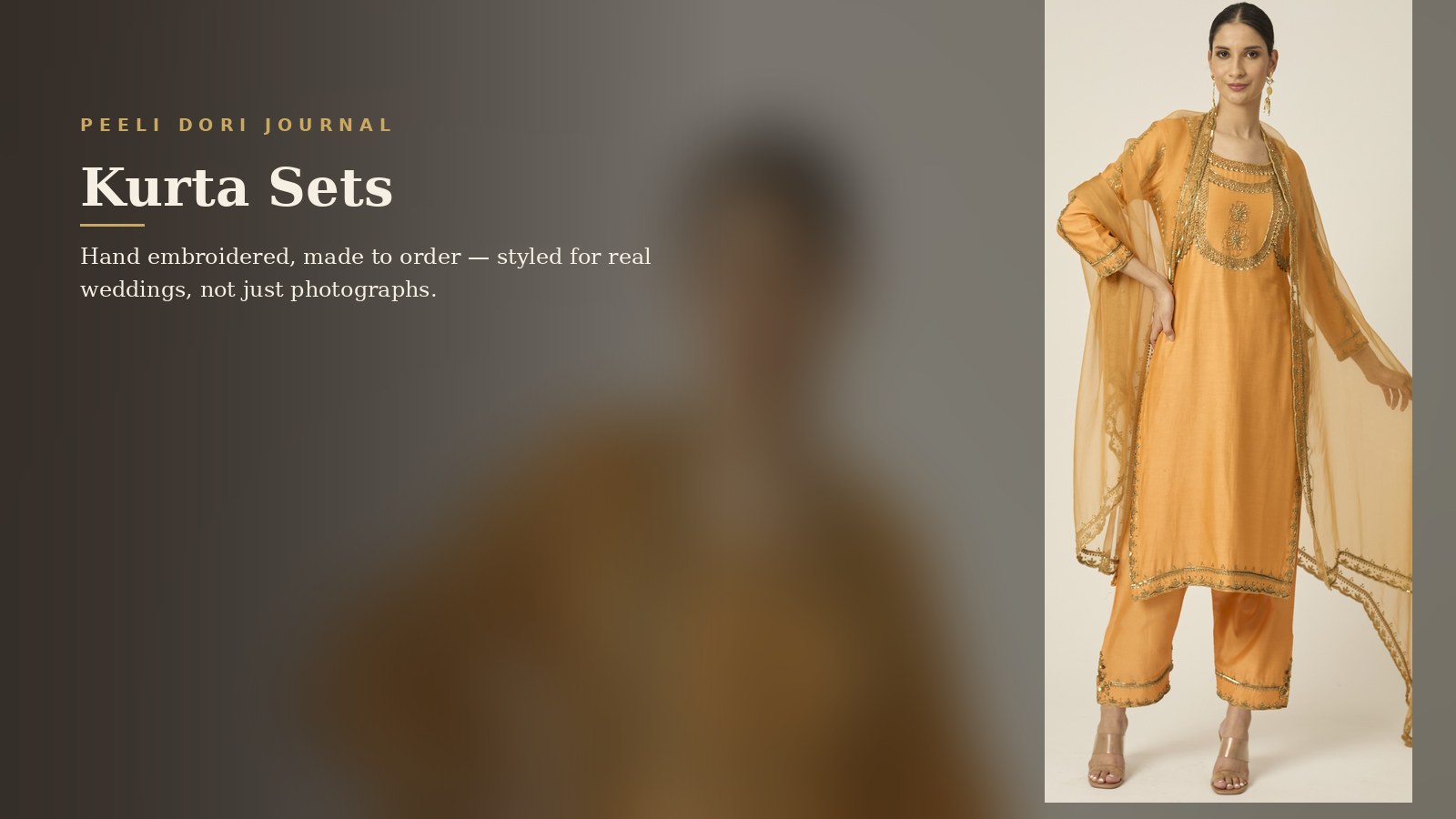
Half the styling questions we get across the counter are really the same question: what do you wear to the function that is not the wedding? A saree asks for pleats, pins and a pallu you keep an eye on all evening, and a lehenga is too much cloth for a mehendi lunch. A kurta set is the third answer, and it is the one most of our clients re-wear. Here is how we would choose one — the shape, the cloth, the dupatta, and the six we would put on the rail for you.
When a kurta set is the right answer
Count the functions at an Indian wedding and most of them happen in daylight. Mehendi in the morning, haldi before noon, a lunch at the bride's house, a sangeet rehearsal the evening before, the family photographs that somehow always take place in the sun. Six yards of silk is a commitment at eleven in the morning. A lehenga at a lunch can look like you misread the invitation.
A kurta set sits between the two. Three pieces, no pleating, nothing to pin, and you can sit on the floor, eat with both hands and drive yourself home. It is the outfit we suggest most often to women who tell us they want to look dressed without working for it.
It is also the answer if you are not the bride. Mothers, sisters, the friend giving a speech, anyone who will be photographed all day next to someone in red and gold — a considered kurta set reads as someone who knows the room, not someone competing with it.
The two shapes we make, and what changes between them
Our kurta sets come in two shapes. The first is the classic we have made for years: a straight kurta with culottes-style pants, sometimes with a dupatta, sometimes without. LILA is the pearl-work version of it, and the Rang chanderi sets are the everyday end of the same idea. These move well, photograph cleanly and work at a daytime function where you will be standing, sitting and talking for four hours.
The second shape is the longer, worked one: a silk chanderi kurta and pant with a silk organza dupatta that carries embroidery of its own. The Gulmohar sets, the Celine sets and Ruqsat are all built this way. This is the shape for the mehendi photographs, the sangeet, and any evening where you want the outfit to hold up under a camera flash.
The difference between a ₹17,500 set and a ₹36,500 one is almost never the cut. It is how much of the surface is worked by hand, and whether that work travels onto the dupatta as well as the kurta. Zardosi thread on the Celine sets, pearl work on Lila, antique gold floral embroidery on the Farsi — each one reads differently in daylight and under a chandelier, and that is worth deciding before you decide anything else.
Chanderi, organza, and the dupatta decision
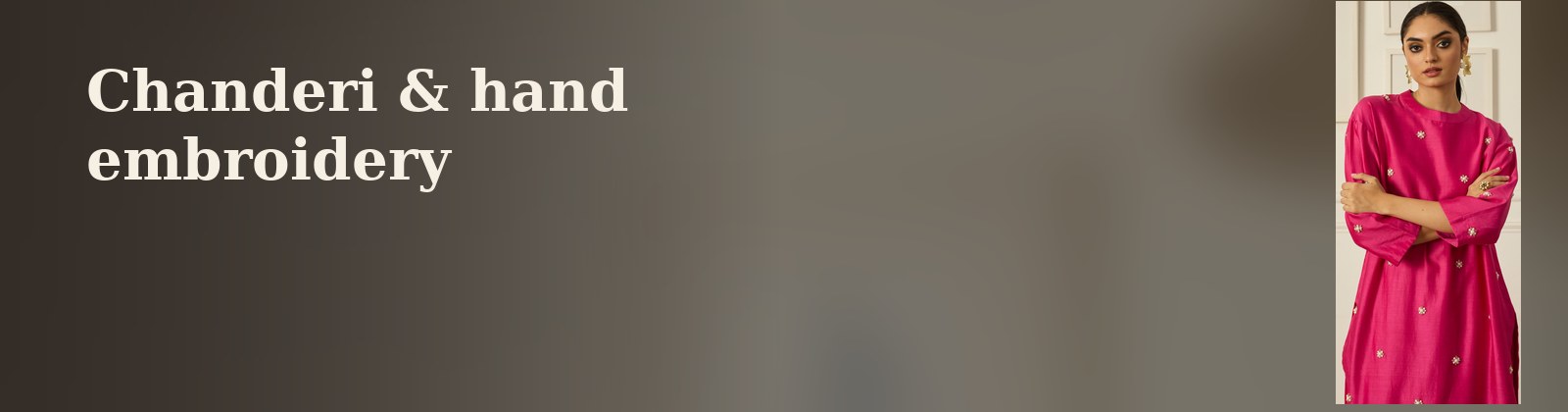
Most of these sets are silk chanderi for the kurta and the pant, with a silk organza dupatta. That pairing is deliberate. Chanderi has a light, breathable drape, so a fully worked kurta still behaves like clothing rather than armour and you can wear it through a long day. Organza is crisp enough that a worked dupatta keeps its shape instead of collapsing against you.
The dupatta is the decision that changes the outfit more than any other. Worn once over one shoulder like a stole, it softens a set into something you can wear to a mehendi at home. Draped full and pinned at the shoulder, it turns the same set into something formal enough for a reception. Left off, with the kurta and the pant doing the work, it is what you want for the dinner after the wedding when nobody is watching the door.
One thing we say in the store every week: with a worked neckline, do less with jewellery. A heavy kurta front with a heavy necklace turns into a single bright blur in photographs. One good earring and bare wrists will read better every time.
Choosing for the function, and for the way you are built
Lead with the function and the rest narrows itself down. A mehendi or a haldi wants colour and movement — a lighter kurta, culottes, minimal work, and a yellow or a rose that suits the turmeric and the marigolds instead of fighting them. A sangeet wants the opposite: deeper ground, more handwork, the dupatta worn full. A reception wants depth and a clean line, because you will be standing still in almost every photo. If you are the mother of the bride or the groom, we would go for restraint — chanderi, considered embroidery, a colour that lets the bride be the brightest person in the frame.
Then the length. The straight kurta with culottes pants is the most forgiving shape we sell: it gives height, it does not cling, and it works whether you are five foot or five foot eight. The longer worked sets ask a little more of the drape, which is exactly why the kurta length on Ruqsat is customizable — tell us where you want the hem to fall and it falls there.
Everything we make is made to order, so your measurements are the starting point rather than a compromise. If you have been between sizes in ready-made kurtas all your life, this is the part of the purchase that actually fixes that.
Six kurta sets on the rail
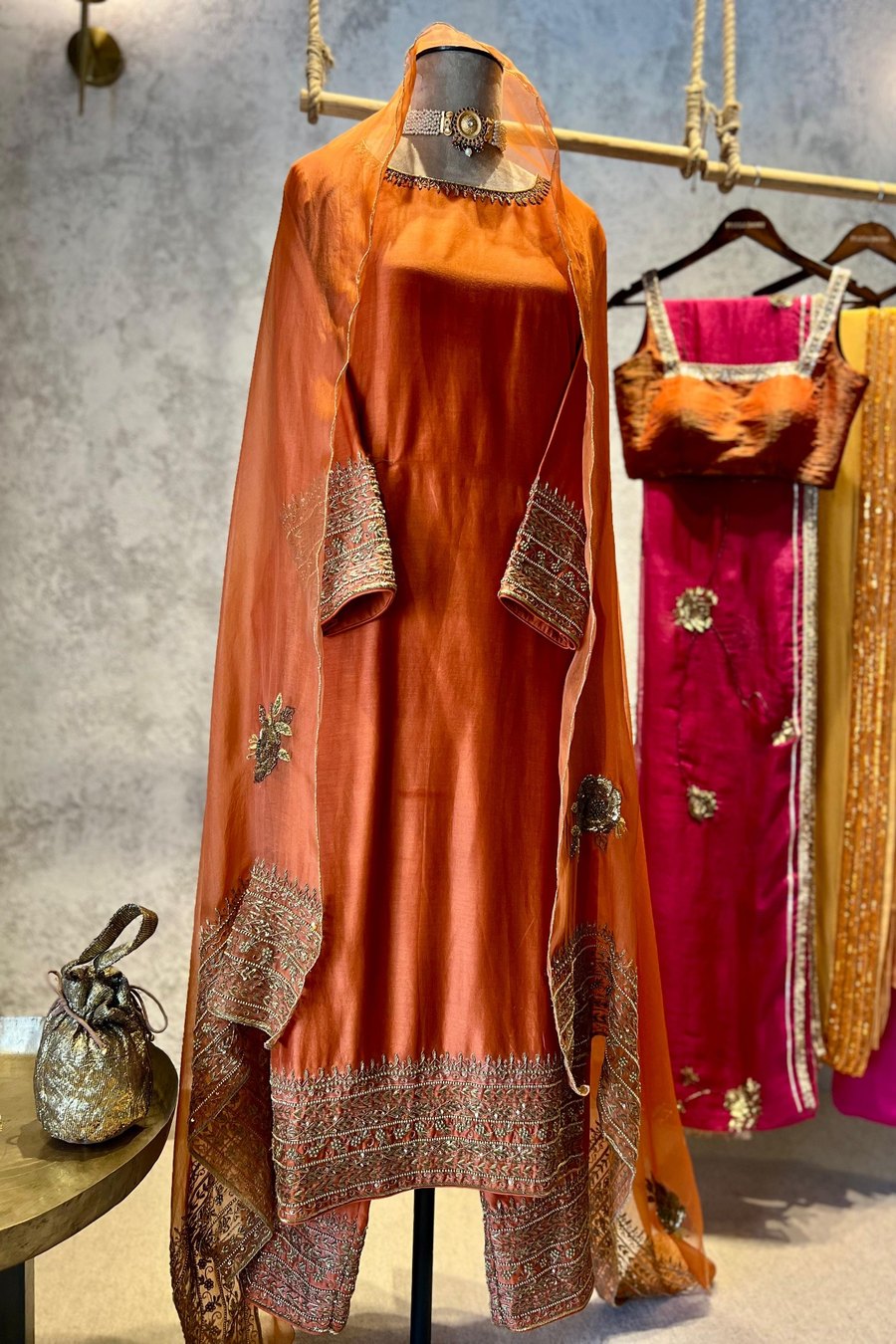
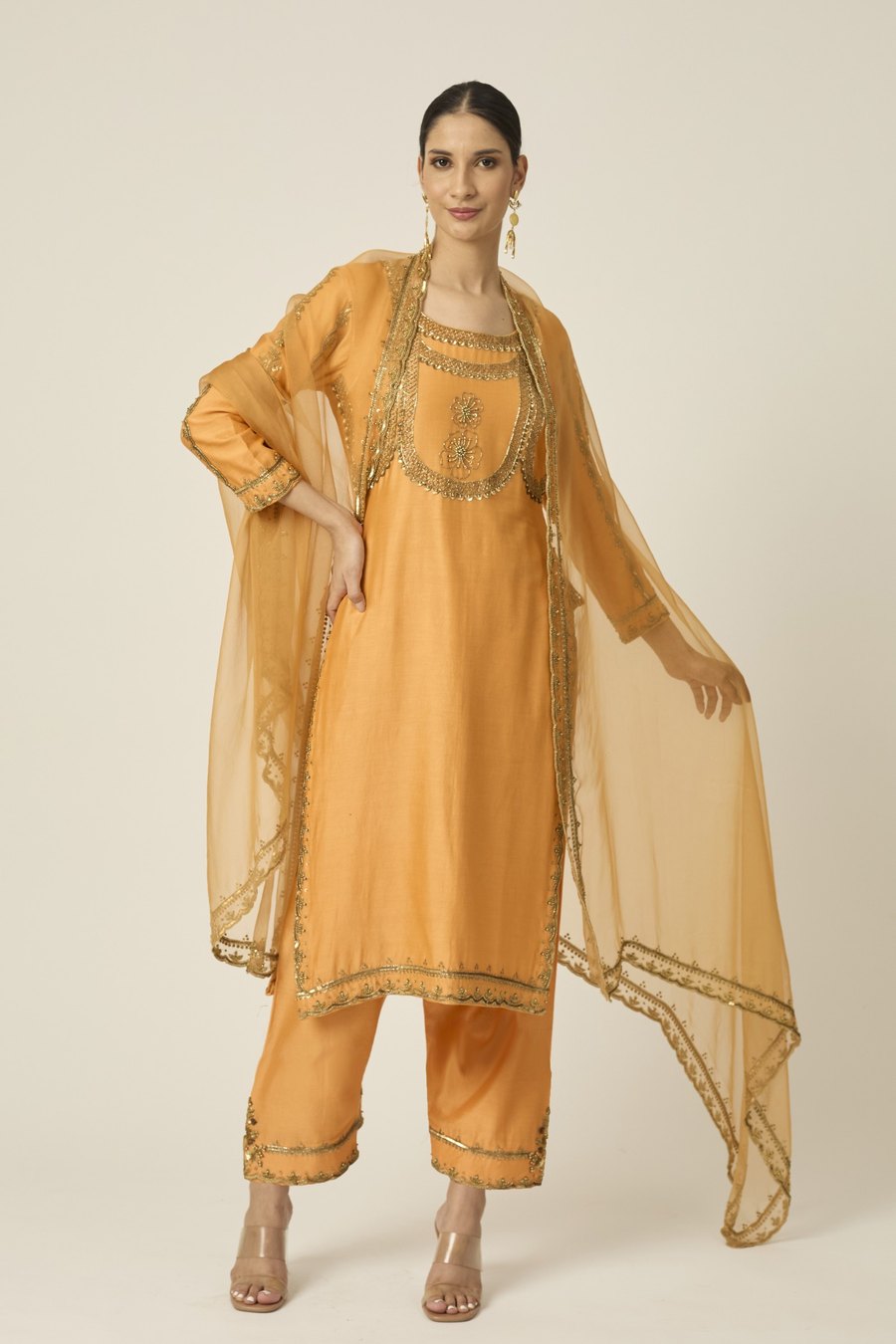
GULMOHAR ORANGE KURTA SET, ₹36,500 — the most worked set we hold, and the one we reach for when the function is in the evening. A chanderi kurta and pant with an organza dupatta and embroidery across all three.
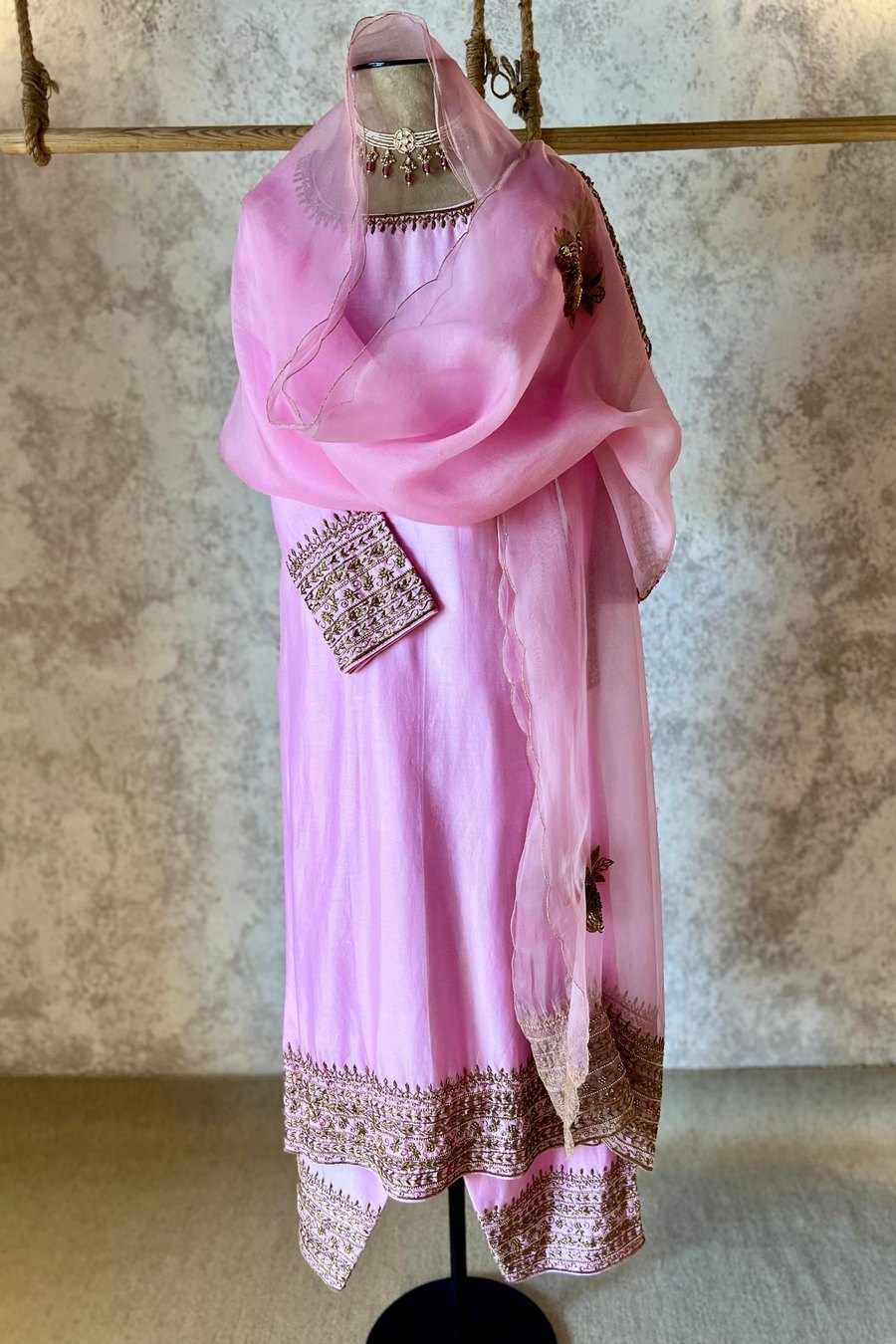
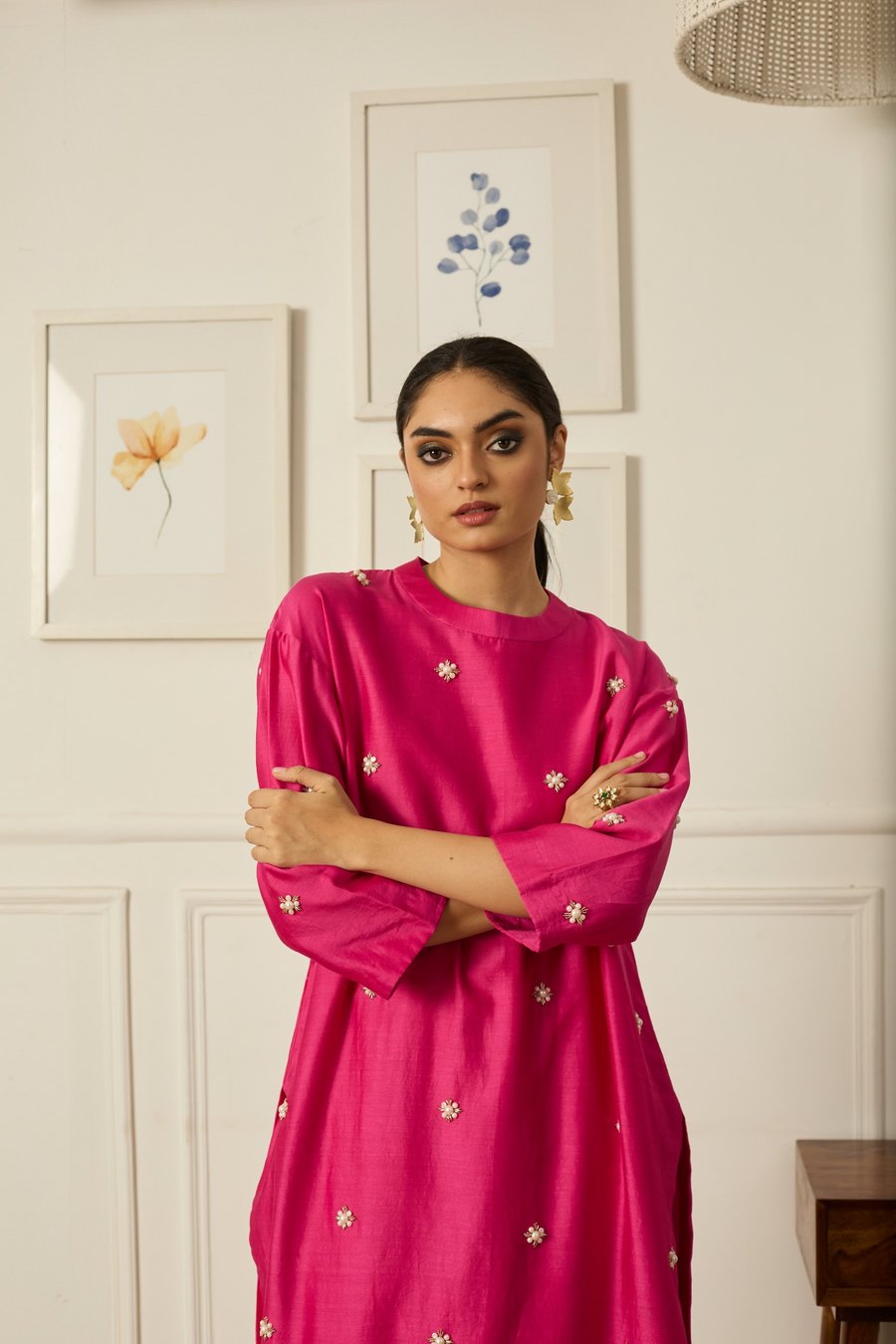
GULABI GULMOHAR KURTA SET, ₹36,500 — the same cut and the same handwork in a rose pink, which is the version we suggest for a daytime mehendi where the colour of the room is already warm.
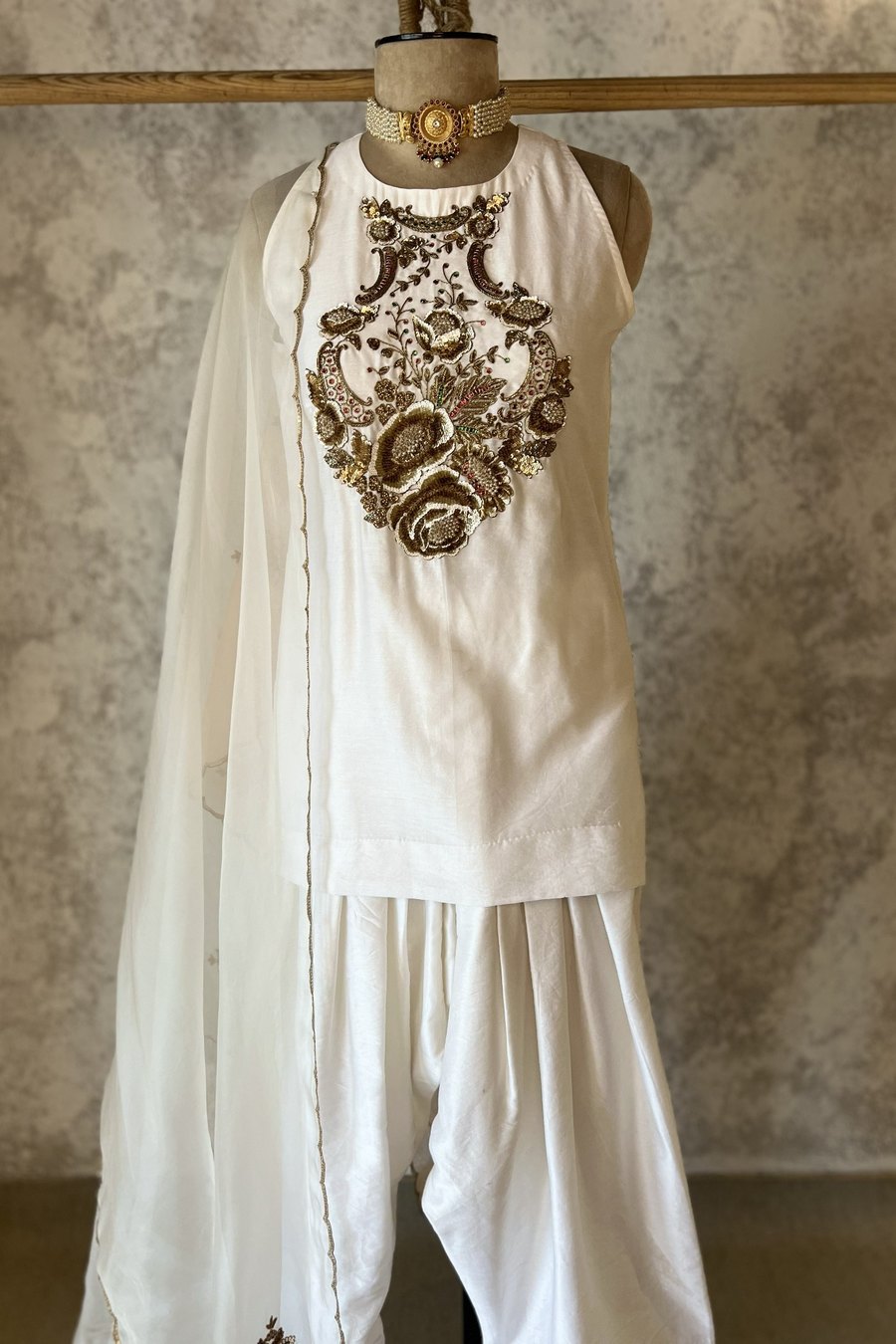
IVORY FARSI KURTA SET, ₹29,500 — ivory chanderi with a sleeveless kurta, antique gold floral embroidery and hand embellishment along the neckline and front. This is the quiet, expensive-looking option, and the one that survives being re-worn.
RUQSAT KURTA SET, ₹28,500 — a chanderi set in a deep amber yellow, with the kurta length made to your preference. If you want one set that goes from a haldi to a reception without a second purchase, start here.
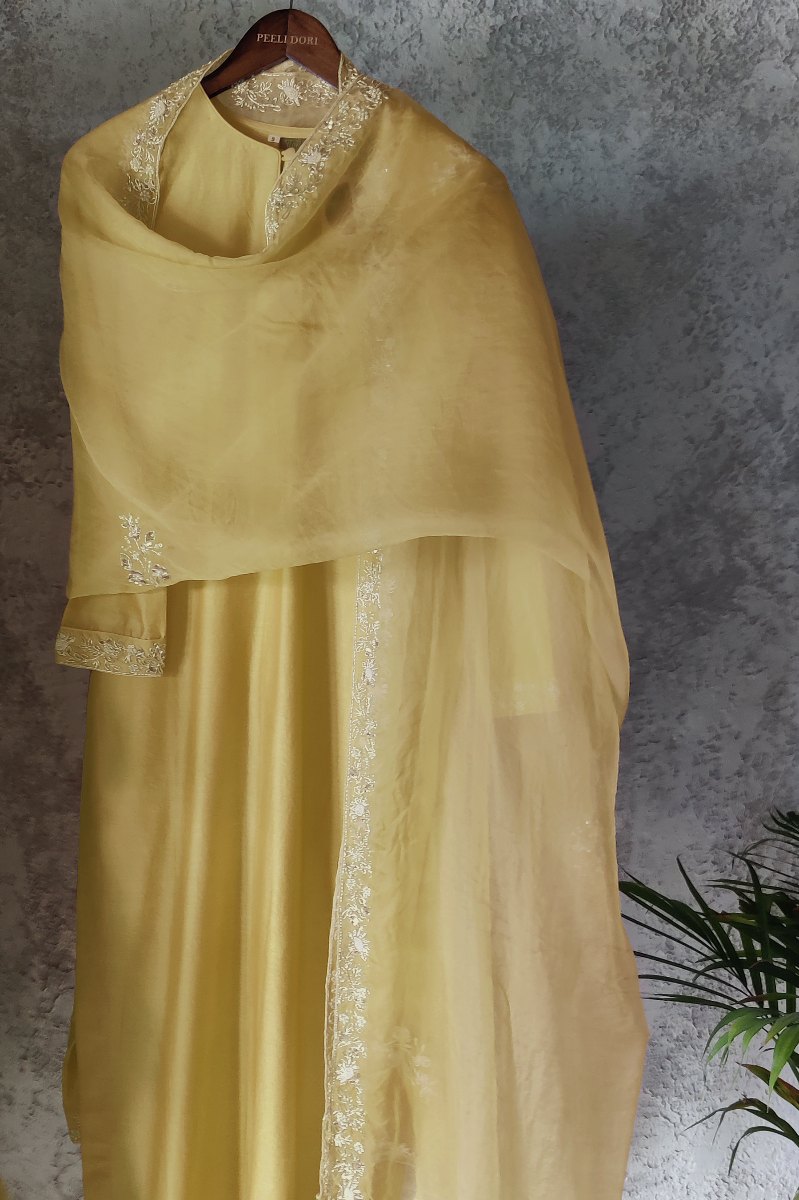
CELINE BUTTER YELLOW KURTA SET, ₹22,500 — silk chanderi and organza with zardosi hand embroidery. The butter yellow is the shade that works under daylight without washing out, which is why it is the set we send for morning functions.
LILA KURTA SET, ₹17,500 — the straight kurta with culottes pants we come back to, in silk chanderi with pearl hand embroidery. The most re-wearable set of the six, and the one that looks right at a family dinner as easily as at a wedding.
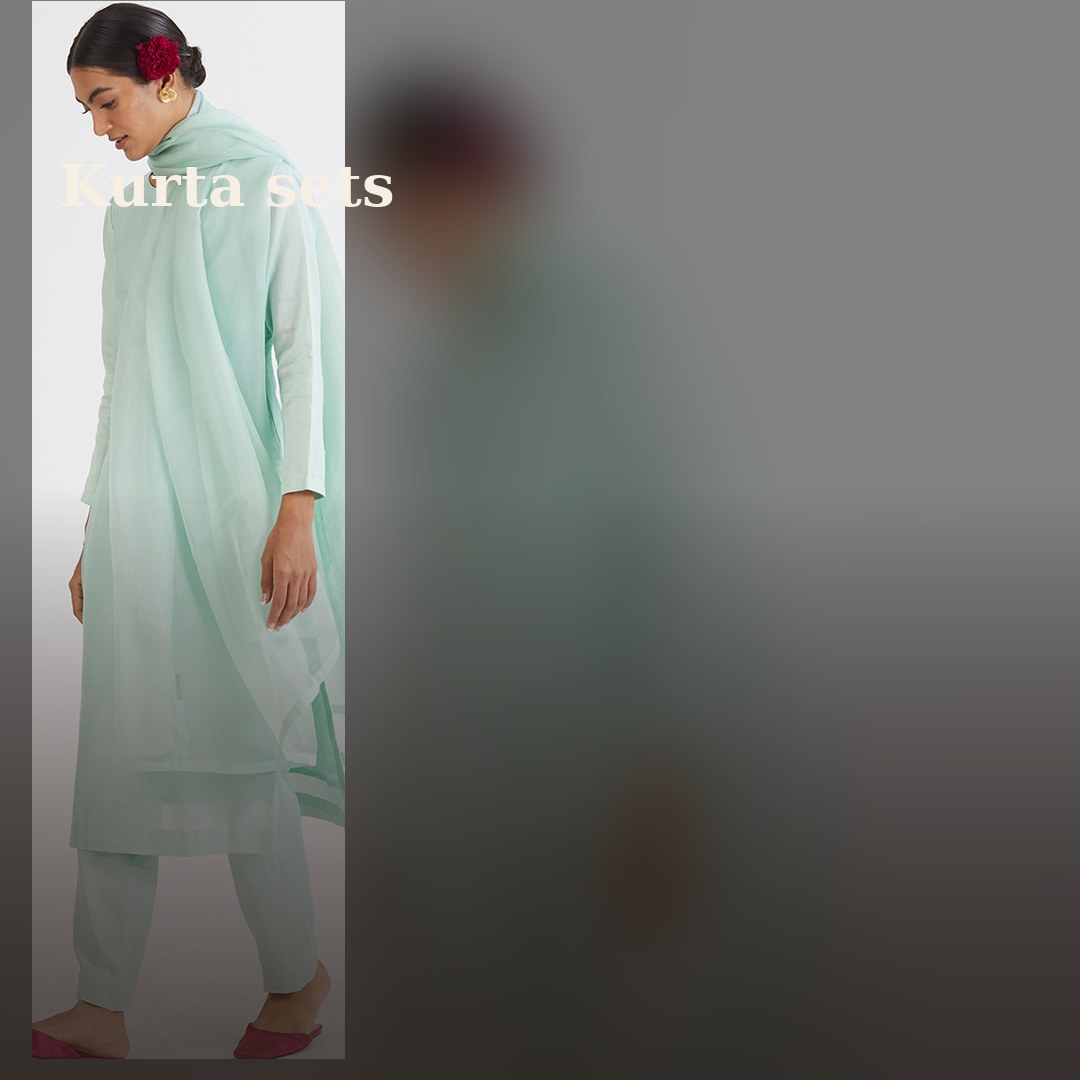
Two more in the same family if none of these is your colour: CELINE LAVENDER KURTA SET at ₹22,500 and MINT CHANDERI KURTA SET at ₹11,500. Every one of the eight is a real product page with its own photographs, fabric notes and measurements, so open the set you are drawn to rather than choosing from a paragraph — the eight sets on this page run from ₹11,500 to ₹36,500.
₹36,500
₹36,500
₹29,500
₹28,500
₹22,500
₹17,500
Made to order: measurements, and what to check when it arrives
Before we cut anything we need eight numbers: bust, waist, shoulder, armhole, kurta length, sleeve length, pant length and the rise you like. Send them and we run a fit check on WhatsApp before the final stitching, so a correction happens while the set is still on the table rather than after it has been couriered to you. If you would rather be measured, both of our stores — Shahpur Jat in New Delhi and Dehradun — will do it in person.
Two things worth deciding at the ordering stage because neither is easy to change afterwards: whether the dupatta is part of the set or not, and whether the pant is culottes or straight. A worked dupatta is what makes the set formal; a straight pant is what makes it look longer. Tell us which and the rest of the measurements follow.
When the set arrives, check three things before you put it away: that the armhole is not pulling, that the hem falls where you asked, and that the worked panel sits flat when you stand straight. Then fold it flat rather than hanging it — embroidery takes the weight of a wire hanger badly over a season — and keep it in a cotton or muslin cover rather than plastic. Dry clean at the end of a season, not after every function.
Shipping across India is free above ₹10,000, and there is an international shipping offer on the site, code INTSHIP, above ₹49,000. Styling help — what to pair with it, what to wear with it on the day — is on WhatsApp, and it is free.
Frequently asked
Can I wear a kurta set to a wedding?
Yes, and for most of the functions around the wedding it is the smarter choice. Mehendi, haldi, sangeet, the daytime ceremonies and the family lunches are all daylight events where a six-yard drape is hard work and a lehenga is too formal. For the wedding itself, a kurta set works well for guests and for the mothers — our suggestion there is restraint: chanderi, considered embroidery, and a colour that lets the bride lead.
What is a Jaipur-style kurta set?
What people usually mean by a Jaipur-style set is what we call the Gulmohar family: a silk chanderi kurta and pant with hand embroidery and a silk organza dupatta, in colours borrowed from the flower the design is named after. Ours sits between ₹28,500 and ₹36,500 depending on how much of the surface is worked by hand.
Is a kurta set cheaper than a saree?
Usually, and you get more than you would expect for the money. The sets we have picked here run from ₹11,500 to ₹36,500, and each one is three pieces — kurta, pant and often a dupatta — made to order in your measurements. A saree in the same band needs a blouse made on top of it, which is why we suggest kurta sets so often for the functions around the main day.
Do you stitch the kurta to my measurements?
Everything is made to order with custom sizing, so yes. We need your bust, waist, shoulder, armhole, kurta length, sleeve length and pant length, and we run a fit check on WhatsApp before the final stitching. The kurta length on some sets, Ruqsat among them, can be set exactly where you want it to fall.
What do I wear with a kurta set?
Less than you think, especially if the neckline is worked. One good earring and bare wrists will photograph better than a full set. For footwear, a heel is not needed — a mojari or a flat sandal works with the length we cut. If the function is in the evening, the dupatta worn full and pinned once at the shoulder is what lifts the whole outfit.
Explore more: kurya · dupatta — or message us on WhatsApp for styling help.

The information below is required for social login
Sign In
Create New Account