

Every week someone comes into the Shahpur Jat store with a saree already chosen and no idea what to put on top. We think that is the wrong order. The blouse is the half of the outfit that has to fit, the half that appears in every photograph taken from the wai
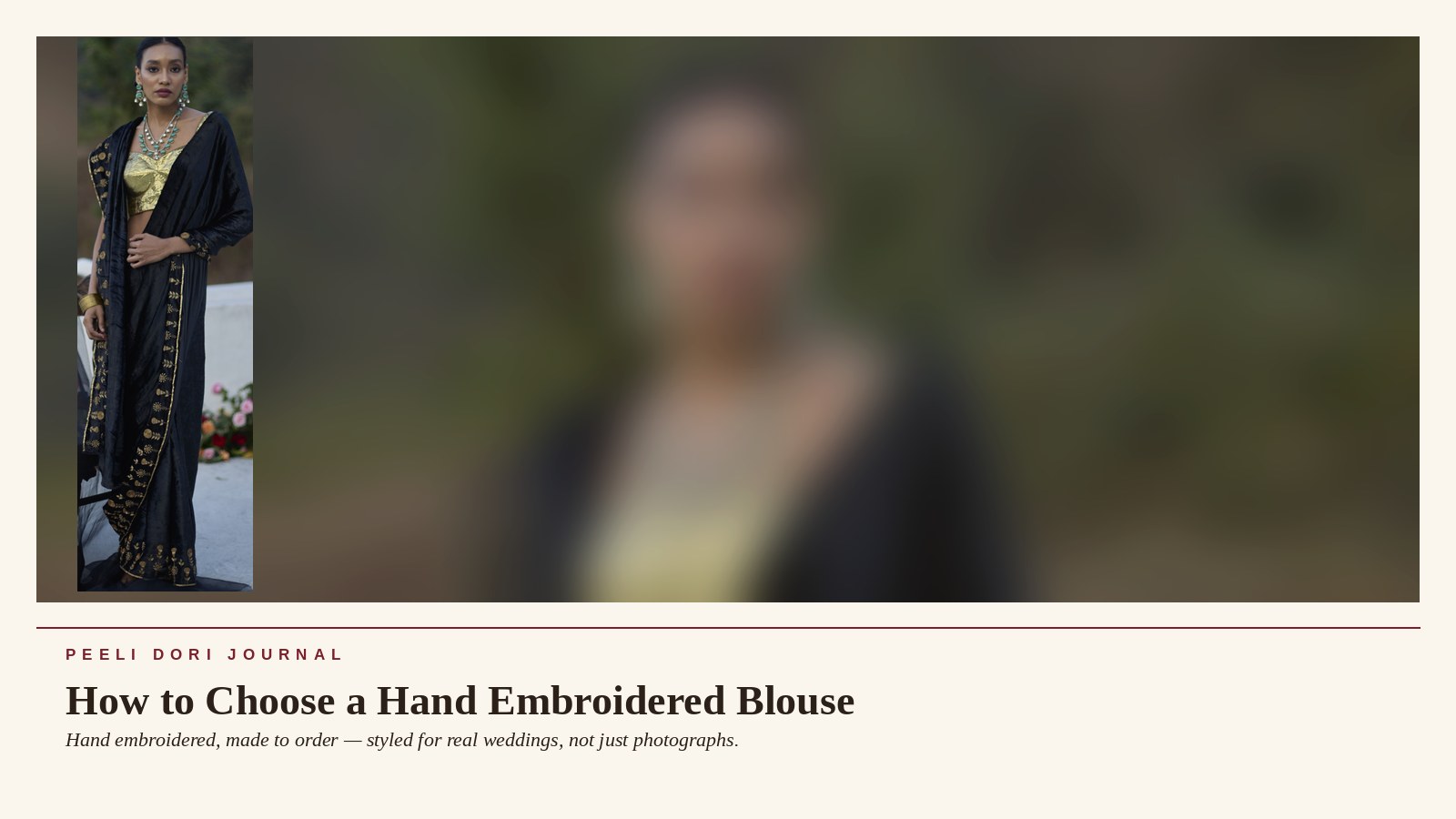
Every week someone comes into the Shahpur Jat store with a saree already chosen and no idea what to put on top. We think that is the wrong order. The blouse is the half of the outfit that has to fit, the half that appears in every photograph taken from the waist up, and usually the half that decides whether the embroidery on the saree reads at all. This is how we would choose one.
Why the blouse decides the whole outfit
Look at any photograph from a wedding you attended last year. The saree is a colour and a texture; the blouse is what sits next to your face. It carries the neckline, the shoulder line and the sleeve, and those three things are what people actually read when they look at you across a room.
There is a second reason the blouse matters more than most people expect. A saree is worn the same way every time; a blouse is not. Two blouses with one saree give you two outfits, and if one of them is plain and one carries work, you can move the same saree from a morning haldi to an evening sangeet without buying anything new. That is why we would rather sell you a second blouse than a second saree.
And there is the practical half. A blouse that fits needs no pins, does not ride up at the armhole, and lets you eat, dance and sit through a long function without a single adjustment. On a heavy saree it is the only thing holding the drape where you put it.
What to look for: cut, cloth and the work on it
Cut first, because it is the part you cannot change later. Start with the sleeve. Cap or sleeveless for a daytime function, elbow for almost anything, longer for an evening where you want a quieter, more formal line. Then the neckline, which should be chosen for the jewellery you actually own rather than the jewellery you might buy: a deep neck wants a bare neck and one strong earring, a high neck wants nothing at all.
Then the back, which is where an evening blouse earns its keep. A deeper back is the single easiest way to make a simple saree look dressed-up, and a covered back is what you want if the function runs into a temple or a family photograph where everyone is standing sideways.
The cloth should suit the saree rather than match it exactly. A saree with a heavy worked border sits well against a blouse in the same cloth in a quieter finish, because the eye then travels instead of bouncing. Put silk against organza and the organza reads sharper; put a smooth satin against silk and the silk picks up a softness it does not have on its own. What you want to avoid is two competing textures of equal weight — that is the look that flattens a good saree.
The work on the blouse is a separate decision from the work on the saree. Gota and gota patti are flat metal ribbon and catch light in a quick flash; zardozi is raised metallic thread and holds a shadow of its own; resham is thread work and stays quiet in shade; pearl and mirror work sit on the surface and read at a distance. On a heavily worked saree a quieter blouse lets the saree lead. On a plain saree the blouse can carry the whole look, and a worked blouse with a plain saree is the pairing we suggest most often to first-time buyers.
Matching the blouse to your saree and to the function
The match-or-contrast question comes up every day in the store, so here is how we settle it. Matching is safer and calmer. Contrast is cheaper than buying new jewellery and does more for a photograph. If your saree is deep — a maroon, a black, an ink blue — a blouse a shade lighter, or in a jewel tone of the same family, gives the eye somewhere to rest. If your saree is pale, a contrast blouse in a deep colour is what stops the outfit reading as washed out.
Then match the blouse to the hour rather than to the invitation. A morning function wants less: cap sleeves, a lighter cloth, minimal work, and a colour close to the saree. An evening wants the opposite — longer sleeves, a deeper back, metal in the work, and one deliberate contrast. A sangeet is the one function where the blouse can be the loudest thing you own. A reception or the wedding itself wants depth and a line that looks considered standing still.
And if you are playing a role rather than choosing freely, let that decide for you. Somebody standing next to the bride all evening wants presence without weight — a worked blouse on a calm saree does that better than a heavy saree with a plain top. If you are the one being photographed all night, the reverse is true.
One saree, two blouses is the most flexible purchase in the wardrobe. A plain sleeveless blouse for the day and a worked one for the evening turns a single saree into two looks, and the second blouse usually costs a fraction of the saree it sits with.
Six hand embroidered blouses from the store
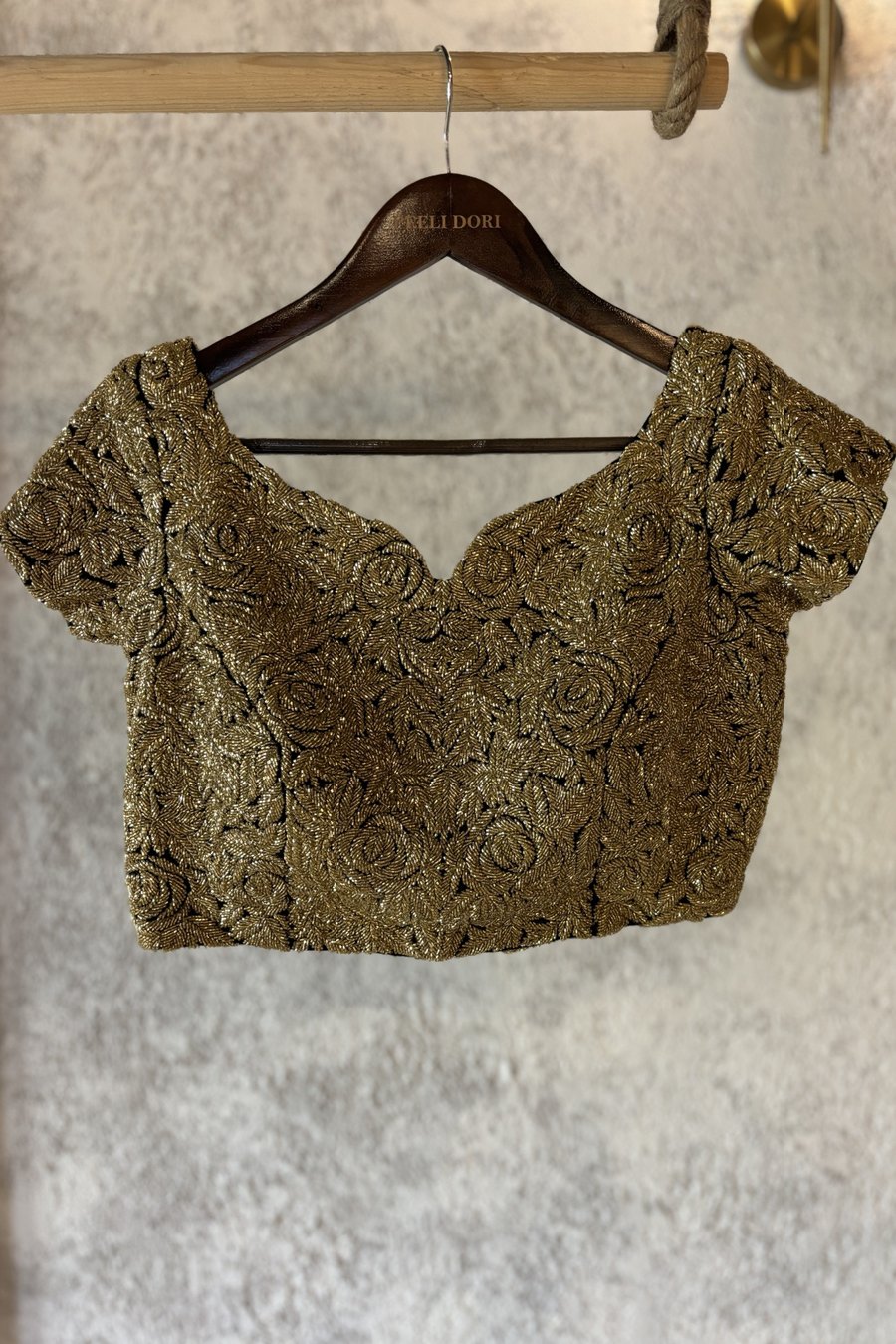
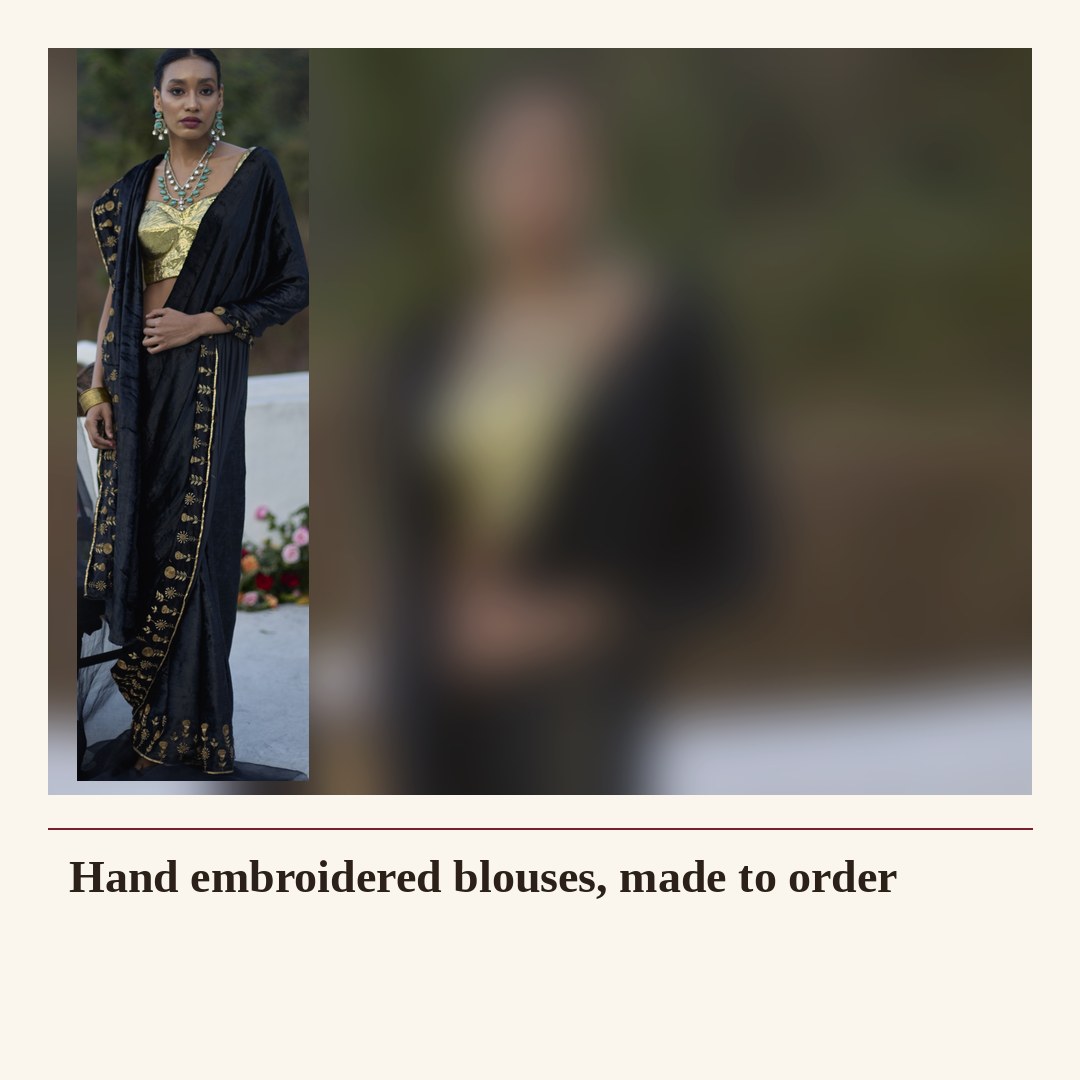
ROSY BLOUSE, ₹27,600 — the most worked piece we hold, and the one we reach for at an evening function. Wear it with a plainly draped saree so the work has room, or buy it as the second blouse for a saree you already own.
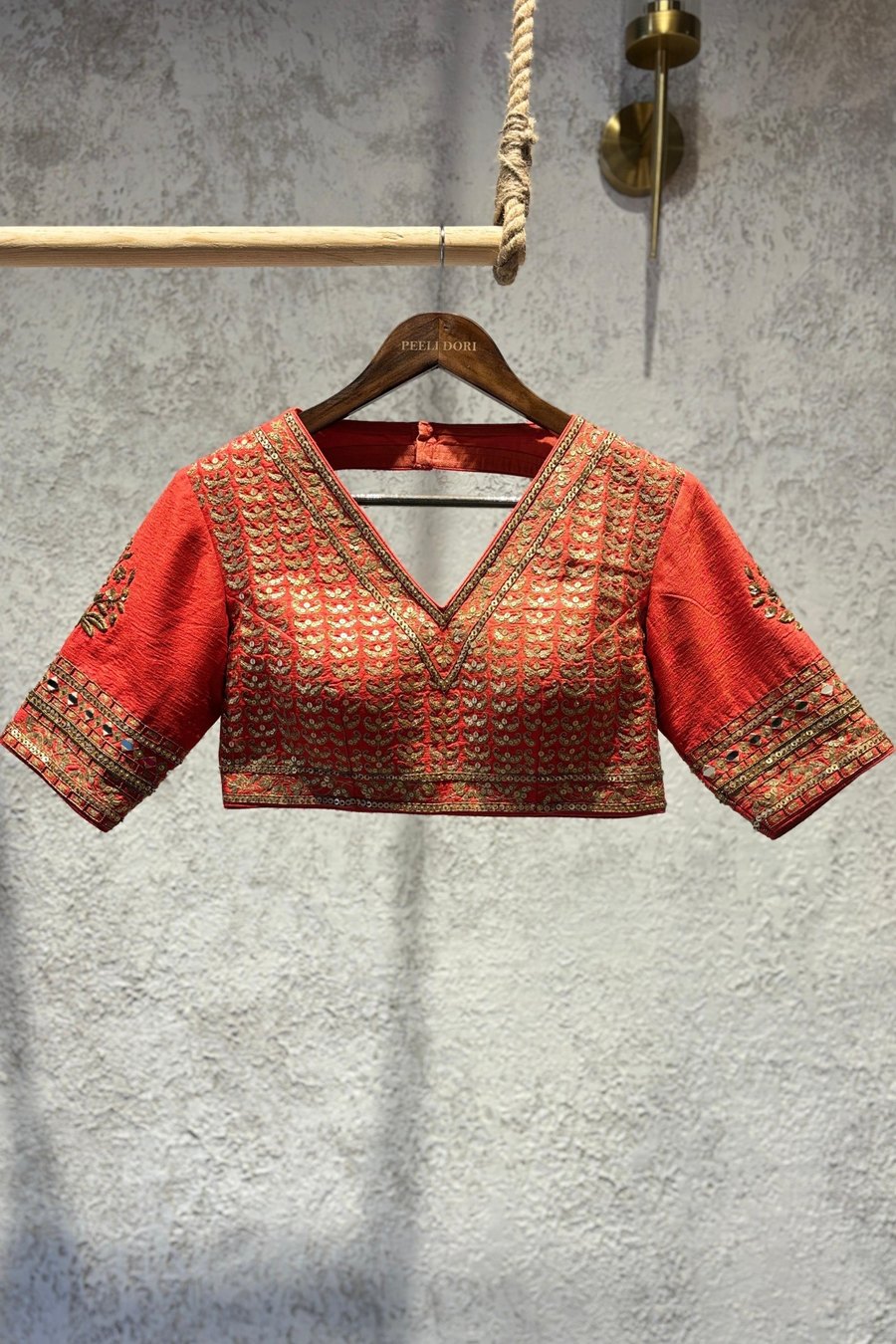
ASHANI BLOUSE, ₹26,500 — red silk, and a red that stays red after dark. This is the wedding and sangeet piece, and it works either against a deep-ground saree or as the only strong colour in a lighter outfit.
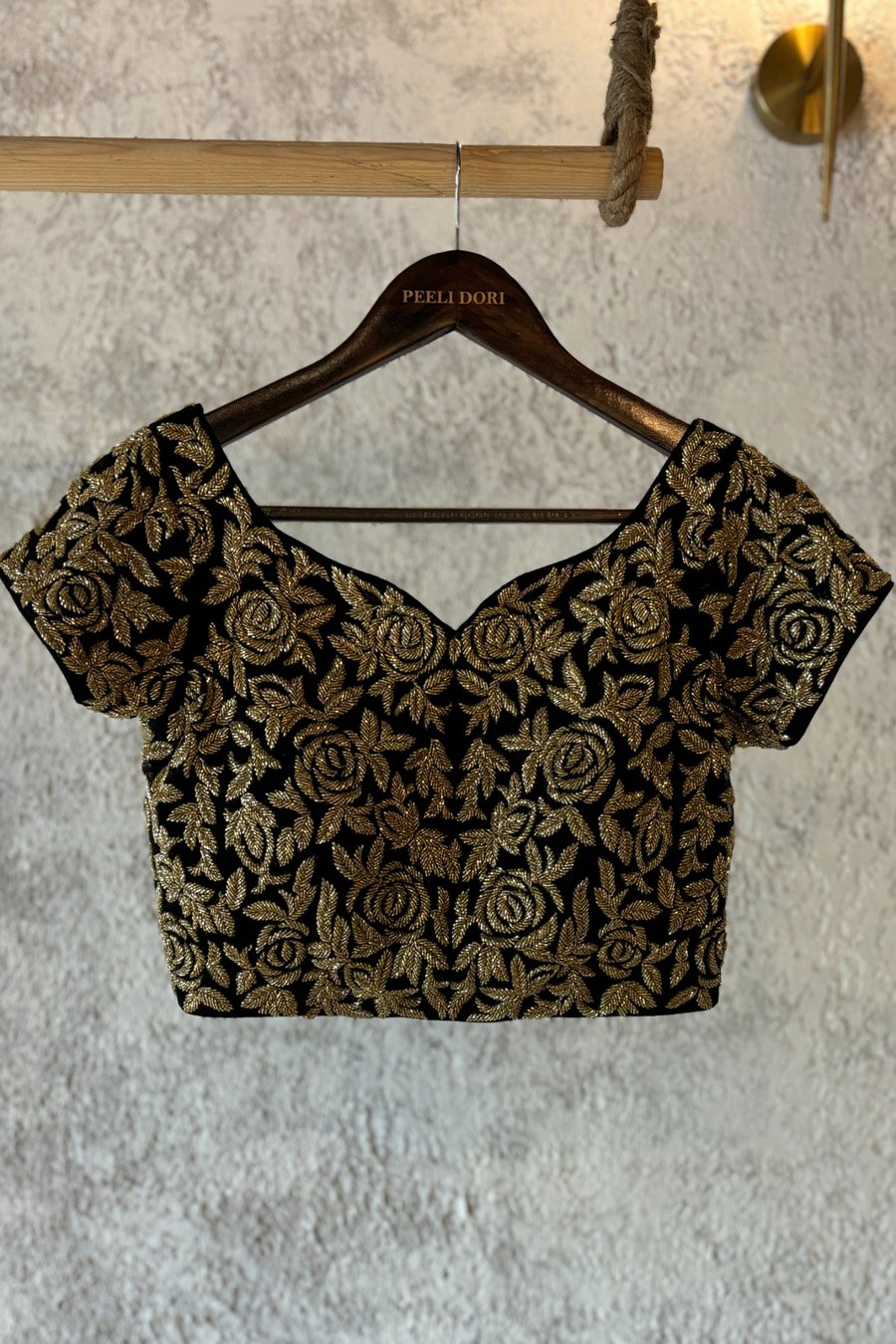
BLACK ROSY BLOUSE, ₹25,600 — black is the most re-wearable blouse you can buy, because it flatters every ground from ivory to emerald. If you own one statement saree and want one blouse that will serve it for years, this is the shortlist of one.
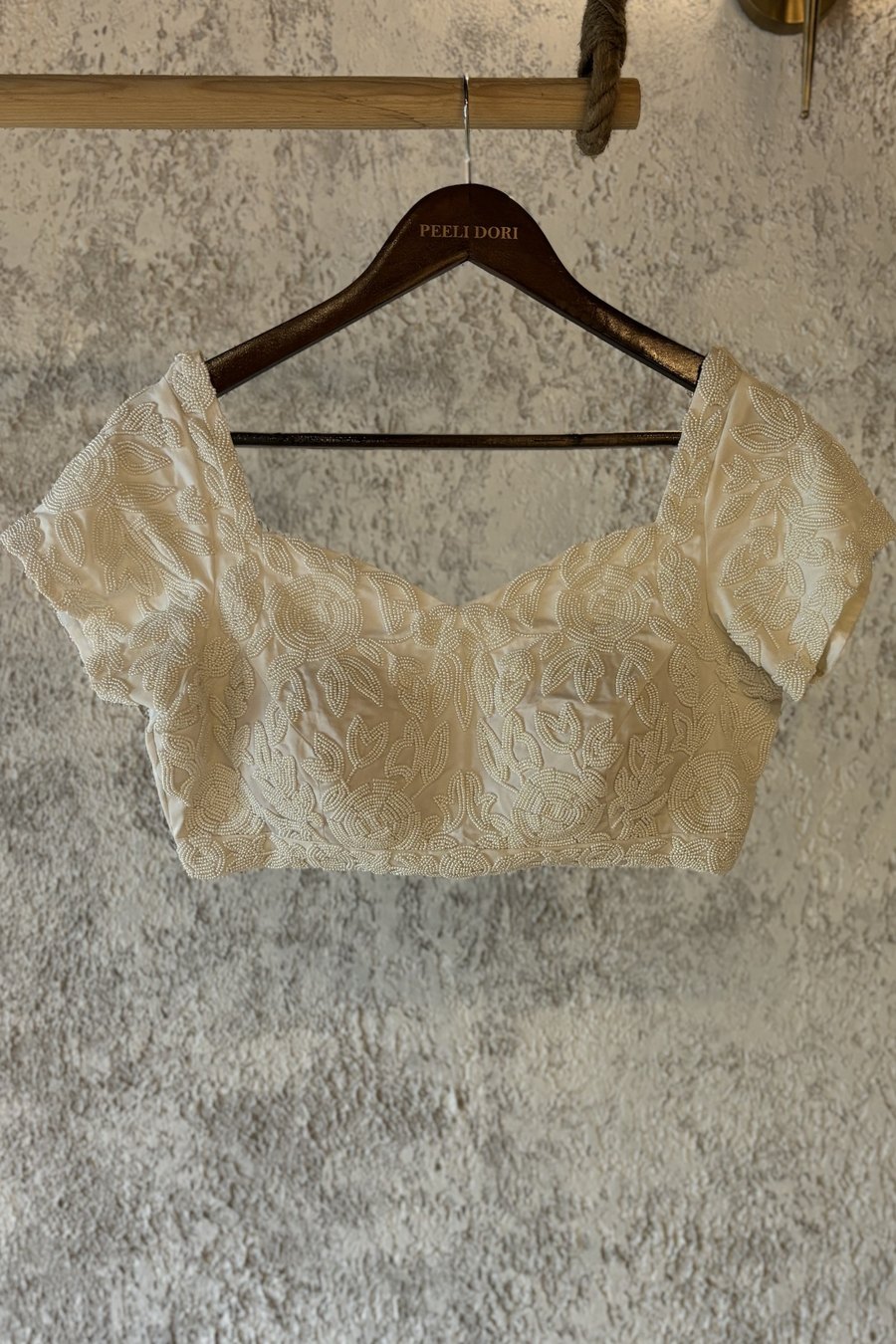
LANA PEARL BLOUSE, ₹18,500 — pearl work, quieter than the three above. Put it on a plain saree and let the blouse be the single worked thing you are wearing; add only earrings.
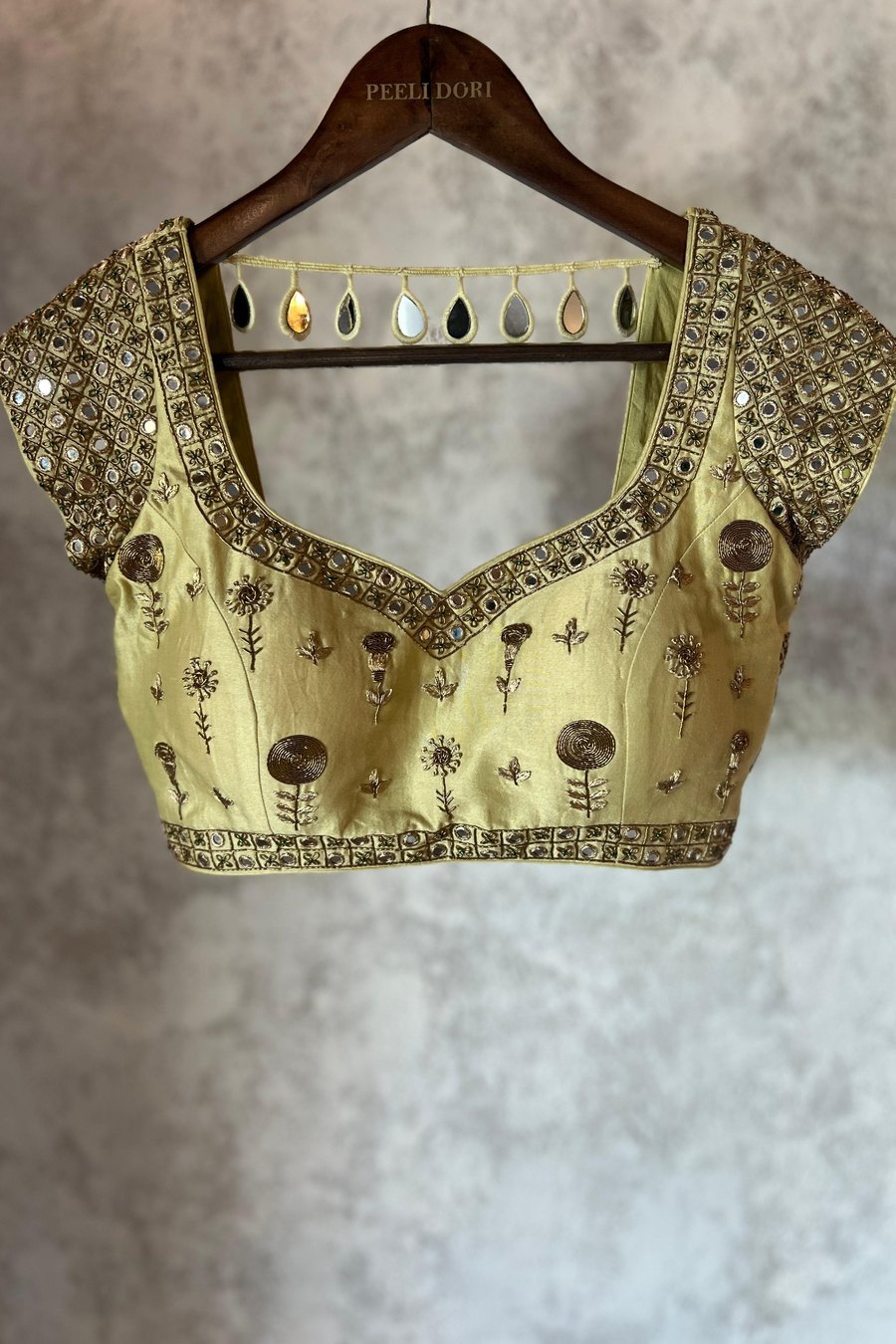
MAJORDA BLOUSE, ₹16,500 — mid-weight work, and the easiest of the six to move between a daytime ceremony and an evening one. It sits well where the guest list is mixed and you are not sure how dressed everyone will be.
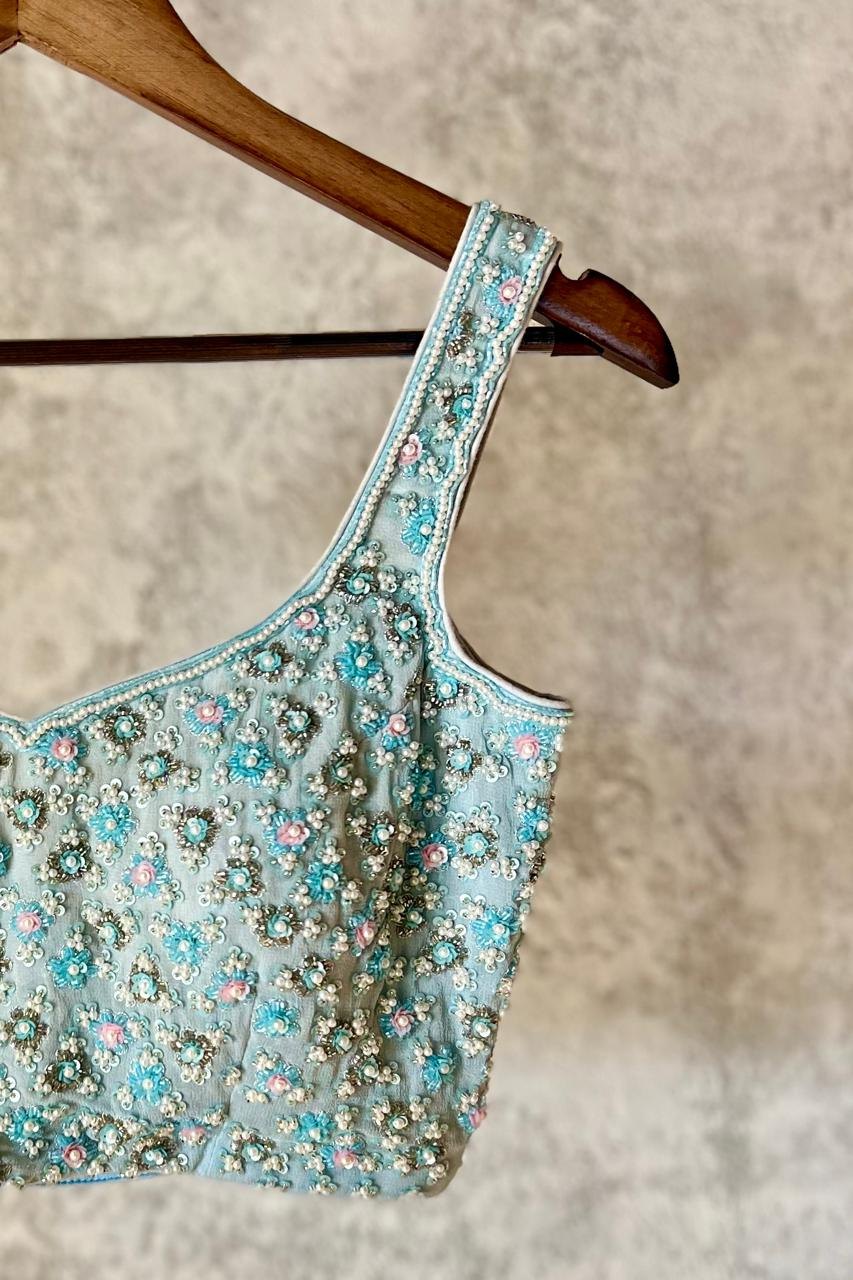
MISTY POWDER BLUE BLOUSE, ₹15,500 — a pale ground with work on it, which makes it the daylight piece. Good for a mehendi or a morning ceremony, and the one to pair with heavy gold jewellery if that is the family tradition.
There are two more in the same price band if you want a contrast rather than a match: MISTY PINK BLOUSE and MIRAYA MIRROR BLOUSE, both ₹15,500. Each of the eight is a real product page with its own photographs and measurements, so open the one you are drawn to rather than choosing from a paragraph.
₹27,600
₹26,500
₹25,600
₹18,500
₹16,500
₹15,500
Fit, made to order, and the measurements that actually matter
Every blouse we make is made to order with custom sizing, which removes the biggest variable in the outfit. Before you send measurements, it helps to know which ones do the work: bust, waist, shoulder, armhole, and the length of the blouse itself, plus the two depths that decide the look — front neck and back neck. Sleeve length is the sixth, and it is worth measuring a sleeve you already like rather than guessing.
Two smaller things worth deciding at the ordering stage, because neither is easy to change afterwards. First, lining: a lined blouse holds its shape under a silk saree and is what you want for anything sheer. Second, the fastening — hooks feel more traditional and a zip gives a cleaner back line. Tell us which and we will build it that way.
We run fit checks on WhatsApp before the final stitching, so a correction happens while the blouse is still on the table rather than after it arrives. If you would rather be measured in person, both of our stores, Shahpur Jat in New Delhi and Dehradun, will do that, and styling help is available on WhatsApp for everything else.
Shipping across India is free above ₹10,000, and there is an international shipping offer on the site, code INTSHIP, above ₹49,000. If you are ordering for a function, tell us the date when you order so we can be honest with you about what is possible.
Looking after a worked blouse
A worked blouse ages faster than the saree it sits with, mostly because of how it is stored. Do not hang it on a wire hanger for months — the shoulders dent and the armhole takes the weight. Fold it flat, and put it away in a cotton or muslin cover rather than a plastic one, which traps damp against the cloth and dulls metal work over a season.
Dry clean at the end of a season rather than after every function; repeated cleaning is harder on handwork than wearing the piece a few times. Never press an iron straight onto embroidery — steam it and let it hang, or have it pressed through a cloth at low heat, because a direct hot iron flattens raised work for good.
Air a blouse in a shaded room for a few hours before you fold it away, and fold it on a different line each time so no single crease settles into a worked panel. Keep perfume and deodorant off the work; spray before you dress, not after.
Frequently asked
What blouse should I wear with a hand embroidered saree?
It depends on how much work the saree carries. If the saree has a worked border and pallu, keep the blouse quieter so the saree leads. If the saree is plain or lightly worked, the blouse can carry the whole look — a worked blouse on a plain saree is the pairing we suggest most often. Then let the hour decide the sleeve and the neckline: less for the morning, more for the evening.
Can I wear the same blouse with more than one saree?
Yes, and it is the cheapest way to multiply a wardrobe. One blouse in a deep, neutral ground — black, maroon, ink blue — flatters almost anything, and a second blouse in the saree's own colour gives you a calmer option. Two blouses and one saree give you two looks for less than the price of a new saree.
How much should a hand embroidered blouse cost?
In our store the worked blouses sit between about ₹15,500 and ₹27,600, and the price tracks the density and difficulty of the embroidery, the cloth and whether it is lined. A blouse is also a third of the outfit rather than an accessory, so it is the wrong place to economise on a saree you intend to keep.
How do I order a blouse in my own measurements?
Send your bust, waist, shoulder, armhole, blouse length, sleeve length and your front and back neck depths. Everything we make is made to order with custom sizing, and we run a fit check on WhatsApp before the final stitching so any correction happens while the blouse is still being made. You can also be measured in either store, Shahpur Jat in New Delhi or Dehradun.
Should the blouse match the saree or contrast with it?
Both work, and both are deliberate. Matching is calmer and reads as one piece. A contrast blouse in a deeper tone gives the eye somewhere to rest and does more in a photograph than a new set of jewellery — it is the easiest change you can make to a saree you have already worn.
Explore more: designer hand embroidered blouse · saree — or message us on WhatsApp for styling help.

The information below is required for social login
Sign In
Create New Account