

"Designer" is the most used and least defined word in Indian ethnic wear. Walk into any store and half the sarees on the rail are called designer. We use the word in a narrower way at Peeli Dori. A designer saree, to us, is one where a person decided on the cl
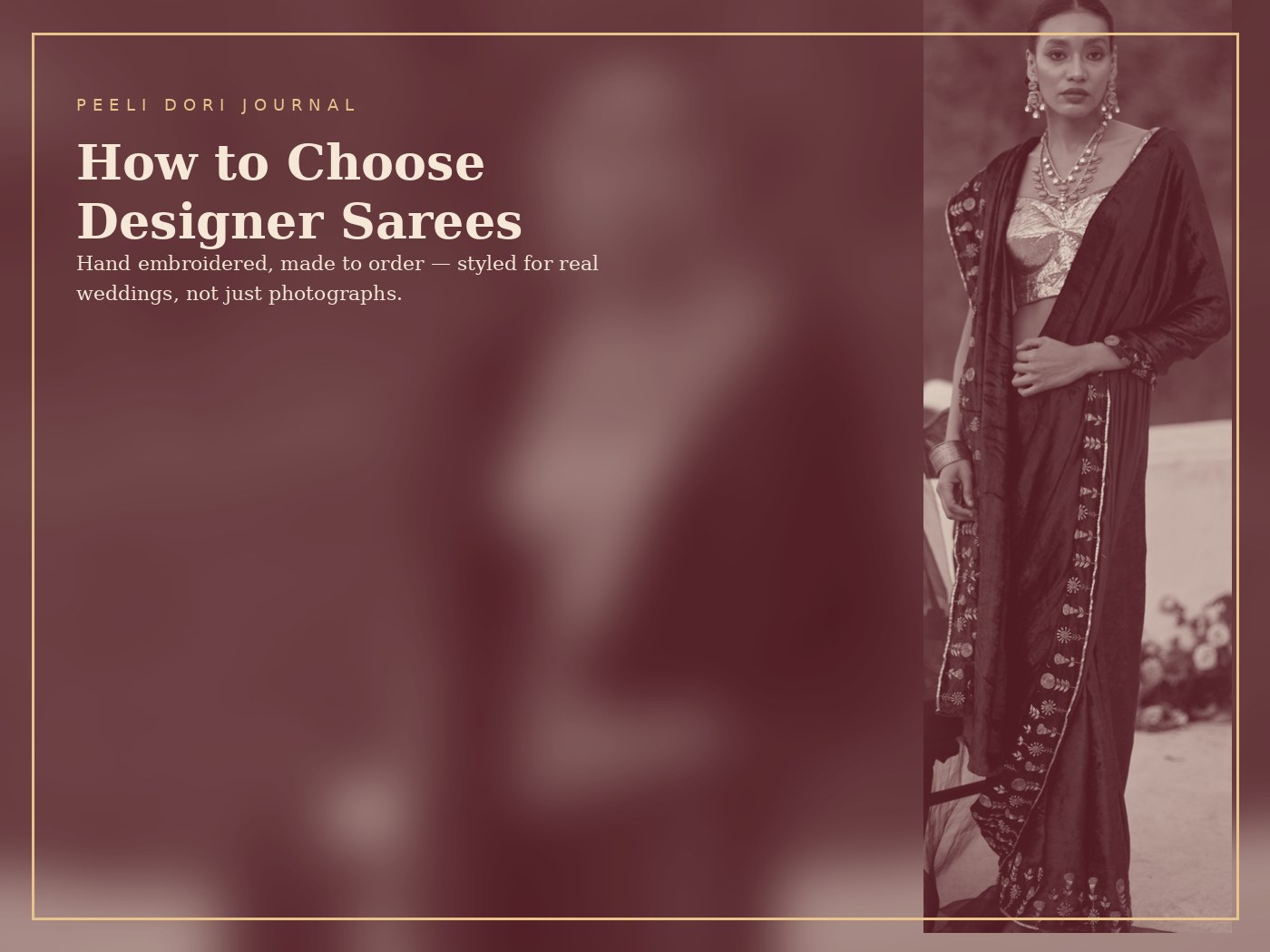
"Designer" is the most used and least defined word in Indian ethnic wear. Walk into any store and half the sarees on the rail are called designer. We use the word in a narrower way at Peeli Dori. A designer saree, to us, is one where a person decided on the cloth, the work and the cut of the blouse rather than a mill deciding on a print. Here is how we would choose one — ours or anyone else's.
Start with the occasion, not the label
The mistake we see most often is a buyer falling for a saree first and working out where to wear it afterwards. When you are dressing for a wedding calendar it works the other way round. Every function you are invited to has four things attached to it: a time of day, a quality of light, a role you are playing, and a length of evening. Those four narrow a collection faster than any colour filter on a website.
A daytime mehendi or haldi is serve-yourself light and heat, and it wants a lighter ground with less metal, something you can move in for six hours. A sangeet is an evening, and it wants the opposite — deeper cloth, denser work, a border that catches the lights without competing with them. A reception sits between the two and is usually where people over-dress or under-dress by a full register.
The role matters just as much. The bride's saree is the one piece in the room that is allowed to be the heaviest; if the sister of the bride wears the same weight of work, both pieces suffer. Guests usually want the craft to be visible but the silhouette quieter. Ask yourself which of those you are before you ask yourself which colour you like.
One more thing on the label: a designer saree is not defined by its price point. Our own core line runs from about ₹10,000 to ₹50,000, with the deepest worked pieces at ₹59,500, and what sets that band is the work on the cloth and the number of hours in it, not the name sewn inside.
The fabric and the work: how to read a saree properly
Two things decide what a designer saree is worth, and neither is the print. The first is the cloth. Organza is the lightest thing we make and the reason we love it is that it holds its own shape — it takes embroidery beautifully and it throws light across a border instead of soaking it up. Silk organza behaves the same way with a little more weight behind it. Georgette sits in the middle: it drapes, it hangs most creases out on its own, and it is the one that travels. Velvet is the evening cloth — it holds a deep colour like nothing else and it is the piece to buy for a winter reception.
The second thing is the work, and the names are worth learning because they tell you what you are looking at. Gota is a flat ribbon of metal wrapped around thread and stitched down, which is why a gota border flashes as you move. Zardozi is heavier metallic thread, often set with small stones, and it stands a little up off the cloth. Dabka is fine coiled wire stitched in small loops. Resham is silk thread work, softer and quieter, and it is the work that keeps its colour best in shade.
You can tell hand work from a machine run in about ten seconds. Turn the border over. Genuine hand embroidery leaves small thread tails and tiny irregularities on the reverse, because a person's tension is never perfectly even. A machine border is uniform to the millimetre and often stiff where the stitching is dense. Nothing is wrong with a machine border on a saree at a different price; it is simply a different product, and it should not be sold to you as handwork.
Everything on our sarees is worked by hand in these traditions, which is also why no two pieces come out identical. If you are weighing two sarees of the same design, expect the embroidery to differ slightly between them. That is the signature, not the flaw.
Choosing for your ceremony and your frame
A designer saree should be chosen the way a tailor chooses cloth — for the person who will wear it. Height and frame change which pieces work. Heavier work carried high, near the pallu and across the shoulder, draws the eye upward and suits a shorter frame. A dense border running the length of the hem grounds a taller frame and stops a long drape from looking unfinished. And the middle of the saree is the part you see least; it is fine for the work to concentrate at the two ends.
The blouse is where a designer saree becomes genuinely yours. Because our pieces are made to order with custom sizing, the sleeve length, the neckline and the back are a conversation rather than a size chart — a fuller sleeve for a winter wedding, a deeper back for a sangeet, a high neck for a temple function. On a ₹20,000 saree the blouse is not an accessory; it is a third of the outfit, and getting it cut to you is the single largest improvement most people can make.
Colour should be the last decision, not the first. Pick your role and your hour, then your cloth and your work, and by then only two or three grounds will still be in the running. That is the moment to choose between a cooler and a warmer one — and it is where a five-minute WhatsApp conversation with us tends to settle things faster than a week of scrolling.
Six designer sarees, and who each one is for
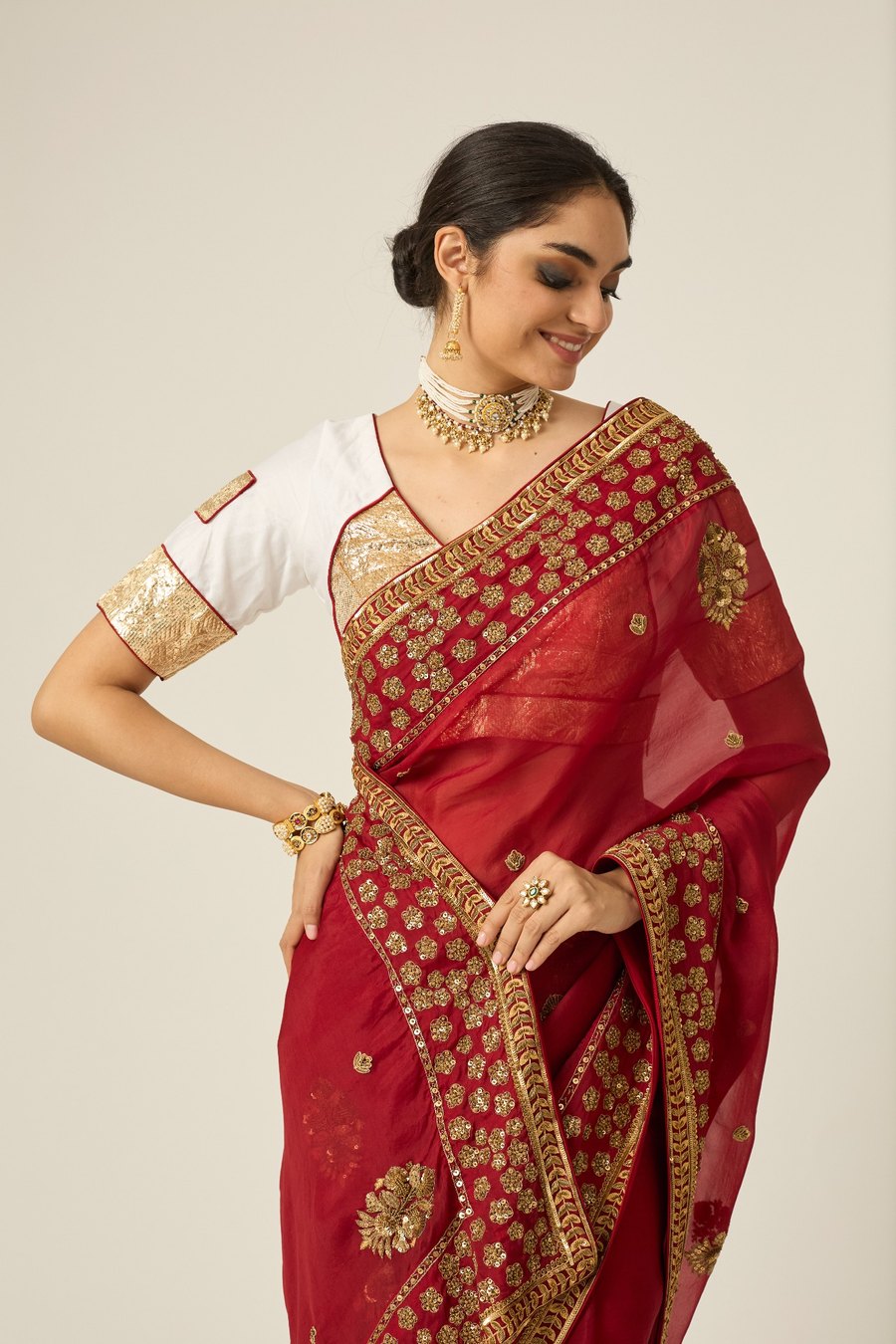
MYRA RED ORGANZA SAREE at ₹59,500 is the deepest and most worked piece we carry, and it is the one we would put on a bride or on the sister of the bride at the loudest function of the week. It carries a full border and it reads as red at a distance, which is exactly what you want at an evening sangeet.
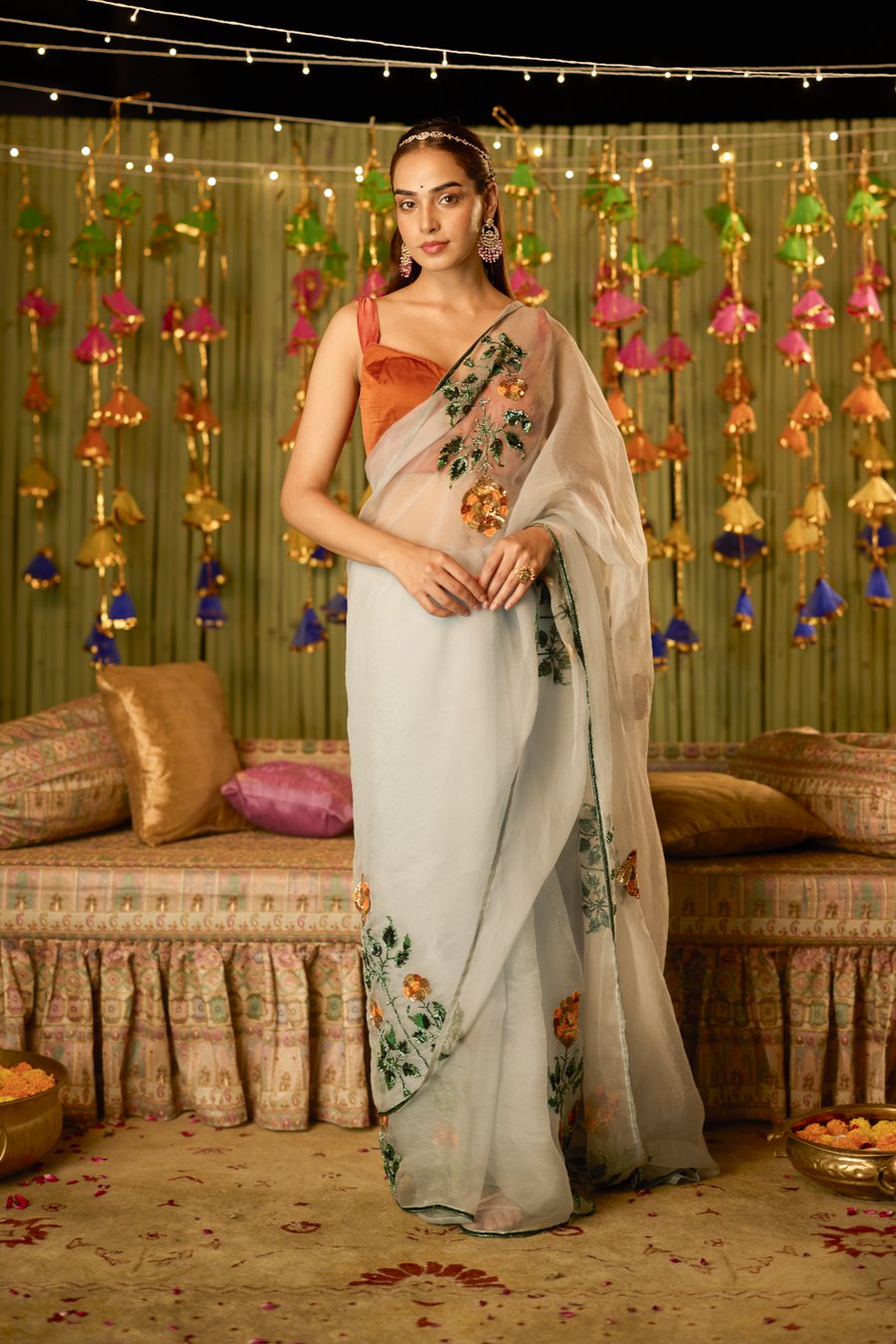
NOOR BAHAR ORGANZA SAREE at ₹48,500 wears its work a little more lightly. It is the piece for the friend or cousin who wants the craft visible without taking the room — a guest saree that still looks considered next to everyday wear.
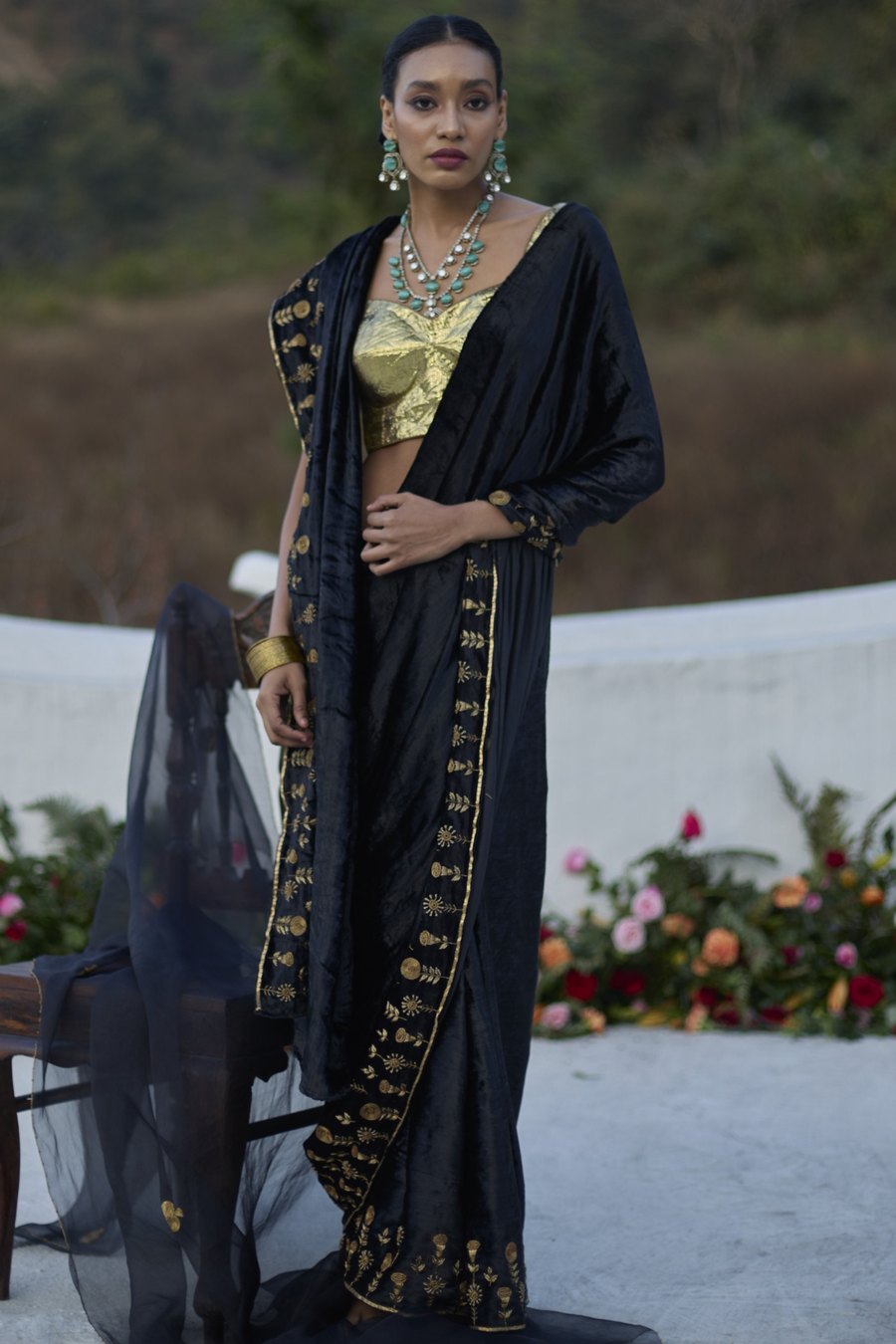
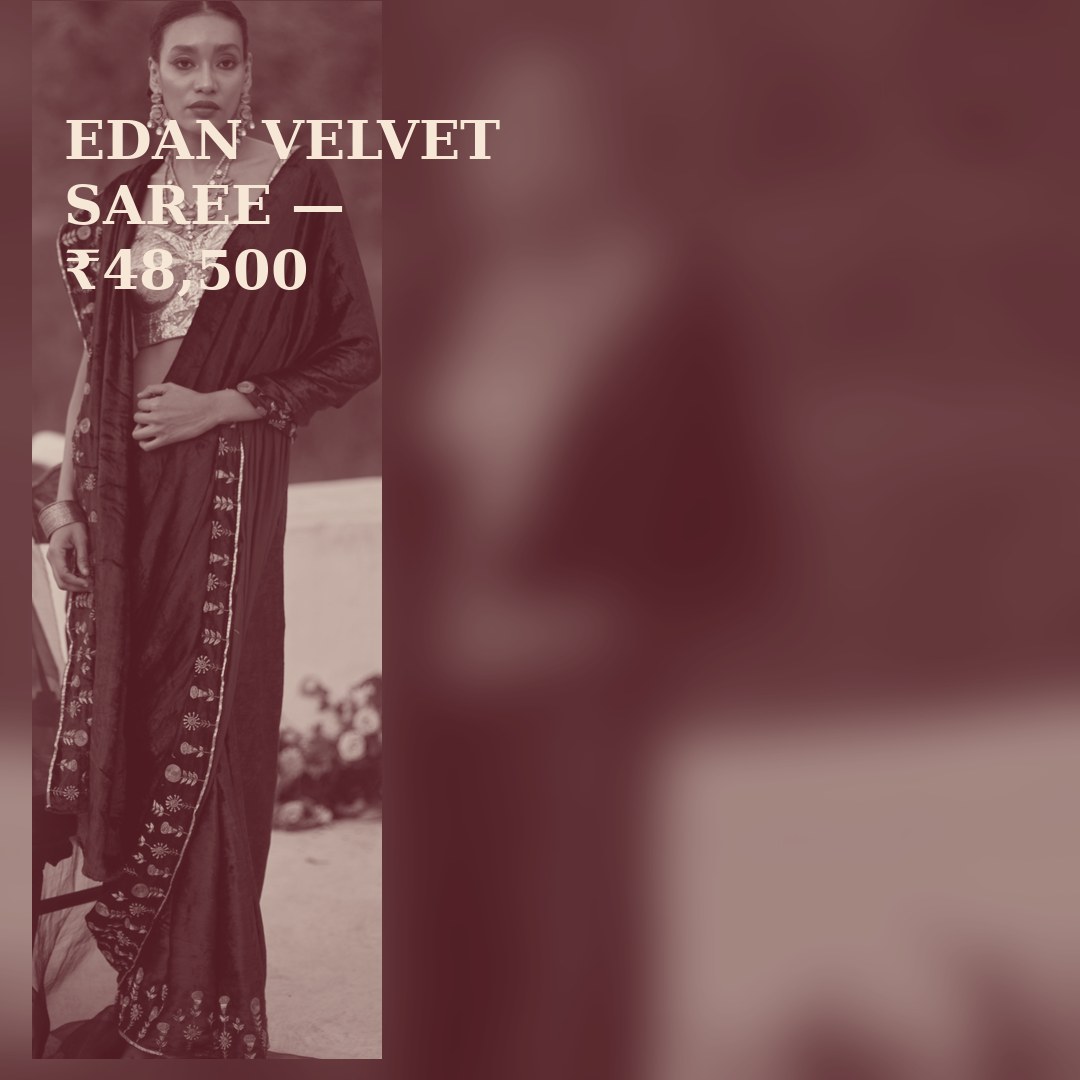
EDAN VELVET SAREE, our black velvet at ₹48,500, is the winter-evening answer. Velvet holds a deep, almost matte black and it is the right cloth for a reception where the lighting is warm. It is also the one to roll rather than fold when you put it away.
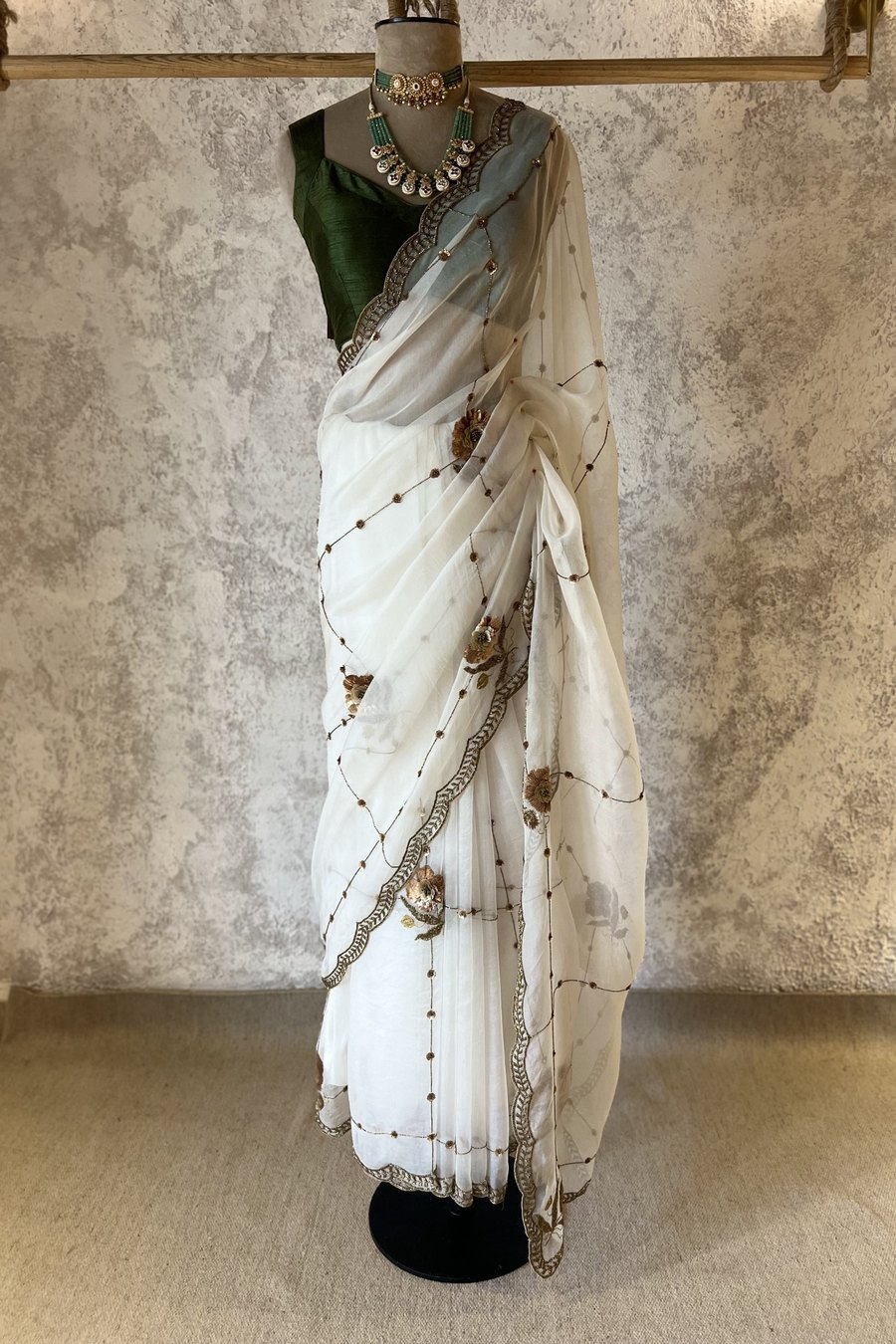
GULBAHAR IVORY ORGANZA SAREE at ₹46,500 is the daylight piece. A pale ground with work on it is lovely in the morning and unforgiving of a rushed drape, so give yourself time with the pleats. If your functions run from a daytime haldi into an evening, this is the one to open first.
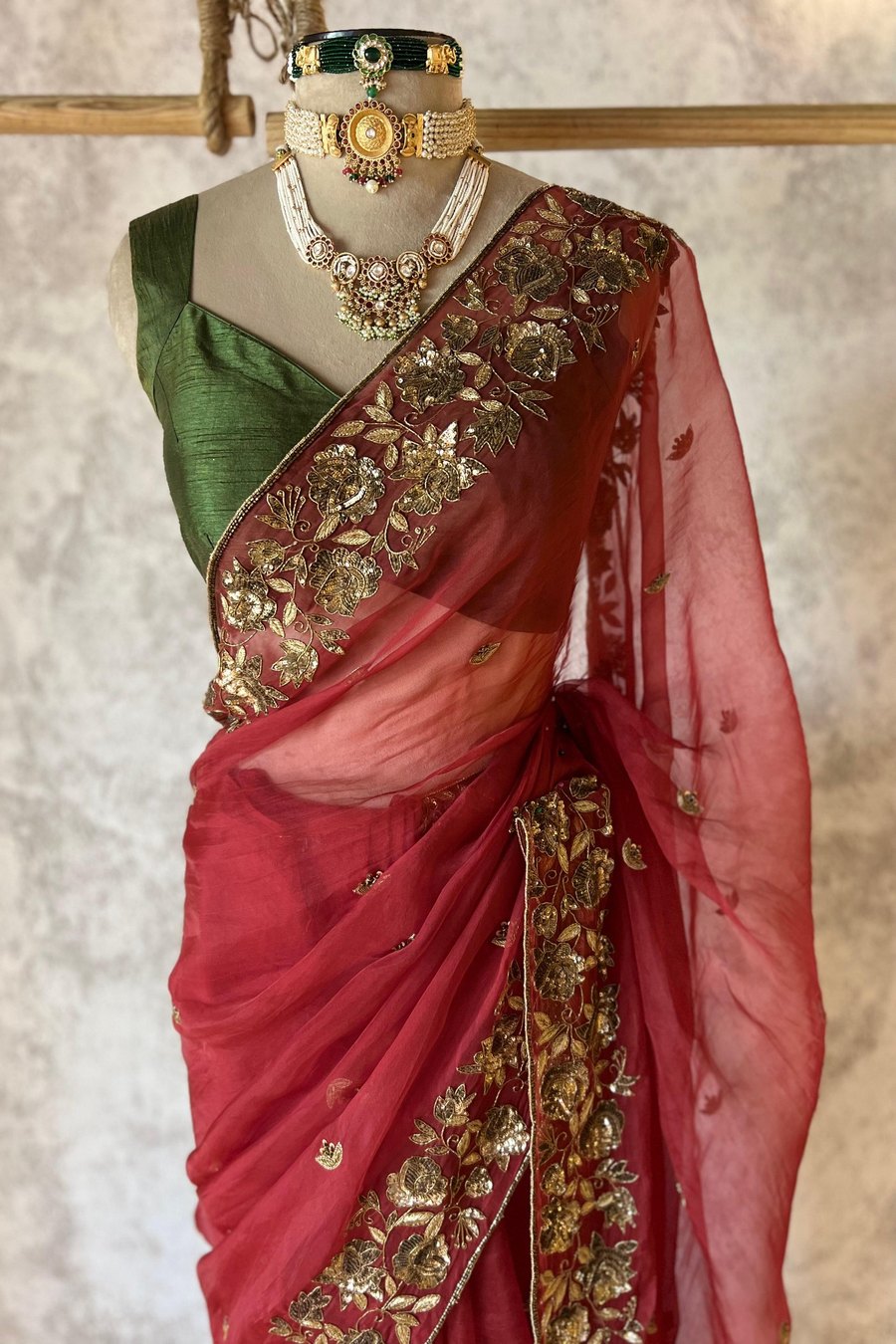
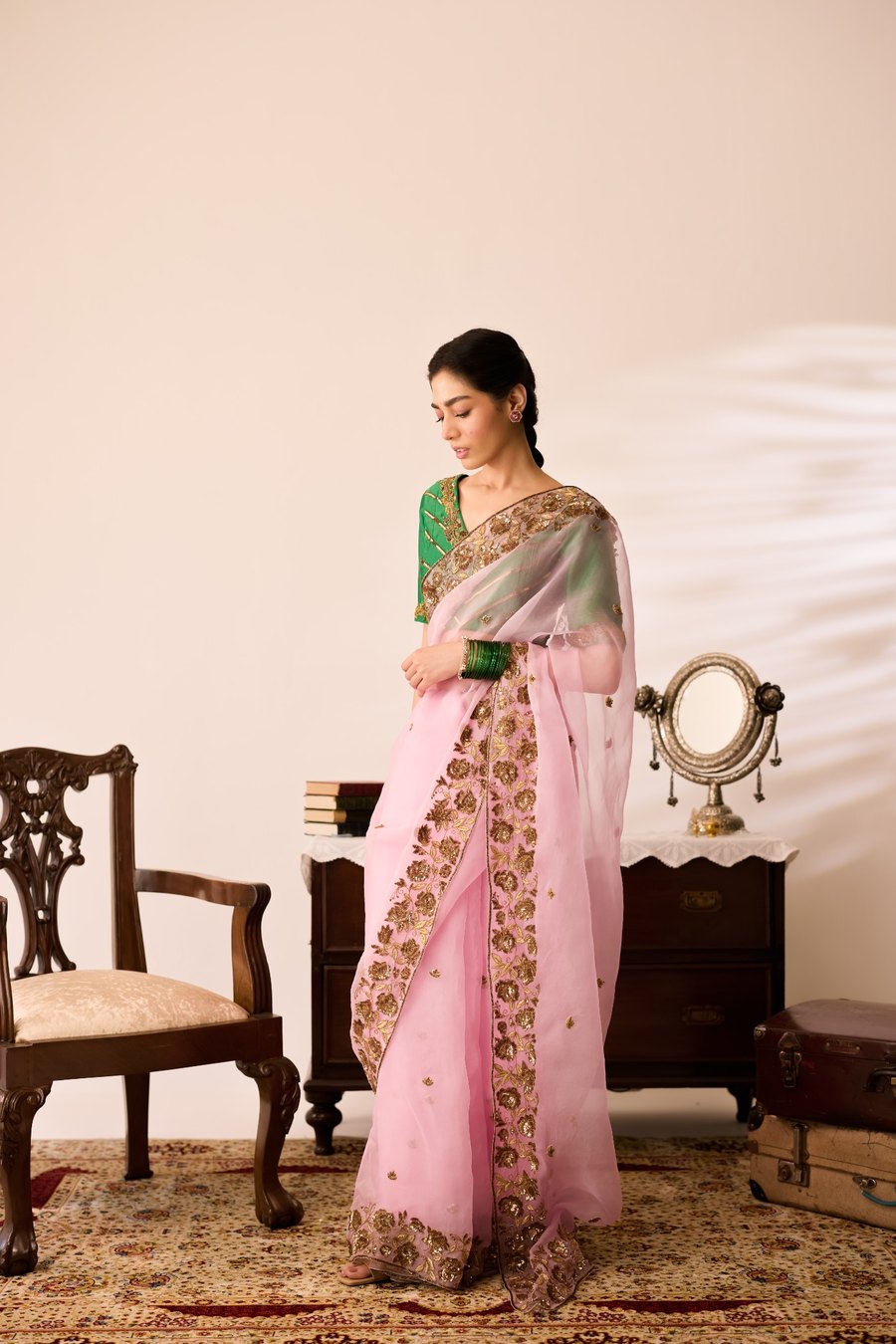
RUQMANI MAROON ORGANZA SAREE and RUQMANI GULABI ORGANZA SAREE, both ₹46,500, are the pair we suggest most often when someone cannot decide between two functions. The maroon is cooler and more formal; the gulabi is warmer and reads softer in photographs. Take them both if both functions matter, or take the one that sits closer to your own colouring.
If you are looking for something that folds into a suitcase without a fuss, the NISHKA ROYAL BLUE GEORGETTE SAREE at ₹46,500 hangs its creases out overnight and is far easier than organza to travel with. Each of these is a real product page with its own measurements, so open the one you are drawn to rather than deciding from a paragraph.
₹59,500
₹48,500
₹48,500
₹46,500
₹46,500
₹46,500
The blouse, the drape and the finishing
Talk to us about the blouse at the ordering stage, not after the saree arrives. Tell us the sleeve length, the neckline and the back, and whether you prefer hooks or a zip. It is straightforward to shape a blouse to you while it is being made and awkward to change later, and this is where made to order quietly beats anything off a rail.
On the drape itself, a lightweight organza can carry a pleated pallu without adding bulk at the shoulder — useful if you want the old-style look without the weight. Georgette pleats faster and forgives a rushed pinning. Velvet wants fewer pleats and a simpler fall; let the cloth do the work. Use as few pins as the drape allows, because every pin is a small strain on the weave.
Free shipping applies across India above ₹10,000, and for international orders the site banner carries the code INTSHIP above ₹49,000. If you want help matching a saree to a specific function or checking a blouse fit before you commit, message us on WhatsApp — we do both there, and it is the fastest way to settle a choice.
Keeping a designer saree for years
The work is the part that ages, so care is really about the embroidery. Store in cotton or muslin rather than plastic, which holds damp against the cloth and dulls metal work over a season. Fold on a different line each time so no single crease sets into a worked panel, and put soft tissue along the folds and between one embroidered saree and the next.
Dry clean at the end of a season rather than after every function; repeated cleaning is harder on handwork than wearing the piece a few times. Never press an iron straight onto embroidery — steam it and let it hang, or have it pressed through a cloth at low heat. Keep perfume and deodorant off the work, and roll velvet instead of folding it.
Do those few things and a designer saree does what it is meant to do: outlast the season it was bought for. That is the whole case for buying the work rather than the print in the first place. If you would like to see handwork in daylight before you choose, both stores are open — Shahpur Jat in New Delhi and Dehradun — and we are happy to lay a few pieces out beside each other.
Frequently asked
What actually makes a saree a designer saree?
For us it is the work and the cloth rather than a label. A designer saree is one where the fabric, the embroidery and the cut of the blouse have been chosen by a person for the piece — hand embroidery, real cloth, a blouse made to your measurements. The price band follows from the hours of work on it, not from the name.
How do I tell hand embroidery from machine work?
Turn the border over. Hand work leaves small thread tails and tiny irregularities on the reverse, because a person's stitching tension is never perfectly even. A machine border is uniform to the millimetre and often stiff where the stitching is densest. Both exist at different prices; the point is to know which one you are being sold.
How much should I expect to pay for a designer saree?
Our core hand-embroidered line runs from about ₹10,000 to ₹50,000, and the deepest worked pieces are ₹59,500. Within that band, price tracks the density and difficulty of the embroidery and the weight of the cloth more than anything else.
Can I get a designer saree made to my size?
Yes. Our sarees are made to order, and with custom sizing you choose the blouse sleeve length, neckline and back rather than taking the nearest ready size. Tell us those details when you order; they are easy to build in from the start and harder to change once the blouse is finished.
Which designer saree should I wear to a sangeet or reception?
For an evening sangeet, a deeper organza with denser work and a full border, or our black velvet for a winter reception. For a daytime function, a lighter ground with less metal. Decide your role and the hour first, then the cloth, then the ground colour — in that order the shortlist makes itself.
Explore more: lotus collection · chidiya · rani sa collection — or message us on WhatsApp for styling help.

The information below is required for social login
Sign In
Create New Account