

Clients rarely ask us whether a designer saree or a lehenga is prettier. They ask which one to buy, and that question is not answered on the wedding evening — it is answered two years later, when one of the two is still coming out of the wardrobe. A lehenga is
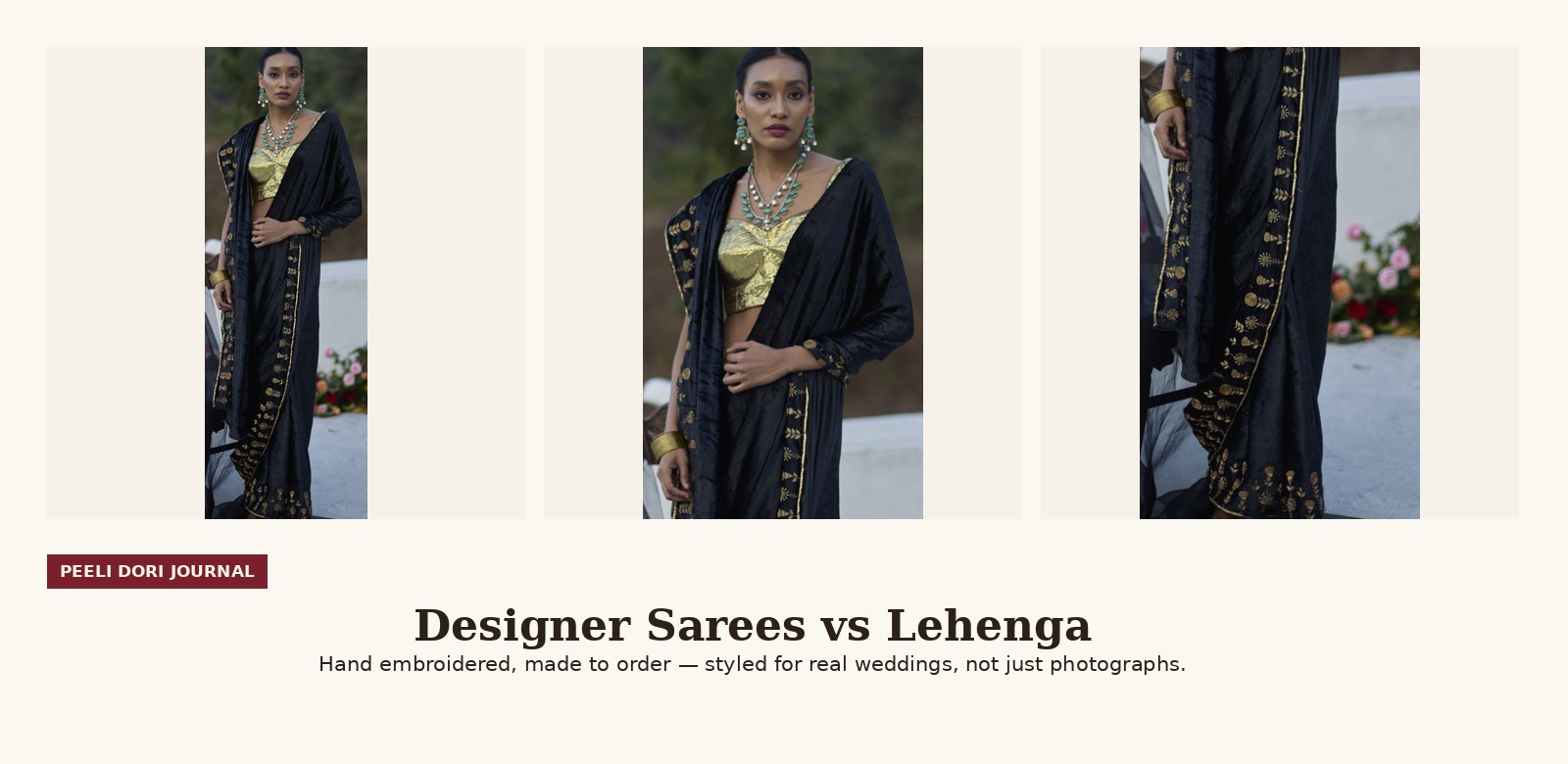
Clients rarely ask us whether a designer saree or a lehenga is prettier. They ask which one to buy, and that question is not answered on the wedding evening — it is answered two years later, when one of the two is still coming out of the wardrobe. A lehenga is stitched to a measurement and worn as one finished look. A saree is draped, so it is re-draped, and the fit lives in a blouse you can have re-cut rather than in a skirt you cannot. Here is how we walk a client through the choice in the store, and on WhatsApp when she is buying from another city.
Start with the second wear, not the wedding day
Write down what the piece is for after the wedding. That sounds like a strange place to start, and it is the question that settles most of these decisions. A bridal lehenga is bought for one date, usually the largest one on the calendar, and it does that job beautifully — it is structured, it is heavy, and it photographs like nothing else. A designer saree is bought as cloth, and cloth keeps its options open. It will go to the next wedding you attend as a guest, to the reception your cousin has planned for December, to the engagement, to the pooja at home where you are in a photograph with three generations of the family.
The second line to write down is who you are in the room. If you are the bride, the one date is the whole point and a lehenga earns its price. If you are the bride's sister, the groom's mother, an aunt, a close friend — you will be at five or six functions over a season and in a photograph at every one of them, and the arithmetic changes completely. We have watched clients spend a bridal budget on a piece they wear once and then borrow a saree for three other weddings. Buying it the other way round is the single most useful correction we make.
There is no rule about which one is better, and we do not pretend there is. There is only a question of how many times you intend to wear what you are about to pay for.
What each one actually asks you to buy
A lehenga arrives as a finished set: a skirt that has been cut to a length, a blouse that has been cut to a measurement, and a dupatta that was designed to sit with both. That is the pleasure of it, and it is also the commitment — the three parts are a single look, and the look is complete the moment you tie it. A designer saree arrives as cloth with a border and a pallu, plus a blouse that is cut for you. Everything else about how it sits on you is decided at the mirror, fifty centimetres at a time.
That difference shows up most clearly in the material. Most of our range sits on silk organza, and we choose it for a practical reason: it has body, so hand-work stays proud on the surface instead of sinking into the weave the way it does on a soft georgette. It holds a pleat through a long Delhi evening, and it catches light without shining. Velvet sits at the other extreme — it takes light out of the room instead of throwing it back, which is why a velvet saree looks quiet up close and expensive across a hall.
Then the work. Gota patti is appliqué, ribbon folded and stitched into a motif one piece at a time. Zardozi is metal thread worked densely enough to raise the surface into relief. Dabka is coiled wire, used where a motif needs a dot of height. All three are slow, all three are made by the artisans we work with, and all three behave differently under light — gota and dabka throw light back, which is what you want at a night function, while zardozi on a deep base reads rich in flat daylight.
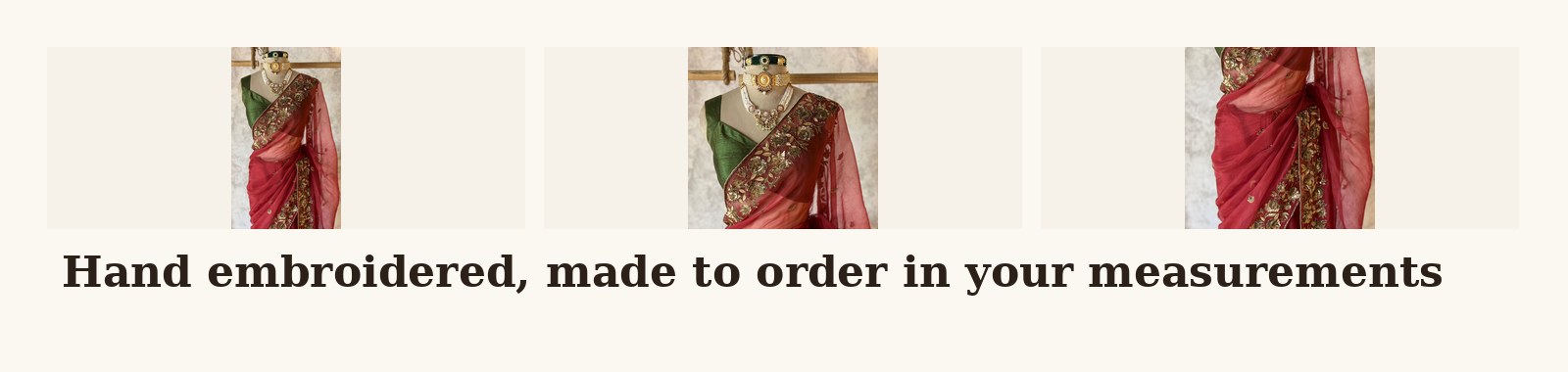
The part nobody examines on the rail is finishing. Turn a worked panel over. On a properly made piece the reverse is as neat as the front and every motif edge is individually stitched down. That is what keeps the embroidery intact after a season of being worn, folded, carried and worn again — and it is why everything we make is stitched to your measurements rather than adjusted from a standard size.
The fit test: stitched against draped
This is where the two choices genuinely part company, and it is the part clients underrate until something goes wrong. A stitched garment either fits or it does not. A skirt can be taken in a little at the waist, but it cannot easily be let out, because the fabric has already been cut. So the fitting conversation for a lehenga has to happen before the cutting, not after.
A draped garment fails differently. If a saree arrives and the blouse is a centimetre off, the blouse is the only thing that has to be corrected — the saree itself is cloth, and it drapes to whatever frame is under it. The same saree can be worn in the same season by two women of different heights and both will look deliberate, because the pleat line and the pallu width are the variables.
Two practical things follow. First, if you are ordering from another city, send your bust, waist, shoulder, armhole, sleeve length, blouse length and neckline depth, and tell us your heel height so the hem is set to the shoes you will actually wear. Second, ask for a fit check before the last stitching stage. We run those on WhatsApp as part of the order; it costs nothing and it is the cheapest correction available to anybody.
For the ceremony itself, think about how long you will be off your feet and how long you will be on them. A haldi or a mehendi means sitting cross-legged and standing up repeatedly, in daylight, in a room that is already full of colour — lighter grounds and work gathered at the border behave better there. A sangeet means stage light and movement, so you want work that catches light and a fabric firm enough to hold a pleat you can dance in. A wedding or reception is where the deeper piece belongs, with the work carried across the body rather than only at the edges.
Six designer sarees, and what each one is good for
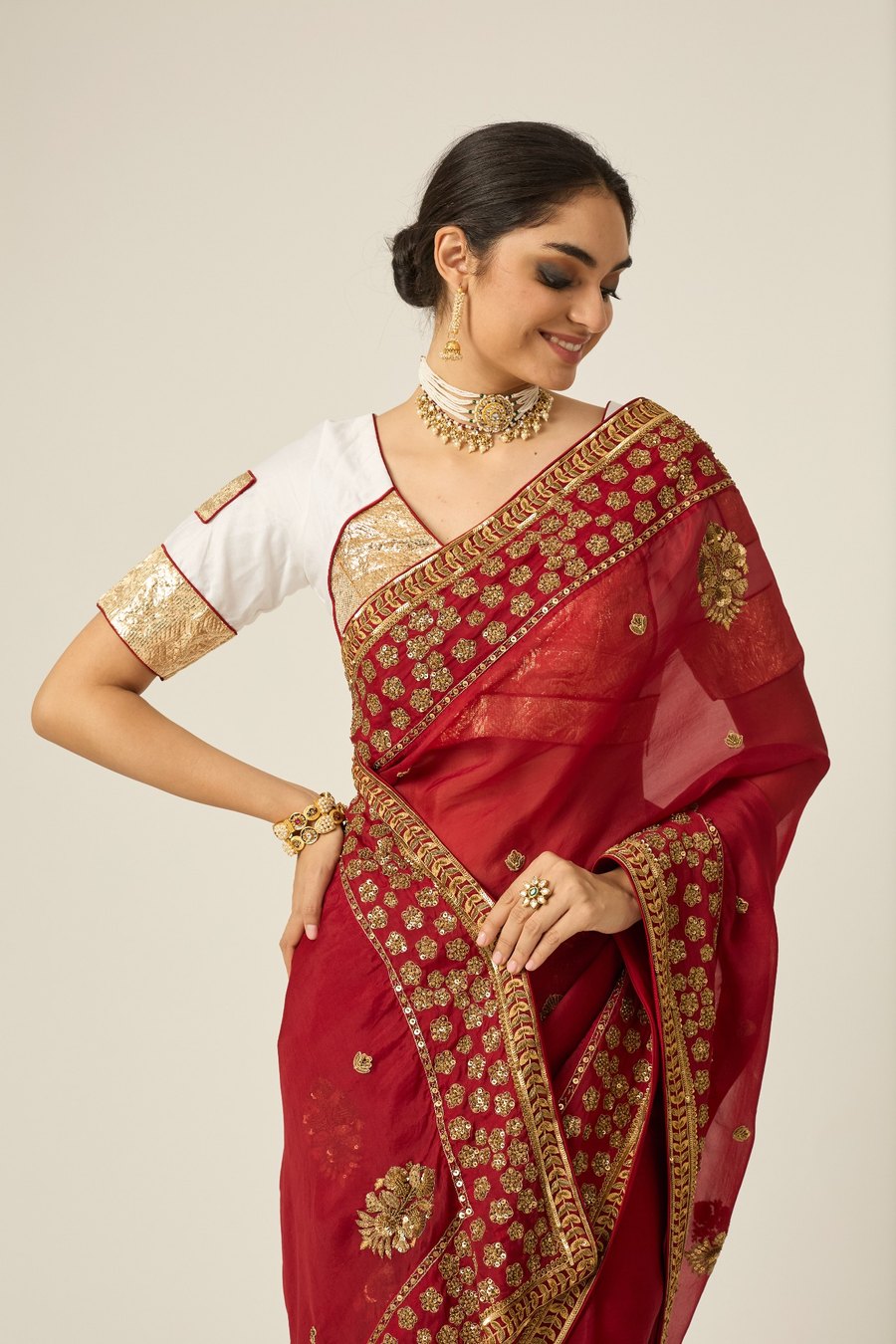
MYRA RED ORGANZA SAREE, ₹59,500 — the top of our range, and the one we hand the job of a sangeet and its photographs. Full red silk organza with the work carried across the body instead of gathered at the edges; it holds its own in a dark room and under flash.
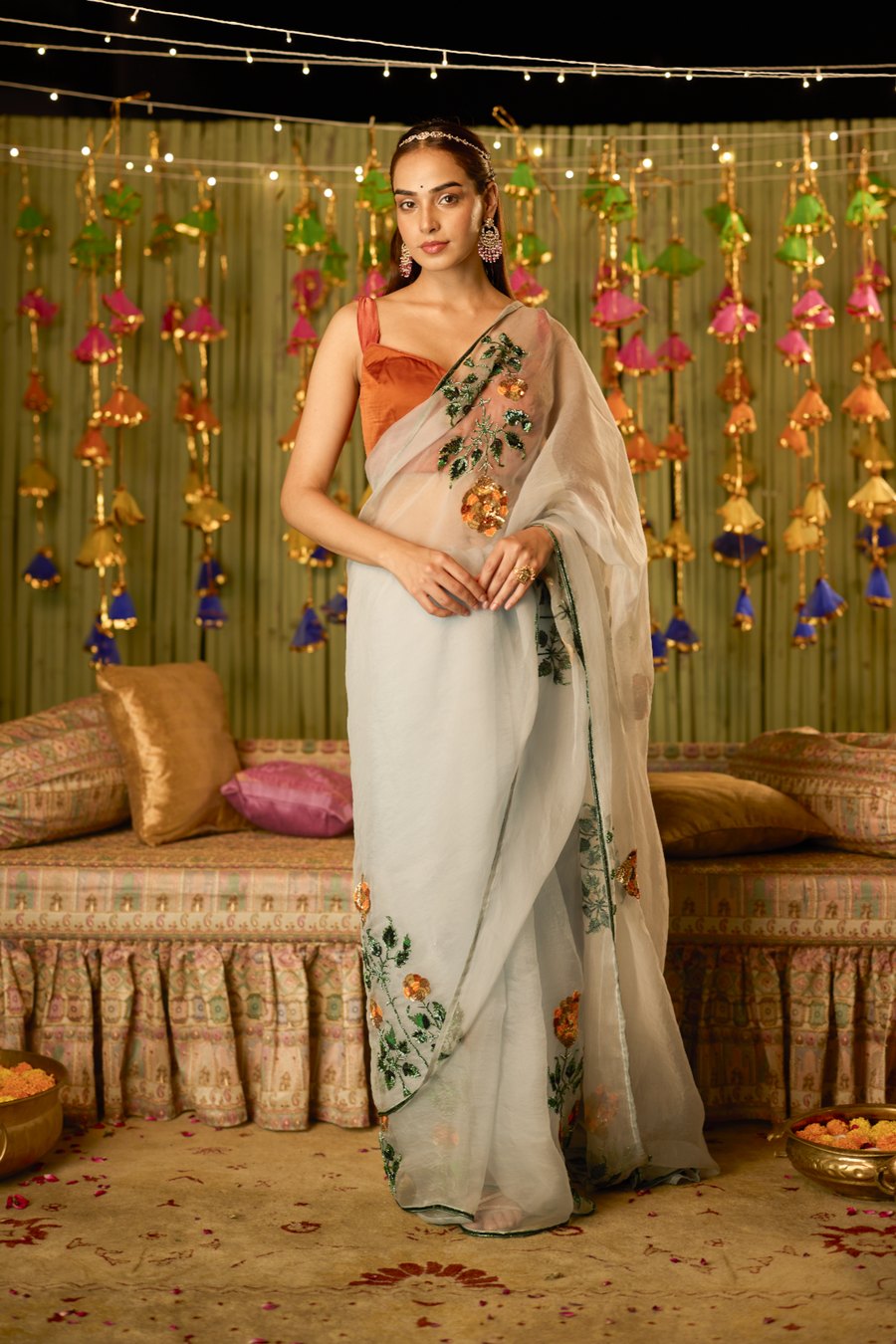
NOOR BAHAR ORGANZA SAREE, ₹48,500 — a softer palette with the work placed where it catches light rather than spread evenly. This is a mehendi and daytime piece, for a room that is already colourful.
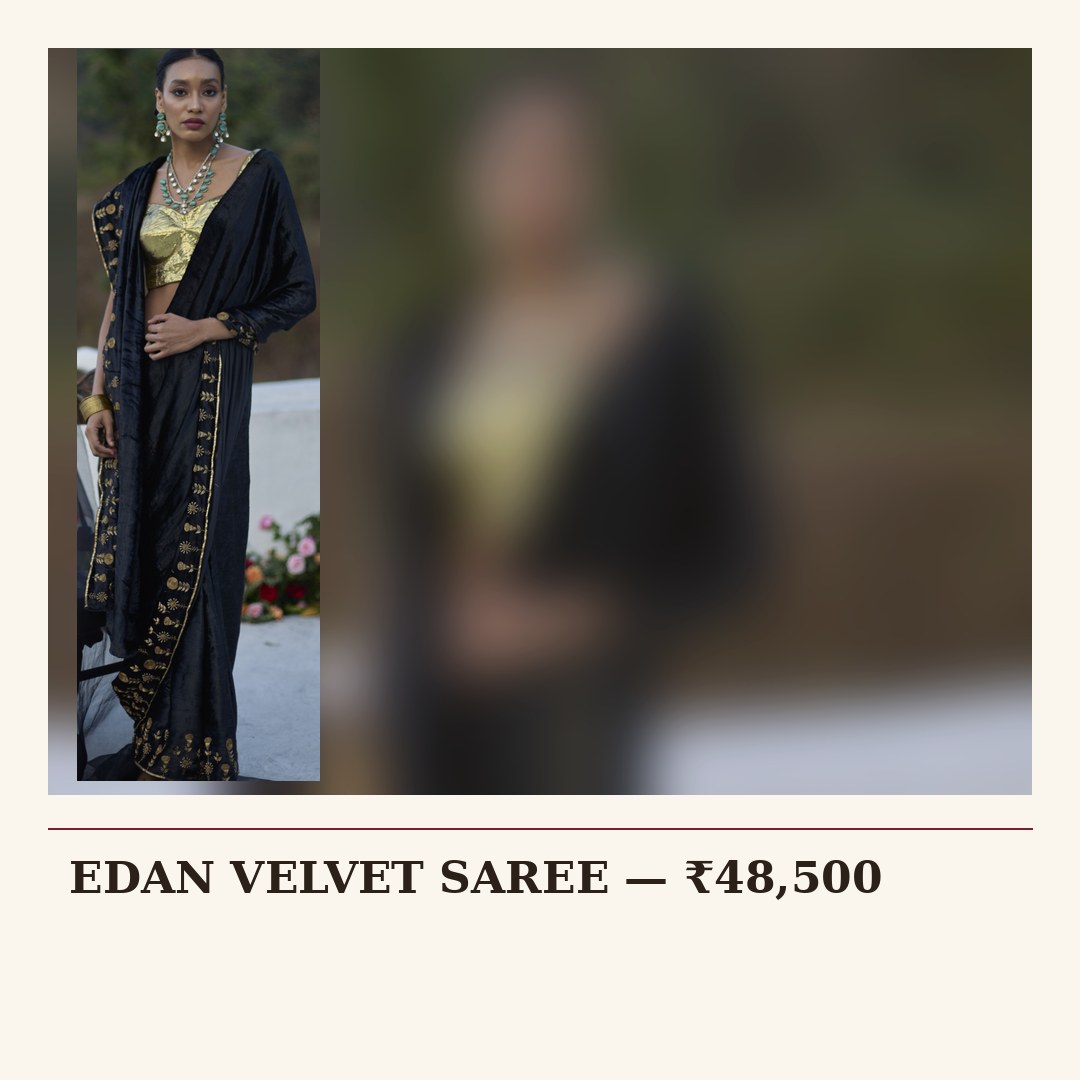
EDAN VELVET SAREE, ₹48,500 — the only velvet of the six, and the one we send to a winter reception. Deep, quiet, and the piece that looks most expensive when nobody is looking directly at it.
RUQMANI RANISA SILK ORGANZA SAREE, ₹46,500 — silk organza with a crisp drape and a defined border. The most adaptable of the six: formal enough for an evening, clean enough for a morning function.
RUQMANI MAROON ORGANZA SAREE, ₹46,500 — the same band in a deep maroon that sits between the two extremes and photographs well under both afternoon light and flash. If you are buying two sarees for one season, this is the one that works twice.
GULBAHAR IVORY ORGANZA SAREE, ₹46,500 — ivory, and honest about it: this is a daylight piece, and it is the saree we see most often in a client's morning-function photographs.
Two more sit in the same ₹46,500 band if none of these is your colour — GULBAHAR GULABI ORGANZA SAREE and RUQMANI GULABI ORGANZA SAREE, both rose organzas on the same drape with the same finishing. Every one of these is a real product page with its own photographs, fabric notes and measurements, so open the one you are drawn to rather than choosing from a paragraph.
₹59,500
₹48,500
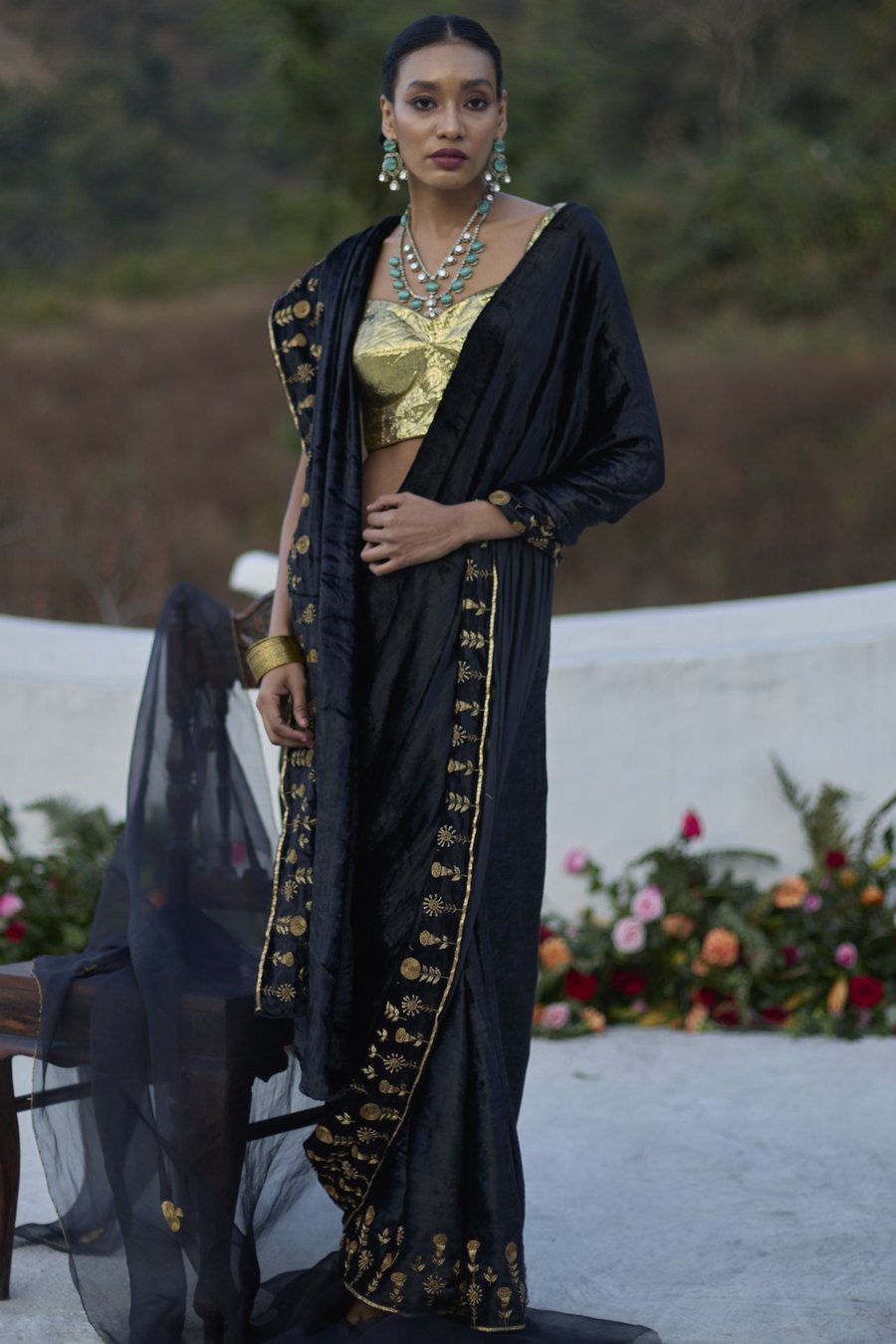
₹48,500
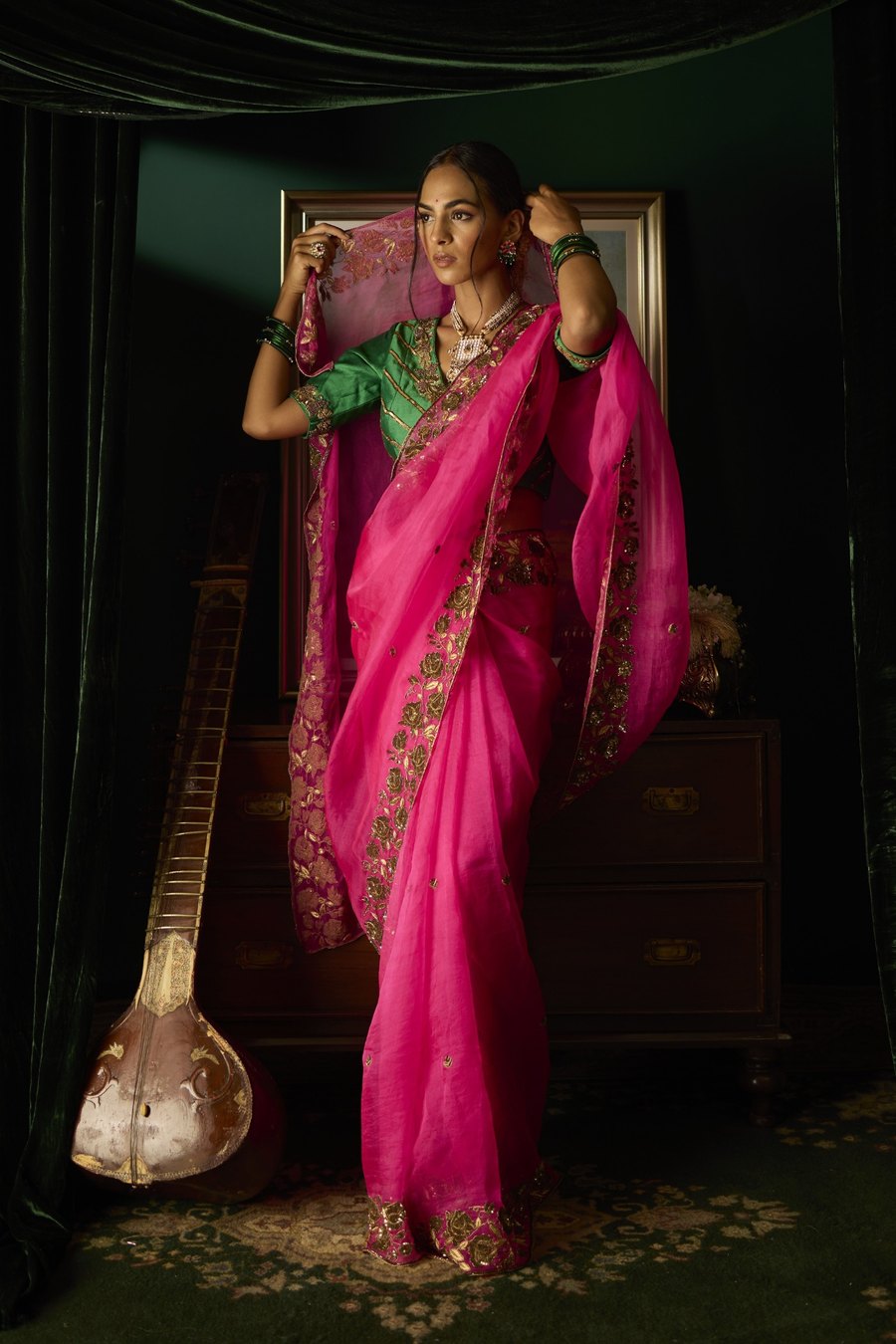
₹46,500
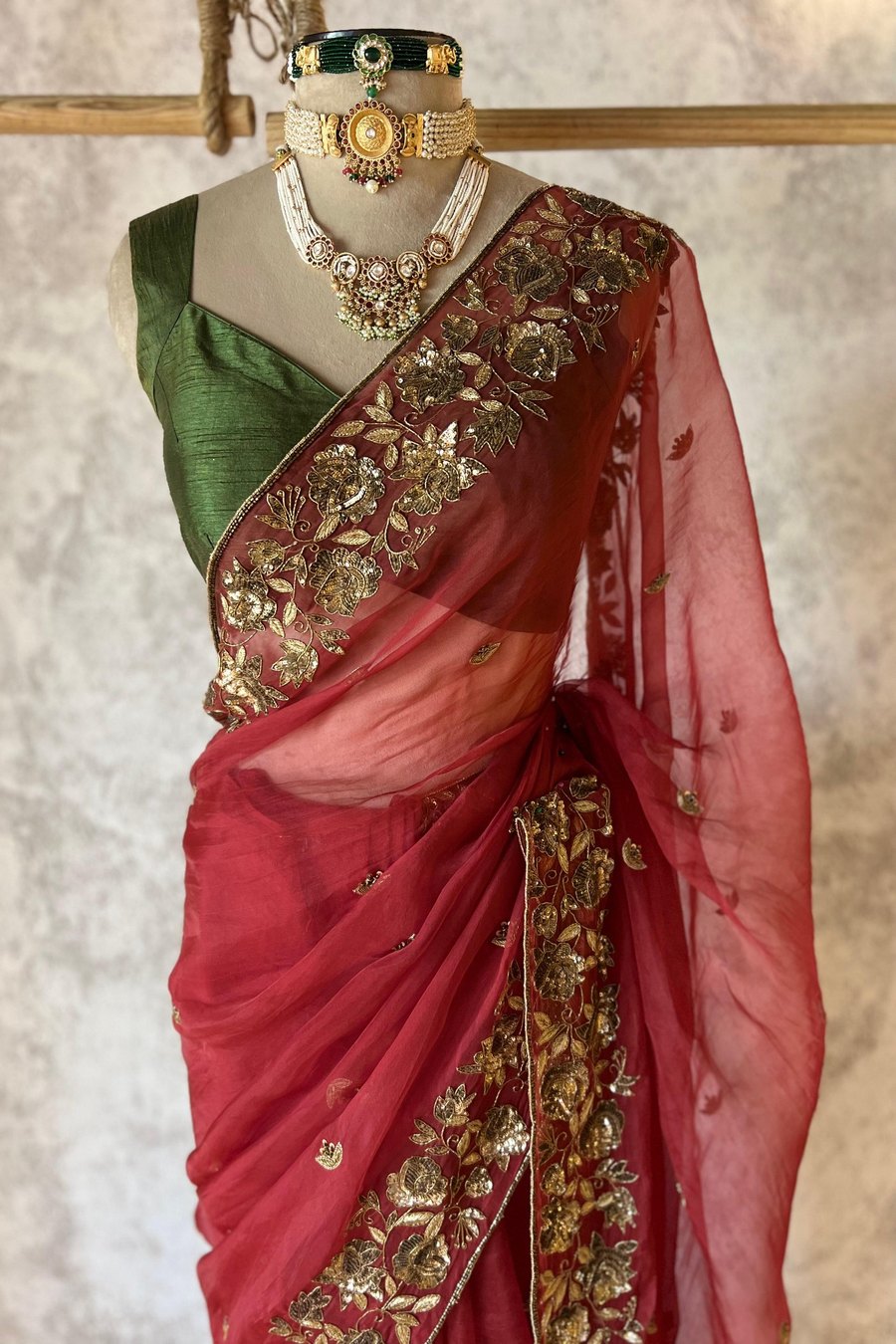
₹46,500
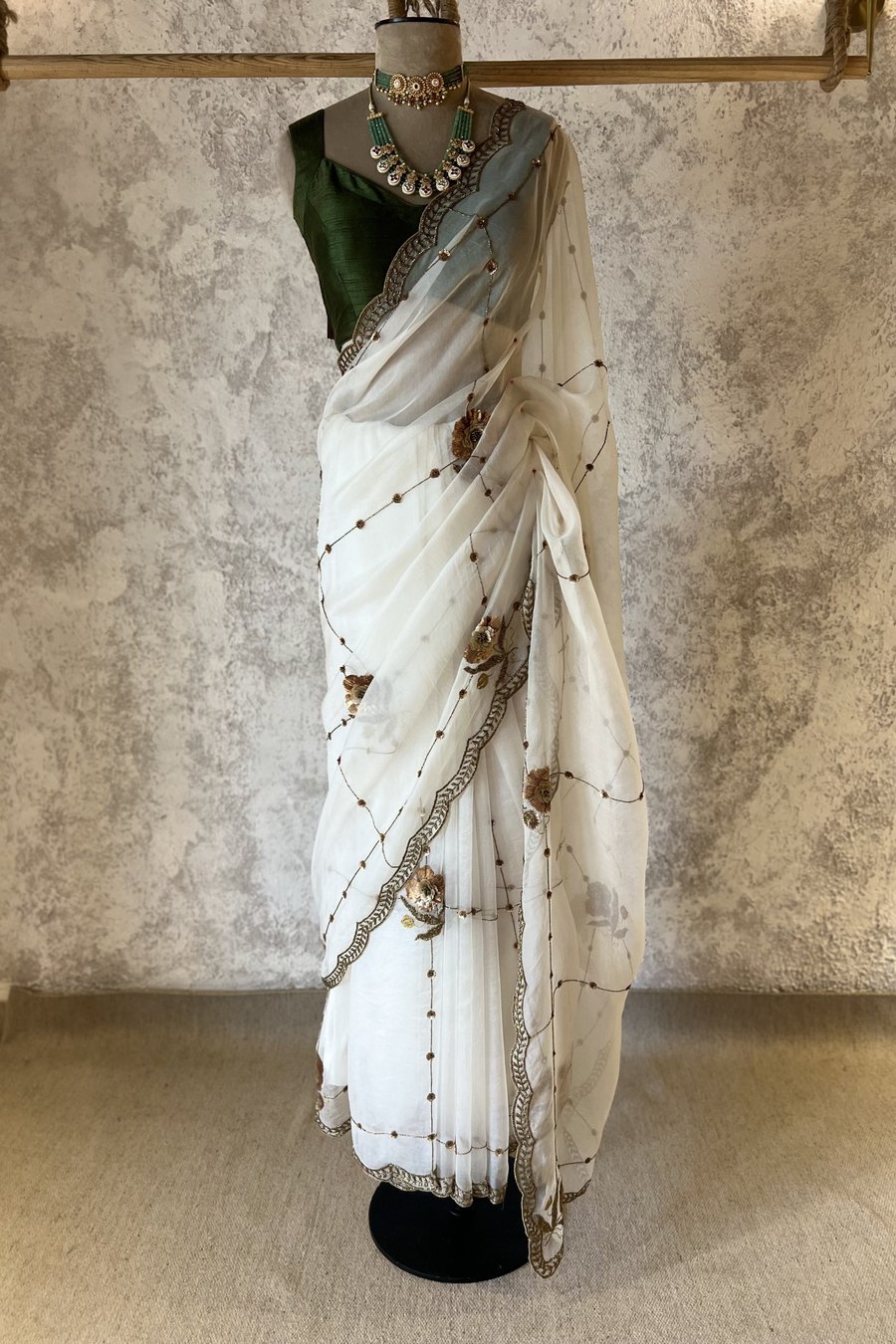
₹46,500
The blouse, the drape and the two ways to restyle it
A saree is two thirds of an outfit; the blouse is the third that decides which outfit it is. With a heavily worked pallu, keep the blouse calm so the eye has one place to land. With the work concentrated at the border, the blouse can carry a little of its own without competing. Neckline depth, sleeve length, back and whether the blouse itself is worked — those four decisions do more than the price of the saree does.
The first way to restyle is to change the blouse. A second blouse in a different neckline and sleeve, in a contrast or a neutral, turns one saree into two entirely different outfits, and it is the least expensive change available to you. The second is to change the drape. Pleat low and slightly to your left so the pallu falls in a clean diagonal instead of a fan, and keep the fall over the shoulder narrow — a wide pallu makes even an expensive saree read horizontal. Move the pallu to the other shoulder, or let it fall open, and the same piece looks like a different purchase.
That is the honest advantage of draped over stitched, and it has nothing to do with the wedding day. A lehenga photographed at one wedding is recognisable at the next one. A saree re-draped, with a different blouse, worn with earrings instead of a necklace, is not.
Jewellery follows the same logic: one strong earring and bare wrists against a worked neckline, and a necklace only when the bodice is plain. Doing both at once is the most common mistake we see, and it costs nothing to avoid.
Buying in time, and keeping it for the next one
Two words govern the calendar: made to order. Everything we sell is cut and stitched for the person who ordered it, which is what makes the fit worth having — and it also means the piece does not exist until you ask for it. The clients who are happiest are the ones who start the conversation while the invitations are still being designed, not the week the function is. Tell us the dates and the functions and we will be honest about what is comfortable and what is not.
Storage does the rest. Fold a worked saree flat rather than hanging it — hand work is heavy and a hanger pulls the shoulder out of line. Change the fold line every time you put it away so the same crease never sets into the cloth. Store it in cotton or muslin rather than plastic; organza and silk need to breathe, and a sealed bag is how mildew starts in a wet monsoon. Keep the blouse flat with the saree so the two of them fade at the same rate. Dry clean at the end of the season rather than between every function, and tell the cleaner exactly what the work is, because metal thread on cloth does not survive a careless press. If the saree travels with you, roll it around a muslin core instead of folding it into a suitcase.
Shipping across India is free above ₹10,000, and there is an international shipping offer on the site, code INTSHIP, above ₹89,000. Styling advice and fit checks happen on WhatsApp, and you can also find us in Shahpur Jat in New Delhi and in Dehradun. If you are weighing a lehenga against a designer saree for a season that has several functions in it, send us the dates and we will shortlist honestly — including telling you which functions do not need a new piece at all.
Frequently asked
Is a designer saree or a lehenga better for a wedding?
For the bride on the wedding day, a lehenga is the structured, once-in-a-lifetime choice and it earns its price. For everyone else at the wedding — and for any function that is not the main one — a designer saree does the job at a lower band and can be worn again, which is why most of our clients who attend several weddings a year buy sarees.
Can I wear the same designer saree to more than one wedding?
Yes, and this is the practical advantage of a draped piece. Change the blouse, move the pallu to the other shoulder, swap a necklace for a pair of earrings, and the same saree reads differently in a different set of photographs. We do this with clients between functions in the same season.
Which is easier to alter if my size changes?
The draped one. A saree has no cut to correct — only the blouse is stitched, so a new blouse or a re-cut blouse fixes the fit. A stitched skirt can be taken in a little at the waist but cannot easily be let out, because the fabric is already cut to a measurement. That is why the fitting conversation matters most before the cutting.
Do you make these to order, and can you fit me if I am not in Delhi or Dehradun?
Everything is made to order in your measurements, with custom sizing as standard. If you are ordering from another city, send your bust, waist, shoulder, armhole, sleeve length, blouse length and neckline depth, plus your heel height, and we run a fit check on WhatsApp before the final stitching stage.
How should I store a hand-embroidered saree between weddings?
Fold it flat, change the fold line each time, keep it in cotton or muslin rather than plastic, and store the blouse flat with the saree. Dry clean at the end of the season rather than after every function, and tell the cleaner that the piece carries metal thread.
Explore more: lotus collection · chidiya · rani sa collection — or message us on WhatsApp for styling help.

The information below is required for social login
Sign In
Create New Account