

A hand embroidered saree is the one piece in a wardrobe that arrives already finished — the ground, the colour and the work are all decided before it reaches your hands. So styling it is not a matter of adding things; it is a matter of giving the embroidery ro
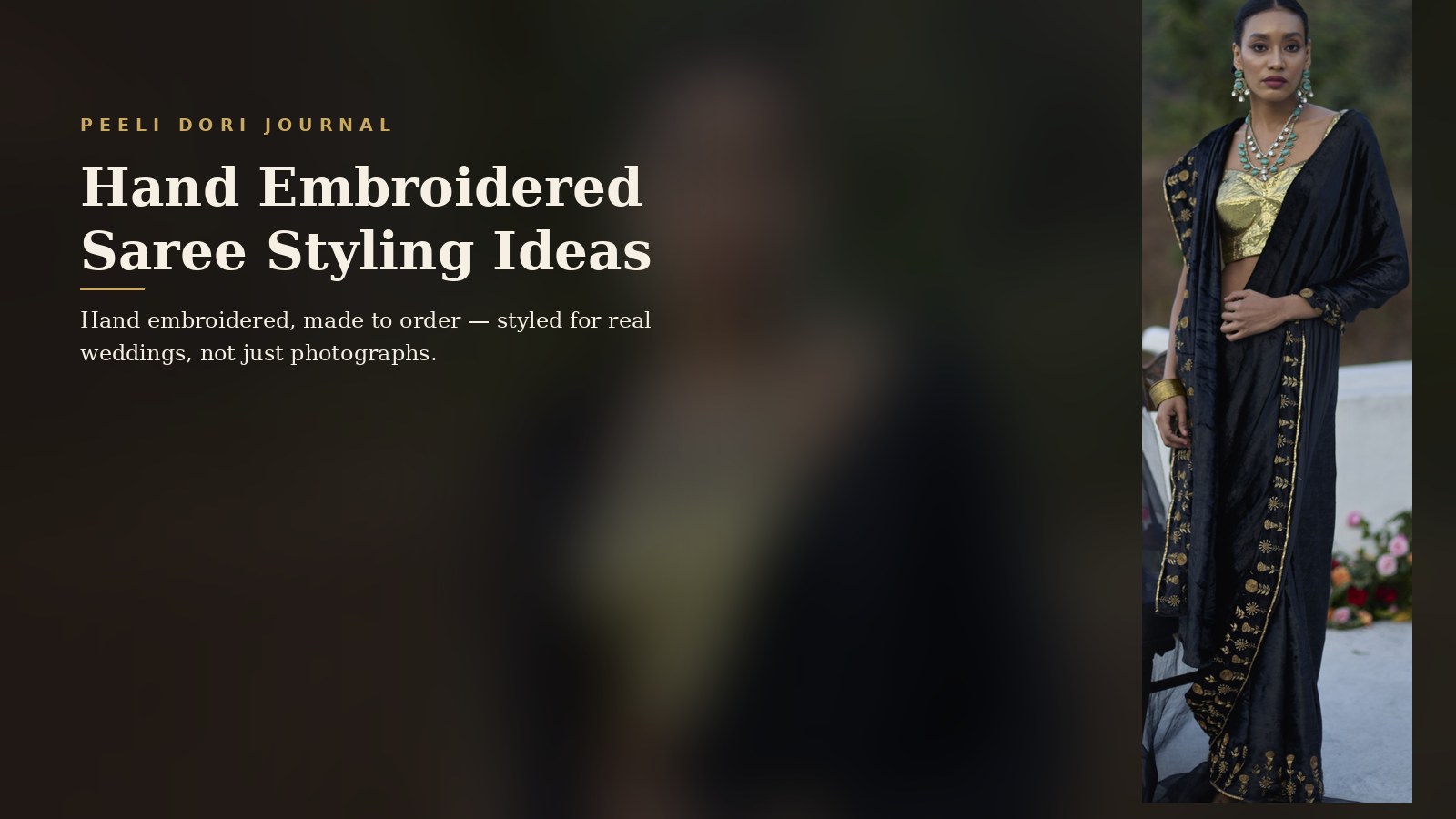
A hand embroidered saree is the one piece in a wardrobe that arrives already finished — the ground, the colour and the work are all decided before it reaches your hands. So styling it is not a matter of adding things; it is a matter of giving the embroidery room. Almost every question we get across the two stores is the same question said a different way: what do I wear with this so the work still reads? This is how we answer it.
The embroidery sets the register, the occasion only narrows it
Think back to the last wedding you attended. You can probably still picture the embroidery — a border catching the light during the varmala, an all-over jaal on the saree in the row behind you. You will not remember the earrings. That is the whole logic of styling a hand embroidered saree: the work is what stays with people, and everything else is there to keep it legible.
So we settle two things before a single piece of jewellery is chosen. Is the function morning or night, and is the light around you hard or soft? A worked border in gota behaves differently under a shamiana's daylight than under banquet-hall chandeliers. A piece that looks quiet at eleven in the morning can look flat at nine at night if the work has no depth left to catch.
The third question is the one people forget: how much standing and sitting is actually in the day. A saree with a heavy worked pallu sits forward on the shoulder, and if you are on your feet through a sangeet, that weight matters more than whatever colour is next to it.
Once you know the hour and the load, the saree is decided and the rest is easy. Styling an embroidered piece is mostly subtraction.
Read the work before you decide anything else
Not every embroidery asks for the same restraint, so it helps to know what you are looking at. Gota and gota patti are flat metal work, usually in a leaf or floral motif, and they catch light in a quick flash. Zardozi is raised and metallic, built up in layers, so a zardozi border has a weight and a shadow of its own. Dabka sits on the surface like small coiled wire. Resham is thread alone — softer, more matte, quieter in the frame. Aari work is the dense chain-stitched jaal you see on the more formal pieces.
Placement matters more than technique. A worked border and pallu over a quiet body gives you two beautiful ends and a calm middle — the eye travels, and you have room for a strong blouse and one good earring. An all-over jaal is busy everywhere already, so there the honest move is to keep everything else plain and let the saree carry the whole look. Scattered butis are the easiest to live with; they read as texture from a distance and leave you the most freedom.
Our grounds change with the season — silk organza, silk satin, georgette, and velvet for the colder months — and each one alters how the same embroidery behaves. Organza holds a crisp pleat and shows the work sharply. Georgette falls soft and lets a jaal blur and glow. Velvet swallows light and flatters deep metallic work. Between two sarees with similar embroidery, choose the ground that matches the hour you will wear it, not the one that photographs best on the hanger.
Your frame, and the function you are dressing for
Height and frame change where the work should sit rather than whether you can wear it. On a petite frame an all-over heavy jaal can pull the eye down and shorten the line; a worked border with a quieter body keeps the length. A taller frame carries a broad all-over pattern comfortably and can take a heavier zardozi without looking weighed down. None of this is a rule about who suits what — it is about where the eye is sent.
Then match the piece to the ceremony rather than to the calendar. A haldi or a mehendi wants the lightest work you own and a cheerful ground. A sangeet is the function that can take the loudest saree on the rail, because that is what it is for. A reception or the wedding itself wants depth and light-catching metal. And a mother-of-the-bride piece wants presence without outshining the couple — a worked pallu in a deep ground does that far better than a bright all-over.
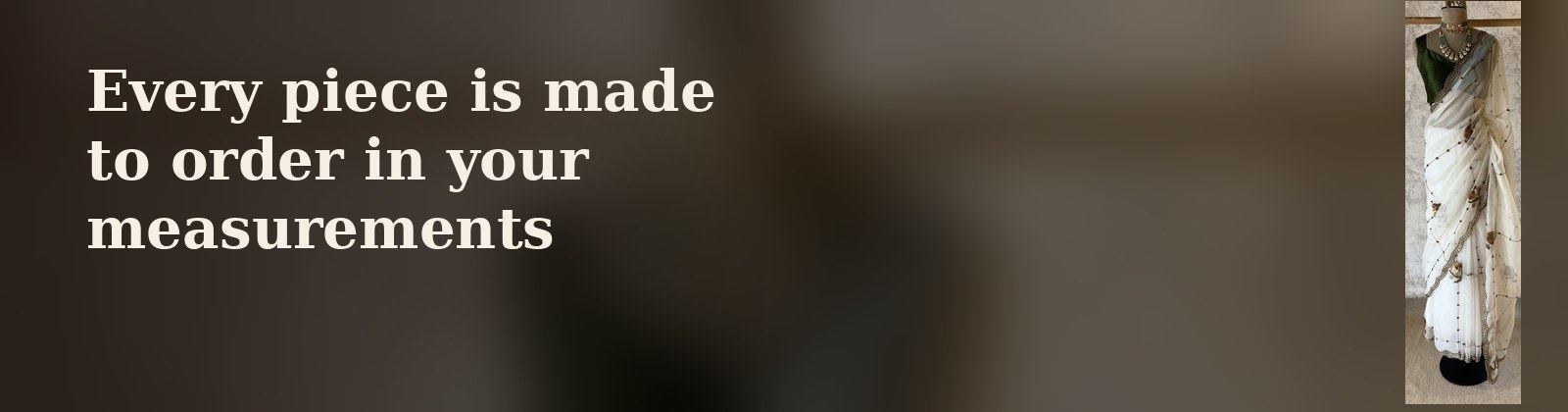
Because everything we make is cut to your measurements rather than pulled from a stock size, fit is the one variable you can genuinely remove from the equation. Tell us the function, the hour and the heel height and we shape the blouse around that, not the other way round.
Six hand embroidered sarees, and how we would style each
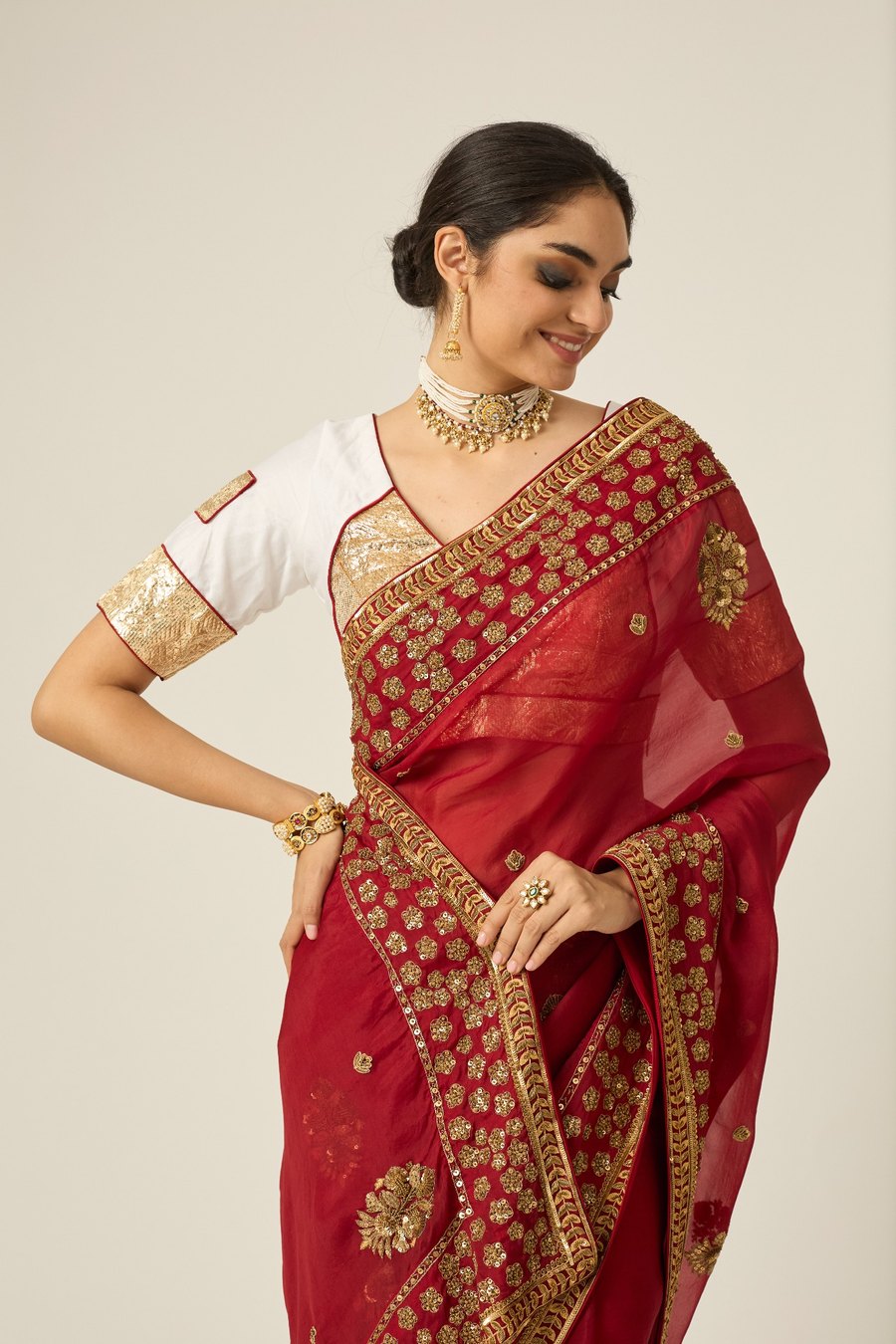
MYRA RED ORGANZA SAREE, ₹59,500 — the deepest and most worked piece on the rail, a red that holds after dark. Style it for a reception or the wedding itself: a long-sleeved blouse in the same red or antique gold, one strong earring, hair up so the neckline stays clean.
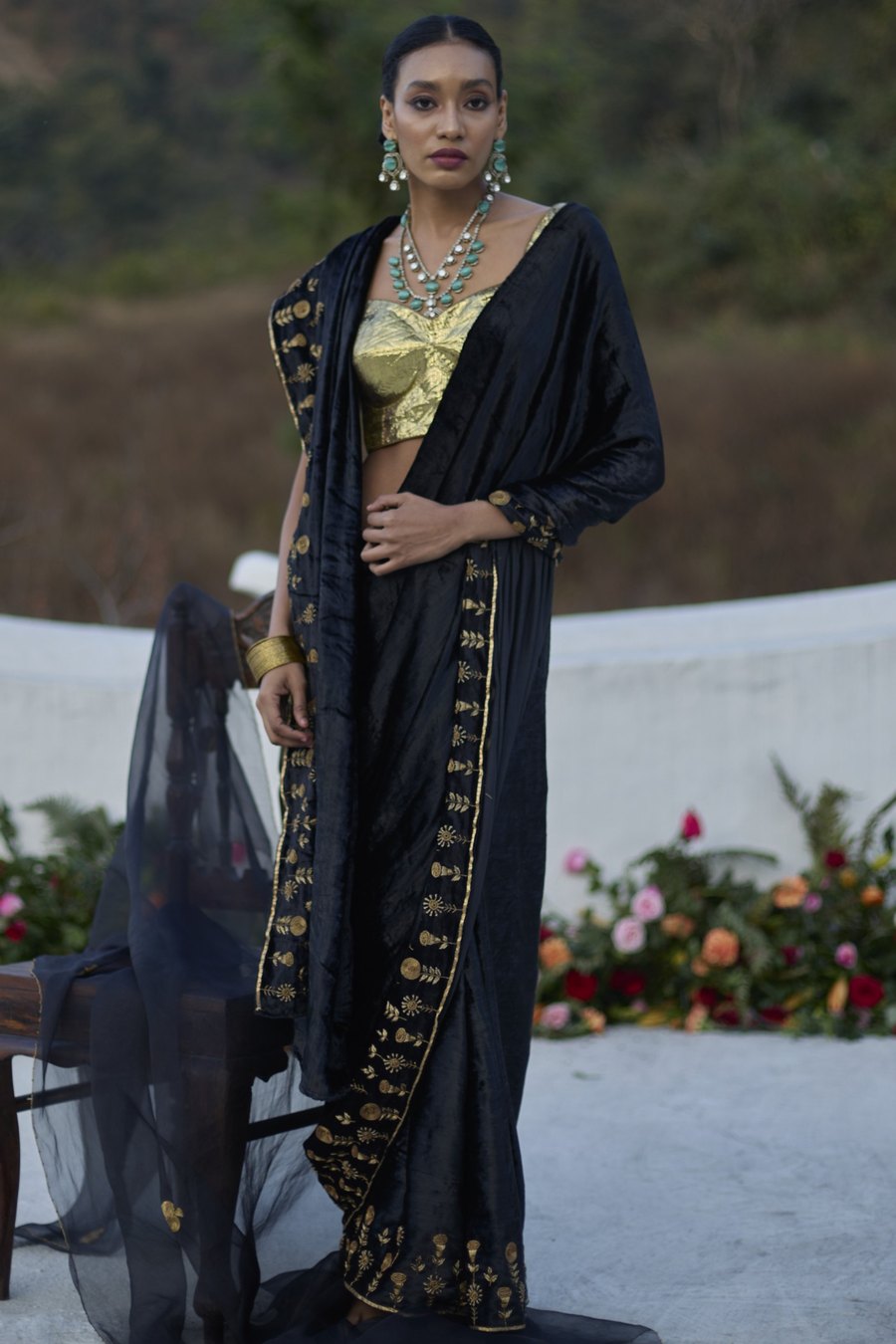
EDAN VELVET SAREE, ₹48,500 — velvet, so this is the winter piece, and it takes the heaviest metallic work without looking crowded. A deep ground like this wants a jewel tone at the blouse and a single statement earring; keep the dupatta light so it does not fight the pile.
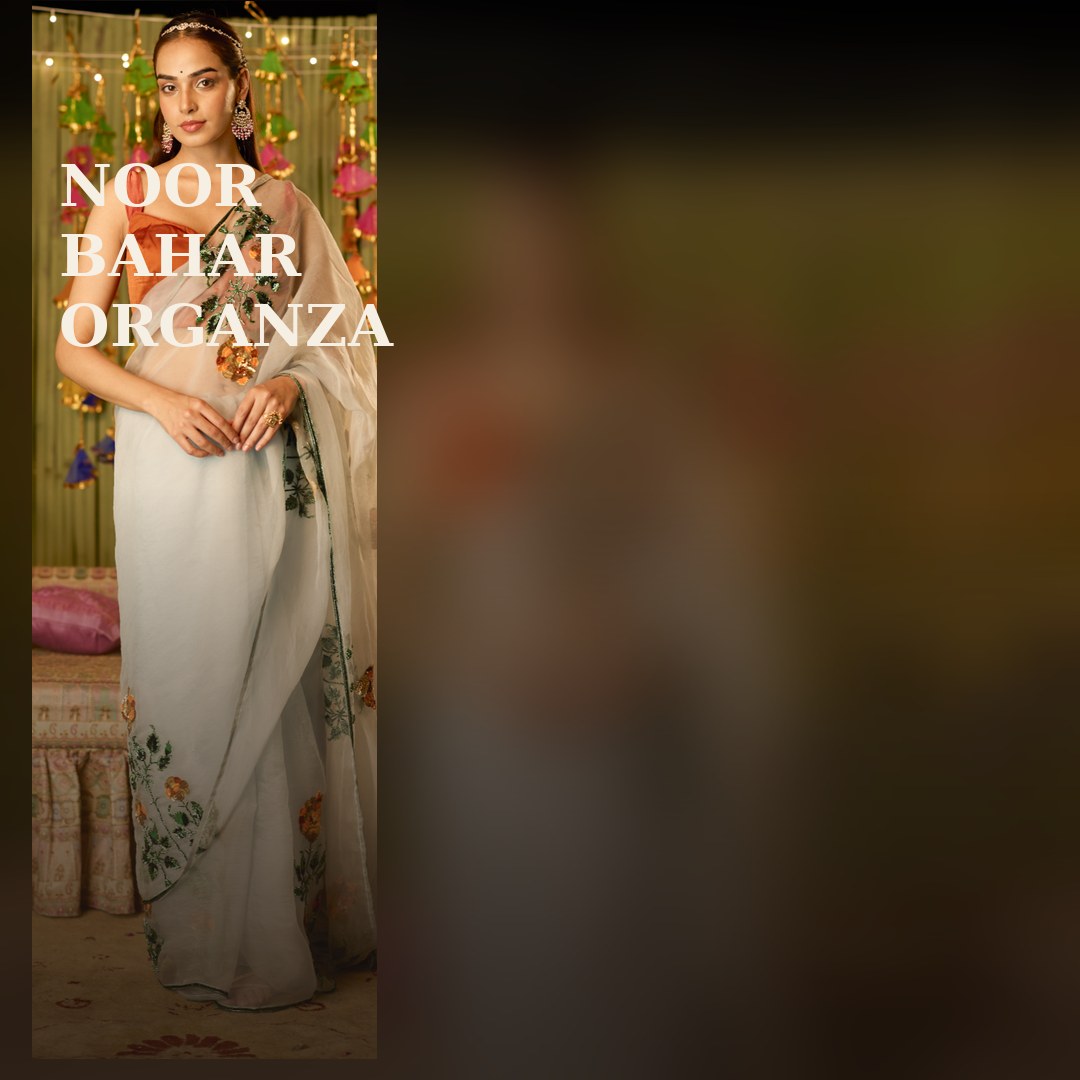
NOOR BAHAR ORGANZA SAREE, ₹48,500 — organza in a softer palette, for the functions that sit between the big two. A sangeet where you want presence without competing with the bride. Pair it with a blouse a shade lighter or gently contrasted, and jewellery fine enough to let the jaal read.
GULBAHAR IVORY ORGANZA SAREE, ₹46,500 — ivory, and the most daytime of the six. Ideal for a morning ceremony and the easiest of the lot to restyle. Wear it with gold, or with a coral or green blouse for contrast; ivory on ivory is the quietest version and still our favourite on it.
RUQMANI GULABI ORGANZA SAREE, ₹46,500 — pink, and an easy daytime piece. Mehendi or haldi, a sleeveless blouse, jasmine in the hair and very little else. The colour is doing the work here, so do not crowd it.
GULBAHAR GULABI ORGANZA SAREE, ₹46,500 — the same ivory family as the piece above, carried into pink. It sits well at an engagement or a daytime sangeet where you want to stand out without going heavy. Keep the blouse plain and the earring small.
Each of these is a real product page with its own measurements and photographs, so take the detail from the page rather than from a paragraph. Tell us the function and the hour and we will point you at one of them instead of leaving you to guess.
₹59,500
₹48,500
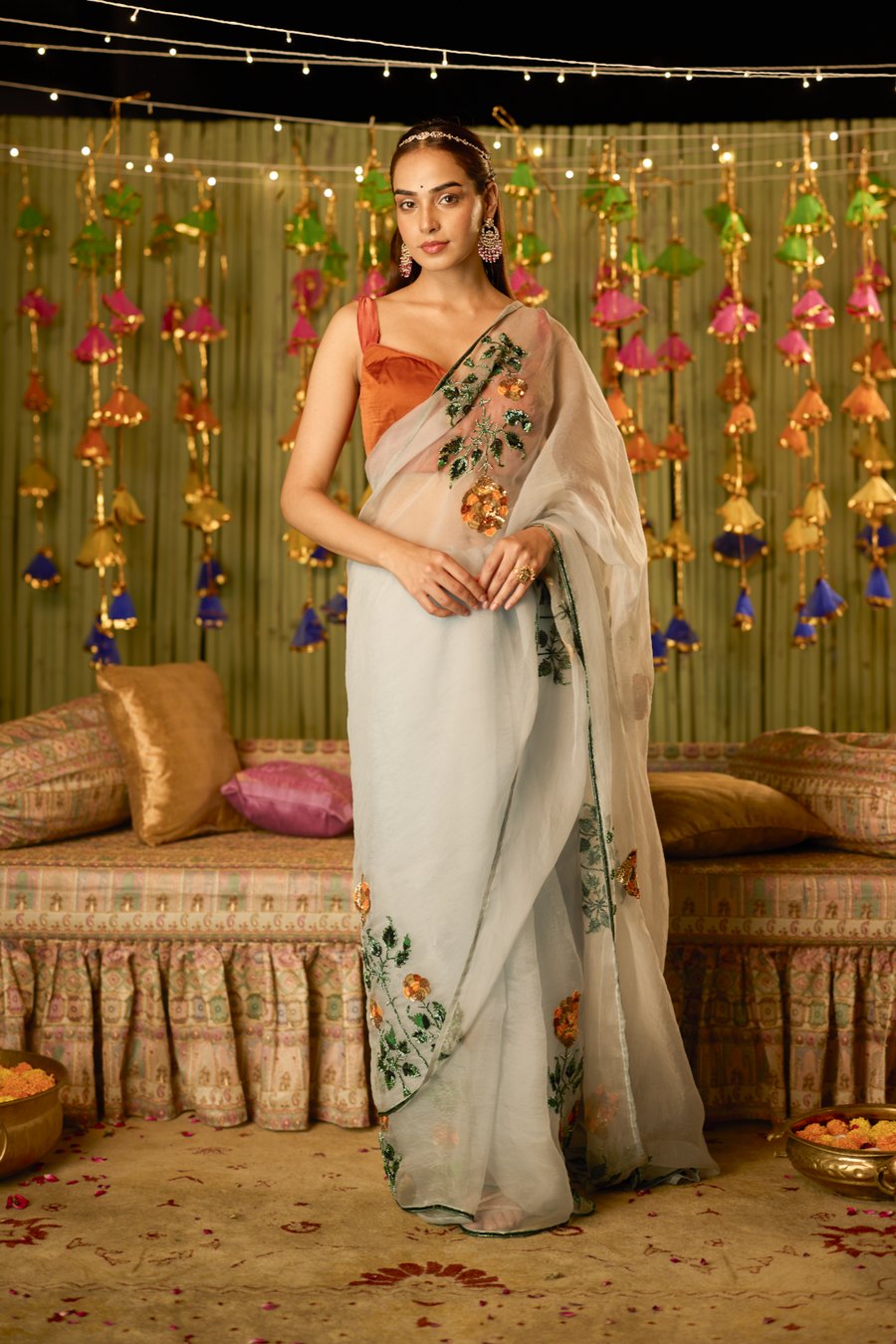
₹48,500
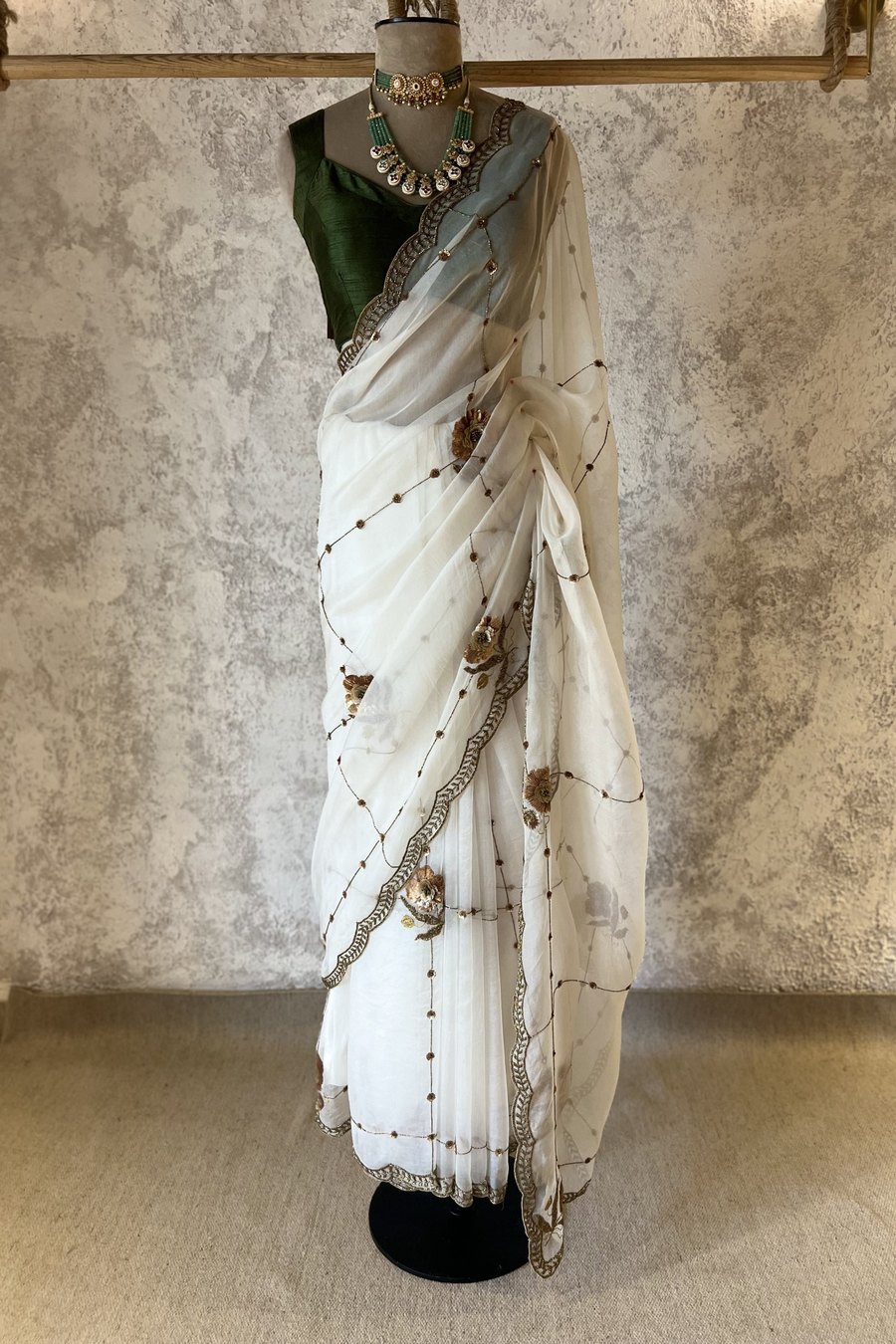
₹46,500
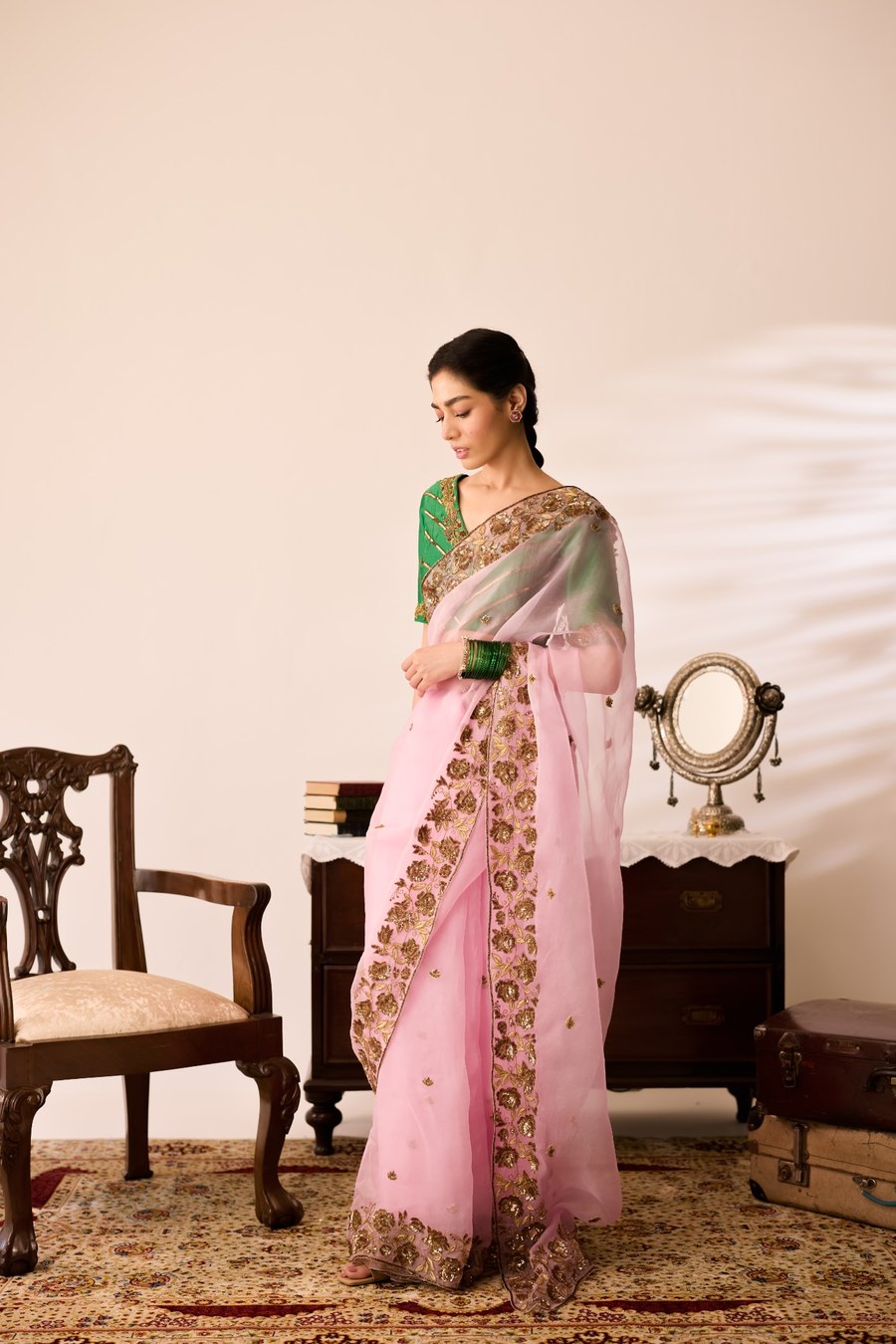
₹46,500
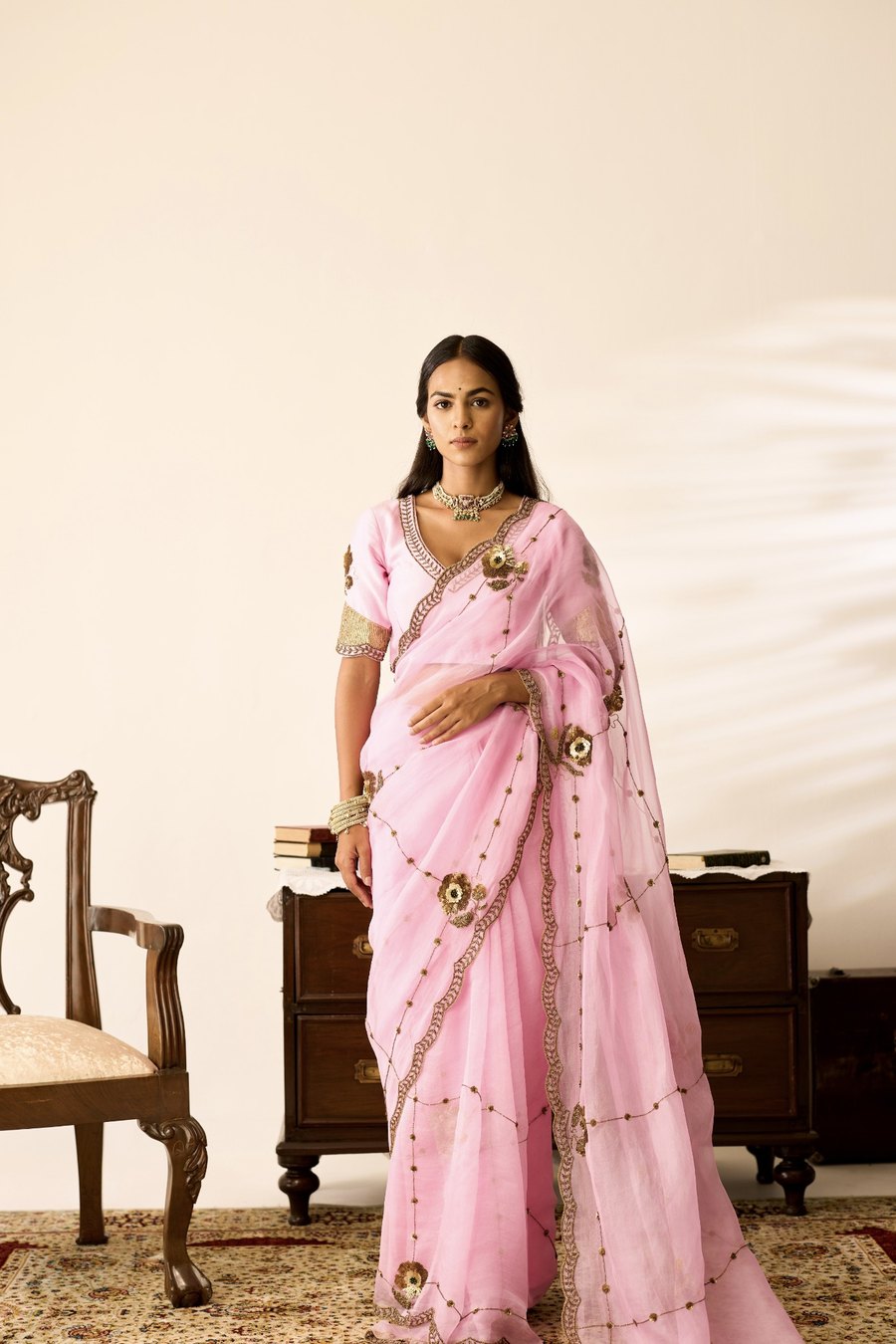
₹46,500
The blouse, the drape, the jewellery
The blouse is a frame, and a frame should not compete with the picture. If the saree carries a worked pallu and border, a statement blouse can lead — a deeper neckline, a worked back, a sleeve that stops at the elbow. If the embroidery is an all-over jaal, keep the blouse plain and let the sleeves set the register: sleeveless or cap sleeves for a morning function, longer sleeves for the evening.
Drape is where most people lose the work they paid for. The border needs to be shown, not buried, so pleat so that the worked edge falls on the outer fold and the pallu opens on the side you will be photographed from. If the pallu is heavy, pin it once at the shoulder and leave the rest soft — pinning it flat flattens the embroidery with it.
Jewellery is the fastest switch available to you. Pick one anchor, usually the earring, and match its weight to the work rather than to how formal the invitation sounds. Hair up shows an earring, hair down softens the whole look. On a heavily worked pallu, a bare neck with a strong earring usually looks more considered than a full set; on a light piece, a fine chain can be the one extra thing it wants.
A second, lighter dupatta is the cheapest way to move one saree from day to evening. Left off, the piece is clean and bright for a morning ceremony. Draped over the shoulder in a deeper tone, the same saree reads as evening without your having bought anything new.
Between wearings
Hand work gives back what you put into it. Never fold an embroidered saree straight back into the crease it came out of — air it in a shaded room for a few hours and refold it along a different line each time, so no single fold takes all the weight. Store it flat in a cotton or muslin cover rather than plastic, which traps moisture against the cloth and dulls the metal in the work.
Dry clean after the season rather than after every function, and never press an embroidered saree directly. Steam it and let it hang, or have it pressed through a cloth at low heat; a direct hot iron flattens raised zardozi and dabka for good, and it does not come back.
If you would rather handle the pieces before deciding, we keep two stores — Shahpur Jat in New Delhi and Dehradun — and a consultation is the quickest way to settle ground, blouse and jewellery in one sitting. Styling help and fit checks are also done on WhatsApp if a store visit is not possible.
Frequently asked
What should I wear with a hand embroidered saree?
Very little, and deliberately so. Choose one anchor — usually the earring — and match its weight to the embroidery rather than to the formality of the function. If the work sits on the border and pallu, a statement blouse can lead; if it is an all-over jaal, keep the blouse plain and the jewellery small so the embroidery still reads.
Which blouse suits a heavily embroidered saree?
One that frames the work instead of competing with it. A worked pallu with a quiet body can take a worked back or a deeper neckline; an all-over jaal wants a plain blouse. Sleeve length sets the register — sleeveless or cap sleeves for a morning function, longer sleeves for the evening. Everything we make is cut to your measurements, so the blouse will not strain and need pins.
How much jewellery should I wear with an embroidered saree?
Less than you think. Pick one anchor and leave the rest bare; on a heavily worked pallu a strong earring with a bare neck usually looks more considered than a full set. On a lightly worked saree a fine chain can be the one extra piece it wants.
Can I wear the same hand embroidered saree to more than one function?
Yes, and it is the best reason to own one. Keep the saree and change the pieces around it: a plain sleeveless blouse by day, a longer-sleeved blouse and a heavier earring at night, plus a deeper dupatta over the shoulder. Two blouses for one saree gives you two completely different looks.
How do I get the blouse measurements right for a made to order saree?
Send your bust, waist, shoulder, armhole and sleeve length, plus the heel height you will wear with the saree — the heel sets the hem and the fall of the pleats. We run a fit check on WhatsApp before the final stitching, so a correction happens while the blouse is still on the table. Shipping is free across India above ₹10,000, and there is an international shipping offer on the site, code INTSHIP, above ₹49,000.
Explore more: saree — or message us on WhatsApp for styling help.

The information below is required for social login
Sign In
Create New Account