

Almost everyone who comes up to the rail during wedding season asks the same question in a different tone of voice. The bride asks which piece is worth the deepest work. Her mother asks what to wear so she still looks like herself in the photographs without pu
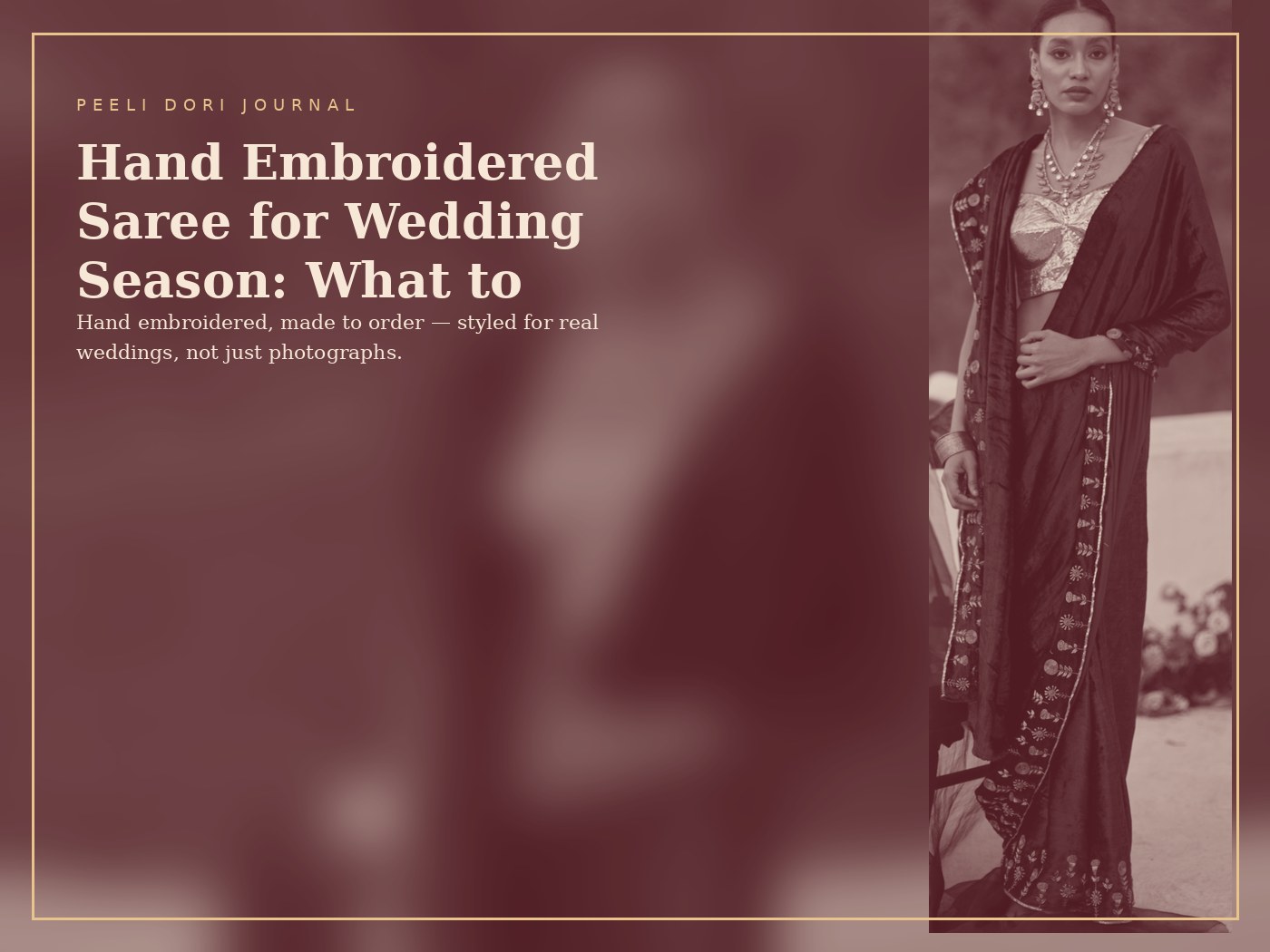
Almost everyone who comes up to the rail during wedding season asks the same question in a different tone of voice. The bride asks which piece is worth the deepest work. Her mother asks what to wear so she still looks like herself in the photographs without pulling the room towards her. A sister asks for something she can actually dance in. A friend carrying four invitations to four weddings asks how to buy once and wear it four times. Hand embroidery answers all four questions, but never the same way — so we begin with the role, not the rail.
Your role decides more than your budget does
A wedding season hands out roles before it hands out invitations. Bride. Mother of the bride or of the groom. Sister or cousin. The guest who is close enough to be photographed and not close enough to be in every frame. Every one of those roles sits differently in a room, and each asks something different of a saree.
The mistake we see most often is a guest buying the bride's piece. A saree with an all-over worked jaal and a heavy pallu is built to hold the centre of a photograph; worn from the fourth row it reads as effort, and it is also the one piece you cannot comfortably repeat at the next three weddings of the season. Just as common is the mother who buys the safest, plainest thing for her own child's wedding and regrets it by the third album. The role is the first decision, and it is the one people make last.
So before we pull anything off the rail we ask three things: which side of the wedding are you on, how many functions will you attend, and will anyone photograph you while you are sitting down. Those three answers narrow fifty pieces to about four.
What the work tells people before you say a word
Hand embroidery carries its own hierarchy, and people read it whether or not they know the vocabulary. Gota patti is flat ribbon work, quick and bright — it catches light in a flash and keeps a piece looking festive in plain daylight. Zardozi is raised metal work built up in layers, so it has weight and shadow of its own and behaves best after dark. Dabka sits on the surface like small coiled wire. Resham is thread alone: matte, softer, closer to the cloth. Aari work is the dense chain-stitched jaal you see on the more formal pieces.
Density is the second thing the eye notices. Work concentrated on the border and the pallu over a calm body gives you two brilliant ends and a middle that breathes. An all-over jaal leaves no calm ground at all. Scattered butis sit between the two — texture from a distance, and by far the easiest to wear and to wear again.
The ground changes everything underneath. Crisp silk organza holds a pleat and shows the work sharply. Satin and tissue glow. Georgette falls soft and travels well between cities. Velvet takes deep metallic work and belongs to the colder end of the season. Two sarees with similar embroidery on different grounds are two different purchases, and only one of them will suit the function you actually have in mind.
Six hand-embroidered sarees, and the role each one is made for
MYRA RED ORGANZA SAREE, ₹59,500 — the deepest piece on our rail. A red that keeps its depth after dark, on crisp silk organza. This is the one we would show a bride for the wedding itself or the reception, and equally a mother who has decided she wants to be unmistakable in the family photographs.
EDAN VELVET SAREE, ₹48,500 — velvet, so it belongs to a winter wedding. A heavy ground takes the heaviest metallic work without crowding, which makes this a natural choice for a December or January wedding, worn by the bride or by a mother who is hosting.
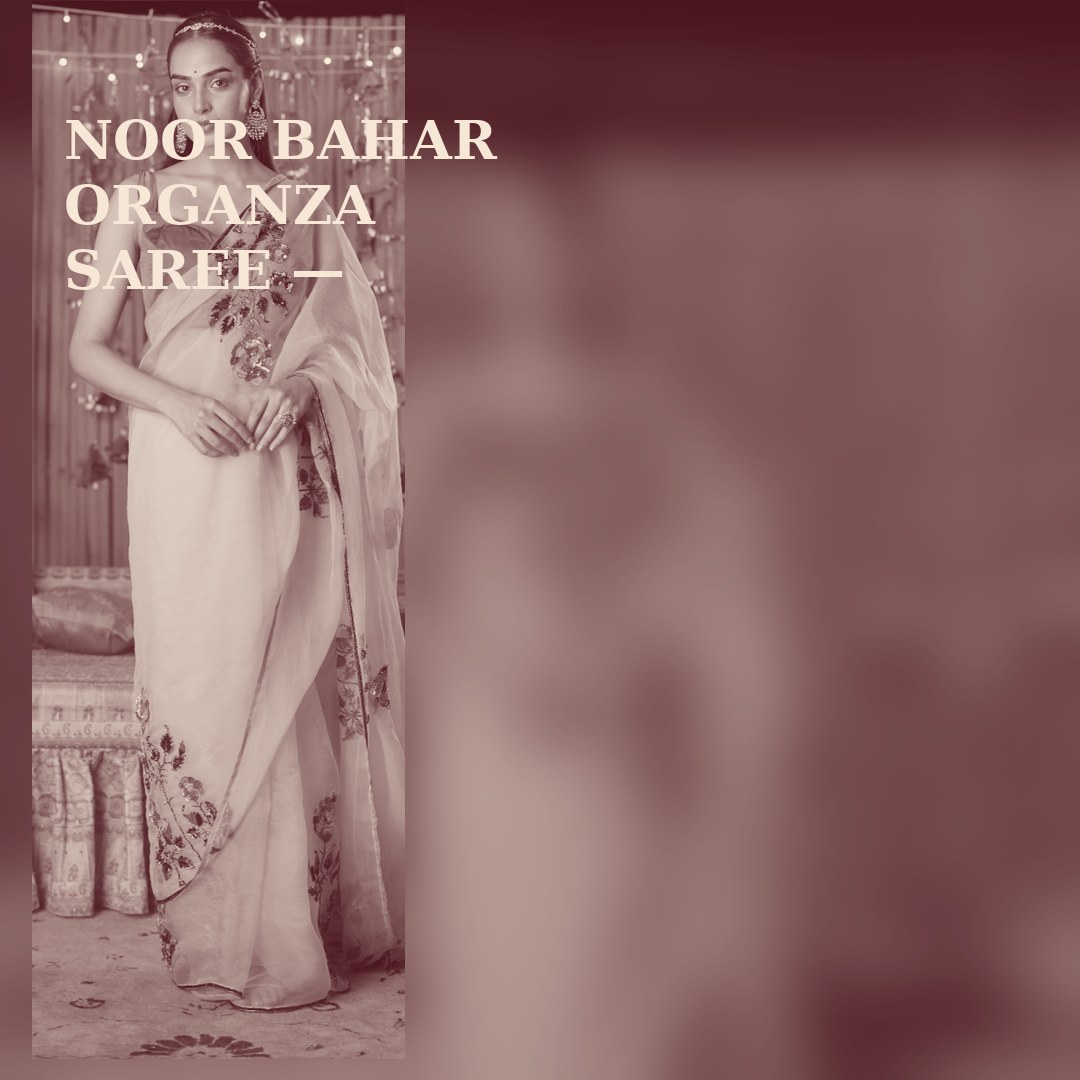
NOOR BAHAR ORGANZA SAREE, ₹48,500 — quieter in tone, in silk organza that moves with you. The sister or the cousin who is on stage at the sangeet, and does not want to compete with the bride, will find this one easy to begin with.
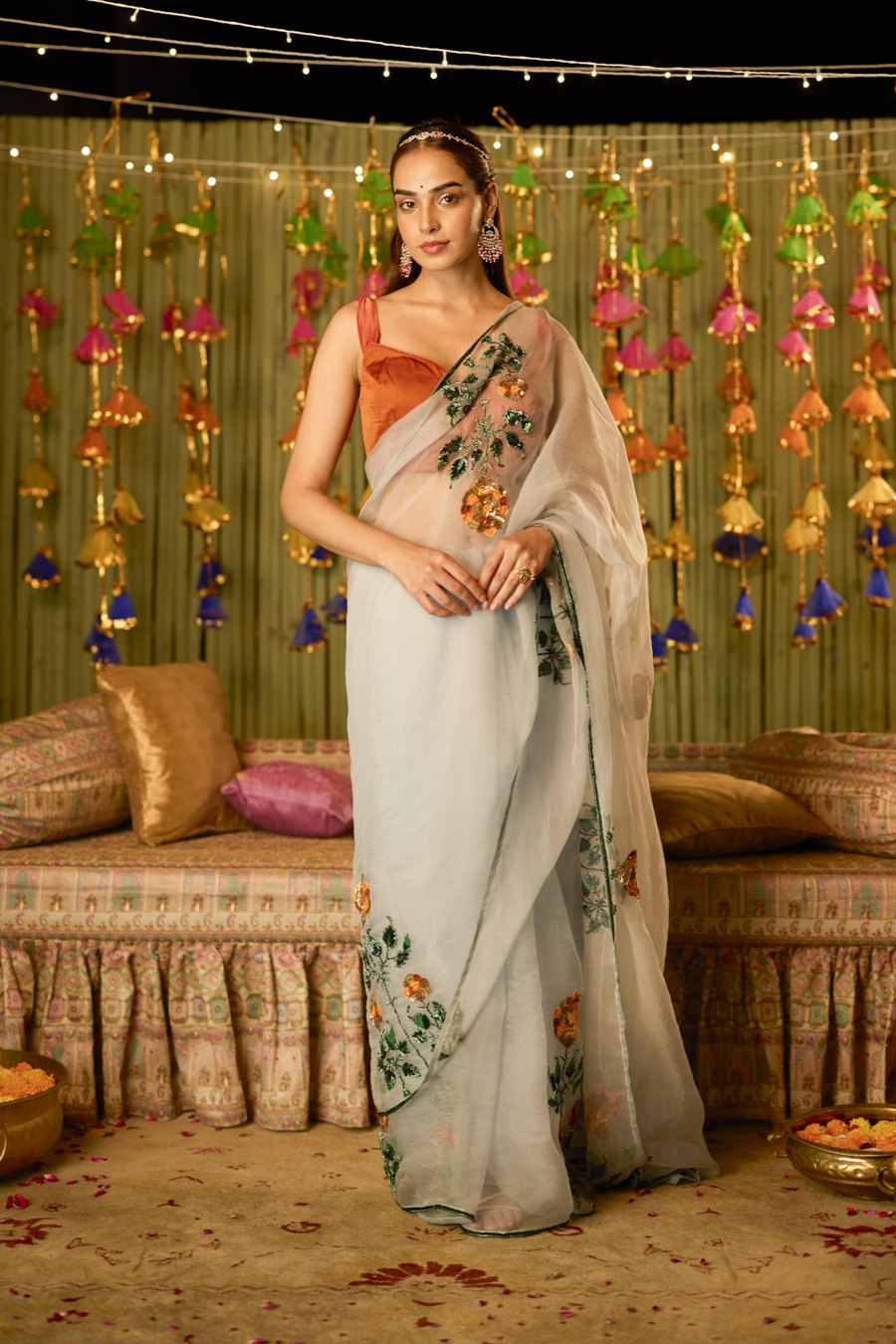
GULBAHAR IVORY ORGANZA SAREE, ₹46,500 — ivory, and the most daytime of the six. A haldi, a morning ceremony, a temple visit inside the wedding week. Wear it with gold, or with a coral or green blouse when you want the contrast.
RUQMANI GULABI ORGANZA SAREE, ₹46,500 — pink on organza, and the mehendi piece of the group. It takes a sleeveless blouse, flowers in the hair and very little else.
GULBAHAR GULABI ORGANZA SAREE, ₹46,500 — the same family carried further into pink. An engagement, a daytime sangeet, or the guest who wants presence without weight. Keep the blouse plain and let the embroidery be the argument.
Each of these is a real product page with its own photographs and measurements, so take the detail from the page rather than from a paragraph. The rail does not stop at six either — there is more organza and georgette behind these, which is why we would rather you tell us your role and let us point you than choose from a list.
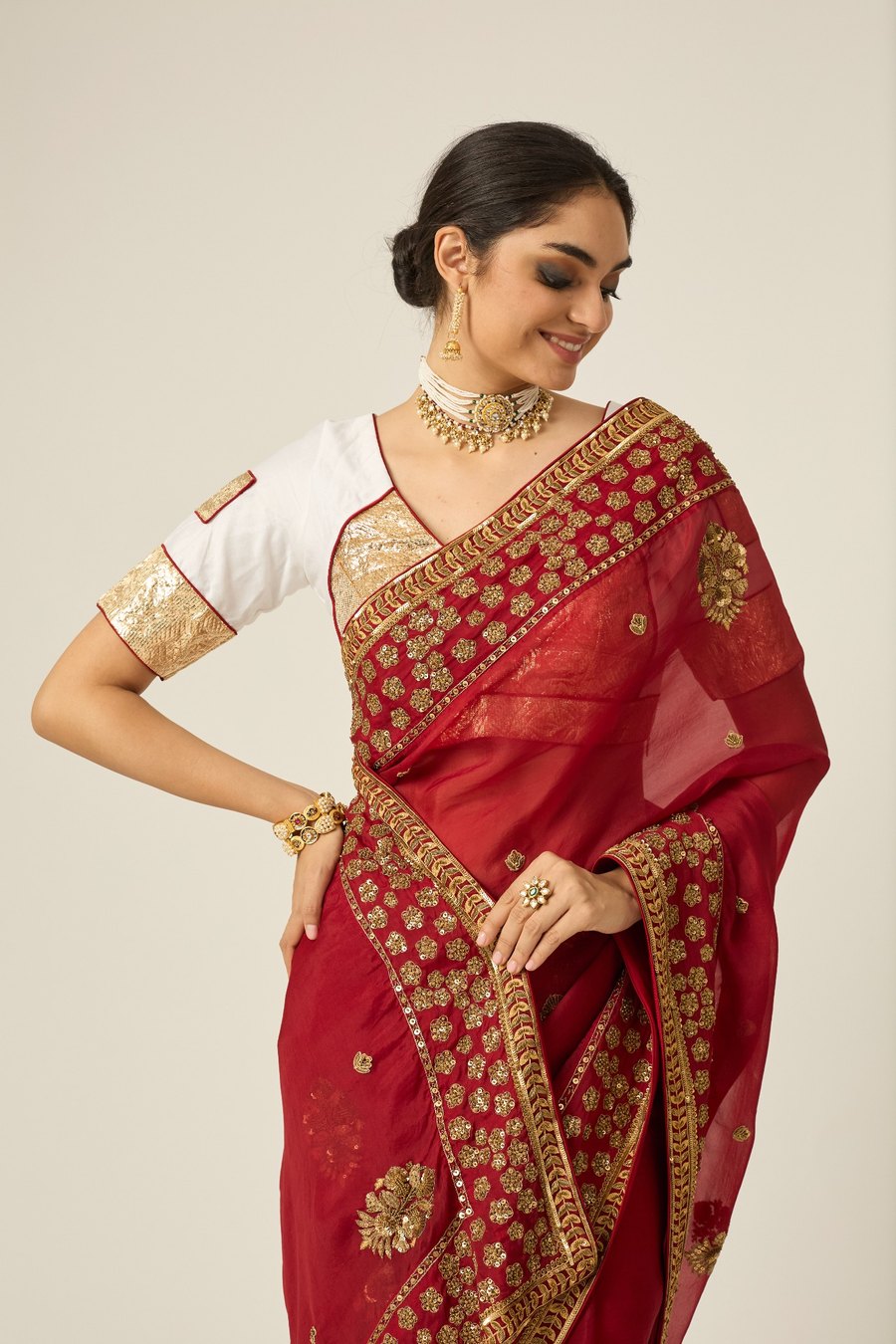
₹59,500
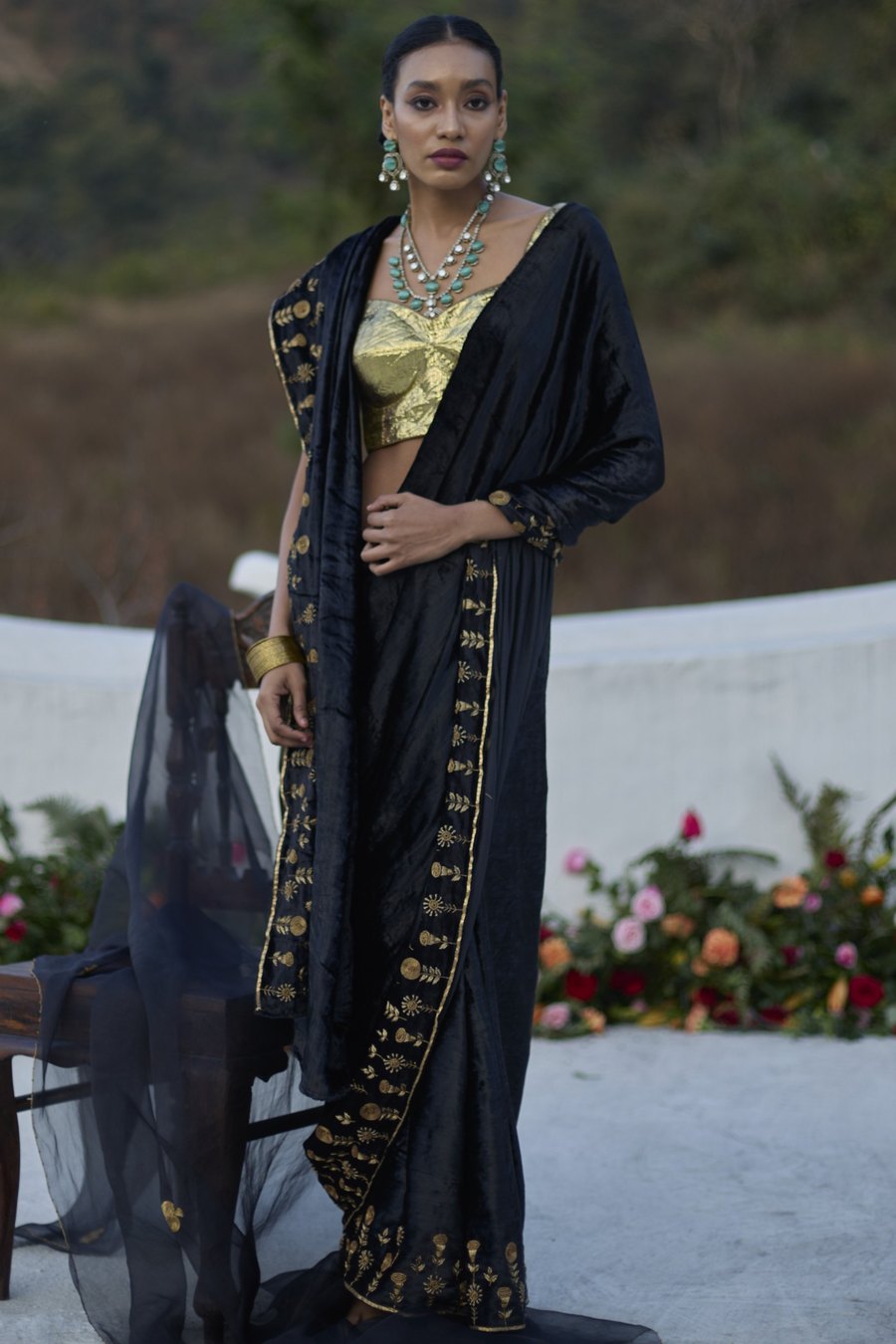
₹48,500
₹48,500
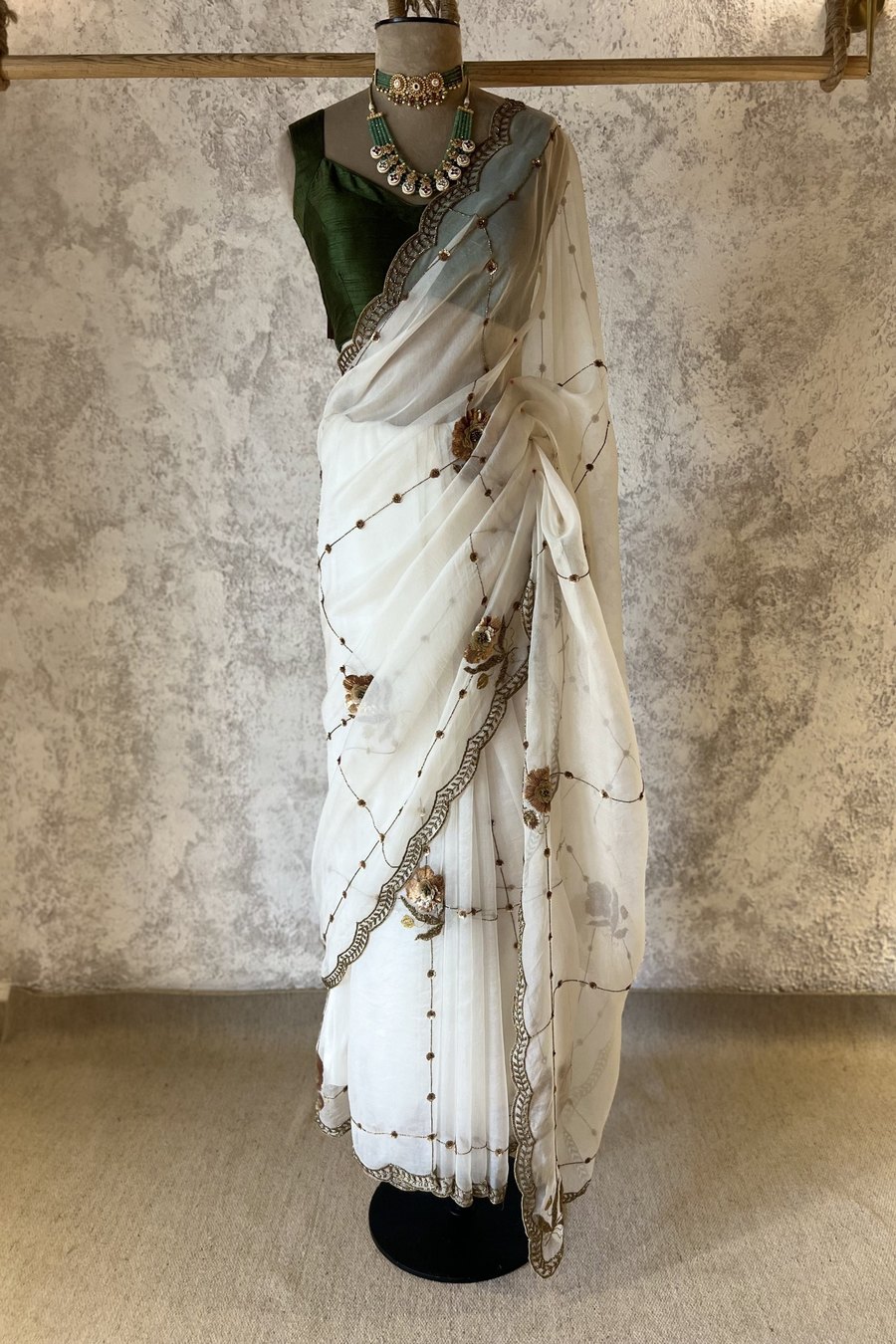
₹46,500
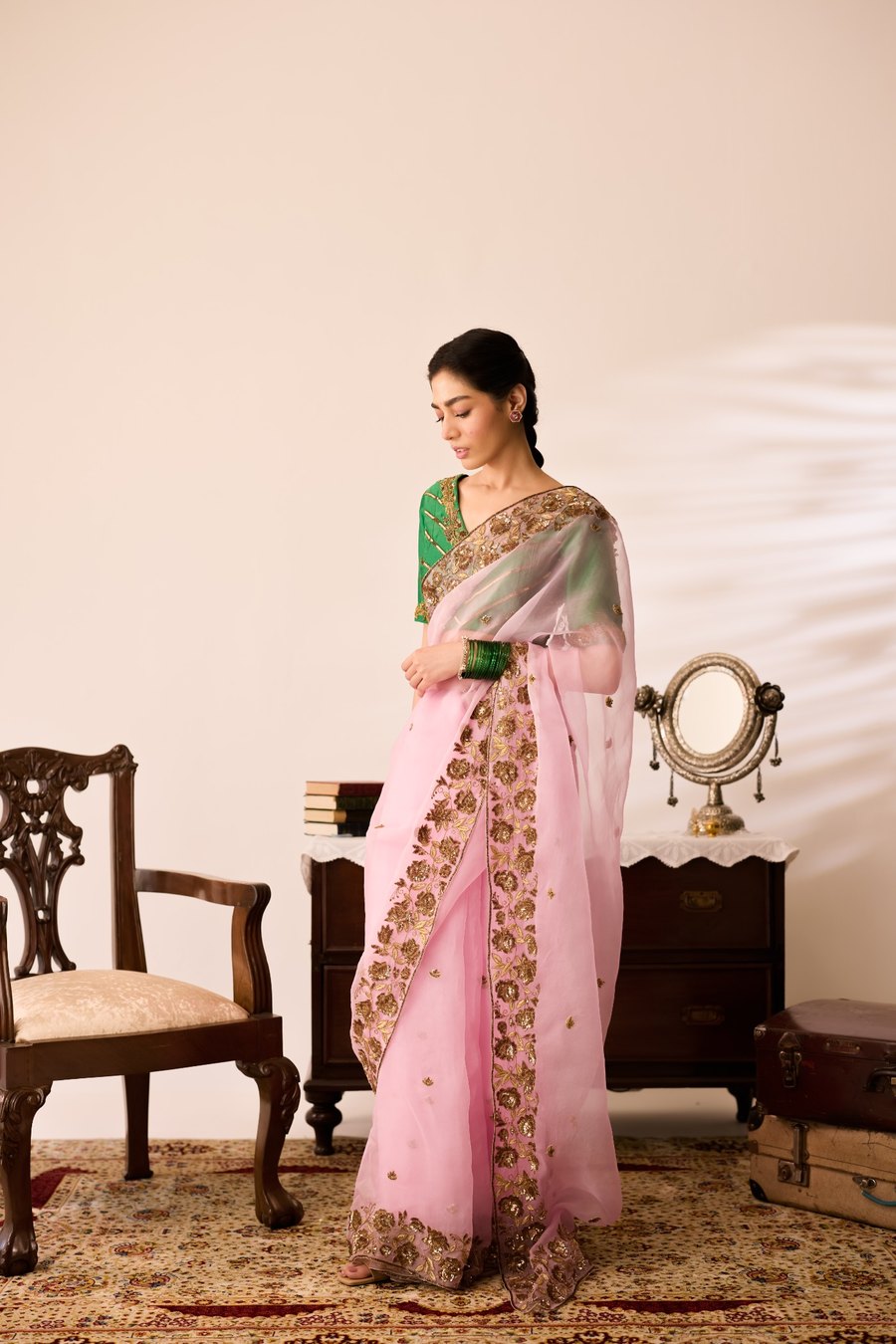
₹46,500
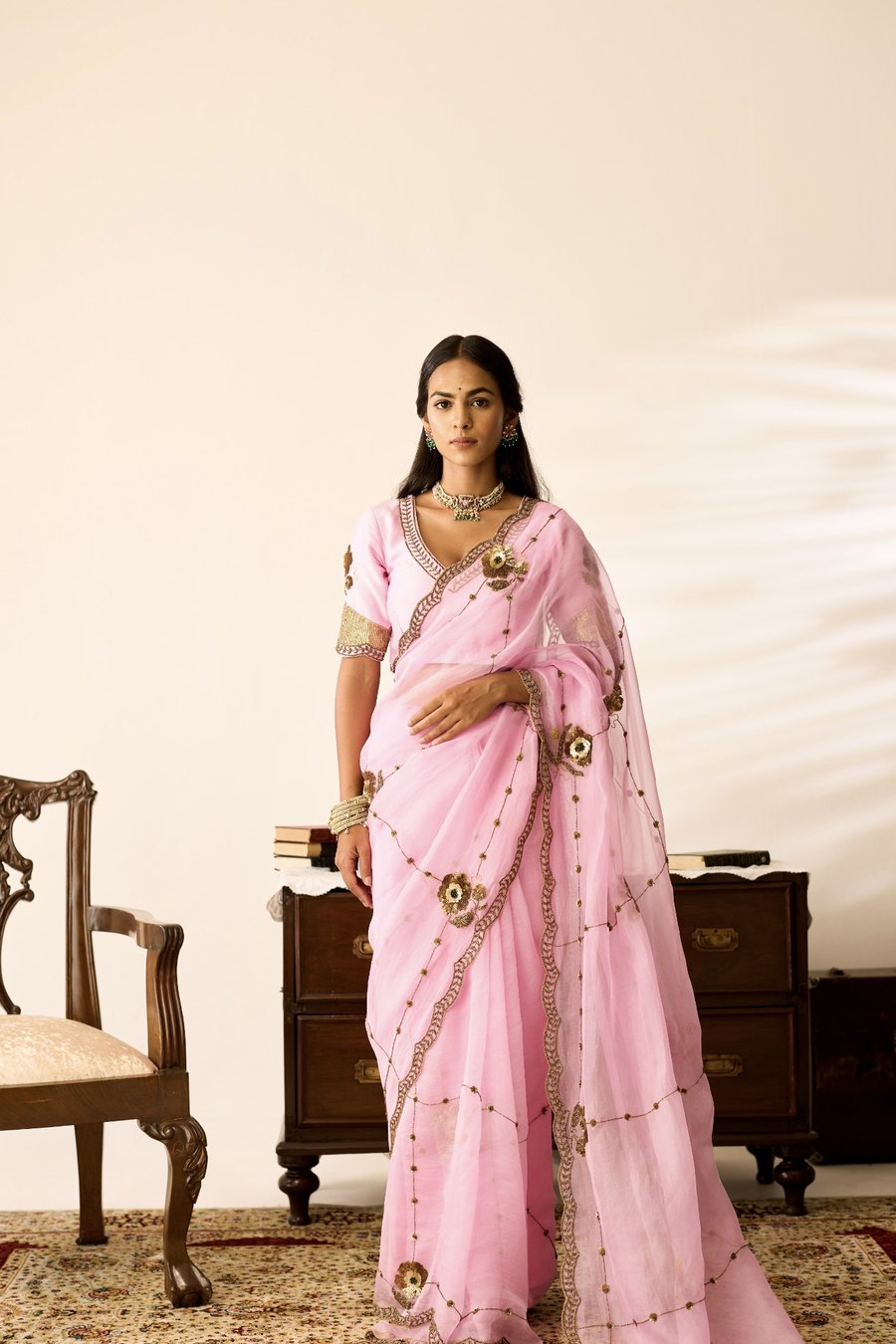
₹46,500
The blouse, the dupatta, and one rule about not outshining anyone
The blouse is where a hand-embroidered saree is won or lost. On a piece with a worked pallu and border, a blouse with a worked back or a deeper neckline can lead, because there is a calm body under it to carry the weight. On an all-over jaal, keep the blouse plain and let sleeve length set the register — sleeveless or cap sleeves for a morning function, longer sleeves after dark. Every blouse we make is cut to your measurements, so a sheer ground never has to be pinned into submission.
A second dupatta is the cheapest way to move one saree between two functions. Leave it off for the haldi and the piece is clean and bright. Drape a deeper one over the shoulder for the evening and the same saree reads as a different outfit, without anything new being bought.
Then the restraint rule, which matters most for the mother and the sisters. The bride's work should be the deepest in the room, and the way to respect that without fading out of your own photographs is depth of colour and quality of work rather than the size of the pattern. A deep ground with a worked pallu photographs beautifully and never competes. A bright all-over work placed next to a bride in red competes whether you meant it to or not.
Buying in time, and how many pieces a season really needs
The practical part people leave too late: everything we make is made to order and cut to your measurements, so a season has to be planned backwards from the first function, not forwards from the day you start looking. If you are dressing for more than one wedding, settle the two pieces you will wear most before you settle the accessories. Accessories can be quick. Hand embroidery cannot.
Most families we dress need less than they think. One deep piece for the wedding and the reception, one light daytime piece, and one that travels will usually cover a whole season once the blouses and dupattas are doing their job. That is also the honest arithmetic for a guest with a stack of invitations: one well-chosen hand-embroidered saree, worn to four weddings with four different blouses and two dupattas, costs less per wearing than four sarees bought in a hurry.
If you would rather handle the pieces in person, our stores in Shahpur Jat, New Delhi and Dehradun both carry the season's rail. Styling help and fit checks happen on WhatsApp when a store visit is not possible. Shipping is free across India above ₹10,000, and there is an international shipping offer on the site, code INTSHIP, above ₹49,000. And because of how the cloth is dyed — organic dyes, artisan hands, no shortcuts — the colour you choose is the colour you will still have at the end of the season.
Frequently asked
What should a mother of the bride wear to a hand-embroidered wedding?
Depth of colour and quality of work, rather than the biggest pattern in the room. A deep ground with a worked border and pallu photographs beautifully and never competes with the bride, who should carry the deepest work of the day. If you will be hosting and photographed all evening, choose the heavier ground and the longer sleeve; if it is a morning function, keep it light.
How many sarees do I actually need for one wedding season?
Fewer than most people expect. One deep piece for the wedding and reception, one light daytime piece, and one that travels comfortably will usually hold a whole season once the blouses and dupattas are varied around them. Guests attending several weddings can wear the same hand-embroidered saree to each with a different blouse or dupatta and never look repeated.
Which hand embroidery is best for a sangeet?
The one you can dance in. A heavy pallu with dense zardozi sits forward on the shoulder and gains weight over three hours, so if the function is a sangeet, look for work concentrated on the border and pallu over a calm body, or a lighter resham or buti piece. Pin the pallu once at the shoulder and leave the rest soft — pinning it flat flattens the embroidery with it.
Can I wear the same hand-embroidered saree to more than one wedding?
Yes, and it is the best reason to own one. Change what surrounds it: a plain sleeveless blouse for the day, a longer-sleeved blouse and a heavier earring for the evening, a deeper dupatta over the shoulder. Handwork also ages well with care — dry clean after the season rather than after every function, and refold along a different line each time so no single fold takes all the weight.
How do I get the blouse measurements right on a made to order saree?
Send your bust, waist, shoulder, armhole and sleeve length, plus the heel height you will wear with the saree, since the heel sets the hem and the fall of the pleats. We run a fit check on WhatsApp before the final stitching, so any correction happens while the blouse is still on the table.
Explore more: saree — or message us on WhatsApp for styling help.

The information below is required for social login
Sign In
Create New Account