

A kurta set is not a saree, and it should not be stored like one. There is no pleat to reset and no six yards to air out. What you have instead is a fitted stitched kurta, a pant with a crease in it and a dupatta that remembers, very precisely, the way it was
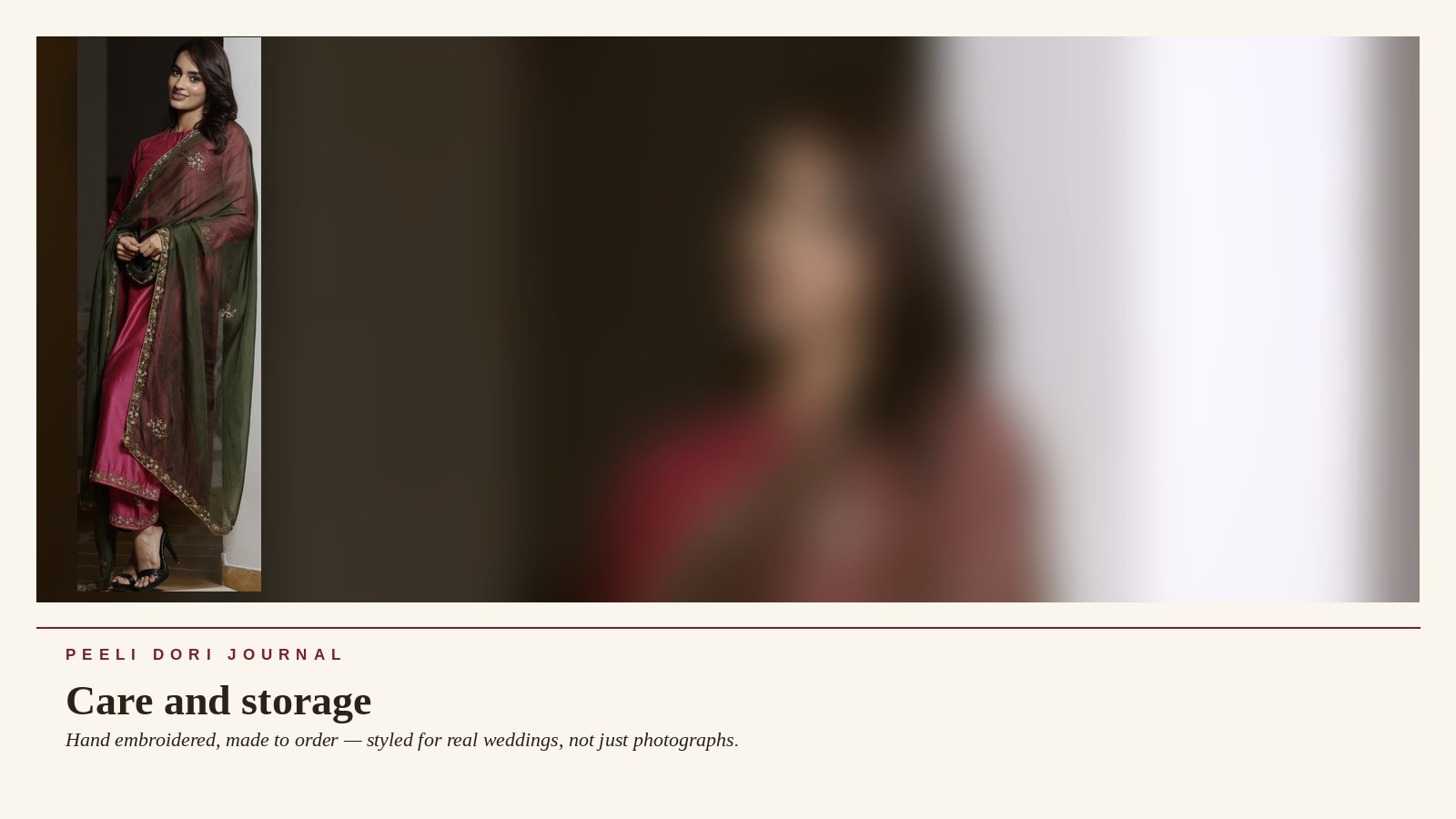
A kurta set is not a saree, and it should not be stored like one. There is no pleat to reset and no six yards to air out. What you have instead is a fitted stitched kurta, a pant with a crease in it and a dupatta that remembers, very precisely, the way it was last folded. Most of the damage we are shown on sets that come back to the shop after two weddings is not damage from wearing. It is damage from the forty-eight hours after the wearing stopped.
A set is worn more than once, and that is the whole point
A hand-embroidered kurta set bought for a sangeet rarely stays a sangeet outfit. It goes to the mehendi lunch the next afternoon, then to a reception two months later, then to a cousin's roka the following season. That is the reason people choose a set over a heavier outfit in the first place: it can be worn down. One change of dupatta, one change of earrings, and it reads differently enough that the same photographs do not look like the same evening.
So the question is not how to keep a set in a box. It is how to bring it back to first-day condition between wears, in a house with limited cupboard space and no spare hour in the week. In our experience the difference between a set that still looks new after four outings and one that looks tired after two comes down to three habits: what you do the night you take it off, how you press it, and where it sleeps afterwards.
The night matters most. We have seen kurtas come back with a permanent shine on the shoulder because they went straight onto a wire hanger still warm from a car ride. We have seen organza dupattas with a hard crease down the middle because they were folded on the same line four times in a row. None of it was the embroidery failing. All of it was handling.
The cloth decides the wash. The embroidery decides the handling
Two different questions get asked at once when someone says "how do I clean this". The first is about cloth. Chanderi is light and a little crisp, and it loses its finish if it is wrung or soaked. Silk has weight and takes a crease beautifully, which also means it holds a bad crease. Silk organza is stiff enough to hold a shape on its own, and stiff enough to crack along a fold if it is pressed flat and hard.
The second question is about the work on top, and it usually overrules the first. Gota is a flat metal ribbon appliquéd onto the surface; it is the most forgiving of the metal work but the edges lift if they are rubbed. Zardozi is raised metallic thread stitched down in dense passages, so the piece is heavier than it looks and the thread is what abrades when the kurta is folded against itself. Dabka is coiled wire, and a coil catches on everything: a zipper, a nail file, the hook of another blouse. Resham, the silk thread work, is the one that suffers most from water, because a coloured thread can bleed into a pale ground and there is no undoing that.
The rule we give customers is short. Metal work does not want water, heat or pressure. Thread work does not want water with detergent in it. Chanderi does not want to be wrung. If a piece has two or three of these on it, which most of our sets do, then home washing stops being a sensible idea and spot cleaning plus a good dry cleaner becomes the whole plan.

Three pieces, three rules
The kurta. Never a wire hanger, and not a thin plastic one either. A hand-embroidered kurta is heavier at the yoke and the sleeve than a plain one, and a narrow hanger puts that weight on two points of the shoulder. Use a wide, padded hanger and take the set off it the moment you are home, or fold the kurta instead. If the sleeves are heavily worked, do not roll them up to the elbow for the evening; that is where we see the first broken threads.
The pant. The crease should be set by weight, not by a hot iron pressed hard on a seam. Hang the pant from the waistband, let it drop, and steam the crease back in. If it has been folded in a suitcase, hang it in the bathroom while you shower and let the steam do the work, then leave it to dry flat. Pressing a crease into a stitched pant with a hot iron on the wrong setting is how you get a permanent shine down the front, and once that shine is there it does not come out.
The dupatta. This is the piece that dates a set fastest, because it is the piece that gets folded smallest. Organza dupattas should be rolled, not folded, for storage; a roll has no line to set. Silk and chanderi dupattas can be folded, but not on the same line twice. And if the dupatta is pinned to the kurta at the shoulder, take the pins out before you put it away. Pins left in for a month leave rust marks that no cleaner will lift.
Sets that earn the extra care
A set that is going to need careful storage should at least be worth it. These are the ones we would put the muslin bag aside for, and what each one asks of you.
The Gulabi Gulmohar kurta set at ₹36,500 is the loudest of the family, with work that runs across the bodice and down the sleeve. That density is exactly where folding rubs, so it wants tissue paper at the fold lines and a bag of its own.
The Gulmohar Red kurta set at ₹36,500 and the Rani Pink Gulmohar set at ₹36,500 are the two most photographed pieces we make; red and rani pink both show a water mark, so a spilled drink is a stop-everything moment rather than a wipe-and-carry-on moment.
The Ivory Farsi kurta set at ₹29,500 is chanderi, which is the lightest cloth here and the one that creases most readily. It steams back perfectly, but it also marks if it is pressed damp, so it needs to be bone dry before the iron comes near it.
The Rani Pink Ruqsat kurta set at ₹28,500 and the Ruqsat kurta set at ₹28,500 carry finer, flatter work, which makes them the easiest of the group to travel with: they fold small, they take a light steam, and they do not need a separate bag for a two-day trip.
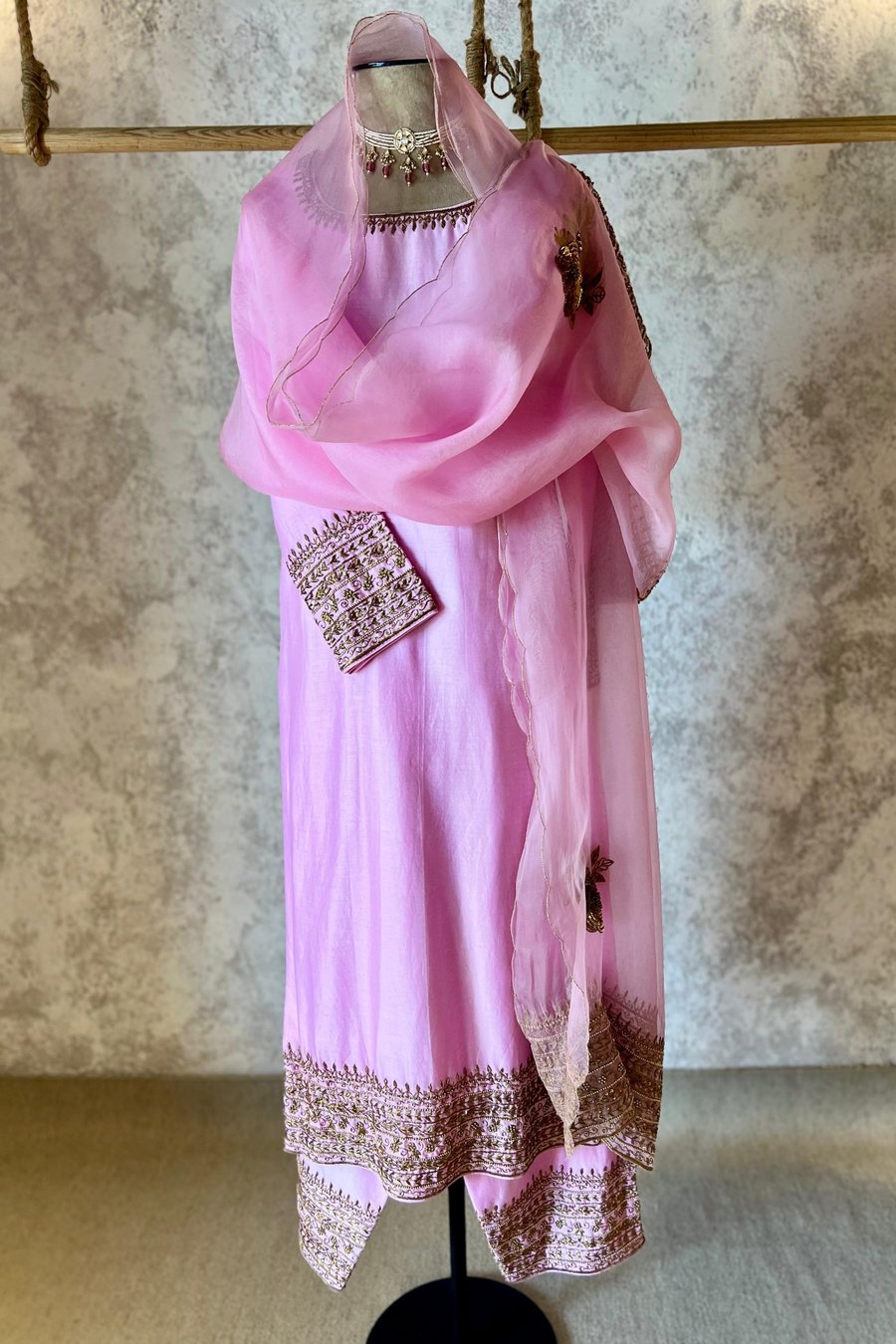
₹36,500
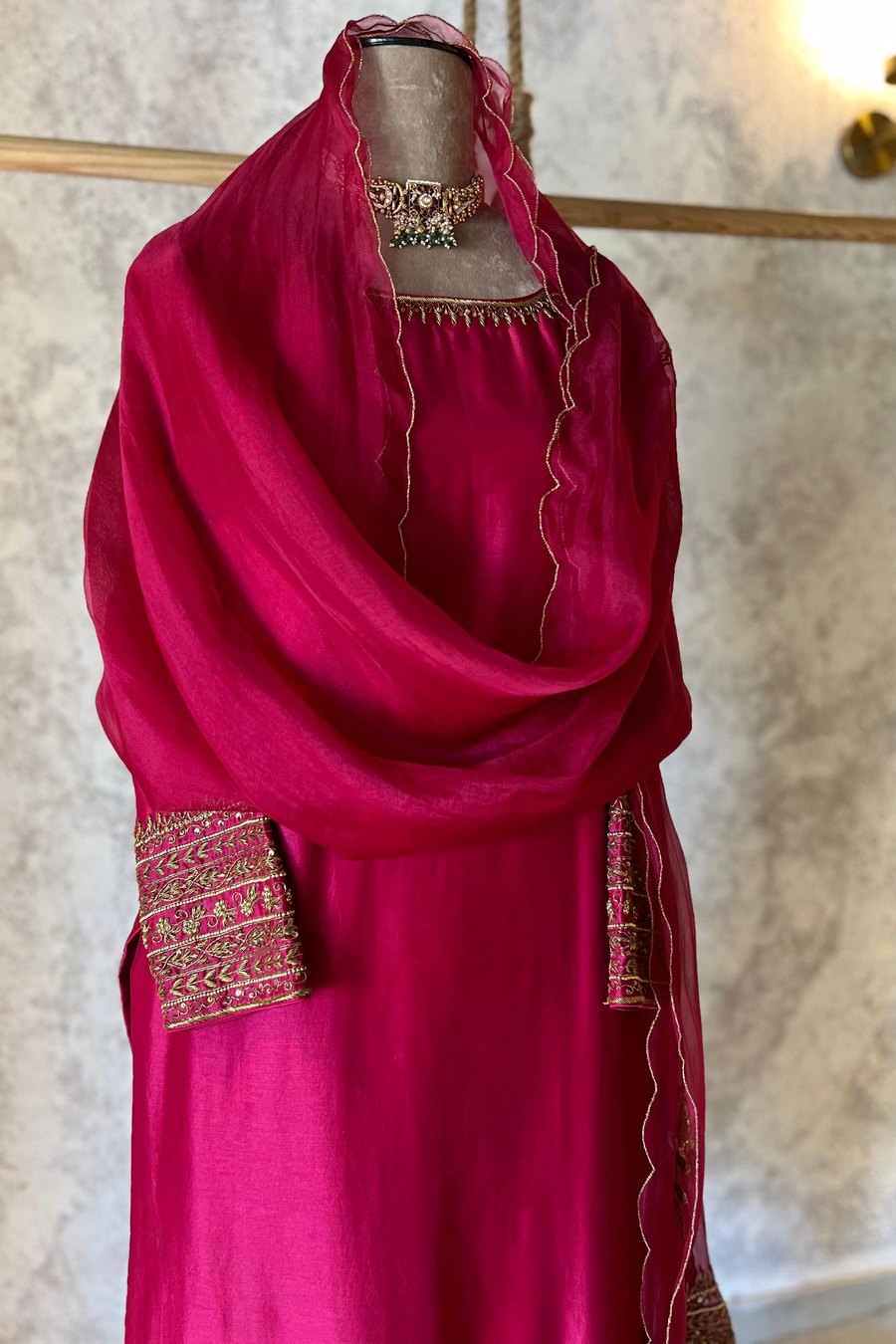
₹36,500
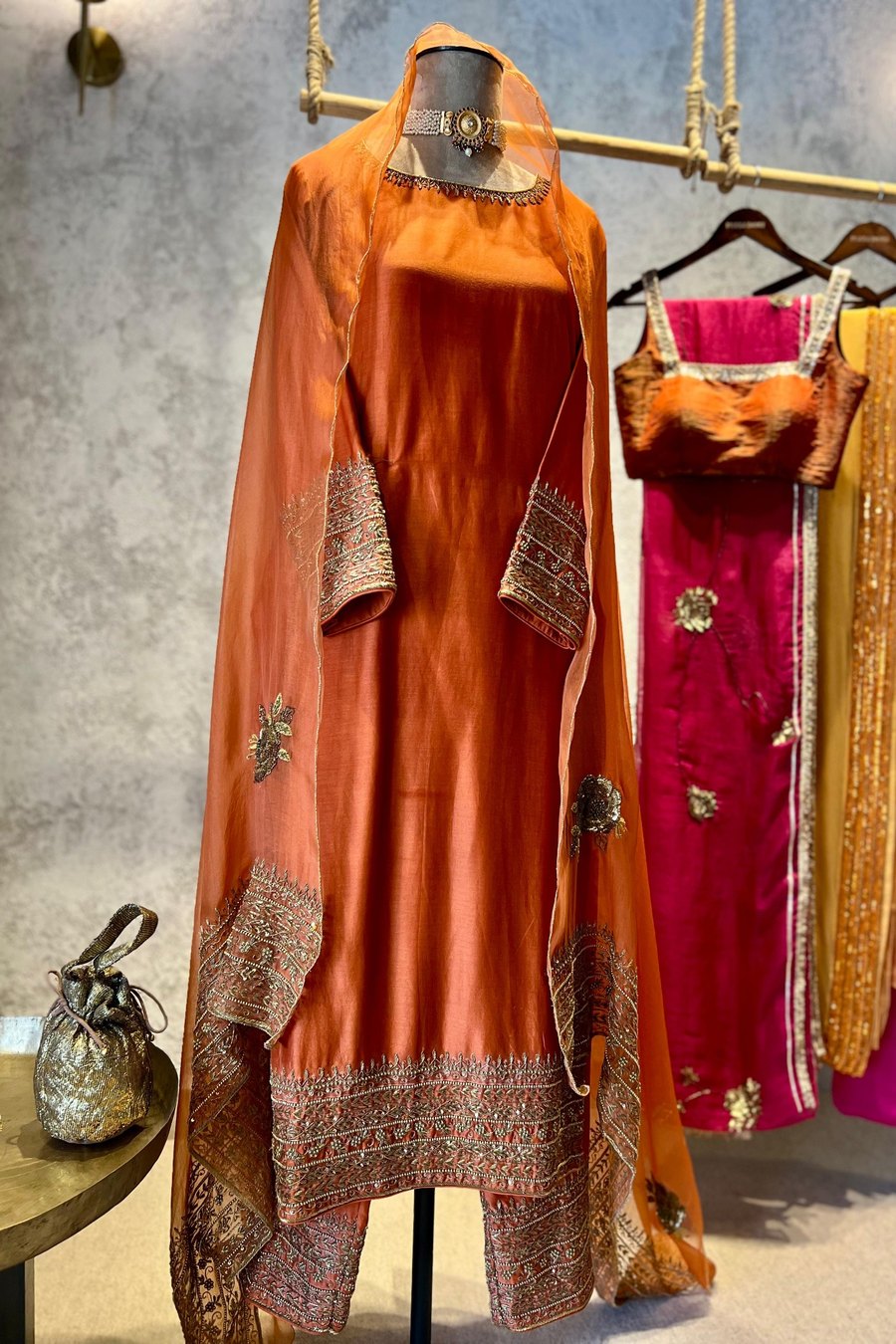
₹36,500
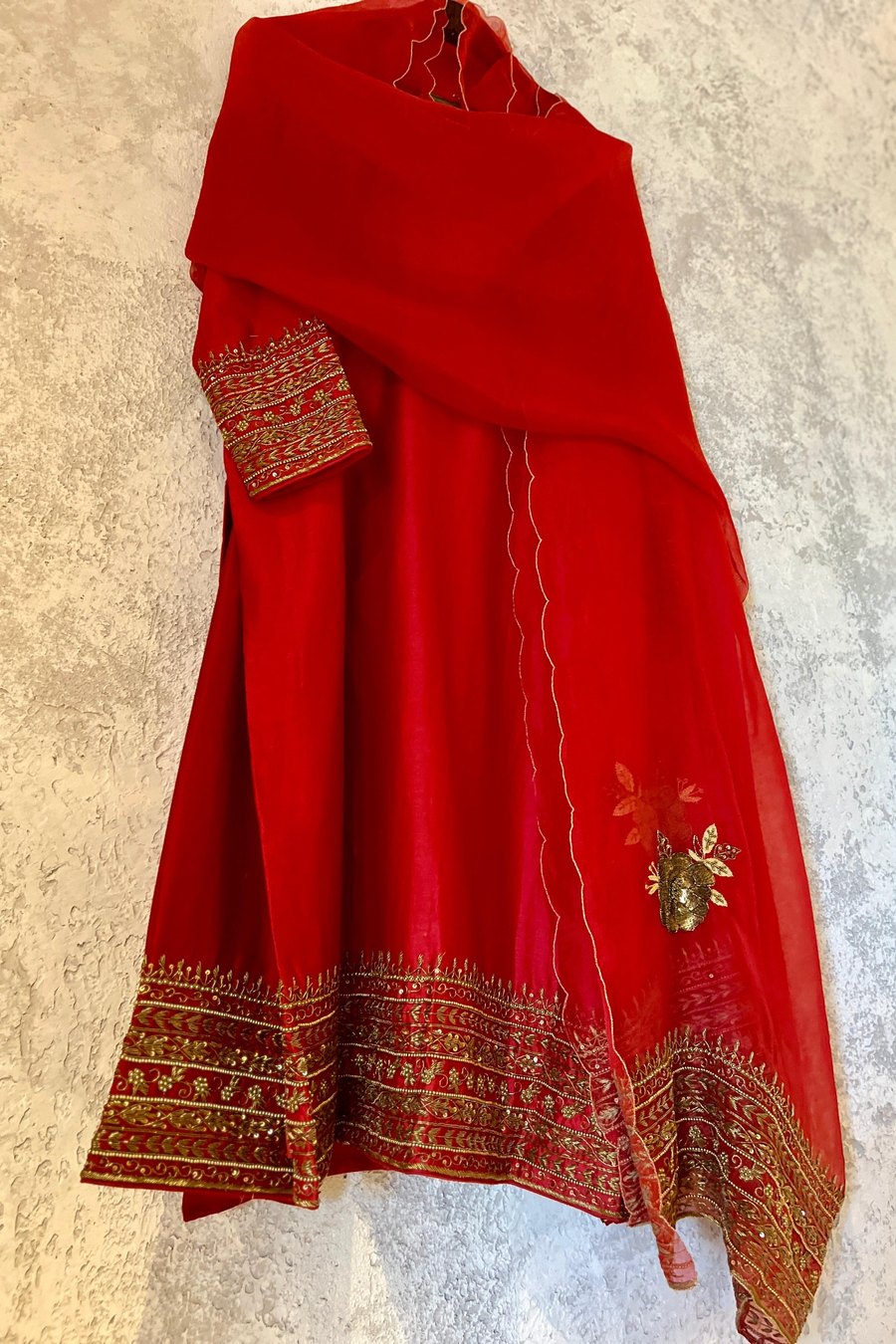
₹36,500
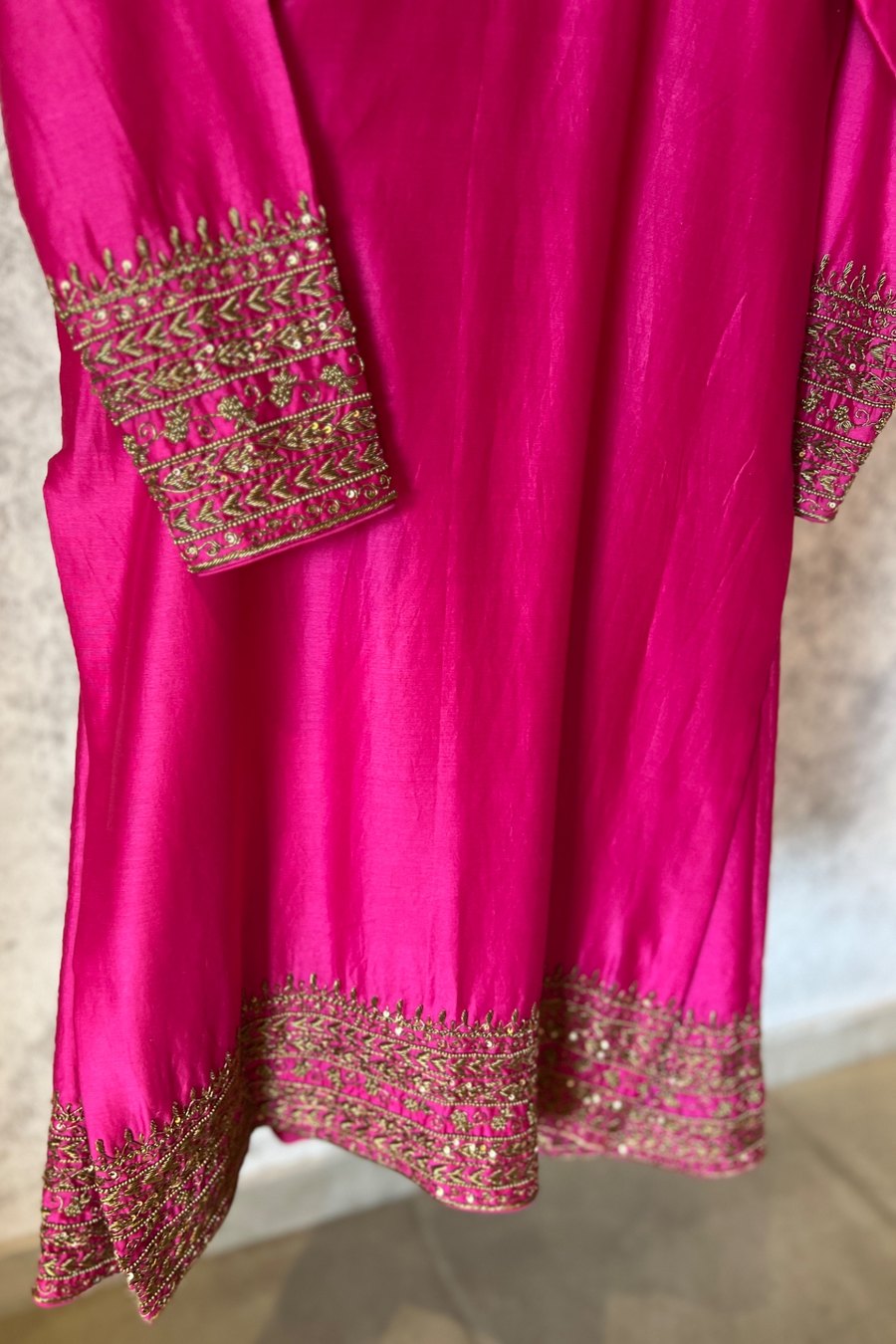
₹36,500
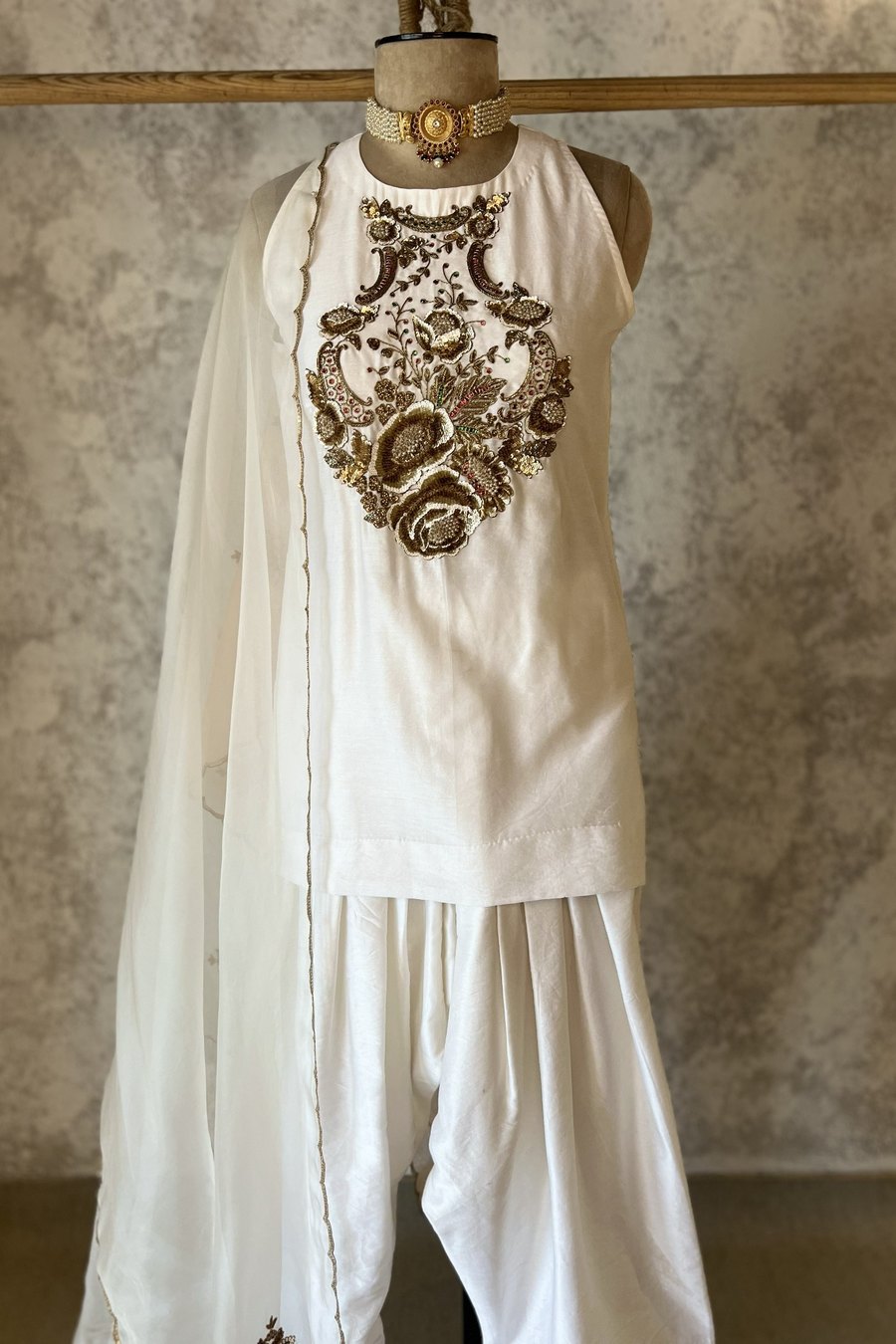
₹29,500
Between functions: getting a worn set back to first-day
Airing does more than most people expect. Two or three hours in shade, on a wide hanger or laid flat on a clean sheet, takes out the smell of a long evening, the cigarette smoke from a lawn and the faint dampness that comes from dancing. Not in direct sun: sunlight is kind to cotton and unkind to dyed silk and to metal thread.
For a spot, use plain water and a white cloth, and work from the outside of the mark inwards so you do not spread it. For an oil mark, cornflour left for twenty minutes lifts a surprising amount before any liquid touches the cloth. What we would not do is reach for a stain pen on zardozi or dabka: the solvent in those pens takes the finish off metal thread, and the mark you were worried about becomes the smaller problem.
Perfume and deodorant are worth a mention because they cause more damage than people realise. Spray them before the set goes on, never onto the set, and never onto the embroidery itself. The alcohol in a perfume dulls metal thread over a season, and the mark it leaves is diffuse, so you only notice once the whole panel has gone flat.
If a set is going to be worn twice in one week, which happens at a wedding with four functions, give it a day between wears. Let it air, check the hooks and the press studs, re-pin the dupatta on a different line so the pin holes are not in the same place, and accept that the second wearing will be a slightly softer version of the first. That is fine. Sets are supposed to soften.
The fold, the bag, the shelf
Store the three pieces together. It sounds obvious and it is the thing most often skipped: the dupatta goes into the drawer with the blouses, the pant goes on a hanger in another room, and by the next wedding the set has become three garments that no longer look like they were bought as one. A set kept together also keeps its dye lot together, which matters more than people think on the deeper reds and pinks.
Use cotton or muslin. Not plastic, and not the vacuum bag. Plastic traps whatever moisture was in the cloth when it went in, and on a Delhi summer shelf that is enough to leave a faint tide line along a fold. If you are storing for the season, a breathable bag with a sachet of neem or lavender is better than anything cedar-scented, which can leave oil marks on light chanderi.
Fold with tissue at the heavy work: at the yoke, along the sleeve, and wherever a dense panel doubles back on itself. Fold loosely rather than tightly. Check the pieces every three months, refold on a different line, and let them breathe for an afternoon. The box a set arrives in is fine for a journey and wrong for a year, because it holds the shape of the journey.
Dehradun and Delhi ask for different things. In the hills the enemy is damp: a monsoon cupboard needs silica, changed when it stops working, and the pieces need to come out and air on the first dry day. In Delhi the enemy is dust, which settles into raised zardozi and is very hard to lift without loosening the thread. A closed cotton bag solves most of the Delhi problem and almost none of the Dehradun one, which is why we tell customers in the hills to check their sets more often, not less.
Frequently asked
Can I wash a hand-embroidered kurta set at home?
Not the whole set, and not by soaking it. A plain cotton or chanderi piece with light thread work can be washed very gently in cool water with a mild liquid detergent, never wrung, dried flat in shade and pressed on the reverse while still slightly damp. Once there is gota, zardozi or dabka on it, we would not put the piece in water at all. Spot clean with plain water and a white cloth, and send the set for dry cleaning when it needs more than that.
How do I get a turmeric or oil stain out of a kurta?
Treat it the same day if you can. For oil, cornflour or talc left for twenty minutes will lift a lot of it before any liquid goes near the cloth. For turmeric, cold water and a white cloth, worked from the outside of the mark inwards, then shade-dry and take it to a cleaner rather than adding soap yourself. Hot water sets both stains. Do not use a stain pen on metal thread.
Should a kurta set be dry cleaned after every wear?
No. Dry cleaning every time is hard on the cloth and on the finish of the embroidery. Air the set for two to three hours in shade after a wearing, spot clean anything that landed on it, steam out the creases and put it away. Dry clean when the piece has actually been marked, when it has been worn somewhere smoky for a long evening, or at the end of a season before it goes into storage.
How do I store the dupatta so it does not crease?
Roll organza, fold silk and chanderi but not on the same line twice, and keep the dupatta with the kurta and pant rather than in a separate drawer. Tissue paper inside the roll helps organza keep its body. Take the pins out before storage, and never store the dupatta pressed flat under something heavy.
Can the set be altered later if my measurements change?
Usually, yes. Every set is made to order in your measurements, so there is normally seam allowance to let a kurta out at the side or shorten a sleeve. The limit is the embroidery: work that runs right up to a seam cannot be moved without leaving a line, so it is worth telling us at the fitting where you would want the room if you needed it later. Send us a message on WhatsApp with a photograph and we will tell you honestly what is possible before you bring it in.
Explore more: kurya · dupatta — or message us on WhatsApp for styling help.

The information below is required for social login
Sign In
Create New Account