

Almost every anarkali question we get at the shop comes down to one thing: where the cloth starts to flare, and how much of it there is. Sleeve, dupatta, colour and work get discussed first because they are easier to talk about. But the flare decides whether y
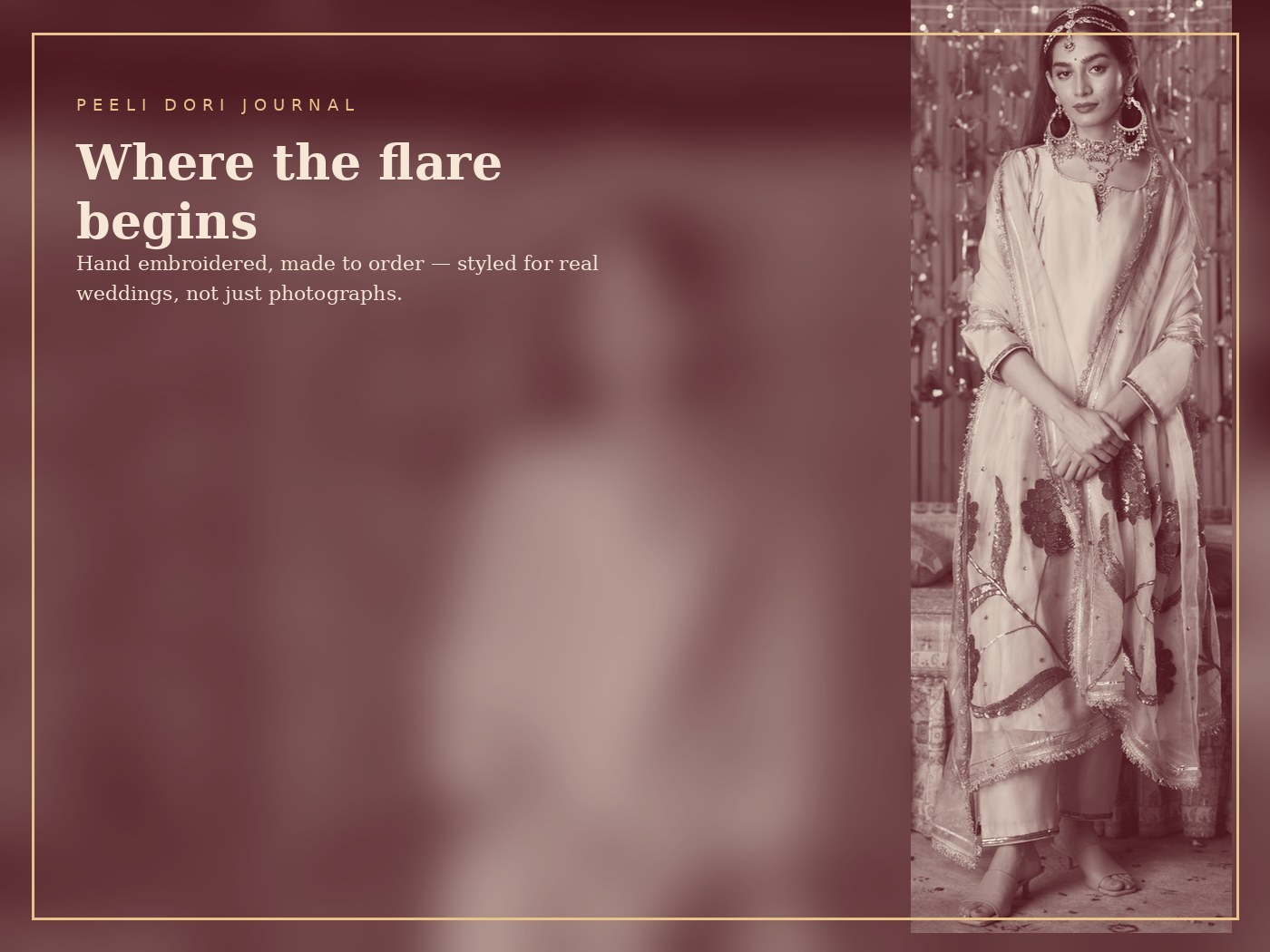
Almost every anarkali question we get at the shop comes down to one thing: where the cloth starts to flare, and how much of it there is. Sleeve, dupatta, colour and work get discussed first because they are easier to talk about. But the flare decides whether you can sit through a long pheras on a low stool, climb a staircase at a reception, and still look like the photograph you had in mind.
An anarkali is not a long kurta
The difference is structural, and it changes how the outfit behaves over an evening. A kurta set is a tunic over a separate pant: two pieces, each moving on its own, and the tunic stops somewhere around the knee or the calf. An anarkali is one piece. A fitted bodice is joined to a skirt and the skirt keeps widening until the hem. There is no pant underneath to catch the light and no gap at the waist where the tunic and the pant can part company when you sit.
That single joined piece is why the anarkali survives a wedding calendar better than most things in a wardrobe. It works at a mehendi where you are sitting on the floor for an hour, at a sangeet where you are standing and then suddenly dancing, and at a reception where you are mostly walking and being photographed. It is also the reason it is easier to travel with than a lehenga: fewer pieces, less volume in a suitcase, and one dupatta instead of a heavy one plus a second for the photograph.
For most of our customers an anarkali is the piece that gets worn twice in a season and then again a year later with a different dupatta and different earrings. If that is how you intend to wear it, the buying decision is a little different from buying a bridal lehenga. You are not buying the heaviest thing you can afford. You are buying the cut that suits the functions you actually go to.
Where the flare begins
There are three places an anarkali usually starts to flare, and each one draws a different line on the body. The first is just under the bust. This is the empire line, and it is the one that makes the wearer look taller, because the eye reads the whole length below the bust as leg. It is forgiving through the middle and it is the kindest cut if you are short. The risk is fullness: if the skirt is very wide and starts very high, the piece can read as maternity rather than flattering.
The second is the natural waist. This is the classic anarkali and the safest choice for a first one. The bodice ends where your waist is narrowest, so the flare begins at the point where you want attention to sit. It balances a fuller bust and a fuller hip because the eye is held at the middle. If you are unsure, this is the one to try first.
The third is a dropped flare, starting at the hip. It sits closer to the body for longer and then breaks lower, which makes for a sharper, more modern line. It is less forgiving through the hip and the seat, and it is harder to alter later, because taking in a bodice is a small job and reshaping a hip line is not.
The other number that matters is the panel count. More panels mean more cloth in the skirt, a fuller sweep when you turn, and a heavier hem. A very full anarkali looks wonderful standing still in a photograph and behaves differently after three hours. When you try one on, sit down on a low stool in it, then walk ten steps, then turn. If the hem is on the floor while you are standing, it will be under your feet when you are walking.
Length is a practical decision
Floor length, ankle length and calf length all appear in anarkalis and they are not interchangeable. A floor-length piece should be measured with the shoes you will actually wear, because two inches of heel changes whether the hem clears the ground. Floor length is the bridal and reception answer, and it is the one that photographs best in a wide frame. It is also the one that collects the most from a Delhi venue floor by the end of the night.
Ankle length is the most useful length for a guest. It clears stairs, it survives dancing, and it can be worn again to a smaller function without looking like the same outfit. Calf length reads as a daytime anarkali: haldi, mehendi, a lunch, a roka. If you are buying one anarkali and you are not the bride, ankle length is usually the better buy for exactly this reason.
The hem is also the first part of the garment to show wear. It is the part that touches the floor, brushes the car, and picks up whatever is on the ground. When we alter a hem we leave enough turn-in that it can be let down once, which matters if the piece is going to be worn by someone taller later.
The bodice is where the fit actually lives
People talk about the flare, but it is the bodice that decides whether the outfit looks expensive. Four measurements do most of the work: the bust, the under-bust, the shoulder width and the armhole. A bodice that is even slightly loose at the armhole will gap when you raise your arm; one that is tight across the bust will pull the work out of line and crease through the chest by the time dinner is served.
Because our pieces are made to order, we can cut to your measurements rather than to a standard size, and custom sizing is included in how we work. What we ask for is the bust, under-bust, waist, shoulder, armhole, the length from the shoulder to where you want the bodice to end, and your height in the shoes you plan to wear. The last one is the one people forget, and it is the one that decides whether the hem is right. If you are not sure how to take them, message us on WhatsApp and we will talk you through it — a fit check before cutting saves an alteration after.
Ask about the side seams as well. A bodice with a little allowance at the side can be taken in by an inch later without touching the embroidery. A bodice cut to the exact measurement with no allowance cannot, and a piece that cannot be altered is a piece you can only wear at one weight.
The cloth, and what the work does to it
Chanderi is the lightest of the fabrics we use for anarkalis and the one that gives a flare without weight. It is a little crisp, it holds a fold, and a full skirt in it still feels like air rather than a curtain. For a first anarkali, or for anything calf or ankle length, chanderi is the easiest cloth to live with.
Silk has weight, and weight changes how an anarkali moves. The skirt swings slower and settles later, which reads as expensive on a floor-length piece. It also means the outfit is heavier on the shoulders by the end of an evening, so a silk floor-length anarkali is an outfit for one function, not for a day of hopping between two.
Silk organza is stiff enough to keep the shape the skirt is cut in. That is what gives an anarkali its sharp, almost architectural line, and it is also why organza creases along folds if it is folded small and left. If the silhouette is the thing you love, organza is the cloth; if you want to sit on the floor, it is not.
The work matters as much as the cloth once the skirt gets long. Gota is a flat ribbon applied to the surface: light, reflective in daylight, and the most forgiving of the metal work over a long evening. Zardozi is raised metal thread stitched in dense passages, so it adds real weight, which is fine on a bodice and much less fine on a twelve-panel floor-length skirt. Dabka is coiled wire and catches on everything. Resham brings colour, and it is the softest of them against the skin. A useful rule: the fuller and longer the skirt, the more the weight of the work decides whether you can wear the piece for four hours or eight.
Six anarkalis, and the function each one is cut for
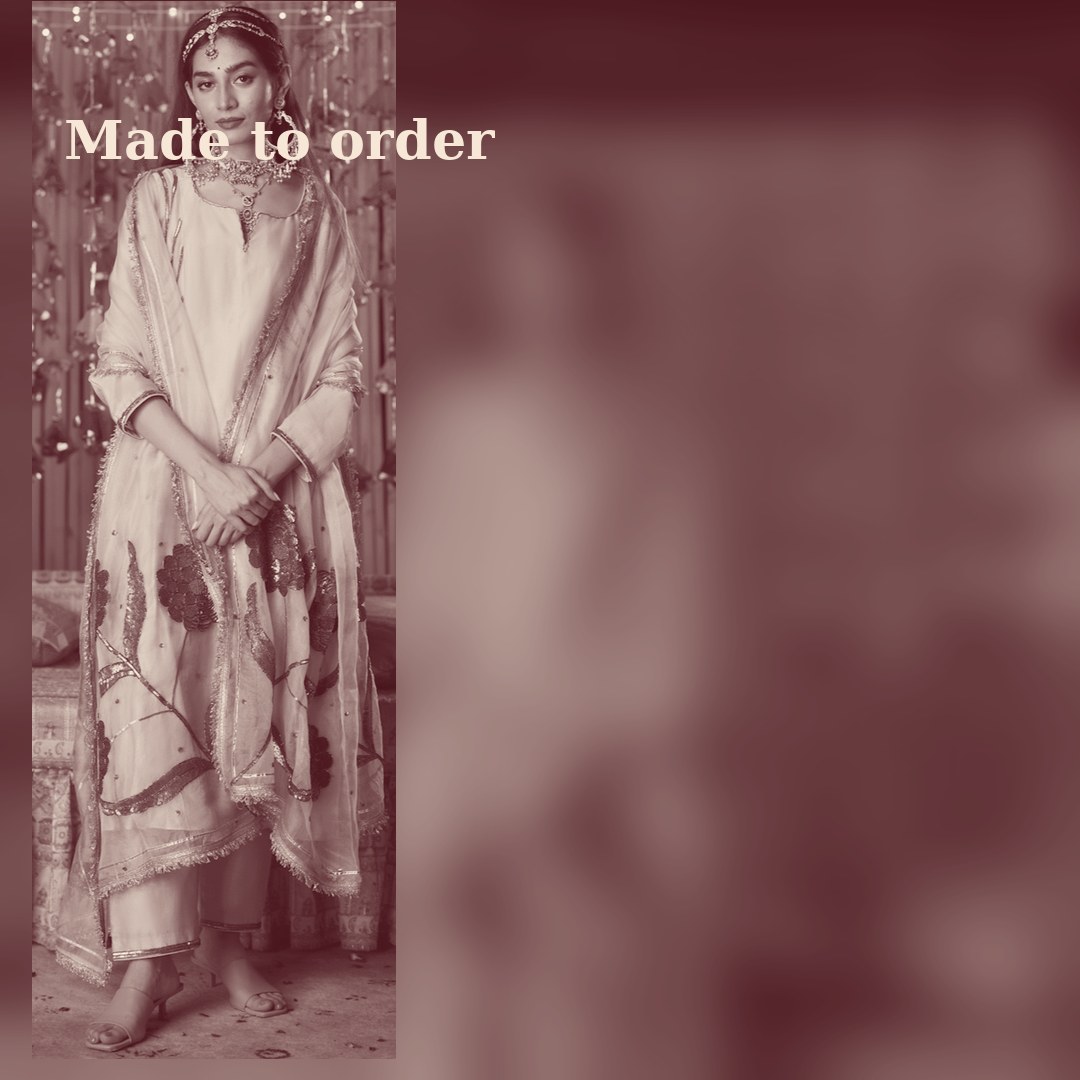
The pieces below are the ones we would show you first if you came in asking for an anarkali for a wedding. All of them are hand embroidered and made to order, and all of them can be cut to your measurements. The six sit between ₹34,500 and ₹44,500.
The three Gulmohar anarkalis are the fullest of the group and the closest to a bridal or reception piece. The Coconut Gulmohar is the quietest of the three and the easiest to wear again. The Powder Blue Gulmohar is the one we are asked for most often for a daytime wedding, and the Gulabi Gulmohar is the one that carries the evening. If you are the bride's sister or the bride herself and you want a floor-length that reads in photographs, start here.
The Nayanthara anarkali in purple is the piece for a sangeet. Deep enough to hold up under warm, low light, and cut so the work sits where the light hits it. The two MADU anarkalis in chanderi — one in powder blue, one in rust orange — are the ones to look at if you want an anarkali you will wear more than once. Chanderi keeps them light, so an ankle-length version works for a mehendi lunch and the same piece works again at a reception with a different dupatta. The rust orange is the one we would pick for an October or November wedding; the powder blue for anything before the heat breaks.
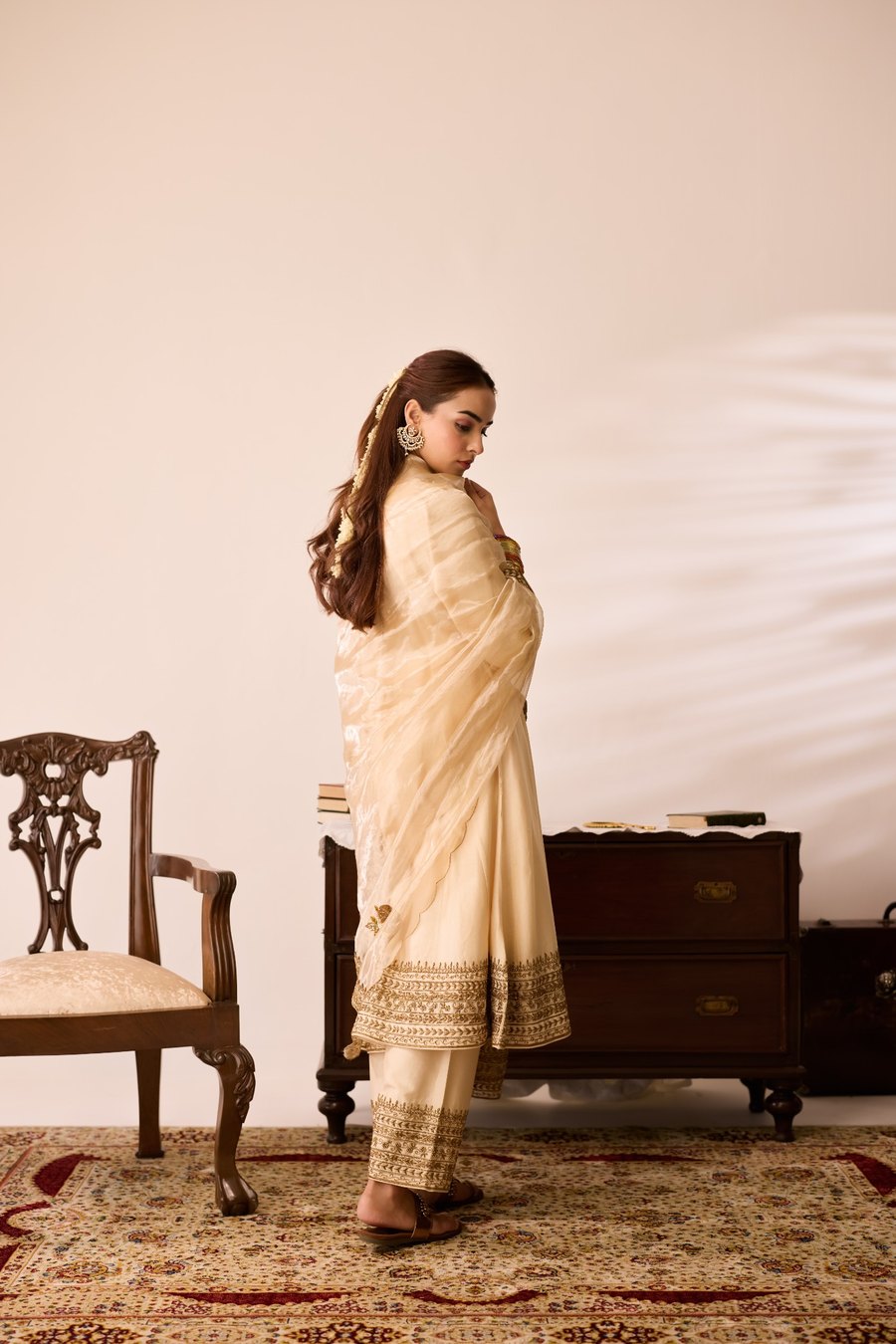
₹44,500
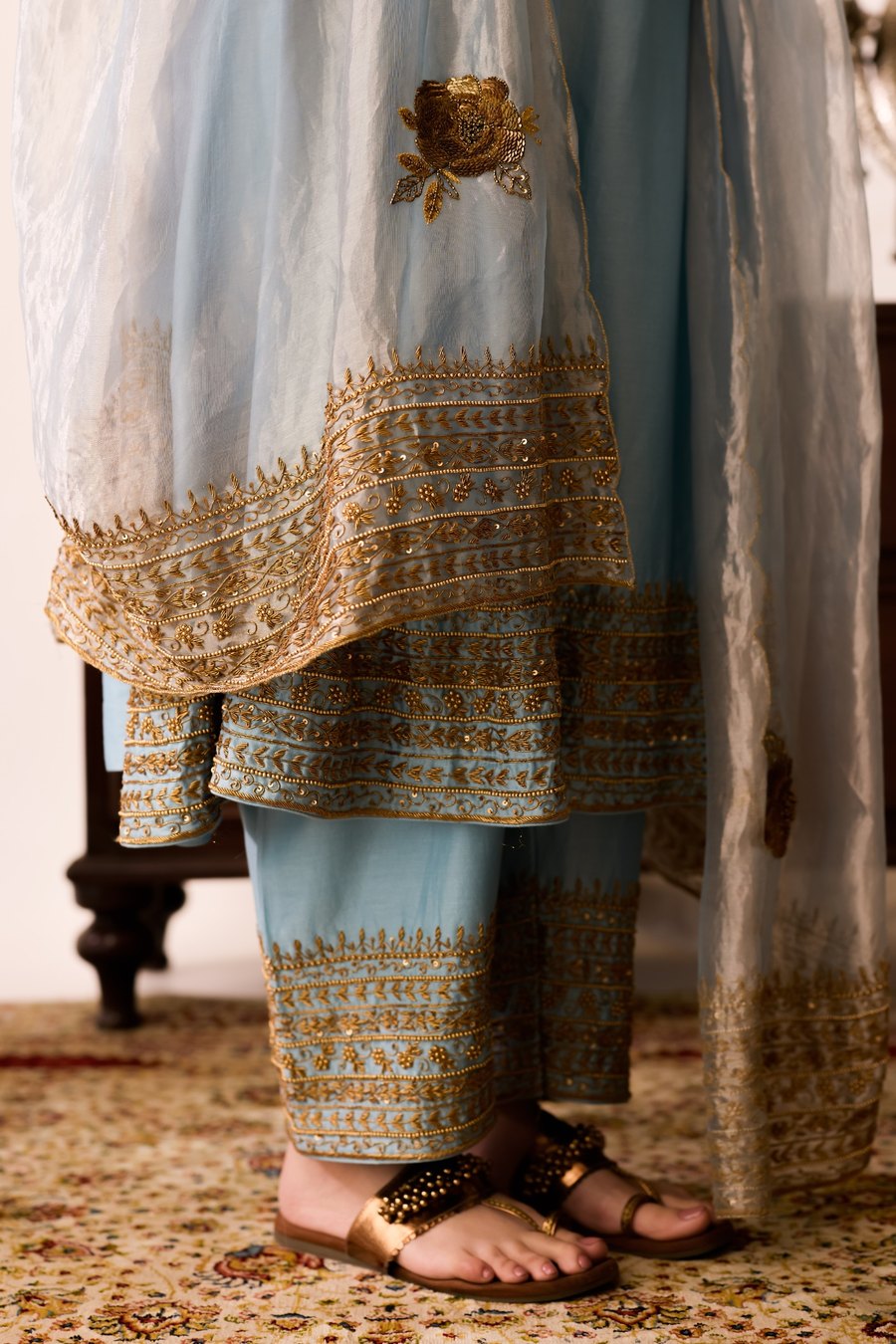
₹44,500
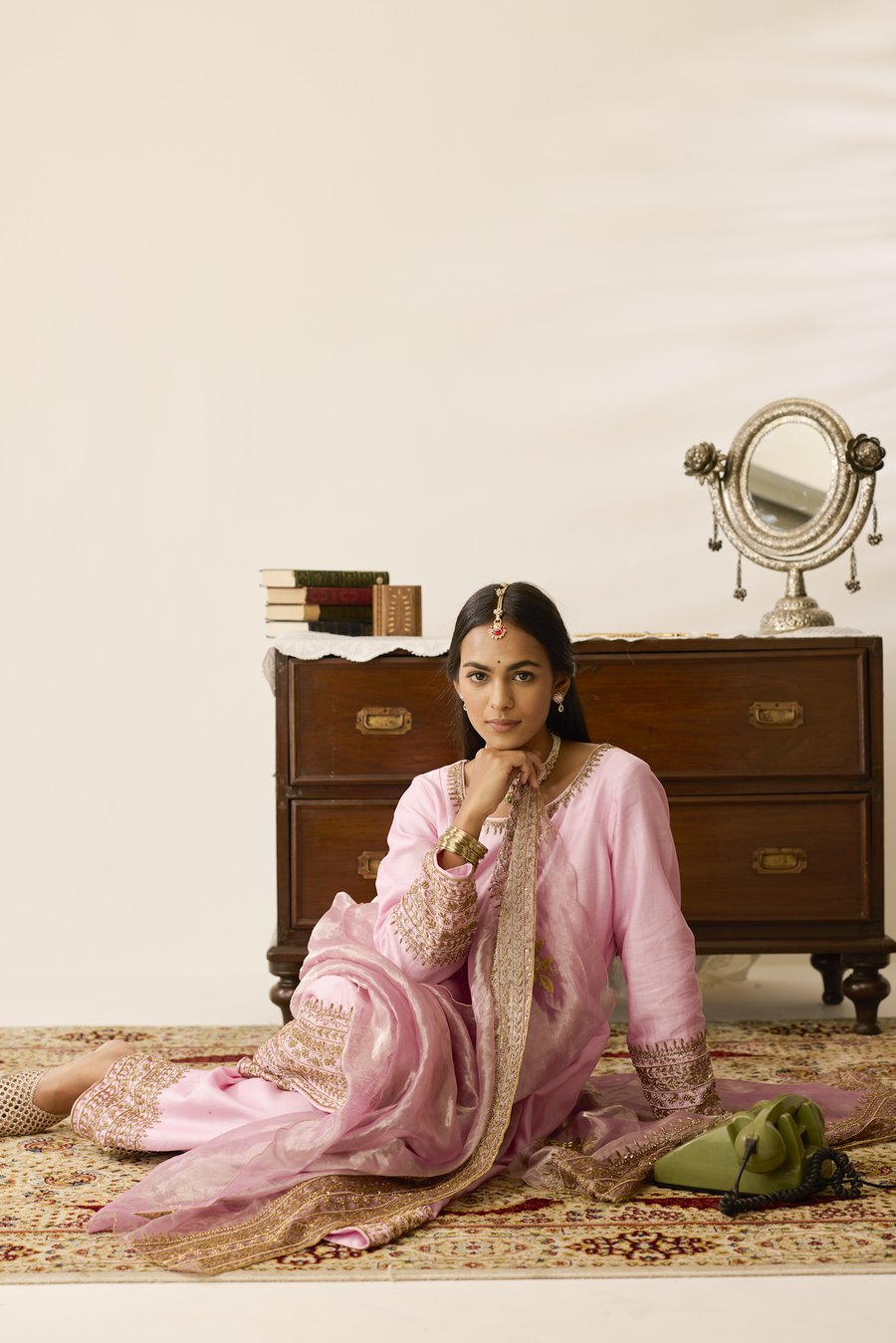
₹44,500
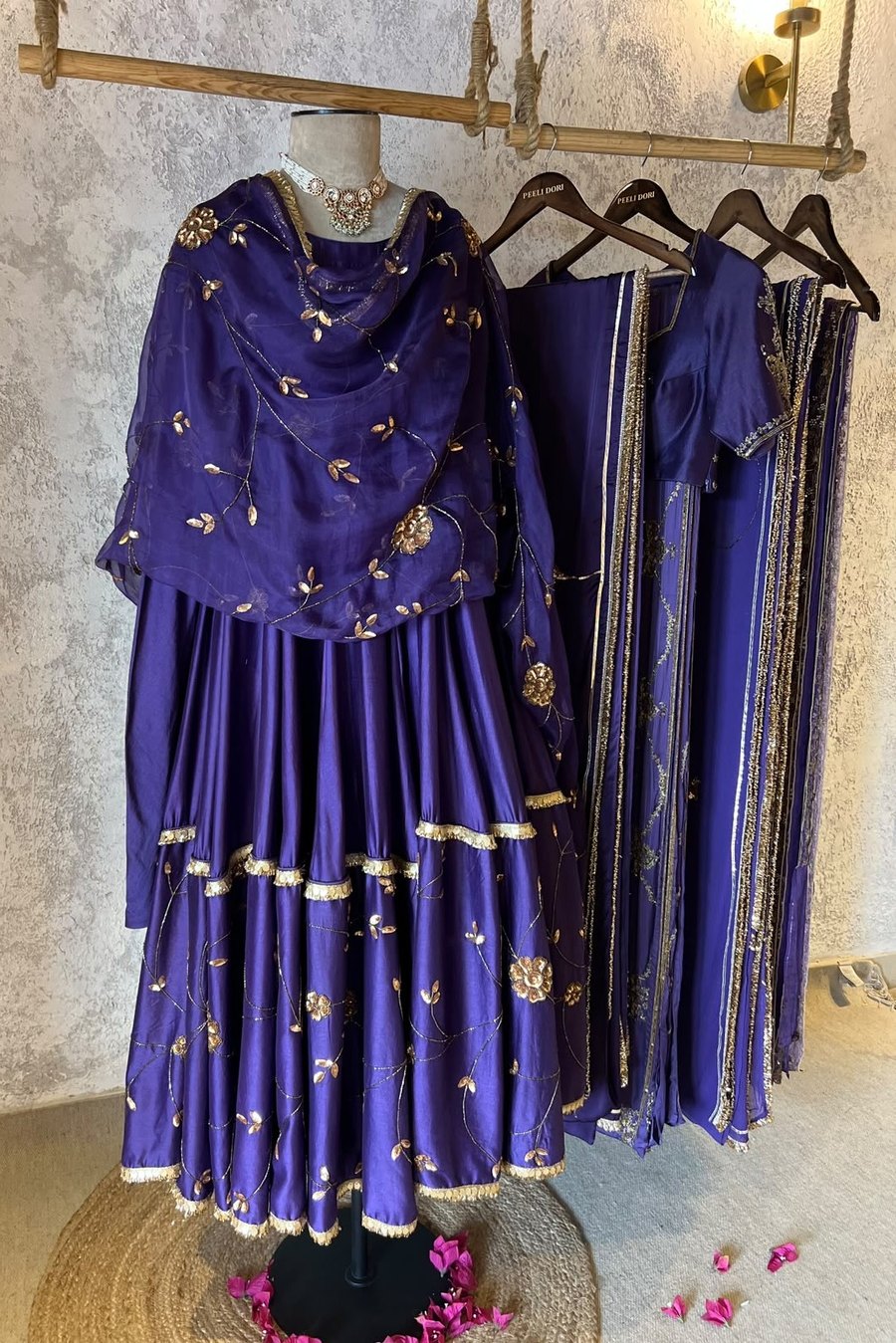
₹36,500
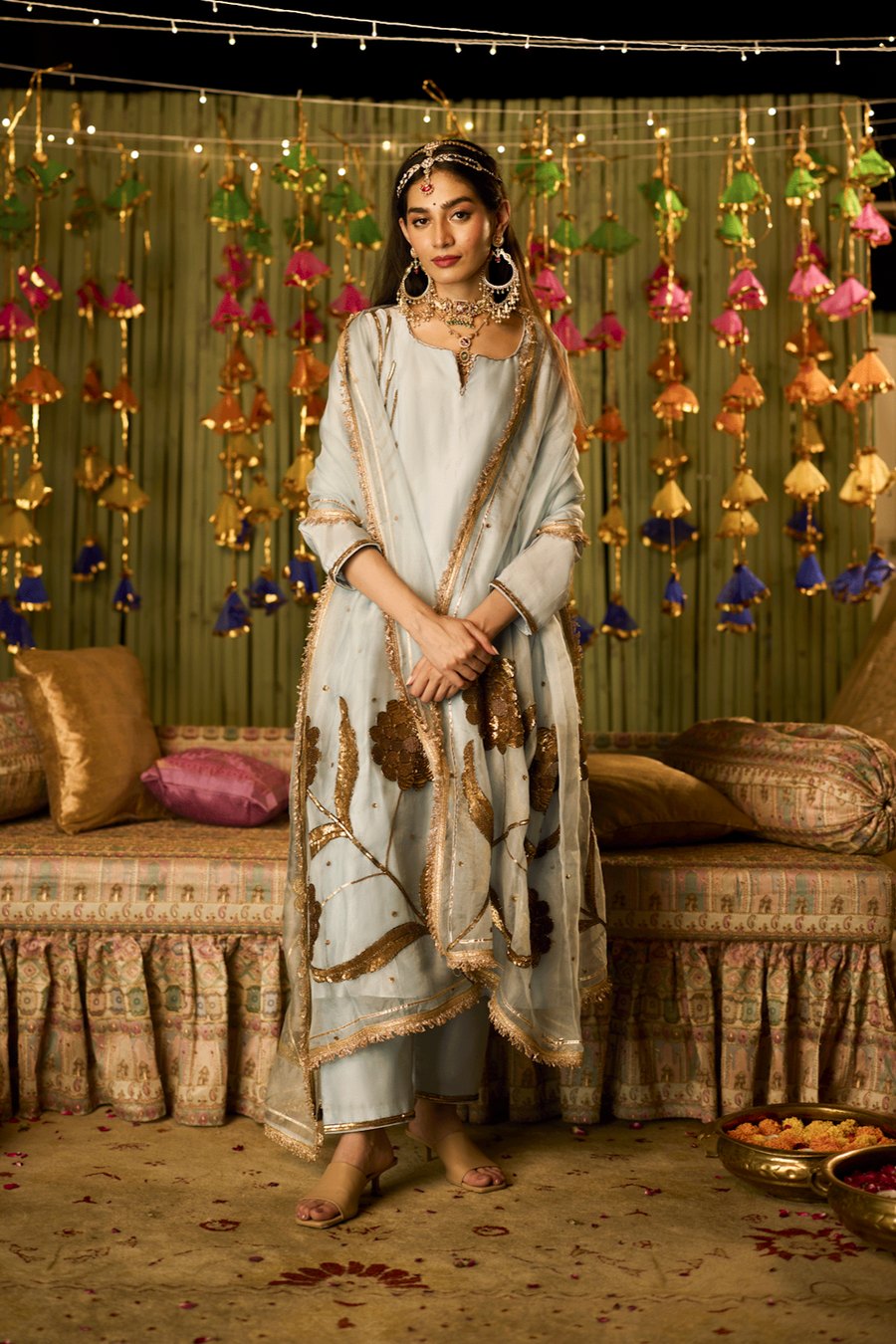
₹36,500
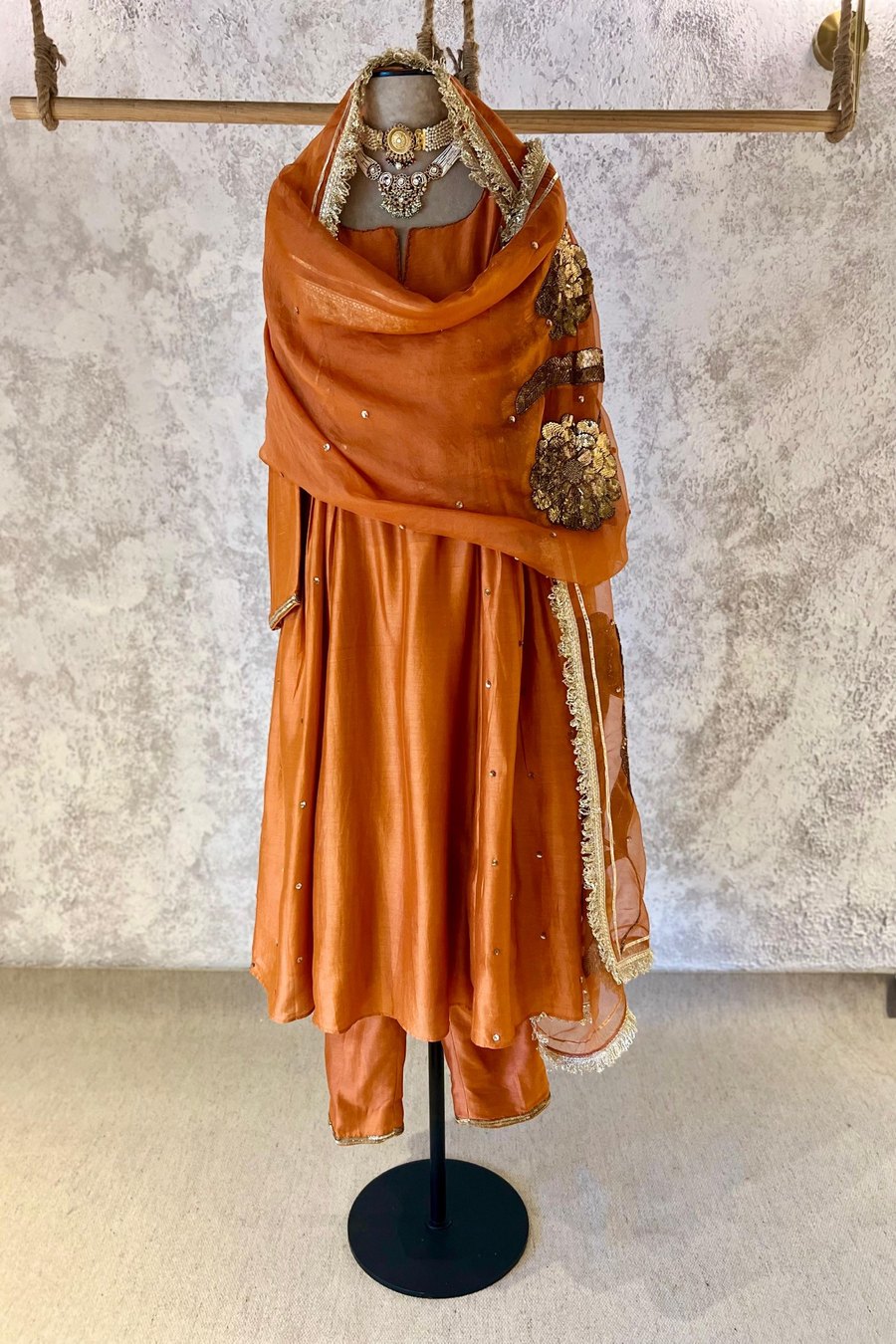
₹36,500
The dupatta, in two drapes
An anarkali comes with one dupatta and there are two ways to wear it that are worth knowing before you buy. The first is the double drape: over both shoulders and down the front, pinned at each shoulder. It is the correct choice for the ceremony itself, it keeps the dupatta where you put it, and it covers the bodice, which is either a good thing or a waste of the bodice depending on the piece.
The second is a single drape from one shoulder across to the opposite hip. It leaves one side of the bodice visible, it photographs better when you are moving, and it needs one good pin rather than two indifferent ones. This is the drape we use for most sangeet and reception looks.
One proportion note. A wide dupatta over a very full skirt can make the whole outfit read as one shape rather than a bodice and a skirt. If the flare is full, keep the dupatta narrow, or crush it in your hand so it falls in folds rather than hanging flat. If the flare is narrow, you can carry a wider one without losing the waist.
After the function
An anarkali is stored differently from a saree and from a kurta set, mostly because of the weight. The skirt should not hang from the bodice for months; the weight of a full hem pulls at the shoulder seams and the bodice slowly stretches at exactly the point where it was fitted. Fold the skirt and store the piece flat, with the bodice on top.
Fold along a different line each time. A skirt that is folded on the same crease four times in a row will keep that crease, and on organza it can crack. A sheet of acid-free tissue at the fold takes up almost no space and saves the fold line.
The hem is the part that needs attention after a wedding. Brush it out, look at it in daylight, and spot clean only the dirt you can see with plain water and a white cloth. Do not put a hand-embroidered anarkali in water, and do not press the work flat with a hot iron. Dry cleaning once a season is enough for most pieces; more than that is hard on the metal work. Everything else about the care of a hand-embroidered piece — how to press it, how to keep it between wears — we have written about separately, and it applies here too.
Frequently asked
What is the difference between an anarkali and a kurta set?
A kurta set is a tunic worn over a separate pant, so it is two pieces. An anarkali is one piece: a fitted bodice joined to a skirt that widens to the hem. The anarkali is fuller and more formal, and it does not need a separate bottom. A kurta set is easier to wear again during the day; an anarkali is the one for a wedding function.
Which anarkali length is best for a wedding guest?
Ankle length, in our experience. It clears stairs and dance floors, it does not need to be measured to a specific heel, and it can be worn again to a smaller function without reading as the same outfit. Floor length is for the bride, the bride's immediate family, and receptions where you are mostly standing and being photographed.
How do I know which flare will suit my height?
If you are short, start the flare just under the bust and keep the panel count moderate. The line from the bust down reads as length. If you are tall, a natural-waist flare with more panels will balance better and give you the sweep in photographs. Either way, try it sitting down before you decide.
Can you make an anarkali to my measurements?
Yes. Our pieces are made to order and we cut to custom measurements as standard. We ask for bust, under-bust, waist, shoulder, armhole, bodice length and your height in the shoes you plan to wear. If you would rather be walked through the measurements, message us on WhatsApp and we will do a fit check with you before the piece is cut.
Can an anarkali be altered after it is made?
The bodice can usually be taken in at the side seams, and the hem can be raised or let down once if we have left enough turn-in. What cannot be changed is the flare itself: the panel count and where the skirt starts are set when the piece is cut. That is why the flare decision is worth taking slowly in the first place.
Explore more: wedding 2026 · designer hand embroidered blouse — or message us on WhatsApp for styling help.

The information below is required for social login
Sign In
Create New Account