

Almost nobody asks us the real question first. They ask what an anarkali costs, and then they ask why one is twenty thousand rupees more than another that looks, in a photograph, broadly the same. The honest answer is that an anarkali is priced by the metre, b
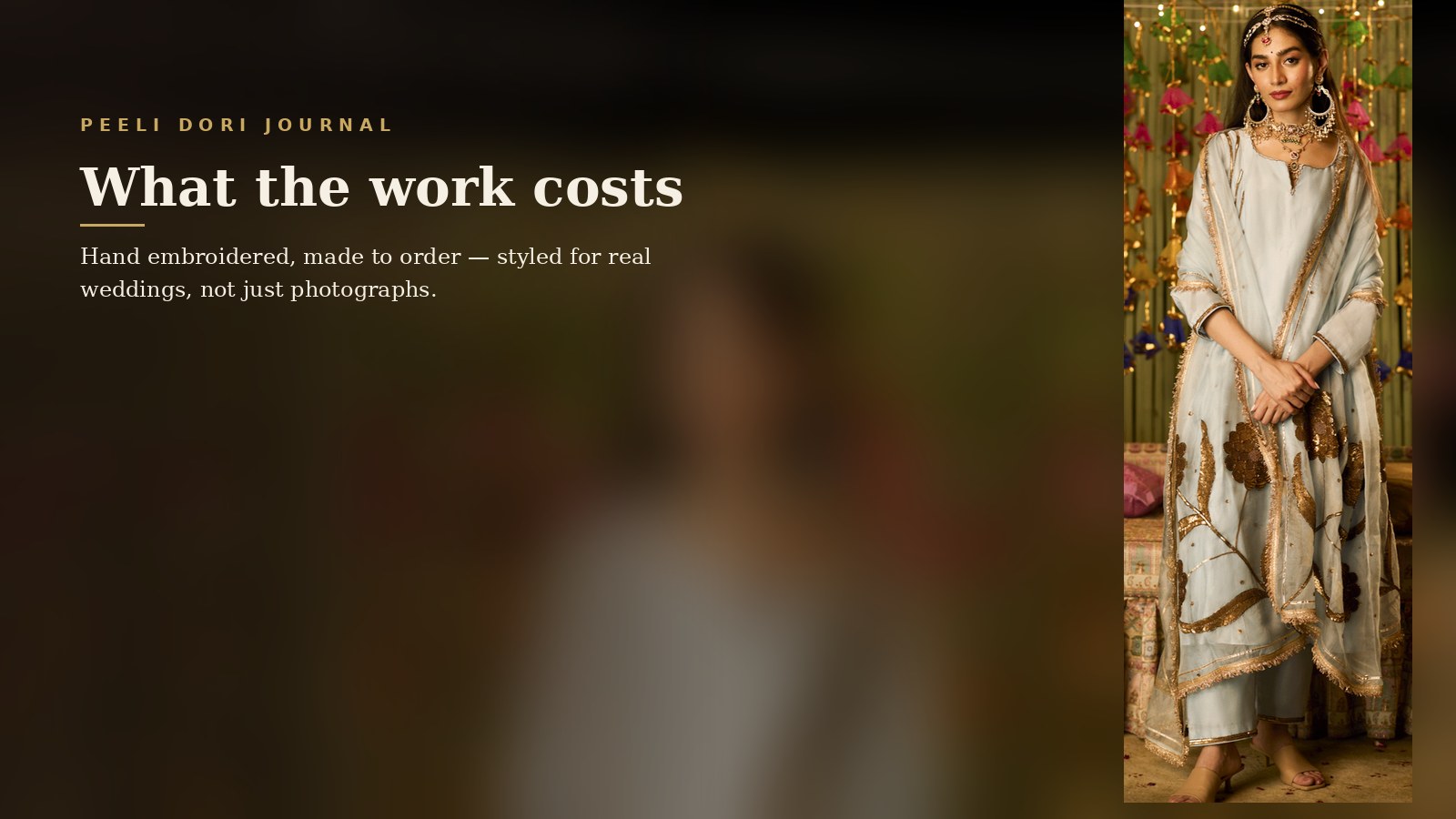
Almost nobody asks us the real question first. They ask what an anarkali costs, and then they ask why one is twenty thousand rupees more than another that looks, in a photograph, broadly the same. The honest answer is that an anarkali is priced by the metre, by the hour and by the number of pieces you take home - the flare is the part you see, and the bill is written in the parts you do not.
The price is not one number
When a customer tells us a budget, we usually ask what has to happen in the outfit: whose wedding, which function, how many hours standing, whether there is dancing. Two people can spend the same amount and get very different things out of it, because an anarkali is four purchases stacked on top of each other. There is the cloth. There is the handwork. There is the construction - bodice, lining, panels, hem. And there are the pieces that come with it: a dupatta, sometimes a second one for the photograph, sometimes a potli someone in the family asks for at the last minute.
Knowing which of those four is carrying the price is the difference between paying for what you can see and paying for what will still look right in a decade. In our catalogue the anarkalis sit between ₹34,500 and ₹44,500. That is a narrow band by designer standards, and inside it the differences are specific rather than mysterious. Below, we have written down what those differences actually are, because we would rather you understood them before you wrote to us than after.
One thing worth saying at the start: everything here is hand embroidered and made to order. We do not keep a rack of anarkalis in sizes. That changes the arithmetic, and it is the first reason a made-to-order price is not comparable to a ready-made one at a mall.
The cloth, before a needle goes in
Cloth is the smallest of the four costs and the easiest to compare, which is why it is the one everyone compares. A chanderi silk, a raw silk, a silk organza and a heavier brocade do not cost the same per metre, and an anarkali eats fabric in a way that a kurta never will. A fitted bodice uses very little; the skirt behind it can use four to six times as much simply because the flare has to come from somewhere. Never from a gathered waist - that is a different, cheaper garment, and it is the single most common way an anarkali is faked.
So the first question about any anarkali's price is not 'what fabric' but 'how much of it'. A floor-length piece with twenty-four panels in a wide cloth is not in the same conversation as an ankle-length one with twelve. Both are legitimate outfits. Only one of them is going to sweep when you turn around, and only one of them is priced for that sweep.
We work with organic dyes on our hand-embroidered pieces, and the dye lot matters more than people expect: a deep colour that holds in Indian light is not a cheap process, and it is a cost we do not try to hide by going paler.
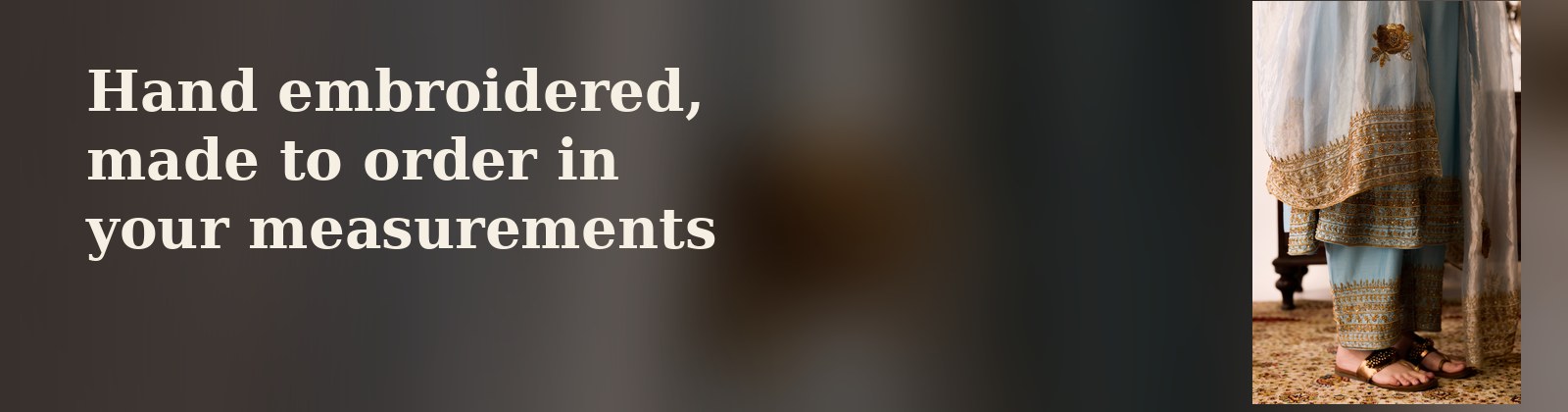
The work: which embroidery, and how much of it
This is where most of the money sits, and where the least information is printed on the tag anywhere in this trade. Handwork is charged by density and by technique, not by how impressive the name sounds. A gota patti anarkali uses ribbon that is cut, folded and appliqued; the effect is crisp and the coverage can be generous without the piece becoming heavy. Zardozi uses metallic thread laid and couched over a frame, which takes more hours for the same area and gives the low, molten shine you notice across a room rather than up close. Dabka is built from small coiled wire pieces, and it reads as texture - it is the work that photographs best in daylight but asks the most of the karigar's eyes.
Two anarkalis can carry the same technique and still differ by half in price, because of where the work goes. Work on the bodice, the sleeve and the hem, with a plain skirt, costs less than work that continues down the panels. It also behaves differently: a plain skirt is what lets a piece be worn again for a smaller function, and it is lighter to sit in for a long pheras. An all-over embroidered skirt is a photograph piece. There is no judgement in that, only a decision.
Our work is artisan-made, and we pay for hours rather than for a rate per kilogram of thread. When someone tells you a price is too high, the fair response is to lay the piece flat and look at how much of it is worked, from which side, and whether the reverse of the fabric is nearly as tidy as the front. The inside is where a cheap price is usually hiding.
The parts around the piece: lining, dupatta, finishing
An anarkali needs a lining through the bodice and, depending on the cloth, through the skirt. It needs an inner facing at the hem so the flare hangs rather than curls. It needs a placket that opens far enough to get into, a hook-and-eye or a concealed zip, and enough turn-in at the seams for the piece to be altered once if your measurements shift. None of this shows in a photograph and all of it shows up in the bill. It is also why an anarkali that feels light in the hand can still cost more than a heavier one: the weight went into the making, not the fabric.
The dupatta is the other variable. A plain matching dupatta and a worked one are two different prices, and the difference is not small. Ask whether the dupatta in the photograph is the one that comes with the outfit - in our pieces it does, and we would rather you checked than assumed, because a piece bought for ₹36,500 without its dupatta cannot be finished later at the same price.
And then there is the cutting. Made to order means the pattern is drawn for one body: bust, under-bust, waist, shoulder, armhole, bodice length, and your height in the shoes you plan to wear. That work happens whether or not the embroidery is heavy, which is why a plain anarkali from us is not as cheap as a plain anarkali from a ready-made rack. You are paying for a pattern as well as a garment.
Why panel count shows up in the bill
Panels are the quietest cost in the whole outfit. Each panel is cut, joined, and usually embroidered before joining, so more panels mean more cloth, more seams, more hours and a longer skirt to finish. They are also what creates the fall. A twelve-panel anarkali moves in a way a six-panel cannot, and a twenty-four-panel one at floor length is closer to a lehenga in the way it behaves when you walk.
This is the one place where we would rather a customer spent less and got the movement right than spent more on work. If the function is a sangeet with dancing, the panel count does more for how you look in motion than the density of the embroidery does. If the function is a reception where you stand and are photographed, the work wins. Same budget, two different answers.
Four anarkalis, and what the difference buys
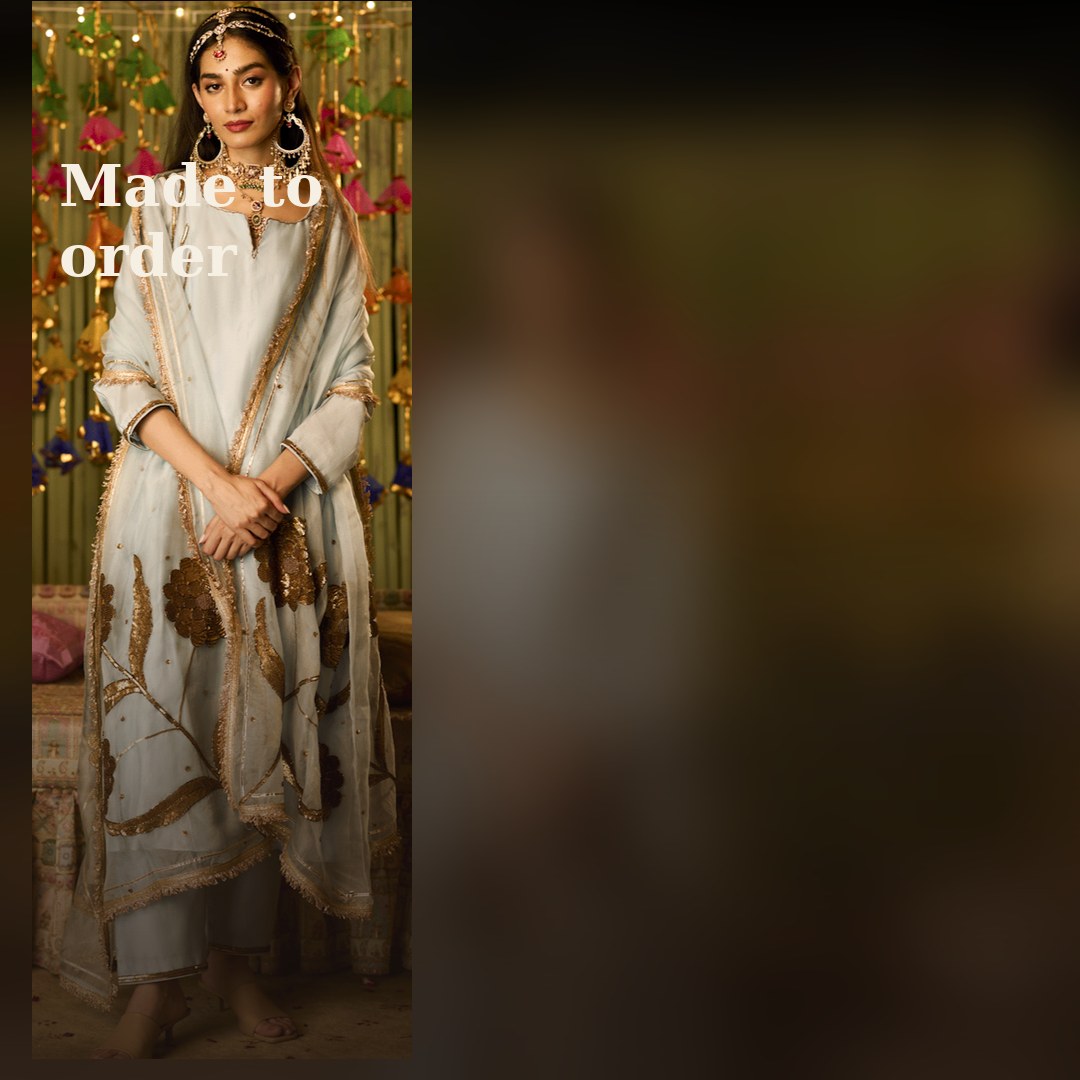
Here is the band as it actually exists in our catalogue, so the numbers are not abstract. The Gulmohar anarkali set sits at ₹44,500 in three colourways - coconut, powder blue and gulabi - and it is the piece to look at if the outfit has to carry a wedding on its own: worked bodice and dupatta, a skirt that holds its shape for a long evening. The Nayanthara anarkali at ₹36,500 and the Madu anarkali sets at ₹36,500, in powder blue chanderi silk, rust orange and purple, are the middle of the band: the same construction and finishing, a lighter volume of work, easier to wear again to a smaller function. The Madhurima anarkali set at ₹34,500 is the entry point into a hand-embroidered anarkali, and it is where most first-time customers start.
Read that as a description of volume, not of quality. The stitching, the lining and the fit checks are the same across all four. What changes is how much cloth, how much work and how much dupatta you are taking home.
You can see the whole range on the anarkali collection, and if you tell us the function and the date, we will tell you which end of the band is worth your money rather than which one is most impressive.
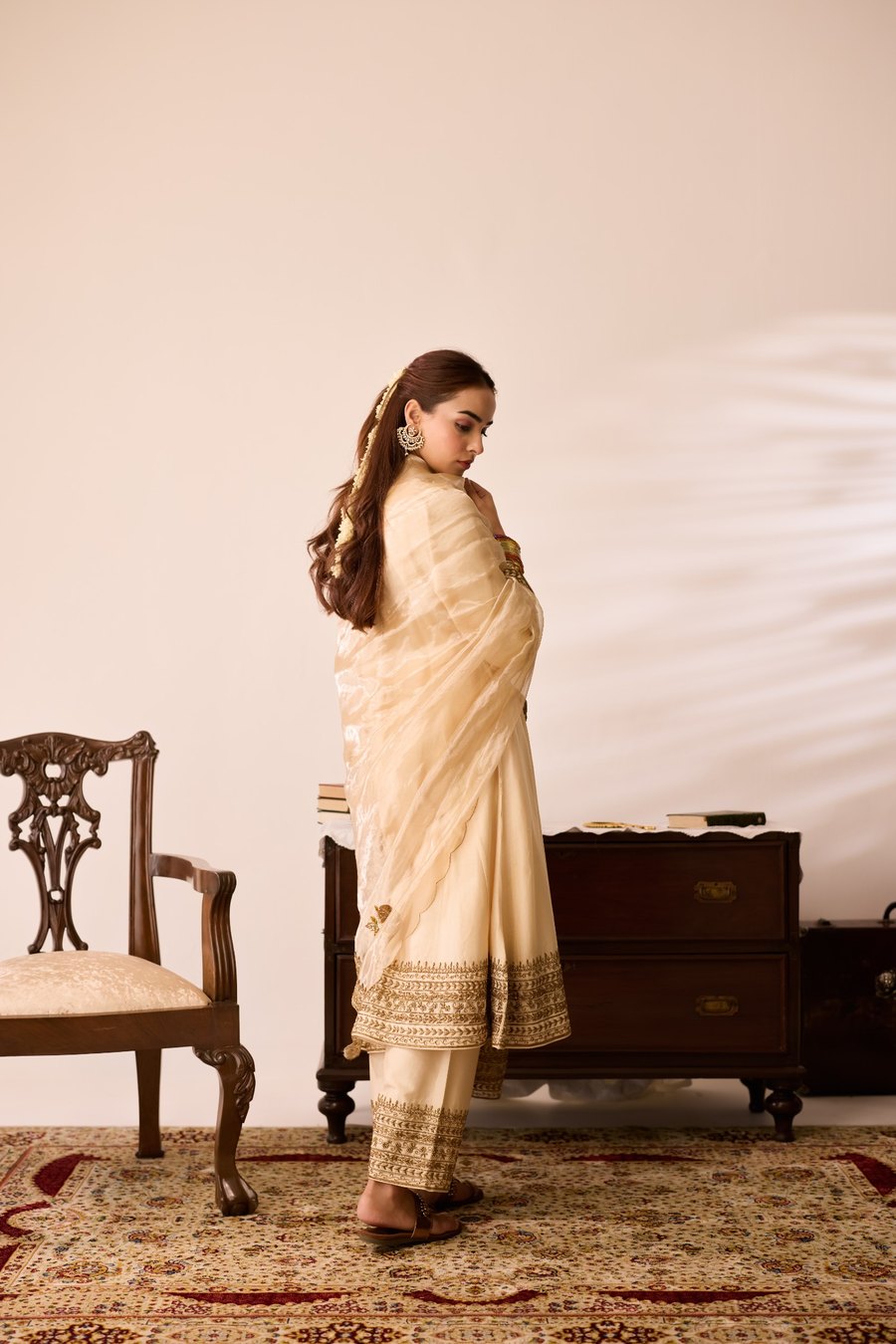
₹44,500
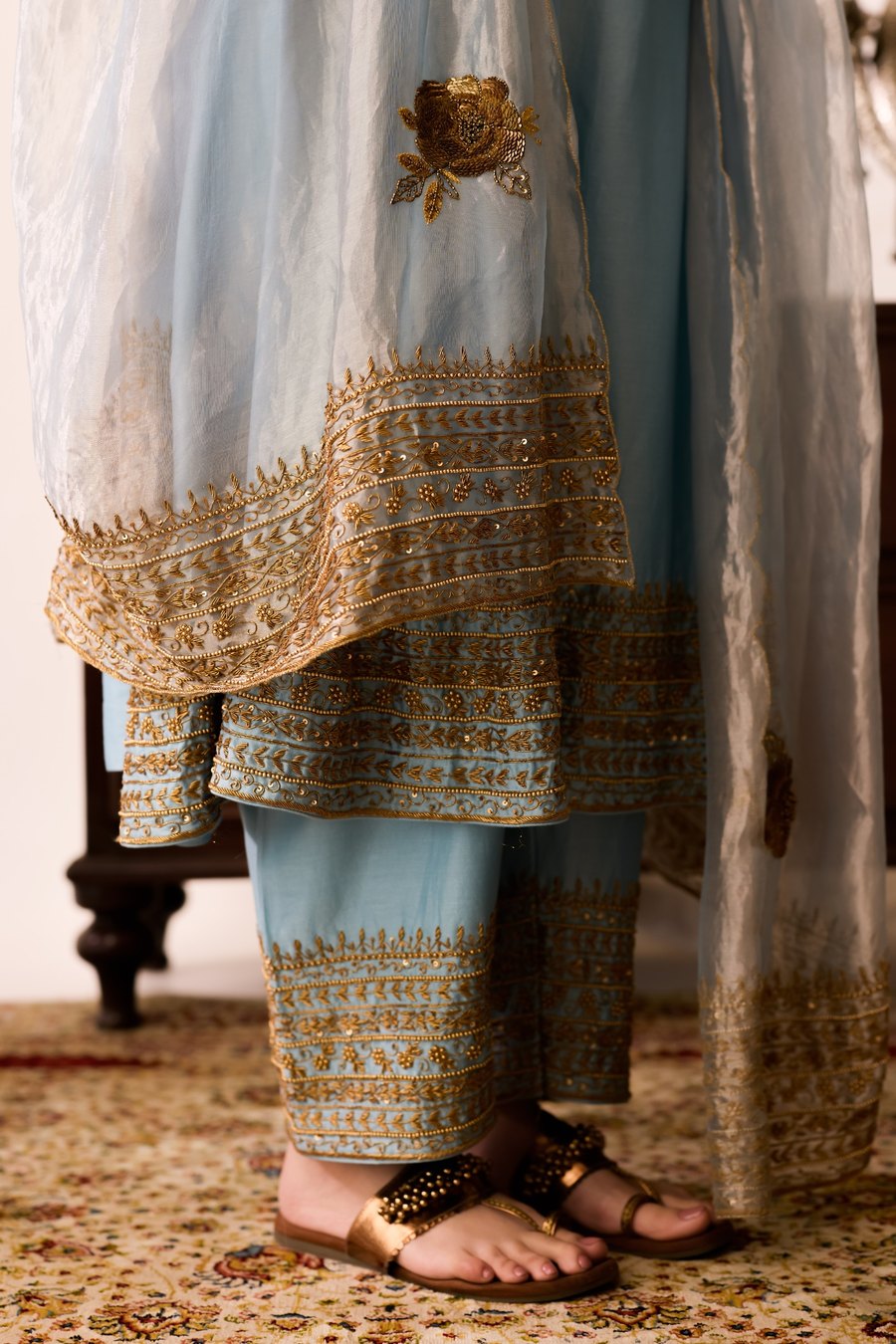
₹44,500
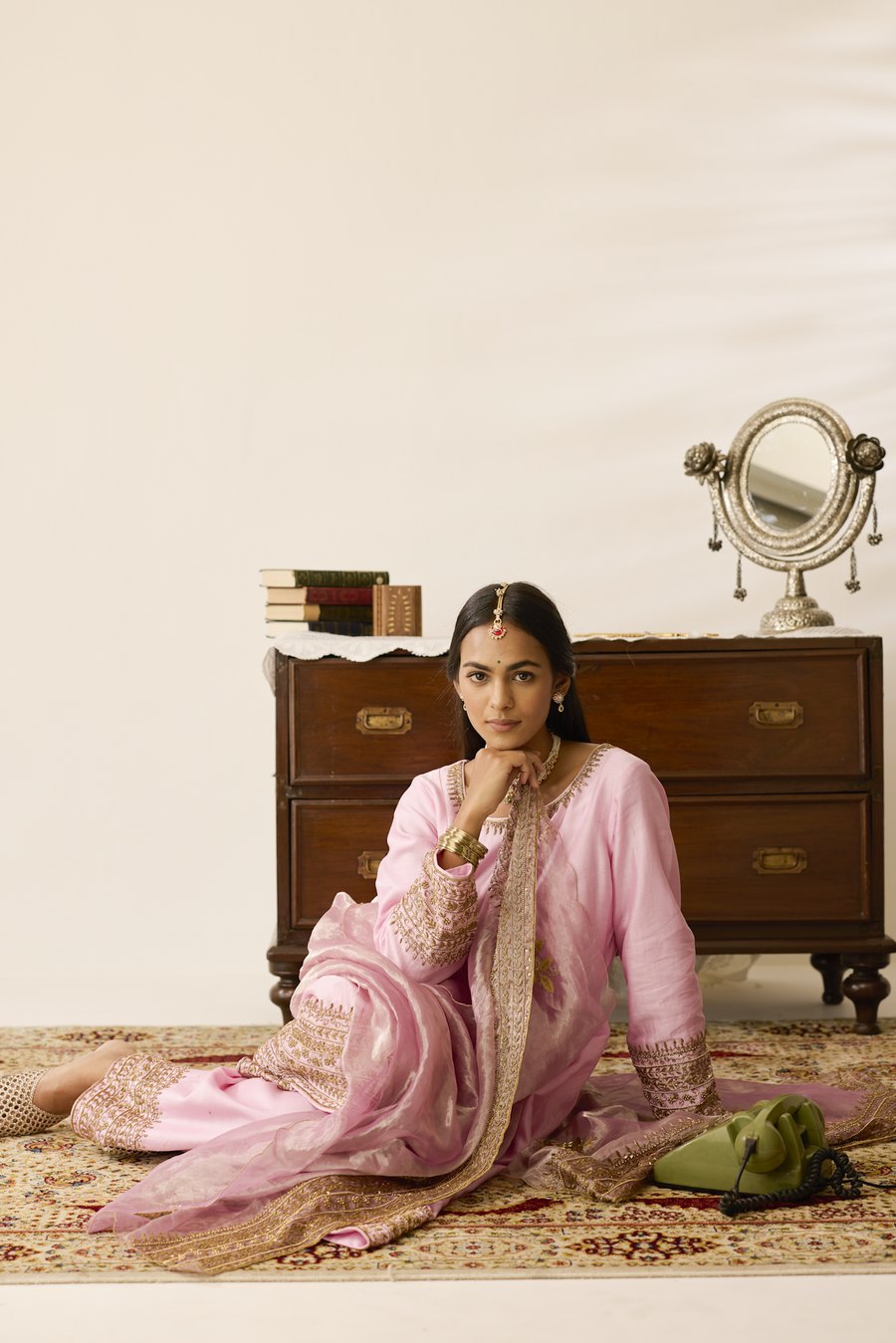
₹44,500
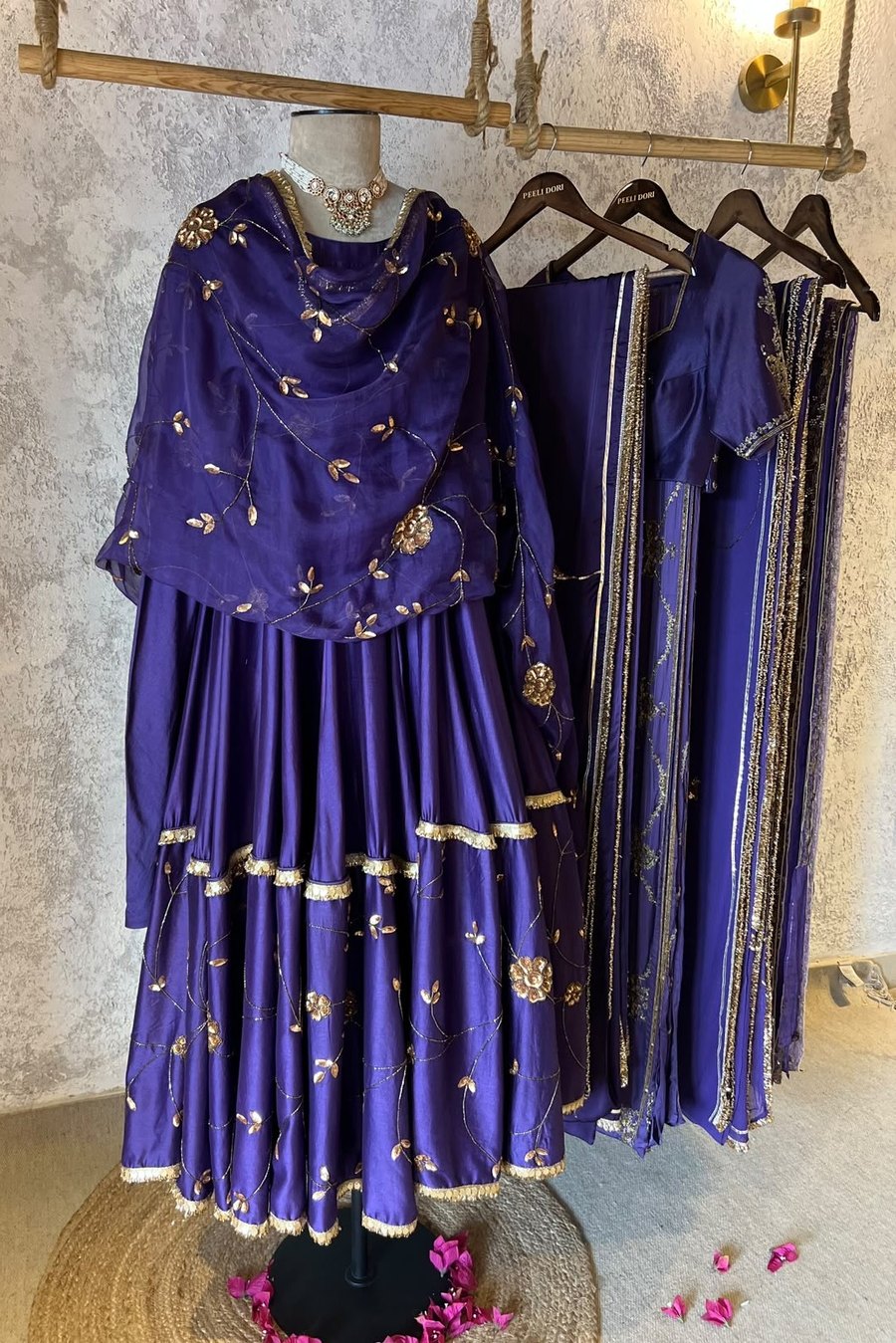
₹36,500
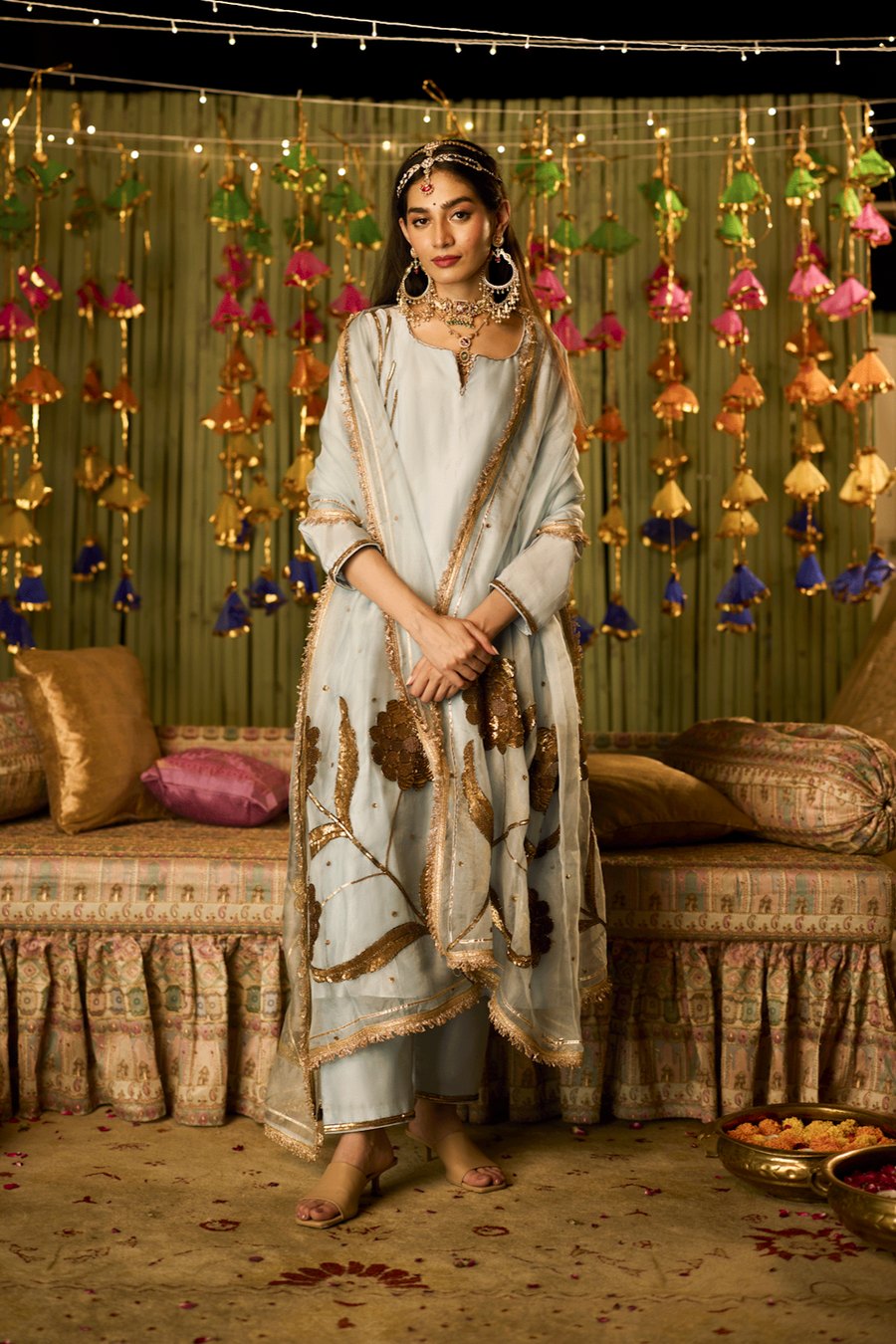
₹36,500
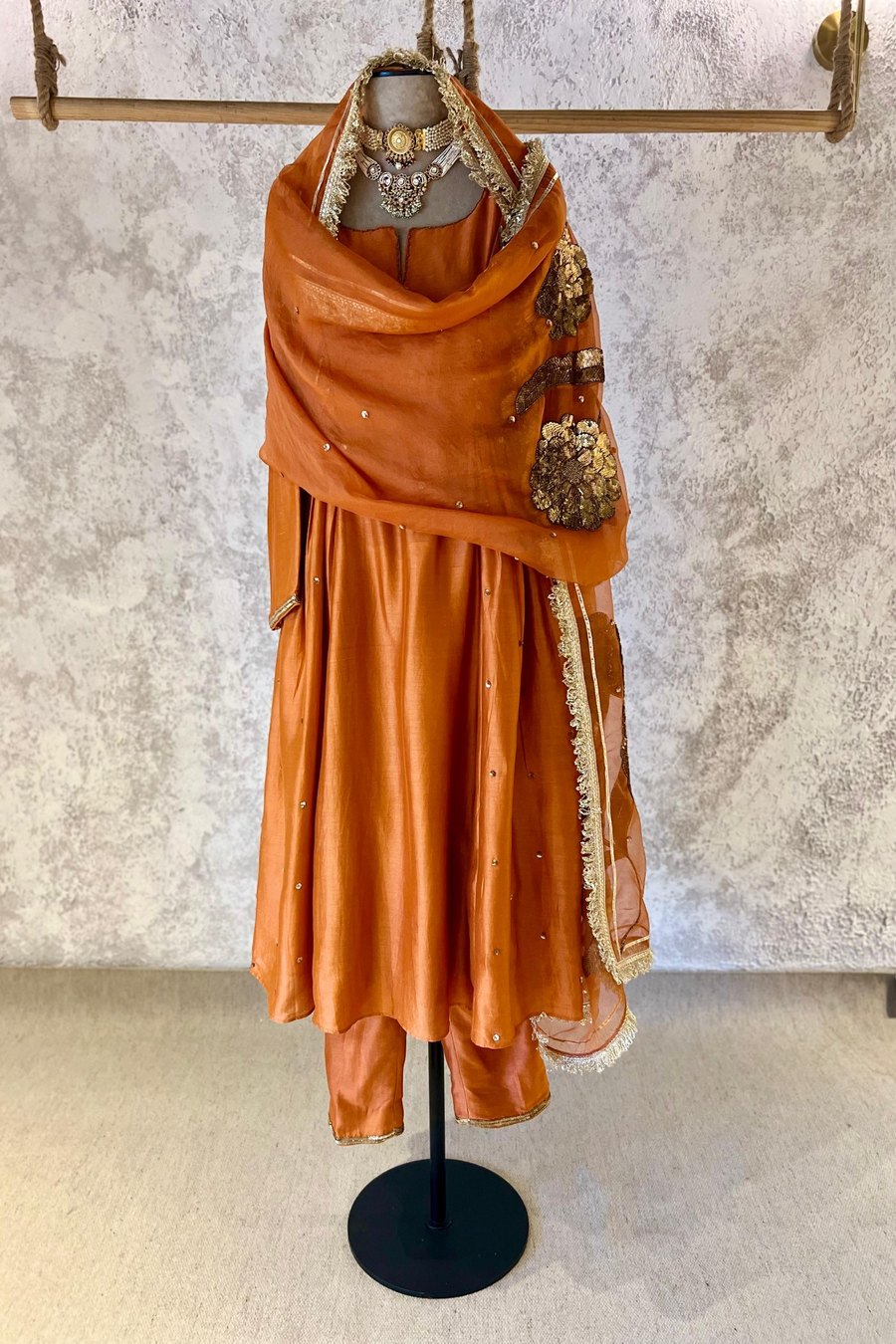
₹36,500
Cost per wear, honestly
A number that shocks at the counter becomes reasonable the moment you divide it by the number of times the outfit leaves the cupboard. A ₹36,500 anarkali worn four times over two seasons is about ₹9,125 an outing. A ₹44,500 Gulmohar worn six times - a mehendi this year, a cousin's sangeet next, a reception after that - works out closer to ₹7,417. The same ₹34,500 Madhurima worn three times is ₹11,500 an outing, which is the real argument for buying the piece you can restyle rather than the one that photographs best once.
That is the calculation we would make in your place, and it points somewhere slightly different from what most people expect: the anarkali that earns its price is usually not the heaviest one. It is the one whose work sits where you can change the rest of the outfit around it - a different dupatta, different earrings, a jacket for a winter wedding in the hills.
What to ask before you pay
Five questions, and anyone selling you a hand-embroidered anarkali should be able to answer all five without leaving the room. Is the work hand or machine, and which technique - gota, zardozi, dabka? How many panels, and where does the flare start? Is the dupatta included, and is it the one in the photograph? Is the lining included through the skirt as well as the bodice? And what can be altered after the piece is made - side seams, hem, nothing?
If the answers are vague, the price is either padded or the piece is not what it appears to be. We are happy to be asked all five. Since everything is made to order and cut to custom measurements, we also do fit checks on WhatsApp before the piece is cut: measurements in, a conversation about what will and will not work for your body and the function, and then the order. That part costs nothing and prevents most of the expensive mistakes.
For scale, we are a small studio. There are two stores, Shahpur Jat in New Delhi and Dehradun, and the anarkalis are made to order rather than pulled off a rail, which is why a piece takes the time it takes.
Shipping, and the rest of the bill
Within India, shipping is free above ₹10,000, so on any anarkali in this band it is included in the price you see. For international orders we ship abroad and there is a code, INTSHIP, that applies above ₹89,000 - useful if you are buying an anarkali along with a saree or a second piece for the family, and not something you need to think about for one outfit.
The rest of the bill is what people forget: a blouse or a sleeve alteration after the first fitting, a second dupatta if the family wants one for the photograph, jewellery. None of that is part of the anarkali's price and all of it is part of the evening. Budget for the outfit, then budget a little for the finish.
Frequently asked
Why does a hand embroidered anarkali cost more than one with machine work?
Because the price is hours, not stitches per inch. Hand work is charged by density and technique - zardozi and dabka take far longer for the same area than a running stitch - and it cannot be spread over several machines at once. Machine work can copy the pattern on the front; it rarely survives a look at the inside, and it does not age the same way. When a hand-worked piece is priced at ₹34,500 and up, most of that number is the karigar's time.
Does the dupatta come with the anarkali?
In our anarkali sets, yes - the dupatta in the photographs is the one that ships with the outfit. We still ask you to confirm it on the piece you are buying, because across the trade it is common for the dupatta to be quoted separately, and a piece bought without one cannot be matched later at the same price.
Can the anarkali be made to my measurements, and is that extra?
Made to order and custom sizing are standard for us, not an add-on - the pattern is drawn for your measurements. We take bust, under-bust, waist, shoulder, armhole, bodice length and your height in the shoes you plan to wear, and we do a fit check on WhatsApp before the piece is cut. If you are between sizes or unsure how a measurement should be taken, message us and we will walk you through it.
How much does the flare or the panel count affect the price?
More than most people expect, and less than the embroidery does. More panels mean more cloth, more seams and more hours, which is why a twenty-four-panel floor-length piece is priced well above a twelve-panel ankle-length one in the same cloth. If you are choosing between two pieces at the same price, take the one whose flare suits the function - movement for a sangeet, work for a reception.
Can an anarkali be altered after it is made?
Usually the side seams at the bodice can be taken in, and the hem can be raised or let down once if enough turn-in was left. What cannot be changed is the flare itself: once the panels are cut and joined, the panel count and the point where the skirt starts are fixed. That is why we would rather spend the time on the flare decision before the order than on alterations after it.
Explore more: wedding 2026 · designer hand embroidered blouse — or message us on WhatsApp for styling help.

The information below is required for social login
Sign In
Create New Account