

The sangeet is the one wedding function where your outfit has to work as hard as you do. You will be standing for three hours, on a floor that may be carpet, marble or grass, under lights that are warm and low, in front of someone's phone camera for most of it
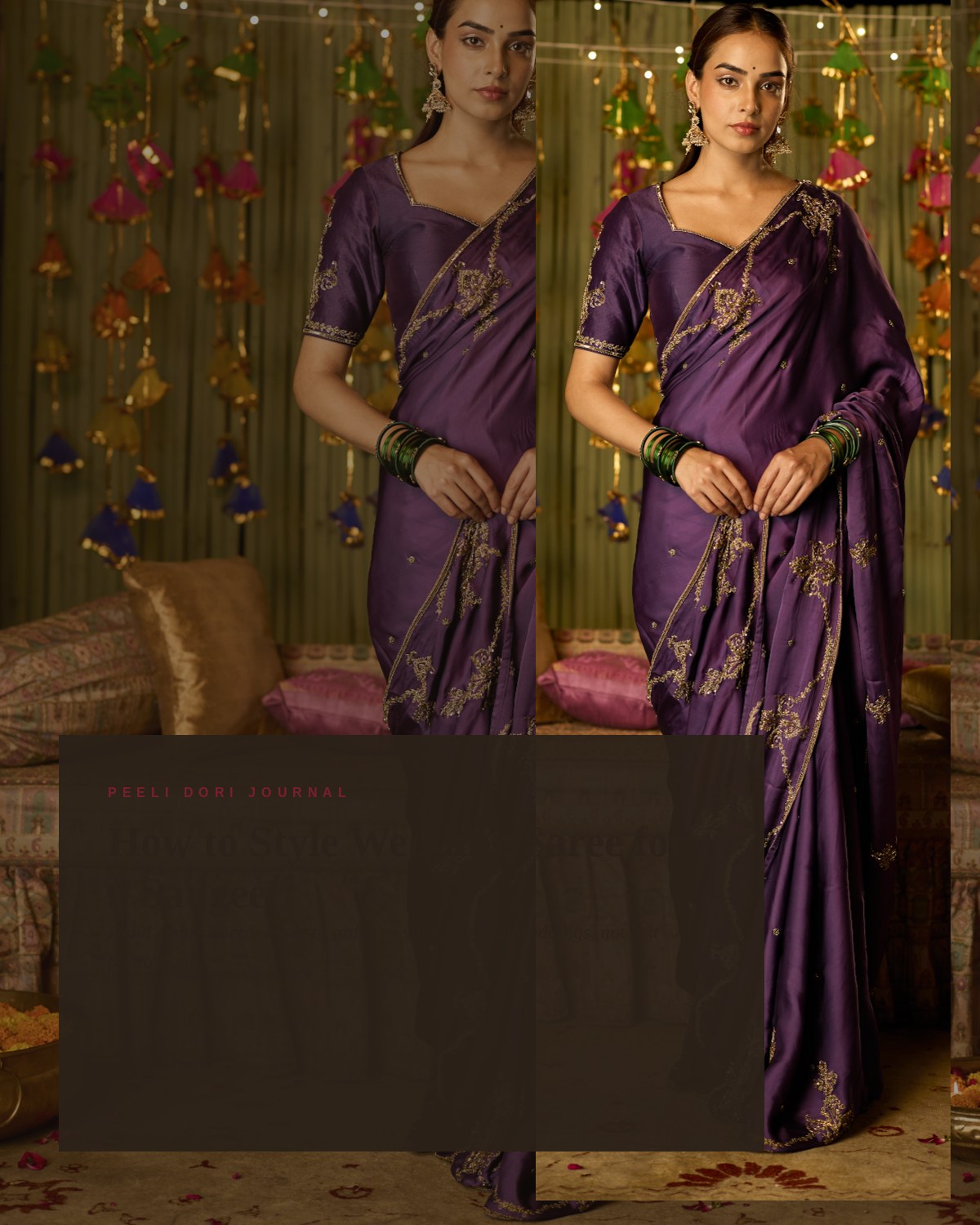
The sangeet is the one wedding function where your outfit has to work as hard as you do. You will be standing for three hours, on a floor that may be carpet, marble or grass, under lights that are warm and low, in front of someone's phone camera for most of it. This is how we dress people for that night in the store — and what we tell them to leave at home.
Why the sangeet deserves its own outfit, not a hand-me-down
Most wardrobes we see are built around one loud wedding-day piece and then three or four functions that borrow from it. The sangeet is where that shortcut shows. It is the longest function, the only one where guests are actually performing, and the only one where a chunk of your evening is spent moving rather than sitting nicely. A saree chosen for the pheras — dense, heavy, worked all over — is beautiful and completely wrong here.
Think about the hour itself. Mehendi and haldi happen in daylight; the sangeet starts after dark and runs late. Temple and wedding-day ceremonies are quiet and formal. A sangeet is a party with a stage, a sound system the family will fight over, cousins who have rehearsed a dance, and a photographer who is mostly shooting in dim warm light or with a phone flash. What reads well in that room is not the same as what reads well at noon.
The practical version: keep the weight low, keep the drape secure, keep the jewellery quiet enough to survive being hugged by fifty people. Dressing for a sangeet is a comfort decision that happens to look good — the reverse almost never works. Every piece on our wedding and sangeet rail is made to order and cut to your measurements, so the fit question is settled before the evening, not on it.
Fabric and craft: what holds up on a dance floor
Weight is the first thing to get right, and the base fabric decides most of it. Silk organza is springy and holds a pleat all night; because it is sheer it lets light through the panel, which is why it looks alive under warm lights instead of going flat. Fine silk chiffon drapes close to the body and moves with you when you turn, and georgette sits somewhere between the two — a good middle for a full evening of standing and sitting.
Silk satin is the exception, and we say this plainly to anyone who picks one up: it is a heavier base that drinks light rather than reflecting it, so it is a strong choice for a winter or indoor sangeet and a tiring one for a humid night in a packed hall. If you love how it photographs, wear it to the reception instead and keep the sangeet light.
Then the embroidery itself, because not all handwork behaves the same way under movement. Gota is ribbon work — flat, light, and it reads as shine rather than bulk, which is why it is the work we suggest most often for a night of dancing. Resham is silk thread and holds colour and contrast without glitter, so it survives phone video and daylight both. Zardozi and dabka are metal thread and metal wire, denser and heavier, and at their best where the camera is steady on you — the pheras, the reception, the portrait set. An all-over zardozi pallu on a sangeet saree is a lot of grams to carry through a song; a strong border with a lighter body gives you the same presence with half the weight.
One thing worth doing in the store: pull the pallu across your own shoulder and walk ten steps. If you already want to push it back, you have your answer about a heavier piece. Every saree we make is hand embroidered, coloured with organic dyes and made by artisans, and we will tell you honestly which base and which work suits the function you are dressing for.
How to choose for your body, your role and the hour
Start with your role, because the sangeet is the function where guests dress as carefully as the bride. If you are the bride, spend where the cameras are and choose the densest work you can comfortably stand in — or split it, a lighter dance piece for the performances and a heavier one for the family photographs. If you are a sister, cousin or friend, the middle of our range does the job beautifully: a strong border on a light base, work that survives flash, nothing that competes with the bride.
For the body, sheer bases are the friendliest thing in a wardrobe. Organza and chiffon read light on any frame and skim rather than cling, which matters when the room is warm. Dense all-over work adds visual weight: lovely on a tall frame, heavier on a petite one, where a narrower border and a lighter pallu give you the same occasion-lift without pulling you down in photographs. Pleats pinned flat at the front and a pallu spread at the shoulder create a long vertical line that flatters everyone.
The drape should be decided by how you move. If you plan to dance — and you do — choose a saree you can pin securely at the shoulder and at the waist, and practise that pinning once at home. A piece that needs both hands to manage is a piece you will abandon by the second song. If you would rather not think about a pallu at all, a kurta set or an anarkali from the same rail solves the evening, and there is no rule that says the dance floor needs a saree.
Height and length matter less than people fear, because a saree is adjusted rather than cut — only the blouse is fitted. Come in and we will pin the drape in the position you would actually wear it, not the position that photographs best from the front and slips by dessert. If you are ordering from another city, send your measurements or a photograph of a blouse that fits you well, and tell us your function dates in the first message; styling help and fit checks happen on WhatsApp.
Five hand-embroidered sarees we would show first
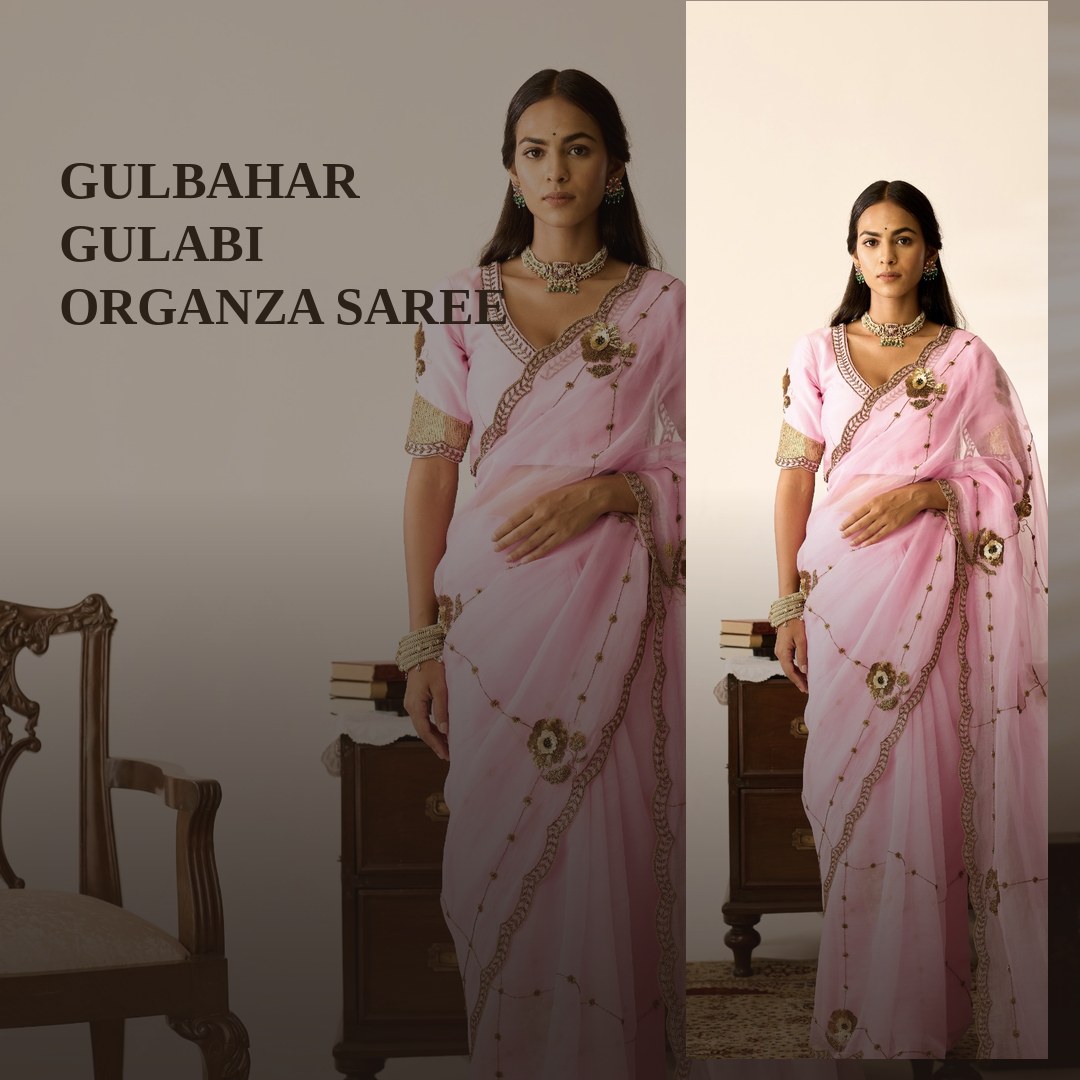
These are the pieces we pull for a sangeet — hand embroidered, made to order, cut to your measurements, between ₹39,500 and ₹59,500. All are from the wedding and sangeet rails and every price below is the price of the piece with the blouse included. If the night is going to run long and the dancing is serious, start with the organza and georgette ones; keep the satin for a winter evening or move it to the reception.
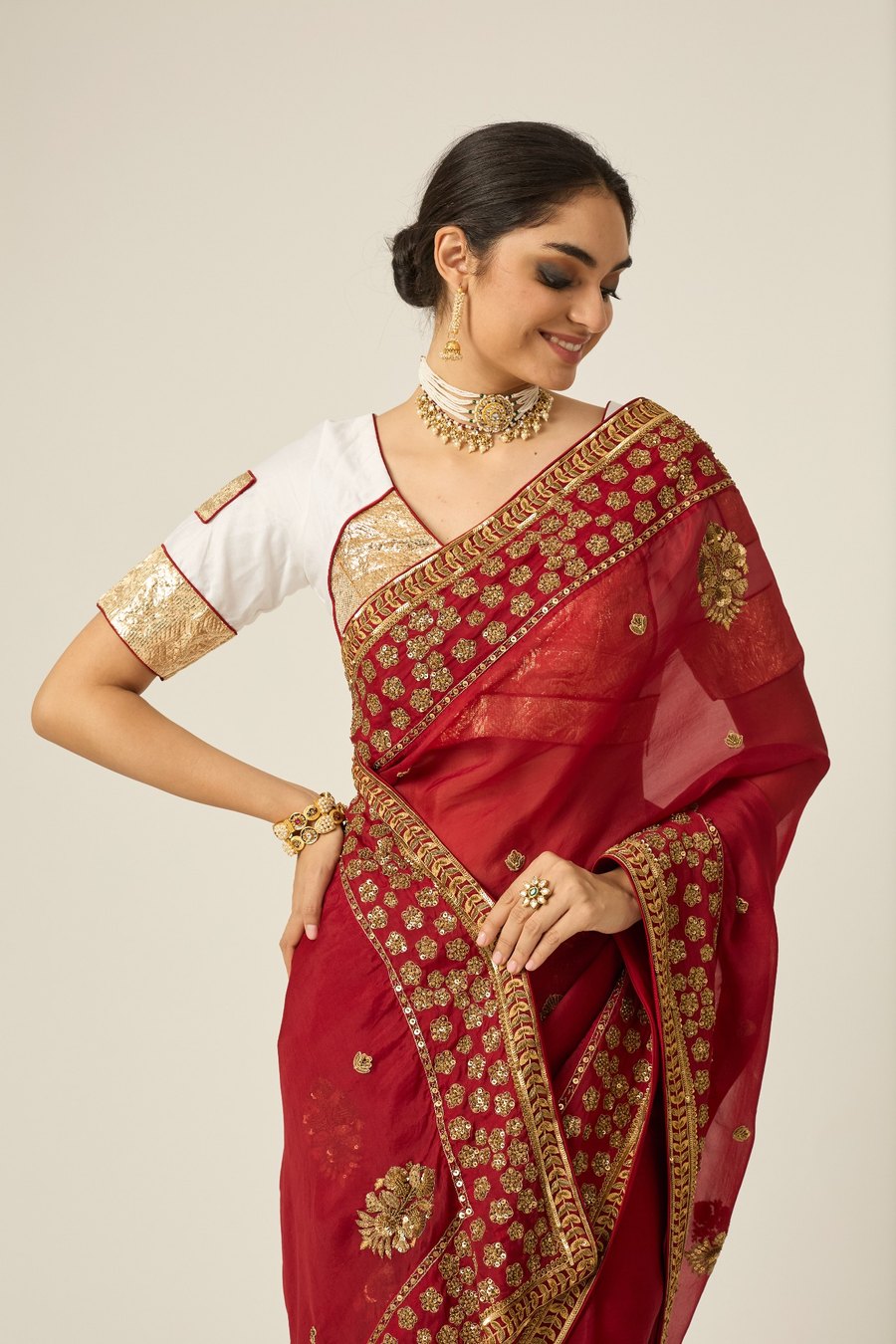
₹59,500
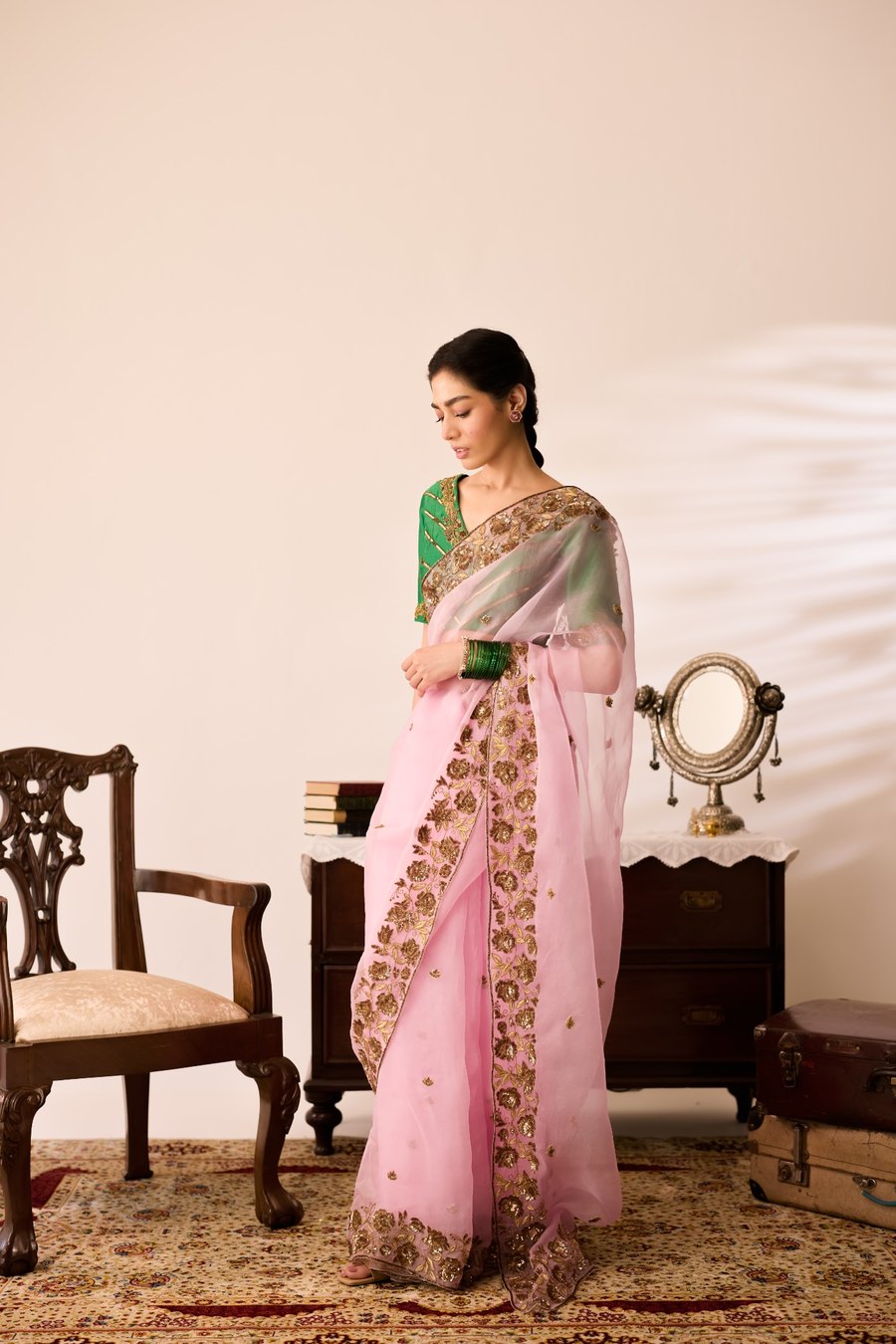
₹46,500
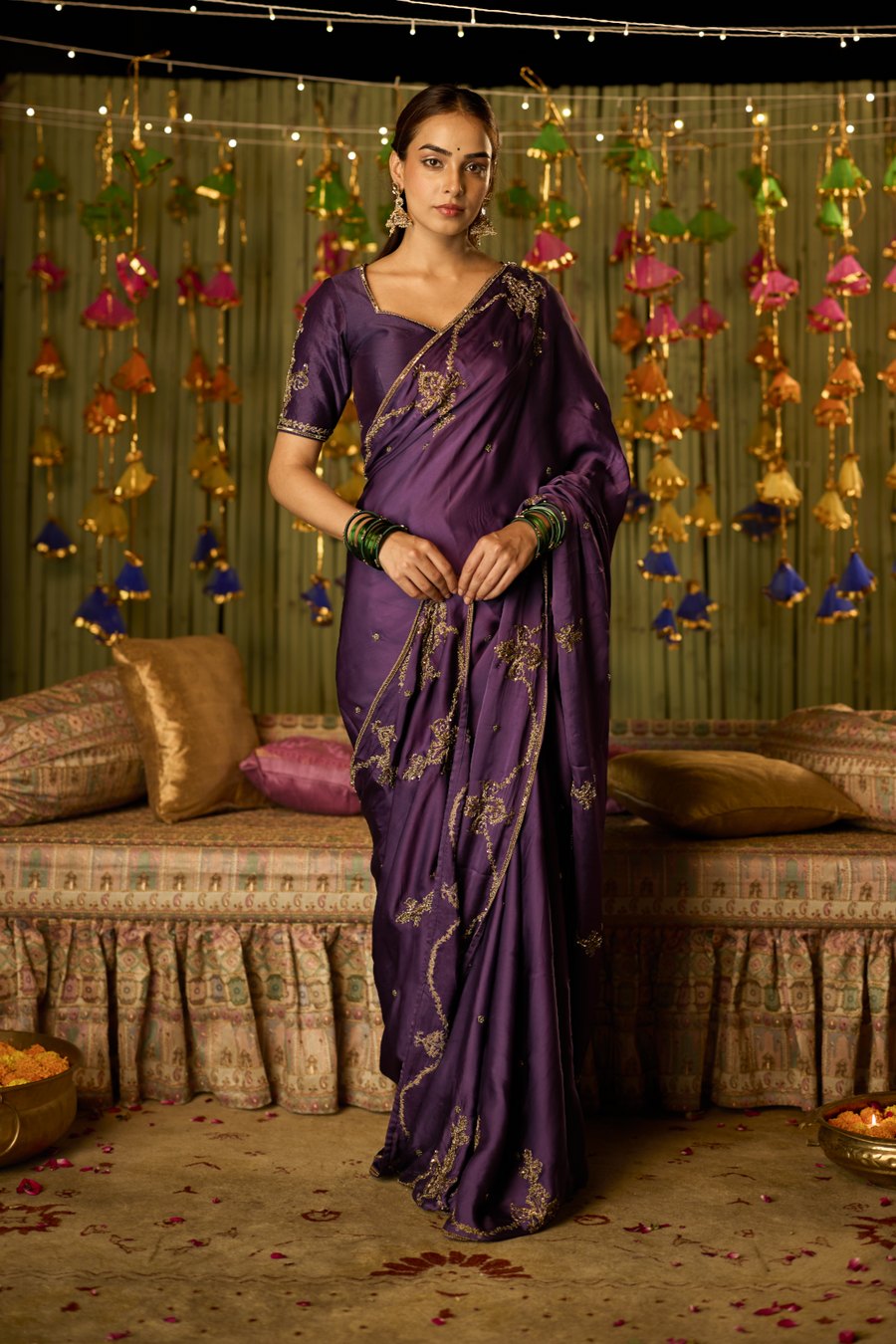
₹43,500
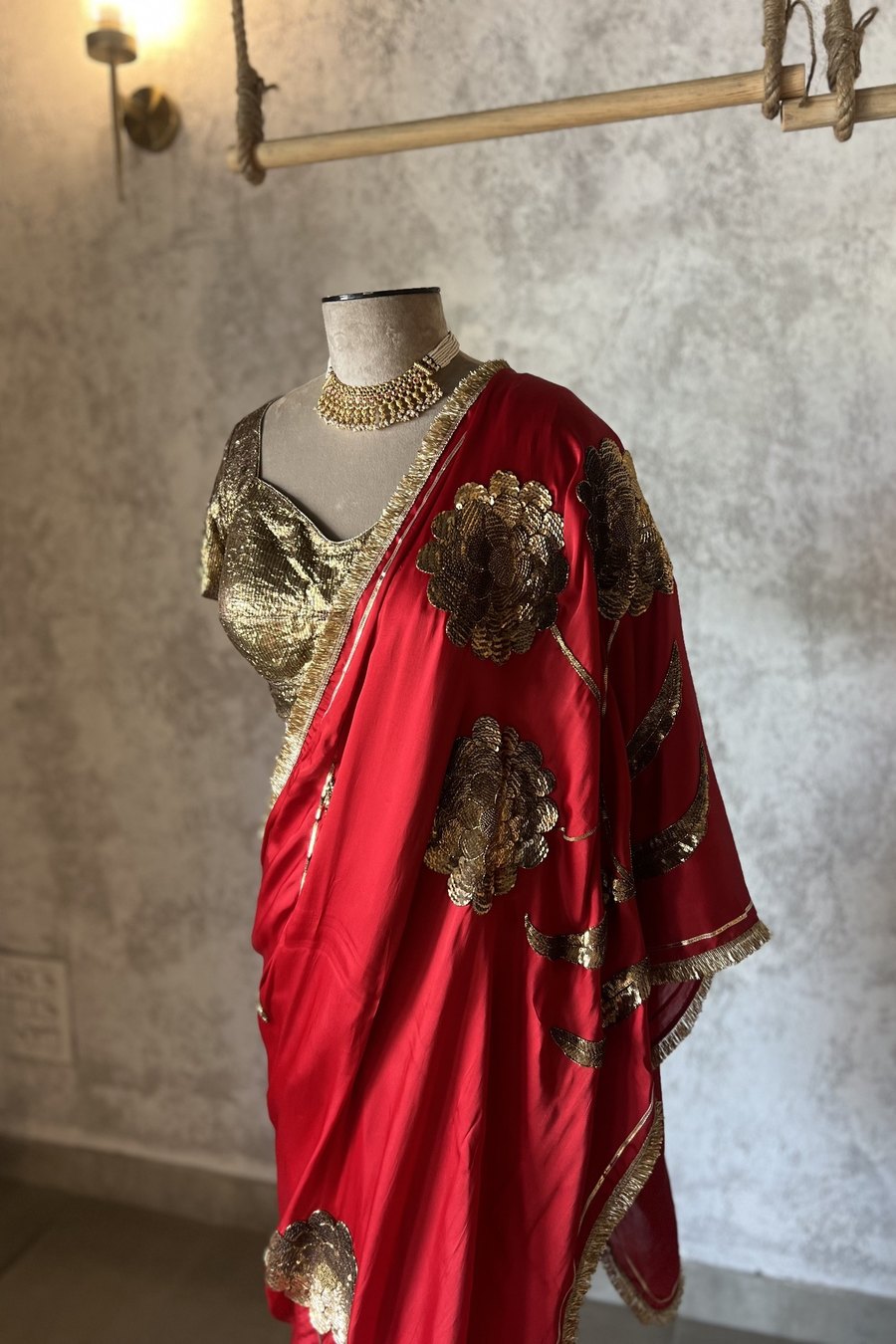
₹39,500
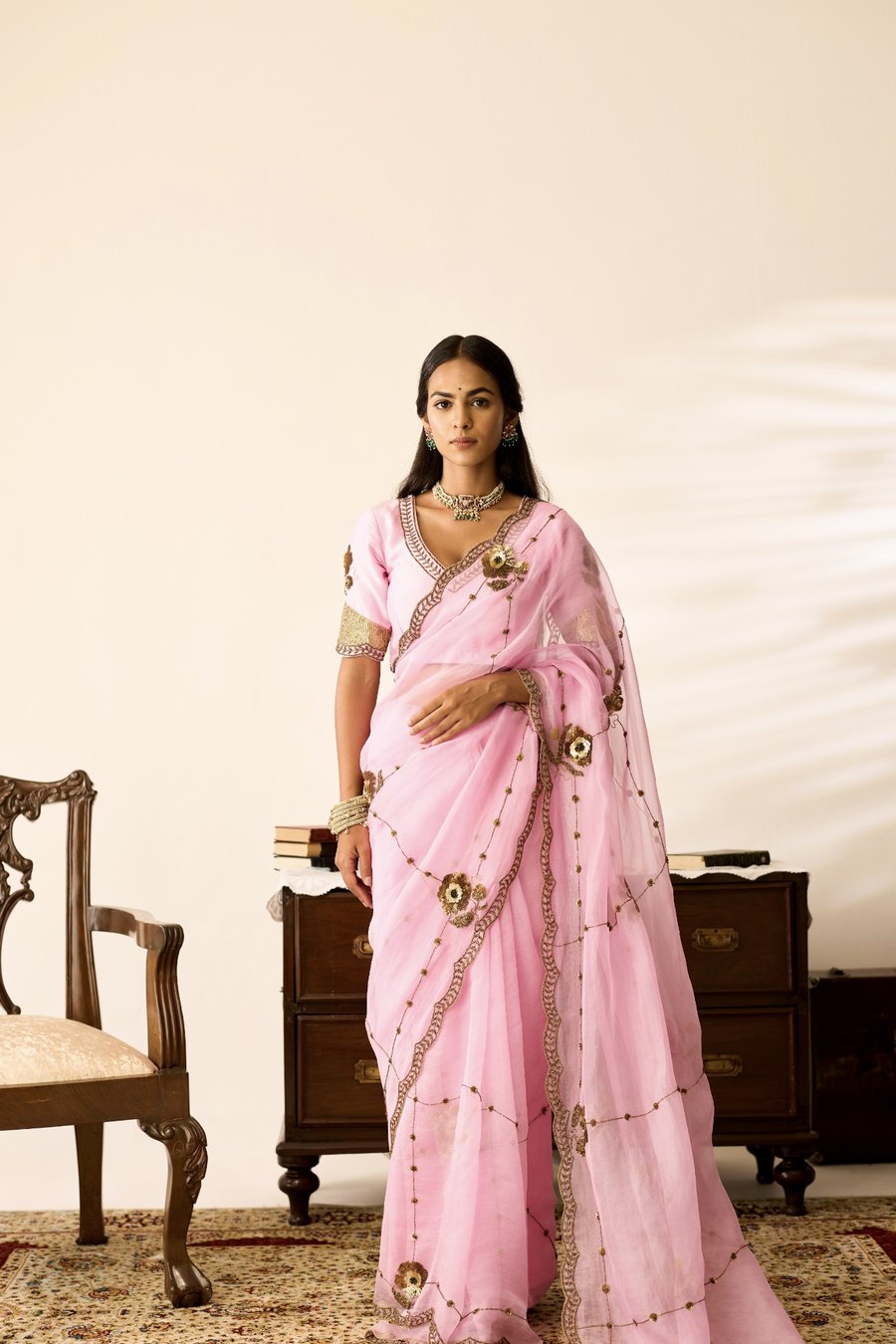
₹46,500
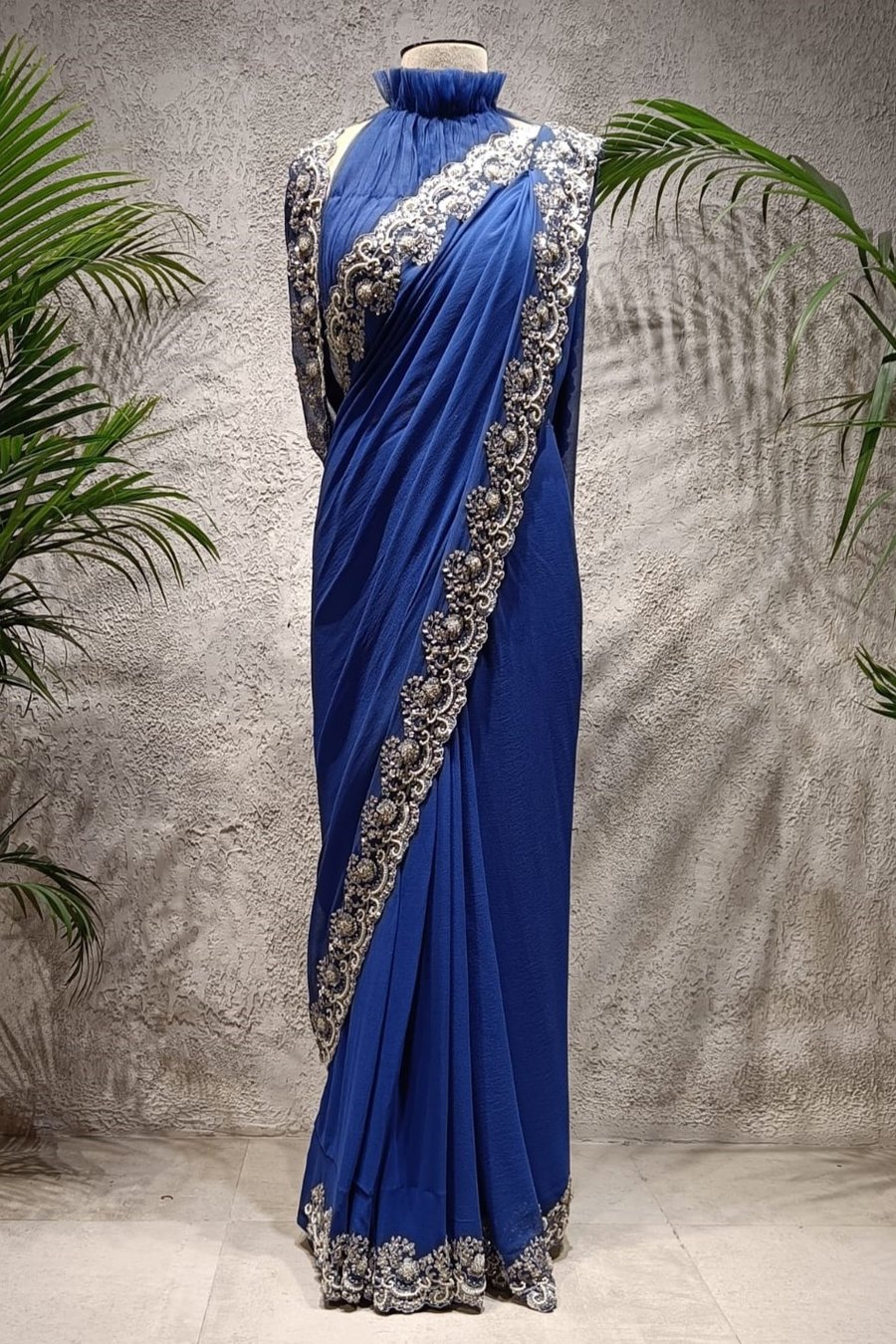
₹46,500
Blouse, drape and the details that survive a song
The blouse is the one part that is genuinely fitted, and on a sangeet it works harder than the saree does. Our blouses are cut to your measurements and lined, which matters most under a sheer base where an unlined blouse shows every seam. Sleeveless or a short sleeve gives your arms freedom and keeps you cooler on a floor with a hundred people on it; a fuller sleeve is the better answer if you will be sitting with older family for part of the night or the season is cold. Decide the neckline with your jewellery in front of you — a heavy choker wants a neckline that does not fight it, and long earrings leave you free to go higher.
On the drape, three things do most of the work. Pin the pleat stack at the waist with proper saree pins, not safety pins, and pin it twice so a broken pin is not a broken evening. Spread the pallu fully on the shoulder for the photographs and let it narrow later — the handwork is on the pallu, and a bunched pallu hides the part you paid for. And keep a matching dupatta or stole in your bag: it is the lightest way to cover your shoulders at the temple or at an older relative's seat, without changing anything about the outfit.
For jewellery, pick pieces that do not announce themselves every time you move. Long jhumkas and a single statement bracelet photograph well and stay out of the way; stacked bangles on both wrists and a heavy jhumar become noise by the time the second performance starts. If your family does a group dance, this is the one night to keep the jewellery to two decisions.
Shoes decide whether you enjoy the last hour. Choose the heel you can actually stand in for three hours on the floor the venue has, and break them in at home first. We will pin your drape at a length that works with the height you plan to wear, which is much easier to do in the store than at home on the day.
If you are dressing a group — sisters, cousins, the bride's friends — bring everyone in together. We can keep the pieces different but the palette related, so photographs of the group read as one family rather than four unrelated outfits. Shipping within India is free above ₹10,000, and for a wedding abroad there is an international shipping offer above ₹49,000 with the code on our site banner.
Care between the sangeet and the next function
A sangeet is the hardest night your wardrobe will have: heat, movement, food, and a long ride home. Hang the saree on a padded hanger for a day to let it breathe before you fold it, and fold it into muslin rather than plastic so air still moves around the embroidery. Rotate the fold lines each time you store it so a crease never sets in the same place twice, and keep the box out of direct sun.
If a thread snags on a bangle or a chair, do not pull it — a pull turns a small repair into a reworked motif. Photograph it and send it across, or bring it in, and most lifted threads can be secured again without touching the pattern. When you press the piece, use a muslin cloth on a low setting and press the reverse wherever you can; an iron straight onto raised zardozi or dabka flattens metal that cannot be lifted back.
Our doors are in Shahpur Jat in New Delhi and in Dehradun, and either one will re-pin a blouse, re-secure a thread or store-check a piece between your functions. If something does not fit right when the parcel opens, message us before the piece has been worn or altered and we can still act on it. That conversation costs nothing, which makes it the cheapest part of a wedding wardrobe.
Frequently asked
What should I wear to a sangeet?
Something light enough to stand and move in for three hours. A hand-embroidered saree in a sheer base — silk organza, chiffon or georgette — with the work concentrated on the border and pallu is what we suggest most often, because the fabric stays off your body in a warm hall and the pallu still gives you the occasion. Keep the jewellery to two pieces and choose a heel you can really wear. If you would rather not manage a pallu at all, a kurta set or an anarkali from the same rail works just as well.
Is a saree comfortable for a sangeet if I plan to dance?
Yes, if you choose the weight and pin it properly. Pin the pleat stack at the waist twice with saree pins and pin the pallu at the shoulder, then practise the drape once at home so you know it holds while you turn. A lighter base with a strong border is far easier to dance in than a dense all-over piece, so if you plan to be on the floor, keep the heaviest work for the wedding day or the reception.
Which colours work best for a sangeet?
Sangeets happen after dark under warm, dim light, so a deeper ground with lighter work on top tends to photograph best — the embroidery catches the light while the base stays rich. That said, colour should follow the function you already picked: red and deep pink read festive and photograph warmly indoors, ivory and pastel organza stay clean under flash, and a deep blue or purple ground looks strong in a hall at night. Bring your outfit ideas and we will show you how each one behaves under the lights you are actually getting.
How do I stop my pallu from slipping while I dance?
Three things. Pin the pallu on the shoulder with a saree pin rather than a safety pin, and pin it through the blouse strap so the weight is carried by the blouse. Pin the pleat stack at the waist twice. Then spread the pallu fully for photographs and narrow it once the dancing starts — a narrower pallu moves less. Also choose a lighter base for a dancing night: a heavy pallu with dense metal work is what pulls itself off your shoulder.
Can I wear the same saree to the sangeet and to another function?
That is one of the practical reasons people choose a saree for the smaller functions. Change the blouse and it reads as a different outfit — a sleeveless blouse for the sangeet, a fuller sleeve or a plainer one for the reception or a family lunch. Rotate your fold lines when you store it between dates and it will come out looking like the first time. Tell us at the order stage which functions you are dressing for, and we will help you plan the blouse so one piece earns its place more than once.
Explore more: bridal collection — or message us on WhatsApp for styling help.

The information below is required for social login
Sign In
Create New Account