

The first question most people ask about a wedding saree is which one to buy. The second, asked a fortnight after the wedding, is what to do with it now. A hand-embroidered piece in organza, silk satin or georgette is not fragile, but it is particular: it mind

The first question most people ask about a wedding saree is which one to buy. The second, asked a fortnight after the wedding, is what to do with it now. A hand-embroidered piece in organza, silk satin or georgette is not fragile, but it is particular: it minds heat, it minds plastic, and it minds being folded the same way for ten years. This is how we tell our customers to look after one, starting on the night of the function rather than the morning of the next wedding.
A wedding saree is worn more than once, and that is the whole point
Think about the life of the piece, not the day. Most of the bridal sarees that leave our stores are worn at a mehendi, then again at someone else's wedding six months later, then at a family lunch where the blouse has changed and nobody recognises it. That is exactly how a piece earns its price. It only earns it, though, if it comes out of the box looking the way it went in.
The wear and tear is rarely dramatic. It is a fold line that has set across the pallu because the saree was stored the same way for four summers. It is the dull patch where a hot iron went straight onto a raised border. It is the small rust spot that appeared after a monsoon week in a cardboard box under a bed. All of that is avoidable, and none of it needs anything expensive — just a routine, followed twice a year.
What you are actually looking after: base and work
The base decides how you handle the piece. Silk organza is springy and sheer; it holds a pleat and travels well, but it creases sharply and the crease is not always easy to lift. Silk satin is heavier and holds a fold more softly — too much heat and it turns dull where the iron touched. Georgette drapes close to the body and is the most forgiving of the three. Chanderi is light and crisp and rewards being stored flat rather than hung.
The embroidery is where the real care sits, and it matters which kind you own. Gota is flat ribbon appliqued down, so it can be pressed through cloth with reasonable confidence. Zardozi is metal thread worked on a frame: denser, heavier, and the one that flattens permanently under a direct iron. Dabka is coiled metal wire, and a single crushed coil never comes back. Resham is silk thread and dislikes heat above all — it will not melt off the piece, but it will lose its sheen before the base does.
If you are not sure whether your piece is hand-worked, turn it over. Machine embroidery looks evenly perfect from the back. Hand work shows small knots, thread ends and a motif that wanders by a millimetre. We know which ours is, because everything we sell is hand embroidered and coloured with organic dyes — the dyes are one more reason to keep the piece out of long, direct sunlight.

Care during the wedding week, before anything goes into a box
Air the saree the night it comes off your shoulder. Hang it on a padded hanger, or lay it flat over the back of a chair, somewhere with a draught and no sun, for a day. This is the single most useful thing you can do — it lets the sweat dry out of the weave instead of setting into it. Underarm and pallu areas pick up salt, and salt left in a folded piece is what turns into a dull patch a year later.
Treat spots the same week, not the same year. Haldi, mehendi, kumkum and alta all move easily when they are fresh and become difficult once they have had a month to settle. Blot — never rub — with cool water and a soft white cloth, working from the outside of the mark inwards so you do not spread the ring. Skip the home remedies that get passed around, lemon juice, salt, toothpaste and hot water; on dyed silk they are more likely to lift the colour next to the stain than the stain itself. A fresh mark on an expensive piece is a job for a professional dry cleaner who works with silks, and it is worth telling them the piece is hand embroidered before they take it.
Two small habits save a lot of later work. Do not wear perfume or hairspray on the shoulder where the pallu sits, and do not leave pins in the piece between functions — everyone does it, and every one of those pins eventually leaves a mark. The blouse gets the same treatment as the saree: hooks closed, padding out, stored flat rather than hung by its straps for months. If your blouse is cut to your measurements, it is also the one part of the outfit that can be quietly altered later if your size changes.
Six wedding sarees from the bridal rail
If you are buying with the years in mind, these are the six we would show you first — hand-embroidered organza, silk satin and georgette between ₹39,500 and ₹59,500, every one made to order and cut to your measurements. The organza and georgette pieces in this set are the ones that travel and re-wear most easily; the silk satin is the one that wants the most careful pressing. All are from our bridal and wedding rails, and every price below is the price of the piece with the blouse.
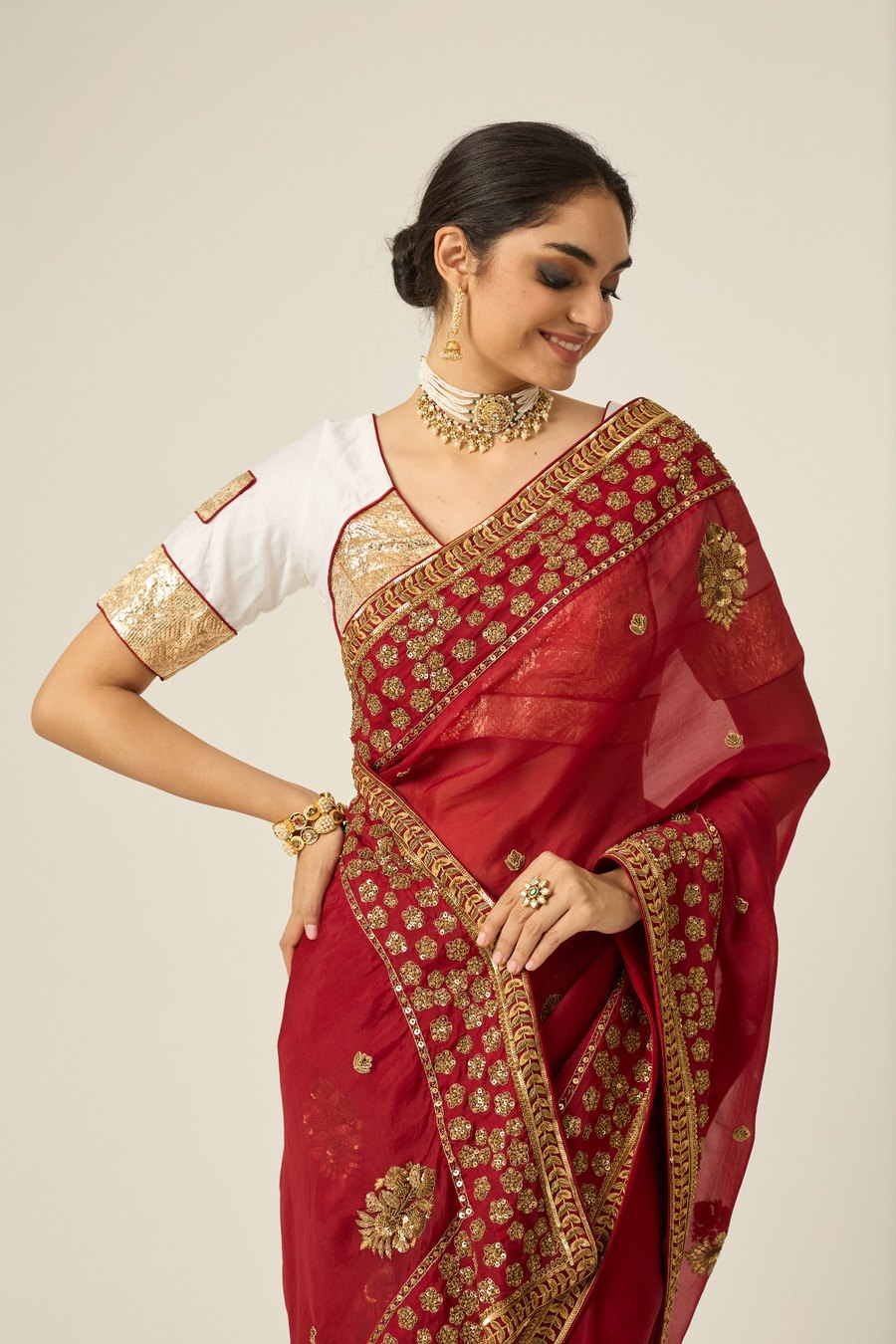
₹59,500
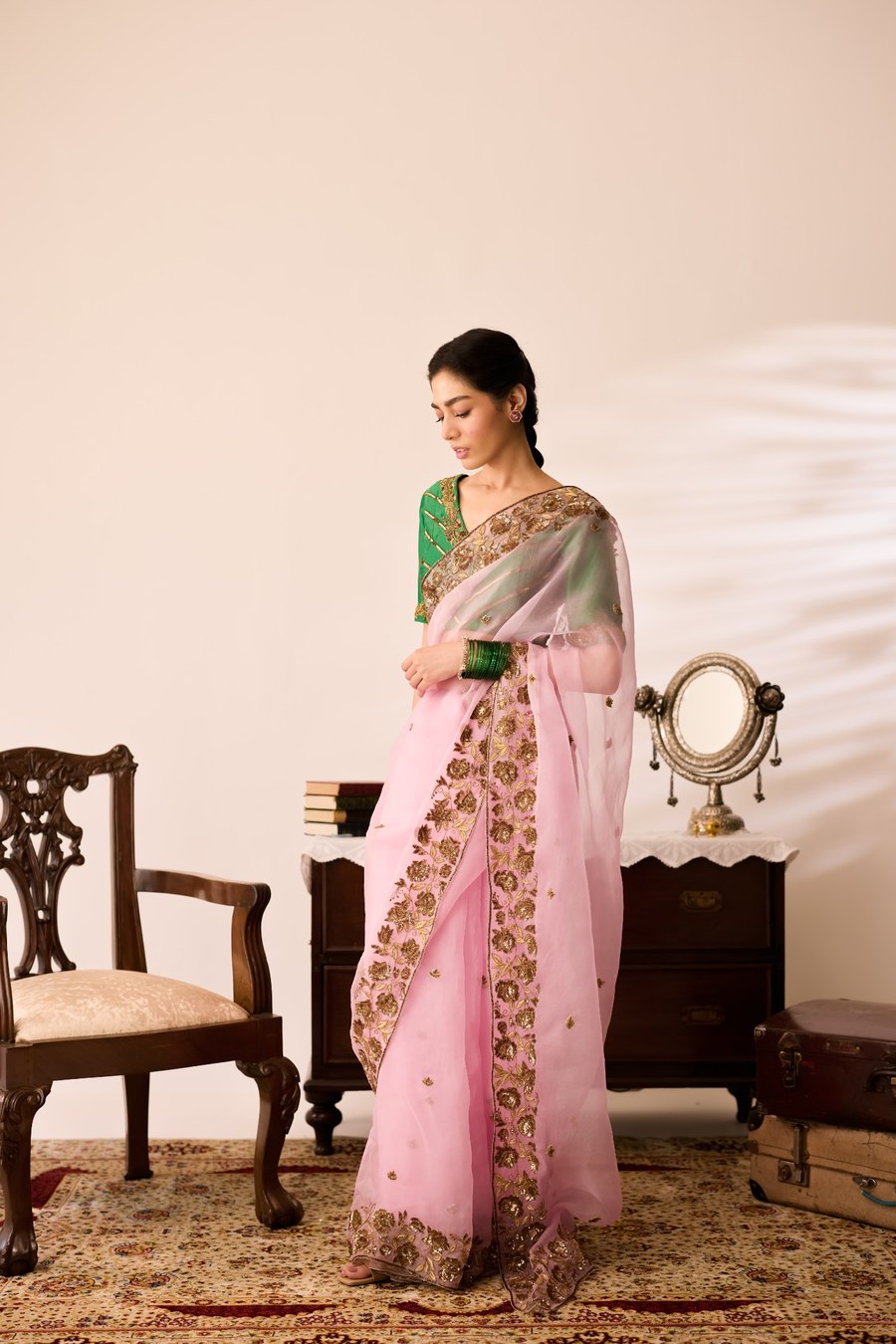
₹46,500
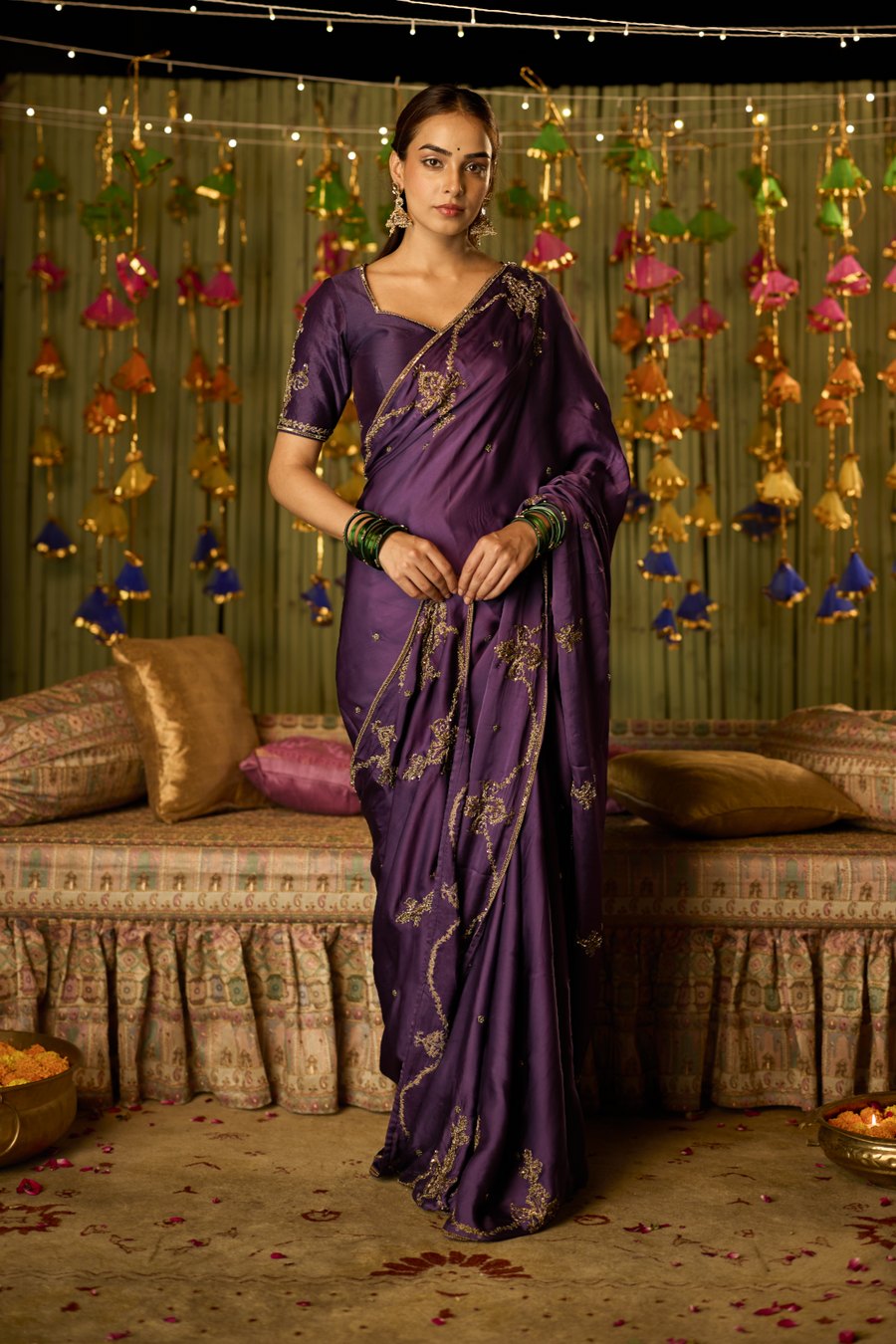
₹43,500
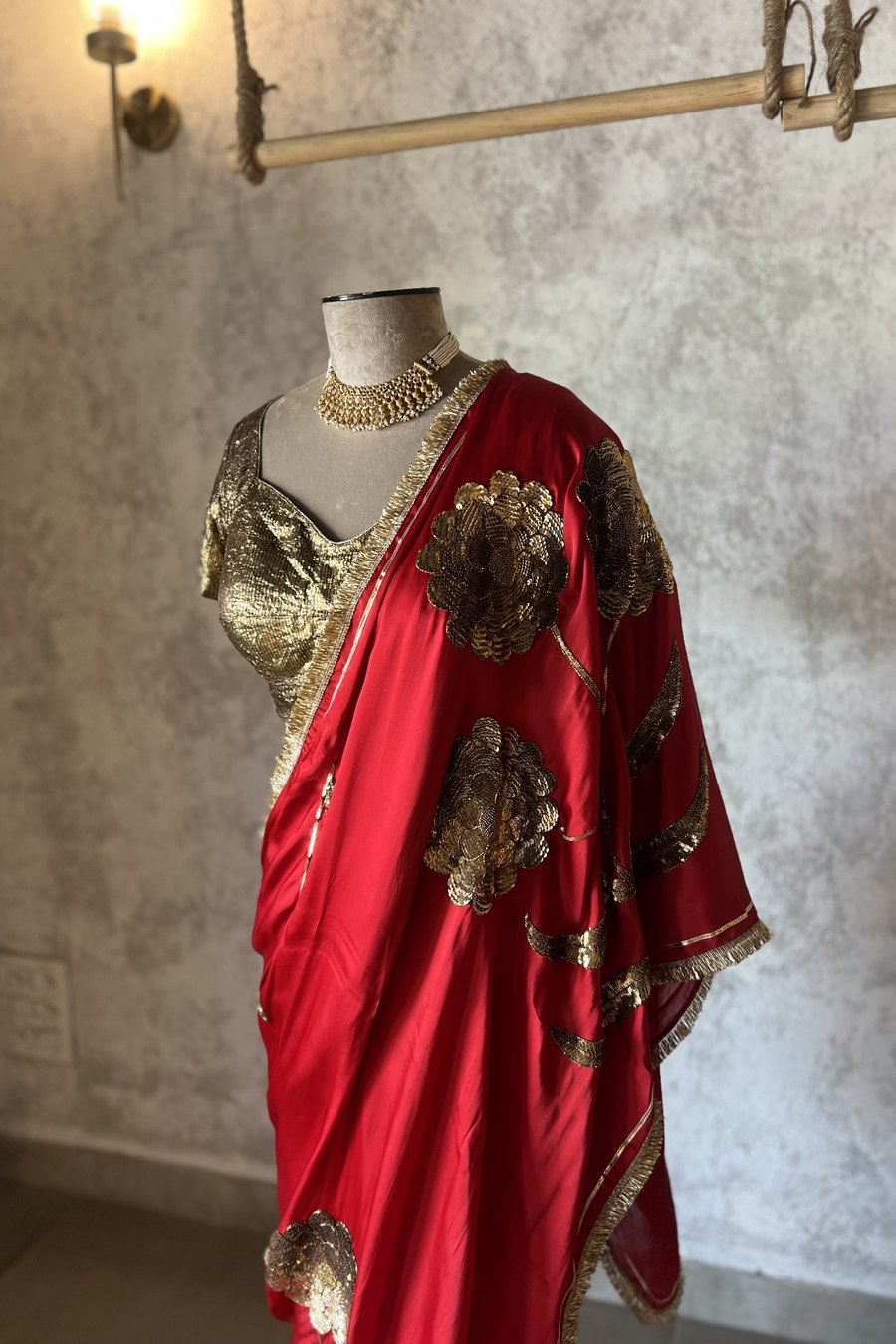
₹39,500
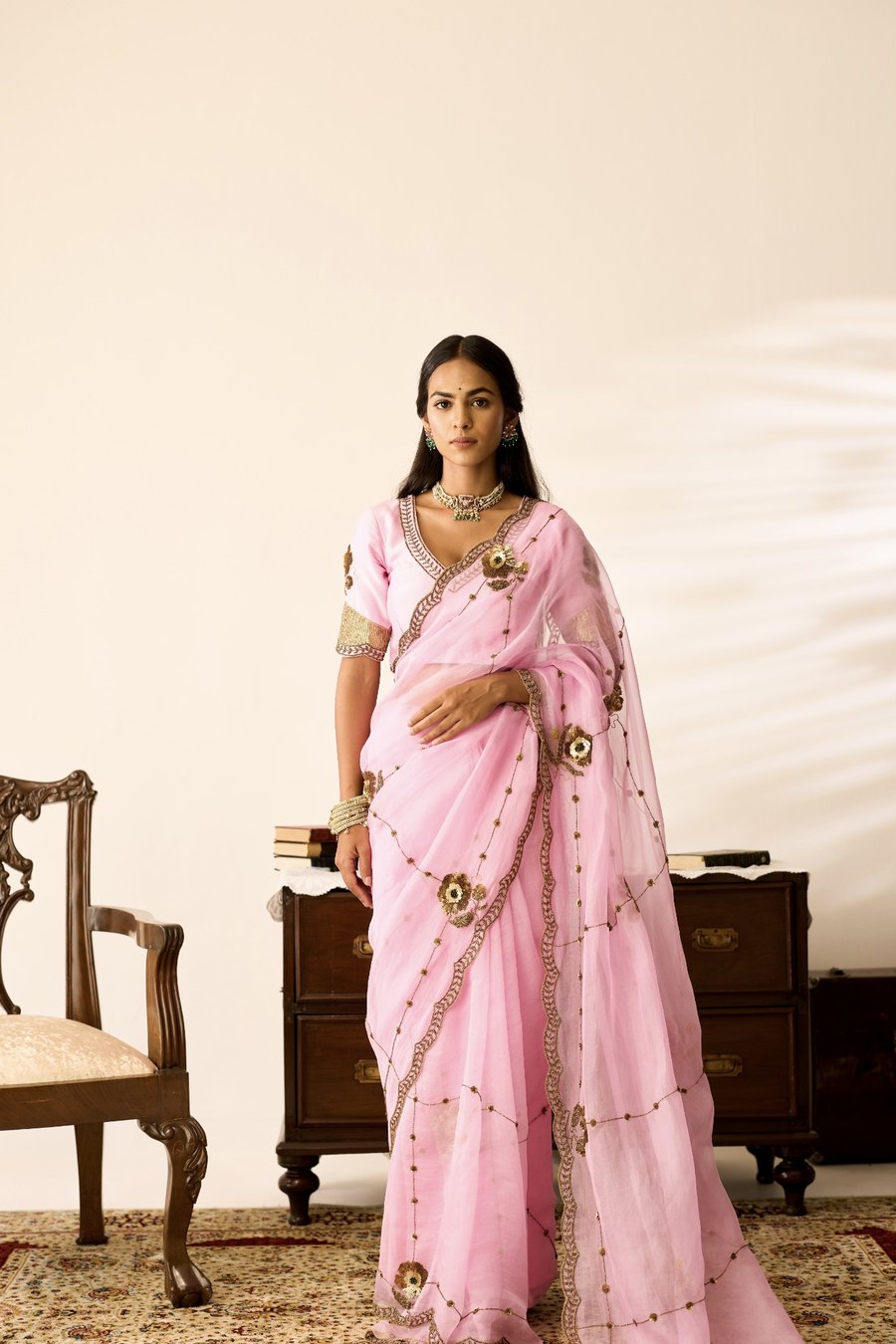
₹46,500
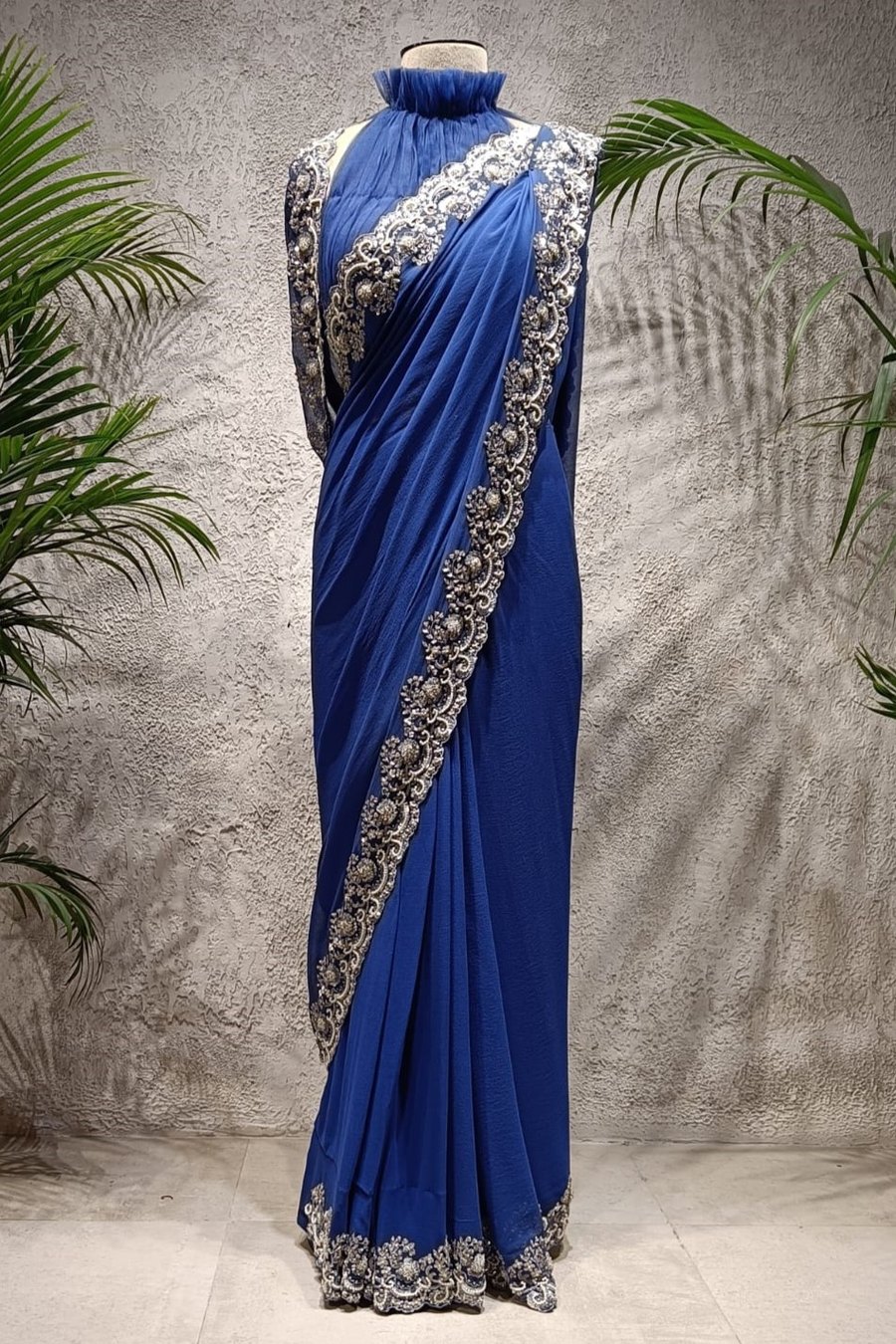
₹46,500
Storage that keeps it wearable for years, not one season
Store in cloth, never in plastic. Muslin is what we use and what we recommend; an old cotton pillowcase is a perfectly good substitute. Plastic bags and vacuum-sealed covers trap moisture against the weave, and in a humid week that is how mould starts. Boxes should be able to breathe, kept flat, and kept out of direct sun — a top shelf in a dark cupboard beats a display box near a window every time.
Fold along the existing lines and change them. Fold the saree into a soft rectangle with the worked border inside rather than pressed against a hard edge, and once a year unfold it completely, air it for a few hours in shade, and refold it so the creases fall in different places. Rotate the fold lines and no single crease ever gets the chance to become permanent. A heavy piece should be refolded more often; the weight of the fabric itself is what sets a crease.
Watch the weather where you live. Delhi and Dehradun ask for slightly different routines: Delhi's dry heat is kind to silk but dust in a loosely woven cloth box is not, while Dehradun's monsoon weeks are what turn an unventilated cupboard into a problem. A sachet of silica gel in the corner of the box helps in the damp months — keep it in a cloth pouch and away from the embroidery — and never use naphthalene balls near zari, dabka or gota, because the fumes dull metal thread. If your city has a genuine monsoon, take the sarees out for an airing once a fortnight while it lasts.
For travel, roll rather than fold. A saree rolled in muslin inside a hand-carry arrives with fewer creases than one pressed flat into a suitcase, and it never goes into checked luggage if the work is dense. Press before packing, not after arriving: through a muslin cloth, on low heat, from the reverse, and never directly onto raised metal work. If a thread snags, do not pull it. Pull once and a one-centimetre repair becomes a reworked motif; photograph it and send it to us, or bring it in.
Our doors are in Shahpur Jat in New Delhi and in Dehradun, and styling help and fit checks happen on WhatsApp if you are not in either city. If your piece needs a blouse re-cut, a pleat reset or a lifted thread secured, that is a conversation worth having before the wedding you want to wear it to — not after. Shipping within India is free above ₹10,000, and there is an international shipping offer above ₹49,000 with the code on our site banner.

Frequently asked
How should I store a wedding saree so it does not lose its shine?
In muslin or a plain cotton cloth, folded flat with the worked border inside, in a dark dry cupboard, refolded along different lines once a year. Keep it out of plastic bags and vacuum covers, which trap moisture against the weave, and keep naphthalene balls away from zari, dabka and gota because the fumes dull metal thread. Airing the piece in shade for a few hours before you refold it does most of the work.
Can I dry clean a hand-embroidered wedding saree?
Yes, and for a hand-worked piece it is better than hand-washing at home. Tell the cleaner it is hand embroidered, which parts carry the densest work, and that the base is organza, satin or georgette, so they choose the process accordingly. Do not wash it yourself with hot water, lemon, salt or toothpaste — on dyed silk those lift the colour around the stain before they lift the stain itself.
What do I do about a haldi or mehendi stain?
Treat it in the same week. Blot with cool water and a soft white cloth, working from the outside of the mark inwards so you do not spread the ring, and avoid rubbing. Haldi, mehendi, kumkum and alta are all far easier to lift fresh than after they have sat in a folded piece for a month. If the mark is on dense embroidery rather than plain fabric, hand it to a professional rather than experimenting.
Can I iron my wedding saree myself?
Yes, if you do it through a muslin cloth on a low setting and work from the reverse wherever you can. A direct iron onto raised zardozi or dabka flattens metal that cannot be lifted back, and too much heat on silk satin leaves a dull patch where the iron touched. On heavy pieces, press before you store or travel rather than after you arrive.
Does an organza or silk satin wedding saree travel well?
Both do, with one difference. Organza is springy and holds a pleat once it is pressed, so it arrives looking close to how it was packed; silk satin creases more softly and needs a light press at the other end rather than a heavy one. Roll the saree in muslin into a hand-carry, keep it out of checked luggage, and give it a day to hang before the function.
Explore more: bridal collection — or message us on WhatsApp for styling help.

The information below is required for social login
Sign In
Create New Account