

Organza is the fabric most of our sarees are built on, and it is also the one whose price people ask about before they ask about anything else. Two pieces that look almost the same in a photograph can sit fifteen thousand rupees apart, and the difference is al
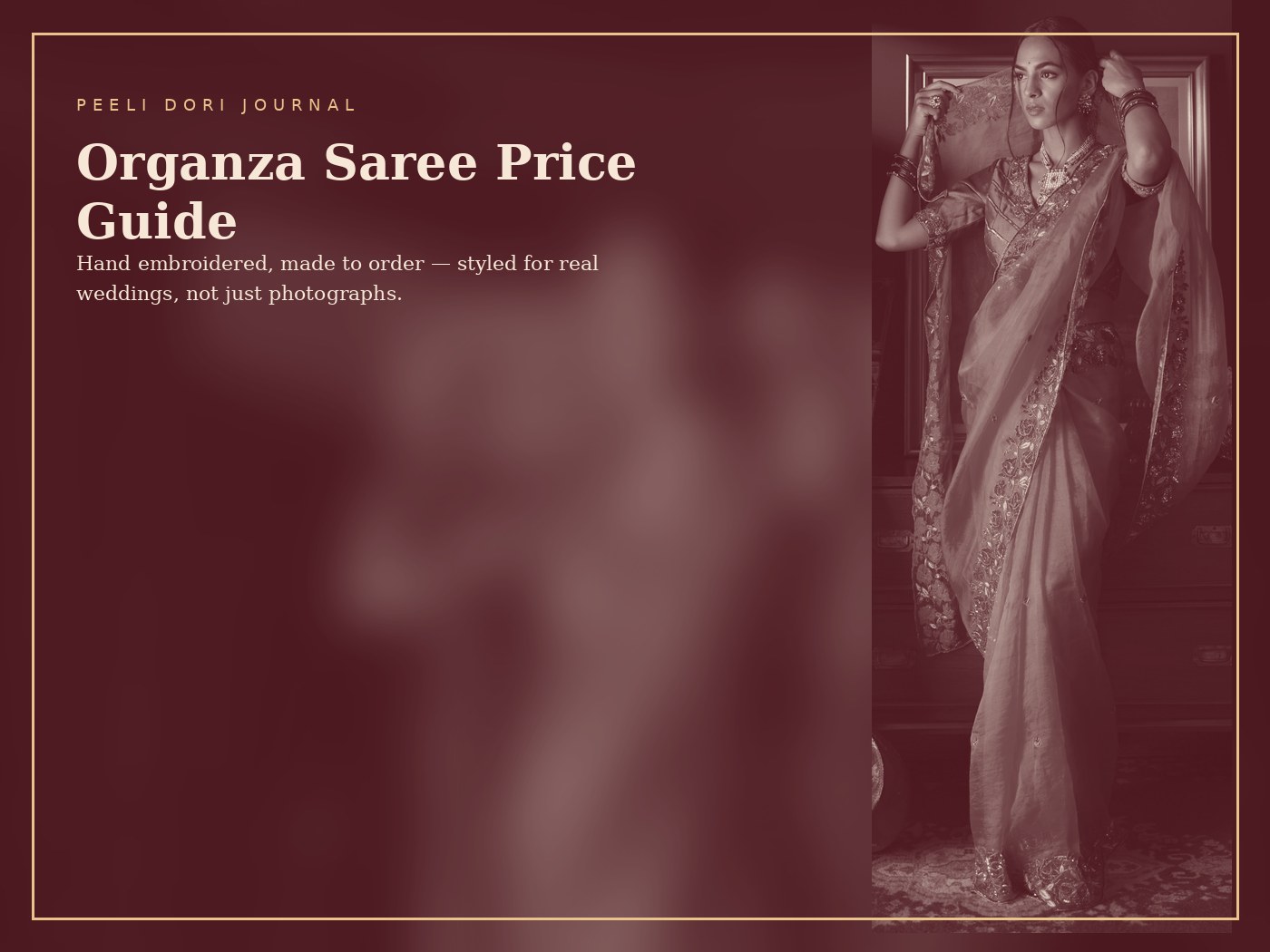
Organza is the fabric most of our sarees are built on, and it is also the one whose price people ask about before they ask about anything else. Two pieces that look almost the same in a photograph can sit fifteen thousand rupees apart, and the difference is almost never the colour. It is the work. This is how our organza prices actually add up, piece by piece, with the real prices on our rack this week.
Where the money actually goes on an organza saree
Start with the cloth. An saree/silk-organza-saree.html" style="color:#8a6a3a;text-decoration:underline;">organza saree at this level is a silk organza or a silk satin base, and the base is the smallest part of the bill. Silk organza is crisp and holds a pleat edge; silk satin falls closer to the body. If you have handled both side by side, you already know which one you prefer, and it is worth choosing that first because the base decides how the whole piece behaves at a function.
The bigger part of the price is the handwork. Our sarees are hand embroidered by artisans, and what moves the price is how much of the saree that work covers. A piece with the embroidery running along the border and opening out on the pallu is worked over a small part of the length. A piece where the motifs carry into the body and across the pleat line is worked over far more of it, and handwork is measured in the artisan's time rather than in metres of thread. That is the single largest reason two organza sarees differ in price.
The last part is finishing, and it is the part nobody photographs. The hem should sit straight when you hold the saree from two ends. The embroidery should be anchored evenly on the reverse, without long loose threads that catch on a bangle. The blouse is cut to your measurements, so tell us your neckline and your jewellery before the piece is made, and the fit check happens before we finish rather than after.
What our organza sarees cost right now
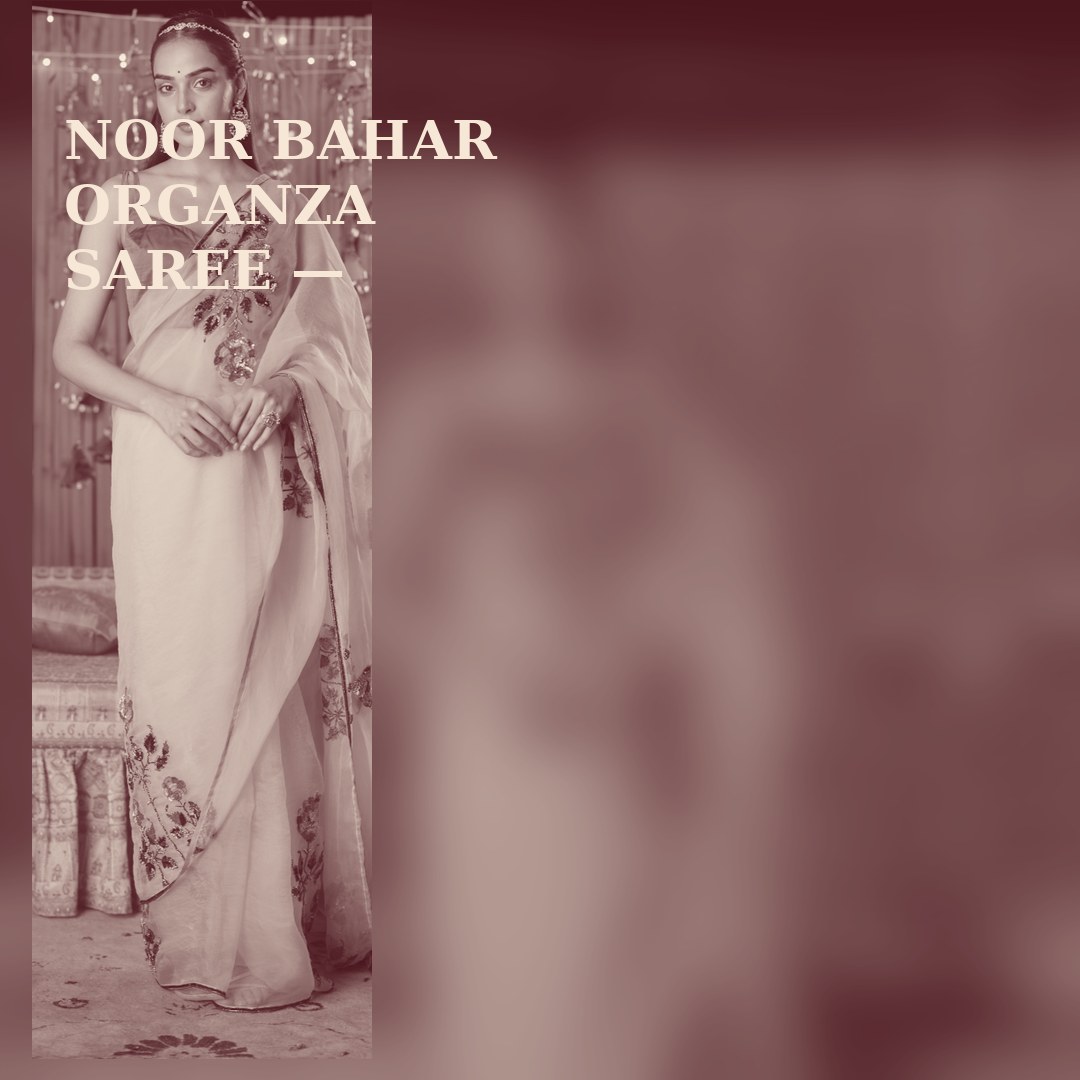
Here is the honest state of our organza rack this week. Our silk organza and silk satin sarees run from ₹44,500 to ₹59,500. Most of them sit at ₹46,500 — the RUQMANI and GULBAHAR pieces, RUQMANI RANISA, RUQMANI GULABI and RUQMANI MAROON, and GULBAHAR in both gulabi pink and ivory. Above that band sit NOOR BAHAR ORGANZA at ₹48,500 and MYRA RED ORGANZA at ₹59,500. The most accessible piece on the rack this week is NOORANI LIME at ₹44,500.
Every price here is the price of the piece itself, not a negotiating position, and not a sale price that will be different next week. Each of these is made to order in your measurements, with organic dyes and artisan handwork, so the piece you receive is the one that was worked for you.
If you want to know what separates the ₹46,500 group from the two above it, ask us on WhatsApp and we will tell you plainly — it is about how much of the saree carries the work, not about which colour is more in demand. Shipping inside India is free above ₹10,000, so every piece on this page ships free within the country. For overseas orders the site carries an INTSHIP offer above ₹49,000.
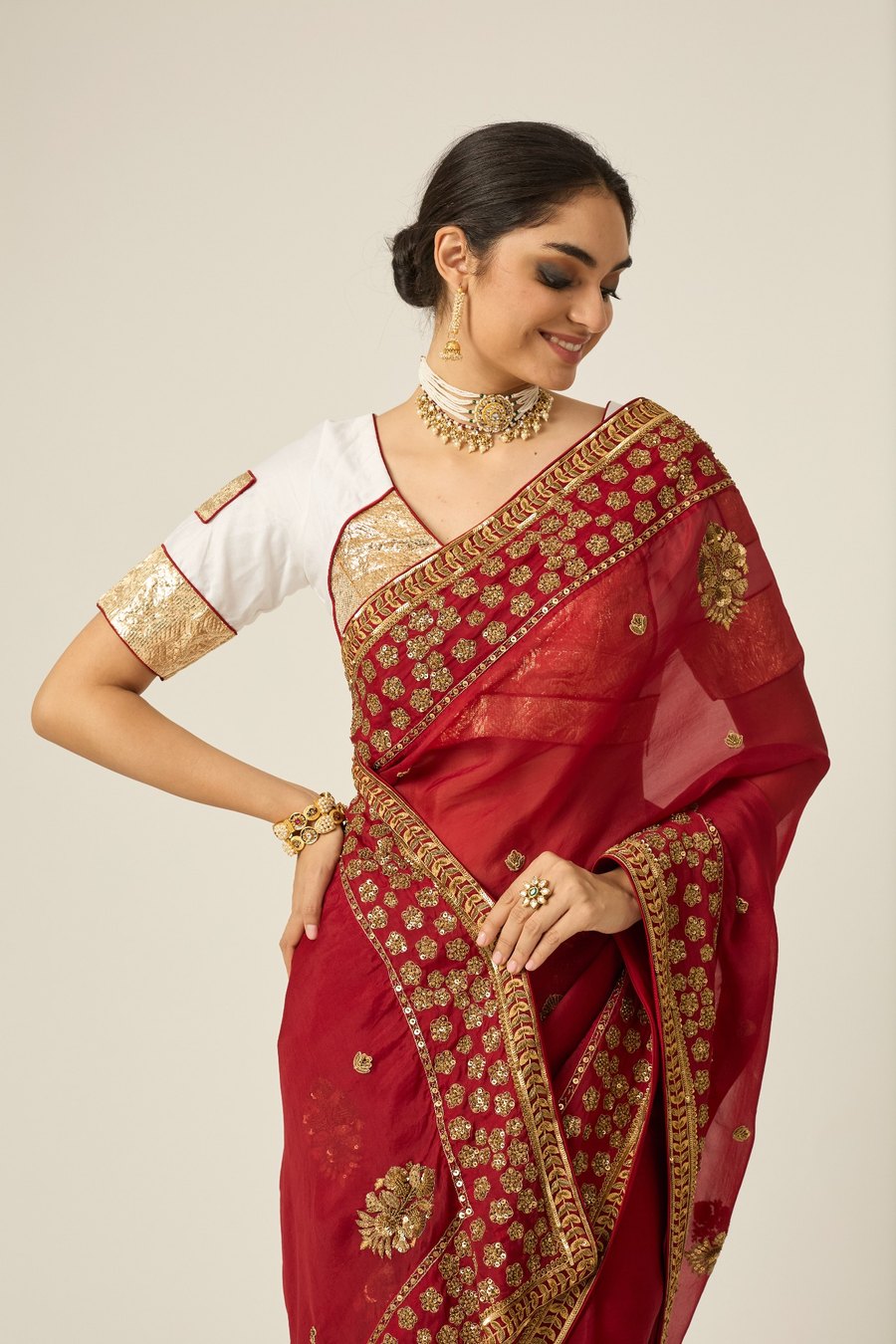
₹59,500
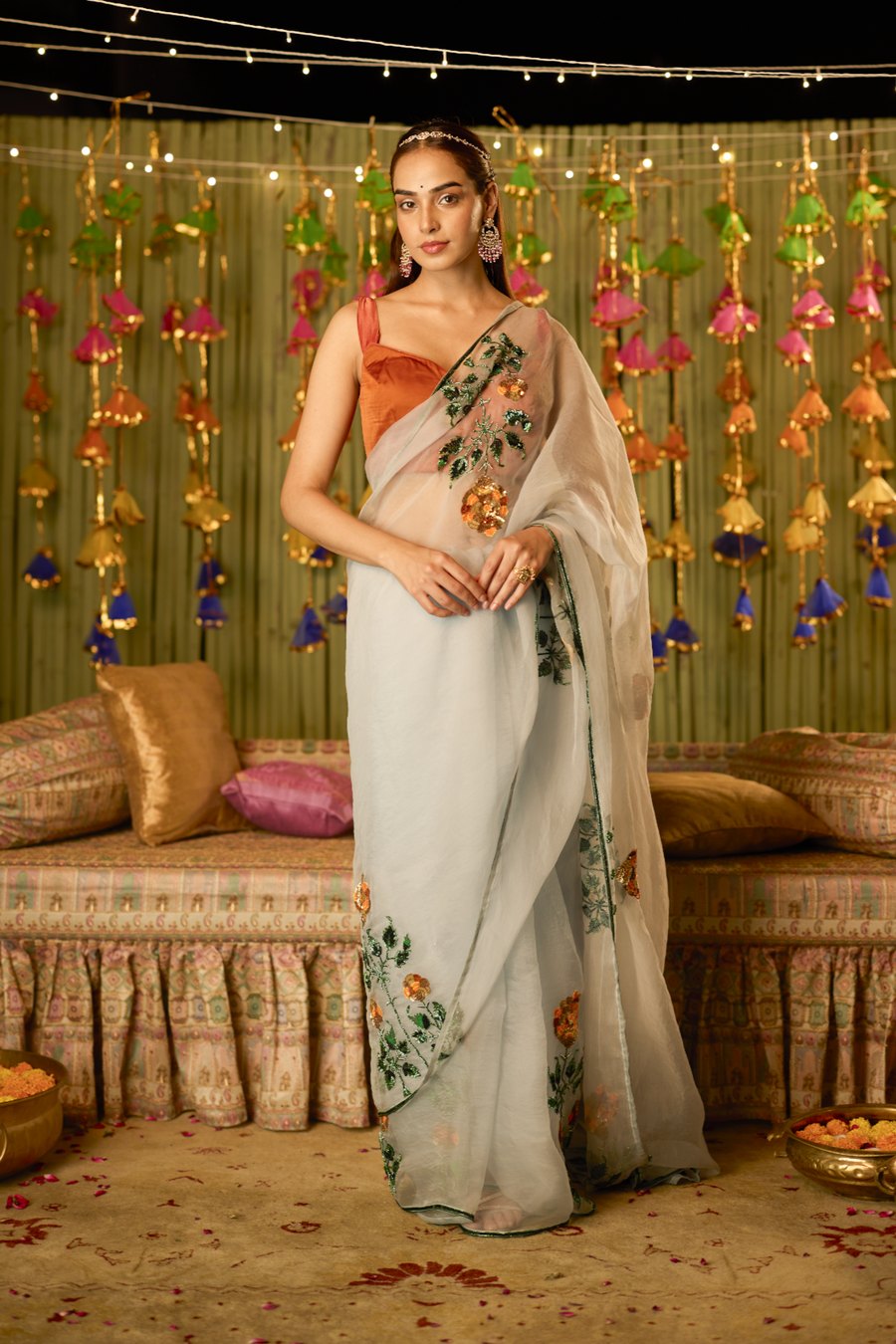
₹48,500
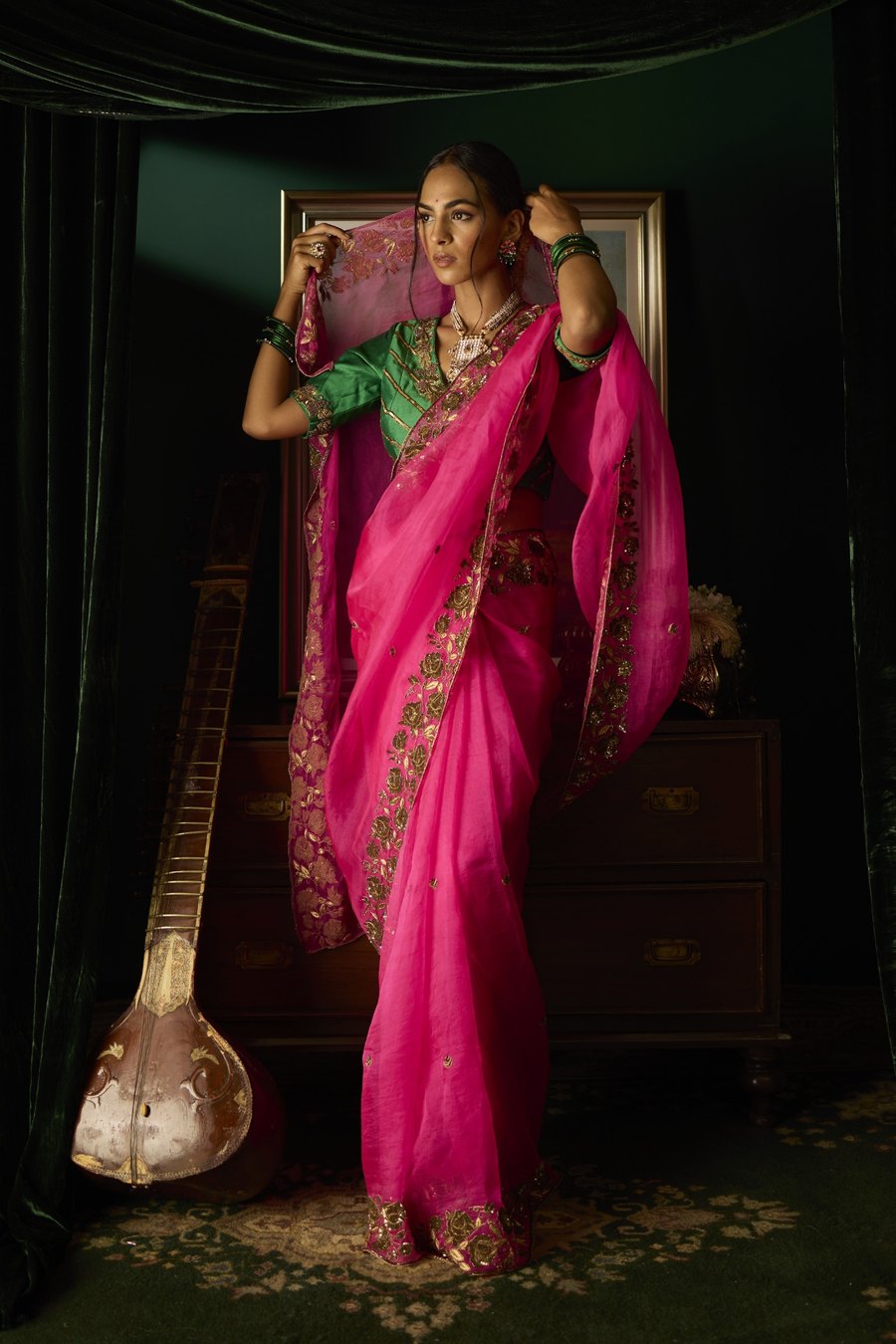
₹46,500
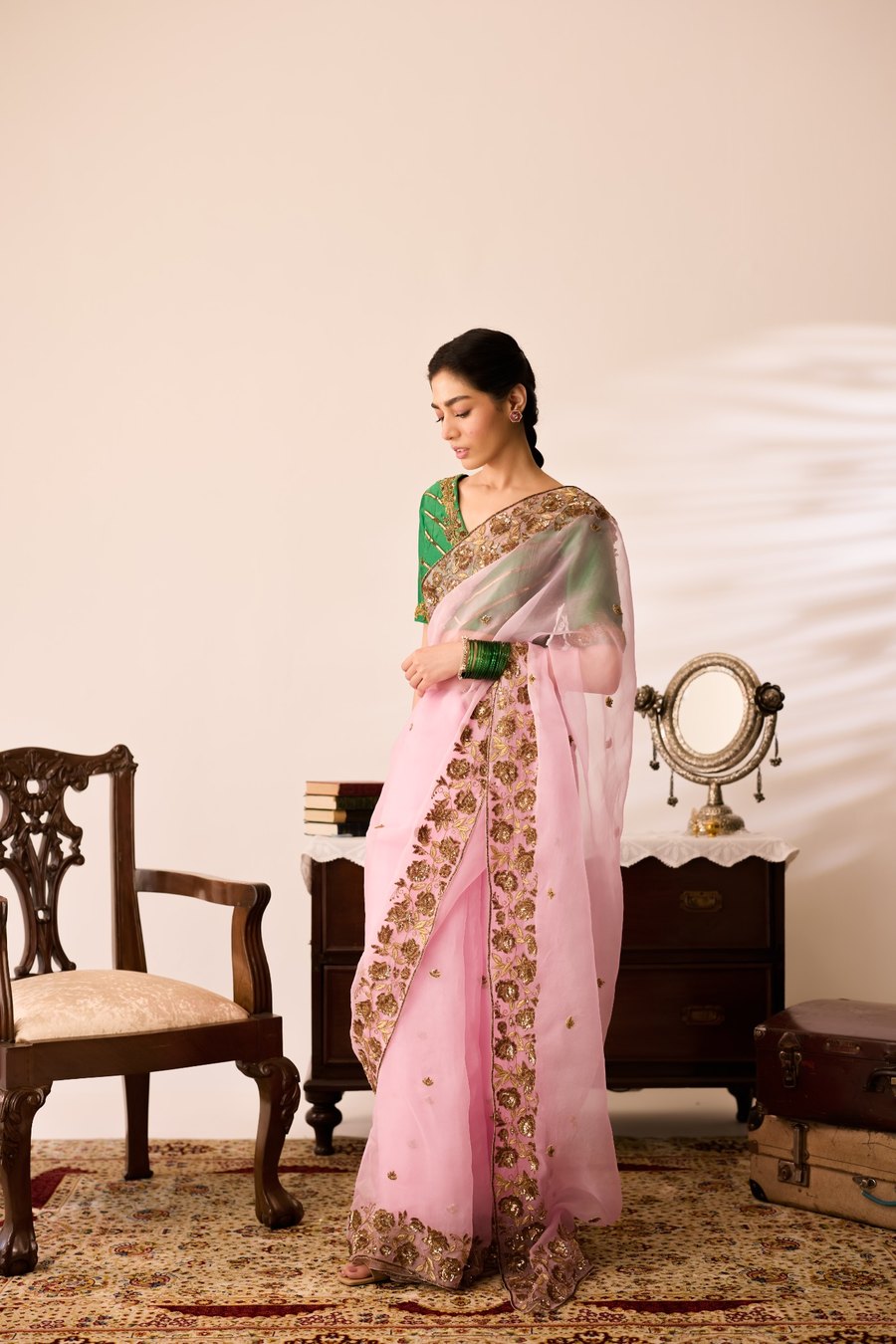
₹46,500
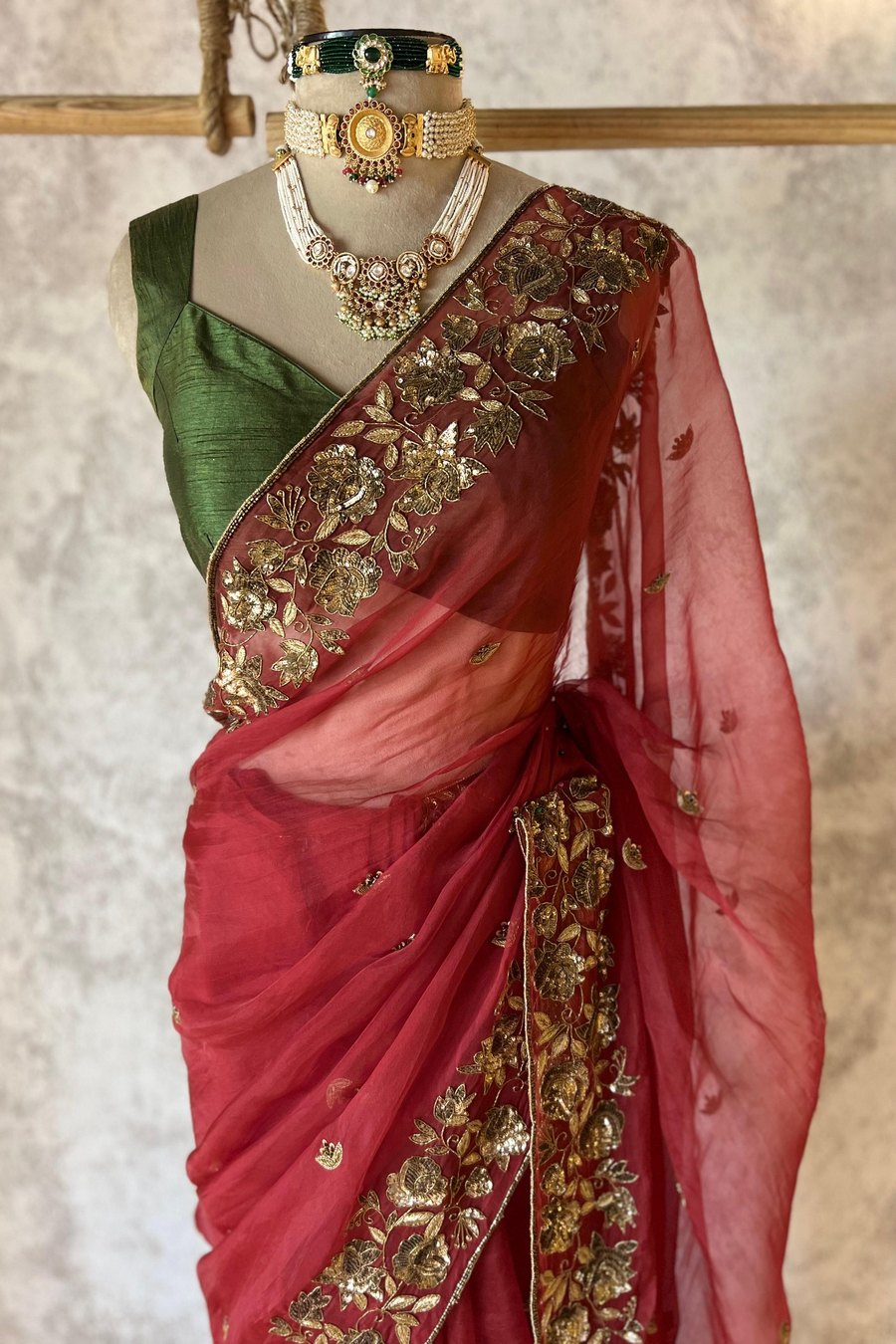
₹46,500
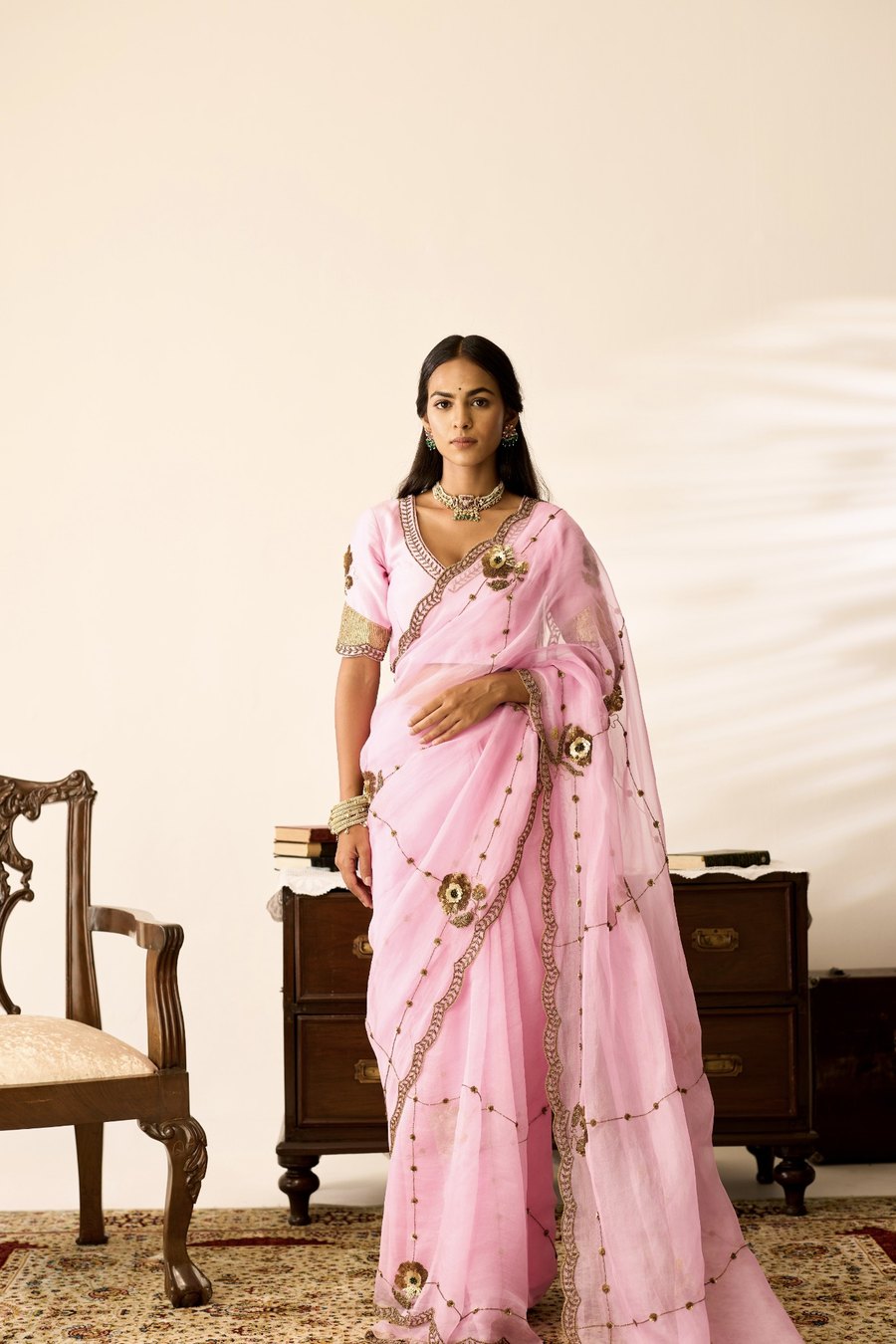
₹46,500
Why two similar organza sarees are ₹15,000 apart
Put NOORANI LIME at ₹44,500 next to MYRA RED at ₹59,500 and you are looking at the whole question. Three things separate them. The first is coverage: how far the embroidery travels from the border into the body of the saree. The second is the base — silk organza against silk satin, which changes the fall, the light and how the pleats hold. The third is the finishing, which you only see when the saree is in your hands: the hem, the reverse of the work, the blouse cut to your measurements.
The practical test when you are comparing two pieces, in a store or over photographs, is to turn the saree over. Look at the back of the embroidery. Handwork should be anchored evenly, motif for motif, without long threads crossing open ground. A piece that is dense on the face and careless on the reverse is a piece that will not survive twenty wearings, whatever it costs.
If you are choosing between two organza sarees and cannot see the difference in the price, that is a good question to send us rather than a reason to pick the cheaper one. We would rather talk you through it and have you buy once.
Where it is worth paying more — and where it is not
Pay for the work where the eye and the camera will land. On a wedding day that means the pallu, the border and the blouse, because that is what is photographed while you stand, greet and sit. Paying for dense embroidery across the pleats of a saree you will wear to a mehendi morning in daylight is money you will not see back.
The base is the other place where the extra spend is real. Silk organza keeps its shape through hours of standing, and it is the reason an organza saree still looks like itself at the end of a long function. If you will wear the piece more than once a year, that behaviour is worth the difference. If it is a single function and the budget is fixed, a lighter piece with the work concentrated on the pallu will photograph almost identically.
Where it is not worth paying more: weight for its own sake. A heavier saree is not automatically a better one, and in bright daylight a heavy piece can look flat while a crisp organza reads sharp. Tell us the function and the hour — morning, indoors, stage lighting — and the honest answer changes with it.
Spreading the price across a wedding week
Most of the women who buy from us are dressing for more than one event. The sensible way to spend is to put the money into one piece that carries real handwork for the wedding day and the reception, and to take a lighter piece for the smaller functions — mehendi, haldi, a temple visit — where the work does not have to do as much.
The second piece also does more work if you plan the blouse in a shade that lets you rewear it with a different drape, or with the pallu opened out rather than pleated. Two blouses to one saree is a genuinely cheaper way to cover three functions than three sarees, and it is the sort of thing we will plan with you over WhatsApp before you commit to anything.
If your budget is a fixed number, tell us the number and the functions and we will show you the pieces that fit inside it. That conversation is the same one we have across the counter, and it costs nothing.
What is included at the price
Every saree here is hand embroidered and made to order, so the price you see is for work done after you order, in your measurements. Organic dyes and artisan craft are how we make the pieces; custom sizing and the blouse fit are part of the ordering conversation rather than something to chase afterwards. Styling help and fit checks happen over WhatsApp, with a photograph of the drape or the blouse on you, which is usually enough for us to say what to adjust.
The pieces are also on the rack in our stores in Shahpur Jat in New Delhi and in Dehradun. If you are anywhere near either one, handling the fabric before you decide is worth more than any photograph we can send you, and the price in the store is the price on the site.
Care: protecting what you paid for
A hand-embroidered organza saree lasts on how it is stored, not on how it is worn. Hang it on a padded hanger for a day after a function before it goes back in the wardrobe, then store it in muslin rather than plastic so air can move around the work. Shift the fold lines once a year; the same crease setting into the same place is what eventually marks a piece.
Press it through a muslin cloth on a low setting and press the reverse of the embroidery wherever you can. Never iron directly onto raised work, and do not starch it to make it stiffer — organza is crisp by itself and starch leaves a dull patch that a sheer fabric cannot hide. If a metal thread lifts, do not pull it. Photograph it and send it to us, or bring the piece into either store, and most lifted threads can be secured again without redoing the motif.
Frequently asked
How much does an organza saree cost at Peeli Dori?
Our silk organza and silk satin sarees currently run from ₹44,500 to ₹59,500, with most pieces at ₹46,500. What moves the price is how much of the saree carries the handwork and which base it is built on, not the colour. The prices are listed with each piece and they do not change week to week.
Why is one organza saree ₹15,000 more than another?
Three things: how far the embroidery travels into the body of the saree, whether the base is silk organza or silk satin, and the finishing — hem, the reverse of the work, and the blouse cut to your measurements. If you are comparing a ₹44,500 piece with a ₹59,500 one and cannot see it in the photographs, ask us on WhatsApp and we will explain the difference on the specific pieces.
Do you run discounts on made-to-order sarees?
The prices are stated and they are what they are, so the savings on the site come from shipping rather than from a sale. Shipping inside India is free above ₹10,000, and there is an INTSHIP offer for international orders above ₹49,000. Tell us the function and your budget on WhatsApp and we will show you the pieces that fit it.
How do I get the size and the blouse right?
Everything is made to order, so send us your measurements on WhatsApp and we will cut the blouse to them. Do that before the piece is made, and tell us the neckline you want along with the jewellery you plan to wear, because a deep neckline carries a neckpiece and a broader one reads better kept clean. A fit check with a photograph is usually enough for us to tell you what to adjust.
Can I see an organza saree before I order?
Yes. Both our stores keep organza on the rack — Shahpur Jat in New Delhi and Dehradun — and the price in the store is the price on the site. If you are not near either, message us on WhatsApp and we will send you photographs of the actual piece, front and reverse, so you can see the work before you commit.
Explore more: saree · tissue silk sarees — or message us on WhatsApp for styling help.

The information below is required for social login
Sign In
Create New Account