

Organza behaves differently from every other saree fabric, and most styling advice is written for the soft ones. It holds a pleat instead of falling into one. It stands a little away from the body instead of clinging to it. It is light enough to move in a bree
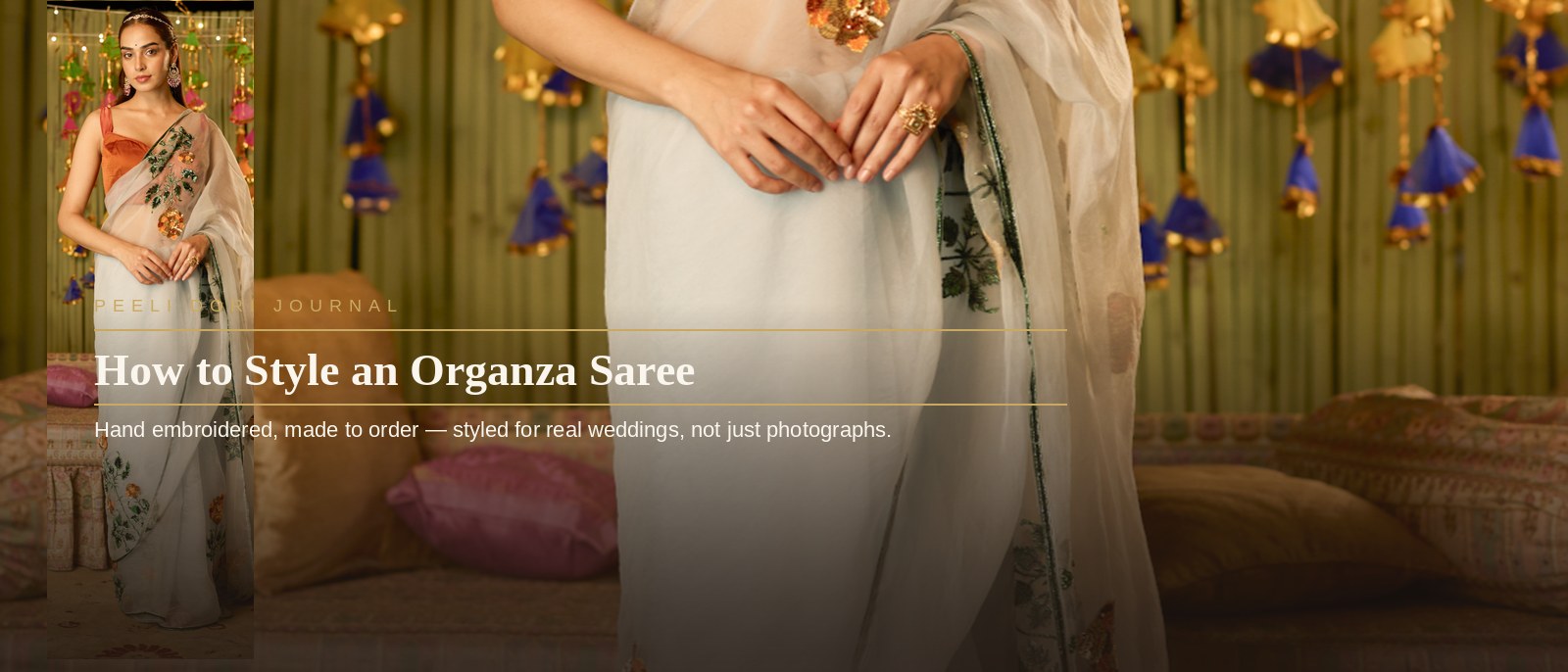
Organza behaves differently from every other saree fabric, and most styling advice is written for the soft ones. It holds a pleat instead of falling into one. It stands a little away from the body instead of clinging to it. It is light enough to move in a breeze and sheer enough to show every decision you made underneath it. Style it as the fabric it is and it does most of the work for you; style it like a georgette and it will not.
Start from the fabric, not from the photograph
The first thing people get wrong with an saree/silk-organza-saree.html" style="color:#8a6a3a;text-decoration:underline;">organza saree is draping it the way they drape everything else. A soft saree falls, pools at the feet and finds its own shape. Organza does not find a shape — it keeps the one you set. Whatever you settle at the waist, whether a pleat edge or a pallu standing off the shoulder, is still there when you take the piece off at two in the morning. That is exactly why this fabric photographs so well: a crisp drape looks planned, because it is.
It is also thin and faintly reflective, which changes how it reads in different light. In daylight it looks airy, almost pale. By evening under warm lamps it goes quiet and the embroidery does the talking instead of the colour. If the same organza saree is going to a daytime function and then to a reception, plan two ways of styling it rather than one — the light will not do you the same favour twice.
And it is sheer. No organza saree dresses itself. Most of the styling is decided before you put the saree on: what sits underneath it and how much sits on top. Get those two right and the drape is easy.
What you put underneath is the styling
On organza the petticoat is not an undergarment, it is part of the outfit. Match it to the base of the saree rather than to the border, and keep it matte. A dark petticoat under a light organza shows as a grey shadow through the pleats the moment you step into daylight, and a shiny one shows as a streak running the length of the drape. Some of our organza pieces are built on ivory, some on gulabi, maroon or red — a petticoat in the same family reads as the saree getting slightly denser, which is the effect you want.
The blouse needs lining for the same reason. Organza at the bodice that is not lined leaves you holding a dupatta in place all evening, and no drape survives that. Since we cut the blouse to your measurements, it is a decision we make together at the fitting stage rather than something you discover on the day.
Wear a slip, not a shaping layer. Organza is built to sit slightly away from the body, and foundation garments that compress do not disappear under it — the fabric calmly outlines whatever lines they create. If you want a smoother line, take a fuller petticoat and keep the fit easy underneath.
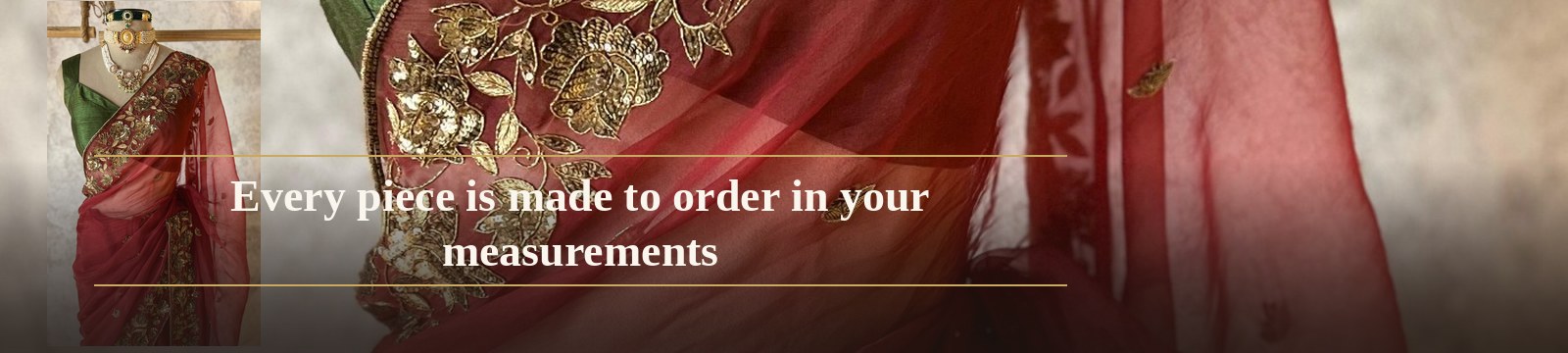
Pleats, the pallu and that crisp edge
Pleats are where organza pays you back. Because the fabric holds a fold, five to seven pleats set properly in the morning will still be five to seven pleats at midnight. It is the one fabric that does not need re-adjusting between the photographs.
It is also where organza punishes you. There is nothing in the fabric that will soften a wobble as the evening goes on, so set the pleats in front of a mirror, one at a time, lining up the top edge before you fold the next.
Pleat count is a silhouette decision, not a rule. Five to seven reads formal and traditional; a slightly narrower fan keeps a light fabric from looking bulky on a shorter frame; if you are tall or the border is unusually heavy, fewer and deeper pleats stop the hem pulling the whole drape out of shape.
The pallu also behaves differently on organza. On a soft saree an open pallu folds around your arm; on organza it stands away from the shoulder, which looks wonderful in a photograph and less wonderful on a dance floor. Pin it narrow and pleated for the ceremony, and open it once the formal photographs are done. One more thing: do not put a second layer over a standing pallu. A sheer veil or a second dupatta over organza will fight it all evening — pick one and leave the other at home.
The blouse and the jewellery, kept in scale
Organza is light with a rigid edge, so very heavy jewellery behaves oddly against it. A heavy neckpiece does not simply sit on the blouse — you can see it pulling the drape at the shoulder. One strong piece and quieter everything else does more on this fabric than a full set. Earrings and a bracelet are usually enough.
Keep the blouse neckline clean where the pallu falls. If the pallu carries dense hand embroidery, a neckline crowded with work of its own competes with it in every single photograph.
A contrast blouse pairs unusually well with organza, and best of all when the second fabric catches light differently. A satin or raw-silk blouse beside a sheer organza body reads as a considered pairing rather than a set that arrived in a box. Pick the second shade from inside the saree's own embroidery rather than from outside it, and it will look deliberate.
Sleeves are worth a thought before the function rather than on the morning. Elbow-length sleeves on a hand-embroidered blouse photograph well at a wedding and give you somewhere to hide a pin. For an evening function, sleeveless or cap sleeves under a heavier pallu keep the line clean.
Six organza sarees, priced as listed
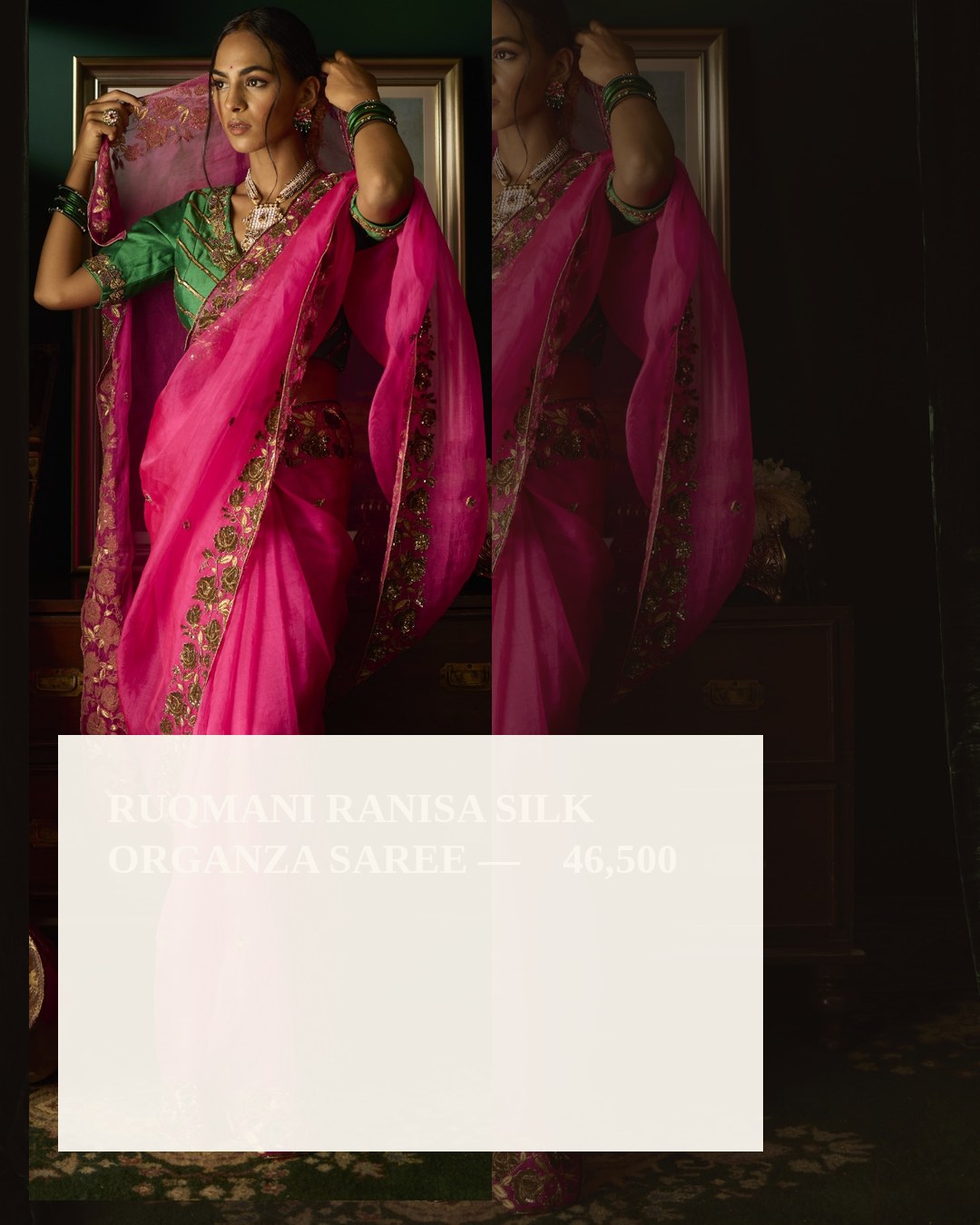
If the wedding is already in the diary, these are six pieces from our organza rail, between ₹46,500 and ₹59,500. Every price below is the price of the piece rather than a starting figure, and each is hand embroidered, made to order and cut to your measurements. The red and the deeper maroons hold up under evening light; the gulabi pinks and the lighter Noor Bahar are the ones for a daytime function, where the fabric has to read light. If you are not sure which will carry the function you are dressing for, send us the venue and the time of day and we will tell you which of these we would pick.
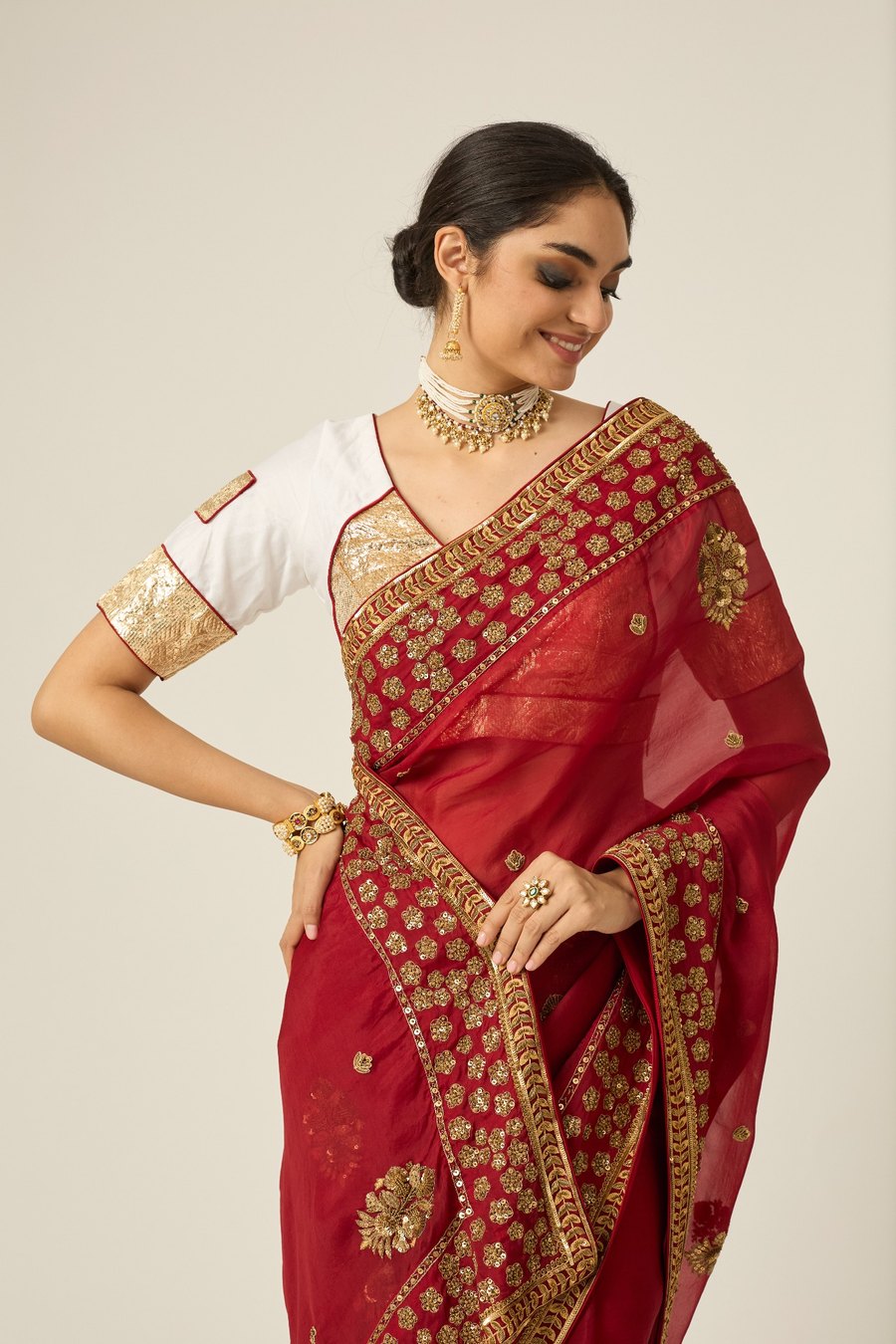
₹59,500
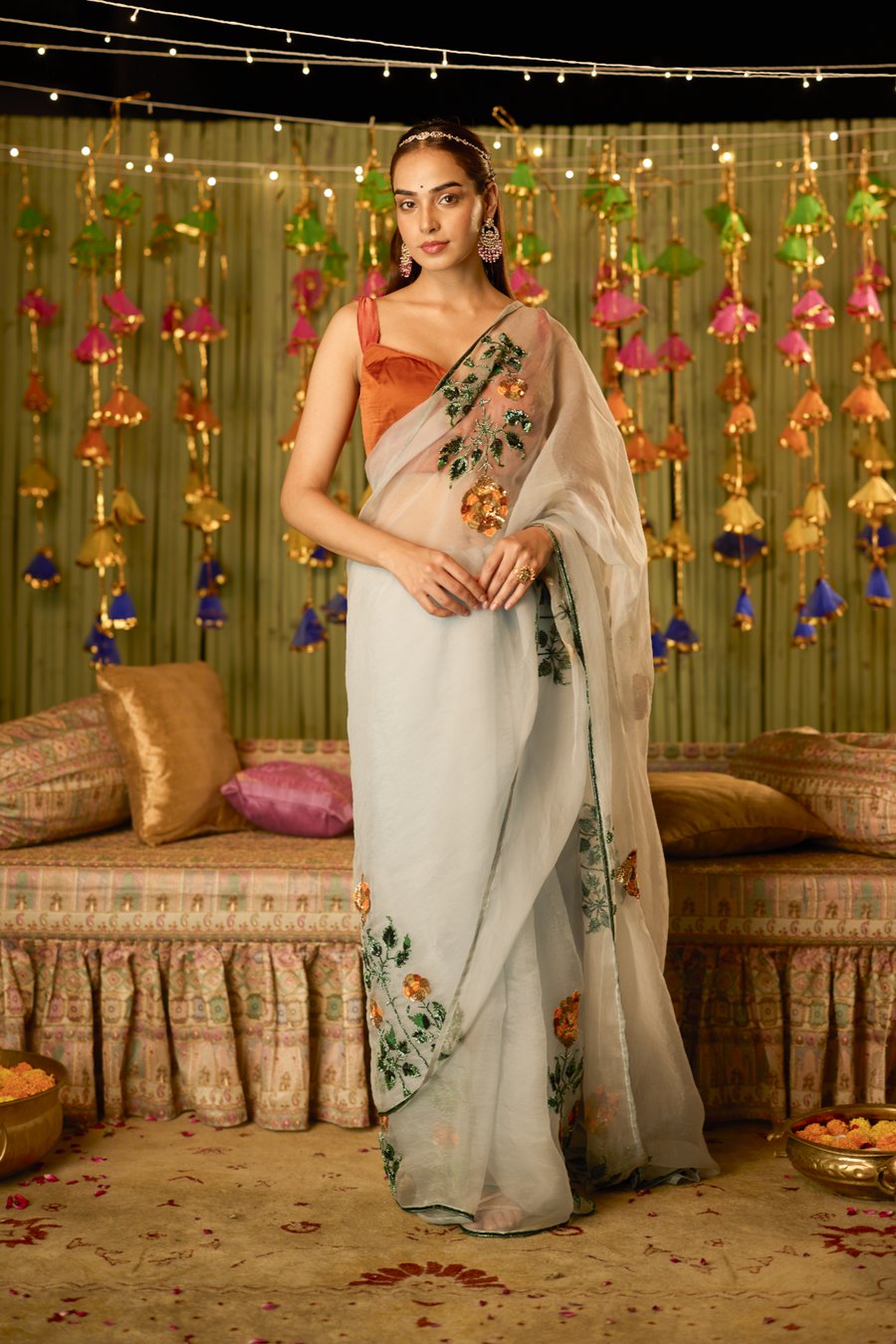
₹48,500
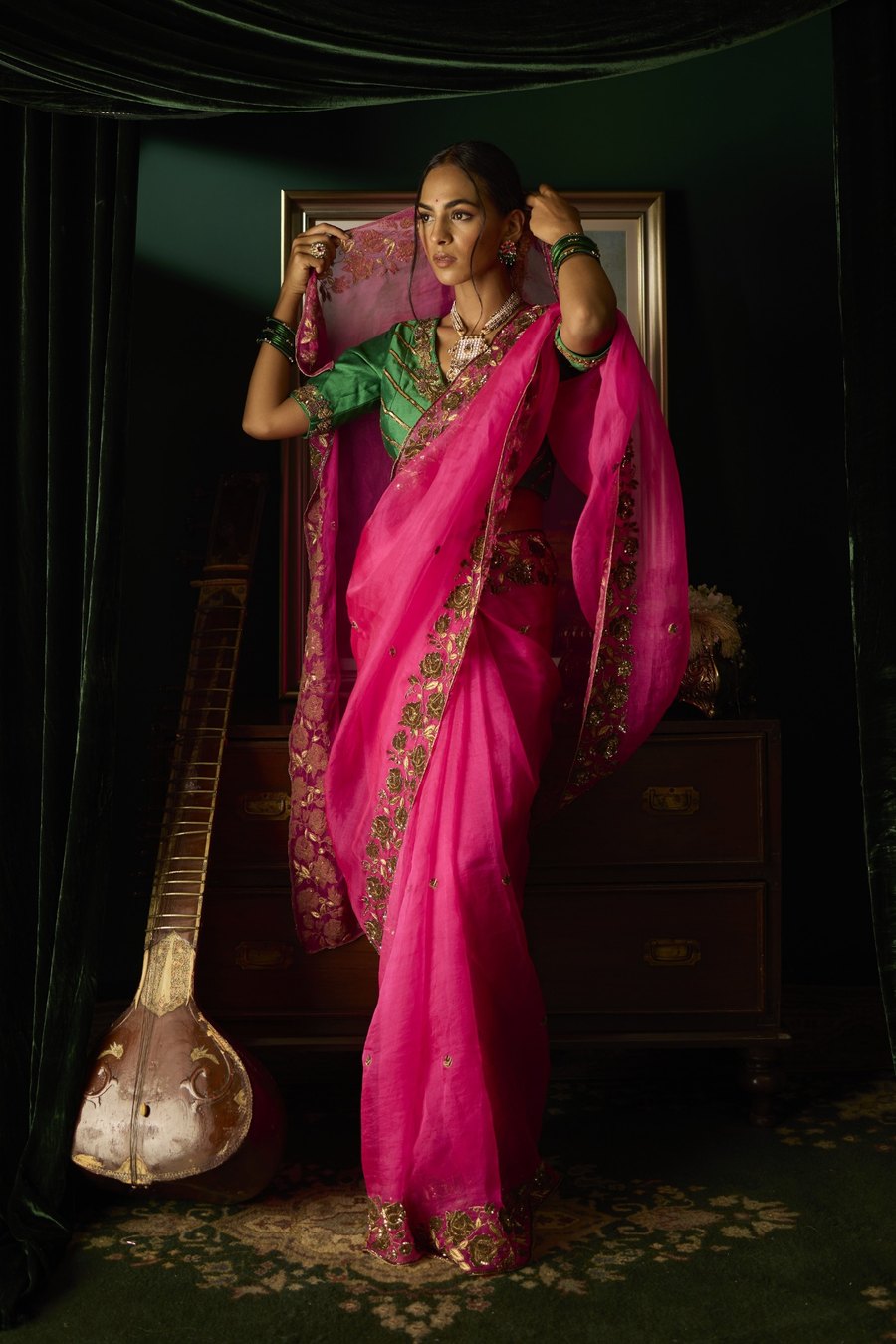
₹46,500
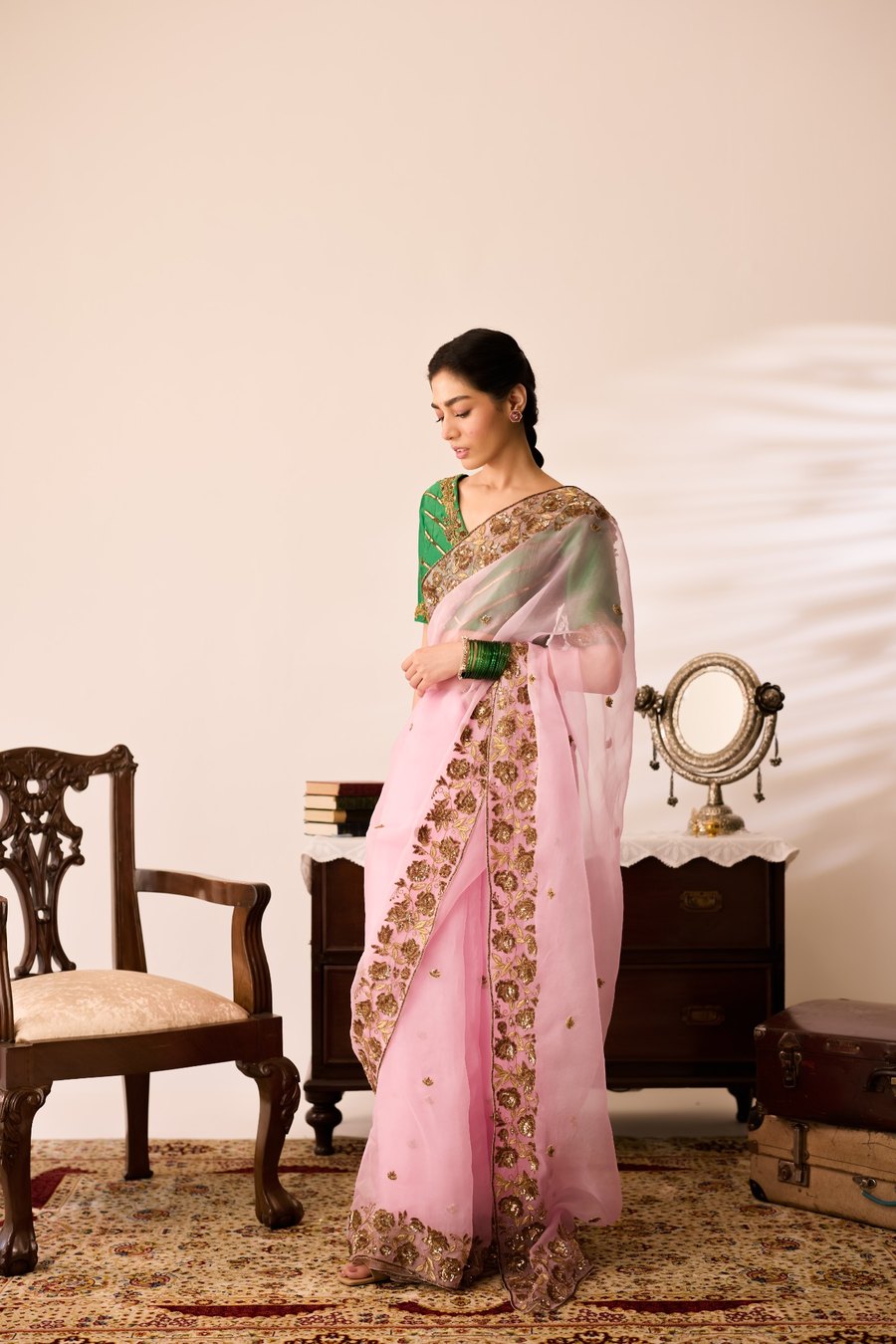
₹46,500
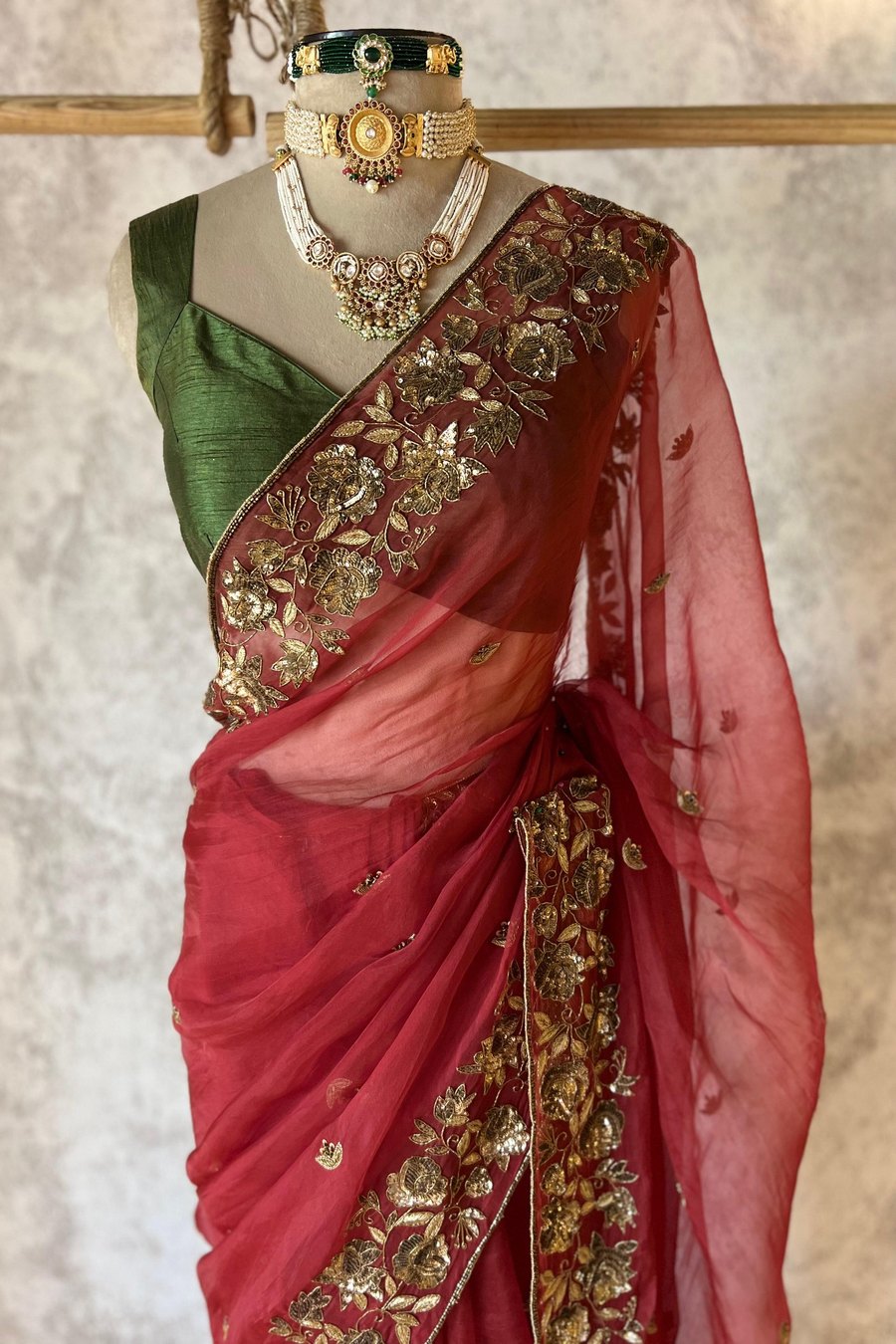
₹46,500
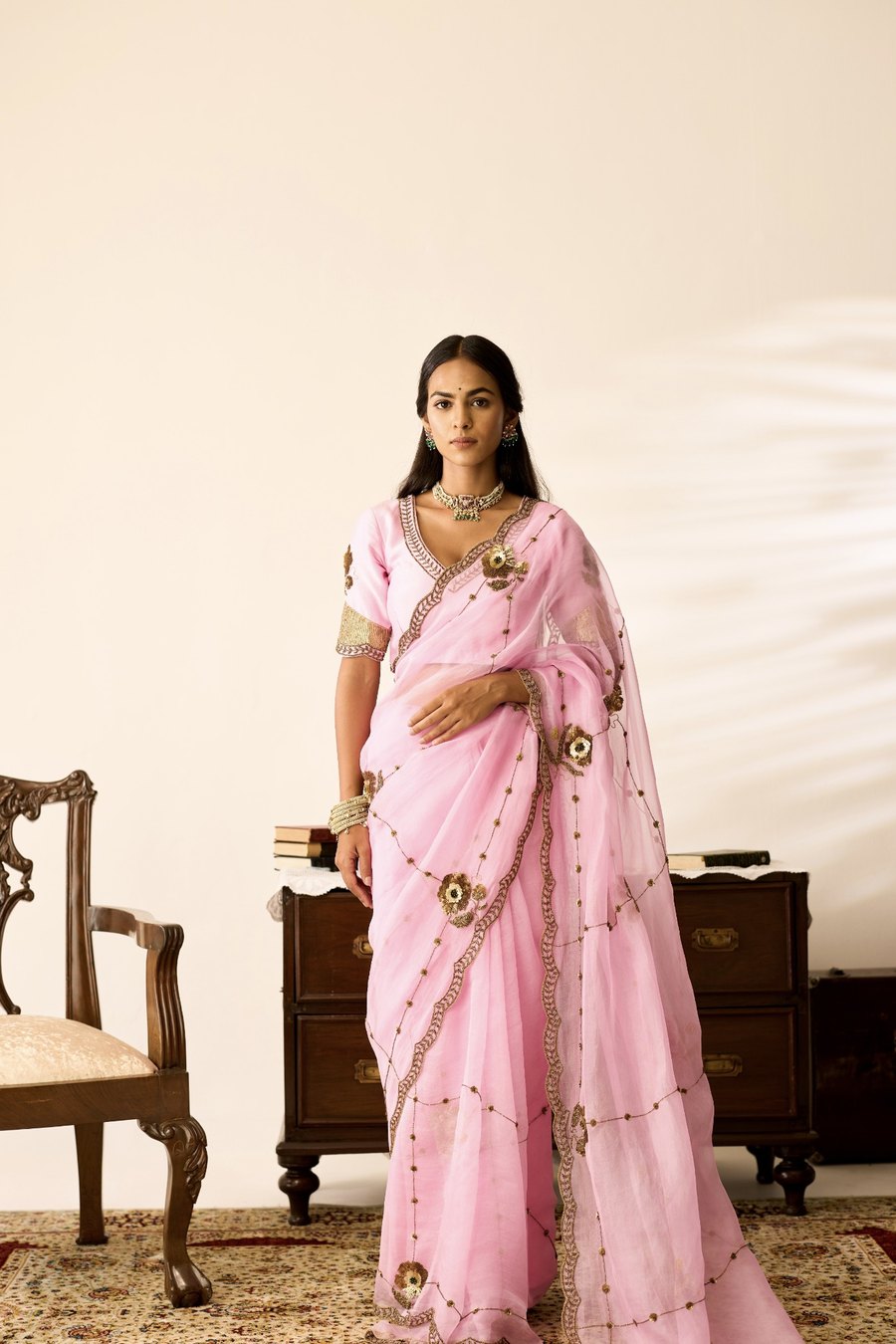
₹46,500
Dress it for the function, then put it away properly
Travelling with organza: roll it in muslin into a hand-carry and keep it out of checked luggage. If the function is in another city, take the pleats out before you travel and re-pleat on arrival — organza pressed flat into a suitcase for a day is a fight you will lose on the morning of the wedding.
Pressing: a cool iron through a muslin cloth, from the reverse wherever you can, and never directly onto raised embroidery. A flattened metal thread does not come back. If a thread has lifted, do not pull it — send us a photograph and we will tell you how we would secure it.
Storage: muslin rather than plastic, folded flat with the worked border inside, on a dark shelf. Organza creases sharply, so refold it once a year along different lines and no single crease ever becomes permanent. In the damp months a cloth pouch of silica gel in the corner of the box helps, and keep naphthalene away from the work.
If the piece needs its blouse re-cut or its pleats reset, or you would rather talk the drape through before the function, our doors are in Shahpur Jat in New Delhi and in Dehradun, and styling help and fit checks happen on WhatsApp. Shipping within India is free above ₹10,000, and there is an international shipping offer on the site above ₹49,000.
Frequently asked
What should I wear under an organza saree?
A matte petticoat matched to the base of the saree rather than to the border, a lined blouse, and a comfortable slip instead of anything that compresses. Organza is sheer, so a dark or shiny petticoat shows straight through the pleats in daylight, while a petticoat in the same colour family reads as the saree getting slightly denser.
How do I style an organza saree for a wedding?
Keep the scale calm and let the fabric do the work. Pin the pallu narrow and pleated for the ceremony and open it for the photographs afterwards, keep the blouse neckline clean where the pallu falls, and choose one strong piece of jewellery rather than a full set — organza is light, so a heavy neckpiece visibly pulls the drape at the shoulder.
How do I stop an organza saree looking see-through?
Three things: a petticoat in the same family as the saree's base colour, a lined blouse, and no shiny layers underneath. Test it in daylight before the function, standing near a window — that is where a sheer fabric tells the truth, not in a mirror in a lit room.
Can I wear an organza saree in the daytime?
Yes — it is arguably at its best in daylight, when the sheerness reads as light and airy rather than showing you the room's lighting. Keep the denser hand embroidery and the deeper colours for evening functions, and let the lighter pieces do the day.
How do I press and store an organza saree?
Press through a muslin cloth on a cool setting and work from the reverse, never straight onto raised embroidery. Store it folded in muslin rather than plastic, flat and out of direct sun, and refold it along different lines once a year — organza creases sharply, so a fold line that never moves becomes permanent.
Explore more: saree · tissue silk sarees — or message us on WhatsApp for styling help.

The information below is required for social login
Sign In
Create New Account