

Two sarees can both carry the words 'hand embroidered' and sit twenty thousand rupees apart. The phrase describes a method, not a standard. What separates them is which technique was used, how much of the cloth carries it, and what the base fabric is doing und
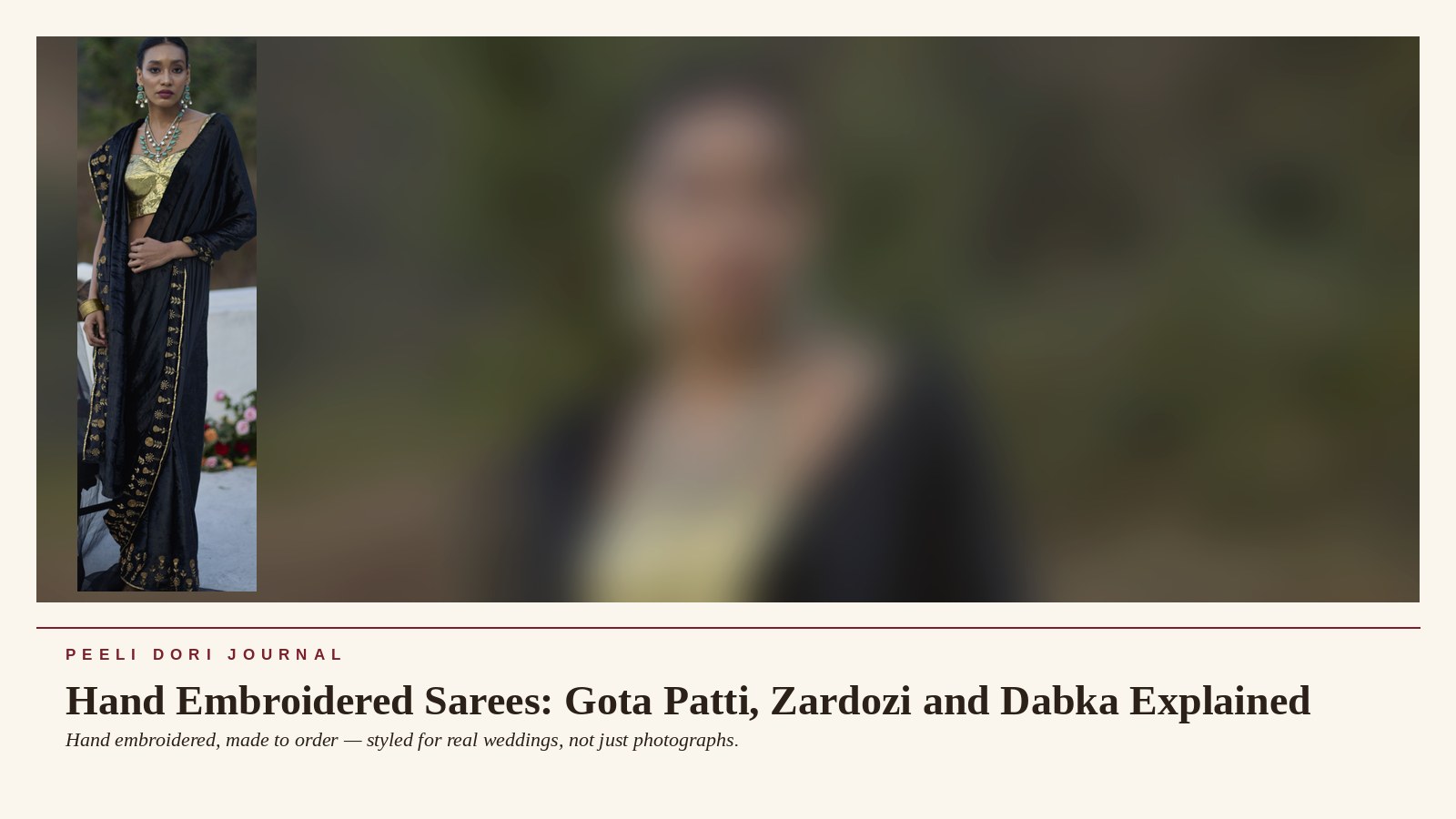
Two sarees can both carry the words 'hand embroidered' and sit twenty thousand rupees apart. The phrase describes a method, not a standard. What separates them is which technique was used, how much of the cloth carries it, and what the base fabric is doing underneath — so here is the vocabulary of the work, in the order you are most likely to meet it.
Why this matters before the wedding, not after
The question we are asked most often at the store is not which saree to buy. It is: why is this one so much more than that one, when both are hand embroidered? Fair question, and the honest answer is that hand embroidery covers everything from a single worked vine along one edge to a body covered in raised metal. One is a week of one person's work. The other is a small team on a frame for most of a month. They are not the same purchase, and they are not for the same evening.
For a wedding this becomes very practical. A saree that will be photographed under flash at an evening reception and then again in daylight at a mehendi the next morning is being asked to perform twice, in two different kinds of light. Metal work answers evening photographs: it throws light back and holds the shape of the motif from across a hall. Thread work answers daylight, because it is matte, quieter, and does not turn into glare at three in the afternoon.
So the useful thing to know is not the brand of the work but the family it belongs to. Once you can name what is on the cloth, the price differences stop looking arbitrary — and the piece you take home is the one that fits the function you actually bought it for.
Gota patti, zardozi, dabka, resham: the work in plain words
Gota patti is appliqué rather than thread. Narrow strips of gold or silver ribbon are cut and folded into leaves, scallops and borders, then stitched down so the ribbon sits almost flat on the surface. Because the metal is a ribbon lying on the cloth instead of a thread drawn through it, gota patti reads as a large, clear shape from a distance — it is the work that still makes sense from the last row of the hall. It is also the lightest of the metal techniques, which is why you find it on a light base where the fabric can carry the appliqué without dragging.
Resham is silk thread, the softest and oldest member of the family. Worked in colour, it sits in the cloth rather than on top of it, which is why it shifts in tone as the fabric moves and never flashes. Choose resham when you want a piece that can go to a daytime function and then to a quiet dinner without announcing itself twice. On a sheer fabric it also helps, because it fills the surface with colour rather than with metal.
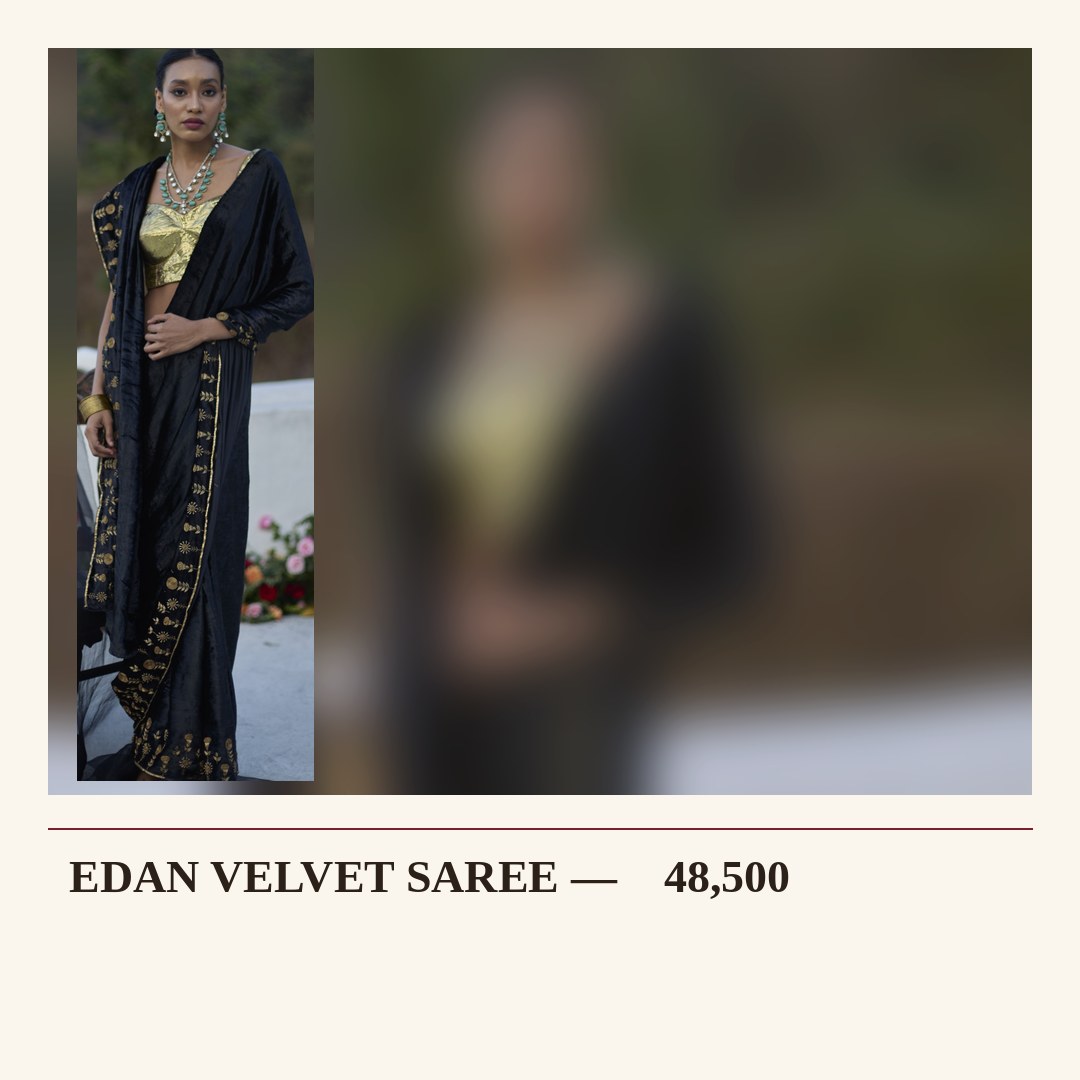
Zardozi is metal wire worked with a needle, and it is raised — you can feel it with a fingertip and see it cast small shadows of its own. Done densely, it is heavy, and a heavy piece behaves like a heavier garment: it falls straight, stays where you place it, and does not flutter. On velvet the wire disappears into the pile and comes back as a deep glow rather than a sparkle, which is a completely different look from the same work on a sheer base.
Dabka is the fine cousin: thin wire coiled into small springs and stitched down one at a time, usually for a border, a vine or a field of texture. Each coil stands up on its own, so dabka gives a bumpy, almost beaded relief, and it is what makes a plain base fabric look busy without bringing in a second colour.
Aari is not a pattern at all but a tool — a hooked needle worked from the underside of the cloth, which is how a great deal of the work above is actually made. When a description mentions aari work, it is telling you about the hand that made it rather than about the look of the result. Most real pieces are mixtures: a resham vine, a gota border and a dabka fill can live on one body, and then the only honest way to price it is to look at how much of the saree is worked.
Density, base fabric, and the rest of the price
Once you can name the technique, look at how much of the saree carries it. A worked pallu and border on a plain body is a very different buy from a piece where the field itself is covered. The second takes longer, uses more material and is heavier to wear — wonderful through an evening function, tiring if you are standing through a long ceremony. Ask which one you are being shown, because the answer changes what the piece is for.
The base matters as much as the work on it. Organza sarees are sheer and slightly reflective, so they show every stitch, which makes them a demanding base and, when the work is good, the most striking one. Georgette falls soft and forgives the reverse of the work. Velvet carries raised metal at a depth nothing else quite matches. The same embroidery on three bases gives three completely different sarees, with three different amounts of fabric under it.
The blouse is the part most often left out of the comparison. Because ours are cut to your measurements and the pieces are made to order rather than pulled off a shelf, the blouse is where a look is finished or not. If the pallu is heavily worked, keep the blouse calm and let the drape speak; if the body is plain, the blouse can carry the interest and hand-embroidered blouses become the easiest upgrade in the whole outfit.
On shape, briefly: dense metal work on velvet or silk falls in a straight line and reads formal, which suits a taller frame or anyone who wants a clean vertical. Gota patti on the pallu with a light body is easier to carry on a smaller frame and far easier to move in, which is what we usually suggest for a sangeet. Neither is a rule, but both are worth knowing before you try five pieces on in a fitting room.
Six pieces from our rail, priced as listed
These are six pieces from our own collection, between ₹46,500 and ₹59,500. That band is deliberate: across the catalogue our hand embroidered sarees start at ₹10,000, and the six below are the worked end of that range — metal, on bases that can hold it. Every price is the price of the piece and not a starting figure, each is made to order and cut to your measurements, and each is worked by hand rather than printed. The Myra in red is the most densely worked of the six; the Edan velvet is the heaviest in the hand; the Noor Bahar, Gulbahar and Ruqmani are organzas where the sheerness is doing half the work. If you are choosing between two, send us the function, the time of day and the city, and we will tell you which one we would take.
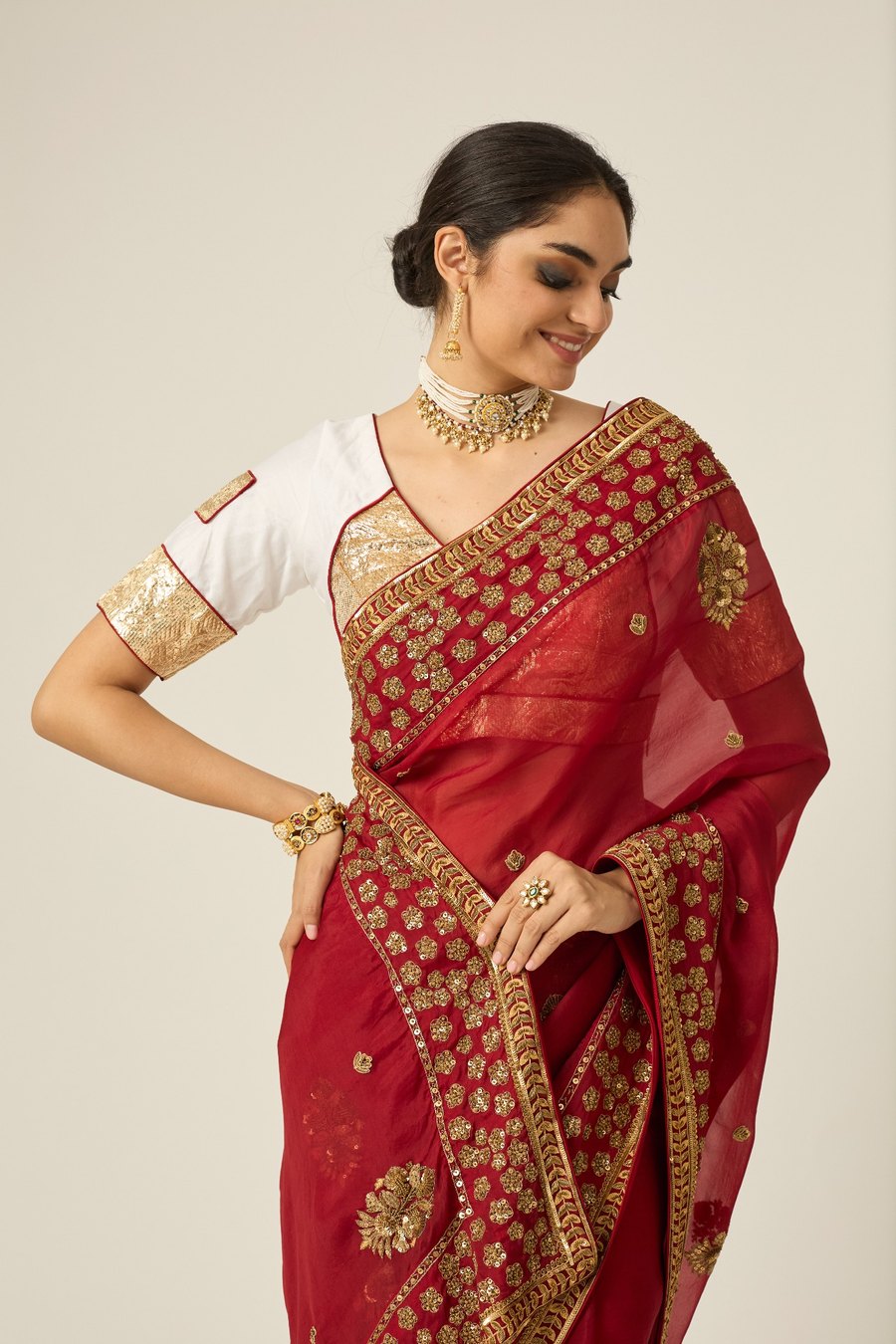
₹59,500
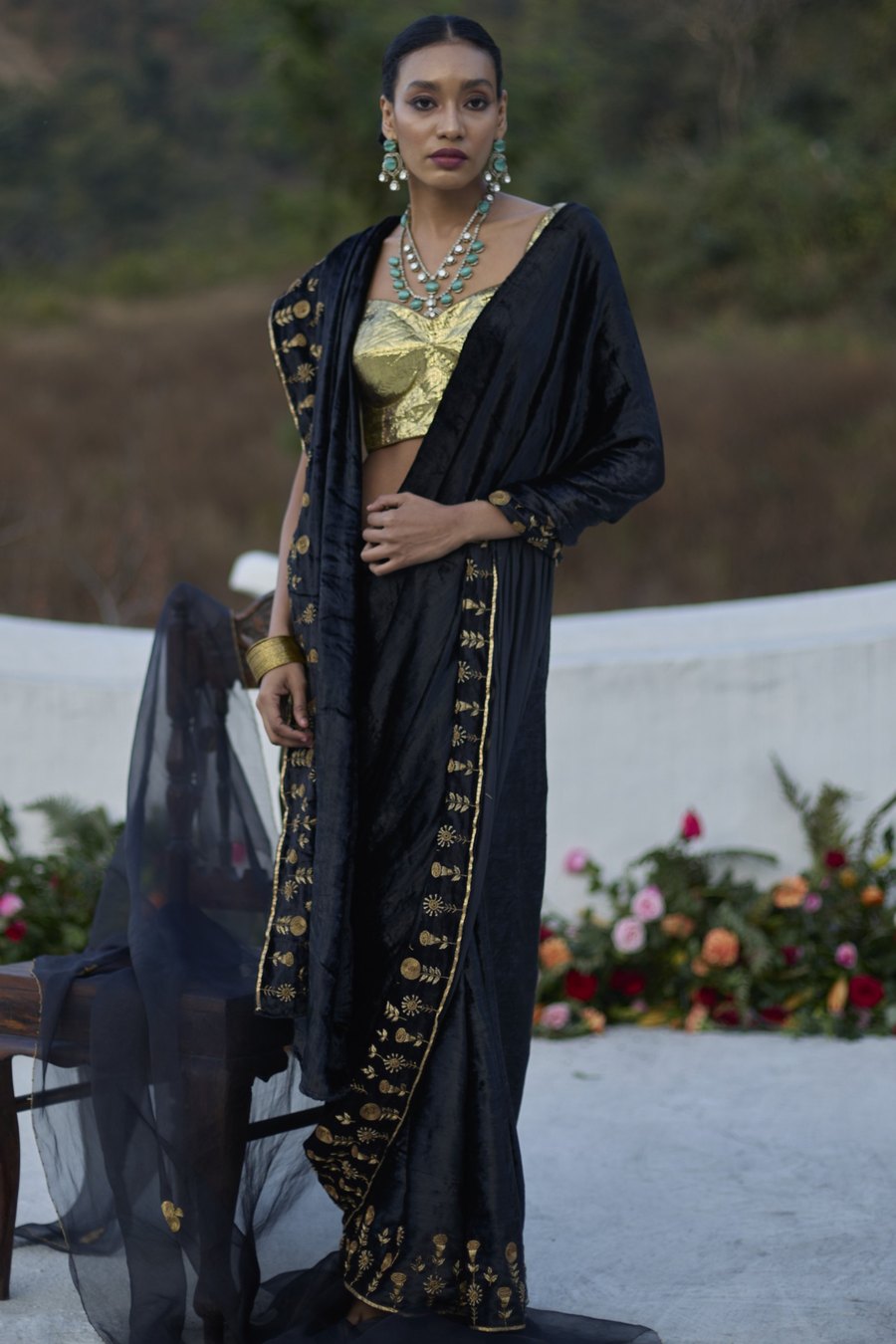
₹48,500
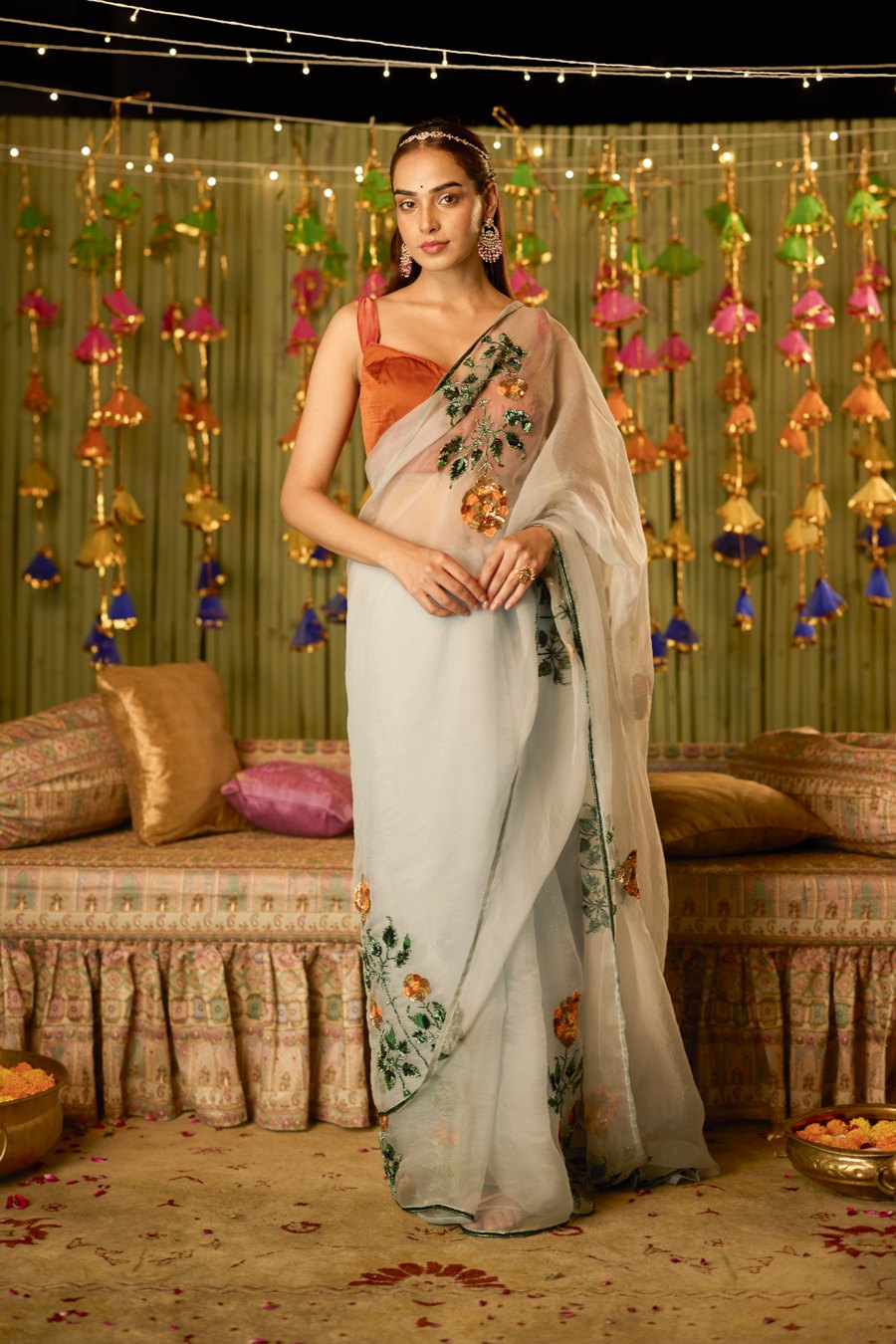
₹48,500
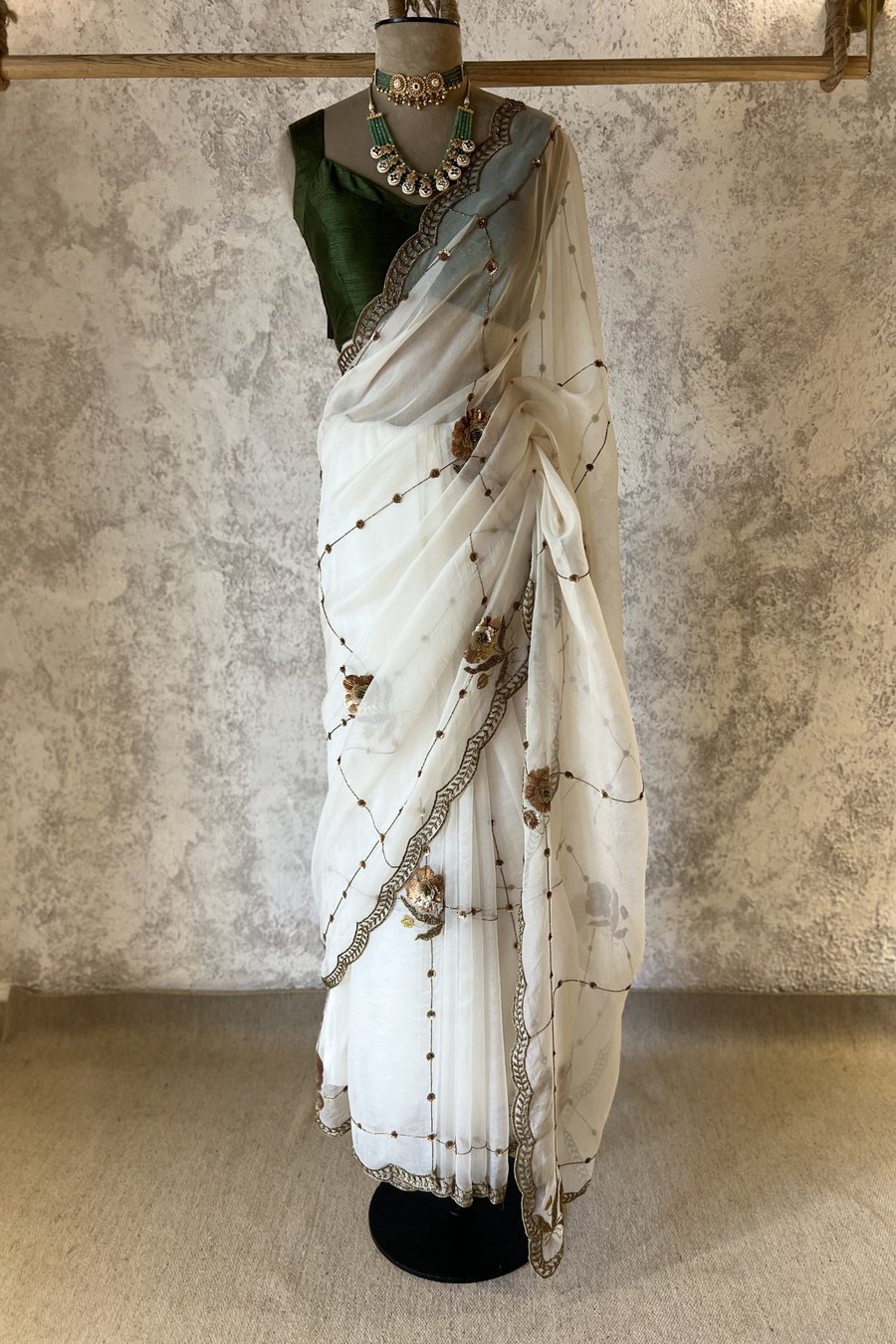
₹46,500
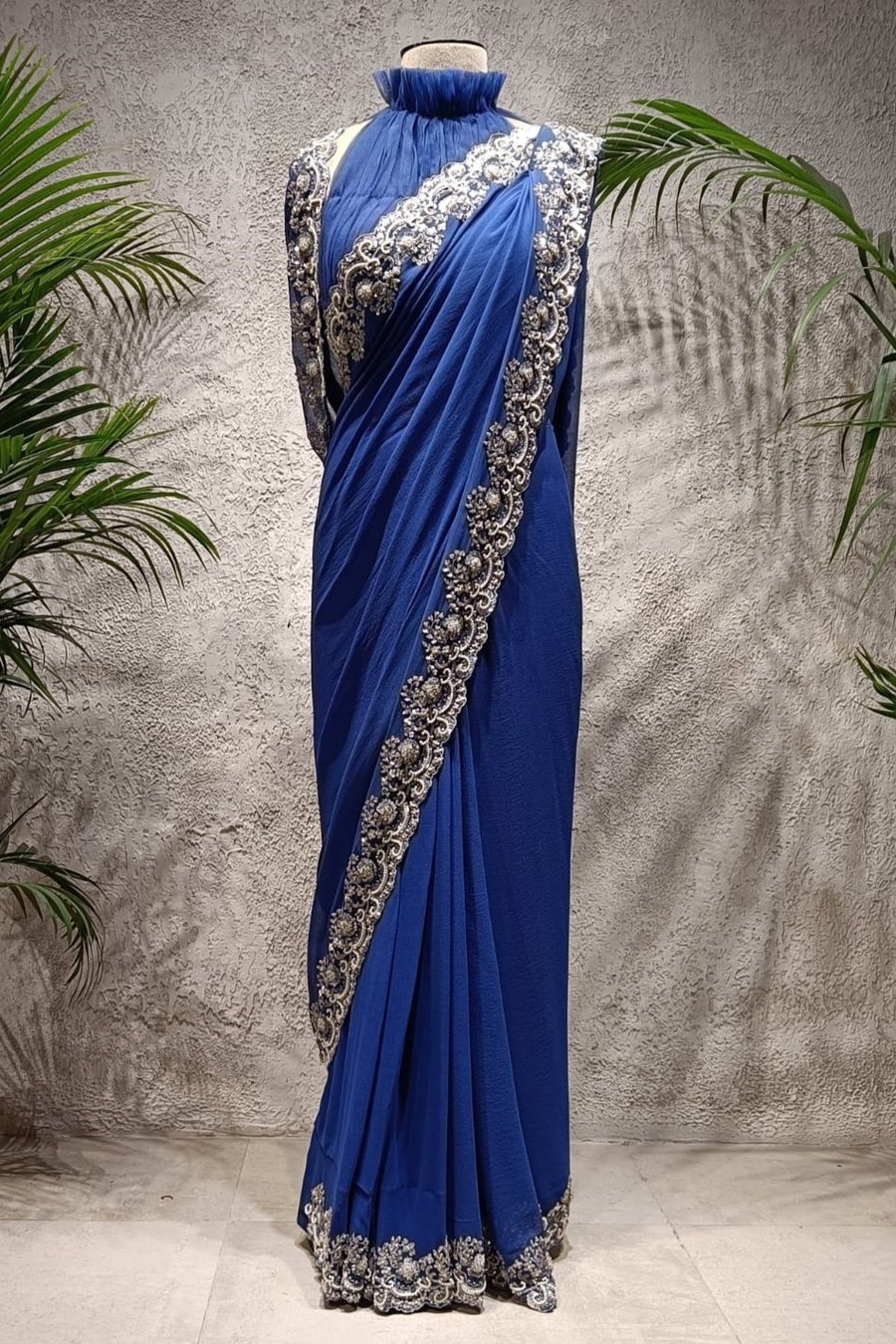
₹46,500
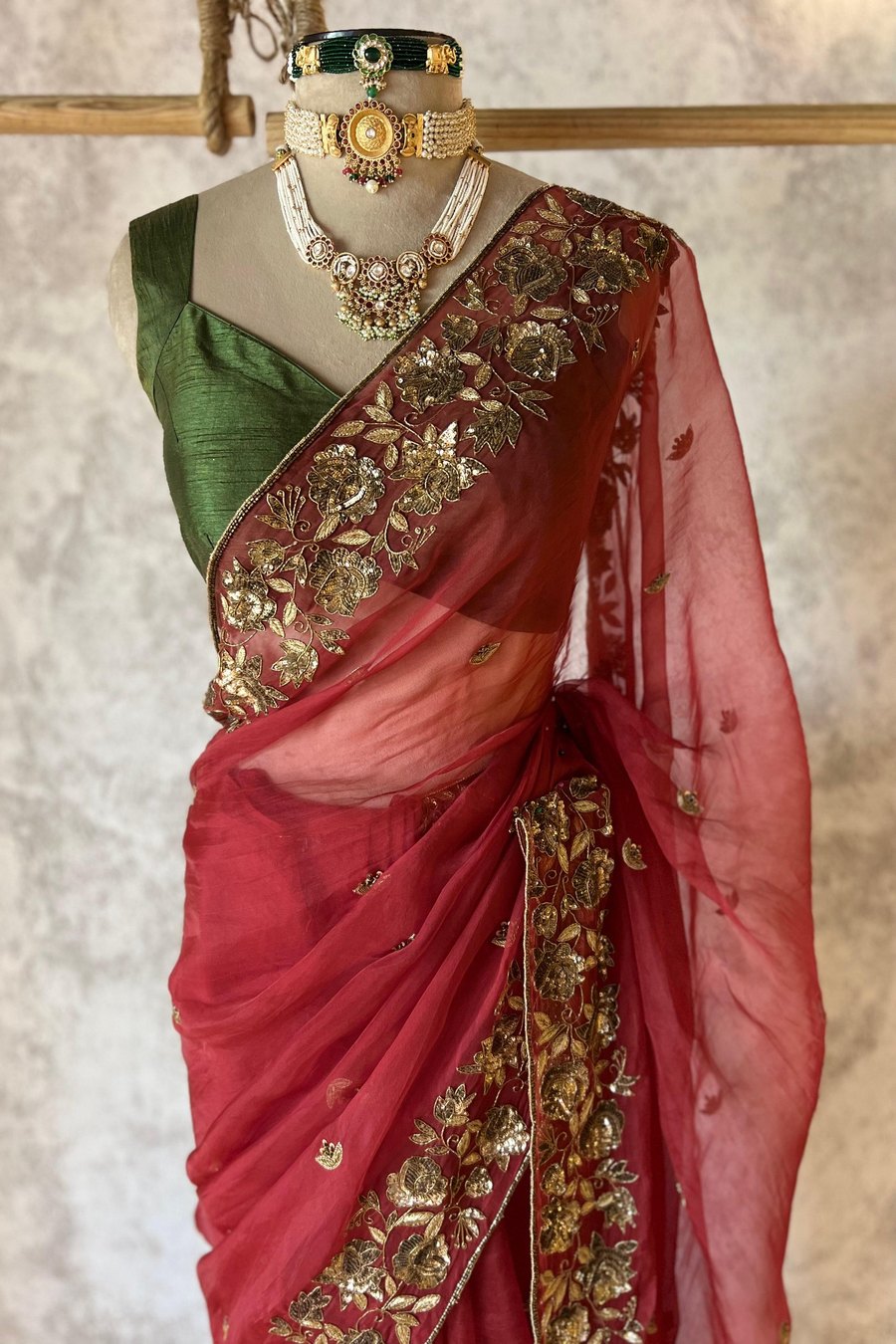
₹46,500
How to check the work when it arrives, and how to keep it
Turn the saree over. Hand work is not tidy underneath — you will see knots, short jumps of thread and slightly uneven stitch spacing, because a person was making decisions as she worked. A machine is unnaturally even on both sides, and a print has almost no reverse to speak of. Then run a thumb across the work: metal that has been stitched down sits proud of the cloth, while a printed sheen is flat and cool. Last, hold it near a window and tilt it. Gota and zardozi change as they move; ink does not.
After that, treat the piece like the metal it contains. Store it in muslin rather than plastic, folded flat with the worked border facing in, and refold along different lines once a year so no single fold ever becomes permanent. Press through a cloth on a cool setting and from the reverse, never directly onto raised wire — flattened metal does not come back. If a thread lifts, do not pull it: photograph it and send it to us on WhatsApp and we will tell you how we would secure it. Shipping within India is free above ₹10,000, and there is an international shipping offer on the site above ₹49,000.
Frequently asked
What is the difference between gota patti and zardozi?
Gota patti is ribbon — strips of gold or silver metal folded into shapes and stitched flat onto the cloth, so it reads as a large clear motif from a distance and stays light. Zardozi is wire worked with a needle into raised embroidery, which feels heavier in the hand, casts its own small shadows and falls straighter when worn. Border-led pieces are usually gota; heavily worked bodies are usually zardozi.
How can I tell whether a saree is hand embroidered?
Look at the reverse. Hand work shows knots, short thread jumps and slightly irregular stitch spacing; machine work is evenly identical on both sides and a print has no real reverse at all. Then feel it — stitched metal sits proud of the cloth and a printed sheen is flat — and tilt the piece near a window, because metal work changes as it moves and ink does not.
Why is one hand embroidered saree so much more expensive than another?
Three things: the technique, how much of the saree carries it, and the base fabric. A worked border costs differently from a worked field, resham thread costs differently from metal wire, and a sheer organza base costs differently from velvet. Ask which technique is used and how much of the surface is worked — those two answers explain almost every price gap you will see.
How much should a hand embroidered saree cost?
In our own catalogue they start at ₹10,000 and the most densely worked pieces run to ₹59,500; the six in this guide sit between ₹46,500 and ₹59,500. If a price looks low for hand work, ask what technique it is and how much of the saree is actually worked rather than trusting the phrase on the label.
Do you make these in custom sizing?
Yes — every piece here is made to order and the blouse is cut to your measurements. If you are between two sizes, or you want a different sleeve length or neckline to suit the work on the pallu, tell us at the fitting stage and we will work it out with you on WhatsApp before the piece is cut.
Explore more: saree · designer hand embroidered blouse — or message us on WhatsApp for styling help.

The information below is required for social login
Sign In
Create New Account