

Brides give the saree months and the rest of the outfit an afternoon, and the rest of the outfit is what the photographs remember. This is how we build a whole look around a wedding saree: the blouse, the second drape, the jewellery, and the order we would put
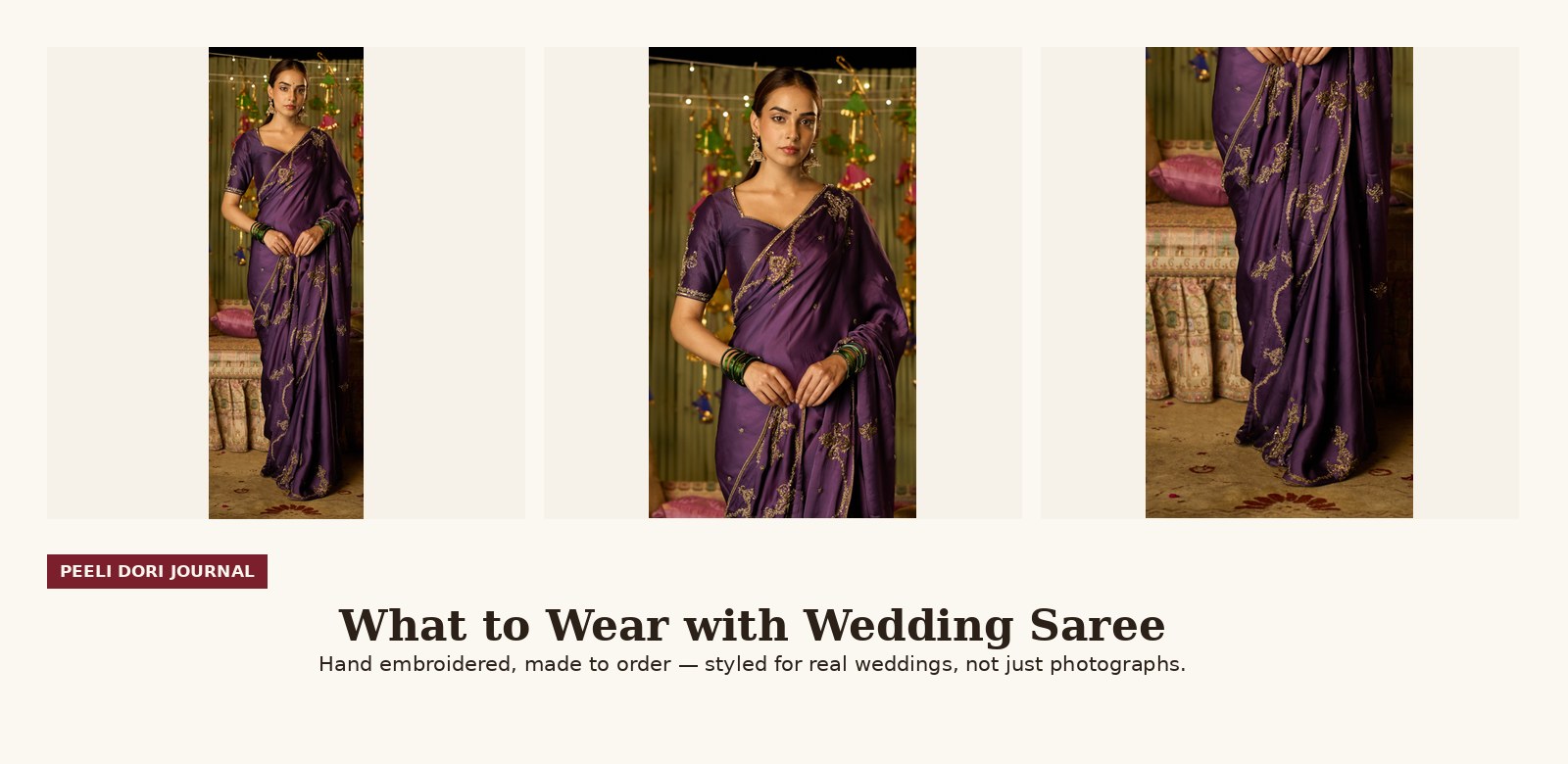
Brides give the saree months and the rest of the outfit an afternoon, and the rest of the outfit is what the photographs remember. This is how we build a whole look around a wedding saree: the blouse, the second drape, the jewellery, and the order we would put it all on.
The outfit is decided everywhere except the saree
When a client sends us a photograph of a saree she has fallen for, we usually ask for two more: the blouse she means to wear with it, and the jewellery. Almost every time, the saree is not the problem. Something else in the picture is quietly pulling it down — a blouse in a different register, jewellery in the wrong metal, or a second drape that was added because a dupatta felt expected rather than because the outfit wanted one.
A wedding saree is the most expensive and most photographed thing most of our clients own. It is also the one piece they buy deliberately, and then assemble the rest of the outfit around at home, at eleven at night, out of a drawer. So the useful way to think about it is this: the saree sets the register, and everything you wear with it either holds that register or breaks it. A well-worked organza under a busy beaded blouse reads like a cheaper saree, because the eye has two loud things to look at and nowhere to rest. The same saree with a plain raw silk blouse and one pair of earrings reads like the money you actually spent.
This is the order we would plan in. The saree first, because you already know which one. Then the blouse. Then the jewellery. The second drape comes last and is often optional. Get the first three right and the fourth looks after itself.
The blouse: plan it before you buy anything else
The blouse is the only part of a saree outfit that is cut and stitched, which makes it the only part you can change without changing the saree. Ours are made to order and cut to your measurements, so we can settle the neckline, the sleeve and the blouse fabric knowing exactly where the worked part of the saree sits. That is the whole trick: read the saree first, then decide what the blouse is allowed to do.
If the pallu is the star — as it is on the Myra in red at the top of our bridal rail — keep the blouse calm. Raw silk, tissue or a matte satin in a tone lifted out of the work, a clean neckline, sleeves that end where you want the eye to stop. Let the metal or the thread do the talking; the blouse is there to hold it up.
If the body of the saree is quiet, the blouse becomes the free upgrade. This is where our hand embroidered blouses earn their place: a worked blouse under a plain organza adds a second texture to the outfit without adding a second colour, and it costs a fraction of what moving up a price band in the saree would cost you.
Two practical notes we give everyone at the fitting stage. For a sheer saree, the blouse and the lining decide how much of the work shows from the front, so tell us what you plan to wear underneath and we will work the lining out with you rather than guessing. And if you are between sizes, or you want a different sleeve length because of the jewellery you have in mind, say so before the piece is cut rather than after. We do fit checks on WhatsApp, so a photograph with a tape measure across the shoulder and the underbust is usually enough to settle a neckline before we start.
The second drape, and when it earns its place
A dupatta worn over a saree is not the same thing as the saree's own pallu. It is a second drape, and there are three situations where it genuinely helps: a daytime haldi or mehendi where the sun is unforgiving and you want a cover over one shoulder; a December or January wedding where the ceremony runs past midnight and an extra layer is the difference between staying to the end and leaving early; and a long ceremony where you want something to hold in your hands.
What it should not do is compete. Over a worked saree, take a sheer one — organza or a fine silk — in one colour already present in the work, with a simple border. Over a plain saree the dupatta can carry the interest instead, and that is how you get two outfits out of one piece: plain body and a statement dupatta for the mehendi, the same saree with a worked blouse for the wedding.
Ours sit alongside the sarees in the same lines, in the same price band as a good blouse, and they are the cheapest way to make one wedding saree behave like two. If you are choosing between a second blouse and a second drape, and your functions are more than a week apart, take the drape.
Jewellery: match the metal to the work, not to the trend
The most common mistake we see is jewellery fighting the embroidery. Match the metal on the cloth, not the metal you happen to own most of. Gota patti and zardozi are metal laid on the surface; if the saree is metal-worked, the jewellery should either repeat that metal or step well away from it — pearls, emeralds, a plain gold chain. What you do not want is rose gold earrings, antique gold bangles and a silver-worked pallu, which is three metals and one outfit.
On a thread-worked saree the jewellery can carry more, because the cloth is matte and quiet. That is the outfit where a heavier necklace works, and where a maang tikka does not look like too much.
Then the hour decides. Daylight ceremonies take pearls, emeralds and meenakari, anything that reads soft; evening functions take the metal and the stones that throw light back. On the neckline, the rule is simple: if the pallu crosses high on one shoulder, skip the necklace and put that weight into the ears. And if the earrings are heavy, plan the hair up or plan a support, because a heavy earring on a loose ear will be in your hand by the second song.
One statement, always. Earrings or necklace, not both at full volume. Bangles are the one place you can be generous without unbalancing the look, and the wrist is where a wedding outfit is allowed to be extravagant.
Six pieces from our bridal rail, priced as listed
All six below sit between ₹39,500 and ₹59,500, are made to order, cut to your measurements and worked by hand. Read them as six different accessory problems rather than six colours.
The Myra in red organza at ₹59,500 is the piece to keep everything else off — plain blouse, hair up, one pair of earrings, no second drape. With the Myra, the outfit is finished when you stop adding. The Lauret, a red silk satin at ₹39,500, is the other end of the reds and the easiest to dress up, because satin gives jewellery something to sit against; this is the saree in the group that can take a heavier necklace.
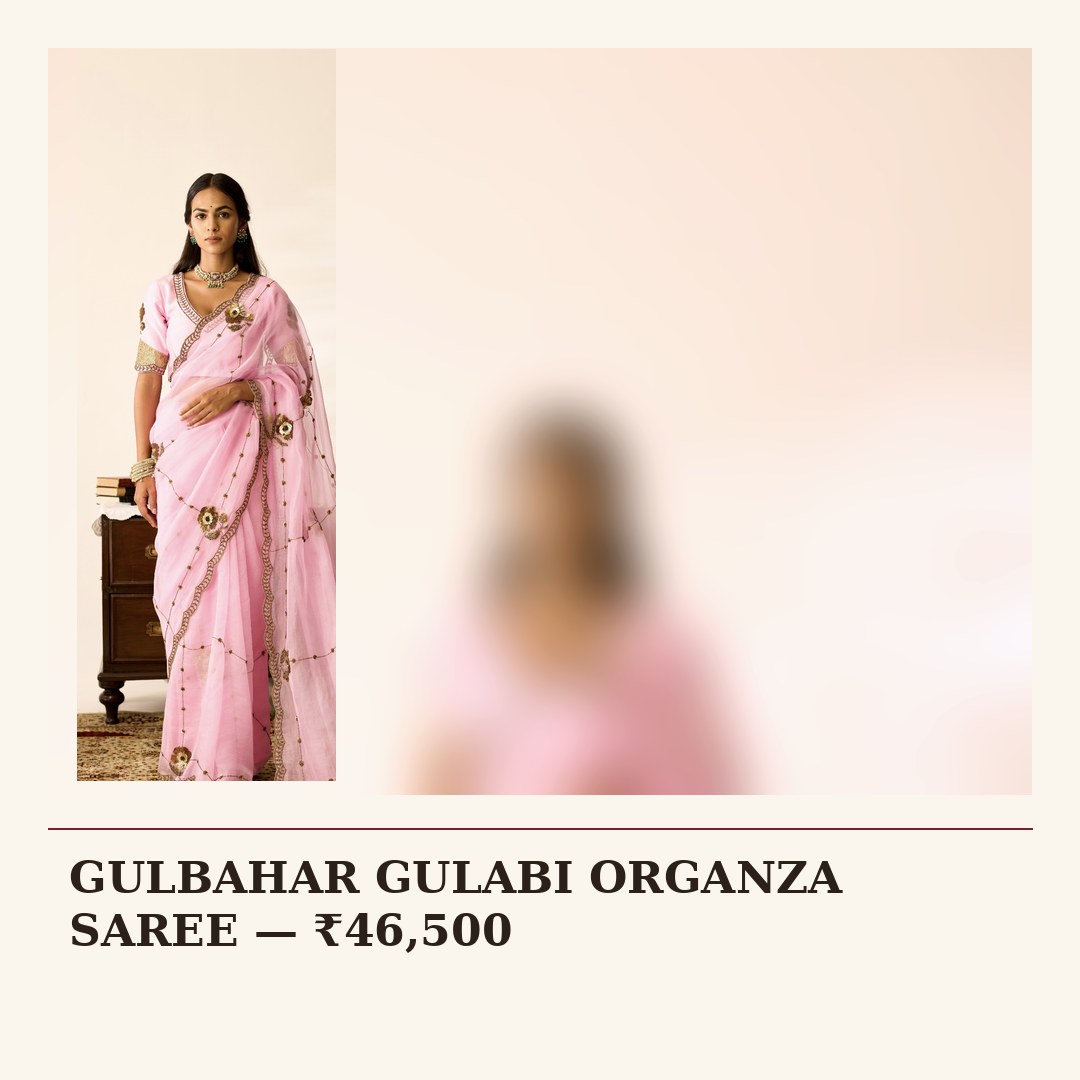
The Nishka in royal blue georgette at ₹46,500 wants silver or white metal, and a blouse in the same family rather than a contrast. It is also the one we would pick for a sangeet, because georgette moves and the colour holds up under warm light. The two pinks — the Ruqmani and the Gulbahar, both organza at ₹46,500 — take pearls and gold equally well; with either of them, wear the plainer of the two tones in the second drape and let the work on the pallu stay the loudest thing on you.
The Madhurima in eggplant purple at ₹43,500 is the piece that flatters most skin tones in daylight, and the one we would put with emeralds or plain gold over a matte blouse. Every price above is the price of the piece and not a starting figure, and each can be cut to your measurements with the blouse you choose.
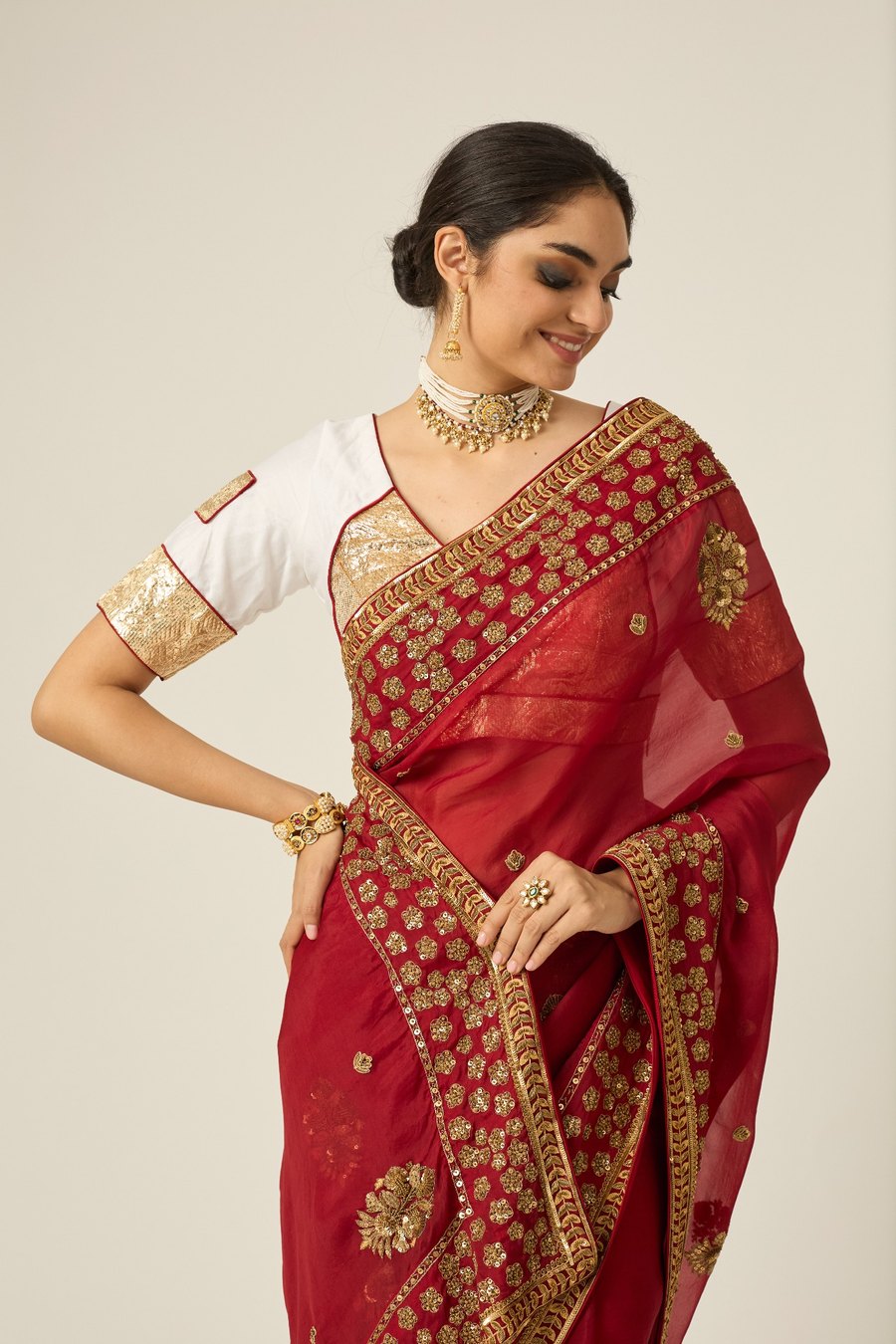
₹59,500
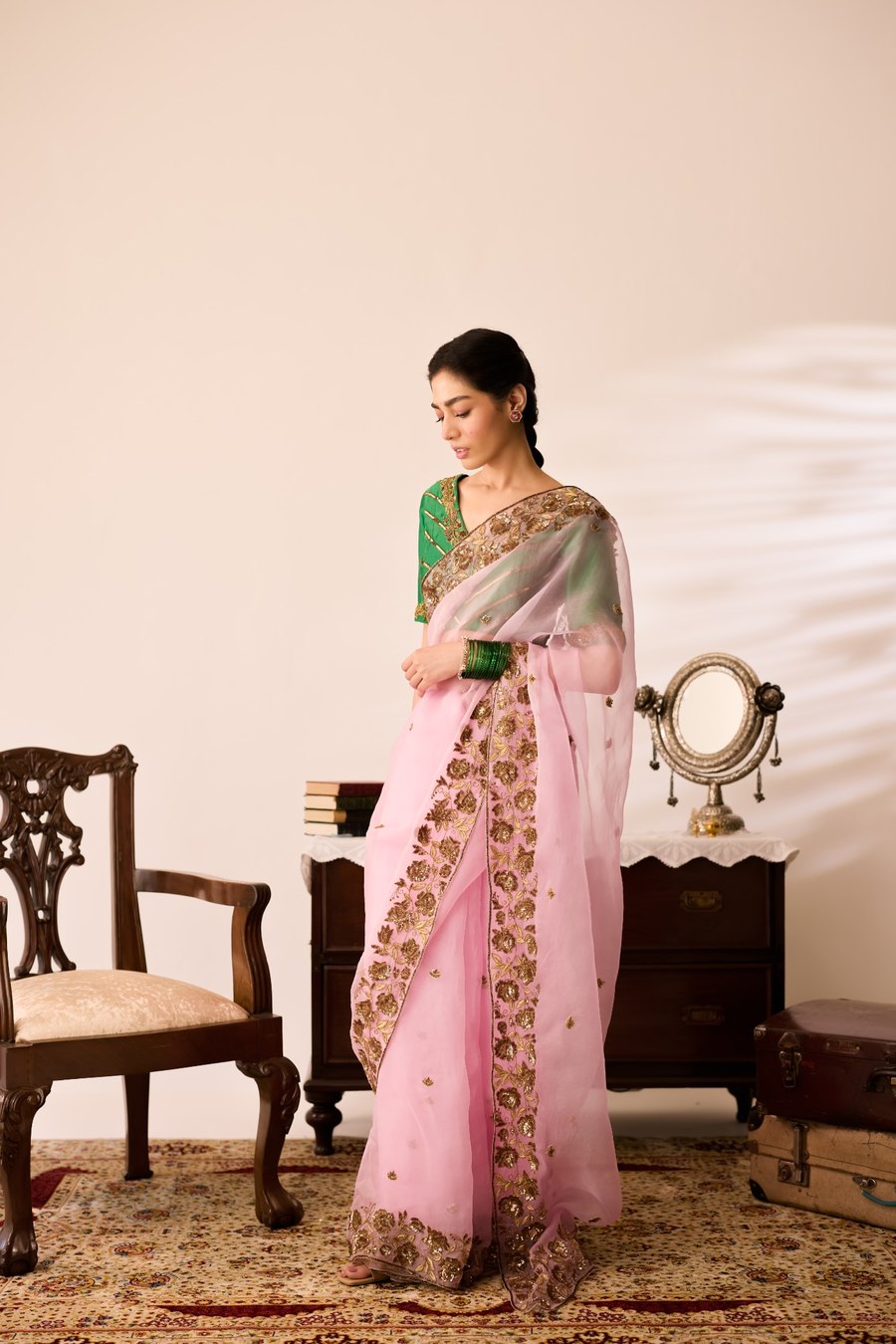
₹46,500
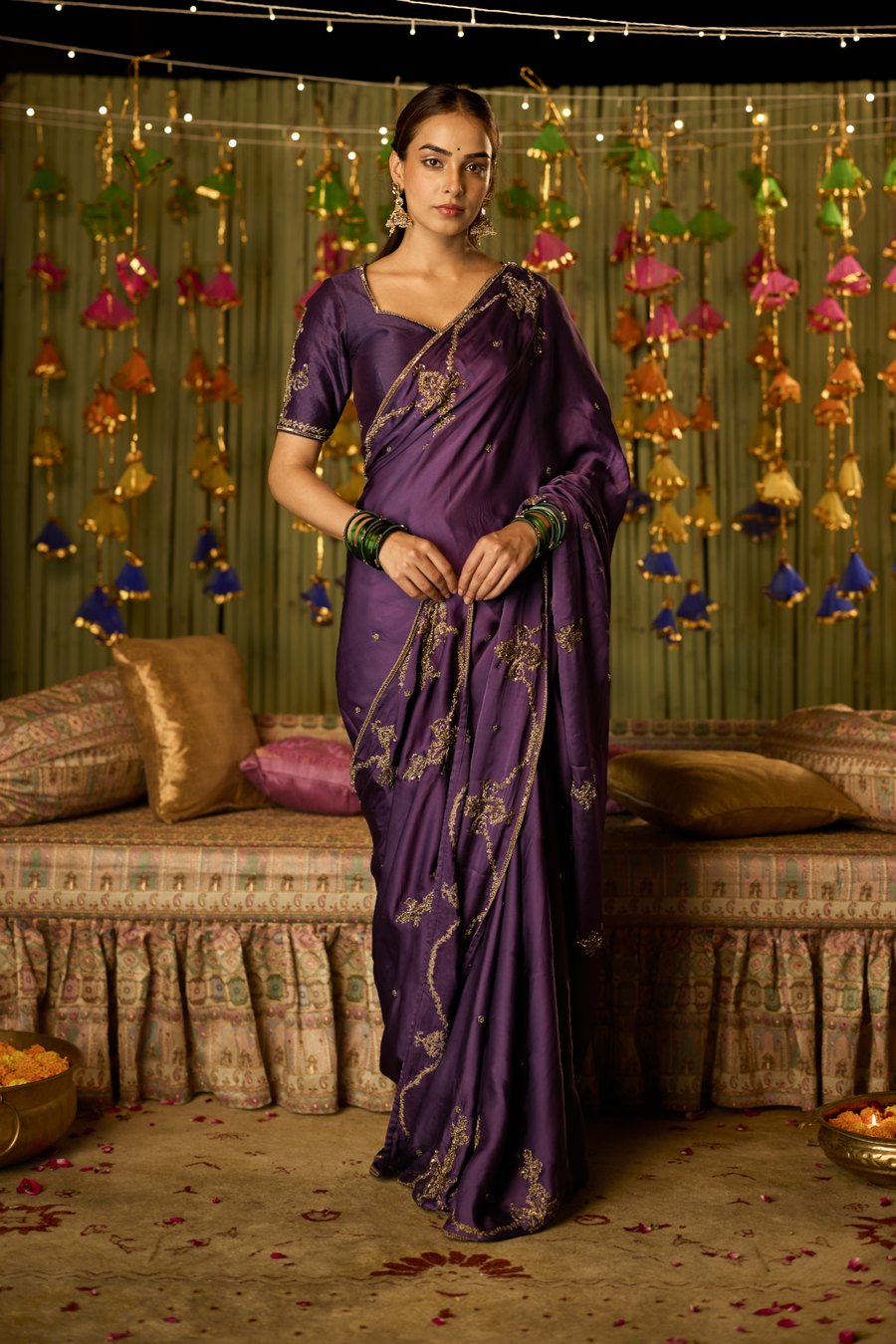
₹43,500
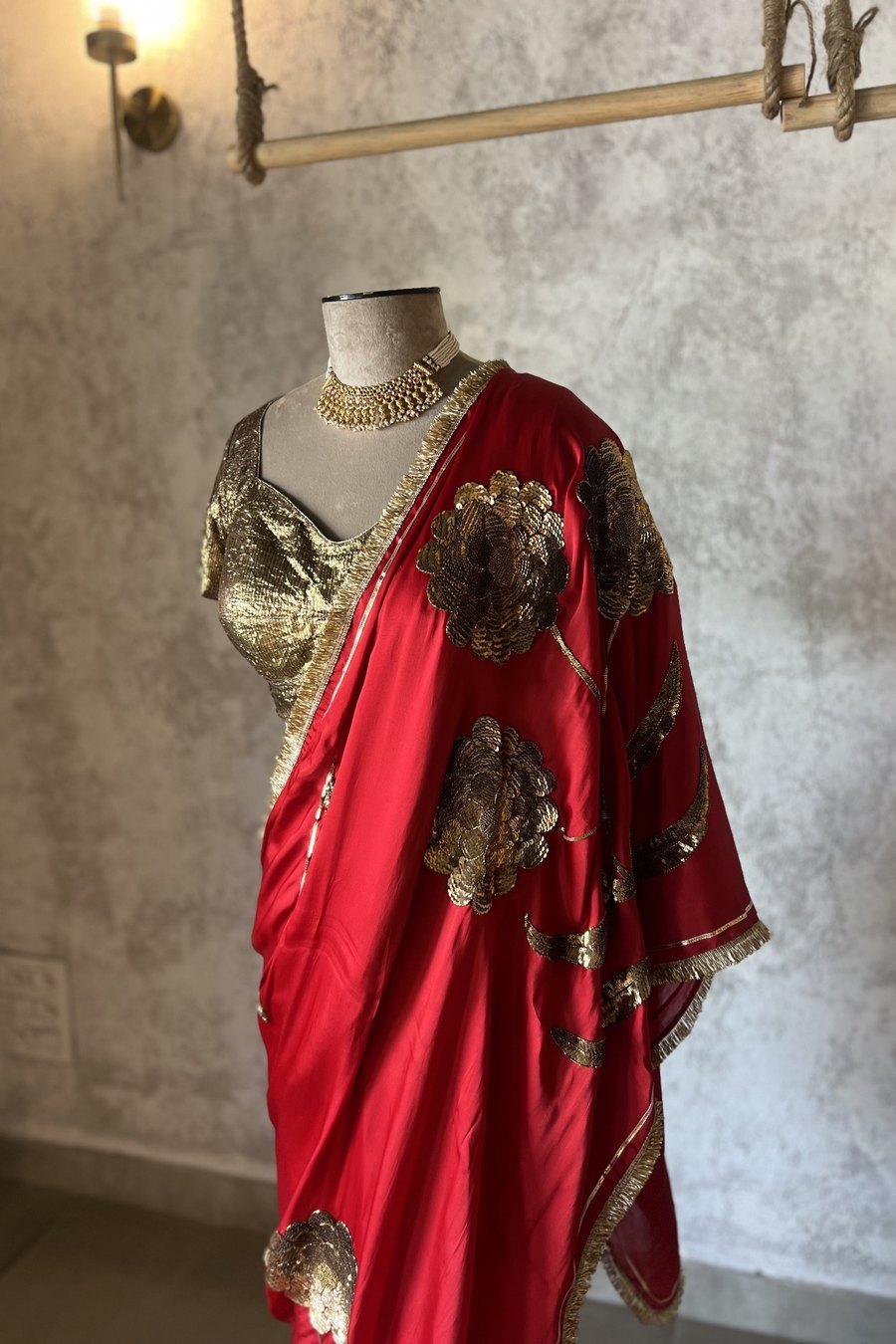
₹39,500
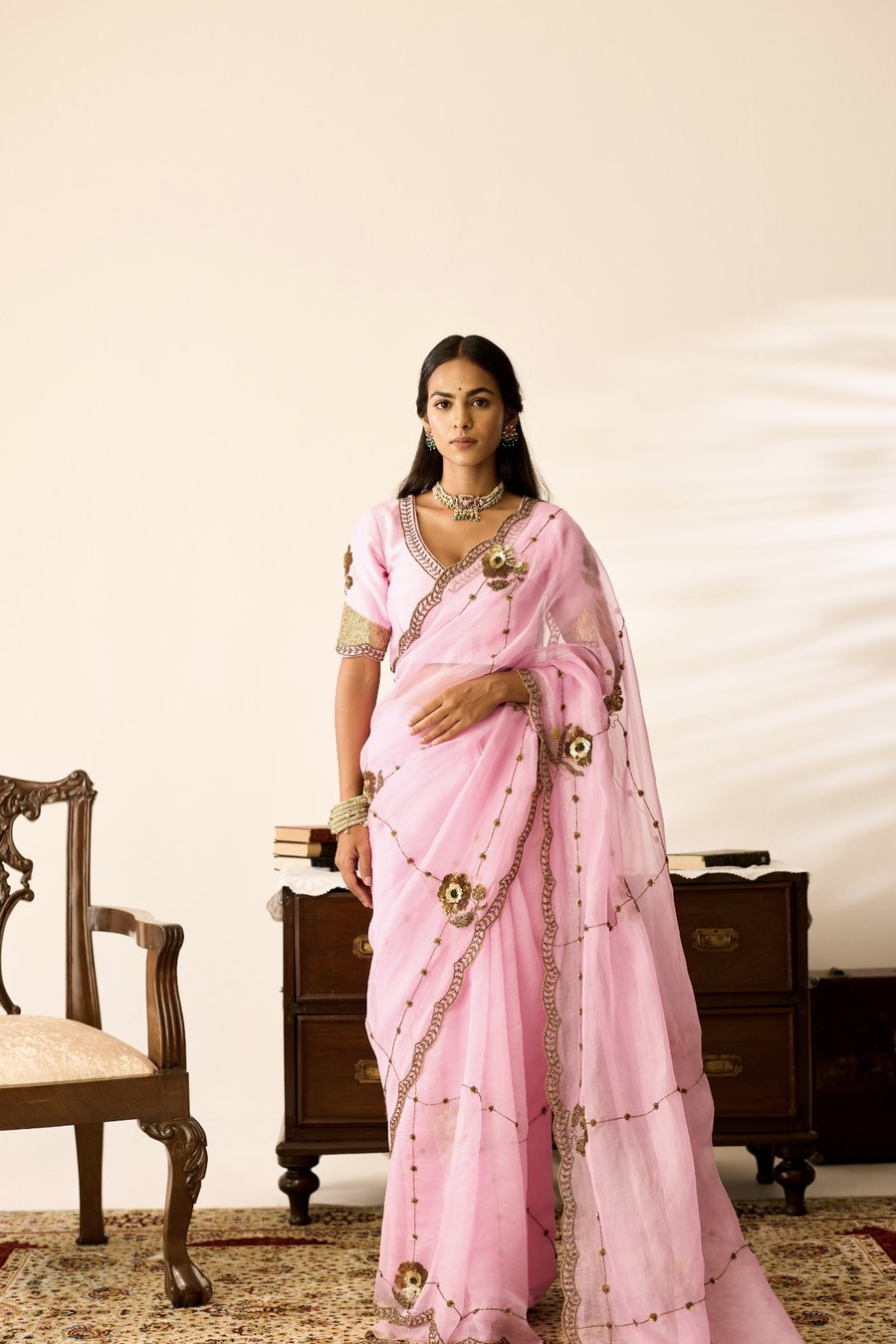
₹46,500
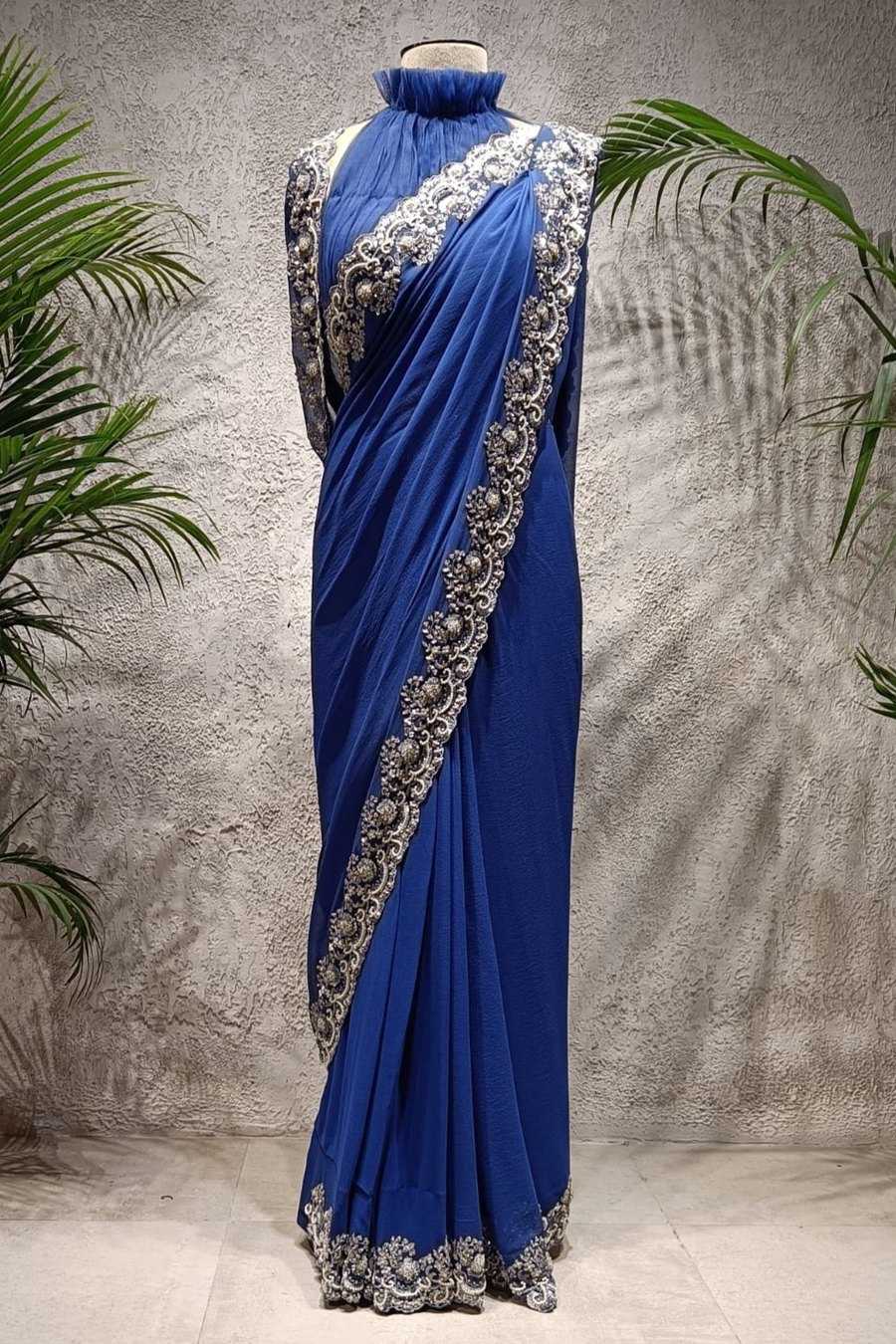
₹46,500
Getting dressed, in order, and the two mistakes we see most
The order matters more than people expect. Lining first, checked in front of a mirror for length before anything goes over it. Then the saree, pinned at the waist while you can still bend, with the pallu left until the pleats are set. Then the blouse, so the pleats can be adjusted around the blouse you are actually wearing. Then shoes, because the heel decides how much length you need at the hem. Jewellery goes on last, at the venue if you are travelling, since it is the part that can be replaced out of a handbag if anything goes wrong.
Mistake one: a blouse doing the same job as the saree. Two busy pieces at once and the outfit loses its centre. Mistake two: jewellery bought before the saree, which is how three metals end up on one person. Everything in this guide comes back to one habit — decide the saree, then let every other piece answer to it.
If you are unsure, send us a photograph of the saree and the function on WhatsApp. Fit checks and styling help are part of what we do, and it is far easier to settle a neckline or a second drape before the piece is made than after it has arrived. We are at Shahpur Jat in New Delhi and in Dehradun, and shipping within India is free above ₹10,000.
Frequently asked
What should I wear with a red wedding saree?
Red carries more than most colours, so the safest answer is less. Keep the blouse in a calm matte fabric, wear one metal, and choose between the necklace and the earrings rather than both. If your red is a silk satin like our Lauret at ₹39,500, the fabric can hold a heavier necklace; on a red organza, let the work on the pallu be the loudest thing you wear.
Should I wear a dupatta with a wedding saree?
Only if a function asks for it. A second drape earns its place in harsh daylight, at December and January weddings that run late, and through long ceremonies — but over a heavily worked saree it should be sheer, in one colour already in the work, and simply bordered. Over a plain saree a statement dupatta can carry the outfit on its own. If your functions are more than a week apart, a second drape will do more for you than a second blouse.
Which jewellery suits a hand embroidered saree?
Match the cloth. Gota patti and zardozi are metal on the surface, so repeat that metal in the jewellery or step well away to pearls and emeralds — never mix three metals in one outfit. Thread-worked sarees are quieter and can take a heavier necklace. Daylight suits pearls, emeralds and meenakari; evening suits metal and stones. If the pallu crosses high on the shoulder, put the weight in your ears instead of your neck.
Do you make the blouse to my measurements?
Yes. Every piece is made to order rather than pulled off a shelf, and the blouse is cut to your measurements. Tell us the neckline, the sleeve length and the blouse fabric you want, or send us the jewellery you plan to wear, and we will work out what the blouse can do without competing with the pallu.
How do I keep the second drape and the pallu from moving all evening?
Pin early, while you can still bend, and pin the pallu after the pleats are set rather than before. Keep the spare pins in your bag rather than on the blouse, and put jewellery on at the venue so nothing is pulling at the drape in a car. Where the work is heavy, a light thread through the shoulder seam holds better than any pin.
Explore more: bridal collection — or message us on WhatsApp for styling help.

The information below is required for social login
Sign In
Create New Account