

Most guides about wedding sarees are written for the bride. This one is for her mother — the woman who is photographed all day, on her feet for six hours, lifting a grandchild, greeting three hundred guests, and sitting through a ceremony without being able to
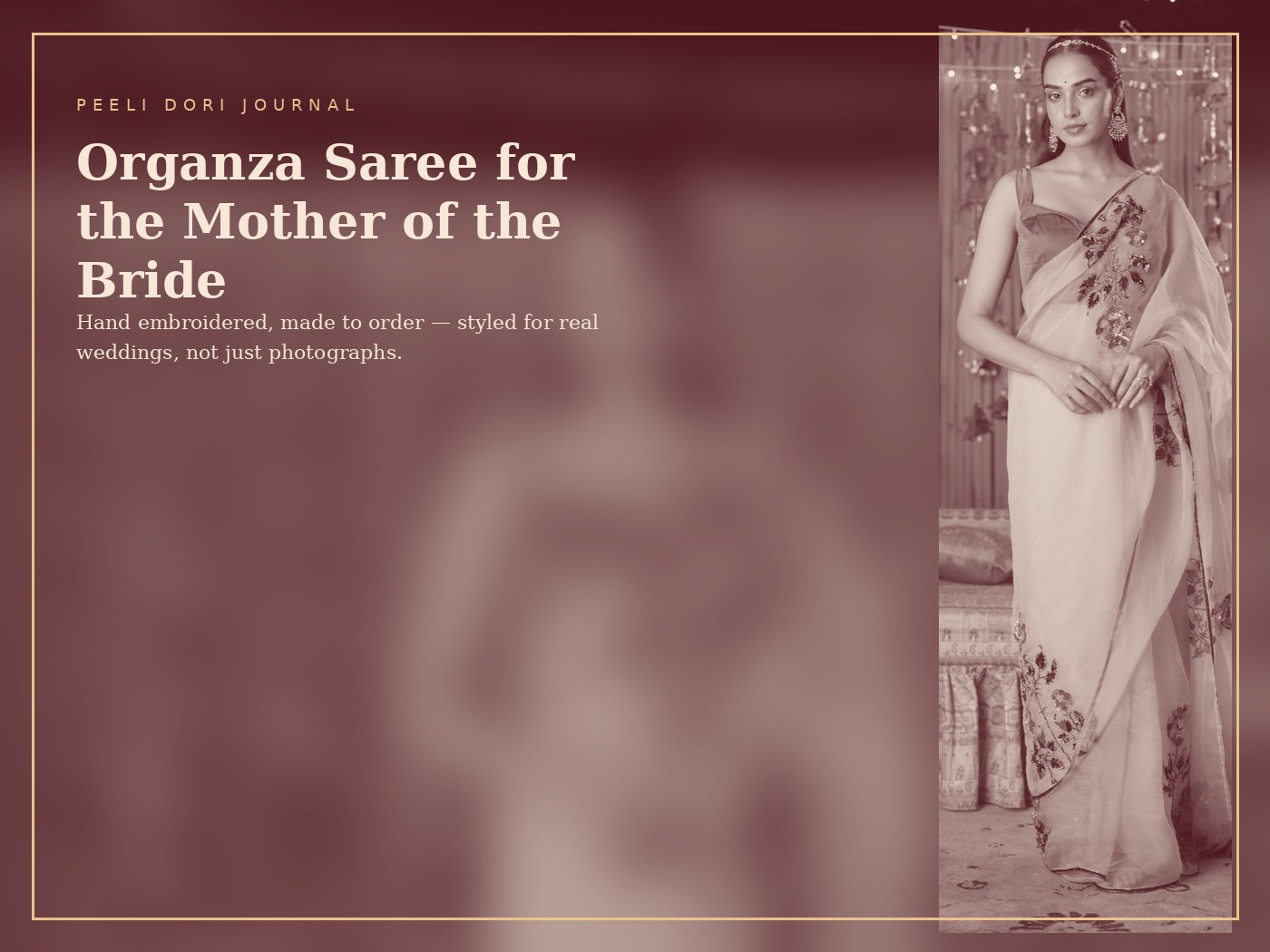
Most guides about wedding sarees are written for the bride. This one is for her mother — the woman who is photographed all day, on her feet for six hours, lifting a grandchild, greeting three hundred guests, and sitting through a ceremony without being able to rearrange her drape every twenty minutes. Those are the conditions the saree actually has to survive, and they are not the same conditions the bride is dressing for.
What changes when the wedding is your daughter's
If you have been to three or four weddings this year already, you know the pattern. The saree looks wonderful in the mirror at ten in the morning. By the time the photographs are being taken you have stood up twice, sat on a low seat once, hugged the bride's grandmother, and the pleats have travelled. Nothing has gone wrong with you — the piece was never chosen for a day like that.
The second thing most mothers tell us across the counter is that nothing in the shops feels made for her any more. Usually the reason is simple. What she is being shown was cut and styled for a woman in her twenties and a straight, formal drape, and there is very little in the middle between that and something that reads as a costume.
So we plan the mother's wardrobe differently from the bride's. Two sarees do more work than four. One piece with real handwork for the wedding day and the reception, and one lighter piece for the daytime functions where the work does not have to carry the whole room. Two blouses to the main saree will cover three functions more cheaply than three sarees, and it is the sort of thing we work out with you before you commit to anything.
There is also a schedule side to this that nobody mentions until it is late. Our sarees are made to order and hand embroidered, so the sensible way round is to fix the wedding date first, then the functions you will actually attend, and only then start looking. Working backwards is far easier than trying to hurry a hand-worked piece in the last fortnight.
Why organza suits the mother's side of the wedding
We build most of our sarees on organza, and there is a practical reason it works for the mother rather than only for the bride. Silk organza is crisp. It holds the edge of a pleat instead of softening into it, so a drape that was pinned in the morning still looks intentional after lunch. It also stands slightly away from the body, which matters more than anyone admits in a warm mandap or a hall full of people in August.
Weight is the other half of it. A piece that photographs beautifully at eleven can be a genuine burden by three in the afternoon if it is heavy, and the woman carrying it is the one who cannot sit down and take it off. Organza carries its handwork without carrying much weight, which is why the pieces below are the ones we end up showing mothers most often.
There are two bases in this range. Silk organza is the crisper one — it keeps a sharp pleat line and reads bright in daylight. Silk satin falls closer to the body and moves with you, which some women prefer for an evening reception where they will be sitting and talking rather than standing in a line. If you have handled both side by side, you will know within a minute which one you are.
What sits on that base is hand embroidery, done by artisans piece by piece. Because each saree is made to order, the blouse is cut to your measurements rather than adjusted afterwards, and the colours come from organic dyes. That is not a description of a look we are selling; it is simply how the pieces are made.
Function by function — and the pieces we would put in front of you
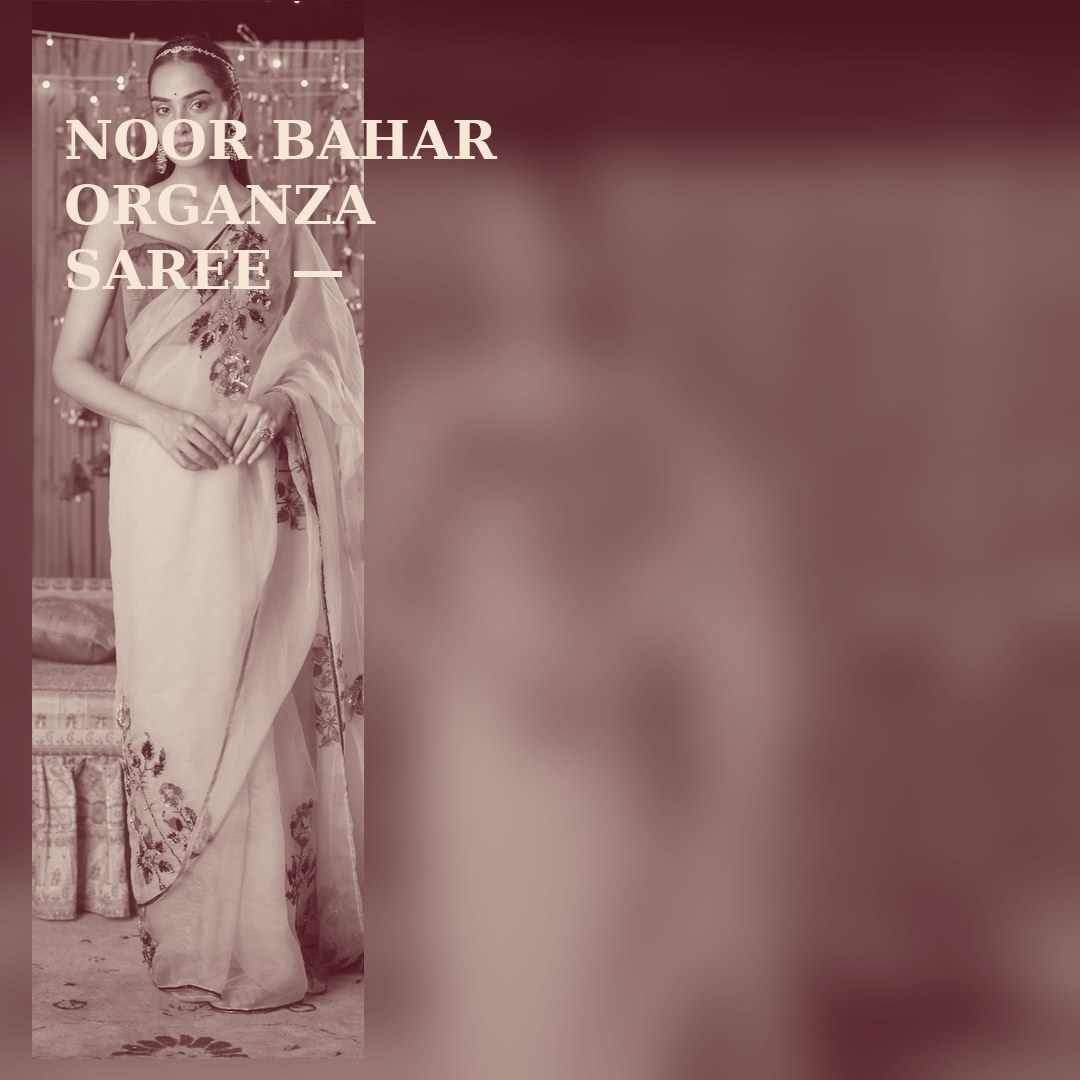
For the wedding day itself, MYRA RED ORGANZA at ₹59,500 is the fullest piece on our organza rack — hand embroidered across the pallu and border, and the one we would reach for if the mother is standing beside the bride in the main photographs. If red feels too close to the bride's own palette, NOOR BAHAR ORGANZA at ₹48,500 gives you the same presence in a shade that is less expected.
For sangeet and reception, RUQMANI MAROON ORGANZA at ₹46,500 is the evening piece: deep enough to hold its own in warm indoor light, and it will not compete with anything pastel the bride's side is wearing. NOORANI LIME SILK SATIN at ₹44,500 is the lighter second look — silk satin rather than organza, cut for an evening where you will be seated and moving between tables. It is also the most accessible piece on the rack this week.
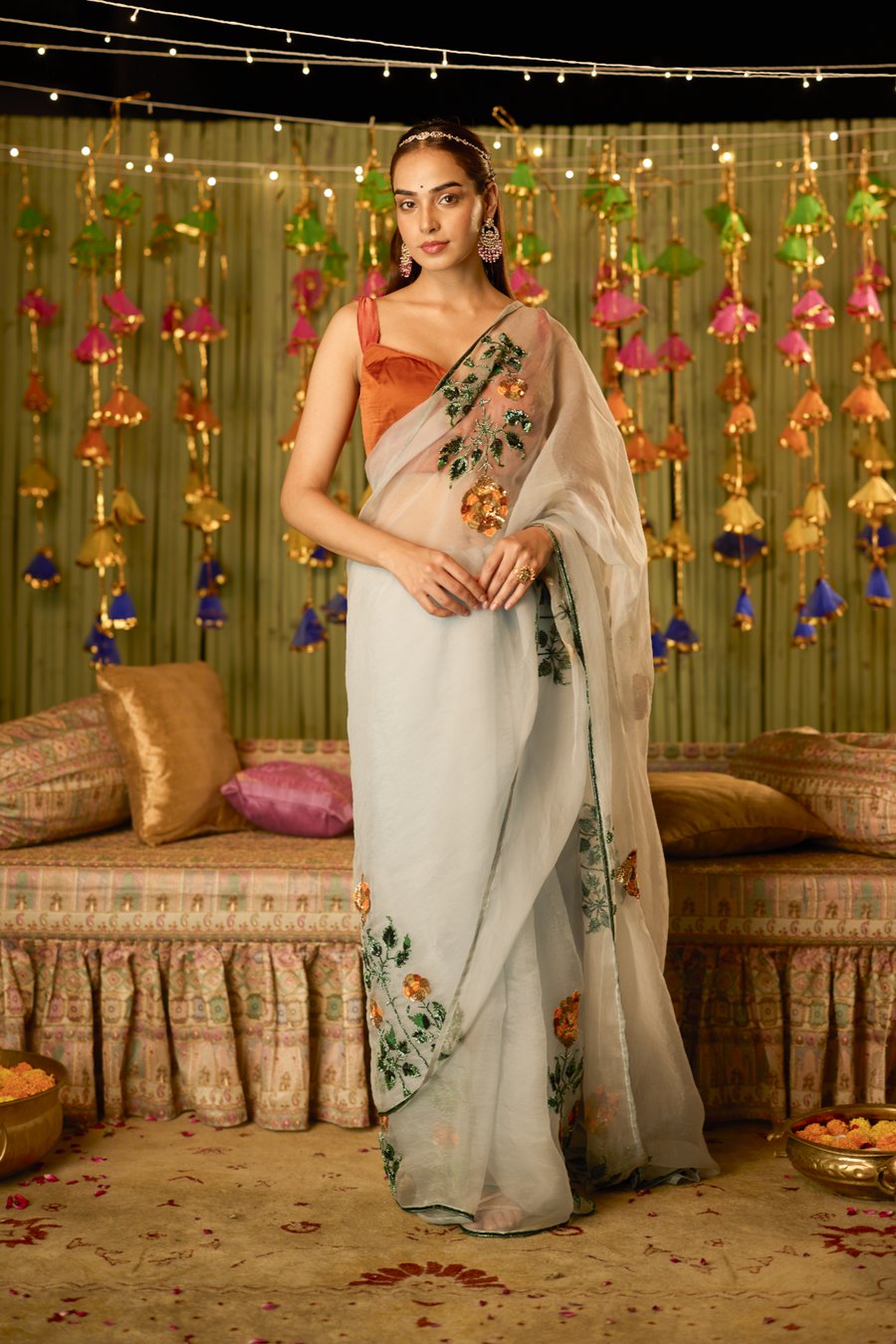
For the daytime functions, GULBAHAR IVORY ORGANZA at ₹46,500 is what we suggest for a haldi morning, where ivory holds up in harsh midday light and does not fight with the turmeric yellow everyone else will be wearing. RUQMANI GULABI ORGANZA at ₹46,500, a soft pink, is the mehendi piece — pretty in daylight photographs and easy with heirloom gold.
One note on this list: it is planned the way we would plan a mother's wardrobe, not a bride's. Nothing here is chosen to be the centre of the room. Everything here is chosen to look right in the photographs you will actually be in — standing, greeting, sitting, holding someone's hand.
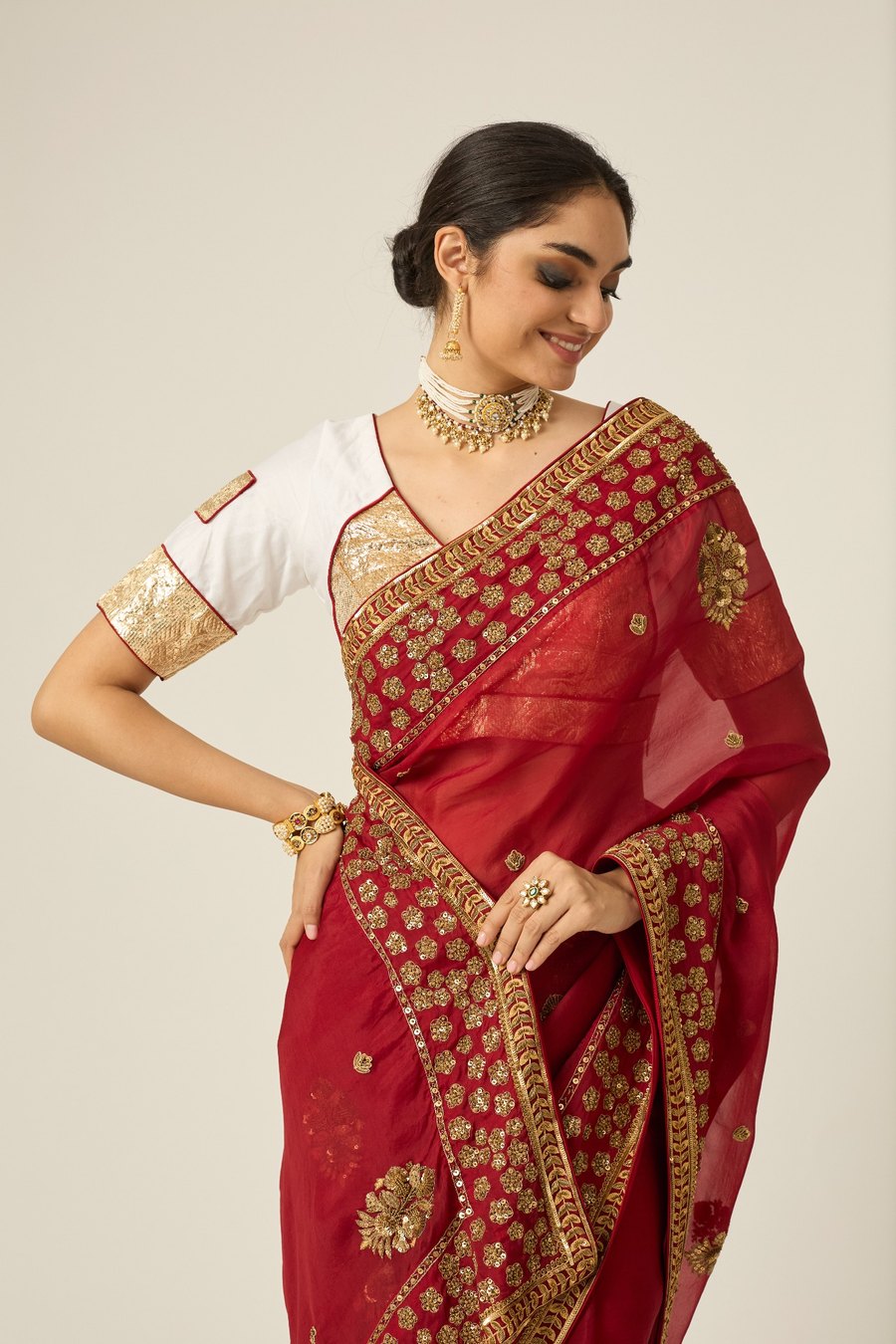
₹59,500
₹48,500
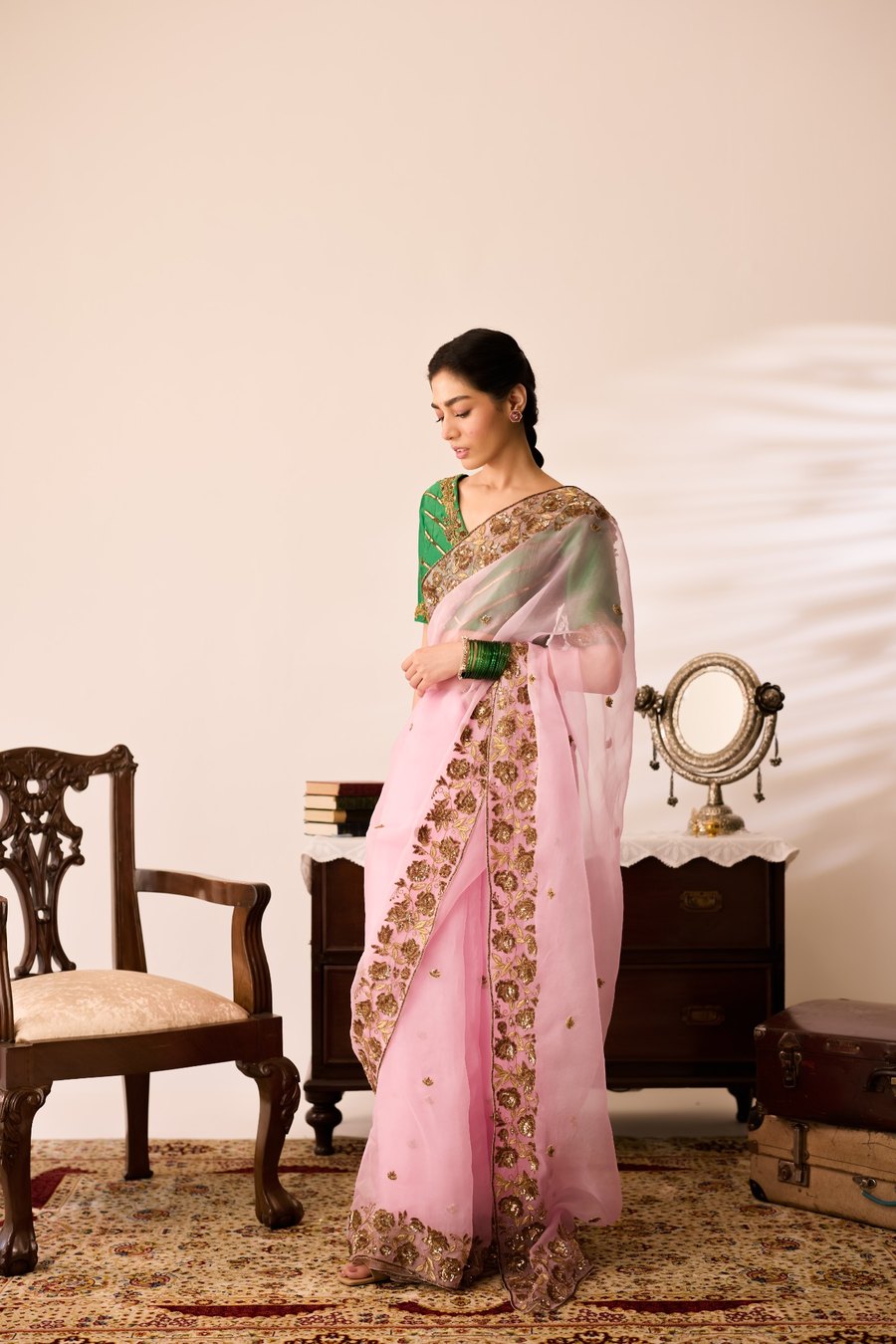
₹46,500
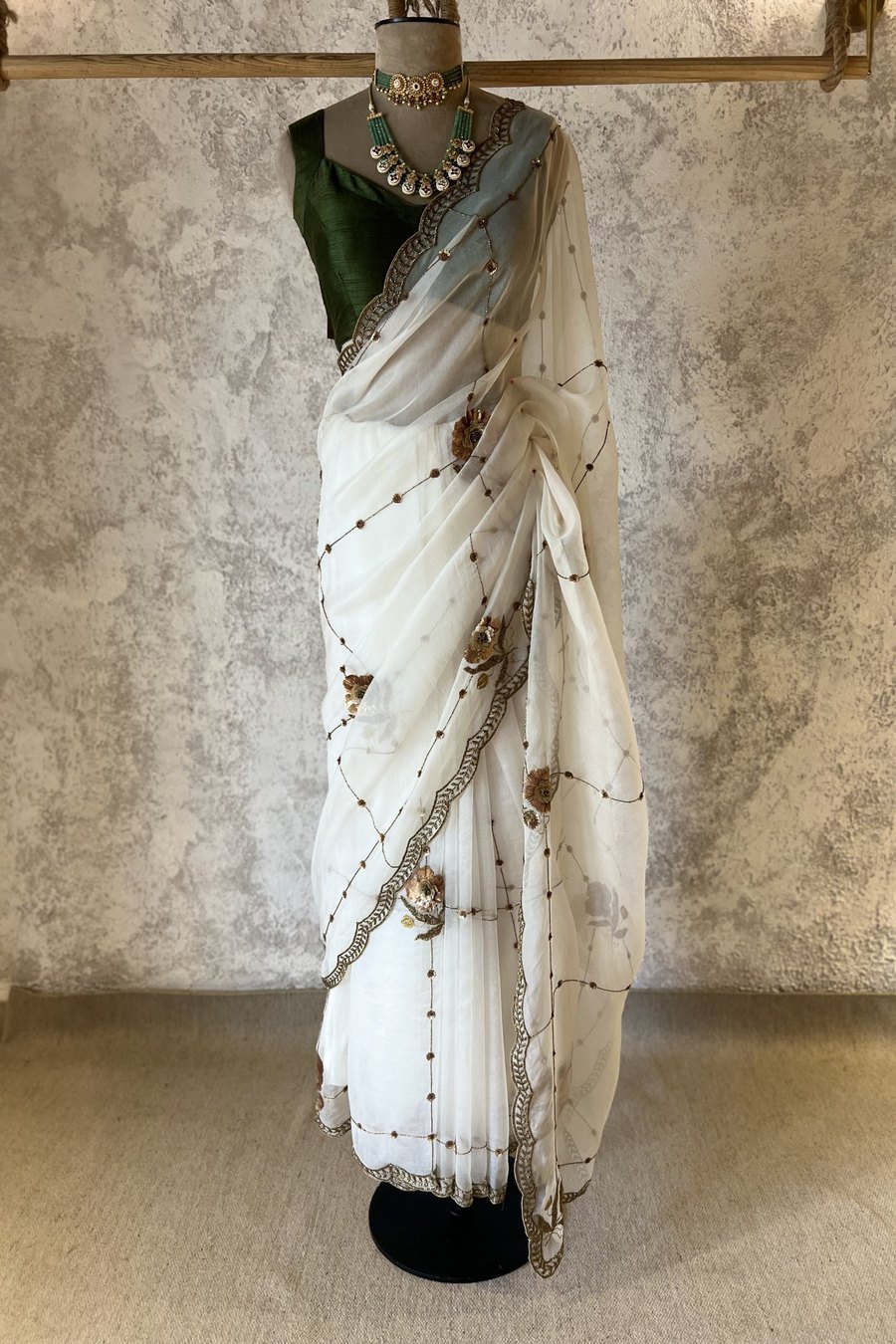
₹46,500
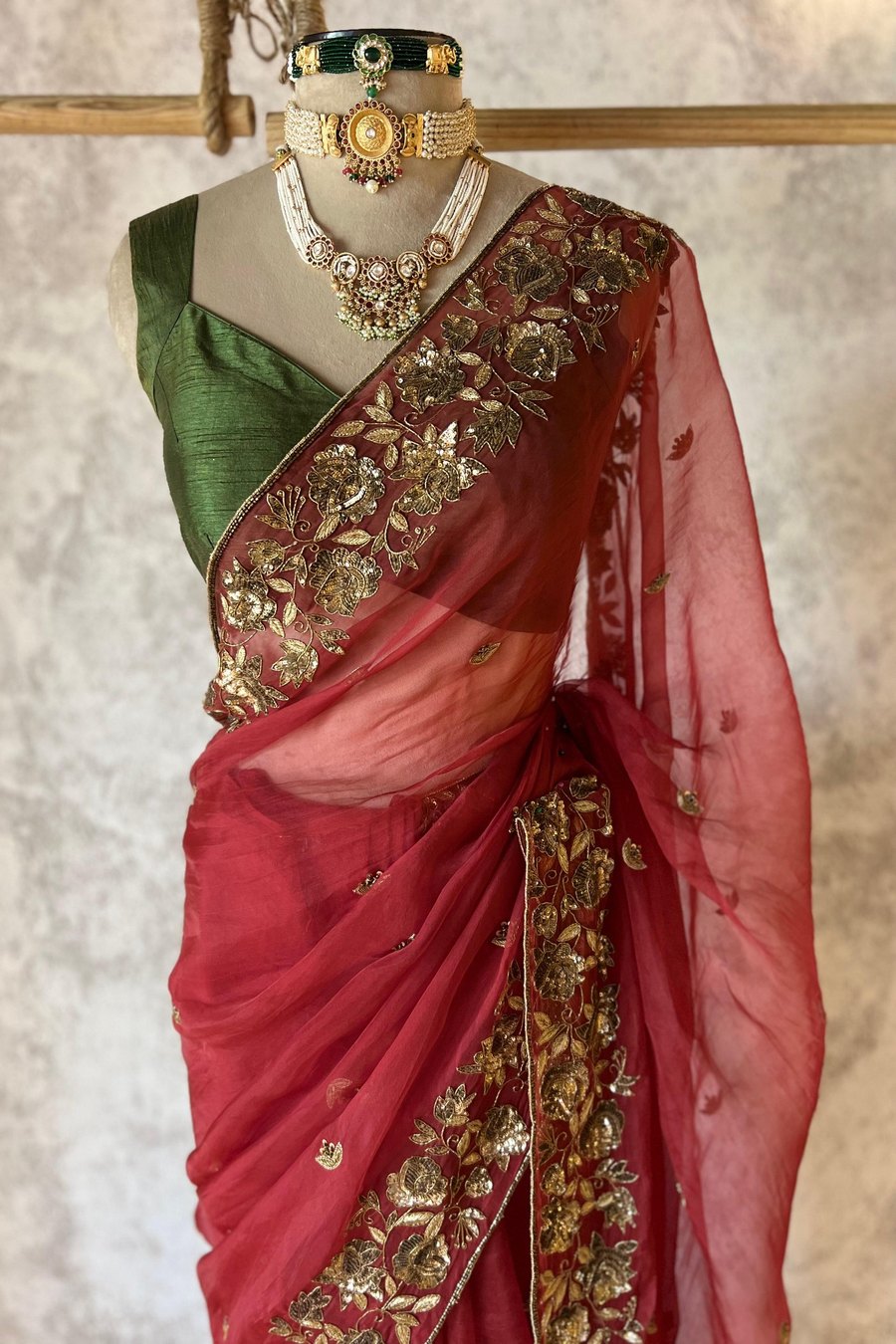
₹46,500
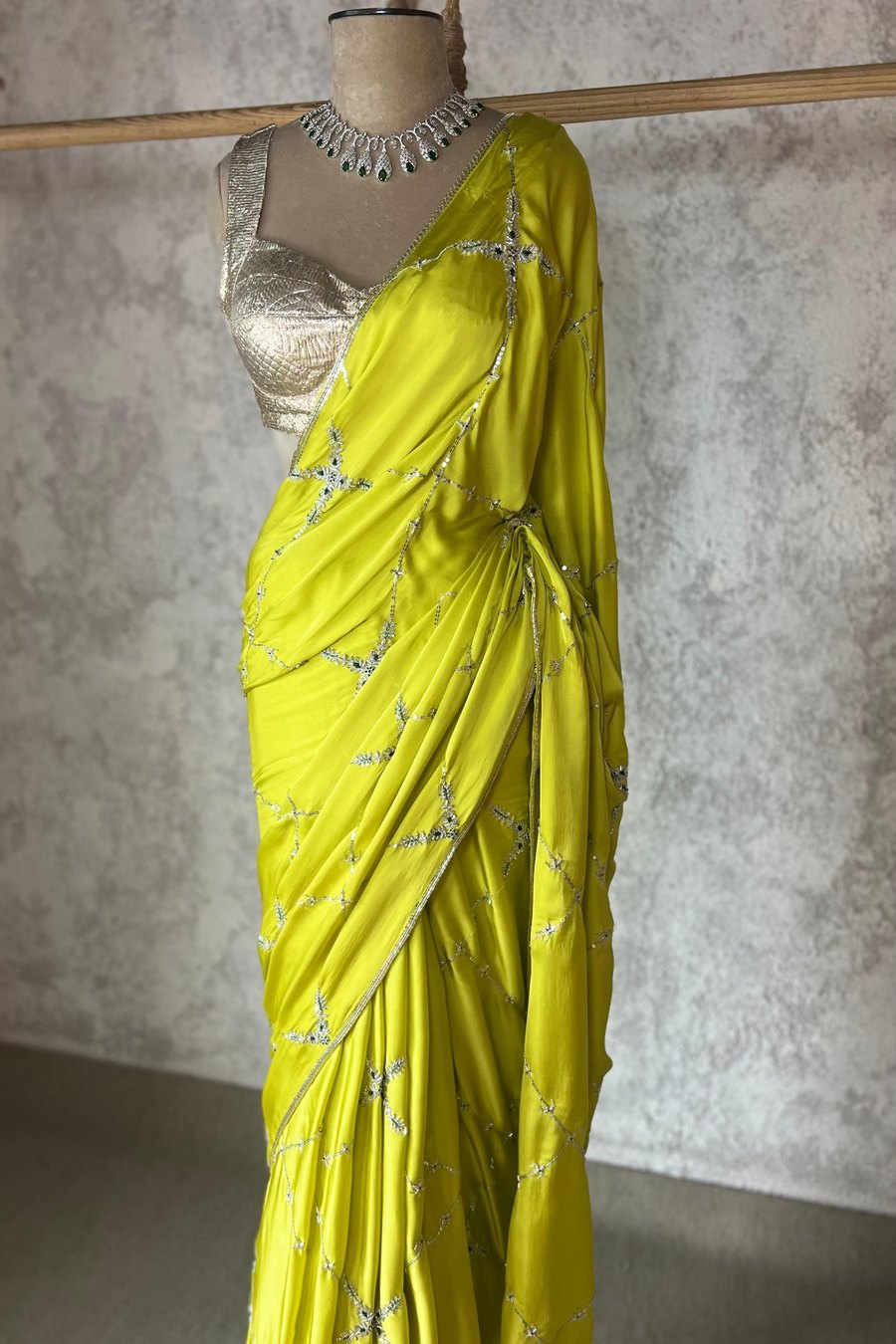
₹44,500
Coverage, comfort and the fit decisions to settle early
Settle the blouse before anything else, because the blouse is where the practical questions live. Tell us at the ordering stage if you want sleeves, and how long; a higher back, a higher neckline, or a fuller cut across the shoulder. All of it is straightforward when it is decided before the piece is cut and awkward afterwards. This is where custom sizing earns its place — it is not a styling preference, it is the difference between a blouse you can breathe in through a four-hour ceremony and one you cannot.
Ask for a fit check before the piece is finished rather than after. Send us a photograph on WhatsApp of the drape and the blouse on you, and we will tell you plainly what to change — shoulder, sleeve, the fall of the pleat. It is the same conversation we have across the counter in Shahpur Jat or in Dehradun, and it takes a few minutes.
On the drape itself, the two things worth planning are the pleats and the pinning. Organza holds a pleat well, so a properly pinned pleat line often needs less adjusting through the day than a softer fabric does — but it does need pinning, not hoping. If you are not being dressed by someone experienced, bring the saree in and we will pin it on you, or walk you through it on a video call.
Finally, decide early what you are wearing on your feet and how much you will be standing. If the wedding has a long greeting line, keep the drape simple and the jewellery light enough that you are not rearranging anything every time you hug someone. Comfort is not the compromise in this wardrobe. Comfort is the whole point.
Colour, jewellery and photographs beside the bride
The one rule that matters is that you should neither match nor compete. If your daughter is in red, take the maroon, the ivory, the lime. If she is in a pale palette, you have room to go deeper than she does. Standing next to each other in two versions of the same colour is the thing that flattens both of you in a photograph, and it is entirely avoidable.
Jewellery is where mothers usually already have the better answer. Heirlooms you have worn for twenty years sit better with a hand-embroidered organza than anything new, and they carry the story of the family in a way nothing bought this month will. Our suggestion is to bring the jewellery to the store, or photograph it and send it, and choose the saree around it rather than the other way round.
On photographs specifically, organza behaves kindly. It holds a sheen that flat fabrics do not, so it reads as richer in daylight without being noisy, and it does not crease into itself the way heavier weaves can after a few hours of sitting. In a hall with warm lighting, the deeper pieces — the maroon, the red — will photograph closer to black, which is worth knowing before you choose them for an evening function lit by lamps.
If you are buying on the site rather than in the store, ask us for photographs in daylight and in indoor light before you decide. Two photographs of the same saree, taken in different light, tell you more about what you are buying than a dozen styled shots.
Care, travel and the week after
A hand-embroidered organza saree lasts on how it is stored, not on how carefully it was worn. Hang it on a padded hanger for a day after the function so the pleats relax out, then fold it into muslin rather than plastic — the work needs air around it. Move the fold lines a couple of times a year so the same crease does not set into the same place and mark the piece permanently.
Press it through a muslin cloth on a low setting, and press the reverse of the embroidery wherever you can reach it. Never put an iron directly onto raised work. Do not starch it to get it crisper; organza is crisp by nature and starch leaves a dull patch that a sheer fabric cannot hide.
If you are travelling for the wedding, carry it folded in muslin inside your hand luggage rather than in a checked bag, and do not fold it along the embroidered border if you can avoid it. If a metal thread lifts, do not pull it — send us a photograph, or bring the piece into either store, and most lifted threads can be secured again without redoing the motif underneath.
Free shipping inside India applies above ₹10,000, so any of the pieces in this guide ships free within the country. For orders going overseas, the site carries an INTSHIP offer above ₹49,000. And if something needs looking at after the wedding, our doors in Shahpur Jat and in Dehradun are open in the week after, when the pressure has gone and you have time to think about it.
Frequently asked
How is a saree for the mother of the bride different from the bride's saree?
It is chosen for different conditions. You will be standing, greeting and sitting much more than she will, so the drape has to hold without constant attention and the weight has to stay manageable for a long day. We usually plan one fuller piece for the wedding day and the reception, and a lighter one for the daytime functions.
Should the mother's saree match the bride's colour?
No — neither match nor compete. If the bride is in red, take maroon, ivory or lime; if she is in a pale palette, you have room to go deeper. Wearing two versions of the same shade is what tends to flatten both of you in photographs.
Can the blouse be made with sleeves and a higher back or neckline?
Yes. Every saree we make is made to order with custom sizing, so sleeve length, back depth and neckline are decided at the ordering stage and cut to your measurements. Tell us at that point rather than after the piece is cut, and the fit check happens before we finish.
How early should a mother start shopping for the wedding?
As early as the date is fixed. Our sarees are made to order and hand embroidered, so the work happens after you order. Fix the date, list the functions you will actually attend, plan the blouses, and start from there — it is much easier than hurrying a hand-worked piece at the end.
What if I only get my measurements later?
That is normal. Start the conversation with the piece and the colours, and send measurements when you have them properly taken. We will do a fit check on WhatsApp before the blouse is finished, and you can bring the saree into either store if you would rather be pinned in person.
Explore more: silk organza saree · wedding 2026 — or message us on WhatsApp for styling help.

The information below is required for social login
Sign In
Create New Account