

A wedding season is not one wedding. It is a mehendi, a haldi, a sangeet, a baraat, a reception and two or three friend weddings spread across four months — and the mistake most of us make is planning each function on its own, the week before it happens. The q
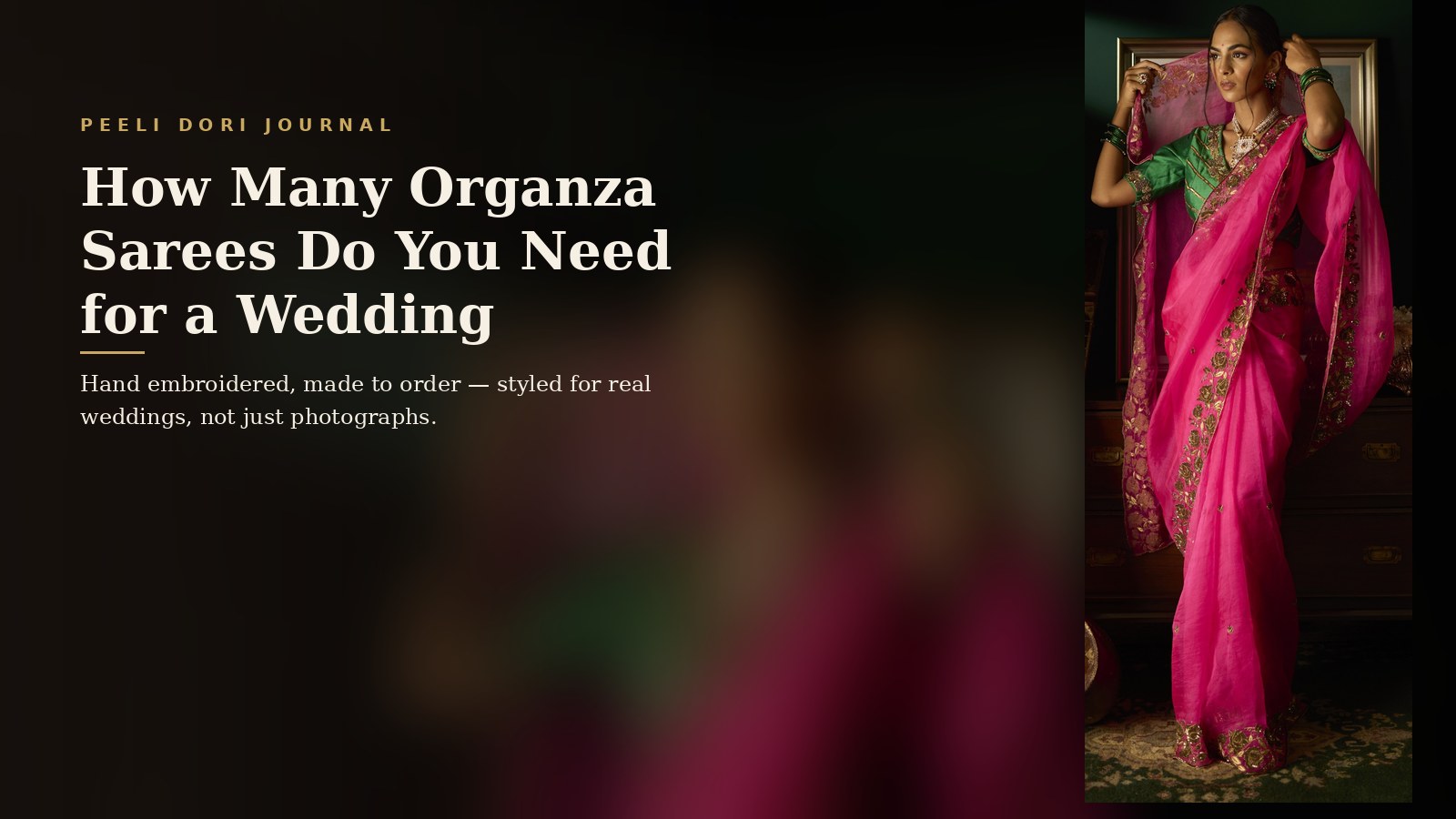
A wedding season is not one wedding. It is a mehendi, a haldi, a sangeet, a baraat, a reception and two or three friend weddings spread across four months — and the mistake most of us make is planning each function on its own, the week before it happens. The question that saves money and cupboard space is a different one: how many organza sarees do you actually need for the season, and which ones?
Start with the calendar, not with the shopping
Write the season down before you look at anything. From late October to February, most of the women who walk into our Shahpur Jat and Dehradun stores are dressing for four to six functions — two of them close family, the rest friends, colleagues and their cousins. Seen on paper, the shopping problem changes shape. You are not looking for six outfits. You are looking for two or three pieces that can carry six evenings without ever looking like the same saree twice.
We watch this happen every year. The piece bought in a hurry three days before a sangeet is usually the one worn once and never touched again, because it was chosen for a single evening's photographs and for nothing else. The pieces that come back to us for a second and third function are the ones bought with the whole calendar in view — with the wedding day already decided, so the rest of the season could be planned around it.
Hand-embroidered organza is the fabric that makes a small wardrobe possible, and it is no accident that it is what we sell most of between October and February. It is light enough to sit through a two-hour ceremony without the weight of a heavy silk working against you, structured enough to hold a pleat without a stack of pins, and honest in photographs — the drape stays where you placed it instead of creeping across the front pleats by the time the family portraits start. Our organza sarees are hand embroidered and made to order, which means the blouse is cut to your measurements and the piece is finished after you order it rather than lifted off a rack.
What to look for when you are shown the fabric
The first test is the base cloth, and it is the one most people skip. A pure silk organza has a dry, faintly papery handle and a little bounce; hold a fold up against the light and it stays crisp rather than collapsing. A polyester organza costs a fraction and looks entirely acceptable for an hour, and then the pleats soften and the shine starts to read as shine under flash. For a saree you intend to wear across a four-month season, the silk base is what keeps its shape from the first function to the last.
The second thing to look at is the embroidery, and here you can check for yourself in about ten seconds. Turn the fabric over. Hand embroidery is nearly as tidy on the reverse as on the front, and the motifs sit flat against the cloth instead of lifting away from it. Our pieces are worked by hand — gota, zardozi and dabka work — and the difference it makes over the length of a wedding season is that nothing comes loose or catches on a bangle.
The third is weight. Organza ranges from barely-there to a heavier, densely embroidered cloth that behaves almost like a silk. If your season is full of daytime functions, haldi mornings or outdoor baraats in the sun, choose the lighter end and let the border do the work. If it is two big evening events and nothing else, take the heavier piece — it will hold a formal drape better and it is the one you will be photographed in most.
Settle colour last. Function first, shade after. Deciding the colour before you have decided whether the saree is for a daytime mehendi or an evening reception is how people end up with a beautiful piece that has nowhere to go.
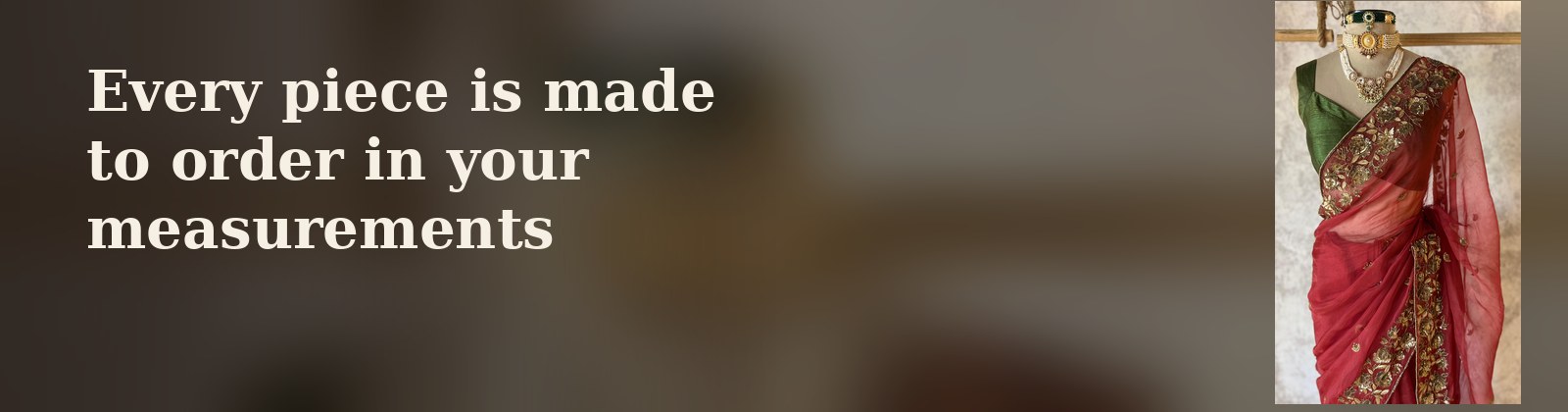
The three-piece plan — and how to pick for your frame and your function
For most seasons we suggest three organza sarees, not six. One anchoring piece: the deepest shade, the fullest embroidery, for the wedding day or the reception — the one you will be photographed in from every angle. One light piece for the daytime functions, where you are moving, sitting cross-legged, standing in the sun and holding a plate. And one optional statement piece if the season has one big evening that everyone will remember.
Then match the piece to the occasion. Mehendi and haldi are long, informal and often warm — take the lightest cloth you own and keep the embroidery to the border. A sangeet involves dancing or at least standing and moving through a crowd, so a lighter piece with a flared or shorter-sleeved blouse wins over anything heavy. A baraat means you are outdoors, on your feet, walking. The reception is the one formal evening of the week: this is where the anchoring piece belongs.
For your frame, the rule we give across the counter is about where the weight sits, not about what suits a body type. A heavier, wider border reads well on a taller frame and gives a long, straight drape. On a smaller frame the same border can swallow the whole look, so stay with a narrower border and a light pallu, and let the blouse carry the detail instead. If you are fuller around the shoulders or bust, tell us at the ordering stage — a higher back, a higher neckline, a fuller cut across the shoulder and a slightly longer sleeve are all straightforward on a made-to-order blouse and awkward to fix afterwards.
One more thing, and it is the part people leave too late. Ask for a fit check before the piece is finished rather than after it is in your hands. Send us a photograph on WhatsApp of the drape and the blouse on you and we will tell you plainly what to change — shoulder, sleeve, the fall of the pleat. It is the same conversation we have across the counter, and it takes five minutes.
Six pieces from our organza range that fit this plan
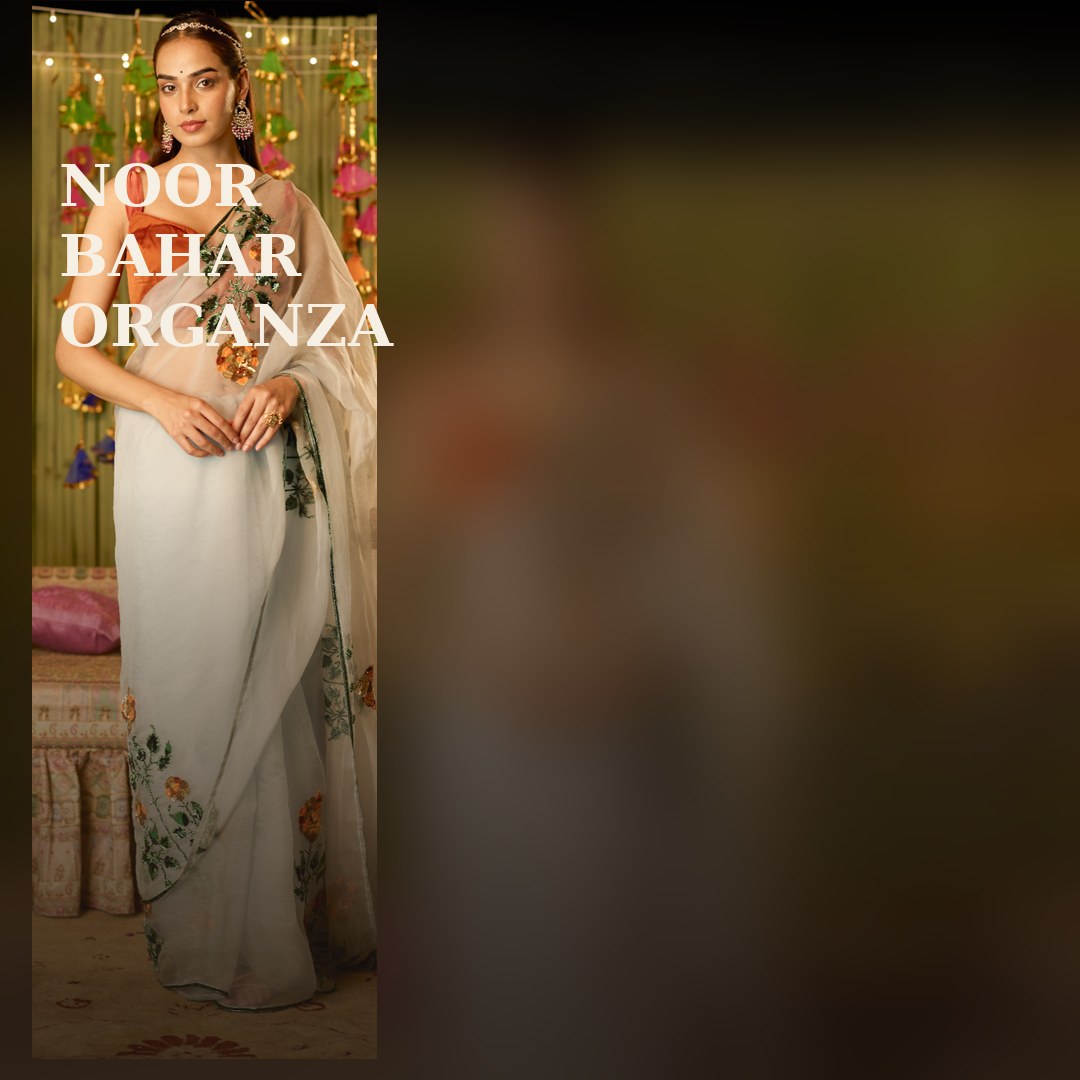
These are the organza sarees we would put into a wedding-season wardrobe today, all hand embroidered and made to order. MYRA RED ORGANZA SAREE at ₹59,500 is the anchoring piece — the one for the wedding day or the reception, deep in tone and full in its embroidery. NOOR BAHAR ORGANZA SAREE at ₹48,500 sits just under it: a rich piece for a formal evening without going to the top of the range. RUQMANI GULABI ORGANZA SAREE and GULBAHAR GULABI ORGANZA SAREE, both ₹46,500, are the two we usually show for daytime and mid-formal functions.
For the lighter end of the plan, RUQMANI RANISA SILK ORGANZA SAREE, RUQMANI MAROON ORGANZA SAREE and GULBAHAR IVORY ORGANZA SAREE are each ₹46,500 — the ranisa and the ivory work particularly well for mehendi or a daytime ceremony, and the maroon is the shade to reach for when the anchoring piece is already deep and you want a second evening piece that will not repeat it. NOORANI LIME SILK SATIN SAREE at ₹44,500 is the lowest price on this page and a good first piece if this is your first season dressing in organza.
Every organza saree below is one product page with its own prices and measurements, so you can open the one you are considering and see the rest of the detail there rather than in a paragraph here.
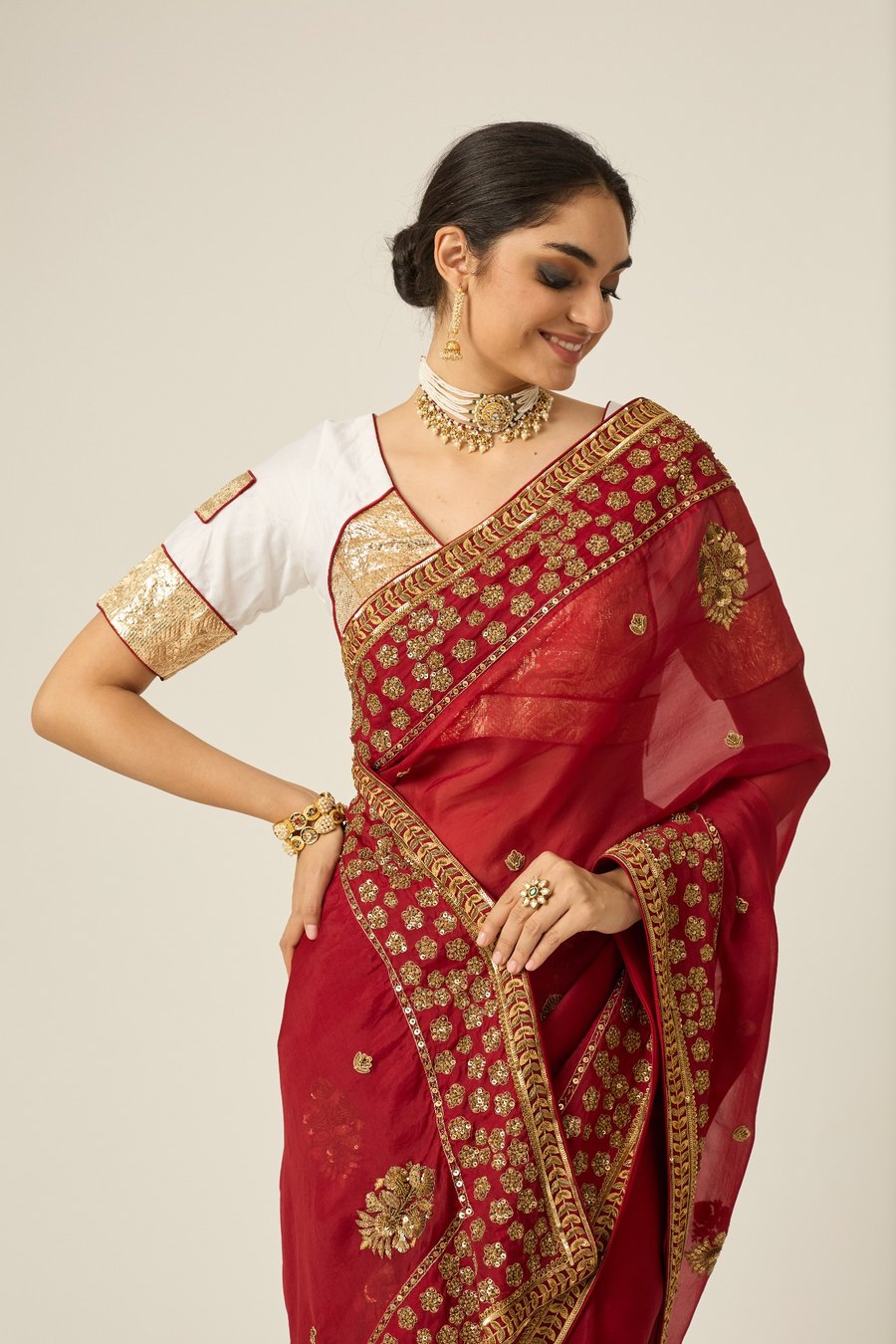
₹59,500
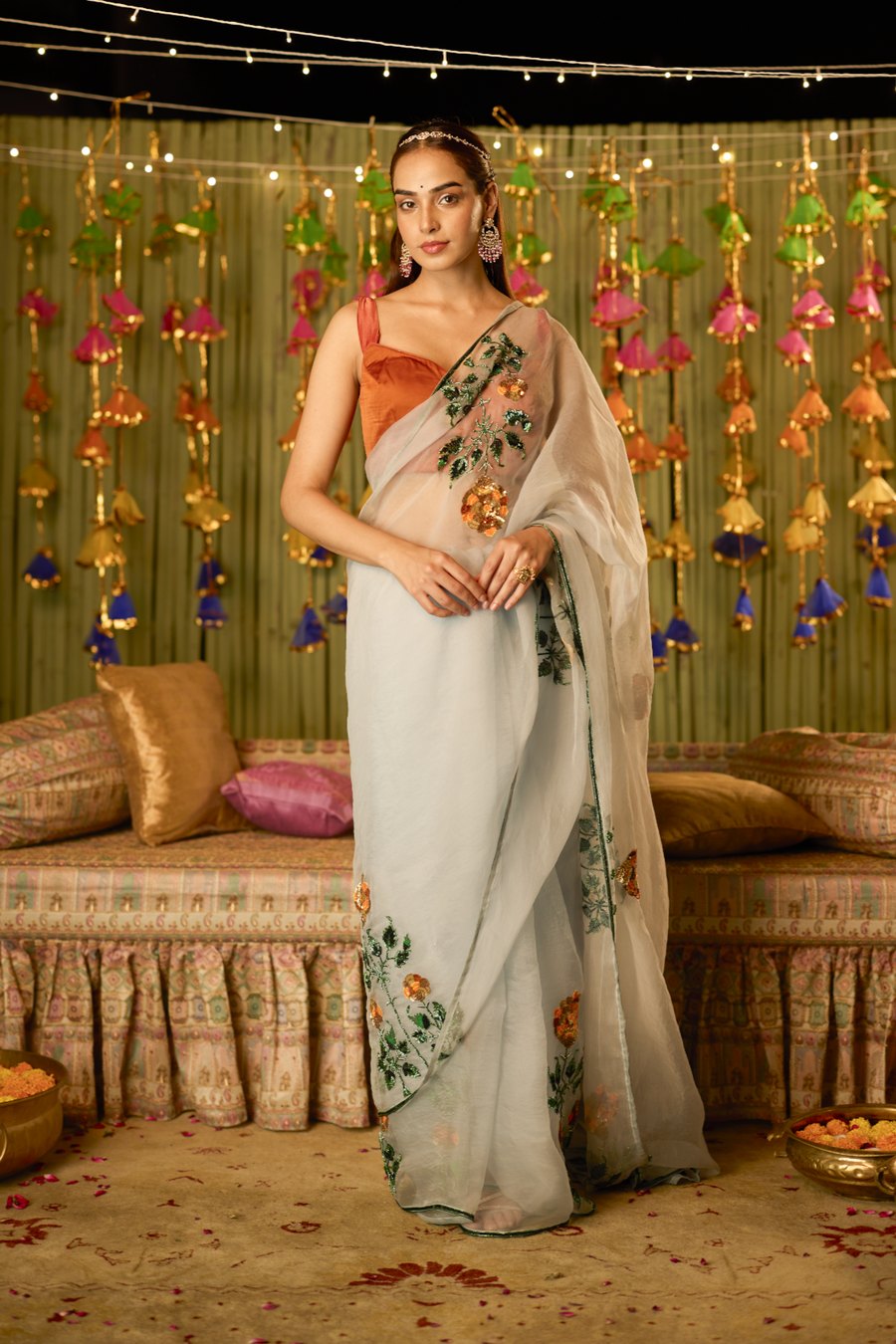
₹48,500
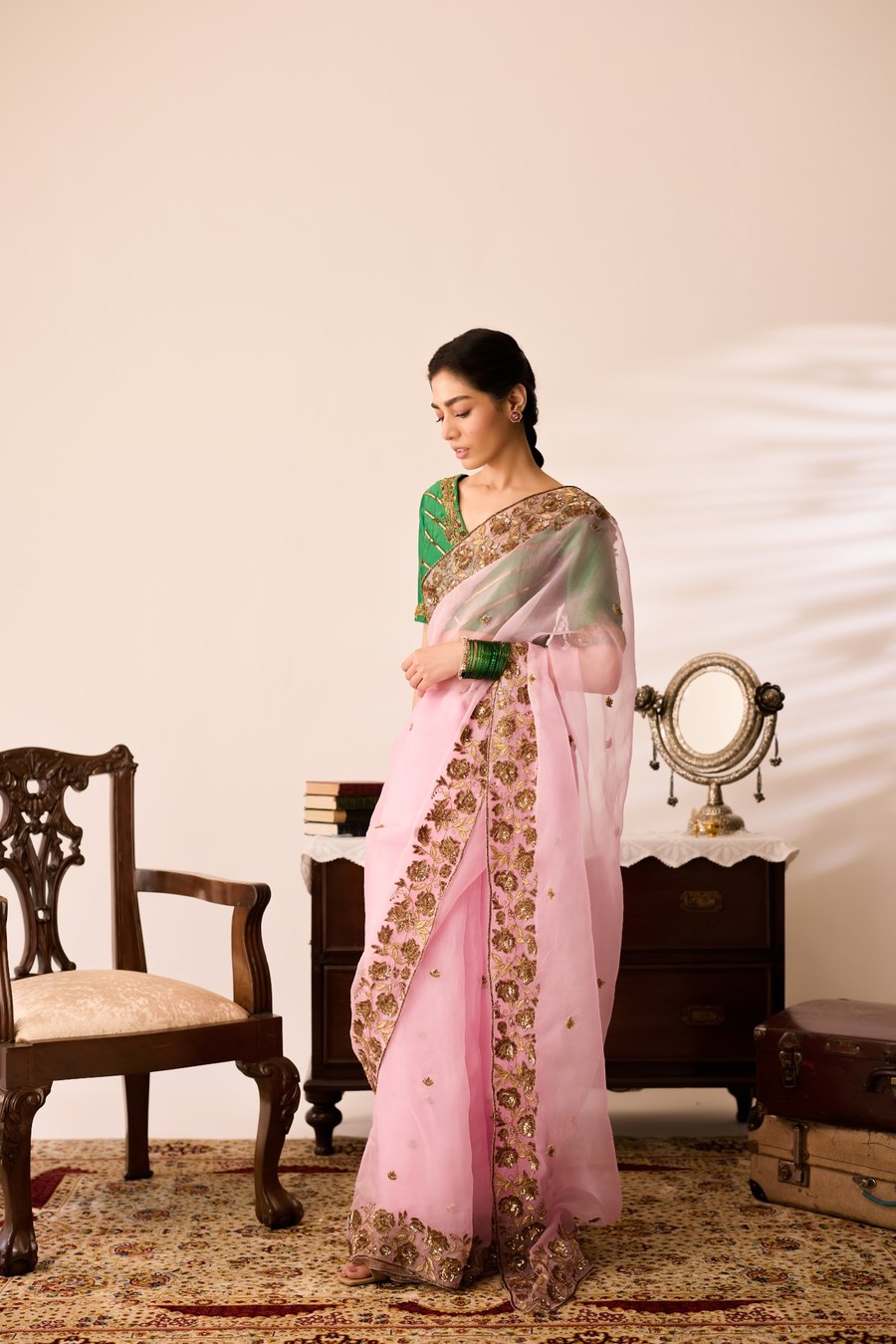
₹46,500
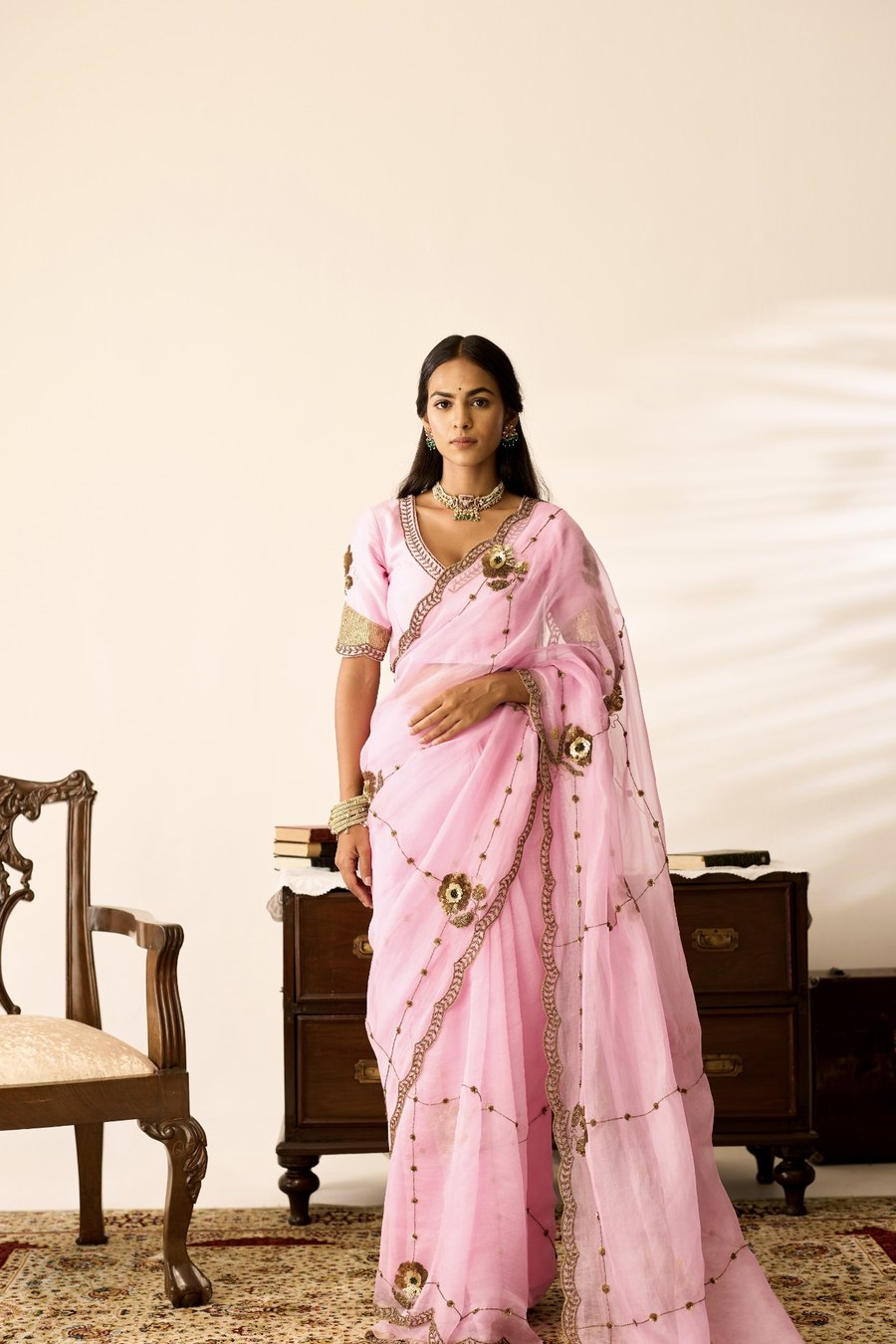
₹46,500
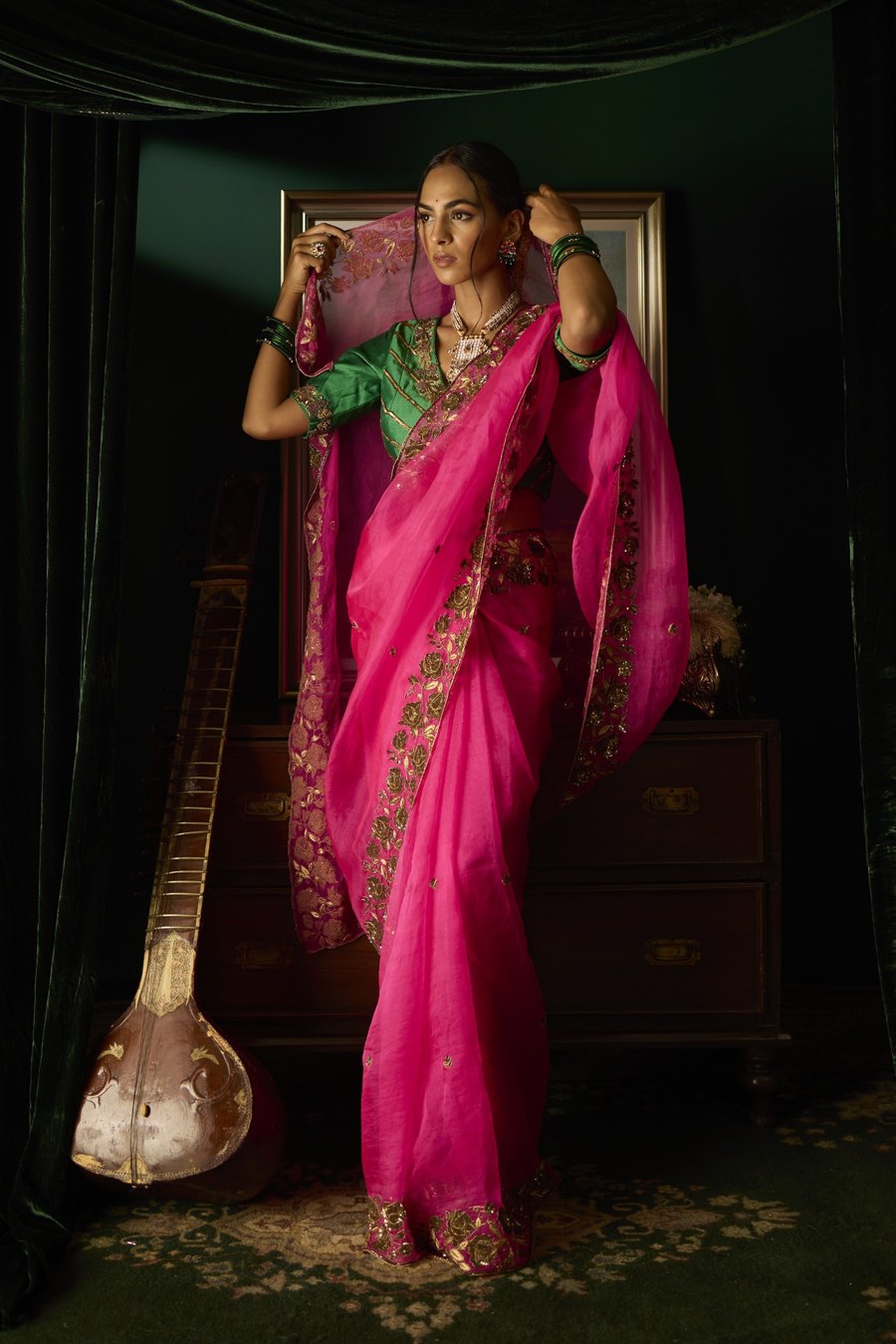
₹46,500
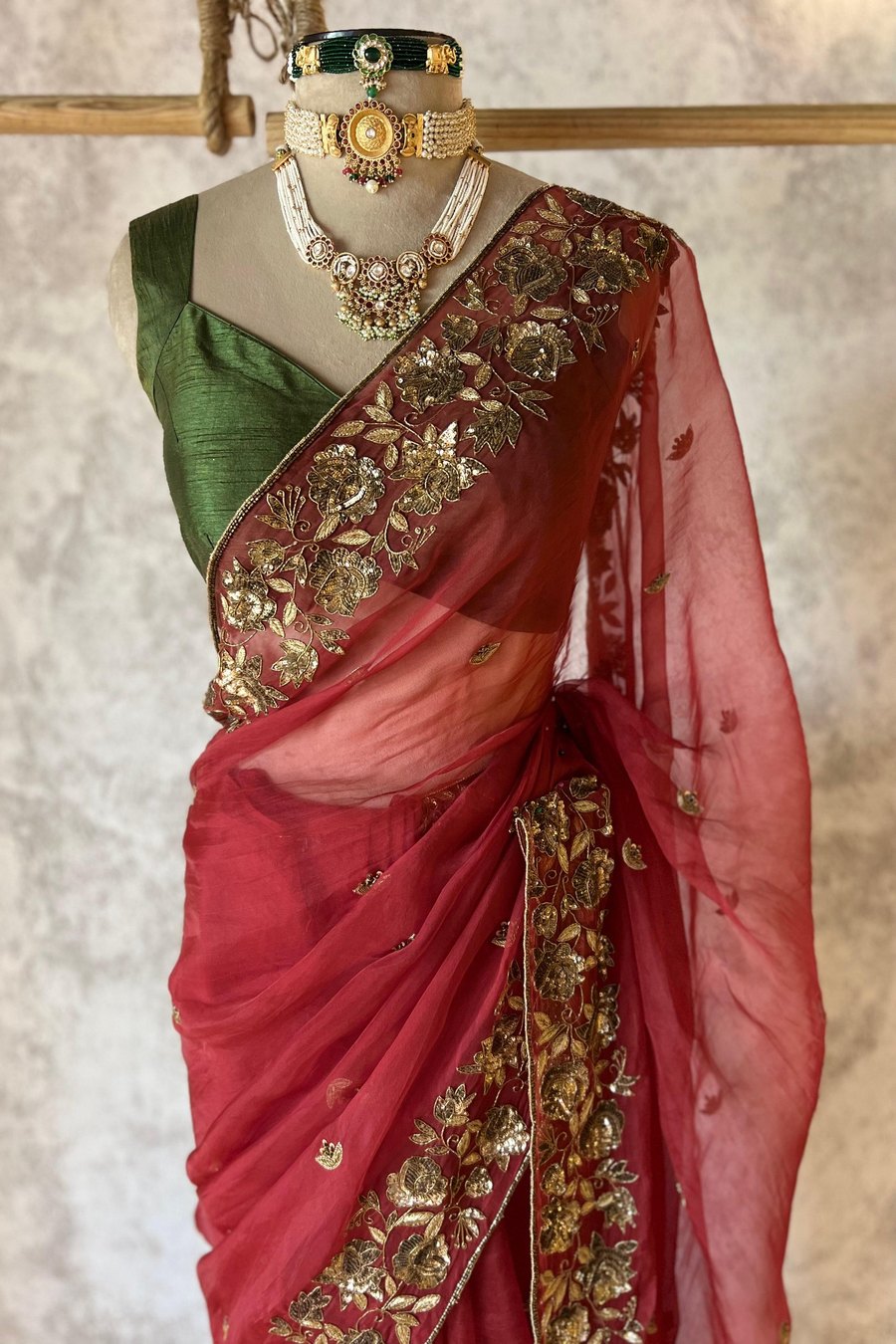
₹46,500
Blouse, drape and wearing the same saree twice
The blouse is where the practical decisions live, and it is also the real saving in a season wardrobe. A good ivory or gold blouse in a cut you are comfortable in can be worn with more than one saree, and that single decision removes one purchase from the calendar entirely. Say at the ordering stage whether you want sleeves and how long, what back you want, and how high you want the neckline. Custom sizing earns its place here, not as a styling preference but as the difference between a blouse you can breathe in through a four-hour ceremony and one you cannot.
The drape itself is simpler than it looks. Organza holds a pleat, so you need fewer pins than you expect — and fewer pins is better, because pins pull on a light cloth. Pleat the saree at home once, before the function, and keep the pleats in a soft fold so you are not fighting the fabric in a hotel room. A thin cotton underskirt under organza, rather than a stiff one, keeps the line straight without adding weight.
Moving one saree from a daytime function to an evening one is mostly a blouse and jewellery change. A lighter piece worn with a short-sleeved blouse and minimal jewellery in the morning reads as a completely different saree from the same piece with a longer sleeve, a darker blouse and a statement neckpiece at night. Nobody at the second event has seen the first one unless you have told them about it — and if the two functions share guests, swap the blouse and it will not register.
Care between functions, not after the season
Do not leave an organza saree folded on the same crease for four months. That is the single thing that damages it most, and it happens to almost every saree that gets worn once in November and picked up again in February. After each function, refold it along a different line and keep it in a muslin or cotton cover rather than a plastic one, away from direct sunlight.
Never iron organza directly. Steam it and let it hang, or have it pressed through a cloth at low heat. The embroidery is handwork, so do not drag the saree across the cloth while you are folding it, and keep it away from anything with a hook or a loose pin that can catch the zardozi.
If a piece does need cleaning, do it after the season rather than after every function — repeated cleaning is harder on a hand embroidered organza than being worn twice. Between functions, air it for a day and refold it, and that is usually enough.
Frequently asked
How many organza sarees do I need for one wedding season?
For most people, three: one deep anchoring piece for the wedding day or the reception, one light piece for the daytime functions, and one more if the season has a big evening. That covers four to six functions if you change the blouse and the jewellery between them. Buy the anchoring piece first and plan the rest around it.
Is organza too warm or too cold for a November to February wedding?
It works for the whole season, which is why we sell most of it between October and February. Organza is light, so it sits comfortably through a long indoor ceremony; for an outdoor function on a cold evening, add a shawl or a heavier blouse rather than a heavier saree. A densely embroidered organza is the warmest option in our range.
Can I wear the same organza saree to two functions of the same wedding?
Yes, and most of our customers do. Change the blouse, change the jewellery, change how you pleat it, and a light organza reads as a different piece. Just avoid wearing the same saree in the same blouse to two events with the same guest list in the same week.
How do I choose the blouse for an organza saree?
Decide the cut and the sleeve length before the piece is cut, not after, because everything is easier to adjust at the fitting stage. Tell us your measurements, how high you want the back and neckline, and whether you want sleeves. A blouse in ivory or gold is the one that will work with more than one saree in the wardrobe.
Will a made-to-order organza saree arrive in time for my first function?
Tell us your first function date when you enquire and we will tell you honestly whether we can make it in time — we would rather say no early than take an order we cannot finish. That is also the reason to start the season with the anchoring piece and order the lighter pieces later.
Explore more: saree · tissue silk sarees — or message us on WhatsApp for styling help.

The information below is required for social login
Sign In
Create New Account