

Invitations usually list four functions now, and most guests pack for one. Choosing a wedding guest saree is a different exercise from choosing a bridal one: the saree that works at a morning haldi is the wrong saree at a sangeet — not because of the colour, b
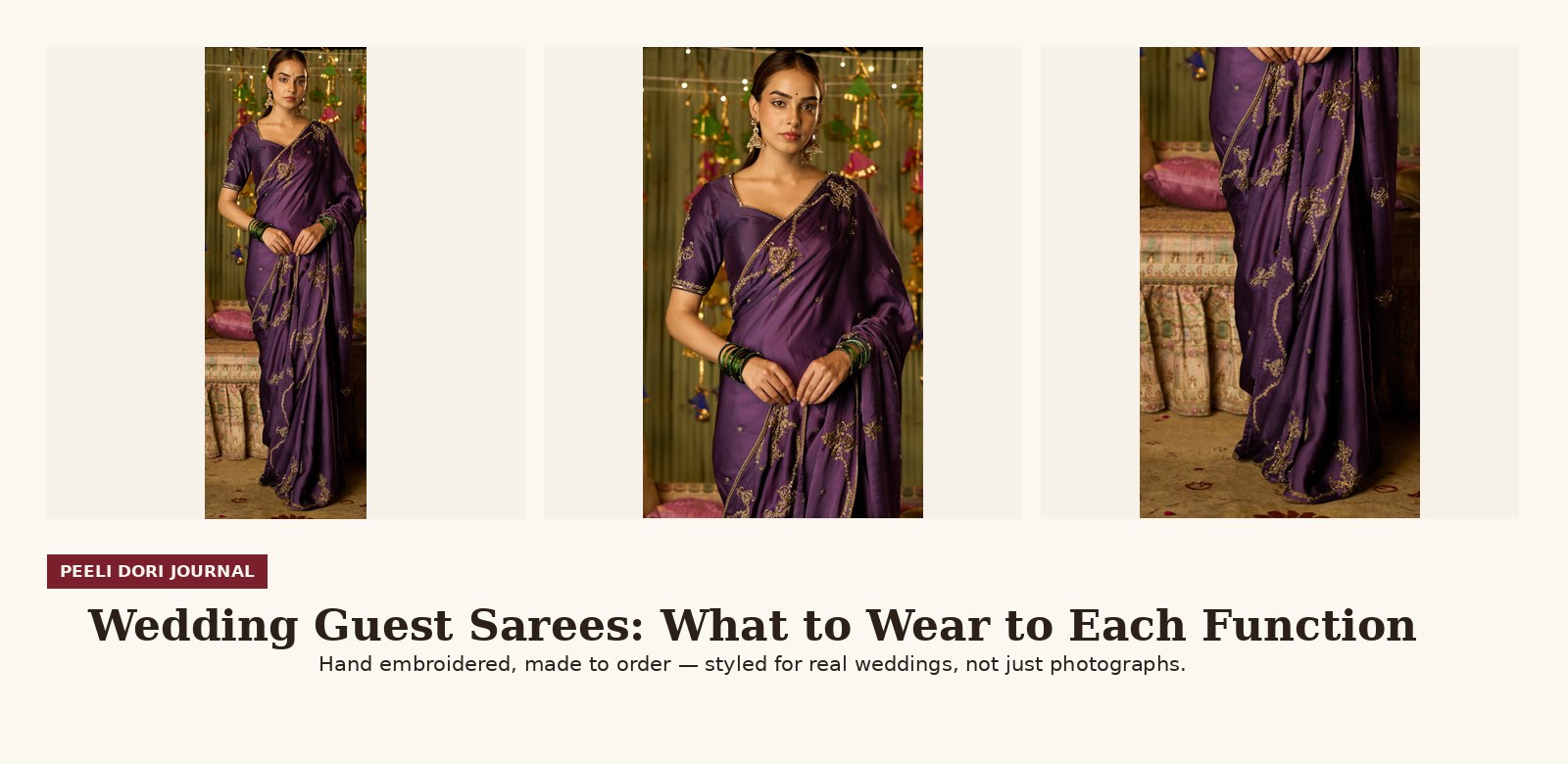
Invitations usually list four functions now, and most guests pack for one. Choosing a wedding guest saree is a different exercise from choosing a bridal one: the saree that works at a morning haldi is the wrong saree at a sangeet — not because of the colour, but because of the cloth, the weight, and what the evening asks your body to do. This is how we dress guests, function by function.
The guest's brief is different from the bride's
A bride has a designer, three fittings and a lighting plan. A guest has a suitcase and a flight that lands two hours before the mehendi. We dress both, and the conversation is completely different. When a bride sits with us we talk about the wedding. When a guest sits with us we talk about the calendar: which functions she is attending, at what hour, whether she will be sitting on a floor, and how close she will be standing to the bride in the group photographs.
That is the honest test of a wedding guest saree: it has to survive a cabin bag, two cities and four functions, and still look deliberate in the one photograph you will actually keep. Very few pieces pass it by accident.
Those four answers decide almost everything. Time of day decides how much a colour can carry. Floor seating decides how much cloth you can manage. Dancing decides how tightly the pallu has to be pinned. And proximity to the bride decides which colours are politely off the table for that particular morning.
The costliest mistake we see is not a cheap saree at an expensive wedding. It is a beautiful saree worn at the wrong function — a heavy silk satin at an afternoon mehendi, a pale pastel at a reception. The piece was never the problem. The slot was.
Haldi and mehendi: daylight, floor seating, henna
Daytime functions are photographed in hard light, often outdoors, and almost always at close range. That changes the fabric shortlist. Organza keeps its shape through a hot afternoon and photographs with a little structure at the shoulder, which is why we send so many guests to it for a haldi. Silk satin, by contrast, creases the moment you sit cross-legged and then keeps the crease in every photograph.
Mehendi has its own constraint: your hands are occupied for hours. A long trailing pallu near freshly applied henna is a stain waiting to happen, so we pin the pallu up on one shoulder and keep the working hand free. If the function is at home, on a terrace or a lawn, choose a colour that holds up against marigold, because there is usually a good deal of it around in the décor.
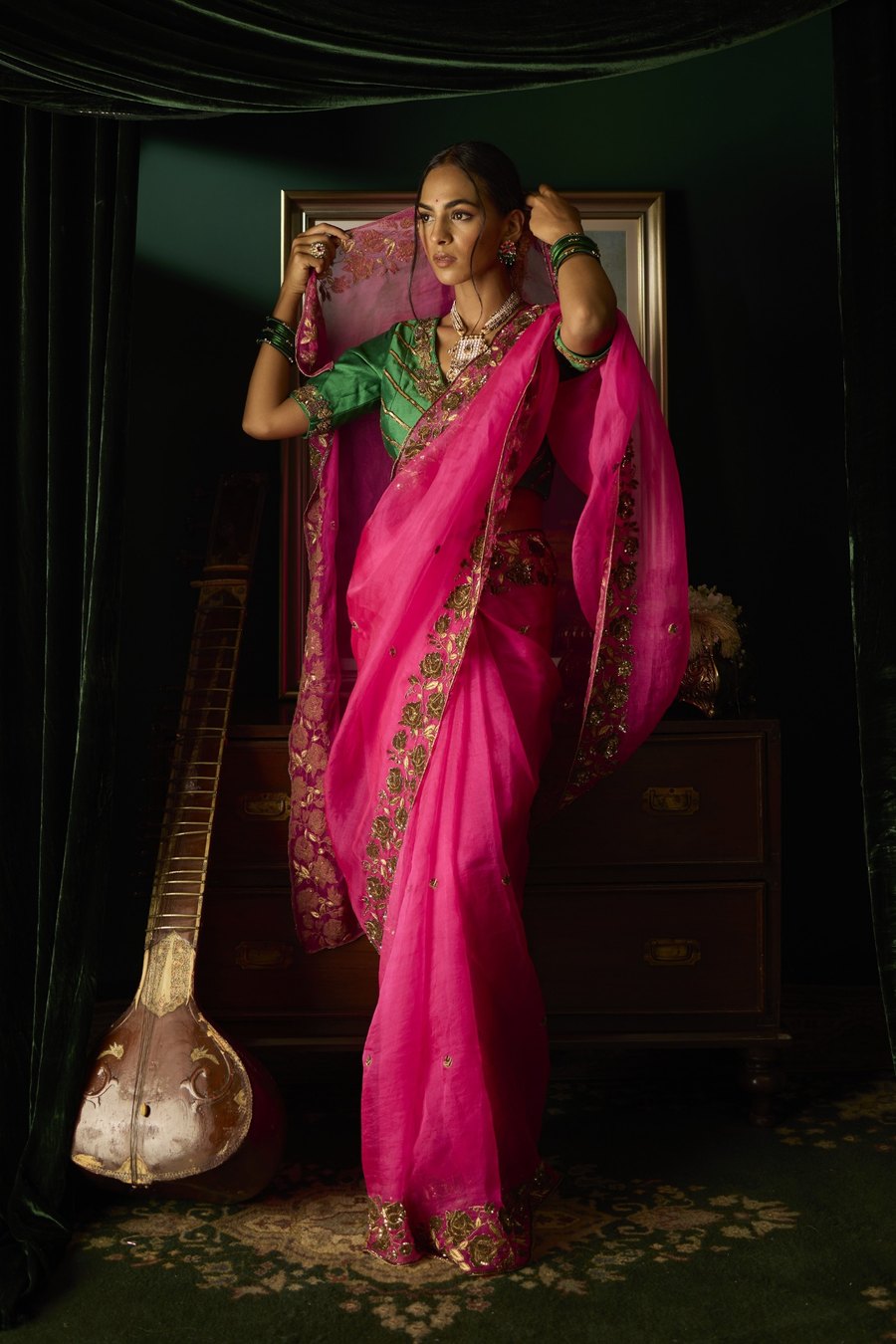
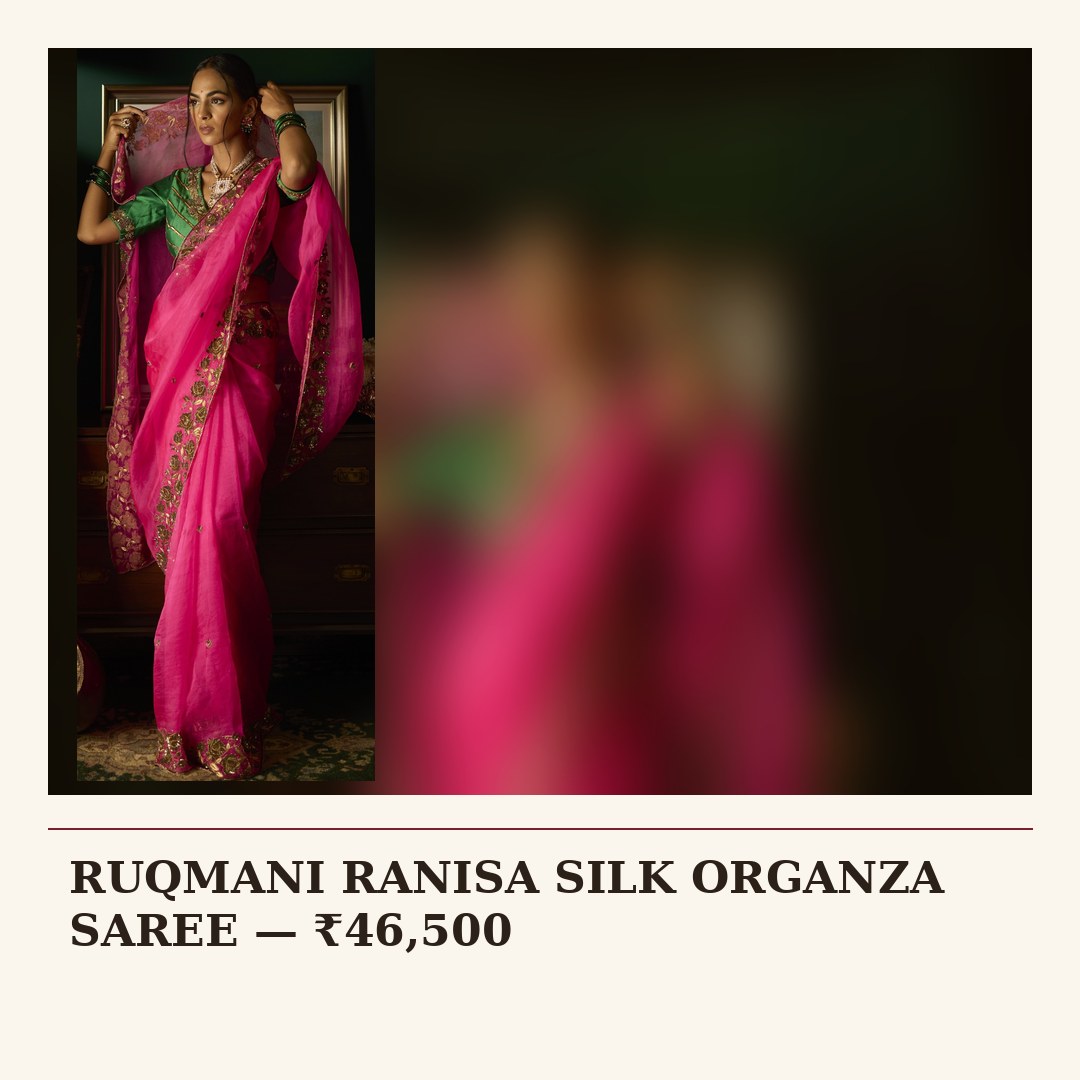
Our picks for daylight tend to be warm and saturated rather than pale. Pale is beautiful in a studio and washes out completely at one in the afternoon. A fuchsia silk saree or a gulabi pink organza has enough weight in the colour to survive the sun, and both sit comfortably with gold jewellery you already own.
Sangeet: dress for the dance floor, not for the photograph
The sangeet is the one function you will be filmed at, usually from a phone held at chest height by a cousin, in a room lit by coloured lights and a DJ. Two things follow. First, cloth that moves. Georgette and organza fall and swing; a stiff, heavy weave stands still while you move, which looks odd on video. Second, a drape that will not need rescuing every ten minutes, because nobody wants to be the guest holding her own pallu while the choreography starts.
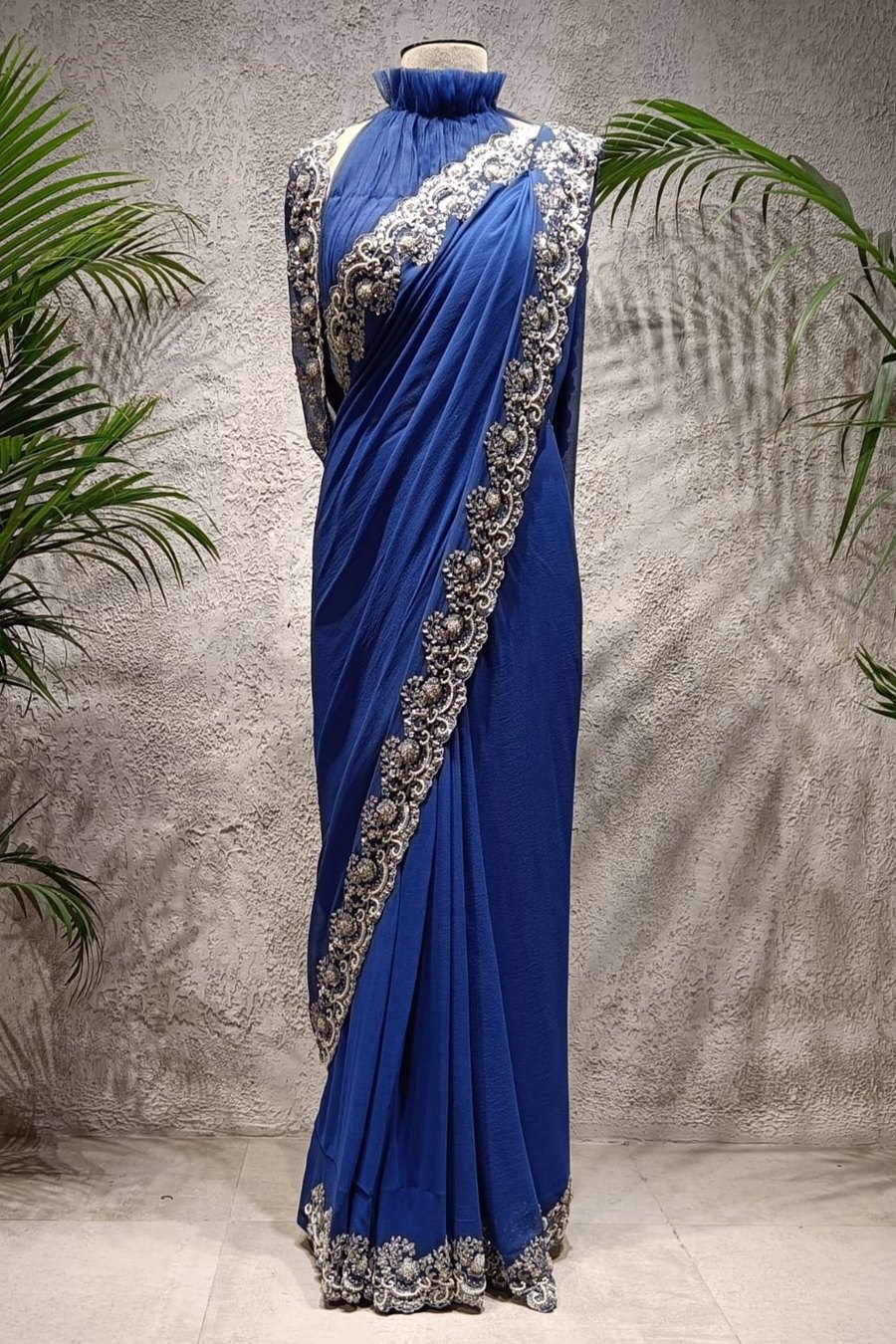
Jewel-lit rooms flatter deep, cool tones. Royal blue, teal, wine — these read as themselves under blue and magenta light, where a pastel turns grey. If you are wearing the same saree to the mehendi and the sangeet, this is the function to keep the darker blouse for.
Practically: pin the pallu at the shoulder and again at the waist, wear the sandals you can actually stand in, and leave the heavy necklace at home. The earrings and the bangles do the work in low light.
Reception: the one night to go deep
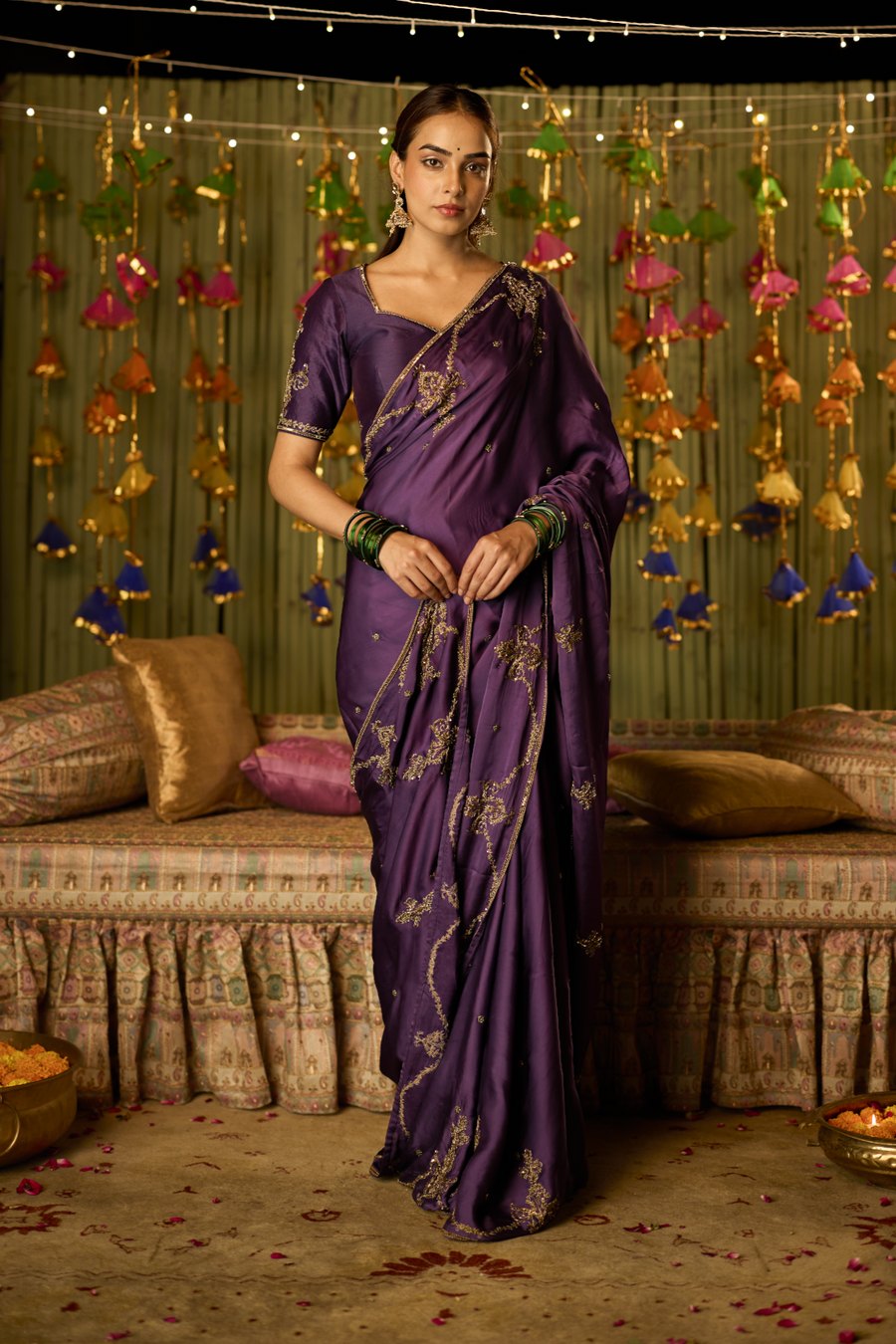
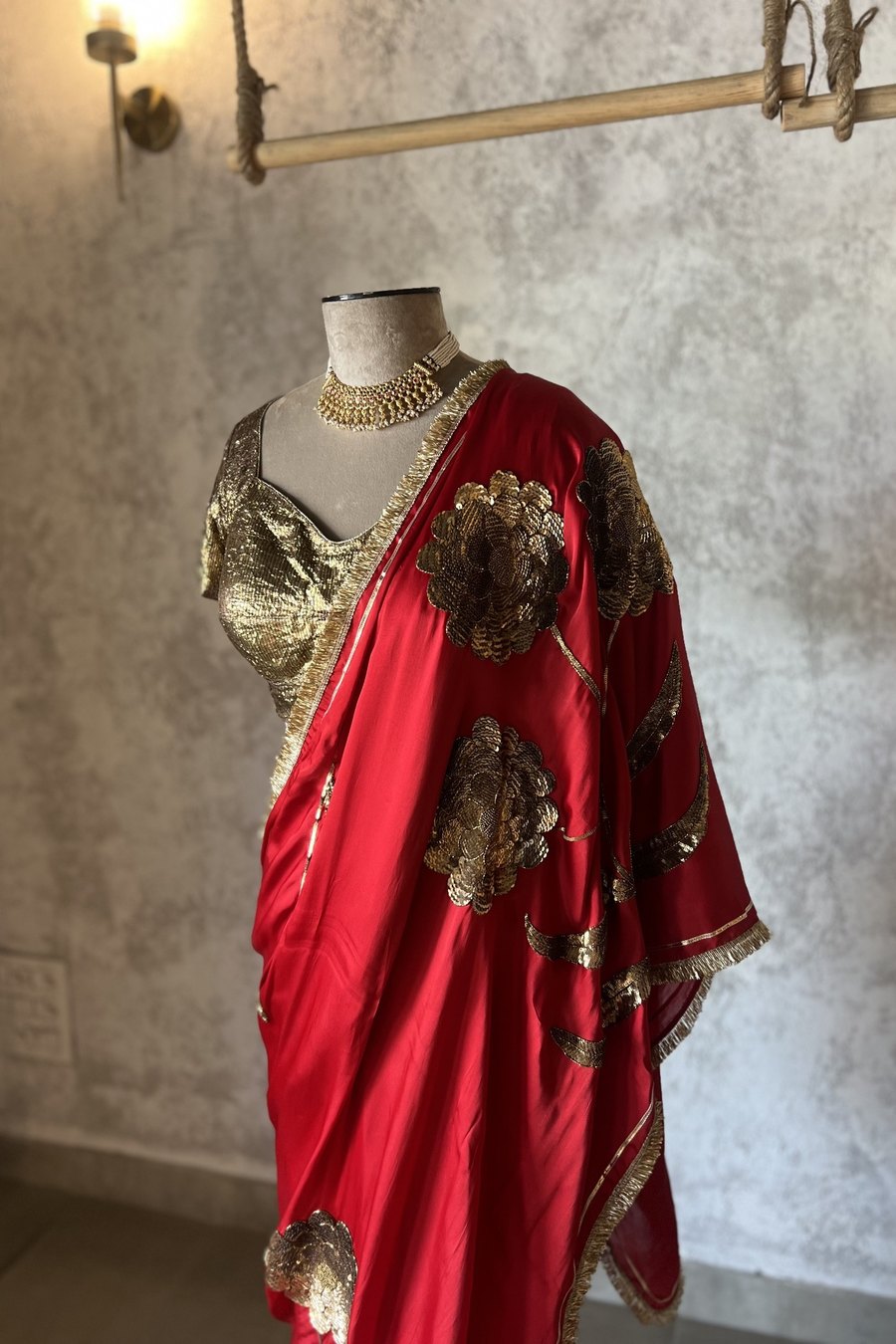
Reception lighting is kind to deep colour and unkind to pastel. It is also the function where guests can dress the most formally, so this is where a red silk satin or an eggplant purple belongs. We are often asked whether red is allowed at a reception when the bride wore red that morning. Usually yes — the reception is a different evening, a different outfit, and in most families the colour protocol relaxes by then.
Silk satin is the obvious reception cloth: it catches light along the pleats, so the saree looks different from every angle, which photographs well in a dim room. If you want the same effect with less weight, a silk organza in a strong colour at the deeper end does nearly the same job and is easier to sit in for a long dinner.
One detail that is worth the trouble: get the blouse fitted to the saree you are wearing it with, not borrowed from another set. On a formal evening it is the blouse that reads as expensive or not.
Six sarees we would send a guest in
These are pieces from the current collection that we would happily send to a wedding as a guest — organised, in our heads, by the function they suit best. Prices are as they are today; the pieces are hand embroidered and made to order, so the blouse is cut to your measurements rather than to a size chart.
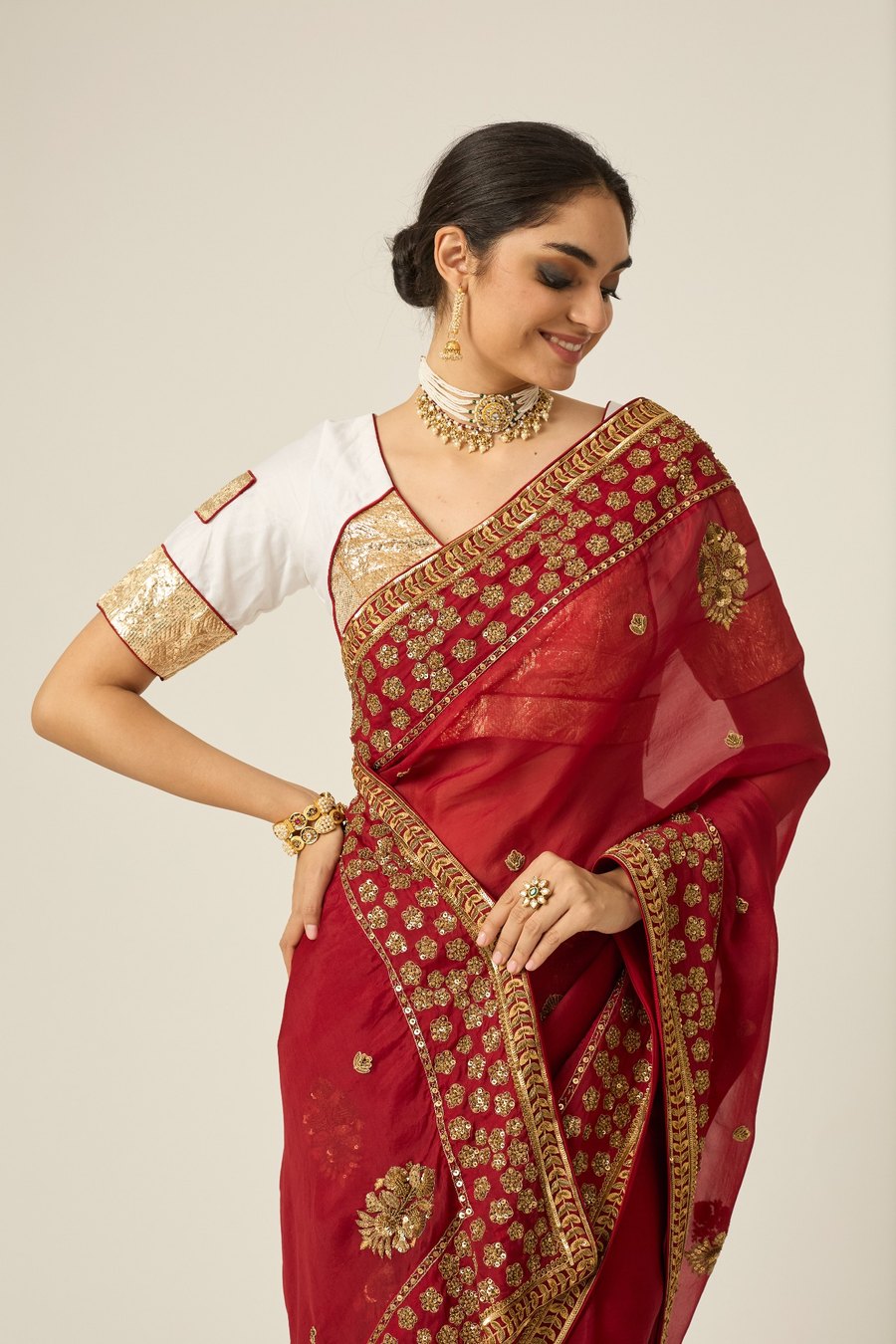
₹59,500
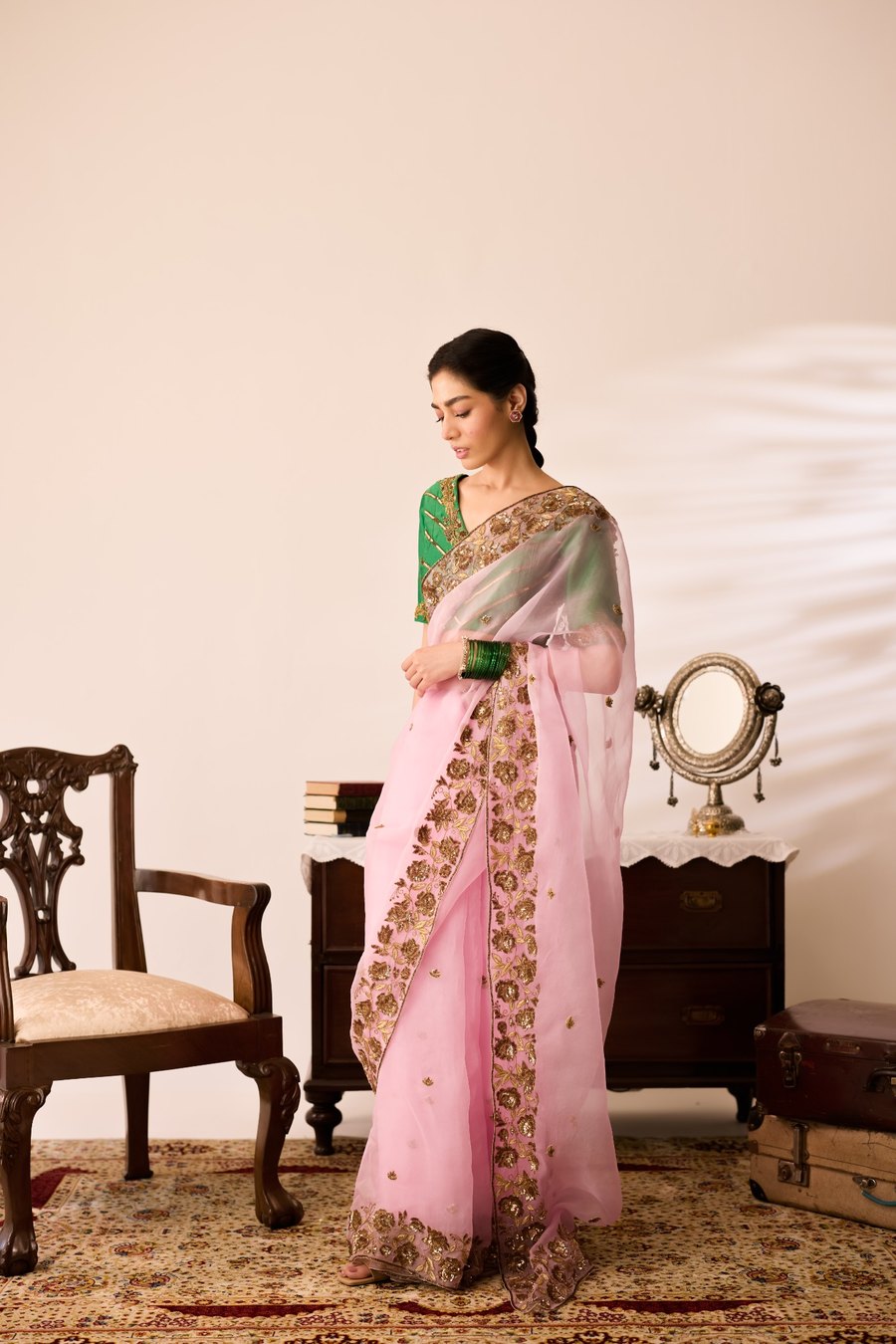
₹46,500
₹43,500
₹39,500
₹46,500
₹46,500
The wedding morning has one rule
Whatever else you wear that week, the morning of the wedding belongs to the bride. In most of the families we dress, that means red and ivory are hers that day, and a guest in either will be quietly discussed in the photographs for years. Deep jewel tones — emerald, wine, royal blue, aubergine — are safe, and they photograph as themselves next to a red lehenga without competing with it.
This is also the function where hand embroidery earns its keep. Up close, in daylight, at a temple or under a mandap, a worked pallu gives the eye somewhere to go; a printed saree next to it looks flat. If you are ordering specifically for the wedding morning, start early enough for the piece to be made and for one round of fitting on the blouse.
Two functions, one saree: what we actually change
Guests travelling for a wedding rarely have room for four outfits, so we build two looks out of one piece. The single most effective change is the blouse. A different neckline, a different sleeve, a different colour on top changes the read of a saree more than a second saree would — a pink organza with its own blouse looks like a daytime outfit, and the same saree with a deep blouse and a pinned pallu looks like an evening one.
The second change is the drape. Pallu open and wide across the front reads formal; pallu pinned narrow on one shoulder reads relaxed and is easier to dance in. The third is jewellery scale: one large piece for the evening, small earrings and bangles for the day. That is the whole system, and it fits in a cabin bag.
If you want help planning the two looks around what you already own, send us photographs on WhatsApp. We do this often enough to tell you within a few messages which of your blouses will work with which saree.
Between the functions: care that saves the week
A guest's saree is worn twice in four days and lives in a suitcase in between. Two habits make the difference. First, steam rather than iron: pressing pleats flat is the fastest way to make a saree look tired, and a hand-held steamer at the hotel does most of the work. Second, do not fold a worked saree along the same line for days on end; roll it loosely in muslin for travel and unfold it as soon as you reach the room.
Food and henna happen at weddings. If something lands on the saree, blot it — never rub — and let it dry before you touch it again. Turmeric and henna both set with heat, so keep a stained piece away from the iron and give it to a professional cleaner once you are home. Do not store it in a plastic bag afterwards; cloth needs to breathe.
Frequently asked
What should a guest wear to a sangeet?
Cloth that moves — georgette or organza — in a deep, cool colour, with the pallu pinned at the shoulder and the waist so you can dance without holding it. Keep the jewellery to earrings and bangles; the room is dark and heavy pieces disappear in it anyway.
Can a wedding guest wear red?
At the reception, almost always yes. At the wedding ceremony itself, in most families red and ivory belong to the bride that morning, so we steer guests to emerald, wine, royal blue or aubergine instead.
Is a silk saree too heavy for a daytime mehendi?
Silk satin usually is — it creases when you sit on the floor and the crease stays in photographs. Silk organza or georgette in a saturated colour is the better afternoon choice, and it keeps its shape through a long function.
Can I wear the same saree to two functions?
Yes, and most of our travelling guests do. Change the blouse, change the drape and change the scale of the jewellery. A second blouse alters a saree more than most people expect.
Do you make the blouse to my measurements?
Every piece is made to order, and the blouse is cut to your measurements rather than to a standard size. Send your measurements on WhatsApp before the piece goes to the karigars and we will confirm them with you. Free shipping across India above ₹10,000; international shipping uses code INTSHIP above ₹89,000.
Explore more: reception · saree — or message us on WhatsApp for styling help.

The information below is required for social login
Sign In
Create New Account