

A bridal dupatta is not the dupatta you wear to a friend's mehendi with a nicer border. It is a piece of cloth with a job: cover a head at the mandap without slipping, carry the photograph from the shoulder down, and still be in the right place eight hours lat
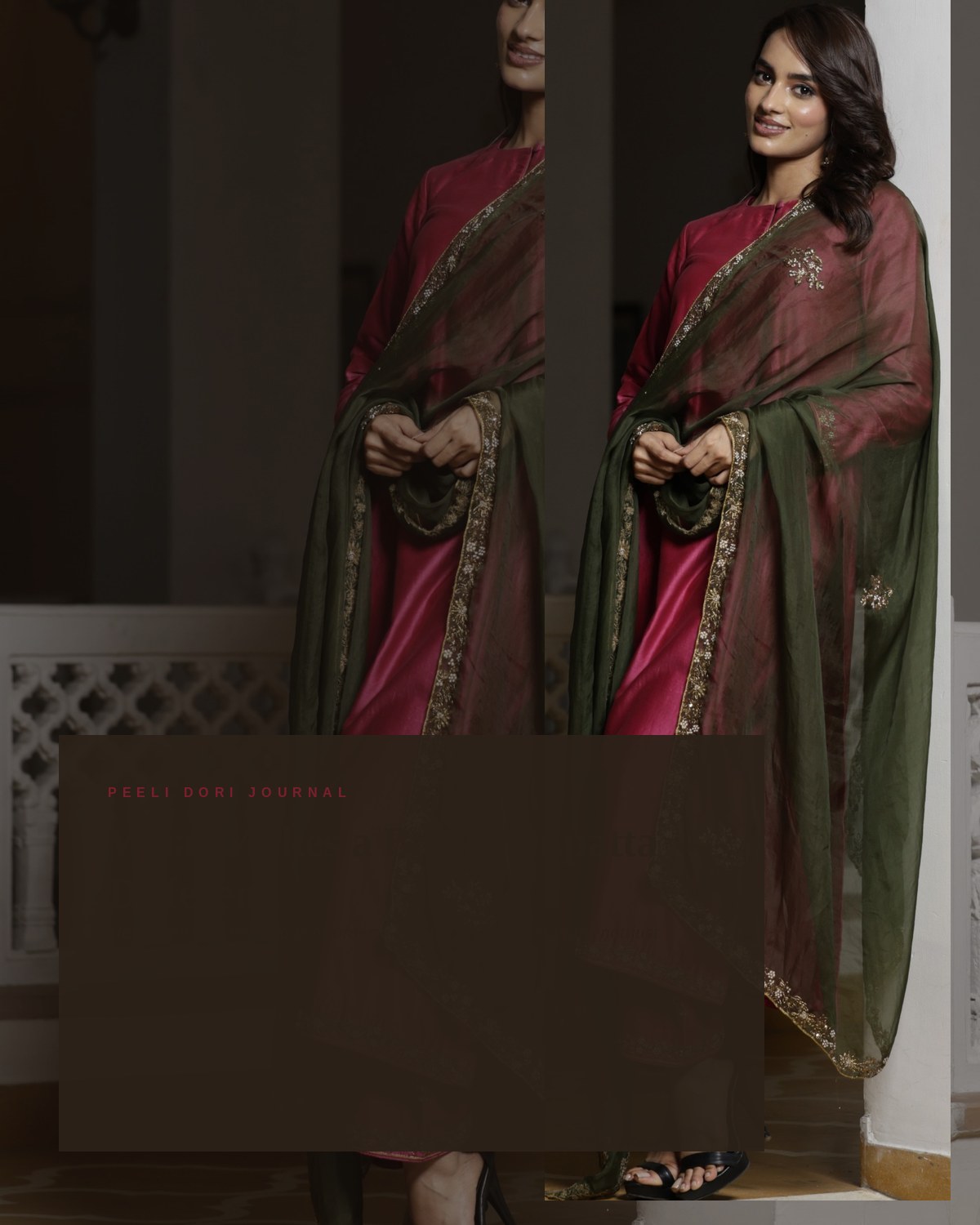
A bridal dupatta is not the dupatta you wear to a friend's mehendi with a nicer border. It is a piece of cloth with a job: cover a head at the mandap without slipping, carry the photograph from the shoulder down, and still be in the right place eight hours later when the last picture is taken.
Three jobs, one piece of cloth
Think about what a wedding dupatta has to do in a single day. In the morning it is a head covering, in front of both families, in a room where every phone is pointed at the bride. In the afternoon it is the thing that moves in every photograph, which means its border and its fall matter more than its colour. In the evening it is weight on a blouse that was fitted three weeks earlier, pulled in four directions by people hugging her.
That is why a wedding dupatta behaves differently from the one you throw over a kurta on a normal Tuesday. It is longer, heavier, and cut with the weight deliberately pooled at one end. When a customer tells us she will just wear her regular organza dupatta with the bridal lehenga, we usually ask her to bring the blouse along and try it. Nine times out of ten she comes back for a heavier piece.
Everything below is about choosing that heavier piece with some control, instead of discovering on the morning of the wedding that the palla hangs two inches short of the photograph she wanted.
What actually changes: length, width, and the weight budget
Length first. An everyday dupatta is often 2.25 metres. A bridal one usually runs 2.5 to 3 metres, and the extra cloth is not decoration — it is what allows a proper head drape plus a pleat stack at the shoulder plus a palla long enough to reach past the elbow. Shorten the length and the drape gets tight, and a tight drape pulls out of its pins the moment she raises her arms.
Width matters just as much. A one-metre width covers a shoulder. It does not cover a head and both shoulders at the same time while still showing the blouse. If the ceremony includes a ghoonghat or a pallu over the head, ask for the wider width and check it standing up, not sitting down.
The last number is the weight budget: how much dupatta the blouse can carry. A hand-embroidered blouse with a fitted waistband and a proper seam allowance can hold a heavy palla comfortably. A light georgette blouse with a thin strap will not, whatever the pins do. The dupatta has to be chosen with the blouse in the room, because the blouse is the part that does the holding.
This is also where fabric decides behaviour. Organza holds a pleat and keeps a crisp edge, which is why it photographs so well and why it also needs more careful pinning — it springs back. Net and fine silk fall closer to the body and cover more, so a heavier embroidered border can sit on them without the whole piece standing out from the shoulder.
The palla is the part that gets photographed
In most bridal dupattas one end carries the work: a deep border, a broad corner, a field of gota or zardozi that is meant to be seen. Everything about how that end falls is decided at the cutting table. A heavy palla on a narrow shoulder will drag the pleats backwards all evening. A light palla on a wide shoulder looks like it is floating.
Our rule of thumb is that the weight of the palla should not exceed what the shoulder can anchor without the blouse shifting. If the customer wants both a heavily worked palla and a wide shoulder pleat, we usually balance it by keeping the field of the dupatta plain and putting the work in the border only. The eye reads the border as richness; it does not need the whole field to be busy.
Practical test in the store: drape it, then have her raise both arms as if for a photograph. If the palla swings forward and the pleats open, the weight is wrong for that blouse. If it moves and settles back, it will survive the day.
Bride, sister, guest: three different dupattas
The bride's dupatta has to work with a head covering and has to hold the widest border in the room. The sister's or the groom's sister's dupatta usually needs to be lighter — she is standing, walking, carrying things, adjusting someone else's drape — so a long, heavy palla is a liability. The guest's dupatta is the simplest piece of the three and gets the most wear afterwards, because it will be worn again at other weddings.
We say this plainly because the market pushes every woman at a wedding towards the bridal register. A guest in a heavy zardozi palla at an afternoon ceremony looks overdressed and feels uncomfortable by the second hour. A lighter piece with a good border reads as considered, and she can wear it to the next four weddings.
If the family is ordering together, we try to keep one element in common — the border language, or the metal of the embroidery — and vary the weight. That is what makes a group photograph look like a family instead of a shop rack.
Matching it to a lehenga, matching it to a saree
With a lehenga, the dupatta is often the only large piece of cloth in a colour that is not the skirt. Two approaches work. The first is a different ground with the same border — a powder blue over a deep red, for example — which separates the two pieces in the photograph. The second is the same ground with a much heavier border, which keeps the outfit quiet and lets the work carry it.
With a saree, the dupatta is doing a smaller job: it adds a layer, covers the head if needed, and it can be the piece that makes the blouse look intentional. Here the safest choice is a tone close to the saree's ground with a border in the same metal as the saree's work.
One thing we insist on: check the pairing under the light it will be worn in. A maroon dupatta next to a maroon lehenga looks like a match in daylight and like two different colours under warm reception lighting. Carry both pieces to a window, then to the warmest lamp in the house, and decide there.
Six pieces from our own rack
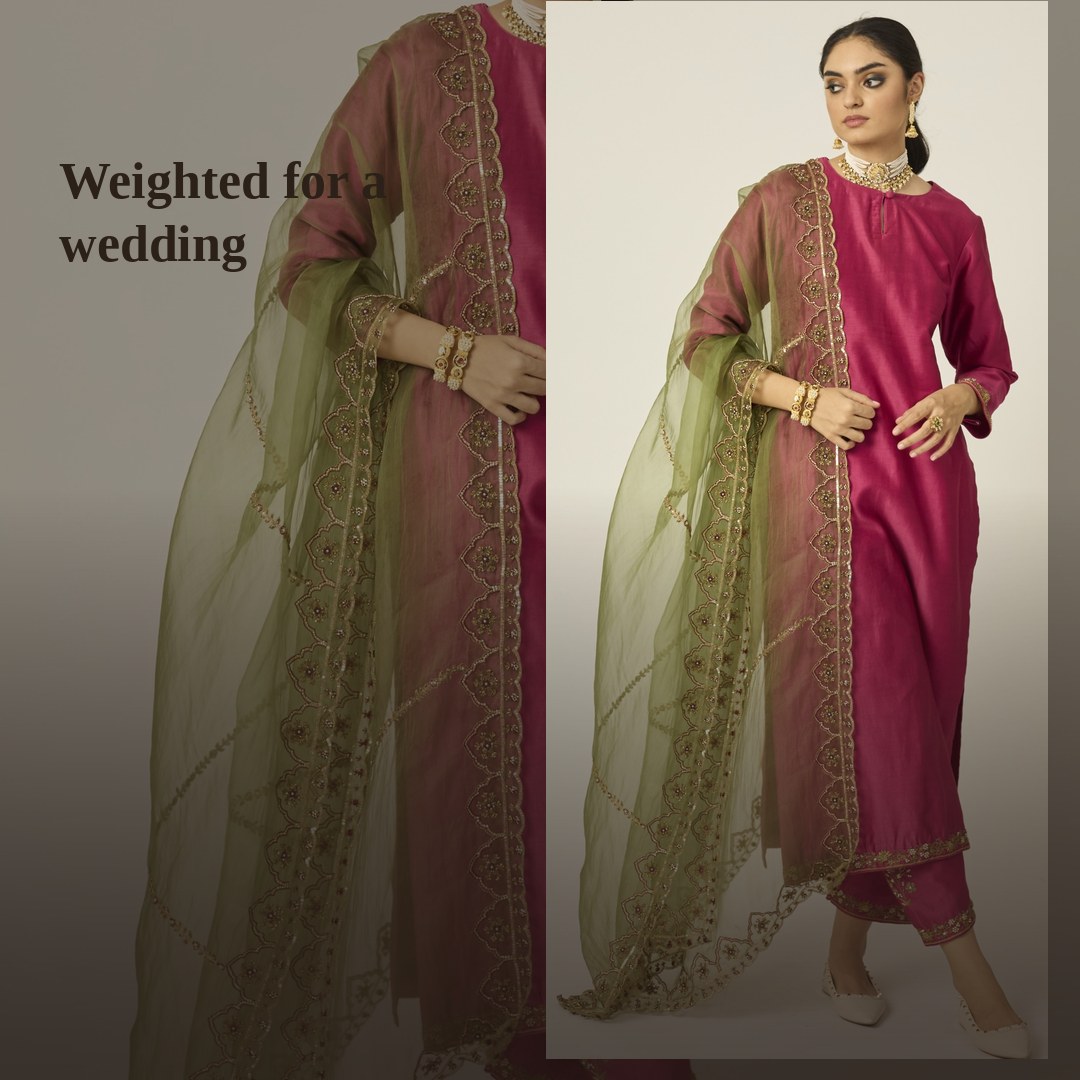
These are all hand embroidered and made to order, so the measurements are yours rather than a size chart. The three at the top of the list are the bridal register; the three below them are for the family and for the functions around the wedding.
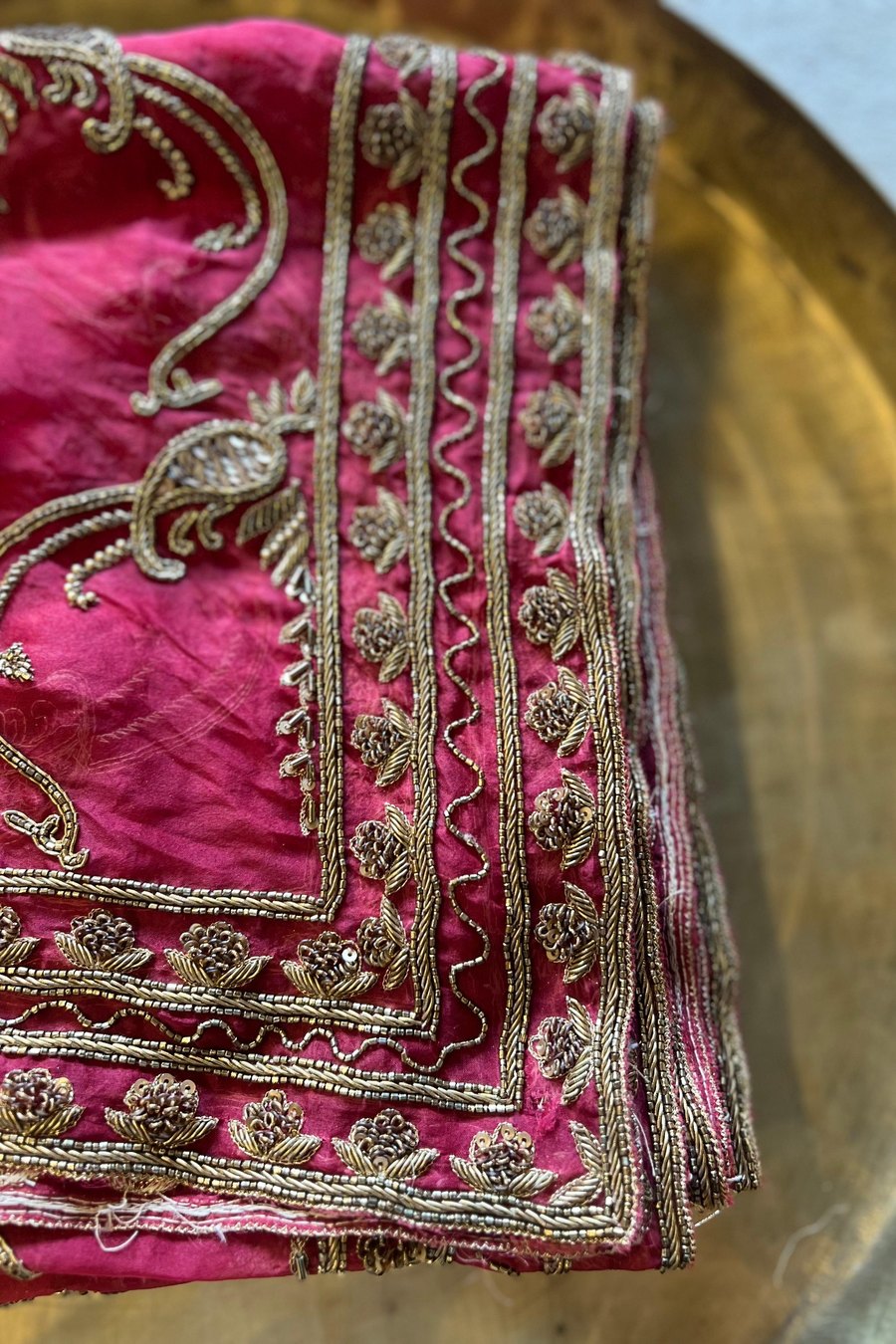
₹55,900
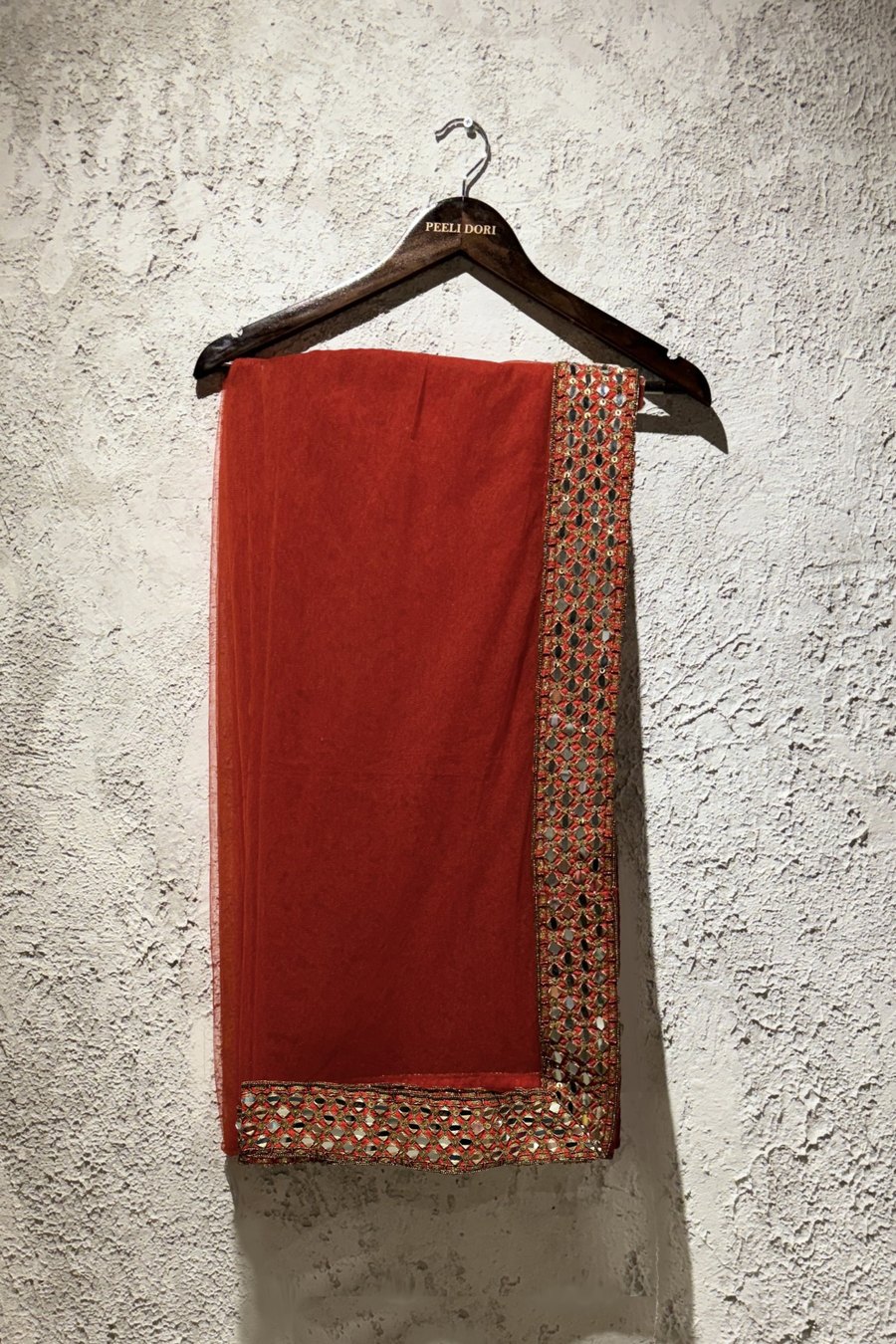
₹35,500
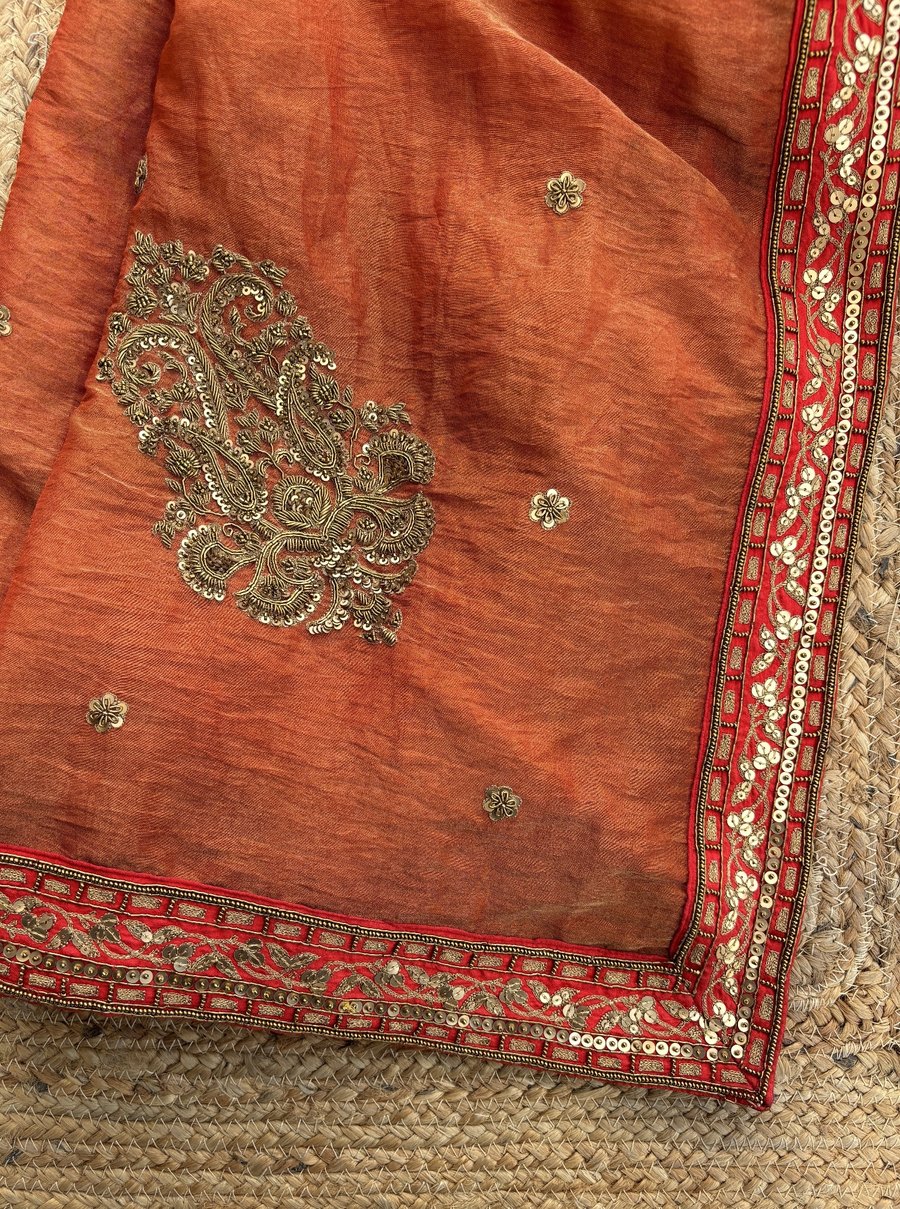
₹34,500
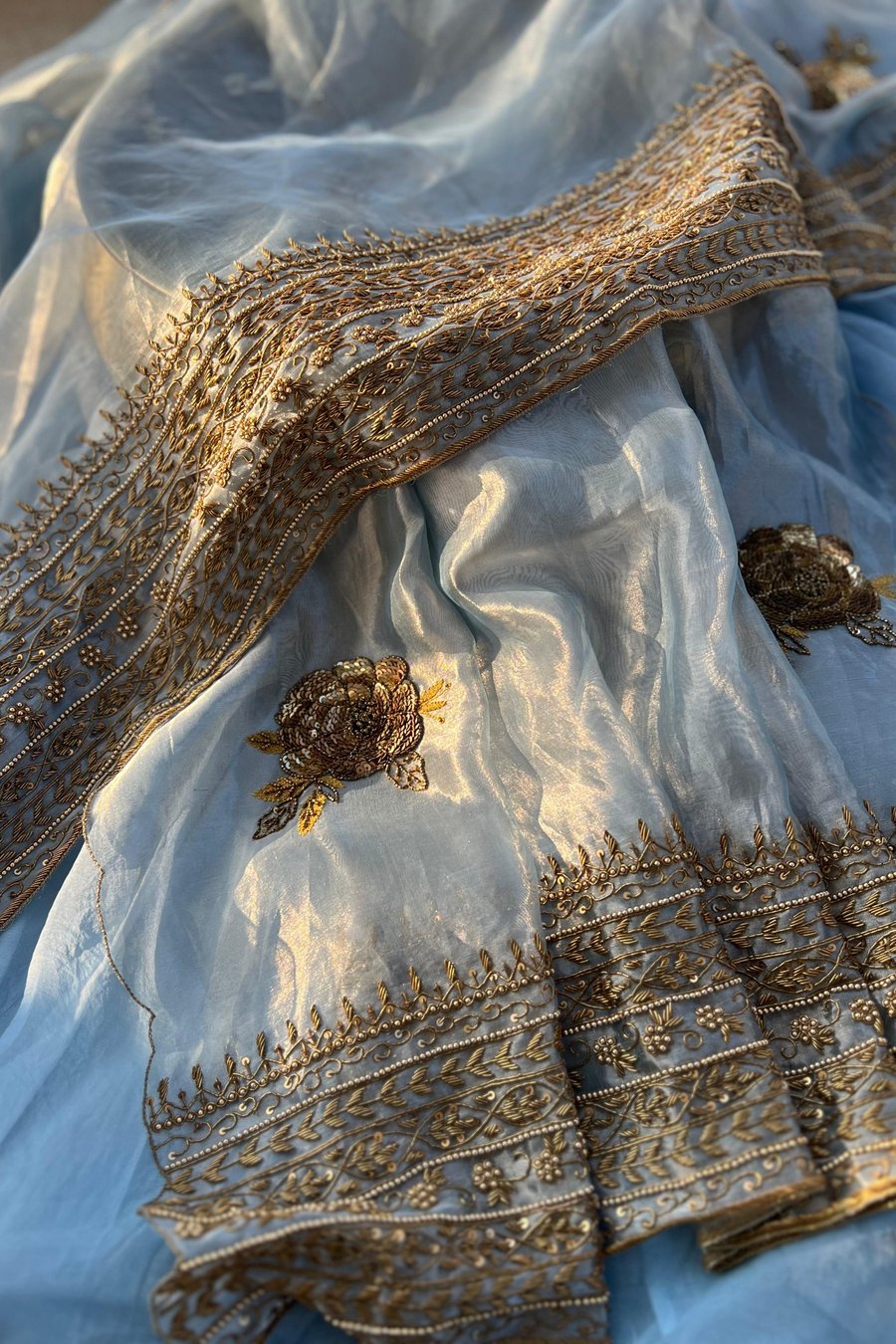
₹22,500
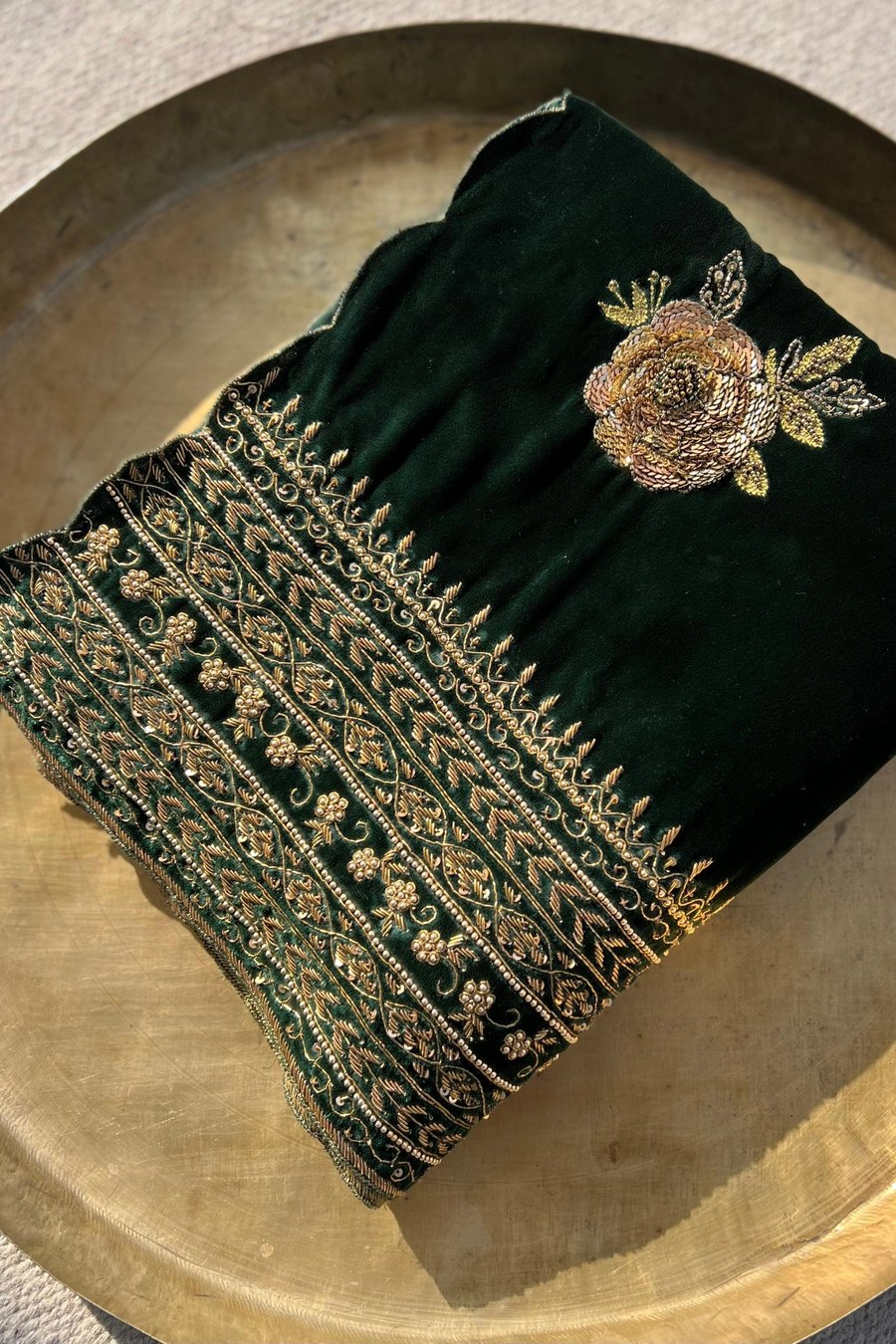
₹22,400
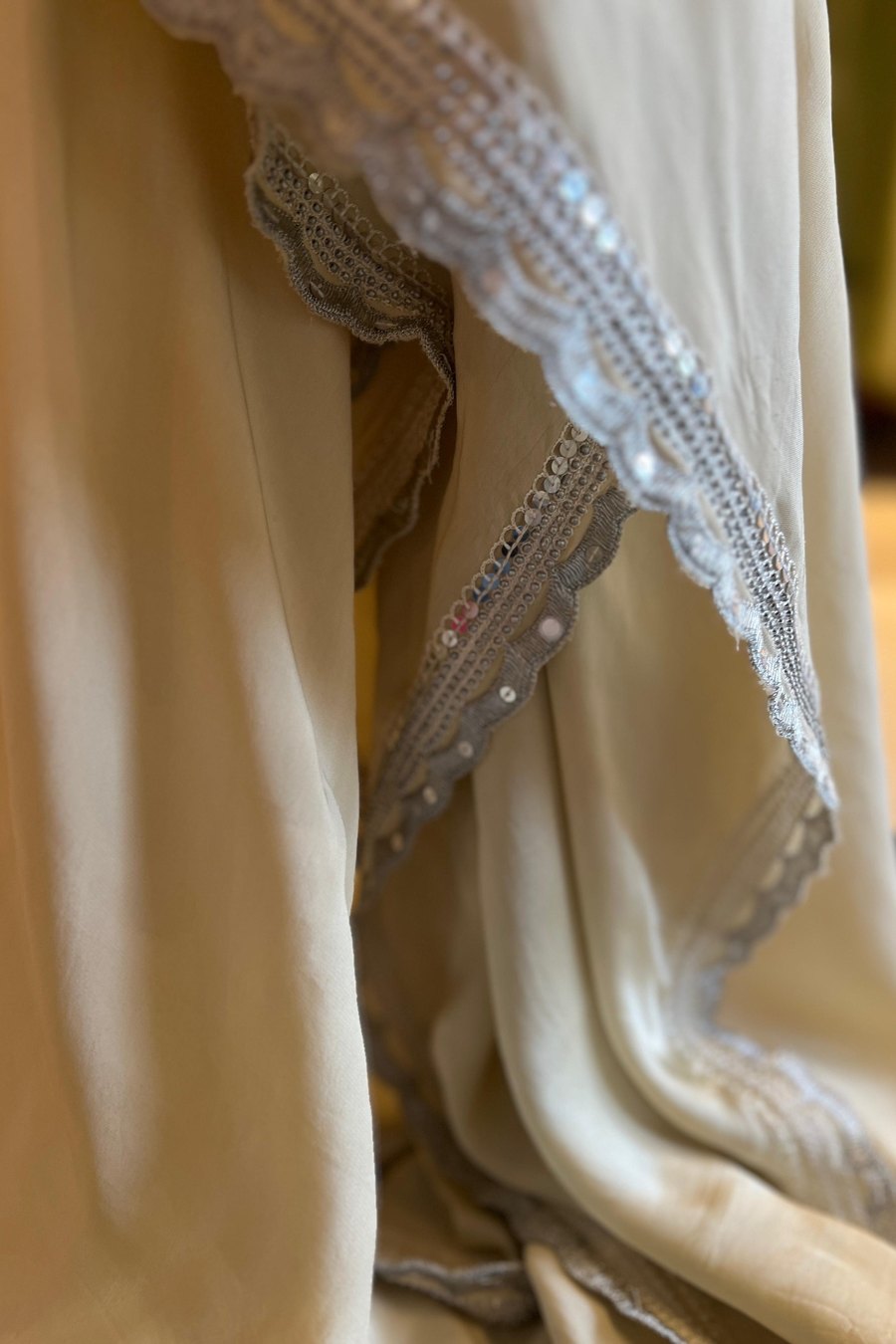
₹19,500
The try-on checklist
Six things, in this order, and none of them take more than a minute.
One: the head drape. Pin it at the parting and see whether the cloth is opaque enough against the light of a window. A dupatta that is beautiful on the shoulder and translucent over the face will be a problem at the mandap.
Two: the raise-arms test, standing. Three: the sit-down test, on a low seat, because that is what a puja or a long dinner does to a drape. Four: walk ten steps and turn, since the palla has to swing and come back.
Five: the blouse seam. If the pins are going into the embroidered panel rather than a seam allowance, the drape is being held by threads and will not last the evening. Six: jewellery. Put on the necklace and the earrings with the dupatta in place, because a heavy necklace and a heavy shoulder pleat compete for the same six inches.
If any of those six fail, the fix is usually the blouse, not the dupatta — a slightly higher waistband, a broader shoulder seam, or a lining that can take a pin.
Between the functions
A bridal dupatta is usually the most heavily worked piece in the wardrobe and the least washable. After the wedding, have it dry-cleaned once, then leave it alone. Do not iron the embroidered border: press the cloth from the reverse, over a soft towel, with the iron barely touching. Zardozi and gota both flatten permanently under a hot iron.
Store it rolled, not folded, around a muslin-covered tube if you have one, and in a cotton bag rather than plastic. Folded, a heavy border creases along the same line every time, and those creases eventually break the metallic thread. Keep it away from the wall of a cupboard that gets damp in the monsoon, which is a real problem in Delhi and a bigger one in Dehradun.
If it is going to be worn again at a family wedding two months later, take it out once, let it breathe for a day, and roll it back. That is the whole routine.
Frequently asked
How long should a bridal dupatta be?
Usually 2.5 to 3 metres, against 2.25 metres for an everyday dupatta. The extra length is what allows a head drape, a shoulder pleat stack and a palla that still reaches past the elbow. If you are shorter than about 5 feet 2, ask for 2.5 metres and a slightly narrower pleat stack rather than a shorter palla.
Can I wear my regular organza dupatta with a bridal lehenga?
You can, and it will look fine in photographs, but it will not hold a head drape or a heavy border for eight hours. Organza springs back out of pleats and a light organza will not carry a zardozi palla. A heavier piece in the same colour is the safer order.
Should the bridal dupatta match the lehenga exactly?
Not necessarily. A different ground with the same border separates the two pieces in a photograph. An exact match works when the border is much heavier than anything on the skirt. Check both under daylight and under warm reception light before deciding.
How many pins does a bridal dupatta need?
Four to six for a head drape: the parting, both shoulders, the waistband and one where the palla crosses the arm. Pin into the blouse's seam allowance, never into the embroidered panel. If it needs more than six, the weight is wrong for that blouse.
Can a bridal dupatta be made in custom measurements?
Yes — our pieces are made to order, so length, width and border depth can be set for the wearer. Send us the measurements or come to the Shahpur Jat or Dehradun store and try the drape standing up. We also do fit checks on WhatsApp before the piece goes into production.
Explore more: saree · lehenga · kurta set — or message us on WhatsApp for styling help.

The information below is required for social login
Sign In
Create New Account