

A dupatta gets pinned before breakfast, unpinned for lunch, held with one hand at the mandap and pulled over your head twice. Most of the slipping is not the cloth's fault. It is where the pins went. Why a dupatta slides off in the first place There are o
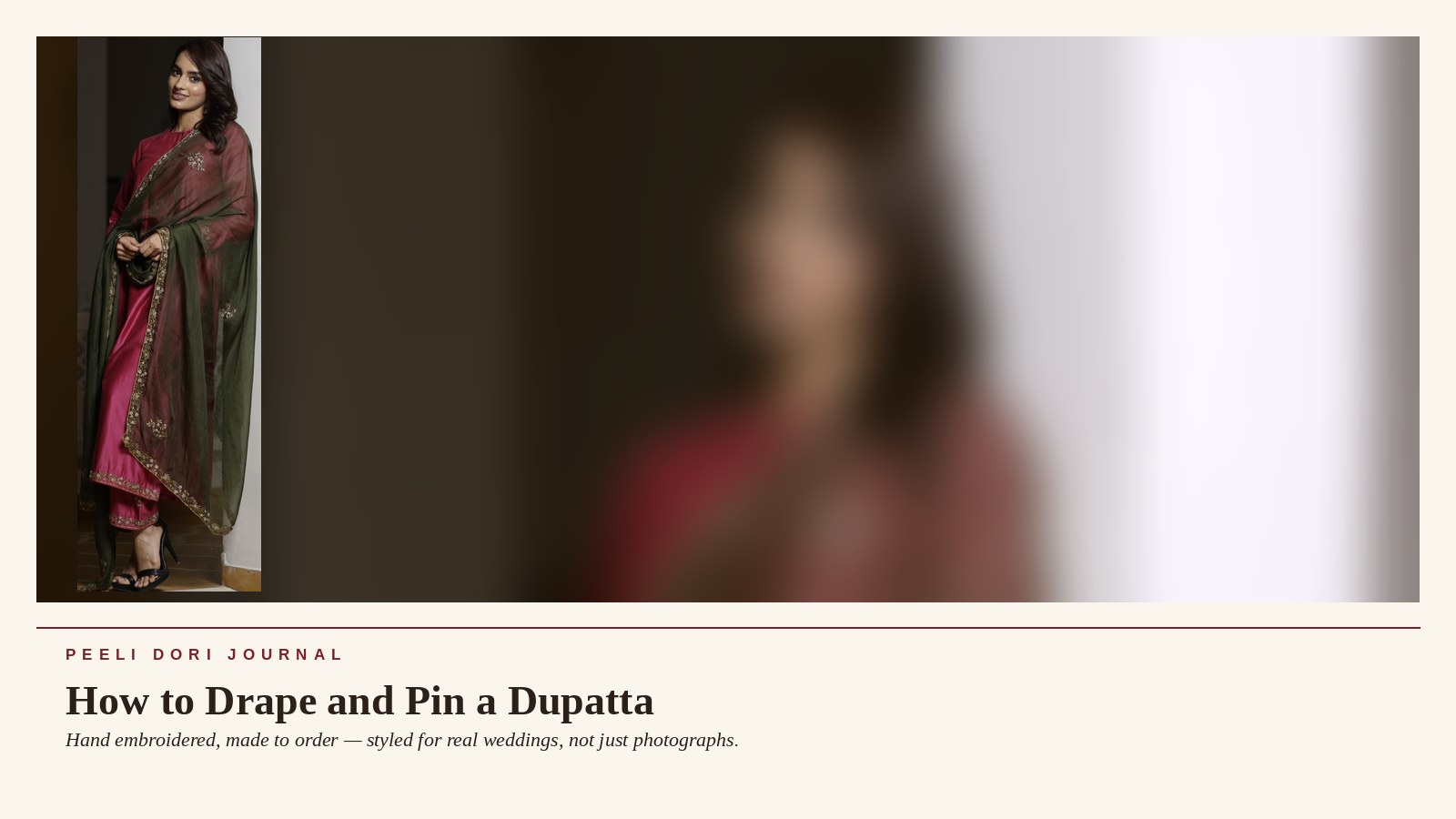
A dupatta gets pinned before breakfast, unpinned for lunch, held with one hand at the mandap and pulled over your head twice. Most of the slipping is not the cloth's fault. It is where the pins went.
Why a dupatta slides off in the first place
There are only three reasons a dupatta misbehaves, and none of them is bad luck. Nothing is bearing its weight. There are too few pleats for the amount of cloth. Or the pins went into the embroidered panel instead of a seam, so the whole thing is hanging off a dozen threads rather than off the garment.
A dupatta is a long piece of cloth with almost no structure. Left to itself, gravity pulls the heavy end down until the pleats collapse, and the shoulder end walks backwards until it drops. The trick is not to pin it more tightly. It is to give it a place to hang from, then let the weight sit where it can be carried.
This is the same conversation we have in the store when a customer collects a made to order piece and says she will manage the drape at home. She usually can. What she cannot do is invent a pinning plan in the five minutes between the hair appointment and the car.
The four anchor points, in the order you pin them
Start at the shoulder and work down. Pin one: the shoulder seam of the blouse, on the inside, through the seam allowance so the pin never shows on the right side. Pin two: the same point on the other shoulder, if the drape uses both. Pin three: the side of the waistband or petticoat, which stops the palla from swinging forward every time you turn. Pin four: under the arm, only if you are dancing, and only through the blouse's side seam.
The order matters. If you build the pleats first and look for somewhere to attach them afterwards, the pleat stack ends up wherever your hand happened to be, usually too far forward, and the whole drape pulls to one side for the rest of the evening.
For a head-covering drape, there is a fifth point: the crown, at the parting. Pin it there before you pin the shoulders. A dupatta pinned at the shoulder first and draped over the head second will slide back all through the ceremony.

Building a pleat stack that survives a sangeet
Hold the dupatta at the point where it should sit on the shoulder and gather five to seven folds, each roughly two inches deep, all facing the same direction. Press them flat with your thumb and forefinger. Then pin the base of the stack, not the middle, with two pins crossed in an X. Crossing them is what stops the folds fanning open when you lift your arm.
The stack should sit slightly behind the shoulder bone, not on top of it. On the shoulder bone it looks correct in the mirror and collapses within the hour, because the joint moves underneath it.
Cloth decides how much work this is. A crisp silk organza holds a pressed pleat almost by itself, which is why it is the easiest fabric to drape and the hardest to keep still on a windy outdoor lawn. A satin slides, so it needs a wider stack and one more pin than feels necessary. A heavy bridal dupatta with a worked palla behaves differently again: the weight at the end keeps the pleats taut, so you can pin more lightly at the shoulder and let the palla do the holding.
The pin matters as much as the pinning
Fine steel safety pins, the small ones, do less damage than anything decorative. Brooches are lovely and they concentrate a lot of weight on one point, so use them as decoration over a pin that is already doing the work, never as the only thing holding the drape.
Never push a pin through zardozi, dabka or a dense gota panel. The metal work is attached by threads that a pin can catch and lift, and a lifted thread on a hand embroidered piece is a repair, not a quick fix. Go into the blouse's seam allowance, into the lining, or into the plain ground of the dupatta near an edge.
On a very fine fabric, pinch a small fold of cloth between your fingers and pin through the fold rather than flat through a single layer. The fold gives the pin something to grip and leaves a mark you can steam out in a minute.
Four drapes and what each one asks for
The open single-shoulder drape, pinned at one shoulder with the rest falling free, needs the most length and the least pinning. Two pins at the shoulder, one at the waist if you are moving around, and nothing else. It is the drape for a reception where you will be standing and being photographed.
The double drape across both shoulders, with the palla brought forward over one arm, is the most secure and the most formal. Pin both shoulders, then bring the palla over the forearm and pin it to itself, not to the blouse, so your arm can still move.
The front pleated drape, with the pleat stack at the waist and the palla over the left shoulder, suits a lehenga best because the skirt already holds volume. Build the stack at the waistband, pin it there, and pin the shoulder last so the pleats stay where you placed them.
The cape or open drape over a kurta set uses no pleats at all. Two pins, one at each shoulder seam, and the dupatta worn open like a light layer. It works because a kurta set is already a complete outfit; the dupatta is finishing, not covering.
Six dupattas on the site, and the drape each one suits
If you are choosing a dupatta for a drape rather than for a colour, the fabric and the palla decide more than the shade does. These are the pieces we would put in front of you depending on what the evening asks for, and every one is hand embroidered and made to order.
For the open single-shoulder drape at a reception, the Prabha silk organza has the crispness to hold a shape on its own. For a wedding where the dupatta has to look substantial in photographs, the Sarangi and Meera bridal dupattas carry the weight that a formal double drape needs. The powder blue Gulmohar is for the guest who wants a lighter layer over a lehenga, and the Gulmohar velvet is the one for a December evening. The Mastani satin is the softest of the group and drapes closest to the body, which makes it the easiest to pin and the least likely to stand away from the shoulder.
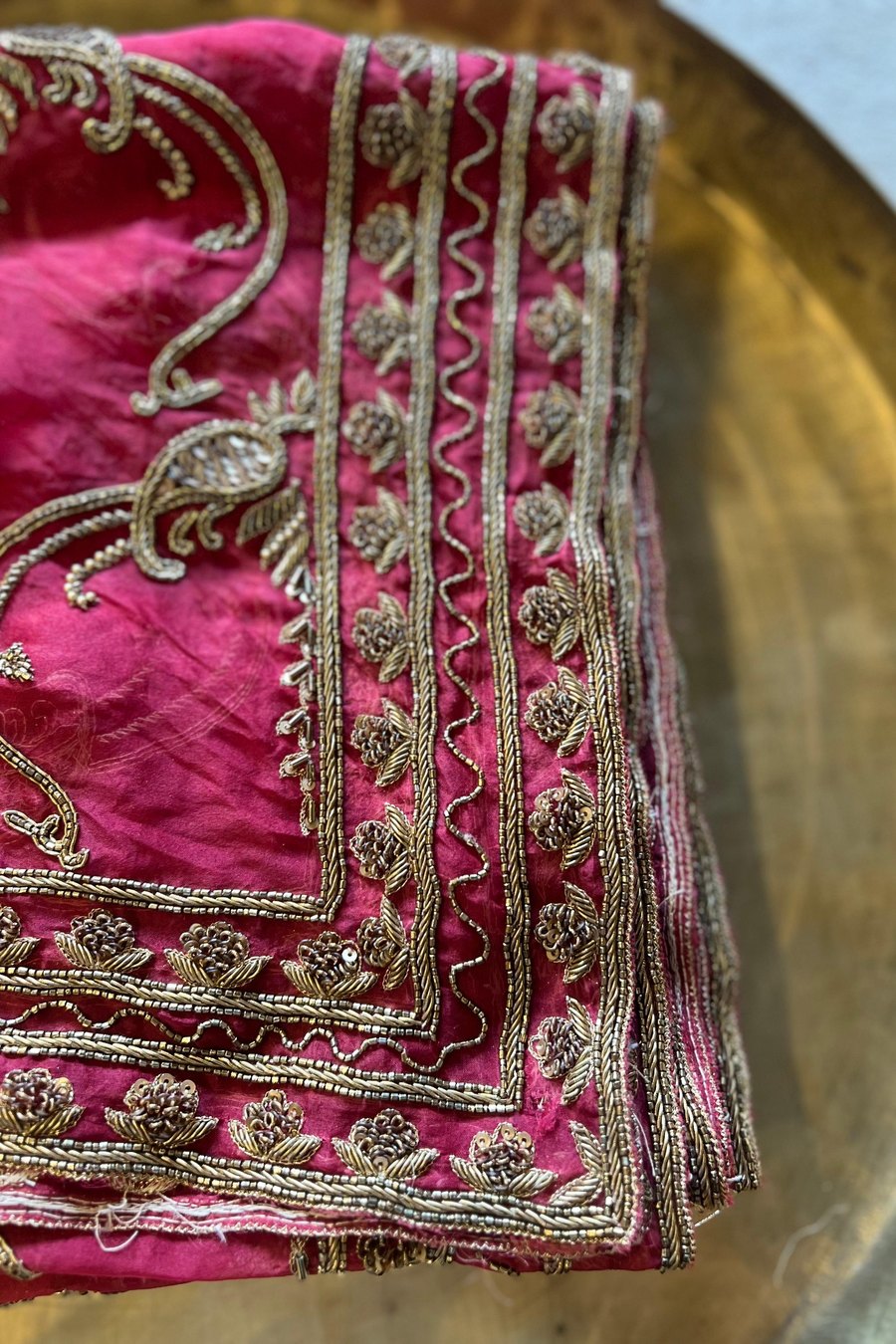
₹55,900
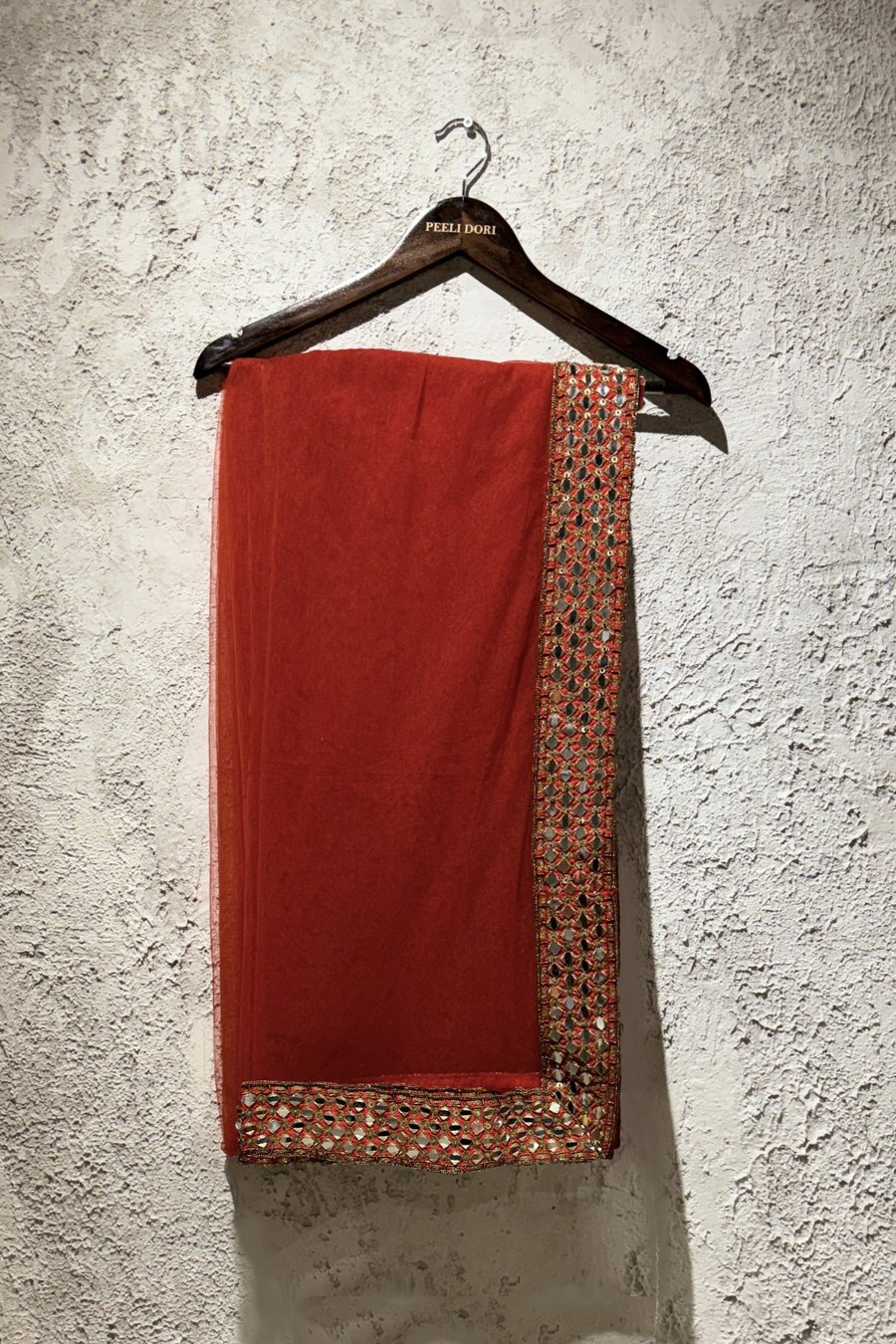
₹35,500
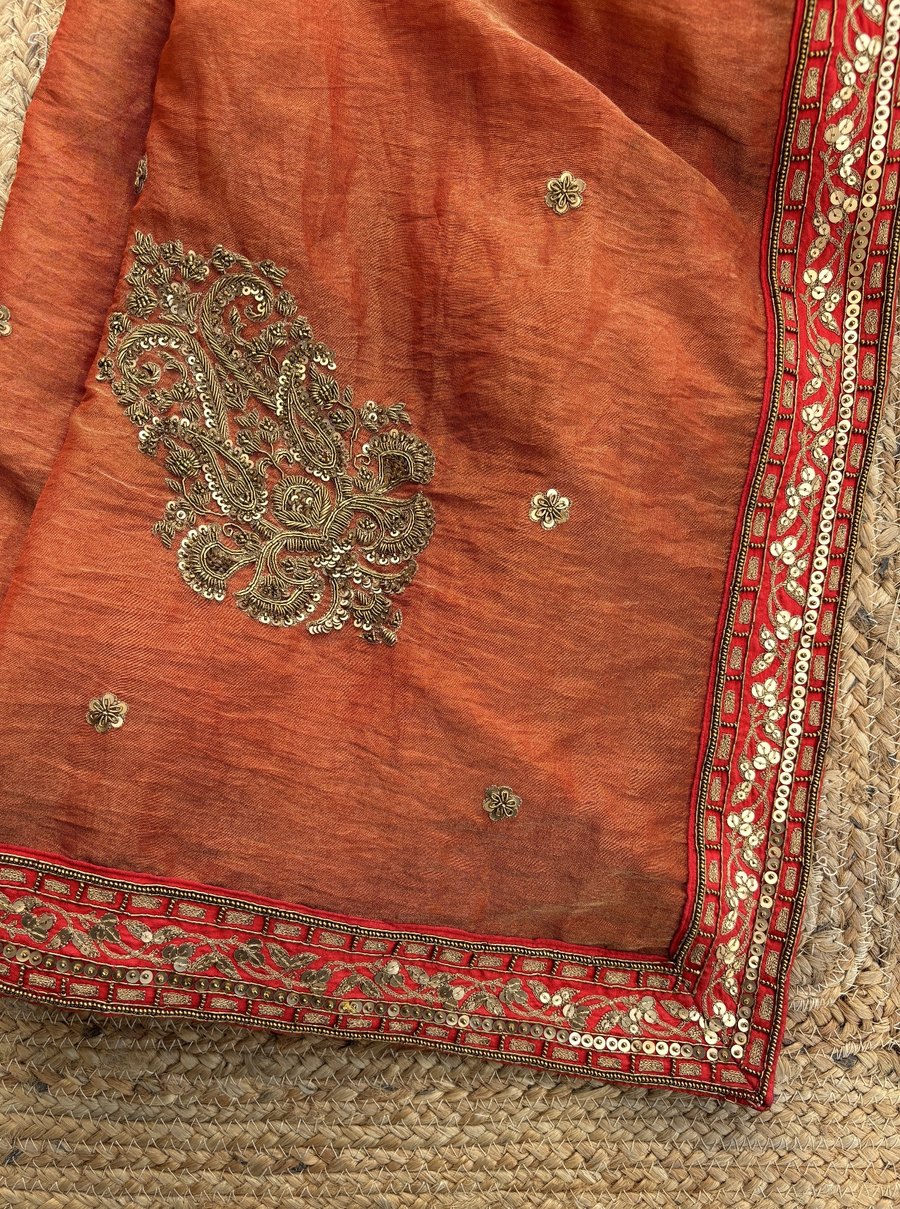
₹34,500
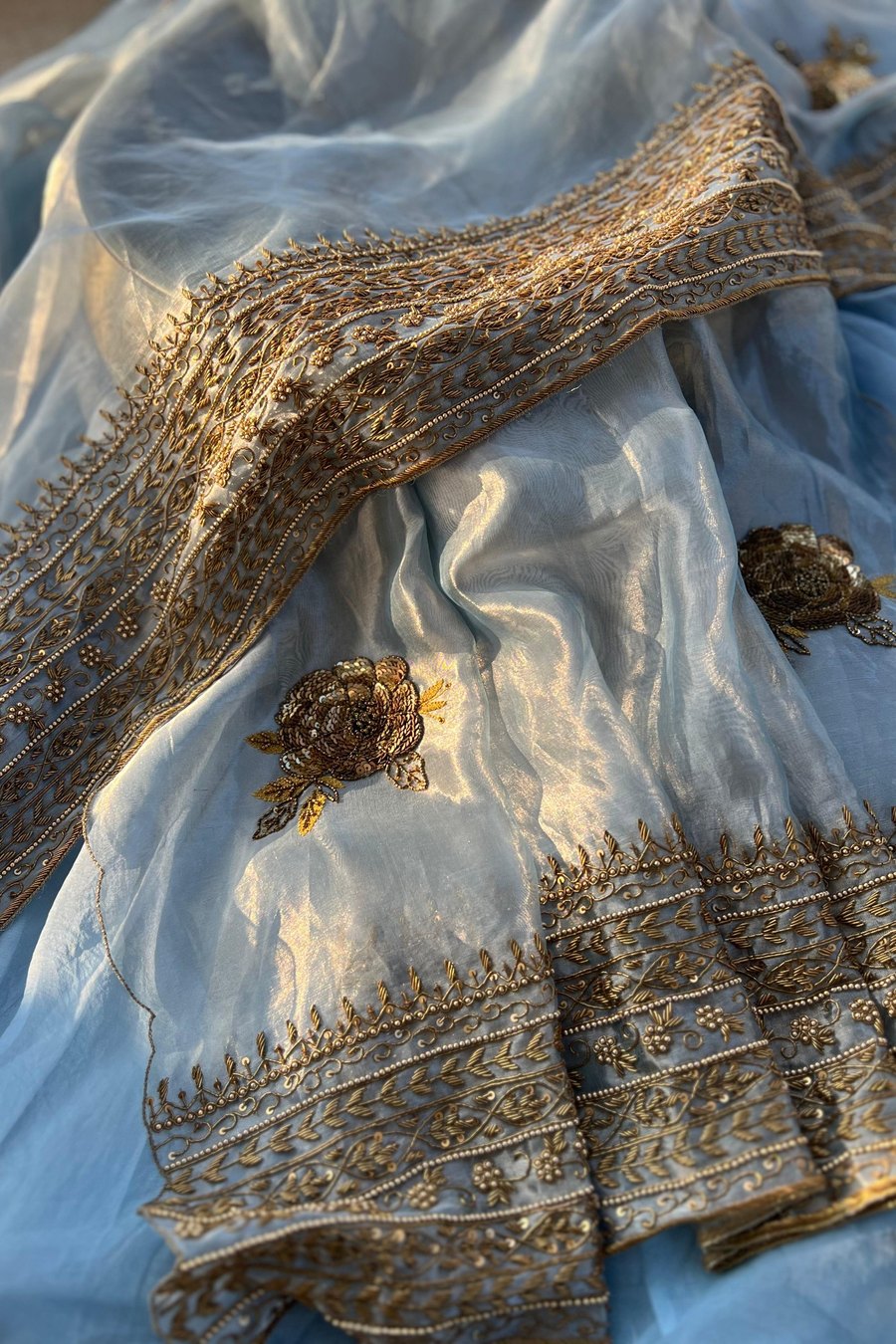
₹22,500
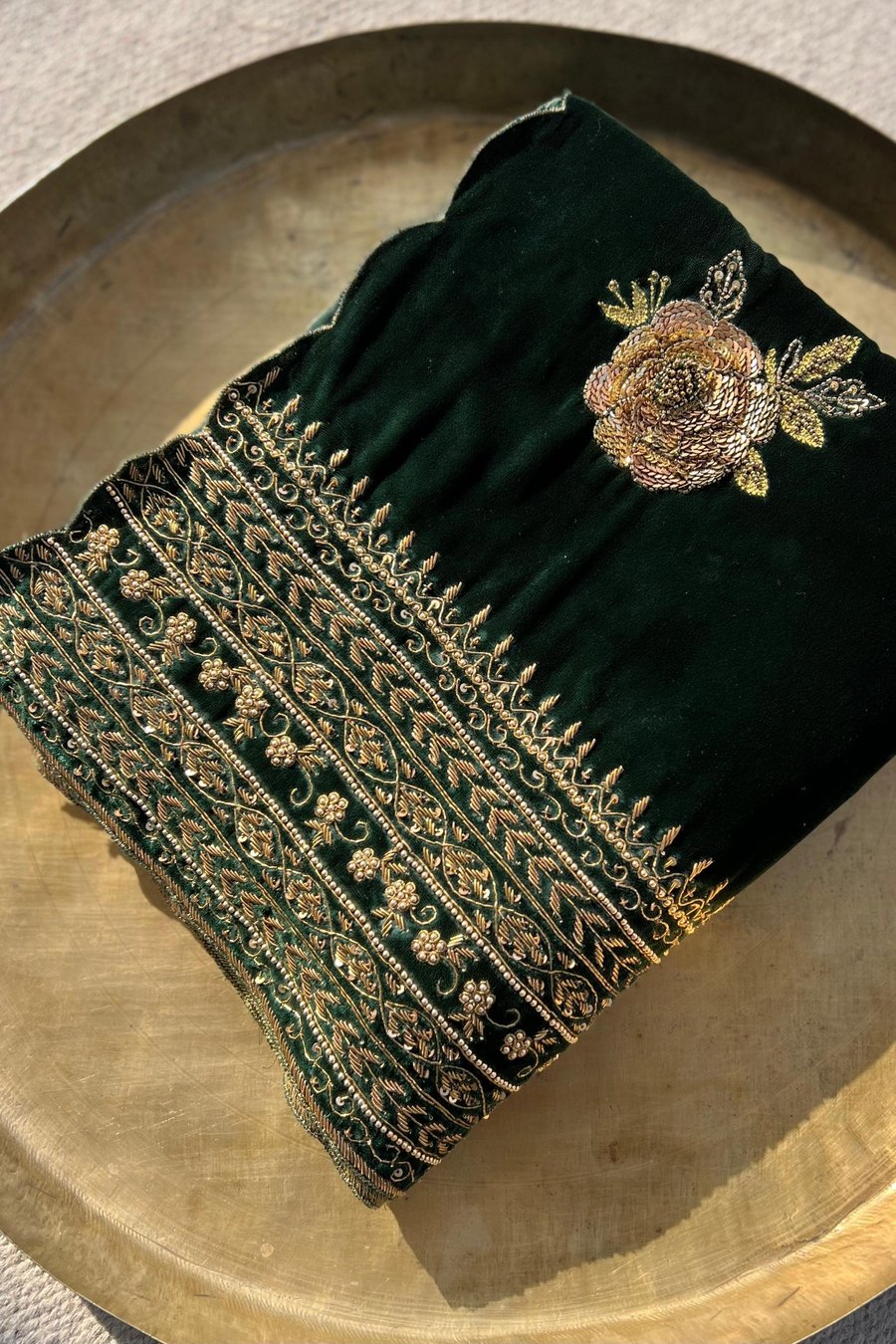
₹22,400
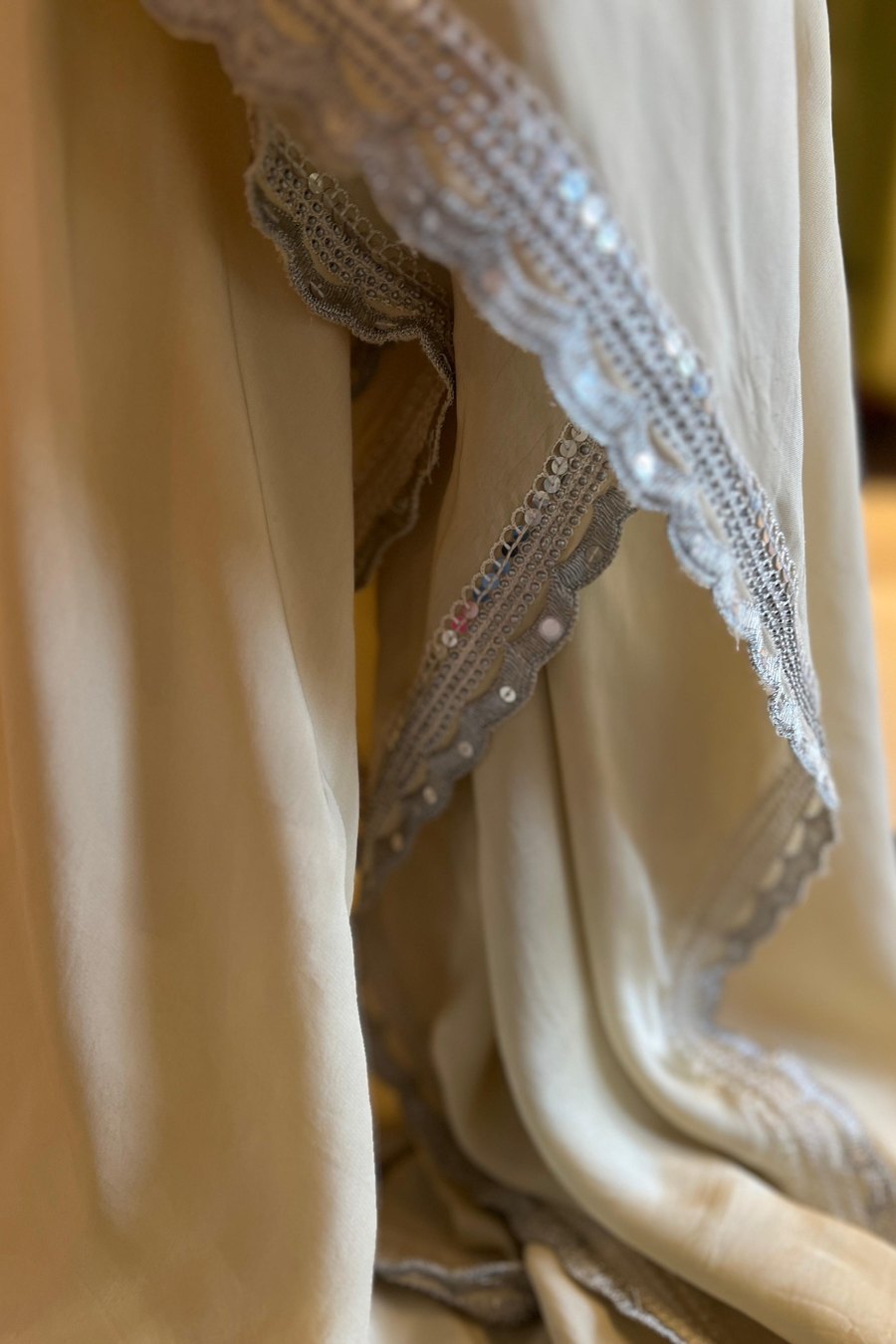
₹19,500
By garment: what changes between a saree, a lehenga, an anarkali and a kurta set
With a saree, the pallu is already doing the work of a drape, so a dupatta sits on top as a second, lighter layer. Keep it narrow, pin it at one shoulder, and do not build a big pleat stack — two drapes competing at the same shoulder look heavy in photographs.
With a lehenga, the dupatta is the drape. The skirt is wide and the blouse is short, so the dupatta carries the formality, and a front pleated stack at the waist reads as a deliberate choice rather than an afterthought.
With an anarkali, the flare is the point of the garment. A wide, heavily pleated dupatta fights it. A narrower one, worn open or over one arm, keeps the line of the anarkali visible — which is the reason you chose it.
With a kurta set, the set is complete without a dupatta, so treat the dupatta as optional and pin it lightly. If you are wearing it for a ceremony rather than for style, pin it at the crown as well and keep the shoulders loose.
A five-minute re-pin routine for the evening
Before the ceremony: crown, then shoulders, then waist, then check the hem clears your shoes. At the mandap: take the palla off your arm and pin it behind the shoulder so both hands are free for the rituals. On the dance floor: unpin the waist and pin the palla to itself at the side, so it swings with you instead of pulling the whole drape. At dinner: unpin everything except the shoulder stack, and let it fall.
Keep two spare pins in the blouse, not in your bag. Bags get left at the table exactly when you need them.
Afterwards: the pin holes and the fold
Pin marks on silk and organza close with steam — hold the iron an inch above the cloth, let the steam pass through, and do not press. Never iron directly over embroidery; the metal work flattens and the ground fabric takes a shine that does not come out.
Store a dupatta rolled rather than folded if you have the space. If you must fold it, fold on the same line every time and put a layer of tissue between the embroidery and the cloth, so the work does not press into itself for months. A dupatta that has sat folded on a heavy palla will hold that crease on the shoulder, right where the pleat stack goes.
And if a pin does catch a thread, stop. Bring it to us or to a tailor who works with embroidery. A pulled zardozi thread is a two-minute repair while it is still a loop, and a much longer one once it has been cut.
Frequently asked
How many pins does a dupatta actually need?
Four is enough for a formal double drape: both shoulders, one at the waist, and one where the palla crosses the arm. A single-shoulder reception drape needs two. Anything beyond six is usually compensating for a pleat stack that was built in the wrong place.
How do I pin a dupatta without making holes?
Pin through the blouse's seam allowance or lining rather than through the dupatta's embroidered panel, use fine steel safety pins, and pin through a small pinched fold instead of a single flat layer. Marks on silk and organza close with steam held an inch above the cloth.
How do I keep my dupatta on while dancing?
Pin the shoulder stack with two crossed pins, pin the palla to itself at the side rather than to the blouse, and skip the waist pin — a waist pin turns every turn into a pull on the shoulder. If the drape still moves, take the palla off the arm entirely and pin it behind the shoulder for the set.
Which dupatta fabric stays in place best?
A soft satin sits closest to the body and needs the fewest pins. Crisp silk organza holds a pressed pleat beautifully but stands away from the shoulder, so it needs the pleat stack placed slightly behind the shoulder bone. A heavy bridal dupatta stays put because the weight of the palla keeps the pleats taut.
What if my dupatta is too short for the drape I want?
Change the drape, not the dupatta. A short piece works open over both shoulders or as a cape over a kurta set, and it works pinned at one shoulder with the palla brought forward. What it will not do is a double drape with a long fall — that needs the extra length, and no amount of pinning substitutes for it.
Explore more: designer dupatta scarf stoles · lehenga · saree — or message us on WhatsApp for styling help.

The information below is required for social login
Sign In
Create New Account