

Almost every fitting problem we fix on an anarkali starts the same way: a tape held too tight around the armhole, or a length taken in flats for a wedding where the shoes have a heel. The design decision takes ten minutes. The fit takes fifteen, and it decides
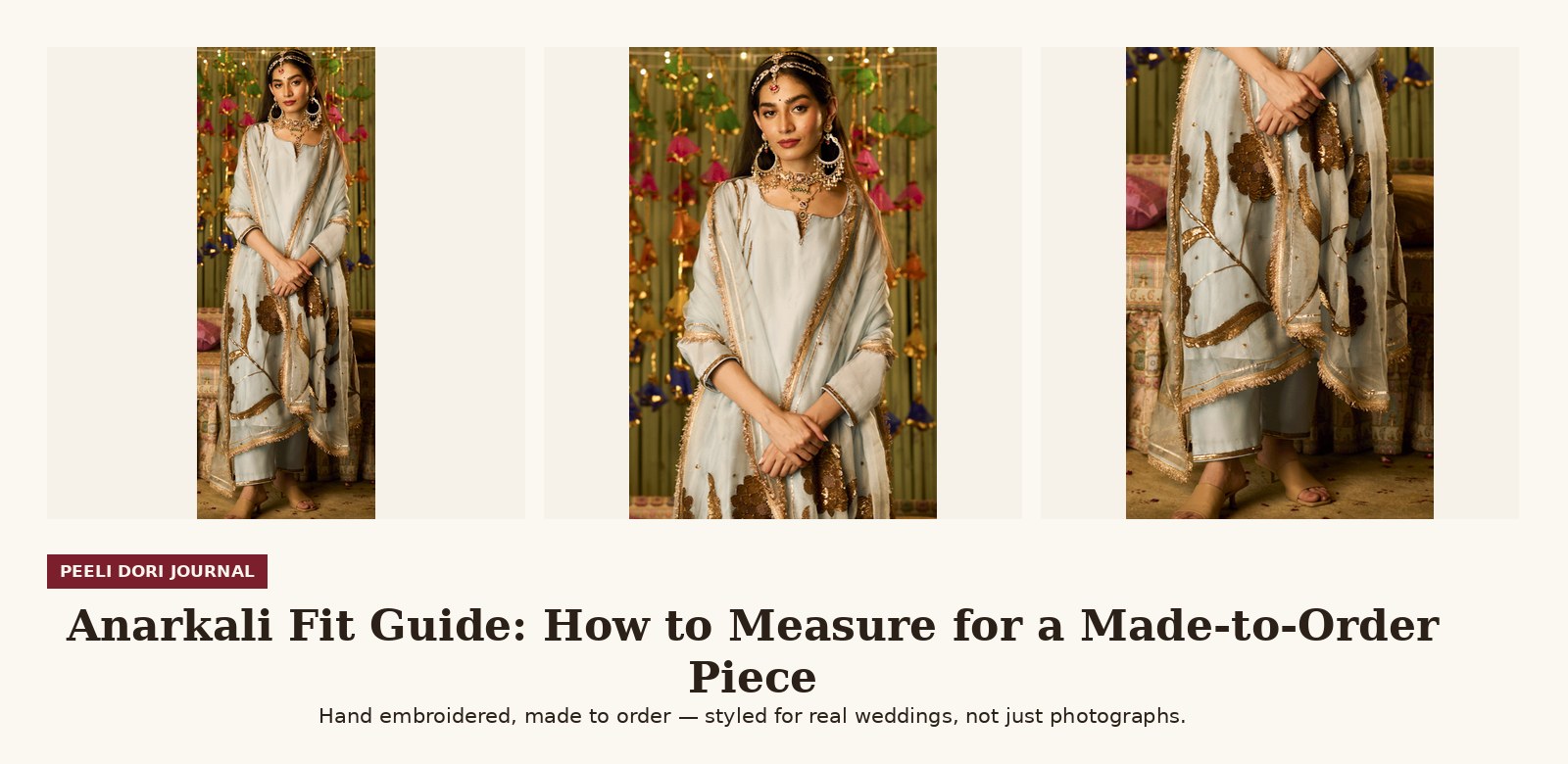
Almost every fitting problem we fix on an anarkali starts the same way: a tape held too tight around the armhole, or a length taken in flats for a wedding where the shoes have a heel. The design decision takes ten minutes. The fit takes fifteen, and it decides whether the piece gets worn twice or twenty times.
Why fit, and not design, is the real decision
A bride's sister orders an anarkali from another city in December for a February wedding. She picks the colour from a photograph in about ten minutes, because that part is easy. Then she sends us her measurements from a form, in a hurry, on a phone, and one of those numbers is wrong. In March it comes back to us to be taken in at the side seams, and the wedding has already happened.
An anarkali is a simple shape with three fixed points: a fitted bodice, a seam where the flare begins, and a hem. Every one of those is cut to a number, not to an opinion. If the number is right, the piece behaves like a dress. If it is wrong by an inch and a half, the bodice rides up when she raises her arms, or the flare starts at the wrong place on her body and the whole thing reads as a costume.
This is why we cut to measurements rather than picking the nearest size off a chart. Everything we make is made to order with custom sizing, so the bodice length, the armhole and the hem are decided before the cloth is cut — which is a good thing, and also the reason the numbers matter more than they would in a shop where you can try four sizes and leave with one.
The five measurements, and how to take them
Bust. Around the fullest part, tape level at the back, over the blouse or bra you will actually wear with the piece. Do not pull it tight and do not hold your breath — we add the wearing ease, you report the body. If you plan to wear a padded blouse, say so, because it changes the bodice.
Waist. Find it by bending sideways; the crease is your natural waist, usually an inch above the navel. This is the number that decides whether the bodice sits down or rides up, and it is the one people most often take too high.
Shoulder. From the bone at one shoulder tip, across the back, to the other. Nobody can do this alone and get it right, because the tape has to follow the curve of the back rather than the line you can see in a mirror.
Armhole. Around the arm where it joins the shoulder, with the arm hanging down and relaxed. This is the measurement anarkalis fail on. Taken too tight, the piece looks perfect standing still and becomes impossible the moment you raise a hand to greet someone at a phera. Have a second person do it, and take it twice. We build in the ease; you do not need to add any.
Length. From the shoulder point, over the bust, down to where you want the hem — in the shoes you will wear, or tell us the heel height. Then add one more number, your height. Height and heel decide where the flare sits on your frame, and two women with identical busts and waists can need a completely different flare line.
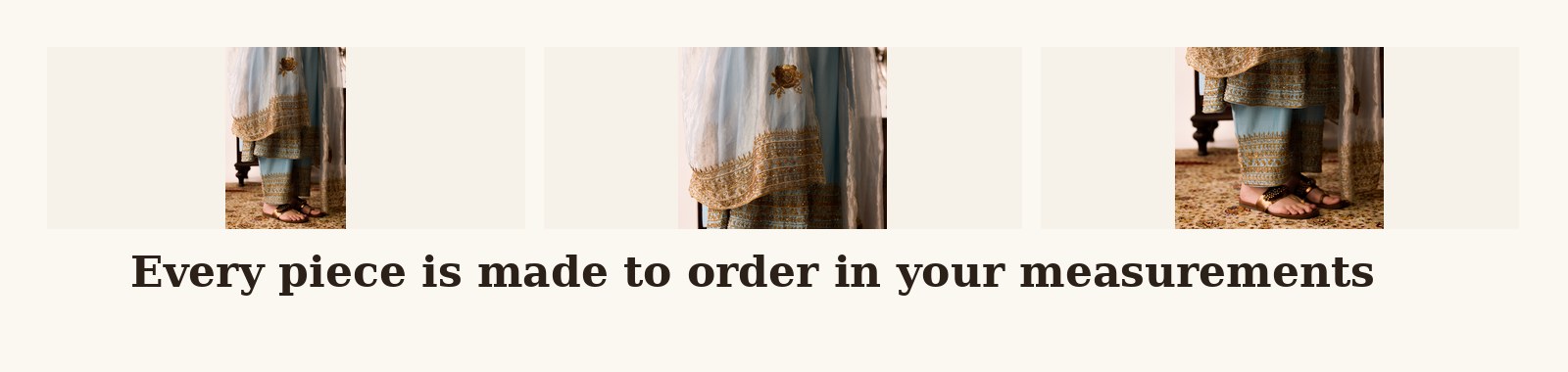
Where anarkali fittings actually go wrong
The armhole, first, every time. A finished armhole on a hand embroidered bodice can be let out only slightly, because the work is already on the cloth at the edge. If the piece is cut correctly the first time it is not a problem at all, which is why we ask for the measurement twice.
Second is the bodice riding up. That is almost never the bust — it is the waist taken too high, or the bodice length cut for a shorter torso than the one wearing it. It shows up as a gap at the back and a waist seam that sits above the natural waist, and it makes a formal piece look borrowed.
Third is the flare line. On a short frame, a flare that starts high eats the waist and adds width where you did not want it. On a tall frame, a low flare looks like a long kurta with a border, and the anarkali shape disappears. Neither is a fault in the piece; both are a fault in the number.
Fourth is the hem. Length measured in flats and worn with a two-inch heel means the hem hangs short of the floor and the shape goes stiff at the bottom. Fifth is the lining: if the lining is cut shorter than the flare, it shows as a shadow line through the cloth when you sit, which nobody notices in a photograph and everybody notices in a room.
If someone else is holding the tape
A large share of what we make is bought by one person for another — a daughter for her mother, a sister for a sister who is getting married in a different city. In that case the tape is being held by someone who has never worn the piece, and the numbers drift.
The most reliable route is a garment that already fits the person well. Lay an anarkali or a fitted blouse flat on a bed and measure pit to pit (double it), waist flat (double it), shoulder seam to seam, and full length from the shoulder seam to the hem. Photograph the tape against the cloth as you go. It takes five minutes and it is far more accurate than guessing from a body measurement taken over a shirt.
Ask them to stand normally while you measure — not holding their breath in, not pulling their shoulders back. The measurements should describe a Tuesday afternoon, not a photograph.
Six pieces to measure against
The Gulmohar sets are the ones we return to most often, because the same cut and the same embroidery language exist across several tones. The coconut, the powder blue and the gulabi are all ₹44,500 and hand embroidered. Measure once against any one of them and the numbers hold for the other two — which is how a family ends up dressed for four functions without looking like a uniform.
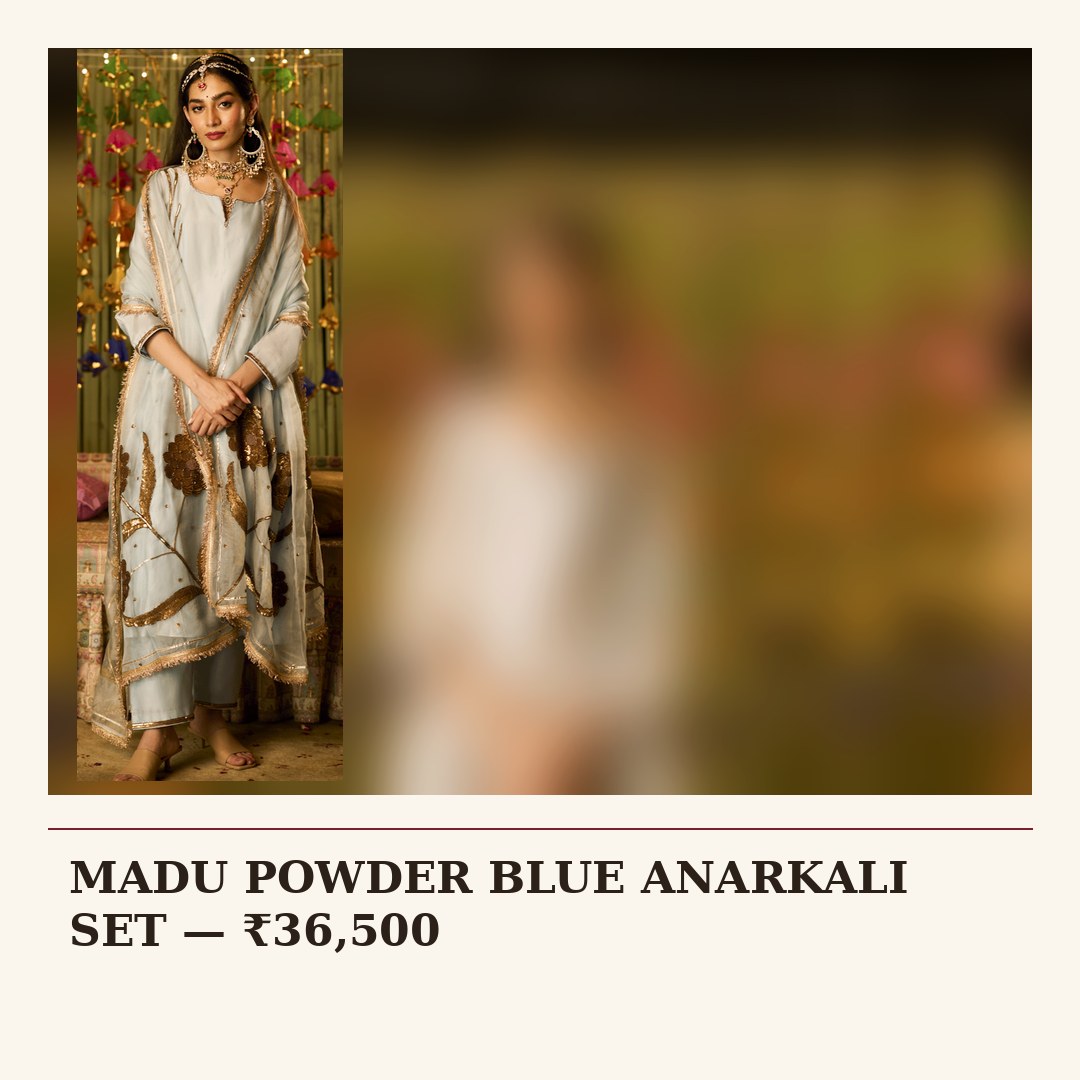
If the wedding is in summer, the Madu chanderi anarkalis in powder blue and rust at ₹36,500 are the lighter pair to ask about. Chanderi holds a soft fold rather than a sharp pleat, so the flare moves instead of standing away from the body.
The Nayanthara anarkali in purple is ₹36,500 and is the one most often chosen for an evening function, and Madhurima at ₹34,500 is where the group starts. Send us your measurements for any of these on WhatsApp and we will tell you, before you pay, which ones your numbers actually suit.
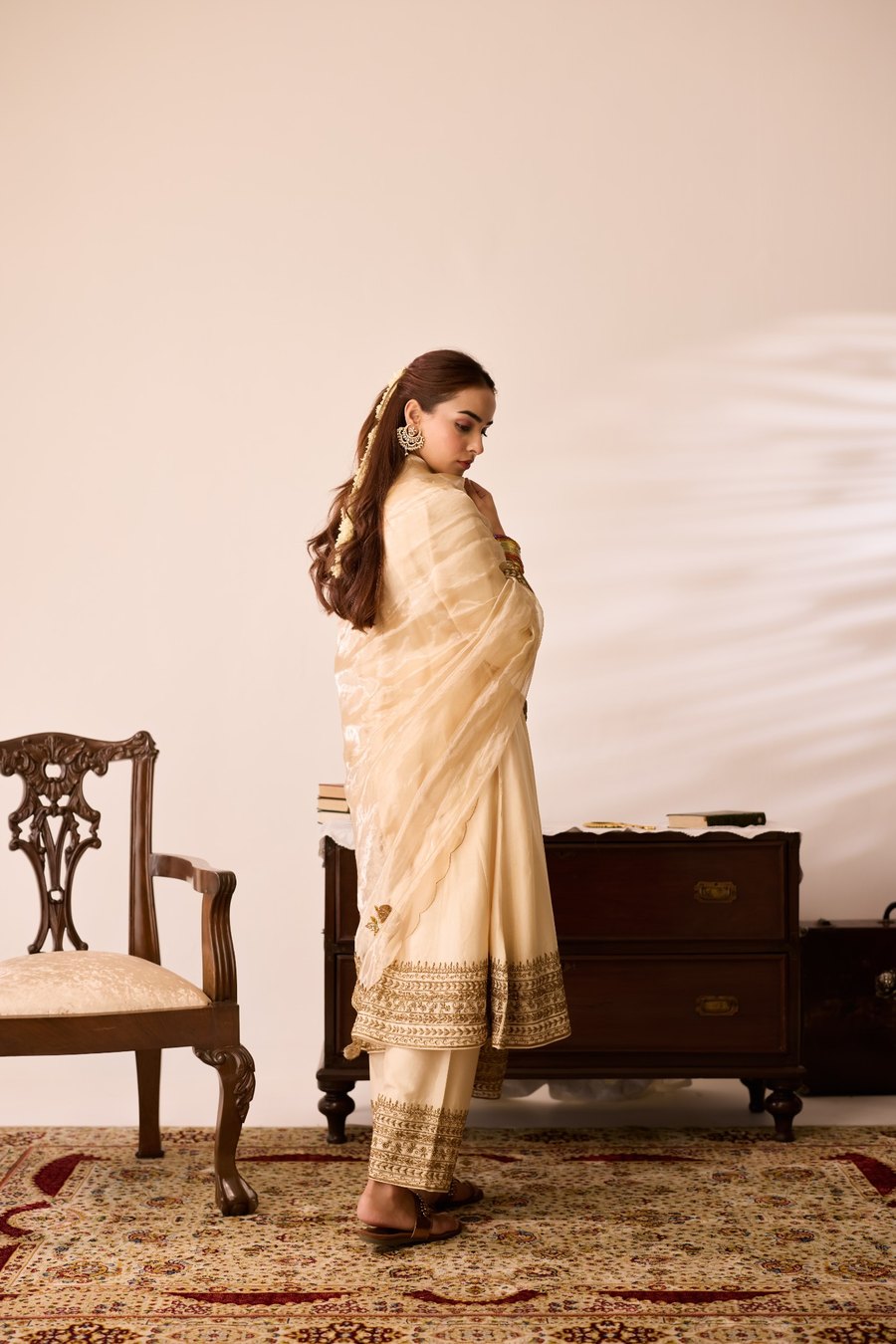
₹44,500
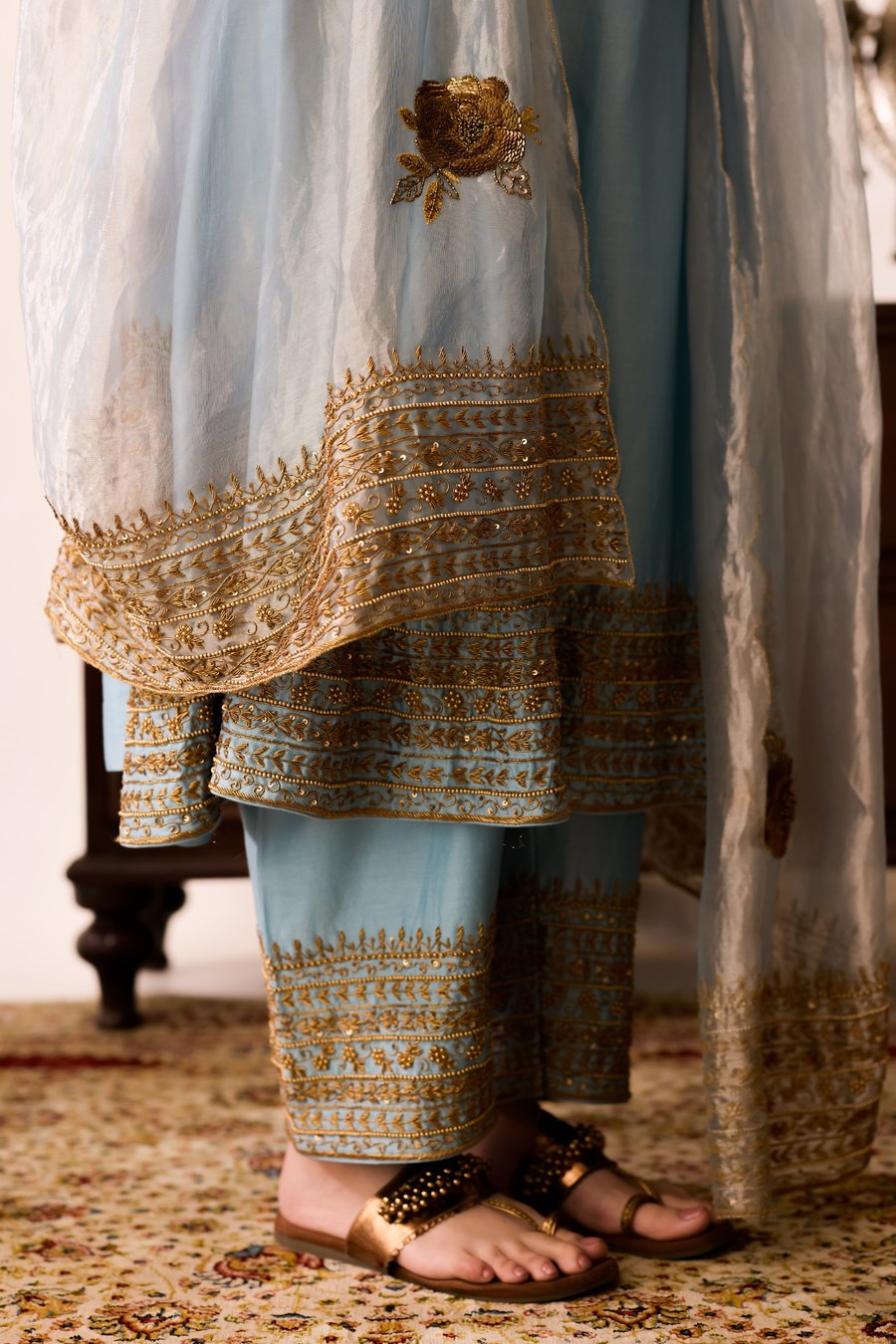
₹44,500
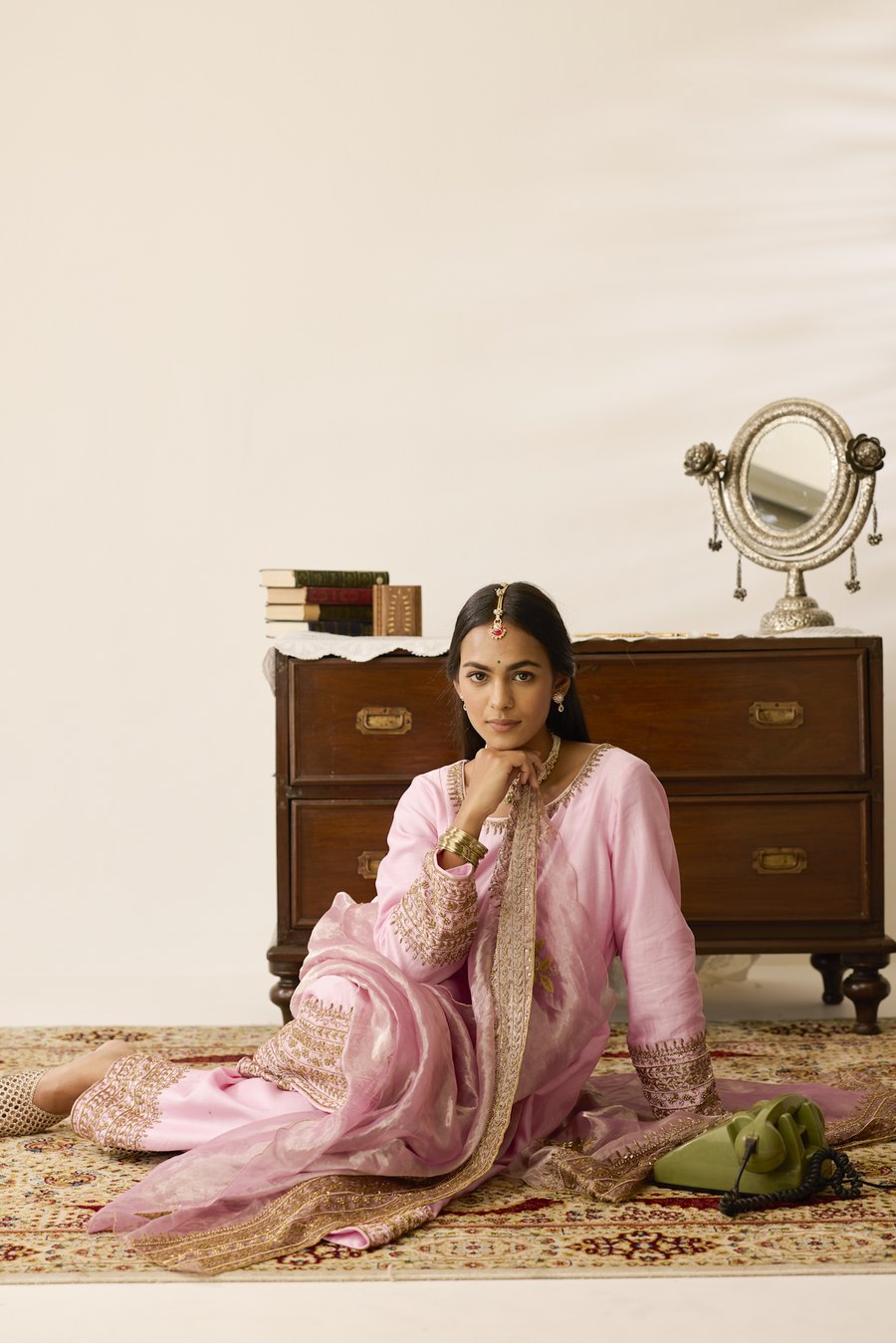
₹44,500
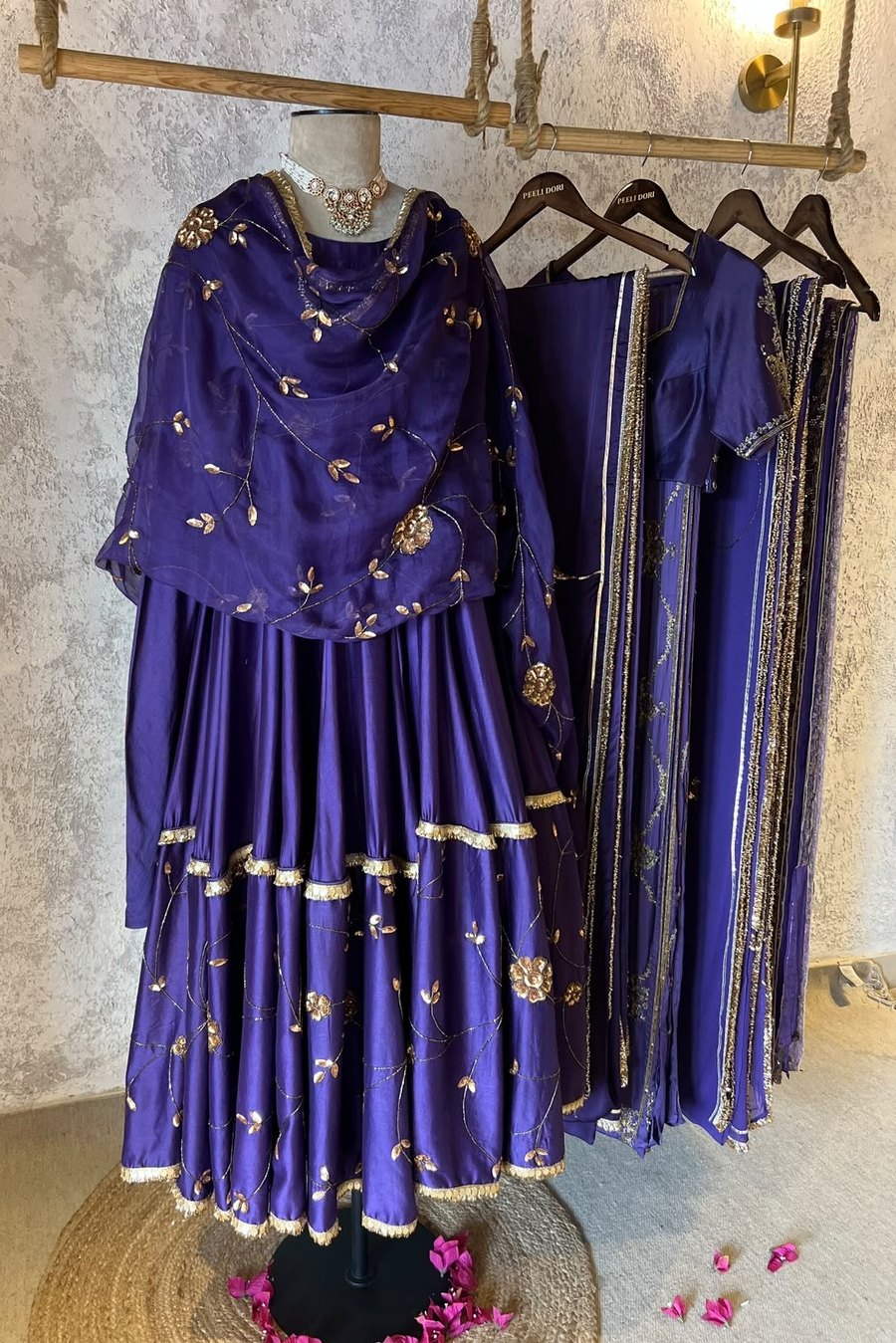
₹36,500
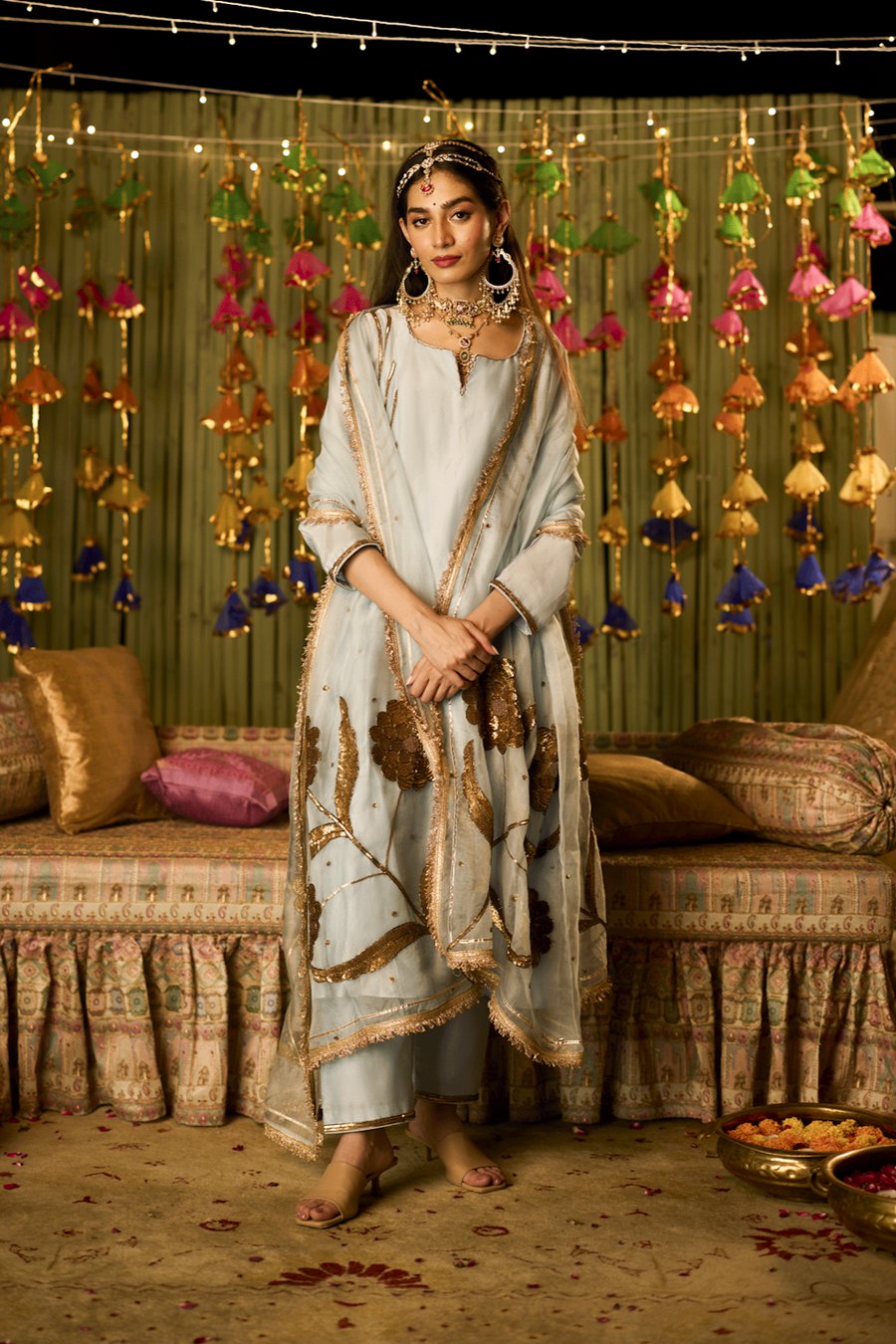
₹36,500
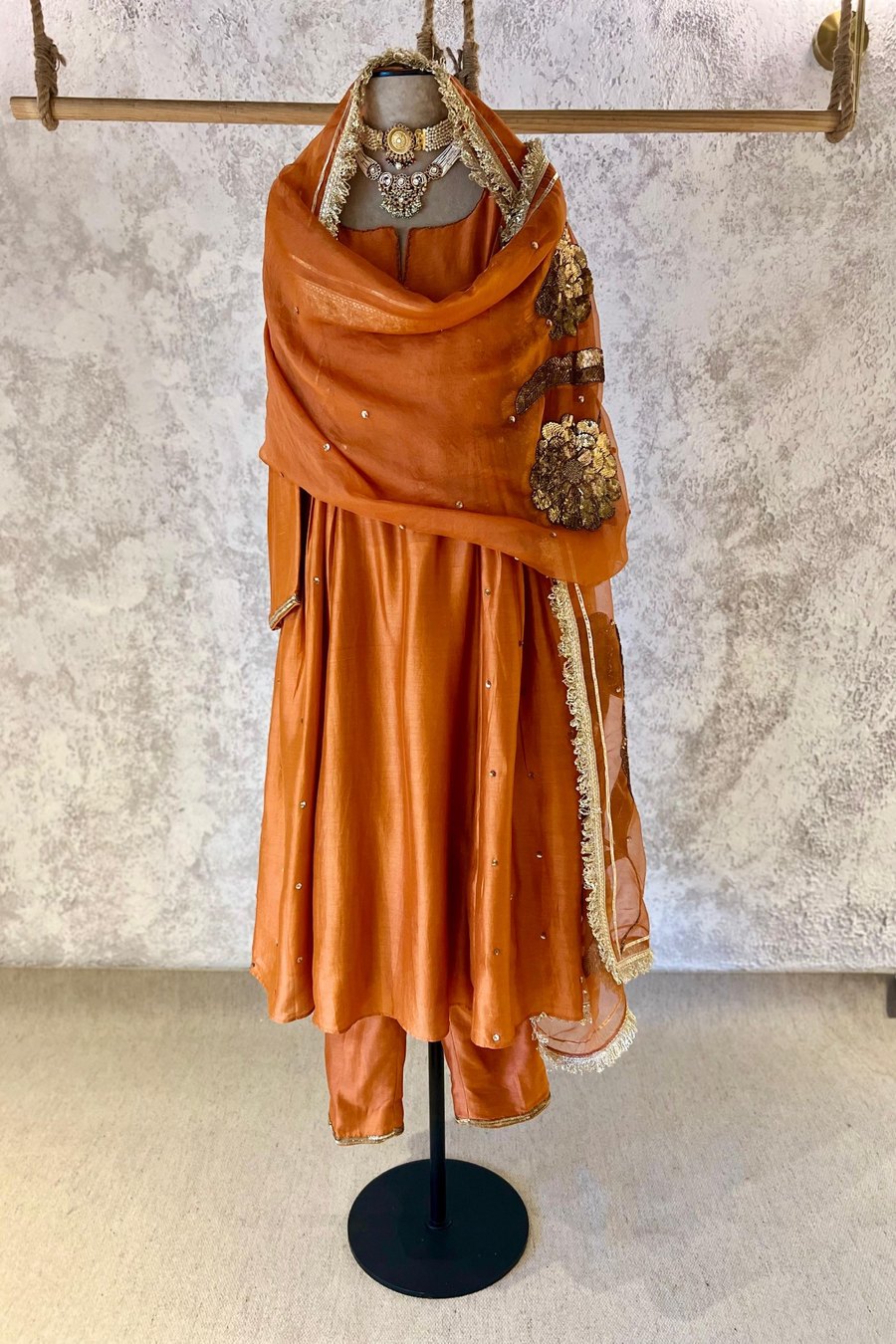
₹36,500
The fifteen-minute trial, and what can be adjusted
When the piece arrives, put it on with the shoes, the inner and the jewellery you plan to wear. Then do four things: sit down on a low chair, raise both arms above your head, walk up a flight of stairs, and hug someone. Those four actions find every fit problem an anarkali has.
Then take three photographs in daylight — front, side and back — at eye level, not from above. Send them to us on WhatsApp with a line about what feels wrong. We mark what needs to change, and it is faster than describing it in words.
What can usually be adjusted: side seams, hem length, sleeve length, and a waist seam that needs to come down slightly. What cannot be changed much: an embroidered yoke, and an armhole that is already finished and tight. This is exactly why the armhole gets measured twice before cutting, and why we would rather spend twenty minutes on the phone with you than a week on an alteration.
Shipping is free across India above ₹10,000, and international orders go out under the code INTSHIP above ₹89,000. Both stores — Shahpur Jat in New Delhi and Dehradun — will also measure you in person if you would rather not do it over a phone.
Frequently asked
How do I measure myself for an anarkali if nobody can help me?
Bust, waist and length you can take alone in front of a mirror, with the tape level and not pulled tight. The armhole is the one that needs a second person — or measure a blouse that already fits you, laid flat, around the armhole seam and double it. Send us that number and we will confirm it before the piece is cut.
Should an anarkali hem touch the floor?
Leave about an inch of clearance, measured in the shoes you will wear. A hem that touches the floor drags at the back the moment you walk, and the flare loses its line. If you are between two heel heights, order for the taller one — taking a hem up is simple, letting one down on an embroidered border is not.
What happens if the anarkali does not fit when it arrives?
Send us photographs with it on — front, side and back — and we will tell you exactly what can be done. Side seams, hem and sleeve length can usually be adjusted. An embroidered yoke cannot be widened, and a finished armhole can only be eased slightly, which is why we ask for measurements twice before cutting.
Do you need my height as well as my measurements?
Yes, along with the heel height you plan to wear. Height decides where the flare sits: on a shorter frame it should begin lower to keep the waist, and on a taller frame it can start higher without losing the shape. Two people with the same bust and waist can need different flare lines.
Can you copy an anarkali I already own?
Usually, yes. Send us the piece or its flat measurements — pit to pit, waist, shoulder seam to shoulder seam, full length — plus photographs in daylight, and we will confirm whether the cut and the work can be matched before you commit.
Explore more: anarkali · designer hand embroidered blouse — or message us on WhatsApp for styling help.

The information below is required for social login
Sign In
Create New Account