

Ask anyone who has been a bride's sister and she will tell you the same thing: you are on your feet, in the photographs and being sent to find someone, all at once, for four days. So the outfit has to be a working outfit. Finished enough to stand beside her in
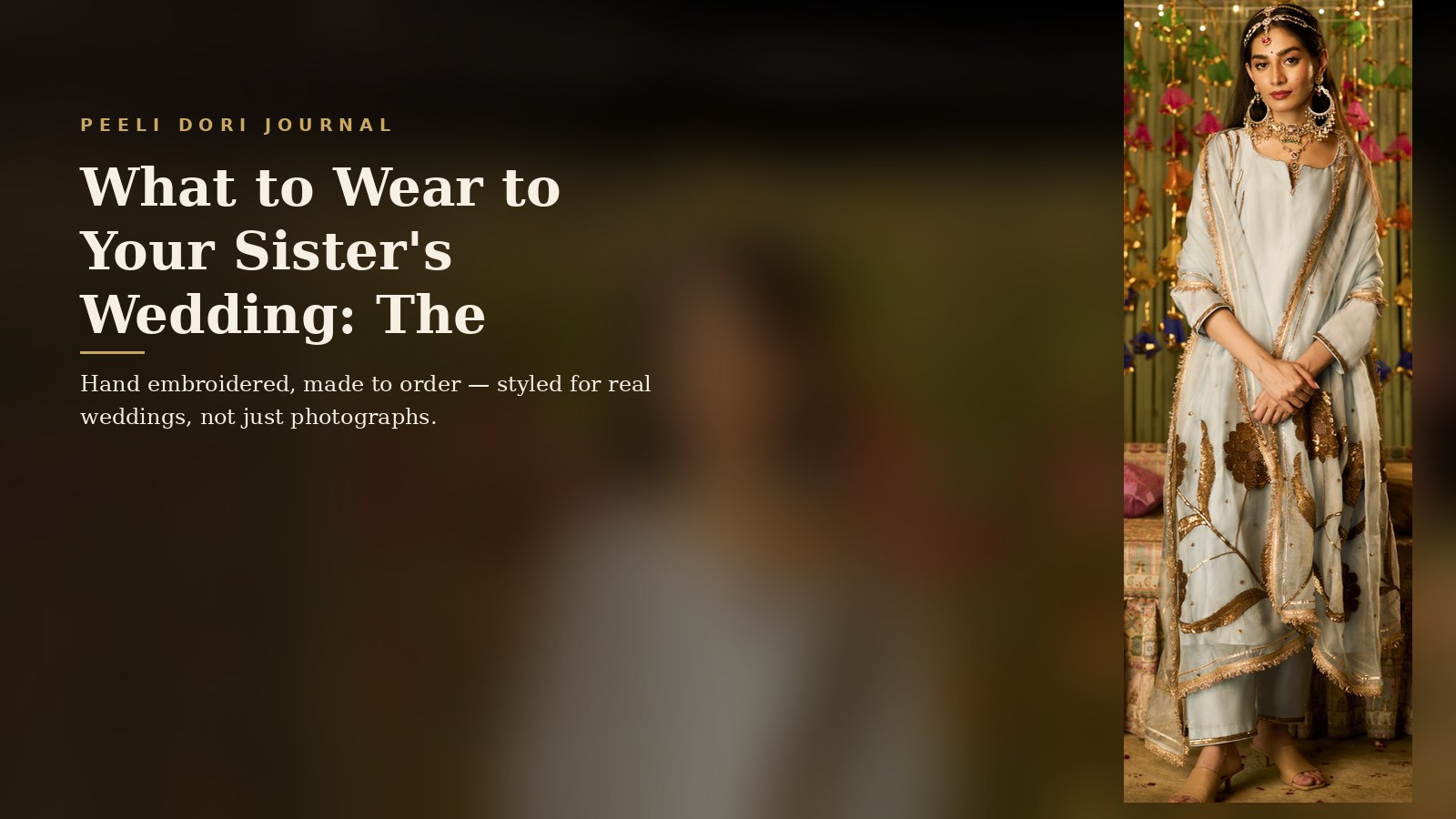
Ask anyone who has been a bride's sister and she will tell you the same thing: you are on your feet, in the photographs and being sent to find someone, all at once, for four days. So the outfit has to be a working outfit. Finished enough to stand beside her in a family group shot, easy enough to bend, sit, carry and dance in, and quiet enough that nobody's eye lands on you first.
Start with the job, not the colour
The bride gets one outfit per function and a team around her. Her sister gets the same number of functions and a job in each one. She holds the dupatta while the bride walks, keeps the envelope of cash, finds the photographer, sits on the floor for the puja, eats standing up, and gets pulled into the family photograph at every venue. Nowhere in that week does the outfit get a chance to behave like a costume.
That is why we begin with the calendar rather than the palette. Count the functions first — mehendi, haldi, sangeet, the wedding, sometimes a reception — and decide which of them she is actually dressing for. Most sisters we fit are dressing for three: one day function, the sangeet, and the wedding itself. Saying that out loud makes the wardrobe and the budget much easier to plan.
The order of buying matters too. In most families the sister's outfit is decided last, because she is the one helping everybody else decide. By then the tailor's calendar is tight and the good dates are gone. Decide hers first. It sounds like a small thing until you are three days out with an unstitched hem.
Why an anarkali suits that week better than a lehenga or a saree
An anarkali is one garment with one waist seam. That single fact is most of the argument. A saree needs a firm petticoat, pleats that have to be rebuilt after every sitting, and usually a second pair of hands for the pinning. A lehenga's skirt is tied at the waist over a blouse and has to be re-tied when it slips. Both are beautiful and both ask to be managed. The anarkali asks for a zip.
For a sister, that difference is hourly, not once. There is no point in the day when she can disappear for fifteen minutes to fix her pleats, because she is the person the bride calls. She steps into the anarkali, zips it, pins the dupatta once, and is available for the rest of the evening.
It also travels well, which matters more than people expect. Weddings here usually mean a car or a flight, a hotel cupboard and a borrowed ironing board. Folded flat with the work facing in, hung for an hour on arrival, an anarkali falls back into itself. A pleated saree does not recover that quickly, and a lehenga's skirt holds the fold it was packed in.
There is a fitting argument as well. A waist seam gives a tailor somewhere to work — a little in, a little out — without touching the embroidery. A heavily worked lehenga panel gives him much less room, and a pre-pleated saree gives him none at all.
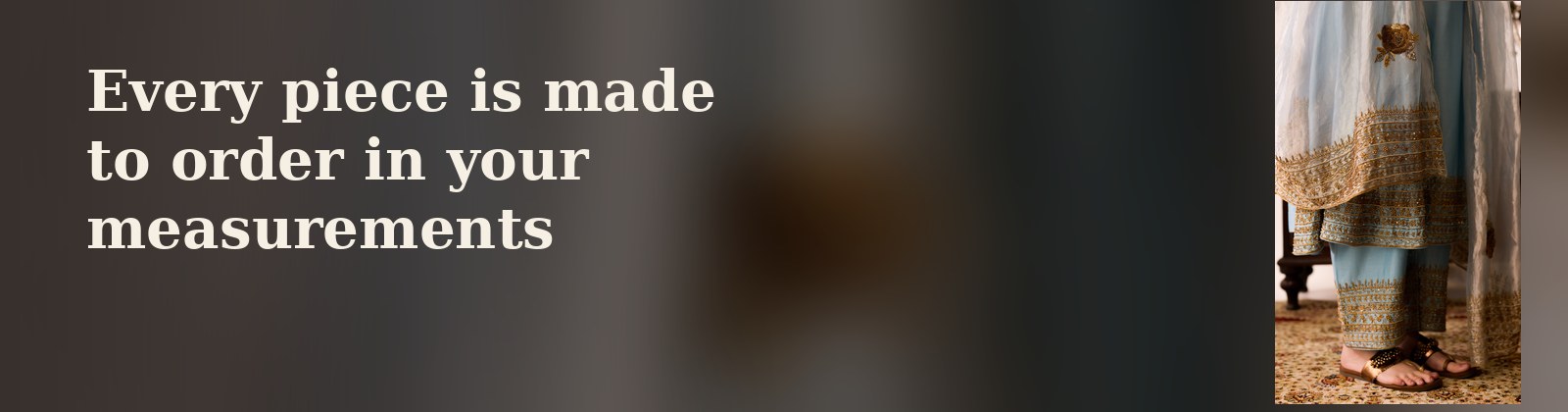
Work, cloth and weight: what to look for on the rail
Three things decide how an anarkali behaves over a long function: how heavy the work is at the hem, how stiff the cloth is, and how much of the work sits exactly where she bends.
Hand embroidery in gota, zardozi or dabka sits on the surface of the cloth, and the denser it is the better it reads under flash at a night function. That density belongs at the sangeet and the wedding. For a daytime mehendi or haldi, with the sun on her back and a tray in her hands, lighter work is the kinder choice — she will be in it for six hours before the photographs even start.
The cloth underneath does its own job. Organza holds a shape and shows work crisply, and it creases where she sits down. Chanderi is softer and lighter and photographs with less shine. Silk carries dense work without sagging at the shoulder. None of these is better; they are for different evenings.
One thing worth checking on the rail: pick the hem up and let it go. If the skirt swings out and settles, she can dance in it. If it hangs like a curtain, it will feel like one by the third song. Weight at the hem gives a beautiful line in a standing photograph and a tired waist by midnight, so decide which of the two the function needs.
How not to compete with the bride
Nobody says this out loud, but the sister stands next to the bride in every family group photograph, and the two outfits will be read together whether anyone intends it or not. Four habits keep that easy.
Read the bride's palette first, then step to the side of it rather than into it. If she is in red, deep green, aubergine, gold or ink navy keeps the family looking like a family without matching her. If she is in pastel, a deeper tone gives the photograph a centre to sit around.
Keep the bride's outfit the heaviest in the frame. If the sister's work is denser, the photograph flattens the difference and the eye goes to the wrong person. This is composition, not modesty.
Wear the dupatta over a shoulder or across the front, not over the head. A veiled dupatta beside a bride reads as a second bride from twenty feet away.
And choose one strong piece of jewellery. If the neckline is covered in work, ears only. The sister's job in those photographs is to be recognisable, not decorated.
Fitting, measuring and the ordering timeline
Our anarkalis are made to order, with custom sizing, so the bodice is measured rather than guessed. That is worth using. A stitched bodice that fits at the shoulder and the underbust does more for how the skirt falls than any amount of adjusting afterwards.
The numbers that decide the fit are the ones people estimate: shoulder, bust, underbust, the distance between the apex points, the waist where she wants the seam to sit, waist to floor in the heels she will actually wear, sleeve length and armhole. Measure in those heels and in the inner layer she will wear on the day. Two of these go wrong most often — the waist height, because a seam set a finger too high shortens the bodice and makes the skirt start in the wrong place, and the hem, because nobody accounts for the heels until the last week.
Then leave a clear fortnight between the last fitting and the first function. Not for us — for the week itself. The fortnight before a wedding is when every tailor in the city is finishing somebody else's order, and it is the worst possible time to need a new hem. If you are unsure about a measurement, send us the numbers on WhatsApp and we will check them against the style before the cloth is cut; a fit check costs nothing and a recut costs a fortnight.
If she is nearby, a fitting at either store settles in ten minutes what a week of messages cannot. Both our stores keep anarkalis to try for proportion even when the piece itself is being made for her.
Six anarkalis, and the function each one is cut for
A short list, chosen for the three-outfit week rather than for a single evening. All are made to order and can be sized to her measurements.
The three Gulmohar sets sit at the top of the range and are the wedding-day answer: the coconut and the powder blue for a day or an early evening wedding where the light is still kind, the gulabi pink for the function where she is in the frame with the bride and needs to hold her own without matching her.
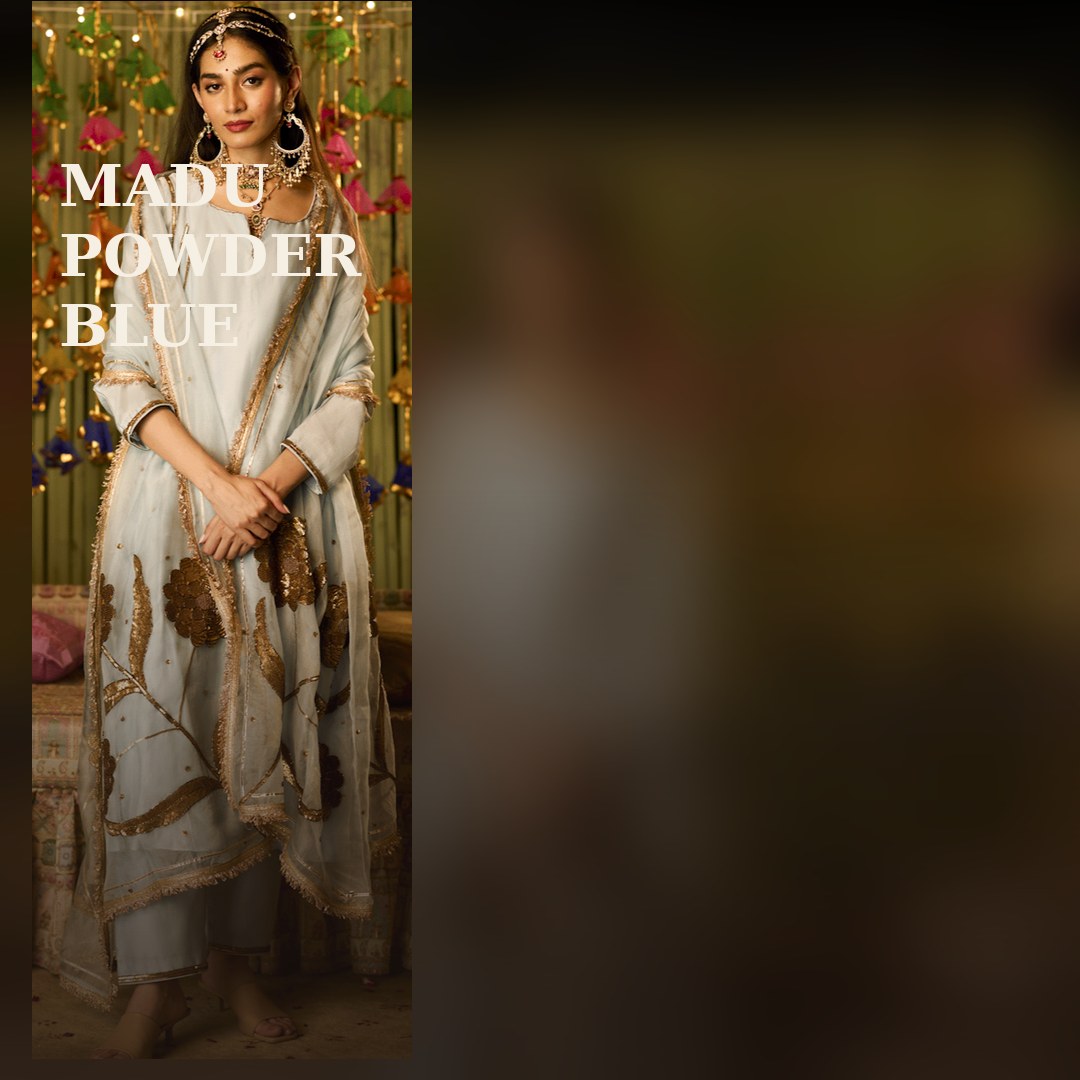
The two Madu sets are the day-function pair — powder blue for a mehendi in a garden, rust orange for a haldi where everything else will be yellow and the rust keeps her from disappearing into it.
The Nayanthara is the sangeet one. Deep purple reads under party light, holds dense work without looking heavy, and is the sort of colour that photographs as one clean shape while she is dancing.
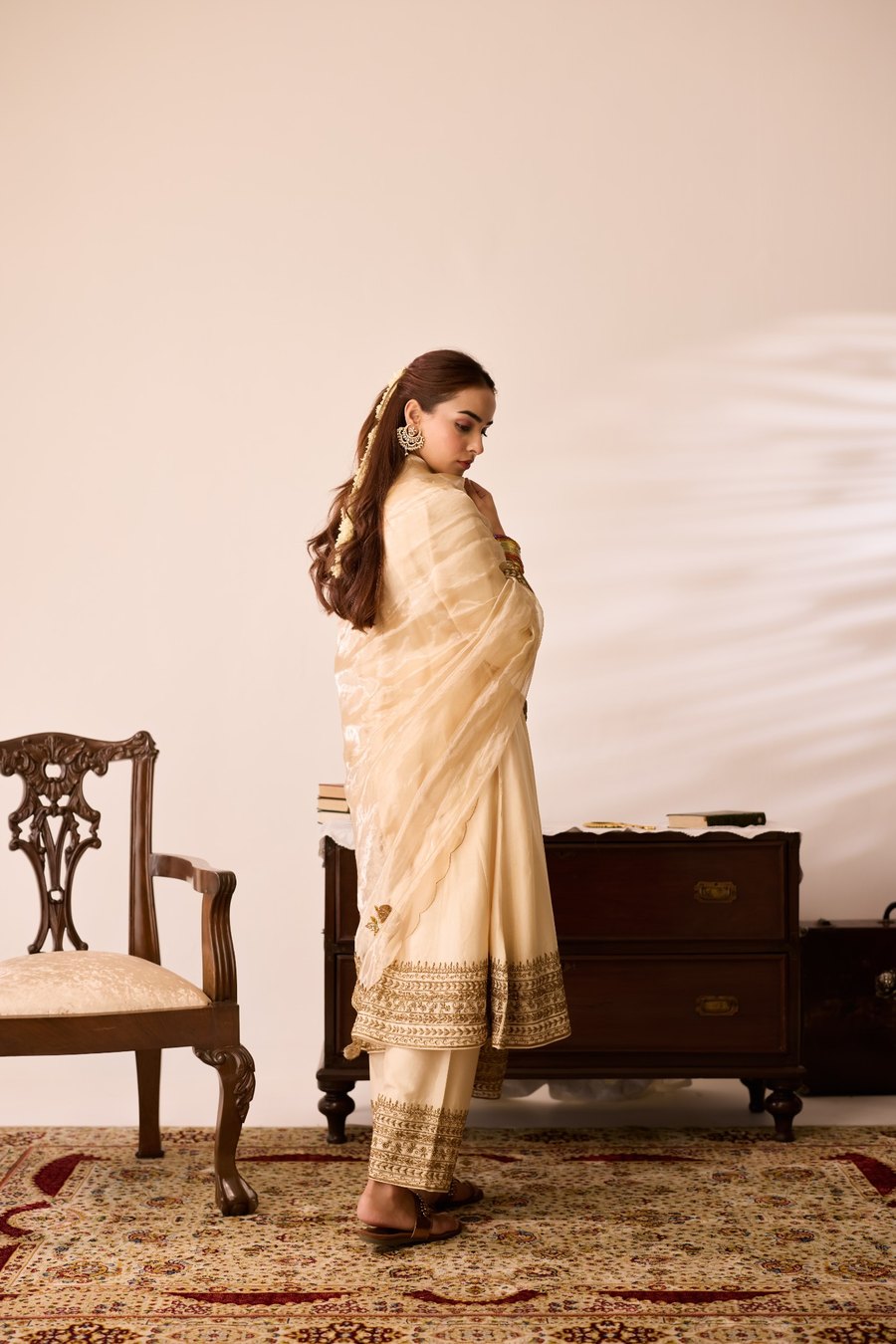
₹44,500
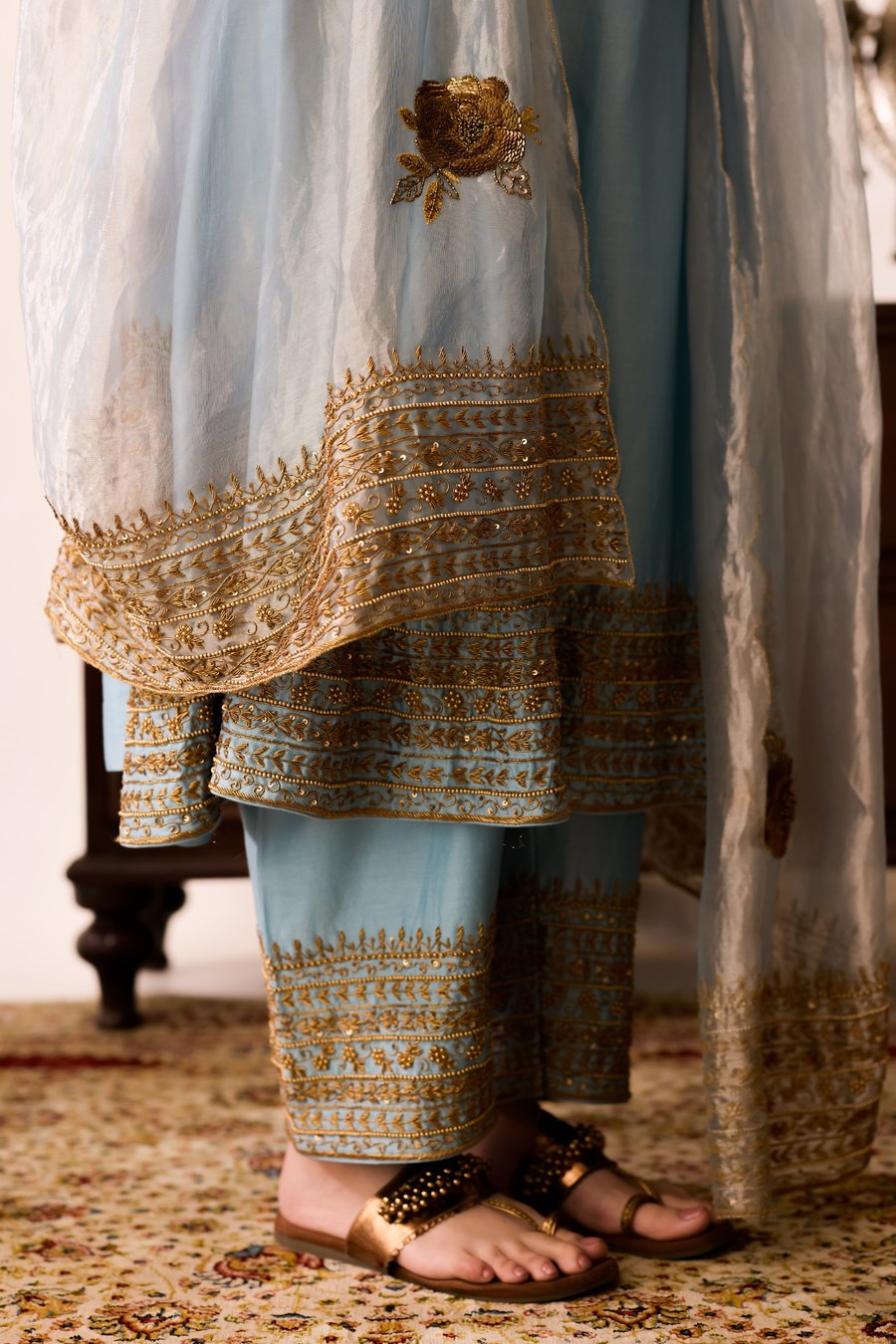
₹44,500
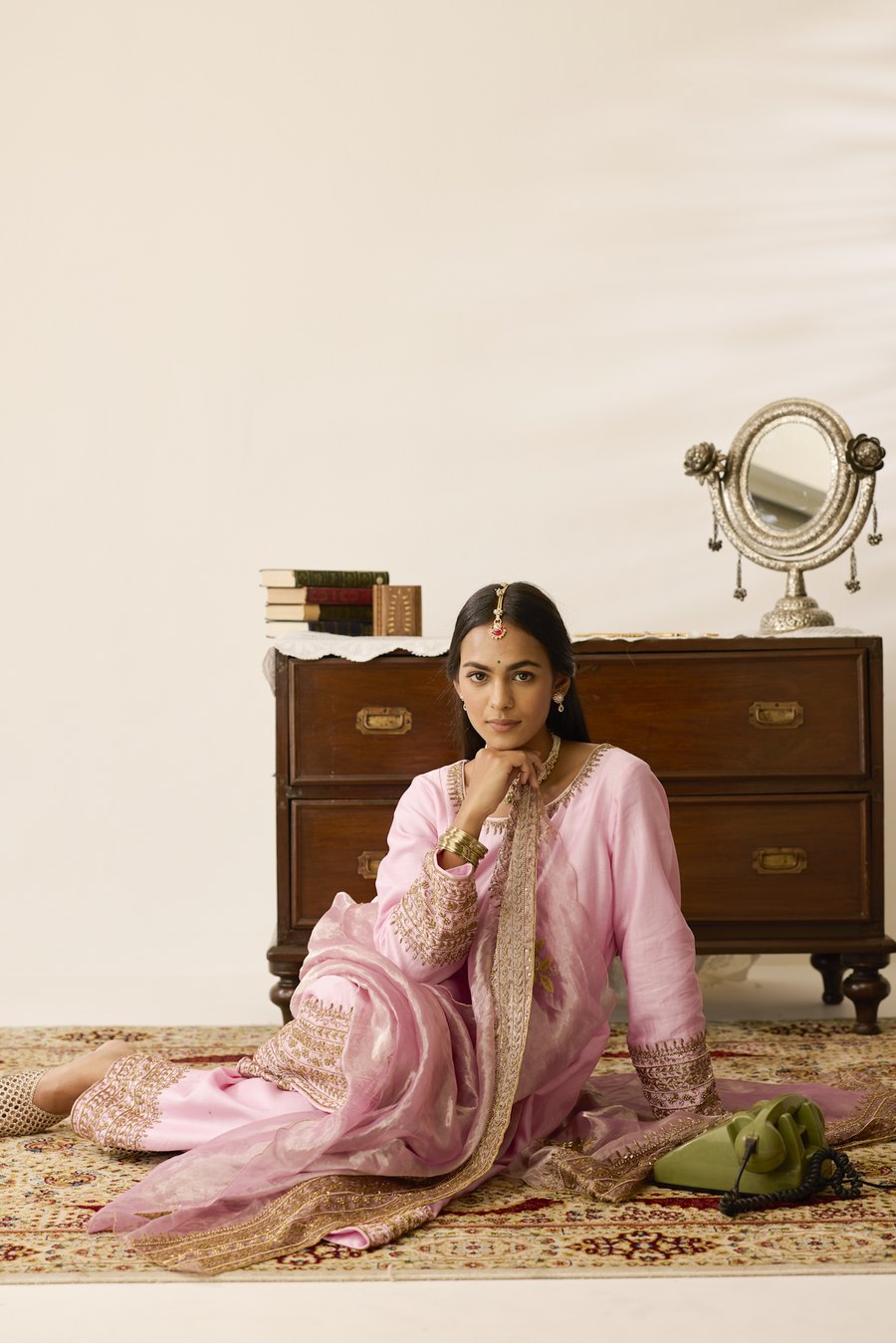
₹44,500
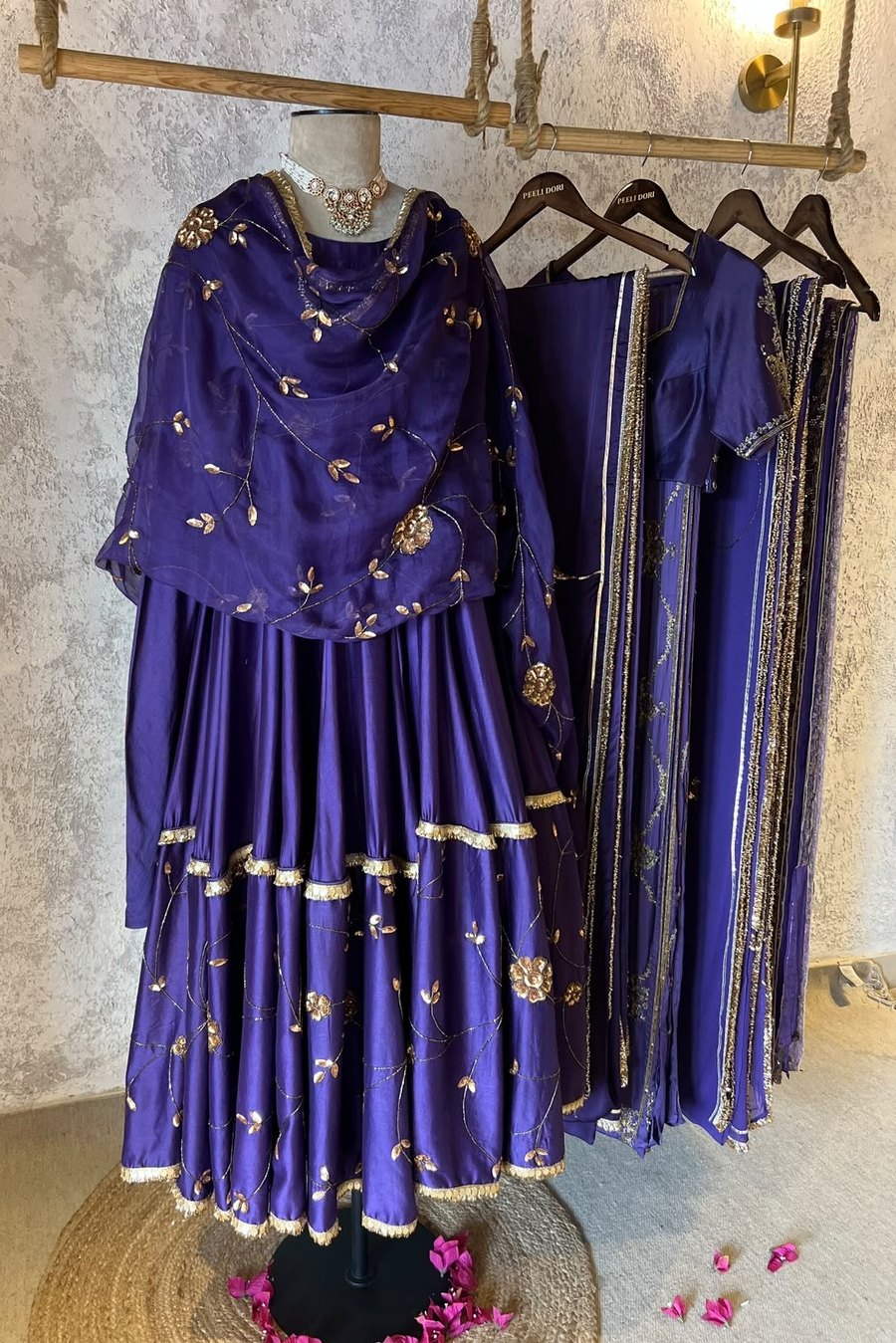
₹36,500
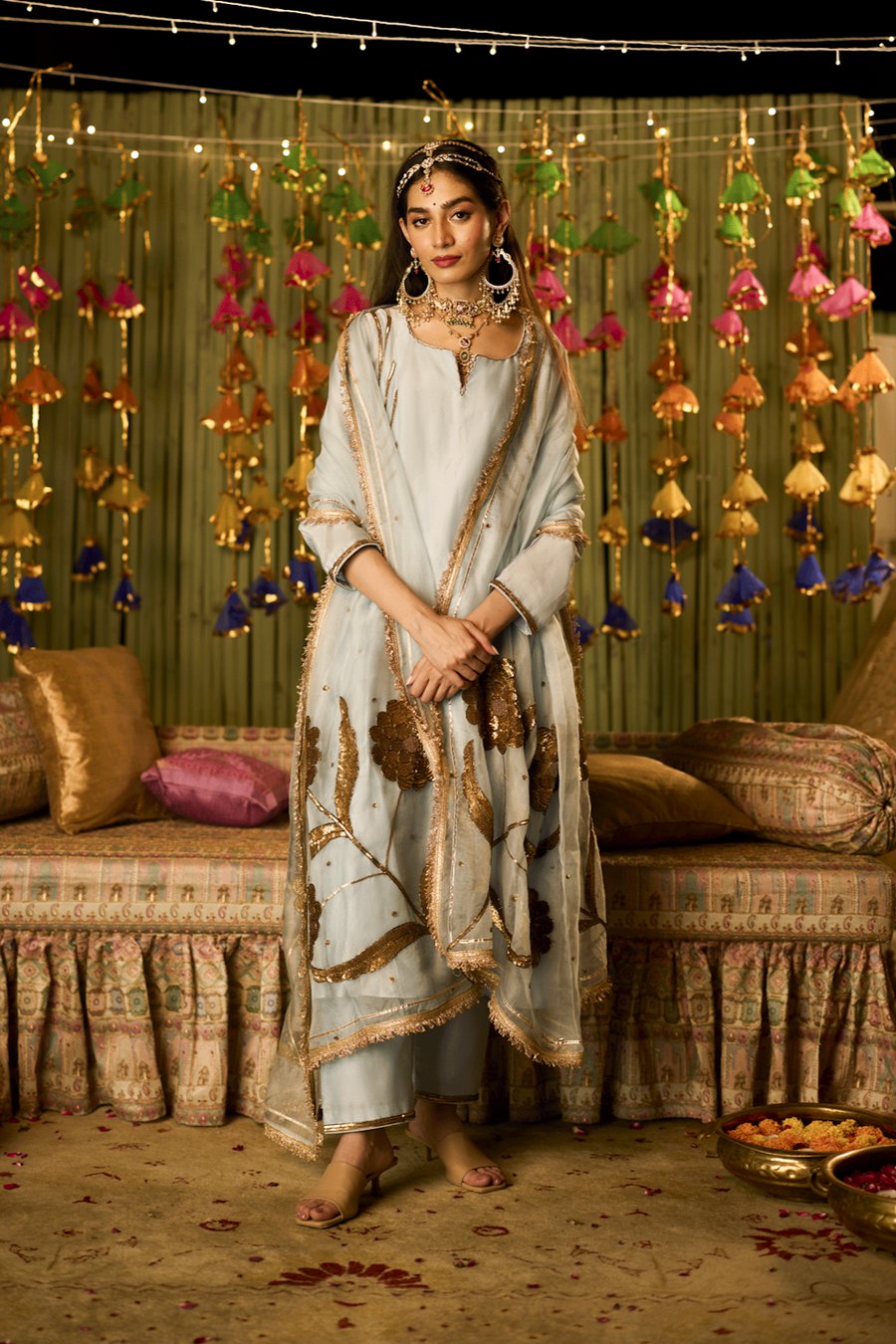
₹36,500
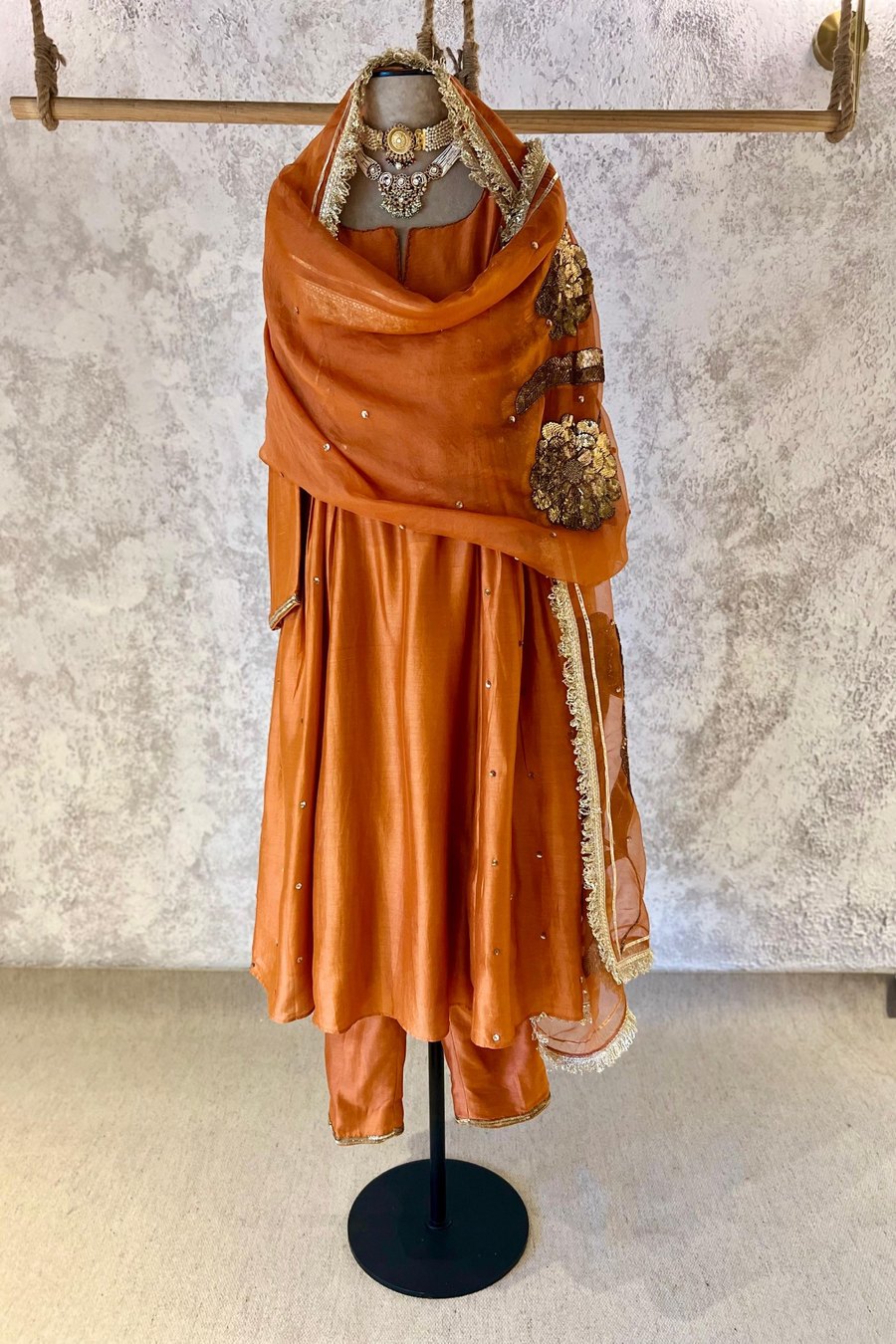
₹36,500
Between the functions
A wedding week is hard on clothes. Cars, hotel cupboards, a steamer borrowed from the venue, and four people in one room. Three habits save an anarkali.
Hang it, don't fold it, once it has been worn. The skirt holds a fold line across the knee after a long sitting, and a day on a hanger takes it out. If it has to travel again the next morning, roll the dupatta rather than folding it, and fold the skirt on the bias so the crease does not land on the embroidery.
Steam, don't press. A hot iron directly on gota or zardozi flattens the metal and leaves a shine that does not come back. If there is no steamer, hang it in a bathroom with the hot water running for ten minutes.
And keep a soft cloth and a little talcum in the bag. Mehendi on the hem, a splash of turmeric at the haldi, a drop of oil at dinner — none of these need a dry cleaner if they are dealt with the same evening. If a mark has dried on the work itself, leave it and bring it to us rather than rubbing it; the embroidery is the part that does not forgive scrubbing.
Frequently asked
What should the sister of the bride wear to the wedding?
Something finished, easy to move in and a step quieter than the bride. An anarkali works well because it is one garment with one waist seam: she can sit on the floor for a puja, carry things, dance at the sangeet and still stand beside the bride in a family photograph. Pick the heavier work for the wedding and the sangeet, and keep the day function light.
Can the bride's sister wear red?
She can, but it is rarely the kindest choice. If the bride is in red, deep green, aubergine, gold or ink navy keeps the family looking like a family without putting two reds in the same frame. If the bride is in a pastel, a deeper tone gives the photograph contrast without competing.
How many outfits does the bride's sister actually need?
Most sisters dress for three: a day function such as the mehendi or haldi, the sangeet, and the wedding itself. A fourth for a reception is common in north Indian weddings. Decide the number before you buy anything — it changes both the budget and how much work each piece should carry.
Is an anarkali comfortable enough for a sangeet?
Yes, if the hem is not too heavy. Pick the skirt up and let it go: if it swings out and settles, it will dance. Dense work at the very bottom gives a beautiful standing line and a tired waist by midnight, so keep the heavier pieces for the wedding and the standing photographs.
How far in advance should the bride's sister order her outfit?
Earlier than the rest of the family usually does. Hers is the order that gets placed last because she is helping everyone else decide, and a made-to-order anarkali still needs a fitting and possibly one alteration. Leave a clear fortnight between the last fitting and the first function — the week before a wedding is the worst time to need a new hem.
Do the anarkalis come in custom sizes?
Yes. They are made to order and sized to her measurements, so the bodice is cut to her shoulder, bust and underbust rather than adjusted towards them. Send the numbers on WhatsApp before the cloth is cut if you are unsure, or come in for a fitting at either store.
Explore more: anarkali · wedding 2026 · designer hand embroidered blouse — or message us on WhatsApp for styling help.

The information below is required for social login
Sign In
Create New Account