

The skirt is what a bride falls in love with in the mirror. The blouse and the dupatta are what the camera looks at for the next six hours. After enough fittings, we can tell you which of the three pieces causes the most regret later — and it is almost never t
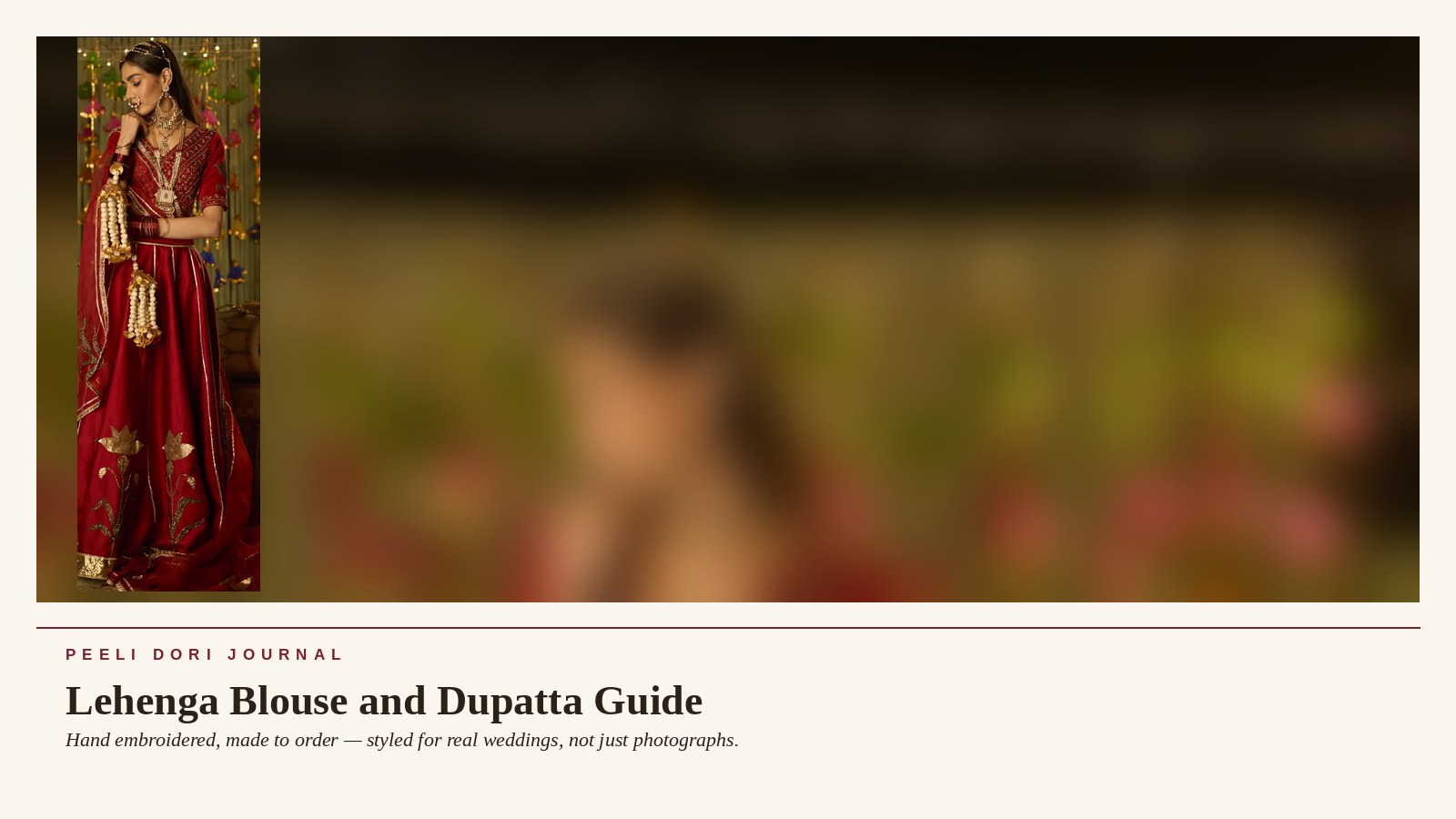
The skirt is what a bride falls in love with in the mirror. The blouse and the dupatta are what the camera looks at for the next six hours. After enough fittings, we can tell you which of the three pieces causes the most regret later — and it is almost never the skirt.
Why we take the blouse measurements before anything else
Most brides arrive with a photograph of a skirt. They have saved it for months, they know the exact shade of red, and they can describe the border from memory. Then we put the set on and the conversation moves, within minutes, to the blouse: is the sleeve too short for the pandit's side of the family, is the back too low for the pheras, will the dupatta stay on the shoulder through the varmala. The skirt was never the problem.
There is a practical reason for this. A lehenga is sold as a set but worn as three separate decisions. The skirt has a waistband with real margin in it and can be taken in or let out a little. The dupatta is a length of cloth — you can pin it higher, drape it lower, or leave it on the chair after the first hour. The blouse is the only piece that is genuinely tailored, and it is the only piece that cannot be adjusted once you are standing under a mandap for two hours in November.
So we start there. Because every Peeli Dori lehenga is made to order with custom sizing, the armhole, the bust, the sleeve and the back depth are decided with you before the skirt is cut. That order matters: a blouse that pinches at the armhole by two centimetres will make a beautiful lehenga feel like a mistake by the time the pheras are done.
A wedding calendar makes this sharper. Between November and February most families have three or four functions, and the lehenga is usually worn for the longest one — the wedding itself — while the blouse and dupatta carry the photographs before and after. Get those two pieces right and an ordinary skirt looks expensive. Get them wrong and the most expensive skirt in the shop still looks borrowed.
Cloth, weight and how much work the dupatta can carry
A blouse should never be lighter than the skirt it sits on. If the skirt is silk, a thin blouse fabric will look like a lining that wandered out of the stitching room, and it will show every fold of the padding underneath. Our silk blouses are cut from the same family of cloth as the skirt wherever we can manage it, and where we cannot, we go slightly heavier rather than lighter — a matte silk blouse under a satin skirt holds its own in photographs because the two surfaces catch light differently.
The dupatta is the opposite problem. It is the largest uninterrupted surface in the whole outfit, so embroidery on it reads further than embroidery anywhere else — a worked border is visible across a lawn, while the same density on the skirt disappears into the pleats. That is also why dupattas go wrong: too much work and the cloth stops falling, becomes a board on your shoulder, and every pin you put in it leaves a mark. Too little and the outfit loses its frame.
On the craft itself, the three techniques behave differently and it is worth knowing which one you are paying for. Gota work is flat and metallic; it throws light and reads at a distance, which is why it suits dupattas and blouse fronts. Zardozi is raised and heavier; it reads best in close photographs and on the skirt panel that sits at the front. Dabka sits somewhere between the two. A set that uses all three at full density is a very heavy set, and heavy is a decision you should make on purpose rather than by accident.
Colour is where our organic dyes show their character. Hand-dyed cloth is not flat: you will see a slight depth change across a metre, and a maroon that reads almost black in a shaded room reads warmer in daylight. We treat that as part of the cloth rather than a flaw, and we will always show you the dupatta against the skirt in daylight before you commit, because that is the pairing most likely to surprise you.
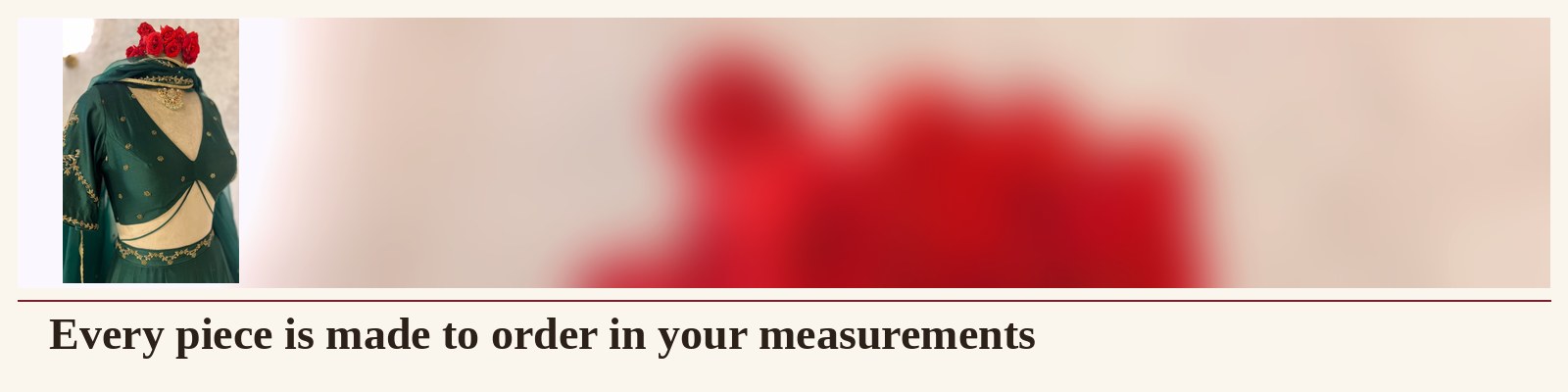
Choosing the blouse and dupatta for your body and your function
Start with the neckline and the jewellery together, not separately. A high, closed neck and a heavy polki choker fight each other — both want the same real estate. If the necklace is the point of the outfit, go lower and simpler at the neck, and let the back carry the interest. If there is no heavy necklace, a high neck with a worked collar is the strongest thing you can wear in a photograph.
Sleeves should follow the function rather than the trend. Full-length or three-quarter sleeves suit the wedding and any temple visit in the same week almost without adjustment; a cap sleeve or sleeveless blouse photographs beautifully at a reception and then needs a dupatta draped over both arms at the ceremony. If you want one blouse to do everything, three-quarter sleeves with a deep back and a dupatta you can pin two ways is the most useful combination we cut.
For the dupatta, think about how long you will be standing rather than how it looks in the first photograph. The double drape — pleated at the front, taken over one shoulder, pinned at the shoulder and again at the waist — stays put through the pheras and keeps both hands free. The seedha pallu, with the working end falling in front, is the more traditional look and needs a firmer pinning at the shoulder. The open or cape drape is for the reception and the cocktail, where you will be standing still and being photographed rather than sitting on the floor.
Proportion is the part people underestimate. A dupatta that is too long for your height pools at the ankle and photographs as a puddle; too short and it stops at the waist, which makes the skirt look wider than it is. We pin both ends on the bride and look at it from three metres away, which is the distance most wedding photographs are taken from. That single check settles more arguments than any amount of discussion.
Five sets from our own rack, and what each blouse is for
The five below are all full sets — skirt, blouse and dupatta — hand embroidered by our artisans and cut to your measurements. We have described them by the job each one does, because that is how brides actually choose once the photographs are out of the way.
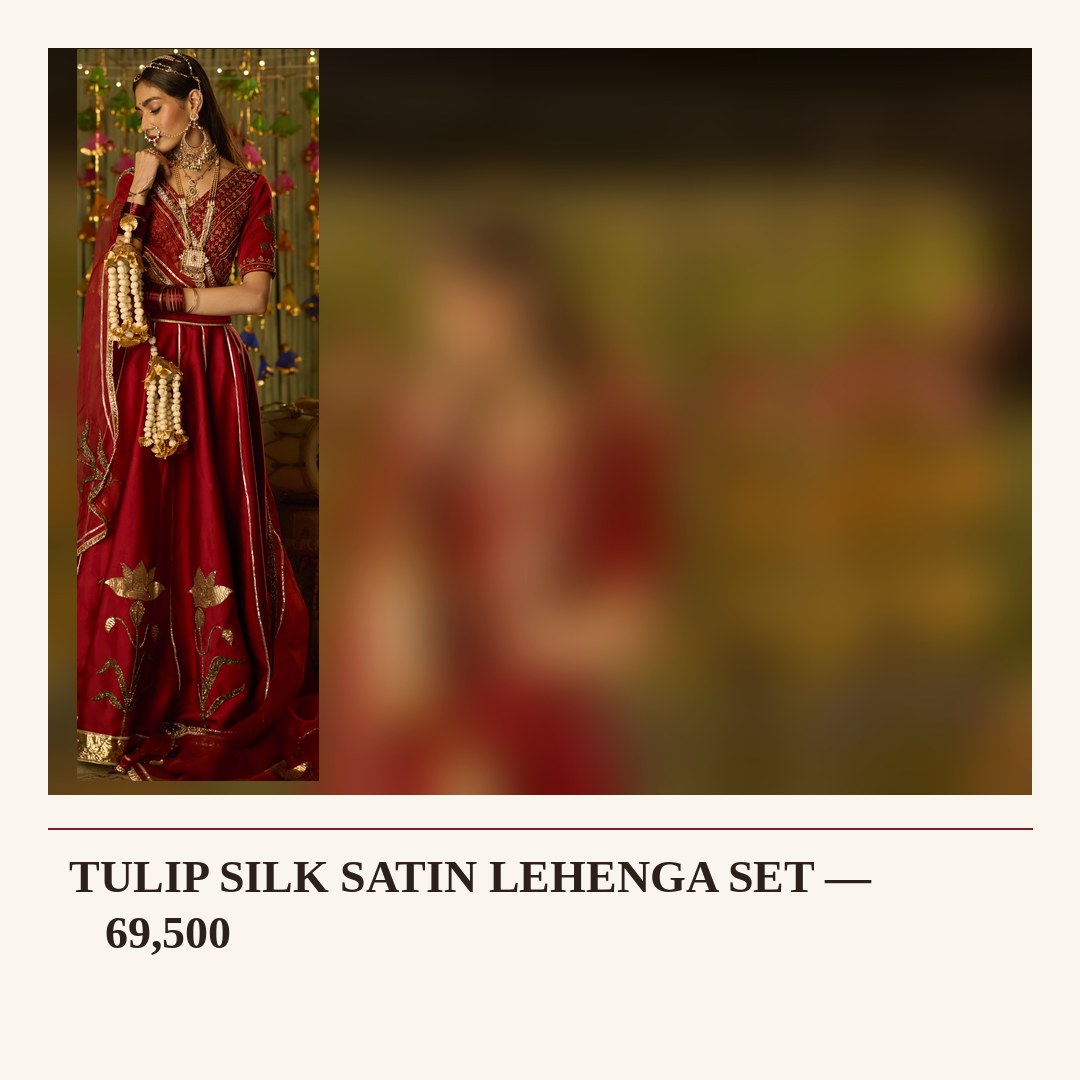
The TULIP silk satin at ₹69,500 is the heaviest cloth of the five. Satin takes light differently from matte silk, so the same embroidery reads deeper on it and the skirt falls with more weight; this is the one for a winter evening wedding where the photographs will be indoors and lit. Beneath it, the TULIP GULABI at ₹64,500 holds the same silhouette in a warmer, softer colour, and reads better in daylight and in garden settings.
The TULIP 2.0 silk at ₹59,000 is the middle of the ladder and the easiest to wear from a morning haldi through to an evening function, because silk holds a pleat without being heavy on the shoulder. The two AAROHI sets — maroon and green, both ₹49,000 — are where most of our brides land. Everything about them is complete and nothing about them is a compromise on construction; what you are buying less of at this price is cloth and surface density, not fit or handwork.
If you are choosing between two of these, message us on WhatsApp and we will send you the dupattas side by side in daylight before you decide. It is the cheapest way to avoid the one mistake we see most often, which is a dupatta that looked right on a screen and wrong next to the skirt.
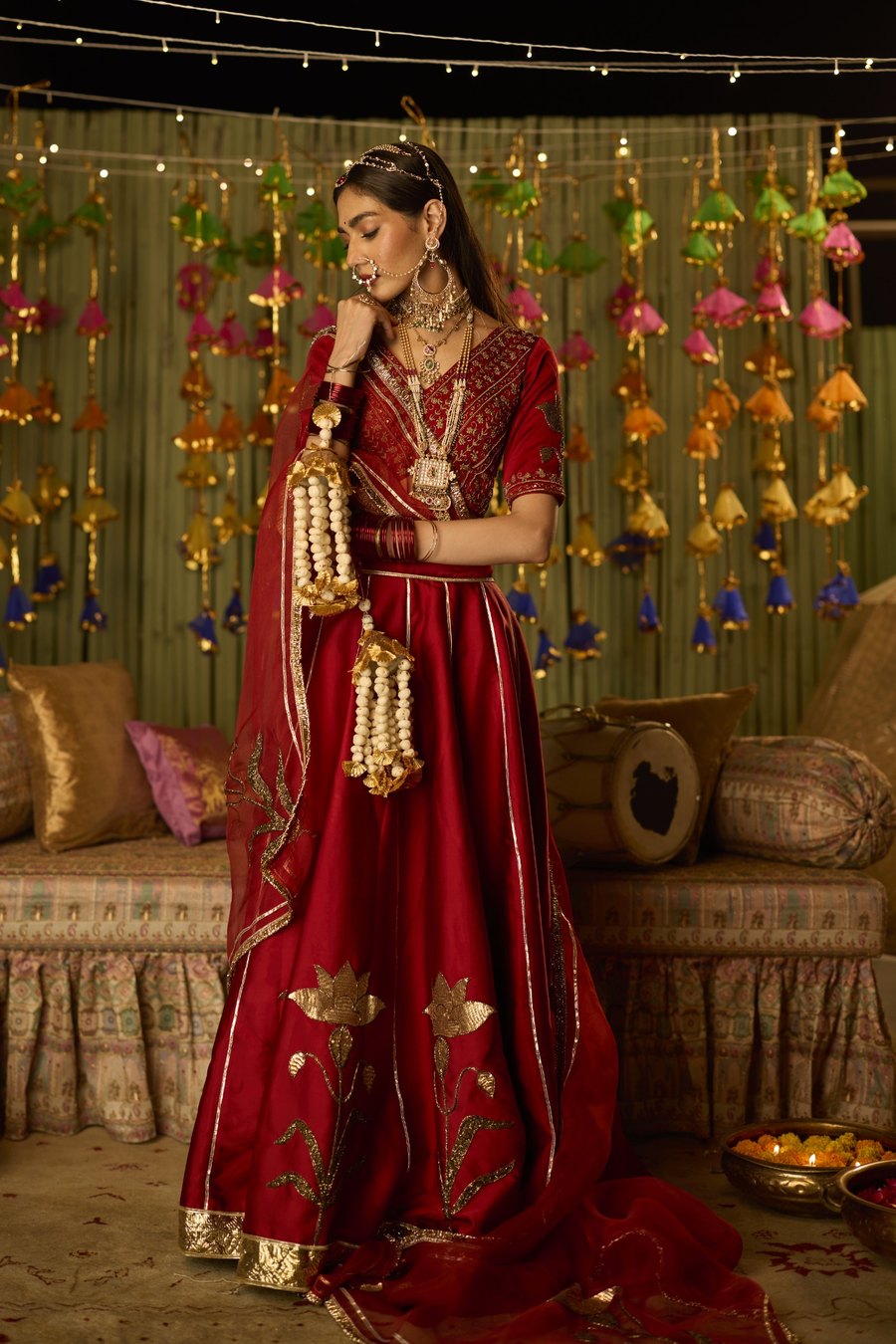
₹69,500
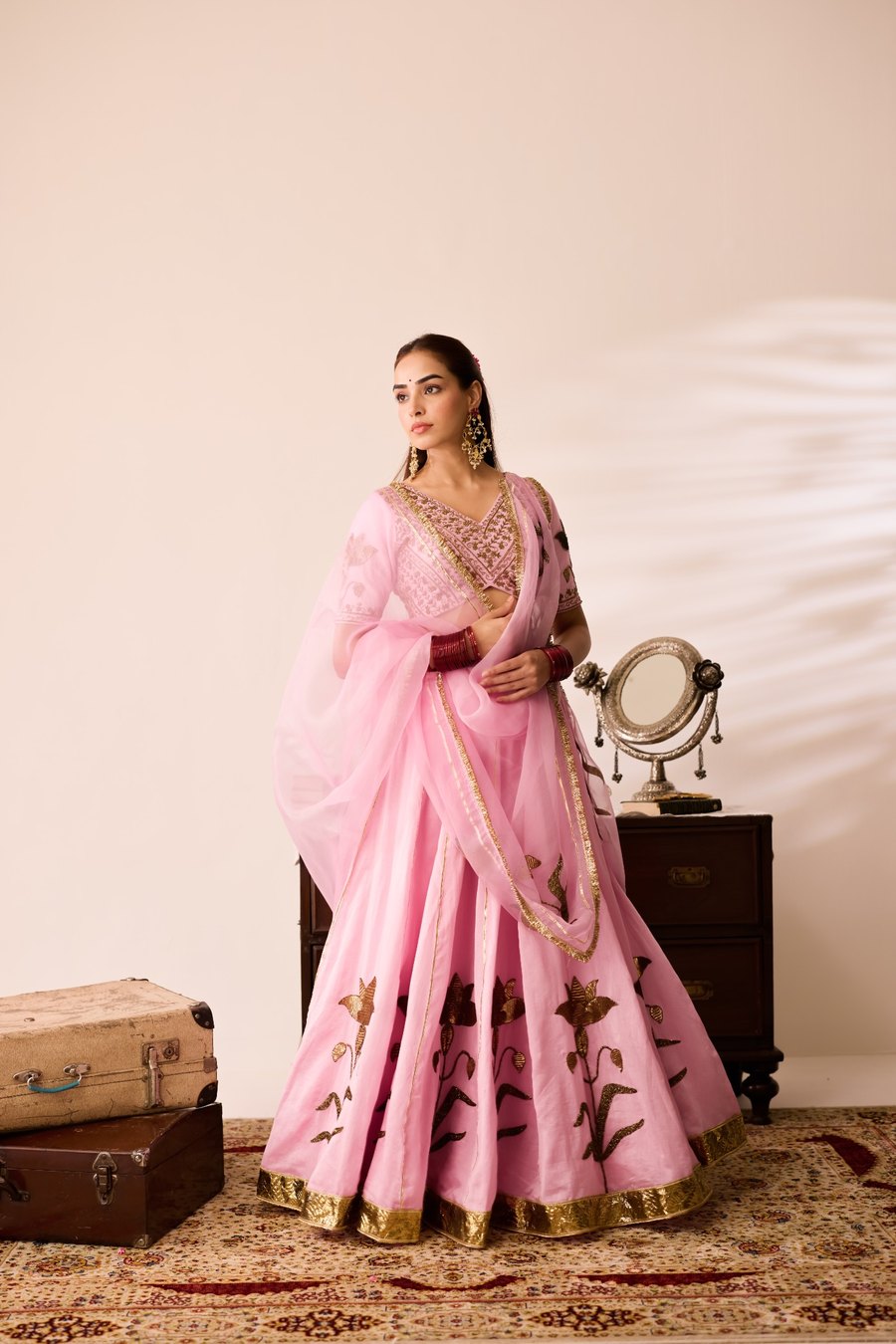
₹64,500
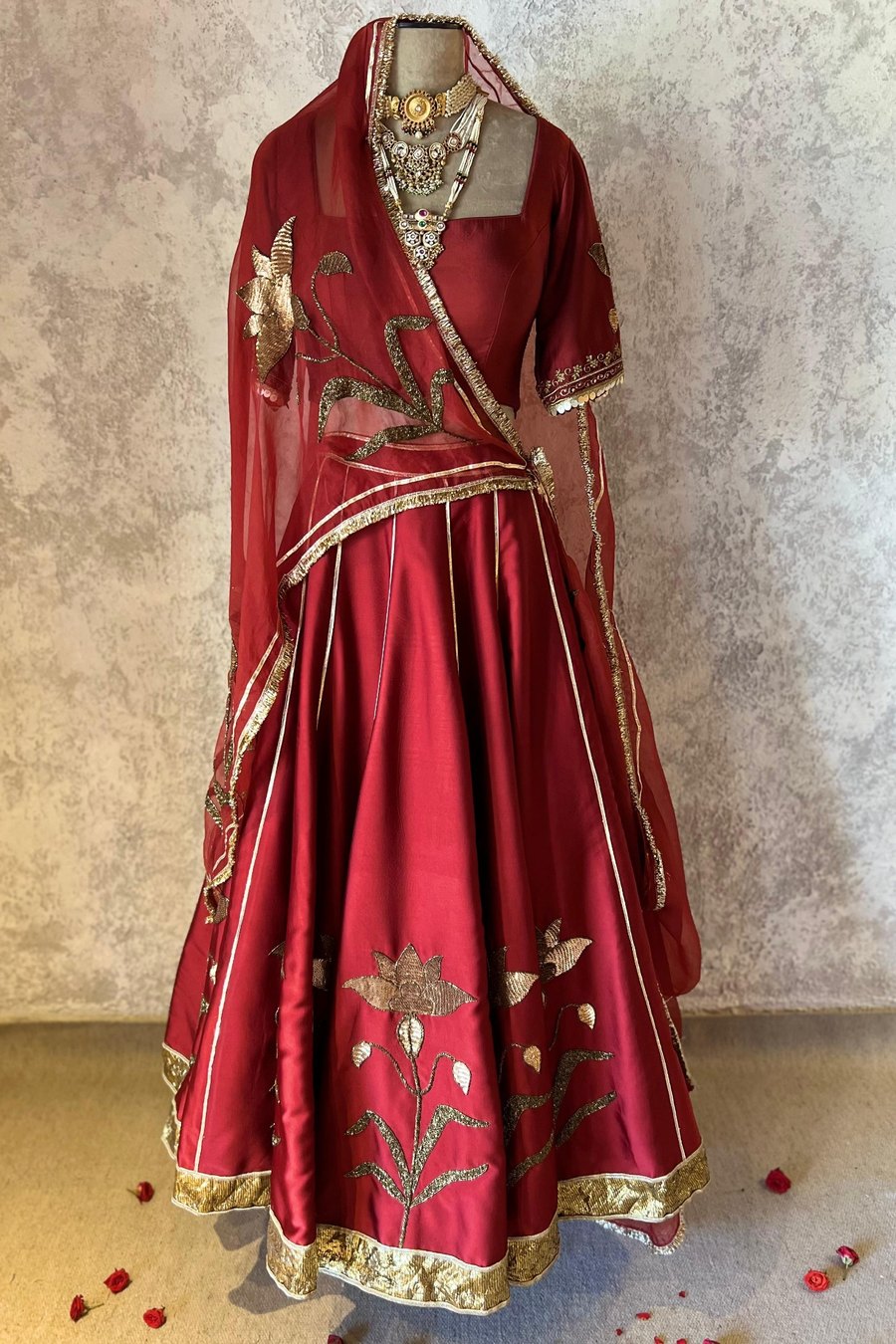
₹59,000
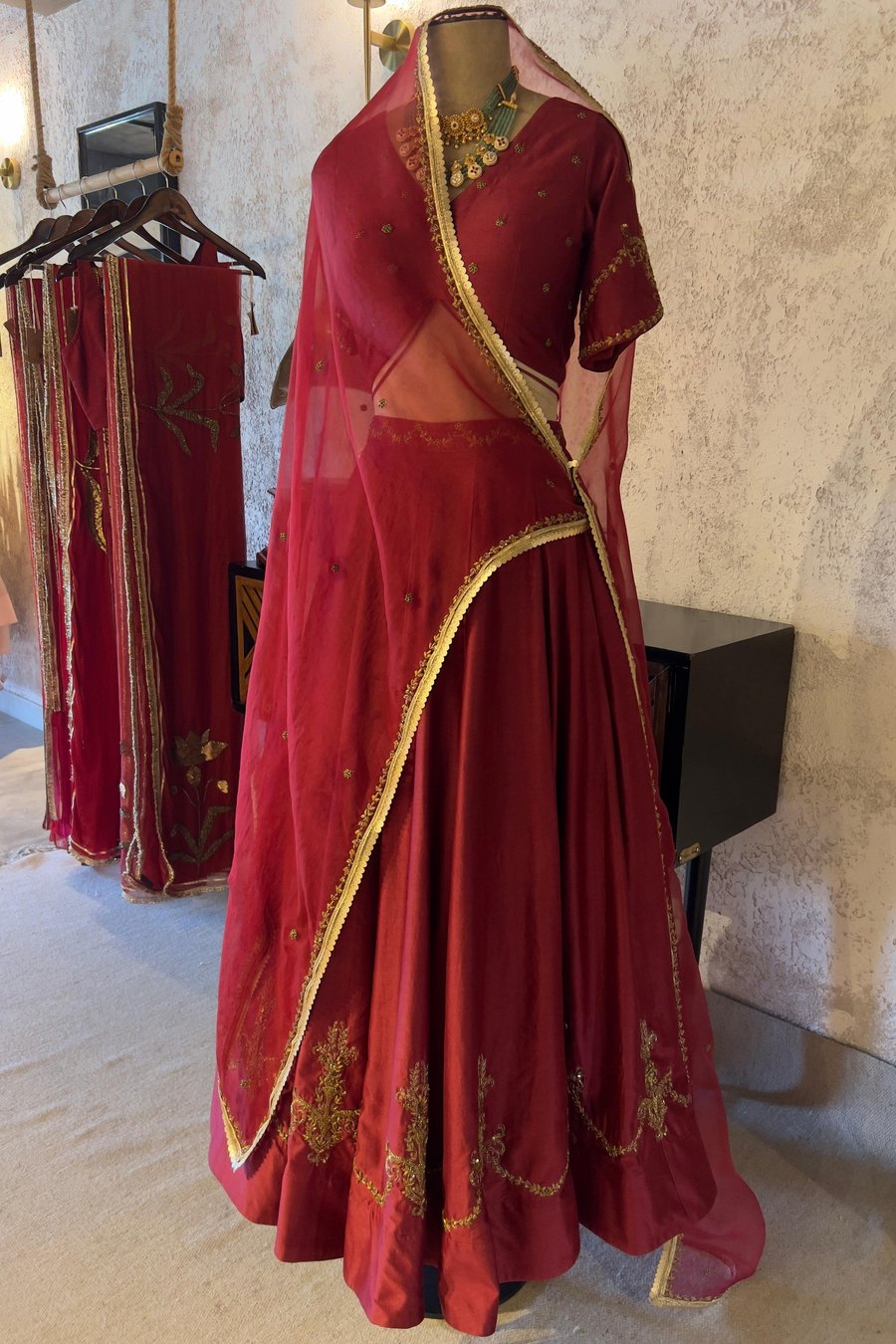
₹49,000
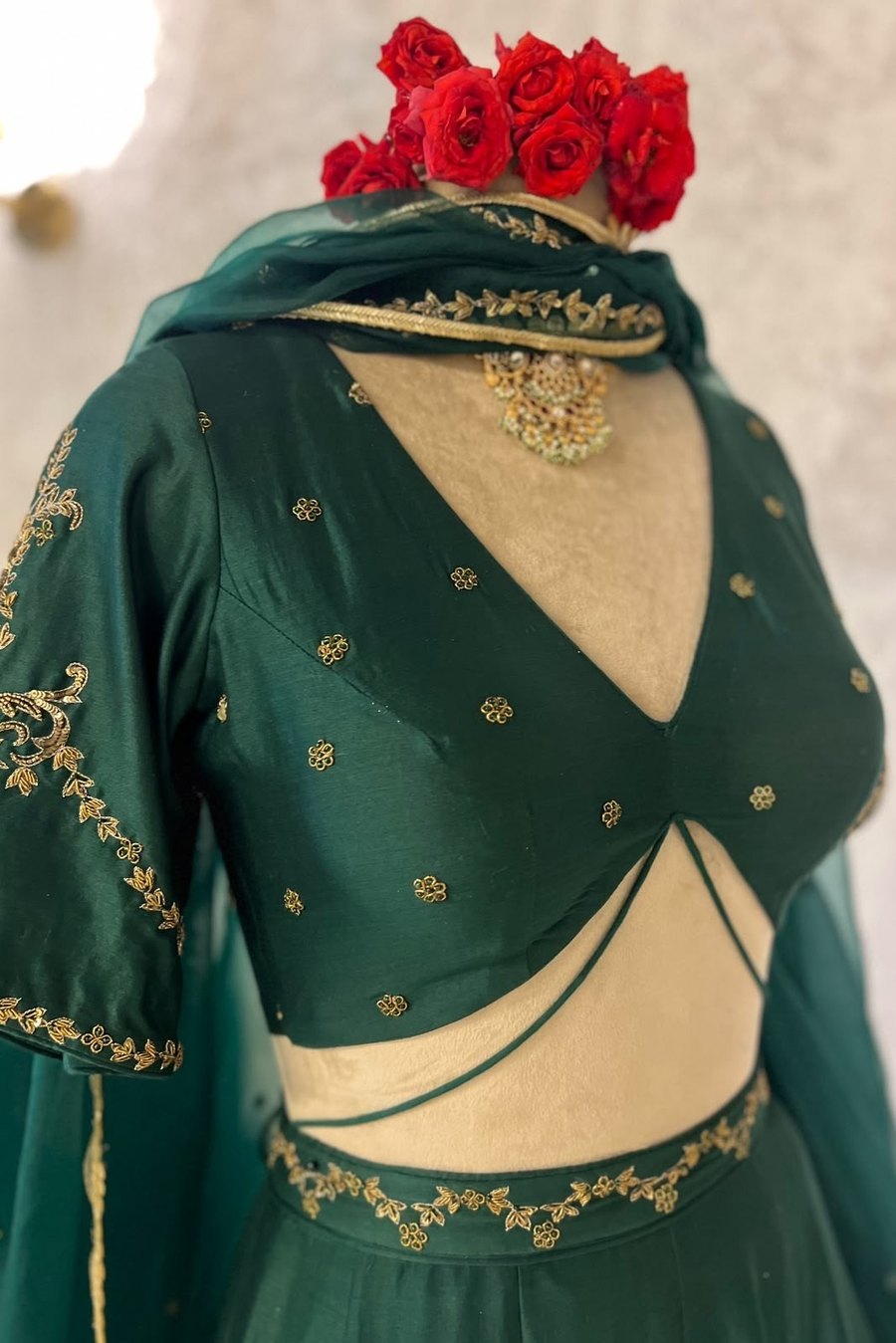
₹49,000
The blouse details that decide the day
The back closure is worth ten minutes of thought. A dori tie with tassels gives you two or three inches of adjustment, which matters when the blouse is measured in September and worn in December after a month of functions. Hooks and eyes give a cleaner line down the spine and photograph better under a low back, but they give you nothing back if the measurement shifts. If you are unsure, ask for the dori and keep the hooks for the reception blouse.
Pads and cups are a fit decision, not an afterthought. A structured, lightly padded blouse lets us cut a clean neckline without visible straps, and it means the blouse holds its shape on the third function instead of the first. Tell us at the measurement stage rather than at the trial; it changes the pattern.
Leave a real margin inside the side seams. Every blouse we cut has adjustment room, but the amount matters, and it is much easier to build in than to add later. The same goes for the sleeve head: a sleeve that is comfortably loose at the armhole will never look tight in a photograph, and it will not leave a mark on your arm during the pheras.
Then there is the second-blouse trick, which we recommend more than any other single purchase. A plain silk blouse in a contrasting or deepened shade, cut to the same measurements, gives you a second outfit out of one skirt and one dupatta. Brides who buy it wear the same lehenga twice in the same wedding week and nobody notices, because the change of blouse changes the entire frame.
Folding, storing and getting it to the venue intact
Hand embroidery does not like creases, and it likes being folded along the same line even less. Store the skirt rolled rather than folded flat if you have the space, or folded once and hung in the tissue it came in. Never stack weight on top of a worked border — zardozi and dabka are raised, and raised work that has been pressed flat for six months does not come back.
The dupatta should be rolled separately from the skirt, in its own muslin or acid-free tissue, so that its border is not sitting against the skirt's embroidery. If it has been folded in a trunk for weeks, unwrap it at least two days before the wedding and hang it somewhere with air. Most of the creasing will fall out on its own; what remains should be steamed, never pressed directly onto the metal work.
The blouse hangs. Give it a padded hanger and leave the hooks open so the fabric is not under tension along the seam. If you are travelling to the wedding, carry the blouse flat in a box rather than folded in a suitcase, and carry a small pouch with spare pins, a needle and thread in the matching shade, and the tassels for the dori. Every bride we have dressed has needed at least one of those three things on the morning of the wedding.
We recommend dry cleaning for all three pieces after the wedding, before storage, and then again at the start of the next season if the set is going to be worn by someone else in the family. Organic-dyed cloth deepens slightly with age, so a set stored well comes out warmer than it went in rather than duller.
Frequently asked
Should the blouse match the skirt or the dupatta?
Match the skirt, and let the dupatta be the piece that carries contrast. The blouse and skirt together are the body of the outfit; if the blouse matches the dupatta instead, the eye reads the set as two halves at the waist. There is one exception worth knowing: a deeply contrasting blouse in a plain silk, cut to the same measurements, is the cheapest way to get a second look out of one lehenga.
How long should a lehenga blouse be?
Long enough to sit inside the waistband of the skirt without riding up when you raise your arms, and short enough that the waistband stays visible. In practice that is a blouse that ends one to two inches above the waistband, with the skirt sitting at your natural waist. We check this standing and sitting down, because the sitting check is the one that catches a blouse that is too short at the back.
How many pins does a dupatta need?
Three is usually enough for a double drape: one at the shoulder, one at the waist where the pleats are held, and one at the back to keep the fall straight. Five is the maximum we would ever pin a wedding dupatta with — beyond that you are pinning weight onto weight, and the cloth starts to pull at the pin marks. Carry spares; they are the thing brides most often ask us for on the day.
Can a lehenga blouse be worn with a saree?
Often, yes, if the neckline and sleeve suit you in both, and if the blouse is not cut specifically to sit inside a lehenga waistband. It is a question worth asking when you are measured: a slightly longer blouse with a clean hem will work under a saree, while a cropped one with a shaped hem will not. Tell us you want both and we will cut accordingly.
Do you ship lehengas outside India?
Yes. Shipping is free across India on orders above ₹10,000, and for international orders we have a code — INTSHIP — that applies above ₹89,000. Fit is the part we handle before shipping: we do a video fit check on WhatsApp against your measurements, and because everything is made to order, a correction is a pattern change rather than an alteration.
Explore more: bridal collection · wedding 2026 · designer hand embroidered blouse — or message us on WhatsApp for styling help.

The information below is required for social login
Sign In
Create New Account