

A lehenga costs what it costs for four separate reasons, and only one of them is the embroidery. If you are setting a budget for a wedding this winter, it helps to know which ten thousand rupees you are actually buying. Why the lehenga is the one line where
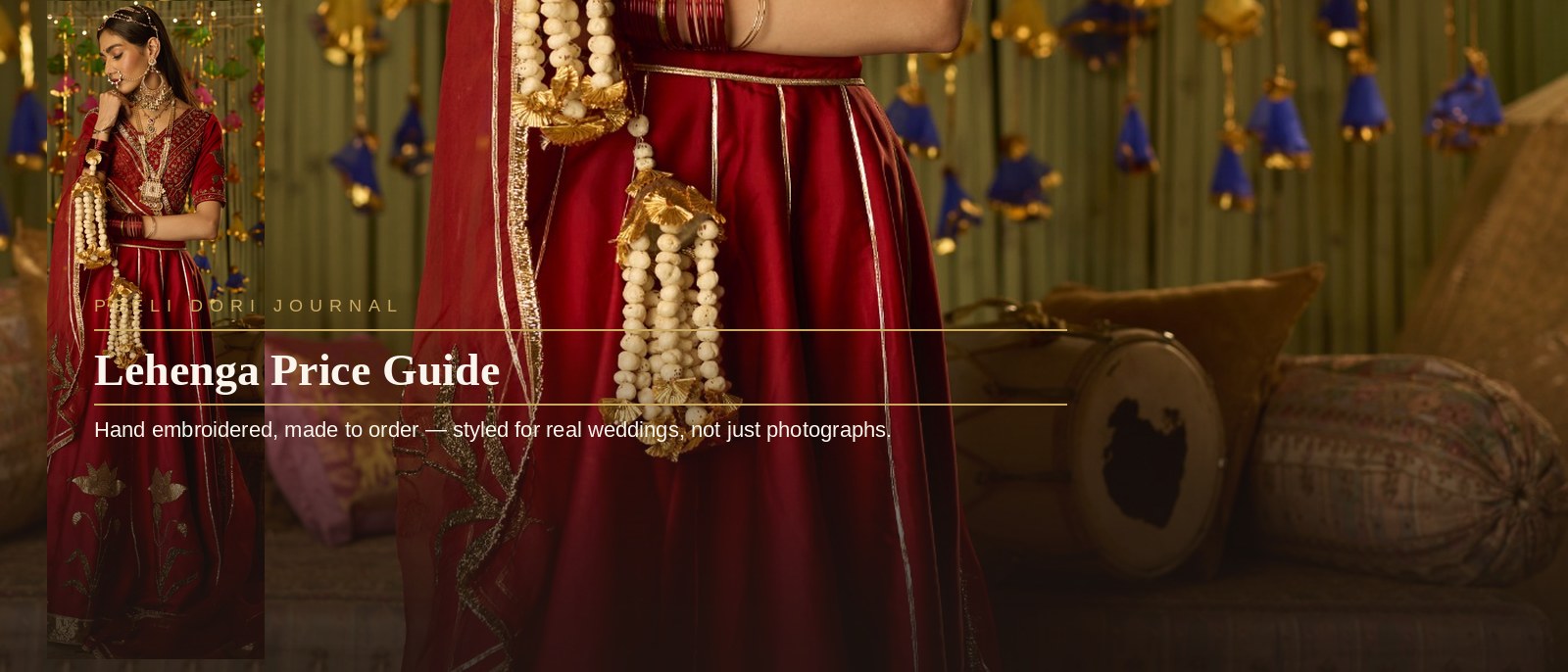
A lehenga costs what it costs for four separate reasons, and only one of them is the embroidery. If you are setting a budget for a wedding this winter, it helps to know which ten thousand rupees you are actually buying.
Why the lehenga is the one line where price and price tag come apart
Every November we get the same two questions in the store, usually from the same family, usually an hour apart. First, from the bride: what should a bridal lehenga cost? Second, from her mother, standing in front of two lehengas on the same rack: why is this one twenty thousand more than that one?
The honest answer is that a lehenga is not priced like a garment. It is priced like a small building project. There are four bills inside the tag — the cloth, the work on the cloth, the blouse and dupatta that go with it, and the making — and each of them moves independently. Two lehengas can carry the same embroidery and still sit ₹40,000 apart, because one skirt holds six metres of cloth and the other holds nine, or because one is worked all over and the other only where the pleats open.
This is also why a lehenga price list is the least useful thing you can compare between shops. A number is only meaningful next to the metreage, the panel count, the depth of the border and whether the dupatta and blouse are inside it. Once you know those four, the quotes start making sense and the negotiation stops being guesswork.
For a winter wedding the lehenga is usually the single largest clothing decision of the year, and it is the one piece a bride will be photographed in for six hours and looked at in albums for thirty years. So it is worth ten minutes of understanding before it is worth any amount of money.
What each step up the ladder actually buys
Our own lehengas start just under ₹30,000 and run past ₹3,50,000 for the heaviest bridal pieces; the ones most brides end up choosing sit between about ₹49,000 and ₹70,000. That is not a coincidence — that band is where a lehenga starts to have enough cloth, enough work and a good enough dupatta to read as bridal from across a lawn.
At the bottom of that band you are buying completeness. The AAROHI in maroon and the AAROHI in green are both ₹49,000, and both are full sets — skirt, blouse, dupatta — hand embroidered, made to order, cut to your measurements. Nothing about them is a compromise on construction. What you are not buying at this price is volume: the skirt has less cloth in it, and the embroidery is placed rather than poured over the whole surface.
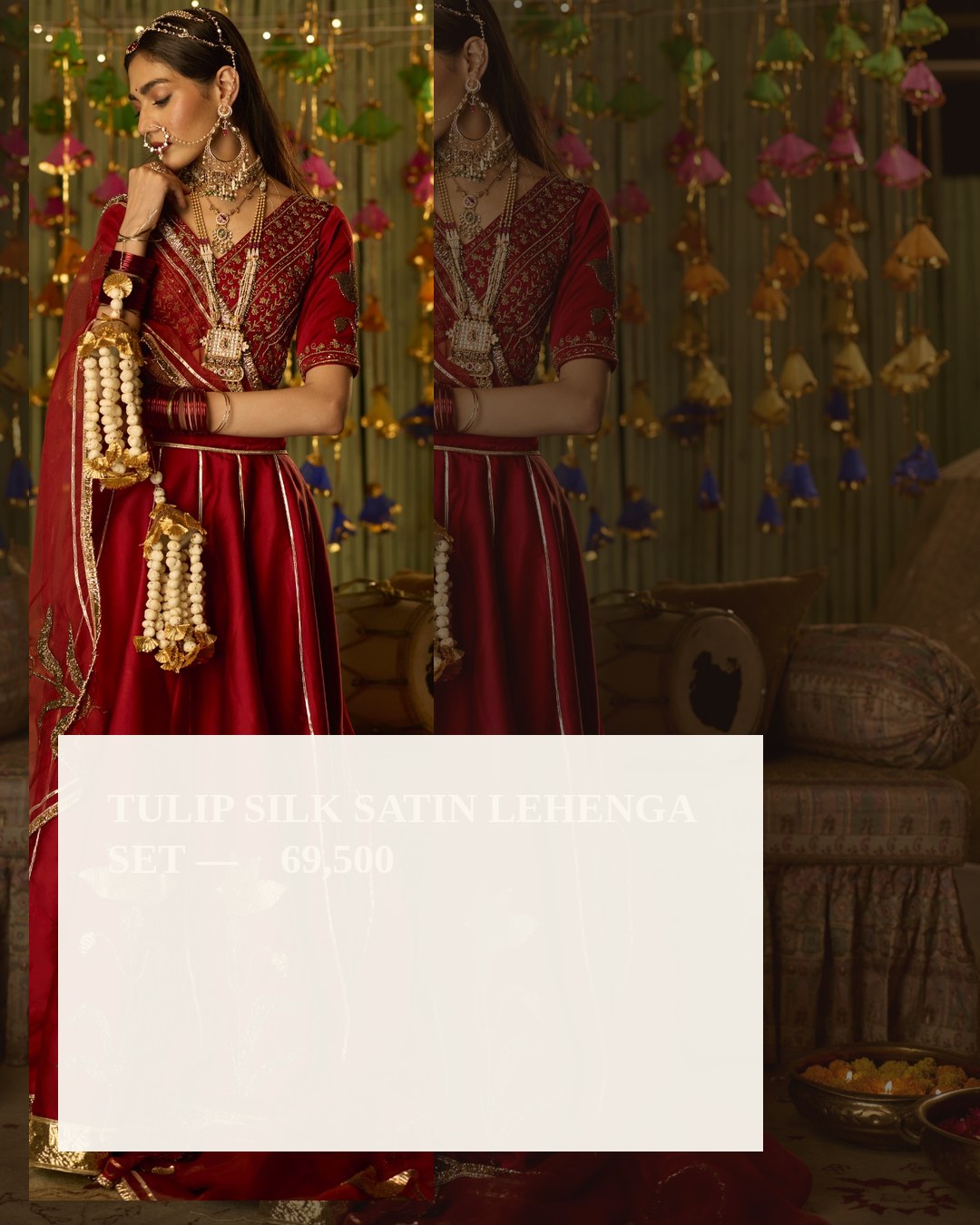
Move up and the increments are mostly physical. The TULIP 2.0 silk at ₹59,000 buys you a silk skirt, which hangs with more weight and holds a sharper pleat than a lighter cloth does. The TULIP GULABI at ₹64,500 sits above it. At ₹69,500 the TULIP silk satin is the top of the ladder we keep in stock, and a large part of that jump is the cloth itself — satin takes light differently from matte silk, so the same embroidery reads deeper on it, and the skirt needs more metres to fall the way a satin skirt has to fall.
What does not change as you climb is just as important. The fit is not better at ₹69,500 than at ₹49,000, because every lehenga we make is made to order with custom sizing — the waist, the length and the blouse are decided with you at every price. The embroidery is hand done at every price. The dyes are the same small-batch organic dyes. The blouse is tailored at every price. Nobody is paying for a better tailor further up the rack, and any shop that charges extra for 'customisation' on a made-to-order lehenga is charging you for the thing that should be standard.
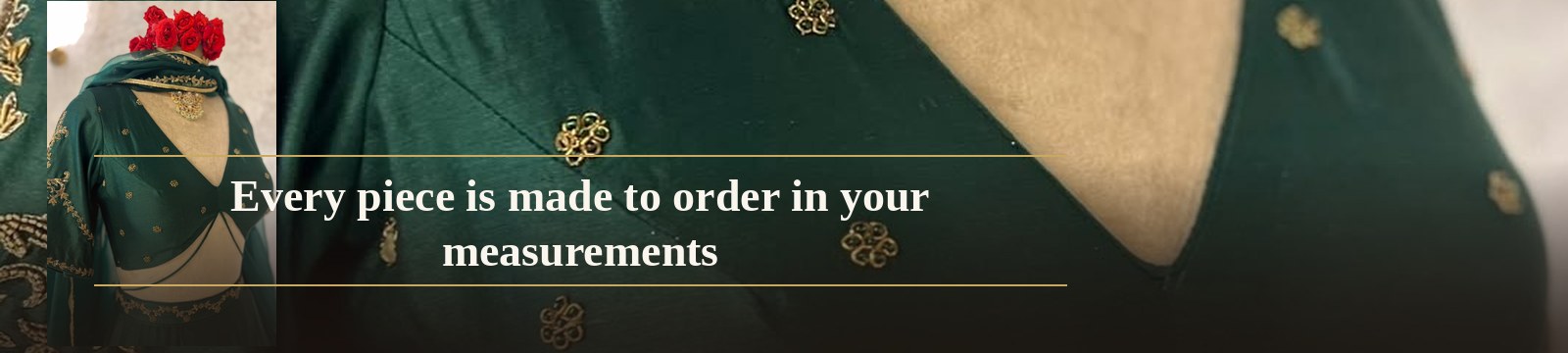
The metre test: where the money physically is
Pick up a lehenga skirt and look at the cloth, not the embroidery. A saree is five and a half to six and a half metres. A lehenga skirt is six to nine metres, plus a lining, plus a canvas or interlining at the waistband, plus a can-can underneath if you want flare. That is why handwork on a lehenga costs more than the same handwork on a saree: there is simply more surface to work on, and the rate per metre is the same.
Panel count is the second half of that sum. A skirt is cut in panels and joined; more panels means more cloth, more seams and more flare when you turn. An eight-panel skirt and a twelve-panel skirt can look similar on a hanger and behave completely differently when the bride walks, sits, or climbs three steps to a stage. Ask how many panels. It is the single fastest way to understand a quote.
Then there is where the work sits. A deep hem border, a worked waistband and a worked front pleat are three separate decisions, and the difference between them and all-over work is the largest single line in the price. All-over on nine metres of skirt is what a ₹2,00,000 lehenga is made of. Work concentrated on the parts that show — the hem, the pleats when they open, the waistband, the blouse — is what a well-bought ₹50,000 lehenga is made of.
The craft itself changes the number too. Gota is flat gold ribbon appliqué: it stays light, catches light in a straight line and suits daytime functions. Zardozi is raised metal-thread embroidery, denser and heavier, and it belongs to evening. Dabka uses small beaten metal coils and is the heaviest of the three, in weight and in price. Mirror work is the least formal and the most forgiving, because it moves with the body instead of stiffening it.
One physical test beats all of this: lift the skirt. A heavily worked lehenga is a genuinely heavy garment, and the bride is the one who will stand in it from eight in the evening until one in the morning. Weight is not visible in a photograph, which is exactly why it is worth checking in person.
What you can trade down, and what you should not
If the budget needs to come down and the look must not, there are four levers that work and one that does not.
The levers: reduce the skirt cloth and accept a straighter fall; take the work to the visible third instead of all over; keep one dupatta instead of two; and keep the blouse simple, since a plain-sleeved blouse under a worked skirt is not a compromise — it is what makes the skirt read.
The lever that does not work is buying a smaller lehenga and planning to alter it later. A lehenga is the least alterable garment in the wardrobe, because the waistband is structured and the work is already placed. Taking in a worked waistband is possible once; letting one out is not. This is why we ask for measurements twice, and why a lehenga ordered in the correct size at ₹49,000 will always look more expensive than a larger one bought on sale.
Two things are worth paying for even when everything else is coming down. The waistband: a properly built one holds the weight of the skirt off the hips and keeps the pleats standing through a six-hour function. And the dupatta: it is a third of every photograph, and a thin, machine-finished one will quietly undo a good skirt.
Shipping and the rest is straightforward — free across India above ₹10,000, and international shipping on code INTSHIP above ₹89,000 — so the number on the lehenga is close to the number you actually pay.
Five lehengas from our own rack, priced honestly
These are the five we would put in front of a bride with a ₹50,000 to ₹70,000 budget this winter. All five are hand embroidered, made to order with custom sizing, and come as complete sets.
The two AAROHI sets at ₹49,000 are the value picks, and they are the same cut in two moods: maroon, which is the safest colour a bride can wear to pheras because it never photographs flat, and green, which suits a daytime or a mehendi-side function and photographs beautifully in daylight. If the wedding has more than one evening and the budget covers one heavy lehenga, these are the second piece.
The TULIP 2.0 silk at ₹59,000 is the first real step into silk, and it is where the skirt starts to hold its own shape instead of collapsing into the legs when the bride sits. The TULIP GULABI at ₹64,500 is the same idea in a warmer palette. And the TULIP silk satin at ₹69,500 is the one for a reception or a phera where the light will be low and the photographs will be flash — satin carries embroidery in a way matte cloth cannot.
What ties them together is that none of them needs a second purchase to be wearable. Skirt, blouse and dupatta are cut as one set, which is the whole reason to buy a lehenga rather than assemble one.
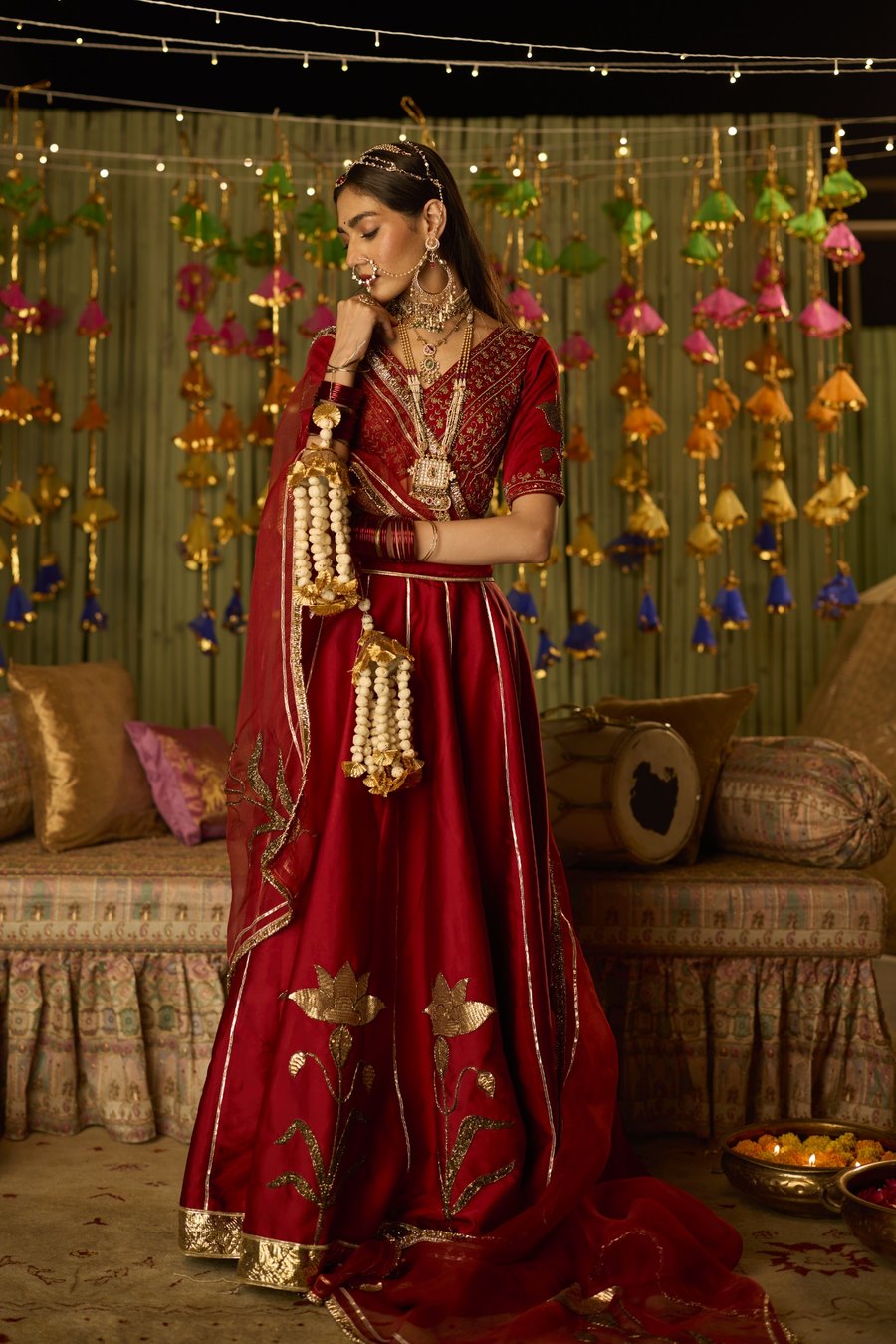
₹69,500
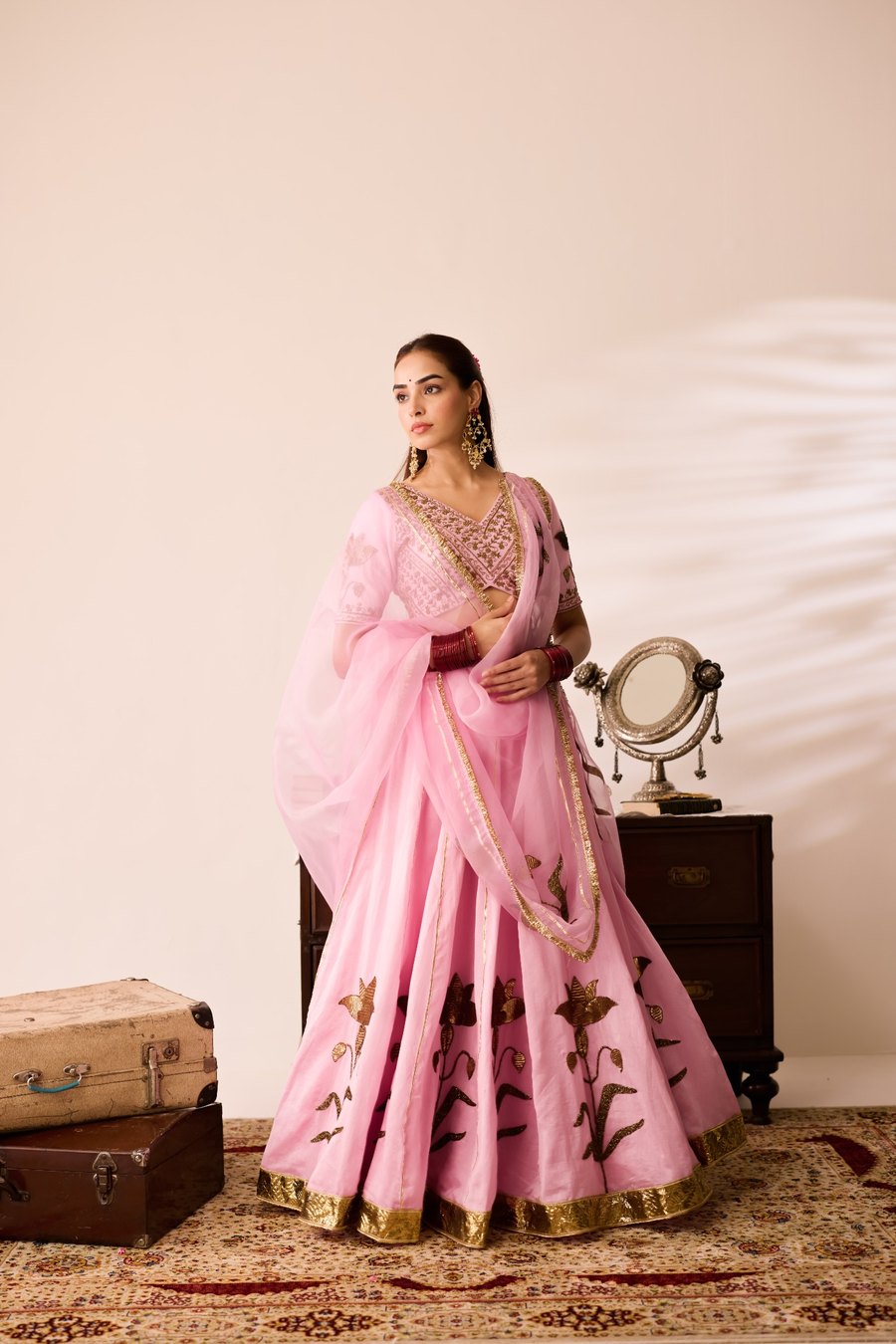
₹64,500
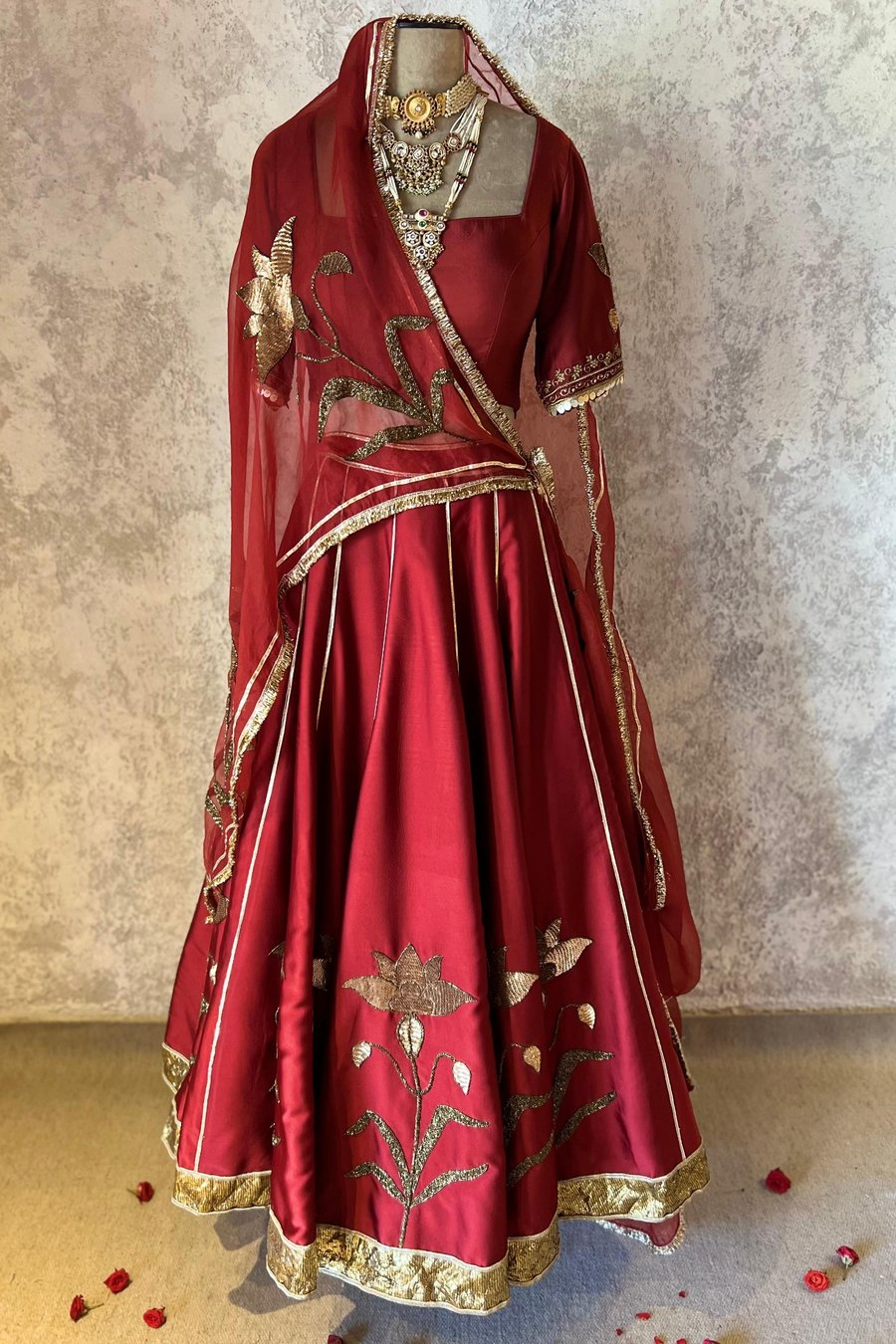
₹59,000
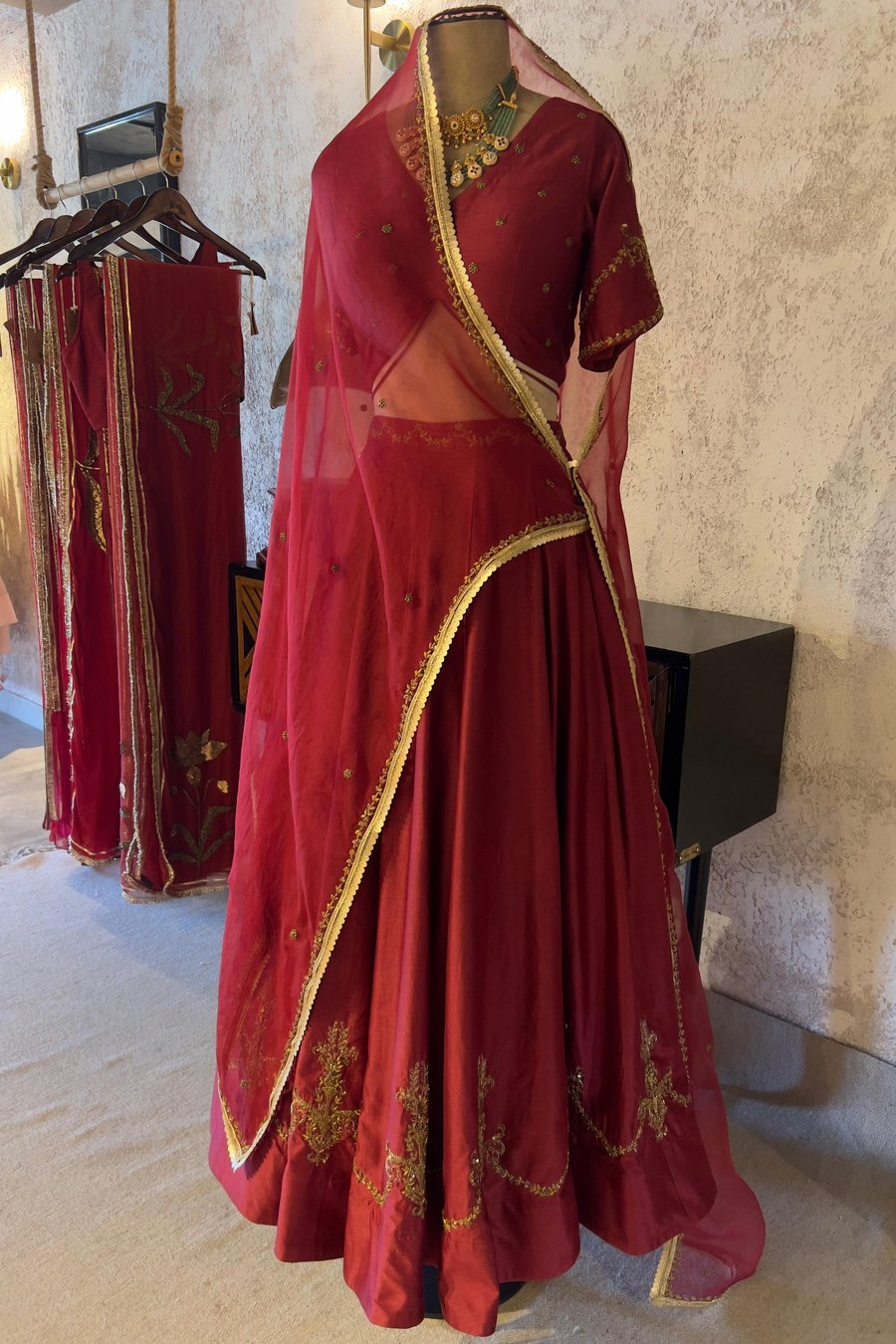
₹49,000
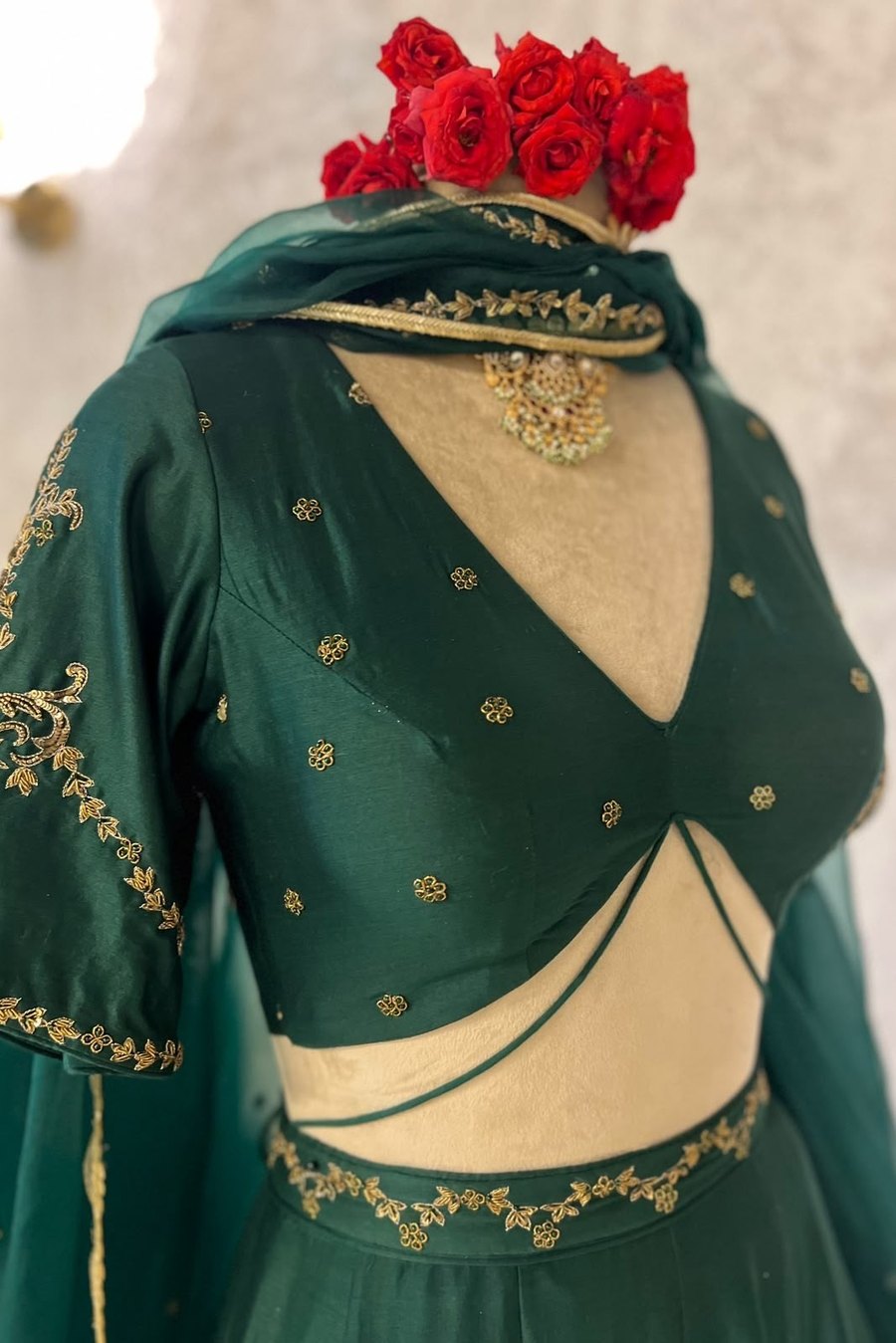
₹49,000
The blouse, the dupatta, and the drape that decides the photograph
On a lehenga, the blouse is the only tailored piece. Everything else can be adjusted with a pin. That makes it the piece to spend your fitting time on: the bust, the armhole, the length at the waistband, and whether the sleeve ends where you want it. A sleeveless or cap-sleeve blouse also cuts the embroidery area, which is a real saving on a heavy set.
The dupatta is the part that gets remembered. Pin it at the shoulder into the blouse seam, never through the embroidery, and pin it on the side away from the camera so the fall stays soft. A dupatta of about 2.25 metres will sit as a drape over one shoulder; a wider one can be pleated and opened across the chest, which is the more formal look and the one that survives a receiving line.
Then the two tests, done in the store, in the shoes you will wear: sit down on a low chair and stand up; and walk up three steps. If the pleats collapse, the hem catches your heel, or the waistband digs, it will do exactly the same on the day. A lehenga should be checked sitting down, because a bride spends more of her wedding seated than standing.
And the jewellery rule that saves the whole look: if the skirt is heavily worked, keep the neck quiet. One strong earring and bare wrists read far more expensive than a full set competing with the hem.
Between two functions in the same week
A winter wedding usually means two or three outings in the same lehenga, and the damage is done between them, not during them.
Never hang a lehenga skirt from its waistband for days on end. The weight of a worked skirt will pull the waistband out of shape, and that is the one repair nobody can hide. Store it folded in a cotton bag, with the pleats left as they were pressed, and the dupatta rolled around a tube rather than folded on the same crease every time.
If the skirt has travelled and the pleats have gone soft, hang it by the waistband for an hour — an hour, not a week — and let gravity do the work. Steam the cloth; never iron the embroidery, because a hot iron flattens metal work permanently.
Dry clean once, after the last function, not between each one — repeated cleaning is harder on organic-dyed cloth than a week in a bag. Tell the cleaner it is hand embroidered. If something spills during the function, blot it, do not rub it, and bring it to us rather than reaching for a household stain remover.
And if the blouse needs adjusting after the first wearing, that is normal. Silk and satin both settle. Book the alteration before the second function rather than the morning of it, and message us on WhatsApp if you are not in Delhi or Dehradun — we would rather talk you through a fit on video than have you guess.
Frequently asked
How much should a bridal lehenga cost?
For a lehenga that is genuinely bridal — enough cloth in the skirt, hand embroidery placed where it shows, and a blouse and dupatta cut with it — plan on ₹49,000 to ₹70,000 at our shop. Below that you are usually buying less skirt or less work. Above it, you are buying metres, density and heavier craft. Our full range runs from just under ₹30,000 to well past ₹3,50,000, so there is no single correct number, only a correct number for the size of the wedding.
Why is a lehenga more expensive than a saree?
Metreage and surface. A saree is five and a half to six and a half metres of cloth; a lehenga skirt is six to nine, plus a lining and a structured waistband. The handwork rate per metre is the same, but there is far more metre to work on, and the skirt is cut in panels that have to be joined and matched. Add a tailored blouse and a dupatta and the set is simply more cloth and more making than a saree.
Can I get a wedding lehenga under ₹50,000?
Yes. Our AAROHI sets are ₹49,000 in maroon and in green, and they are complete three-piece sets with hand embroidery, made to order in your measurements. What you get at that price is a well-built skirt with the work placed on the visible parts. What you do not get is all-over embroidery on nine metres of cloth — that is what the next ₹20,000 buys.
Does the price include the blouse and the dupatta?
Yes. Every lehenga we sell is a set — skirt, blouse and dupatta — cut together, which is why we price it as one number. There is no separate blouse charge and no separate dupatta charge, and there is no charge for custom sizing or for made to order.
Can I wear the same lehenga to two functions?
Yes, and most brides do. Change the dupatta and the jewellery rather than the lehenga, and keep the shoes and the drape the same. A ₹49,000 lehenga worn twice with two different dupattas reads as two outfits in the album; a ₹1,50,000 lehenga worn once reads as one very expensive photograph.
Explore more: bridal collection · wedding 2026 · designer hand embroidered blouse — or message us on WhatsApp for styling help.

The information below is required for social login
Sign In
Create New Account