

A wedding lehenga is not one garment. It is a skirt, a blouse and a dupatta that only become an outfit at your waist, and each of those three pieces makes a different promise about how the day will go. Most disappointing lehengas were not badly made. They were
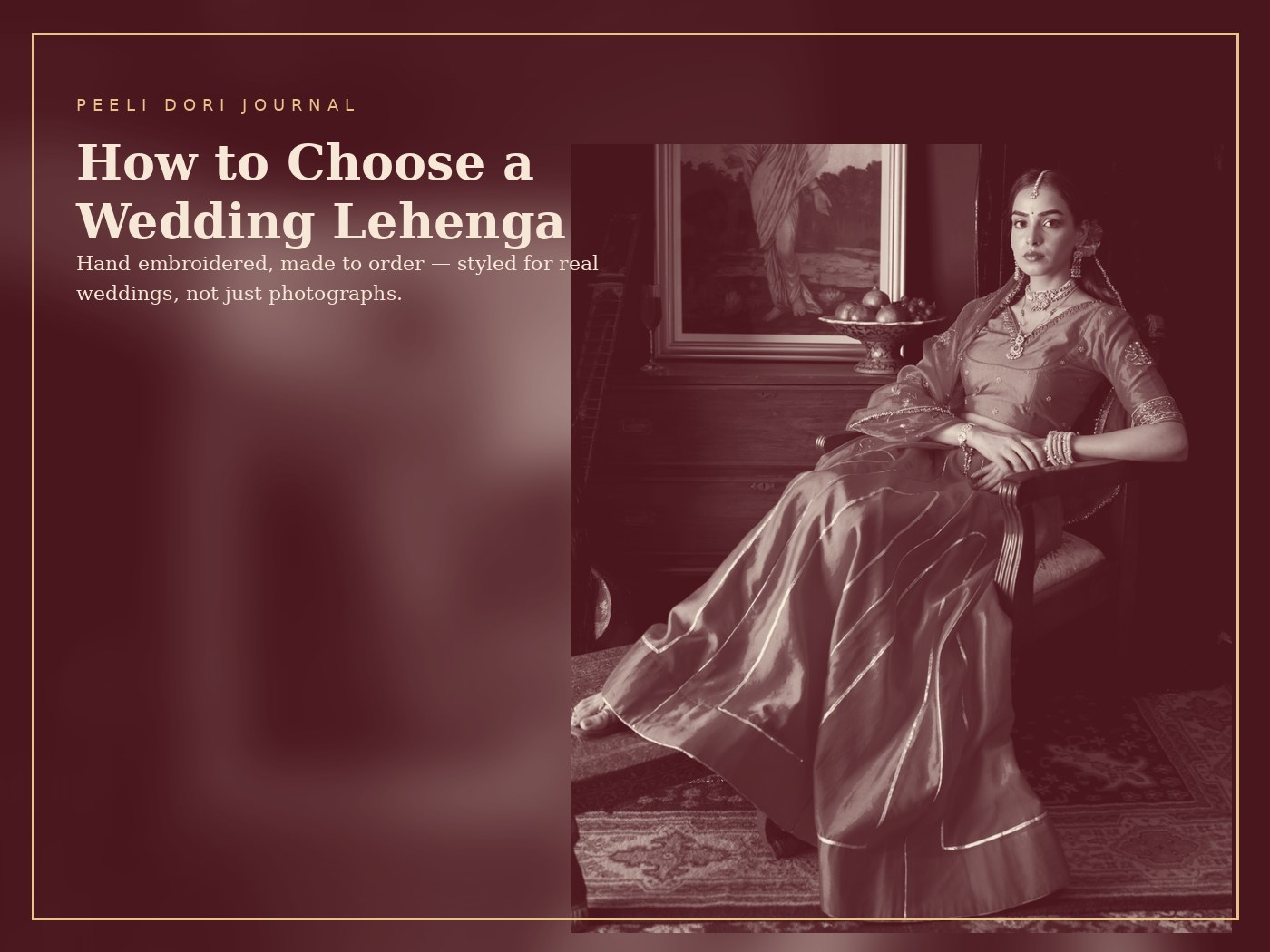
A wedding lehenga is not one garment. It is a skirt, a blouse and a dupatta that only become an outfit at your waist, and each of those three pieces makes a different promise about how the day will go. Most disappointing lehengas were not badly made. They were chosen in the wrong order — the dupatta first, or the colour first, and the skirt last. This is the order we would use if we were buying one for our own wedding.
A wedding day is long before it is beautiful
Think about the actual hours. A wedding morning starts with being dressed at seven, and the last photograph is usually taken after eleven at night. In between there is a car, a staircase, a mandap floor, a stage, a buffet queue and at least one round of group photographs where you will be asked to stand still for four minutes with your arms at your sides.
A lehenga has to survive all of that before it has to look good in a single frame. So the first question is not which one is prettiest on the mannequin. It is which one you can still stand up in at four in the afternoon.
This is why we ask brides to think in three parts rather than one. The skirt carries the weight and sets the silhouette. The waistband is the only part touching your body for twelve hours. The blouse is the only piece that is actually tailored to you. The dupatta, which everyone chooses first, is the easiest of the four to change later.
Start with the skirt: cut, panels and how it moves
A lehenga skirt is built from panels — kalis — joined side by side, and the number of panels decides almost everything. Fewer, wider panels give a flatter front and a flare that starts lower, close to the knee. More panels, cut narrower, let the flare begin at the hip and fall in softer folds. Neither is better. They behave differently when you walk, and that difference is what you notice on the day.
A circular cut is the most generous of all. It swings, it photographs beautifully in movement, and it is the hardest to manage on a narrow staircase or in a car. If your wedding involves a long walk down an aisle, a circular skirt in a heavy fabric will pick up every bit of grit on the floor.
The practical test takes one minute and no mirror. Put the skirt on with the shoes you plan to wear. Walk twenty steps. Turn. Sit down on a chair and cross your legs. Then stand up again without using your hands. If the skirt has rotated around your waist, or if you have to hold the waistband to stand, the cut is wrong for you regardless of how it looks.
Length is the other half of the skirt decision, and it is not a number you can set without the shoes. A lehenga should clear the floor by a centimetre or two in front and sit fractionally longer at the back, so the hem does not catch under your heel. With a block heel, that changes the whole measurement. Decide the shoe before the hem, always.
The waistband is where a lehenga succeeds or fails
Everything hangs from the waistband. Get it right and a heavy skirt feels like it is being carried by your hips. Get it wrong and you will spend the reception hitching it up with one hand.
The band should sit where you naturally bend, not at the narrowest part of your waist and not low on the hips. Most people measure their waist standing up, breathing in. That number is almost always too small. Measure it seated, after a meal, with the tape where you actually want the skirt to sit, and you will get a band you can wear for six hours without undoing a hook in a bathroom.
Closure matters as much as fit. A drawstring — the dori — is the kindest for a body that changes shape across a long day: it tightens where you need it and it forgives a heavy meal. Hooks and a zip give a cleaner line under a fitted blouse but leave no room to adjust. If you are between sizes, or if your wedding is months away and your weight tends to move, a dori is the safer choice.
Ask where the weight sits. A skirt that hangs from a stiff, well-supported band transfers load into the hips, which is comfortable. A skirt that hangs from a thin band pulls at the small of your back within an hour. If you can, hold the skirt up by the band alone and see whether it keeps its shape or folds over.
The blouse is the only piece that is genuinely tailored
The skirt can be adjusted at the waist. The dupatta can be pinned differently. The blouse cannot — it either fits across the shoulder and the bust or it does not, and no amount of styling hides a shoulder seam sitting off the edge of your arm.
Six numbers decide it: shoulder, bust, underbust, the distance between the apex points, blouse length from shoulder to hem, and armhole. If you are measuring at home, have someone else hold the tape, keep it level at the back, and measure over the bra you will actually wear. A blouse measured over a different bra is a different blouse.
Sleeves are a comfort decision disguised as a style decision. A three-quarter sleeve in a heavy embroidered fabric restricts your arms above shoulder height, which matters if you are being lifted on a chair during the sangeet. Sleeveless is cooler and photographs cleanly, but it puts all the visual weight on the neckline and the jewellery.
One thing worth deciding early: whether the blouse and the skirt should compete. If the skirt is densely worked, a plainer blouse with a strong neckline reads more expensive than a second dense panel. Two busy pieces next to each other photograph as one thick block of texture, and the waist disappears.
The dupatta decides the photograph
The dupatta is the piece people choose first and think about last. It controls the outline of the whole outfit: whether you read as tall and narrow or wide and soft, and where the eye goes in a group photograph.
Width matters more than length. A narrower dupatta, around a metre, drapes close to the body and keeps the silhouette clean — good with a heavy skirt and a wide neckline. A wider one, closer to a metre and a quarter, gives you the classic double drape and covers the shoulder, but it adds visual width at the exact point where a heavy skirt is already adding volume.
If you want two looks from one outfit, take two dupattas: a lighter one for the ceremony and a heavier, more worked one for the reception. It is the cheapest way to make one lehenga serve two evenings, and it changes the photograph more than changing jewellery does.
Pin into the blouse seam, not through the embroidery. A pin through dense handwork leaves a permanent hole, and a pin through a soft silk edge will tear the first time someone hugs you.
Weight, and where it should sit
Ask what the outfit weighs. Most people never do, and then discover on the day that a five-kilo skirt is a different garment from a two-and-a-half-kilo one.
Weight is not automatically quality. It comes from three places: the base fabric, the lining and can-can underneath, and the density of the embroidery. A heavy base with light work and a stiffened underskirt gives shape without dragging. A light base with dense metal work looks rich and moves easily but creases at the seat within an hour of sitting.
The balance we look for is weight low and forward, not high and at the waist. If the heaviest embroidery sits on the border and the lower panels, the skirt uses gravity to hang straight. If it sits in a broad band around the hips, the skirt will pull downwards at the sides and lose its line by the time the pheras start.
Organic dyes are part of how these pieces are made, and they behave honestly: colours are stable but not industrial-bright, and they deepen slightly with the first clean. That is worth knowing before you choose a shade against a swatch in a shop.
Made to order: what the measuring actually involves
When a lehenga is made for you rather than altered for you, the measurements are the whole game. We take them in the store when you visit Shahpur Jat or Dehradun, and we can take them over WhatsApp with a tape and a second pair of hands if you are elsewhere.
The list is short but unforgiving: waist where the band will sit, hip at the widest point, skirt length from that waist point to the floor in your shoes, shoulder, bust, underbust, apex to apex, blouse length, armhole and sleeve length. Send them in centimetres, written down, not remembered.
Two mistakes account for most remakes. The first is measuring the waist standing up and holding your breath. The second is giving a skirt length without the heel height. Both are avoidable in thirty seconds.
Fit checks on WhatsApp work better than people expect — a photograph from the front, one from the side, and one sitting down tells us more than a paragraph of description. If something is off, it is far easier to correct before the hem is finished than after.
Six lehengas we would put on a real wedding calendar
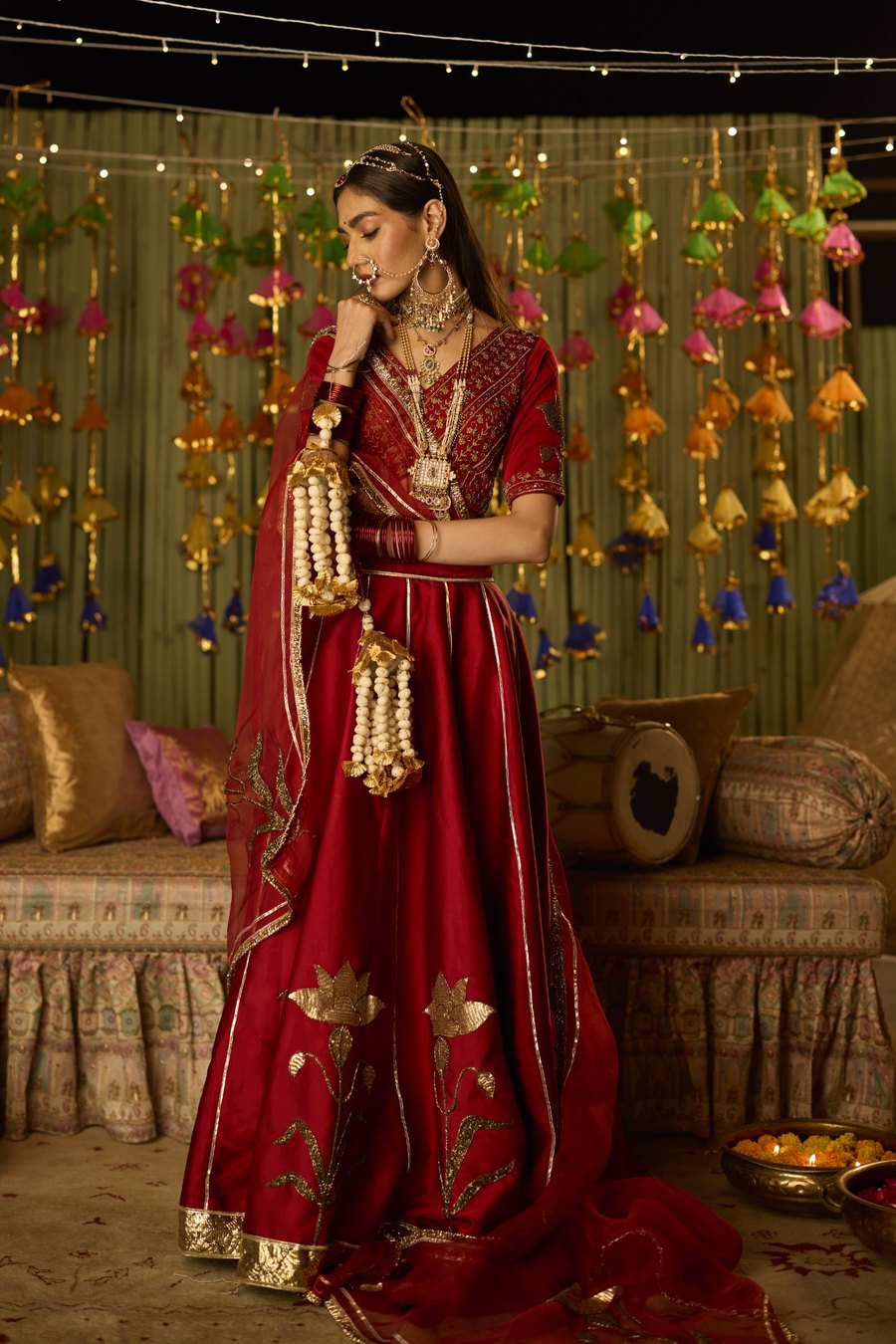
The Tulip silk satin set at ₹69,500 is the one for a wedding where the skirt does the talking: a full flare in a satin that catches light without looking metallic, which is what makes it read well in evening photographs.
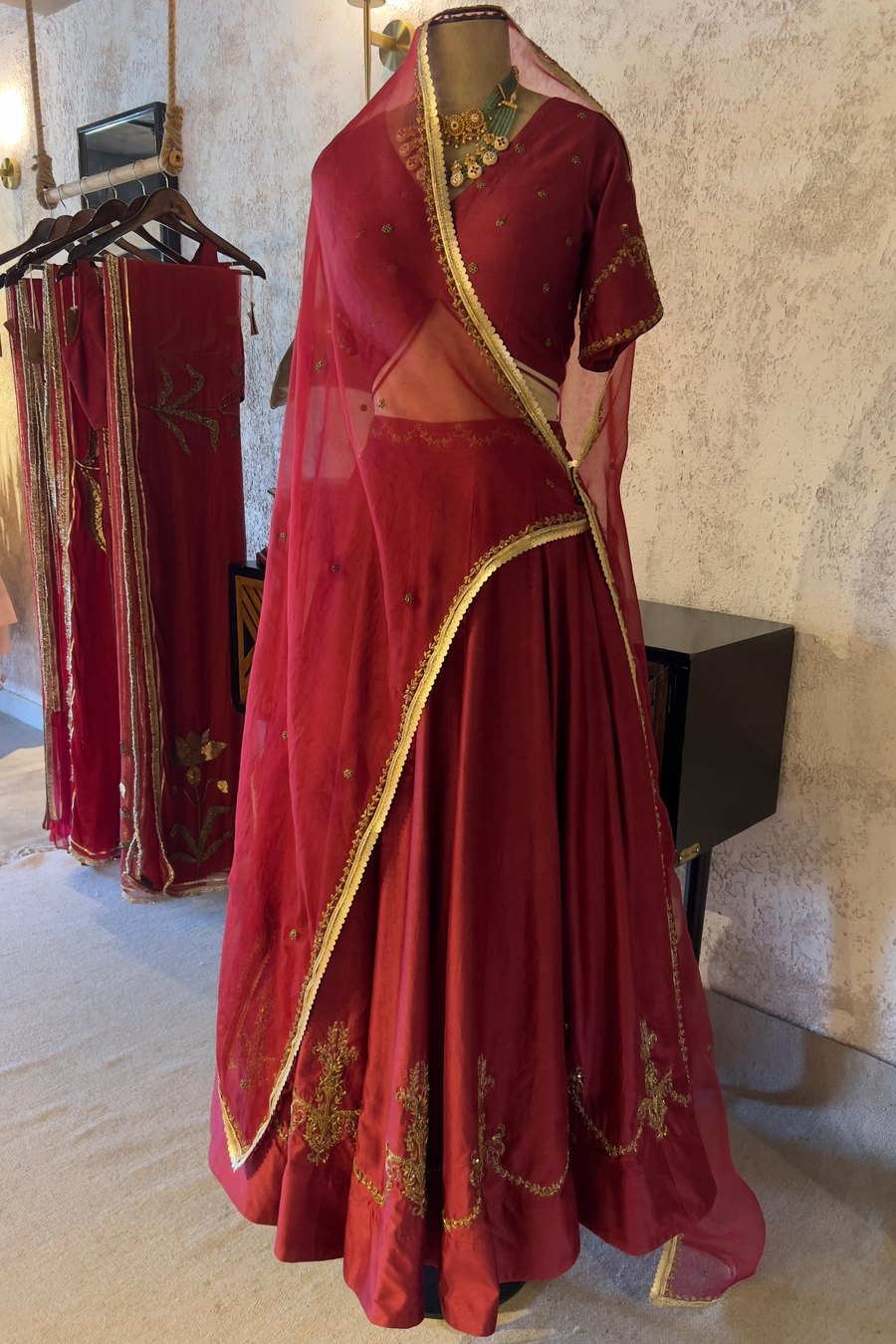
The Aarohi maroon set at ₹49,000 is the more restrained choice, and maroon is the colour most likely to still look correct in twenty years of family photographs. If you want one lehenga that will not date, this is the shape of it.
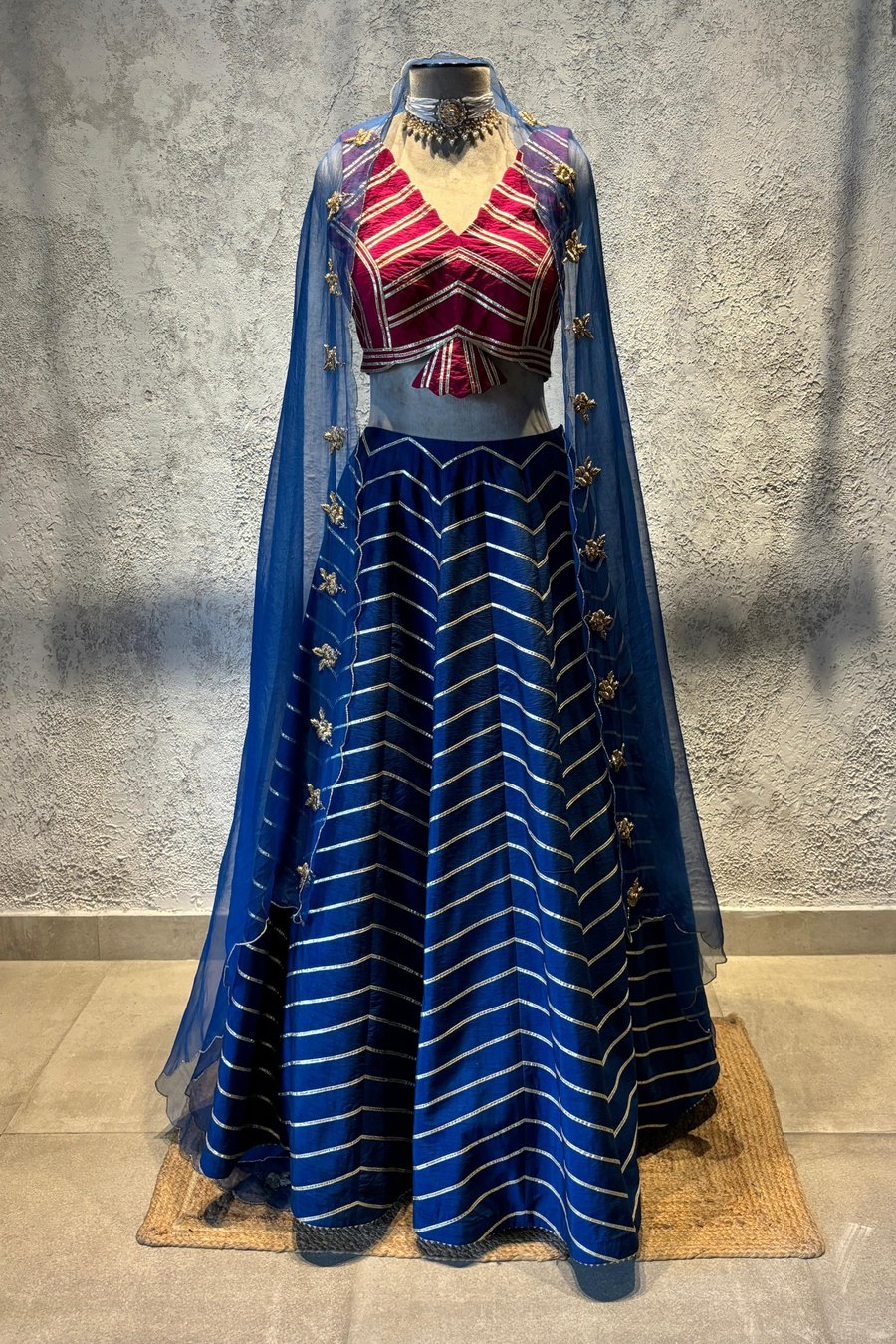
The Ishani and Dhara sets, both ₹39,500, sit in the band where most guests actually buy. Different cuts, both light enough to sit through a long ceremony — these are the ones we suggest when someone is dressing for a sibling's wedding rather than their own.
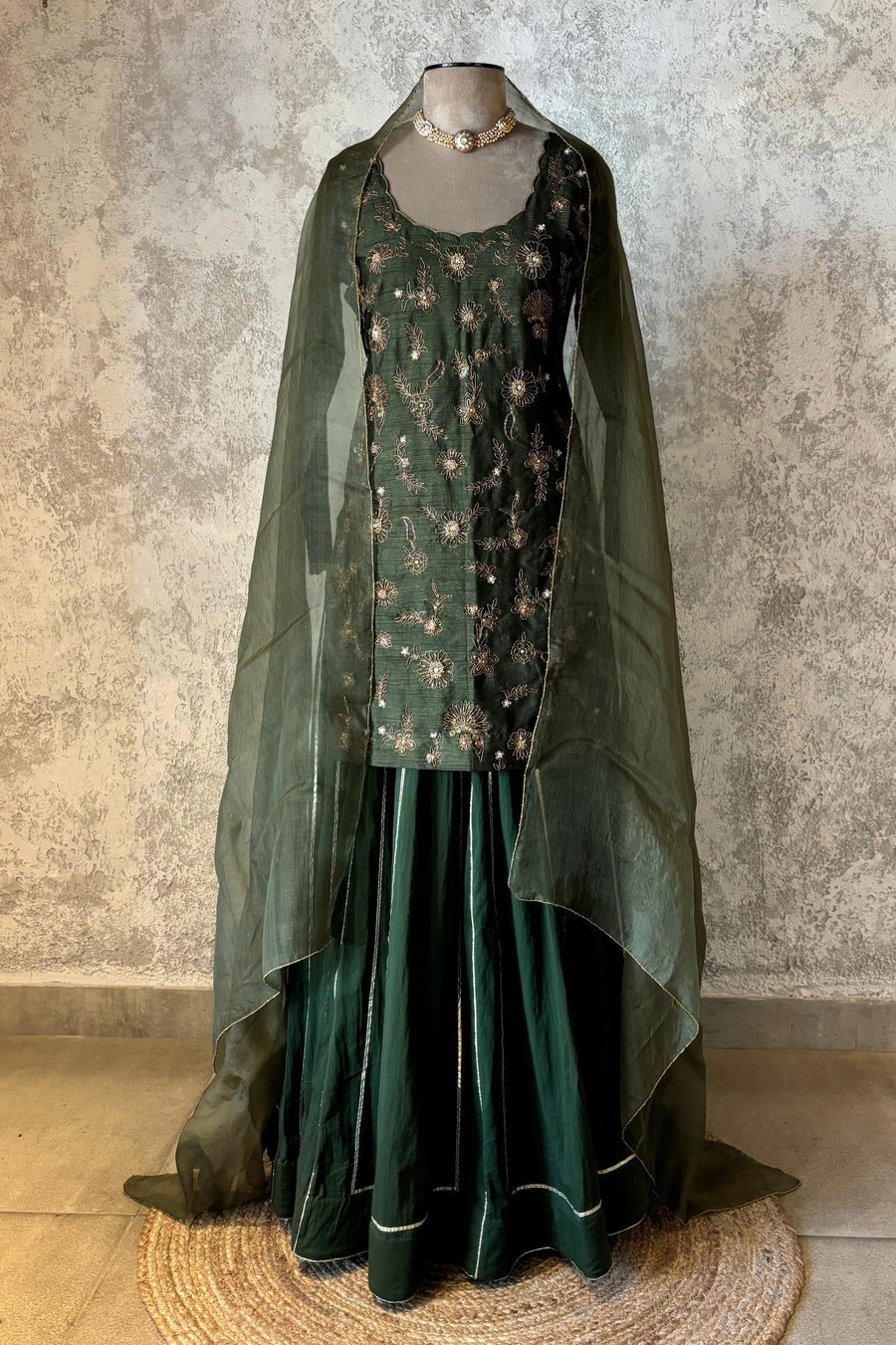
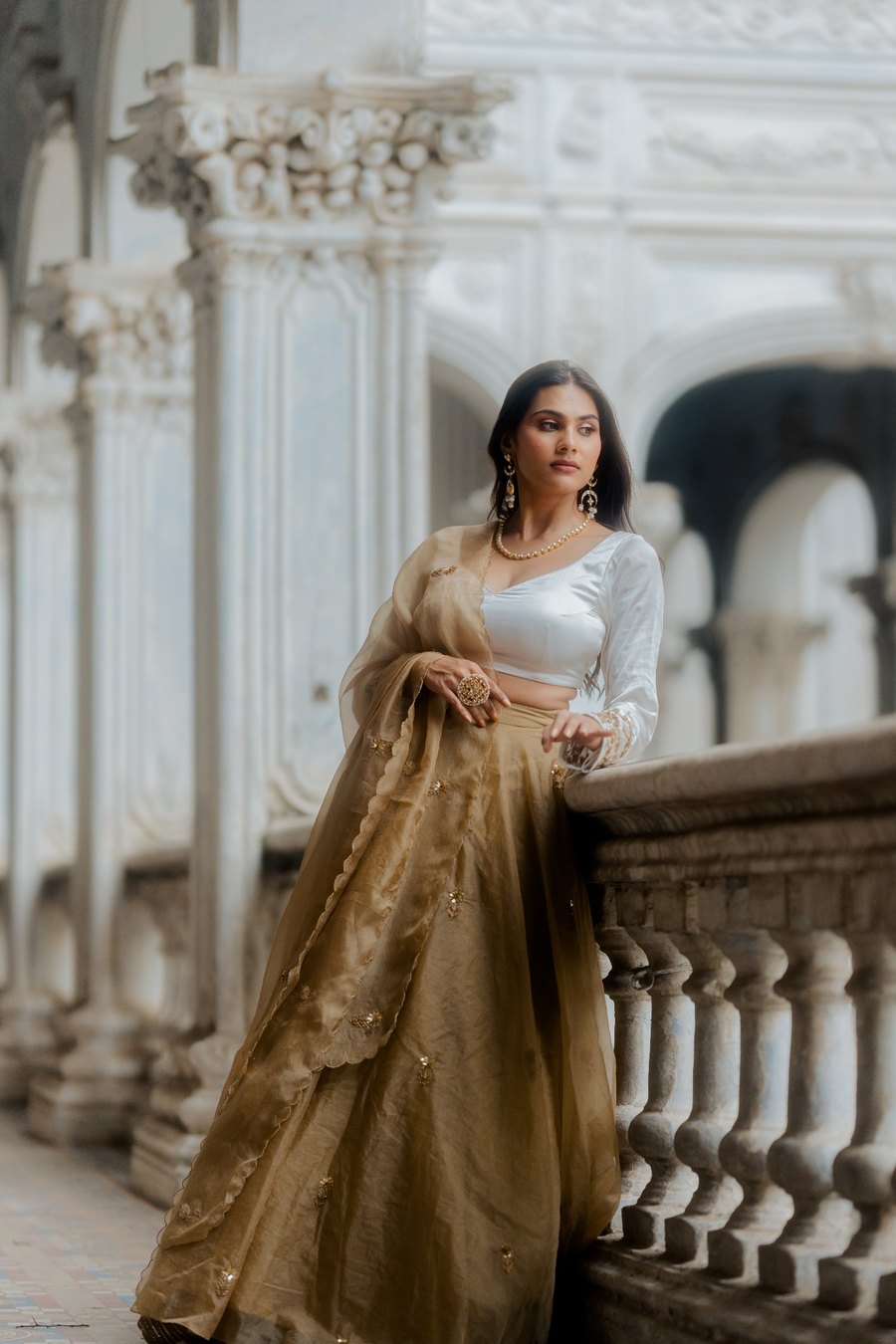
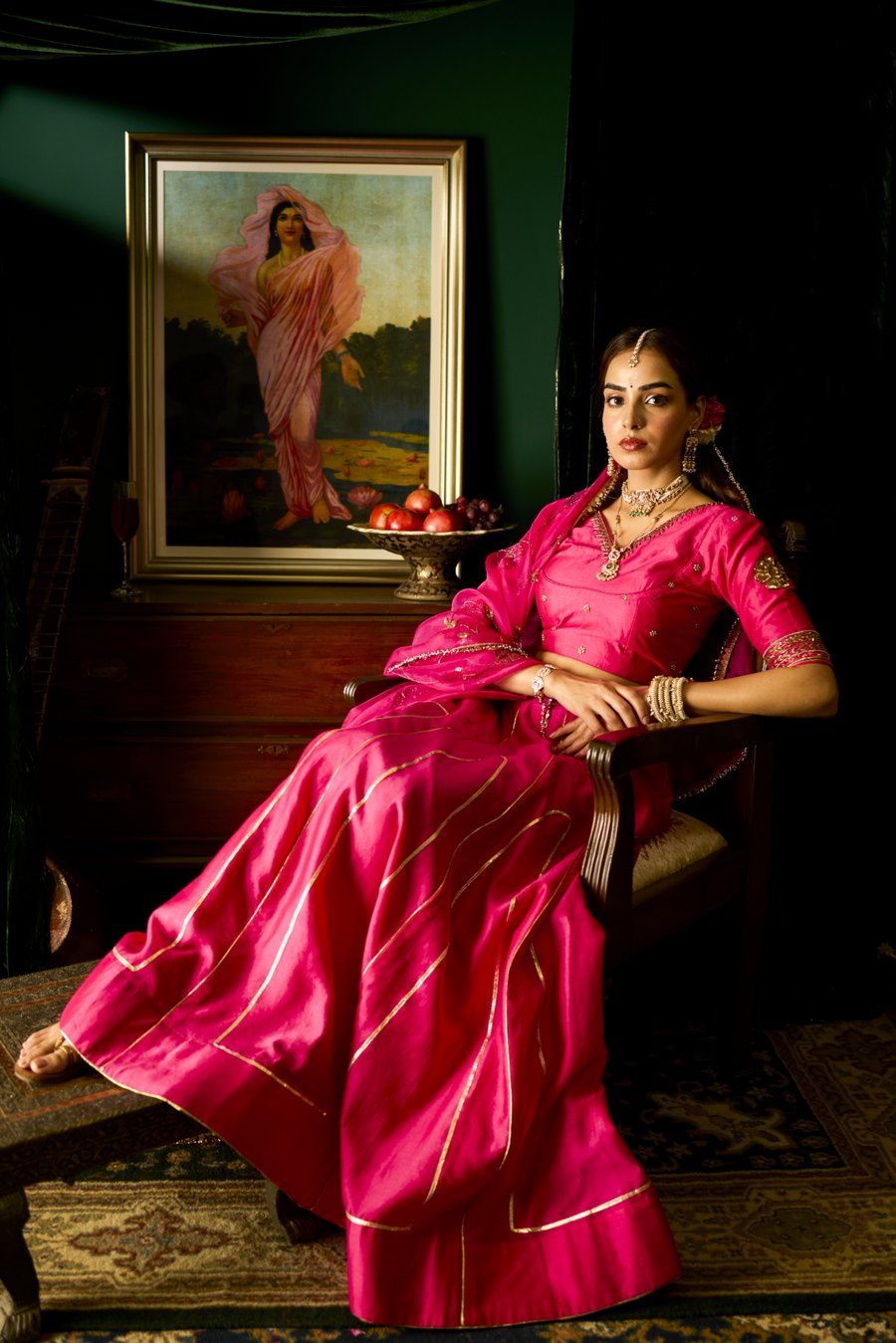
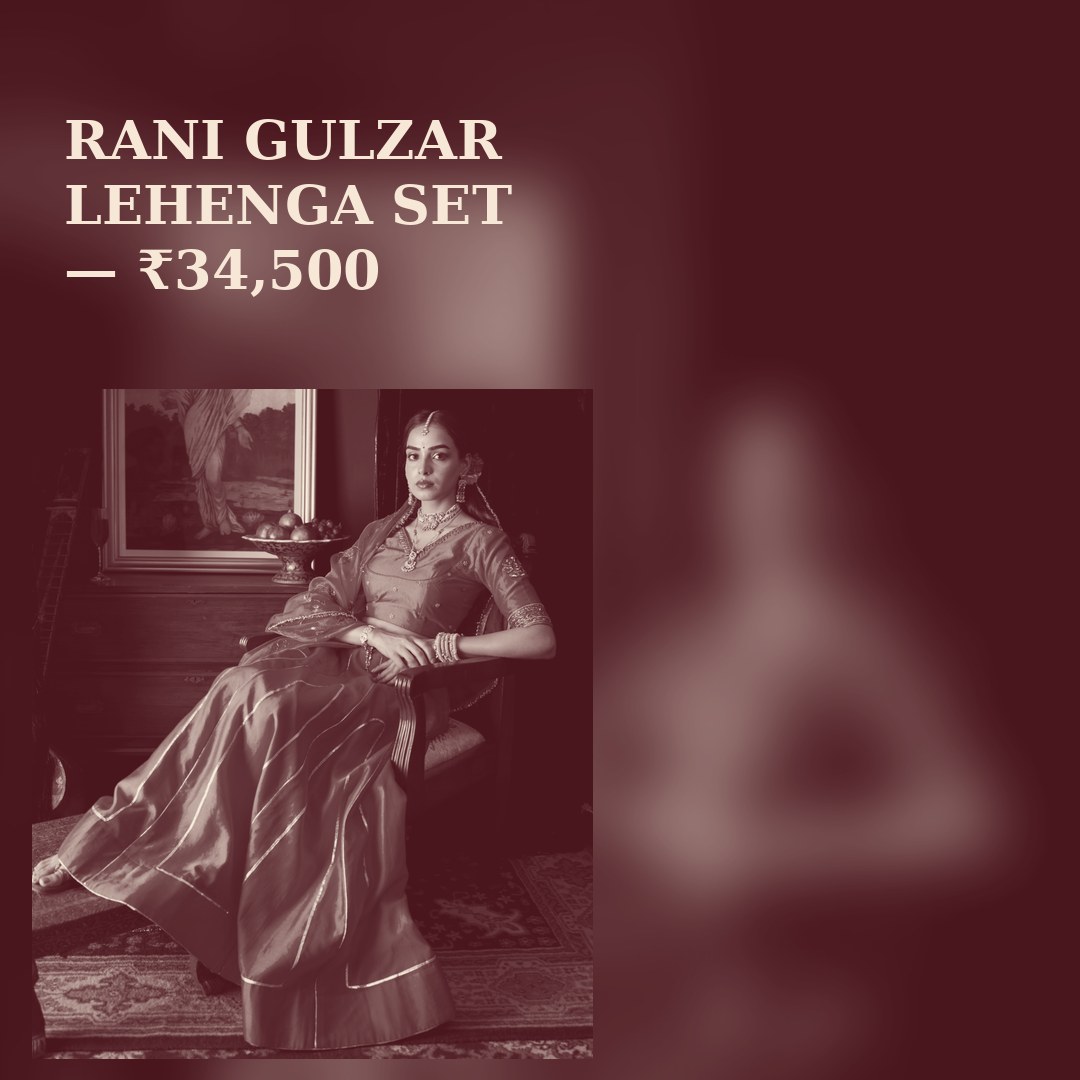
The Rukhsat organza set and the Rani Gulzar set, both ₹34,500, are the two we would take for a sangeet or a mehendi with a formal edge. Organza holds a pleat and stays crisp through an evening of standing, which is exactly what a dancing function needs.
Every one of these is hand embroidered and made to order with custom sizing, so the waistband, the blouse and the hem are set to your measurements rather than adjusted afterwards. If you are choosing between two, send us both on WhatsApp with your dates and we will tell you which one is realistic for the time you have.
₹69,500
₹49,000
₹39,500
₹39,500
₹34,500
₹34,500
Care, storage, and the week after the wedding
Dry clean a lehenga after the first wearing, and tell the cleaner it is hand embroidered. A general dry cleaner working on a machine cycle can flatten raised work and leave a sheen on satin that never comes out.
Store the skirt folded in a cotton or muslin bag, not on a hanger. Hanging a heavy skirt by its waistband stretches the band and puts a permanent pull into the panels. Fold along the same lines each time and pad the folds with acid-free tissue if the work is raised.
Keep the blouse flat and the dupatta rolled rather than folded, so the crease does not set into the border. Cedar or neem in the cupboard is enough for Delhi dust; in Dehradun the problem is damp, so air the pieces in the dry months and never store them against an outside wall.
Steam the cloth, never press the embroidery. If a fold has set into a silk panel, hang the skirt for a day before you steam it — most creases fall out on their own.
Frequently asked
How much should a wedding lehenga cost?
In our collection the range runs from about ₹28,900 for a lighter set to ₹3,68,000 for a fully worked bridal piece, and most of what we sell sits between ₹34,500 and ₹69,500. The price is decided by the base fabric, the number of panels, the density of the hand embroidery and whether the dupatta is separately worked. A higher price almost always means more hours of handwork, not a different kind of cloth.
Can a lehenga be made to my measurements if I do not live in Delhi or Dehradun?
Yes. Everything is made to order with custom sizing, and we take measurements over WhatsApp with a tape and someone helping you. We ask for them in centimetres, written down, including the heel height you will wear. A fit check over WhatsApp before the hem is finished catches almost everything.
How many kali or panels should a lehenga skirt have?
There is no correct number — it depends on the flare you want and how you need to move. Fewer, wider panels give a flatter front with the flare starting lower; more, narrower panels let it open from the hip and fall in softer folds. Try walking, turning and sitting in the skirt before you decide, because that is where the difference shows.
Should I choose a dori waistband or a zip?
A dori is more forgiving across a long day and easier to adjust if your size shifts before the wedding. A zip and hooks give a cleaner line under a fitted blouse but leave no room to loosen. If you are between sizes or the date is months away, take the dori.
What is the difference between a bridal lehenga and a wedding-guest lehenga?
Weight and work, mostly. A bridal lehenga is built to hold a room and be photographed for twelve hours, so it carries more embroidery, more panels and more structure. A guest lehenga needs to look considered without competing with the bride, which usually means a lighter skirt, a cleaner blouse and one strong element rather than three.
Explore more: bridal collection · wedding 2026 · designer hand embroidered blouse — or message us on WhatsApp for styling help.

The information below is required for social login
Sign In
Create New Account