

A kurta set comes as three pieces and one question: what is actually missing? Nine times out of ten it is not another outfit. It is the dupatta you did not think about, the shoe you wore to the last three functions, and one piece of jewellery too many. Why
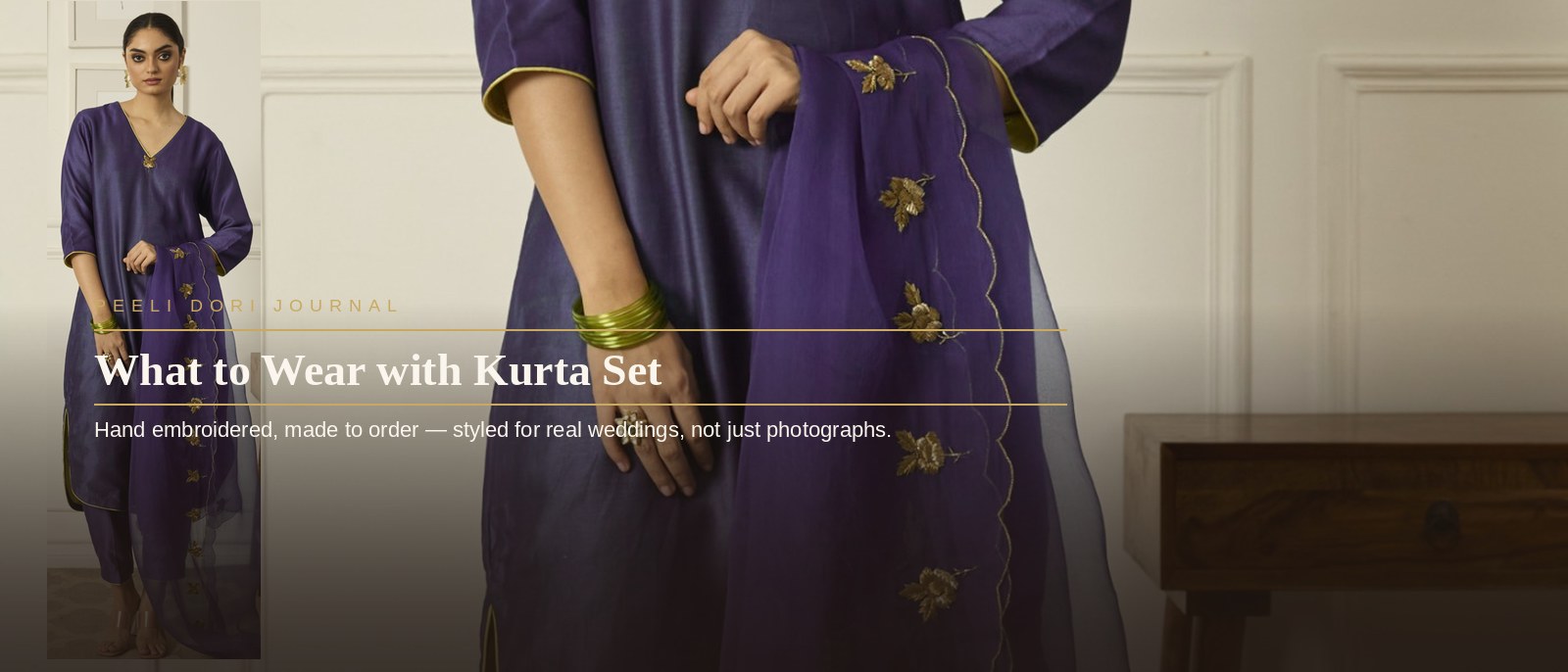
A kurta set comes as three pieces and one question: what is actually missing? Nine times out of ten it is not another outfit. It is the dupatta you did not think about, the shoe you wore to the last three functions, and one piece of jewellery too many.
Why the kurta set is the most under-dressed outfit in the wardrobe
A Delhi wedding calendar is not one evening. It is a mehendi at a farmhouse at four in the afternoon, a sangeet at a hotel that runs past midnight, pheras at eight the next morning, and a reception where you have to stand for two hours greeting people you have not met before. Nobody changes four times. The outfit that survives all of it is a kurta set — you can sit on the floor in it, eat in it, drive in it, and dance without holding a pallu away from your heels.
The trouble is that most people treat the set as finished. It comes with a kurta, a bottom and a dupatta, so they put on the flats they wear everywhere, the gold set they wear to every wedding, and the dupatta straight out of the packet — and then wonder why a ₹30,000 piece reads like office ethnic wear by six in the evening.
What is missing is rarely more clothes. It is the finishing decisions: how the dupatta is draped, what happens at the ankle, and whether the jewellery is competing with the embroidery. Those three choices change the outfit more than the outfit does.
What the set already gives you, and what it quietly leaves out
A three-piece set covers the body. It does not cover the gaps. The bottom is usually the weakest element — a churidar that bags at the knee by the third hour, or a palazzo cut so wide that it pools over the shoe. If you are ordering made to order, ask for the bottom to be cut to the heel height you will actually wear, not to a standard 40 inches. This is the single alteration that most changes how the set photographs.
Sleeves are the second. A kurta set is often photographed on a tall model with the sleeve ending just below the elbow, which is flattering on a long arm and shortening on a shorter one. Three-quarter sleeves with a deep cuff read longer and more formal. Full sleeves on a heavy piece read older unless the yoke is plain.
The third gap is the inside. Sheer or lightly worked kurtas need a matching inner — a plain cotton or silk slip in the same tone, not white. A white slip under a coloured kurta is visible in every flash photograph taken after dark.
Fabric and craft: what to actually look at in the store
Chanderi is the quiet choice. It is light, it has a faint sheen that catches light without shining, and it creases into soft folds rather than hard lines. It is what we use when the embroidery is the point and the cloth should not argue with it. Silk holds a sharper pleat and photographs with more depth, but it is warm for an afternoon function and unforgiving around the waist. Organza, which we use far more often for sarees, appears in kurta sets mostly as a dupatta or a sleeve — it holds a shape, and it also stands away from the body, which is either the look or the problem.
Then there is the work. Gota is flat gold ribbon appliqué: it stays light, catches light in a straight line, and suits daytime. Zardozi is raised metal-thread embroidery, denser and heavier, and it belongs to evening. Dabka uses small beaten metal coils and is the heaviest of the three — a dabka yoke on a full-sleeve kurta is a real weight by the end of a sangeet. Mirror work is the least formal and the most forgiving; it moves with the body.
Density is what you are paying for, and it is also what changes the fall. Two kurtas can look identical in a photograph and behave completely differently in a room. On all of our pieces the embroidery is done by artisans we work with directly, and we dye in small batches with organic dyes — which is why the colour sits deep in the cloth and fades evenly over years rather than going patchy at the fold lines.
Ask one question before you commit: where does the weight sit? A heavy yoke pulls the front of the kurta down and shortens it; a heavy hem makes the whole piece hang straight and long. Neither is wrong. They just do different things to your proportions.
Matching the set to the ceremony
For a mehendi or a daytime function, go lighter and shorter. A hem above the ankle, a lighter bottom, and a dupatta you can actually keep on your shoulder while you eat. Deep orange, gulmohar red and fuchsia all read correctly in daylight; navy and black do not.
For a sangeet, the test is movement. Sit down in the trial. Cross your legs. If the kurta rides up or the bottom pulls across the thigh, it will do that on the dance floor in front of everyone. A front slit and a slightly narrower palazzo solve it without making the outfit casual.
For pheras you will be on the floor for an hour, so the priority is the back of the kurta and the drape. A straight-cut kurta with a wide bottom sits better than a flared one, and the dupatta needs to be pinned so it stays over the head without you holding it. Practise the pinning at home once, with the jewellery on.
For a reception, take the longest, heaviest version you own and keep everything else quiet: one earring, no necklace if the yoke is embroidered, a closed shoe.
On frame: broad shoulders do better in a V neck with the embroidery running down the placket, because it draws the eye vertically. Narrow or sloping shoulders want a round or boat neck with work across the yoke, which adds width where there is none. Petite frames should stay monochrome — same tone top to bottom, hem at the ankle, no contrasting border at the bottom edge, because a strong horizontal line at the hem cuts height. Tall frames can carry a floor-length kurta with a wide palazzo and a broad border, which on a shorter frame looks like a costume.
Six sets we would put on a real calendar
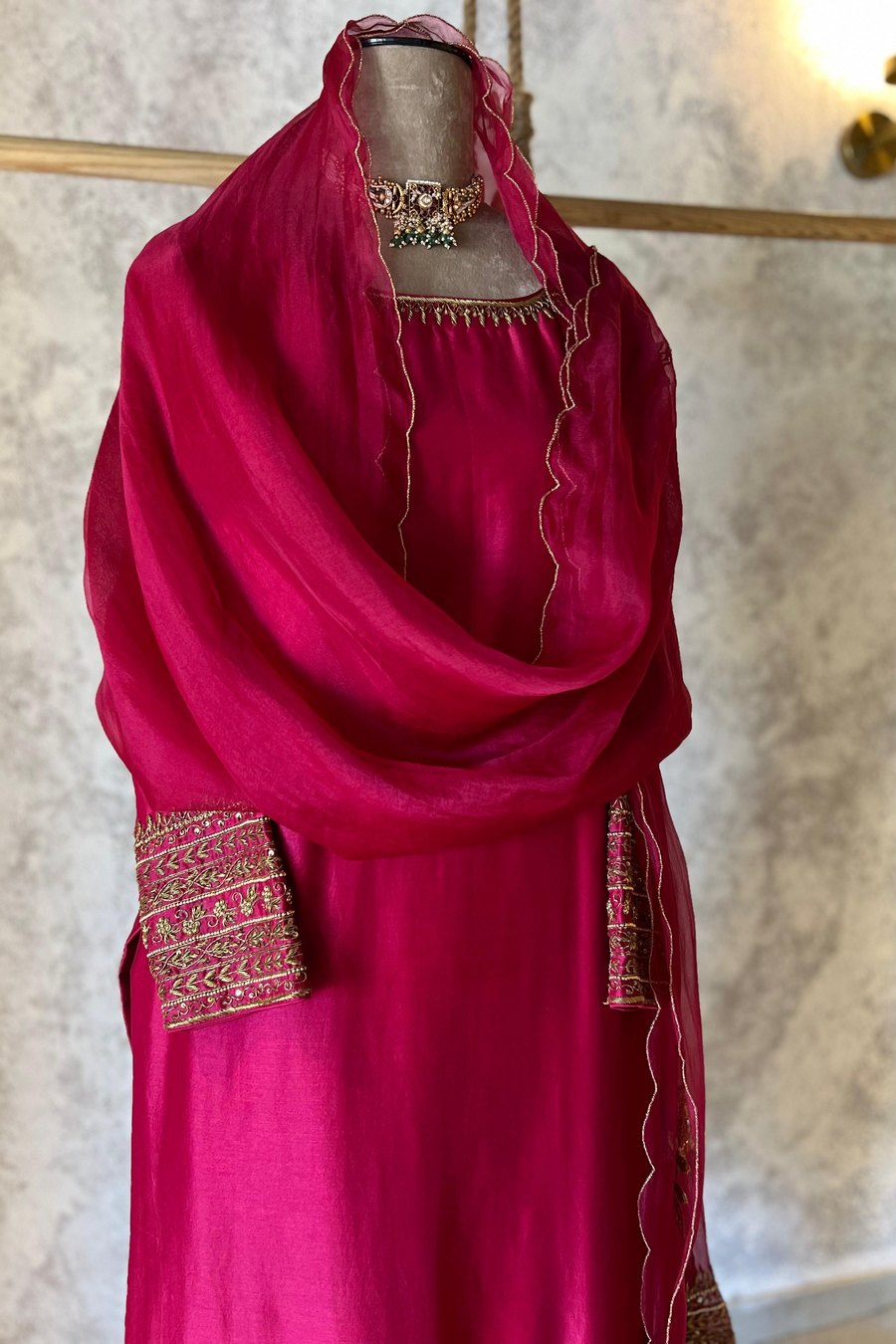
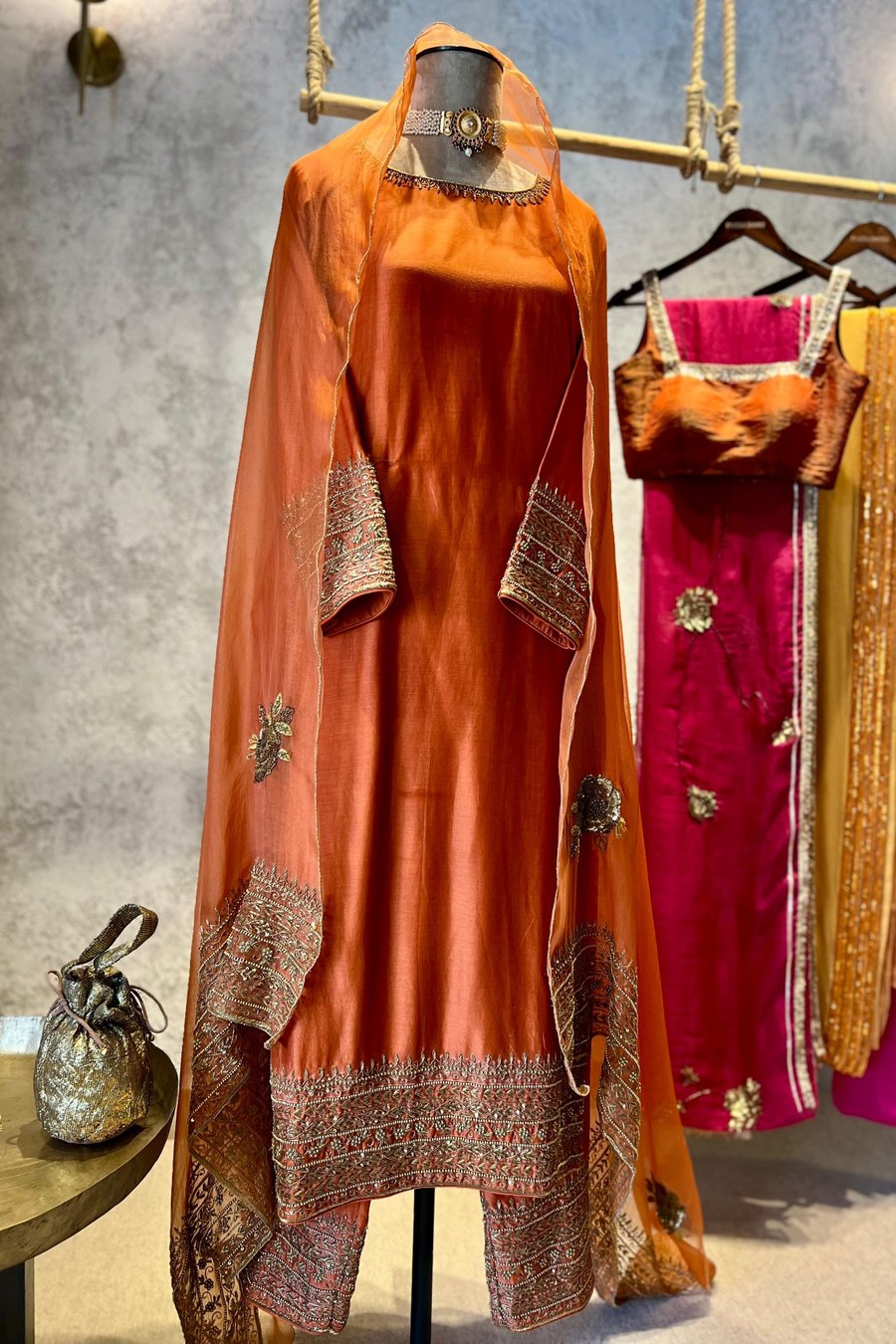
The Gulmohar sets are the ones we return to most often because the same cut and the same embroidery language exist in six colours, which means a family can be dressed for four functions without looking like a uniform. All four below are ₹36,500 and hand embroidered.
The gulabi gulmohar is the reception one — the pink is warm rather than sweet, and it holds up under indoor light. The rani pink is for a sangeet where you intend to be in photographs all night. The orange is the daylight piece, and it is the one we would put on a mehendi lawn at four in the afternoon. The red is the phera set; there is no cleverness in that choice and no reason to look for any.
If you want something quieter, the ivory Farsi in chanderi is ₹29,500 and is the set we suggest for a morning ceremony, an engagement lunch, or a bride's mother who has been told to wear ivory. The rani pink Ruqsat at ₹28,500 is a smaller-do set — a cousin's wedding, a family dinner — where a full Gulmohar would be too much.
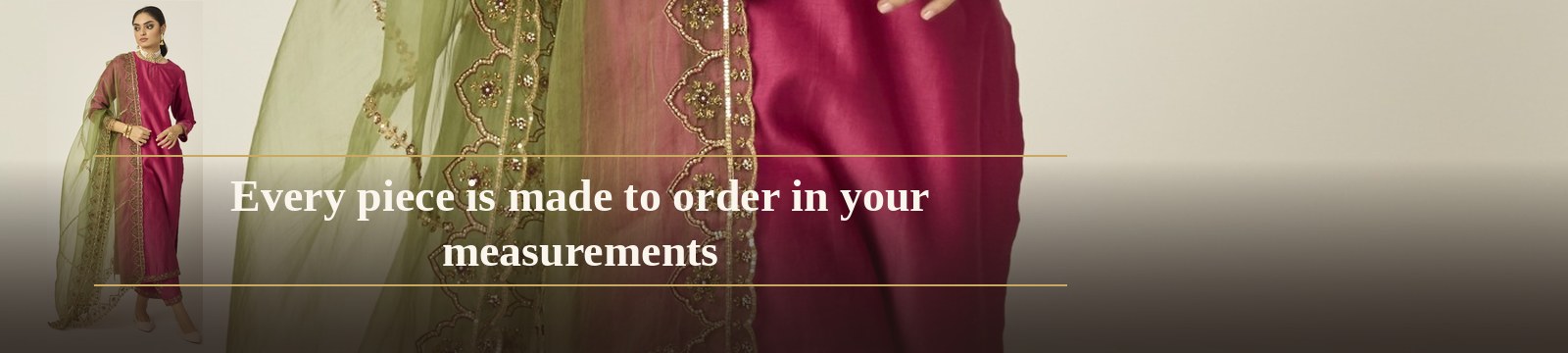
Every one of these is made to order with custom sizing, so the sleeve length, the hem and the bottom are decided with you rather than assumed.

₹36,500
₹36,500
₹36,500
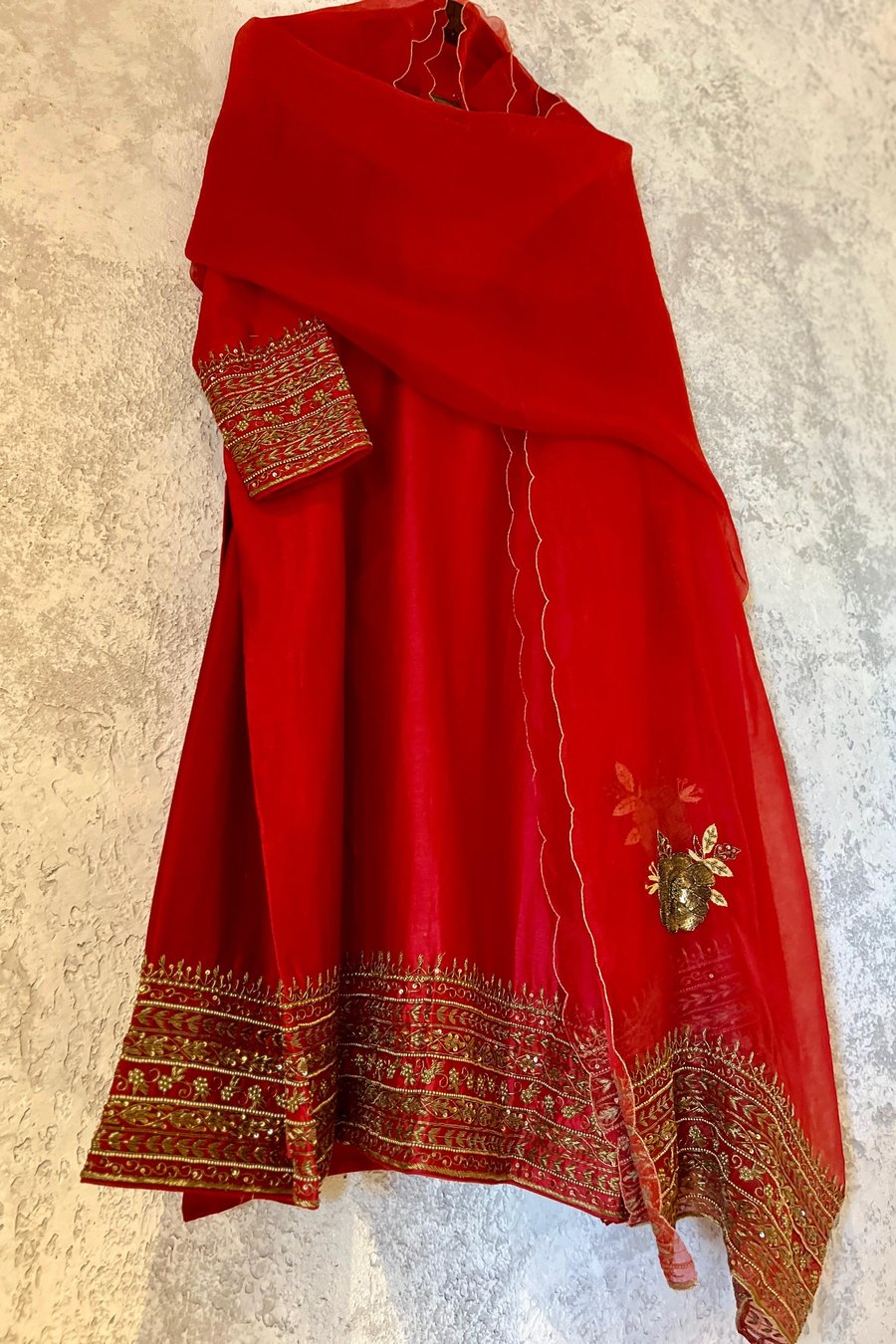
₹36,500
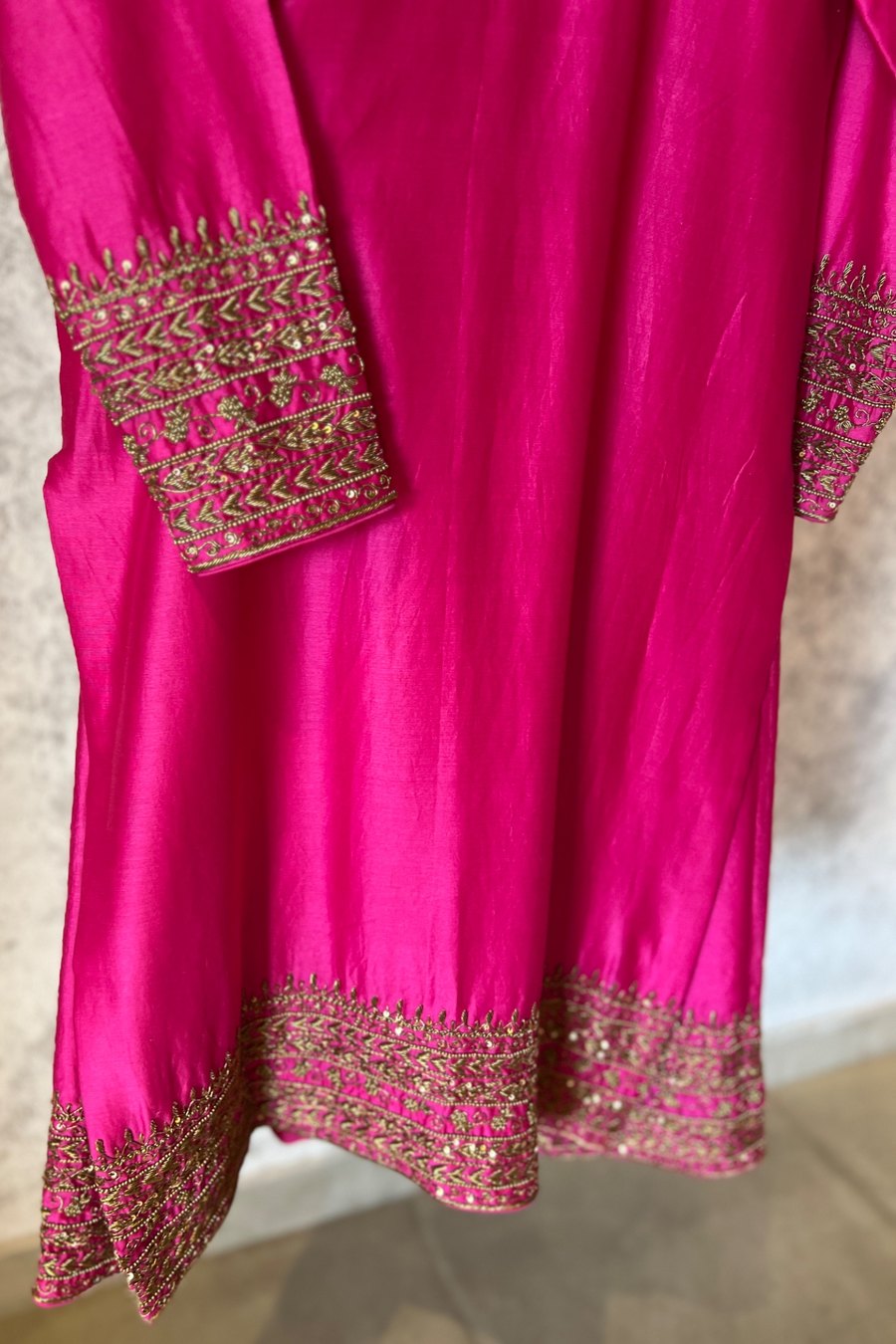
₹36,500
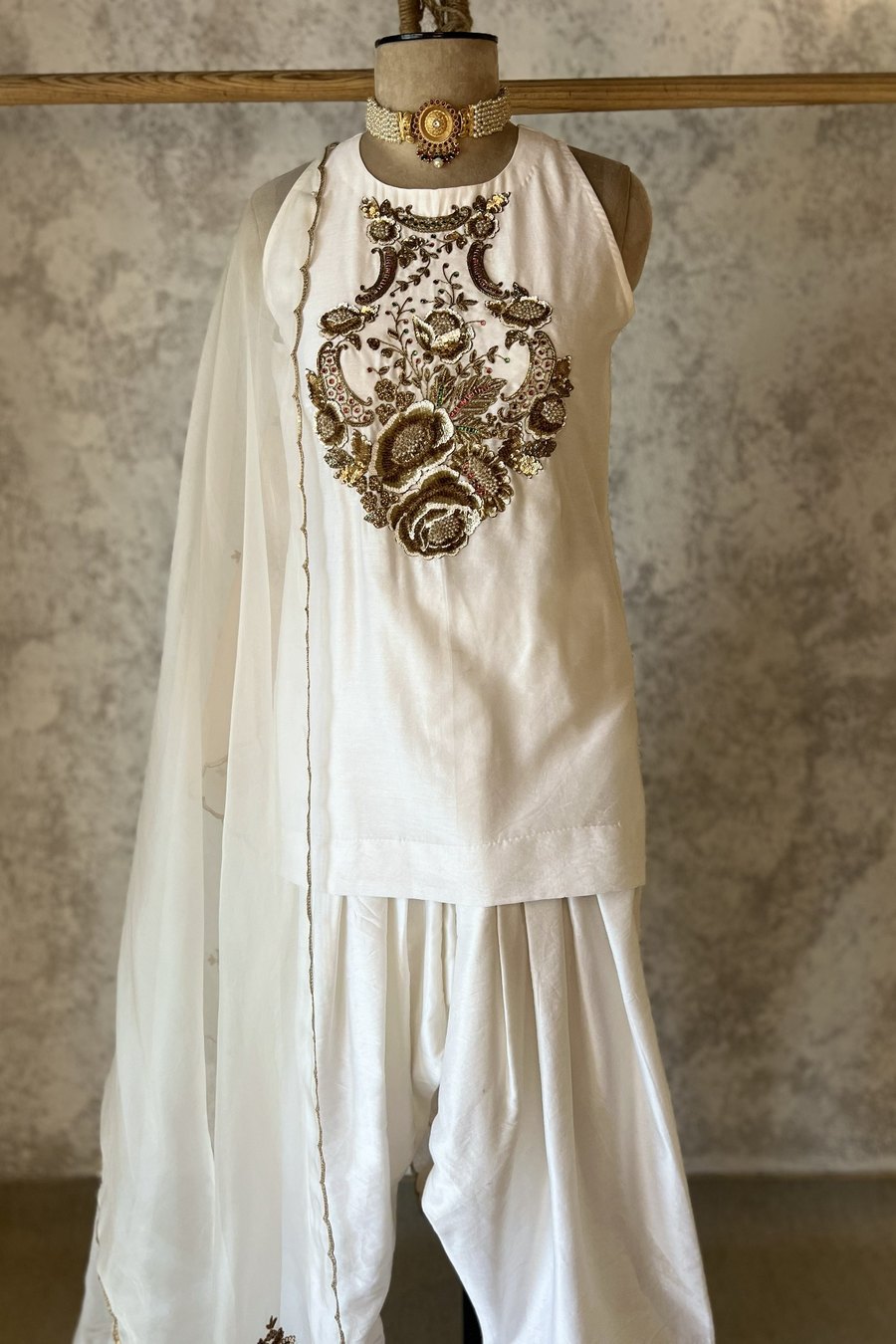
₹29,500
The dupatta, the shoe, and the one rule about jewellery
The dupatta is where most looks are won. A narrow one, about a metre wide, is a scarf: pin it at one shoulder and let it fall, or fold it into a band and wear it across both arms. A wider one, closer to 1.25 metres, can be pleated into a proper drape or opened across the chest like a shawl. If your set came with a thin machine-finished dupatta, replace it — our designer dupattas are sold separately for exactly this reason, and one good organza or tissue dupatta will re-dress three different kurtas.
Take the dupatta off for the dancing and put it back on for the photographs. Nobody has ever regretted this.
Shoes: a block heel or a flat jutti with a pointed toe. A stiletto on a lawn is a decision you make once. If the bottom is a churidar, the shoe needs to be visible enough to finish the line — an ivory or gold jutti, not a black one.
And the rule: one piece of jewellery that is doing the work. If the yoke is embroidered, skip the necklace. If you are wearing a maang tikka or a large earring, keep the wrists bare. Heavy work and heavy gold cancel each other out, and the outfit ends up looking expensive rather than elegant.
Send us a photograph on WhatsApp with the set and what you plan to wear with it, and we will tell you honestly which of the two to drop. We do this in the store every day and it takes less time than the trial.
Care, so the third wearing looks like the first
Dry clean the first time, always, and tell them it is hand embroidered — a general dry cleaner who does not know will press the metal work flat.
Store kurta sets folded, not hung. A heavily worked kurta on a hanger stretches at the shoulder within a season, and the shoulder is the one place you cannot fix. Fold with acid-free tissue between the layers, and keep the dupatta rolled around a tube rather than folded along the same crease every time.
Steam the cloth, never iron the embroidery. If a fold has set into a silk bottom, hang it in a bathroom while you shower and let the steam do the work overnight.
Organic dyes are stable but not invincible: keep the set out of direct sun for long periods, and never spot-clean with a household stain remover. If something spills, blot it and bring it to us or to a cleaner who works with embroidered textiles.
Frequently asked
What do I wear under a kurta set?
A matching inner in the same tone as the kurta — cotton for summer, silk for evening. Never white under a coloured kurta, because it shows in every flash photograph. If the kurta is lined, you usually do not need a separate inner at all.
Can I wear a kurta set to a wedding?
Yes, and for most functions it is the more practical choice than a lehenga. Choose a lighter set with a short hem for mehendi, a front-slit kurta with a narrower palazzo for a sangeet, and a longer, heavier set with a properly pinned dupatta for pheras. Anything heavily worked is better saved for the evening.
What footwear goes with a kurta set?
A block heel or a pointed jutti, in ivory, gold or a tone close to the outfit. Flat chappals make a formal set look casual, and stilettos are impractical on grass or on a farmhouse lawn. Get the bottom cut to the heel height you will actually wear.
Can a kurta set be altered after I receive it?
Every set we make is made to order with custom sizing, so sleeve length, hem and bottom are set before cutting. If your measurements change afterwards, a straight-cut kurta can usually be taken in at the side seams — but a heavily embroidered yoke cannot be widened, which is why we ask for measurements twice.
How do I make a simple kurta set look dressier?
Change the dupatta, not the kurta. A crisp organza or tissue dupatta with a worked border over a plain set reads formal immediately. Add one strong earring, keep the neck bare, and put on a heel. That is the whole difference between a set worn to lunch and a set worn to a reception.
Explore more: kurya · dupatta — or message us on WhatsApp for styling help.

The information below is required for social login
Sign In
Create New Account