

A dupatta is worn, re-pinned, sat on and handed to your mother halfway through the evening. Organza makes that harder and better at once — which is why it deserves the same fitting conversation a blouse gets. The piece nobody measures On a wedding day a
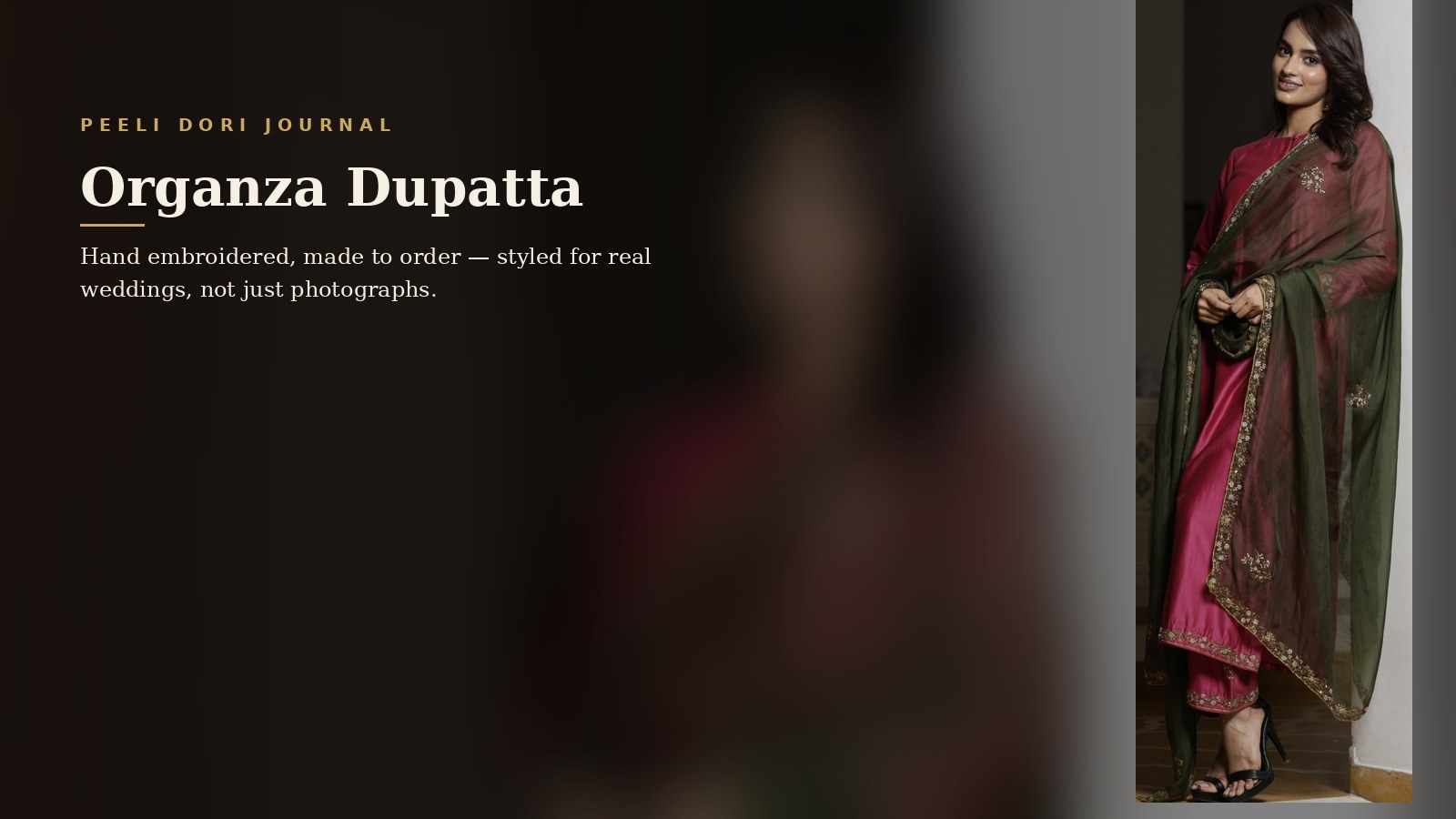
A dupatta is worn, re-pinned, sat on and handed to your mother halfway through the evening. Organza makes that harder and better at once — which is why it deserves the same fitting conversation a blouse gets.
The piece nobody measures
On a wedding day a dupatta is pinned before breakfast, unpinned for dinner, held with one hand at the mandap, pulled over the head at the gurudwara, and folded into a bag at midnight. It is the one part of the outfit that has to move with you rather than simply sit on you.
Most people buy it as a colour. They choose the orange that matches the lehenga, or the ivory that matches nothing and everything, and then discover in the trial that the thing stands away from the shoulder like a paper flag, or slides off every time they lift an arm. That is not a colour problem. It is a length, weight and border problem, and all three were decided before the cloth was cut.
We have watched this happen in the Shahpur Jat store for years. The customers who are happiest with their dupattas are almost never the ones who matched best on a screen. They are the ones who told us what the evening involves before they chose.
What silk organza does, and what it refuses to do
Organza is woven from tightly twisted silk yarns, which is why it feels crisp and holds a shape without starch. A pleat pressed into an organza dupatta in the morning is still a pleat at the end of the sangeet, in Delhi heat or Dehradun damp. That is the whole reason it is the fabric most of our dupattas are made in.
The same stiffness has a cost. Organza does not mould to the body. It stands off the shoulder in a way chiffon never would, it shows a pin hole forever, and a hem cut a few millimetres off-square is visible from across a room because the edge has nothing soft to hide in.
It is worth knowing what the alternatives do before you decide. Tissue has a softer sheen and falls closer to the arm, but it creases along the fold and needs a steamer before every function. Net holds volume and is what most bridal dupattas are built on, but it needs a heavier border to keep its shape and can catch on jewellery. Velvet is for December evenings and photographs beautifully, but it will not pleat — it drapes in one heavy fall and stays there.
None of these is better than the others. They fail differently.
Length, width and the number that decides how it behaves
Length is the first real decision, and it has less to do with your height than with how you intend to wear it.
Two and a quarter metres gives you a single drape over one shoulder — enough for a saree or a slim lehenga at a reception, neat, and easy to manage if you will be standing and greeting people all evening.
Two and a half metres is the working length for a pleated drape with a proper palla. It gives you a stack of five or six folds at the shoulder, a good fall of cloth down the back, and enough spare to pin at the waist if you plan to dance. Most of our dupattas are cut at this length.
Three metres is for a double drape, a ghoonghat, or any evening where the dupatta will go over the head as well as the shoulder. If a temple or gurudwara visit is part of the day, take the longer one. Covering the head needs cloth, not pins.
Width matters more than people expect. The difference between one metre and one metre ten is ten centimetres of coverage at the front — and the difference between a border that reads from the third row of a photograph and one that disappears. On a taller wearer, a standard length simply ends higher on the body, and the pleat stack quietly eats fifteen to twenty centimetres of it before the dupatta even begins to fall.
The border is a weight-distribution problem
A dupatta is mostly air. The border is what gives it weight, and where that weight sits determines how the whole piece moves.
A heavy palla with a light body falls like water: the weight at the end pulls the cloth down and the pleats stay where you put them. One pin at the shoulder is usually enough.
A border of equal weight on all four sides behaves like a board. It will not be pinned flat against the chest, it stands out at the hip, and it needs two pins and a certain amount of negotiation before it agrees to sit.
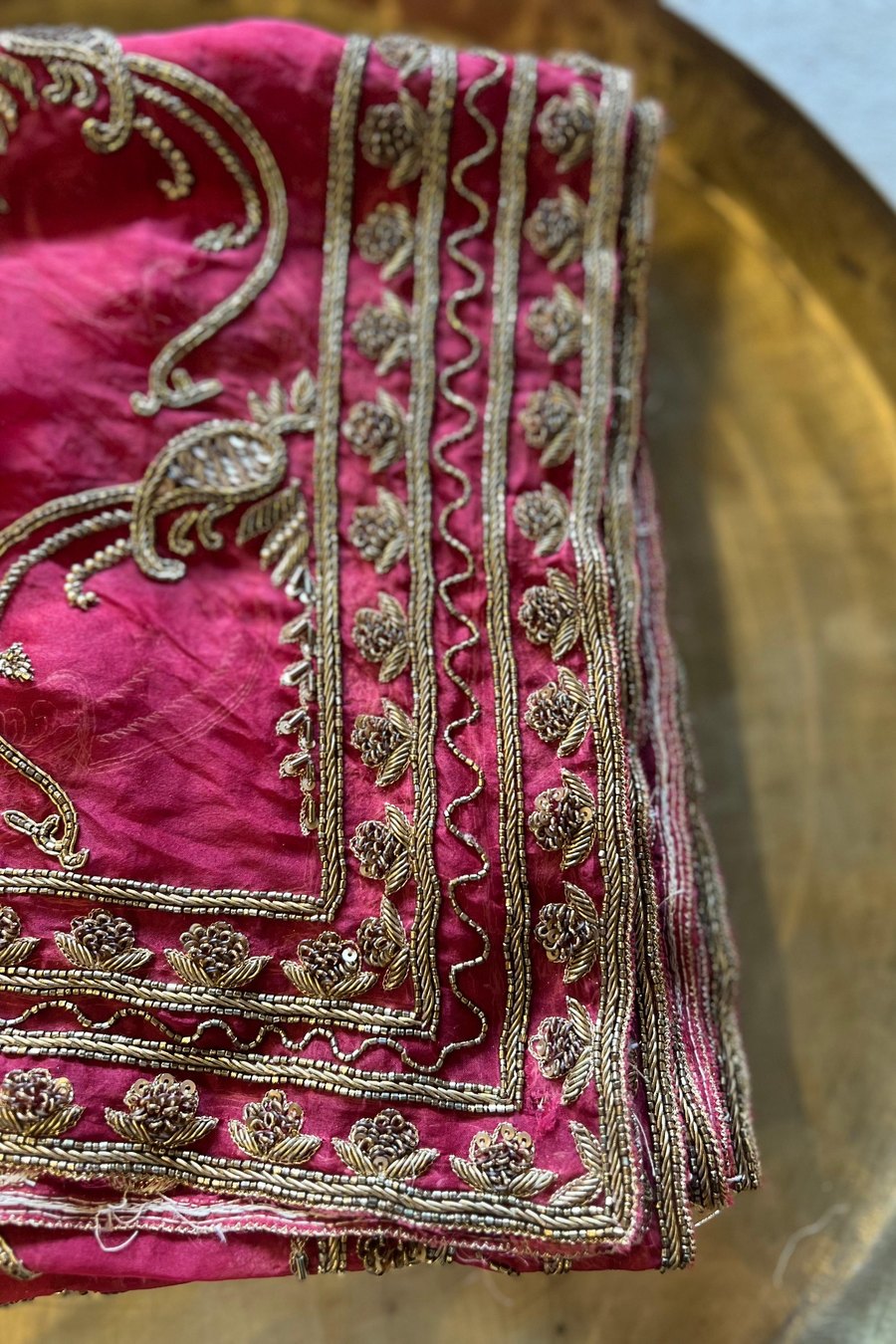
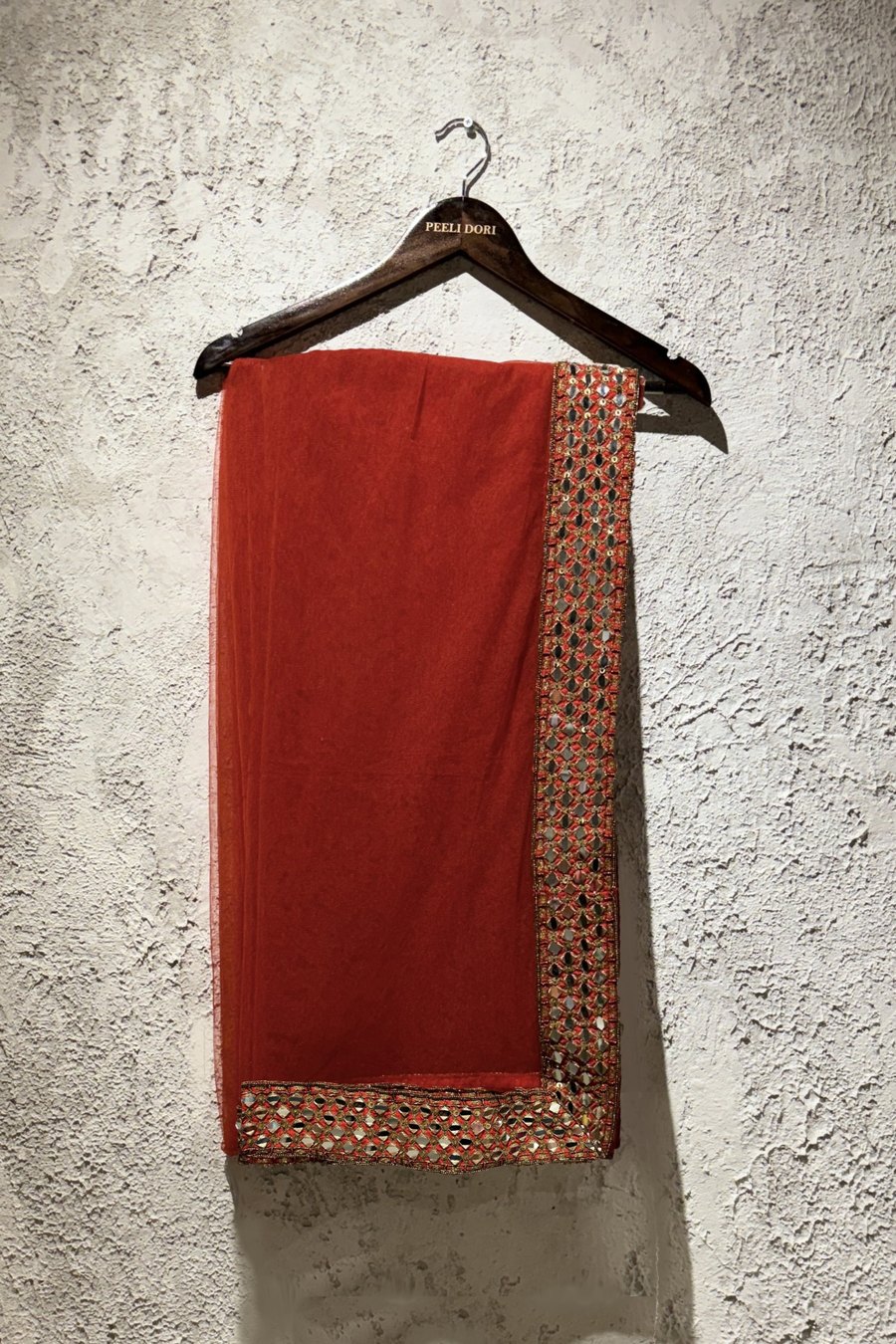
The work itself carries weight. Gota is flat gold ribbon appliqué and stays light. Zardozi is raised metal-thread embroidery and adds real grams across a palla. Dabka uses small beaten metal coils, so a dense dabka border is the heaviest of the three. On ivory and pastel grounds we often use silver motifs instead of gold, which reads cooler against the skin and photographs well in daylight.
All of our pieces are hand embroidered by artisans we work with directly, and the density is the single largest thing that changes both the price and the fall. Two dupattas can look identical in a photograph and behave completely differently in a room.
Six dupattas on the site, and what each one is for
Our dupattas start at ₹12,500 and run to ₹55,900. Most sit between ₹15,500 and ₹22,500, which is where a hand-embroidered silk organza piece with a worked border actually lands once the embroidery is counted.
The bridal pair is at the top of the middle range for a reason: Meera and Sarangi are both built for a bride who will be photographed from six feet away for eight hours. Meera is red and dense. Sarangi is on net, which gives it more volume and a heavier fall — the right choice if the lehenga skirt is full and you want the dupatta to hold its own against it.
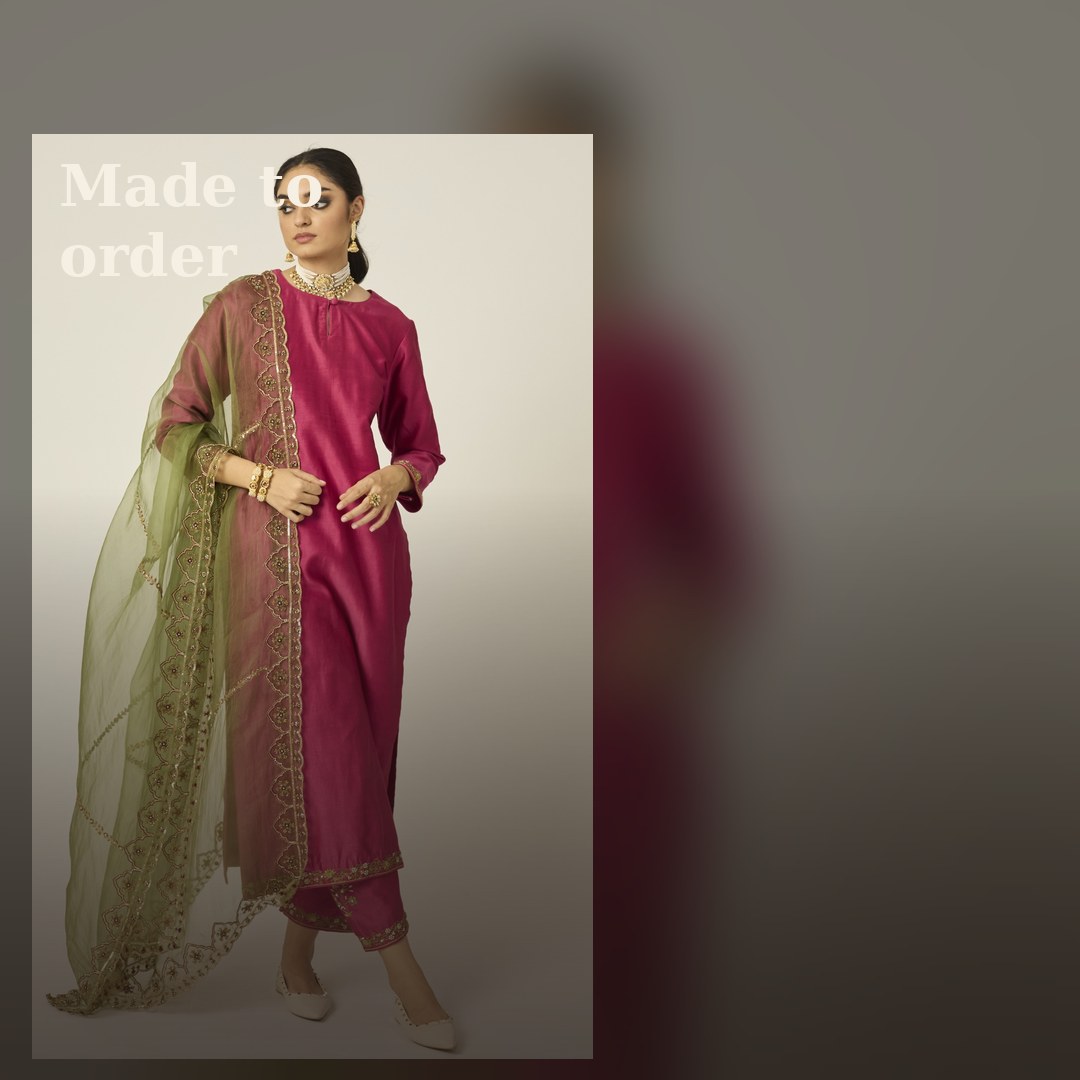
Gulmohar is our motif family, and the powder blue Gulmohar dupatta is the easiest of the six to wear again after the wedding — it works over a plain anarkali or a silk saree with nothing else added. The velvet Gulmohar is the winter version: same idea, heavier cloth, no pleat, one long fall.
Mastani is cream satin, and it is the one we pull out for a bride who has been told to wear ivory but does not want to look plain. The satin takes light differently from organza and needs a lighter border, because two shiny surfaces next to each other fight.
₹55,900
₹35,500
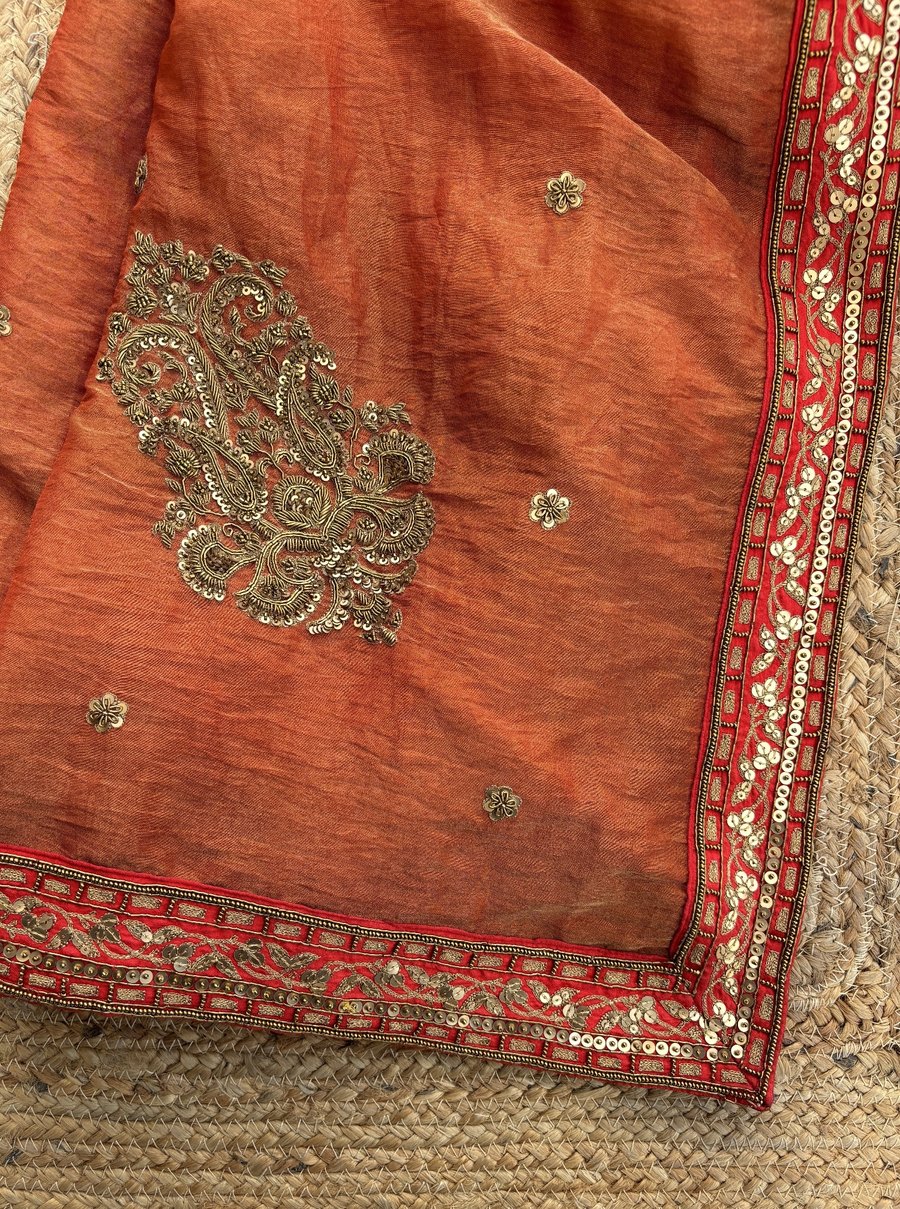
₹34,500
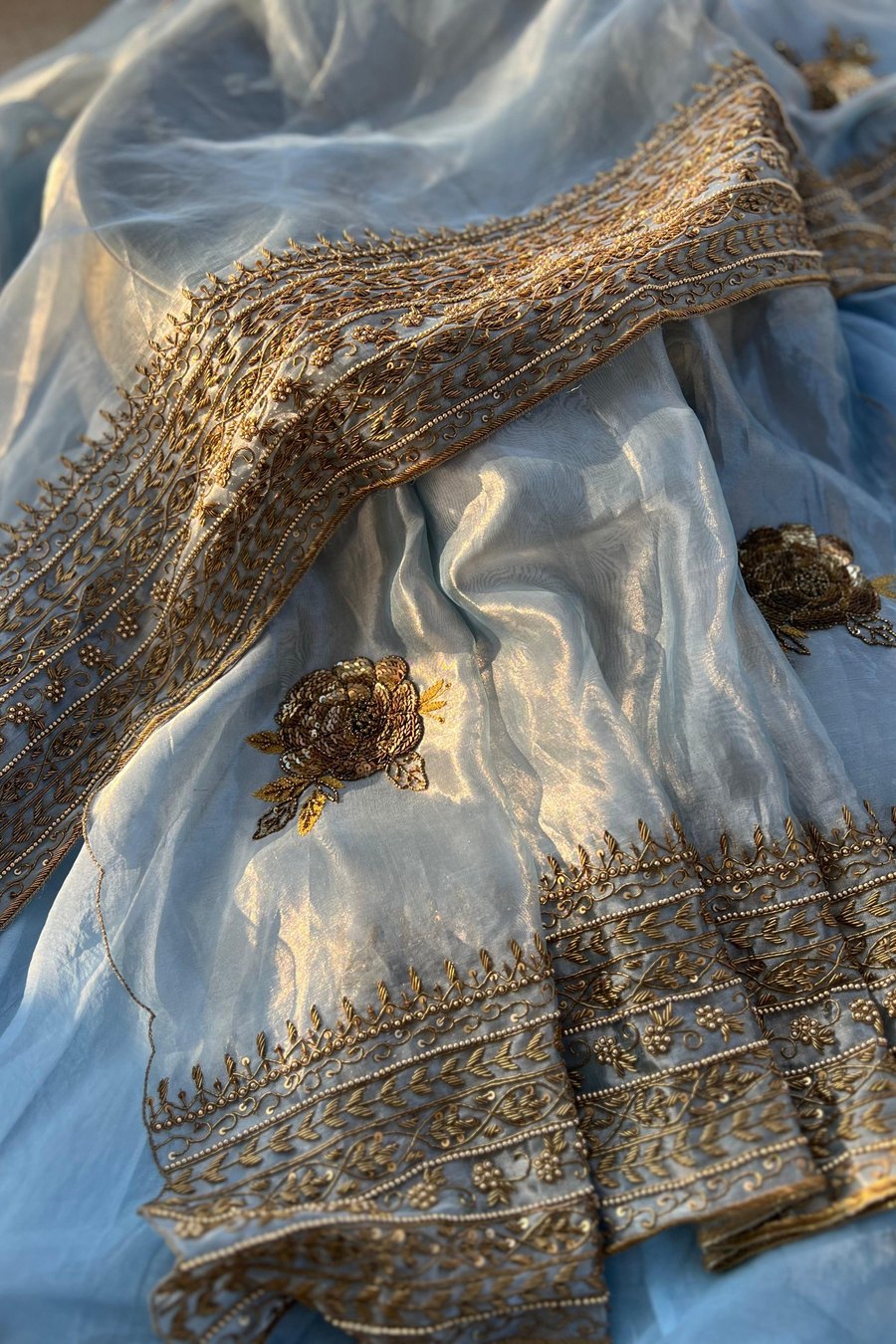
₹22,500
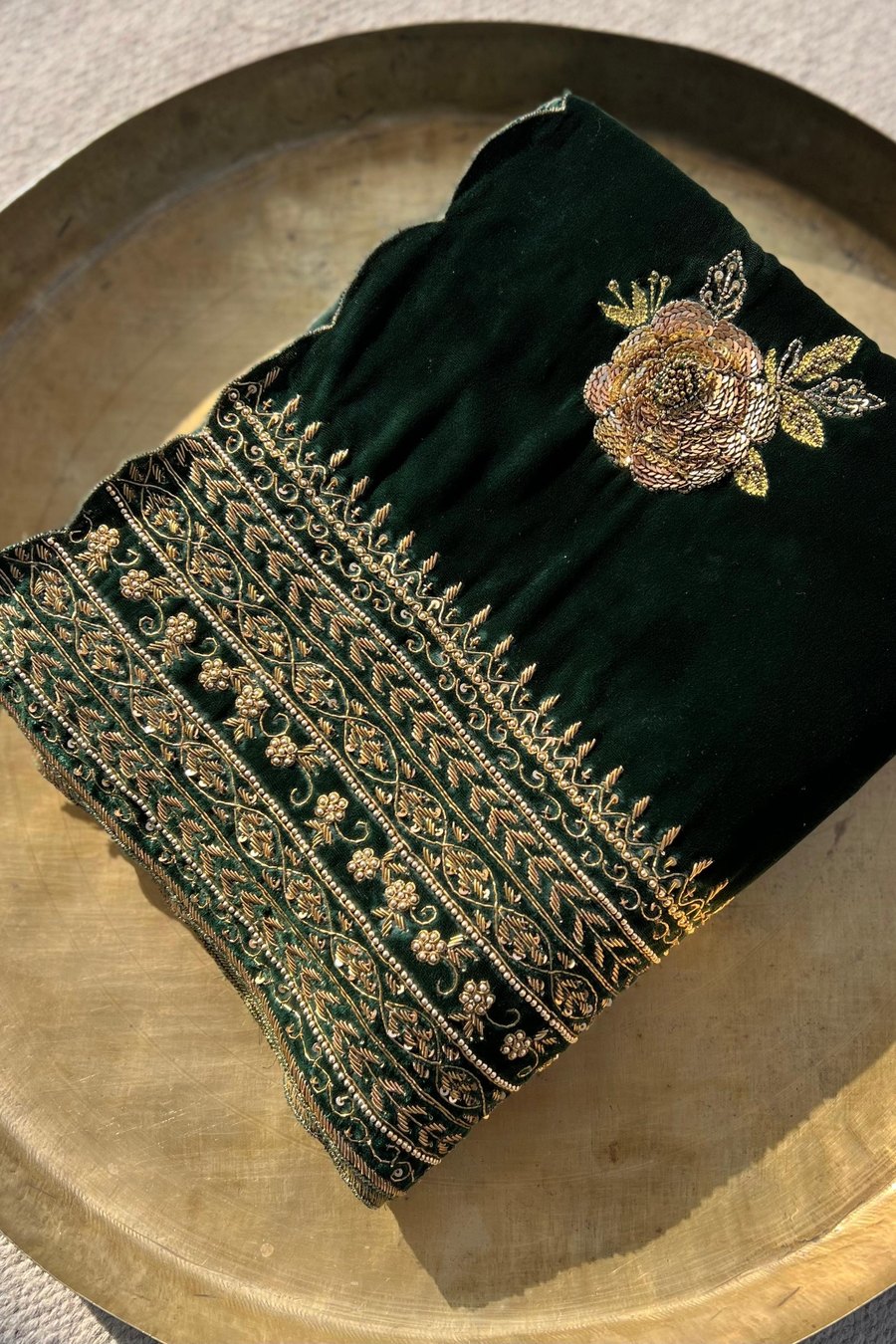
₹22,400
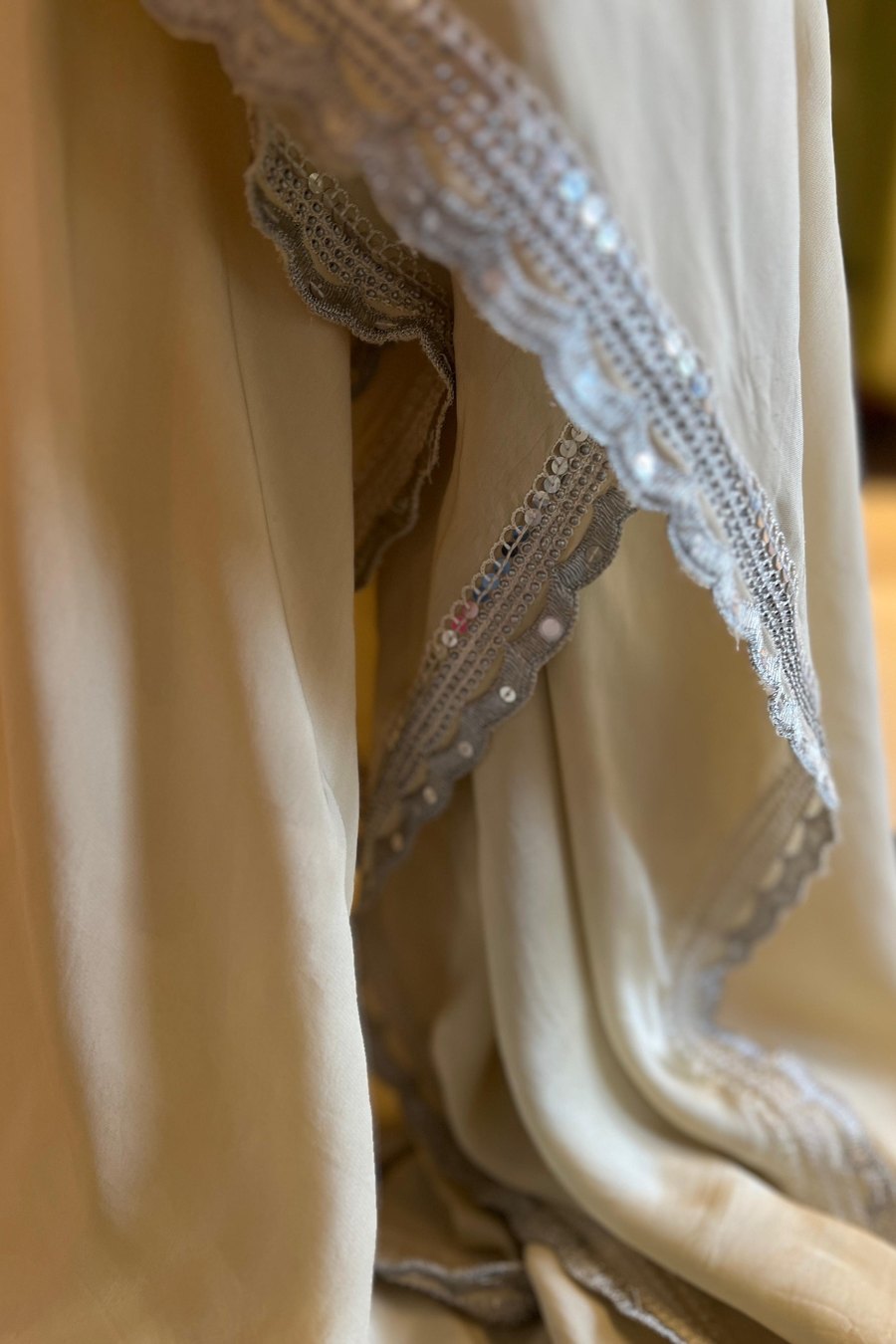
₹19,500
Wearing it so that it stays
Pin into the blouse, not into the dupatta. A pin pushed through an embroidered panel leaves a hole that will still be there at the next wedding, and on organza there is no nap or texture to hide it. Slide the pin through the cloth and into the blouse's seam allowance, where the fabric is doubled and the hole will never be seen.
Build the pleat stack before you pin anything. Five or six folds at the shoulder, each one a little narrower than the last, held with one pin through all of them at the base. If the pleats are pinned individually they always drift apart by the second hour.
Over a lehenga, tuck one end into the waistband at the back and take the other over the shoulder. Sit down in it before you leave the room. Half of all the adjusting people do at a wedding comes from a dupatta that was never tested in a chair.
Over a kurta set, skip the tuck entirely and let both ends fall in front. The set already has a defined line; the dupatta is there for colour and movement, not structure.
Over a saree, wear one only if the saree is plain or lightly worked. If the pallu is already embroidered, a second embroidered layer makes both look cheaper than they are. A quiet organza with a single-line border over a plain silk saree, on the other hand, is the cheapest upgrade in the wardrobe.
Matching it to what you already own
Tone-on-tone is the harder route, not the easier one. An ivory dupatta on an ivory outfit only works when the two ivories are the same temperature and the embroidery differs in scale — fine motif on the dupatta, bold on the garment, or the reverse. Get it wrong and the outfit reads as one flat block in photographs.
Contrast is more forgiving. A silver-worked ivory organza over a deep coloured saree, or a coloured border on a neutral ground, gives the eye somewhere to go without competing with the garment.
The rule we use in the store: one piece carries the work, the rest support it. If the blouse is the embroidered piece, the dupatta should be quiet. If the dupatta is the piece, keep the blouse plain and let the border do the talking.
Care, and the one thing that ruins organza
Store organza rolled, not folded, on a tube with acid-free tissue between the layers. A fold pressed into organza for six months becomes a crease that a steamer will not fully lift, and metal-work borders crease along the same line every time you fold them the same way.
Do not hang a heavy-bordered dupatta by the border. The metal pulls the cloth out of shape over a season. Lay it flat if the border is dense, or roll it if shelf space is short.
Air a piece for a few hours after wearing it before it goes back in the cupboard, and keep perfume off the metal work — alcohol dulls zardozi and dabka faster than anything else that happens to a dupatta.
Dry clean only, and tell the cleaner which end carries the work. We have repaired more crushed borders than torn cloth. If something does go wrong, message us on WhatsApp before you try to fix it yourself; a stretched palla can sometimes be re-blocked, but a scorched one cannot.
Frequently asked
What length dupatta do I need for a lehenga?
Two and a half metres for a standard pleated drape with a palla, and three metres if you want a double drape or plan to cover your head. Two and a quarter metres works for a single-shoulder drape at a reception, but it leaves very little spare once the pleats are pinned.
Is an organza dupatta suitable for a winter wedding?
Inside a heated venue it is fine all year. For a December evening outdoors, velvet or a heavier tissue sits better and photographs warmer. If you love the organza, wear it and keep a shawl for the car and the walk in.
Can I wear an organza dupatta with a silk saree?
Yes, if the saree is plain or lightly bordered. A crisp organza over a soft silk saree is one of the easiest ways to make an old saree look new. If the pallu is heavily embroidered, skip the dupatta — two worked layers flatten each other out.
How do I stop my dupatta slipping off my shoulder?
Pin through the dupatta into the blouse's seam allowance, not through the embroidered panel, and build a proper pleat stack of five or six folds held by a single pin at the base. A heavier palla also helps: weight at the end keeps the cloth where you placed it.
Will an organza dupatta crease in a suitcase?
It creases along folds, not everywhere. Roll it around a tube with tissue between the layers instead of folding it flat, and hang it in the bathroom while you shower at the destination. Do not iron it directly, and never press the metal work.
Explore more: saree · lehenga · kurta set — or message us on WhatsApp for styling help.

The information below is required for social login
Sign In
Create New Account