

A saree can be re-tied in a hotel room in four minutes. A blouse cannot be re-cut in four minutes, and often cannot be re-cut at all. That is the whole reason fit deserves its own conversation — before the cloth is picked, before the embroidery is placed, and
A saree can be re-tied in a hotel room in four minutes. A blouse cannot be re-cut in four minutes, and often cannot be re-cut at all. That is the whole reason fit deserves its own conversation — before the cloth is picked, before the embroidery is placed, and certainly before six weeks out quietly becomes ten days out.
The one piece in the outfit with no give
A wedding calendar in an Indian family is rarely one event. There is a mehendi at noon where you will sit on the floor for two hours, a sangeet that starts at nine and ends when the last cousin leaves, a morning puja where you fold your legs under you, and a reception under lights that make everyone look either very good or very tired. Same body, four different demands, usually within one month.
The saree handles all of that reasonably well. Pleats can be re-set in a guest room, the pallu can be pinned differently, the petticoat can be tied an inch higher or lower. The blouse is the only piece in the outfit that has already made its decisions. It is also the piece sitting against your skin for six hours, holding the neckline you asked for, and carrying the handwork you paid for.
When a blouse is wrong, it is rarely wrong because of the size on the label. It is wrong in four specific ways, and every one of them comes from a measurement taken too casually: it rides up when you raise your arm at the sangeet; it gapes at the bust the moment you sit; it bites at the armhole by the third hour; the front hem lifts away from the saree when you cross your legs. Four symptoms, four numbers.
The nine numbers that actually decide a blouse
Bust, waist and length are the three everyone sends. They are not enough, which is why so many blouses fit on the hanger and not on the body. These are the numbers we ask for, and what each one is really deciding.
Shoulder, edge to edge across the back. It decides whether the sleeve sits on your shoulder or slides off it. Measure across the back, not the front, because the front curve of the shoulder is longer than the back and that is where sleeves start to droop.
Bust, around the fullest point with the tape level at the back. This is the most under-measured number on any sheet we receive, because most people hold their breath while it is taken. Do not. A blouse cut to a held breath will not close after dinner.
Underbust, around the ribcage directly below the bust. Not the same as the waist, and more important than most people expect: this is what decides where the blouse stops gripping and how the darts point. If the underbust is too loose, the front of the blouse stands away from the body and no amount of taking in at the waist fixes it.
Apex to apex, the distance between the two bust points. If this is too wide, the darts sit out towards the armhole and the front reads flat no matter how much work is on it. It is a two-second measurement that most sheets leave out entirely.
Front length, shoulder to apex, and then shoulder to where you want the blouse to end. The first tells us where a neckline can safely stop. The second is the length, and it should be checked sitting down as well as standing, because a blouse that ends at the right place standing can fold into the saree the moment you sit.
Waist, taken at the height where the blouse will actually end rather than at the narrowest point. Those are often an inch or two apart, and the difference is where a blouse either stays tucked or keeps escaping.
Armhole round, measured around the arm at the shoulder joint, not around the bicep. This is the number that decides whether you can dance, reach for a glass, or hug your aunt, and it is the one most often cut tight because a tailor is working from a bust measurement and a habit.
Sleeve length and sleeve round, with the sleeve round taken at the point where the sleeve will end. A three-quarter sleeve that is right at the shoulder and tight at the elbow is a sleeve you will be pulling at all evening.
Back neck depth and where the dori or hooks sit. The back is where a blouse is tightened, so the depth decides how much it can hold. A deep back with a single dori is a beautiful thing on a still photograph and a nervous thing on a dance floor.

How to measure without flattering yourself
Wear the bra you will wear with the saree. This is not a small detail: a padded bra can change a bust measurement by an inch and a half, and a strapless one changes where the underbust sits. If the bra is new, wear it for an hour first, because the band relaxes.
Keep the tape level all the way round. A tape that dips at the back adds two inches to a bust measurement and produces a blouse that feels loose at the front and tight under the arm. Stand in front of a mirror, or better, have someone stand behind you and look.
Do not inhale. Breathe out normally and let the tape sit. If you are between two numbers, say so on the sheet and send both — we would rather decide that with you than guess.
Then measure the saree, not just the body. How high is the petticoat tied, where will the pallu be pinned, does the border need the blouse to sit lower so the border is not covered. A blouse is measured against a drape, not against a body alone, which is why we ask for a photograph of the saree at the same time.
One practical rule helps on the day: when a bust measurement lands between two numbers, cut to the larger and take it in at the side seam. An armhole cut a quarter inch tight cannot be let out in the same way, because the seam is where the sleeve meets the body and the cloth has already been trimmed at both ends.
Where the embroidery changes what a tailor can do
A plain blouse can be rescued almost indefinitely. A hand embroidered one has a much shorter list of options, and the reason is simple: metal work does not re-stitch invisibly. A plain seam taken apart and re-sewn is a plain seam. A seam with gota or zardozi running over it, unpicked and re-sewn, shows.
So the work decides the alteration window. If the embroidery runs into the side seam, there is no allowance left to let out — the seam is where the work stops. Ask for the work to finish an inch and a half short of the side seam, and ask for a full inch of seam allowance inside it. Both are free to request at the cutting stage and both are the difference between a blouse you can wear for years and one you wear for one season of one size.
Necklines are asymmetric in what they allow. A neckline can almost always be raised. Lowering one is close to impossible once the work is placed, because the cloth below the original line was never cut for it and the embroidery sits where the new edge would land. Decide the depth before the needle starts, and if you are unsure, go a finger higher than the photograph you are copying.
Armholes are the second most common change after a first fitting, and the one most likely to be blocked. If the work runs along the armhole, opening it by even half an inch will leave a visible line under the arm. This is where a slightly deeper armhole at the cutting stage earns its keep: it costs nothing to make it generous and it is painful to fix later.
The lining matters more than people expect. In organza the lining should be stitched separately, so it can be replaced when it wears without touching the outer cloth. A joined lining cannot be replaced, and it also cannot be adjusted independently when the bust measurement was the part that was off.
None of this is an argument against dense work. It is an argument for measuring carefully on the pieces where the work is dense, and for keeping the heavy density away from the three places a tailor will need: the side seams, the armhole, and the neckline.
Fit for the function, not the size label
For a sangeet, the armhole is the whole decision. Before you commit, raise both arms above your head in the blouse. If the blouse lifts off the waistband, the armhole is too high or the sleeve too tight, and it will do that for five hours. For a dance floor, also check the sleeve at the elbow and the back depth with the dori done up.
For a mehendi where you will sit on the floor, sit on the floor in the blouse. The front length and the hem are what fail here: a blouse that ends at the natural waist standing will fold into the saree when you cross your legs, and the work will crease along the fold. Half an inch longer, or a slightly softer cloth, solves it.
For a morning puja, the back is the part to test. Sit cross-legged with your hands in your lap and see whether the back gapes. A deep back with a single dori is the usual culprit; two doris, or a slightly shallower depth, keeps it closed while you are seated.
For a reception, the neckline shape is what has to survive. A very soft cloth with a deep straight neckline will relax into a curve by the end of the evening. If the neckline is the point of the blouse, it needs a firmer ground under it — this is exactly where the cloth and the fit stop being separate decisions.
If you are fuller-busted, the underbust and apex-to-apex numbers do more for the line than any neckline choice, and a side seam with real allowance will matter more than a dart. If you are small-busted and want a defined front, darts that point to your own apex are worth asking for by name; darts an inch off will always read as a fold rather than a shape. And if you are tall, check the shoulder-to-apex length before the neckline — a neckline copied from a shorter frame lands an inch low.
Six blouses on the site, and how easy each is to alter
The Ashani blouse is red silk with gold hand embroidery across the bodice. It is the kind of piece that carries a plain saree on its own, and dense bodice work is exactly the case for measuring carefully the first time: the side seams need room and the neckline should be decided before cutting. ₹26,500.
The Majorda blouse is mint Chanderi silk, the lightest cloth in the six and the easiest to alter. Chanderi recovers from a stitch mark better than silk or organza, and a light cloth is more forgiving of a small change in measurement between the fitting and the wedding. ₹16,500.
The Gulnazaar blouse is fuchsia silk, with bead and pearl work cascading from the neckline into the sleeves. Here the neckline is the architecture of the whole piece, so get that depth right first — it is the one number on this blouse that cannot be revisited. ₹15,500.
The two Rosy blouses, one rose and one black, are sequin work on a soft ground. Sequin is light, but the thread holes are permanent, which means a seam that has been let out will always show a dotted line. Ask for the seam allowance up front on these two. ₹27,600 and ₹25,600.
The Lana Pearl blouse is the quietest of the six, built around pearl work rather than metal thread, and the easiest to wear again for a different function. Pearls can be re-anchored individually, so a small alteration here is genuinely low risk. ₹18,500. The Miraya Mirror blouse and the Misty Powder Blue blouse are the two lighter options at ₹15,500 each, and both behave well under a saree with a heavy border because there is less weight at the shoulder to drag the drape.
Six pieces, six different amounts of room to change your mind. Shipping is free across India above ₹10,000, and for international orders the code is INTSHIP above ₹89,000. If you are ordering made to order, send the measurements and a photograph of the saree together and we will check the fit on WhatsApp before the cloth is cut.
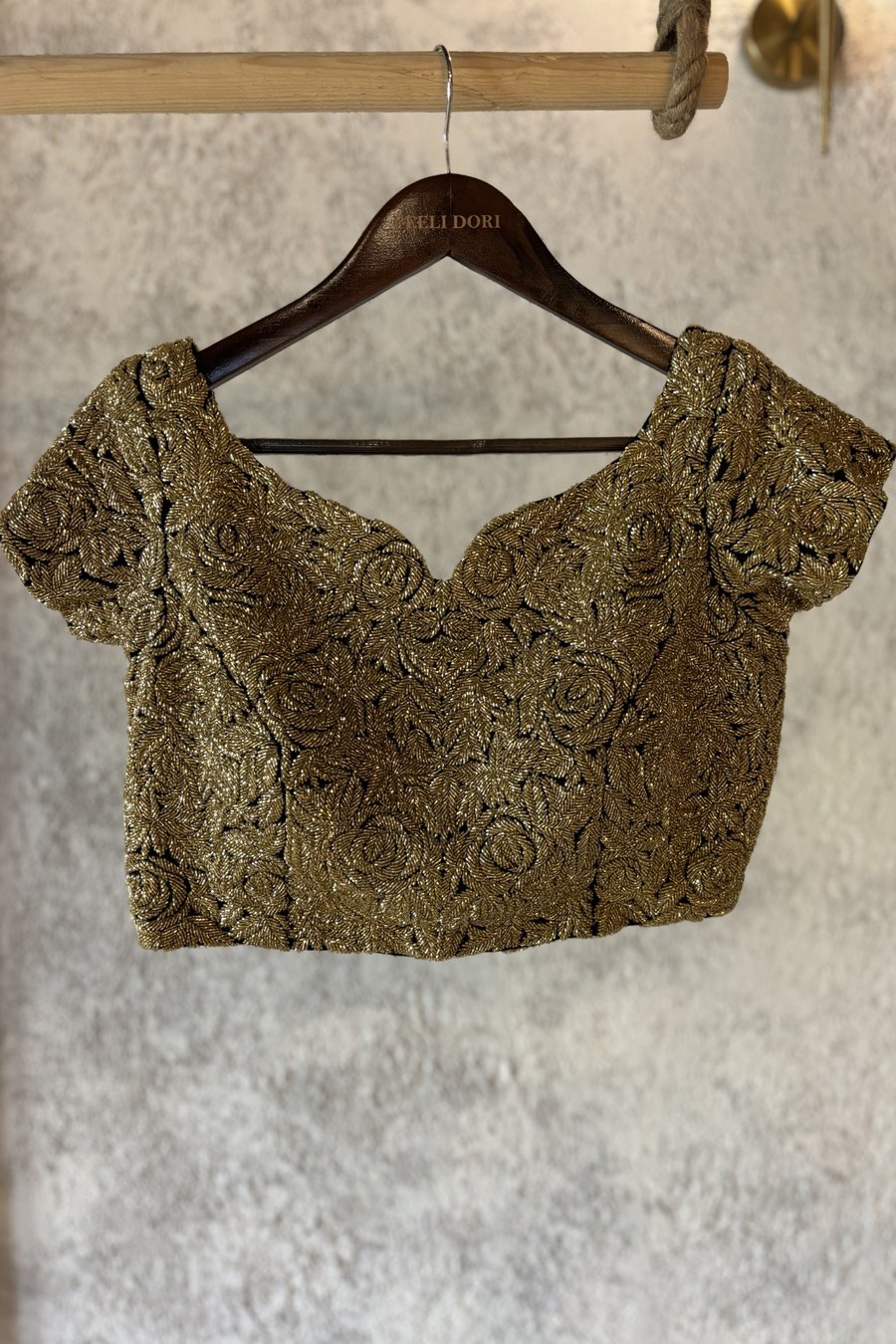
₹27,600
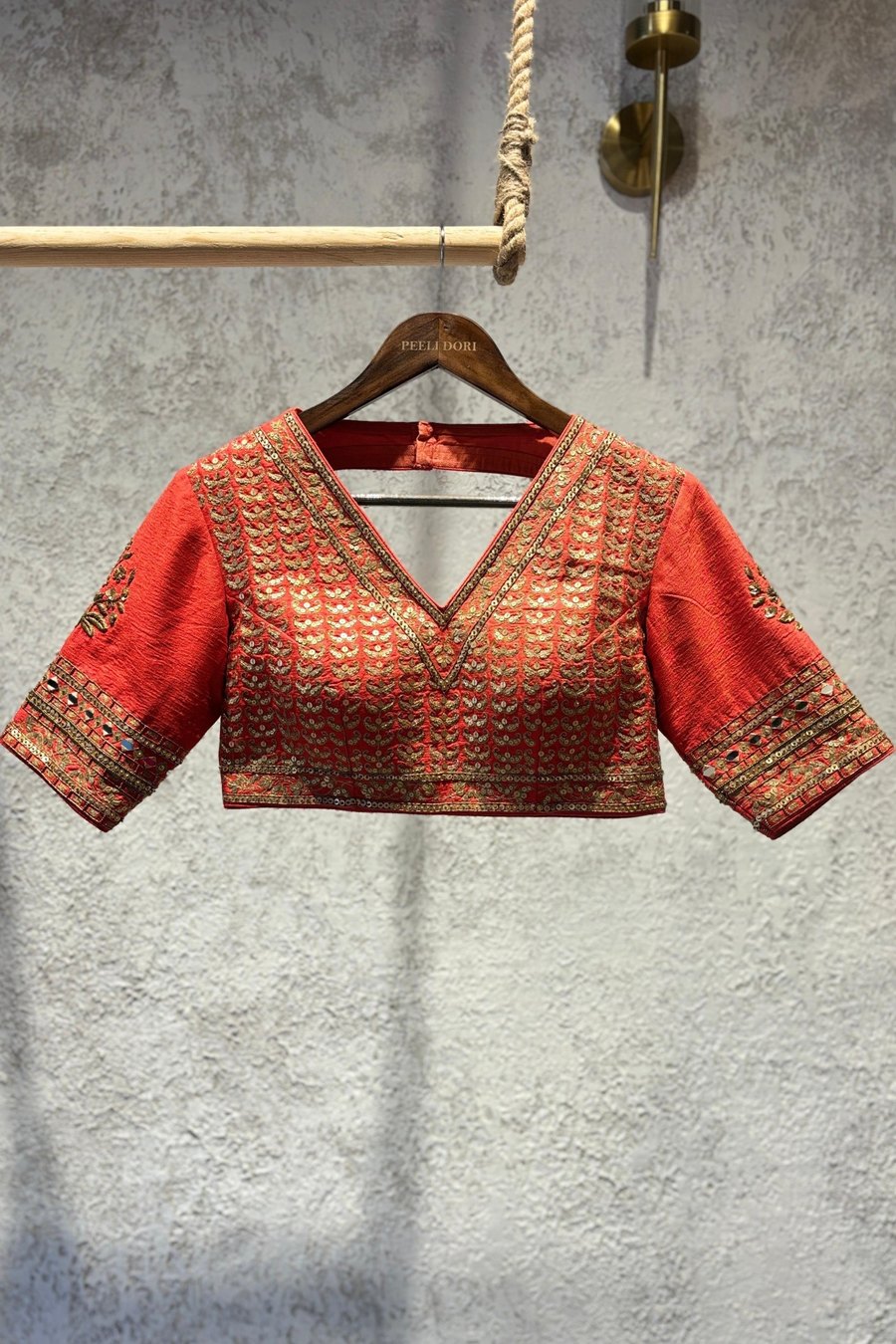
₹26,500
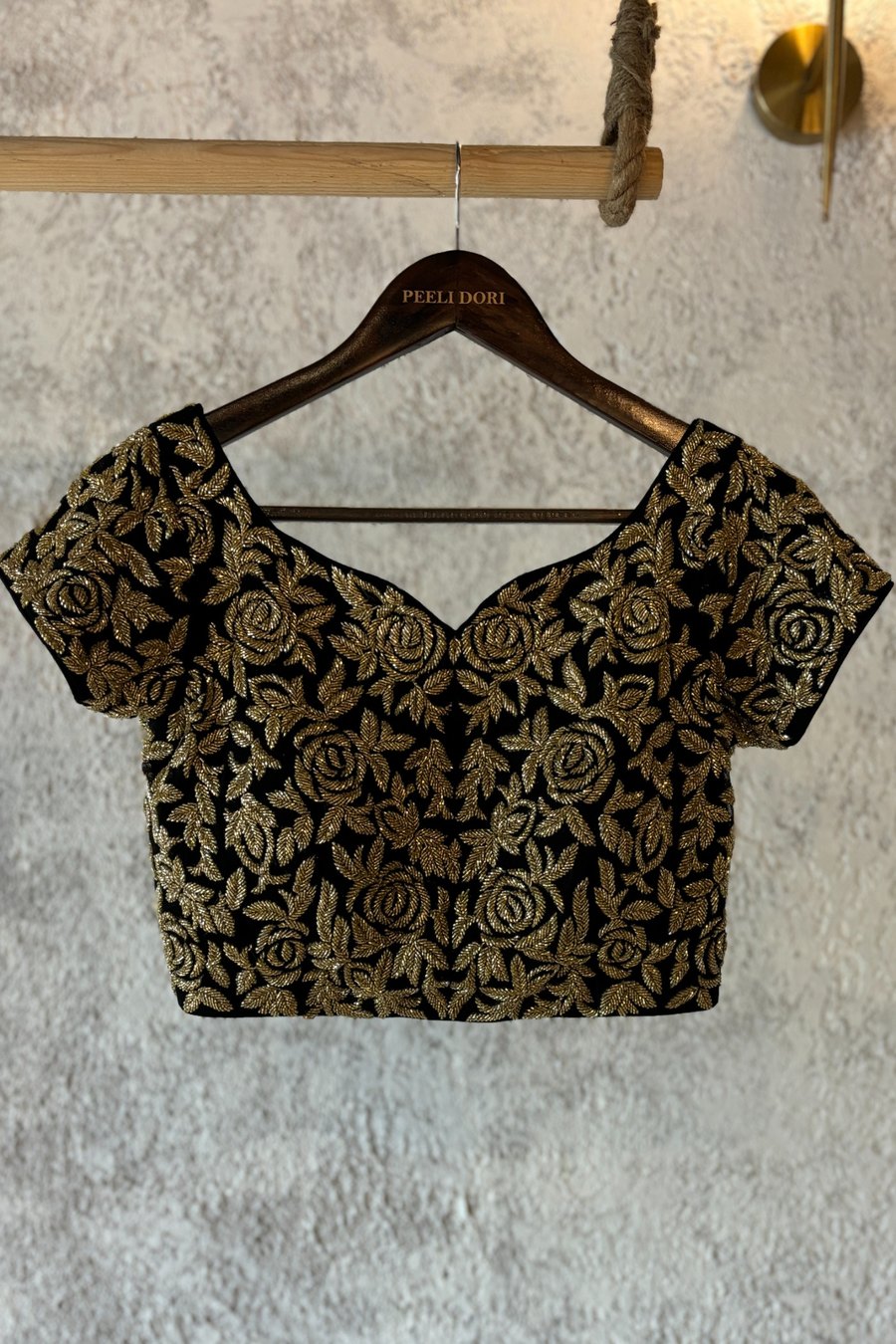
₹25,600
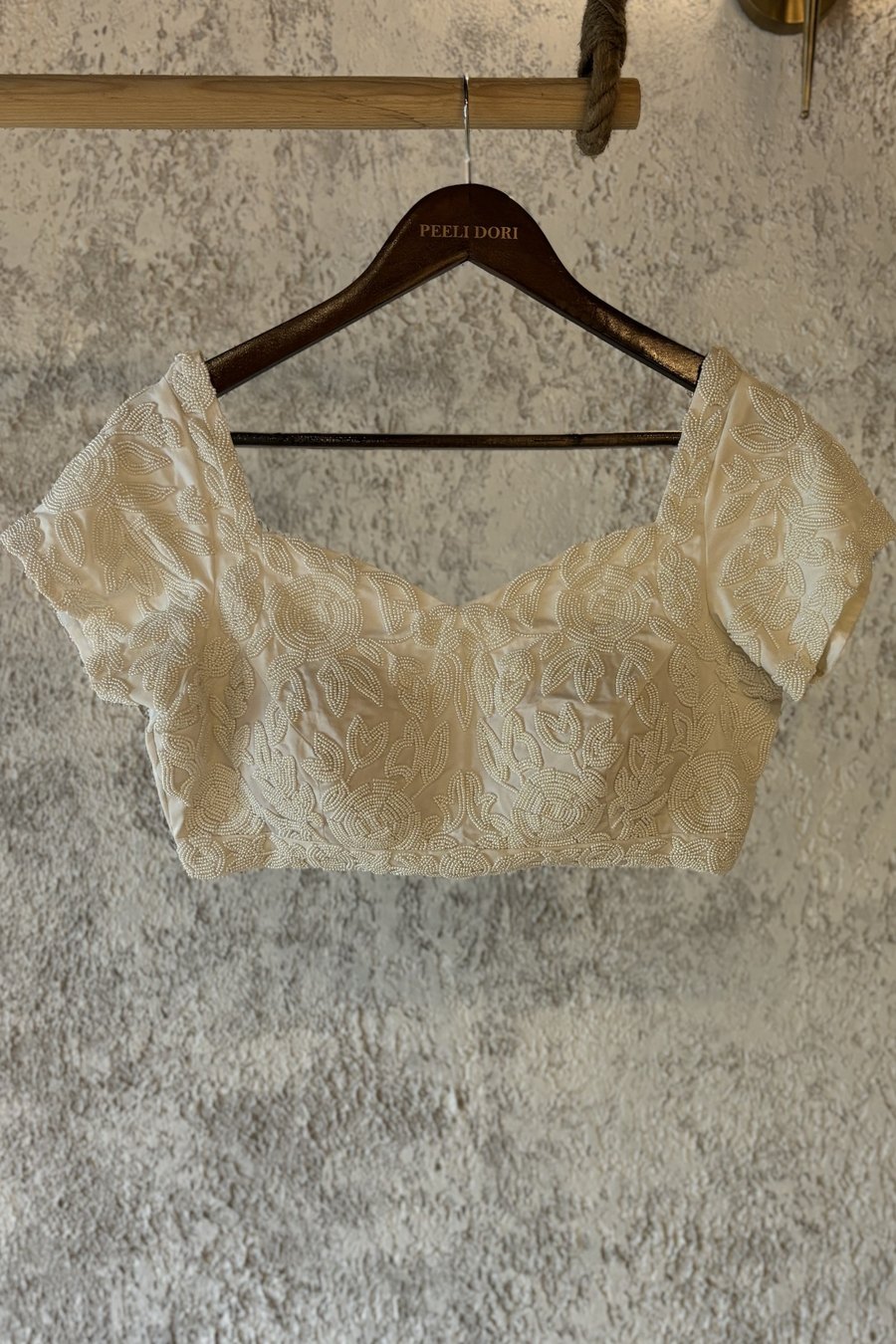
₹18,500
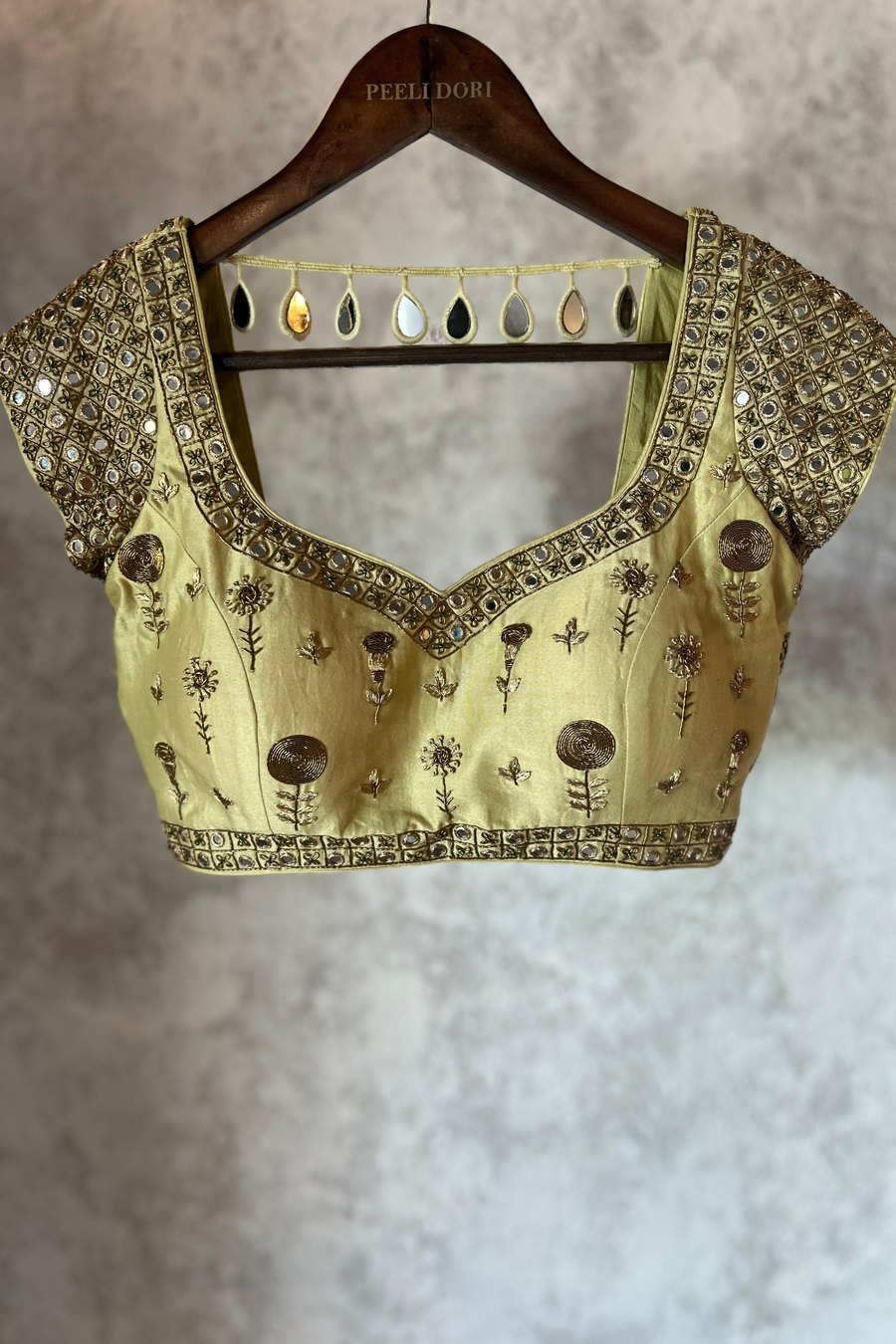
₹16,500
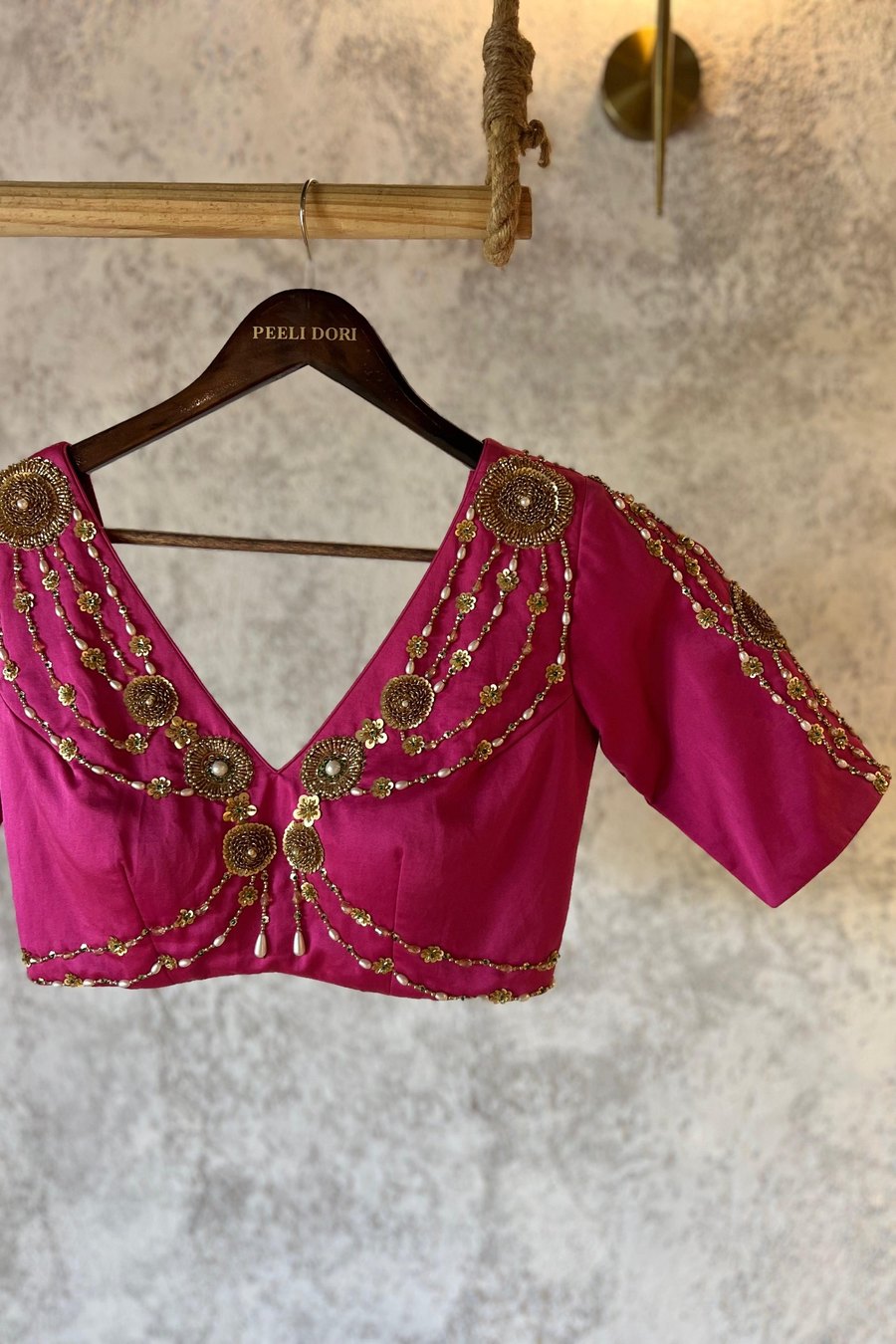
₹15,500
The alteration window, week by week
Six weeks or more out is the comfortable place to be. Measurements are taken fresh, the neckline and sleeve can still change, and a made to order piece has time to be cut, embroidered and fitted without anyone rushing a needle.
At four weeks you can still change the side seams, the length and the sleeve width. What you cannot do is redesign the neckline, because the work is already placed around it.
At two weeks, the honest list is short: hooks, dori, taking in at the side seam if there is allowance, and shortening a sleeve that was cut long. Anything that requires the embroidery to move is off the table.
At ten days, nothing structural. Learn to pin instead. A pallu pinned an inch differently will change how the blouse reads more than a quarter inch of seam ever will, and it costs nothing.
The day before, press — do not cut. Every year we see a blouse ruined by a well-meaning tailor the night before a wedding, and it is always the same cut: the neckline, to make it sit lower. If the fit is genuinely wrong that late, the answer is a different blouse or a different drape, not scissors.
Care that keeps the fit
Store a hand embroidered blouse inside out, and never folded flat across the bust point. A permanent crease at the apex changes how the front sits within a year, which is a fit problem manufactured in a cupboard rather than at a tailor.
Never wash one at home. Spot clean the underarm with a barely damp cloth, and wear a thin cotton liner on the first few wearings of a new blouse, because underarm marks appear on silk satin and raw silk long before they appear anywhere else.
In Delhi dust, store in a muslin bag rather than plastic so the cloth can breathe. In a Dehradun monsoon, add a silica sachet and check the piece at the start of the season: damp is what loosens beadwork, and loose beadwork is a repair, not an alteration.
Frequently asked
How do I measure myself for a saree blouse at home?
Nine numbers: shoulder across the back, bust, underbust, apex to apex, shoulder to apex, blouse length, waist at the height the blouse ends, armhole round at the shoulder joint, and sleeve length and round. Wear the bra you will wear with the saree, keep the tape level, breathe out normally, and have someone check the tape at the back.
Can a saree blouse be altered after it is stitched?
Usually at the side seams, if there is an inch of allowance and the embroidery stops short of the seam. Raising a neckline is possible; lowering one is not, once the work is placed. An armhole can sometimes be opened by a quarter inch, never by an inch.
Should a saree blouse be tight or fitted?
Close at the bust and underbust, comfortable at the armhole. A blouse that is tight at the armhole rides up the moment you raise your arm, and that is the single most common complaint we hear after a sangeet.
How far in advance should I order a made to order blouse?
Six weeks is comfortable for a hand embroidered piece; four is workable for side-seam and length changes. Inside two weeks, only hooks, dori and pinning remain.
What if my measurements change before the wedding?
We cut with an inch of allowance and, where the cloth allows, keep the lining separate. If a change is likely, a softer cloth such as Chanderi is safer than raw silk or organza, both of which keep a mark where a stitch has been.
Explore more: saree · dupatta — or message us on WhatsApp for styling help.

The information below is required for social login
Sign In
Create New Account