

Ask anyone who has stood through a February wedding in Delhi and a noon mehendi in the same fortnight: the blouse is where an outfit succeeds or fails. The saree is chosen first and remembered longest, but the blouse is the piece that sits against your skin fo
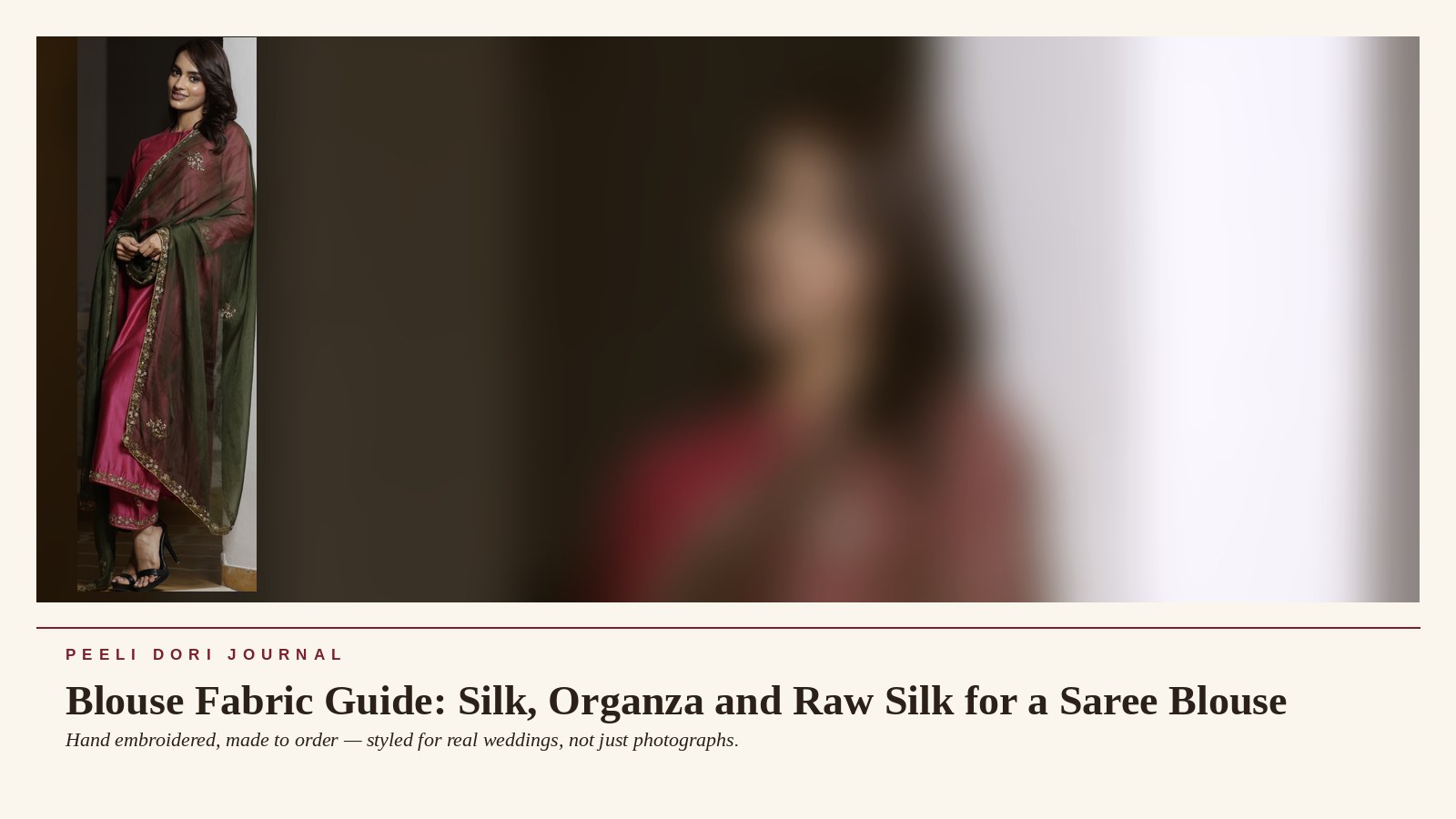
Ask anyone who has stood through a February wedding in Delhi and a noon mehendi in the same fortnight: the blouse is where an outfit succeeds or fails. The saree is chosen first and remembered longest, but the blouse is the piece that sits against your skin for six hours, holds the neckline you asked for, and decides whether the handwork you paid for reads as craft or as costume. The cloth it is cut from is the reason.
Four functions, one set of measurements
A wedding calendar in an Indian family is rarely one event. There is a mehendi in the afternoon, a sangeet that starts at nine and ends when the last cousin leaves, a morning puja where you will sit cross-legged on the floor, and a reception under lights that make everyone look either very good or very tired. Most women we fit are dressing for two or three of these in the same month, and often in the same measurements.
The blouse is the only piece in the whole outfit with no slack in it. A saree can be re-pleated in a guest room in four minutes. A blouse cannot be unpicked in four minutes, or often at all. So the fabric you choose is really a decision about the day: how much heat it will hold, whether it will crease the moment you sit, whether the work on it will catch light or swallow it, and whether the armhole will still be comfortable after the third dance.
This is why we start with the cloth rather than the colour. Two blouses in the same shade, one in raw silk and one in organza, behave like different garments at the same wedding.
There is an honest commercial reason to think this way too. Cloth is a large part of what a hand embroidered blouse costs, and once you know what each fabric does you can tell whether a price sits in the work, in the cloth, or in both.
The four cloths you will actually be offered
Silk is the default for a wedding blouse, and for good reason. It takes dye deeply, holds a stitch, and has enough body to carry embroidery without a second layer behind it. Silk satin, the smooth liquid version, skims the body and reflects light, which is flattering in photographs and unforgiving of a bad fit, because every pull at the bust shows. Flat silk has a quieter sheen and behaves more like a crisp cotton in the way it keeps a shape.
Raw silk is silk that has not been stripped of its natural gum. It is slightly irregular, matte and stiff, and it does not so much drape as stand. That makes it the best cloth here for structure: a high neck, a defined shoulder, a straight hem that stays straight while you sit. It is also the least forgiving to alter, because it keeps a mark where a needle has been.
Organza is a thin, stiff, sheer silk weave. It holds volume by itself, which is how a blouse gets a shape without padding: a puff sleeve stays puffed, a bow stays architectural. It is sheer, so it needs a lining, and the lining is where most of the comfort is decided. Organza also frays, and it tears at stitch holes if heavy work is set into it without a second layer behind.
Chanderi is a light, sheer silk-cotton weave with a faint, almost dusty sheen. It is the coolest of the four in Indian heat and the most forgiving on the body, because it moves. It also shows its lining at the edges, and it does not like heavy metal work: dense zardozi on chanderi drags the cloth down and pulls the neckline out of shape by evening.
Tissue, brocade and velvet are variations on the same logic. Tissue is organza with a metallic weft, brocade is a heavier ground, velvet is winter only. The test is always the same: hold the cloth at the shoulder and see whether it stays where you put it. If it slides, the neckline will slide with it. You can also do that test in person at our Shahpur Jat store in New Delhi or in Dehradun, which is worth the trip before a made to order piece.
How the work behaves on each cloth
The embroidery terms are worth knowing because they predict how a blouse will age. Gota is flat applique: small pieces of metal ribbon stitched down, usually in floral or geometric patterns. It sits on the surface, so it needs a ground that does not pucker. On silk and raw silk it looks crisp and reads well in daylight. On a very soft satin it can look pasted on.
Zardozi is metal thread worked over a padded base, often with beads and sequins added. It is heavy. A zardozi blouse has weight to it, and that weight has to go somewhere: if the work sits across the shoulders, the blouse will pull at the armhole; if it collects low on the bodice, the front hem will hang away from the body. Ask where the density is, not just how much there is.
Dabka is the springy coil work that gives a raised, three-dimensional line. It needs a firm ground, because the coils stand proud and catch on things. Pearls and beads are the lightest option and the kindest to organza and chanderi, provided each one is anchored through a lining rather than through the sheer cloth alone.
Sequin work is the middle case. It is light enough for a softer cloth, but the thread holes are permanent, so the ground will always show a dotted line if a blouse is ever unpicked for alteration. If you think you may need to resize a piece later, keep the heavy work away from the side seams.
Matching the blouse cloth to the saree
The commonest mistake we see is two textures competing. An organza saree with a heavily worked zardozi blouse is two volumes in one outfit: the saree wants to stand away from the body, the blouse wants to sit on it, and they fight at the shoulder. The quieter pairing is a smooth silk blouse under an organza saree, letting the saree do the volume.
The second mistake is weight. A heavy saree, whether brocade, dense tissue or heavy embroidery, needs a blouse with enough body to anchor it, because the pallu is pinned to the blouse and a light blouse will be dragged out of shape over an evening. A light chiffon or georgette saree with a heavy blouse is the opposite error: the blouse starts to look like protective gear.
The third is sheen. Silk satin has a hard, bright reflection, chiffon is matte, chanderi has a dusty glow. Two different sheens can look deliberate, but only when the colours agree. The same dye on organza and on silk will not read as the same colour, because organza reflects less and lets light through. That is why a matching blouse and saree in different cloths often looks slightly off in photographs, and why we ask for a swatch of the saree when a blouse is made to order.
One practical rule covers most of it: match the weight and the level of shine, not the weave. Nobody can tell from three feet away whether the blouse is the same fabric as the saree. Everybody can tell when one of the two is doing all the work.
Choosing for your body, and for the function
Structure is the first question. If you want a defined neckline, a high collar, a square, or a sweetheart that stays square all evening, choose raw silk, organza or a firm silk. If you want the blouse to disappear into the drape, choose chanderi or a soft satin. A very soft cloth will not hold a deep, straight neckline. It will sag into a curve by the end of the evening, and no amount of tailoring will stop it.
Sleeve and armhole next. Stiff cloth at the armhole is the single most common reason a blouse feels wrong after two hours. In organza and raw silk, ask for the armhole to be cut slightly deeper and finished with a soft binding, or take a sleeve that ends above the elbow so the cloth never has to bend with your arm.
Bust and midriff come down to darts. Stiff cloth with a dart in the wrong place is visible from across a room, because the cloth does not forgive. Soft cloth hides a dart, and it also hides the shape you wanted. That is a trade-off, not a defect. If you are between sizes, a stiff cloth is safer cut a little larger and taken in, and a soft cloth is safer cut close.
Then the function. For a daytime mehendi, chanderi in a light colour: it stays cool and photographs softly. For a sangeet where you will dance, silk with some give at the side seam, with the heavy work kept off the armhole. For a morning puja, raw silk holds its shape while you sit on the floor. For a reception under warm light, a satin or tissue blouse with a low sheen will look richer than a bright one, because the light does the shining for it.
Six blouses on the site, and what each one is made for
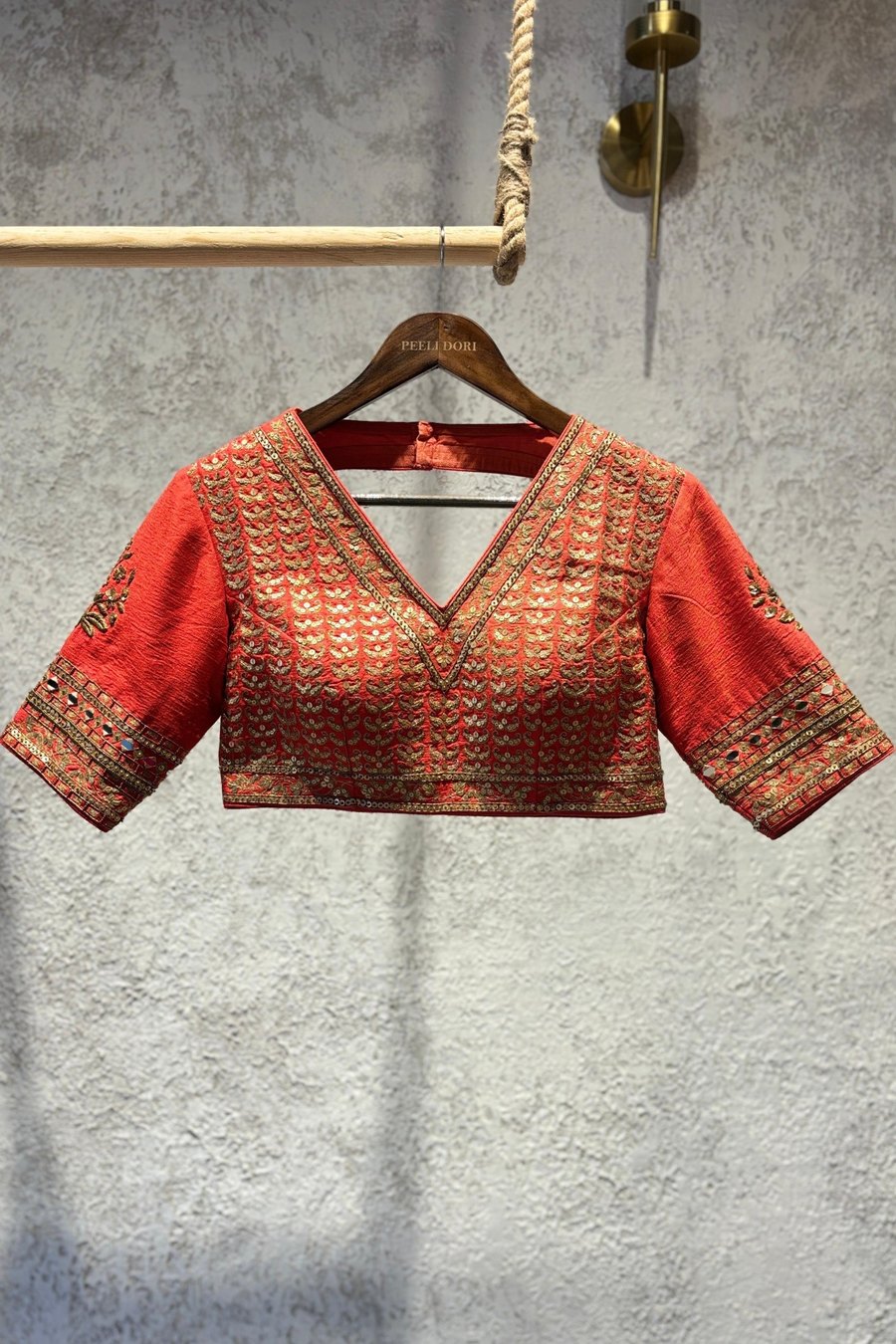
The Ashani blouse is red silk with gold hand embroidery worked densely across the bodice. It is the kind of piece that carries a plain saree on its own, and the red is deep enough to hold up under wedding lights rather than going orange in photographs. ₹26,500.
The Majorda blouse is mint Chanderi silk, the lightest cloth in this guide: sheer, faintly shiny, cool. It is the one we would put under a heavy saree in April, or with a pastel organza for a daytime function. ₹16,500.
The Gulnazaar blouse is fuchsia silk with bead and pearl work cascading from the neckline into the sleeves, inspired by heirloom jewellery. There is movement in that work, which is exactly why the silk base matters: a heavier ground would have made the whole thing look solid instead of falling. ₹15,500.
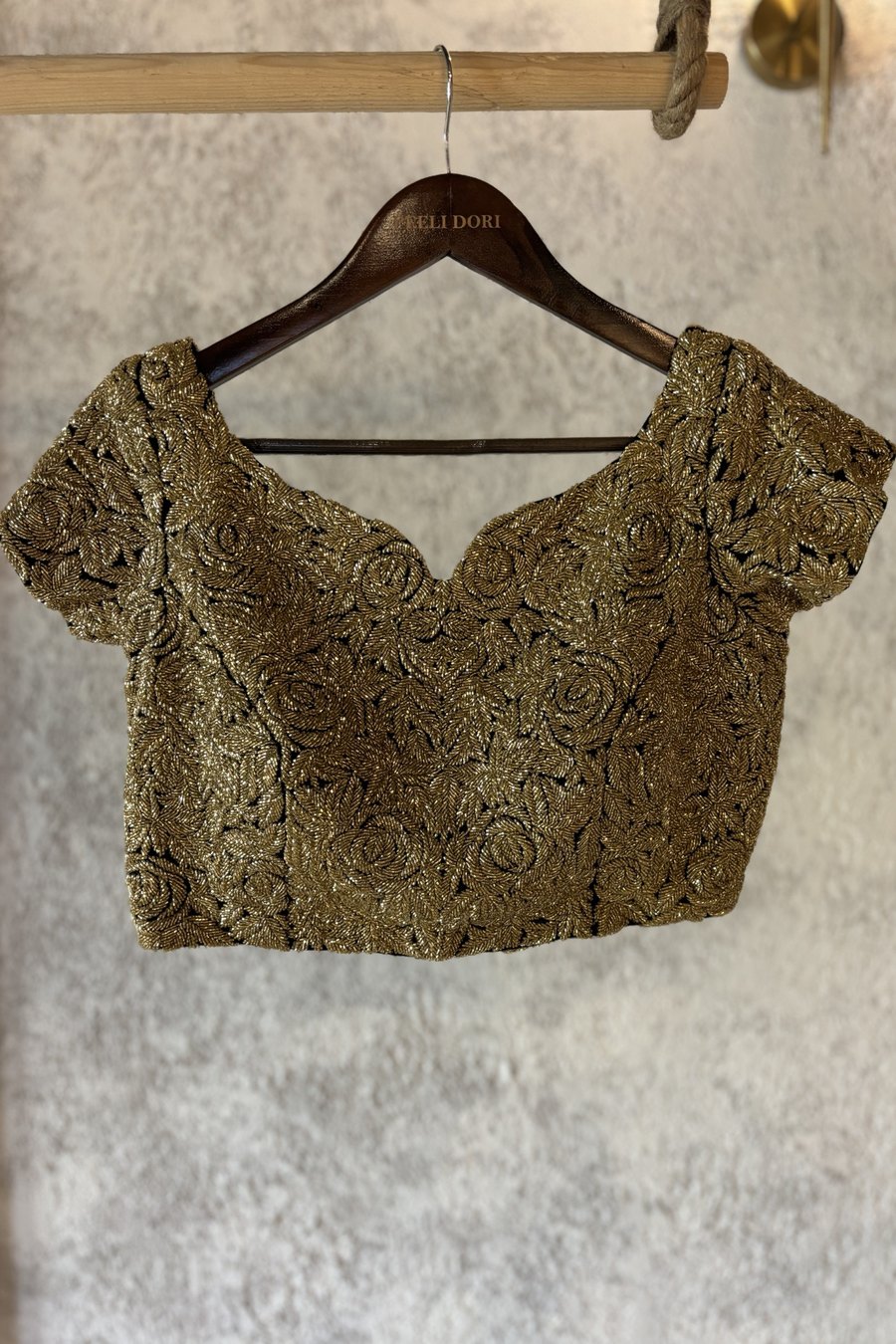
The two Rosy blouses, one rose and one black, are sequin work on a soft ground, so they read as shine rather than structure. They work best with a plain chiffon or satin saree that is not competing for the same light. ₹27,600 and ₹25,600. The Lana Pearl blouse is the quietest of the six, built around pearl work rather than metal thread, and the easiest to wear again. ₹18,500.
Six pieces, six answers to the same question, which is how they should be treated. If two of them would work for the same evening, the difference is in how much of the evening you want the blouse to be the subject. Shipping is free across India above ₹10,000, and for international orders the code is INTSHIP above ₹89,000.
₹27,600
₹26,500
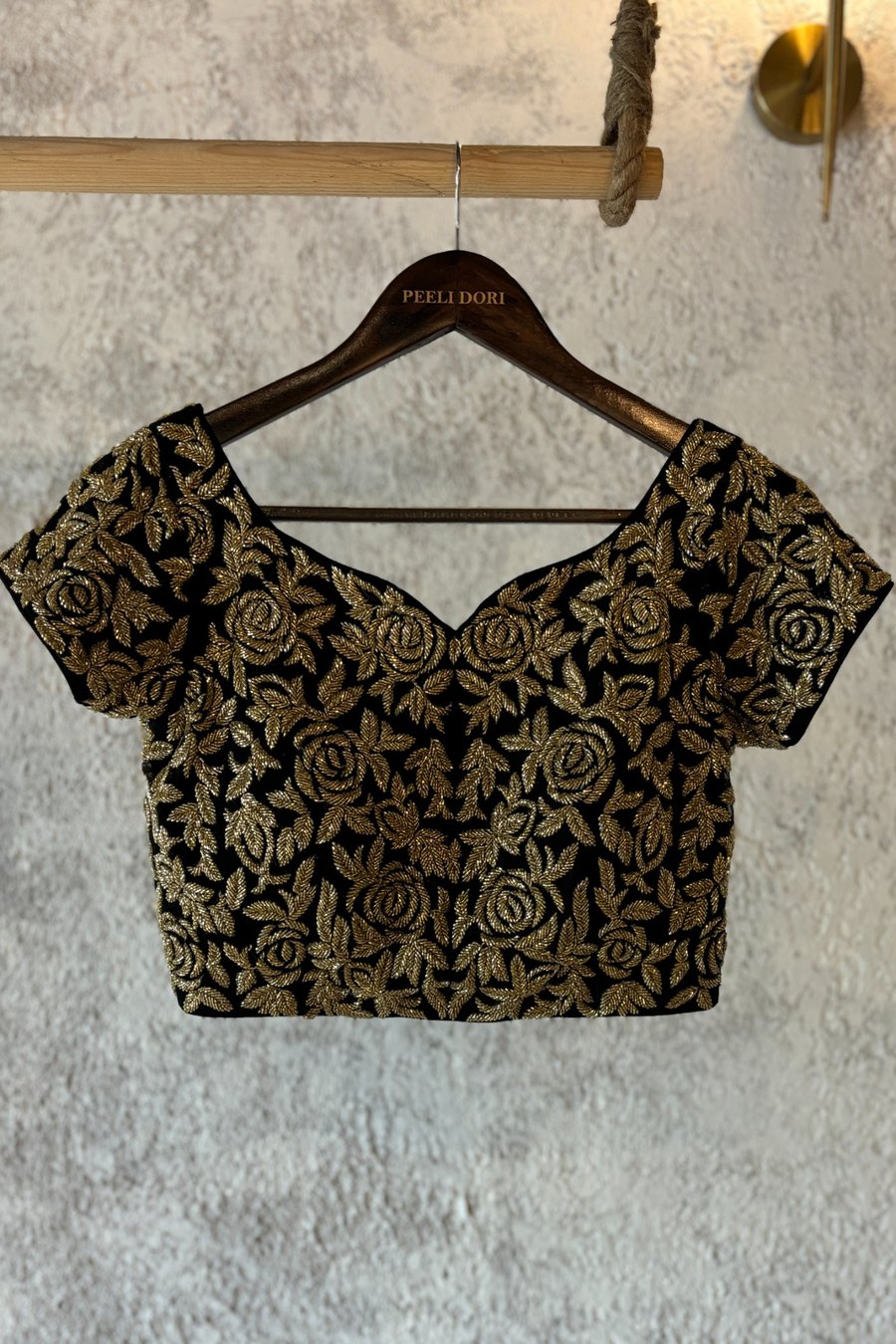
₹25,600
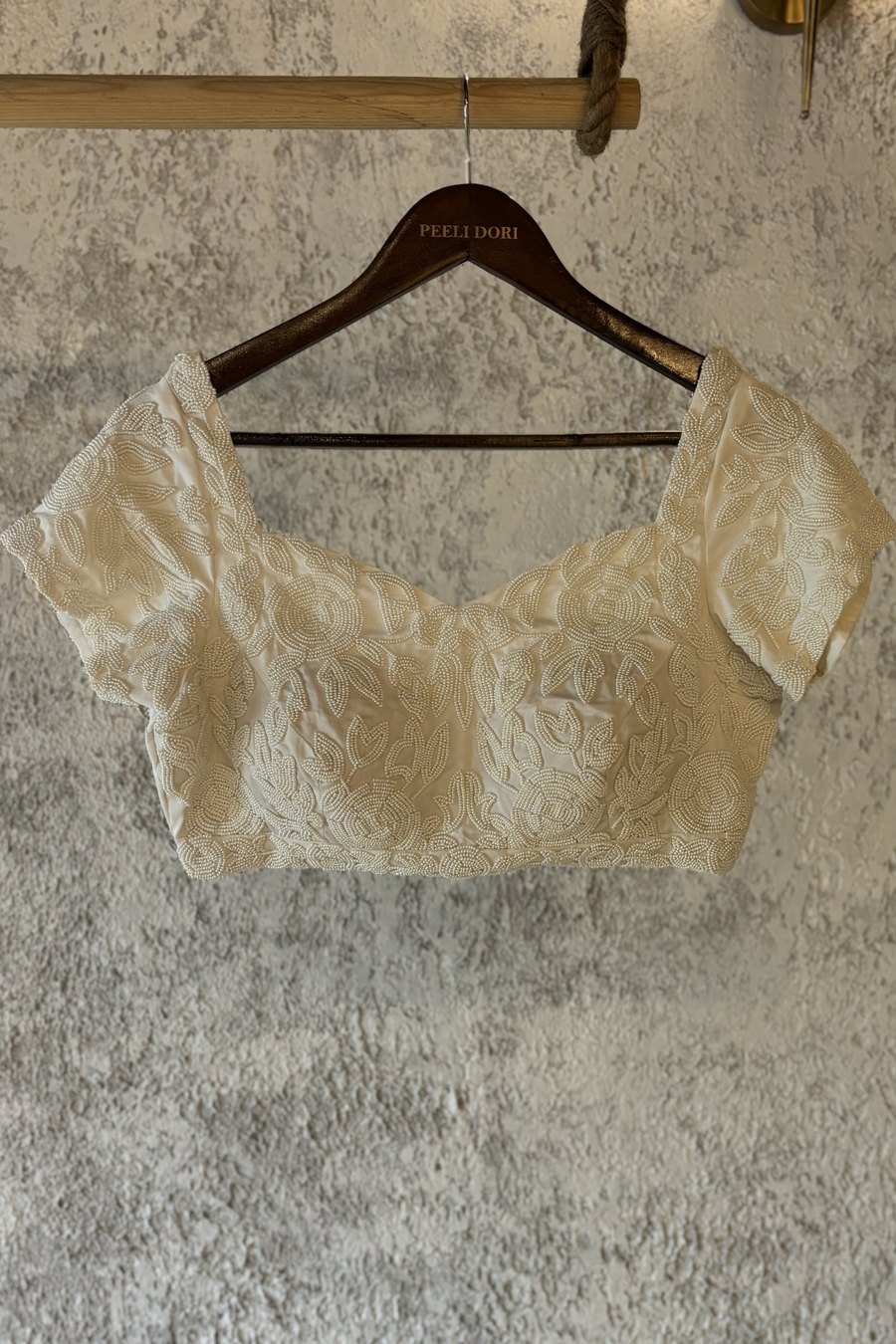
₹18,500
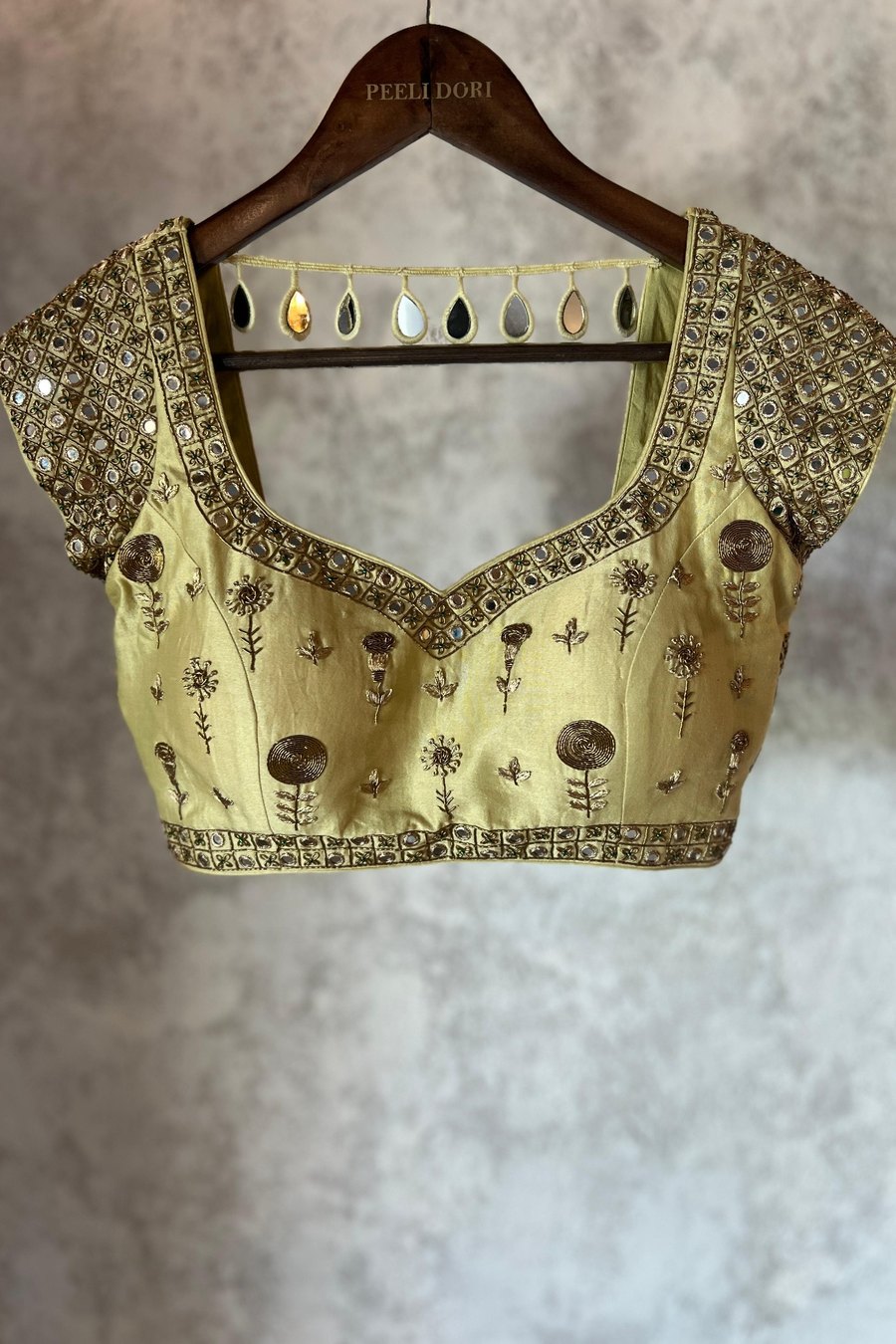
₹16,500
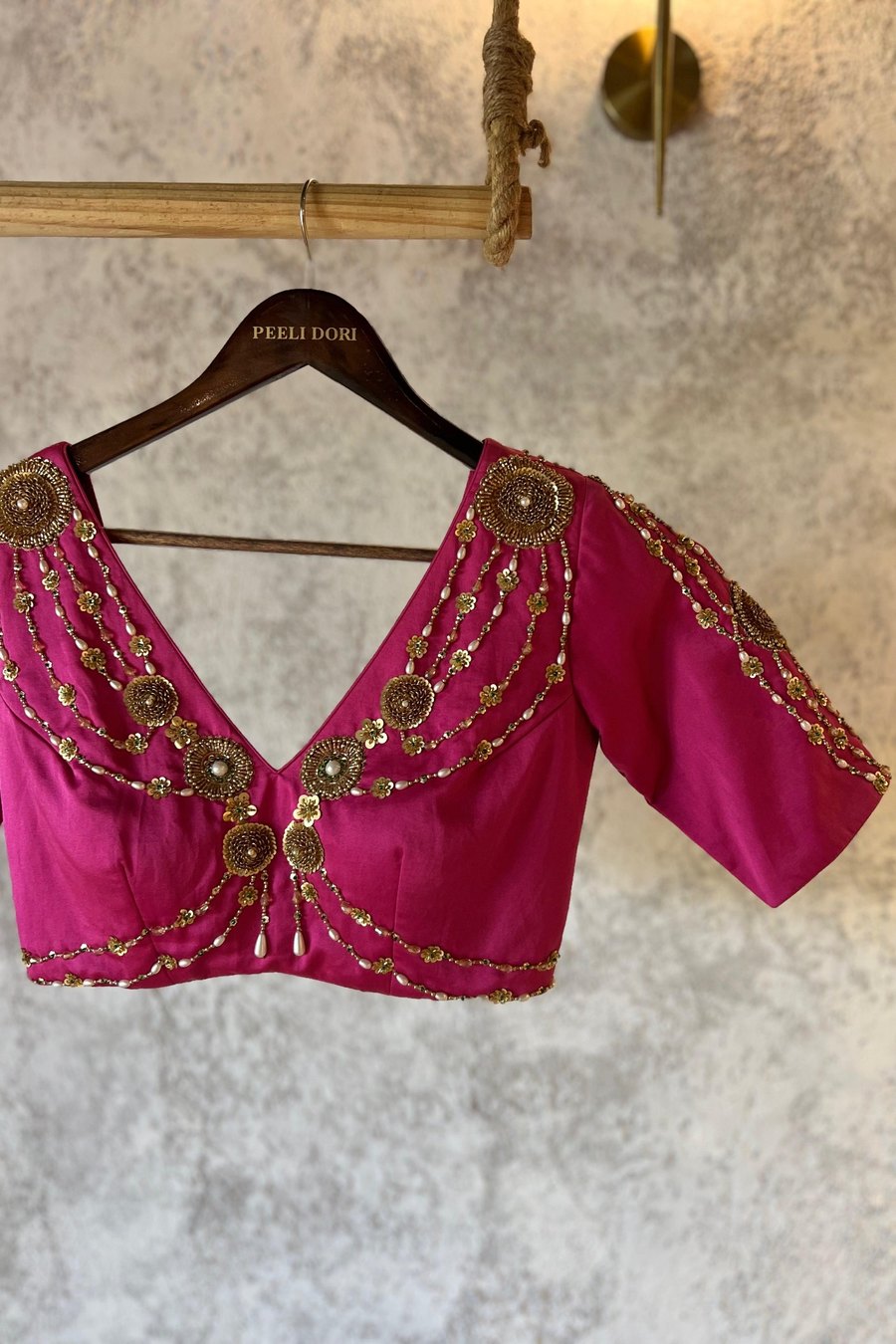
₹15,500
Fit, seam allowance and the questions worth asking
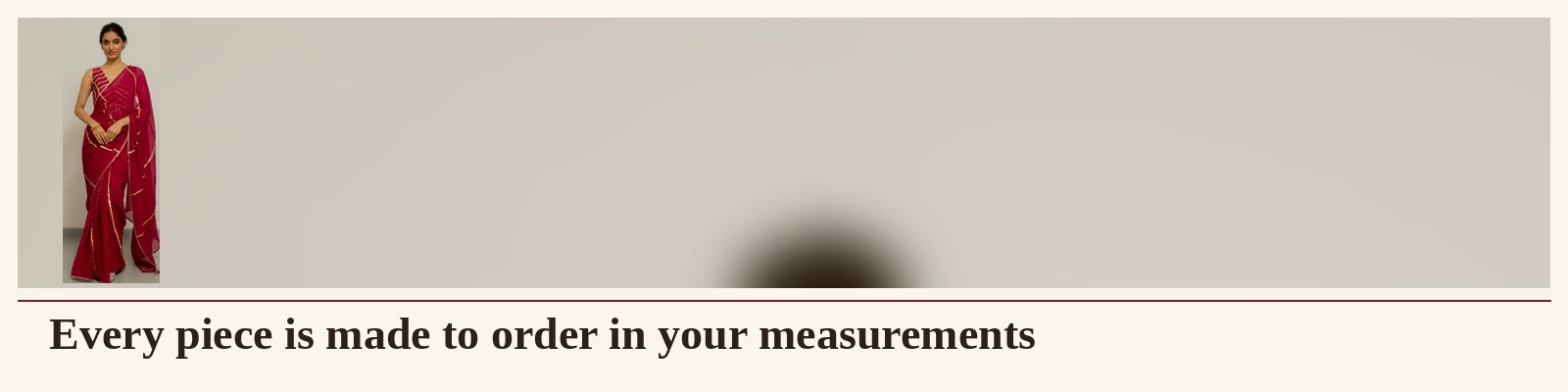
Every blouse we make is cut to your measurements, and the fit check happens on WhatsApp before the cloth is cut. That is cheaper than fixing it afterwards, and it is the reason we ask for a photograph of the saree at the same time: the blouse has to be measured against a drape, not against a body alone.
Ask three questions before you commit. How much seam allowance is inside the side seam? An inch each side is what lets a blouse be let out after a season, and it costs nothing to ask for. Is the lining stitched separately? In organza it should be, because a joined lining cannot be replaced when it wears. And can the armhole be opened without disturbing the embroidery? If the work runs into the seam, the honest answer is no.
Fabric also decides what can be rescued. Raw silk and organza keep a mark where a stitch has been, silk satin shows a needle line under light, and chanderi recovers better than any of them. So if a measurement is not final, whether because the wedding is six weeks out or because a size may change, the softer cloth is the safer choice.
Care, by cloth
Organza: never press the embroidery. Press the plain cloth from the back, with a cloth between the iron and the silk. Store it rolled rather than folded if the work is raised, because a fold in organza becomes a crease that does not come out.
Raw silk: dry clean, and keep perfume off the cloth. Alcohol marks raw silk and the mark is permanent. Hang rather than fold, since the stiffness that lets it hold a neckline also lets it hold a fold for a year.
Chanderi: the most forgiving of the four. Air it after wearing, dry clean sparingly, and store it flat in muslin so the sheer cloth is not stretched out of shape on a hanger. In a Dehradun monsoon add a silica sachet. In Delhi dust use a muslin bag rather than plastic, so the cloth can breathe.
Silk satin and sequinned blouses: the risk is the underarm, where deodorant and friction mark the cloth first. Wear a thin cotton pad or a sleeveless liner on the first wearing of a new blouse. It is much easier than trying to clean a satin underarm later, and easier than explaining it to a dry cleaner.
Frequently asked
What is the best blouse fabric for a summer wedding?
Chanderi, or organza over a light lining. Both let air through and neither holds heat the way a lined raw silk does. If the function is outdoors at noon, chanderi is the safer choice, because organza's stiffness can start to feel like a shell by the second hour.
Can you embroider on organza without the cloth tearing?
Yes, if the work is anchored through a lining rather than through the sheer layer alone. Gota and light beadwork are fine. Dense zardozi on single-layer organza will tear at the stitch holes within a few wearings, which is why we ask what the blouse will be worn with before choosing the density.
Is raw silk too warm for an Indian summer?
It is warmer than chanderi and much cooler than velvet or brocade. Its advantage is structure rather than breathability. If what you want is a neckline that stays exactly where it was cut, raw silk earns the extra warmth.
Does the blouse fabric have to match the saree fabric?
No, and often it should not. Match the weight and the level of shine rather than the weave. A smooth silk blouse under an organza saree looks intentional. An organza blouse under an organza saree can look like something bought in a hurry as a set.
How much does the cloth affect the price of a hand embroidered blouse?
A lot. Two blouses with the same amount of handwork can differ by several thousand rupees on the base cloth alone, and a heavier cloth carries heavy work better than a light one. When you compare two pieces, ask what the base cloth is before you compare the embroidery.
Explore more: saree · dupatta — or message us on WhatsApp for styling help.

The information below is required for social login
Sign In
Create New Account