

Two different things are sold under the name lotus silk. One is a fibre so rare it is nearly a museum object. The other is a design line, like ours. Here is what each one is, what our Lotus Collection actually costs, and how to pick between the six sarees in i
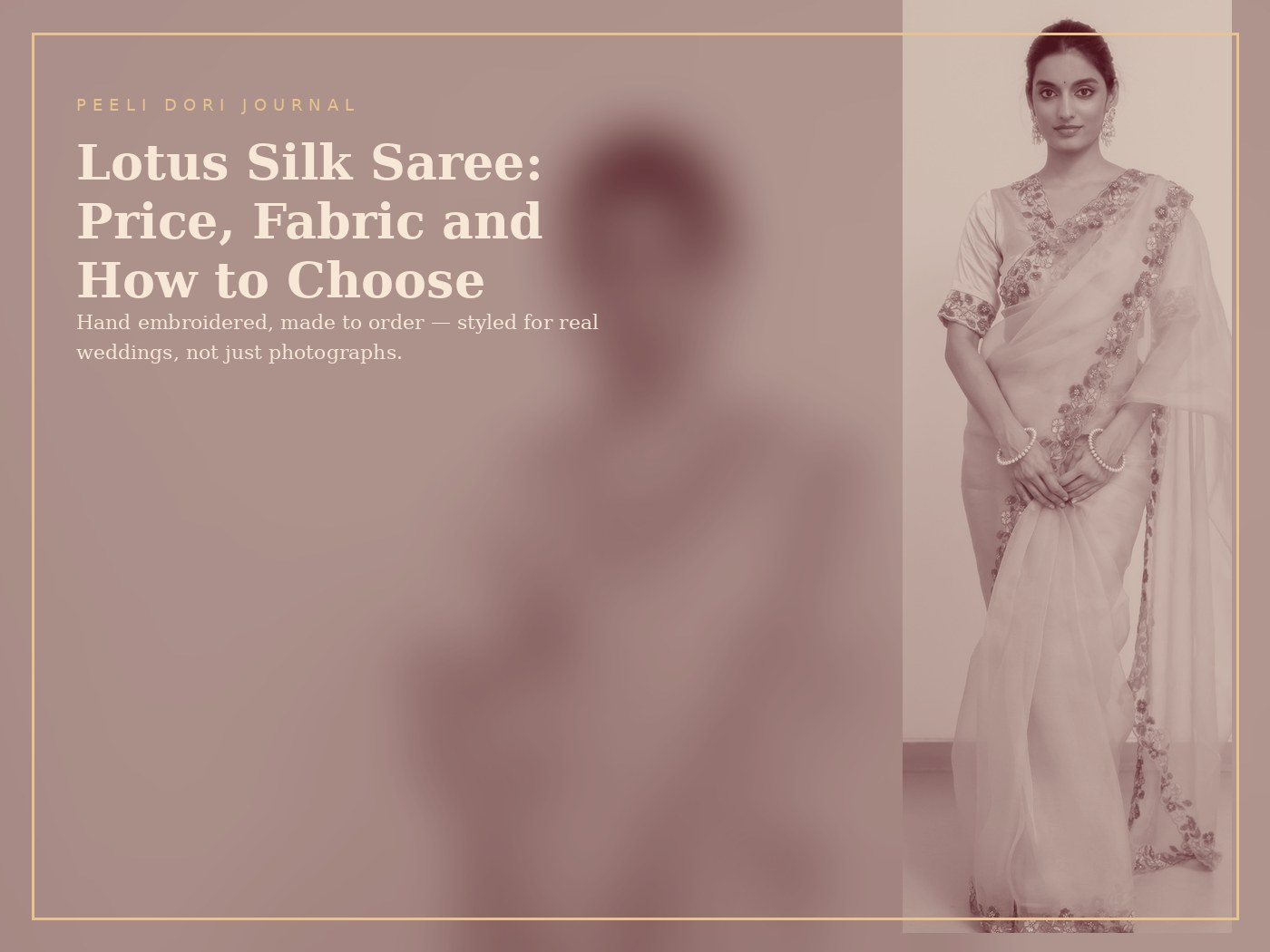
Two different things are sold under the name lotus silk. One is a fibre so rare it is nearly a museum object. The other is a design line, like ours. Here is what each one is, what our Lotus Collection actually costs, and how to pick between the six sarees in it.
What people mean when they search for a lotus silk saree
The phrase has two lives, and they are not the same thing. The first is literal: a fibre spun from the stems of the lotus plant, made in small quantities around Inle Lake in Myanmar. The stems are cut, the filaments pulled out by hand, washed and worked into a yarn. A few thousand stems go into a single metre. That is why a genuine lotus-fibre textile is a collector's object, not a shop purchase, and why almost nothing sold online as lotus silk is that.
The second life is a design name. Ours is the Lotus Collection: a set of hand-embroidered sarees and matching sets that we group under one name so a customer can see a family of pieces that share a mood, a weight of cloth and a price band, rather than scrolling a catalogue of four hundred sarees.
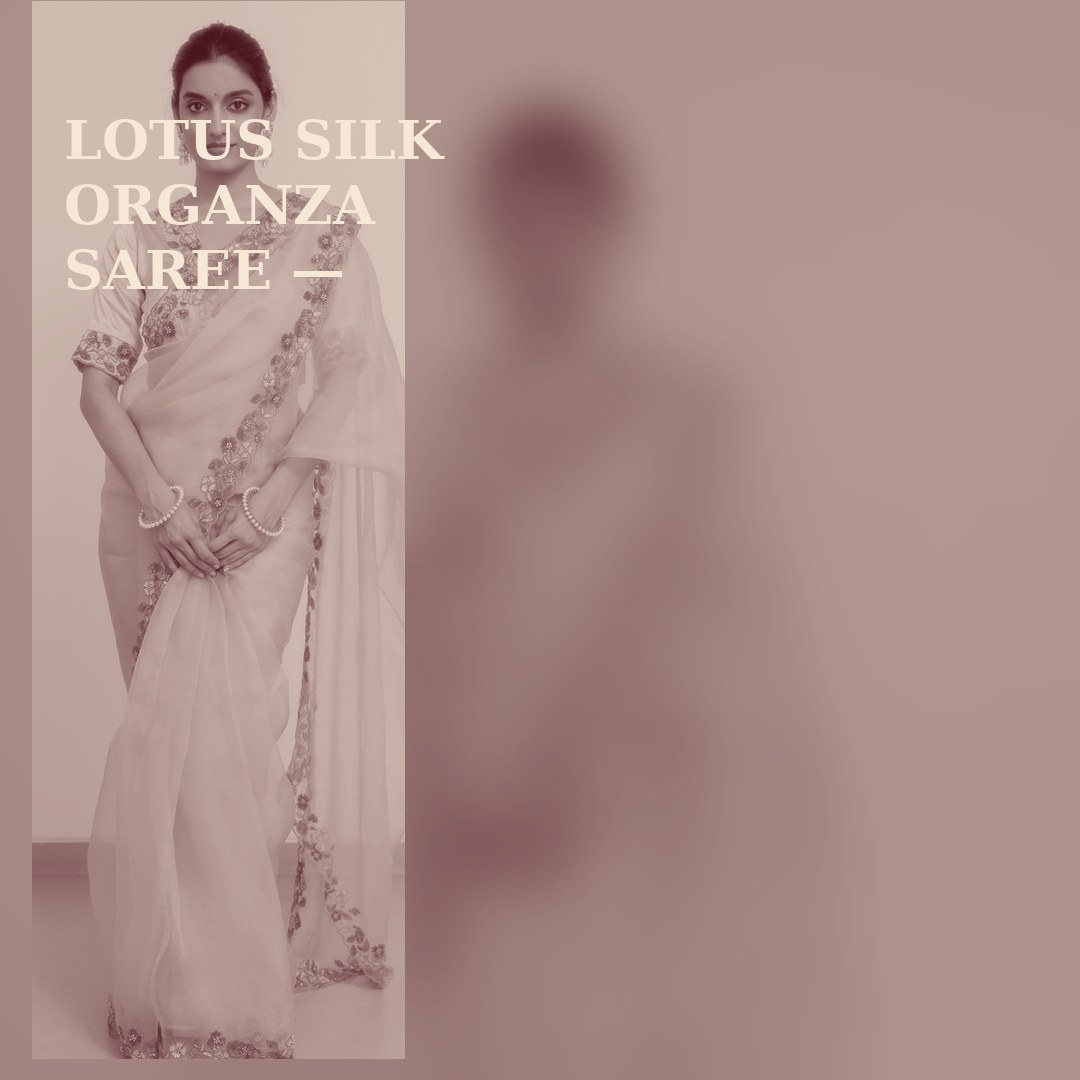
We would rather say this plainly than let the name do work it cannot do. The sarees in our Lotus Collection are silk organza and chiffon, hand embroidered, made to order. If what you want is the Myanmar fibre, we do not sell it and neither does any mainstream Indian label. If what you want is a light, structured, hand-worked saree with a modern palette, read on, because that is exactly what this collection is.
The cloth: what silk organza does that other silks do not
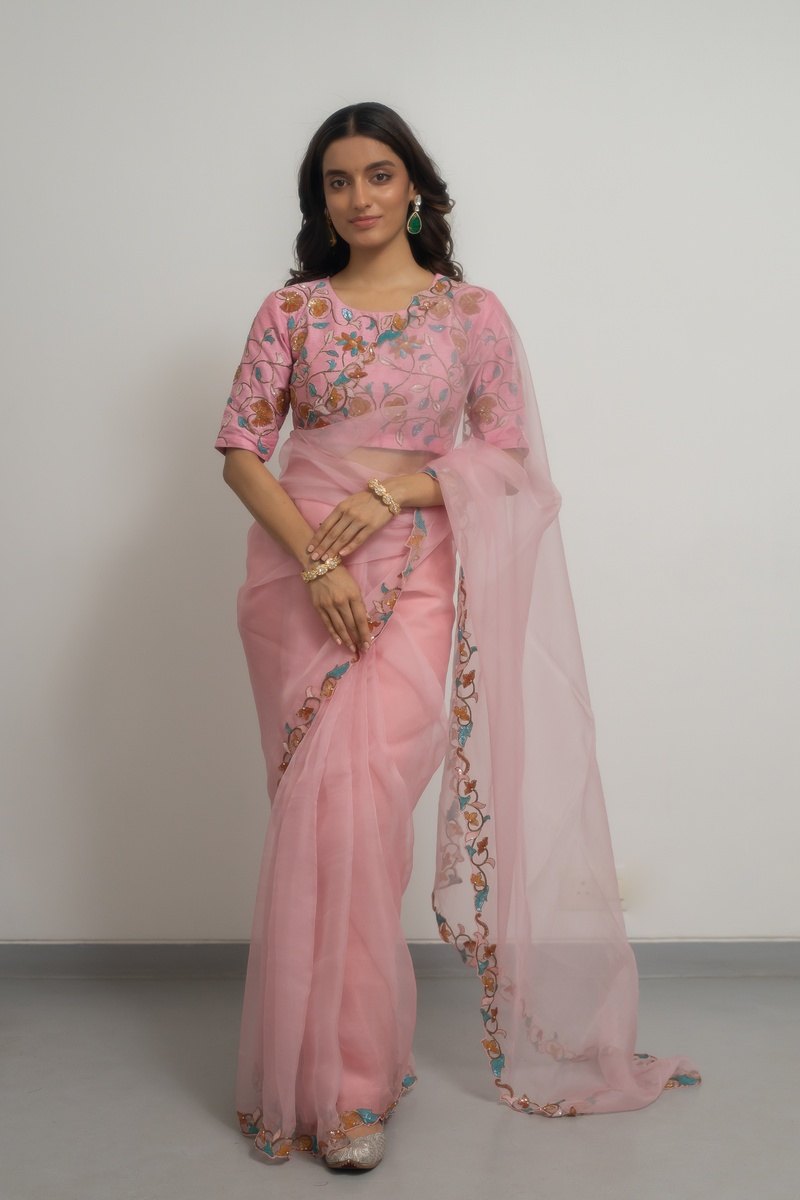
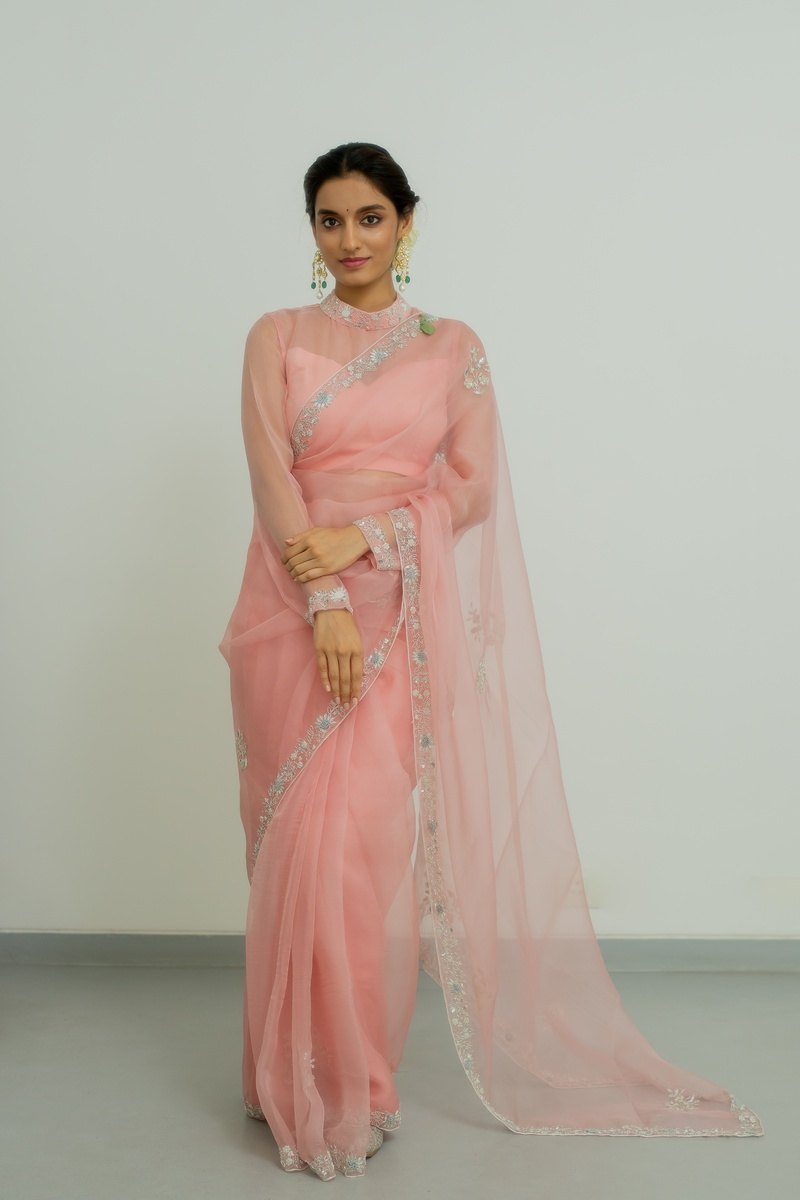
Silk organza is a plain weave in fine silk, finished stiff. That stiffness is the whole point. It holds a pleat where a soft silk collapses, it stands away from the body instead of clinging, and it keeps a crisp edge at the palla, which is why it reads as formal in photographs without any shine.
The trade is that it is semi-sheer. Every organza saree needs a lined blouse and a petticoat that matches the saree rather than the blouse, and a colour that you are happy to see a hint of in daylight. In an evening function, with the right lining, the same sheerness is what makes the cloth look expensive.
Embroidery behaves differently on it too. Organza is a light ground, so heavy work does not disappear into the weave the way it can on a heavier silk, and a dense border will pull the palla down and change the drape. When we place hand embroidery on organza we keep the work clustered where the saree is photographed, at the palla and the border, and leave the body of the saree light enough to fall.
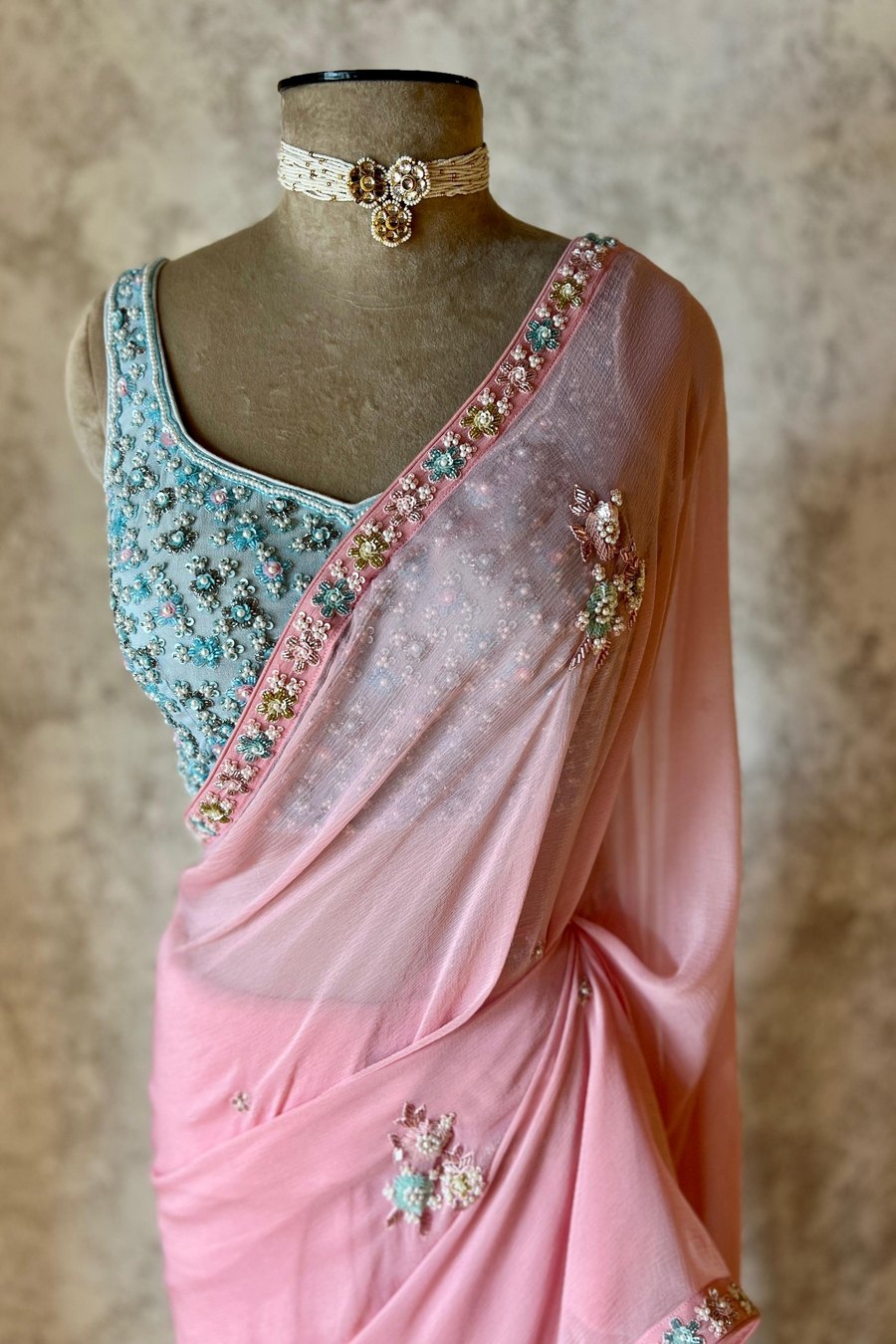
One honest note about this particular collection: not every piece in it is organza. The Misty pair are chiffon, which is the same idea taken softer. If you want the crisp, structured version, choose one of the organza pieces.
The price band, and what actually moves it
The Lotus Collection sits between ₹23,000 and ₹26,500. That is a narrow band on purpose. It means the decision here is about cloth, colour and how much work you want on the border, not about a ladder of budgets going up to a lakh.
Inside a single collection, a ₹3,500 step usually comes down to three things. The first is the metres of hand work: a border that runs the full length of the saree with a worked palla takes longer than a border alone, and hand work is paid by the hour of a person's eyes. The second is what comes with it, whether the blouse piece is plain or worked to match. The third is the ground itself, because a fine organza in a difficult dye lot costs more before anyone has embroidered a stitch.
What the step does not buy is a different standard of service. Custom sizing is included at ₹23,000 as much as at ₹26,500, and so is the fit check. If a saree in the lower part of the band is the one that suits you, there is no consolation prize you are missing.
The two cheapest and the six most expensive pieces in the collection are separated by one decision: whether the embroidery is carried around the body of the saree or held at the edges. Both are correct. They photograph differently.
Choosing between the pieces
Start with what is already in your cupboard. An organza saree is at its best when the blouse is quiet and the saree is not, so if you own three plain silk blouses in cream, ink and gold, a saree with a worked border in a strong ground colour will earn its price in the first season. If your blouses are already embroidered, take one of the lighter grounds.
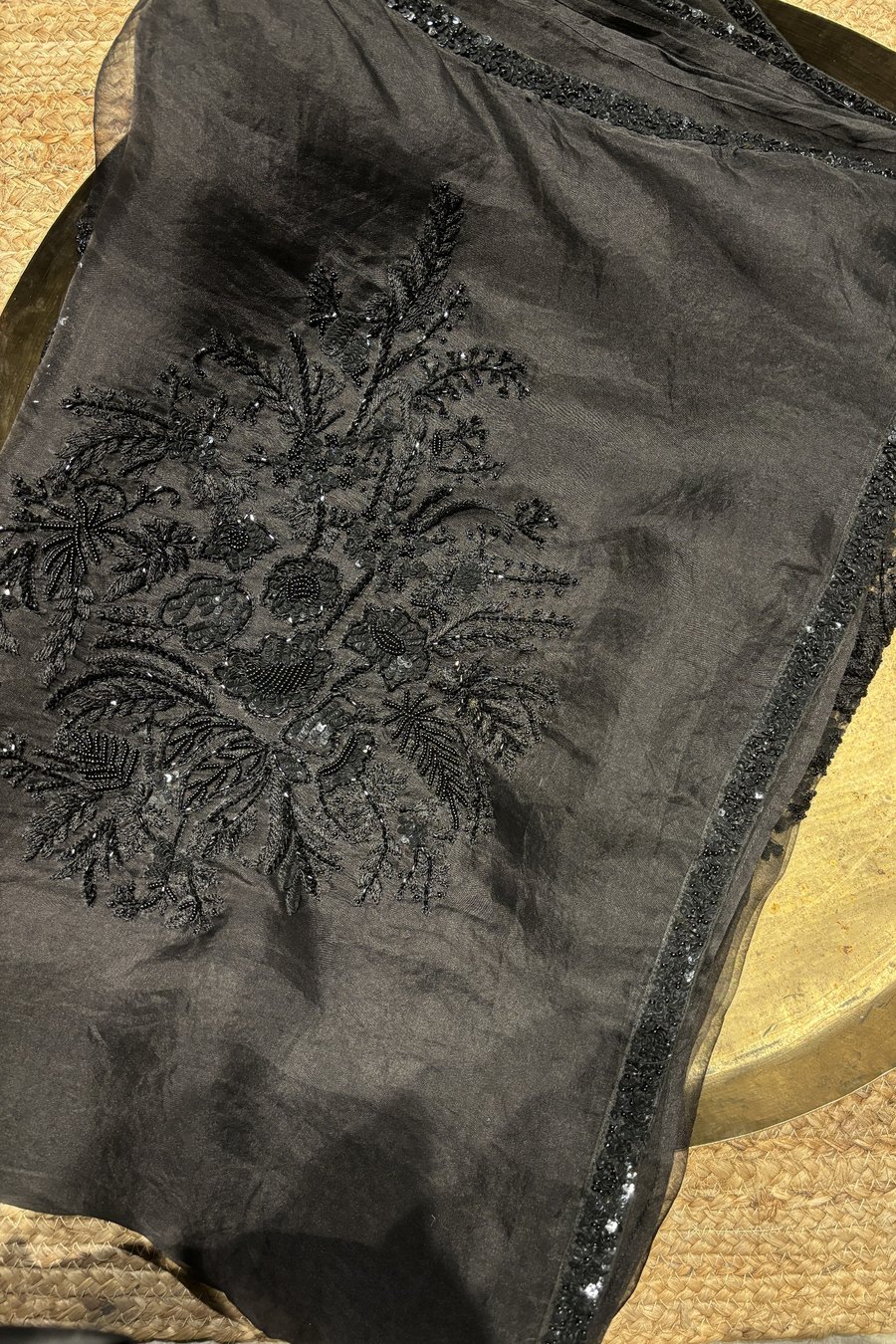
Then decide how much work you want to be visible from across a room. The charcoal and black pieces read as evening clothes. The powder blue and blush pieces read as day, or as a guest at a daytime function, and will take a second wearing much more easily. If this saree has to work for a wedding and a reception in the same week, take the quieter one and change the blouse and the jewellery.
Then the third decision, which most people make first and regret: colour. Match the saree to the jewellery you actually wear, not to the jewellery you would buy for it. An organza with silver work in the border wants the white metal. Gold thread wants gold.
The blouse question
Silk organza shows the blouse through it, so the blouse is not a background here. Two rules cover most of it. Line it, always, in a colour close to your skin rather than to the saree, unless you are deliberately going for a contrast. And keep the blouse's weight below the saree's: a heavy embroidered blouse under a heavily worked palla gives the eye nowhere to rest, and it makes the whole outfit sit badly at the shoulder.
If you want a matched set, the safest pairing is a hand-embroidered blouse in the same ground colour with the work sitting at the sleeve and the neckline, leaving the front plain. If you want a break, a cream or ink blouse under a coloured organza is the pairing we see work most often on our own customers, and it is the one that survives being worn twice.
Because every piece is made to order, the blouse is measured rather than picked off a size chart. Send us your measurements, or come to Shahpur Jat or Dehradun and be measured, and we will confirm the numbers with you on WhatsApp before anything is cut. That conversation tends to catch the two or three centimetres that decide whether an organza blouse sits flat at the back.
Six pieces from the collection
These are the pieces in the Lotus Collection that we would put in front of a first-time buyer. Prices are what they are today, and every one is made to order in your size.
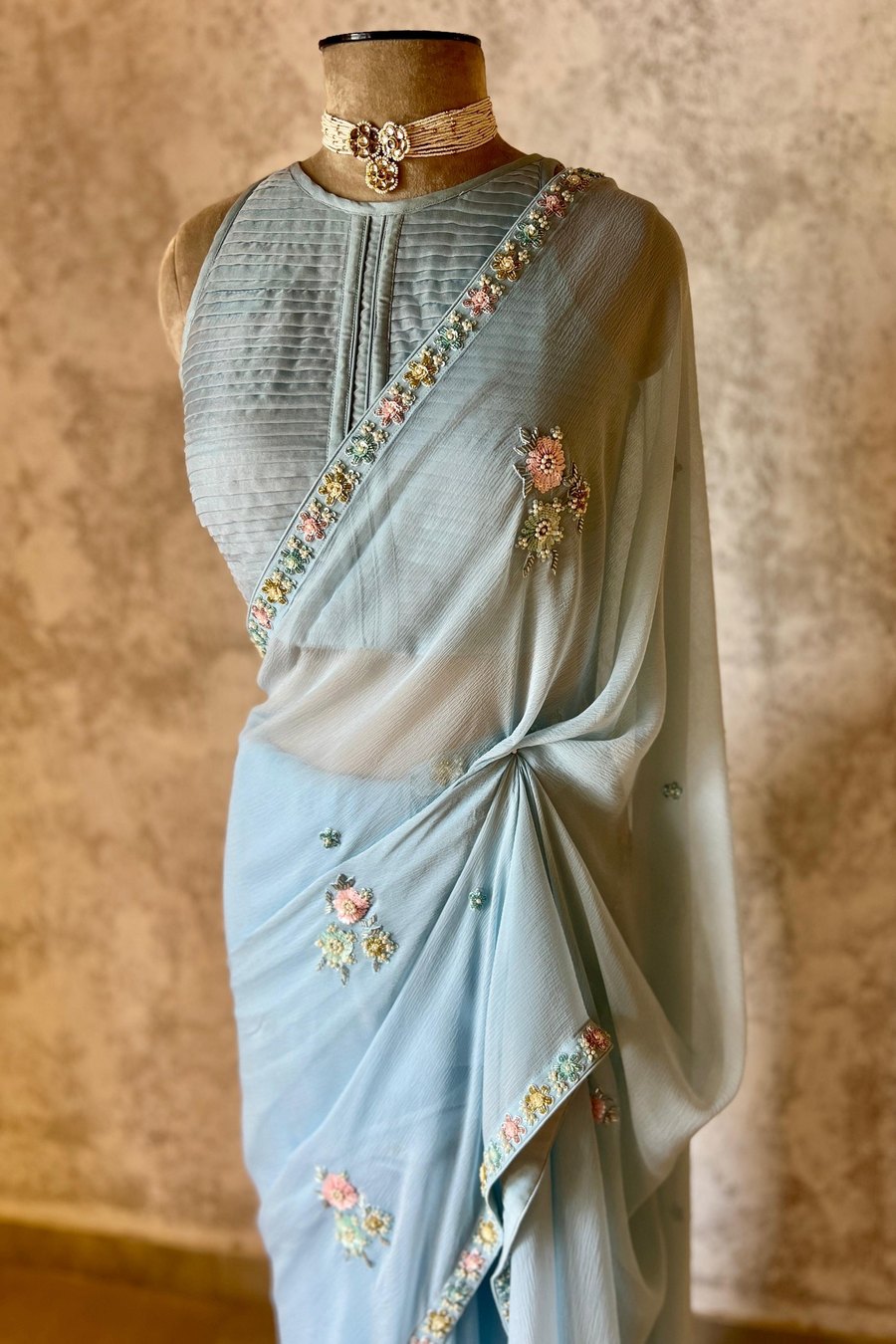
₹26,500
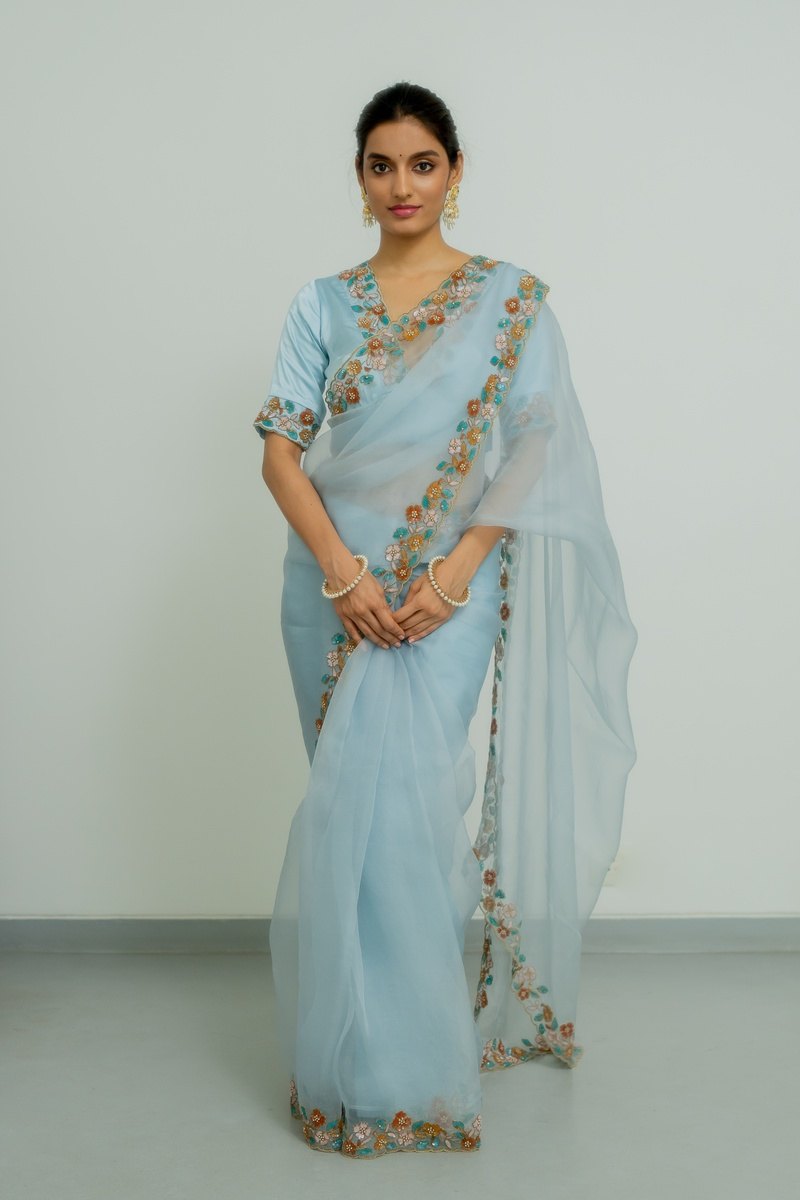
₹26,500
₹26,500
₹26,500
₹26,500
₹23,000
Wearing it, and keeping it
Organza needs less help than people think. A single pleat stack at the waist, pinned flat, and the palla left to stand on its own is the whole drape. Do not over-pleat it; the cloth is stiff enough to do the work, and a heavy pleat stack on organza looks like a curtain rather than a saree. On the shoulder, pin into the blouse seam allowance and not into the embroidery, and use a fine pin, because organza remembers a hole longer than a soft silk does.
After a wearing, air the saree overnight before it goes anywhere near a cupboard. Fold it along a different line each time so the same crease does not set, keep it in a cotton or muslin bag rather than plastic, and have it dry cleaned only when the embroidery has actually dulled. Hand work on organza does not need frequent cleaning; it needs to not be crushed.
If a thread lifts, do not pull it. Bring it to us, or send a photograph on WhatsApp first and we will tell you whether it can wait until the season ends.
Frequently asked
Is lotus silk a real fabric?
Yes, but it is not what most listings show. Lotus fibre is spun from the stems of the lotus plant, chiefly around Inle Lake in Myanmar, in very small quantities and at a price that puts it closer to a museum textile than a retail saree. Our Lotus Collection is a design line of hand-embroidered silk organza and chiffon sarees, not lotus-stem fibre, and we say so on the label rather than let the name imply otherwise.
Why does the Lotus Collection sit between ₹23,000 and ₹26,500?
Three things move a hand-embroidered saree inside one collection: how much of the saree carries hand work, whether the blouse piece is plain or worked to match, and the cost of the ground cloth itself. Custom sizing and the fit check are included at every price in the band, so the lower end is not a reduced service.
Can I wear a silk organza saree to a daytime wedding?
Yes, and it is one of the better choices for it. Organza holds its shape in heat, does not cling, and photographs crisply in daylight. Keep the ground light, the work at the border, and the blouse simple; an organza saree only looks heavy when the whole outfit is busy.
What blouse goes with an organza saree?
A lined one, in a colour close to your skin unless you are deliberately contrasting, and lighter in weight than the saree. Cream and ink are the two pairings that stay useful across occasions. If your saree has a dense worked palla, keep the blouse's embroidery at the sleeve and neckline so the front stays quiet.
How do I store a hand-embroidered organza saree?
Air it overnight after wearing, fold along a different line each time so a crease does not set, and keep it in cotton or muslin rather than plastic. Dry clean only when the embroidery has dulled rather than after every wearing, and never pull a lifted thread; send us a photograph first.
Explore more: lotus collection · silk organza saree · saree — or message us on WhatsApp for styling help.

The information below is required for social login
Sign In
Create New Account