

A sangeet is the one wedding function where the outfit gets judged while you are moving. You get pulled into a group dance you rehearsed twice, you sit on the floor for the family performance, you stand under flash until midnight. A kurta set is the quiet adva
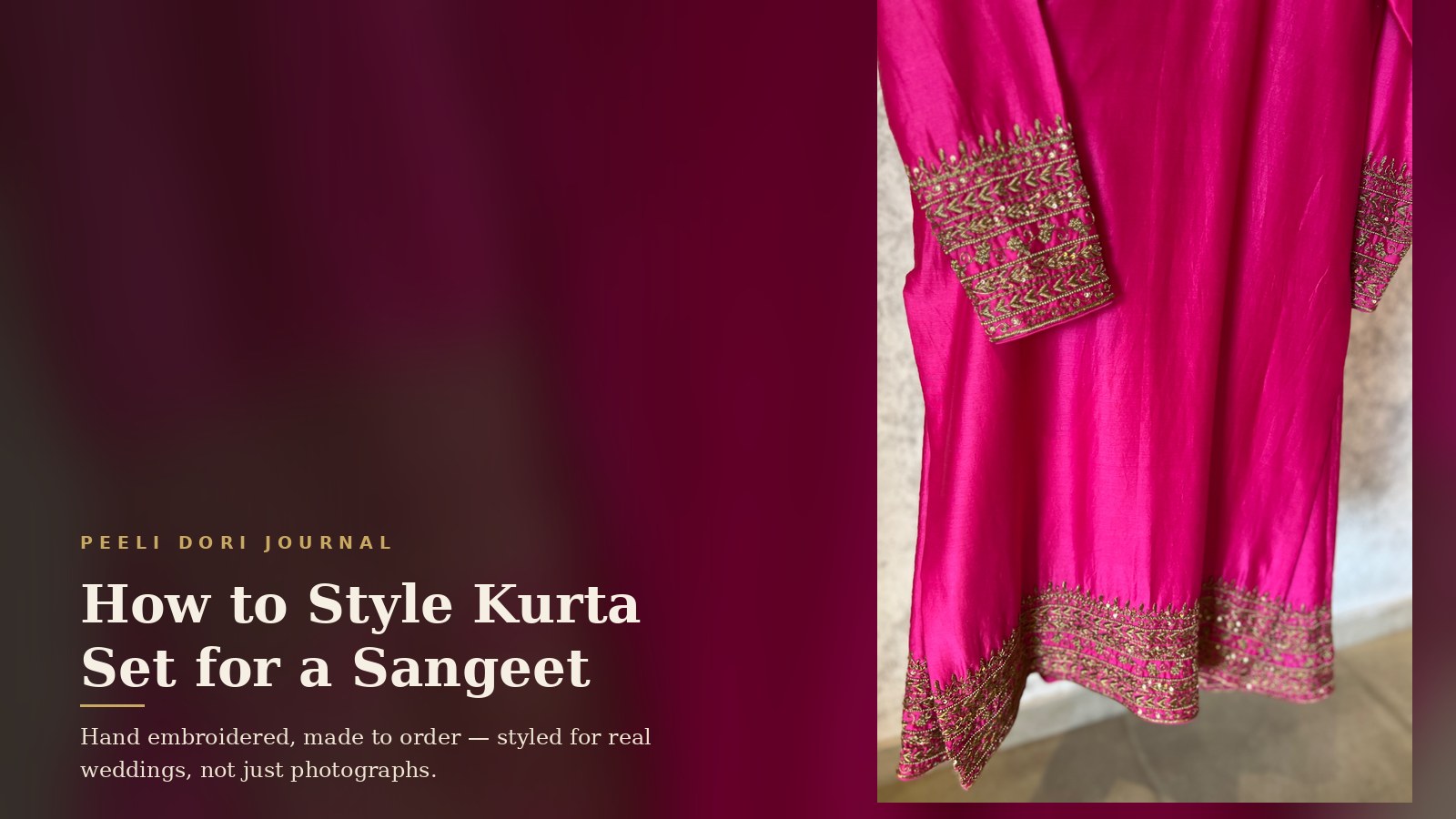
A sangeet is the one wedding function where the outfit gets judged while you are moving. You get pulled into a group dance you rehearsed twice, you sit on the floor for the family performance, you stand under flash until midnight. A kurta set is the quiet advantage here, because there is no drape to keep re-pinning. But it only works if the hem, the waist and the dupatta were decided weeks earlier, at the fitting. That is what this guide is about.
The one function where the outfit has to move
In most of the weddings we fit for now, the sangeet is the biggest production of the four days. There is a choreographed entry for the cousins, four or five family performances, dinner, then a DJ set that goes until the venue switches the lights off. The bride changes three times and has people assigned to manage each change. Everyone else gets one outfit and about six hours.
That changes what styling means. A saree at a sangeet is a beautiful problem. You need the pallu pinned in three places, somebody to fix your pleats after the third song, and shoes you can actually dance in. A kurta set removes most of that work. Nothing slips off your shoulder, nothing needs re-tucking when you stand up, and you can sit cross-legged on the floor through a cousin's performance and get up without checking anything.
What is left to get wrong is fit and length, and both of those are settled at the fitting rather than in front of the mirror at seven in the evening. Most styling advice you will read online is written for the bride. This is the guest's brief: one set, one night, a lot of movement.
It also depends on the month. A November sangeet on a lawn and a February one in a banquet hall ask different things of the same set, and the difference is not only warmth. Daylight flattens raised embroidery, so work that reads beautifully in a photograph at 1pm is often invisible in a dim hall at 11pm. Warm, low lighting does the opposite: it lifts metallic work and makes a dull colour look richer than it is. If you are buying one set for a season of functions, buy for the light you will actually be in.
Heavy work above the knee, light cloth below
The single most useful rule we give people fitting a sangeet outfit: keep the weight where the body stays still, and keep the cloth light where the body moves. A set that is densely worked from shoulder to ankle looks magnificent standing still for a photograph and then behaves like armour by the second song. Your arms get tired, the kurta stops falling back into place, and you spend the evening pulling at it.
In practice that means the yoke, the cuffs and the hem border carry the craft, and the middle of the kurta and the trousers stay comparatively quiet. This is how most traditional karigars already plan a piece, and it is worth saying out loud at a fitting so nothing gets added "for balance" in a place you will be folding, sitting and bending.
The craft itself behaves differently in motion. Gota is flat metallic ribbon appliqué: it sits flush to the cloth, catches light without weight, and survives a dance floor comfortably. Zardozi is raised metallic embroidery, heavier and more sculptural, which is why we keep it to yokes and borders rather than the whole body. Dabka is coiled wire, and it gives dimension that photographs well from a distance, which matters at a function where most pictures are taken on a phone from four feet away.
Then look at the cloth. Chanderi is light, holds a fold and stays cool over a long evening, which is why the ivory Farsi set is cut in it. Silk carries colour with more depth and photographs heavier, which suits the Gulmohar sets and their saturated reds and pinks. Whatever the fabric, check the inside before you commit: a lined bodice sits better but traps heat, and an unbacked embroidered panel can scratch at the armhole after an hour. The colours are dyed in small batches with organic dyes, so a set is a specific piece rather than a repeatable one, and that is worth knowing before you assume the pink you saw on a screen is the pink that arrives.
One more thing to check while the piece is on: the armhole. If it is cut high and tight, you will feel it the first time you lift your arms above your head, which at a sangeet happens roughly every fifteen minutes.
Hem, waist and the two numbers that decide the night
A floor-length straight kurta with wide palazzos is the most photographed silhouette and the hardest to dance in, because you will step on the hem. The version people actually move in is ankle length or a hand's width above it, paired with a sharara, a tapered pant or a flared pant that ends before the shoe. If you want the long look, keep the flare narrow and the fabric light so it swings rather than tangles.
Here is a test worth doing in the fitting room, in the outfit and in the shoes you plan to wear: sit on the floor cross-legged, then stand up. If the kurta rides up past the waistband, the body of the kurta is too short, not the hem. That is a pattern correction, and it is the sort of thing that is easy to fix before cutting and impossible to fix the week of the wedding.
The waist is the second decision. A set that is closely fitted through the middle photographs beautifully and restricts everything from sitting to eating to dancing. A straighter kurta with shape added at the waist, either by the cut or by a belt, gives you the same line with room to move. Ask for a side slit if the kurta is long; it is a small change that makes stairs, car seats and choreography much easier.
On build, three things matter more than the rest. If you want coverage on the arms, a three-quarter sleeve with a worked cuff keeps the attention at the wrist and the elbow free. If you are petite, keep the embroidery scale small and the kurta shorter, or the piece will wear you. If you have a long torso, ask for the kurta measured from the shoulder with a slightly deeper side slit, otherwise a set that is right on someone else will look cropped on you.
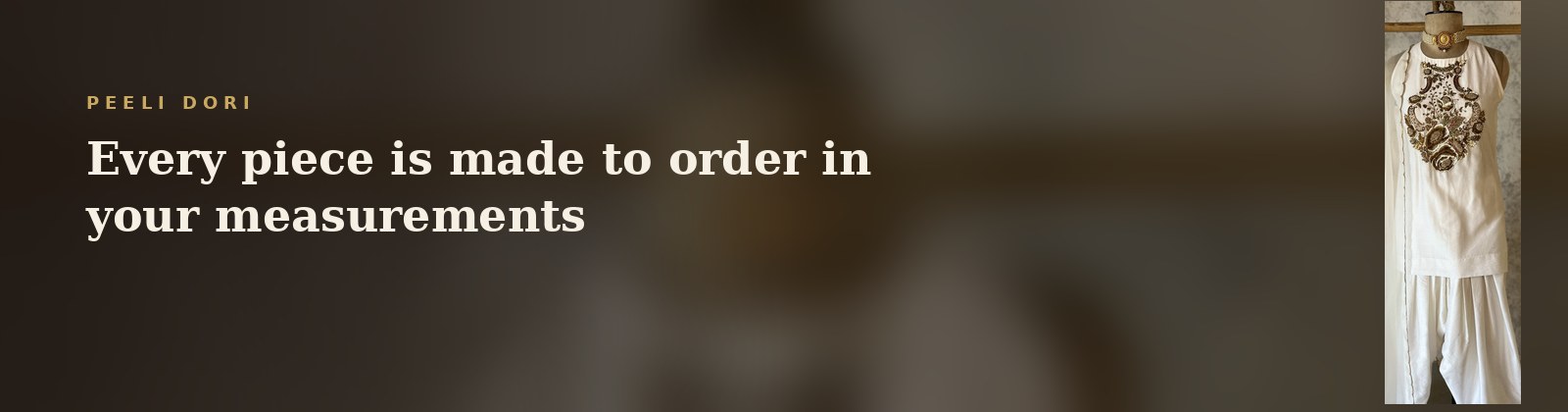
This is where made to order earns its keep. Custom sizing is not a luxury version of a size chart, it is the difference between a hem that clears your shoe and one that does not. Come to the fitting with the function date, the shoe height and whether you are in a performance, because all three change what we cut.
Six sets, and the sangeet each one suits
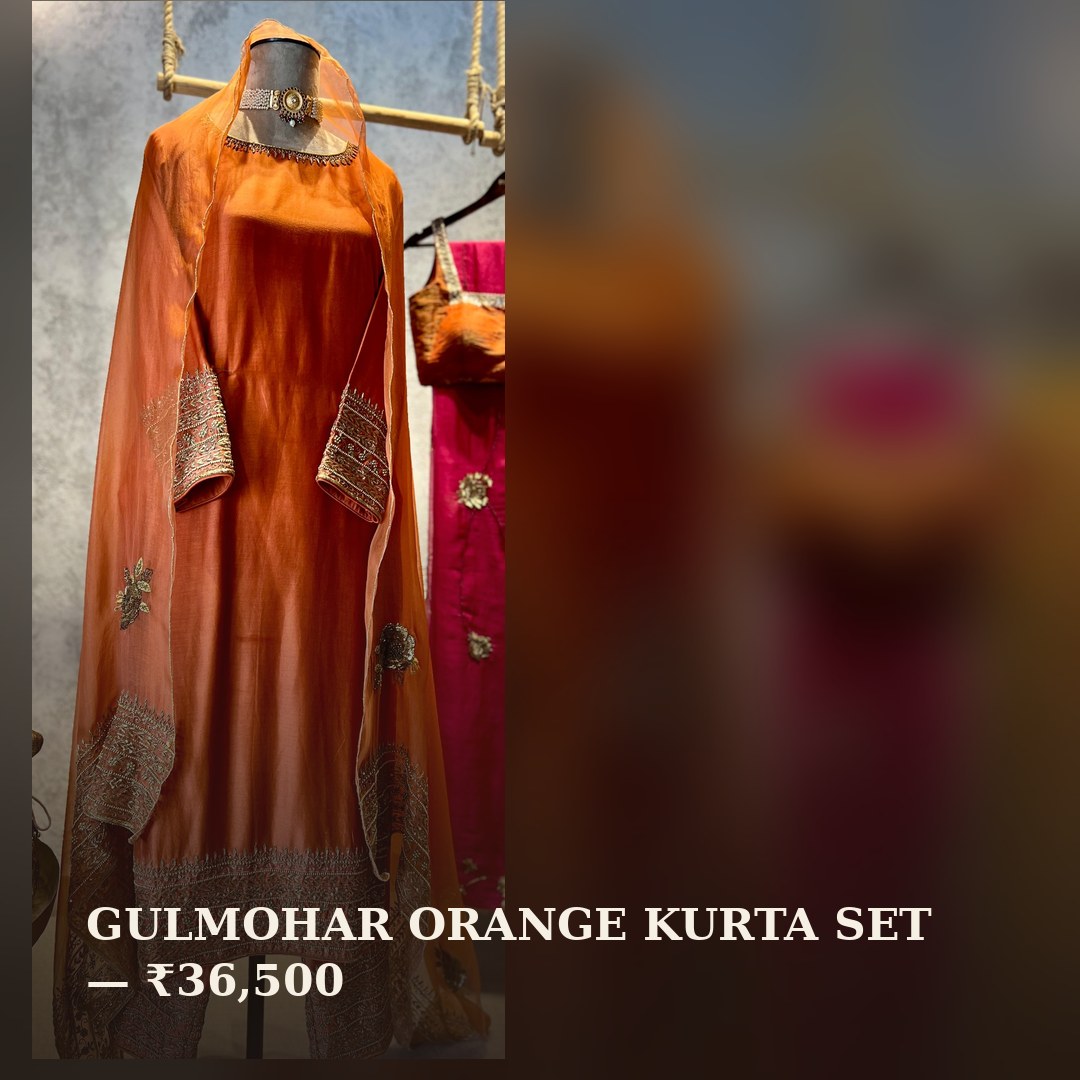
The five Gulmohar colourways are the same cut at ₹36,500, so the choice between them is really about the role you are playing that night. Red is the family colour, and if you are the bride's sister you will be in most of the photographs, so it is the safest strong choice. Rani pink suits a cousin who is in two performances, because it reads warm under stage lights without going flat. Fuchsia is the coolest of the five in photographs and the easiest to dance in as a friend of the bride who does not want to look like family.
Orange belongs at a daytime or lawn function, where the light is hard and a hot colour still has depth. The softer gulabi pink is the one we suggest to mothers and aunts who want to be in the group photographs rather than in the middle of them. And the ivory Farsi chanderi at ₹29,500 is for the guest who would rather not compete with a hall full of reds: it is the lightest cloth of the six, it stays cool through a long night, and it photographs as considered rather than plain, provided the jewellery is doing some work.
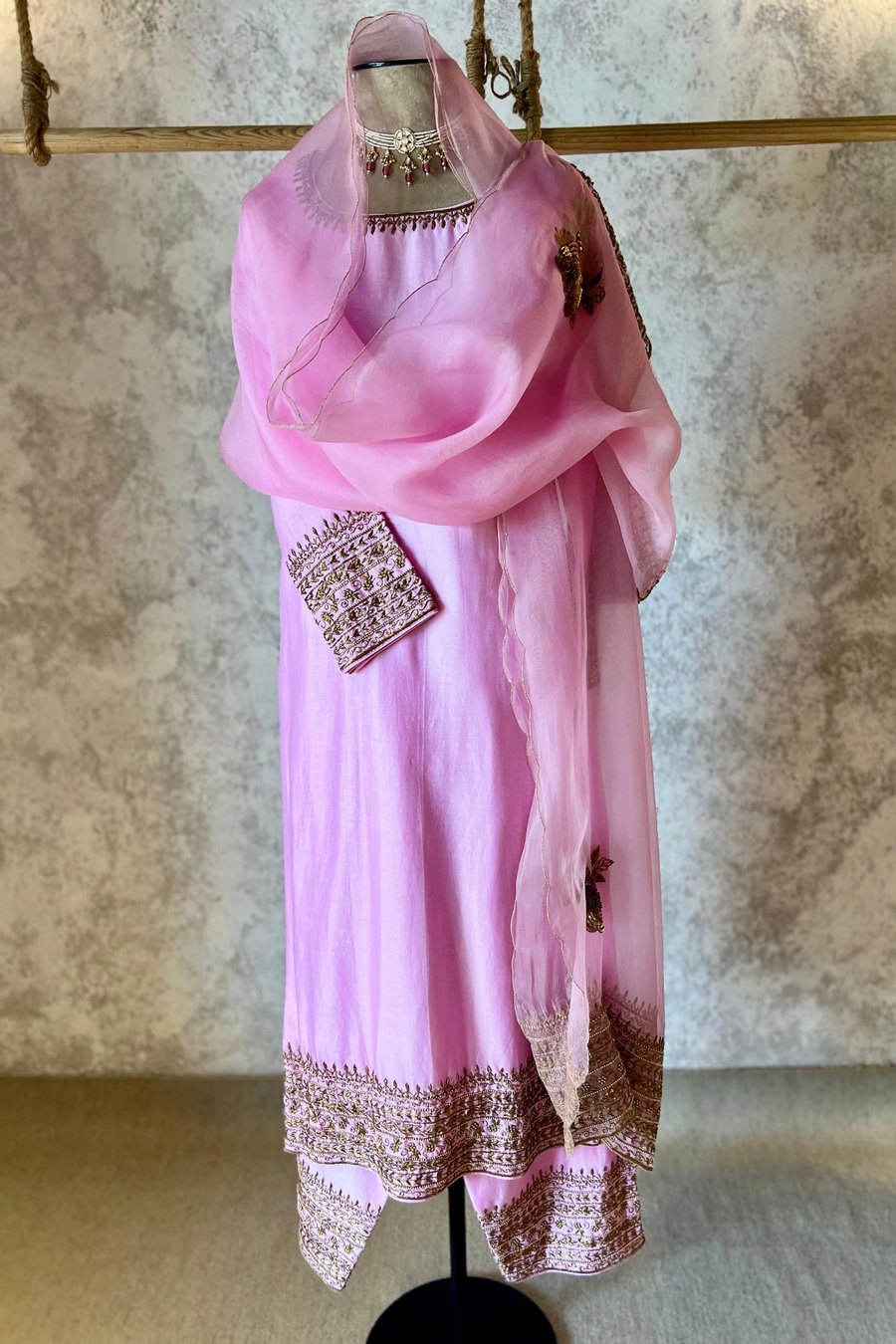
₹36,500
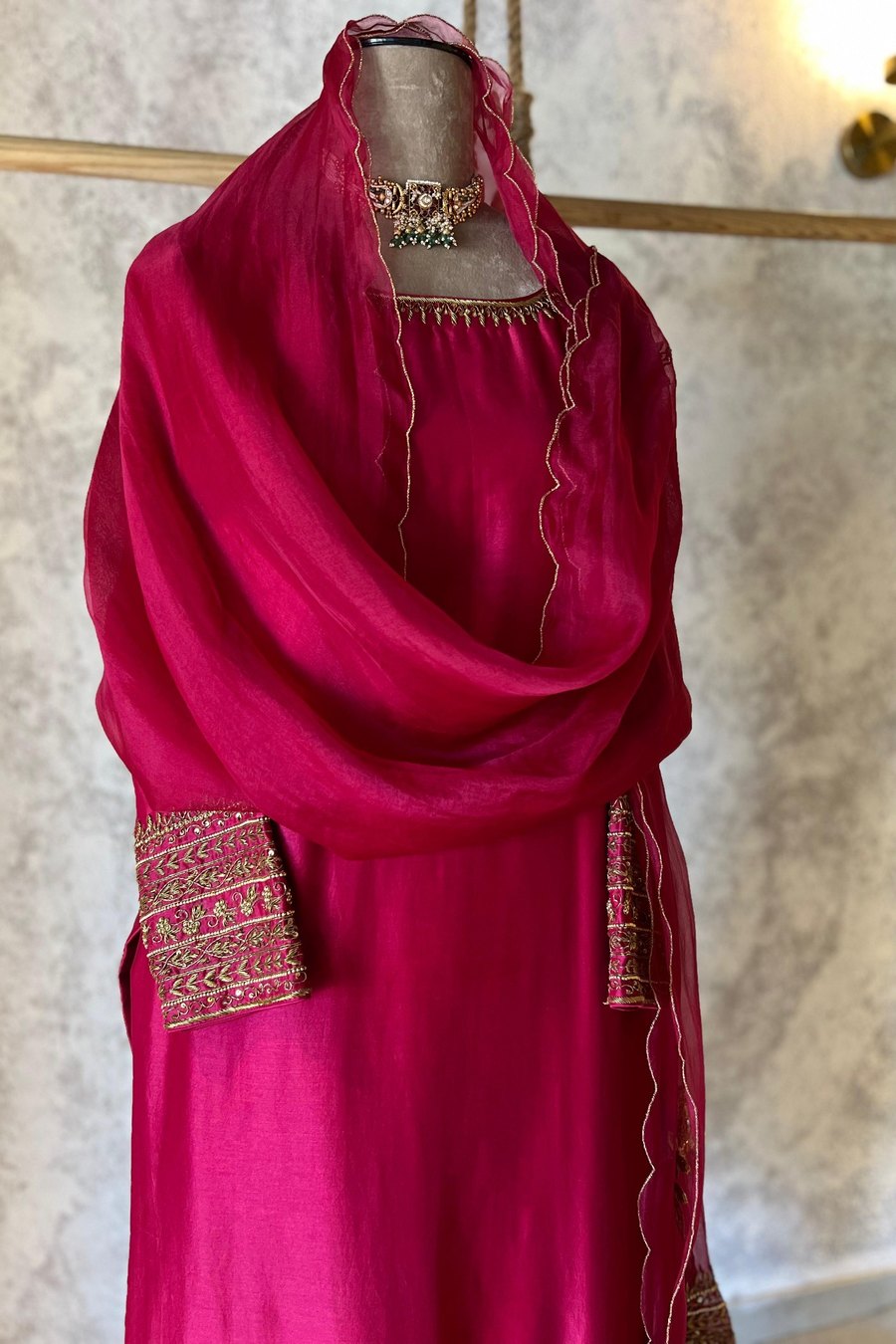
₹36,500
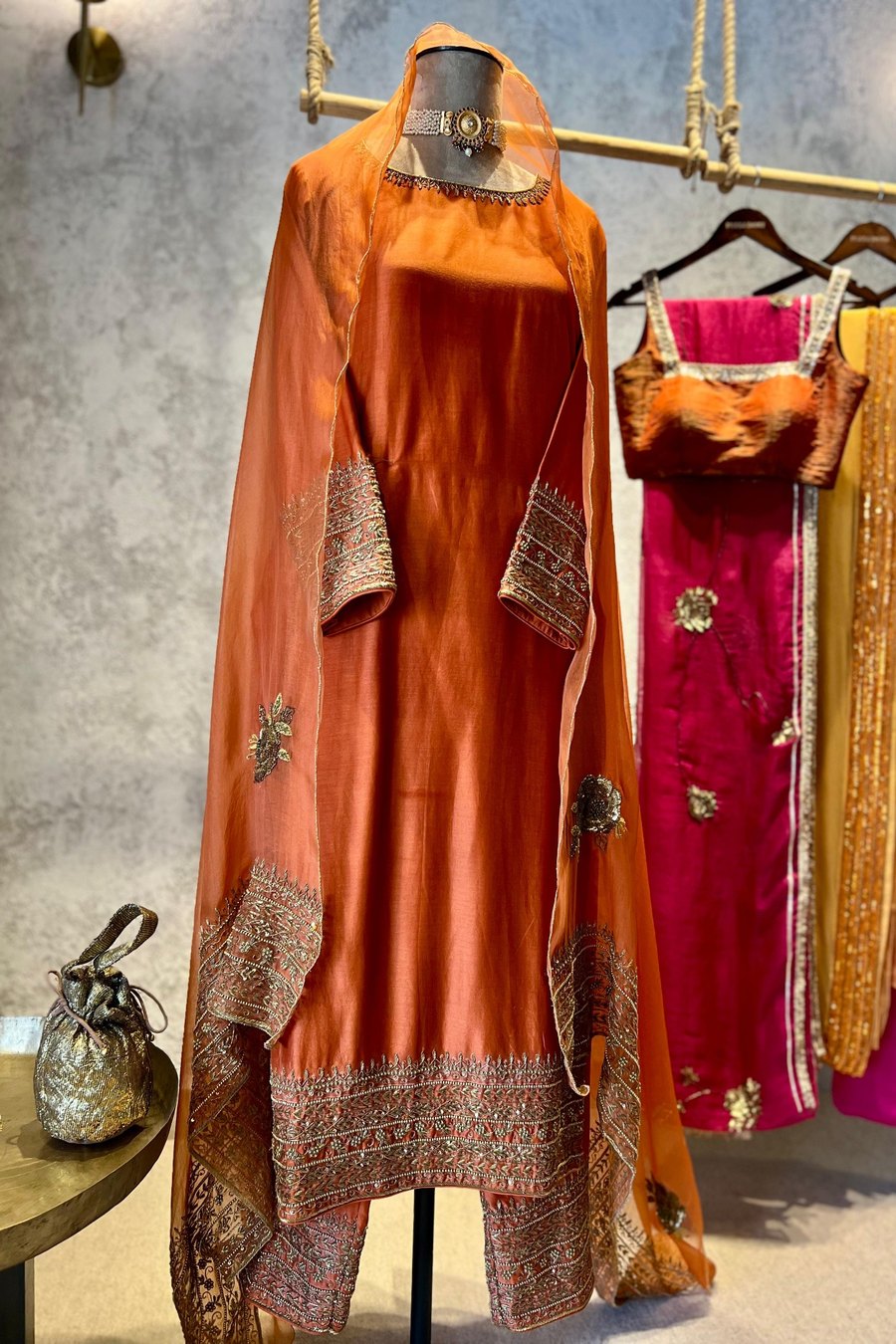
₹36,500
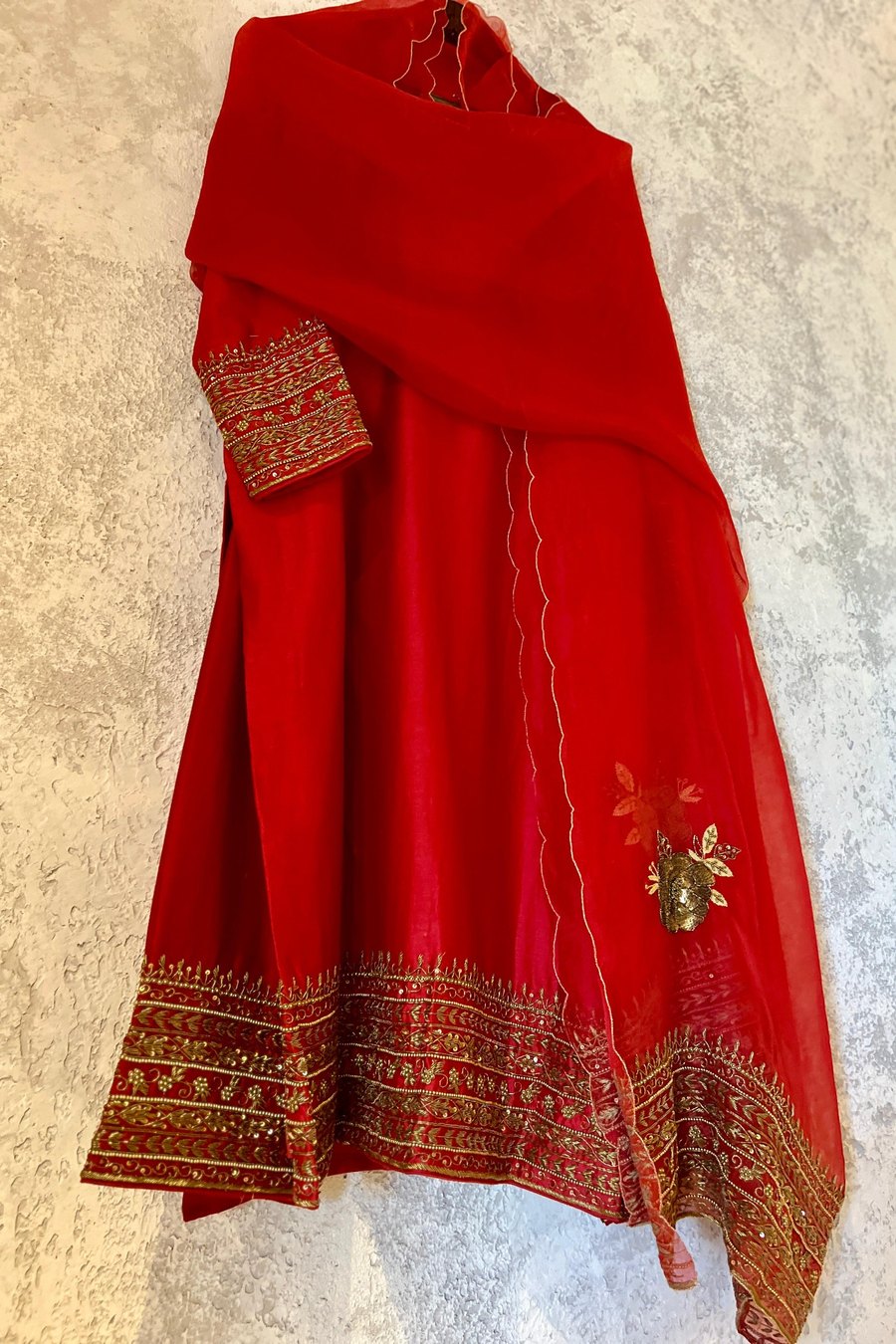
₹36,500
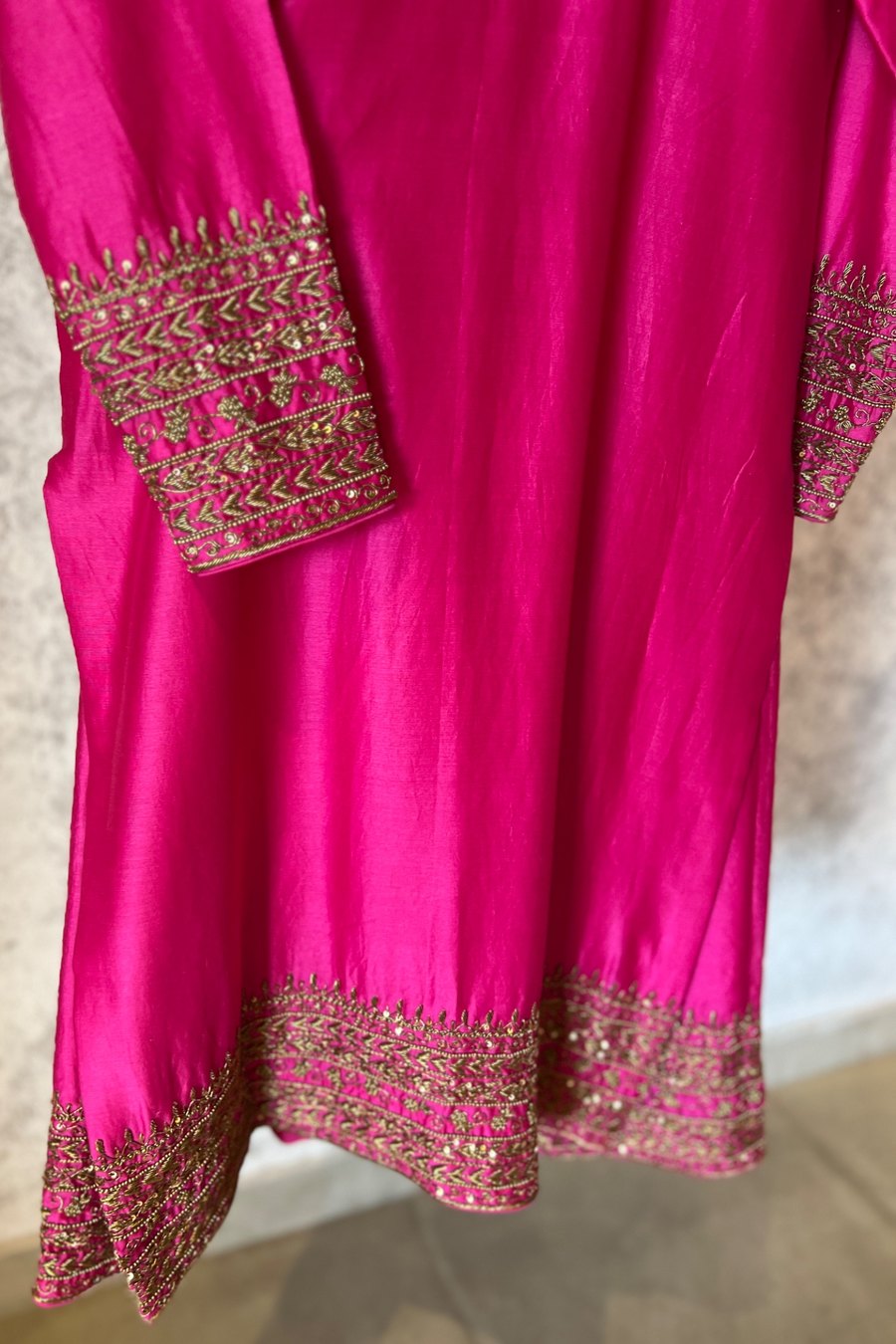
₹36,500
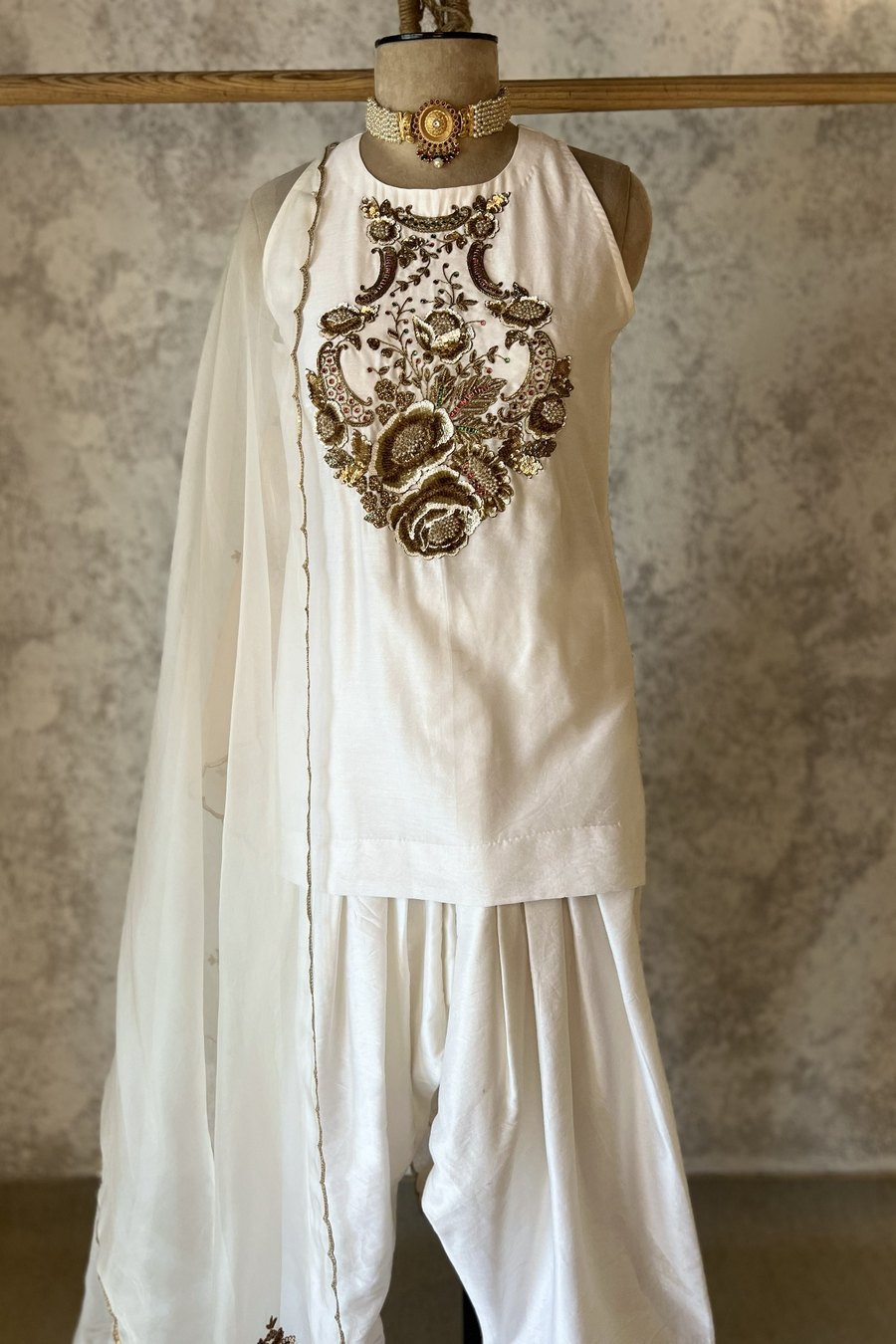
₹29,500
The dupatta is a tool, not a rule
You do not have to wear the dupatta for the whole evening, and the people who look most comfortable at a sangeet usually do not. Wear it pleated and pinned at the shoulder for the entry and the family photographs, then take it off your shoulder and fold it in half over one arm for the dancing. It still reads as part of the outfit, it stops dragging, and both hands are free.
If you pin it, pin through the weave and never through raised embroidery, where the hole is permanent. Two pins are enough: one where the dupatta crosses the shoulder, one at the waist. If the fabric is slippery, add a third hidden inside the pleat fan. A long loose end pulls the whole drape down within an hour; a shorter one holds.
Hair and jewellery follow the yoke. If the yoke is the worked part of the set, wear your hair up so the neckline is visible, and keep jewellery to earrings and one stack of bangles. A necklace on a heavy yoke competes with the work and usually loses. If the neckline is plain, that is where the necklace goes.
Finally, the shoes. Have the hem measured in the height you will actually wear, because a set fitted in flats and worn in three-inch heels drags on the floor all night, and a set fitted in heels and worn in flats pools around your feet. Block heels, juttis with a low heel, or good flats, and test them on the hem before the evening, not at the venue.
Getting it home in one piece
A worked kurta set travels badly if you fold it the way you fold a shirt. Fold along the grain, put tissue paper over the embroidery rather than under it, and use a cloth bag instead of plastic so the piece can breathe. Do not hang a heavy kurta on a thin wire hanger; the shoulders take a mark that does not come out. Roll the trousers and pack them separately from anything with a zip or a hook.
After the night, air the set for a day before folding it away, and spot clean rather than washing. Dry clean sparingly, because every cycle takes something out of hand work. When you press it, do it from the inside with a cloth between the iron and the cloth, and never press directly on raised embroidery or on metallic work.
Store it flat if you have the space. If you hang it, use a padded hanger and give it room, because embroidery that is pressed against other clothes for months creases in ways that a steamer cannot always lift.
Frequently asked
Can I wear a kurta set to a sangeet if the invitation says Indian formal?
Yes, and it is often the more practical choice. A hand-embroidered kurta set with a worked yoke and a dupatta sits comfortably inside Indian formal for a sangeet, which is a celebration rather than a ceremony. The two things that keep it formal are the quality of the work and the completeness of the set: kurta, trousers and dupatta in the same cloth, with the dupatta carried rather than forgotten at home. If the invitation says black tie or cocktail, that is a different brief.
Is a kurta set appropriate for the bride's sister, or should I wear a lehenga?
Both work, and the decision is usually about the photographs rather than the dress code. If you are in a performance and in most of the family pictures, a lehenga gives you more presence in a wide frame. If you are managing the evening, moving between the stage and the guests, a kurta set keeps you looking composed with no pleats to fix. Plenty of sisters wear a heavier set for the entry and change the dupatta for the dancing.
What length kurta is easiest to dance in?
Ankle length, or a hand's width above the ankle, with trousers that end before the shoe. Anything that reaches the floor will be stepped on at some point in the evening. If you want the longer line, keep the flare narrow and choose a lighter cloth so the hem swings away from your feet instead of wrapping around them.
Do I need a dupatta with a kurta set?
Not for the whole evening. It does real work at the entry and in photographs, and then it becomes a liability on a dance floor. Wear it pinned at the shoulder for the first hour, then fold it over one arm. A belt at the waist is a good alternative if you want shape without anything to manage.
How far ahead should I order a made-to-order kurta set?
We do not publish a fixed number of days, because the honest answer depends on the embroidery on the piece and where we are in the wedding season. Message us on WhatsApp with your function date and the set you are considering, and we will tell you plainly whether it can be cut and finished in time rather than take the order and hope. Fit checks and styling help happen on WhatsApp too, and both of our stores, Shahpur Jat in New Delhi and Dehradun, can do the fitting in person.
Explore more: kurya · dupatta — or message us on WhatsApp for styling help.

The information below is required for social login
Sign In
Create New Account