

A sangeet is the one wedding function you have to perform in. You rehearse in the outfit, you dance in it in a room lit by phone torches, and you are photographed from below by a cousin sitting on the floor. So the useful question is not which anarkali looks b
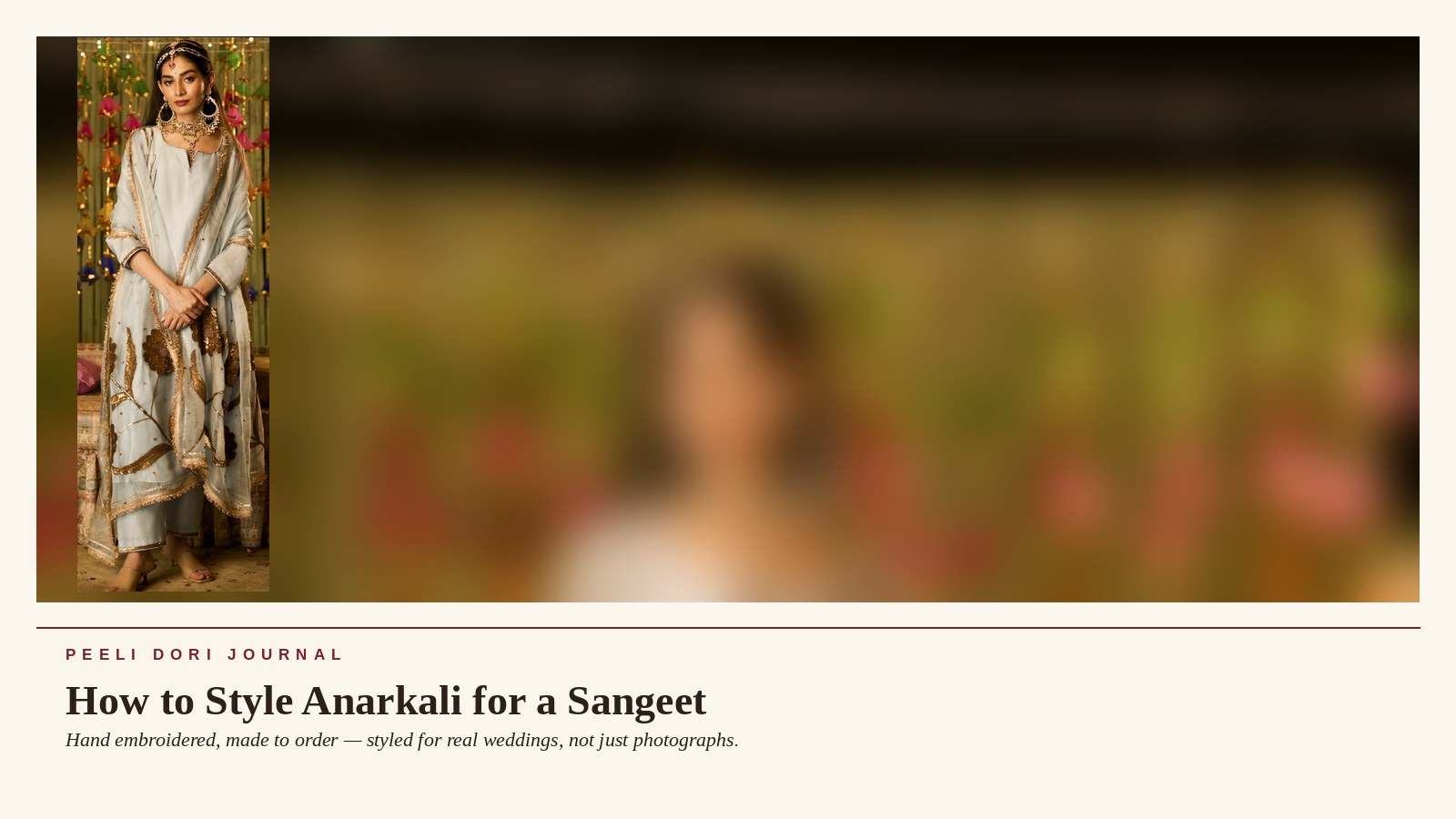
A sangeet is the one wedding function you have to perform in. You rehearse in the outfit, you dance in it in a room lit by phone torches, and you are photographed from below by a cousin sitting on the floor. So the useful question is not which anarkali looks best on a hanger. It is which one still behaves at the third song, and how you style it so that it does. This is how we would put a sangeet look together with you.
Sangeet is a movement problem before it is a fashion problem
Most wedding advice is written for standing still. A sangeet is not standing still. There is a rehearsal the evening before, a choreography that involves at least one turn, a stage or a cleared floor, and a long stretch of the night where you are either dancing or holding a plate and talking to an aunt. Your outfit has to survive all three, and it has to do it in a room that is warmer than the weather outside.
An anarkali is a good answer to that, but not for the reason people usually give. The reason is that it is one piece. There is no waistband to loosen after dinner, no blouse that has crept up, no pin working itself out at the shoulder while you raise your arms. You put it on once and then you can forget it, which is exactly what you want on a night when you are thinking about the steps.
What it does demand is that the length and the flare are right before you leave the house. A skirt you can gather into your lap is fine for a mehendi; a skirt you can lift an inch and step back from is what you need for a sangeet. That is a fitting decision, not a styling one, and it is the single thing we would not leave to the last week.
Cloth and handwork: what actually matters under party light
Three things decide how an anarkali reads on a sangeet floor: how the cloth falls, where the work sits, and how much of it there is. A dry, light cloth like the chanderi silk in our Madu sets moves with you and does not hold the heat of a crowded room. A heavier silk holds a pleat and photographs with more weight, but it is also more garment to carry through four songs.
Where the embroidery sits matters more than how dense it is. Work concentrated on the bodice and the sleeve reads at conversation distance, which is most of the night. Work pooled at the hem reads in the photographs and on the stage, and it is also the part that meets the floor, the shoes of the person next to you, and occasionally a glass. If you are in the choreography, we would keep the heaviest work above the knee and let the hem stay quieter.
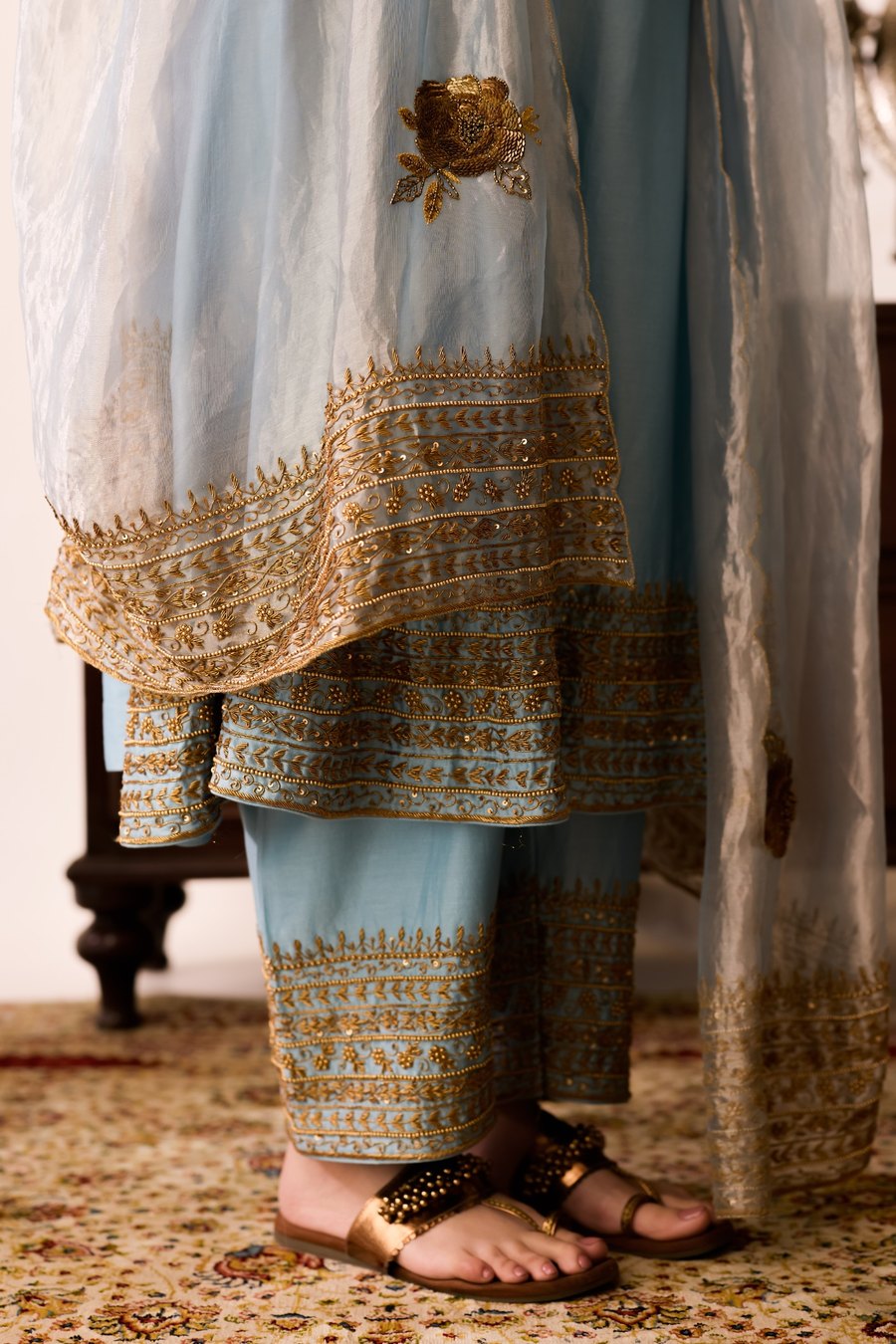
As for the craft itself, gota patti catches light and flashes as you turn, which is why it has always been a dancing embroidery. Zardozi sits deeper and reads as richness rather than sparkle, so it holds up better in low light and in photographs taken with a flash. Dabka sits somewhere between the two. None of this is a rule, but it is the reason two anarkalis at the same price can look completely different on the same dance floor.
Choosing for your role, not just your body type
The body-type conversation is usually the least useful one, so we will keep it short. A floor-length column with a high flare lengthens the figure; a flare that opens lower and wider gives a smaller frame more presence in a group photograph. If you are petite, ask for the flare to start higher and the hem to clear the floor in the shoes you will actually wear. If you are tall, almost any split of bodice to skirt will hold.
The more useful question is what you are doing that evening. If you are in the performance, you want sleeves you can raise your arms in, a dupatta that is pinned down or absent, and a hem you can lift with one hand. If you are hosting - the mother of the bride or groom, the sister who is running the evening - you want a piece that reads as formal from across a room and does not need adjusting while you are giving instructions to a caterer. If you are a guest, you have the most freedom and should probably take it, because this is the one function where being slightly overdressed is the safer mistake.
We make every anarkali to order and cut it to your measurements, so these are decisions you can actually bake into the garment rather than work around afterwards. That is also why we ask for your function dates early: the work is done by hand, and wedding season is precisely when everyone asks for the same fortnight.
What we would put on a sangeet shortlist
Our anarkalis currently run from ₹34,500 to ₹44,500, and the difference between the top and the bottom of that range is the density of the handwork and how much dupatta comes with the set, not the label.
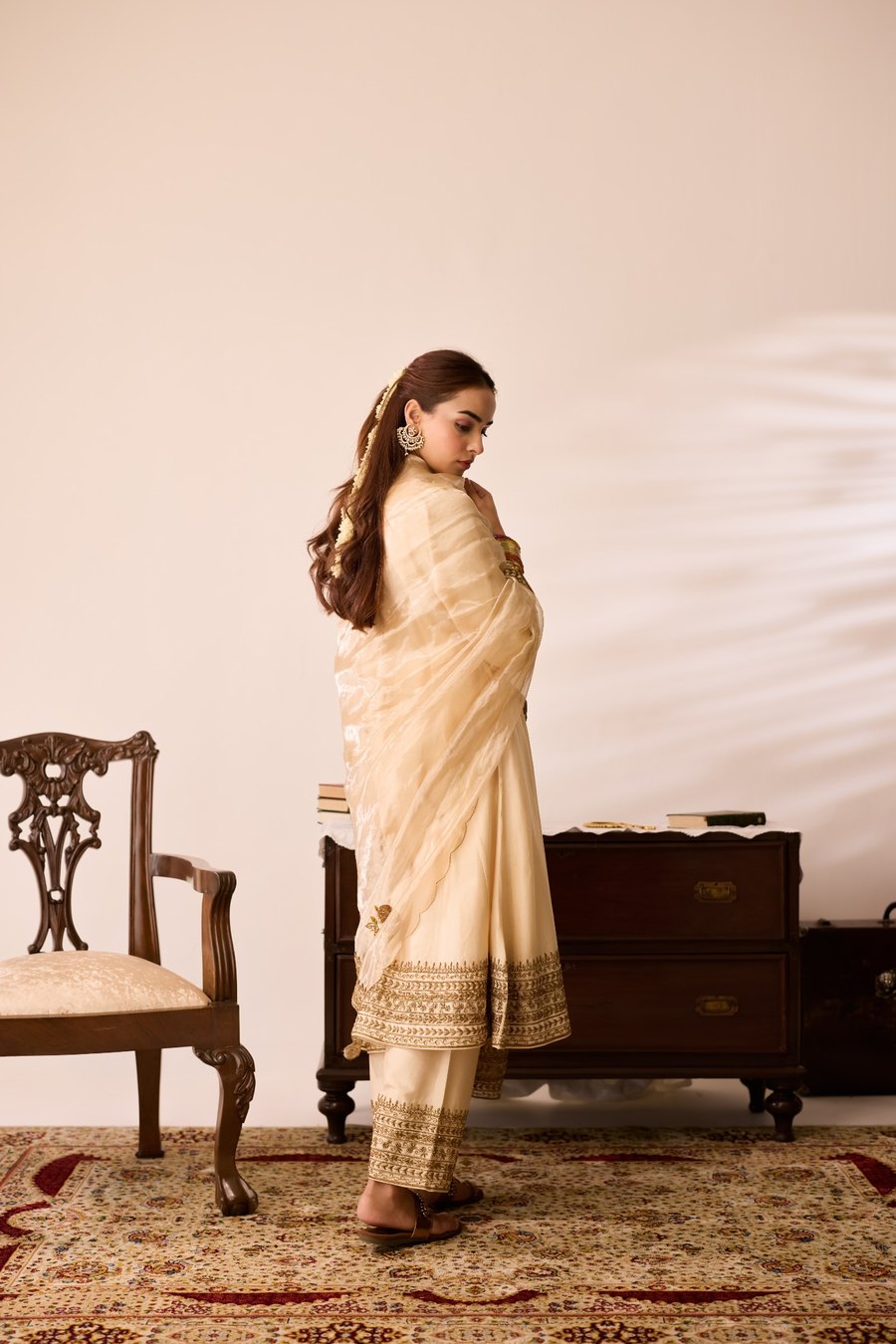
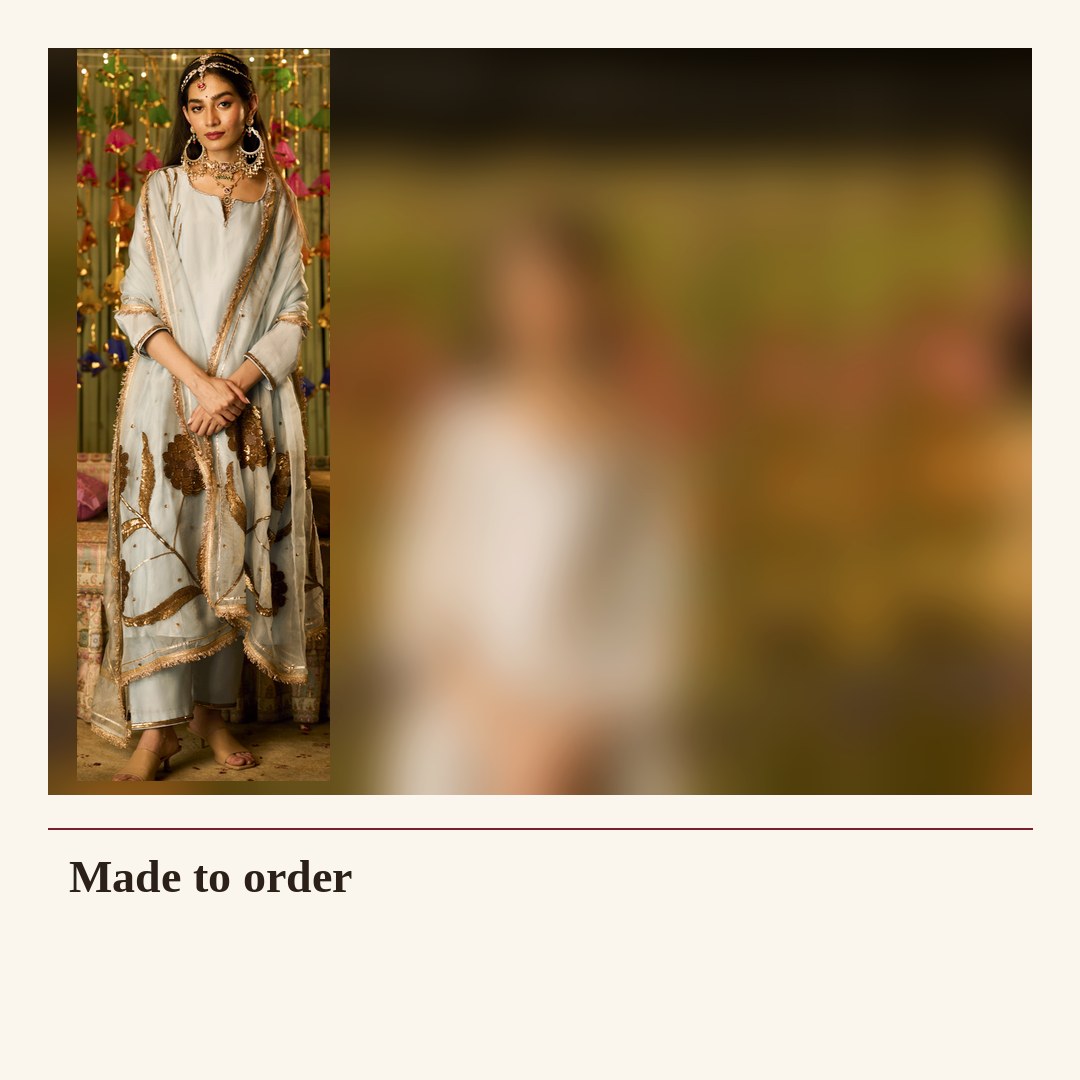
At the evening end, the three Gulmohar sets at ₹44,500 - coconut, powder blue and gulabi - are the ones we would send to a sangeet where you are on stage or in the front row of the choreography. They are full sets shown with their dupatta, the work is concentrated where a camera will find it, and they hold their shape through a long evening.
The Nayanthara anarkali at ₹36,500 is cut plainer, and that is its advantage: it is the one we suggest to a guest who wants to look considered rather than dressed up, and it will not fight whatever jewellery you already own. The Madu sets at ₹36,500 - powder blue, rust orange and purple - are chanderi silk, a dry papery cloth that travels well and reads beautifully in daylight, which makes them the practical pick if the sangeet is one stop on a week of functions. Madhurima at ₹34,500 is where a hand-embroidered anarkali begins with us, and it is the piece we suggest when someone wants one good outfit rather than three.
Everything here is hand embroidered, made to order and cut for your measurements. Shipping within India is free above ₹10,000, which covers all of it; for a wedding abroad we ship internationally and the code INTSHIP applies above ₹89,000.
₹44,500
₹44,500
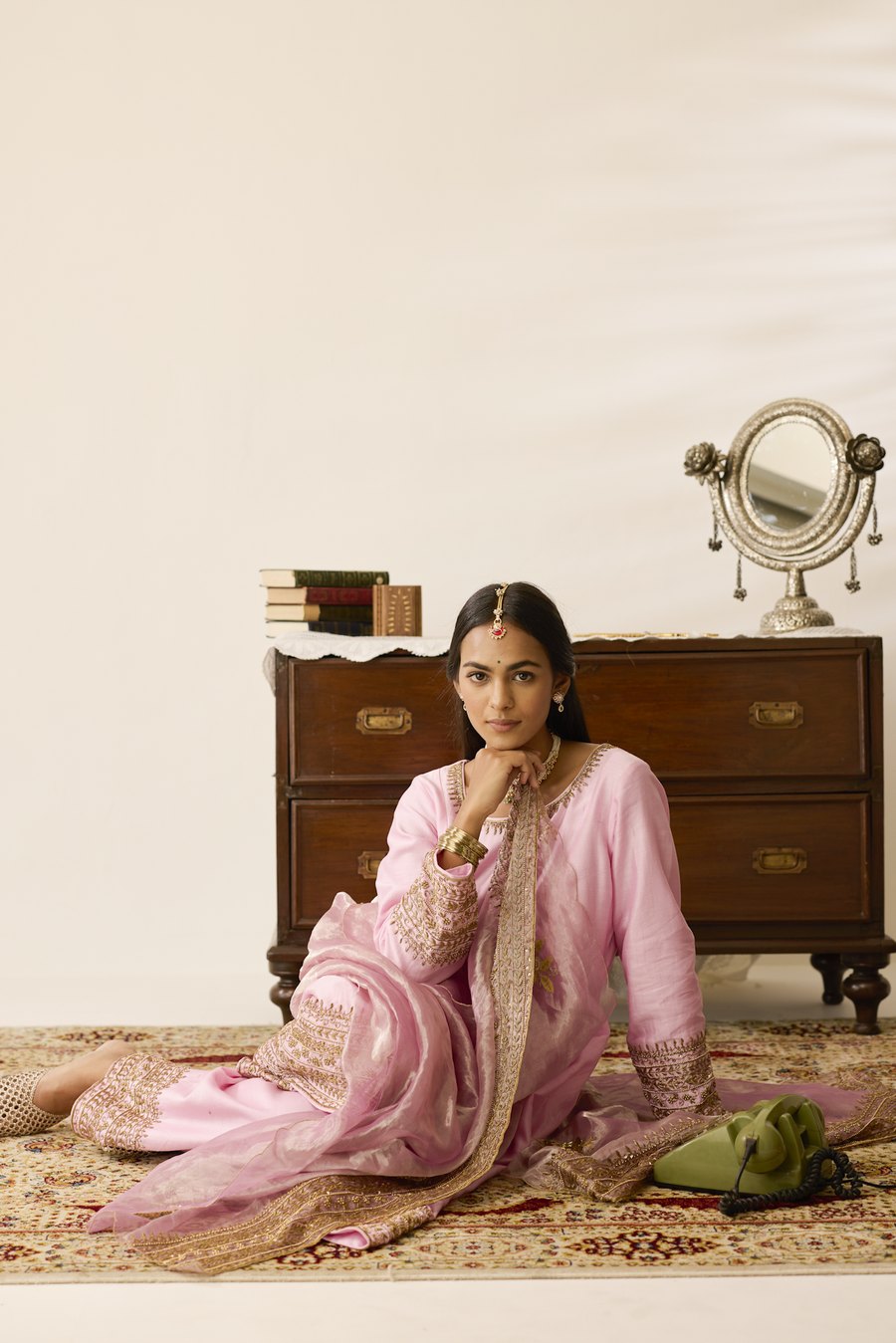
₹44,500
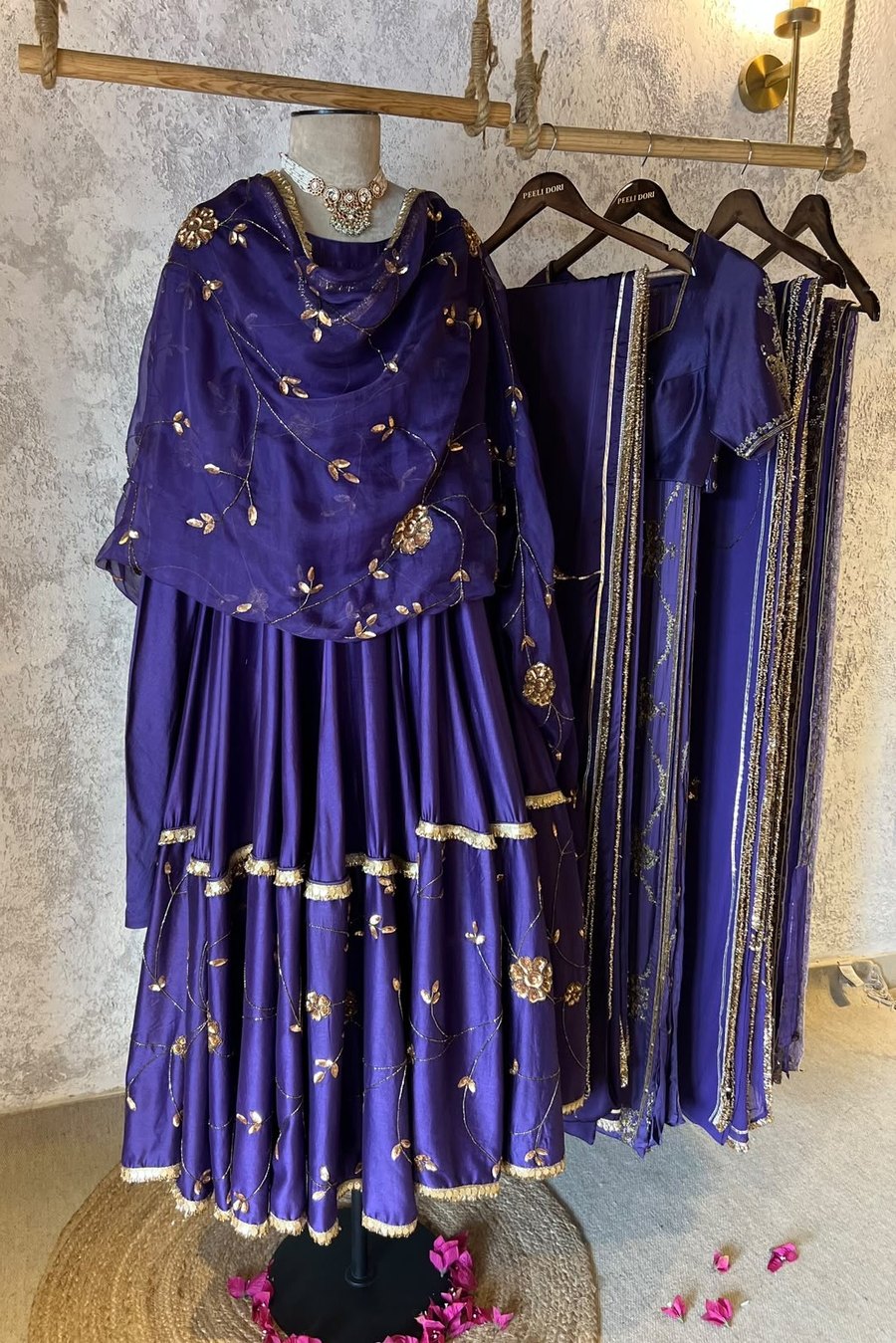
₹36,500
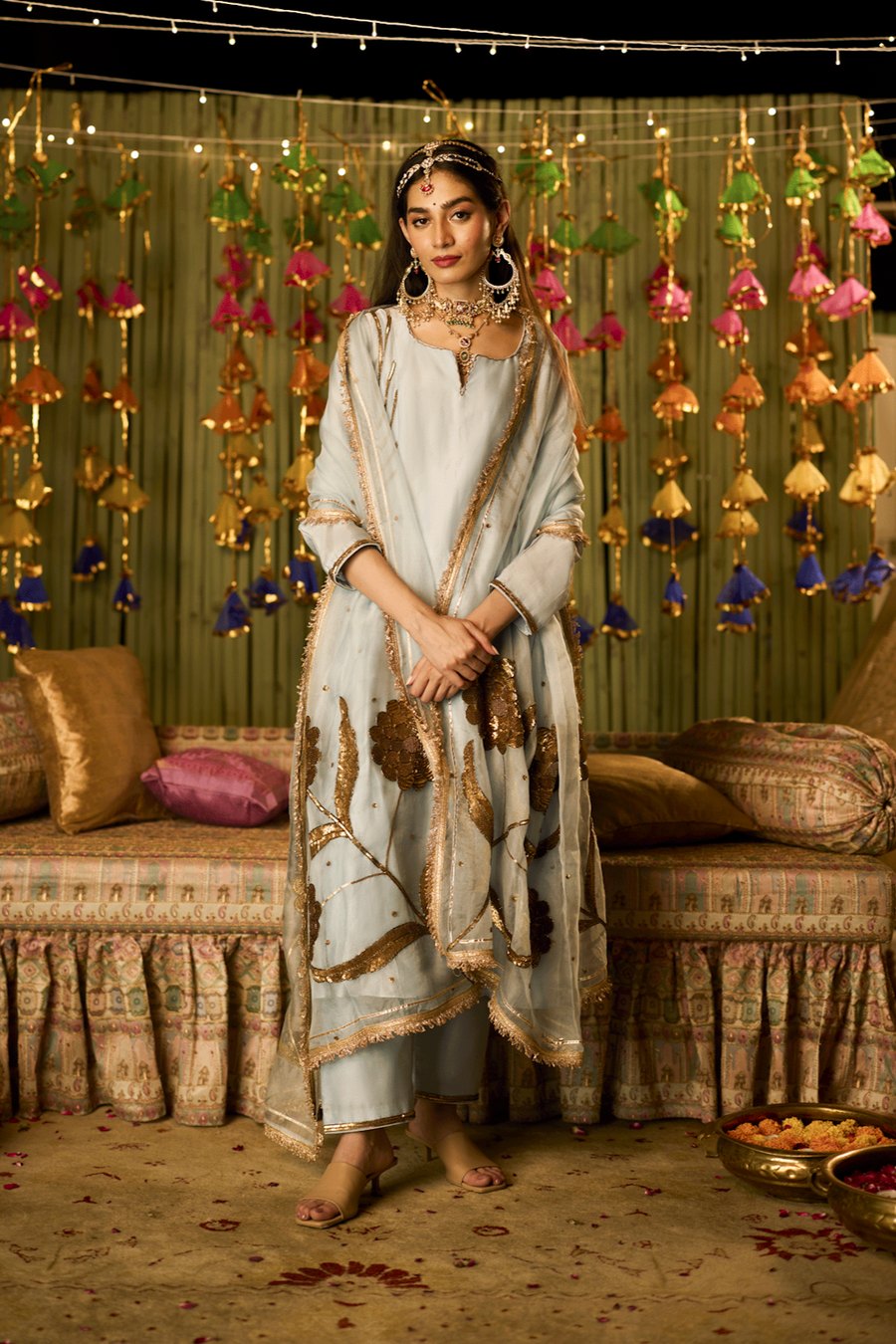
₹36,500
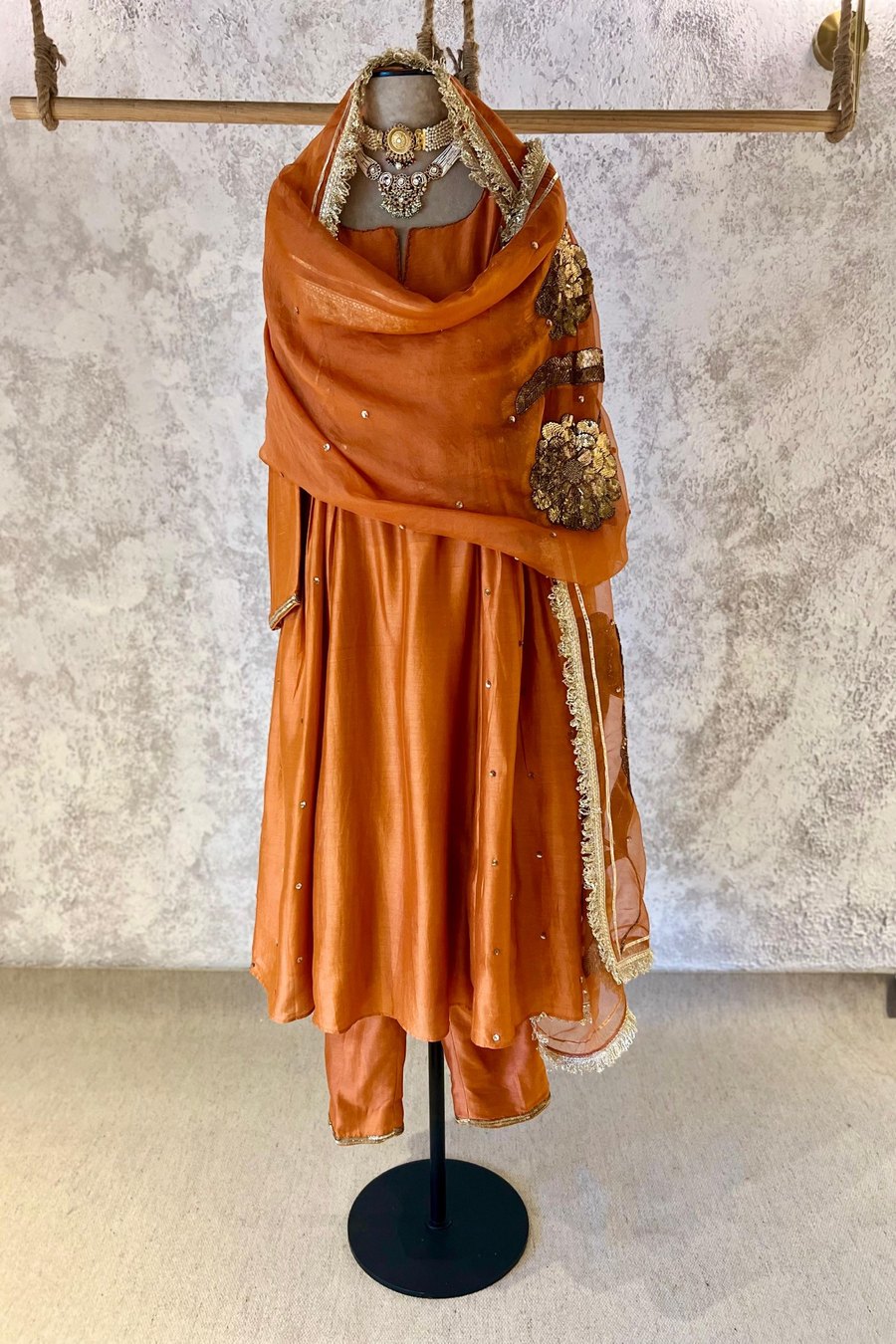
₹36,500
Blouse, dupatta, jewellery, feet
The blouse decision is the one that quietly ruins evenings. A high neck with a closed back is the safest thing you can wear if you will be dancing, because nothing needs pinning and nothing shifts. A deeper neckline needs the dupatta to do structural work, which means two pins minimum and a rehearsal in the full outfit before the night. If the piece is made to order, sleeve length is the easiest thing to change and the thing we are most often asked to change - three-quarter sleeves photograph well and stay out of the way of bangles.
The dupatta can be worn four ways and all of them are legitimate. Pinned at both shoulders and left open is the most formal and the most photograph-friendly. Slipped over one shoulder and pinned at the waist lets you dance and keeps the drape from swinging into someone's face. Folded narrow and pinned like a stole keeps the bodice visible, which is what you want if the work is at the neckline. Taken off entirely is the correct answer for the performance itself, and it is what most people end up doing by the second song - which is worth knowing before you choose a set whose whole effect depends on the dupatta being in place.
Jewellery should follow the neckline, not compete with it. If the bodice is heavily worked at the neck, wear earrings and skip the necklace. If the neckline is plain, a necklace is what finishes it. For the wrists, remember that a sangeet involves raised arms and clapping: heavy bangles are beautiful and audible, and they will also tell you within an hour whether your sleeve is cut correctly.
Then the feet, which nobody plans for and everyone regrets. Whatever you wear has to work with the hem you chose. A floor-length anarkali and a heel is a combination that photographs beautifully and trips you on a stage; if the hem was cut for heels, wear heels, and if you plan to dance barefoot, have the hem cut for that instead. This is a two-minute conversation at the fitting and it saves an entire evening.
After the night, and the next morning
A sangeet anarkali comes home with a little of everything on it: dust from the floor, someone's perfume, possibly a small amount of dinner. Do less than you want to. Hang it from the waistband, not the shoulders, so the weight of the hem pulls the creases out and the handwork is not carrying the load. Keep the dupatta flat and rolled rather than folded on the same line twice, because a heavy border hung by its own weight will stretch.
No perfume on the work itself, and no hot iron pressed directly onto metal thread. Press from the inside, through cloth, or hang the piece for a day and let it fall. Our cloth is dyed with organic dyes, which hold colour well but enjoy a hot iron no more than the thread does. If something has spilled, do not spot-clean it yourself - send us a photograph and we will tell you what the piece can take.
If you have a second function the next morning, the honest advice is to change the accessories rather than the outfit. Different earrings, a different drape, hair up instead of down, and the same anarkali reads as a different look. It is the same reason we suggest one well-chosen piece over three compromises.
Frequently asked
Can I dance in a floor-length anarkali?
Yes, if the hem is cut for it. Tell us at the fitting that you will be dancing and in what shoes, and we will set the length so you can lift the skirt an inch with one hand and step back. The risk is never the fullness of the skirt; it is two centimetres of extra length and a smooth floor.
Should the dupatta stay on for the performance?
Usually not. Most people take it off for the choreography and put it back on for the photographs, so plan for both: pin it at one shoulder and the waist so it can come off and go back on without help, and choose a set that still looks complete without it.
How far in advance should I order a sangeet anarkali?
Earlier than feels necessary. Every piece is hand embroidered and made to order, and wedding season is exactly when everyone orders at once. Give us the date of your first function and we will tell you honestly what is possible rather than promising and rushing the work.
I am not in the choreography - is an anarkali too much for a guest?
No, and it is often the better choice, because a one-piece outfit looks considered without looking costumed. The plainer cuts, like our Nayanthara anarkali, are made for exactly that. If you would rather be understated, keep the jewellery small and let the handwork be the only ornament.
Can you match an anarkali to something else in the family?
Yes - send us photographs of what the others are wearing on WhatsApp and we will tell you honestly which of our pieces sit alongside them. We do this often for mothers and sisters who want to look related rather than identical.
Explore more: wedding 2026 · designer hand embroidered blouse — or message us on WhatsApp for styling help.

The information below is required for social login
Sign In
Create New Account